
A Simple, Rapid and Reliable Protocol for Extraction of High Quality Bacterial Genomic DNA Directly from Potato Tubers for Efficient PCR-Based Surveillance and Molecular Characterization of Ralstonia solanacearum

 , and
, and
Abstract
1. Introduction
2. Experimental Design
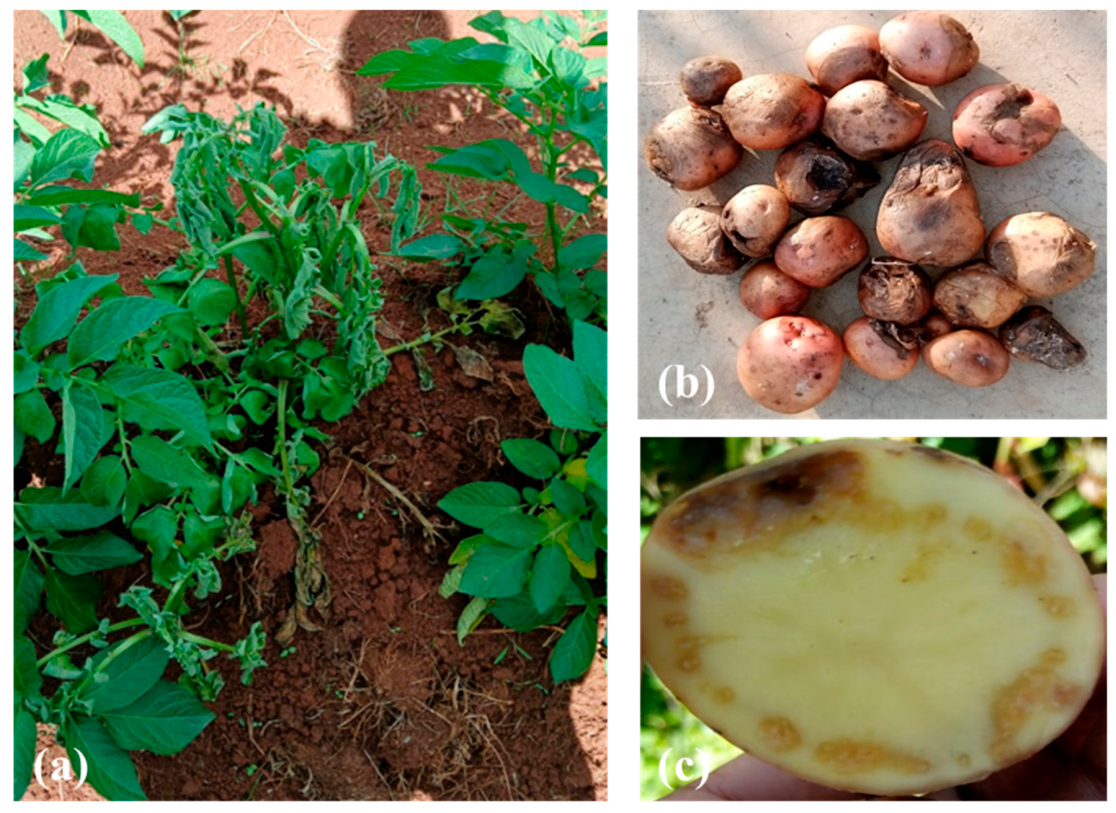
2.1. Sampling of Potato Tubers and Preparation of Samples
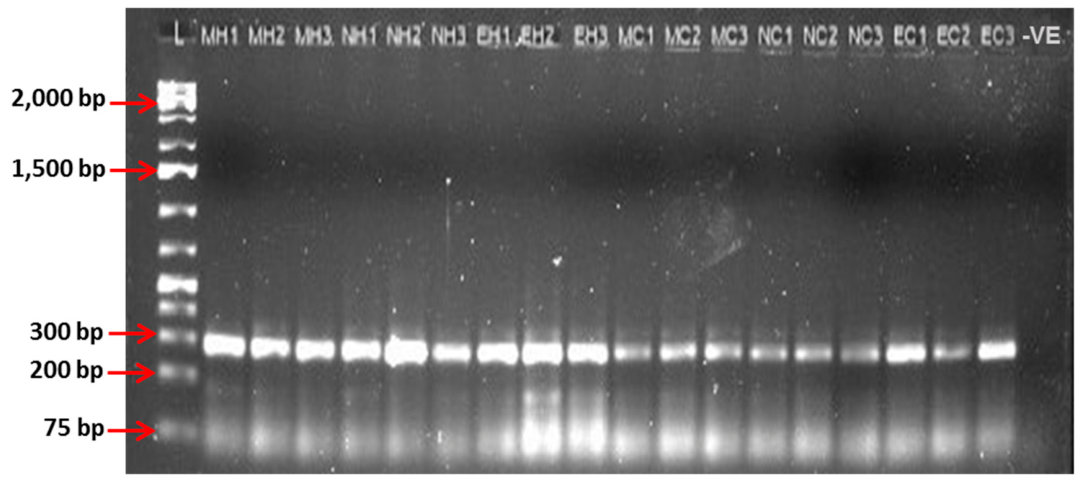
2.2. Detection of Ralstonia solanacearum Based on PCR Amplification
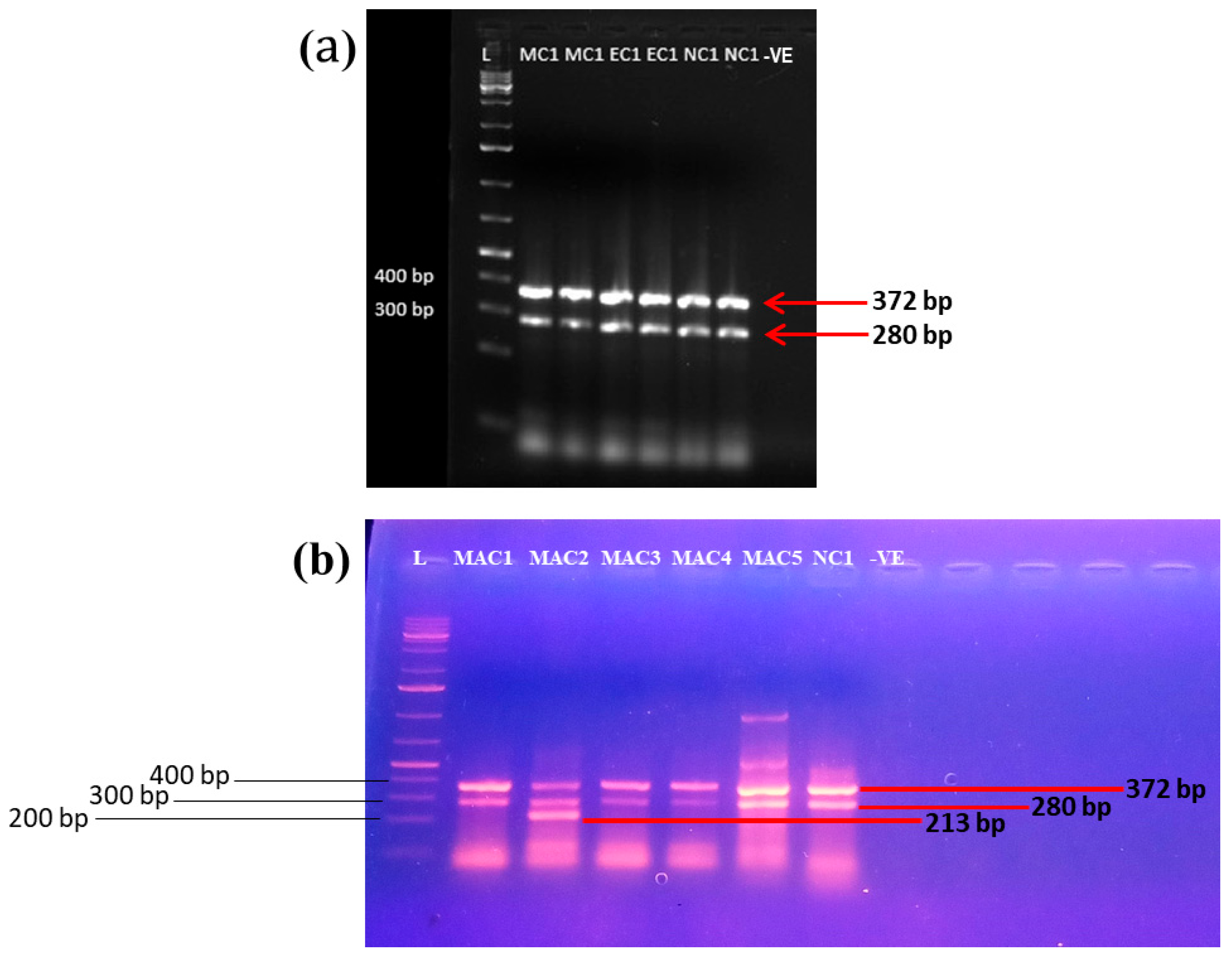
2.3. Multiplex PCR for Identification of Ralstonia solanacearum Phylotypes
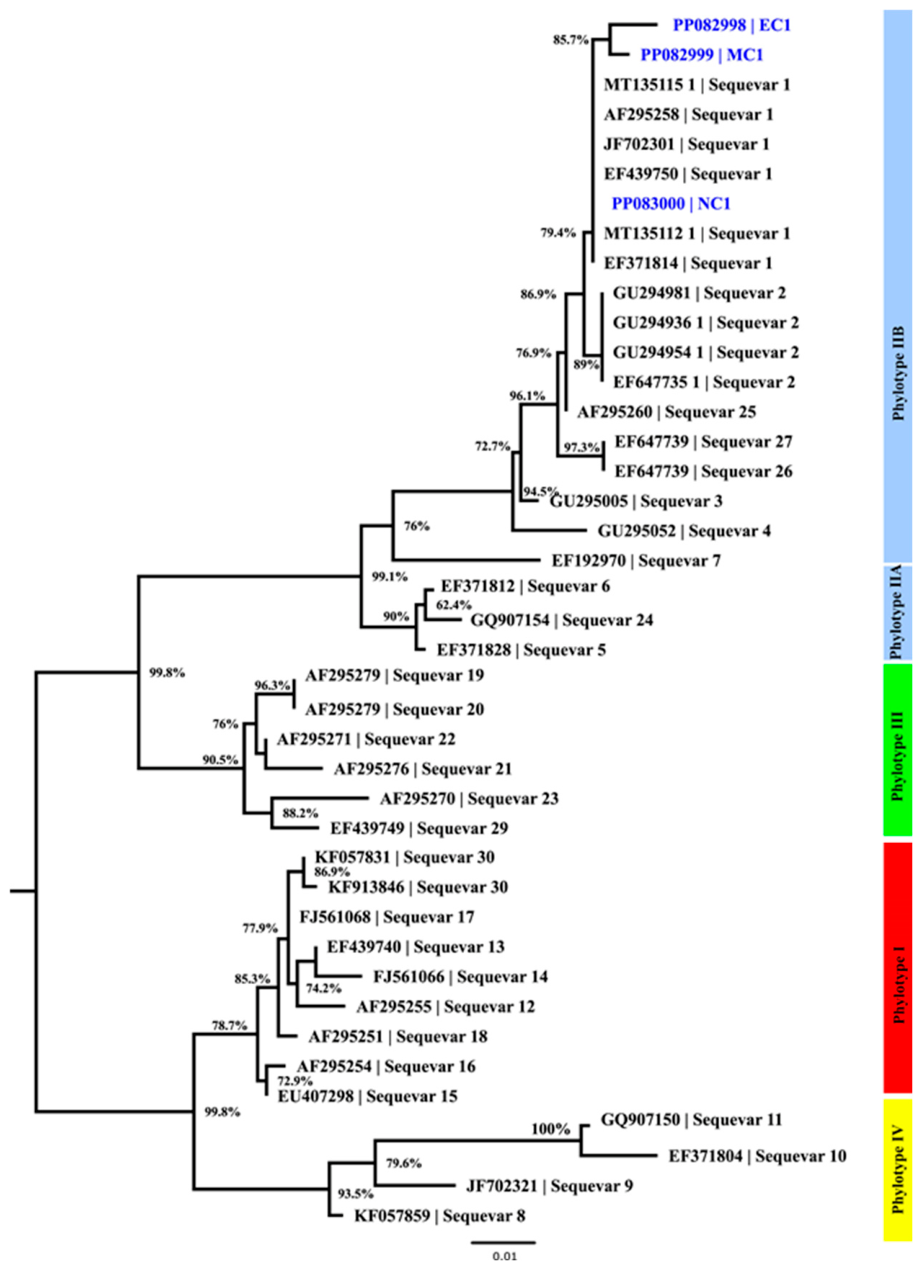
2.4. PCR Amplification and Sequencing of PCR Products for Identification of Sequevars
2.5. Nucleotide Sequence Analysis and Phylogenetic Inference
2.6. Statistical Analysis
2.7. Materials and Equipment
2.7.1. Materials
- Ethylenediaminetetraacetic acid disodium salt, EDTA Na2 (Sigma Aldrich (St. Louis, MI, USA), cat. no. 102075972)
- Tris base (Merck (Darmstadt, Germany), cat. No. 77-86-1)
- Ethidium bromide solution (Sigma Aldrich, cat. no. E1510)
- 1 kb ladder (Fischer Thermo Scientific, Waltham, MA, USA)
- Nuclease-free water (Invitrogen (Carlsbad, CA, USA), cat. no. AM9920)
- Agarose molecular biology grade (BioRad (Singapore), cat. no. 1613101)
- 0.5–10 μL disposable tips (ULPlast, OM-10-RF-C, Warszawa, Poland)
- 1–200 μL disposable tips (ULPlast, OM-200-RF-Y, Warszawa, Poland)
- 100–1000 μL disposable tips (ULPlast, OM-1000-RF-B, Warszawa, Poland)
- Microcentrifuge tubes, 1.5 mL and 2 mL (Eppendorf, Hamburg, Germany)
Stock Solutions
- Tris-HCl (1 M, pH 8.0): To prepare it, dissolve 6.55 g of Tris base in 400 mL distilled water. Use concentrated HCl to adjust the pH. Adjust the final volume with distilled water to 0.5 L.
- EDTA (0.5 M): To prepare it, dissolve 93.05 g in 400 mL distilled water. Mix thoroughly using a magnetic stirrer, use NaOH to adjust pH to 8.0 and then adjust final volume 0.5 L using distilled water.
Buffer Solutions
- Tris buffer: 10 mM Tris-HCl (pH 8.0) (autoclaved). Mix 5 mL of 1 M Tris-HCl (pH 8.0) and adjust the volume to 0.5 L with deionized water. Autoclave and store at room temperature at 23 ± 2 °C for ≤12 months.
- Tris-EDTA (TE) buffer: This consists of 10 mM Tris-HCl (pH 8.0) and 1 mM EDTA (pH 8.0) and autoclaved. To prepare it, mix 5 mL of 1 M Tris-HCl (pH 8.0) and 1 mL of 0.5 M EDTA (pH 8.0) and adjust the volume to 0.5 L with deionized water. Autoclave and store at room temperature at 23 ± 2 °C for ≤12 months.
2.8. Equipment
- Micropipettes, p10 µL, p20 µL, p50 µL, p200 µL and p1000 µL
- 1.5 mL and 2.0 mL microcentrifuge racks
- Nanodrop 2000C spectrophotometer (Thermo Fisher Scientific, Wilmington, DE, USA)
- Veriti thermocycler (Bio-Rad, Singapore)
- Gel electrophoresis chamber (Bio-Rad, Hercules, CA, USA)
- pH Meter (LAQUA F-71; Horiba, Kyoto, Japan)
- Tabletop centrifuge (Eppendorf 5702, Eppendorf, Hamburg, Germany; Cat. No. 5702000062)
- UV transilluminator (BioRad, GMbh—FeldKirchen, Germany)
3. Procedure for Extraction of Bacterial Genomic DNA
- Boil sterile distilled water, TE buffer and Tris buffer in water bath at 98 °C for 10 min.
- Cut small rectangular cores (measuring 3 × 5 mm) containing vascular tissues (approximately 2 g) for the stolon end of each potato tuber.
- Place the rectangular cores in a plastic bag (10 × 15 × 0.01 cm) and macerate for 4 min using a rubber mallet.CRITICAL STEP: Place the bag on a folded cloth on a flat bench (wooden surface) and press with rubber mallet in a back-and-forth motion. Proper maceration of the rectangular cores guarantees high DNA yield at each of the subsequent step.
- Add separately 2 mL of either sterile distilled water, boiled sterile distilled water, 1× TE buffer, 1× boiled TE buffer, 1× Tris buffer or 1× boiled Tris buffer to each of the homogenate samples in maceration bags and mix thoroughly for 1 min.
- Allow the mixture to stand for 10 min at room temperature (23 ± 2 °C).
- Transfer 1.5 mL of the mixture to 2.0 mL microcentrifuge tube and centrifuge at 11,000× g for 90 s at 23 ± 2 °C.
- Transfer 500 µL of the supernatant to sterile 1.5 mL microcentrifuge tubes and centrifuge at 15,000× g for 10 min at 23 ± 2 °C.
- Discard the supernatants and air-dry the bacterial pellets by inversion of the microcentrifuge tubes on sterile paper towels for 5 min to ensure complete draining off the supernatant.CRITICAL STEP: Care should be taken when decanting the liquid solution.
- Resuspend the bacterial pellets in 1 mL of nuclease-free water, vortex for 30 s and centrifuge at 14,000× g at 23 ± 2 °C for 10 min.
- Discard 800 µL of the supernatants by pipetting and place the remaining 200 µL with the pellets in boiling water bath at 95 °C for 10 min to lyse the bacterial cells.
- Immediately transfer to −20 °C or cool rapidly on ice.
- Calibrate the Nanodrop 2000C spectrophotometer (Thermo Fisher Scientific, Wilmington, DE, USA) with nuclease-free water.
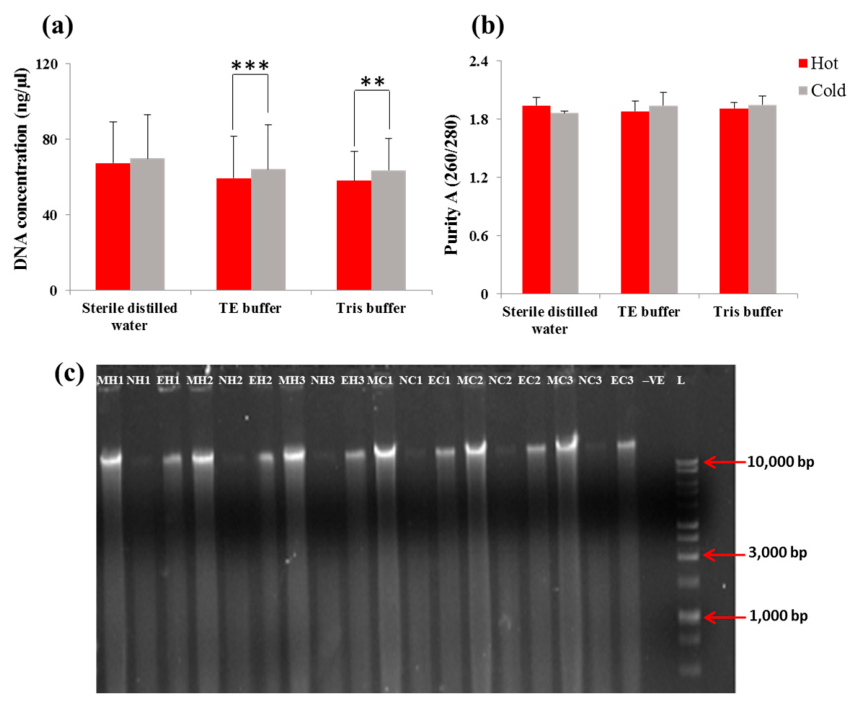
- Measure 1 µL of using a Nanodrop 2000C spectrophotometer on ssDNA-33 mode.
- Record the concentration in nanograms (ng) and purity (A260/280 and A260/230) for each sample.
- Assess the integrity of DNA by running 10 µL of the DNA solution on 0.8% (w/v) agarose gel dissolved in 1× TAE buffer stained with ethidium bromide solution (1 µg/mL).
- Immediately use DNA for downstream molecular applications.
- Store DNA at −20 °C till use
- Verify the quality and quantity of DNA at three months after extraction.
4. Expected Results
4.1. Quantitative and Qualitative Assessment of DNA
4.2. Suitability of DNA for PCR Detection of Ralstonia solanacearum
4.3. Identification of Phylotypes
4.4. Sequevar Identification and Phylogenetic Analysis
5. Discussion
6. Conclusions
Supplementary Materials
Author Contributions
Funding
Institutional Review Board Statement
Informed Consent Statement
Data Availability Statement
Acknowledgments
Conflicts of Interest
References
- Ahmed, N.N.; Islam, M.R.; Hossain, M.A.; Meah, M.B.; Hossain, M.M. Determination of races and biovars of Ralstonia solanacearum causing bacterial wilt disease of potato. J. Agric. Sci. 2013, 5, 86–93. [Google Scholar] [CrossRef] [Scilit]
- Devaux, A.; Kromann, P.; Ortiz, O. Potatoes for sustainable global food security. Potato Res. 2014, 57, 185–199. [Google Scholar] [CrossRef] [Scilit]
- Uwamahoro, F.; Berlin, A.; Bucagu, C.; Bylund, H.; Yuen, J. Ralstonia solanacearum causing potato bacterial wilt: Host range and cultivars’ susceptibility in Rwanda. Plant Pathol. 2020, 69, 559–568. [Google Scholar] [CrossRef] [Scilit]
- Stokstad, E. The new potato. Science 2019, 363, 574–577. [Google Scholar] [CrossRef] [Scilit]
- Abdurahman, A.; Parker, M.L.; Kreuze, J.; Elphinstone, J.G.; Struik, P.C.; Kigundu, A.; Arengo, E.; Sharma, K. Molecular epidemiology of Ralstonia solanacearum species complex strains causing bacterial wilt of potato in Uganda. Phytopathology 2019, 109, 1922–1931. [Google Scholar] [CrossRef] [Scilit] [PubMed]
- Sharma, K.; Kreuze, J.; Abdurahman, A.; Parker, M.; Nduwayezu, A.; Rukundo, P. Molecular diversity and pathogenicity of Ralstonia solanacearum species complex associated with bacterial wilt of potato in Rwanda. Plant Dis. 2021, 105, 770–779. [Google Scholar] [CrossRef] [Scilit]
- Patil, V.U.; Gopal, J.; Singh, B.P. Improvement for bacterial wilt resistance in potato by conventional and biotechnological approaches. Agric. Res. 2012, 1, 299–316. [Google Scholar] [CrossRef] [Scilit]
- Siri, M.I.; Sanabria, A.; Pianzzola, M.J. Genetic diversity and aggressiveness of Ralstonia solanacearum strains causing bacterial wilt of potato in Uruguay. Plant Dis. 2011, 95, 1292–1301. [Google Scholar] [CrossRef] [Scilit]
- Mansfield, J.; Genin, S.; Magori, S.; Citovsky, V.; Sriariyanum, M.; Ronald, P.; Dow, X.; Verdier, V.; Beer, S.; Machado, M.; et al. Top 10 plant pathogenic bacteria in molecular plant pathology. Mol. Plant Pathol. 2012, 13, 614–629. [Google Scholar] [CrossRef] [Scilit] [PubMed]
- Janse, J.D. Potato brown rot in Western Europe—History, present occurrence and some remarks on possible origin, epidemiology and control strategies. EPPO Bull. 1996, 26, 679–695. [Google Scholar] [CrossRef] [Scilit]
- Thomas-Sharma, S.; Abdurahman, A.; Ali, S.; Andrade-Piedra, J.; Bao, S.; Charkowski, A.; Crook, D.; Kadian, M.; Kromann, P.; Struik, P.; et al. Seed de-generation in potato: The need for an integrated seed health strategy to mitigate the problem in developing countries. Plant Pathol. 2016, 65, 3–16. [Google Scholar] [CrossRef] [Scilit]
- Demo, P.; Lemaga, B.; Kakuhenzire, R.; Schulz, S.; Borus, D.; Barker, I.; Woldegiorgis, G.; Parker, M.L.; Schulte-Geldermann, E. Strategies to improve seed potato quality and supply in Sub-Saharan Africa: Experience from interventions in five countries. In Potato and Sweetpotato in Africa: Transforming the Value Chains for Food and Nutrition Security; CABI International: Oxfordshire, UK, 2015; p. 155. [Google Scholar]
- Gildemacher, P.; Demo, P.; Barker, I.; Kaguongo, W.; Woldegiorgis, G.; Wagoire, W.; Wakahiu, M.; Leeuwis, C.; Struik, P.C. A description of seed potato systems in Kenya, Uganda and Ethiopia. Am. J. Potato Res. 2009, 86, 373–382. [Google Scholar] [CrossRef] [Scilit]
- Fegan, M.; Prior, P. How Complex is the “Ralstonia solanacearum Species Complex”. In Bacterial Wilt: The Disease and the Ralstonia solanacearum Species Complex; American Phytopathological Society: St. Paul, MN, USA, 2005; pp. 1–15. [Google Scholar]
- Stulberg, M.J.; Rascoe, J.; Li, W.; Yan, Z.; Nakhla, M.K.; Huang, Q. Development and comparison of TaqMan-based real-time PCR assays for detection and differentiation of Ralstonia solanacearum strains. Curr. Microbiol. 2016, 73, 542–549. [Google Scholar] [CrossRef] [Scilit]
- Okiro, L.A.; Tancos, M.A.; Nyanjom, S.G.; Smart, C.D.; Parker, M.L. Comparative evaluation of LAMP, qPCR, conventional PCR, and ELISA to detect Ralstonia solanacearum in Kenyan potato fields. Plant Dis. 2019, 103, 959–965. [Google Scholar] [CrossRef] [Scilit] [PubMed]
- Rossen, L.; Nørskov, P.; Holmstrøm, K.; Rasmussen, O.F. Inhibition of PCR by components of food samples, microbial diagnostic assays and DNA extraction solutions. Int. J. Food Microbiol. 1992, 17, 37–45. [Google Scholar] [CrossRef] [Scilit] [PubMed]
- Okiro, L.A.; Mulwa, R.M.; Oyoo, M.E.; Machuka, E.M.; Parker, M.L.; Pelle, R. Phylogenetic distribution of Ralstonia solanacearum species complex populations in potato in Kenya. Plant Dis. 2022, 106, 1736–1742. [Google Scholar] [CrossRef] [Scilit]
- Sharma, K.; Iruegas Bocardo, F.; Abdurahman, A.; Alcalá Briseño, R.I.; Garrett, K.A.; Goss, E.M.; Ngundo, G.; Kreuze, J.; Atieno, E.; Munguti, F. Ralstonia Strains from potato-growing regions of Kenya reveals two phylotypes and epidemic clonality of phylotype II sequevar 1 strains. Phytopathology 2022, 112, 2072. [Google Scholar] [CrossRef] [Scilit]
- Dairawan, M.; Shetty, P.J. The Evolution of DNA Extraction Methods. Am. J. Biomed. Sci. Res. 2020, 8, 39–45. [Google Scholar] [CrossRef] [Scilit]
- Chen, H.; Rangasamy, M.; Tan, S.Y.; Wang, H.; Siegfried, B.D. Evaluation of five methods for total DNA extraction from western corn rootworm beetles. PLoS ONE 2010, 5, e11963. [Google Scholar] [CrossRef] [Scilit] [PubMed]
- Abdurahman, A.; Griffin, D.; Elphinstone, J.; Struik, P.C.; Schulz, S.; Schulte-Geldermann, E.; Sharma, K. Molecular characterization of Ralstonia solanacearum strains from Ethiopia and tracing potential source of bacterial wilt disease outbreak in seed potatoes. Plant Pathol. 2017, 66, 826–834. [Google Scholar] [CrossRef] [Scilit]
- Fegan, M.; Taghavi, M.; Sly, L.I.; Hayward, A.C. Phylogeny, diversity and molecular diagnostics of Ralstonia solanacearum. In Bacterial Wilt Disease: Molecular and Ecological Aspects; Prior, P., Allen, C., Elphinstone, J., Eds.; Springer: Berlin/Heidelberg, Germany, 1998; pp. 19–33. [Google Scholar]
- Guidot, A.; Elbaz, M.; Carrére, S.; Siri, M.I.; Pianzzola, M.J.; Prior, P.; Boucher, C. Specific genes from the potato brown rot strains of Ralstonia solanacearum and their potential use for strain detection. Phytopathology 2009, 99, 1105–1112. [Google Scholar] [CrossRef] [Scilit] [PubMed]
- Criscuolo, A.; Gribaldo, S. BMGE (Block Mapping and Gathering with Entropy): A new software for selection of phylogenetic informative regions from multiple sequence alignments. BMC Evol. Biol. 2010, 10, 210. [Google Scholar] [CrossRef] [Scilit]
- Edgar, R.C. MUSCLE: Multiple sequence alignment with high accuracy and high throughput. Nucleic Acids Res. 2004, 32, 1792–1797. [Google Scholar] [CrossRef] [Scilit]
- Lefort, V.; Longueville, J.E.; Gascuel, O. SMS: Smart Model Selection in PhyML. Mol. Biol. Evol. 2017, 34, 2422–2424. [Google Scholar] [CrossRef] [Scilit]
- Guindon, S.; Dufayard, J.; Lefort, V.; Anisimova, M.; Hordijk, W.; Gascuel, O. New Algorithms and Methods to Estimate Maximum-Likelihood Phylogenies: Assessing the Performance of PhyML 3.0. Syst. Biol. 2010, 59, 307–321. [Google Scholar] [CrossRef] [Scilit] [PubMed]
- Kai, S.; Matsuo, Y.; Nakagawa, S.; Kryukov, K.; Matsukawa, S.; Tanaka, H.; Iwai, T.; Imanishi, T.; Hirota, K. Rapid bacterial identification by direct PCR amplification of 16S rRNA genes using the MinIONTM nanopore sequencer. FEBS Open Bio 2019, 9, 548–557. [Google Scholar] [CrossRef] [Scilit]
- Sahu, B.; Singh, S.D.; Behera, B.K.; Panda, S.K.; Das, A.; Parida, P.K. Rapid detection of Salmonella contamination in seafoods using multiplex PCR. Braz. J. Microbiol. 2019, 50, 807–816. [Google Scholar] [CrossRef] [Scilit]
- Opina, N.; Tavner, F.; Hollway, G.; Wang, J.; Li, T.; Maghirang, R.; Fegan, M.; Hayward, A.; Krishnapillai, V.; Hong, W.; et al. A novel method for development of species and strain-specific DNA proves and PCR primers for identifying Burkholderia Solanacearum (formerly Pseudomonas Solanacearum). Asia-Pac. J. Mol. Biol. Biotechnol. 1997, 5, 19–30. [Google Scholar]
- Safni, I.; Cleenwerck, I.; De Vos, P.; Fegan, M.; Sly, L.; Kappler, U. Polyphasic taxonomic revision of the Ralstonia solanacearum species complex: Proposal to emend the descriptions of Ralstonia solanacearum and Ralstonia syzygii and reclassify current R. syzygii strains as Ralstonia syzygii subsp. syzygii subsp. nov. R.S. Int. J. Syst. Evol. Microbiol. 2014, 64, 3087–3103. [Google Scholar] [CrossRef] [Scilit]
- Santana, B.G.; Lopes, C.A.; Alvarez, E.; Barreto, C.C.; Allen, C.; Quirino, B.F. Diversity of Brazilian biovar 2 strains of Ralstonia solanacearum. J. Gen. Plant Pathol. 2012, 78, 190–200. [Google Scholar] [CrossRef] [Scilit]
- Gryson, N. Effect of food processing on plant DNA degradation and PCR-based GMO analysis: A review. Anal. Bioanal. Chem. 2010, 396, 2003–2022. [Google Scholar] [CrossRef] [Scilit]
- Vreeburg, R.A.M.; Zendman, A.J.W.; Pol, A.; Verheij, E.; Nas, M.; Kooman-Gersmann, M. Validation of four real-time TaqMan PCRs for the detection of Ralstonia solanacearum and/or Ralstonia pseudosolanacearum and/or Clavibacter michiganensis subsp. sepedonicus in potato tubers using a statistical regression approach. EPPO Bull. 2018, 48, 86–96. [Google Scholar] [CrossRef] [Scilit]
- Horita, M.; Suga, Y.; Ooshiro, A.; Tsuchiya, K. Analysis of genetic and biological characters of Japanese potato strains of Ralstonia solanacearum. J. Gen. Plant Pathol. 2012, 76, 196–207. [Google Scholar] [CrossRef] [Scilit]
- Grover, A.; Chakrabarti, W.K.; Azmi, W.; Khurana, S.M.P. Rapid method for isolation of PCR amplifiable genomic DNA of Ralstonia solanacearum infested in potato tubers. Adv. Microbiol. 2012, 2, 441–446. [Google Scholar] [CrossRef]
- Kotchoni, S.O.; Gachomo, E.W. A rapid and hazardous reagent free protocol for genomic DNA extraction suitable for genetic studies in plants. Mol. Biol. Rep. 2009, 36, 1633–1636. [Google Scholar] [CrossRef] [Scilit]
- Porebski, S.; Bailey, L.G.; Baum, B.R. Modification of a CTAB DNA extraction protocol for plants containing high polysaccharide and polyphenol components. Plant Mol. Biol. Report. 1997, 15, 8–15. [Google Scholar] [CrossRef] [Scilit]
- Sabri, M.; Achbani, E.H.; Diouri, M.; Benkirane, R.; Ou-zine, M.; El Handi, K.; Habbadi, K. Simple direct DNA extraction protocols for efficient routine detection of plant pathogenic bacteria via conventional PCR. J. Crop Improv. 2021, 36, 514–525. [Google Scholar] [CrossRef] [Scilit]
- Pastrik, K.H. Detection of Clavibacter michiganensis subsp. sepe donicus in potato tubers by multiplex PCR with coamplification of host DNA. Eur. J. Plant Pathol. 2000, 106, 155–165. [Google Scholar] [CrossRef] [Scilit]
- Pastrik, K.H.; Maiss, E. Detection of R. solanacearum in potato tubers by polymerase chain reaction. J. Phytopathol. 2000, 148, 619–626. [Google Scholar] [CrossRef] [Scilit]
- Johnson, K.L.; Zheng, D.; Kaewnum, S.; Reid, C.L.; Burr, T. Development of a Magnetic Capture Hybridization Real-Time PCR Assay for Detection of Tumorigenic Agrobacterium Vitis in Grapevines. Phytopathology 2013, 103, 633–640. [Google Scholar] [CrossRef] [Scilit]
- Hu, Q.; Liu, Y.; Yi, S.; Huang, D. A comparison of four methods for PCR inhibitor removal. Forensic Sci. Int. Genet. 2015, 16, 94–97. [Google Scholar] [CrossRef] [Scilit] [PubMed]
- Alvarez, A.M. Integrated Approaches for Detection of Plant Pathogenic Bacteria and Diagnosis of Bacterial Diseases. Ann. Rev. Phytopathol. 2004, 42, 339–366. [Google Scholar] [CrossRef] [Scilit] [PubMed]



| Primer Name | Sequence (5′–3′) | Size (bp) | Specificity |
|---|---|---|---|
| 759R | GTCGCCGTCAACTCACTTTCC | 282 | Species validation |
| 760F | GTCGCCGTCAGCAATGCGGAATCG | ||
| Nmulti:21:1F | CGT TGA TGA GGC GCG CAA TTT | 144 | Forward primer for identification of phylotype I |
| Nmulti:21:2F | AAG TTA TGG ACG GTG GAA GTC | 372 | Forward primer for identification of phylotype II |
| Nmult:23:AF | ATTACGAGAGCAATCGAAAGATT | 91 | Forward primer for identification of phylotype III |
| Nmult:22:InF | ATTGCCAAGACGAGAGAAGTA | 213 | Forward primer for identification of phylotype IV |
| Nmult:22:RR | TCG CTT GAC CCT ATA ACG AGT A | Reverse primer for identification of ALL phylotypes (I–IV) | |
| Endo-F Endo-R | ATG CAT GCC GCT GGT CGC CGC GCG TTG CCC GGC ACG AAC ACC | 750 | egl gene for sequevar identification |
Disclaimer/Publisher’s Note: The statements, opinions and data contained in all publications are solely those of the individual author(s) and contributor(s) and not of MDPI and/or the editor(s). MDPI and/or the editor(s) disclaim responsibility for any injury to people or property resulting from any ideas, methods, instructions or products referred to in the content. |
© 2026 by the authors. Licensee MDPI, Basel, Switzerland. This article is an open access article distributed under the terms and conditions of the Creative Commons Attribution (CC BY) license.
Share and Cite
Mwangi, B.; Njiru, J.M.; Wandili, S.A.; Gachoka, K.K.; Mburu, K.; Muriira, G.; Rotich, H.; Ager, E.; Nyaboga, E.N. A Simple, Rapid and Reliable Protocol for Extraction of High Quality Bacterial Genomic DNA Directly from Potato Tubers for Efficient PCR-Based Surveillance and Molecular Characterization of Ralstonia solanacearum. Methods Protoc. 2026, 9, 84. https://doi.org/10.3390/mps9030084
Mwangi B, Njiru JM, Wandili SA, Gachoka KK, Mburu K, Muriira G, Rotich H, Ager E, Nyaboga EN. A Simple, Rapid and Reliable Protocol for Extraction of High Quality Bacterial Genomic DNA Directly from Potato Tubers for Efficient PCR-Based Surveillance and Molecular Characterization of Ralstonia solanacearum. Methods and Protocols. 2026; 9(3):84. https://doi.org/10.3390/mps9030084
Chicago/Turabian StyleMwangi, Brian, Joshua M. Njiru, Sarah A. Wandili, Kennedy K. Gachoka, Kenneth Mburu, Geoffrey Muriira, Henry Rotich, Elvince Ager, and Evans N. Nyaboga. 2026. "A Simple, Rapid and Reliable Protocol for Extraction of High Quality Bacterial Genomic DNA Directly from Potato Tubers for Efficient PCR-Based Surveillance and Molecular Characterization of Ralstonia solanacearum" Methods and Protocols 9, no. 3: 84. https://doi.org/10.3390/mps9030084
APA StyleMwangi, B., Njiru, J. M., Wandili, S. A., Gachoka, K. K., Mburu, K., Muriira, G., Rotich, H., Ager, E., & Nyaboga, E. N. (2026). A Simple, Rapid and Reliable Protocol for Extraction of High Quality Bacterial Genomic DNA Directly from Potato Tubers for Efficient PCR-Based Surveillance and Molecular Characterization of Ralstonia solanacearum. Methods and Protocols, 9(3), 84. https://doi.org/10.3390/mps9030084