
Investigating Metabolically Altered Pathways in Small Cell Lung Cancer: From RNA Sequencing Analysis to Seahorse-Based Functional Validation



Abstract
1. Introduction
2. Materials and Methods
2.1. Determination of Altered Pathways by DDX5 Knockdown (DDX5KD) or Supinoxin Treatment Through RNA-Seq Data Analysis
2.1.1. Preparation
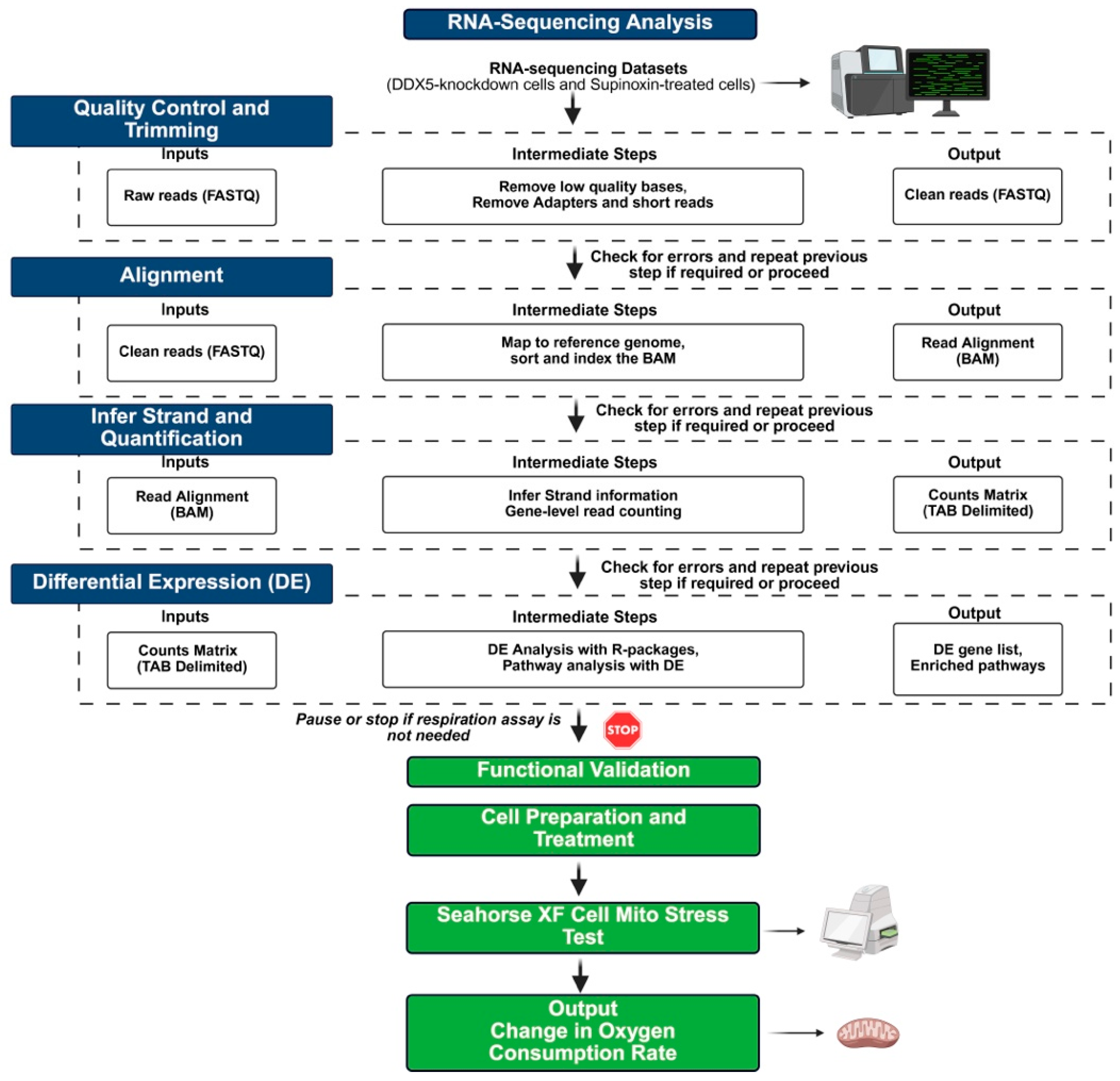
2.1.2. Quality Control of FASTQ Data
- Quality assessment for each data was performed using FastQC tool [28].
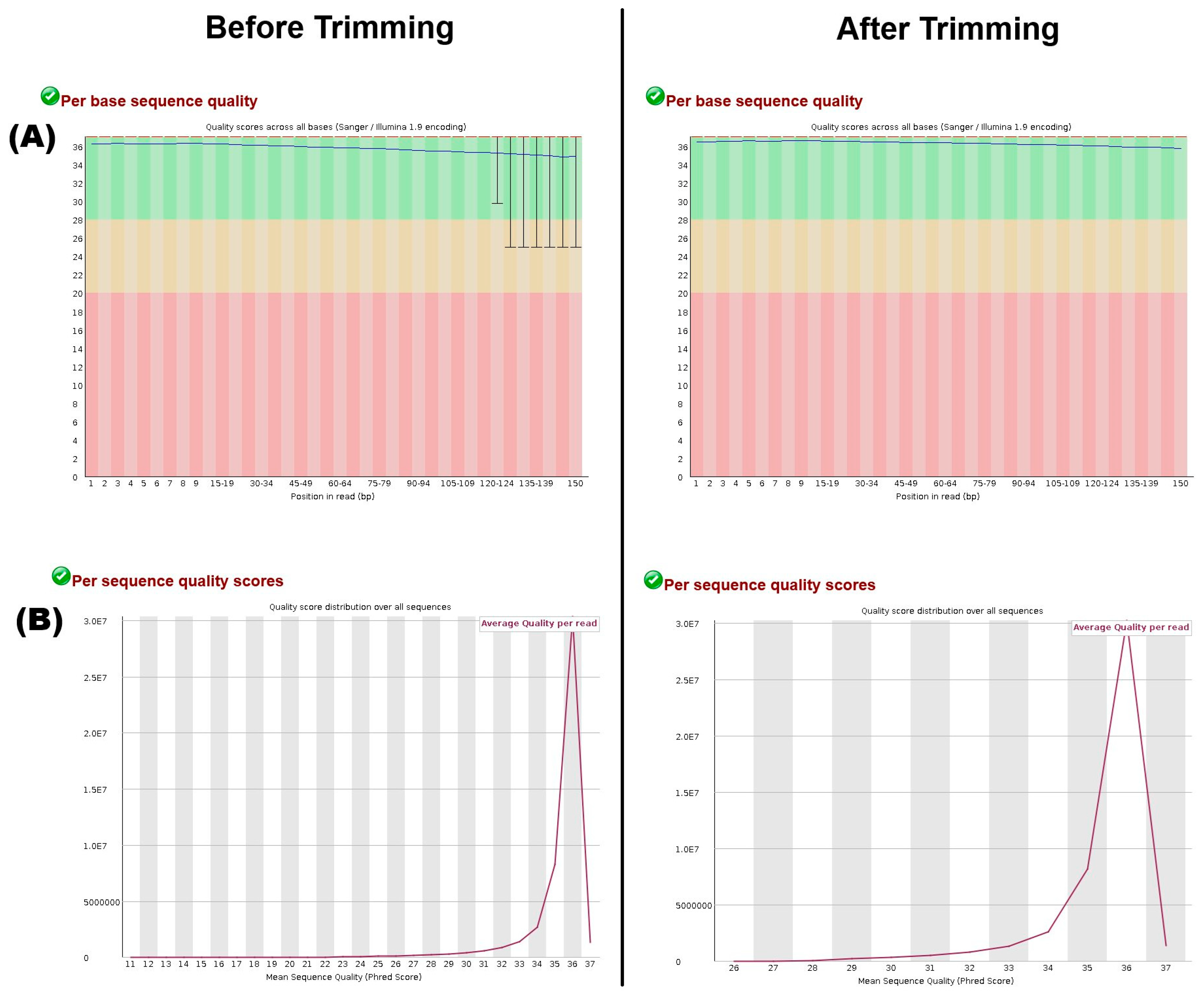
- Quality-based trimming (removal of adapters, low-quality bases and short sequences) was performed with fastp [29]. After trimming, re-assessment of trimmed data was performed using FastQC to ensure optimal data quality.
- An example of the output from the FastQC tool (before and after quality trimming) is shown in Figure 1.
2.1.3. Indexing the Reference Genome
- Indexing of the reference genome (structured representation of a genome to enable faster and more efficient searching and alignment of DNA sequences) was performed through the STAR aligner [30].
2.1.4. Alignment with the Reference Genome
- Quality-trimmed reads were mapped to the reference genome using the STAR aligner. The alignment summary file was inspected to ensure a suitable percentage of reads are mapped to the reference genome. The aligned data (BAM format) were generated for each sample.
2.1.5. Infer Data-Strandedness
- Determining if data is stranded or un-stranded (dependent on library preparation and sequencing protocols) is crucial for proper analysis and interpretation of RNA-seq data. Stranded protocols preserve the directionality of the transcripts, while non-stranded protocols do not.
- Data strandedness for each sample was determined using the ‘infer_experiment.py’ script from the RSeQC package [32]. The output denotes the fraction of reads assigned to each biological sequence orientation (5′-3′—forward or 3′-5′ reverse). Generally, for un-stranded libraries, fractions of reads assigned to each orientation are roughly equal (50:50) while for stranded libraries a definitive bias is observed towards one orientation (80:20, 20:80 or similar).
2.1.6. Quantification to Generate Counts Matrix
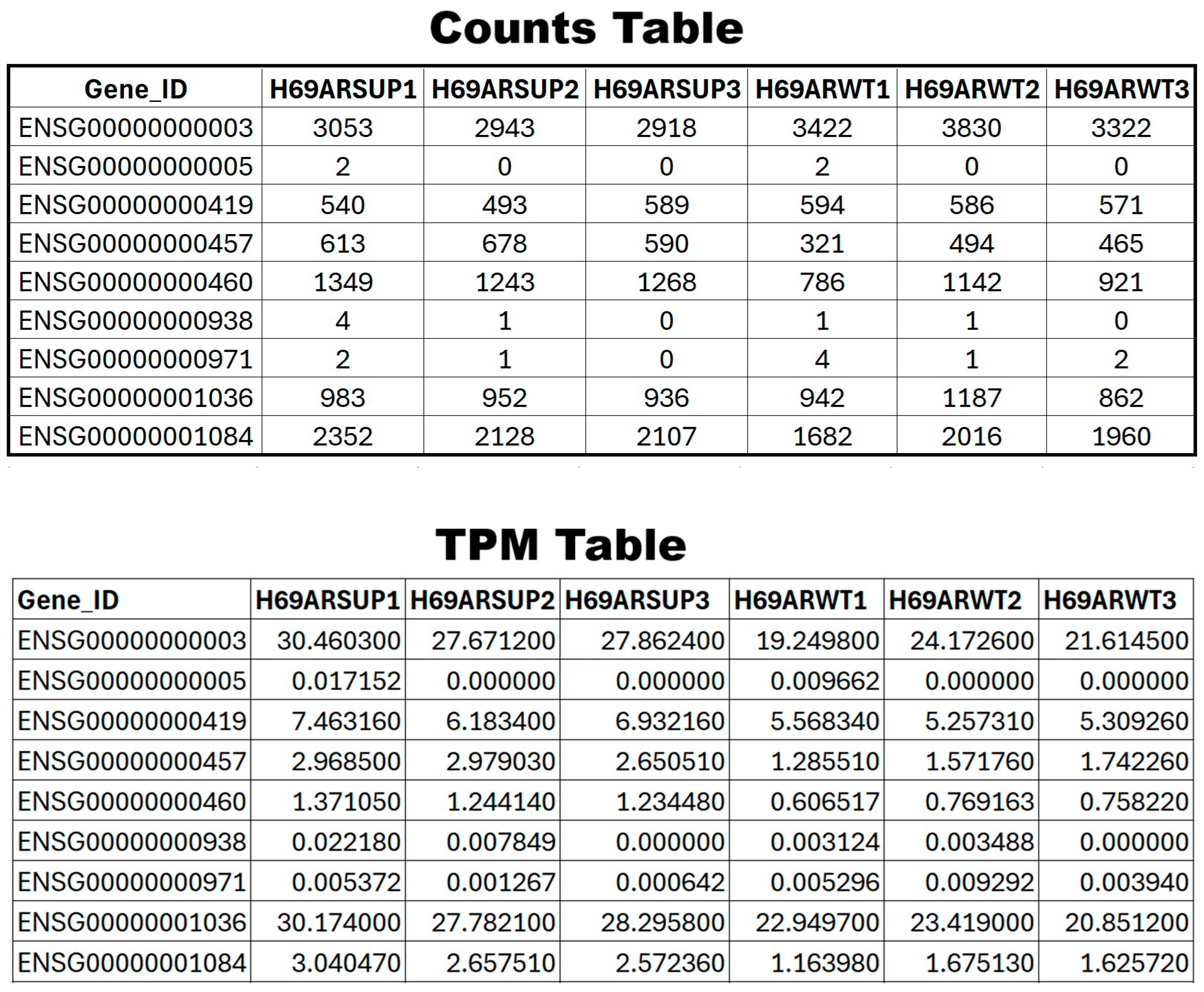
- The count matrix in RNA-seq summarizes the expression level of genes in each sample. It is generated by counting the number of reads aligned to each gene.
- A ‘featureCounts’ program from the subread package [33] was employed to count the reads assigned to genes in each sample. Genome annotation (GTF format), aligned reads (BAM format) and inferred strand information were provided as input and the program counted the reads assigned to each gene within each sample. In the featureCounts’ output (TAB-delimited file), column1 and column 7 corresponding to “Gene ID” and “assigned read counts”, respectively, were extracted using the cut command.
- Lastly, a custom script was employed to generate a combined counts matrix where each row represented a gene, and each column represented a sample. The values in the matrix denote the number of reads mapped to each gene within each sample.
- Transcripts Per Million (TPM) are normalized counts in RNA-seq data. TPM represents the relative abundance of transcripts, essentially indicating the number of reads detected for a gene if sequenced to one million reads. TPM normalizes for both sequencing depth and transcript length, making it useful for comparing gene expression across different samples.
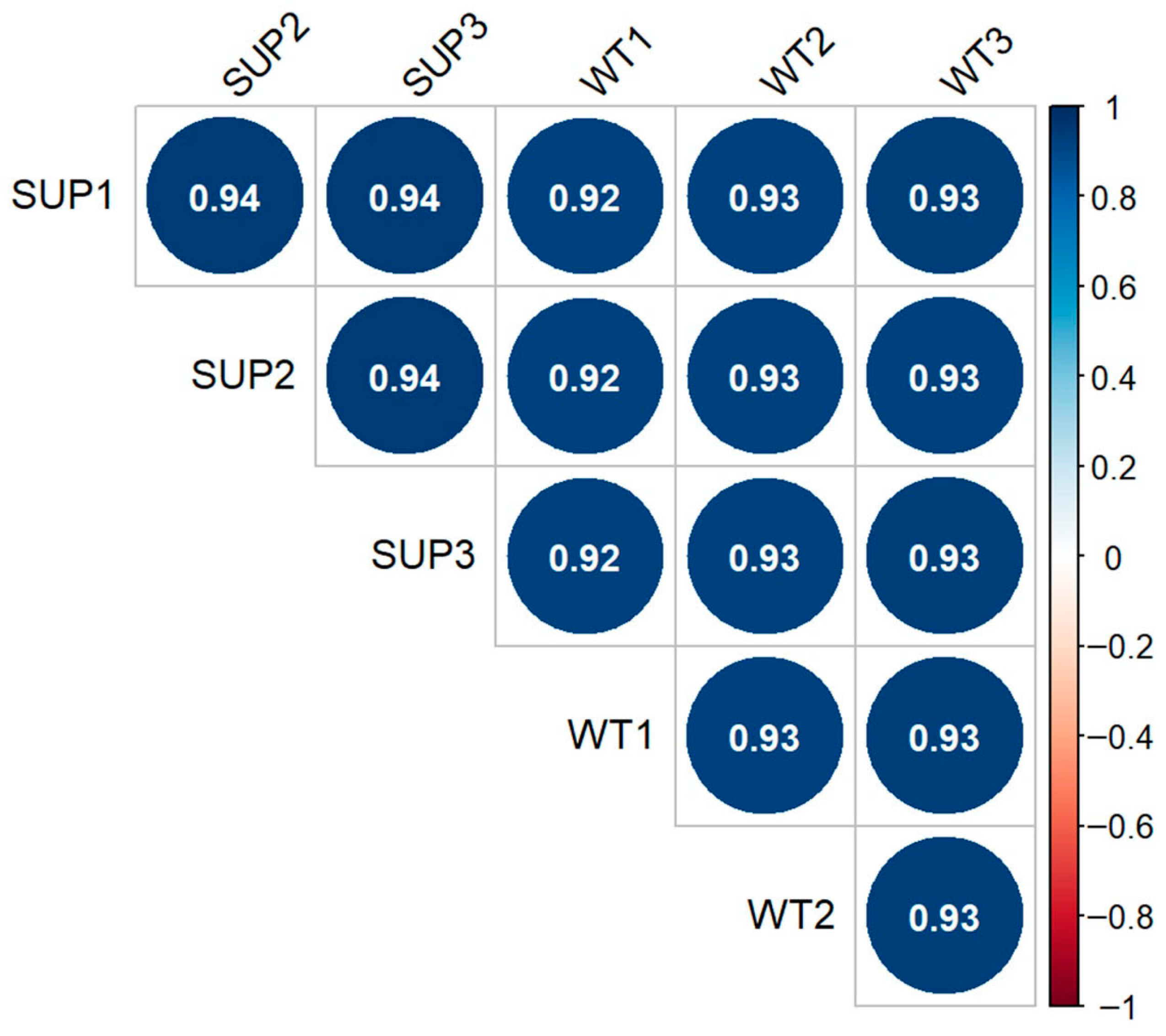
- Next steps determined the correlation between replicates. The ENCODE recommended eplicates concordance is Spearman correlation of >0.9 between isogenic replicates and >0.8 between anisogenic replicates (i.e., replicates from different donors) (Figure 3). We determined Spearman’s correlation among replicates in Supinoxon data and observed high concordance (>0.9) among replicates.
- Recommendations for low correlation among replicates:
2.1.7. Differential Expression (DE) Analysis
- DE analysis identified genes with significant changes in expression levels between two or more conditions. The analysis involved statistical tests to determine if observed differences in gene expression were likely due to biological factors rather than random noise.
- DE analysis between (DDX5-knockdown and control) and (Supinoxin treated and control) was performed using edgeR R-package [37]. A complete script for DE analysis is available on GitHub (https://github.com/sagarutturkar/RNAseq.Seahorse.Validation.TranLab2025) (accessed on 2 March 2026) and on Zenodo (DOI: https://doi.org/10.5281/zenodo.18638583).
2.1.8. Determined Shared Up- and Down-Regulated Genes Between DDX5KD and Supinoxin Treatment Data
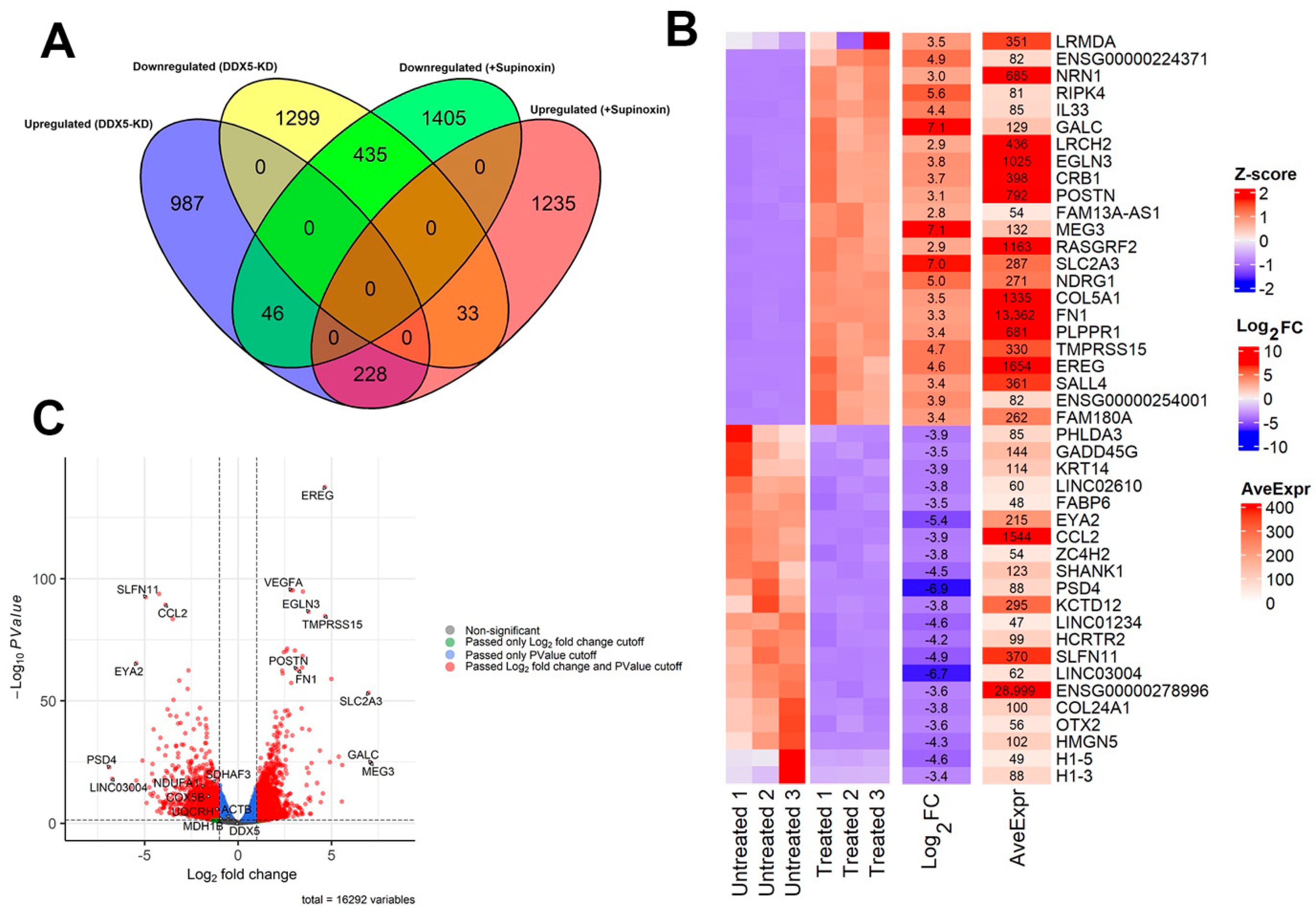
- In each dataset, up- and down-regulated genes are denoted as follows:
- Up-regulated genes—FDR < 0.05 and log2fold-change > 1
- Down-regulated genes—FDR < 0.05 and log2fold-change < −1
2.1.9. Custom Figures
- A heatmap denoting the up- or down-regulation (log2 fold change) for key genes in Supinoxin-treated samples as compared to untreated samples was created using the R-package ComplexHeatmap (Figure 4B).
- A heatmap denoting the average expression across Supinoxin-treated and untreated samples was created using the R-package ComplexHeatmap (Figure 4B).
- A volcano plot displaying key differentially expressed genes (−log10 Pvalueon Y-axis) along with up- or down-regulation (log2 fold change on X-axis) in Supinoxin data was created using the R-package EnhancedVolcano (Figure 4C).
2.1.10. Pathway Analysis
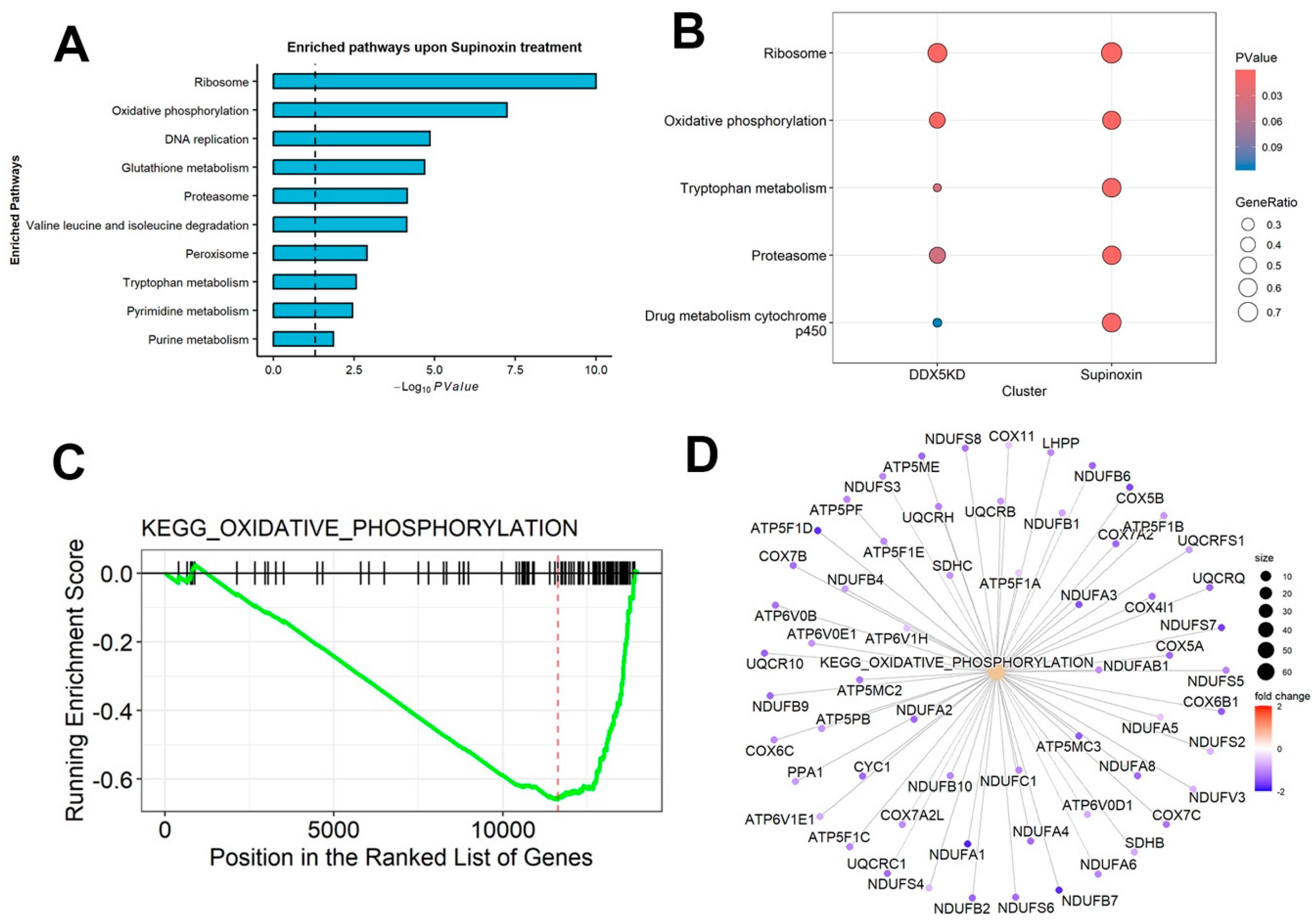
- Pathway analysis can be performed using various databases such as KEGG, Reactome, Gene Ontology (GO) and others. The choice of database depends on the research question and the specific pathways of interest. For this analysis, we started with Hallmark gene sets from the Molecular Signature Database (MSigDB) via the R-package msigdbr. KEGG OXIDATIVE PHOSPHORYLATION was the top-enriched pathway in the Hallmark gene set.
- To dive deeper into pathway mechanisms and canonical signaling, we did a second-pass analysis with the “C2” curated gene set from MSigDB. Enrichment analysis was performed with pre-ranked genes (Rank = signed fold change × −log10 Pvalue).
- Enrichment analysis for Supinoxin data was performed using the GSEA function available in the clusterProfiler R-package.
- Enrichment analysis for DDX5 knockdown data was performed using the GSEA function available in the clusterProfiler R-package.
- The compareCluster function from the clusterProfiler R-package was applied to examine biological profiles (reference: C2 database from MSigDB [42]) associated with Supinoxin and DDX5 knockdown genes, and a dot plot displaying simultaneous enrichment of important pathways associated with each treatment was generated (Figure 5B).
- The gseaplot was created to visualize the distribution of the gene set and the enrichment score for KEGG_OXIDATIVE_PHOSPHORYLATION pathway in Supinoxin data (Figure 5C).
- Gene-concept network plot for pathway “KEGG OXIDATIVE PHOSPHORYLATION” in Supinoxin data was created using the cnetplot function from the clusterProfiler R-package (Figure 5D).
2.1.11. Confidence Assessment for the KEGG Oxidative Phosphorylation (OXPHOS) Network
- To assess the robustness of the gene-concept network within the KEGG Oxidative Phosphorylation (OXPHOS) pathway, we determined if transcriptional enrichment (adjusted p-value = 3.90 × 10⁻⁶, normalized enrichment score = −2.11) corresponds to subsequent protein-level organization.
- Gene symbols for the OXPHOS pathway were mapped to corresponding STRING IDs. The majority of genes were successfully mapped and interaction querying yielded greater than 2000 pairwise connections among 60 OXPHOS gene symbols, indicating extensive inter-protein connectivity and a coherent protein interaction network. Visualization of the resulting STRING network was performed to demonstrate a densely interconnected structure with a highly significant p-value (Figure S1).
- Each STRING interaction within this network was supported by a combined confidence score metric, which was computed by combining the probabilities from the different evidence channels (e.g., experimental data, conserved neighborhood, Gene fusions, Phylogenetic co-occurrence, Co-expression, Database imports) [43]. STRING combined confidence score ranges from 0 to 1000 (some sources may show a range from 0 to 1, which simply divides the scores by 1000). The combined confidence score was interpreted as (0–400 = low-confidence; 400–700 = high-confidence, and 900–1000 = very high-confidence) [43]. Networks with low-confidence scores generally have more connecting edges, dense networks, and may contain indirect evidence with higher chances of false positives, while networks with high-confidence scores (>700) have fewer edges with strong experimental support and a clean core network with stronger biological evidence. The distribution of STRING confidence scores within the OXPHOS interaction network was examined. As denoted in Figure S1 > 79% interactions within the OXPHOS network have very-high-confidence (>900) scores and the remaining >20% interactions have high-confidence scores (>700), indicating a highly structured and biologically cohesive protein interaction network (Figure S1).
- Next, protein–protein interaction (PPI) enrichment analysis was performed. The OXPHOS network contained 1102 observed edges (ppi_edges) compared to 32 expected edges (ppi_lambda). PPI enrichment analysis p-value (ppi_Pvalue) was 0, indicating a highly significant overrepresentation of interactions above random chance. To account for machine precision limits (i.e., p-value reported as 0), the smallest positive double value was used to compute a conservative −log10-transformed enrichment metric, yielding a robust quantitative estimate of PPI confidence. Further, a composite network confidence score was computed as a function of OXPHOS pathway enrichment significance, the average of gene-level differential expression strength and PPI enrichment magnitude. High composite network confidence score affirms the significance of the OXPHOS pathway network.
- Next, topological analysis was performed to quantitatively characterize the structural organization of a protein–protein interaction (PPI) network. Topological analysis revealed the organization of protein interactions and associated key genes (termed hub genes) that are strong contributors to network integrity. As denoted in the respective R-code, first a graph object (g) was built from OXPHOS interactions, followed by simplification by removing duplicate edges and self-loops (i.e., removing technically redundant interactions). The resulting graph comprised 60 nodes and 1102 non-redundant edges and a corresponding network density of 0.62 (i.e., 62% of all theoretically possible pairwise interactions were retained within the simplified graph object). Subsequent calculation of the degree of centrality identified nodes with a high number of connections. Nodes with the highest degree of centrality were used to determine the top 10 hub genes that form core components within the OXPHOS network. Visualization of the core OXPHOS network (i.e., protein–protein interactions associated with the top 10 hub genes) was performed.
- Mapping of the OXPHOS network to STRING interactions indicated extensive inter-protein connectivity and >79% interactions with a very high confidence score (>900) denoted biological and functional relevance of protein–protein interactions. Enrichment testing of protein–protein interactions revealed a highly significant p-value, confirming that PPI network connectivity exceeds random expectation. Topological analysis moved beyond simple interaction counts and quantitatively characterized the structural organization of a protein–protein interaction network and revealed the hub genes that contribute most strongly to network integrity. Collectively, these analyses indicated that the OXPHOS pathway is not only transcriptionally enriched but also forms a structured, biologically cohesive protein–protein interaction network with hierarchical organization and central hub genes. This reinforced our findings that OXPHOS perturbations are a coordinated pathway-level remodeling activity rather than simple gene-level variations.
2.2. Determination of Mitochondrial Respiration by the Seahorse XFe24 Analyzer
2.2.1. Seeding Cells in SEAHORSE XFe24 Plates
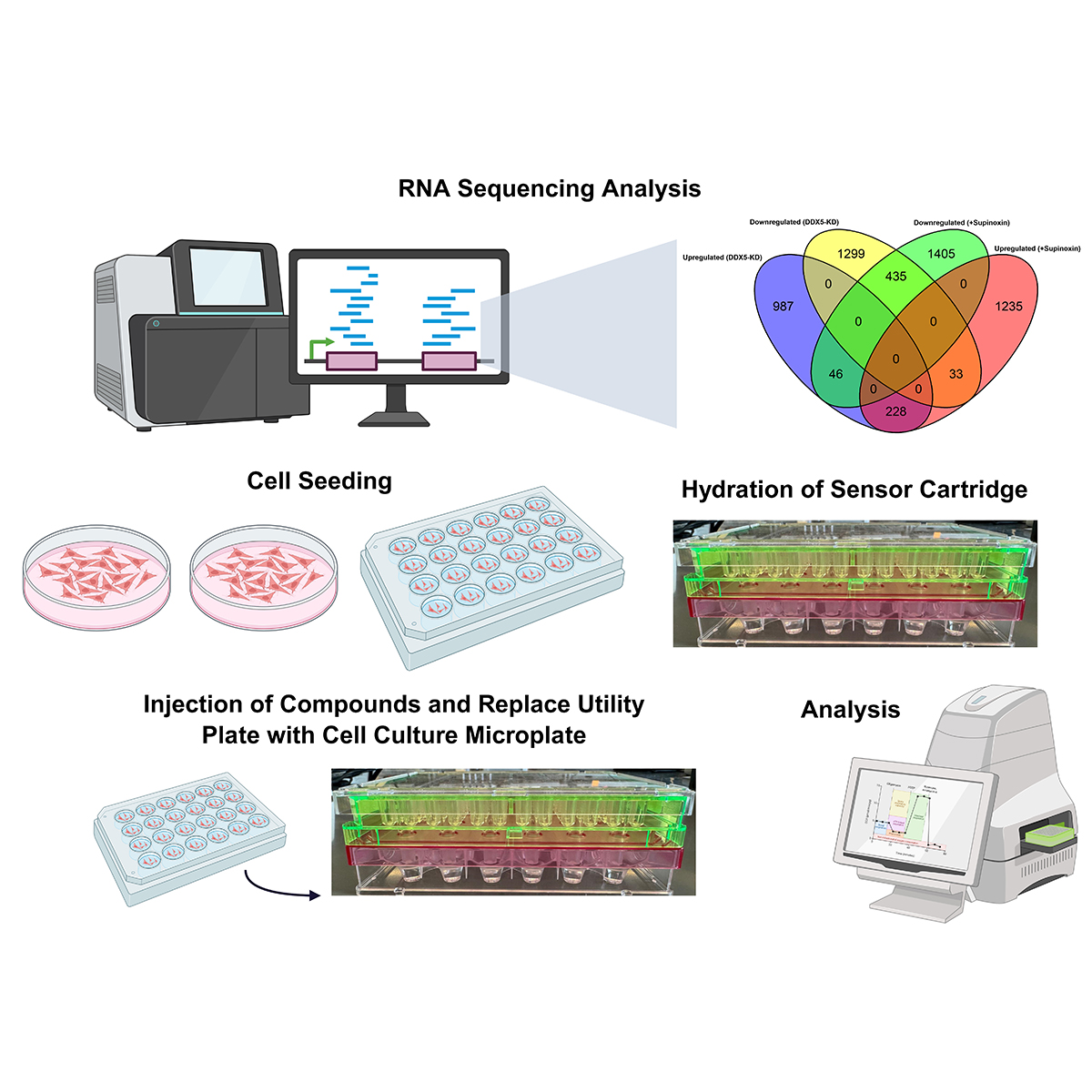
- Cell Seeding
- H69AR is an adherent epithelial small-cell lung carcinoma (SCLC) cell line, derived from a 55-year-old White male patient. It is approximately 50-fold resistant to Adriamycin in comparison to the parental NCI-H69 cell line (ref https://www.atcc.org/products/crl-11351 access on 2 March 2026). The culture conditions of the cell line are RPMI 1640 medium with 20% fetal bovine serum and 1% penicillin-streptomycin solution.
- Harvest and seed 2 × 10⁴ H69AR cells in 250 µL growth medium (RPMI 1640 medium with 20% fetal bovine serum and 1% penicillin-streptomycin solution) per well. The six background correction wells (A1, A2, D3, D4, D5 and D6) should contain 250 µL of growth media.
- Gently swirl the plates after adding the cells to ensure uniform distribution of cells across the plate.
- Rest the plate at 20–25 °C in a tissue culture hood for 1 h to ensure uniform distribution of cells and to minimize edge effects.
- Incubate the cells for 12–18 h in a cell culture incubator at 37 °C in a humidified environment, supplemented with 5% CO2.
2.2.2. Addition of Supinoxin and Hydration of Sensory Cartridge
Preparation of Supinoxin
- Weigh 22 mg of Supinoxin (ChemieTek, CT-RX5902) powder and dissolve it in 10 mL of 100% DMSO solution to obtain a 5 mM stock solution. Vortex the solution until the powder is fully dissolved.
- Dilute the 5 mM stock solution by mixing equal volumes of the 5 mM Supinoxin solution and DMSO (1:1) to make an intermediate solution of 2.5 mM.
- Prepare a working stock of 175 µM of Supinoxin solution from 2.5 mM solution.
- Add 1 uL of working stock to 2.5 mL growth medium (RPMI 1640 medium with 20% fetal bovine serum and 1% penicillin-streptomycin solution) to obtain a final concentration of 70 nM of Supinoxin.
Treatment of H69AR Cells with Supinoxin
- Discard the previous RPMI 1640 medium and add fresh 250 µL of growth medium (RPMI 1640 medium with 20% fetal bovine serum and 1% penicillin-streptomycin solution) supplemented with 70 nM Supinoxin solution to three biological replicates of H69AR cells in triplicate. Similarly, add 250 µL growth medium supplemented with 1 µL DMSO only to three biological replicates of H69AR cells in triplicate as a control.
- Incubate cells for 12–18 h in a cell culture incubator at 37 °C in a humidified environment, supplemented with 5% CO2.
Hydration of Sensor Cartridge
- Open the Seahorse XFe24 Extracellular Flux Assay Kit, Agilent Technologies, Santa Clara, CA, USA and remove contents inside the cell culture hood.
- Place the sensor cartridge upside down next to the Agilent Seahorse utility plate. Sensor cartridges for Seahorse XF analyzers facilitate sensitive, real-time measurements of cellular metabolic energy pathways. Solid-state sensor probes with polymer-embedded fluorophores create a transient microchamber for the detection of oxygen and proton levels in cell culture medium. The probes are situated around 200 µm above the cells and capture measurements at intervals of a few seconds. The cartridge includes integrated injection ports for the addition of compounds during the assay [44].
- Fill each well of the utility plate with 1 mL of Agilent Seahorse XF Calibrant solution and place the hydro booster (pink, included with the Seahorse XFe24 Extracellular Flux Assay Kit) on the top of the utility plate.
- Lower the sensor cartridge back onto the utility plate gently, through the openings of the hydro booster plates. The hydro booster effectively hydrates solid-state oxygen and pH sensors, resulting in precise outcomes during measurements [45].
- Ensure that the XF calibrant level is sufficiently high to maintain the sensor in a submerged position.
- Incubate the assembled setup in a non-CO2 incubator for 12–18 h at 37 °C in a humidified environment.
Turning on the Seahorse XFe24 Analyzer
- Turn on the Seahorse XFe24 Analyzer and the computer, then launch the Agilent Seahorse Wave Controller 2.4.1 software.
- Select the ‘‘Heater on” option and allow it to warm overnight.
2.2.3. On the Day of the Experiment
Preparation of Assay Medium
Washing the H69AR Cells
- Warm the assay medium in a 37 °C water bath before use.
- Take out the XFe24 cell culture microplate from the cell incubator.
- Remove 200 µL of the previous cell growth medium, leaving 50 µL in the well, and replace it with 1 mL of assay medium.
- Repeat the step twice to ensure the complete removal of any traces of the original medium.
- Add 450 µL of assay medium to the cell culture microplate, bringing the final volume to 500 µL.
- Incubate the cell culture microplate in a non-CO2 incubator for 1 h at 37 °C to de-gas the plates.
Preparation and Injection of XF Cell Stress Compounds
- Take out one foil pouch along with the decapper from the Seahorse XF Cell Mito Stress Test Kit box.
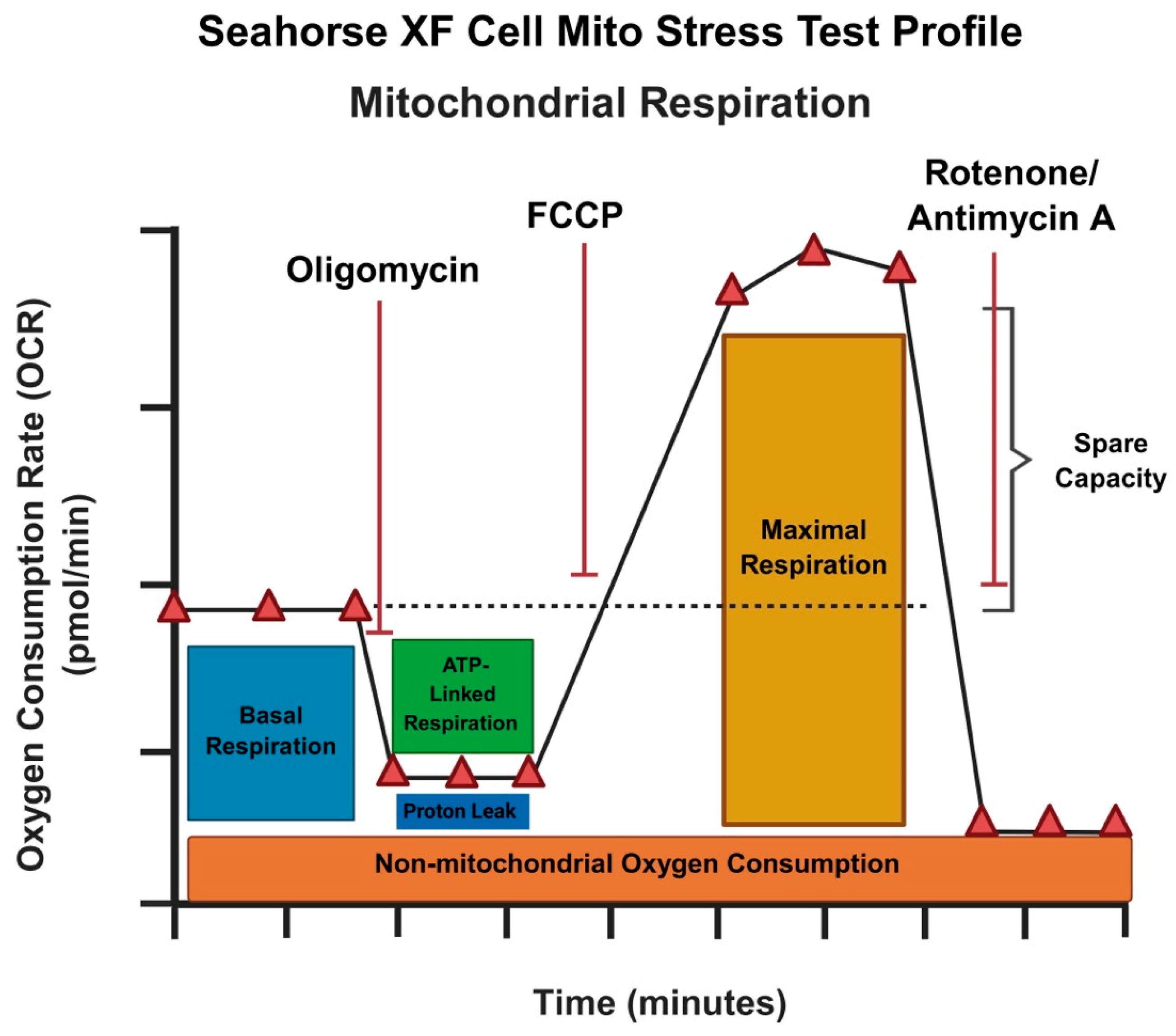
- Remove the test compounds, Oligomycin (blue cap), FCCP (yellow cap) and Rotenone/Antimycin A (Rot/AA) (red cap), from the pouch in a small tube rack.
- Dissolve the dried compounds in the single vial with the assay medium, using the volumes indicated in Table S2.
- Following the addition of the assay media, mix the contents gently by pipetting 10 times to ensure the compounds are solubilized.
- Prepare a final concentration of 1.5 µM oligomycin, 1 µM FCCP, and 0.5 µM Rot/AA by diluting the stock solution of the compounds as indicated in Table S3.
- Remove the hydrated sensor cartridge from the non-CO2 incubator.
- Load 56 µL of 1.5 µM oligomycin into injection port A, 62 µL of 1 µM FCCP into injection port B, and 69 µL of 0.5 µM Rotenone/antimycin A into injection port C of the hydrated sensory cartridge.
Running the Assay
- Open the Agilent Seahorse Wave Controller 2.4.1 software in the Seahorse XFe24 analyzer
- Choose the XF Cell Mito Stress Test from the Templates window and configure the program as outlined below.
- To modify the group’s information, click “Add Group” on the plate map section and choose the appropriate wells.
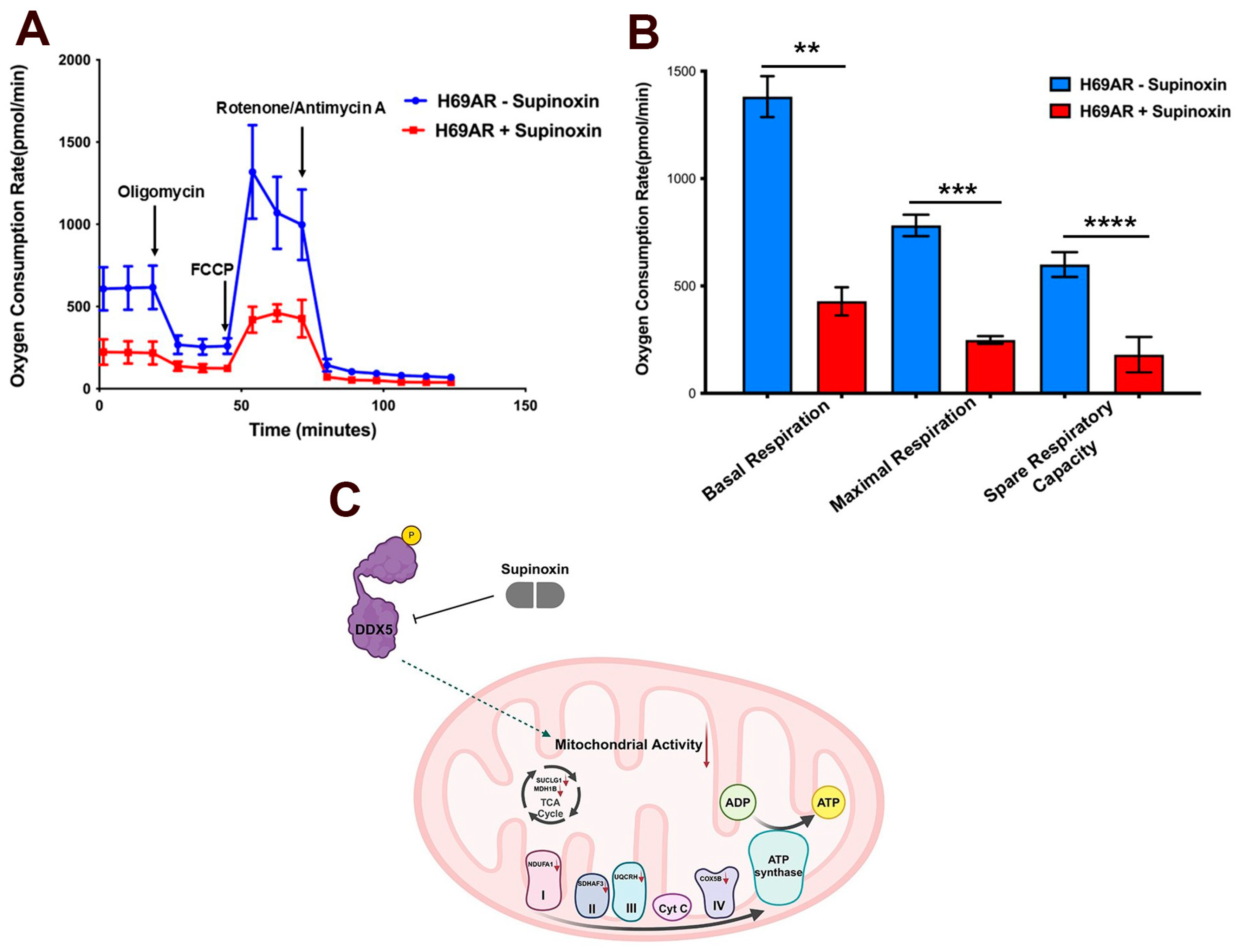
- On the “Protocol” section, the specifications are outlined as follows: Baseline, three cycles; inject port A (oligomycin), three cycles; inject port B (FCCP), three cycles; inject port C (Rotenone/antimycin A), three cycles.
- Each run consists of a 3 min mixing phase, followed by a 2 min wait and concludes with a 3 min measurement.
- On the Run Assay section, click “Start Run” and select a location to save the assay result file.
- The tray will automatically eject and position the calibration plate with the loaded sensor cartridge on the instrument tray. Proceed by clicking “Continue”. Calibration takes about 20 min.
- Prior to positioning the calibration plate with the loaded sensor cartridge on the instrument tray, remove the cartridge lid and confirm the correct orientation of the plate.
- Once the calibration is complete, click “Open the Tray,” substitute the calibration plate with the cell culture microplate, and then click “Start.”
Data Analysis
- Once the experiment is complete, take out the cell plate and the sensory cartridge.
- Export the results to an external storage device from the system.
- The Seahorse XF Mito Stress Test Report Generator, Agilent Technologies, Santa Clara, CA, USA efficiently computes the parameters of the Seahorse XF Cell Mito Stress Test using Wave data that has been exported as an Excel or Prism File. (https://www.agilent.com/cs/library/usermanuals/public/Report_Generator_User_Guide_Seahorse_XF_Cell_Mito_Stress_Test_Single_File.pdf accessed on 2 March 2026).
3. Results
4. Discussion
5. Troubleshooting
6. Statistical Analysis
7. Conclusions
Supplementary Materials
Author Contributions
Funding
Institutional Review Board Statement
Informed Consent Statement
Data Availability Statement
Acknowledgments
Conflicts of Interest
References
- Bray, F.; Laversanne, M.; Sung, H.; Ferlay, J.; Siegel, R.L.; Soerjomataram, I.; Jemal, A. Global Cancer Statistics 2022: GLOBOCAN Estimates of Incidence and Mortality Worldwide for 36 Cancers in 185 Countries. CA Cancer J. Clin. 2024, 74, 229–263. [Google Scholar] [CrossRef]
- Luo, G.; Zhang, Y.; Rumgay, H.; Morgan, E.; Langselius, O.; Vignat, J.; Colombet, M.; Bray, F. Estimated Worldwide Variation and Trends in Incidence of Lung Cancer by Histological Subtype in 2022 and over Time: A Population-Based Study. Lancet Respir. Med. 2025, 13, 348–363. [Google Scholar] [CrossRef]
- Rudin, C.M.; Brambilla, E.; Faivre-Finn, C.; Sage, J. Small-Cell Lung Cancer. Nat. Rev. Dis. Primers 2021, 7, 3. [Google Scholar] [CrossRef] [PubMed]
- George, J.; Maas, L.; Abedpour, N.; Cartolano, M.; Kaiser, L.; Fischer, R.N.; Scheel, A.H.; Weber, J.-P.; Hellmich, M.; Bosco, G.; et al. Evolutionary Trajectories of Small Cell Lung Cancer under Therapy. Nature 2024, 627, 880–889. [Google Scholar] [CrossRef] [PubMed]
- Patel, S.R.; Das, M. Small Cell Lung Cancer: Emerging Targets and Strategies for Precision Therapy. Cancers 2023, 15, 4016. [Google Scholar] [CrossRef] [PubMed]
- Carpeño, J.d.C.; Cobo Dols, M.; Domine Gomez, M.; Ruiz Gracia, P.; Crama, L.; Campelo, M.R.G. 84P Survival Outcomes in Stage IV Small-Cell Lung Cancer (IV-SCLC): Analysis from SEER Database. Ann. Oncol. 2019, 30, xi30. [Google Scholar] [CrossRef]
- Causevic, M.; Gordon Hislop, R.; Kernohan, N.M.; Carey, F.A.; Kay, R.A.; Steele, R.J.; Fuller-Pace, F.V. Overexpression and Poly-Ubiquitylation of the DEAD-Box RNA Helicase P68 in Colorectal Tumours. Oncogene 2001, 20, 7734–7743. [Google Scholar] [CrossRef]
- You, Z.; Liu, C.; Wang, C.; Ling, Z.; Wang, Y.; Wang, Y.; Zhang, M.; Chen, S.; Xu, B.; Guan, H.; et al. LncRNA CCAT1 Promotes Prostate Cancer Cell Proliferation by Interacting with DDX5 and MIR-28-5P. Mol. Cancer Ther. 2019, 18, 2469–2479. [Google Scholar] [CrossRef]
- Capasso, A.; Bagby, S.M.; Dailey, K.L.; Currimjee, N.; Yacob, B.W.; Ionkina, A.; Frank, J.G.; Kim, D.J.; George, C.; Lee, Y.B.; et al. First-in-Class Phosphorylated-P68 Inhibitor RX-5902 Inhibits β-Catenin Signaling and Demonstrates Antitumor Activity in Triple-Negative Breast Cancer. Mol. Cancer Ther. 2019, 18, 1916–1925. [Google Scholar] [CrossRef]
- Lin, S.; Tian, L.; Shen, H.; Gu, Y.; Li, J.-L.; Chen, Z.; Sun, X.; James You, M.; Wu, L. DDX5 Is a Positive Regulator of Oncogenic NOTCH1 Signaling in T Cell Acute Lymphoblastic Leukemia. Oncogene 2013, 32, 4845–4853. [Google Scholar] [CrossRef]
- Xing, Z.; Russon, M.P.; Utturkar, S.M.; Tran, E.J. The RNA Helicase DDX5 Supports Mitochondrial Function in Small Cell Lung Cancer. J. Biol. Chem. 2020, 295, 8988–8998. [Google Scholar] [CrossRef] [PubMed]
- Das, S.; Zea, M.P.; Russon, M.P.; Xing, Z.; Torregrosa-Allen, S.; Cervantes, H.E.; Harper, H.A.; Elzey, B.D.; Tran, E.J. Supinoxin Blocks Small Cell Lung Cancer Progression by Inhibiting Mitochondrial Respiration through DDX5. iScience 2025, 28, 112219. [Google Scholar] [CrossRef] [PubMed]
- Taniguchi, T.; Iizumi, Y.; Watanabe, M.; Masuda, M.; Morita, M.; Aono, Y.; Toriyama, S.; Oishi, M.; Goi, W.; Sakai, T. Resveratrol Directly Targets DDX5 Resulting in Suppression of the MTORC1 Pathway in Prostate Cancer. Cell Death Dis. 2016, 7, e2211. [Google Scholar] [CrossRef] [PubMed]
- Kal, S.; Chakraborty, S.; Karmakar, S.; Ghosh, M.K. Wnt/β-Catenin Signaling and P68 Conjointly Regulate CHIP in Colorectal Carcinoma. Biochim. Biophys. Acta Mol. Cell Res. 2022, 1869, 119185. [Google Scholar] [CrossRef]
- Nicol, S.M.; Bray, S.E.; Derek Black, H.; Lorimore, S.A.; Wright, E.G.; Lane, D.P.; Meek, D.W.; Coates, P.J.; Fuller-Pace, F.V. The RNA Helicase P68 (DDX5) Is Selectively Required for the Induction of P53-Dependent P21 Expression and Cell-Cycle Arrest after DNA Damage. Oncogene 2013, 32, 3461–3469. [Google Scholar] [CrossRef]
- Lin, Y.-H.; Lim, S.-N.; Chen, C.-Y.; Chi, H.-C.; Yeh, C.-T.; Lin, W.-R. Functional Role of Mitochondrial DNA in Cancer Progression. Int. J. Mol. Sci. 2022, 23, 1659. [Google Scholar] [CrossRef]
- Boland, M.L.; Chourasia, A.H.; Macleod, K.F. Mitochondrial Dysfunction in Cancer. Front. Oncol. 2013, 3, 292. [Google Scholar] [CrossRef]
- Deng, X.; Lin, N.; Fu, J.; Xu, L.; Luo, H.; Jin, Y.; Liu, Y.; Sun, L.; Su, J. The Nrf2/PGC1α Pathway Regulates Antioxidant and Proteasomal Activity to Alter Cisplatin Sensitivity in Ovarian Cancer. Oxid. Med. Cell. Longev. 2020, 2020, 4830418. [Google Scholar] [CrossRef]
- Yun, C.W.; Lee, J.H.; Lee, S.H. Hypoxia-Induced PGC-1α Regulates Mitochondrial Function and Tumorigenesis of Colorectal Cancer Cells. Anticancer Res. 2019, 39, 4865–4876. [Google Scholar] [CrossRef]
- Lee, Y.B.; Gong, Y.D.; Yoon, H.; Ahn, C.H.; Jeon, M.K.; Kong, J.Y. Synthesis and Anticancer Activity of New 1-[(5 or 6-Substituted 2-Alkoxyquinoxalin-3-Yl)Aminocarbonyl]-4-(Hetero)Arylpiperazine Derivatives. Bioorg. Med. Chem. 2010, 18, 7966–7974. [Google Scholar] [CrossRef]
- Song, Y.K.; Seol, Y.H.; Kim, M.J.; Jeong, J.W.; Choi, H.I.; Lee, S.W.; Chae, Y.J.; Ahn, S.; Gong, Y.D.; Lee, K.R.; et al. Pharmacokinetic Characterization of Supinoxin and Its Physiologically Based Pharmacokinetic Modeling in Rats. Pharmaceutics 2021, 13, 373. [Google Scholar] [CrossRef]
- Kost, G.C.; Yang, M.Y.; Li, L.; Zhang, Y.; Liu, C.; Kim, D.J.; Ahn, C.-H.; Lee, Y.B.; Liu, Z.-R. A Novel Anti-Cancer Agent, 1-(3,5-Dimethoxyphenyl)-4-[(6-Fluoro-2-Methoxyquinoxalin-3-Yl)Aminocarbonyl] Piperazine (RX-5902), Interferes with β-Catenin Function Through Y593 Phospho-P68 RNA Helicase. J. Cell. Biochem. 2015, 116, 1595–1601. [Google Scholar] [CrossRef] [PubMed]
- Zhang, Y.; Wang, X. Targeting the Wnt/β-Catenin Signaling Pathway in Cancer. J. Hematol. Oncol. 2020, 13, 165. [Google Scholar] [CrossRef] [PubMed]
- Shaheen, S.; Fawaz, F.; Shah, S.; Büsselberg, D. Differential Expression and Pathway Analysis in Drug-Resistant Triple-Negative Breast Cancer Cell Lines Using RNASeq Analysis. Int. J. Mol. Sci. 2018, 19, 1810. [Google Scholar] [CrossRef] [PubMed]
- Siavoshi, A.; Taghizadeh, M.; Dookhe, E.; Piran, M. Gene Expression Profiles and Pathway Enrichment Analysis to Identification of Differentially Expressed Gene and Signaling Pathways in Epithelial Ovarian Cancer Based on High-Throughput RNA-Seq Data. Genomics 2022, 114, 161–170. [Google Scholar] [CrossRef]
- Ma, Y.; Zhu, S.; Lv, T.; Gu, X.; Feng, H.; Zhen, J.; Xin, W.; Wan, Q. SQSTM1/P62 Controls MtDNA Expression and Participates in Mitochondrial Energetic Adaption via MRPL12. iScience 2020, 23, 101428. [Google Scholar] [CrossRef]
- Wang, F.; Huynh, P.M.; An, Y.A. Protocol for Seahorse Analysis of Ex Vivo Mouse Brown and White Adipose Tissues. STAR Protoc. 2024, 5, 103042. [Google Scholar] [CrossRef]
- Andrews, S. FastQC: A Quality Control Tool for High Throughput Sequence Data (online) 2010. Available online: https://www.bioinformatics.babraham.ac.uk/projects/fastqc/ (accessed on 2 March 2026).
- Chen, S.; Zhou, Y.; Chen, Y.; Gu, J. Fastp: An Ultra-Fast All-in-One FASTQ Preprocessor. Bioinformatics 2018, 34, i884–i890. [Google Scholar] [CrossRef]
- Dobin, A.; Davis, C.A.; Schlesinger, F.; Drenkow, J.; Zaleski, C.; Jha, S.; Batut, P.; Chaisson, M.; Gingeras, T.R. STAR: Ultrafast Universal RNA-Seq Aligner. Bioinformatics 2013, 29, 15–21. [Google Scholar] [CrossRef]
- Danecek, P.; Bonfield, J.K.; Liddle, J.; Marshall, J.; Ohan, V.; Pollard, M.O.; Whitwham, A.; Keane, T.; McCarthy, S.A.; Davies, R.M.; et al. Twelve Years of SAMtools and BCFtools. Gigascience 2021, 10, giab008. [Google Scholar] [CrossRef]
- Wang, L.; Wang, S.; Li, W. RSeQC: Quality Control of RNA-Seq Experiments. Bioinformatics 2012, 28, 2184–2185. [Google Scholar] [CrossRef]
- Liao, Y.; Smyth, G.K.; Shi, W. FeatureCounts: An Efficient General Purpose Program for Assigning Sequence Reads to Genomic Features. Bioinformatics 2014, 30, 923–930. [Google Scholar] [CrossRef]
- Vera Alvarez, R.; Pongor, L.S.; Mariño-Ramírez, L.; Landsman, D. TPMCalculator: One-Step Software to Quantify MRNA Abundance of Genomic Features. Bioinformatics 2019, 35, 1960–1962. [Google Scholar] [CrossRef]
- Zhang, X. Highly Effective Batch Effect Correction Method for RNA-Seq Count Data. Comput. Struct. Biotechnol. J. 2025, 27, 58–64. [Google Scholar] [CrossRef] [PubMed]
- Hitz, B.C.; Lee, J.-W.; Jolanki, O.; Kagda, M.S.; Graham, K.; Sud, P.; Gabdank, I.; Seth Strattan, J.; Sloan, C.A.; Dreszer, T.; et al. The ENCODE Uniform Analysis Pipelines. bioRxiv 2023. [Google Scholar] [CrossRef] [PubMed]
- Robinson, M.D.; McCarthy, D.J.; Smyth, G.K. edgeR: A Bioconductor Package for Differential Expression Analysis of Digital Gene Expression Data. Bioinformatics 2010, 26, 139–140. [Google Scholar] [CrossRef] [PubMed]
- Yan, L. Ggvenn: Draw Venn Diagram by ’ggplot2’_. R Package Version 0.1.10. Available online: https://CRAN.R-project.org/package=ggvenn (accessed on 19 June 2025).
- Gu, Z. Complex Heatmap Visualization. iMeta 2022, 1, e43. [Google Scholar] [CrossRef]
- Wu, T.; Hu, E.; Xu, S.; Chen, M.; Guo, P.; Dai, Z.; Feng, T.; Zhou, L.; Tang, W.; Zhan, L.; et al. ClusterProfiler 4.0: A Universal Enrichment Tool for Interpreting Omics Data. Innovation 2021, 2, 100141. [Google Scholar] [CrossRef]
- Wickham, H. Ggplot2; Springer International Publishing: Cham, Switzerland, 2016; ISBN 978-3-319-24275-0. [Google Scholar]
- Liberzon, A.; Birger, C.; Thorvaldsdóttir, H.; Ghandi, M.; Mesirov, J.P.; Tamayo, P. The Molecular Signatures Database Hallmark Gene Set Collection. Cell Syst. 2015, 1, 417–425. [Google Scholar] [CrossRef]
- von Mering, C.; Jensen, L.J.; Snel, B.; Hooper, S.D.; Krupp, M.; Foglierini, M.; Jouffre, N.; Huynen, M.A.; Bork, P. STRING: Known and Predicted Protein-Protein Associations, Integrated and Transferred across Organisms. Nucleic Acids Res. 2005, 33, D433–D437. [Google Scholar] [CrossRef]
- Agilent Technologies. Advanced Cell Culture Solutions for Your Seahorse XF Analyzer Agilent Sensor Cartridges and Cell Culture Microplates. Available online: https://hpst.cz/sites/default/files/download/2024/06/brochure-seahorse-plastics-5991-8657en-agilent.pdf (accessed on 2 March 2026).
- Agilent Technologies. Materials Agilent Seahorse XF e 24 FluxPak Containing: Agilent Seahorse XF e 24 Extracellular Flux Assay Kit. Available online: https://www.agilent.com/cs/library/usermanuals/public/XFe24_DAY_BEFORE_CARTRIDGE_HYDRATION.pdf (accessed on 2 March 2026).
- Agilent Technologies. Seahorse XF Cell Mito Stress Test Kit User Guide Kit. Available online: https://www.agilent.com/cs/library/usermanuals/public/XF_Cell_Mito_Stress_Test_Kit_User_Guide.pdf (accessed on 2 March 2026).
- van der Windt, G.J.W.; Chang, C.; Pearce, E.L. Measuring Bioenergetics in T Cells Using a Seahorse Extracellular Flux Analyzer. Curr. Protoc. Immunol. 2016, 113, 3.16B.1–3.16B.14. [Google Scholar] [CrossRef]
- Gu, X.; Ma, Y.; Liu, Y.; Wan, Q. Measurement of Mitochondrial Respiration in Adherent Cells by Seahorse XF96 Cell Mito Stress Test. STAR Protoc. 2021, 2, 100245. [Google Scholar] [CrossRef] [PubMed]
- Hao, W.; Chang, C.-P.B.; Tsao, C.-C.; Xu, J. Oligomycin-Induced Bioenergetic Adaptation in Cancer Cells with Heterogeneous Bioenergetic Organization. J. Biol. Chem. 2010, 285, 12647–12654. [Google Scholar] [CrossRef] [PubMed]
- Park, K.-S.; Jo, I.; Pak, Y.; Bae, S.-W.; Rhim, H.; Suh, S.-H.; Park, S.; Zhu, M.; So, I.; Kim, K. FCCP Depolarizes Plasma Membrane Potential by Activating Proton and Na+ Currents in Bovine Aortic Endothelial Cells. Pflügers Arch. 2002, 443, 344–352. [Google Scholar] [CrossRef] [PubMed]
- Yoo, I.; Ahn, I.; Lee, J.; Lee, N. Extracellular Flux Assay (Seahorse Assay): Diverse Applications in Metabolic Research across Biological Disciplines. Mol. Cells 2024, 47, 100095. [Google Scholar] [CrossRef]
- Zhao, Z.; Mei, Y.; Wang, Z.; He, W. The Effect of Oxidative Phosphorylation on Cancer Drug Resistance. Cancers 2022, 15, 62. [Google Scholar] [CrossRef]
- Qiu, X.; Li, Y.; Zhang, Z. Crosstalk between Oxidative Phosphorylation and Immune Escape in Cancer: A New Concept of Therapeutic Targets Selection. Cell. Oncol. 2023, 46, 847–865. [Google Scholar] [CrossRef]
- Xia, M.-Z.; Dong, S.-F.; Wang, C.-L. Oxidative Phosphorylation-Related Genes for Prognosis and Tumor Microenvironment in Breast Cancer. Transl. Cancer Res. 2025, 14, 497–511. [Google Scholar] [CrossRef]
- Hensley, C.T.; Faubert, B.; Yuan, Q.; Lev-Cohain, N.; Jin, E.; Kim, J.; Jiang, L.; Ko, B.; Skelton, R.; Loudat, L.; et al. Metabolic Heterogeneity in Human Lung Tumors. Cell 2016, 164, 681–694. [Google Scholar] [CrossRef]
- Davidson, S.M.; Papagiannakopoulos, T.; Olenchock, B.A.; Heyman, J.E.; Keibler, M.A.; Luengo, A.; Bauer, M.R.; Jha, A.K.; O’Brien, J.P.; Pierce, K.A.; et al. Environment Impacts the Metabolic Dependencies of Ras-Driven Non-Small Cell Lung Cancer. Cell Metab. 2016, 23, 517–528. [Google Scholar] [CrossRef]
- Rao, S.; Mondragón, L.; Pranjic, B.; Hanada, T.; Stoll, G.; Köcher, T.; Zhang, P.; Jais, A.; Lercher, A.; Bergthaler, A.; et al. AIF-Regulated Oxidative Phosphorylation Supports Lung Cancer Development. Cell Res. 2019, 29, 579–591. [Google Scholar] [CrossRef]
- Faubert, B.; Li, K.Y.; Cai, L.; Hensley, C.T.; Kim, J.; Zacharias, L.G.; Yang, C.; Do, Q.N.; Doucette, S.; Burguete, D.; et al. Lactate Metabolism in Human Lung Tumors. Cell 2017, 171, 358–371.e9. [Google Scholar] [CrossRef]
- Conesa, A.; Madrigal, P.; Tarazona, S.; Gomez-Cabrero, D.; Cervera, A.; McPherson, A.; Szcześniak, M.W.; Gaffney, D.J.; Elo, L.L.; Zhang, X.; et al. A Survey of Best Practices for RNA-Seq Data Analysis. Genome Biol. 2016, 17, 13. [Google Scholar] [CrossRef]
- Schurch, N.J.; Schofield, P.; Gierliński, M.; Cole, C.; Sherstnev, A.; Singh, V.; Wrobel, N.; Gharbi, K.; Simpson, G.G.; Owen-Hughes, T.; et al. How Many Biological Replicates Are Needed in an RNA-Seq Experiment and Which Differential Expression Tool Should You Use? RNA 2016, 22, 839–851. [Google Scholar] [CrossRef]



| Reagent or Resource | Source | Reference |
|---|---|---|
| Chemicals | ||
| RPMI 1640 medium | ATCC, Manassas, VA, USA | 30-2001 |
| Penicillin-Streptomycin (10,000 U/mL) | Gibco, Life Technologies Grand Island, NY, USA | 15140122 |
| Fetal Bovine Serum—Premium | Biotechne (R&D systems), Minneapolis, MN, USA | S11150 |
| Supinoxin (RX-5902) | ChemieTek, Indianapolis, IN, USA | CT-RX5902 |
| TrypLE™ Express Enzyme (1X), phenol red | Gibco, Life Technologies, Grand Island, NY, USA | 12605010 |
| Seahorse XF RPMI Medium pH 7.4 | Agilent Technologies, Santa Clara, CA, USA | 103576-100 |
| Seahorse XF Calibrant pH 7.4 | Agilent Technologies, Santa Clara, CA, USA | 100840-000 |
| Seahorse XF 200 mM Glutamine Solution | Agilent Technologies, Santa Clara, CA, USA | 103579-100 |
| Seahorse XF 100 mM Pyruvate Solution | Agilent Technologies, Santa Clara, CA, USA | 103578-100 |
| Seahorse XF 1.0 M Glucose Solution | Agilent Technologies, Santa Clara, CA, USA | 103577-100 |
| Critical commercial assays | ||
| Seahorse XF Cell Mito Stress Test Kit | Agilent Technologies, Santa Clara, CA, USA | 103015-100 |
| Seahorse FluxPaks | Agilent Technologies, Santa Clara, CA, USA | 102342-100 |
| PCR Mycoplasma Detection Kit | Applied Biological Mat. Inc., Richmond, BC, Canada | G238 |
| Deposited data | ||
| RNA Sequencing | NCBI Gene Expression Omnibus (Das et al. [12]) | GSE255741 |
| RNA Sequencing | NCBI Gene Expression Omnibus (Xing et al. [11]) | GSE142024 |
| Experimental models: Cell lines | ||
| NCI-H69AR (H69AR) | ATCC, Manassas, VA, USA | CRL-11351 |
| Software and algorithms | ||
| GraphPad Prism | GraphPad | version 9.3.0 |
| Seahorse Wave | Agilent Technologies, Santa Clara, CA, USA | https://www.agilent.com/cs/library/usermanuals/public/Report_Generator_User_Guide_Seahorse_XF_Cell_Mito_Stress_Test_Single_File.pdf (accessed on 2 March 2026) |
| Biorender | Biorender | https://www.biorender.com |
| fastqc | https://www.bioinformatics.babraham.ac.uk/projects/fastqc/ (accessed on 2 March 2026) | version 0.23.2 |
| fastp | https://github.com/OpenGene/fastp (accessed on 2 March 2026) | version 0.12.1 |
| STAR aligner | https://github.com/alexdobin/STAR (accessed on 2 March 2026) | version 2.7.11b |
| samtools | https://www.htslib.org/download/ (accessed on 2 March 2026) | version 1.17 |
| rseqc | https://rseqc.sourceforge.net/ | version 4.0.0 |
| Subread (featurecounts) | https://subread.sourceforge.net/ | version 2.0.1 |
| csvtk | https://github.com/shenwei356/csvtk (accessed on 2 March 2026) | version 0.25.0 |
| tpmcalculator | https://github.com/ncbi/TPMCalculator (accessed on 2 March 2026) | version 0.0.4 |
| R-software | the R Core Team and the R Foundation for Statistical Computing | version 4.3.1 |
| R-package DESeq2 | https://www.bioconductor.org/packages/release/bioc/html/DESeq2.html (accessed on 2 March 2026) | version 1.42.1 |
| R-package ggplot2 | https://ggplot2.tidyverse.org/ | Version 3.5.1 |
| R-package gplots | https://cran.r-project.org/web/packages/gplots/index.html (accessed on 2 March 2026) | version 3.2.0 |
| R-package tidyverse | https://www.tidyverse.org/ | version 2.0.0 |
| R-package RColorBrewer | https://cran.r-project.org/web/packages/RColorBrewer/index.html (accessed on 2 March 2026) | version 1.1-3 |
| R-package edgeR | https://www.bioconductor.org/packages/release/bioc/html/edgeR.html (accessed on 2 March 2026) | version 4.0.16 |
| R-package ggrepel | https://ggrepel.slowkow.com/ | version 0.9.6 |
| R-package ComplexHeatmap | https://www.bioconductor.org/packages/release/bioc/html/ComplexHeatmap.html (accessed on 2 March 2026) | version 2.18.0 |
| R-package dplyr | https://dplyr.tidyverse.org/ | version 1.1.4 |
| R-package EnhancedVolcano | https://bioconductor.org/packages/release/bioc/html/EnhancedVolcano.html (accessed on 2 March 2026) | version 1.20.0 |
| R-package circlize | https://cran.r-project.org/web/packages/circlize/index.html (accessed on 2 March 2026) | version 0.4.16 |
| R-package msigdbr | https://igordot.github.io/msigdbr/ (accessed on 2 March 2026) | version 7.5.1 |
| R-package clusterProfiler | https://bioconductor.org/packages/release/bioc/html/clusterProfiler.html (accessed on 2 March 2026) | version 4.10.1 |
| R-package org.Hs.eg.db | https://bioconductor.org/packages/release/data/annotation/html/org.Hs.eg.db.html (accessed on 2 March 2026) | version 3.18.0 |
| R-package ggvenn | https://cran.r-project.org/web/packages/ggvenn/readme/README.html (accessed on 2 March 2026) | version 0.1.10 |
| R-package openxlsx | https://cran.r-project.org/web/packages/openxlsx/index.html (accessed on 2 March 2026) | version 4.2.7.1 |
| Others | ||
| Multichannel pipettors for 20–1000 μL | n/a | n/a |
| Seahorse XFe24 extracellular flux analyzer | Seahorse Biosciences, Agilent Technologies, Santa Clara, CA, USA | n/a |
| Cell Counter | n/a | n/a |
| Parameter | Recommended Threshold | Rationale and Corrective Actions |
|---|---|---|
| Median Phred Per-base quality | Q30 | Phred score Q30 denotes 0.1% error probability. Including bases below Q30 is not catastrophic but it includes noisy data into analysis and may impact alignment scores. |
| Minimum read length after trimming | 50 bp | Dropping the cutoff includes shorter reads into alignment steps and may have a negative impact in terms of ambiguous mapping, inflated multi-mapping reads, and false positives in gene expression. |
| Adapter content after trimming | 0–5% | Lower adapter content is better, but small leftover fractions are common. Higher adapter contents have negative implications as the adapter does not match the genome, causing mismatches at the 3′ end and lowering the overall mapping quality. |
| Duplication rates | 10–30% | RNA-seq naturally has higher duplication due to highly expressed genes. Duplicates should NOT be removed. However, >30% duplication is concerning, and there is a trade-off of accepting the data with caveats or may need to redesign the library preparation. |
| Mapping rate | 80–90% | Typically, >80% mapping rate is acceptable, >85% is good and >90% is excellent. For low mapping rates, primary checks should be verifying the appropriate genome and annotations, verifying data quality before/after trimming, and finally checking for library contamination using tools like FastQ-screen [29]. |
Disclaimer/Publisher’s Note: The statements, opinions and data contained in all publications are solely those of the individual author(s) and contributor(s) and not of MDPI and/or the editor(s). MDPI and/or the editor(s) disclaim responsibility for any injury to people or property resulting from any ideas, methods, instructions or products referred to in the content. |
© 2026 by the authors. Licensee MDPI, Basel, Switzerland. This article is an open access article distributed under the terms and conditions of the Creative Commons Attribution (CC BY) license.
Share and Cite
Das, S.; Utturkar, S.M.; Bose, R.; Tran, E.J. Investigating Metabolically Altered Pathways in Small Cell Lung Cancer: From RNA Sequencing Analysis to Seahorse-Based Functional Validation. Methods Protoc. 2026, 9, 46. https://doi.org/10.3390/mps9020046
Das S, Utturkar SM, Bose R, Tran EJ. Investigating Metabolically Altered Pathways in Small Cell Lung Cancer: From RNA Sequencing Analysis to Seahorse-Based Functional Validation. Methods and Protocols. 2026; 9(2):46. https://doi.org/10.3390/mps9020046
Chicago/Turabian StyleDas, Subhadeep, Sagar M. Utturkar, Roshnee Bose, and Elizabeth J. Tran. 2026. "Investigating Metabolically Altered Pathways in Small Cell Lung Cancer: From RNA Sequencing Analysis to Seahorse-Based Functional Validation" Methods and Protocols 9, no. 2: 46. https://doi.org/10.3390/mps9020046
APA StyleDas, S., Utturkar, S. M., Bose, R., & Tran, E. J. (2026). Investigating Metabolically Altered Pathways in Small Cell Lung Cancer: From RNA Sequencing Analysis to Seahorse-Based Functional Validation. Methods and Protocols, 9(2), 46. https://doi.org/10.3390/mps9020046