
Decoding Cerebrospinal Fluid: Integrative Metabolomics Across Multiple Platforms

 , ,
, ,  and
and
Abstract
1. Introduction
2. Experimental Design
2.1. Materials
- Kinetex XB C18 (Phenomenex Incorporation; Torrance, CA, USA).
- Cortecs HILIC (Waters Corporation; Milford, MA, USA).
- Mass Spectroscopy Metabolite Library of Standards (IROA Technologies, Sea Girt, NJ, USA).
- 25G sterile winged infusion set (SV*25NL30; Terumo, Tokyo, Japan).
- 1 mL sterile syringe (MDSS01SE; Terumo, Tokyo, Japan).
- 500 µL sterile Eppendorf tubes.
- Ethanol (EtOH) 70% (v/v).
- Betadine.
- Electric shaver.
- Stereotaxic frame.
- Anesthetic (ketamine/xylazine or isoflurane).
- Acetonitrile, HPLC-MS grade.
- Methanol (MeOH), HPLC-MS grade.
- MilliQ water (18.2 MΩ.cm at 25 °C, TOC 3 ppb, <1 particle/mL).
- Trimethylsilyl propionate (TSP).
2.2. Equipment
- Stereotaxic frame model 963 (Kopf Instruments; Tujunga, CA, USA).
- Ultra High-Performance Liquid Chromatography (UPLC) Ultimate WPS-3000 (Dionex; Sunnyvale, CA, USA).
- Q-Exactive hybrid quadrupole-Orbitrap mass spectrometer (Thermo Fisher Scientific; Bremen, Germany).
- DRX-600 Avance III HD NMR spectrometer with Triple Resonance Inverse Cryoprobe (Bruker; Billerica, MA, USA).
3. Procedure
3.1. CSF Withdrawal

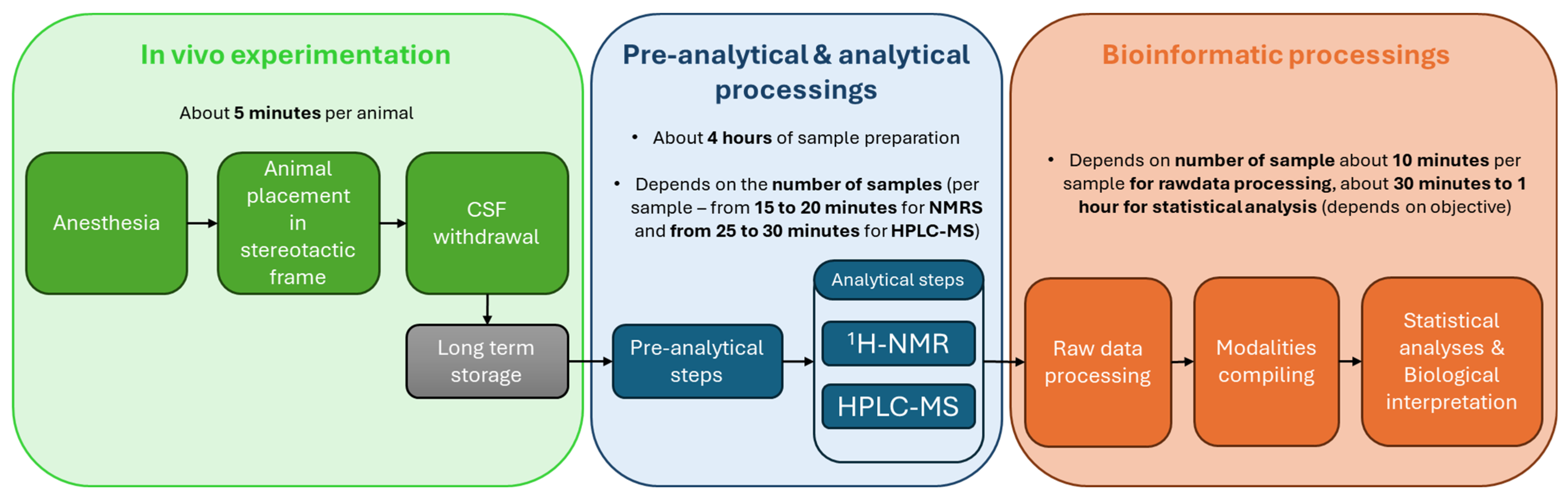
- CRITICAL STEP At least two experimenters are required—one to operate the syringe and the other to stabilize the winged needle.
- Anesthetize the animal using a ketamine/xylazine mixture (70 mg/kg and 7 mg/kg, respectively). Alternative approved anesthetic methods may also be used.
- Place it in the stereotaxic frame with only ear bars.
- Tilt the head downward at a 15° to 20° angle relative to the vertical axis to expose the foramen magnum at the C1 vertebra (atlas).
- Secure the head with the tooth bar.
- Shave, depilate, and clean the neck with 70% ethanol followed by betadine.
- Identify the puncture site at the intersection of two lines: one connecting the external occipital protuberance to the spinal column and the other joining the two mastoid processes.
- Apply gentle negative pressure by slightly pulling the syringe plunger during insertion.
- Position the winged needle at a 90° angle relative to the horizontal plane of the skin surface at the sampling site. Ensure that the orientation of the wings is parallel to the ear bars.
- Collect a maximum of 200 µL of CSF. This is the maximum volume recommended prior to sacrifice to avoid physiological disturbance.

- CRITICAL STEP If any red blood cells (RBCs) enter the winged needle tubing, the second experimenter must immediately clamp and then cut the tube. Cutting the tube without prior clamping may generate suction, which could draw additional RBCs into the system.
- 10.
- Immediately place the collected CSF on ice.
- 11.
- Centrifuge the sample at 10,000× g for 15 min at 4 °C to remove any cellular debris.
- 12.
- Transfer the supernatant to a clean, sterile Eppendorf tube.
- 13.
- Store the processed CSF samples at −80 °C until further analysis.

3.2. Pre-Analytical Procedure

- CRITICAL STEP Aliquot each sample into two 50 µL tubes and one 100 µL tube for the three different analytical modalities. Include quality control (QC) samples to assess analytical platform variation: several QC samples should be analyzed at the beginning and end of each run and after every 10 samples.
3.2.1. HPLC-MS
- Pipette 50 µL of each sample into a clean microcentrifuge tube.
- Add 300 µL of cold methanol (–20 °C).
- Vortex for 5 s to ensure proper mixing.
- Incubate at −20 °C for 30 min to precipitate proteins.
- Centrifuge at 5000× g for 25 min at 4 °C.
- Carefully collect a fixed volume of supernatant (e.g., 250 µL), ensuring that the pellet remains undisturbed.
- Transfer to new tubes and evaporate to dryness using a vacuum concentrator (35 °C, 3 h).
- Reconstitute dried extracts for the following:
- a.
- HILIC column: 100 µL of acetonitrile/water (9:1, v/v).
- b.
- C18 column: 100 µL of methanol/water (1:9, v/v).
- Vortex briefly to dissolve completely.
- Transfer reconstituted samples to HPLC vials for injection and analysis.
3.2.2. 1H-NMR
- Dilute the CSF sample 1:4 by cold methanol (–20 °C) to a final volume of 200 µL.
- Vortex briefly.
- Centrifuge at 4000× g for 10 min at 4 °C to pellet precipitated proteins.
- Transfer a fixed volume of supernatant (e.g., 80 µL) into a clean hemolysis tube.
- Dry under vacuum using a SpeedVac (35 °C, 2 h).
- Immediately before acquisition, reconstitute the dried extract in 200 µL of phosphate buffer (prepared in D2O) with 10 µL of 3.2 mM of TSP as a chemical shift reference (leading to a 152 μM final concentration in the NMR tube).
- Vortex gently to ensure full dissolution.
- Transfer to NMR tube and proceed with data acquisition.
3.3. Analytical Procedure

- CRITICAL STEP Preparation steps may vary depending on the equipment used. All samples must be analyzed simultaneously on the same analytical platform to ensure comparability. Three aliquots were prepared: the first for C18 HPLC-MS, the second for HILIC HPLC-MS, and the third for NMR analysis. For HPLC-MS experiments, it is essential to first construct a commercial reference library as described in the Reference Library Construction Section.
3.3.1. HPLC-MS
Chromatographic Column Setup
- C18 Column Conditions
- Set up the UPLC Ultimate WPS-3000 system equipped with a Kinetex XB C18 (150 mm × 2.1 mm, 1.7 µm) under the following conditions:
- Column temperature: 55 °C.
- Mobile phase A: Milli-Q water with 0.1% (v/v) formic acid.
- Mobile phase B: Methanol with 0.1% (v/v) formic acid.
- Flow rate: 0.2 mL/min.
- Gradient duration: 28 min for both positive and negative ionization modes.
- Run analyses by injecting samples into a mass spectrometer configured as described in the Mass Spectrometer Analysis Section.
- HILIC Column Conditions:
- Prepare a UPLC Ultimate WPS-3000 system equipped with a Cortecs HILIC (150 mm × 2.1 mm, 1.6 µm) under the following conditions:
- Column temperature: 55 °C.
- Mobile phase A: Milli-Q water with 10 mM of ammonium formate.
- Mobile phase B: Acetonitrile with 10 mM of ammonium formate.
- Flow rate: 0.2 mL/min.
- Gradient duration: 22 min for positive ionization mode.
- Run analyses by injecting samples into a mass spectrometer configured as described below.
Mass Spectrometer Analysis
- Configure the Q-Exactive hybrid quadrupole-Orbitrap mass spectrometer for both positive and negative electrospray ionization (ESI) mode as follows:
- Spray voltage: ±3000 V.
- Capillary temperature: 325 °C.
- Heater temperature: 350 °C.
- Sheath gas flow: 25 arbitrary units (AU).
- Auxiliary gas flow: 8 AU.
- Sweep gas flow: 3 AU.
- S-Lens RF level: ±100 V.
- Configure the analyzer and the detector as follows:
- Acquisition mode: Full scan.
- Mass range: 58–870 m/z.
- Resolution: 70,000 at m/z 200.
- AGC target: 1 × 10⁶ charges.
- Maximum injection time: 250 ms.

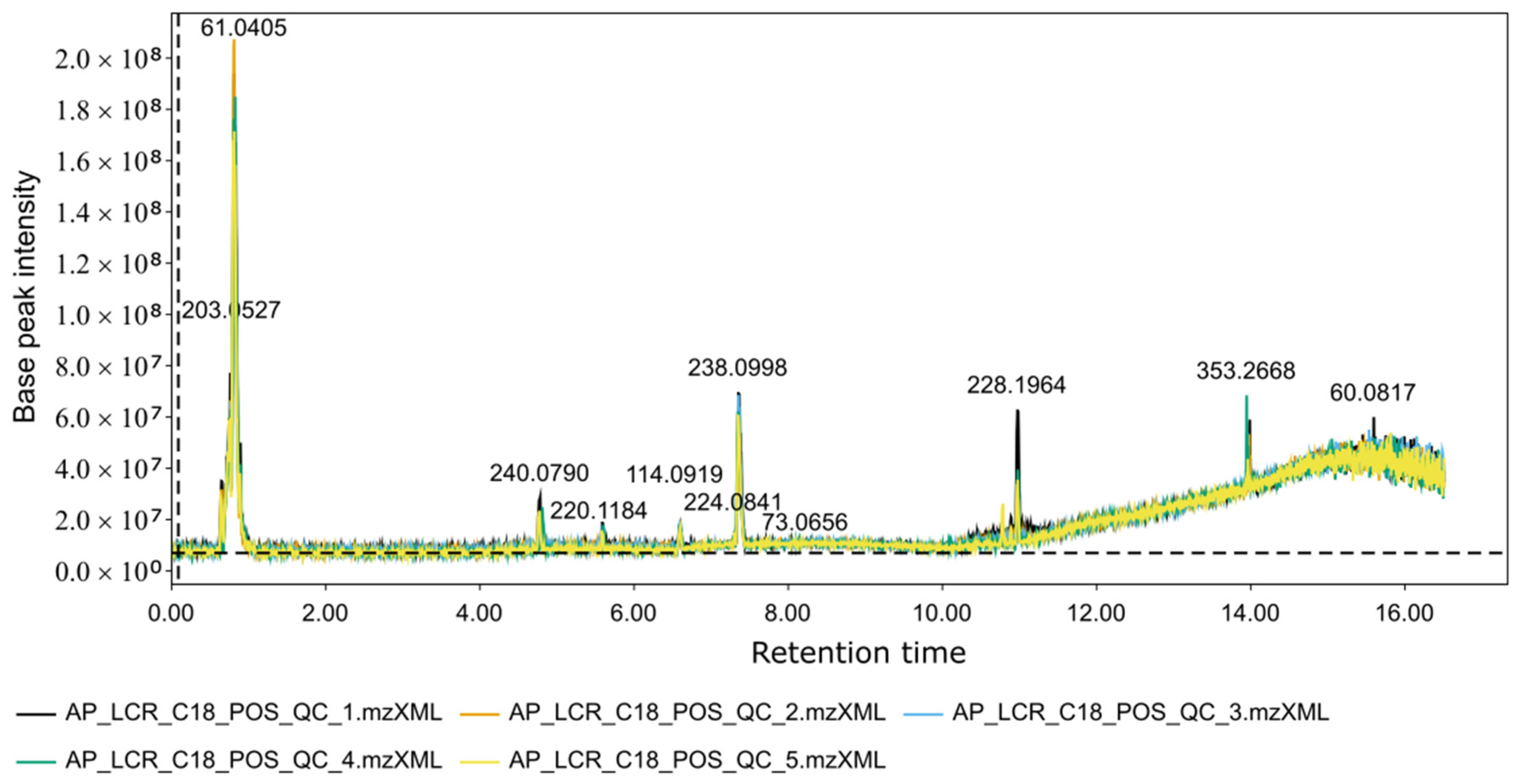
- CRITICAL STEP QC samples must be injected at the beginning and end of the run and after every 10 samples to monitor analytical stability.
- 3.
- Inject samples in the analytical platforms.
- a.
- Injection volume:
- A total of 5 µL for C18 column.
- A total of 10 µL for HILIC column.
3.3.2. 1H-NMR

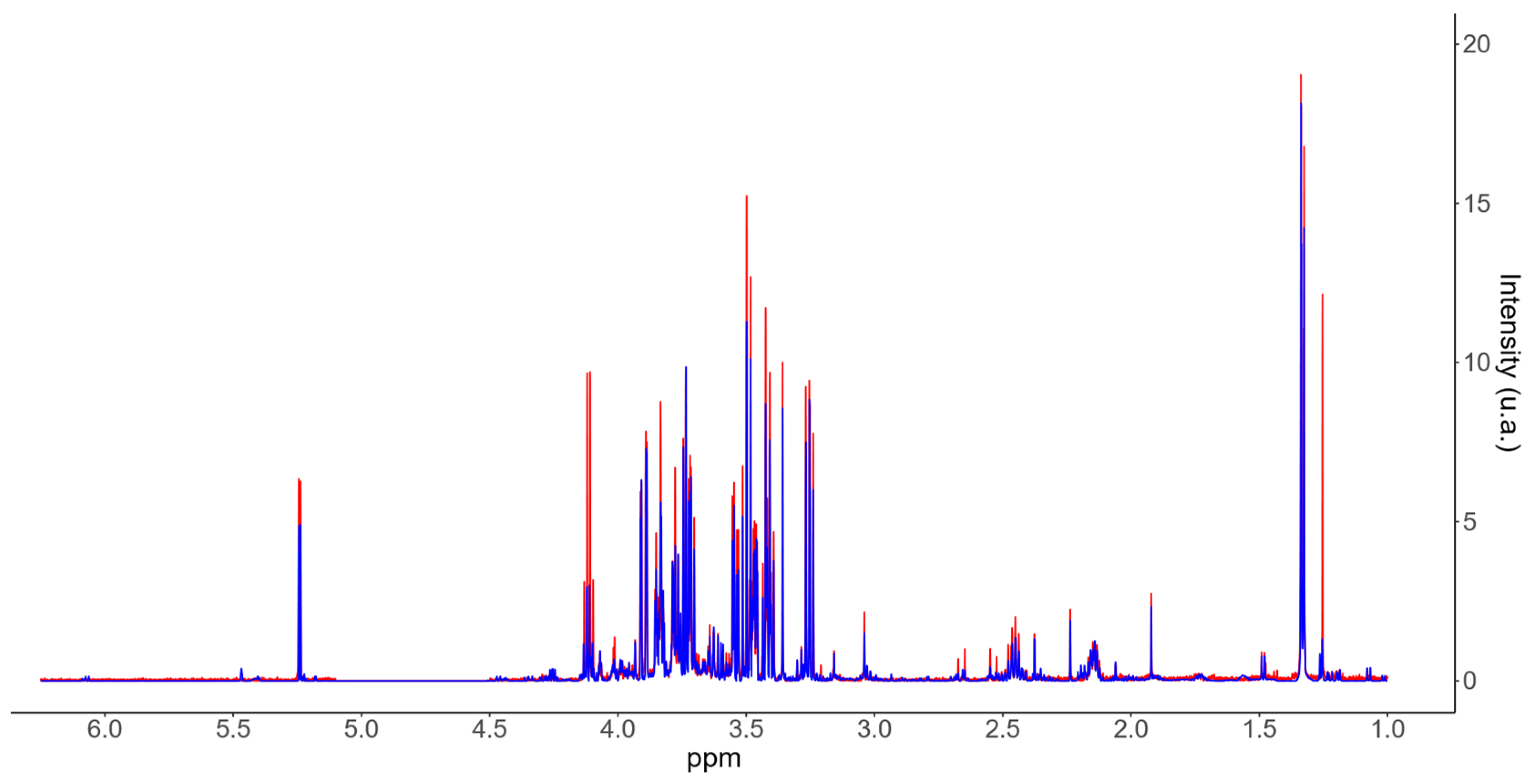
- CRITICAL STEP As for HPLC-MS, QC samples should be analyzed first and last in the sequence, and after every 10 samples, to ensure data quality and reproducibility.
- Place each NMR tube in a rack and insert the rack into the sample changer of the Bruker DRX-600 Avance III HD spectrometer (Bruker, Billerica, MA, USA).
- The probe must be tuned to the proper frequency to detect the signal of 1H.
- Lock the magnetic field on the deuterium resonance from the solvent used (here, D2O + H2O), followed by shimming to optimize field homogeneity.
- Set up the acquisition parameters: pulse sequence with water suppression, 90° pulse, sweep width, relaxation delay, number of dummy scans, number of scans, and time domain.
- Start the NMR acquisition.
3.4. Data Processing
3.4.1. HPLC-MS
Reference Library Construction
- Use the Mass Spectroscopy Metabolite Library of Standards (IROA Technologies, Sea Girt, NJ, USA), containing 610 standard metabolites, to build an in-house spectral reference library.
- Analyze these standards under the same chromatographical and mass spectrometry conditions as the biological samples (as described in Section 3.3.1).
Metabolite Identification
- Identify metabolites in biological samples by matching spectral features against the in-house reference library.
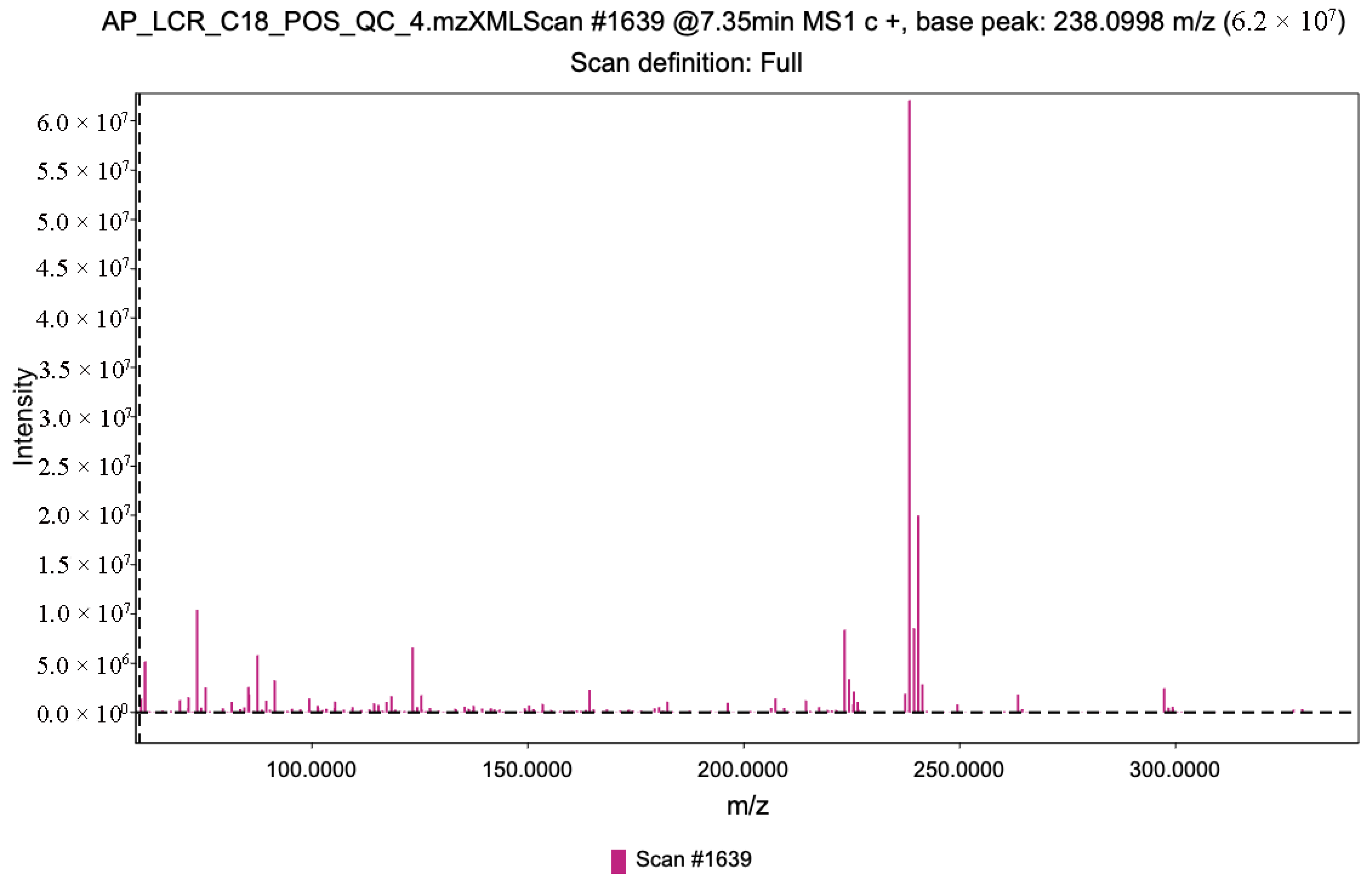
- Verify by using the XCalibur 2.2 software (Thermo Fisher Scientific, San Jose, CA, USA) for metabolite identification according to the following four criteria:
- Retention time must be within ±20 s of the standard.
- Measured mass must be within ±10 ppm of the theoretical mass.
- Peak shape and isotopic distribution must be consistent with the reference spectrum of the standard.
- Metabolites exhibiting a relative standard deviation greater than 30% are excluded from the final dataset. Metabolites with a signal-to-noise ratio (SNR) < 3 are discarded.
Peak Integration and Intensity Extraction
- For metabolites meeting all four identification criteria, integrate the area under the corresponding chromatographic peak to determine intensity.
- Export results as a data matrix containing metabolite identifiers and their intensities across all samples.
3.4.2. 1H-NMR
Free Induction Decay (FID) Processing
- The obtained FID signal is converted into a spectrum by applying a Fourier transformation using TopSpin 3.6.2 (Bruker, Billerica, MA, USA).
- Apply zero filling and exponential multiplication with a line broadening of 0.3 Hz.
- Apply zero- and first-order phase correction.
- Perform baseline flattening and align spectral peaks if necessary.
- Normalize the spectra using the internal reference compound (TSP or another molecule).
Metabolite Identification and Quantification
- Run the ASICS workflow to quantify a maximum of 190 metabolites.
- Export results as a data table containing relative quantifications across all samples.
3.4.3. Quality Control and Database Attributes

- CRITICAL STEP All data matrices must be organized with metabolites as rows and samples as columns. QC samples must be analyzed concurrently with study samples.
- Calculate the coefficient of variation (CV) of each metabolite within QC samples for all analytical platforms (C18 ESI+, C18 ESI-, HILIC+, and NMR) as follows:
- Remove all metabolites showing a CV greater than 30%.
- Using metabolite databases (in-house database, KEGG, Reactome, HMDB, etc.), associate each metabolite to a unique identifier (e.g., glucose → KEGG ID: C00031).
- Save curated data matrices for redundancy filtering.
3.5. Statistical Analysis
3.5.1. Redundancy Filtering and Normalization
- Compile a unified data table containing metabolites from each analytical modality and tag them with their corresponding modality (C18 ESI+, C18 ESI-, HILIC+, and NMR).
- For metabolites detected by multiple platforms, retain the measure from the modality showing the lowest CV in the QC samples.
3.5.2. Multivariate Analyses
- Perform multivariate analyses using R and the ropls package (version 1.40.0) [22] or equivalent statistical software.
- a.
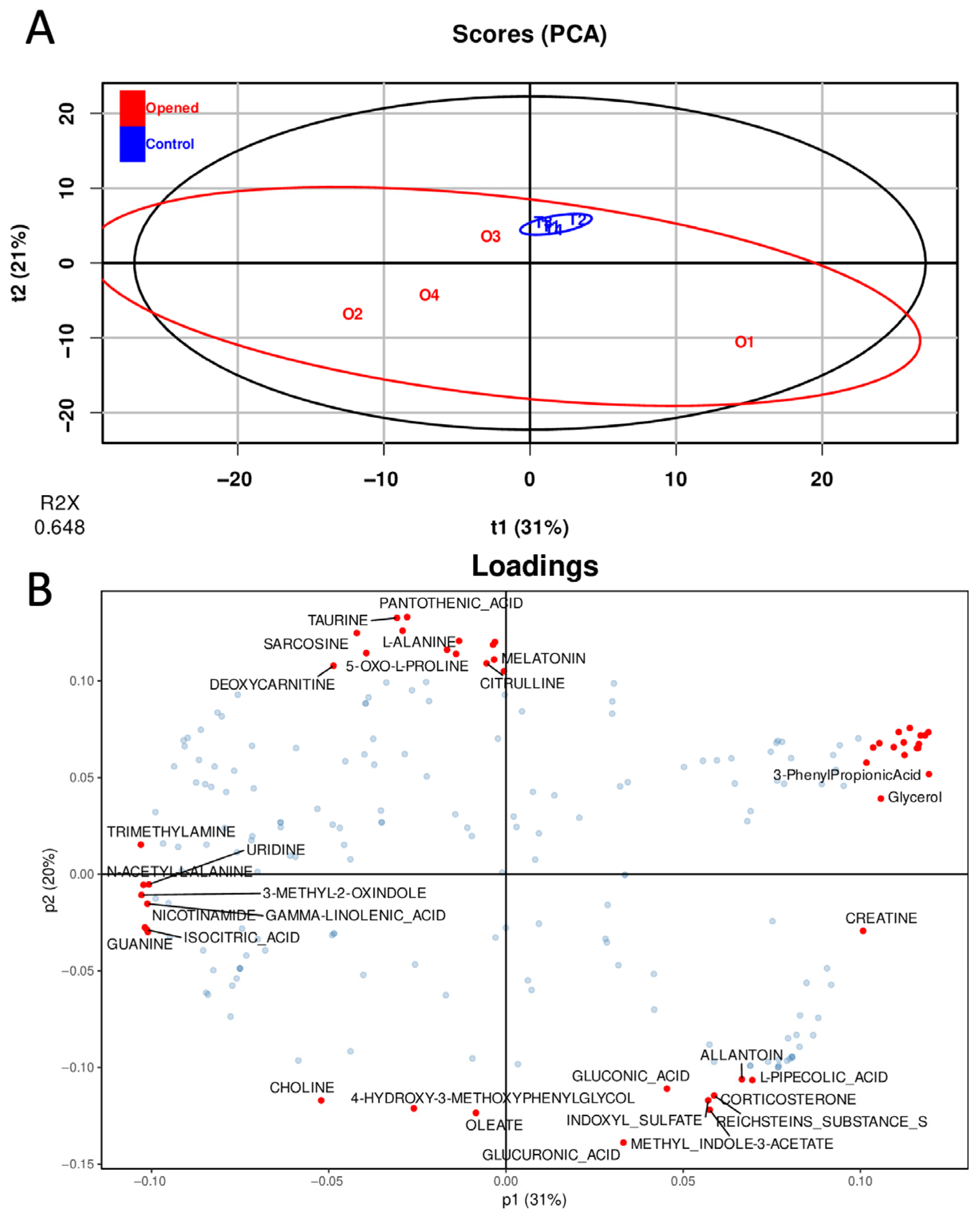
- Unsupervised analysis: perform a Principal Component Analysis (PCA) to explore clustering and detect potential outliers.
- b.
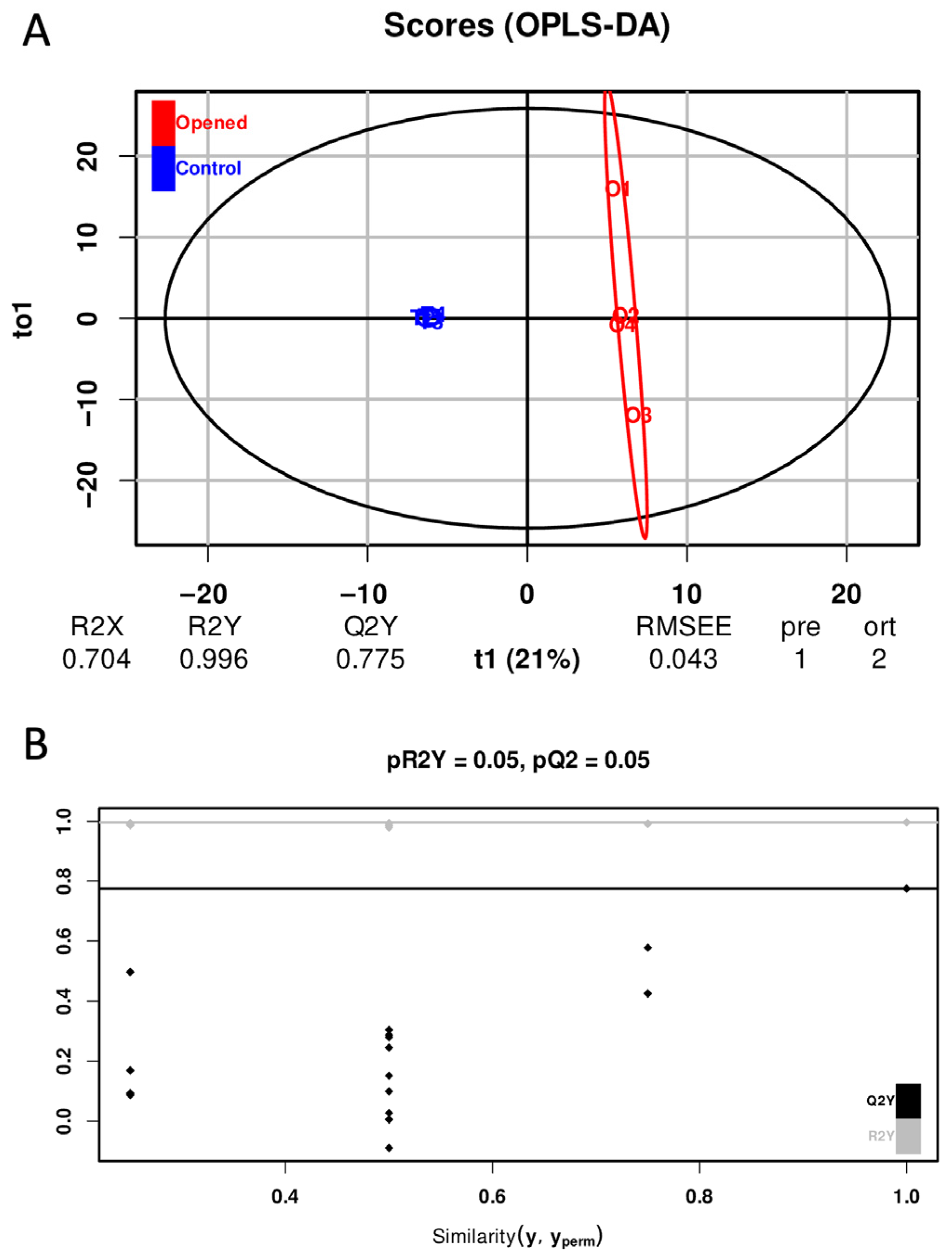
- Supervised analysis: perform a Partial Least Squares Discriminant Analysis (PLS-DA) to identify group discriminants.
- Assess model performance using Q2, where values closer to 1 indicate stronger predictive ability.
- Validate model significance through permutation testing (implemented in ropls), ensuring pR2Y and pQ2 are <0.05 and Q2 is >0.5.
- Identify significant metabolites based on Variable Importance in Projection (VIP) scores. Select those with a VIP > 1 for further analyses.
- OPTIONAL STEP Receiver Operating Characteristic (ROC) curves may be plotted to evaluate the predictive performance of discriminant metabolites, either individually or in combination [23]. The area under the curve (AUC) indicates the ability to correctly classify new samples.
3.5.3. Univariate Analyses
- Assess data normality using the Shapiro–Wilk test and homogeneity of variances using the Fligner–Killeen test.
- Choose the appropriate statistical test (parametric or non-parametric) depending on these results to identify metabolites differing significantly between groups.
- Adjust p-values for multiple testing using the Bonferroni correction [24] or other suitable methods.
- Metabolites are considered significantly altered when the adjusted p-value is < 0.05.
- Calculate the log2 Fold Change (Log2 FC) for all significantly different metabolites.
- OPTIONAL STEP A volcano plot can be used to visualize metabolites according to their log2 fold change and statistical significance (−log10 p-value). Metabolites with a Log2 FC > 1 and a −log10 p-value > 1.30 were selected as candidates for further investigation.
3.5.4. Biological Integration
- Identify metabolites showing significant differences between experimental groups or use metabolites with a VIP > 1 and a |Log2 FC| > 1.
- Determine affected metabolic pathways using KEGG identifiers and perform Over-Representation Analysis (ORA) via a hypergeometric test, which evaluates whether certain metabolites are statistically over-represented in a pathway.
- A pathway is considered significantly impacted when the adjusted p is <0.05.
- Manually inspect significantly dysregulated pathways and remove non-relevant ones (i.e., pathways containing metabolites without reaction biochemical relationships).
4. Expected Results
5. Reagent Setup
Author Contributions
Funding
Institutional Review Board Statement
Data Availability Statement
Acknowledgments
Conflicts of Interest
Abbreviations
| 1H-NMRS | Nuclear magnetic resonance spectroscopy of proton |
| AD | Alzheimer’s disease |
| AU | Arbitrary unit |
| AUC | Area under the curve |
| BBB | Blood–brain barrier |
| BBBO | Blood–brain barrier opening |
| BL | Burst length |
| CNS | Central nervous system |
| CSF | Cerebrospinal fluid |
| CV | Coefficient of variation |
| D2O | Deuterium oxyde |
| ESI | Electrospray ionization |
| FAD | Flavin adenine dinucleotide |
| FC | Fold change |
| FMN | Flavin mononucleotide |
| FDR | False discovery rate |
| FID | Free induction decay |
| HILIC | Hydrophilic interaction liquid chromatography |
| HMDB | Human metabolome database |
| HPLC-MS | High-performance liquid chromatography coupled to mass spectrometry |
| KEGG | Kyoto encyclopedia of genes and genomes |
| LC-MS | Liquid chromatography coupled to mass spectrometry |
| LC-MS/MS | Liquid chromatography coupled to tandem mass spectrometry |
| MeOH | Methanol |
| MS | Mass spectrometry |
| m/z | Mass-to-charge ratio |
| NO | Nitric oxide |
| NOS | Nitric oxide synthase |
| NMR | Nuclear magnetic resonance |
| OPLS-DA | Orthogonal partial least square discriminant analysis |
| ORA | Over-representation analysis |
| PCNSL | Primary central nervous system lymphoma |
| PCA | Principal component analysis |
| PLS-DA | Partial least square discriminant analysis |
| PRF | Pulse repetition frequency |
| QC | Quality control |
| RBCs | Red blood cells |
| RMSEE | Root mean square error of estimation |
| ROCs | Receiver operating characteristic (ROC) curves |
| RT | Retention time |
| SNR | Signal-to-noise ratio |
| TIC | Total ion chromatogram |
| TOC | Total organic carbon |
| TSP | Trimethysilylpropionate |
| UPLC | Ultra performance liquid chromatography |
| VIP | Variable importance in projection |
Appendix A

| Metabolites | Statistic | Adj p-Value | Modality | KEGG ID | VIP | Log2FC |
|---|---|---|---|---|---|---|
| 3-Hydroxyphenylacetate | −2.309401 | 0.02092134 | C18 NEG | C05593 | 1.957187 | −1.2429992 |
| Galactitol | 2.309401 | 0.02092134 | C18 POS | C01697 | 1.927569 | 1.1507695 |
| L-Arginine | −2.309401 | 0.02092134 | HILIC POS | C00062 | 1.894037 | −1.6887611 |
| N-Methyltryptamine | −2.309401 | 0.02092134 | HILIC POS | C06213 | 1.883518 | −1.7280361 |
| 3,4-Dihydroxy-L-Phenylalanine | 2.309401 | 0.02092134 | HILIC POS | C00355 | 1.828094 | 1.9119724 |
| L-Glutamine | −2.309401 | 0.02092134 | HILIC POS | C00064 | 1.772130 | −1.3795471 |
| 3-Methyladenine | −2.032863 | 0.04206641 | C18 POS | C00913 | 1.718375 | −1.5931366 |
| L-Asparagine | −2.309401 | 0.02092134 | HILIC POS | C00152 | 1.716927 | −1.8219156 |
| Urate | 2.309401 | 0.02092134 | C18 POS | C00366 | 1.715544 | 0.6132022 |
| Lactate | −2.309401 | 0.02092134 | C18 NEG | C00256 | 1.696666 | −0.6577911 |
| Citrulline | −2.309401 | 0.02092134 | HILIC POS | C00327 | 1.606109 | −1.0026370 |
| Indole-3-Acetic acid | −1.984313 | 0.04722090 | HILIC POS | C00954 | 1.561969 | −0.4700540 |
| Citramalate | −2.309401 | 0.02092134 | C18 NEG | C00815 | 1.550854 | −0.7828884 |
| Serotonin | 2.323271 | 0.02016457 | HILIC POS | C00780 | 1.503526 | 2.1690942 |
| Glucuronic acid | 2.309401 | 0.02092134 | C18 NEG | C00191 | 1.499418 | 2.0298188 |
| L-Alanine | −2.020726 | 0.04330814 | HILIC POS | C00041 | 1.442019 | −0.7555329 |
| L-Lysine | 2.309401 | 0.02092134 | C18 POS | C00047 | 1.433950 | 0.1621405 |
| Gluconic acid | 2.020726 | 0.04330814 | C18 NEG | C00257 | 1.421728 | 0.6382347 |
| 5-Oxo-L-Proline | −2.020726 | 0.04330814 | HILIC POS | C01879 | 1.419276 | −0.7024403 |
| Indoxyl Sulfate | 2.309401 | 0.02092134 | C18 NEG | C05658 | 1.309764 | 2.6912877 |
| 5-Aminopentanoate | 2.366432 | 0.01796048 | C18 POS | C00431 | 1.130362 | 4.0047618 |
| L-Norvaline | 2.366432 | 0.01796048 | C18 POS | C01826 | 1.130362 | 4.0047618 |
| Methyl Indole-3-Acetate | 2.020726 | 0.04330814 | C18 POS | C20635 | 1.115888 | 3.4888185 |
| Allantoin | 2.309401 | 0.02092134 | C18 NEG | C01551 | 1.091148 | 0.4922073 |
| Corticosterone | 2.020726 | 0.04330814 | HILIC POS | C02140 | 1.085298 | 2.7098273 |
| Reichstein’s Substance S | 2.020726 | 0.04330814 | HILIC POS | C05488 | 1.085298 | 2.7098273 |
| Pathways | Total | Expected | Hits | Raw p | −Log10(p) | FDR |
|---|---|---|---|---|---|---|
| Arginine biosynthesis | 14 | 0.16279 | 3 | 0.00044418 | 3.3524 | 0.035534 |
| Alanine, aspartate, and glutamate metabolism | 28 | 0.32558 | 3 | 0.0036087 | 2.4426 | 0.14435 |
| Tryptophan metabolism | 41 | 0.47674 | 3 | 0.010678 | 1.9715 | 0.28475 |
| Ascorbate and aldarate metabolism | 10 | 0.11628 | 1 | 0.11069 | 0.95591 | 1 |
| Arginine and proline metabolism | 36 | 0.4186 | 1 | 0.34683 | 0.45988 | 1 |
| Tyrosine metabolism | 42 | 0.48837 | 1 | 0.39219 | 0.4065 | 1 |
| Pentose and glucuronate interconversions | 19 | 0.22093 | 1 | 0.20031 | 0.69829 | 1 |
| Pyruvate metabolism | 23 | 0.26744 | 1 | 0.23735 | 0.62462 | 1 |
| Pentose phosphate pathway | 23 | 0.26744 | 1 | 0.23735 | 0.62462 | 1 |
| Steroid hormone biosynthesis | 80 | 0.93023 | 2 | 0.23754 | 0.62426 | 1 |
| Purine metabolism | 71 | 0.82558 | 2 | 0.19837 | 0.70252 | 1 |
| Glutathione metabolism | 28 | 0.32558 | 1 | 0.28136 | 0.55074 | 1 |
| Nitrogen metabolism | 6 | 0.069767 | 1 | 0.067877 | 1.1683 | 1 |
| Biotin metabolism | 10 | 0.11628 | 1 | 0.11069 | 0.95591 | 1 |
| Selenocompound metabolism | 20 | 0.23256 | 1 | 0.20973 | 0.67835 | 1 |
| Galactose metabolism | 27 | 0.31395 | 1 | 0.27275 | 0.56423 | 1 |
| Lysine degradation | 30 | 0.34884 | 1 | 0.29829 | 0.52537 | 1 |
| Inositol phosphate metabolism | 30 | 0.34884 | 1 | 0.29829 | 0.52537 | 1 |
| Glyoxylate and dicarboxylate metabolism | 32 | 0.37209 | 1 | 0.31483 | 0.50192 | 1 |
| Pyrimidine metabolism | 39 | 0.45349 | 1 | 0.3699 | 0.43192 | 1 |
References
- Sakka, L.; Coll, G.; Chazal, J. Anatomy and physiology of cerebrospinal fluid. Eur. Ann. Otorhinolaryngol. Head Neck Dis. 2011, 128, 309–316. [Google Scholar] [CrossRef]
- Sakka, L.; Chazal, J. The meninges, an anatomical point of view. Morphologie 2005, 89, 35–42. [Google Scholar] [CrossRef]
- Reiber, H. Proteins in cerebrospinal fluid and blood: Barriers, CSF flow rate and source-related dynamics. Restor. Neurol. Neurosci. 2003, 21, 79–96. [Google Scholar] [CrossRef] [PubMed]
- Zervas, N.T.; Liszczak, T.M.; Mayberg, M.R.; Black, P.M. Cerebrospinal fluid may nourish cerebral vessels through pathways in the adventitia that may be analogous to systemic vasa vasorum. J. Neurosurg. 1982, 56, 475–481. [Google Scholar] [CrossRef] [PubMed]
- Pollay, M. The function and structure of the cerebrospinal fluid outflow system. Cerebrospinal Fluid Res. 2010, 7, 9. [Google Scholar] [CrossRef]
- Ayub, M.; Jin, H.K.J.; Bae, J. The blood cerebrospinal fluid barrier orchestrates immunosurveillance, immunoprotection, and immunopathology in the central nervous system. BMB Rep. Korean Soc. Biochem. Mol. Biol. 2021, 54, 196–202. [Google Scholar] [CrossRef]
- Engelhardt, B.; Sorokin, L. The blood–brain and the blood–cerebrospinal fluid barriers: Function and dysfunction. Semin. Immunopathol. 2009, 31, 497–511. [Google Scholar] [CrossRef]
- Owler, B.K.; Pitham, T.; Wang, D. Aquaporins: Relevance to cerebrospinal fluid physiology and therapeutic potential in hydrocephalus. Cerebrospinal Fluid Res. 2010, 7, 15. [Google Scholar] [CrossRef]
- Wichmann, T.O.; Damkier, H.H.; Pedersen, M. A Brief Overview of the Cerebrospinal Fluid System and Its Implications for Brain and Spinal Cord Diseases. Front. Hum. Neurosci. 2021, 15, 737217. [Google Scholar] [CrossRef] [PubMed]
- Alonso, A.; Marsal, S.; Julià, A. Analytical Methods in Untargeted Metabolomics: State of the Art in 2015. Front. Bioeng. Biotechnol. 2015, 3, 23. [Google Scholar] [CrossRef]
- Bingol, K. Recent Advances in Targeted and Untargeted Metabolomics by NMR and MS/NMR Methods. High Throughput 2018, 7, 9. [Google Scholar] [CrossRef]
- Kim, J.H.; An, Y.J.; Kim, T.M.; Kim, J.E.; Park, S.; Choi, S.H. Ex vivo NMR metabolomics approach using cerebrospinal fluid for the diagnosis of primary CNS lymphoma: Correlation with MR imaging characteristics. Cancer Med. 2023, 12, 4679–4689. [Google Scholar] [CrossRef] [PubMed]
- Locasale, J.W.; Melman, T.; Song, S.; Yang, X.; Swanson, K.D.; Cantley, L.C.; Wong, E.T.; Asara, J.M. Metabolomics of human cerebrospinal fluid identifies signatures of malignant glioma. Mol. Cell Proteom. 2012, 11, M111.014688. [Google Scholar] [CrossRef]
- Nielsen, J.E.; Maltesen, R.G.; Havelund, J.F.; Færgeman, N.J.; Gotfredsen, C.H.; Vestergård, K.; Kristensen, S.R.; Pedersen, S. Characterising Alzheimer’s disease through integrative NMR- and LC-MS-based metabolomics. Metab. Open 2021, 12, 100125. [Google Scholar] [CrossRef] [PubMed]
- Ceaglio, N.; Orozco, G.; Etcheverrigaray, M.; Mattio, M.; Kratje, R.; Perotti, N.; Oggero, M. High performance collection of cerebrospinal fluid in rats: Evaluation of erythropoietin penetration after osmotic opening of the blood–brain barrier. J. Neurosci. Methods 2013, 219, 70–75. [Google Scholar] [CrossRef]
- Pegg, C.C.; He, C.; Stroink, A.R.; Kattner, K.A.; Wang, C.X. Technique for collection of cerebrospinal fluid from the cisterna magna in rat. J. Neurosci. Methods 2010, 187, 8–12. [Google Scholar] [CrossRef]
- Lefort, G.; Liaubet, L.; Canlet, C.; Tardivel, P.; Pere, M.C.; Quesnel, H.; Paris, A.; Iannuccelli, N.; Vialaneix, N.; Servien, R. ASICS: An R package for a whole analysis workflow of 1D 1H NMR spectra. Bioinformatics 2019, 35, 4356–4363. [Google Scholar] [CrossRef]
- Tardivel, P.J.C.; Canlet, C.; Lefort, G.; Tremblay-Franco, M.; Debrauwer, L.; Concordet, D.; Servien, R. ASICS: An automatic method for identification and quantification of metabolites in complex 1D 1H NMR spectra. Metabolomics 2017, 13, 109. [Google Scholar] [CrossRef]
- Craig, A.; Cloarec, O.; Holmes, E.; Nicholson, J.K.; Lindon, J.C. Scaling and normalization effects in NMR spectroscopic metabonomic data sets. Anal. Chem. 2006, 78, 2262–2267. [Google Scholar] [CrossRef]
- Dieterle, F.; Ross, A.; Schlotterbeck, G.; Senn, H. Probabilistic quotient normalization as robust method to account for dilution of complex biological mixtures. Application in 1H NMR metabonomics. Anal. Chem. 2006, 78, 4281–4290. [Google Scholar] [CrossRef]
- van den Berg, R.A.; Hoefsloot, H.C.; Westerhuis, J.A.; Smilde, A.K.; van der Werf, M.J. Centering, scaling, and transformations: Improving the biological information content of metabolomics data. BMC Genom. 2006, 7, 142. [Google Scholar] [CrossRef]
- Thevenot, E.A.; Roux, A.; Xu, Y.; Ezan, E.; Junot, C. Analysis of the Human Adult Urinary Metabolome Variations with Age, Body Mass Index, and Gender by Implementing a Comprehensive Workflow for Univariate and OPLS Statistical Analyses. J. Proteome Res. 2015, 14, 3322–3335. [Google Scholar] [CrossRef]
- Bünger, R.; Mallet, R.T. Metabolomics and ROC Analysis: A Promising Approach for Sepsis Diagnosis. Crit. Care Med. 2016, 44, 1784–1785. [Google Scholar] [CrossRef]
- Benjamini, Y.; Hochberg, Y. Controlling the False Discovery Rate: A Practical and Powerful Approach to Multiple Testing. J. R. Stat. Soc. Ser. B (Methodol.) 1995, 57, 289–300. [Google Scholar]
- Kanehisa, M.; Goto, S. KEGG: Kyoto encyclopedia of genes and genomes. Nucleic Acids Res. 2000, 28, 27–30. [Google Scholar] [CrossRef]
- Wishart, D.S.; Feunang, Y.D.; Marcu, A.; Guo, A.C.; Liang, K.; Vazquez-Fresno, R.; Sajed, T.; Johnson, D.; Li, C.; Karu, N.; et al. HMDB 4.0: The human metabolome database for 2018. Nucleic Acids Res. 2018, 46, D608–D617. [Google Scholar] [CrossRef]
- Gillespie, M.; Jassal, B.; Stephan, R.; Milacic, M.; Rothfels, K.; Senff-Ribeiro, A.; Griss, J.; Sevilla, C.; Matthews, L.; Gong, C.; et al. The reactome pathway knowledgebase 2022. Nucleic Acids Res. 2022, 50, D687–D692. [Google Scholar] [CrossRef]
- Evangelou, M.; Rendon, A.; Ouwehand, W.H.; Wernisch, L.; Dudbridge, F. Comparison of Methods for Competitive Tests of Pathway Analysis. PLoS ONE 2012, 7, e41018. [Google Scholar] [CrossRef] [PubMed]
- Morris, S.M. Arginine Metabolism Revisited. J. Nutr. 2016, 146, 2579S–2586S. [Google Scholar] [CrossRef]
- Cooke, J.P. NO and angiogenesis. Atheroscler. Suppl. 2003, 4, 53–60. [Google Scholar] [CrossRef] [PubMed]
- Martí, I.; Líndez, A.-A.; Reith, W. Arginine-dependent immune responses. Cell Mol. Life Sci. 2021, 78, 5303–5324. [Google Scholar] [CrossRef] [PubMed]
- Presset, A.; Bonneau, C.; Kazuyoshi, S.; Nadal-Desbarats, L.; Mitsuyoshi, T.; Bouakaz, A.; Kudo, N.; Escoffre, J.-M.; Sasaki, N. Endothelial Cells, First Target of Drug Delivery Using Microbubble-Assisted Ultrasound. Ultrasound Med. Biol. 2020, 46, 1565–1583. [Google Scholar] [CrossRef]
- Fung, T.S.; Ryu, K.W.; Thompson, C.B. Arginine: At the crossroads of nitrogen metabolism. EMBO J. 2025, 44, 1275–1293. [Google Scholar] [CrossRef]
- Nogueras, L.; Gonzalo, H.; Jové, M.; Sol, J.; Gil-Sanchez, A.; Hervás, J.V.; Valcheva, P.; Gonzalez-Mingot, C.; Solana, M.J.; Peralta, S.; et al. Lipid profile of cerebrospinal fluid in multiple sclerosis patients: A potential tool for diagnosis. Sci. Rep. 2019, 9, 11313. [Google Scholar] [CrossRef]
- Péter, M.; Török, W.; Petrovics-Balog, A.; Vígh, L.; Vécsei, L.; Balogh, G. Cerebrospinal fluid lipidomic biomarker signatures of demyelination for multiple sclerosis and Guillain–Barré syndrome. Sci. Rep. 2020, 10, 18380. [Google Scholar] [CrossRef] [PubMed]
- Saito, K.; Hattori, K.; Hidese, S.; Sasayama, D.; Miyakawa, T.; Matsumura, R.; Tatsumi, M.; Yokota, Y.; Ota, M.; Hori, H.; et al. Profiling of Cerebrospinal Fluid Lipids and Their Relationship with Plasma Lipids in Healthy Humans. Metabolites 2021, 11, 268. [Google Scholar] [CrossRef] [PubMed]


| Modality | Number of Identified Metabolites | After Redundancy Filtering |
|---|---|---|
| C18 ESI− | 78 | 45 |
| C18 ESI+ | 109 | 40 |
| HILIC ESI+ | 119 | 82 |
| NMR | 124 | 42 |
| Total | 430 | 209 |
| Metabolites | QC1 | QC2 | QC3 | CV | Modality | KEGG_ID |
|---|---|---|---|---|---|---|
| Creatine | 0.001731 | 0.00124848 | 0.00152248 | 6.20102621 | NMR | C00300 |
| Creatine | 298,417.412 | 335,617.359 | 316,098.658 | 17.0205854 | C18_NEG | C00300 |
| Creatine | 3.02 × 10⁷ | 4.09 × 10⁷ | 2.48 × 10⁷ | 3.91624533 | C18_POS | C00300 |
| Creatine | 1.57 × 10⁸ | 1.43 × 10⁸ | 1.34 × 10⁸ | 12.3868207 | HILIC_POS | C00300 |
| L-Tryptophan | 445,183.068 | 499,114.178 | 514,065.011 | 13.4166623 | C18_NEG | C00078 |
| L-Tryptophan | 1.13 × 10⁷ | 7,859,753.25 | 9,668,132.3 | 5.57298324 | C18_POS | C00078 |
| L-Tryptophan | 5,429,491.27 | 5,450,753.5 | 5,993,301.75 | 17.6010797 | HILIC_POS | C00078 |
| Metabolites | VIP | KEGG ID | Log2 Fold Change | Adjusted p-Value |
|---|---|---|---|---|
| 3-Hydroxyphenylacetate | 1.957187 | C05593 | −1.2429992 | 0.0209 |
| Galactitol | 1.927569 | C01697 | −1.5931366 | 0.0209 |
| L-Arginine | 1.894037 | C00062 | 1.9119724 | 0.0209 |
| N-Methyltryptamine | 1.883518 | C06213 | 1.1507695 | 0.0209 |
| 3,4-Dihydroxy-l-phenylalanine | 1.828094 | C00355 | −1.6887611 | 0.0209 |
| L-Glutamine | 1.772130 | C00064 | −1.8219156 | 0.0209 |
| 3-Methyladenine | 1.718375 | C00913 | −1.3795471 | 0.0421 |
| L-Asparagine | 1.716927 | C00152 | −0.6577911 | 0.0209 |
| Urate | 1.715544 | C00366 | −1.7280361 | 0.0209 |
| Lactate | 1.696666 | C00186 | 0.6132022 | 0.0209 |
| Pathways | Total | Expected | Hits | Raw p | −log10(p) | FDR |
|---|---|---|---|---|---|---|
| Arginine biosynthesis | 14 | 0.16279 | 3 | 0.00044418 | 3.3524 | 0.035534 |
| Alanine, aspartate, and glutamate metabolism | 28 | 0.32558 | 3 | 0.0036087 | 2.4426 | 0.14435 |
| Tryptophan metabolism | 41 | 0.47674 | 3 | 0.010678 | 1.9715 | 0.28475 |
| Ascorbate and aldarate metabolism | 10 | 0.11628 | 1 | 0.11069 | 0.95591 | 1 |
| Arginine and proline metabolism | 36 | 0.4186 | 1 | 0.34683 | 0.45988 | 1 |
| Tyrosine metabolism | 42 | 0.48837 | 1 | 0.39219 | 0.4065 | 1 |
Disclaimer/Publisher’s Note: The statements, opinions and data contained in all publications are solely those of the individual author(s) and contributor(s) and not of MDPI and/or the editor(s). MDPI and/or the editor(s) disclaim responsibility for any injury to people or property resulting from any ideas, methods, instructions or products referred to in the content. |
© 2026 by the authors. Licensee MDPI, Basel, Switzerland. This article is an open access article distributed under the terms and conditions of the Creative Commons Attribution (CC BY) license.
Share and Cite
Presset, A.; Bodard, S.; Lefèvre, A.; Oujagir, E.; Dupuy, C.; Escoffre, J.-M.; Nadal-Desbarats, L. Decoding Cerebrospinal Fluid: Integrative Metabolomics Across Multiple Platforms. Methods Protoc. 2026, 9, 8. https://doi.org/10.3390/mps9010008
Presset A, Bodard S, Lefèvre A, Oujagir E, Dupuy C, Escoffre J-M, Nadal-Desbarats L. Decoding Cerebrospinal Fluid: Integrative Metabolomics Across Multiple Platforms. Methods and Protocols. 2026; 9(1):8. https://doi.org/10.3390/mps9010008
Chicago/Turabian StylePresset, Antoine, Sylvie Bodard, Antoine Lefèvre, Edward Oujagir, Camille Dupuy, Jean-Michel Escoffre, and Lydie Nadal-Desbarats. 2026. "Decoding Cerebrospinal Fluid: Integrative Metabolomics Across Multiple Platforms" Methods and Protocols 9, no. 1: 8. https://doi.org/10.3390/mps9010008
APA StylePresset, A., Bodard, S., Lefèvre, A., Oujagir, E., Dupuy, C., Escoffre, J.-M., & Nadal-Desbarats, L. (2026). Decoding Cerebrospinal Fluid: Integrative Metabolomics Across Multiple Platforms. Methods and Protocols, 9(1), 8. https://doi.org/10.3390/mps9010008