1. Introduction
The history of São Francisco do Sul, one of the oldest cities in Brazil, is characterized by the presence of diverse population groups throughout time, with its pioneering occupation by prehistoric populations followed by Guarani indigenous people (
Scheel-Ybert 2001). The first European expedition to reach the São Francisco region was led by the French navigator Binot Paulmier de Gonneville, who docked with the ship L’Espoir in 1504 (
A. S. Thiago 1947). Ethno-historical sources indicate that the Guarani people were responsible for providing aid to the debilitated crew of the L’Espoir (
Santos et al. 2004).
In 1512, the Spanish navigator Juan Díaz de Solís, successor to Amerigo Vespucci, undertook an expedition toward the South American continent, driven by an interest in exploring and mapping the Southern Cone. The cartographic records produced during this era constituted a fundamental basis for European geographical knowledge regarding American territory in the early 16th century (
Maar et al. 2011). Solís explored southern Brazil with the objective of finding a route toward the Moluccas (known as the Spice Islands). During this exploration, the expedition reached the coast of the present-day city of São Francisco and named the bay—previously called Babitonga by the Indigenous peoples—the Bay of São Francisco (
A. S. Thiago 1938). In this region, the colonizers immediately and laboriously undertook the establishment of a settlement, conceived from its inception as a permanent site (
D’Ávila de Mello 2005). Subsequently, this designation was attributed to the settlement founded on the shores of the bay, which later became São Francisco (
A. S. Thiago 1947).
According to the chronological survey presented by
Alexandre (
1972), following Solís’s expedition, Álvar Núñez Cabeza de Vaca reportedly reached the lands of São Francisco in 1520. This was followed by the arrival of Sebastian Cabot’s expedition in 1526. In 1547, Emperor Charles V contracted Juan de Sanabria to lead the settlement of the region; however, following his death, the expedition was only effectively carried out in 1553 by his son, Diego de Sanabria. In 1619, Pedro de Cáceres arrived to expand the settlement of São Francisco. In an attempt to populate these lands, the Spanish offered Antônio Fernandes a
sesmaria (land grant) to found the Village of São Francisco do Sul, where the Chapel of Nossa Senhora da Graça already stood (
R. S. Thiago 2014). Although the Santa Catarina coast received sporadic and temporary Portuguese expeditions, until 1640, the region was predominantly visited and occupied by Spaniards or by Portuguese subjects in service to the Spanish Crown (
Lourenço 2016).
The Catholic tradition, rooted in Portugal and Spain, extended beyond the European continent, radiating through overseas domains throughout the 16th and 17th centuries. The construction of a church was among the primary priorities for village founders, as it represented the community’s religious devotion and trust in divine protection as a cornerstone for the success of the settlement’s social organization (
Pereira 1984). Later, during the settlement process led by Manoel Lourenço de Andrade, a new religious temple was erected and dedicated to the same patron saint, Nossa Senhora da Graça, with construction completed in 1665 (
R. S. Thiago 2014).
Participation in religious ceremonies held aboard Portuguese vessels was considered an honor and was frequently used by officers as a means of rewarding the most disciplined sailors. For these rites, portable altars, religious image, and relics were embarked; in moments of peril, these were cast into the sea as pleas for divine protection (
Pestana Ramos 2001). The sacred image that occupied a prominent place in both the maritime and terrestrial imagination of navigators was that of the Virgin Mary, who was invoked as a protector against the frequent risks faced at sea. On land, her devotion was manifested through processions of gratitude conducted by sailors who attributed their deliverance and rescue during crossings to her (
Rodrigues 2018).
With the colonization of Brazilian territory, various European religious orders, such as the Jesuits, Franciscans, Benedictines, Carmelites, and, subsequently, itinerant Capuchins, established themselves in the region. Along with these missionaries, the first iconographic representations of saints linked to their respective orders were introduced, most notably images of the Virgin Mary. These consolidated the cult of sacred imagery, significantly influencing the religious formation and symbolic imagination of the colonial population (
Méro 1991). The tradition of sacred woodcarving is based on Holy Scripture, serving as an artistic manifestation aimed at the visual representation of central figures and events in Christianity. This practice is marked by a heavy symbolic load, in which sacred sculptures are conceived with human characteristics, as seen in representations of Christ, the Virgin Mary, or the saints. The devotion directed toward these images is related to the spiritual value they evoke. Over time, these visual expressions of faith have maintained their importance, remaining present in sacred art to the present day (
Méro 1991).
During the Byzantine, Renaissance, and Baroque periods, the articulation between artistic expression and religiosity was decisive in the development of representations of the Virgin Mary. Artists, by assimilating the visual and symbolic codes of their respective eras, materialized the Marian figure through distinct stylistic approaches, reflecting the cultural and theological transformations of Christianity (
Mombach 2024).
This Western artistic trajectory is reflected in the historical formation of the country and the trajectory of sacred imagery in São Francisco do Sul. During the colonial period, under official Catholicism, these images were objects of worship and prayer, becoming symbolic witnesses to Brazilian cultural and religious evolution (
Etzel 1979). According to oral tradition, the image of Nossa Senhora da Graça reached São Francisco do Sul in 1547, brought by Spaniards on the brigantine
La Concepción. Although this narrative is part of the local devotional imagination, there are no historical records to verify it. The belief that the saint chose the city as her dwelling inspired the construction of the
Igreja Matriz (Mother Church), built over the old chapel and consolidated as a religious and historical symbol of the region (
Â. C. d. Silva 2004).
Understanding the interactions involving the preservation of sacred sculptures becomes essential, as they are regarded as material records carrying historical and cultural meanings. Historical investigation of the piece, encompassing its context of creation and the path it traversed over time, is fundamental for a deep understanding of the work and for defining appropriate preservation procedures (
Coelho and Quites 2014). Sacred wood sculpture, common to various religious traditions, stands out for its symbolic and aesthetic importance. Crafted by experienced artisans using traditional techniques and tools, this art form plays a vital role in the preservation and transmission of cultural and spiritual values, recognized for both its artistic expressiveness and the profound meaning it incorporates throughout history (
Melo Júnior 2024). The anatomy of wood emerges, in a cultural context, as a powerful tool capable of elucidating silenced historical aspects. It is believed that wood is an active and protagonistic agent in the history of humanity. Its relational study, mediated by historical anatomy, reveals how ancient traditions interact with biodiversity and create material and symbolic goods (
Melo Júnior et al. 2025).
This study aimed to characterize the iconography of the sculpture and to identify the botanical species and ancestral crafts associated with it, based on premises of the historical anatomy of wood. Furthermore, it seeks to associate chronological data of the piece and the forest origin of the wood species with historical narratives concerning the founding of São Francisco do Sul, contributing to fundamental aspects of Brazilian history.
2. Materials and Methods
2.1. Description of the Devotional Sculpture
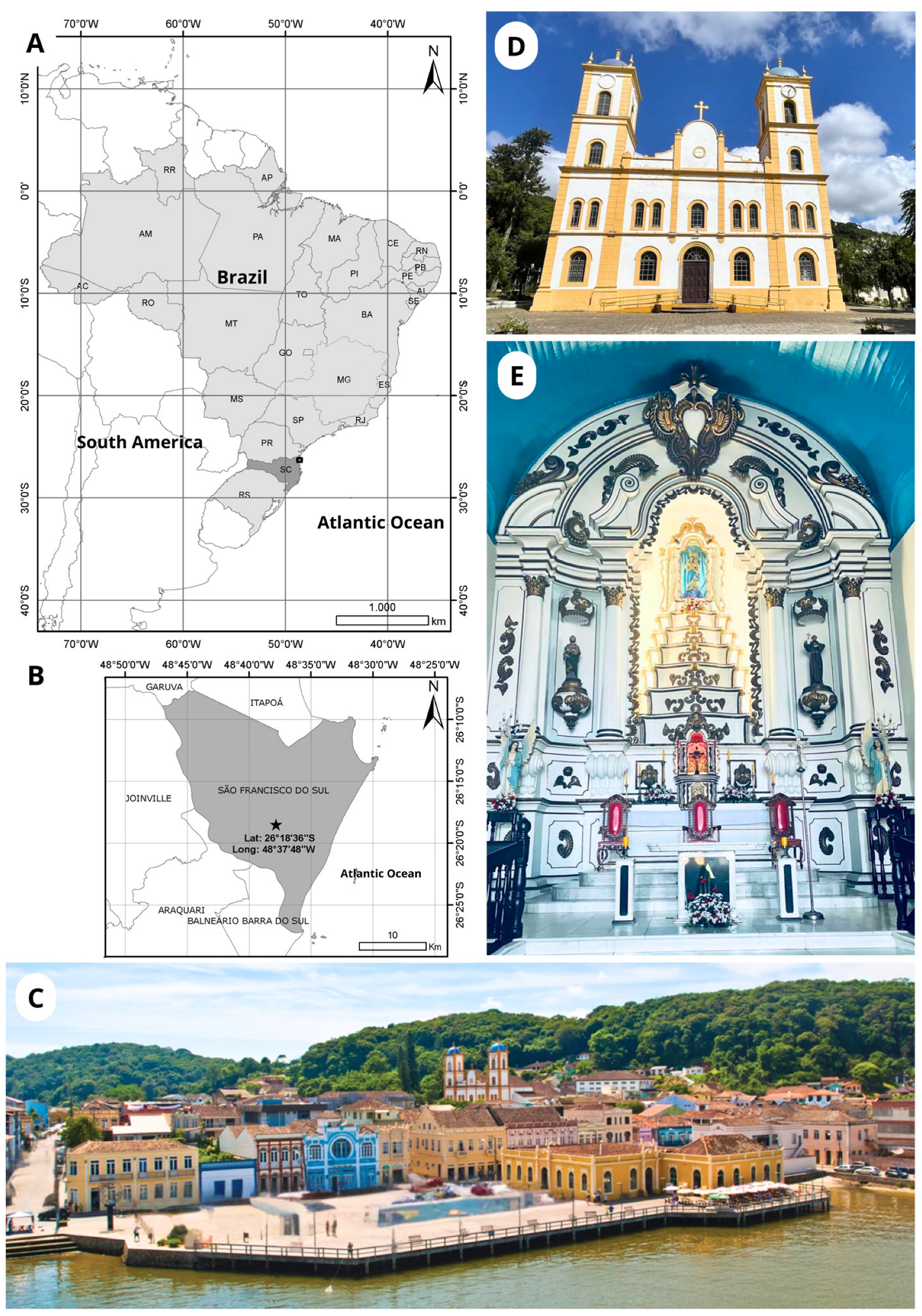
The Parish Church Sanctuary of Our Lady of Grace, constructed in 1699 and located in the municipality of São Francisco do Sul, State of Santa Catarina, Southern Brazil, constitutes a significant landmark of Brazilian cultural heritage (
Figure 1). It preserves within its interior sacred sculptures that exemplify the historicity and artistic expression inherent in national religiosity. This edifice was officially listed by the Institute of National Historical and Artistic Heritage (IPHAN) in 1987, in recognition of its historical and symbolic relevance to the constitution of Brazilian cultural identity (
Iphan 2014).
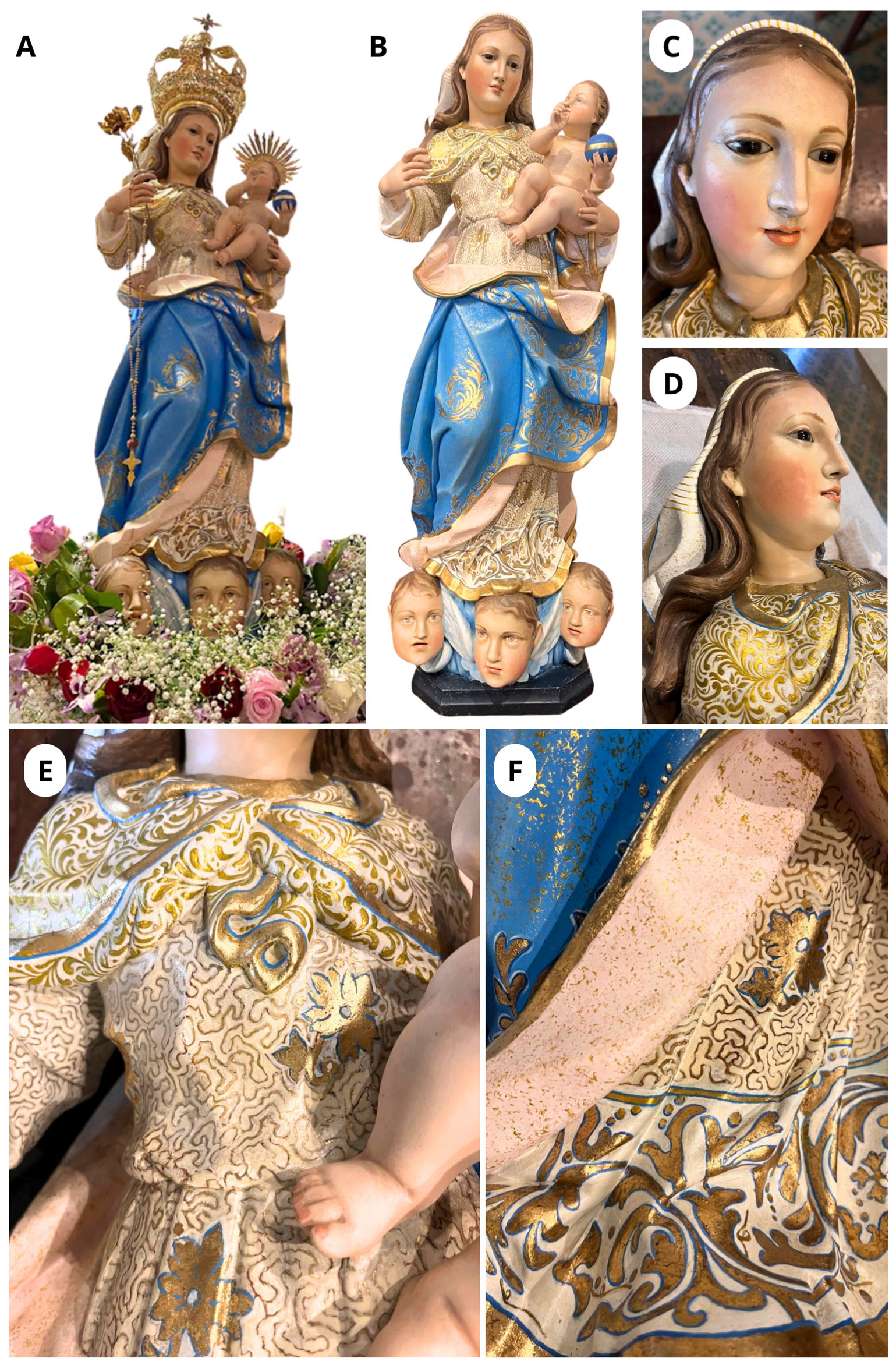
The devotional sculpture of Our Lady of Grace (
Figure 2), venerated inside the Mother Church of São Francisco do Sul, remains in the upper niche of the altar, playing a central role in the collective memory of the local community. Its symbolic and devotional importance contributes to the valorization of the intangible heritage linked to the Marian cult, in accordance with the cultural preservation principles established by IPHAN (
Iphan 2014).
2.2. Physical Characterization and Diagnostic Imaging
The devotional sculpture of Our Lady of Grace was subjected to a comprehensive set of imaging analyses aimed at identifying internal characteristics, construction techniques, and material conditions without the need for invasive interventions. The evaluation integrated visual inspection methods through photography, metric analysis, and weighing.
Radiological and computed tomography analyses enabled observation of fundamental aspects of the sculpture’s construction system, state of conservation, and authenticity. Radiology was performed using a high-resolution digital fixed X-ray machine (model Digital Diagnost C90, Philips, Best, The Netherlands), providing high diagnostic precision. The equipment featured a flat-panel digital detector made of cesium iodide (CsI), 43 × 43 cm, with a resolution of up to 2874 × 2840 pixels and a pixel size of 148 μm. Computed tomography (CT) was conducted using a 160-slice multislice scanner (model Aquilion, Canon, Otawara, Japan), with high-resolution volumetric acquisition. This allowed for multiplanar reconstructions in the axial, coronal, and sagittal planes, as well as three-dimensional (3D) renderings and Maximum Intensity Projections (MIPs).
2.3. Radiocarbon Dating
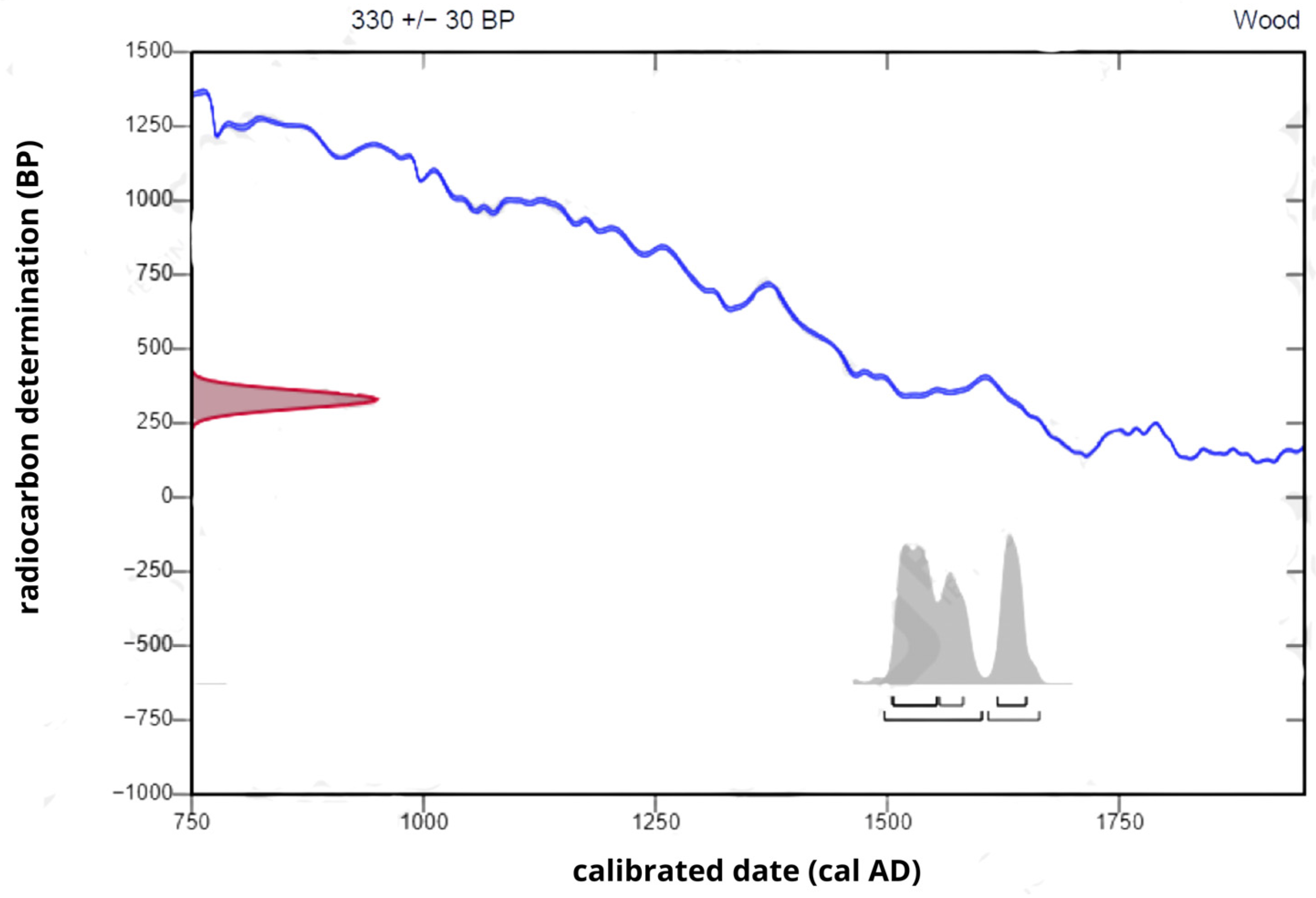
To obtain the estimated age of the sculpture, a 14C dating assay was performed at the Beta Analytic, LLC laboratory (Miami, FL, USA), an institution accredited under the ISO/IEC 17025:2017 standard, ensuring metrological traceability and rigorous quality control. A 0.2 g wood sub-sample from the sculpture was utilized, initially subjected to a standard Acid–Alkali–Acid (AAA) chemical pretreatment aimed at removing exogenous contaminants prior to measurement. The 14C determination was conducted via Accelerator Mass Spectrometry (AMS) using NEC accelerators (Middleton, WI, USA), with 13C isotopic measurements performed separately on a Thermo Isotope Ratio Mass Spectrometer (IRMS) (Bremen, Germany) to allow for isotopic fractionation correction. The conventional radiocarbon age was calculated based on the Libby half-life (5568 years), expressed in years BP (Before Present, 1950) and corrected for total isotopic fractionation, using 95% of the 14C signature of NIST SRM-4990C (oxalic acid) as the modern reference standard. The calibration of radiocarbon ages to calendar years was performed using BetaCal 5.0 software, employing the High Probability Density Range method with the SHCAL20 calibration curve, which is appropriate for the Southern Hemisphere. Calibration considered probability intervals of 68.2% and 95.4%, following international radiocarbon dating conventions.
2.4. Wood Sampling, Treatment, and Identification
This research was guided by the conceptual and methodological premises of historical wood anatomy, an interdisciplinary field that investigates the relationships between human societies and the utilization of forest resources. The study adopted a heritage-based interpretive approach that correlates physical findings with the artifact’s intangible dimension. This framework provides key elements for understanding the cultural and environmental history surrounding the artifact, as well as the sociopolitical contexts of its production (
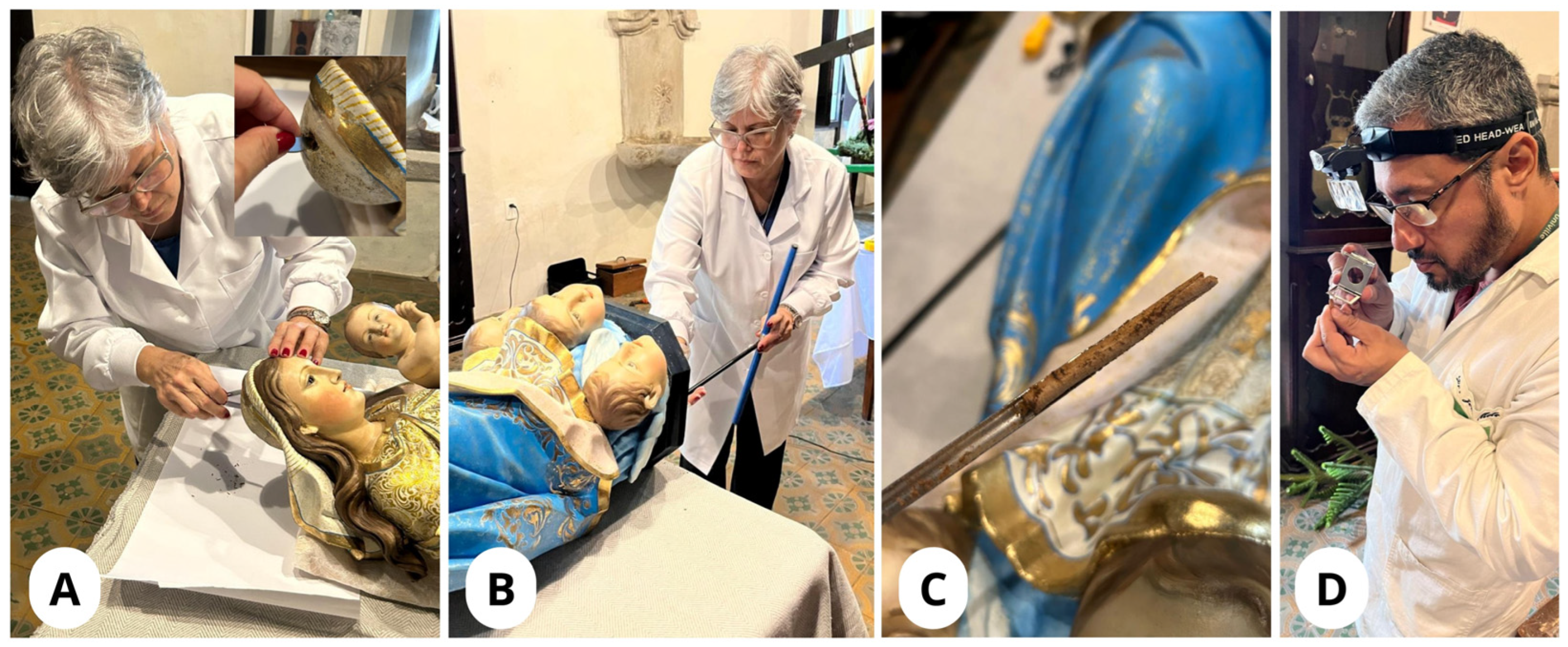
Melo Júnior 2024). Multiple wood samples were collected (
Figure 3) from the sculpture at both the base and the upper portion (using a pre-existing orifice for ornament attachment). To avoid over-collection, the integrity of the samples was examined in the field using a 10× magnifying glass. A second borehole was drilled 5 cm from the perimeter of the block to sample more mature wood. The outermost part of the sculpture was not collected, maintaining its physical and aesthetic integrity. Samples were obtained using a Pressler borer, considering the protocol for collecting historical wood (
Melo Júnior 2025). The choice of the Pressler probe was solely due to the large size of the sculpture and the fact that it was made from a single block of wood. Despite the quality of the sample obtained, the Pressler probe may be unsuitable for fragile and small pieces, potentially causing cracks in the wood (
J. L. Silva 2015).
Each sample received a field recognition code, which was subsequently replaced by an accession number in the historical wood reference collection (JOIhw 298) of the Wood Anatomy Laboratory at the University of the Region of Joinville, where it was deposited as a voucher for research.
For the anatomical analysis of the wood, specimens were initially subjected to boiling in a 20% glycerin solution in distilled water, following the methodology described by
Ferreirinha (
1958). The wood was cooked exclusively to allow for histological sectioning. The majority of the sample, without any treatment, was observed under a stereoscopic microscope to confirm the absence of pathologies. Histological sections in the transverse, tangential longitudinal, and radial longitudinal planes were obtained using a KD-2260 Rotary Microtome (Zhejiang Jinhua Kedi Instrumental Equipment Co., Ltd., Jinhua, China) and disposable steel blades. Subsequently, the sections were clarified with sodium hypochlorite, washed in distilled water, stained with Astra blue and safranin in an aqueous solution, dehydrated in an increasing series of ethanols, fixed in butyl acetate (
Kraus and Arduin 1997), and mounted on permanent slides with stained-glass varnish (
Paiva et al. 2006). To obtain dissociated material, Franklin’s solution was employed, with subsequent mounting in permanent preparations (
Johansen 1940).
The anatomical description followed the guidelines and terminology established by the
IAWA Committee (
1989). Measurements of quantitative wood attributes were performed using an OPTICAM 600 optical photomicroscope (Optika S.R.L., Ponteranica, Italy), with n = 30 measurements. Photomicrographs were obtained with the same equipment, coupled with a 14.0-megapixel LOPT14003 camera (Optika S.R.L., Ponteranica, Italy).
Taxonomic identification was conducted using a comparative method based on the reference collections of the Xylarium Joinvillea (JOIw) (
Melo Júnior et al. 2014), as well as by consulting the Inside Wood digital database (
Wheeler 2011) and specialized literature (
Record and Hess 1943;
Mainieri and Chimelo 1989). Validation of the scientific name, author, and forest origin of the species was performed using the Reflora virtual database (
BFG 2021).
3. Results
The sculpture exhibits balanced proportions, a frontal posture, and a serene expression, in accordance with the iconographical ideal of divine motherhood and spiritual royalty (
Figure 2). Carved in wood and richly polychromed, the sculpture features an oval face, soft flesh tones, and a porcelain-like appearance. The mouth, slightly ajar, reveals teeth and a tongue, and the piece has glass eyes only on the face. The hair is long, loose, parted in the middle, and dark, shown beneath a short veil. The arms are open, and the hands are curved. On her left arm, she supports the Christ Child, represented as Salvator Mundi, with his right hand in a sign of blessing and his left holding the orb. In her right hand, she holds a rose and a rosary, symbols associated with popular piety. The attire indicates subtle movement through the flexion of one leg and the dynamism of the folds. The drapery features intense pleating and sleeves with overlapping folds. The robes display floral and phytomorphic motifs, with a predominance of sky blue, pink, beige, and gold tones. The technique of sgraffito is a notable feature (designs obtained by scratching away layers of paint with a stylus to reveal the underlying gold at specific points), forming vermicular patterns, also referred to as “endless path”. The base is composed of a terrestrial globe and a pedestal with three angel heads (cherubs), reinforcing the celestial symbolism. Upon her head, she wears a golden crown, used in processional rituals.
The sculpture has a total height of 112 cm, and its largest circumference at the arms measures 113 cm. The base with the angels has a circumference of 110 cm. It has a mass of 24.3 kg. No external joints or cracks resulting from wood aging were observed, although traces of paint and localized restoration are present.
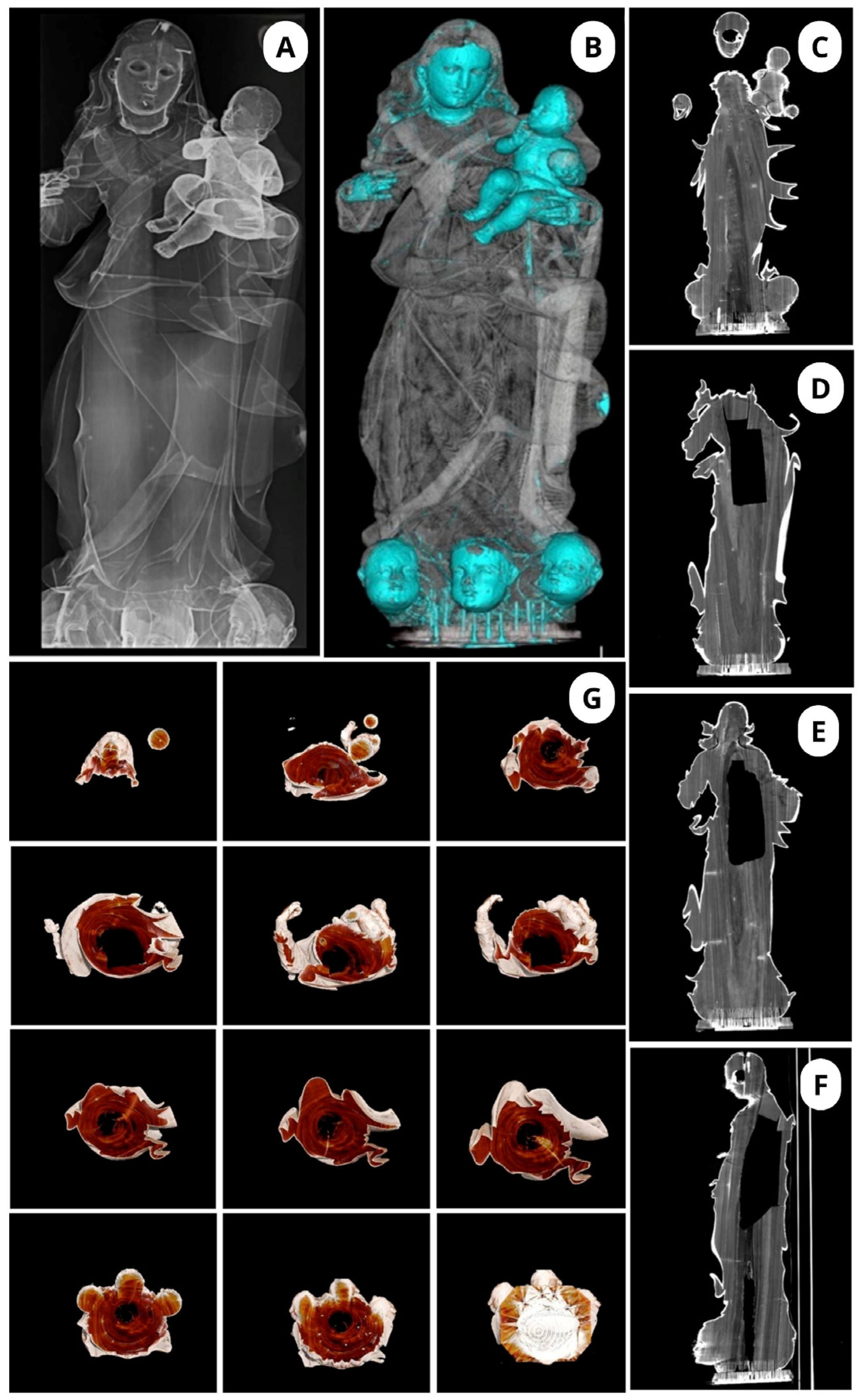
X-ray and CT images show that the work was crafted from a single block of wood, as no joints, seams, or articulation of pieces were evident. The exception is the neck and head, which, despite following the alignment of the growth rings, were separated from the body to allow for wood excavation. Thus, there is perfect alignment of the growth layers throughout the entire sculpture (
Figure 4). No joints, dowels, or multiple assemblies were observed. In the head section, it was found that the face is fixed by means of metallic elements and has the appearance of a fitted mask with the evident function of introducing glass eyes into the face of the sculpture. The CT revealed a large central cavity resulting from the hollowing of the trunk during its manufacture. This excavation was carried out from the upper part of the sculpture, in the lower portion of the neck that extends to the upper part of the back. It is noted that after the excavation, the neck and head were fitted into the cavity. However, in the cross-section, the correspondence between the growth rings is still visible. Another smaller cavity at the base of the sculpture ensures the connection of litter support for festive processional moments. No pathologies resulting from the attack of xylophagous agents were recorded.
Dating resulted in a conventional radiocarbon age of 330 ± 30 BP, corrected for isotopic fractionation, with a δ
13C value of −26.9 ± 0.30‰. The calibration of this age, conducted for the Southern Hemisphere, indicates two main chronological ranges with 95.4% probability: 1501–1598 cal AD, which accounts for 66.6% of the probability density, and 1613–1660 cal AD, which accounts for 28.8% (
Figure 5).
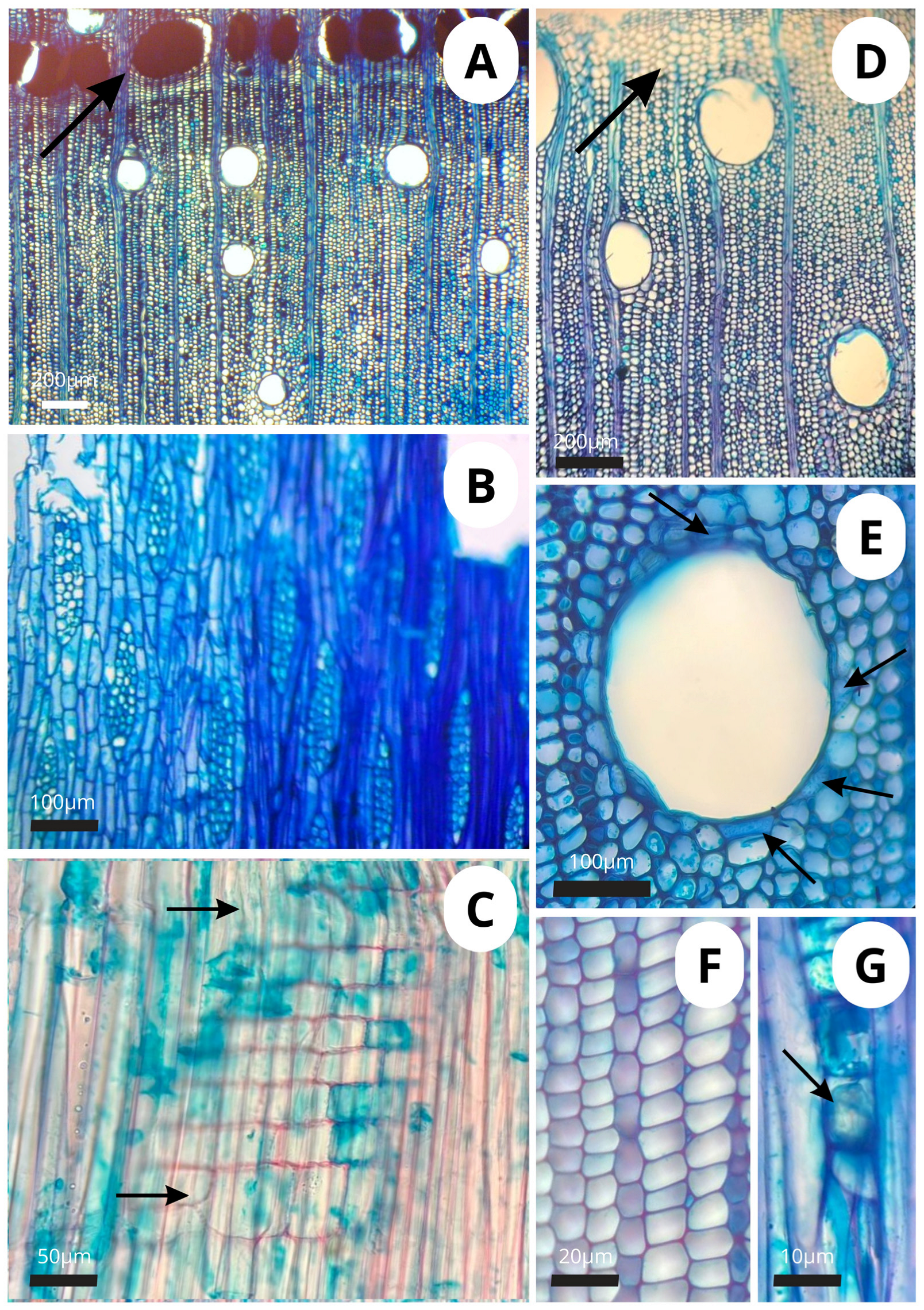
The anatomical description of the wood led to the identification of cedar (
Cedrela sp.—Meliaceae) (
Figure 6). The wood structure is characterized by distinct growth rings demarcated by a semi-ring-porous formation. The vessels are predominantly solitary and in multiples of 2–3, with a tangential diameter of 100–200 µm (188.5 µm ± 42.2 µm) and a frequency of ≤5 vessels per mm
2 (2.5 ± 1.1). Vessel elements measure 350–800 μm (457.3 µm ± 86.2 µm) in length and have simple perforation plates. Intervascular pitting is bordered, alternate, and small (4–7 µm); radiovascular pits have distinct borders and are similar to intervascular pits in size and shape. The fibers have simple to minutely bordered pits, are non-septate with very thin walls and have lengths ≥ 1600 μm (1616.6 μm ± 235.8 μm). Axial parenchyma is scanty paratracheal and in marginal bands; it occurs in fusiform series with 5–10 cells. The rays are 1–3 seriate (2–3), heterogeneous, with the body ray composed of procumbent cells and one row of upright and/or square marginal cells. Traumatic canals in long chains were observed. Prismatic crystals are present in marginal ray cells.
4. Discussion
The results of this study reveal significant aspects regarding the religious and environmental history of southern Brazil. Carpentry made from a single block of wood suggests the craftsman’s technical skill and knowledge of the properties of wood.
The hollow structure detected by CT, with posterior and inferior openings in the single wood block, is considered a common feature in colonial and Baroque sacred images. It serves to reduce weight and facilitate the handling of the sculpture, while also enabling festive liturgical uses, possibly following European customs, to prevent wood cracking (
Coelho and Quites 2014). This technique demonstrates the sculptor’s mastery over the material and reflects practices typical of devotional production intended for ecclesiastical altars and niches. The applied diagnostic imaging technique proved effective both for the non-invasive documentation of the cultural asset and for generating technical data for future conservation and authentication actions, revealing, among other aspects, the presence of thick layers, likely of pigment applied to the pictorial layer.
Considering the 68.2% probability interval, the results reinforce a predominant chronological attribution between the beginning and the second half of the 16th century, with a secondary possibility in the 17th century. These data position the sculpture consistently within the colonial period, providing a robust temporal framework for the historical and material interpretation of the analyzed context. Conversely, it is worth noting that the actual age of the sculpture may be less than recorded. To safeguard the physical integrity of the sculpture, the sample for dating was removed approximately 5 cm from the edge of the wood block. It is considered that the 28.8% interval may represent a more faithful estimate. However, in addition to the edge of the sculpture, there are also projections of the block that incorporate the heads of the angels, which would further expand the actual age, even without counting the growth rings through tomography.
Studies record the rising presence of master sculptors in Brazil during the 17th century. In this period, sacred art was strongly directed toward popular devotion, shaped by religious orders and Iberian models, with an emphasis on sculptural imagery, miraculous images, and the Baroque theatricalization of the mysteries of faith (
Brusadin and Stanfield-Mazzi 2022). Documentation of names for the 17th century is still scarce, with many anonymous authors linked to local workshops or imports from Portugal and Rome (
Costa 2022). This gap opens an expanding field for specific studies on colonial sacred artists.
In the realm of religious sculpture, wood transcends its structural function to assume symbolic, theological, and material meanings that guide its selection and use. Brazilian sacred art is heavily supported by the use of wood, with records indicating approximately 42 wood species, 32 genera, and 17 botanical families, of which 88.2% are angiosperm woods compared to 11.8% gymnosperms (
Melo Júnior 2026). Wood acts as an artistic and aesthetic support for the application of refined techniques, such as polychromy, and sgraffito, with gold leaf, and ornamental carving. The sculpture of Nossa Senhora da Graça demonstrates the use of all these elements, highlighting the decorative richness of the garments, the harmony of volumes, and facial expressiveness—attributes directly linked to the quality of the timber material, which confers an artistic and aesthetic utility to the wood (
Salgueiro et al. 2010). Its recurrence in the inventories of sacred works reinforces the need to reconcile technical knowledge with historical and iconographic studies, allowing for a more integrated reading of the materiality and spirituality imprinted on Brazilian sacred art (
Coelho and Quites 2014).
The structural characterization of the wood is in accordance with the description of the species in the literature and the Inside Wood database (
Metcalfe and Chalk 1950;
Miller and Détienne 2001;
Brandes et al. 2020). Diagnostic attributes of
Cedrela wood include distinct growth rings, generally semi-porous; vessels that are predominantly solitary or in short radial multiples (2–3); larger vessels in earlywood and smaller vessels in latewood; axial parenchyma frequently in marginal bands delimiting the rings; thin-walled fibers; and heterogeneous rays, generally 2–3 seriate (
Tomazello Filho et al. 2001;
Nisgoski et al. 2019). In some cases, the occurrence of intercellular canals of traumatic origin is recorded (
InsideWood 2004, onwards). According to the synopsis carried out with 17 species of Cedrela occurring in the Neotropical region, the most consistent anatomical characteristics are the tendency towards a semi-porous ring, mostly solitary vessels (although multiple short radial vessels (2–3 vessels) may occur), low frequency of vessels per mm
2, and axial parenchyma in marginal bands (
Kometter et al. 2023). In the Brazilian flora, cedar is represented by two species (
C. fissilis and
C. odorata). It has a wide natural distribution in the tropical regions of the American continent, with records from southern Mexico, throughout Central America, the Caribbean, and vast areas of South America, including northern Argentina, Paraguay, Bolivia, Colombia, Venezuela, Peru, Ecuador, the Guianas, and, most significantly, the Brazilian territory (
BFG 2021). In Brazil, it is native to seasonal and ombrophilous forests, with a presence recorded in nearly all regions, notably the Atlantic Forest and the Amazon, where it is considered a characteristic tree of humid tropical biomes. Currently, it is listed as a vulnerable species in several regions of its original distribution due to intense commercial logging and habitat degradation (
CNC Flora 2025). Although historical accounts and travelers’ chronicles clearly link the sculpture to Spanish navigators, the botanical origin and dating of the wood indicate historical inconsistency. However, this aspect does not compromise the symbolic and social function associated with the religious sculpture.
With good dimensional stability, cedar is easy to carve, which favors the execution of fine details, clean cuts, and surface finishes (
Lisboa 1994). Its high capacity for pigment absorption makes it especially suitable for polychromed religious pieces (
Marchiori 2010). Furthermore, it is resistant to attacks by xylophagous agents (
Ono et al. 1996).
During the colonial centuries in Brazil, cedar was widely exploited for the quality of its wood for artistic and constructive applications, as well as for the ease of extraction and transport through river and sea ports. Historical documents and ethnobotanical studies indicate that, in the coastal regions of southern Brazil, cedar was among the preferred species for making furniture, carvings, and especially sacred sculptures due to its local abundance, relatively low density, and good response to carving, polychromy, and gilding techniques (
Passos 1997;
Gonzaga 2006;
Marchiori 2010;
Rodrigues et al. 2024). The predominant use of cedar in religious sculpture in other parts of southern Brazil, such as in the Jesuit-Guarani Reductions of the state of Rio Grande do Sul, is also attributed to its greater availability in the region’s forest remnants (
Schulze-Hofer and Marchiori 2010). Generally, cedar is recognized as a key species associated with the historical–cultural use of the forest in Brazil (
Melo Júnior et al. 2025).
The use of cedar in the colonial period was valued both for its lightness and physical–mechanical stability and for its connotations of spiritual nobility, often associated with the “cedar of Lebanon” mentioned in various passages of Scripture (Psalms 91:13). In symbolic and liturgical use, wood functions as a mediator between the material and spiritual planes. Cedar, in this context, is a wood traditionally related to purity, incorruptibility, and majesty—attributes directly linked to Marian iconography (
Ahlert 2016).