Article

Numerical Study on the Hydrodynamic Performance of a Flexible Caudal Fin with Different Trailing-Edge Shapes


by
May Hlaing Win Khin
1,2,* and
Shinnosuke Obi
2,*
1
Department of Mechanical Engineering, West Yangon Technological University, Yangon 11401, Myanmar
2
Department of Mechanical Engineering, Keio University, Yokohama 223-8522, Japan
*
Authors to whom correspondence should be addressed.
Biomimetics 2024, 9(7), 445; https://doi.org/10.3390/biomimetics9070445

Submission received: 24 June 2024 / Revised: 14 July 2024 / Accepted: 19 July 2024 / Published: 21 July 2024
(This article belongs to the Section Locomotion and Bioinspired Robotics)

Abstract

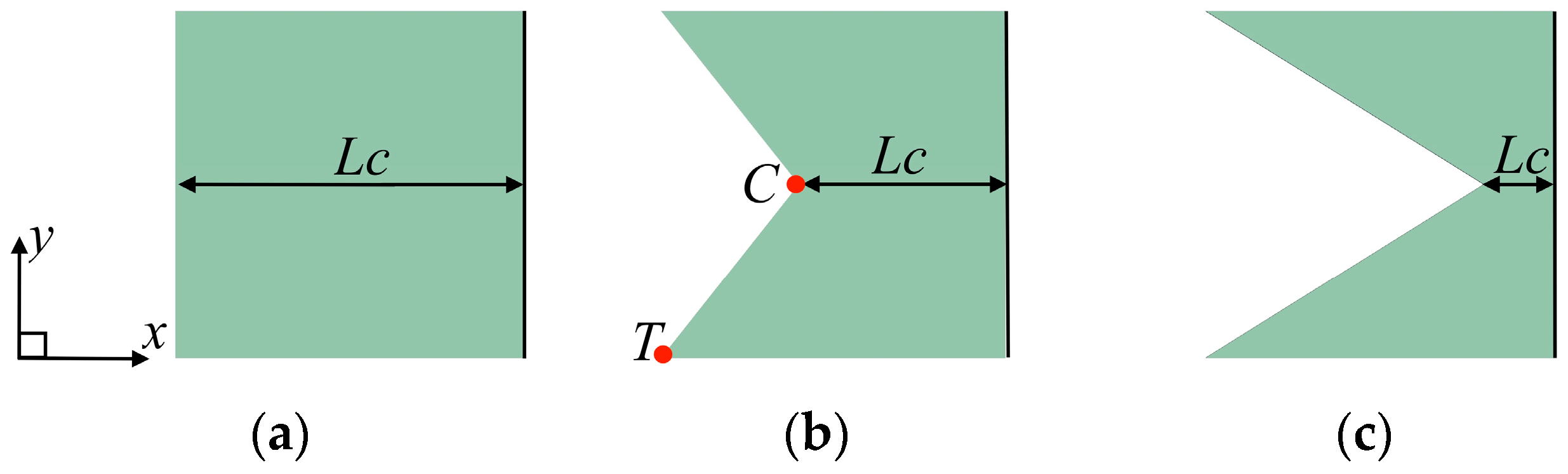
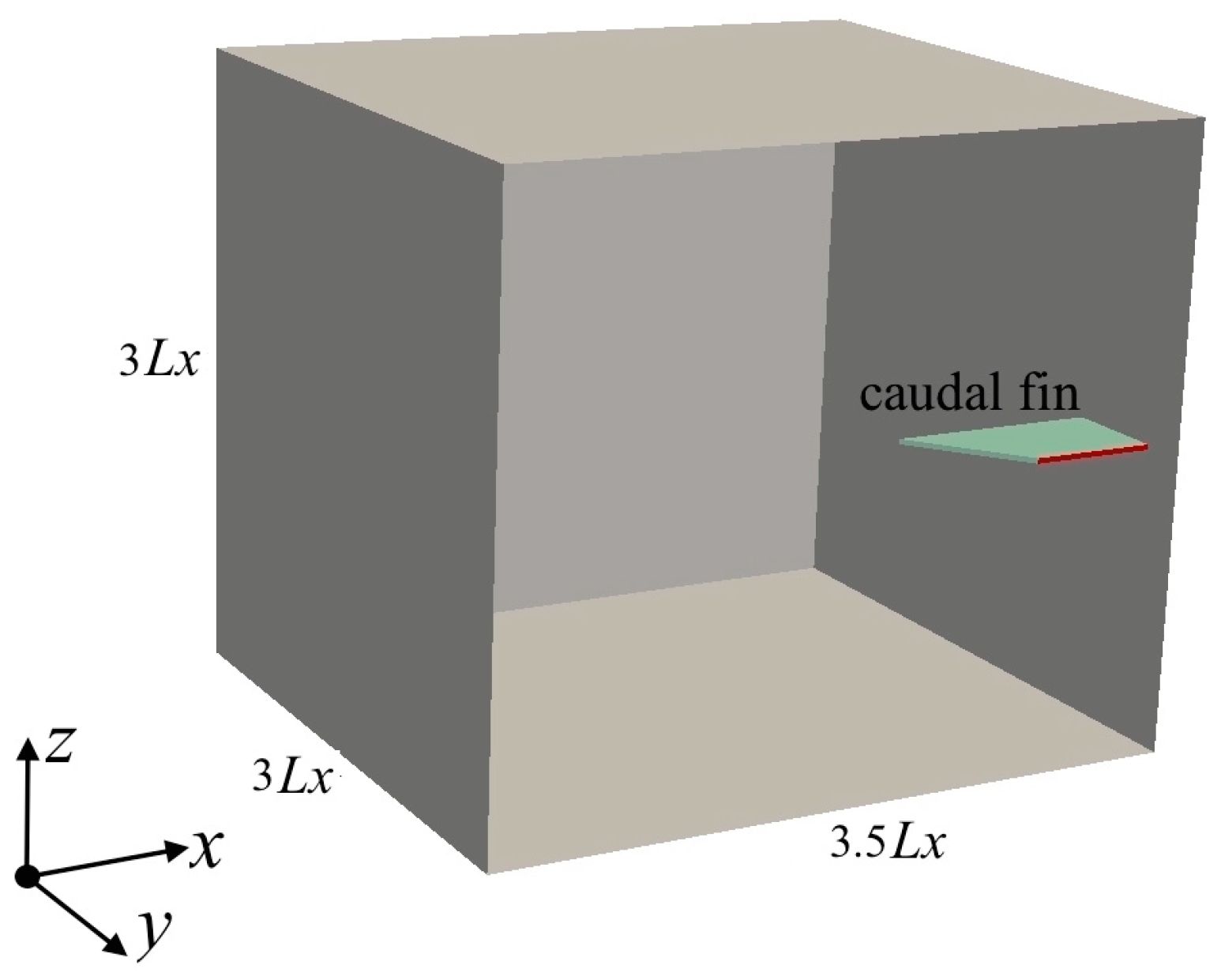
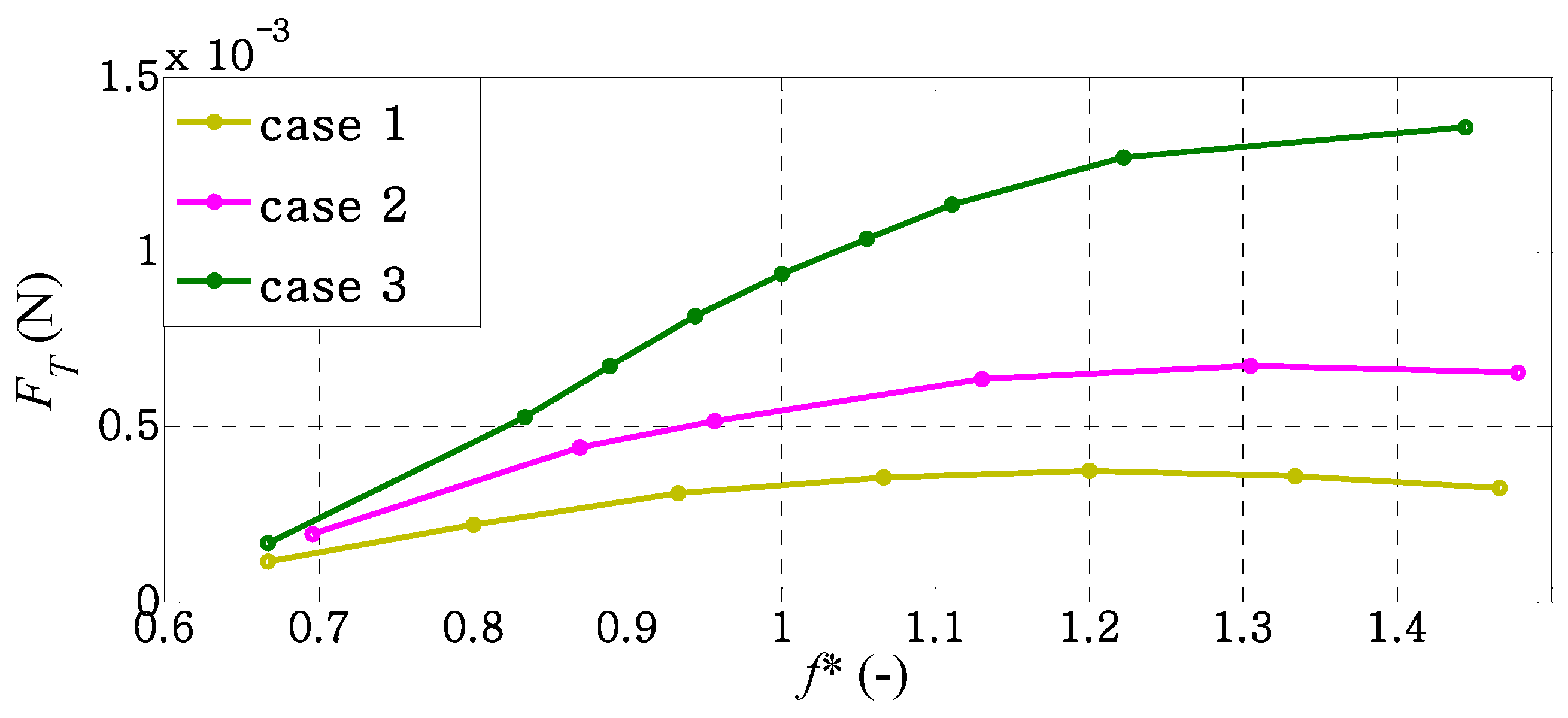
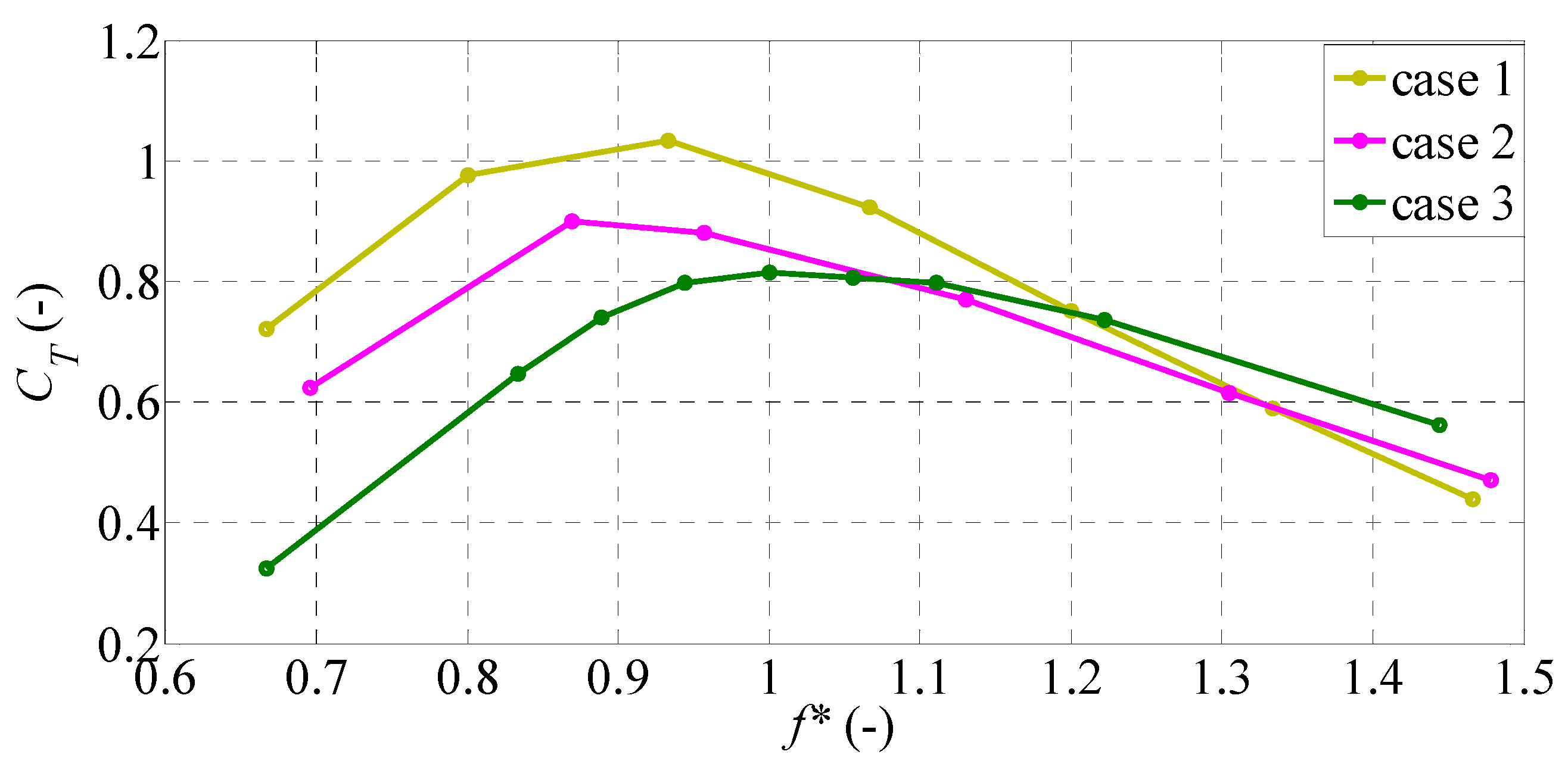
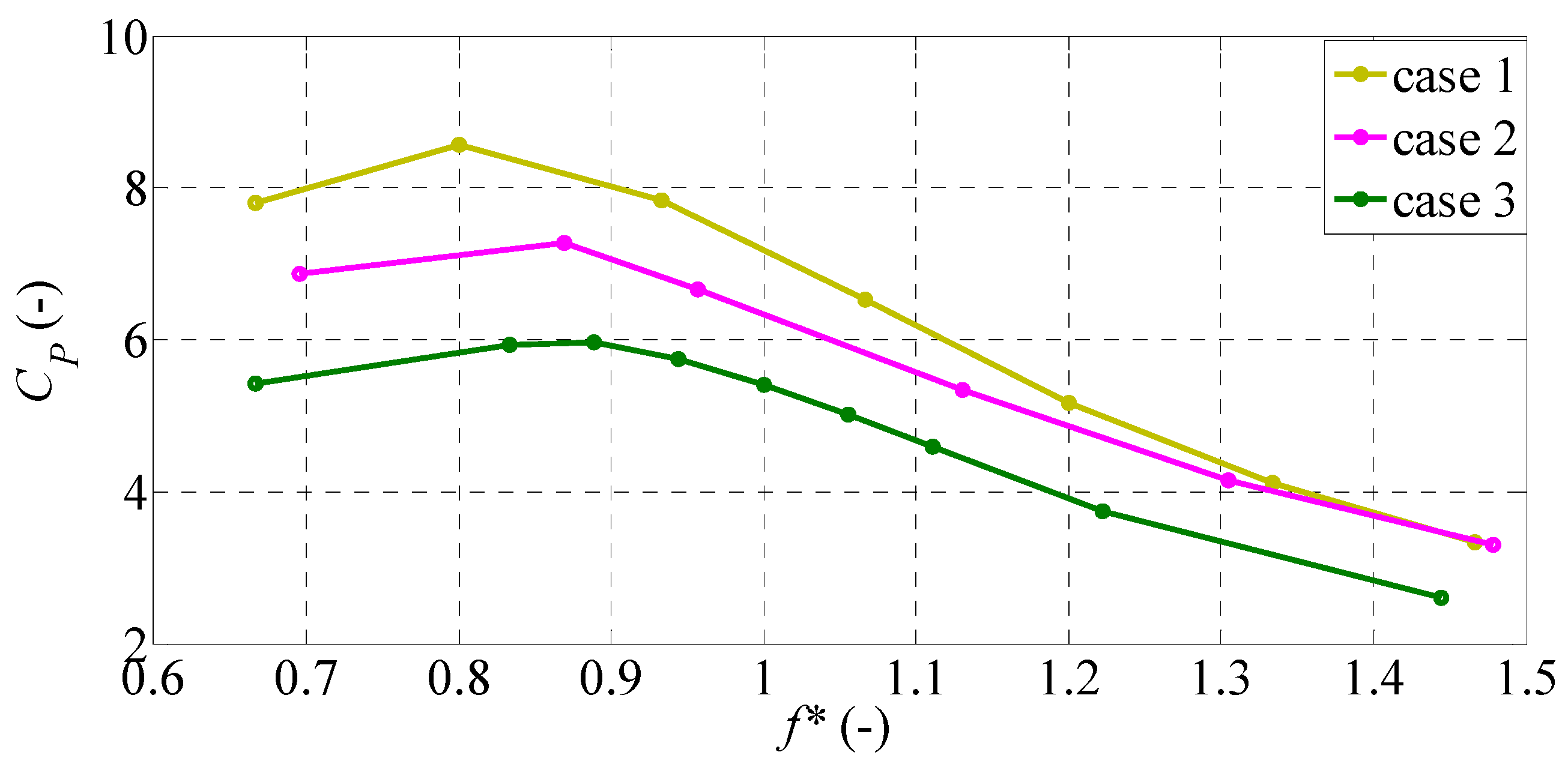
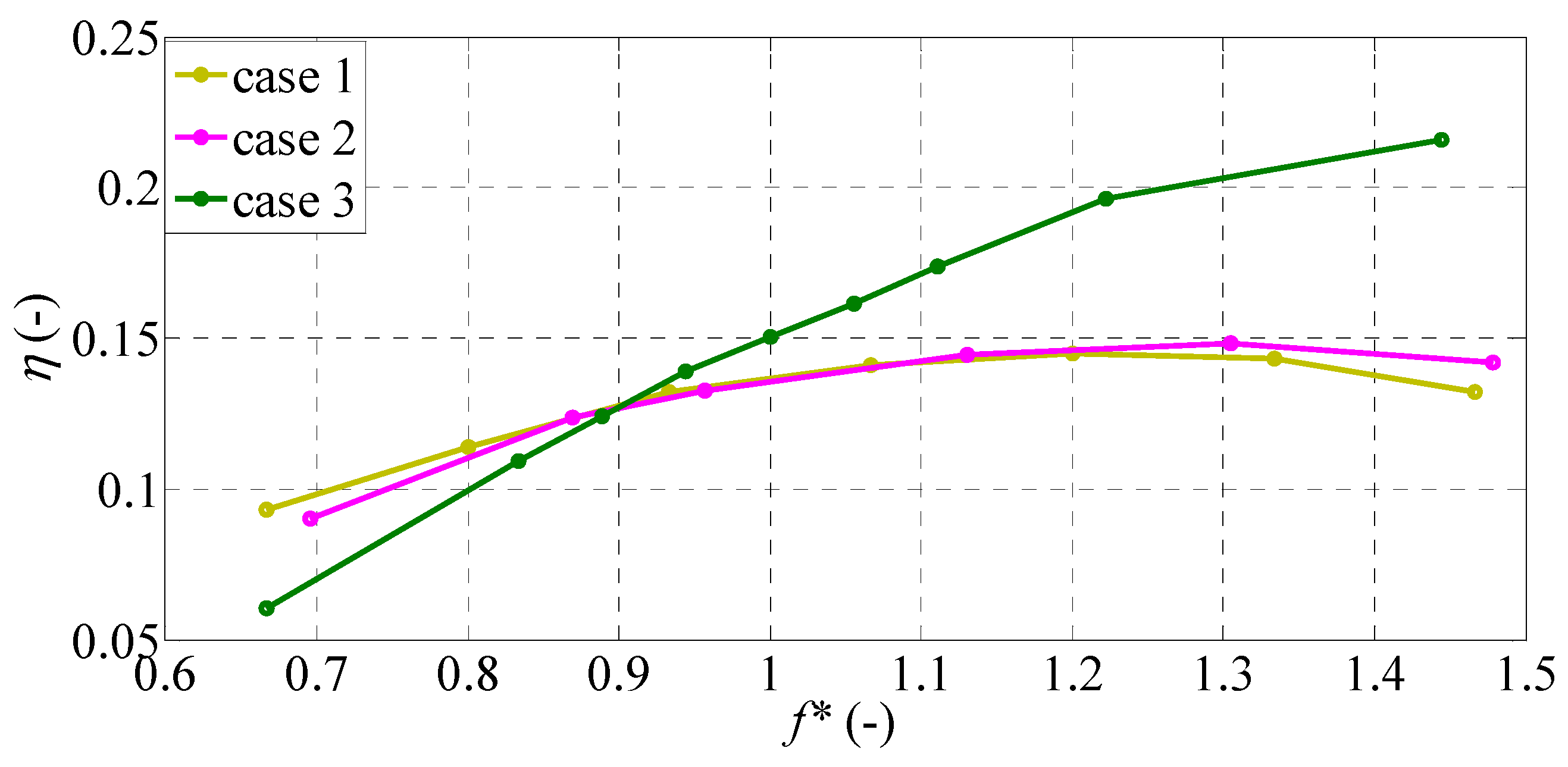
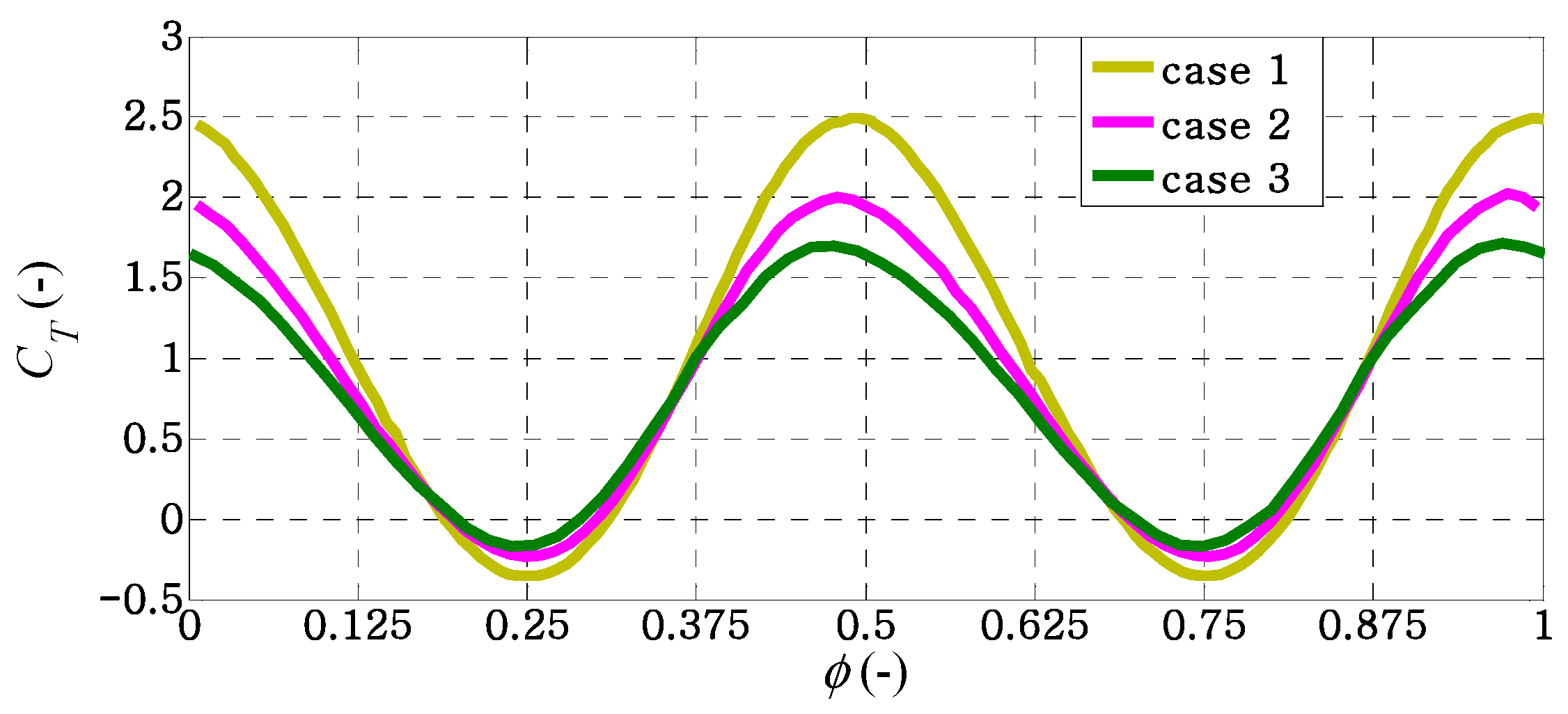
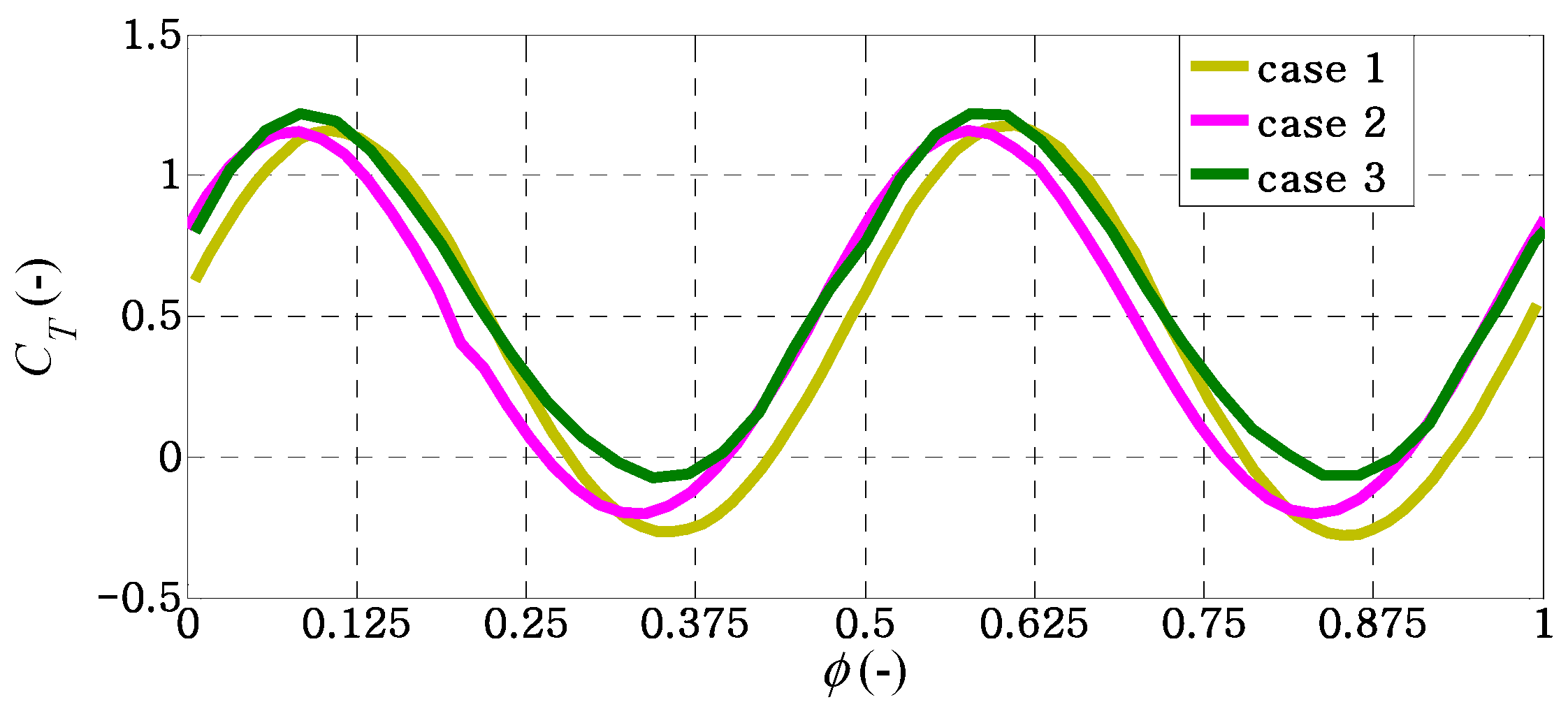
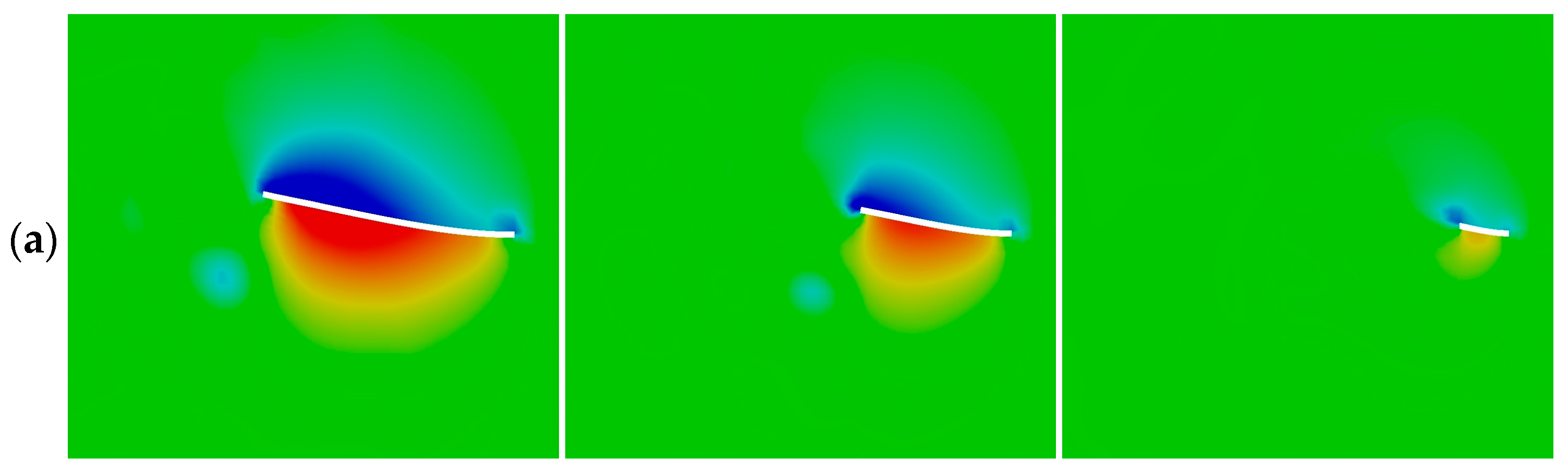
This paper presents a three-dimensional fluid-structure-coupled simulation of a flexible caudal fin with different trailing-edge shapes. The influences of caudal-fin shape on hydrodynamic performance are investigated by comparing the results of a simplified model of a square caudal fin with forked and deeply forked caudal fins under a wider range of non-dimensional flapping frequency, 0.6 < f* < 1.5, where f* is the ratio of flapping frequency to the natural frequency of each caudal fin, i.e., f* = f/fn. The leading edge of each caudal fin is forced to oscillate vertically in a water tank with zero free-stream conditions. The numerical results show that the amount of forking in the geometry of the caudal fin has significant effects on its hydrodynamic performance. A comparison of thrust coefficients shows that the square caudal fin has a greater thrust coefficient in the non-dimensional frequency range of 0.6 < f* < 1.2, while the deeply forked caudal fin generates higher thrust when 1.2 < f* < 1.5. In terms of propulsive efficiency, the square caudal fin is more efficient when 0.6 < f* < 0.9, while the propulsive efficiency of a deeply forked caudal fin is significantly enhanced when 0.9 < f* < 1.5. Based on our results, the deeply forked caudal fin has greater thrust coefficients and a higher propulsive efficiency in a higher frequency range than the natural frequency of each caudal fin. The thrust characteristics and flow fields around each caudal fin are investigated in detail.
Keywords: flexible caudal fin; trailing-edge shape; hydrodynamic performances flexible caudal fin; trailing-edge shape; hydrodynamic performances