
Review

Biomechanical and Aerodynamic Modulation for Sinonasal Homeostasis in Craniofacial Orthopedics: A Comprehensive Review of RAMPA Therapy


1
Private Practice, Codomo Clinic, Tokyo 180-0004, Japan
2
Private Practice, Children and Women Dental Clinic, Tokyo 106-0046, Japan
3
Department of Mechanical Engineering, Sogang University, 35 Baekbeom ro, Mapogu, Seoul 04107, Republic of Korea
4
Department of Biomaterial, Osaka Dental University, Hirakata 573-1121, Japan
*
Author to whom correspondence should be addressed.
Biomimetics 2026, 11(7), 494; https://doi.org/10.3390/biomimetics11070494

Submission received: 12 May 2026 / Revised: 2 July 2026 / Accepted: 8 July 2026 / Published: 14 July 2026

Abstract

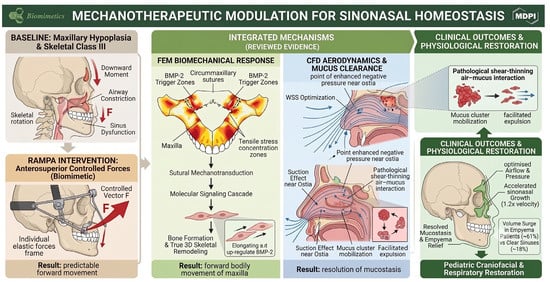
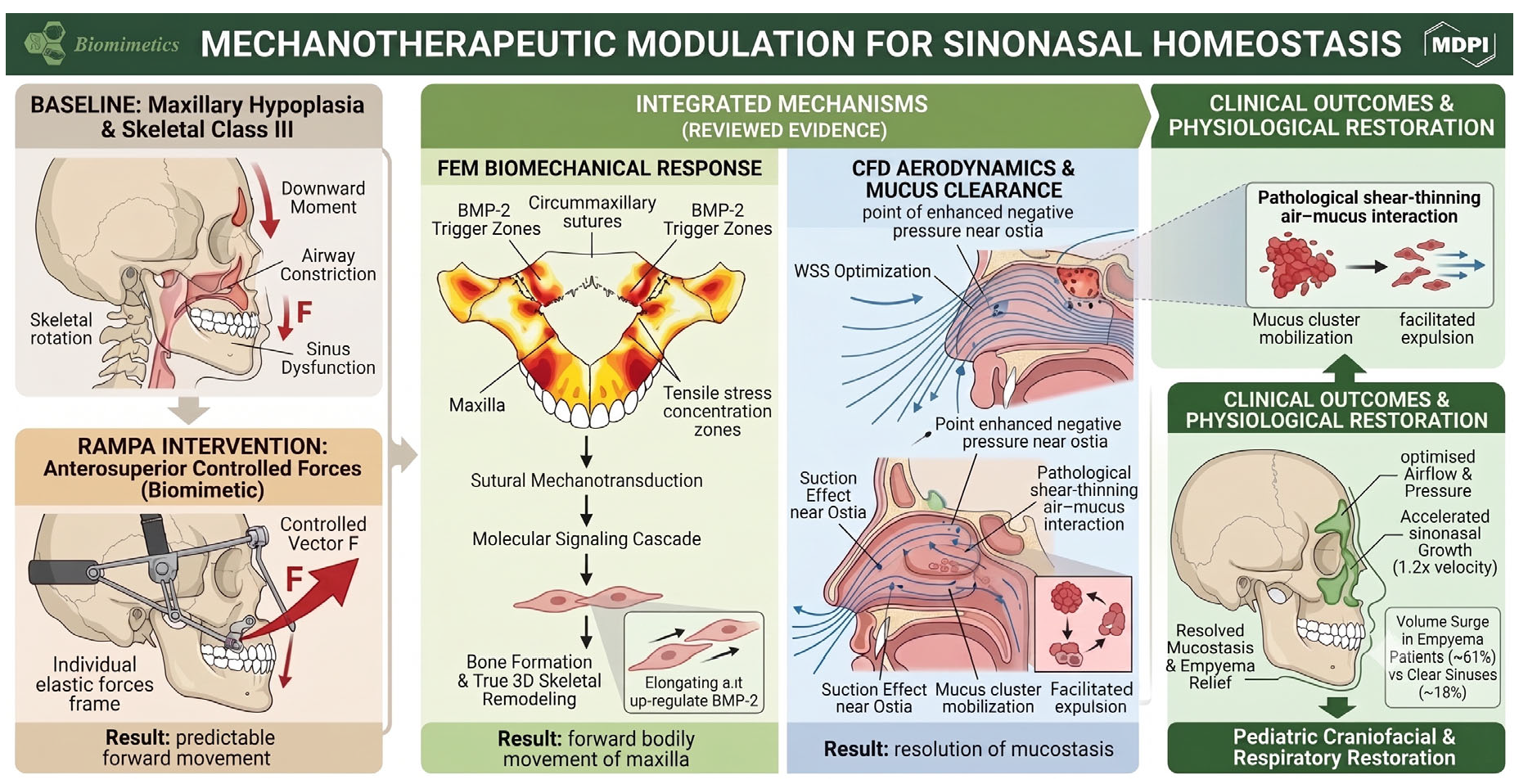
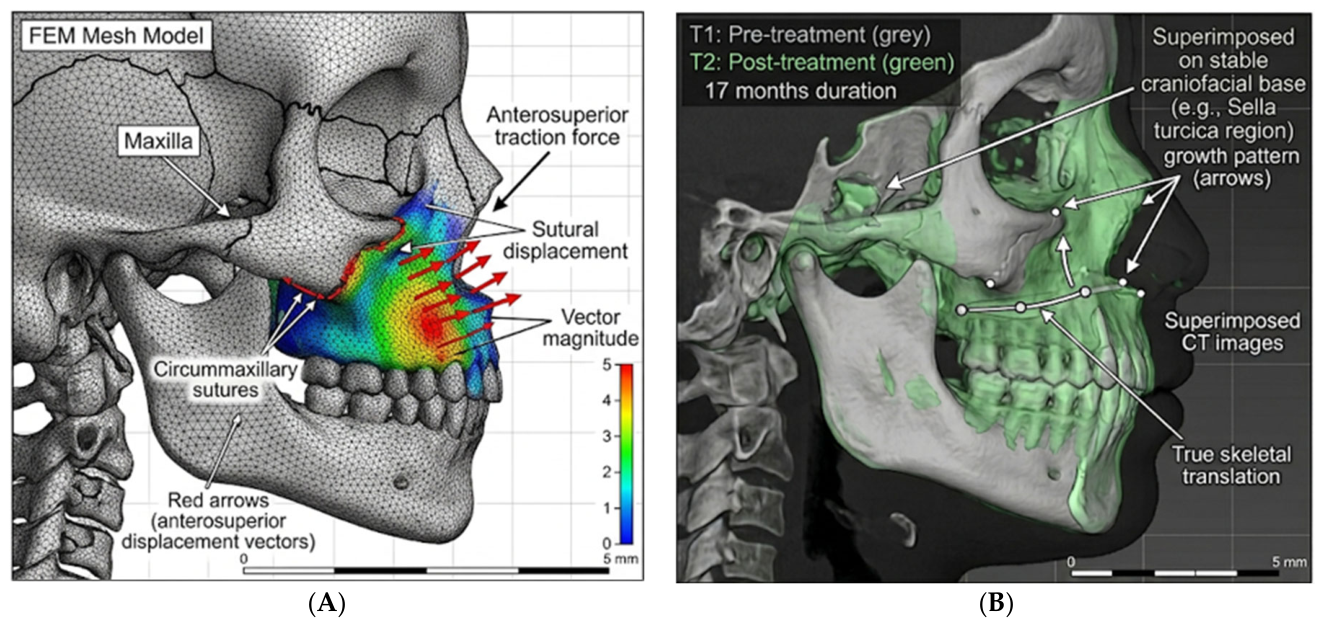
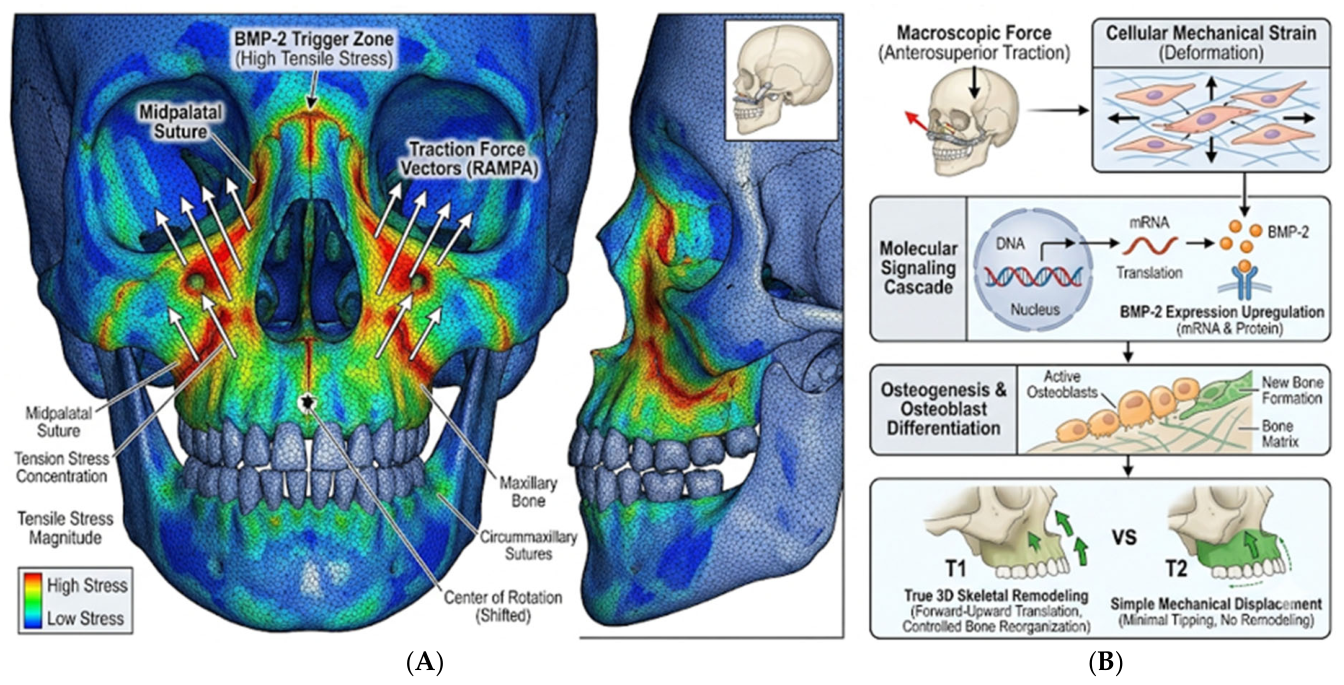
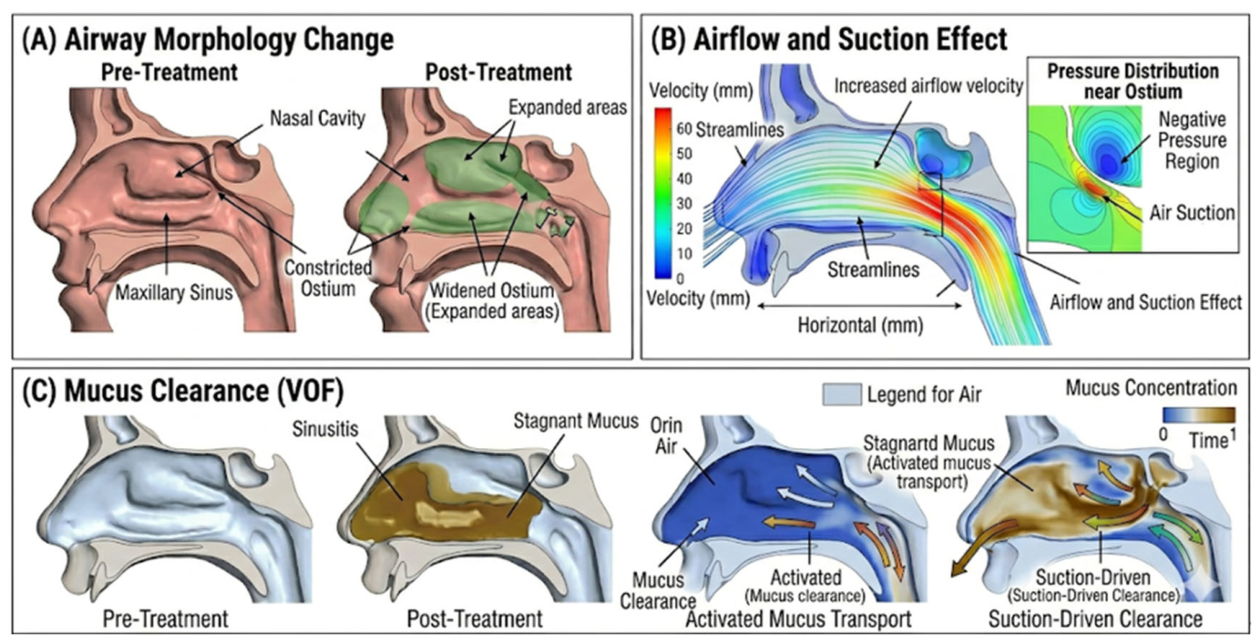
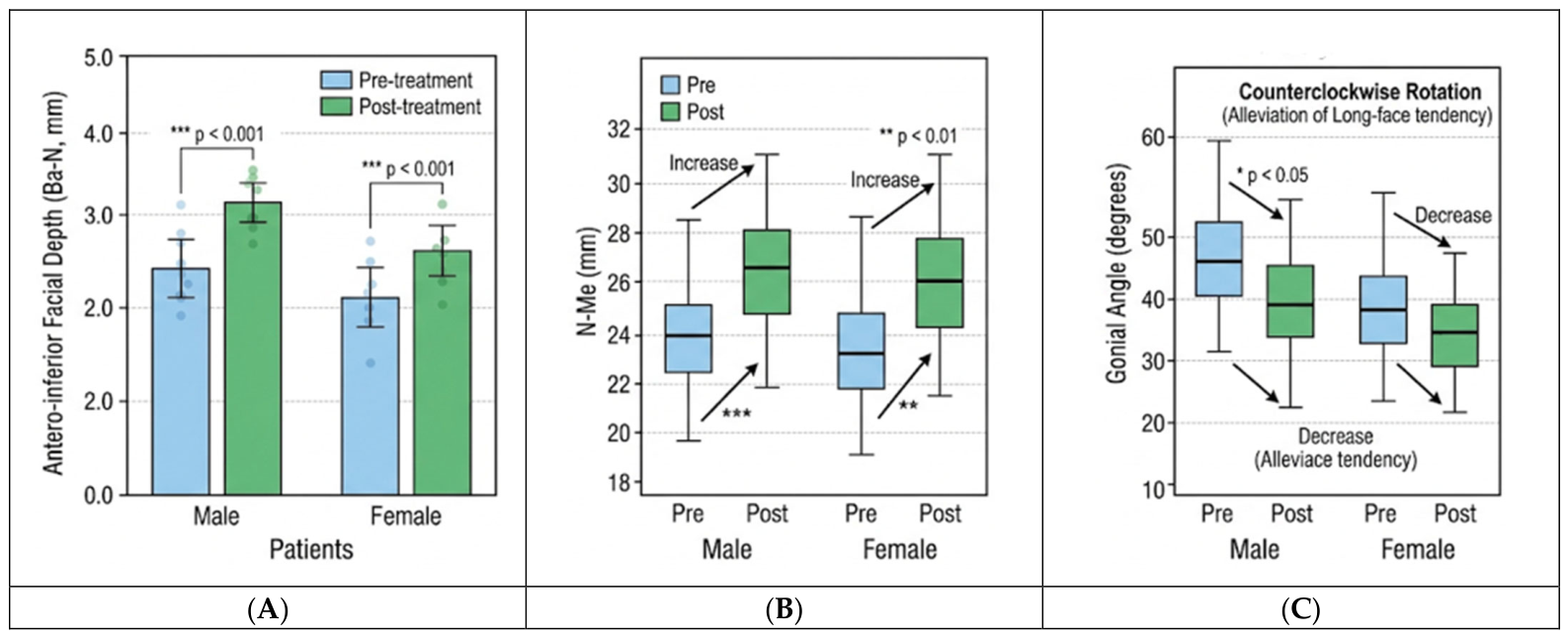
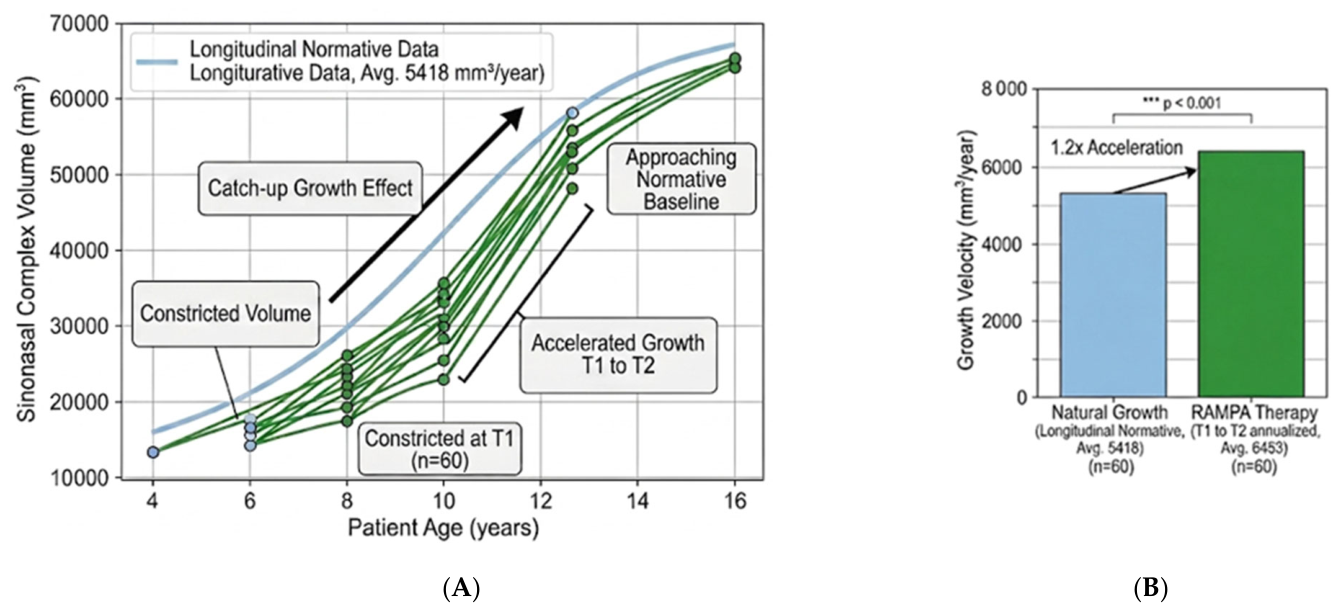
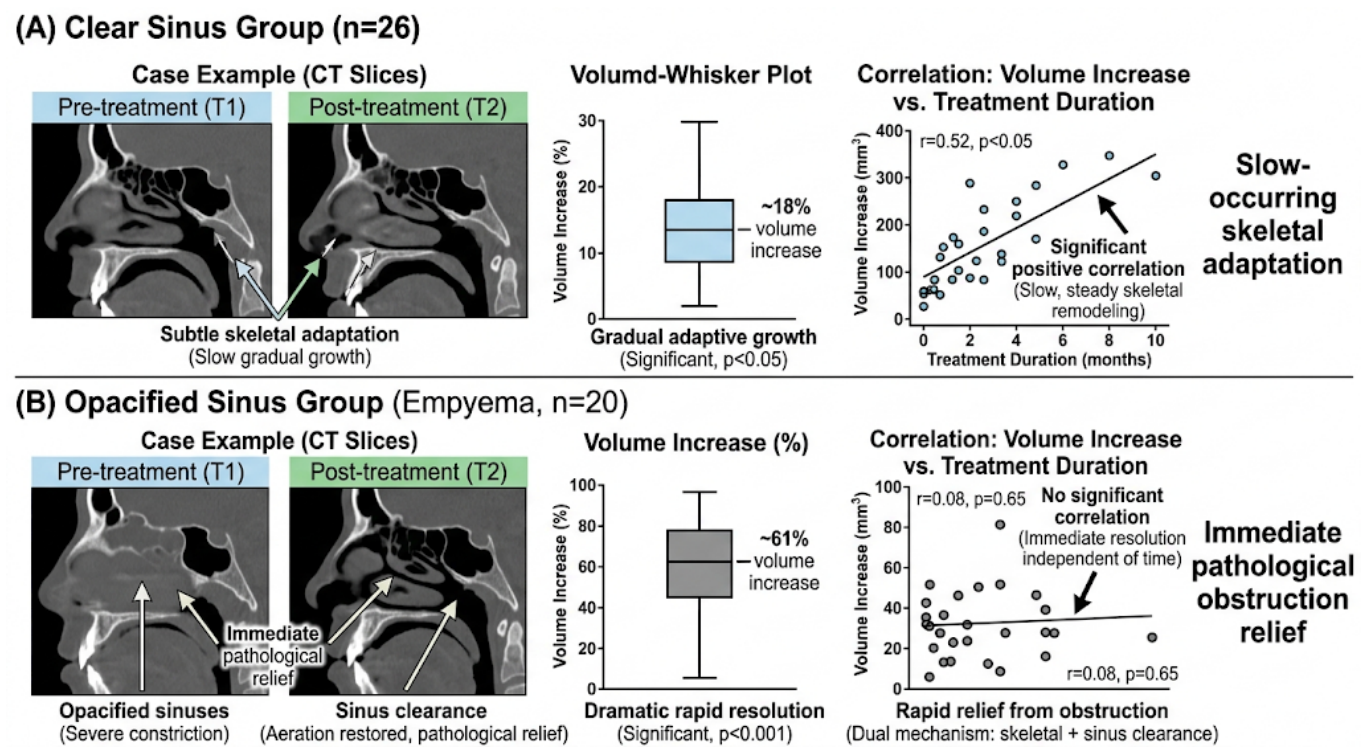
Background: Maxillary hypoplasia and skeletal Class III malocclusion are deeply intertwined with upper airway constriction and paranasal sinus dysfunction. Conventional orthopedic interventions often struggle to achieve true 3D skeletal translation without inducing undesirable rotational side effects. The Right Angle Maxillary Protraction Appliance (RAMPA) therapy offers a biomimetic and mechanotherapeutic approach, focusing on anterosuperior protraction to restore both structural harmony and respiratory function. Methods: Structured as a comprehensive narrative review, this feature paper thoroughly reviews the multi-disciplinary evidence supporting RAMPA therapy by synthesizing our group’s recent computational (FEM, CFD) and clinical findings alongside the broader literature. We examine Finite Element Method (FEM) simulations detailing sutural mechanotransduction and osteogenic “BMP-2 Trigger Zones”, Computational Fluid Dynamics (CFD) utilizing shear-thinning rheological models for two-phase air–mucus interactions, and large-cohort CBCT and Coben analyses quantifying longitudinal growth. Results: FEM studies confirm that RAMPA, especially when combined with intraoral devices (e.g., gHu-1, VomPress, Hybrid), achieves predictable anterosuperior displacement and concentrates tensile stress to levels hypothesized to stimulate molecular bone remodeling. CFD simulations reveal that this precise skeletal remodeling optimizes wall shear stress (WSS) and theoretically facilitates paranasal mucus clearance via enhanced suction and shear-thinning effects. Clinically, RAMPA induces a 1.2-fold acceleration in natural sinonasal growth velocity. Furthermore, volumetric gains are distinctively pronounced in patients with pre-existing empyema (61.2% increase) compared to those with clear sinuses (18% increase), indicating rapid pathophysiological obstruction relief. Conclusions: By integrating controlled biomechanical forces with fluid-dynamic airway optimization, RAMPA therapy acts as a mechanotherapeutic modulator. It bridges the gap between mechanical intervention, molecular signaling, and physiological homeostasis, offering a comprehensive paradigm for pediatric craniofacial and respiratory restoration.
Keywords: RAMPA therapy; mechanotransduction; Bone Morphogenetic Protein-2 (BMP-2); computational fluid dynamics (CFD); shear-thinning mucus rheology; sinonasal homeostasis; craniofacial remodeling RAMPA therapy; mechanotransduction; Bone Morphogenetic Protein-2 (BMP-2); computational fluid dynamics (CFD); shear-thinning mucus rheology; sinonasal homeostasis; craniofacial remodeling
Graphical Abstract