Article

Bioinspired Cane Interface for Orientation and Mobility in Virtual Reality Using Haptic and Auditory Feedback


by
Jorge Clavería
1,
Nicolas Norambuena
1,*,
Damián Donoso
2,
Jose Luis Valin
1 and
Cristobal Galleguillos
1,*
1
Escuela de Ingeniería Mecánica, Pontificia Universidad Católica de Valparaíso, Av. Los Carrera 01567, Quilpué 2340000, Chile
2
Escuela de Tecnología Médica, Pontificia Universidad Católica de Valparaíso, Avenida Universidad 330, Curauma, Valparaíso 2340000, Chile
*
Authors to whom correspondence should be addressed.
Biomimetics 2026, 11(7), 490; https://doi.org/10.3390/biomimetics11070490

Submission received: 4 June 2026 / Revised: 28 June 2026 / Accepted: 5 July 2026 / Published: 13 July 2026
(This article belongs to the Section Biomimetic Design, Constructions and Devices)

Abstract

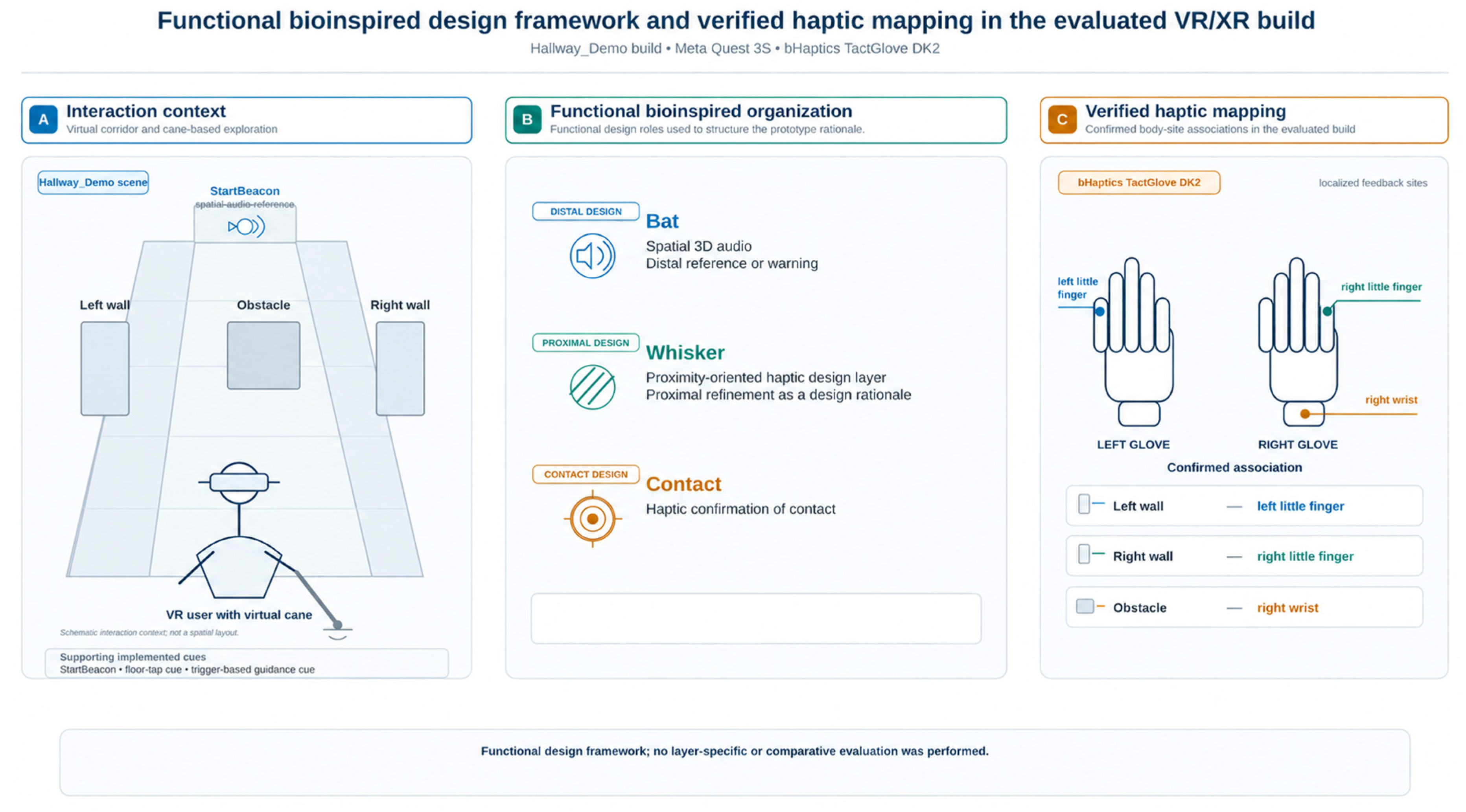
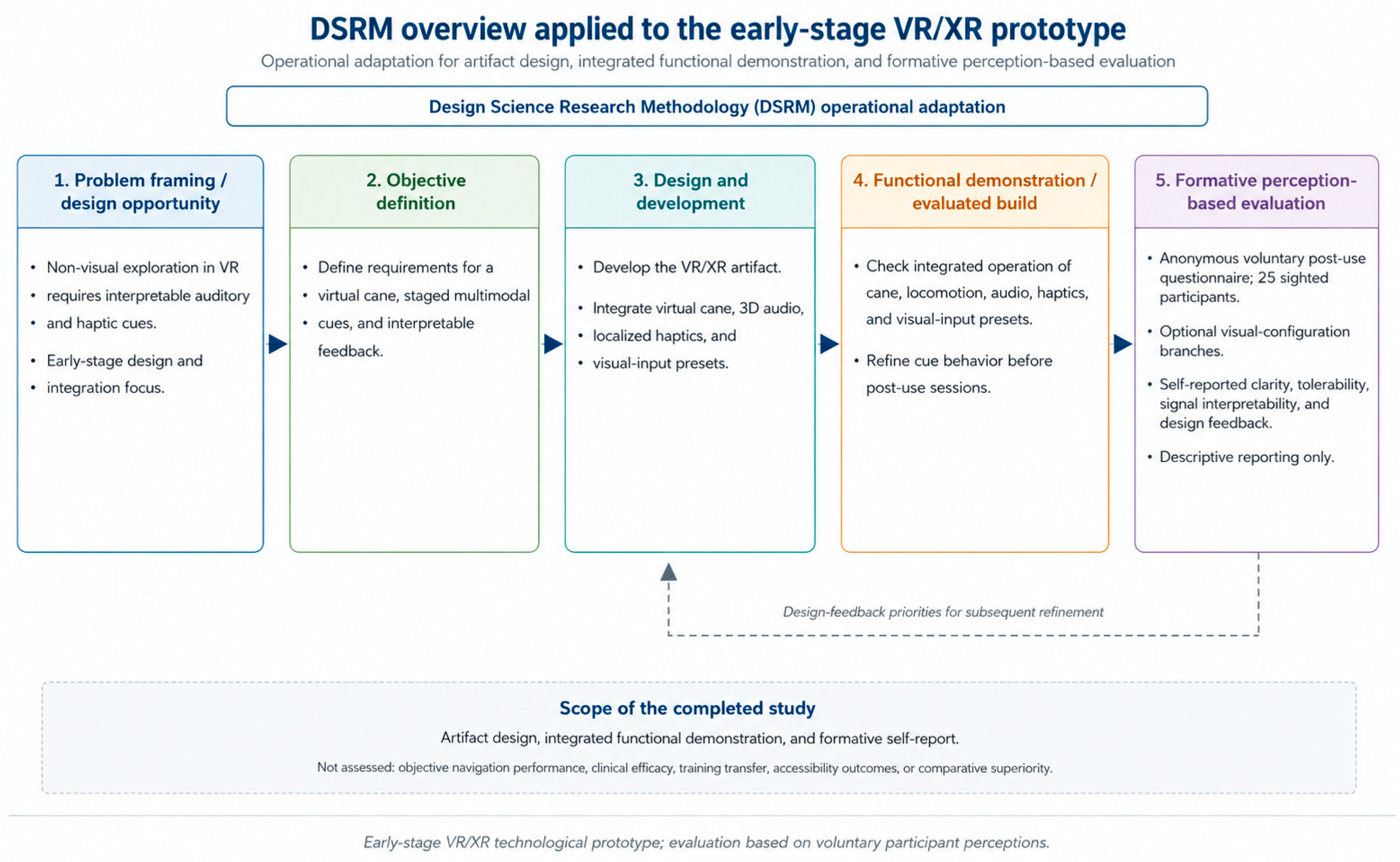
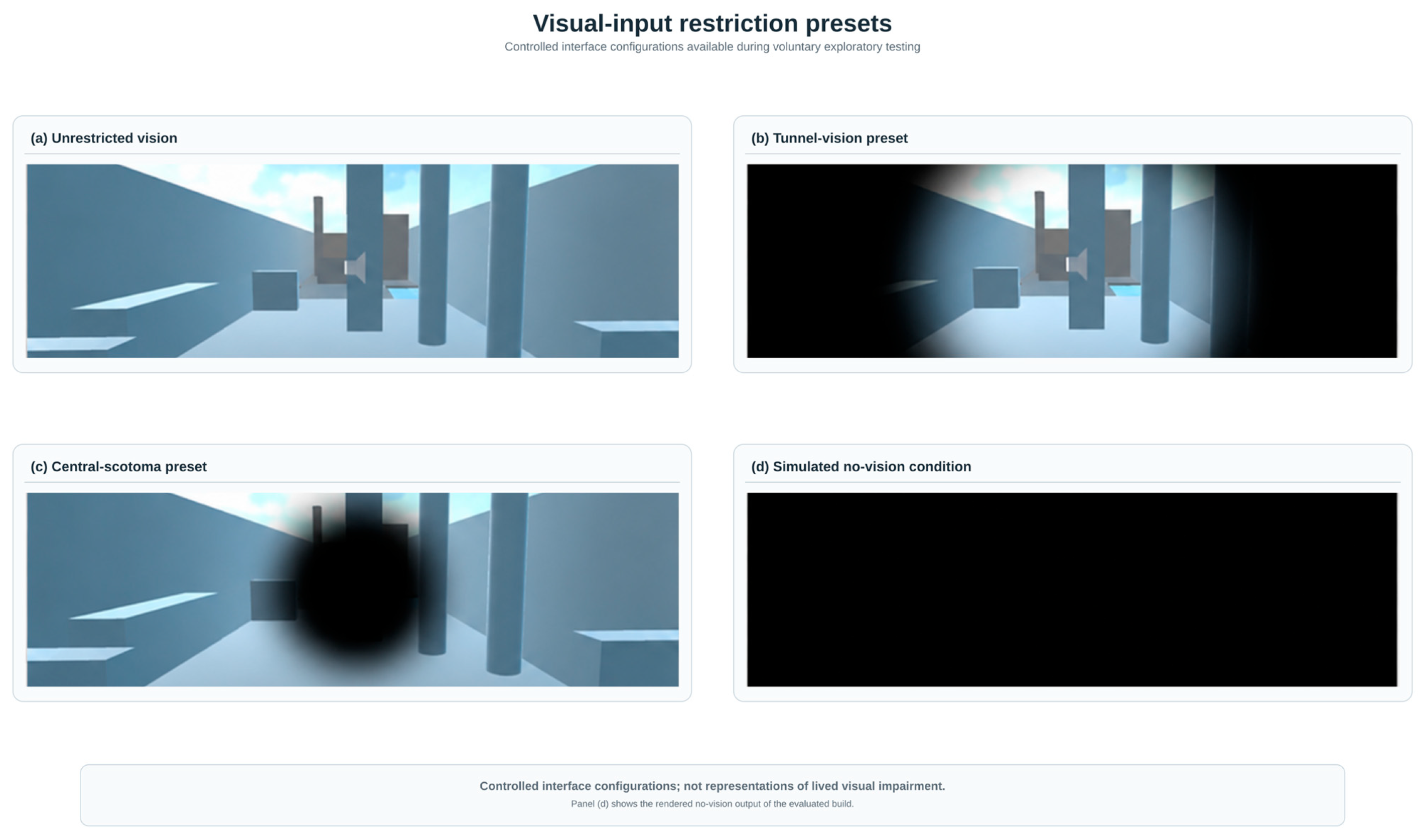
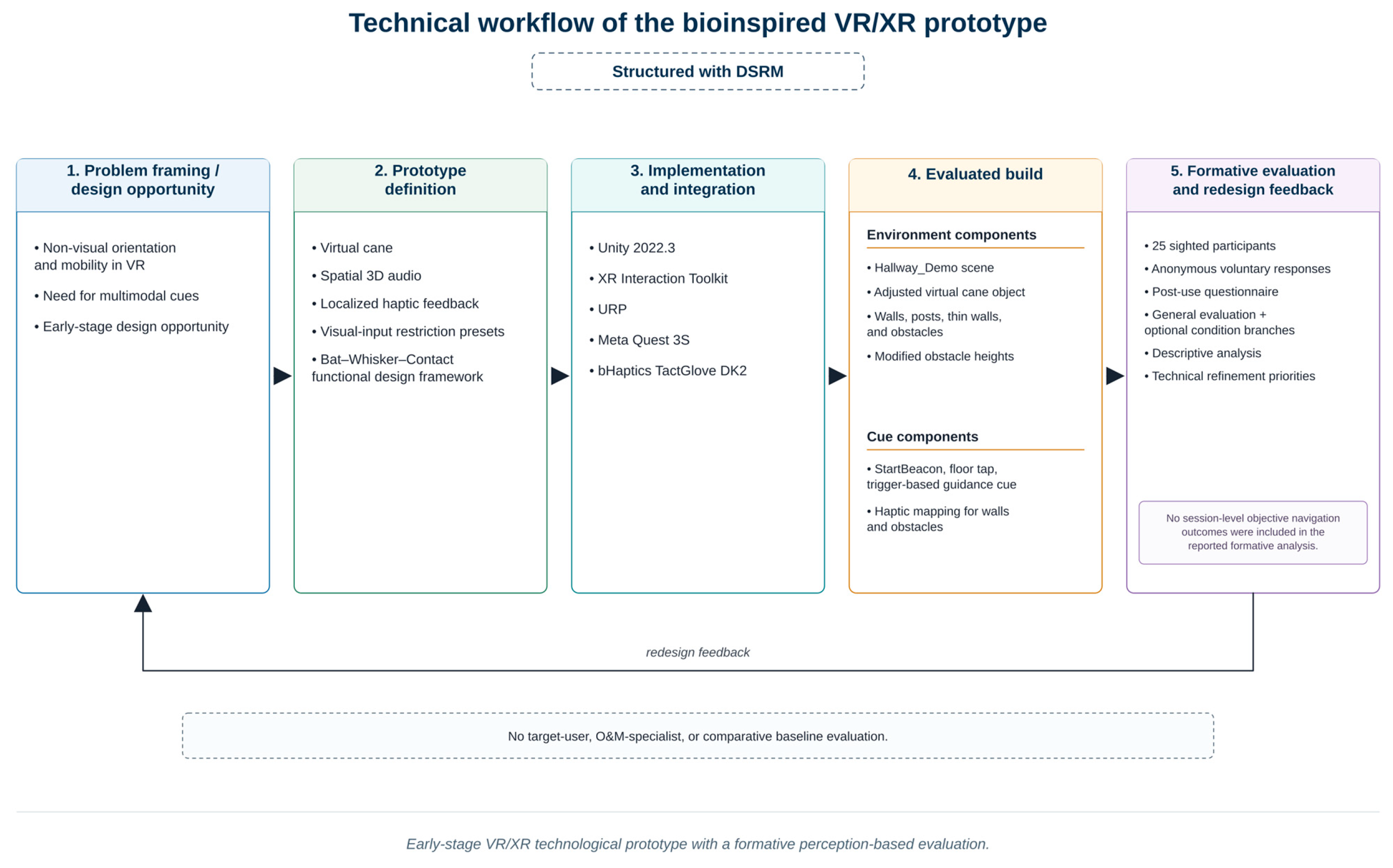
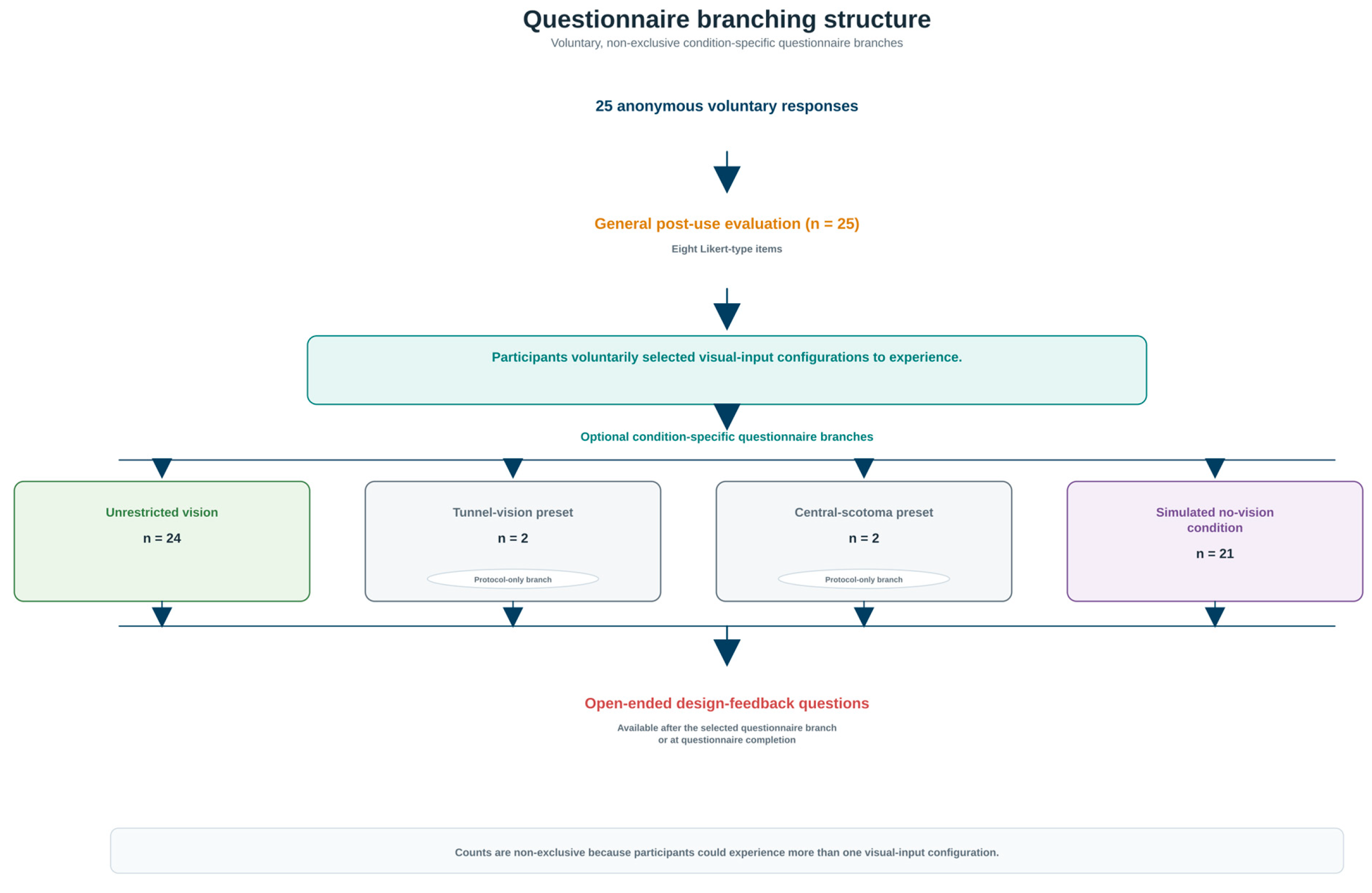
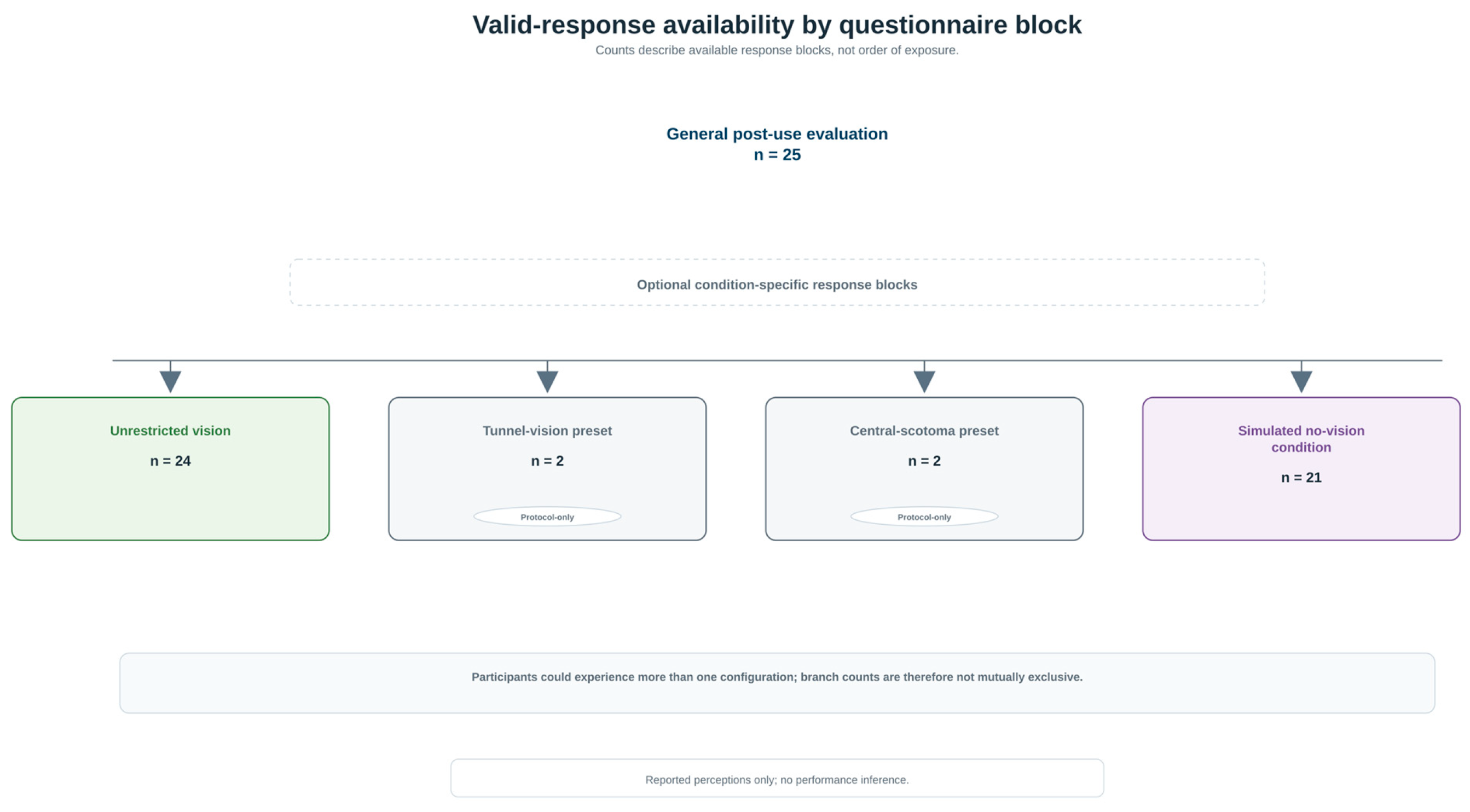
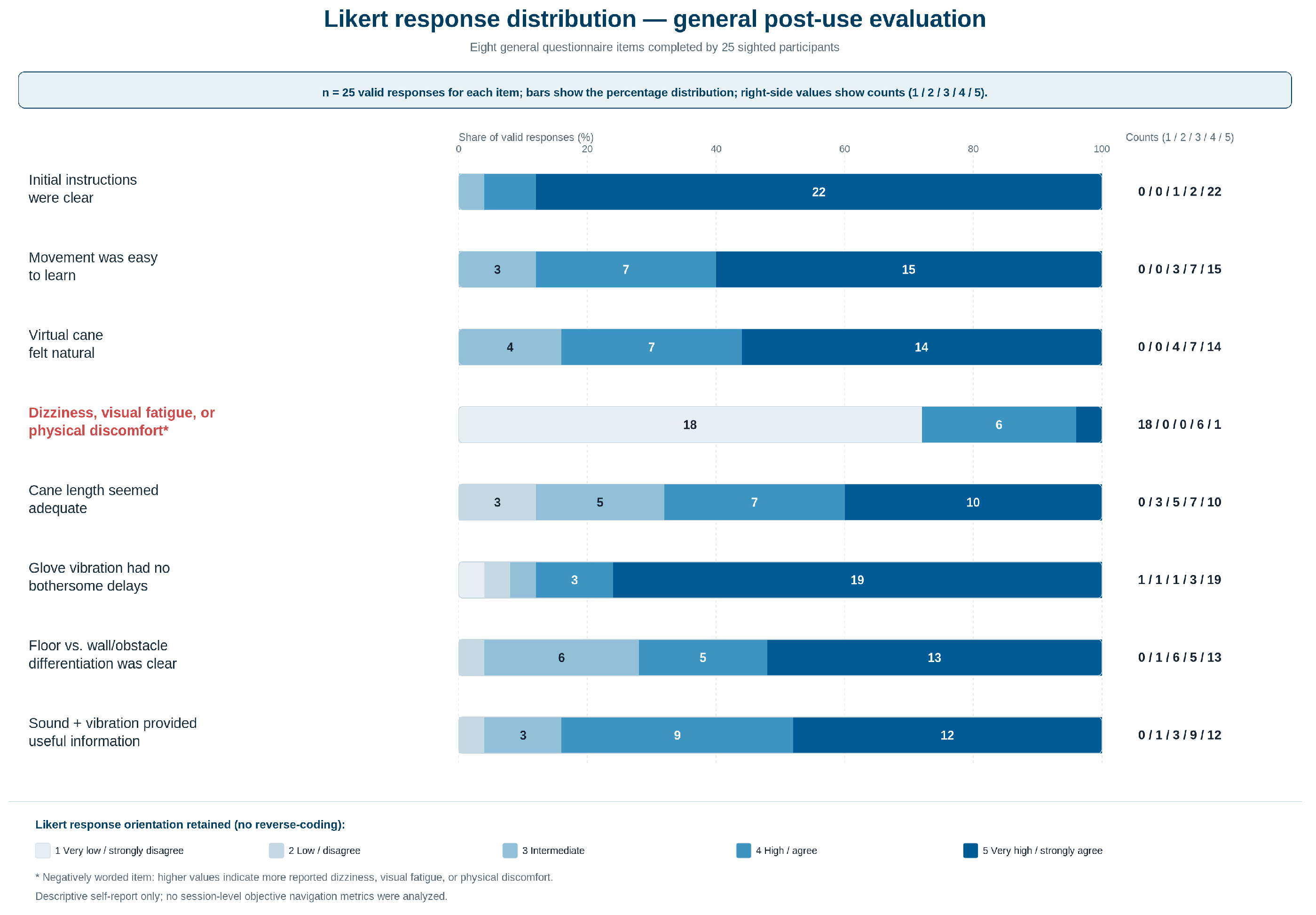
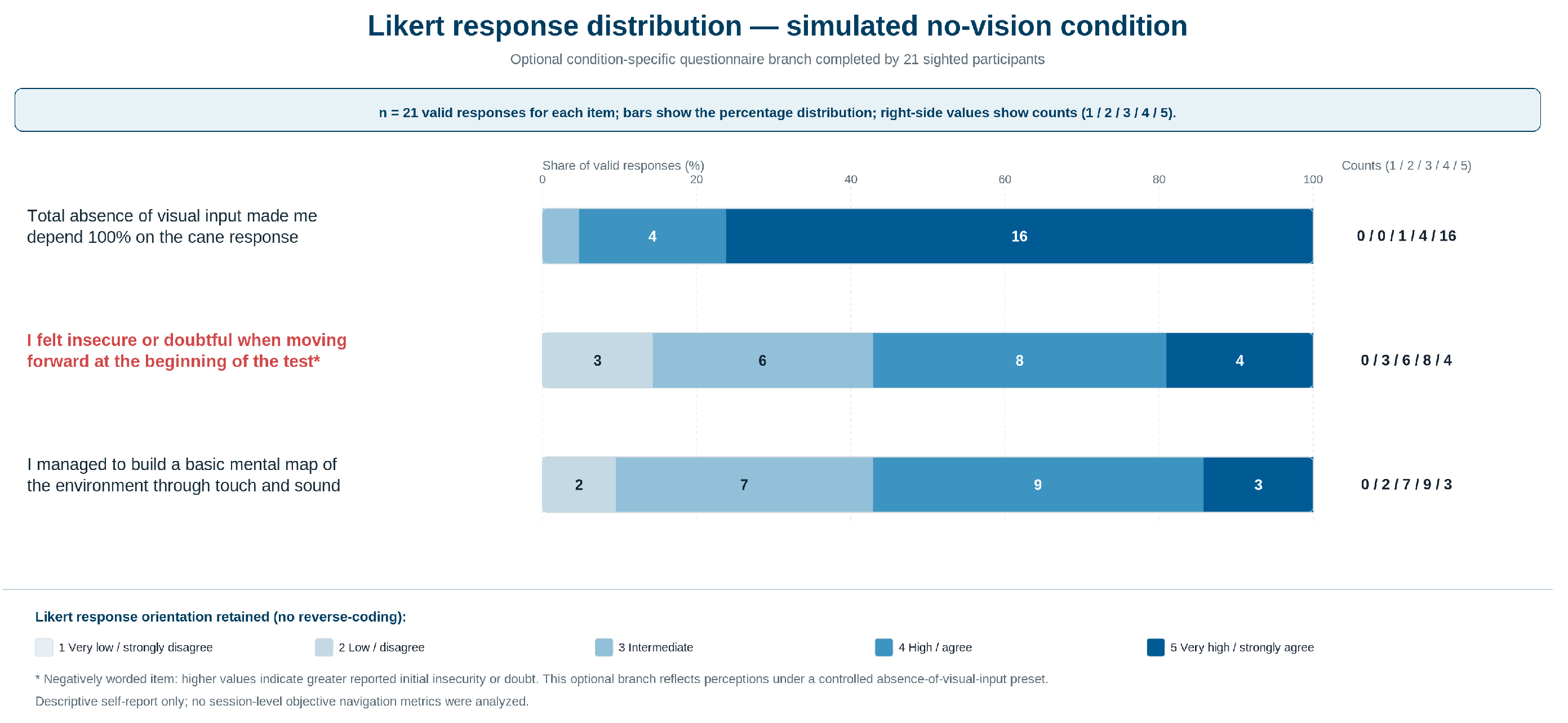
This article reports the design, implementation, and formative perception-based evaluation of an early-stage virtual reality (VR) prototype that integrates a virtual cane, localized haptic feedback, 3D audio, and a three-layer bioinspired sensing framework. The prototype was implemented in Unity 2022.3 using the XR Interaction Toolkit and URP and was structured according to design science research methodology (DSRM). The bat–whisker–contact framework was used as a functional abstraction to organize distal auditory reference or warning, proximal haptic feedback, and contact confirmation; it was not evaluated against a non-bioinspired baseline. The completed evaluation consisted of an anonymous, voluntary, post-use questionnaire administered to 25 sighted participants who could select which visual-input configurations to experience. The analysis focused on reported clarity, tolerability, initial signal interpretability, and design feedback; it did not include objective navigation metrics or assess clinical efficacy, training transfer, accessibility outcomes, or orientation-and-mobility performance in blind or low-vision users. General responses suggested favorable perceived clarity and multimodal usefulness, while cane length, floor-versus-wall/obstacle differentiation, and reported discomfort identified priorities for technical refinement. In the simulated no-vision condition (n = 21), participants reported high reliance on the cane response, whereas reported initial insecurity or doubt and basic mental map ratings remained mixed. The study contributes an early-stage technological artifact and a formative basis for subsequent controlled evaluations with objective performance measures, reference conditions, and target users or orientation and mobility specialists.
Keywords: virtual reality; virtual cane; haptic feedback; spatial audio; bioinspired design; multimodal interaction; orientation and mobility virtual reality; virtual cane; haptic feedback; spatial audio; bioinspired design; multimodal interaction; orientation and mobility