
Compressor Flow Perception via Deep Learning Modeling with Multi-Source Dynamic Fusion of Temporal Features by Bio-Inspired Optimization
Abstract
1. Introduction
- •
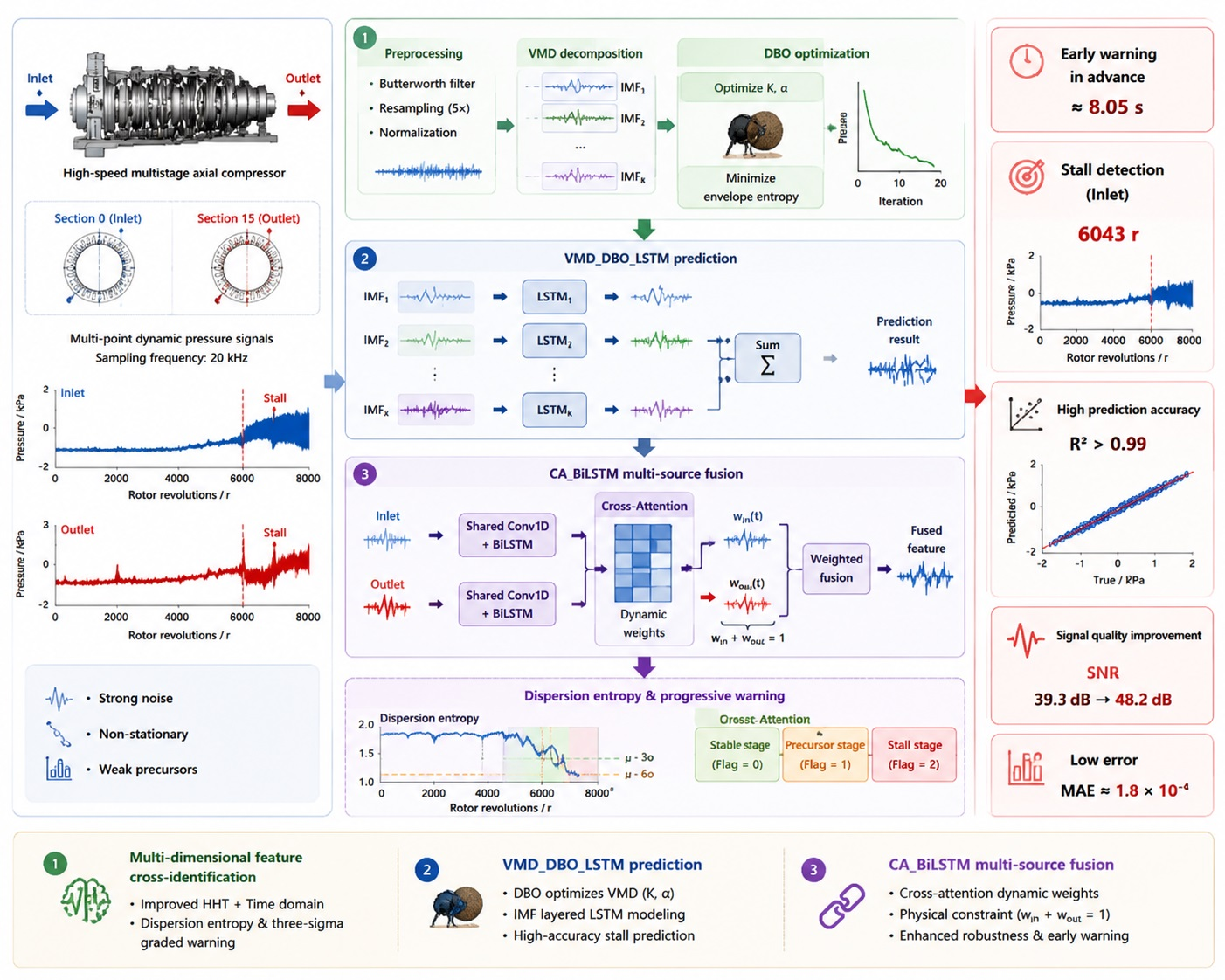
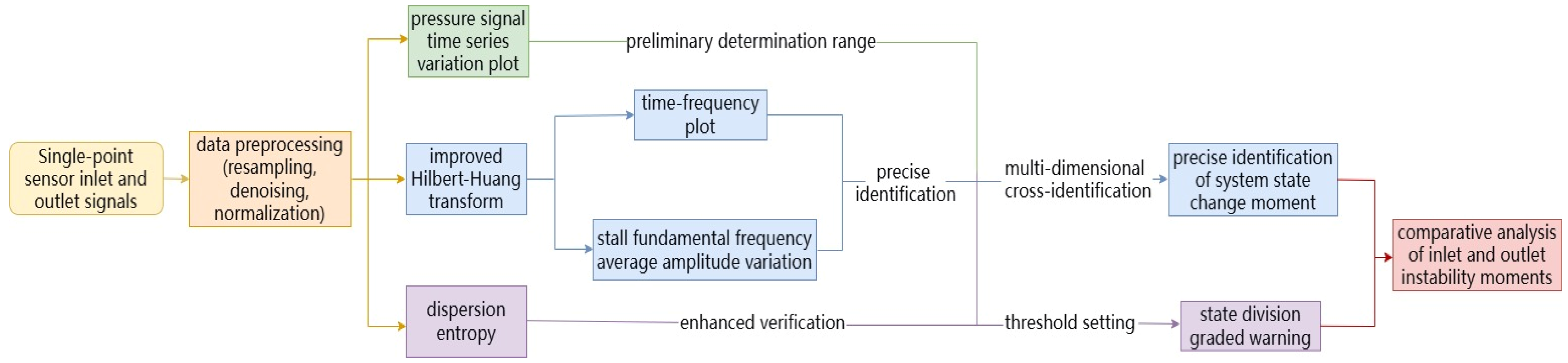
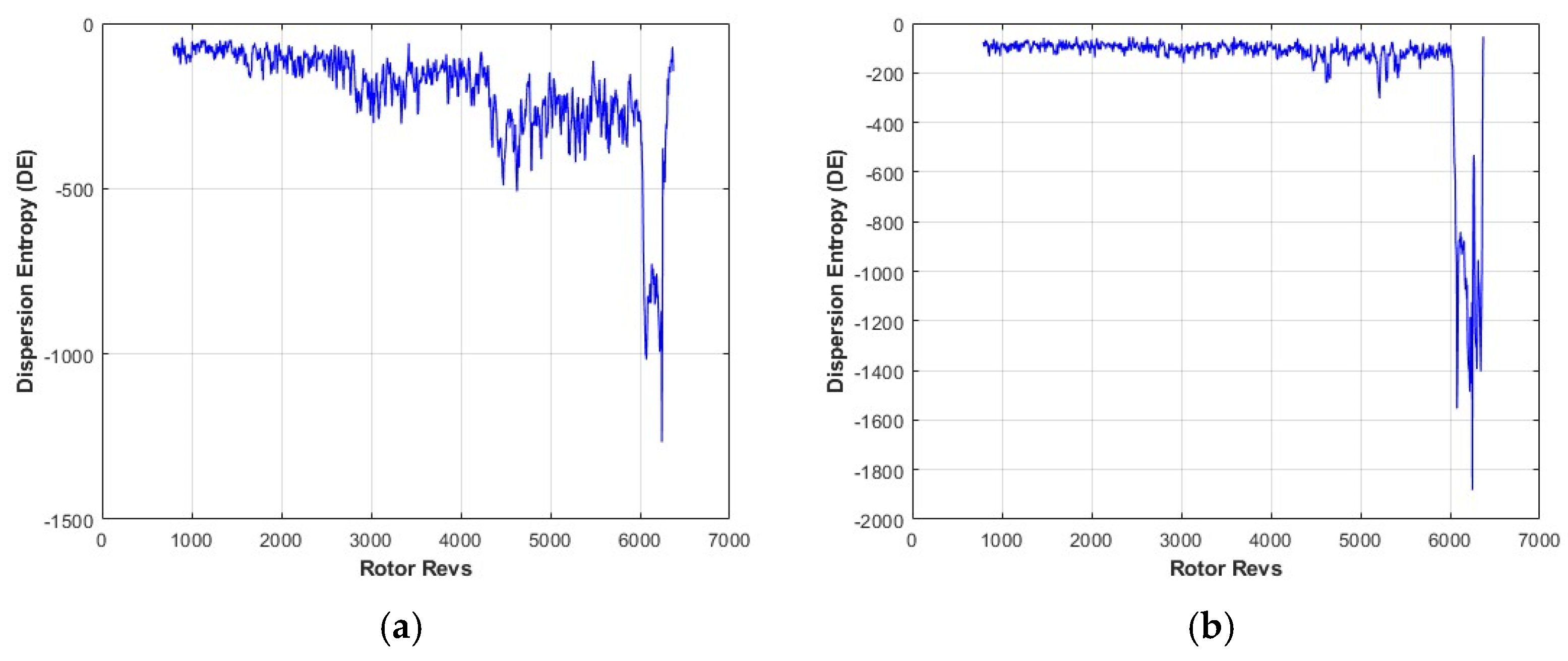
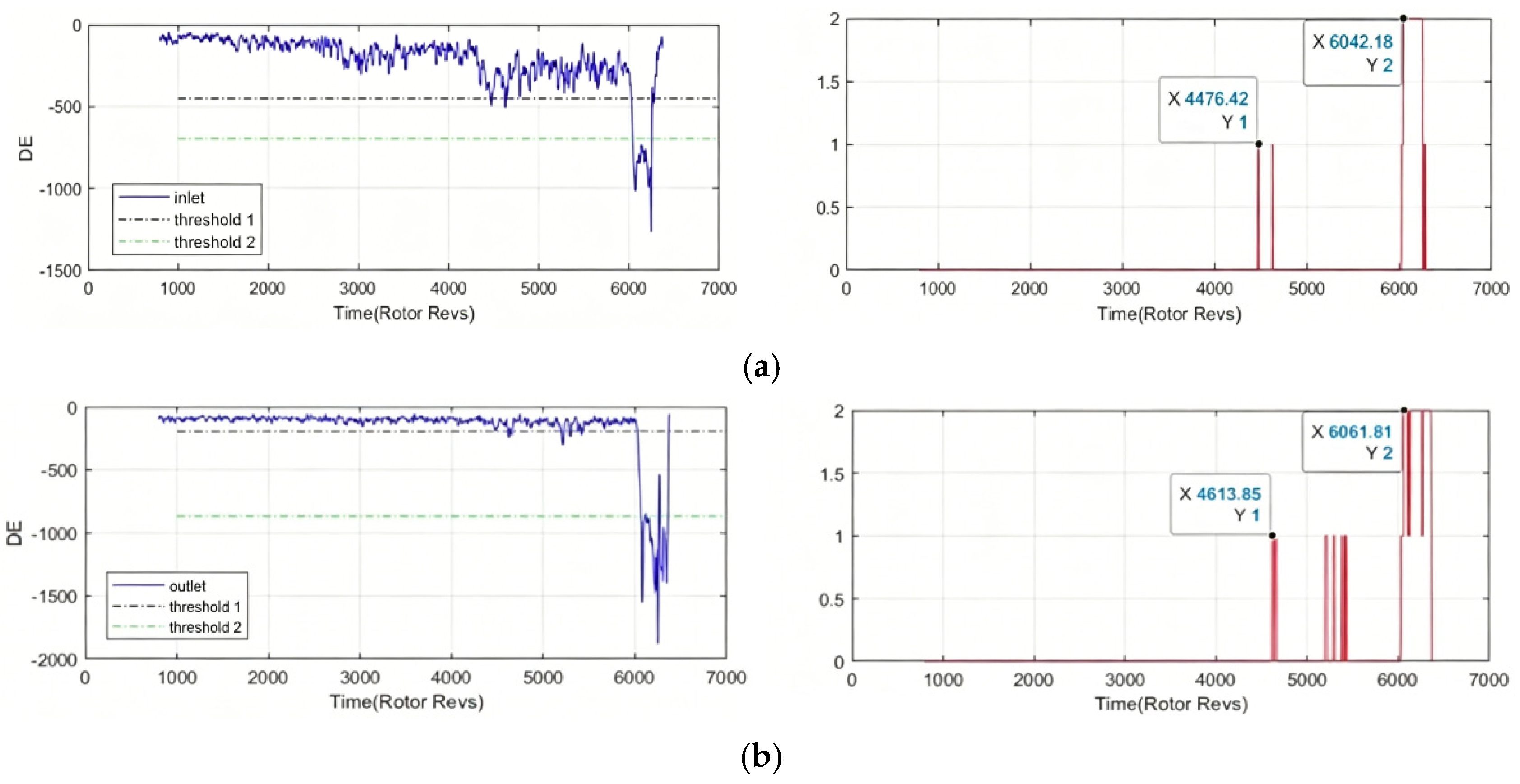
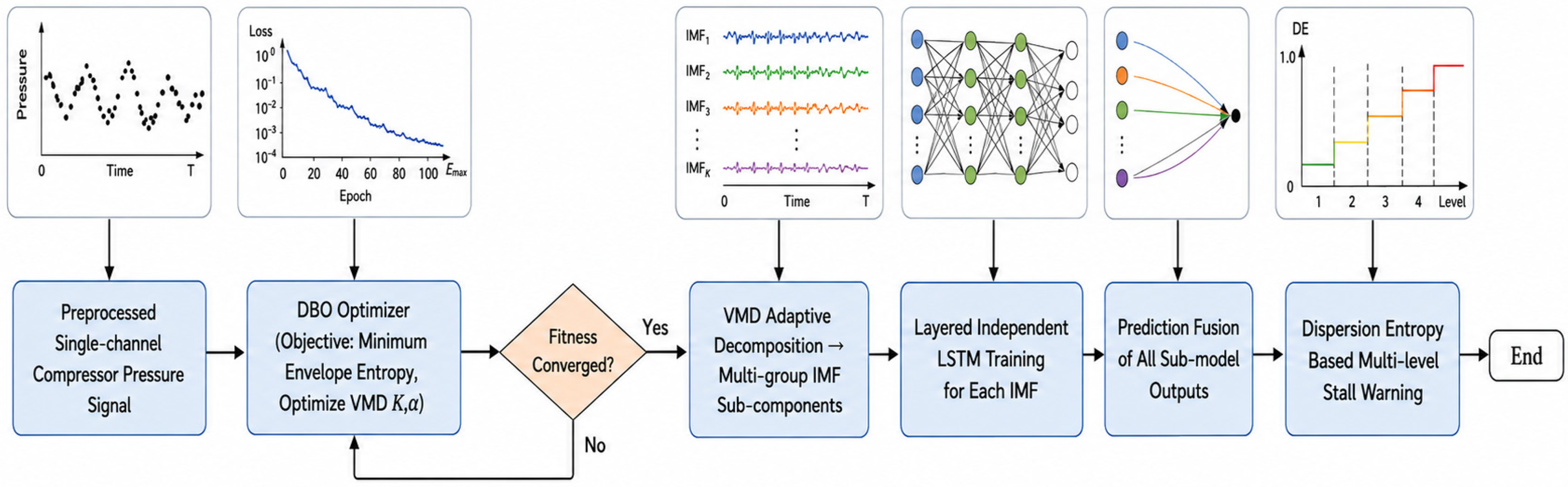
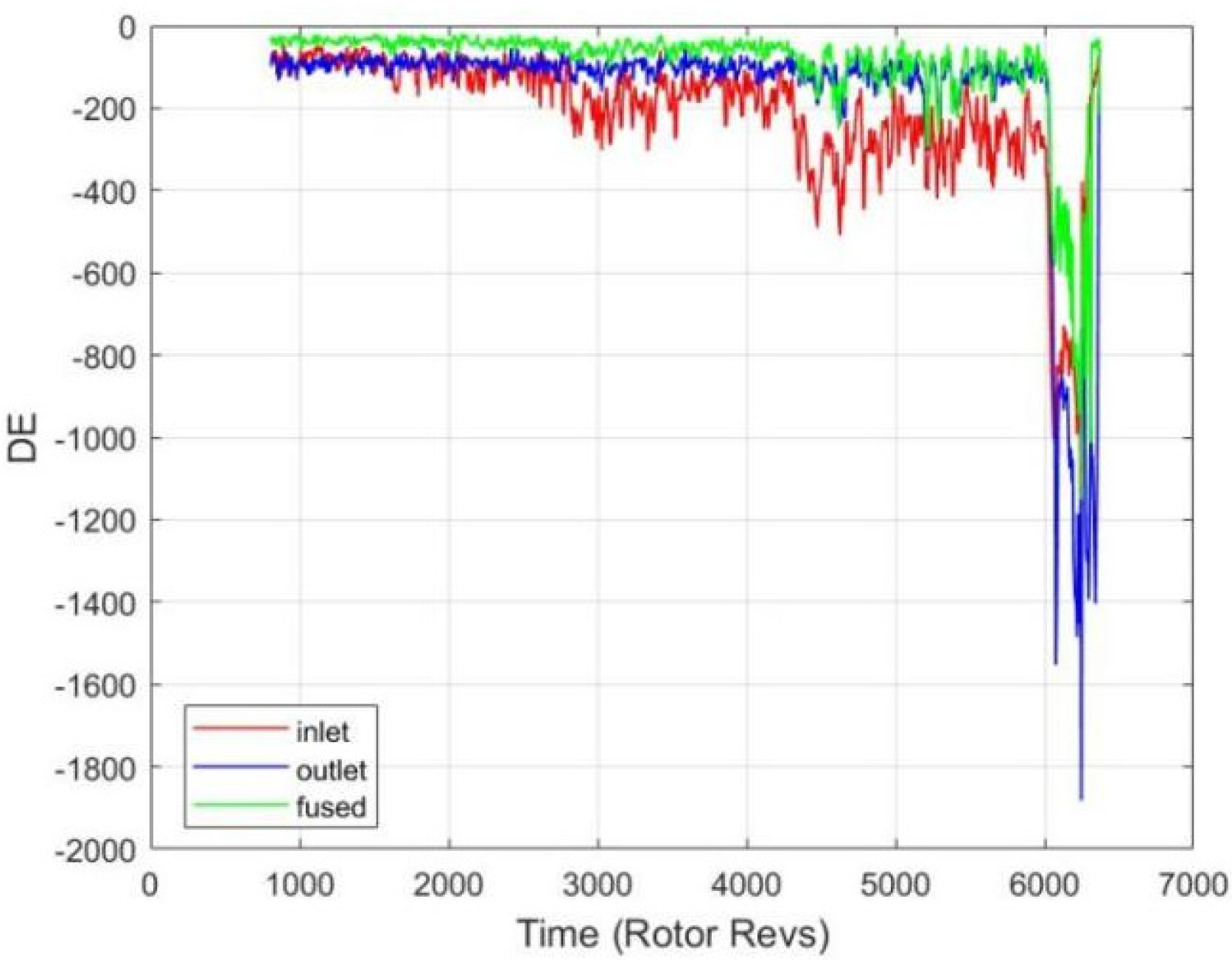
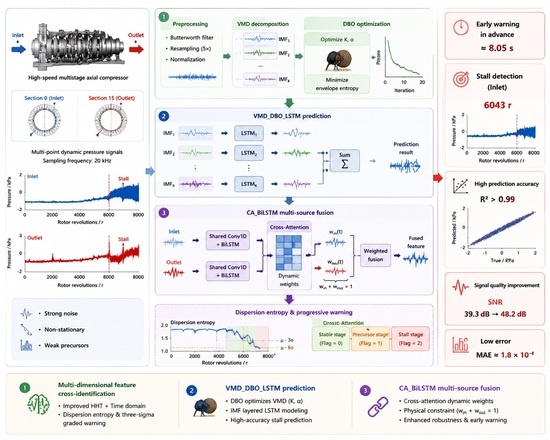
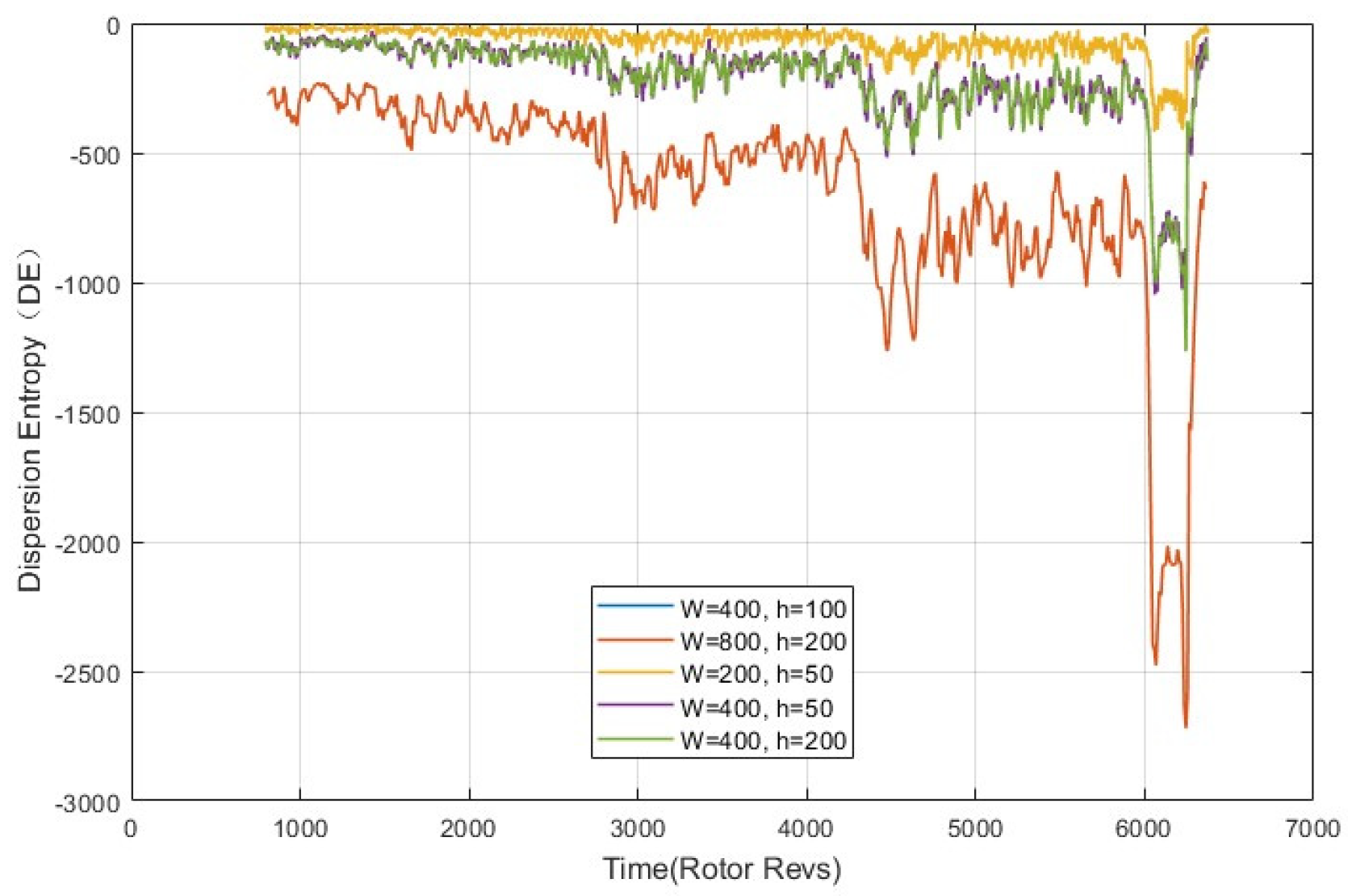
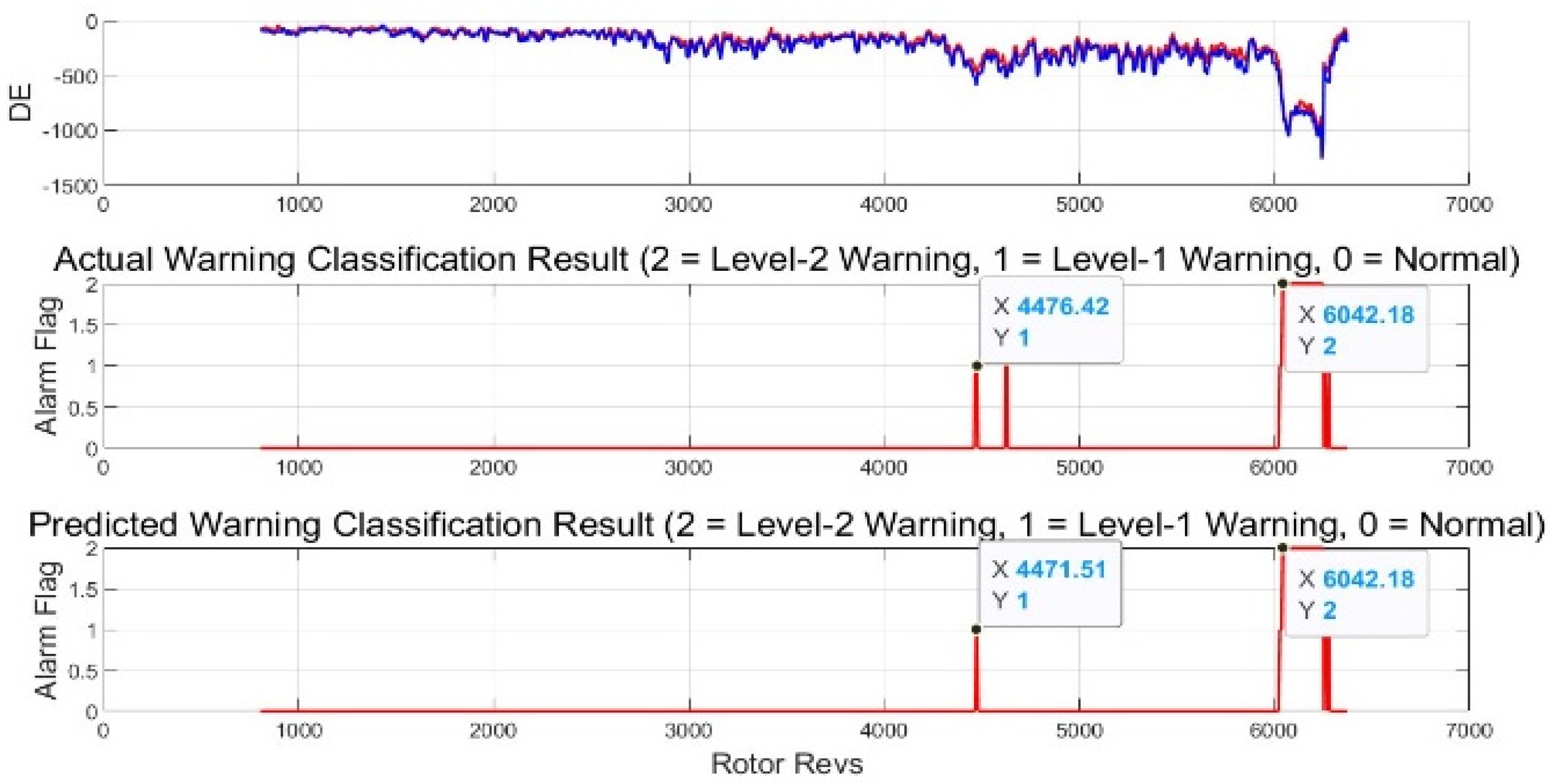
- Instability classification via discrimination strategy. Dispersion entropy combined with a sliding window mechanism is introduced to quantitatively characterize signal complexity during stall evolution. Based on the three-sigma criterion, progressive warning thresholds are set, dividing the stall process into “Stable Stage-Precursor Stage-Stall Stage”, achieving refined hierarchical warning.
- •
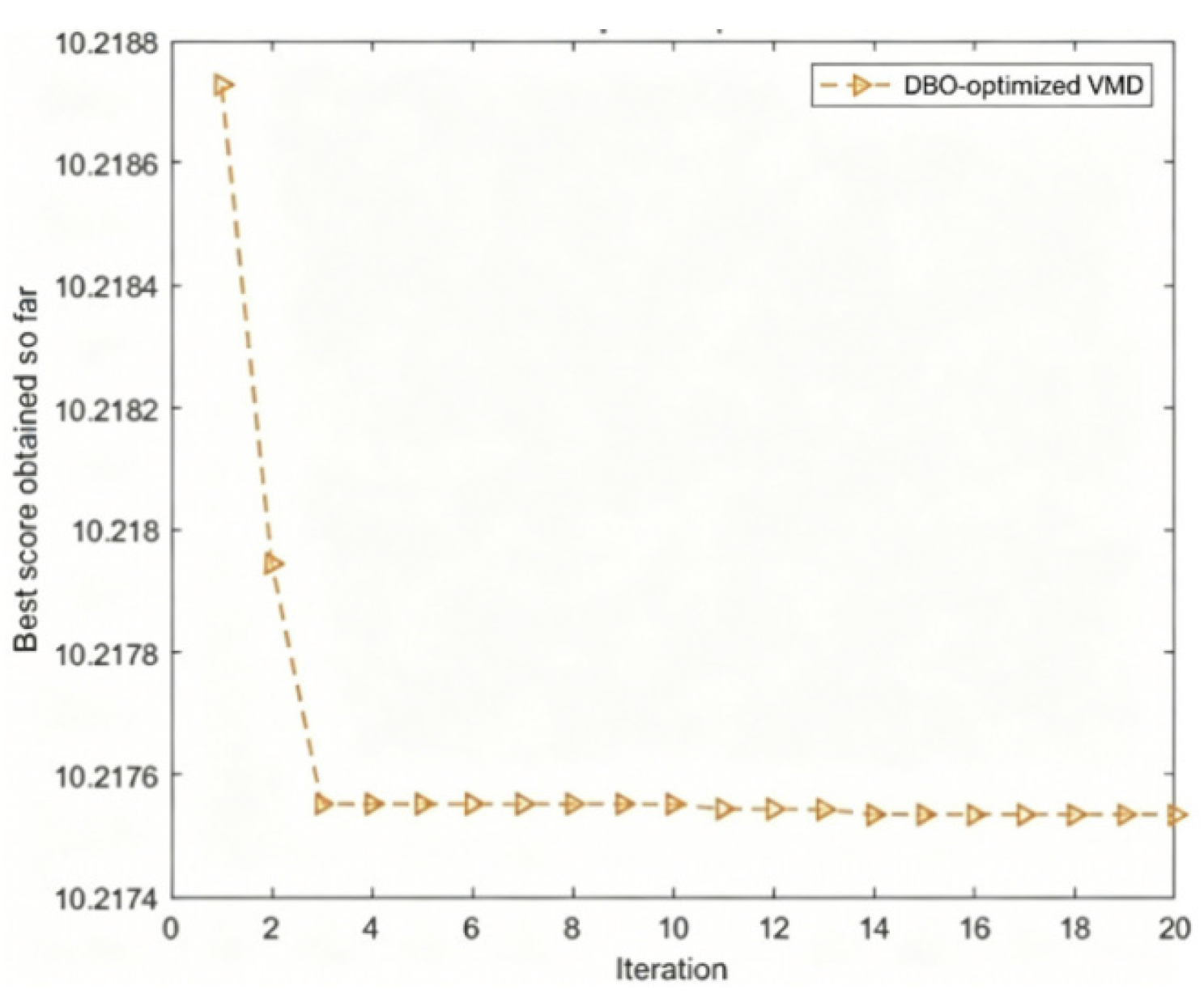
- Transient modeling with VMD optimized by DBO. To address the problem of VMD parameters relying on manual experience, DBO is introduced to adaptively optimize the number of modes and penalty factor with minimum envelope entropy. An LSTM architecture of “Parameter Optimization-Data Decomposition-Component Layered Training-Result Fusion” is constructed, effectively enhancing the representation capability of complex time series signals.
- •
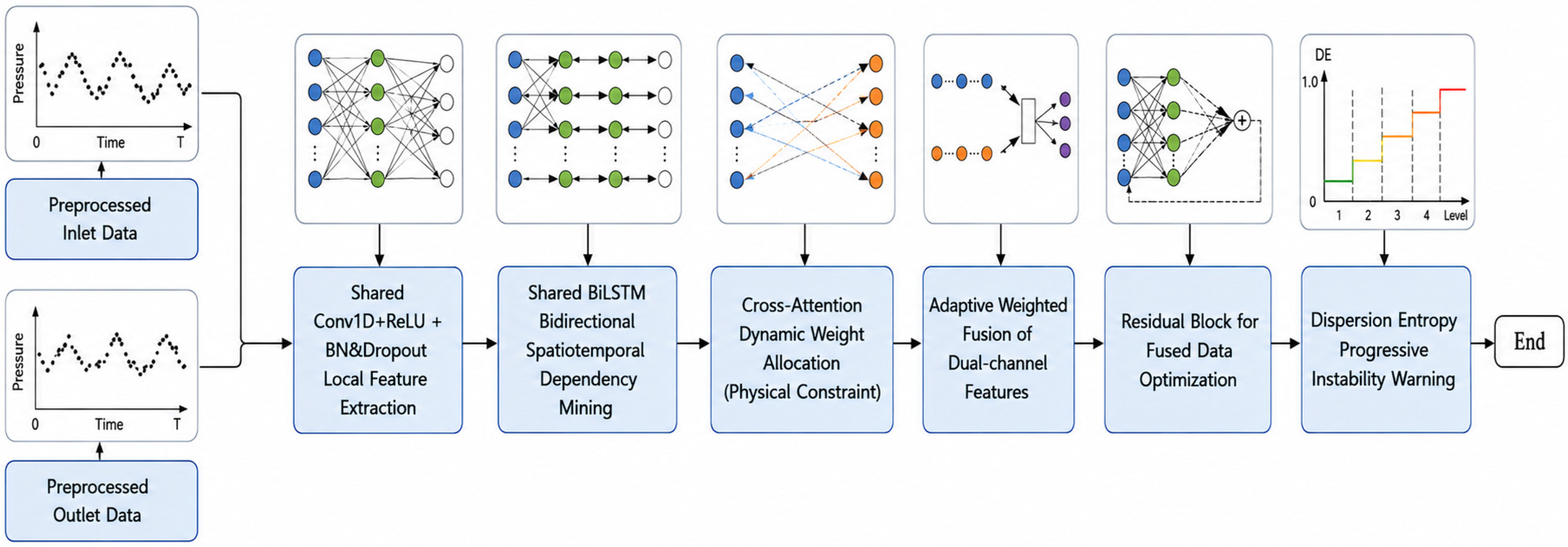
- Multi-source fusion deep learning model integrating cross-attention mechanism and bidirectional LSTM. Targeting the spatiotemporal differences in compressor inlet and outlet sensors, the CA_BiLSTM model is designed. It extracts local and long-term dependency features through shared convolution and BiLSTM and utilizes cross-attention to achieve dynamic weight adaptive allocation. It introduces the physical constraint and residual optimization module, enhancing the robustness of stall recognition under multi-source information fusion.
2. Flow Stability Graded Discrimination Based on Entropy Features
2.1. Data Sources
2.2. Data Preprocessing
2.3. Flow Information Identification Based on Data Synergy
2.3.1. Time Domain Feature Analysis
2.3.2. Time-Frequency Analysis with Improved Hilbert–Huang Transform
2.3.3. Stall Classification Strategy by Dispersion Entropy
3. Deep Learning Modeling Embedded with Mode Decomposition Optimization
3.1. Dung Beetle Optimization
3.2. Long Short-Term Memory Network
3.3. VMD_DBO_LSTM Model Construction
3.4. Stall Prediction by Dispersion Entropy with Multi-Level Discrimination Strategy
4. Multi-Source Information Cross-Fusion Deep Learning Model
4.1. Cross-Attention Mechanism
4.2. Multi-Scale Feature Extraction Based on CA_BiLSTM
- Feature Extraction. A shared Conv1D layer and ReLU activation function are adopted to synchronously extract the local time series features of the inlet and outlet data through weight sharing. With capturing fine-grained information such as high-frequency pressure pulsations, L2 regularization is introduced to suppress overfitting.
- Feature Optimization. A batch normalization layer accelerates convergence and alleviates gradient vanishing, combined with a Dropout layer that randomly masks some feature nodes to improve the generalization capability.
- Time Series Modeling. A shared bidirectional LSTM layer is employed to simultaneously capture the forward and backward temporal dependencies of the inlet and outlet data, deeply mining the slowly varying characteristics of stall precursors and expanding unidirectional time series into bidirectional fusion features.
- Weight Generation. Through the cross-attention module, bidirectional interaction and dynamic weight adaptive allocation of the inlet and outlet features are achieved. After smoothing by a 3rd-order mean convolution, a Lambda layer is used to hard-code the physical constraint that the sum of weights equals 1.
- Fusion Optimization. Weighted fusion generates an initial fused value, which is then refined and corrected by a residual optimization block (two layers of Conv1D, batch normalization, residual connection). Finally, dual-branch results of the fused feature and the dynamic weights for the inlet and outlet are output.
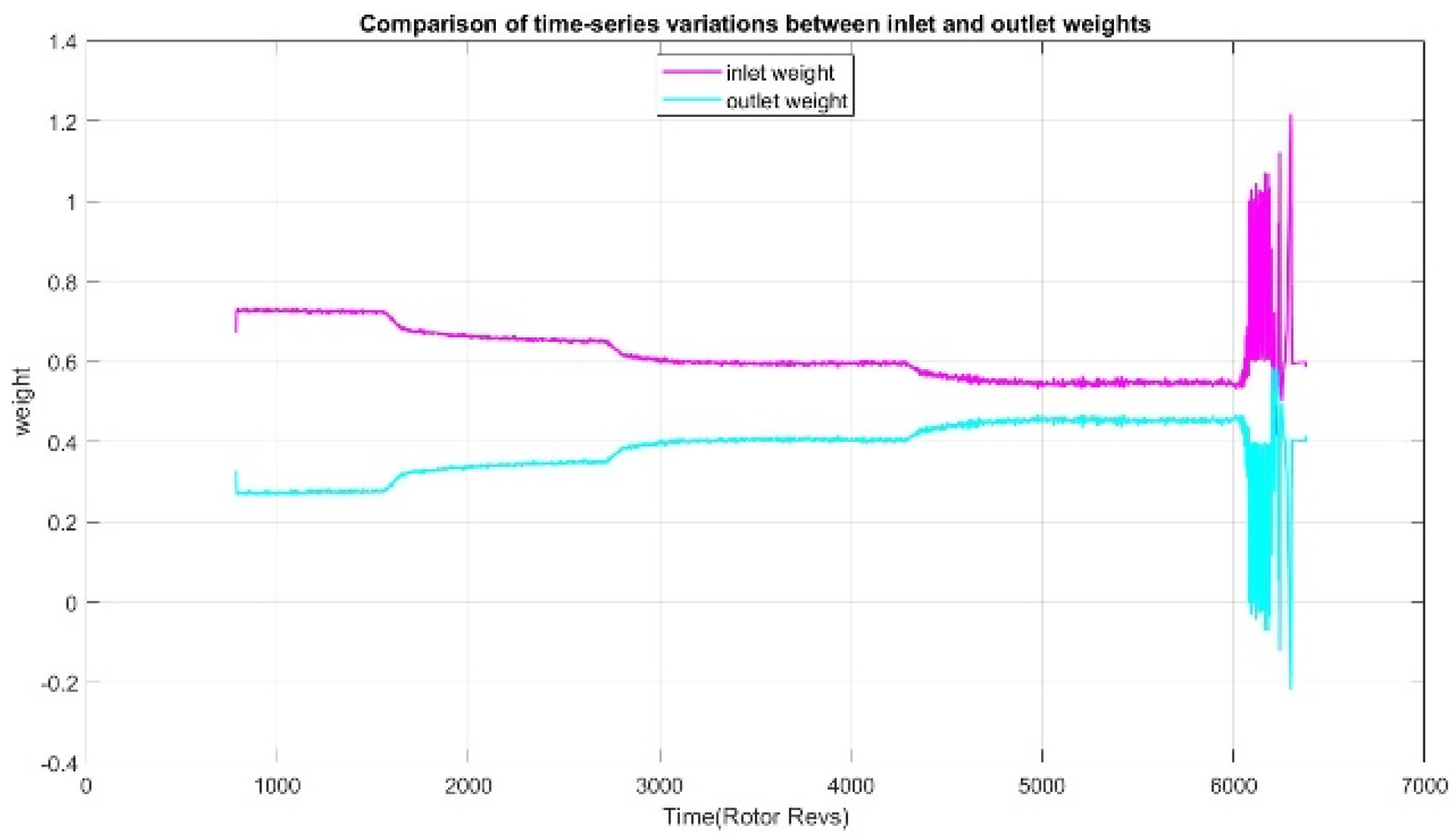
- Verification of weight allocation characteristic. The weight variation curve (Figure 21) shows that during the stable stage, the inlet weight stabilizes in the range of 0.5~0.8, while the outlet weight gradually rises from 0.3 to 0.5. The sum of weights is basically maintained around 1, verifying the effectiveness of the weight normalization physical constraint. Through the previous research on the inlet and outlet data, it is found that compared with the outlet data, the inlet information is simpler and clearer, while the outlet contains more complex and chaotic information. Therefore, the inlet weight being overall higher than the outlet weight conforms to prior expectations. The extreme switch of the inlet weight surging and the outlet weight plummeting during the mutation stage is a typical response of the model to the compressor stall precursor. It is highly consistent with the engineering laws of aerodynamic instability. Meanwhile, the drastic fluctuation of weights during the mutation stage can serve as a warning feature for compressor stall, providing an intuitive quantitative basis for subsequent fault diagnosis. It is also proved the dynamic response capability and engineering practicality of the cross-attention mechanism in time-series data fusion.
- 2.
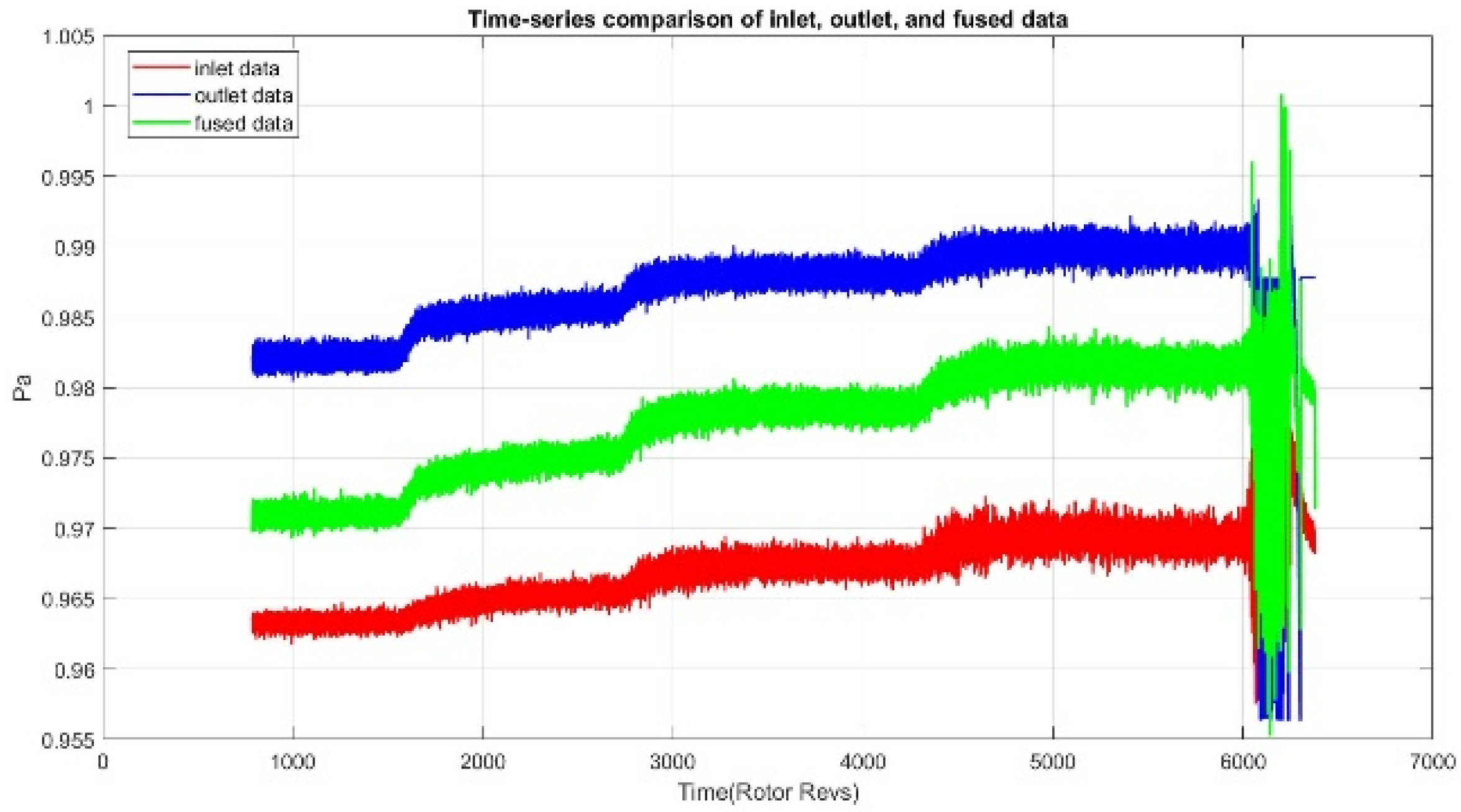
- Time series feature analysis of fused data. It can be seen from Figure 22 that the variation pattern of the fused data is highly consistent overall with the original inlet and outlet data, verifying the feature retention capability of this model. During stable operation (0~6000 r), the fused data is always located between the original inlet and outlet data, and the fluctuation amplitude is significantly smaller than the two original curves. This indicates that the model achieves a balance between noise suppression and feature retention through dynamic weight allocation, effectively improving the robustness of the data. The change trend of the fusion value completely corresponds to the weight allocation pattern, verifying the rationality of the dynamic weight design. During the mutation stage (6000 r~6500 r), the all original data exhibit violent fluctuations, while the fluctuation amplitude of the fusion data is significantly compressed, reflecting the anti-interference capability in an extreme scenario. The complementary mechanism of dynamic weights avoids excessive interference from the single-channel extreme values on the fusion result, ensuring the stability of the output.
- 3.
- Model performance quantification. The final model training loss is as low as 0.000202, indicating the deviation between the fusion result and the true value is extremely small, further verifying the model fitting accuracy and reliability. From the perspective of signal quality analysis, the Signal-to-Noise Ratio (SNR) of the original inlet and outlet experiment data is maintained at approximately 39.3 dB. After dual-source fusion, the SNR of the fused data increases to 48.2 dB. This result indicates that the dual-source fusion strategy effectively achieves the superposition of effective signals and the suppression of single-channel noise, significantly improving signal quality. From the perspective of feature integrity, while achieving noise suppression, the Feature Retention Rate (FRR) of the fused data reaches 84.02%. It is effectively ensured that key features, such as stall precursors, are not excessively smoothed or lost. In addition, the sequence length of the fused data is completely consistent with the original data. And there is no phase shift, ensuring the integrity of the time series structure, making it applicable to the monitoring and analysis of the compressor full-cycle operating status.
4.3. Stall Detection with Dispersion Entropy
5. Discussion
6. Conclusions
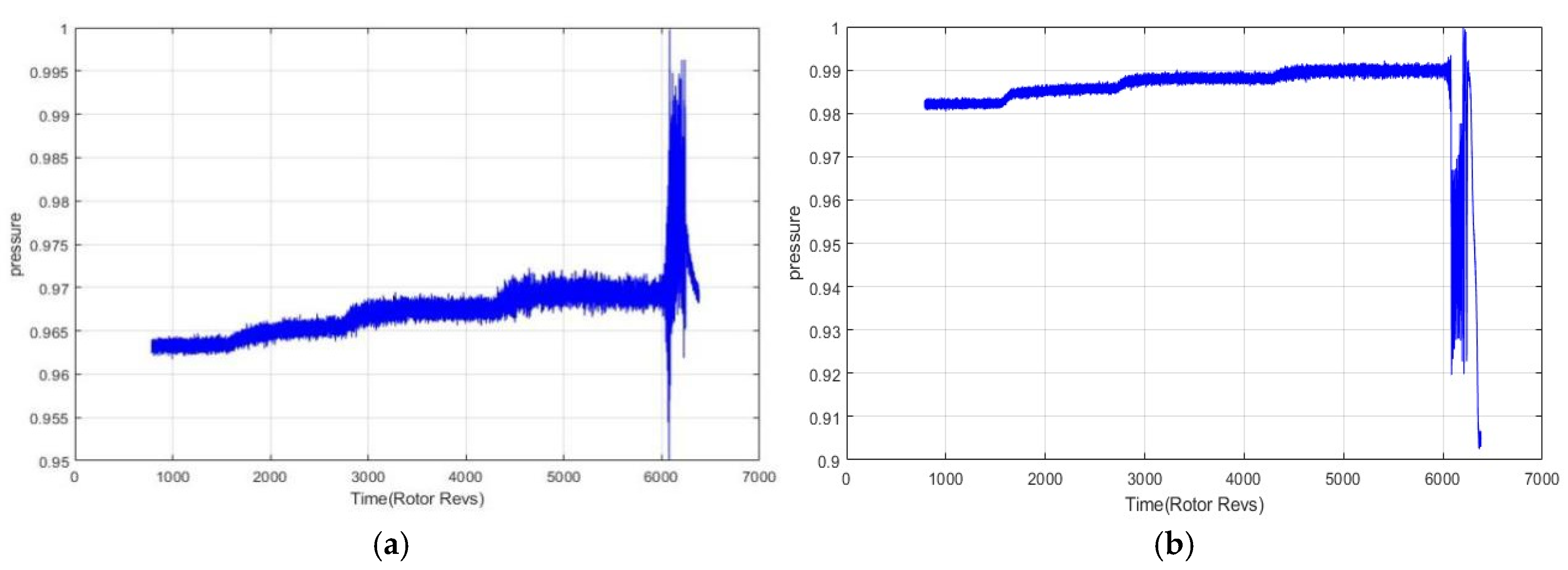
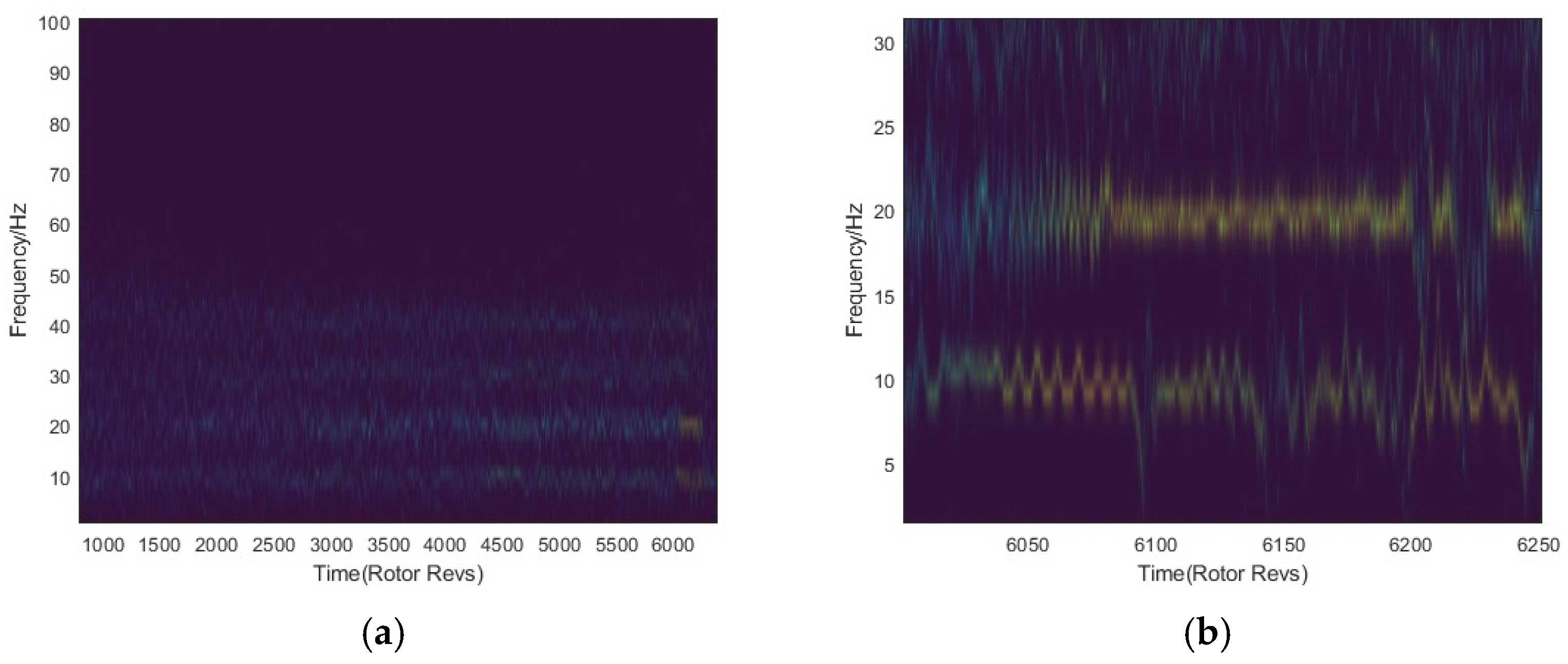
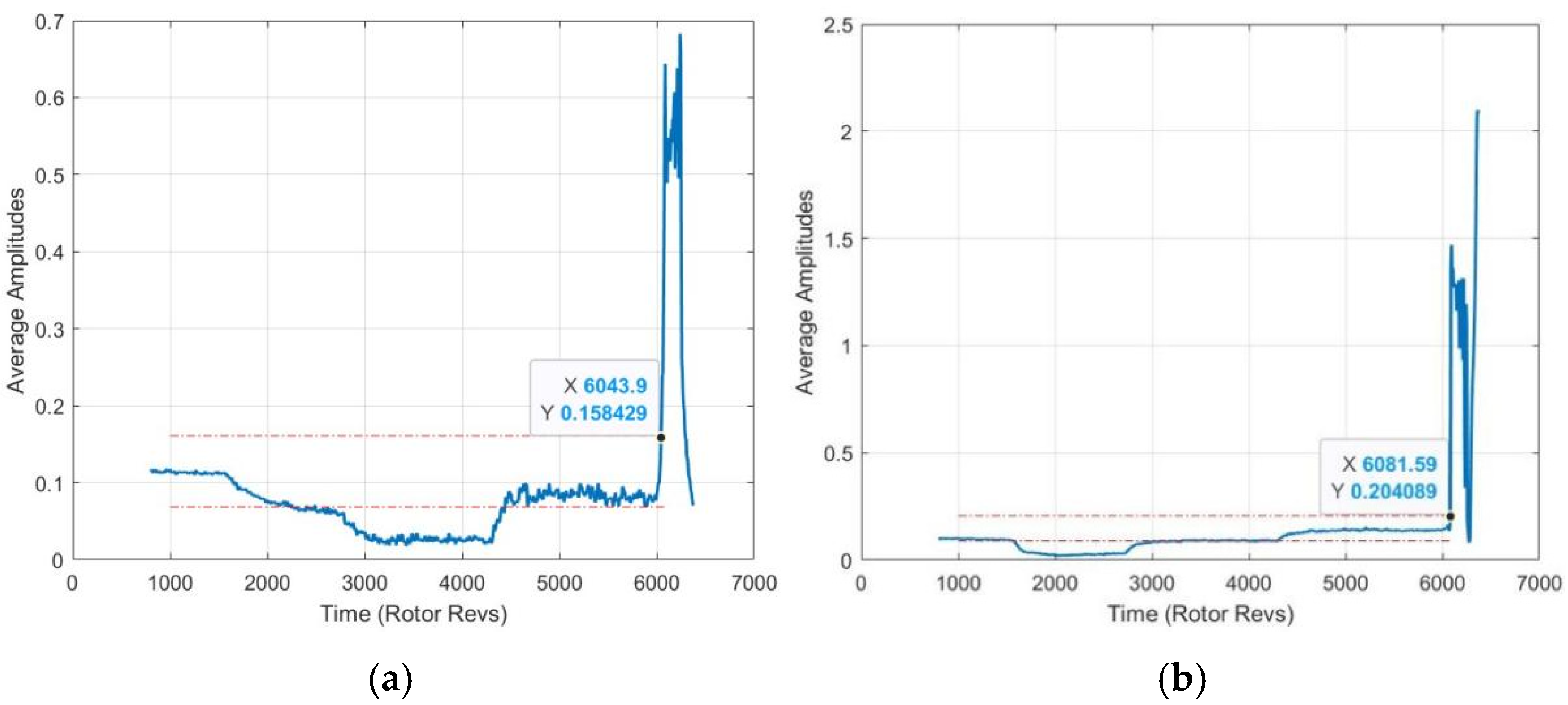
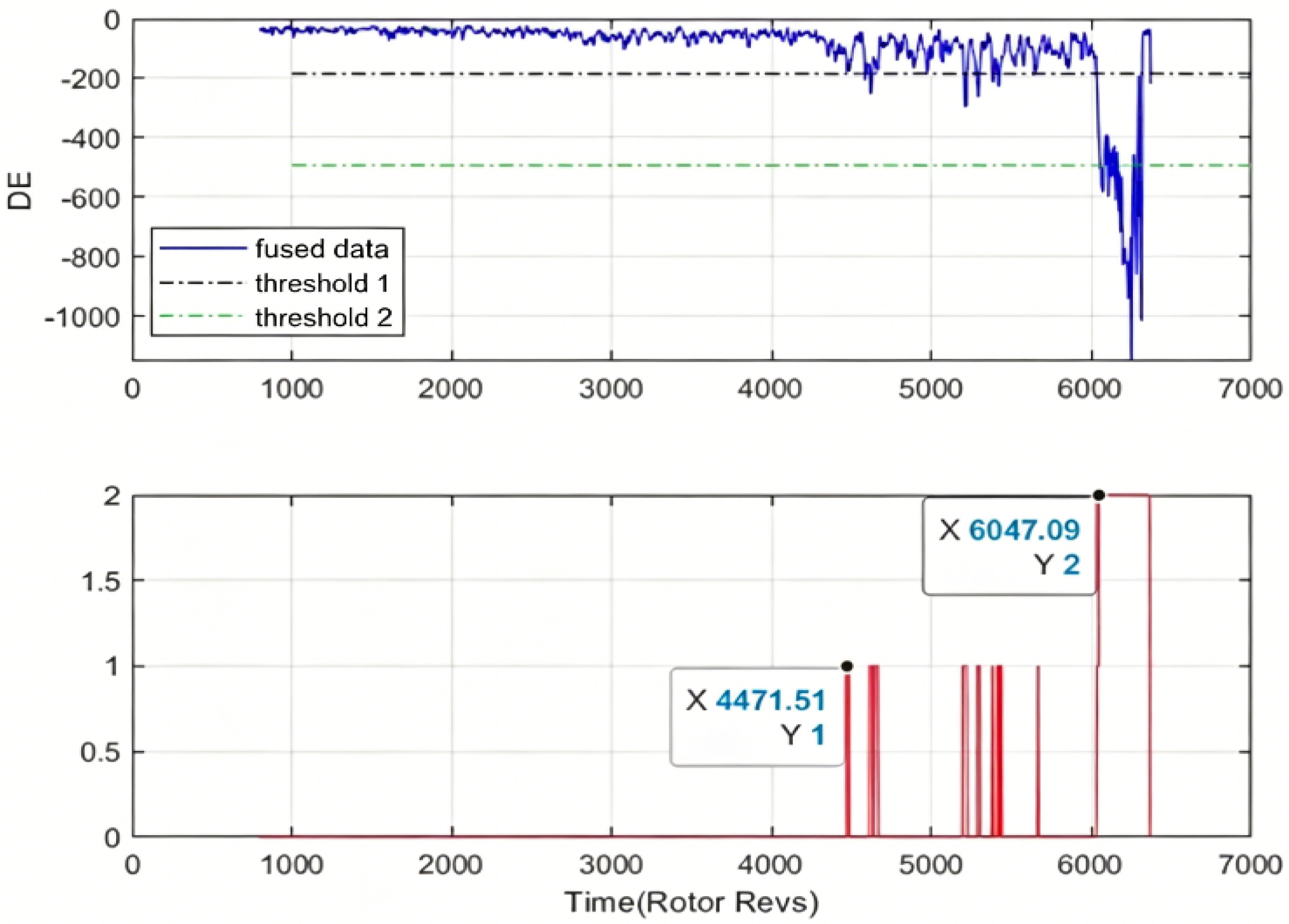
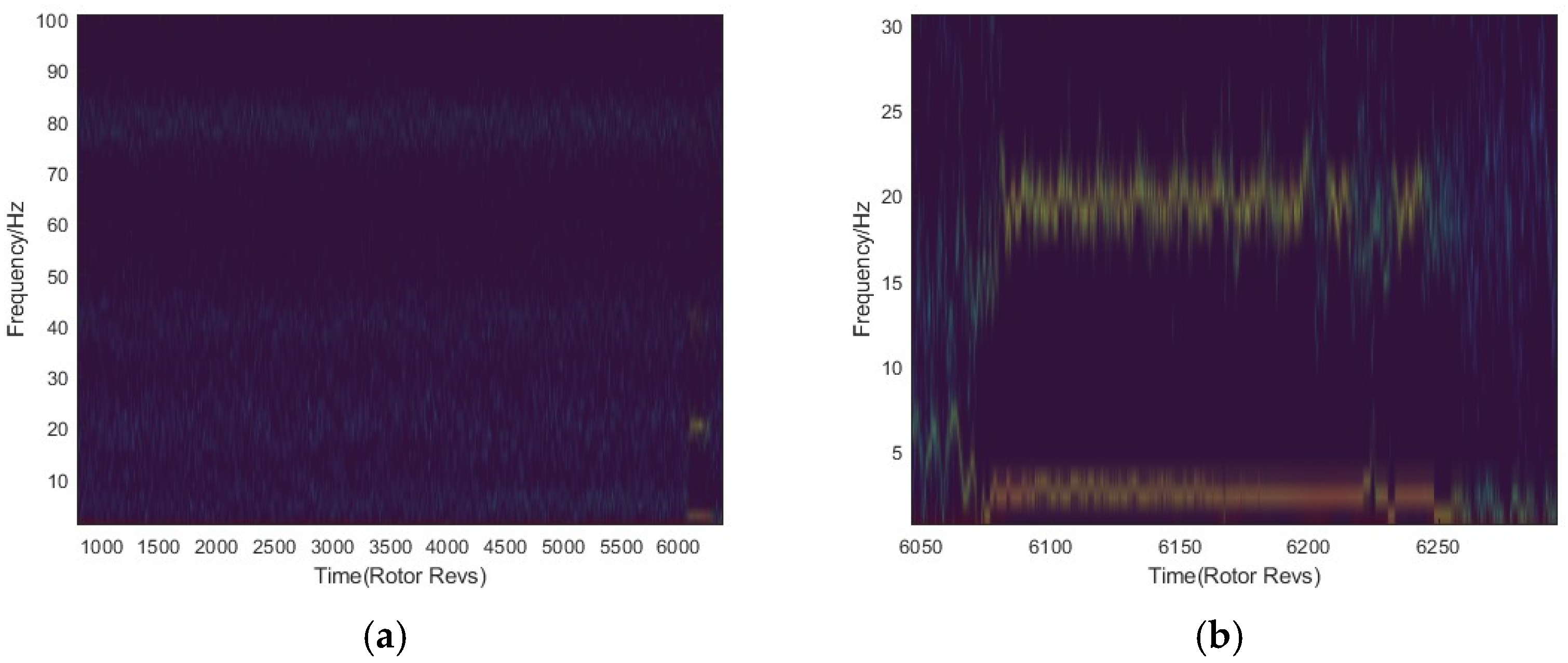
- Multi-dimensional feature cross-identification and progressive graded early warning strategy. Aiming at the problem of inaccurate single-feature identification, a cross-identification scheme is proposed by integrating time domain, time-frequency domain, and dynamic entropy features. Under the construction of a multi-dimensional feature verification system, it is determined the precise instability locations for inlet and outlet signals are 6043 r and 6081 r, respectively. Based on the dispersion entropy algorithm, the stall process is divided into three stages, achieving a progressive graded early warning. The maximum advance warning inlet and outlet signals reach 7.98 s and 7.47 s, respectively.
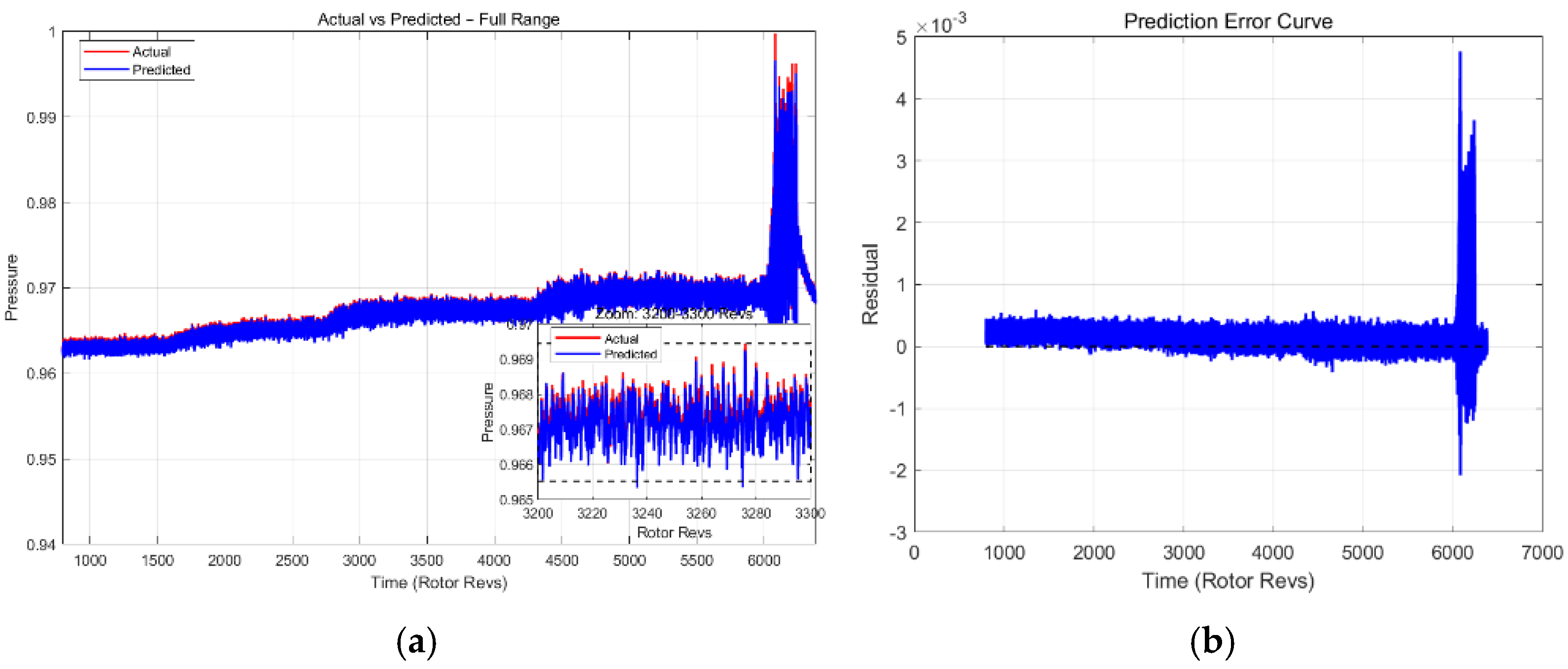
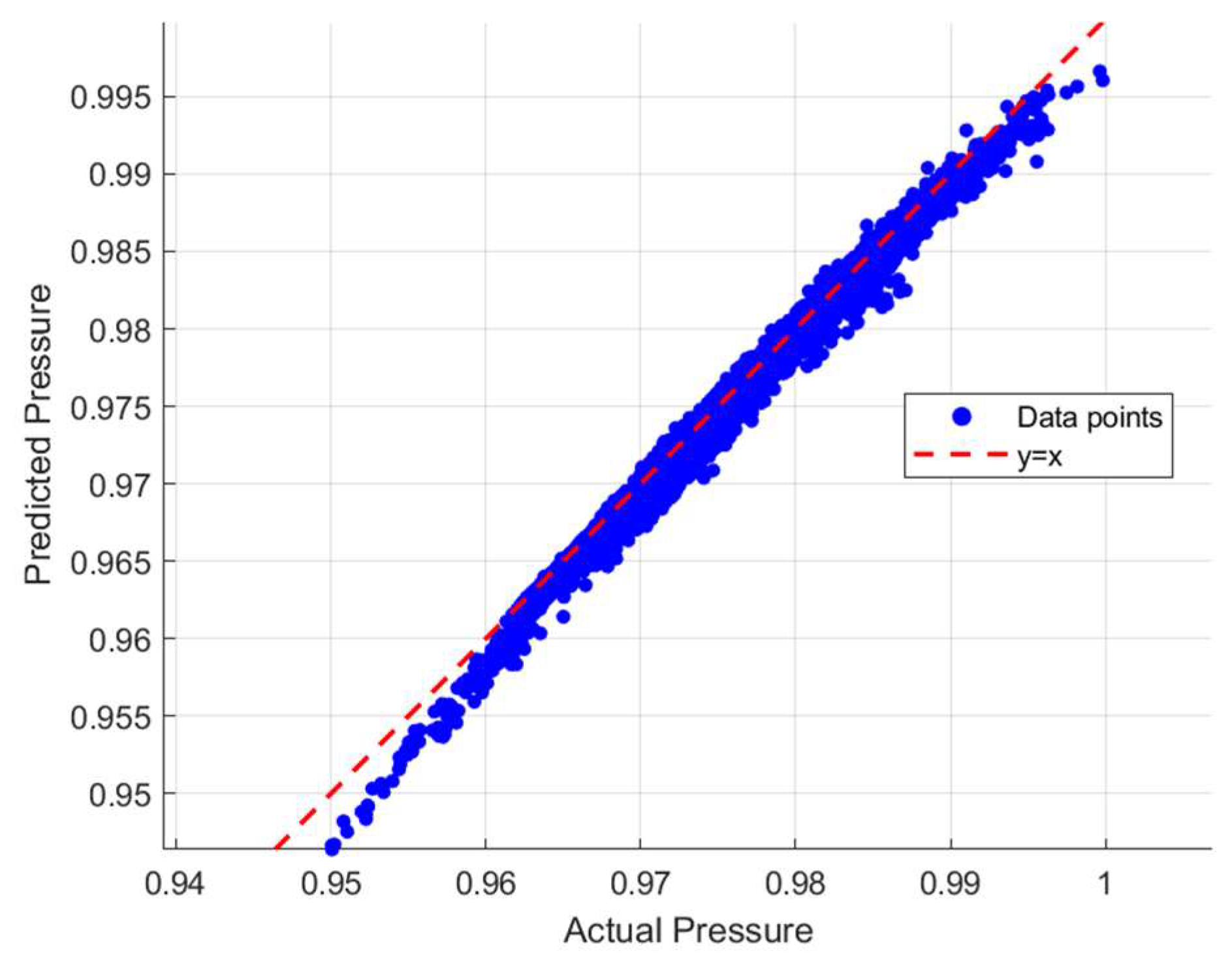
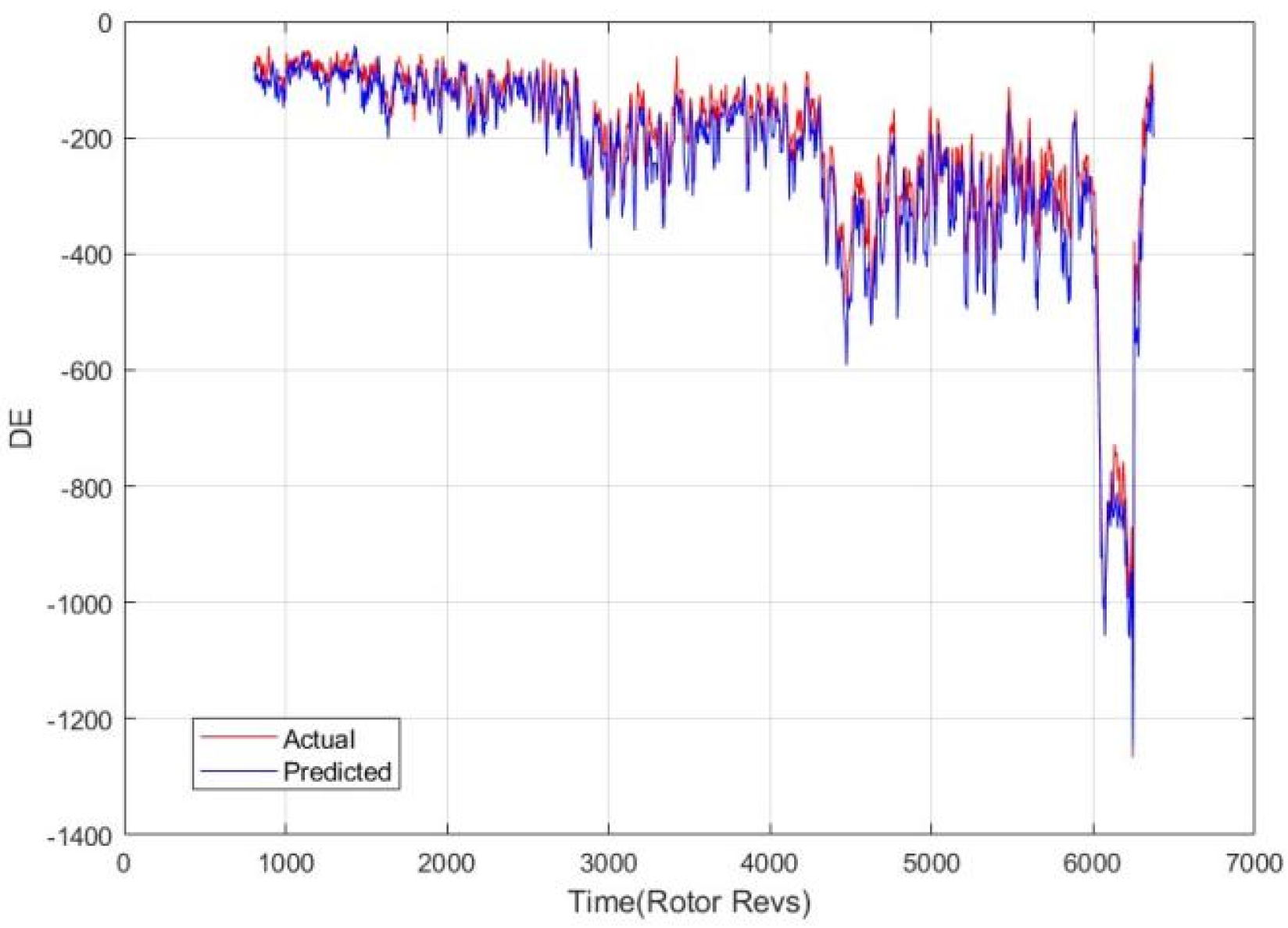
- VMD_DBO_LSTM deep learning modeling for rotating stall. To break through the bottleneck of traditional fusion based on chaotic data feature correlation, a coupled prediction model combined with VMD and LSTM is proposed. By introducing DBO with minimum envelope entropy as the optimization objective, adaptive optimization of the key VMD parameters is achieved. This solves the problems of difficult optimization of model parameters and insufficient mining of temporal features, significantly improving the accuracy of prediction. Experiments show that the model coefficient of determination reaches over 0.99. Combined with the dispersion entropy and three-sigma criterion, the maximum warning advance can be reached as 1571 r.
- Multi-source information fusion deep learning model with CA_BiLSTM. Targeting the spatiotemporal differences of multi-source from inlet and outlet sensors, the CA_BiLSTM fusion model is proposed with integrating dynamic weight adaptive allocation, physical constraint hard-coding, and residual optimization techniques. To overcome the limitation of static fusion, a weight sharing mechanism and a cross attention dynamic weight allocation mechanism are used to ensure the fusion process is in line with the aerodynamic mechanism. Experiments show that the final model training loss is 2.02 × 10⁻⁴. Combined with the dispersion entropy threshold, stall precursor can be detected as early as 8.05 s in advance.
Author Contributions
Funding
Institutional Review Board Statement
Informed Consent Statement
Data Availability Statement
Conflicts of Interest
References
- Krejsa, T.; Němec, V.; Hrdinová, L. Causes of Aviation Accidents and Incidents Especially with Engine Failure. In Transport Means: Proceedings of the International Conference; Kaunas University of Technology: Kaunas, Lithuania, 2018. [Google Scholar]
- Qiao, Y.; Chu, W.; Chen, J.; Sun, Z.; Wang, K.; Zhang, H. Discovery, interpretation, and model-based judgment of a hidden operating condition during the process from compressor stall to surge induced by inlet distortion. Aerosp. Sci. Technol. 2025, 165, 110485. [Google Scholar] [CrossRef]
- Fang, Y.; Sun, D.; Xu, D.; He, C.; Sun, X. Rapid prediction of compressor rotating stall inception using Arnoldi eigenvalue algorithm. Am. Inst. Aeronaut. Astronaut. J. 2023, 61, 3566–3578. [Google Scholar] [CrossRef]
- Zanotti, S.; Ceschini, D.; Ferlauto, M. AI-Based Detection of Surge and Rotating Stall in Axial Compressors via Dynamic Model Parameter Estimation. Fluids 2024, 9, 134. [Google Scholar] [CrossRef]
- Ji, J.; Hu, J.; Ma, S.; Xu, R. A Computational Method of Rotating Stall and Surge Transients in Axial Compressor. Energies 2022, 15, 5246. [Google Scholar] [CrossRef]
- Mohammad, A.; Yahya, A.; Mohammad, N.N. Estimations of Compressor Stall and Surge Using Passage Stall Behaviors. Machines 2022, 10, 706. [Google Scholar] [CrossRef]
- Tu, B.; Zhang, X.; Hu, J.; Zhong, M.; Xiong, B. Analysis methods for aerodynamic instability detection on a multistage axial compressor. Int. J. Aerosp. Eng. 2021, 2021, 8893792. [Google Scholar] [CrossRef]
- Qiu, X.; Liu, Z. Stall warning of axial compressor using spatial FFT and combined analysis of multiple statistical parameters. J. Phys. Conf. Ser. 2021, 2033, 012105. [Google Scholar] [CrossRef]
- Shabbir, M.; Liang, X.; Chakrabarti, S. An ANOVA-based fault diagnosis approach for variable frequency drive-fed induction motors. IEEE Trans. Energy Convers. 2020, 36, 500–512. [Google Scholar]
- Chen, Z.; Liu, C.; Ding, S.X.; Peng, T.; Yang, C.; Gui, W.; Shardt, Y.A.W. A just-in-time-learning-aided canonical correlation analysis method for multimode process monitoring and fault detection. IEEE Trans. Ind. Electron. 2020, 68, 5259–5270. [Google Scholar]
- Xu, L.; Pennacchi, P.; Chatterton, S. A new method for the estimation of bearing health state and remaining useful life based on the moving average cross-correlation of power spectral density. Mech. Syst. Signal Process. 2020, 139, 106617. [Google Scholar] [CrossRef]
- Chen, J.; Li, Z.; Pan, J.; Chen, G.; Zi, Y.; Yuan, J.; Chen, B.; He, Z. Wavelet transform based on inner product in fault diagnosis of rotating machinery: A review. Mech. Syst. Signal Process. 2016, 70–71, 1–35. [Google Scholar] [CrossRef]
- Fan, Z.; Du, J.; Liu, Y.; Ba, D.; Xu, X.; Zhang, M.; Zhu, Z. Instability warning method via fast wavelet transform in a high-speed axial flow compressor: From surge precursors to early warning. Aerosp. Sci. Technol. 2026, 168, 111124. [Google Scholar] [CrossRef]
- Lou, F.; Key, N. Compressor Stall Warning Using Nonlinear Feature Extraction Algorithms. J. Eng. Gas. Turbines Power 2020, 142, 121005. [Google Scholar] [CrossRef]
- Zhang, M.; Zhang, J.; Hou, A.; Xia, A.; Tuo, W.; Lv, Y. Aerodynamic system instability identification with sample entropy algorithm based on feature extraction. Propuls. Power Res. 2023, 12, 138–152. [Google Scholar] [CrossRef]
- Liu, Y.; Du, J.; Li, J.; Xu, Y. A stall diagnosis method based on entropy feature identification in axial compressors. Int. J. Mech. Syst. Dyn. 2023, 3, 73–84. [Google Scholar] [CrossRef]
- Zhang, M.; Kong, P.; Hou, A.; Xia, A.; Tuo, W.; Lv, Y. Identification Strategy Design with the Solution of Wavelet Singular Spectral Entropy Algorithm for the Aerodynamic System Instability. Aerospace 2022, 9, 320. [Google Scholar] [CrossRef]
- Liu, Y.; Du, J.; Zhao, D. Advances in early warning and active control of compressor instabilities for aerospace applications. Prog. Aerosp. Sci. 2025, 159, 101156. [Google Scholar] [CrossRef]
- Meng, Y.; Namachchivaya, N.S.; Perkowski, N. Almost sure asymptotic stability of parabolic SPDEs with small multiplicative noise: With application to the perturbed Moore-Greitzer model. Dyn. Syst. 2025, 40, 223–246. [Google Scholar]
- Vepa, R. Modelling and quasilinear control of compressor surge and rotating stall vibrations. Math. Probl. Eng. 2010, 2010, 314172. [Google Scholar] [CrossRef]
- Mao, Z.; Hu, J.; Zhang, H.; Yan, W. Effects of rotating disturbance on aerodynamics stability of axial-flow compressor. J. Aerosp. Power 2015, 30, 2261–2270. [Google Scholar]
- Zhu, Y.; Zhu, C.; Tan, J.; Wang, Y.; Tao, J. Operational state assessment of wind turbine gearbox based on long short-term memory networks and fuzzy synthesis. Renew. Energy 2022, 181, 1167–1176. [Google Scholar] [CrossRef]
- Hipple, S.; Bonilla-Alvarado, H.; Pezzini, P.; Shadle, L.J.; Bryden, K.M. Using machine learning tools to predict compressor stall. J. Energy Resour. Technol. 2020, 142, 070915. [Google Scholar] [CrossRef]
- Lian, R.; Deng, H. The improved CNN-BiLSTM hybrid model for predicting compressor stall. In Proceedings of the Global Power and Propulsion Society (GPPS), Shanghai, China, 4–6 September 2025. [Google Scholar]
- Qiu, X.; Chen, J. Algorithm of axial compressor stall warning based on BP neural network and fuzzy logic. MATEC Web Conf. 2022, 355, 03007. [Google Scholar] [CrossRef]
- Zhang, M.; Zhen, Y.; Bai, S.; Nan, X.; Ma, N.; Liu, R.; Wen, Q. Graph convolutional networks modeling for aerodynamic system stability with spatiotemporal topology fusion based on digital twin. Propuls. Power Res. 2026, 15, 32–47. [Google Scholar] [CrossRef]
- Deng, Y.; Li, J.; Liu, J.; Peng, F.; Zhang, H.; Schoen, M.P. Stall prediction model based on deep learning network in axial flow compressor. Chin. J. Aeronaut. 2025, 38, 103324. [Google Scholar] [CrossRef]
- Li, W.; Zhang, X. A hybrid DBO-VMD and IRCMRDE approach for gearbox fault diagnosis. Proc. Inst. Mech. Eng. Part C J. Mech. Eng. Sci. 2026, 240, 3730–3746. [Google Scholar] [CrossRef]
- Chen, L.; Li, Y. Urban Traffic Level of Service Prediction Method Based on DBO-Transformer Multi-Source Information Fusion. Promet—Traffic Transp. 2026, 38, 629–641. [Google Scholar]
- Hu, Y.; Hu, A.; Li, B.; Peng, L.; Han, B.; Fang, T. Adaptive physical-layer fingerprint extraction from 100 Mbps ethernet signals using variational mode decomposition and Hilbert-Huang transform. Digit. Signal Process. 2026, 177, 106136. [Google Scholar] [CrossRef]
- Eriksen, T.; Rehman, N.U. Data-driven nonstationary signal decomposition approaches: A comparative analysis. Sci. Rep. 2023, 13, 1798. [Google Scholar] [CrossRef] [PubMed]
- Chen, Q.; Xu, Y.; Zhang, Z.; Guo, W. Feature Recognition and Extraction of Rotating Stall Signal of Mine Contra-rotating Fan. Mech. Sci. Technol. Aerosp. Eng. 2024, 43, 1505–1513. [Google Scholar]
- Zhang, M.; Li, H.; Bai, S.; Nan, X.; Ma, N.; Liu, R.; Wen, Q. Collaborative Entropy Perception Application on Compressor Stall Instability with Topological Visualization. Phys. Fluids 2025, 37, 094113. [Google Scholar] [CrossRef]
- Xue, J.; Shen, B. Dung beetle optimizer: A new meta-heuristic algorithm for global optimization. J. Supercomput. 2023, 79, 7305–7336. [Google Scholar]








| Indicator | Value |
|---|---|
| Maximum power (MW) | 5 |
| Maximum speed (rpm) | 15,000 |
| Maximum main flow rate (kg/s) | 60 |
| Inlet temperature | Room temperature |
| Inlet pressure (MPa) | 0.06~0.1 |
| Maximum exhaust temperature (°C) | 300 |
| Maximum exhaust pressure (MPa) | 0.4 |
| Detection Sensor | Inlet | Outlet |
|---|---|---|
| Stall location | 6043 r | 6081 r |
| 1st warning location | 4476 r | 4613 r |
| 2nd warning location | 6042 r | 6061 r |
| 1st warning advance time | 7.98 s | 7.74 s |
| 2nd warning advance time | 0.005 s | 0.102 s |
| Parameter | Value |
|---|---|
| Population size | 25 |
| Maximum iterations | 20 |
| Number of variables | 2 |
| Penalty factor range | [500, 2500] |
| Number of IMFs K range | [3, 10] |
| Model | MAE | RMSE | MAPE | R2 |
|---|---|---|---|---|
| LSTM | 5 × 10⁻⁴ | 1.1 × 10⁻³ | 6.1 × 10⁻⁶ | 0.9503 |
| VMD_LSTM | 4 × 10⁻⁴ | 8.9 × 10⁻⁴ | 4.1 × 10⁻⁶ | 0.9679 |
| VMD_DBO_LSTM | 1.8 × 10⁻⁴ | 2.8 × 10⁻⁴ | 1.8 × 10⁻⁶ | 0.9927 |
| Detection Sensor | Stall Location | 1st Warning Location | 2nd Warning Location | 1st Warning Advance Time | 2nd Warning Advance Time |
|---|---|---|---|---|---|
| Inlet | 6043 r | 4476 r | 6042 r | 7.98 s | 0.005 s |
| Outlet | 6081 r | 4613 r | 6061 r | 7.47 s | 0.102 s |
| VMD_DBO_LSTM | 6043 r | 4471 r | 6042 r | 7.98 s | 0.005 s |
| CA_BiLSTM | 6051 r | 4471 r | 6047 r | 8.05 s | 0.020 s |
Disclaimer/Publisher’s Note: The statements, opinions and data contained in all publications are solely those of the individual author(s) and contributor(s) and not of MDPI and/or the editor(s). MDPI and/or the editor(s) disclaim responsibility for any injury to people or property resulting from any ideas, methods, instructions or products referred to in the content. |
© 2026 by the authors. Licensee MDPI, Basel, Switzerland. This article is an open access article distributed under the terms and conditions of the Creative Commons Attribution (CC BY) license.
Share and Cite
Zhang, M.; Zhao, Y.; Li, H.; Nan, X.; Ma, N.; Liu, R.; Wen, Q. Compressor Flow Perception via Deep Learning Modeling with Multi-Source Dynamic Fusion of Temporal Features by Bio-Inspired Optimization. Biomimetics 2026, 11, 452. https://doi.org/10.3390/biomimetics11070452
Zhang M, Zhao Y, Li H, Nan X, Ma N, Liu R, Wen Q. Compressor Flow Perception via Deep Learning Modeling with Multi-Source Dynamic Fusion of Temporal Features by Bio-Inspired Optimization. Biomimetics. 2026; 11(7):452. https://doi.org/10.3390/biomimetics11070452
Chicago/Turabian StyleZhang, Mingming, Yuying Zhao, Huan Li, Xi Nan, Ning Ma, Ruoyang Liu, and Quan Wen. 2026. "Compressor Flow Perception via Deep Learning Modeling with Multi-Source Dynamic Fusion of Temporal Features by Bio-Inspired Optimization" Biomimetics 11, no. 7: 452. https://doi.org/10.3390/biomimetics11070452
APA StyleZhang, M., Zhao, Y., Li, H., Nan, X., Ma, N., Liu, R., & Wen, Q. (2026). Compressor Flow Perception via Deep Learning Modeling with Multi-Source Dynamic Fusion of Temporal Features by Bio-Inspired Optimization. Biomimetics, 11(7), 452. https://doi.org/10.3390/biomimetics11070452