
Bio-Inspired Sensitivity-Weighted NSGA-II Optimization of a 6-UPS Parallel Loading Mechanism for Aero-Engine Pylon Vector-Force Loading

 , , and
Abstract
1. Introduction
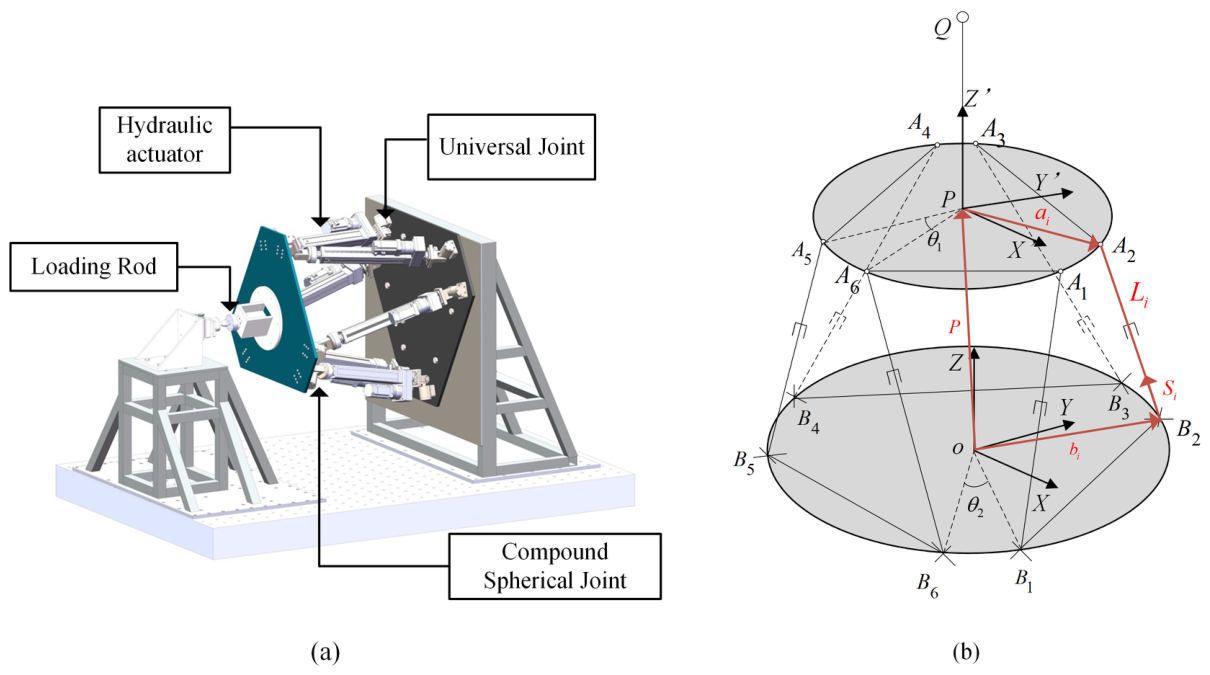
- Development of a task-specific 6-UPS vector-force loading mechanism:A mechanism configuration with a central rod and specimen-side spherical joint is designed to transmit forces solely through axial tension–compression, thereby structurally decoupling parasitic torques to ensure accurate vector loading.
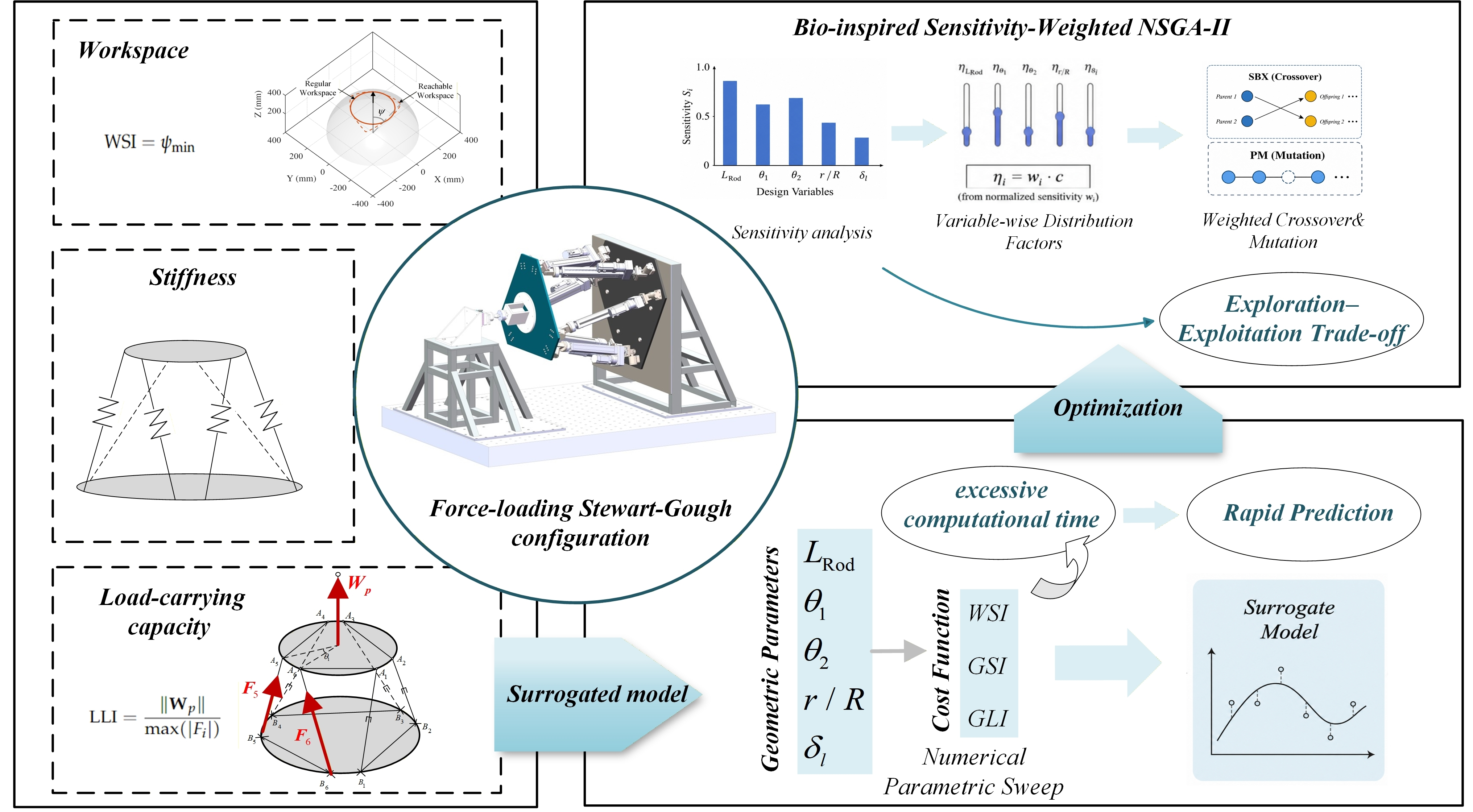
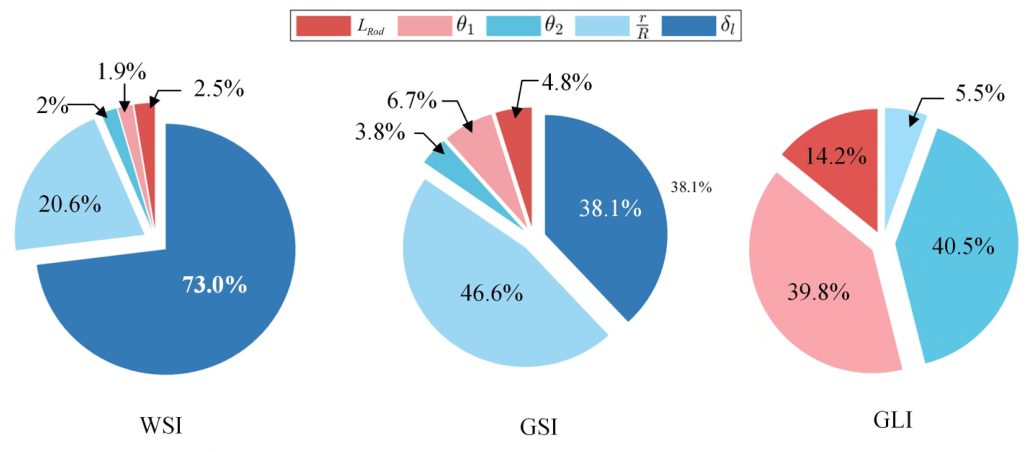
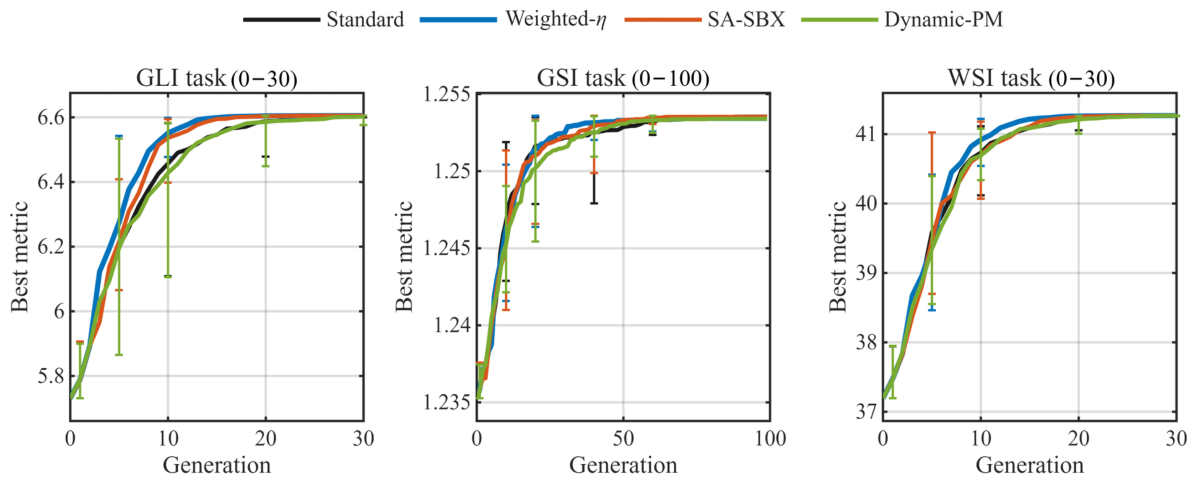
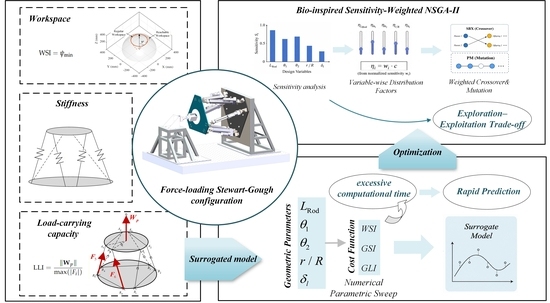
- Establishment of a bio-inspired sensitivity-weighted NSGA-II framework: Using MARS to estimate global design-variable sensitivities, the framework assigns variable-wise search intensities in a manner analogous to locus-specific heterogeneity in biological evolution, thereby achieving about a 90% reduction in computation time while improving workspace, stiffness, and load-carrying capacity.
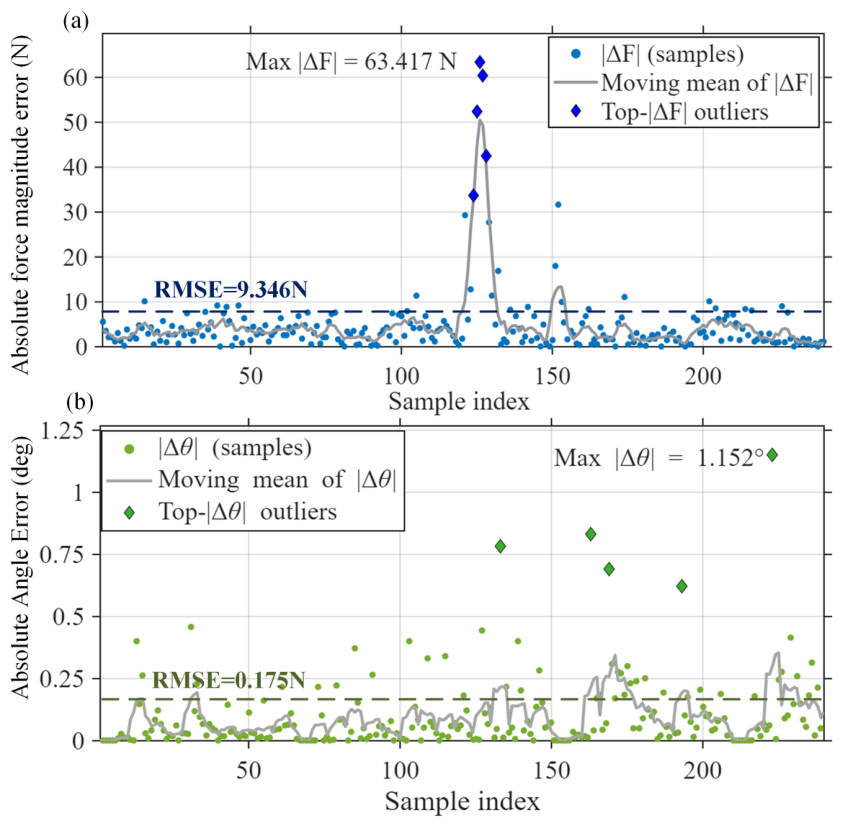
- Prototype-level experimental validation under loaded poses: Physical testing on a hybrid platform verifies the optimized configuration under 240 quasi-static loaded pose conditions, with force magnitude errors maintained below 0.64% and directional deviations below 1.15°.
2. Design and Modeling of the Loading System
2.1. Design Concept and Configuration
2.2. Kinematic and Static Force Analysis
2.2.1. Inverse Kinematics
2.2.2. Static Force Analysis
2.3. Performance Analysis and Evaluation
2.3.1. Workspace
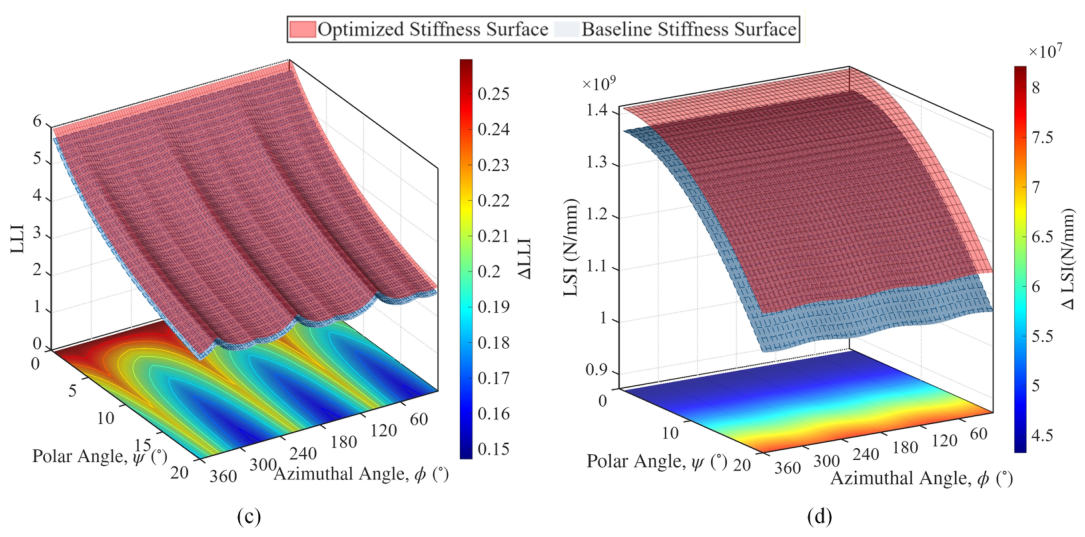
2.3.2. Stiffness
2.3.3. Load-Carrying Capacity
2.4. Mechanism-Level Advantage Analysis
3. Bio-Inspired Sensitivity-Weighted NSGA-II Optimization Methodology
3.1. Optimization Problem Formulation
3.2. Surrogate-Assisted Optimization Framework
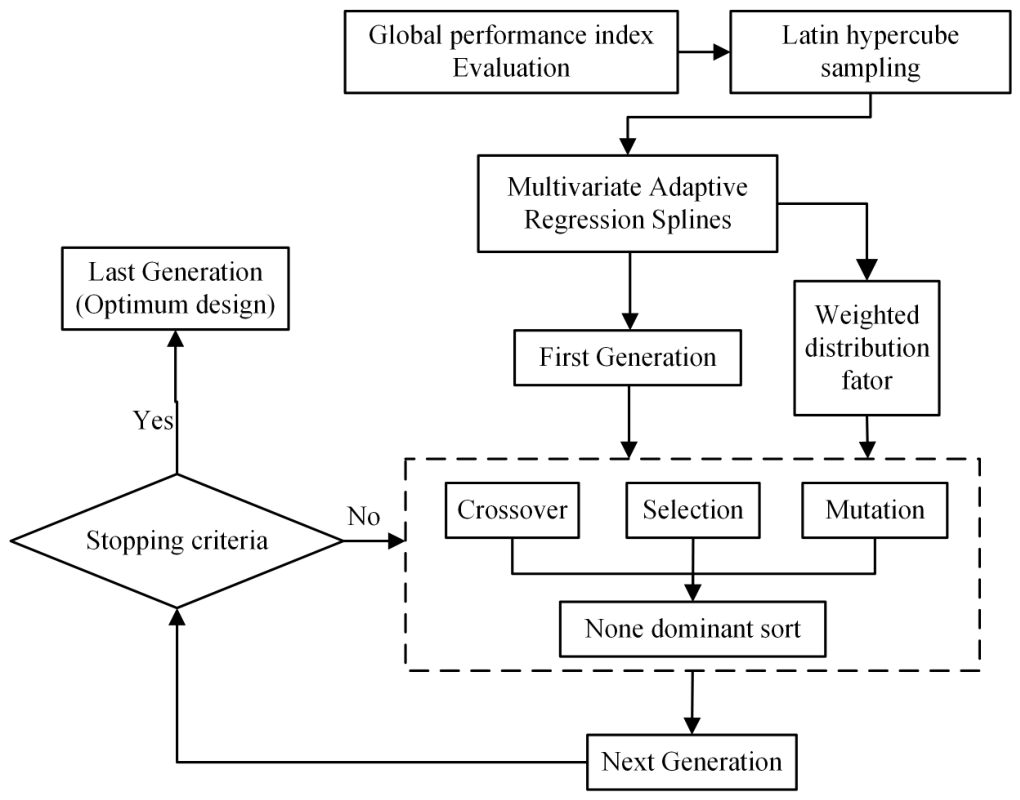
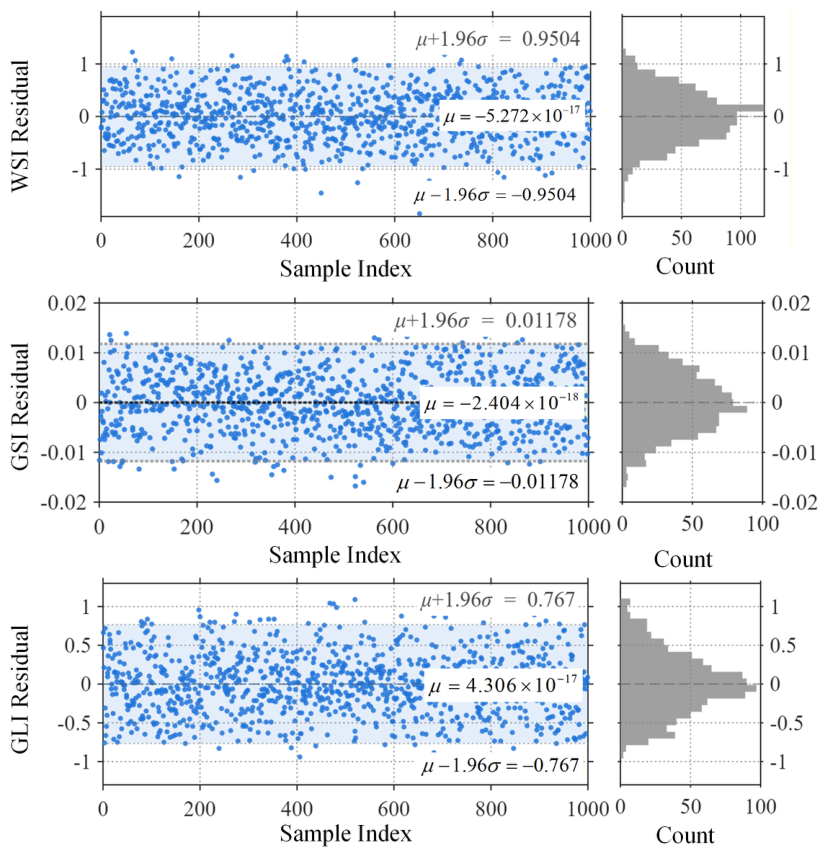
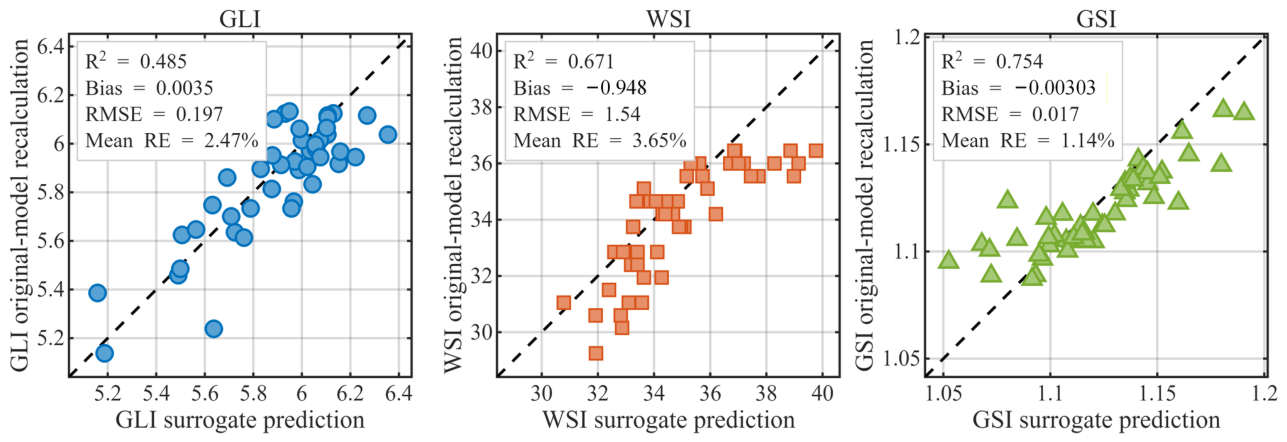
- Data Sampling and Surrogate Modeling: A one-time set of 1000 training samples is generated via Latin Hypercube Sampling (LHS) to build an efficient MARS surrogate model, which drastically reduces the computational burden from the tens of thousands of evaluations required for direct optimization.
- Sensitivity Analysis and Search Enhancement: The interpretability of the trained MARS model is exploited to conduct a sensitivity analysis. This analysis quantifies the influence of each design parameter on the performance indices, and the results are used to design a weighted distribution factor to enhance the search efficiency of the genetic algorithm.
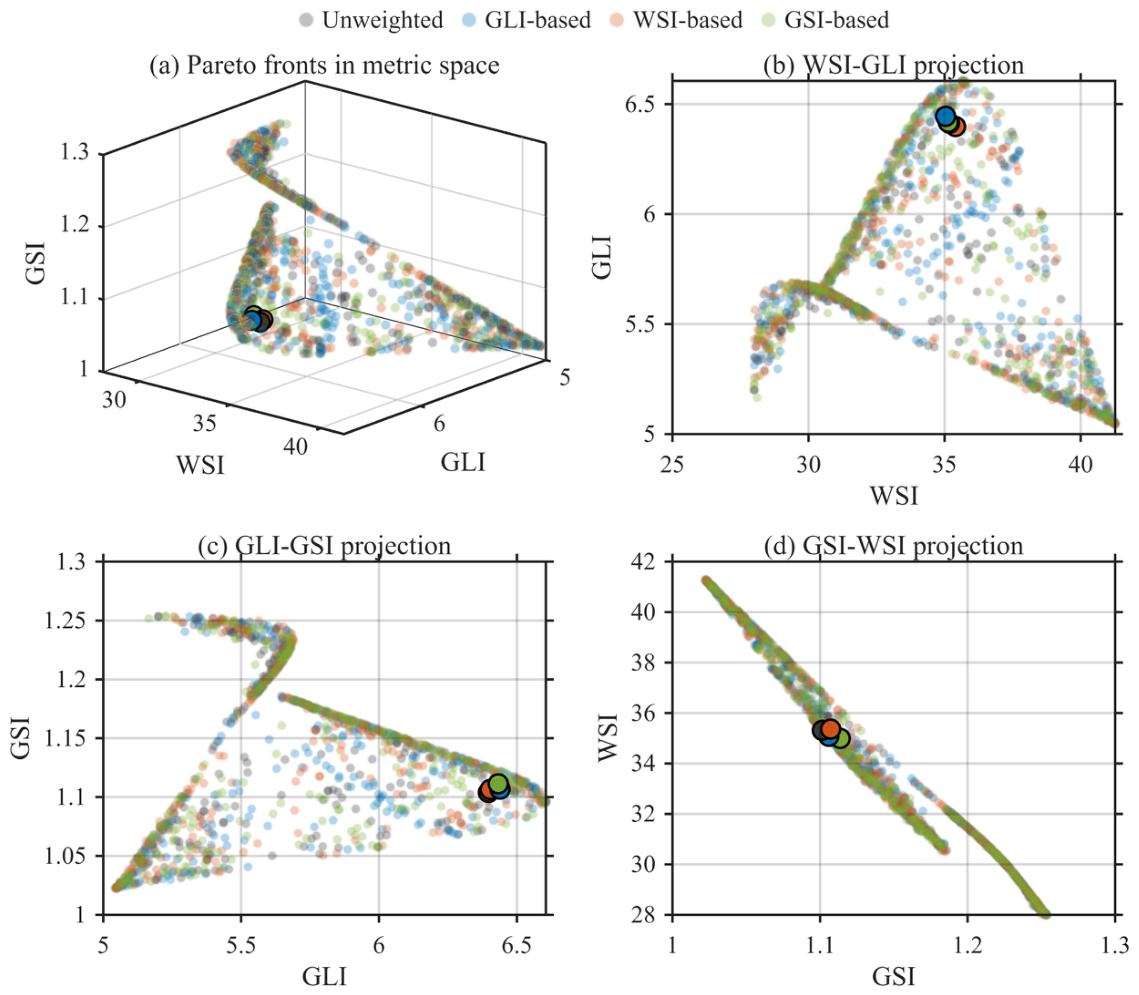
- Multi-Objective Optimization: The NSGA-II algorithm, guided by the surrogate model and the weighted distribution factor, performs the multi-objective search to find the set of Pareto-optimal solutions.
3.2.1. Surrogate Modeling with MARS
3.2.2. Sensitivity Analysis and Search Enhancement
3.3. Multi-Objective Optimization and Results
4. Experiment
4.1. Experimental Setup
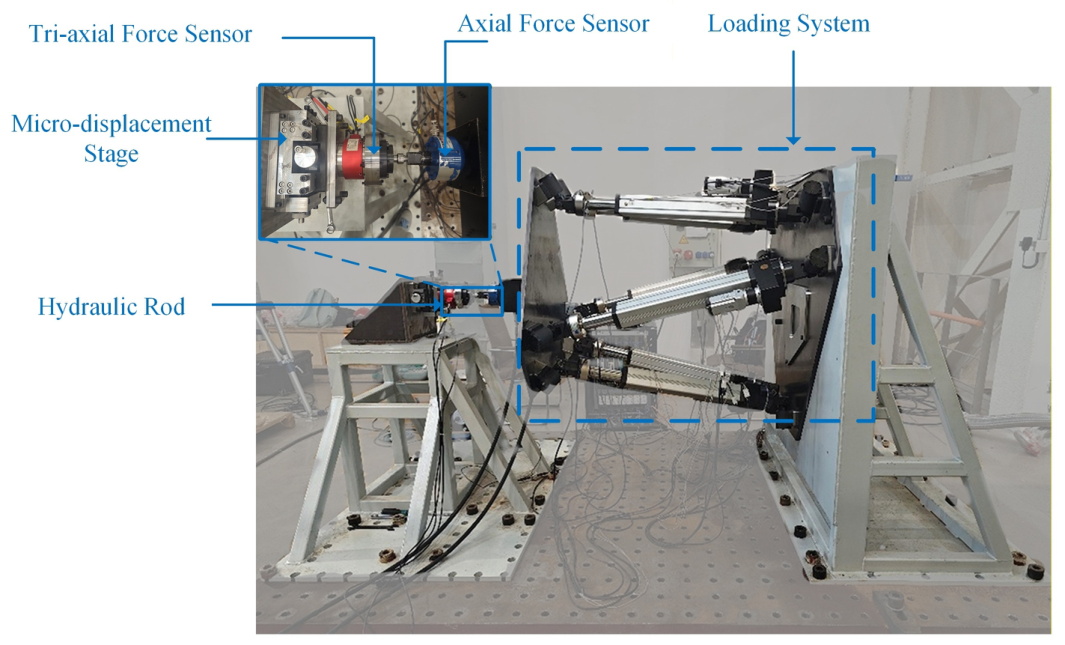
- Optimized 6-UPS Mechanism: The parallel mechanism was fabricated strictly according to the optimal geometric parameter set, . The positioning system is driven by six fold-back electric linear actuators (YC80-T10-400-BR-FC-N20-P750), each powered by a high-response Panasonic servo motor (MHMF042L1C2M). This electromechanical configuration ensures high-stiffness and high-bandwidth orientation control for the moving platform.
- Central Loading Actuator: The theoretical loading rod is replaced by a high-capacity servo-hydraulic cylinder. This actuator applies the primary vector force, while a tri-axial force sensor mounted at the end-effector provides ground-truth measurements of the applied load vector.
4.2. Test Procedure
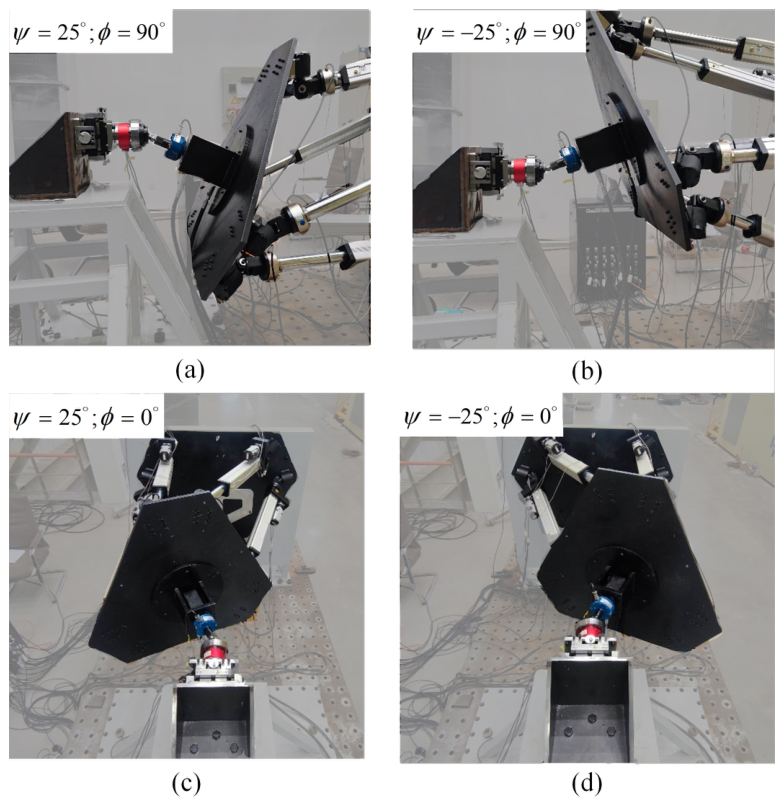
- Loading Plane (azimuthal angle, ): Two representative orthogonal planes were selected for testing: the horizontal plane () and the vertical plane ().
- Loading Direction (polar angle, ): Within each plane, the polar angle of the force vector was varied from to in steps of .
- Force Magnitude: At each specified direction, the applied force was incrementally increased from 2 kN to 10 kN in steps of 2 kN.
4.3. Results and Analysis
5. Discussion
6. Conclusions
Author Contributions
Funding
Institutional Review Board Statement
Informed Consent Statement
Data Availability Statement
Conflicts of Interest
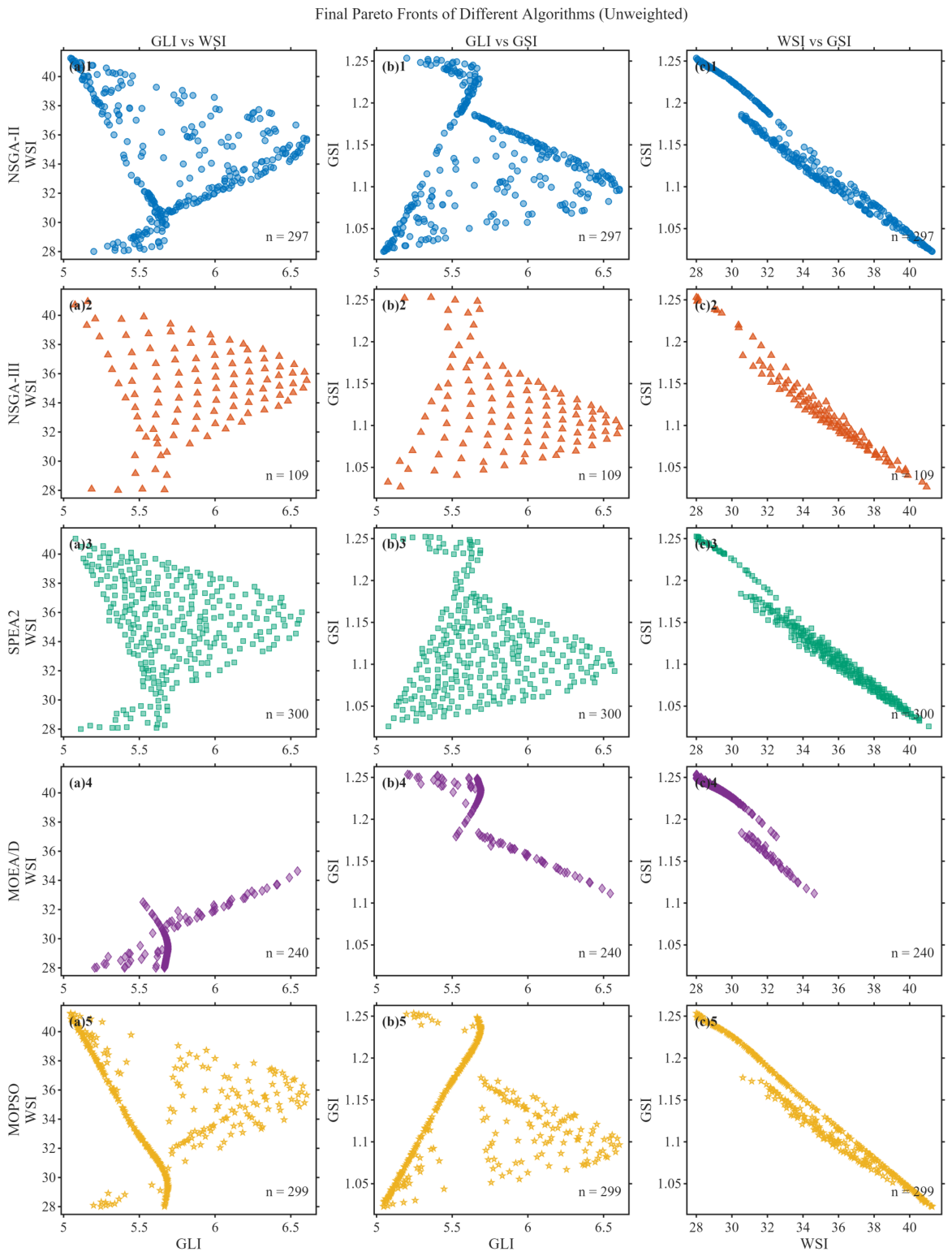
Appendix A. Additional Pareto-Front Projections Against Representative Multi-Objective Optimizers

References
- Kim, H.; Kim, S.; Hong, S.; Choi, H.; Kim, S. Structural static test for validation of the structural integrity of an aircraft pylon. Aerosp. Sci. Technol. 2022, 122, 107402. [Google Scholar] [CrossRef]
- Kim, D.H.; Kim, S.; Kim, S.W. Numerical analysis of drop impact-induced damage of a composite fuel tank assembly on a helicopter considering liquid sloshing. Compos. Struct. 2019, 229, 111438. [Google Scholar] [CrossRef]
- Kim, D.H.; Kim, Y.C.; Kim, S.W.; Kim, H.G.; Kim, S. Structural Safety Evaluation of Test Fixture for Static Load Test of External Fuel Tank for Fixed-Wing Aircraft. Int. J. Aeronaut. Space Sci. 2022, 23, 52–65. [Google Scholar] [CrossRef]
- Saki, L.J.H. Design of Aero Engine Mount Structure. Bachelor’s Thesis, University West, Department of Engineering Science, Trollhättan, Sweden, 10 May 2023. Available online: https://www.diva-portal.org/smash/get/diva2:1782943/FULLTEXT01.pdf (accessed on 17 June 2026).
- Dongming, L.; Wei, T.; Caijun, X.; Pengfei, Z. Static test rig development and application for an airliner’s hyperstatic aero-engine pylon structure. J. Meas. Eng. 2014, 2, 145–153. [Google Scholar]
- Kuntjoro, W.; Jalil, A.A.; Mahmud, J. Wing structure static analysis using superelement. Procedia Eng. 2012, 41, 1600–1606. [Google Scholar] [CrossRef]
- Rouse, M.; Jegley, D. Preparation for Testing a Multi-Bay Box Subjected to Combined Loads. In Proceedings of the SEM 2015 Conference and Exposition; NASA Technical Report NF1676L-20919; Springer: Cham, Switzerland, 2015. [Google Scholar]
- Castanié, B.; Passieux, J.C.; Périé, J.N.; Bouvet, C.; Dufour, J.E.; Serra, J. Multiaxial loading of aeronautic composite structures at intermediate scale: A review of VERTEX developments. Compos. Part C Open Access 2024, 13, 100439. [Google Scholar] [CrossRef]
- Lovejoy, A.E.; Gardner, N.W.; Dawicke, D.S.; Jutte, C.V.; Smith, B.D. Improving Structural Test and Analysis Correlation Using Digital Image Correlation Boundary Measurements. J. Aircr. 2025, 62, 804–815. [Google Scholar] [CrossRef]
- Guo, J.; Wang, D.; Chen, W.; Fan, R. Multiaxis Loading Device for Reliability Tests of Machine Tools. IEEE/Asme Trans. Mechatron. 2018, 23, 1930–1940. [Google Scholar] [CrossRef]
- Guo, J.; Wang, D.; Li, T.; Gao, S.; Chen, W.; Fan, R. Triaxial loading device for reliability tests of three-axis machine tools. Robot. Comput. Integr. Manuf. 2018, 49, 398–407. [Google Scholar] [CrossRef]
- Liu, J.; Liu, L.; Guo, J.; Shi, W.; Fan, R.; Guo, J. Multi-Axis Loading on Multiple Flanges of Intermediate Aero-Engine Case Based on Parallel Robotic Simulation. IEEE J. Radio Freq. Identif. 2022, 6, 881–885. [Google Scholar] [CrossRef]
- Deb, K.; Pratap, A.; Agarwal, S.; Meyarivan, T. A fast and elitist multiobjective genetic algorithm: NSGA-II. IEEE Trans. Evol. Comput. 2002, 6, 182–197. [Google Scholar] [CrossRef]
- Hosseini Dehshiri, S.J.; Yousefi Hanoomarvar, A.; Amiri, M. Comparative performance of the NSGA-II and MOPSO algorithms and simulations for evaluating time–cost–quality–risk trade-off in multi-modal PERT networks. Soft Comput. 2023, 27, 18651–18666. [Google Scholar] [CrossRef]
- Wang, R.; Zhang, X. Optimal design of a planar parallel 3-DOF nanopositioner with multi-objective. Mech. Mach. Theory 2017, 112, 61–83. [Google Scholar] [CrossRef]
- Li, F.; Gao, L.; Shen, W. Surrogate-assisted multi-objective evolutionary optimization with Pareto front model-based local search method. IEEE Trans. Cybern. 2022, 54, 173–186. [Google Scholar]
- Nguyen, V.; Cvitanic, T.; Melkote, S. Data-driven modeling of the modal properties of a six-degrees-of-freedom industrial robot and its application to robotic milling. J. Manuf. Sci. Eng. 2019, 141, 121006. [Google Scholar] [CrossRef]
- Hardy, R.L. Multiquadric equations of topography and other irregular surfaces. J. Geophys. Res. 1971, 76, 1905–1915. [Google Scholar] [CrossRef]
- Sun, T.; Lian, B. Stiffness and mass optimization of parallel kinematic machine. Mech. Mach. Theory 2018, 120, 73–88. [Google Scholar] [CrossRef]
- Lian, B.; Sun, T.; Song, Y. Parameter sensitivity analysis of a 5-DoF parallel manipulator. Robot. Comput. Integr. Manuf. 2017, 46, 1–14. [Google Scholar] [CrossRef]
- Hodgkinson, A.; Eyre-Walker, A. Variation in the mutation rate across mammalian genomes. Nat. Rev. Genet. 2011, 12, 756–766. [Google Scholar] [CrossRef] [PubMed]
- Echave, J.; Spielman, S.J.; Wilke, C.O. Causes of evolutionary rate variation among protein sites. Nat. Rev. Genet. 2016, 17, 109–121. [Google Scholar] [CrossRef] [PubMed]
- Yang, C.; Ye, W.; Li, Q. Review of the performance optimization of parallel manipulators. Mech. Mach. Theory 2022, 170, 104725. [Google Scholar] [CrossRef]
- Russo, M.; Herrero, S.; Altuzarra, O.; Ceccarelli, M. Kinematic analysis and multi-objective optimization of a 3-UPR parallel mechanism for a robotic leg. Mech. Mach. Theory 2018, 120, 192–202. [Google Scholar] [CrossRef]
- Yang, C.; Li, Q.; Chen, Q. Analytical elastostatic stiffness modeling of parallel manipulators considering the compliance of the link and joint. Appl. Math. Model. 2020, 78, 322–349. [Google Scholar] [CrossRef]
- Pashkevich, A.; Chablat, D.; Wenger, P. Stiffness analysis of overconstrained parallel manipulators. Mech. Mach. Theory 2009, 44, 966–982. [Google Scholar] [CrossRef]
- Gao, Z.; Zhang, D.; Ge, Y. Design optimization of a spatial six degree-of-freedom parallel manipulator based on artificial intelligence approaches. Robot. Comput. Integr. Manuf. 2010, 26, 180–189. [Google Scholar] [CrossRef]
- Wang, H.; Zhang, L.; Chen, G.; Huang, S. Parameter optimization of heavy-load parallel manipulator by introducing stiffness distribution evaluation index. Mech. Mach. Theory 2017, 108, 244–259. [Google Scholar] [CrossRef]
- Yao, J.; Gu, W.; Feng, Z.; Chen, L.; Xu, Y.; Zhao, Y. Dynamic analysis and driving force optimization of a 5-DOF parallel manipulator with redundant actuation. Robot. Comput. Integr. Manuf. 2017, 48, 51–58. [Google Scholar] [CrossRef]
- Jianxi, Q.; Jianfeng, L.; Bin, F. Drive optimization of Tricept parallel mechanism with redundant actuation. J. Mech. Eng. 2010, 46, 8–14. [Google Scholar] [CrossRef]
- Kelaiaia, R.; Zaatri, A.; Company, O. Multiobjective optimization of 6-dof UPS parallel manipulators. Adv. Robot. 2012, 26, 1885–1913. [Google Scholar] [CrossRef]
- Clarke, S.M.; Griebsch, J.H.; Simpson, T.W. Analysis of support vector regression for approximation of complex engineering analyses. J. Mech. Des. 2005, 127, 1077–1087. [Google Scholar]
- Gholampour, A.; Mansouri, I.; Kisi, O.; Ozbakkaloglu, T. Evaluation of mechanical properties of concretes containing coarse recycled concrete aggregates using multivariate adaptive regression splines (MARS), M5 model tree (M5Tree), and least squares support vector regression (LSSVR) models. Neural Comput. Appl. 2020, 32, 295–308. [Google Scholar] [CrossRef]
- Keawsawasvong, S.; Kounlavong, K.; Duong, N.T.; Lai, V.Q.; Khatri, V.N.; Eskandarinejad, A. Seismic Stability Assessment of Rock Slopes Using Multivariate Adaptive Regression Splines. Transp. Infrastruct. Geotechnol. 2024, 11, 2296–2318. [Google Scholar] [CrossRef]
- Deb, K.; Beyer, H.G. Self-adaptive genetic algorithms with simulated binary crossover. Evol. Comput. 2001, 9, 197–221. [Google Scholar] [CrossRef] [PubMed]
- Hamdan, M. A dynamic polynomial mutation for evolutionary multi-objective optimization algorithms. Int. J. Artif. Intell. Tools 2011, 20, 209–219. [Google Scholar] [CrossRef]
- Zhang, N.; Huang, P.; Li, Q. Modeling, design and experiment of a remote-center-of-motion parallel manipulator for needle insertion. Robot. Comput. Integr. Manuf. 2018, 50, 193–202. [Google Scholar] [CrossRef]
- Yang, Y.; Tang, Y.; Chen, H.; Peng, Y.; Pu, H. Mechanism design and parameter optimization of a new asymmetric translational parallel manipulator. Mech. Sci. 2019, 10, 255–272. [Google Scholar] [CrossRef]
- Zhao, J.; Chen, M.; Zhou, K.; Dong, J.X.; Feng, Z.J. Workspace of parallel manipulators with symmetric identical kinematic chains. Mech. Mach. Theory 2006, 41, 632–645. [Google Scholar] [CrossRef]
- Karimi, D.; Nategh, M.J. Kinematic nonlinearity analysis in hexapod machine tools: Symmetry and regional accuracy of workspace. Mech. Mach. Theory 2014, 71, 115–125. [Google Scholar] [CrossRef]





| GLI | WSI | GSI | |
|---|---|---|---|
| MSE | 1.078 × 10⁻⁴ | 9.708 × 10⁻⁶ | |
| GCV | 4.586 × 10⁻⁴ | 4.572 × 10⁻³ | 1.176 × 10⁻³ |
| NRMSE | 4.392 × 10⁻³ | 1.498 × 10⁻² | 7.789 × 10⁻³ |
| Weighting Scheme | |||
|---|---|---|---|
| Unweighted | 34.929 | 1.1093 | 6.4168 |
| GSI-based | 35.396 | 1.1097 | 6.3984 |
| WSI-based | 35.423 | 1.1071 | 6.4127 |
| GLI-based | 35.352 | 1.1034 | 6.4233 |
| Method | HV↑ | IGD↓ | GD↓ | Spacing↓ |
|---|---|---|---|---|
| Unweighted NSGA-II | 0.7396 | 0.0206 | 0.0015 | 0.0248 |
| GSI-based NSGA-II | 0.7360 | 0.0233 | 0.0009 | 0.0265 |
| WSI-based NSGA-II | 0.7382 | 0.0207 | 0.0006 | 0.0241 |
| GLI-based NSGA-II | 0.7381 | 0.0211 | 0.0011 | 0.0205 |
| NSGA-III | 0.7304 | 0.0310 | 0.0019 | 0.0244 |
| SPEA2 | 0.7334 | 0.0177 | 0.0028 | 0.0113 |
| MOEA/D | 0.5891 | 0.2492 | 0.0005 | 0.0175 |
| MOPSO | 0.7386 | 0.0234 | 0.0010 | 0.0268 |
| Performance Index | Baseline Design | Optimized Design | Improvement |
|---|---|---|---|
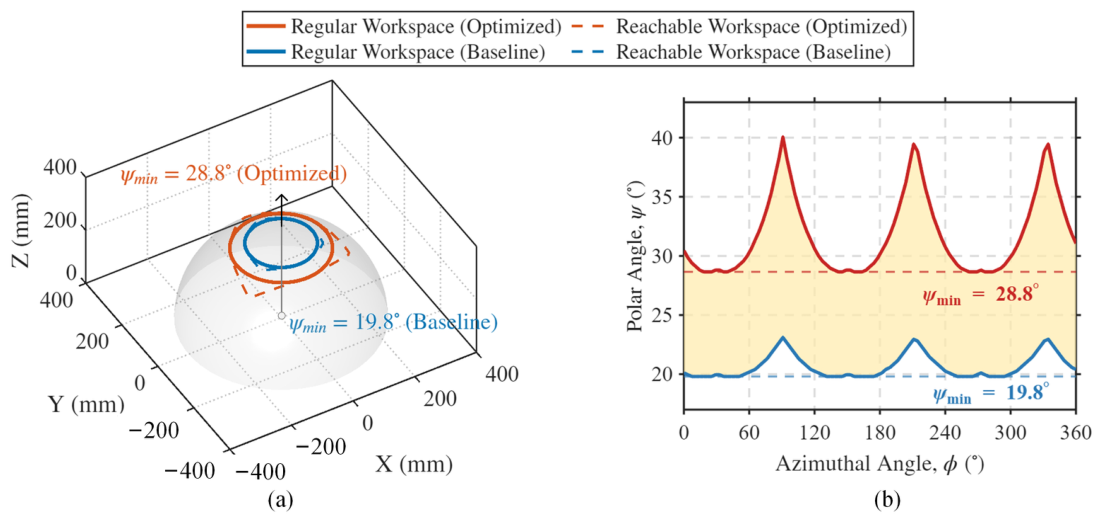
| WSI (deg) | 19.8 | 28.8 | +45.4% |
| GSI | 1.101 | 1.27 | +15.4% |
| GLI | 4.15 | 5.27 | +27.1% |
Disclaimer/Publisher’s Note: The statements, opinions and data contained in all publications are solely those of the individual author(s) and contributor(s) and not of MDPI and/or the editor(s). MDPI and/or the editor(s) disclaim responsibility for any injury to people or property resulting from any ideas, methods, instructions or products referred to in the content. |
© 2026 by the authors. Licensee MDPI, Basel, Switzerland. This article is an open access article distributed under the terms and conditions of the Creative Commons Attribution (CC BY) license.
Share and Cite
Zhang, Y.; Pan, Y.; Wang, L.; Cui, H.; Jiang, S.; Ding, L.; Chen, S.; Yue, Y.; Chen, B. Bio-Inspired Sensitivity-Weighted NSGA-II Optimization of a 6-UPS Parallel Loading Mechanism for Aero-Engine Pylon Vector-Force Loading. Biomimetics 2026, 11, 444. https://doi.org/10.3390/biomimetics11070444
Zhang Y, Pan Y, Wang L, Cui H, Jiang S, Ding L, Chen S, Yue Y, Chen B. Bio-Inspired Sensitivity-Weighted NSGA-II Optimization of a 6-UPS Parallel Loading Mechanism for Aero-Engine Pylon Vector-Force Loading. Biomimetics. 2026; 11(7):444. https://doi.org/10.3390/biomimetics11070444
Chicago/Turabian StyleZhang, You, Yang Pan, Lingyu Wang, Haoran Cui, Surong Jiang, Liping Ding, Shengli Chen, Yangshuo Yue, and Bai Chen. 2026. "Bio-Inspired Sensitivity-Weighted NSGA-II Optimization of a 6-UPS Parallel Loading Mechanism for Aero-Engine Pylon Vector-Force Loading" Biomimetics 11, no. 7: 444. https://doi.org/10.3390/biomimetics11070444
APA StyleZhang, Y., Pan, Y., Wang, L., Cui, H., Jiang, S., Ding, L., Chen, S., Yue, Y., & Chen, B. (2026). Bio-Inspired Sensitivity-Weighted NSGA-II Optimization of a 6-UPS Parallel Loading Mechanism for Aero-Engine Pylon Vector-Force Loading. Biomimetics, 11(7), 444. https://doi.org/10.3390/biomimetics11070444