
Bio-Inspired Liquid-Cooled Plates for Enhanced Local Hotspot Dissipation in Lithium-Ion Battery Thermal Management

Abstract
1. Introduction
2. Problem Description
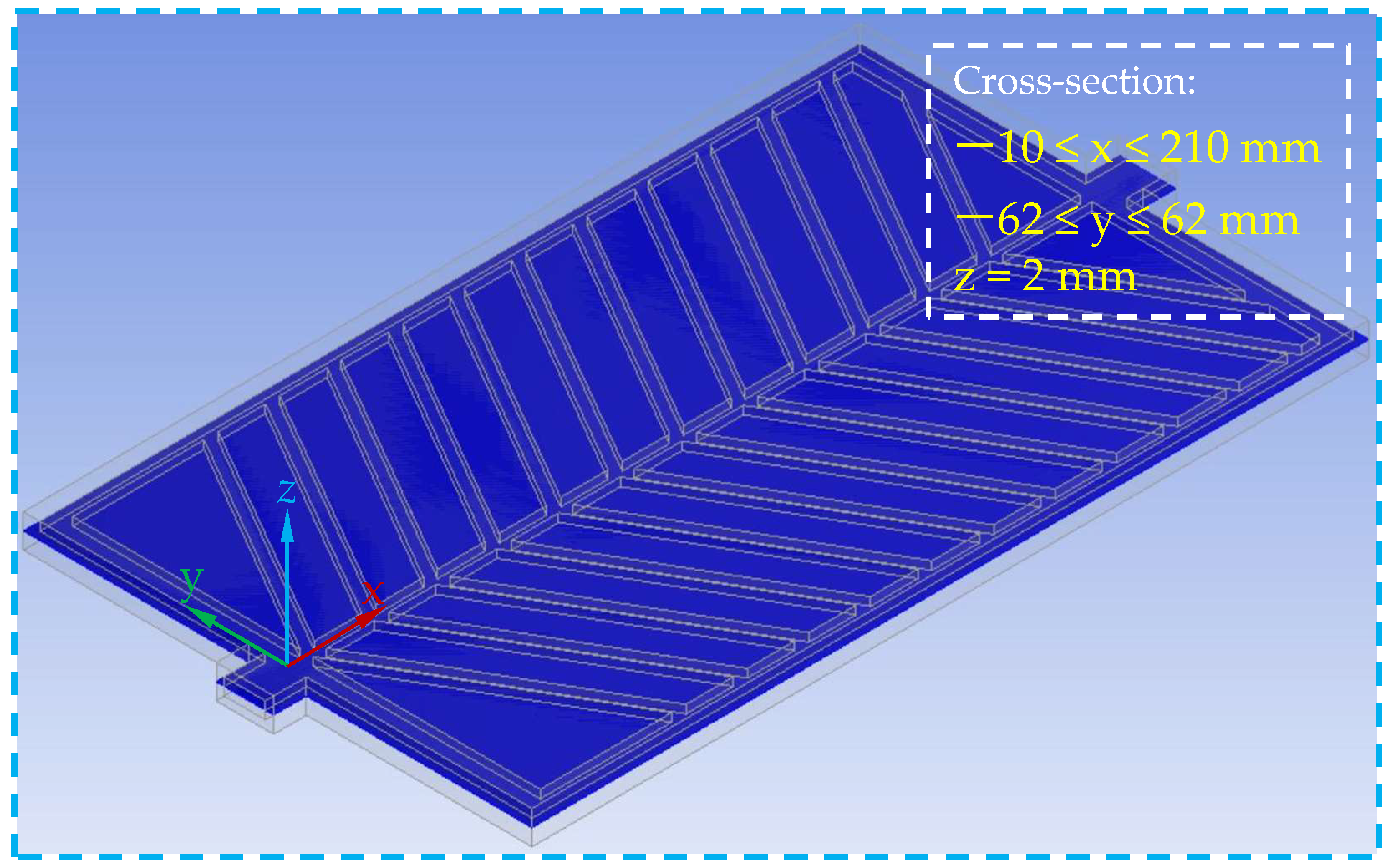
2.1. Physical Model
2.2. Governing Equations and Boundary Conditions
- Mass flow rate inlet:
- Pressure outlet:
- Constant heat flux surface of the LCP:
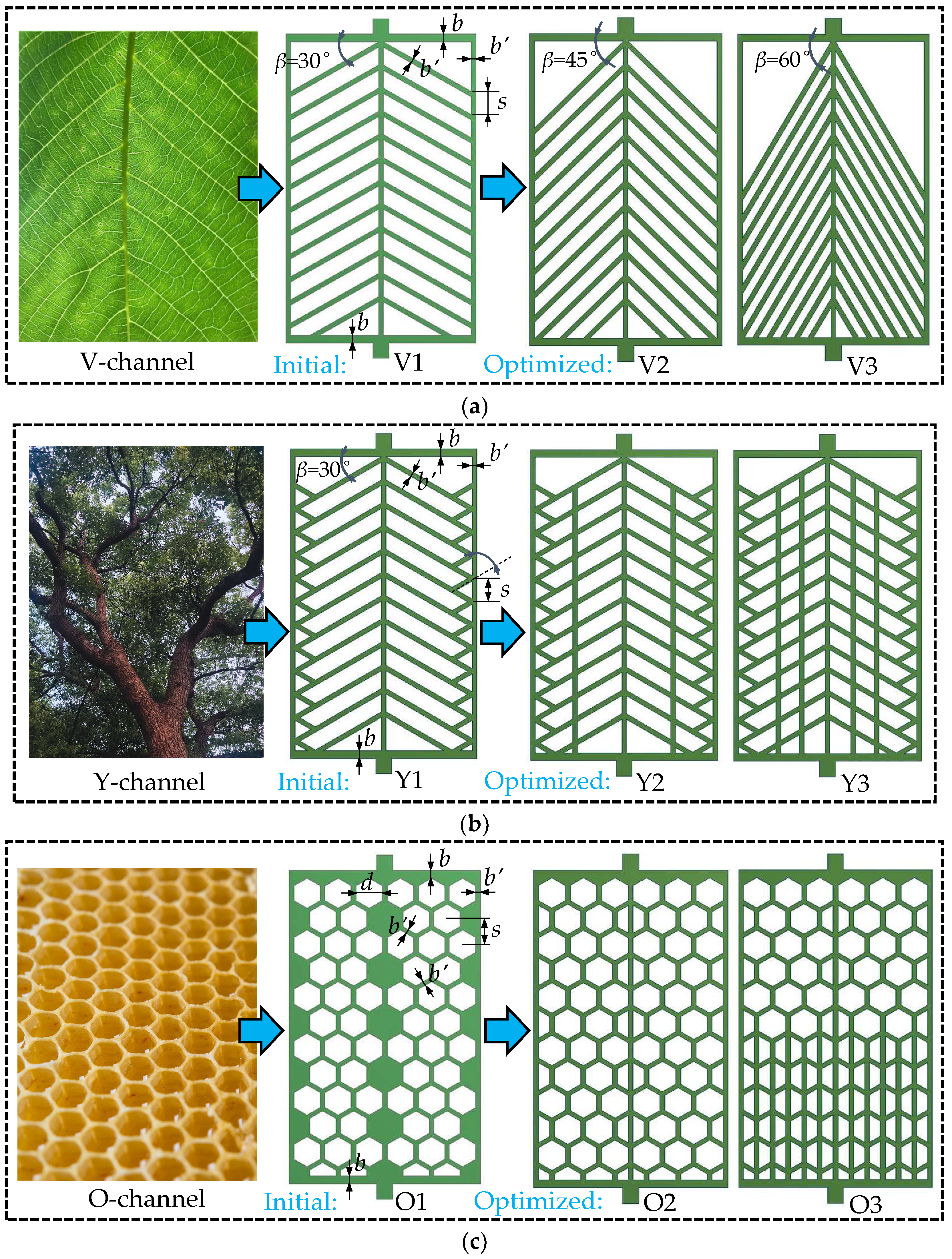
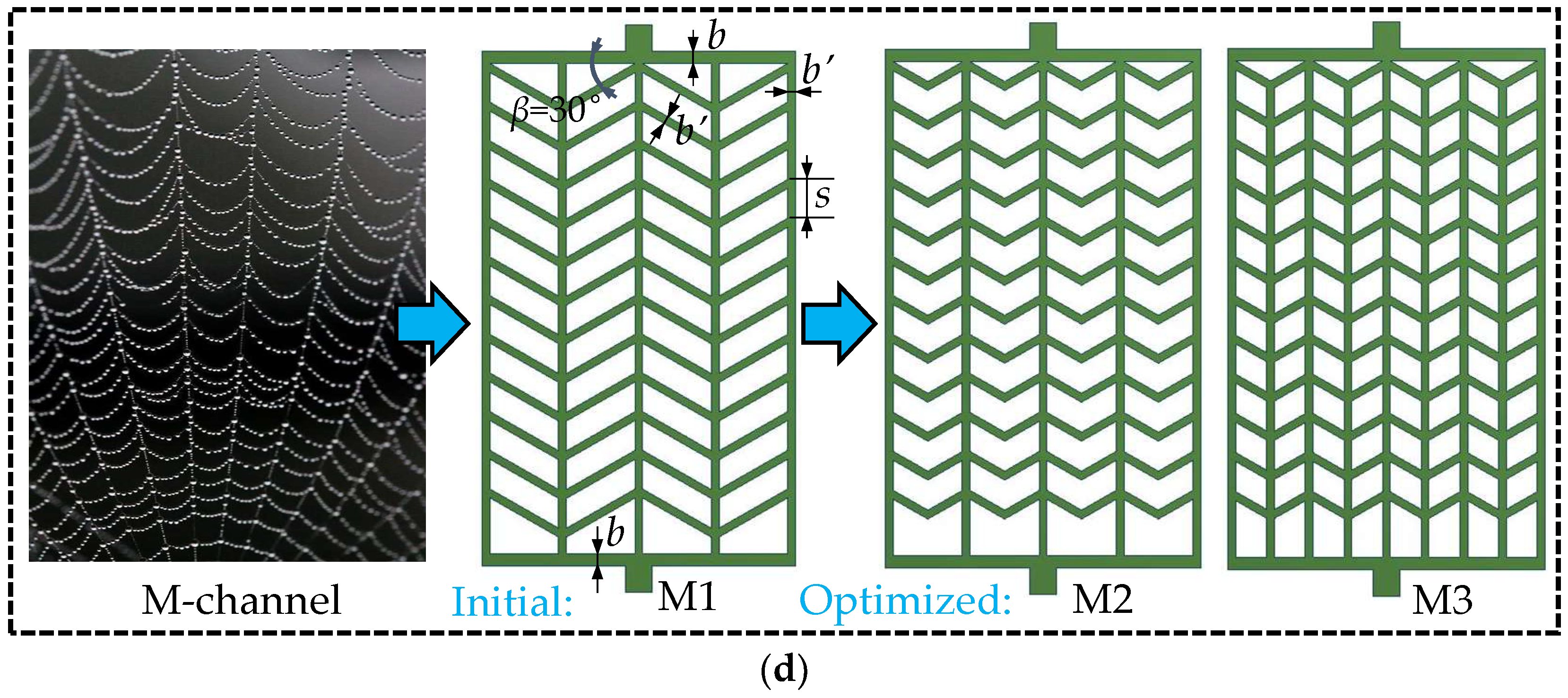
2.3. Parameter Definitions
3. Validation of Numerical Results
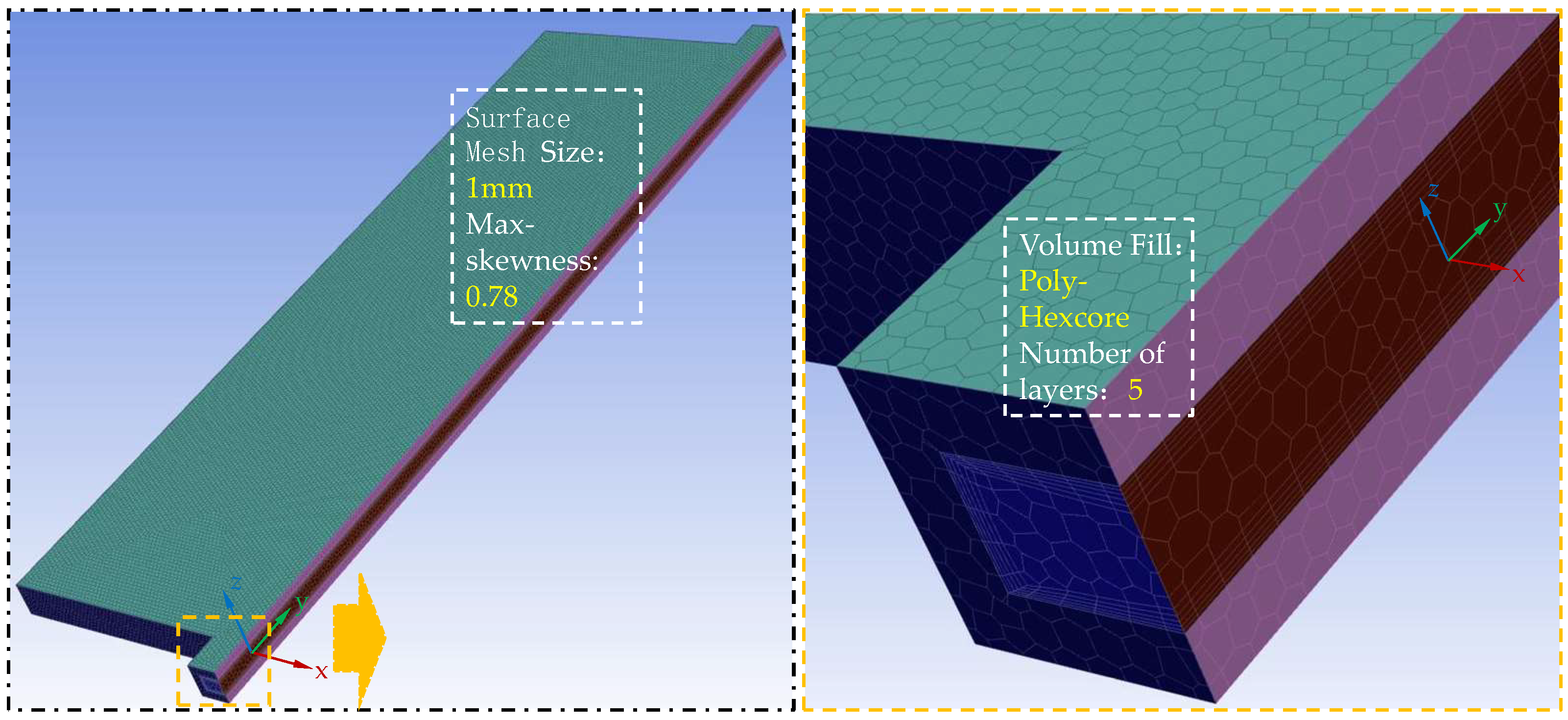
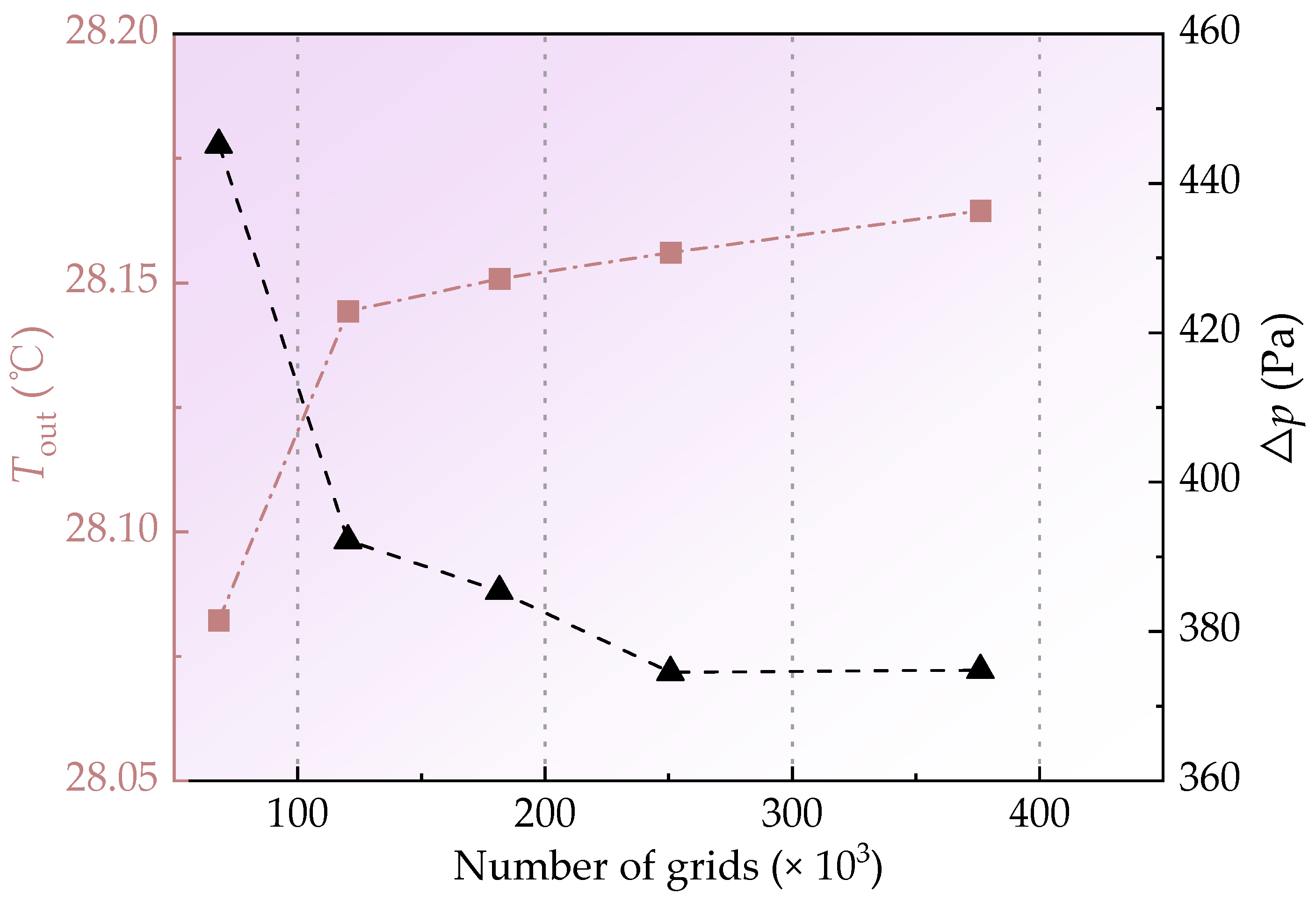
3.1. Grid Independence Test
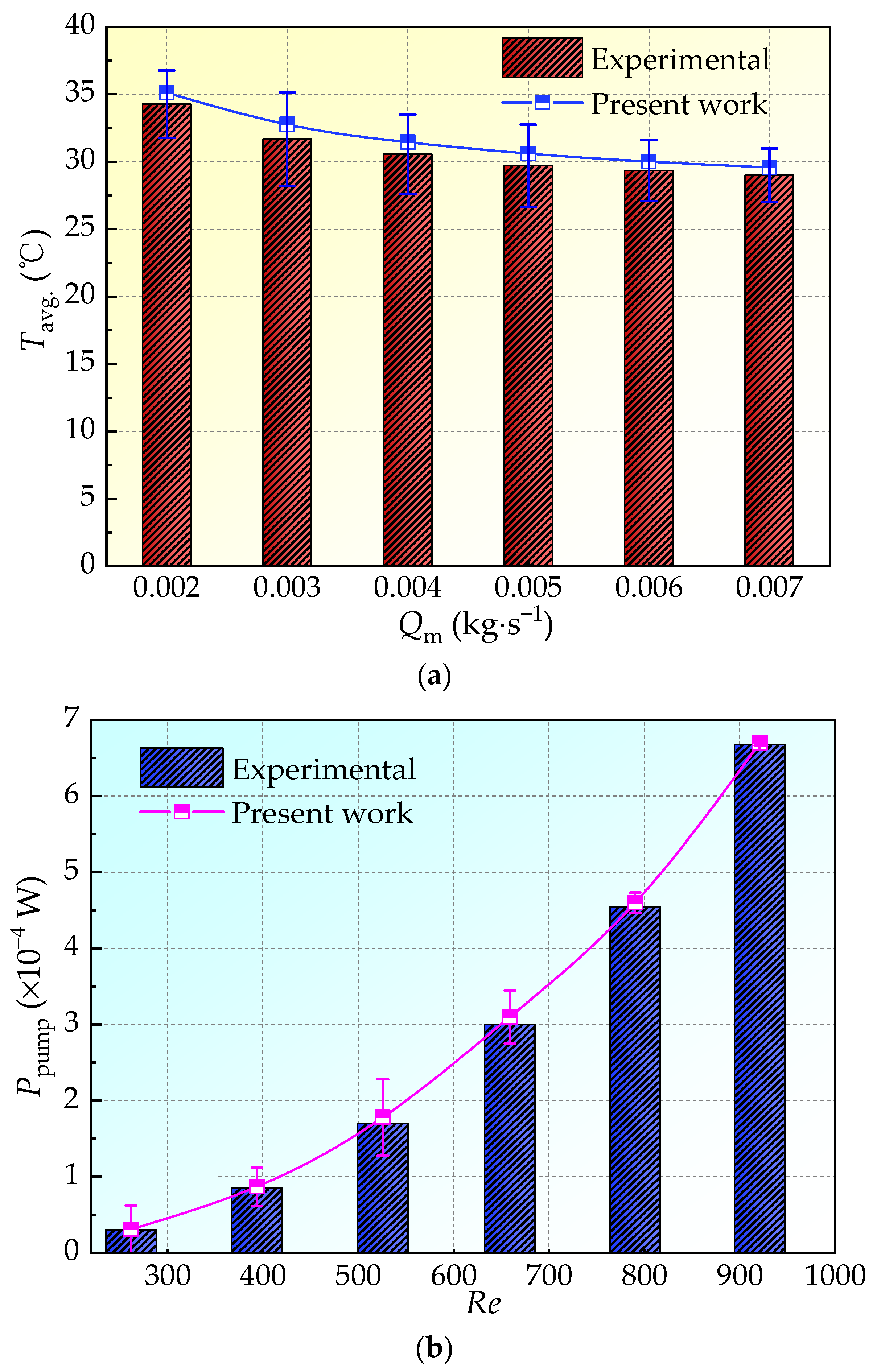
3.2. Model Validation
4. Results and Discussion
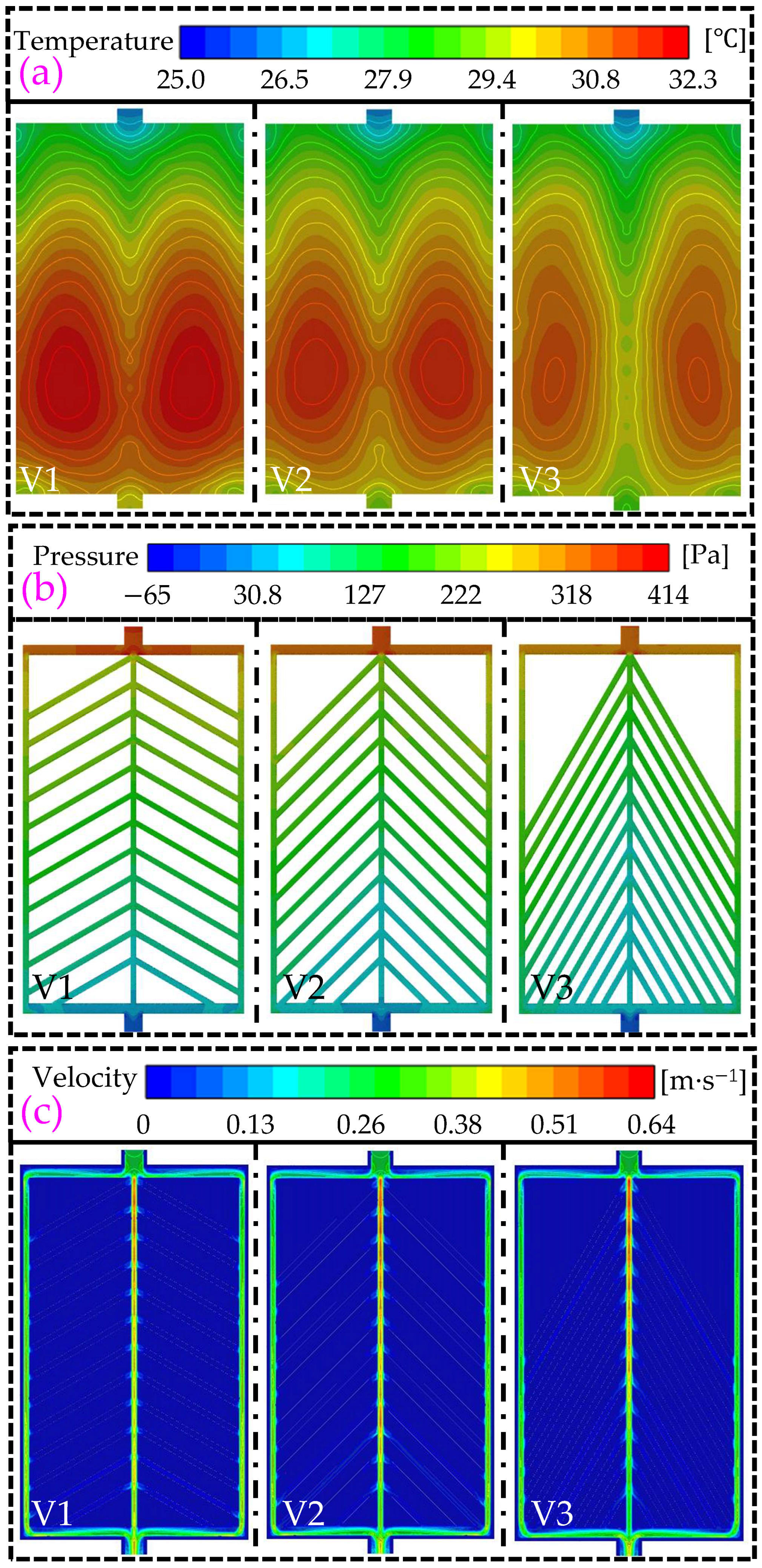
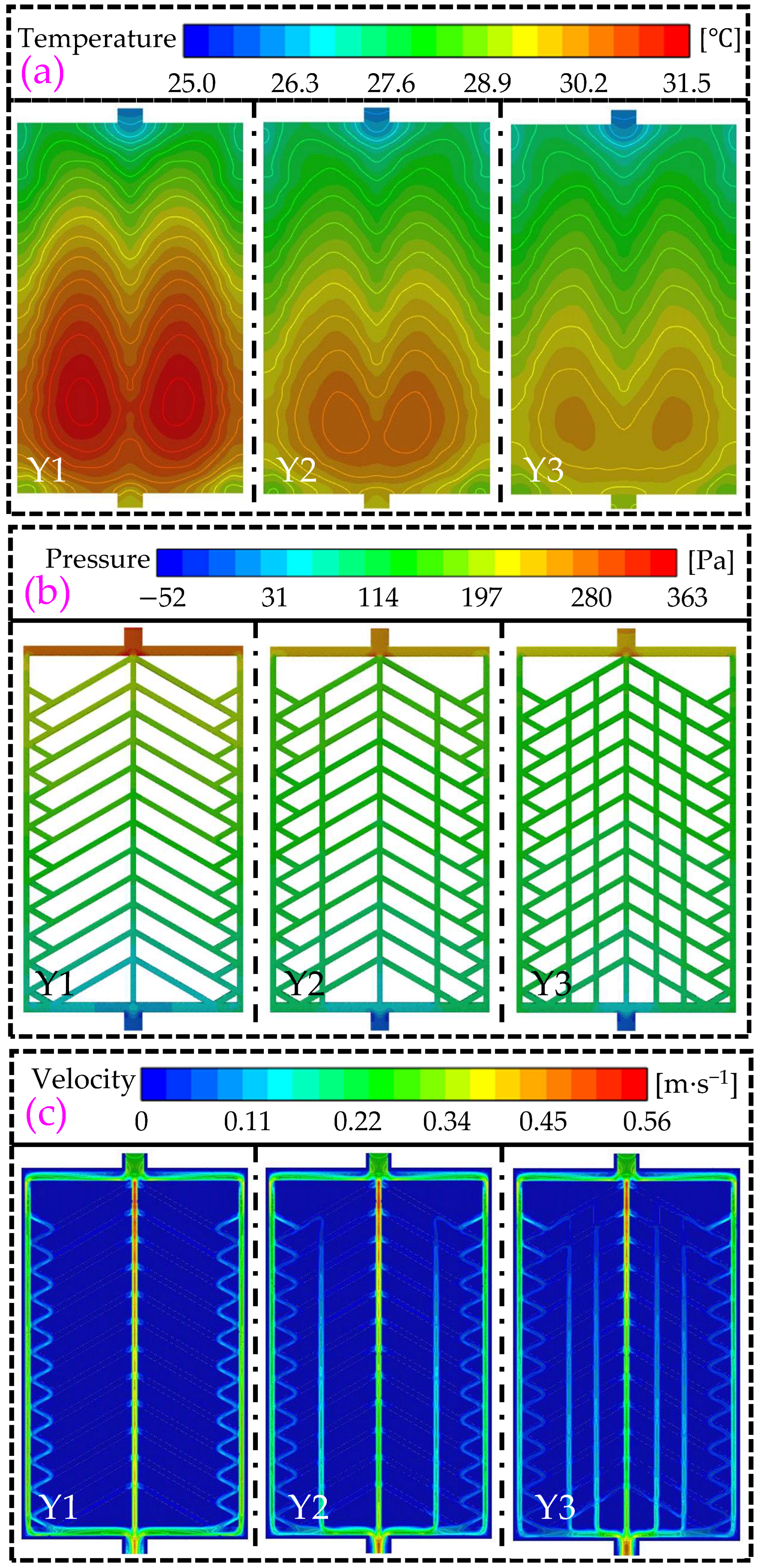
4.1. Numerical Results of Various BLCP Channels
4.2. Comparisons with Other LCP Channels
5. Conclusions
- (1)
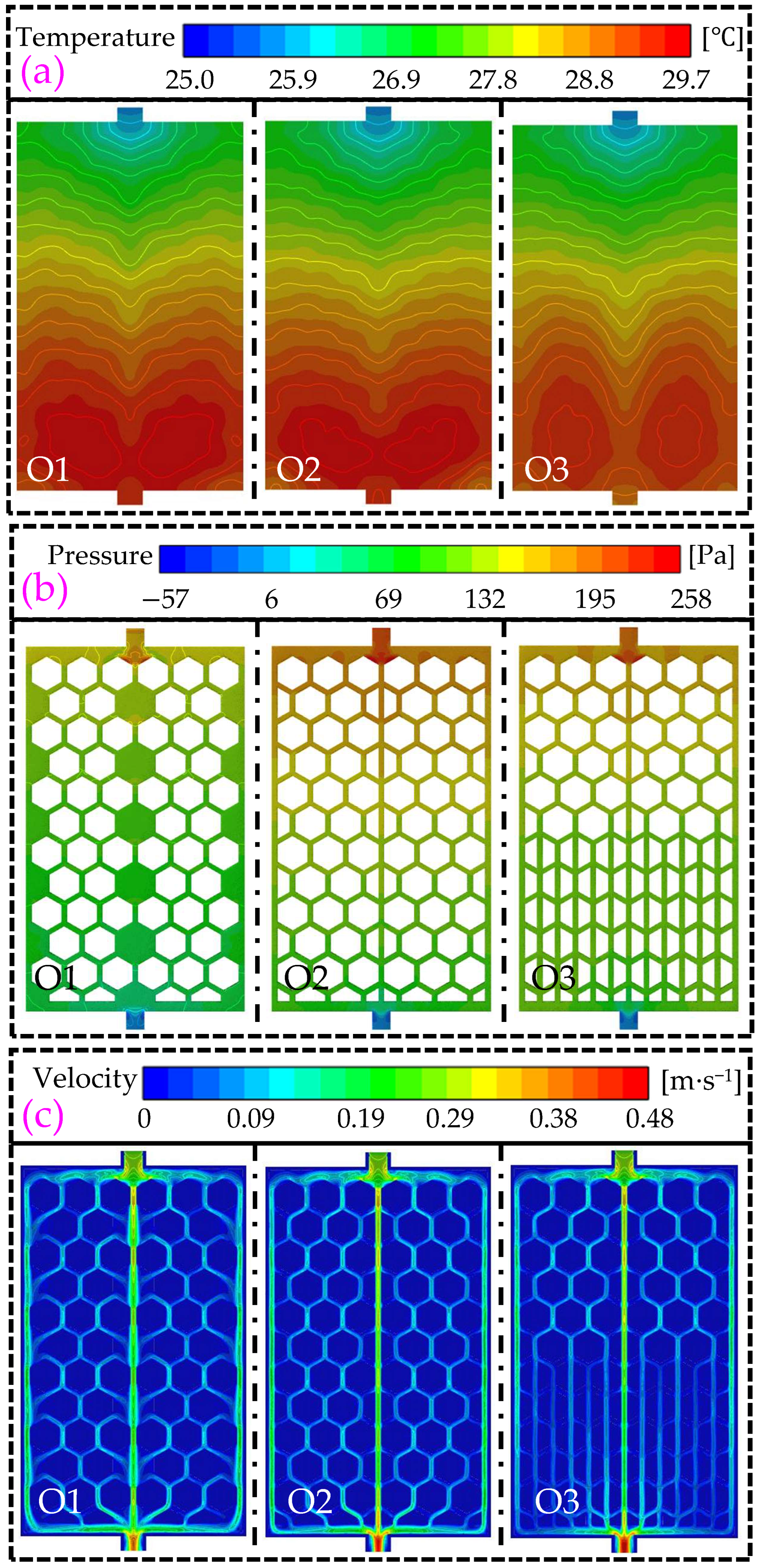
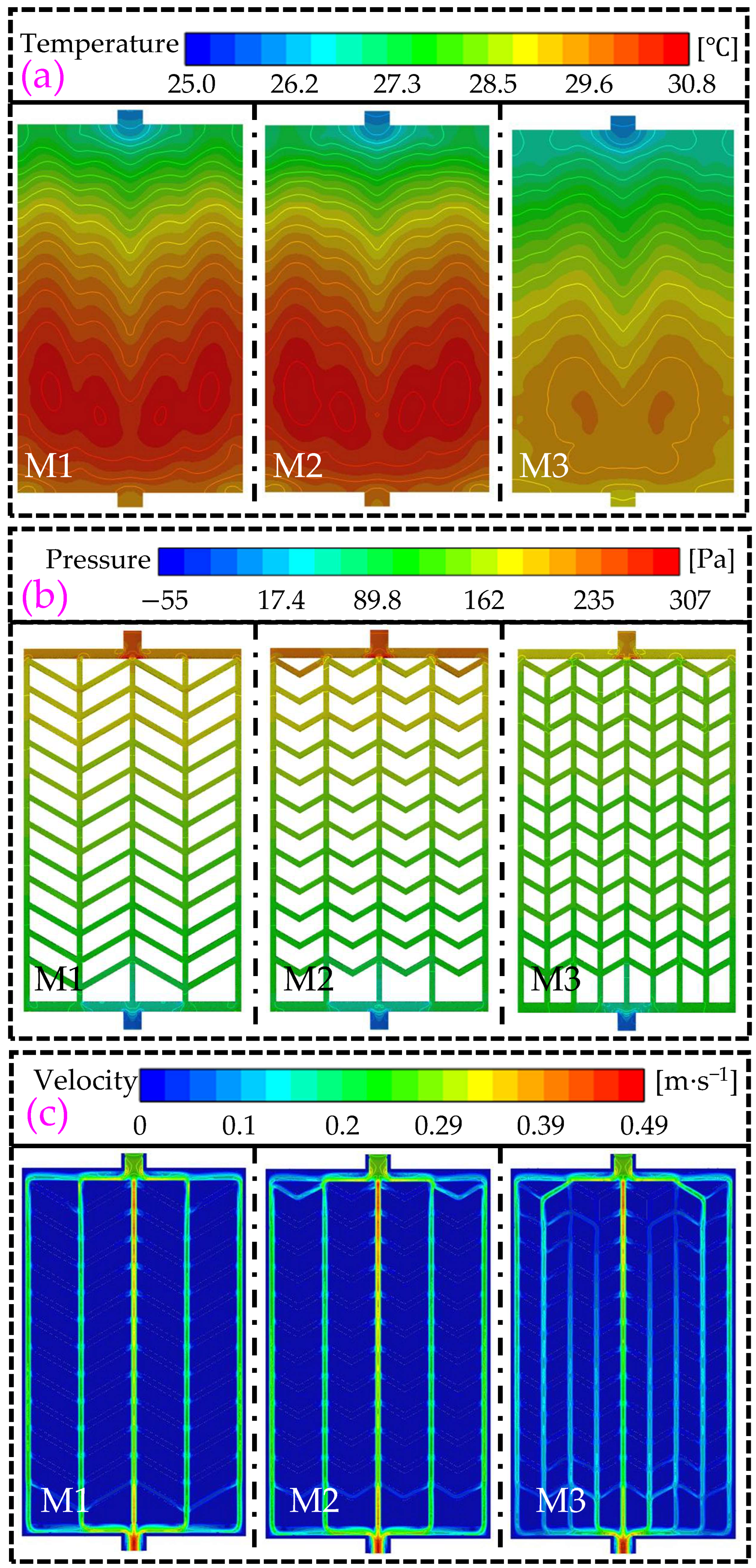
- Based on the flow and heat transfer contour diagrams, the O-channels obtained the best flow and heat transfer performance, followed by the Y-channels and M-channels, which demonstrated similar performance. The V-channels exhibited the lowest performance among all configurations. Notably, the key design feature of the optimal configurations—specifically, the longitudinal branch channels—exerts a significant influence on flow and heat transfer performance. Compared to the initial V1 channel, the optimized O3 channel demonstrates a decrease of 2.88 °C in maximum temperature, an increase of 0.0164 in the temperature uniformity index and a reduction of 162.76 Pa in pressure drop.
- (2)
- The enhanced heat transfer performance mechanism of the longitudinal branch channels eliminates flow zones with near-zero velocity, which effectively mitigates local hotspots. Furthermore, only the inclined branch channels can increase the pressure drop and maximum velocity, leading to degraded heat dissipation. However, the combination of longitudinal and inclined branch channels can redirect the flow direction and improve fluid mixing, thereby refining the thermohydraulic performance of the channel.
- (3)
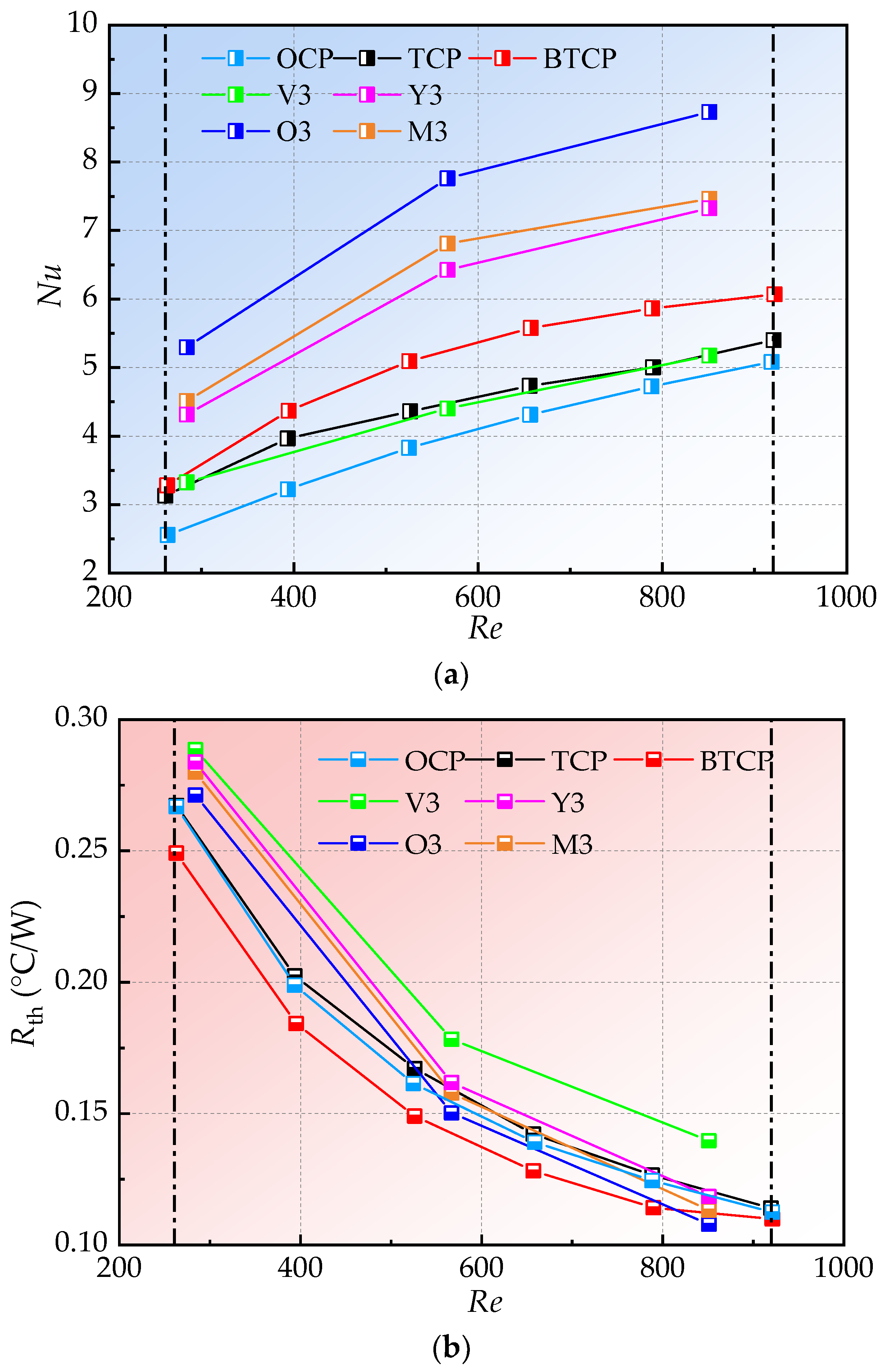
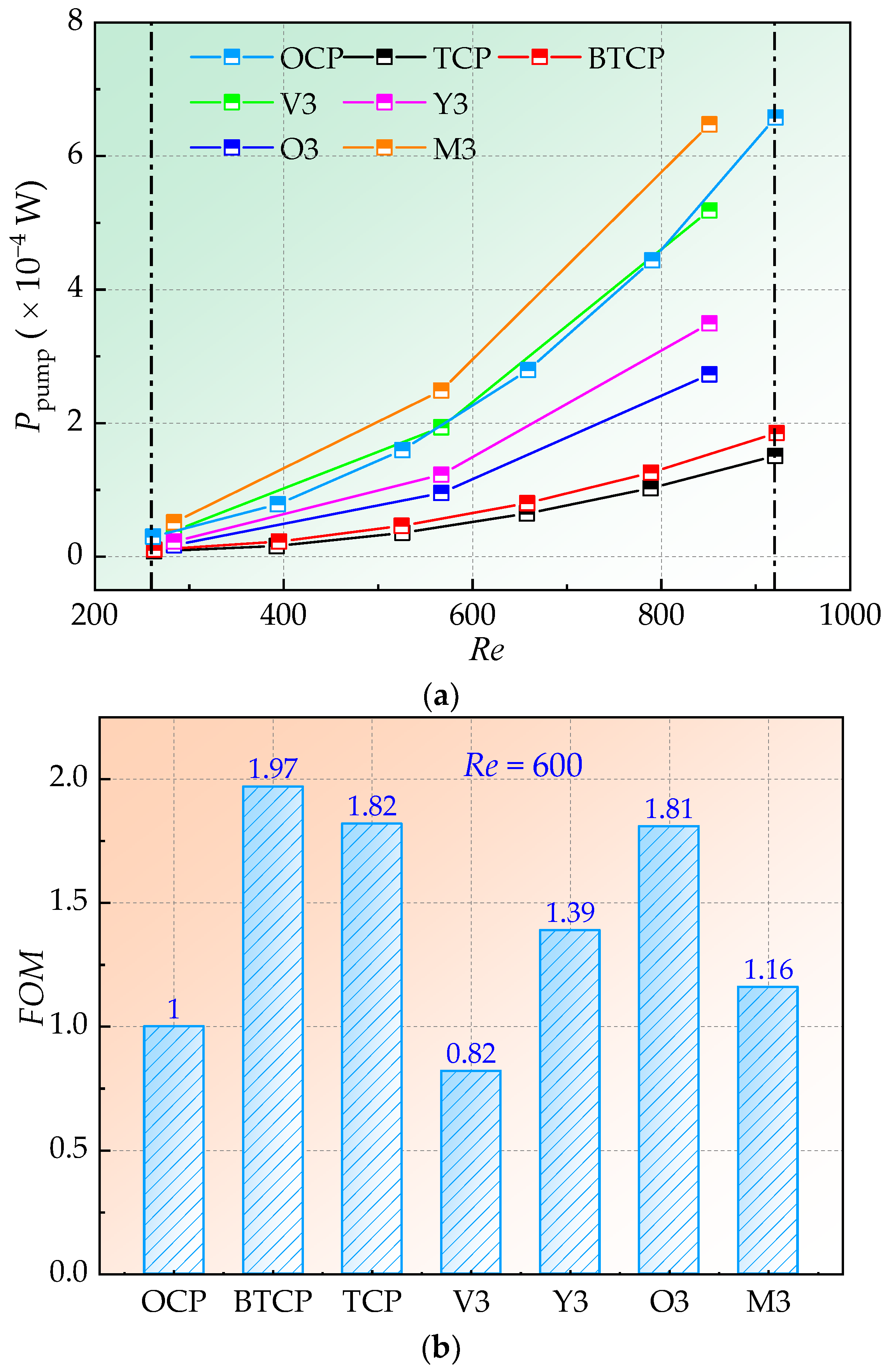
- At a larger Reynolds number range, compared to the OCP channel, which is the conventional channel widely used in existing liquid-cooled plate studies, the Nusselt number (Nu) and comprehensive evaluation metric (FOM) of the O3 channel increased by over 44% and 80%, respectively. Furthermore, the thermal resistance (Rth) and pump power (Ppump) decreased by over 2.6% and 50%, respectively. Additionally, when compared to other topology-optimized channels (TOC), the FOM of the O3 channel demonstrates comparable performance.
- (4)
- Overall, the present numerical results confirmed the existence of optimal bio-inspired configurations for LCP channels, although the study has some limitations. First, the numerical model was validated against experimental data from the literature rather than through dedicated experimental validation conducted by the authors; second, comparing the performance of different geometries in the design of LCP was restricted to laminar flow, constant fluid properties, and steady-state conditions. These limitations constrained the scope of the current findings and defined the research focus for future work on developing high-efficiency BLCP channels.
6. Future Research
Author Contributions
Funding
Institutional Review Board Statement
Informed Consent Statement
Data Availability Statement
Conflicts of Interest
References
- Zhang, X.; Li, Z.; Luo, L.; Fan, Y.; Du, Z. A review on thermal management of lithium-ion batteries for electric vehicles. Energy 2022, 238, 121652. [Google Scholar] [CrossRef]
- Collado, I.; Vázquez-López, A.; Fernández, M.; Vega, J.; Jiménez-Suárez, A.; Prolongo, S.G. Nanocomposites of sequential dual curing of thiol-epoxy systems with Fe3O4 nanoparticles for remote/in situ applications: Thermomechanical, shape memory, and induction heating properties. Adv. Compos. Hybrid Mater. 2025, 8, 199. [Google Scholar] [CrossRef]
- Yang, Z.; Wang, Y.; Yuan, X.; Ding, X.; Yang, G.; Yang, X.; Li, Q. Staggered counterflow rectangular microchannel liquid-cooled plate based on nanofluids for enhanced heat transfer performance. Int. J. Therm. Sci. 2026, 223, 110651. [Google Scholar] [CrossRef]
- Yang, Z.; Wang, Y.; Yuan, X.; Wang, X.; Yang, X.; Li, Q. Design and optimization of a staggered counter-current microchannel liquid-cooled plate. Appl. Therm. Eng. 2025, 279, 127891. [Google Scholar] [CrossRef]
- Xu, Q.; He, R.; Xu, Y.; Wang, X.; Bei, S.; Li, L. Influencing mechanisms and design principles of cross-sectional aspect ratio of mini-channels in liquid-cooled cold plate for thermal management of lithium-ion battery module. Appl. Therm. Eng. 2026, 296, 130786. [Google Scholar] [CrossRef]
- Ao, C.; Xu, B.; Chen, Z. Thermo-hydraulic performance of a diamond-silicon carbide microchannel heat sink with bio-inspired fractal fins and non-uniform aspect ratios. Int. J. Heat Fluid Flow 2026, 120, 110378. [Google Scholar] [CrossRef]
- Tian, Z.; Zhang, F.; Xie, Y.; Wang, Y. Research on the thermal performance of an innovative bionic four-leaf clover liquid cooling plate based on sine function. Int. J. Therm. Sci. 2026, 220, 110316. [Google Scholar] [CrossRef]
- Zhang, F.; Qian, C.; Wang, J.; Xuan, W.; Shi, J.; Chen, J.; Yu, B. Nature-inspired gradient triply periodic minimal surface cold plate: Coral wave structural design for enhancing electronics cooling. Int. J. Heat Mass Transf. 2026, 257, 128252. [Google Scholar] [CrossRef]
- Wang, Y.J.; Zhong, Z.Q.; Xu, N. Research on temperature uniformity of lithium-ion battery energy storage unit and energy consumption of thermal management system. Acta Energiae Solaris Sin. 2025, 46, 83–90. [Google Scholar] [CrossRef]
- Ni, T.; Si, J.; Li, F.; Pan, C.; Li, D.; Pan, M.; Guan, W. Performance analysis on the liquid cooling plate with the new Tesla valve capillary channel based on the fluid solid coupling simulation. Appl. Therm. Eng. 2023, 232, 120977. [Google Scholar] [CrossRef]
- Lin, X.W.; Shi, M.Y.; Zhou, Z.F.; Chen, B.; Lu, Y.J.; Jing, D.W. Multi-objective topology optimization design of liquid-based cooling plate for 280 Ah prismatic energy storage battery thermal management. Energy Convers. Manag. 2025, 325, 119440. [Google Scholar] [CrossRef]
- Wang, Z.; Liu, Z.; Zheng, K.; Cheng, K.; Wang, C.; Wang, Z.; Qin, J. Evaluation of phase change material-based heat storage liquid cold plate for thermal pulse resistance: Topology optimization, performance comparison, and characteristics research. Therm. Sci. Eng. Prog. 2025, 64, 103785. [Google Scholar] [CrossRef]
- Ren, J.; Qiu, X.; Wang, S. A liquid cooling plate based on topology optimization and bionics simplified design for battery cooling. J. Energy Storage 2024, 102, 114171. [Google Scholar] [CrossRef]
- Wang, M.L.; Jin, H.; Zheng, L.J.; Kang, H.W. Exploratory analysis of a liquid-cooled cold plate thermal management system using dual-objective topology optimization. Int. Commun. Heat Mass 2026, 172, 110315. [Google Scholar] [CrossRef]
- Li, Y.; Roux, S.; Castelain, C.; Biotteau, G.; Luo, L.; Fan, Y. Numerical and experimental investigation of optimized heat sink designs for liquid cooling of a heterogeneous heating surface with multiple heat sources. Int. J. Therm. Sci. 2025, 209, 109540. [Google Scholar] [CrossRef]
- Ren, F.S.; Jiang, Y.H.; Yang, H. Topology optimization design on cooling plates and cooling performance analysis of power battery. Refrig. Air-Cond. 2025, 25, 78–85. [Google Scholar] [CrossRef]
- Sun, C.; Wang, W.; Tian, X.W.; Zeng, X.; Qian, S.H.; Cai, Y.Z.; Wang, X.H. Thermal design of composite cold plates by topology optimization. Int. J. Mech. Sci. 2023, 259, 108594. [Google Scholar] [CrossRef]
- Wang, Z.; Yang, S.; Xie, M.; Wang, X.; Xie, Q.; Shuai, Y. Bioinspired Janus Microfluidic Heat Sink for Ultra-Efficient CPU Cooling via Millisecond-Scale Bubble Transport. Adv. Funct. Mater. 2025, 36, e24703. [Google Scholar] [CrossRef]
- Li, H.; Ren, J.; Yin, D.; Lu, G.; Du, C.; Jin, X.; Jia, Y. Effects of inclination angle and heat power on heat transfer behavior of flat heat pipe with bionic grading microchannels. Appl. Therm. Eng. 2022, 206, 118079. [Google Scholar] [CrossRef]
- Luo, J.; Qi, C.; Li, Y. Research progress of the application of microchannels, bionic structures and nanofluids in the thermal management of electronic components. J. Therm. Anal. Calorim. 2026, 151, 2063–2084. [Google Scholar] [CrossRef]
- Zhan, S.; Liang, L.; Li, Z.; Yu, C.; Wang, F. Topology optimization of liquid cooling plate for lithium battery heat dissipation based on a bionic leaf-vein structure. Int. J. Heat Mass Transf. 2024, 231, 125898. [Google Scholar] [CrossRef]
- Liu, F.; Chen, Y.; Qin, W.; Li, J. Optimal design of liquid cooling structure with bionic leaf vein branch channel for power battery. Appl. Therm. Eng. 2023, 218, 119283. [Google Scholar] [CrossRef]
- Chai, R.; Deng, X.; Huang, C.; Qi, M.; Peng, Y.; Huang, Y. Optimizing biologically inspired leaf-shaped flow fields for enhanced proton exchange membrane fuel cell performance. Renew. Energ. 2026, 265, 125640. [Google Scholar] [CrossRef]
- Xu, X.; Zhang, T.; Gao, Q.; Han, Z.; Huang, H.; Liu, X.; Chen, H. Bionic optimization for cooling structure of GaN HEMTs inspired by leaf vein structure. Case Stud. Therm. Eng. 2024, 53, 103945. [Google Scholar] [CrossRef]
- Alnaqi, A.A. Numerical analysis of pressure drop and heat transfer of a Non-Newtonian nanofluids in a Li-ion battery thermal management system (BTMS) using bionic geometries. J. Energy Storage 2022, 45, 103670. [Google Scholar] [CrossRef]
- Zhou, T.; Li, P.; Lan, X.; Shao, X.; Liu, H.; Xie, J.; Duan, Z.; Shen, H. A novel design of biomimetic snowflake heat sink by topology optimization verified by experiments. Int. J. Heat Mass Transf. 2025, 116, 109909. [Google Scholar] [CrossRef]
- Wang, Y.; Sun, L.; Qi, C.; Yu, J.; Zhang, W. Topology optimization of a novel bionic fractal microchannel applied in thermal management of electronic components. Asia-Pac. J. Chem. Eng. 2023, 18, e2900. [Google Scholar] [CrossRef]
- Qi, C.; Sun, L.; Wang, Y.; Wang, C.; Chen, G. Thermo-hydraulic performance of nanofluids in a bionic fractal microchannel heat sink with traveling-wave fins. Korean J. Chem. Eng. 2021, 38, 1592–1607. [Google Scholar] [CrossRef]
- Duan, Z.; Xie, G.; Shen, H.; Wang, C.C. Thermal performance and entropy generation of single-layer and double-layer constructal Y-shaped bionic microchannel heat sinks. Int. J. Energy Res. 2021, 45, 9449–9462. [Google Scholar] [CrossRef]
- Wang, Z.; Wang, Y.; Yuan, X.; Zhan, H. Design and thermal management of proton exchange membrane fuel cells with biomimetic spider web cooling. Appl. Therm. Eng. 2026, 289, 129796. [Google Scholar] [CrossRef]
- Wang, H.; Sun, J.; Fei, Q.; Fan, X.; Qiu, Y.; Wang, C. Multi-objective intelligent optimization design of a bioinspired spider-web microchannel heat sink. Manuf. Rev. 2026, 13, 3. [Google Scholar] [CrossRef] [PubMed]
- Han, Z.; Wang, J.; Liu, H.; Shao, X.; Ge, X.; Qiao, J.; Fan, Y. Numerical and experimental analysis of a novel bionic petal-type heat exchanger. Int. Commun. Heat Mass 2026, 172, 110369. [Google Scholar] [CrossRef]
- Zhang, B.; Guo, X.; Tian, H.; Zhang, M.; Li, J.; Song, K. Design of battery channel structure for special vehicles based on liquid cooling. J. Zhengzhou Univ. (Eng. Sci.) 2025, 47, 134–142. [Google Scholar] [CrossRef]
- Fan, Y.; Wang, Z.; Fu, T.; Wu, H. Numerical investigation on lithium-ion battery thermal management utilizing a novel tree-like channel liquid cooling plate exchanger. Int. J. Heat Mass Transf. 2022, 183, 122143. [Google Scholar] [CrossRef]
- Wang, C.; Zhang, F.; Zhao, Q.; Xin, L.; Zhao, H. Whale optimization algorithm for enhancing thermal performance of bionic lemon-slice microchannel-fin composite heat sink. Int. J. Heat Fluid Flow 2026, 120, 110335. [Google Scholar] [CrossRef]
- Fan, X.; Meng, C.; Yang, Y.; Lin, J.; Li, W.; Zhao, Y.; Xie, S.; Jiang, C. Numerical optimization of the cooling effect of a bionic fishbone channel liquid cooling plate for a large prismatic lithium-ion battery pack with high discharge rate. J. Energy Storage 2023, 72, 108239. [Google Scholar] [CrossRef]
- Wang, K.; Shi, Y.; Chen, J.; Dai, Y. Synergistic Effects of Biomimetic Structures on Heat Transfer Enhancement and Flow Resistance Reduction. Biomimetics 2026, 11, 198. [Google Scholar] [CrossRef] [PubMed]
- Tang, J.; Qi, C.; Ding, Z.; Afrand, M.; Yan, Y. Thermo-hydraulic performance of nanofluids in a bionic heat sink. Int. Commun. Heat Mass 2021, 127, 105492. [Google Scholar] [CrossRef]
- Collado, I.; V’azquez-L’opez, A.; Jim’enez-Su’arez, A.; Prolongo, S.G. Multifunctional sequential dual curing electroactive graphene Nanocomposites: Self-heating, de-icing and in-situ curing. Compos. Part B 2025, 307, 112911. [Google Scholar] [CrossRef]
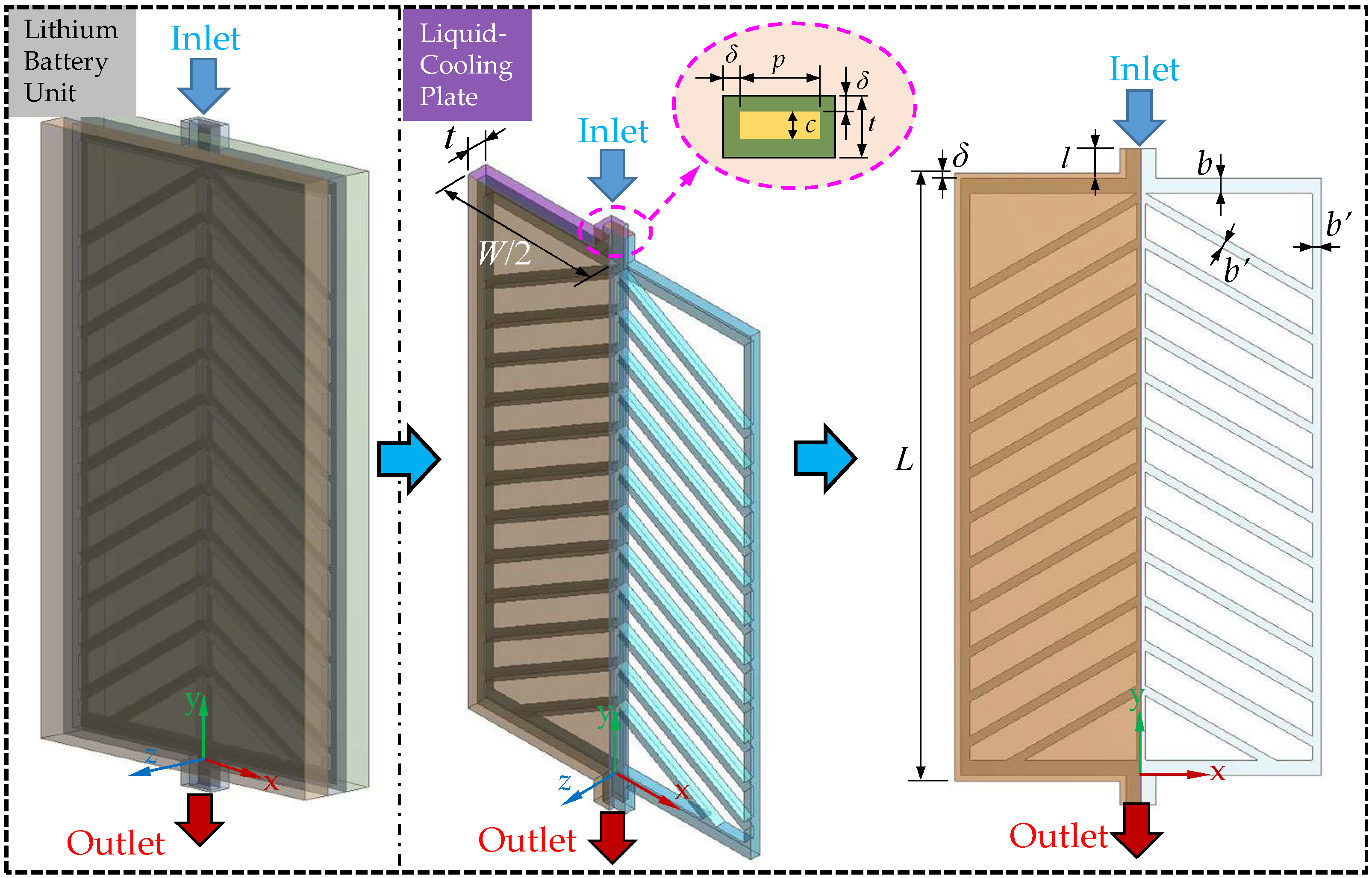



| Parameters | Symbol | Value/mm |
|---|---|---|
| LCP length | L | 200 |
| LCP width | W | 124 |
| LCP thickness | t | 8 |
| Distributed channel width | b | 5 |
| Branch channel width | B′ | 3 |
| Shell thickness | δ | 2 |
| Cross-sectional length | p | 10 |
| Cross-sectional width | c | 4 |
| Parameters | Symbol | Value/mm | Type |
|---|---|---|---|
| Spacing | s | 15 | V1-3; Y1-3; M1-3 |
| 16.5 | O1-3 | ||
| Inclination angle | β | 30° | V1; Y1-3; M1-3 |
| 45° | V2 | ||
| 60° | V3 | ||
| Hexagonal length | d | 8.5 | O1-3 |
| Type | Tmax/°C | TUI × 102 | Vmax/m/s | ||
|---|---|---|---|---|---|
| V-channel | V1 | 32.28 | 94.57 | 374.87 | 0.64 |
| V2 | 31.91 | 95.06 | 363.20 | 0.61 | |
| V3 | 31.44 | 96.00 | 343.66 | 0.58 | |
| Y-channel | Y1 | 31.41 | 95.96 | 326.86 | 0.56 |
| Y2 | 30.51 | 95.79 | 280.37 | 0.56 | |
| Y3 | 29.95 | 96.35 | 267.47 | 0.55 | |
| O-channel | O1 | 29.68 | 95.72 | 187.38 | 0.40 |
| O2 | 29.60 | 95.56 | 226.20 | 0.47 | |
| O3 | 29.40 | 96.21 | 212.11 | 0.46 | |
| M-channel | M1 | 30.69 | 94.55 | 265.67 | 0.47 |
| M2 | 30.76 | 94.98 | 268.47 | 0.49 | |
| M3 | 29.68 | 95.58 | 227.75 | 0.46 |
Disclaimer/Publisher’s Note: The statements, opinions and data contained in all publications are solely those of the individual author(s) and contributor(s) and not of MDPI and/or the editor(s). MDPI and/or the editor(s) disclaim responsibility for any injury to people or property resulting from any ideas, methods, instructions or products referred to in the content. |
© 2026 by the authors. Licensee MDPI, Basel, Switzerland. This article is an open access article distributed under the terms and conditions of the Creative Commons Attribution (CC BY) license.
Share and Cite
Yang, X.; Wang, Z.; Gu, X.; Liu, Y. Bio-Inspired Liquid-Cooled Plates for Enhanced Local Hotspot Dissipation in Lithium-Ion Battery Thermal Management. Biomimetics 2026, 11, 432. https://doi.org/10.3390/biomimetics11060432
Yang X, Wang Z, Gu X, Liu Y. Bio-Inspired Liquid-Cooled Plates for Enhanced Local Hotspot Dissipation in Lithium-Ion Battery Thermal Management. Biomimetics. 2026; 11(6):432. https://doi.org/10.3390/biomimetics11060432
Chicago/Turabian StyleYang, Xuguang, Zhihui Wang, Xiaohua Gu, and Yan Liu. 2026. "Bio-Inspired Liquid-Cooled Plates for Enhanced Local Hotspot Dissipation in Lithium-Ion Battery Thermal Management" Biomimetics 11, no. 6: 432. https://doi.org/10.3390/biomimetics11060432
APA StyleYang, X., Wang, Z., Gu, X., & Liu, Y. (2026). Bio-Inspired Liquid-Cooled Plates for Enhanced Local Hotspot Dissipation in Lithium-Ion Battery Thermal Management. Biomimetics, 11(6), 432. https://doi.org/10.3390/biomimetics11060432