To comprehensively verify the optimization performance of the reverse mutation for optimization learning artificial lemming algorithm (RMALA) proposed in this paper, a systematic simulation experiment is designed, which is carried out from two dimensions: benchmark test function verification and engineering case application. The experiment selects the Parrot Optimizer (PO) [
50], Black-winged Kite Algorithm (BKA) [
51], Dung Beetle Optimizer (DBO) [
52], Hippopotamus Optimization Algorithm (HO) [
53], Osprey Optimization Algorithm (OOA) [
54], and standard artificial lemming algorithm (ALA) as comparison algorithms to conduct a comprehensive performance comparison with the RMALA. The simulation experiment is divided into two parts: the first part is based on the CEC2017 and CEC2022 benchmark test functions, and quantitatively evaluates the comprehensive optimization ability of the RMALA based on three core dimensions: optimization accuracy, convergence speed, and stability. The second part applies the RMALA to three typical engineering constrained optimization problems, including welded beam design, cantilever beam design, and pressure vessel design, and verifies the feasibility and superiority of the algorithm in engineering practice by solving the actual engineering models. All experiments are completed in the same software and hardware environment, and the experimental variables are strictly controlled to ensure the fairness, reliability, and comparability of the experimental results.
4.2. Simulation Experiment Based on CEC2017 Benchmark Test Functions
The CEC2017 benchmark test function set includes 30 standard test functions, covering three categories [
55]: unimodal functions, multimodal functions, and hybrid functions, which can comprehensively test the global exploration ability, local exploitation ability, and the ability to jump out of local optimum of the algorithm, and is a commonly used standard test set for verifying the performance of optimization algorithms. The dimension D of all test functions is set to 30 dimensions, and the search range and theoretical optimal value of the functions refer to the CEC2017 standard document to ensure the standardization of the experiment.
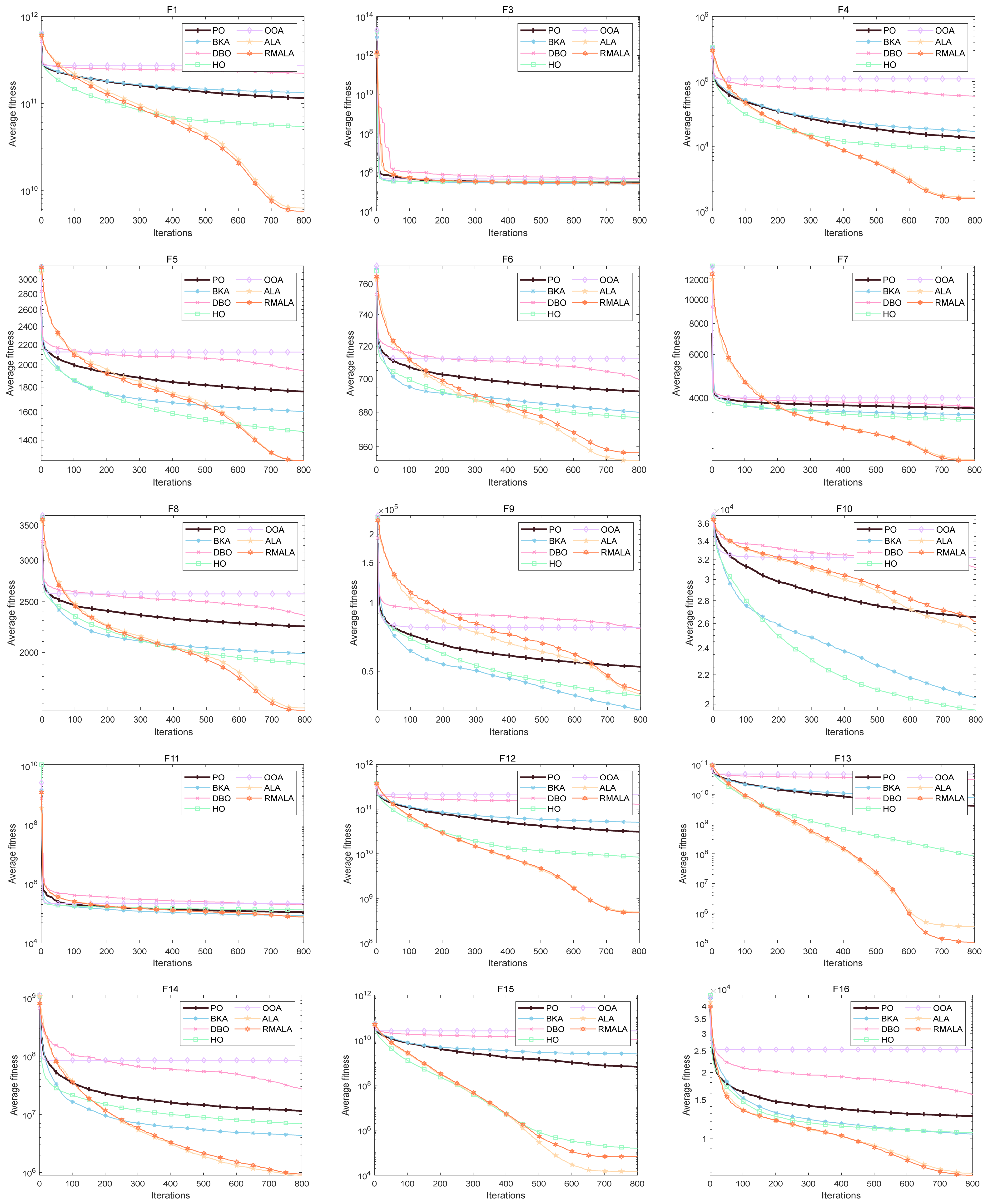
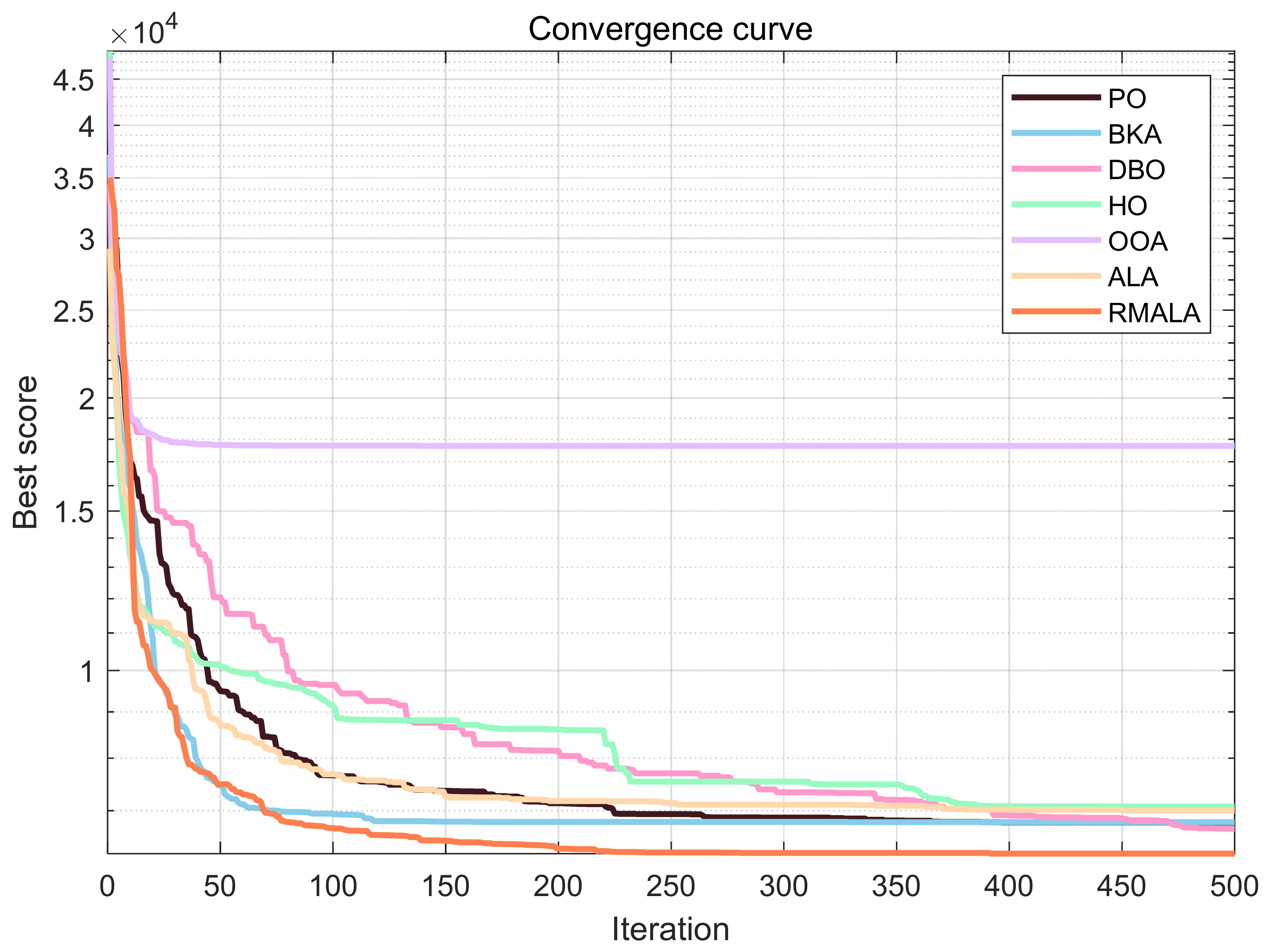
The RMALA and the six comparison algorithms, including PO, BKA, DBO, HO, OOA, and ALA, are run independently 30 times on the above CEC2017 test functions, and the performance of each algorithm is counted according to the preset evaluation indicators. Combined with the statistical results, the performance of the RMALA is analyzed in detail using three dimensions: optimization accuracy, stability and robustness, and convergence speed, and the superiority of the RMALA is intuitively displayed and combined with the convergence curve.
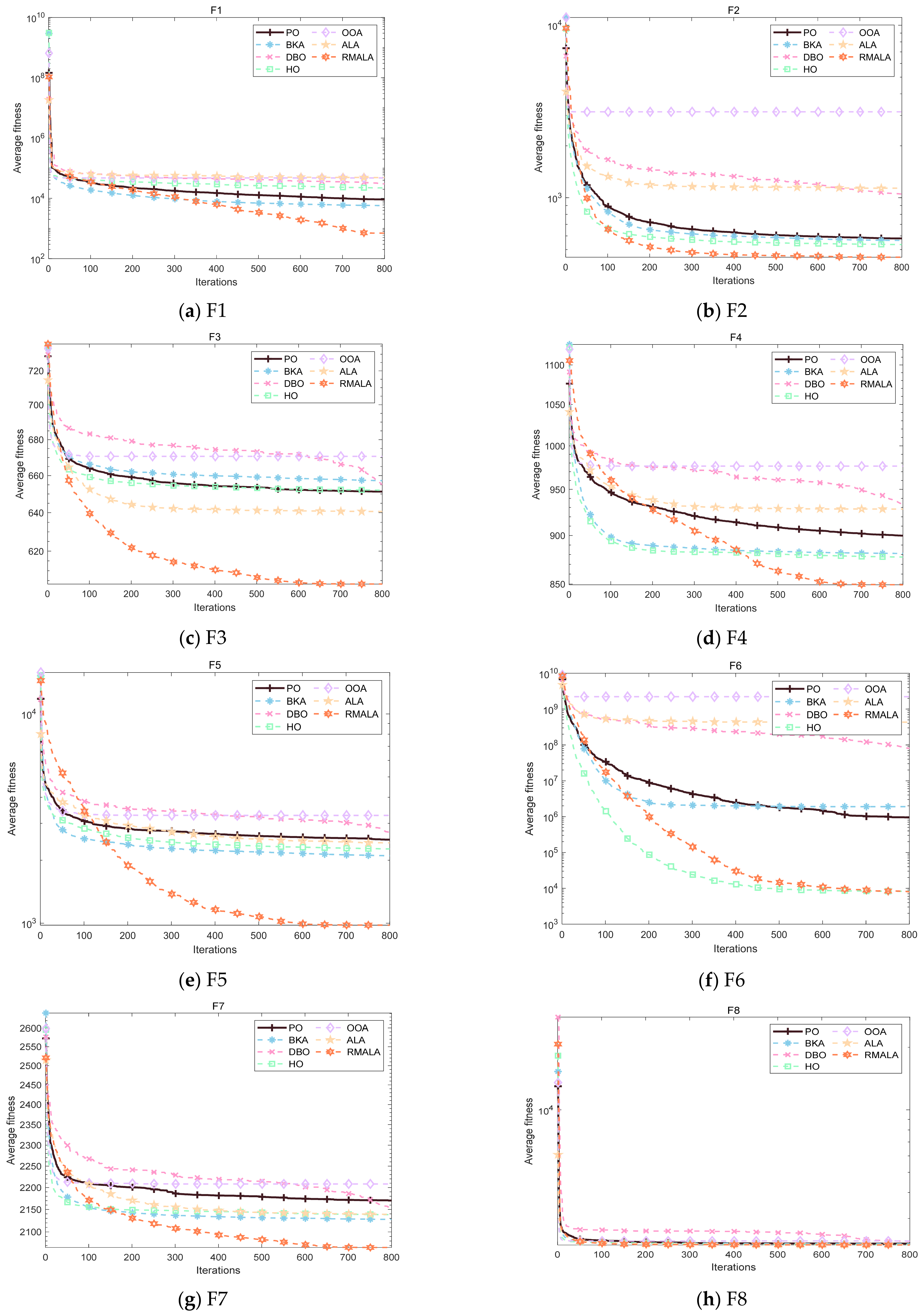
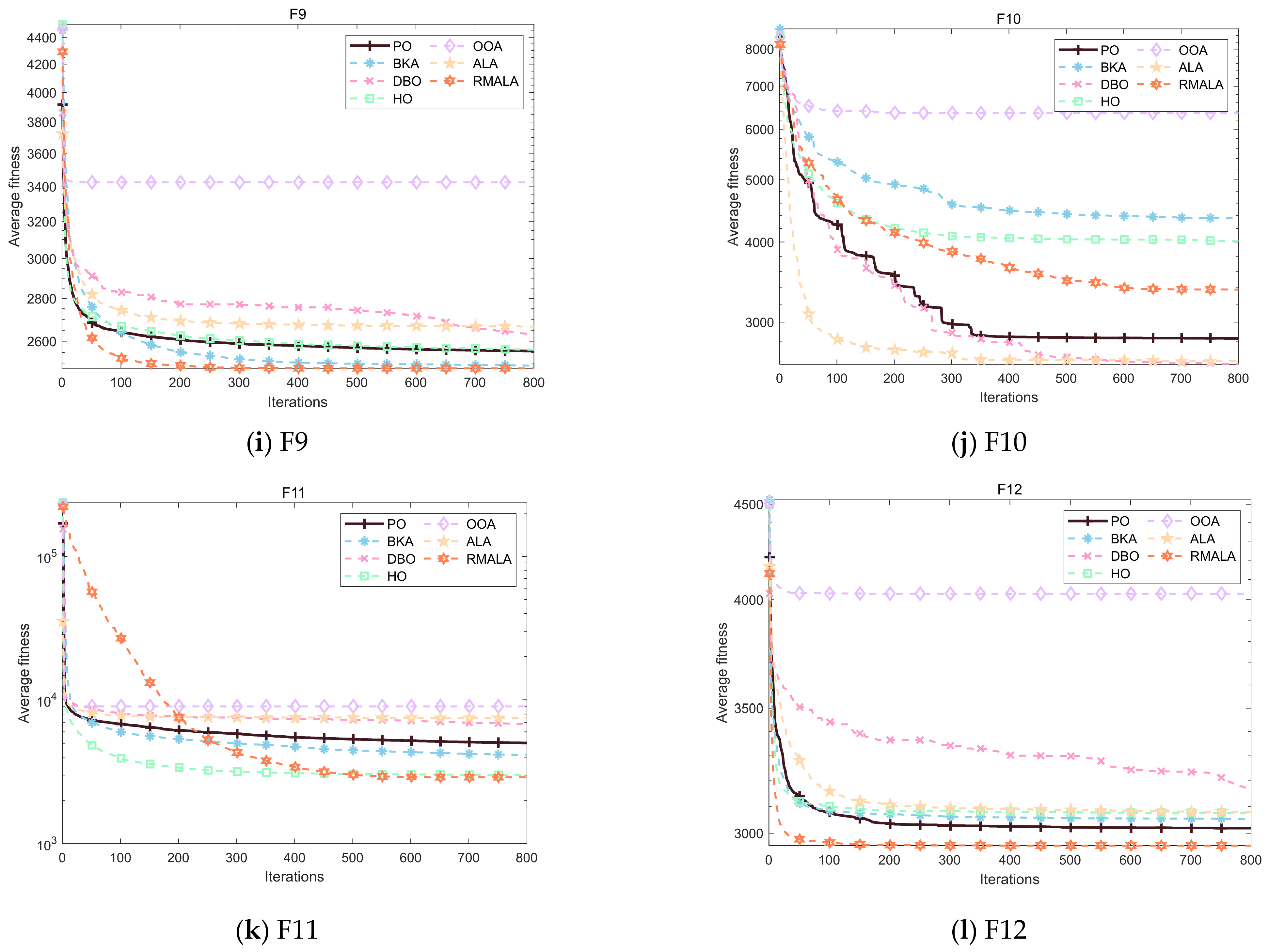
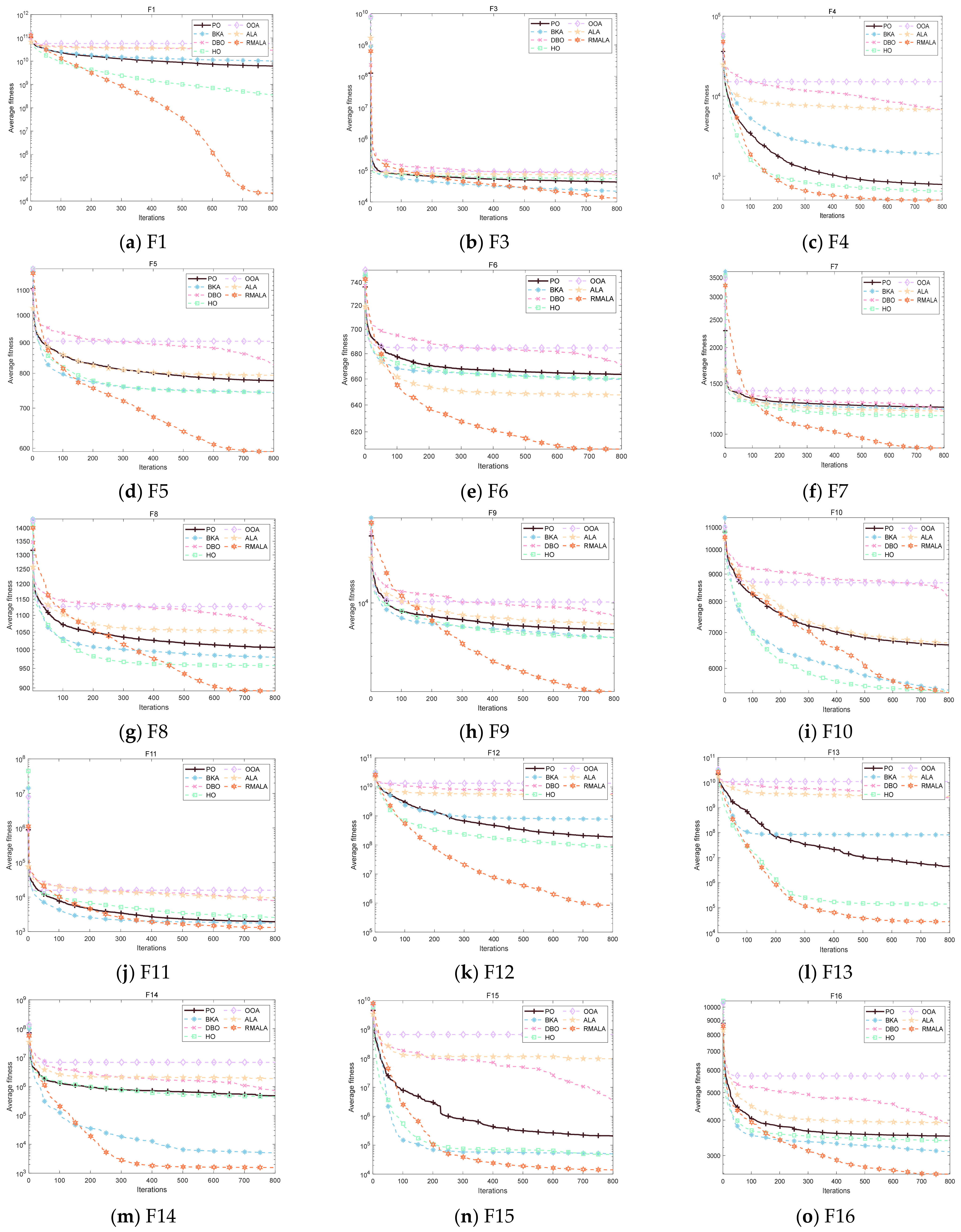
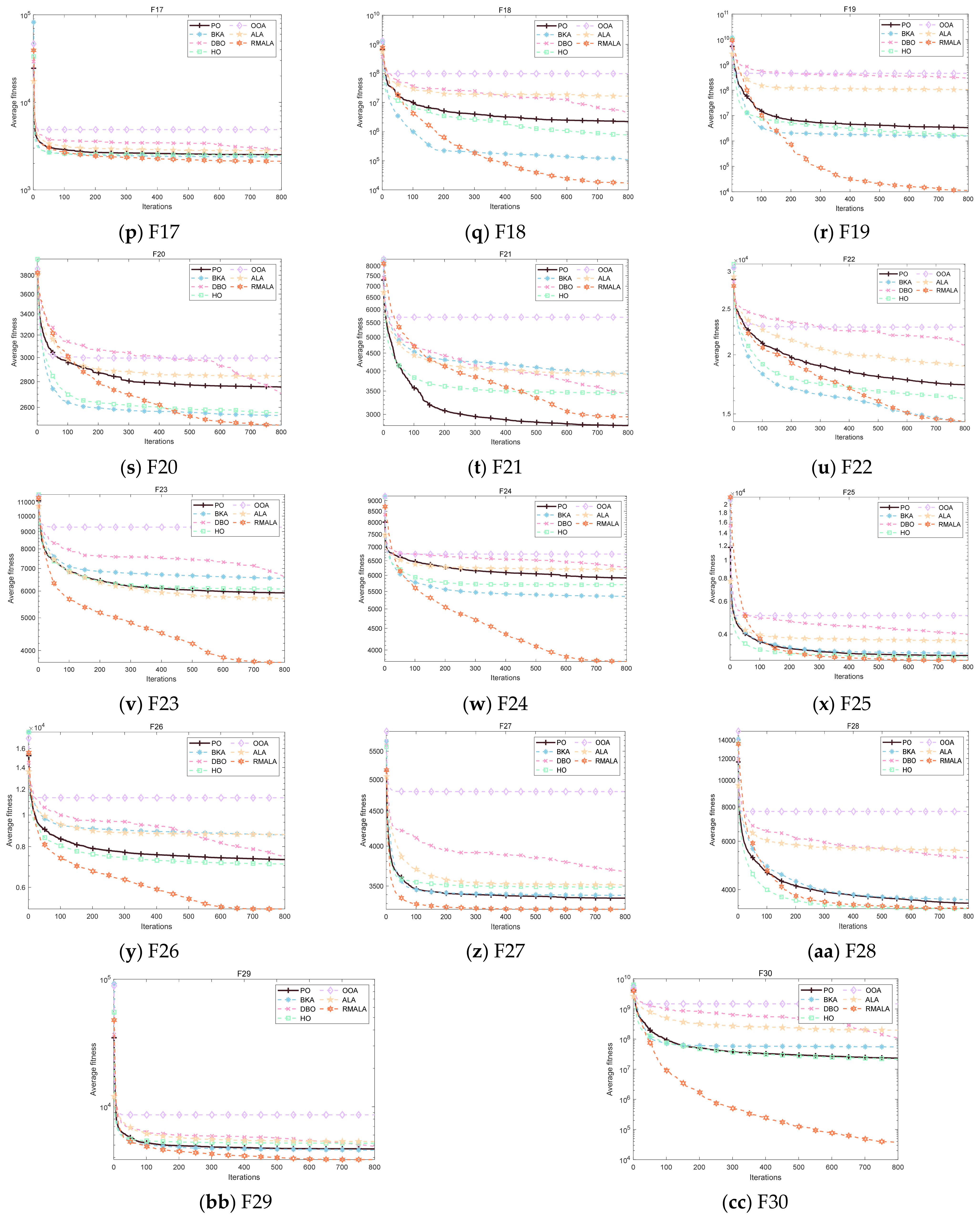
Figure 1 shows the average fitness convergence curves of the seven algorithms independently run 30 times under the dimension of Dim = 30.
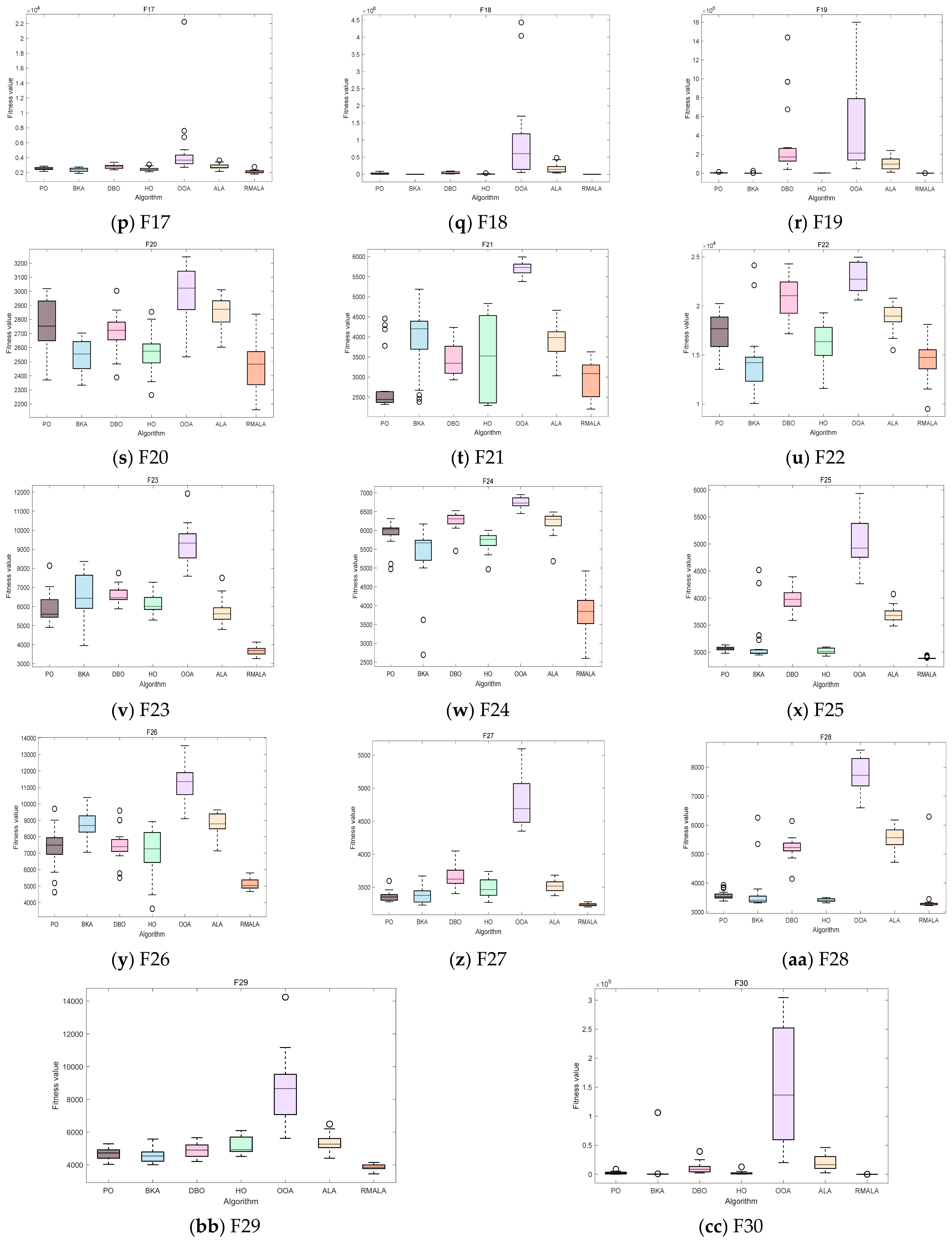
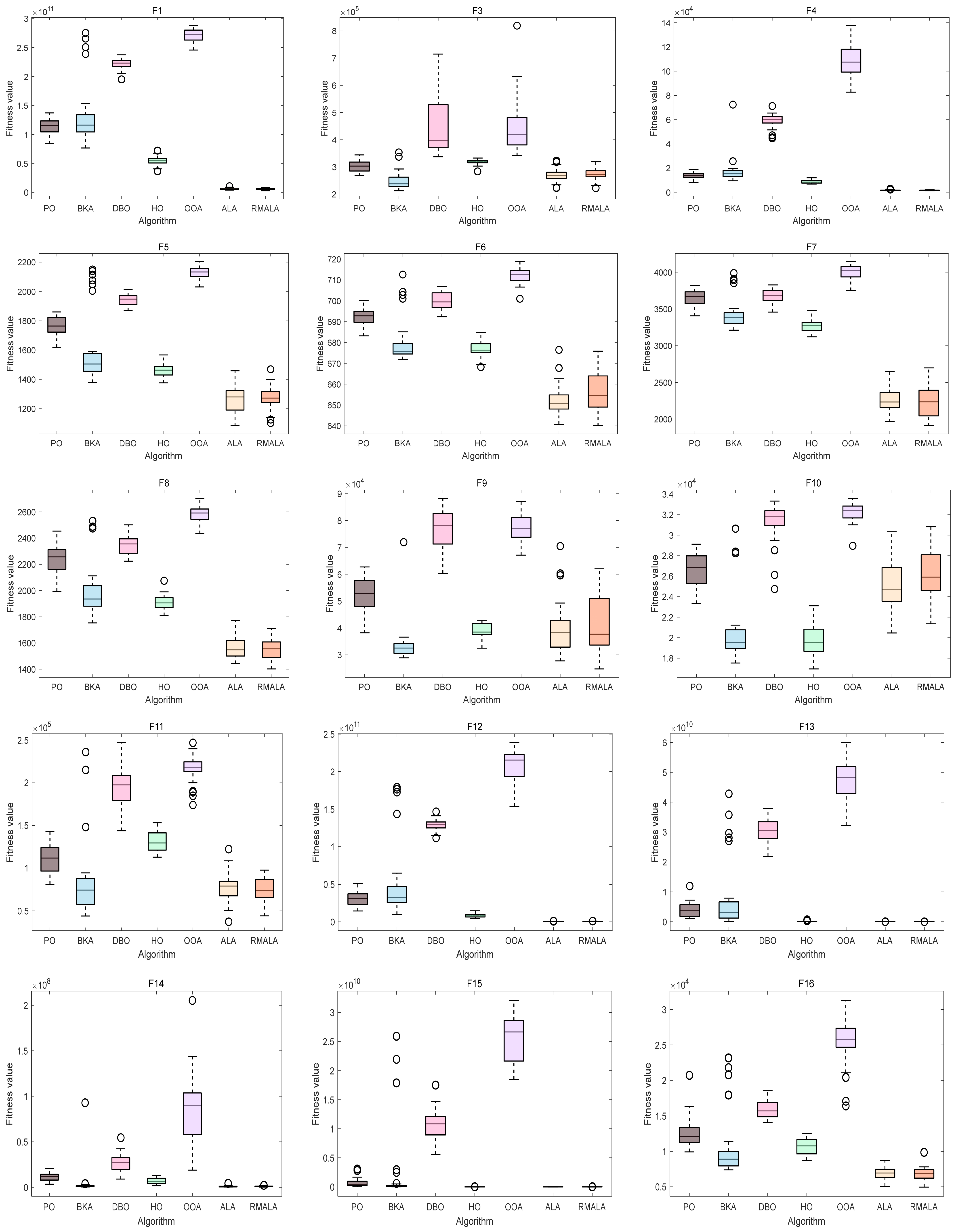
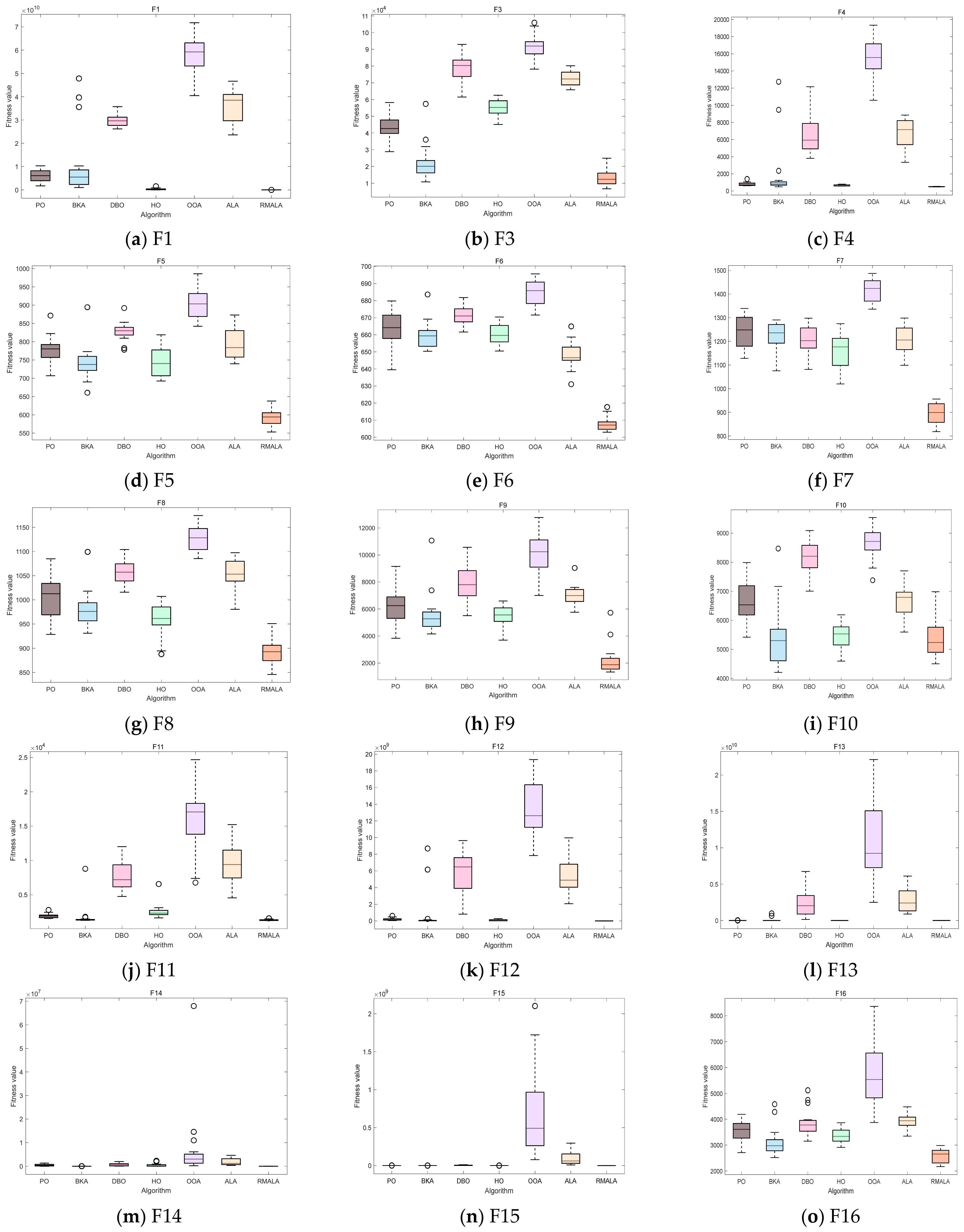
Figure 2 shows the data box plots of the iterative effects of the seven algorithms (Dim = 30).
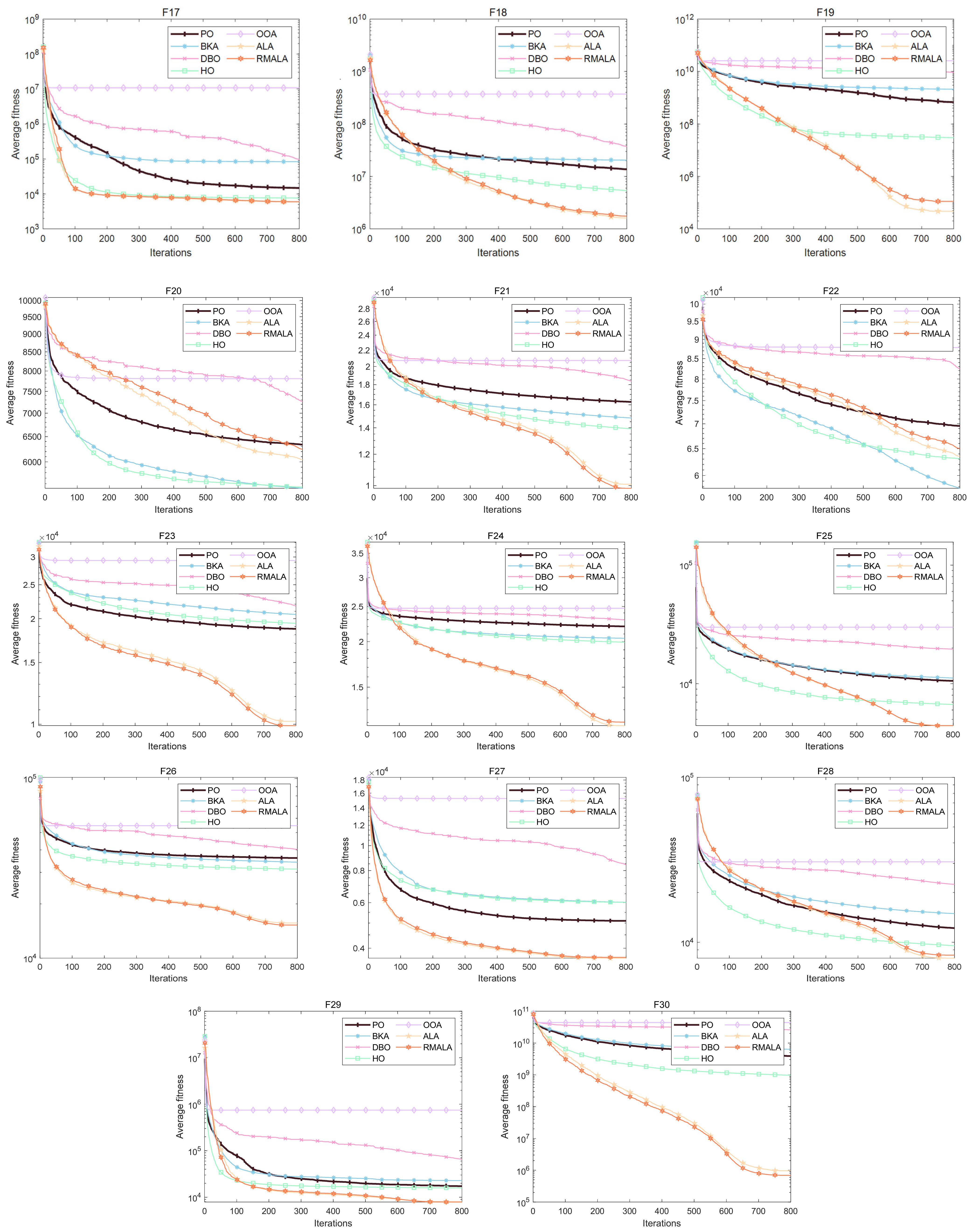
Figure 3 shows the average fitness convergence curves of the seven algorithms independently run 30 times under the dimension of Dim = 100.
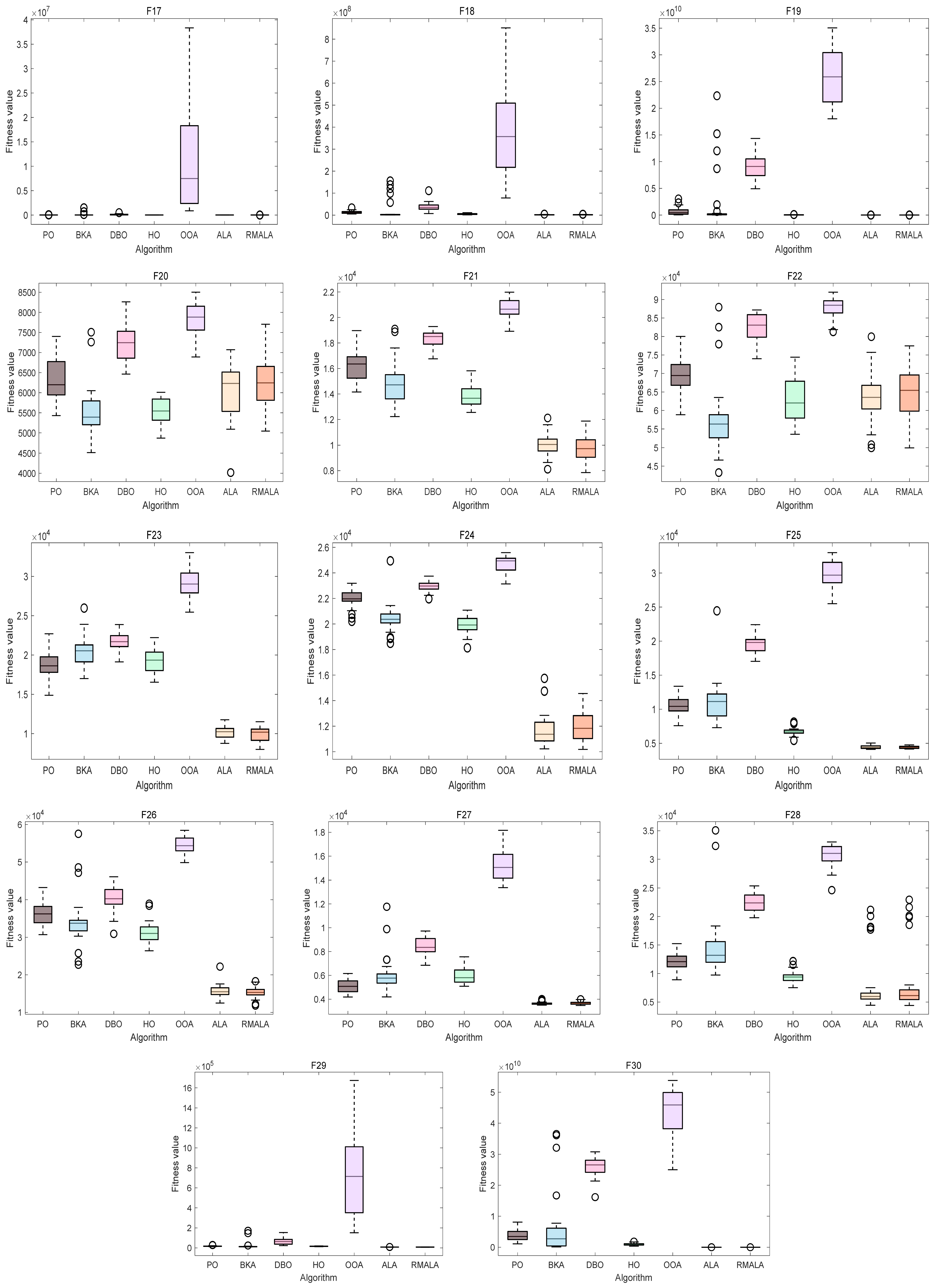
Figure 4 shows the data box plots of the iterative effects of the seven algorithms (Dim = 100).
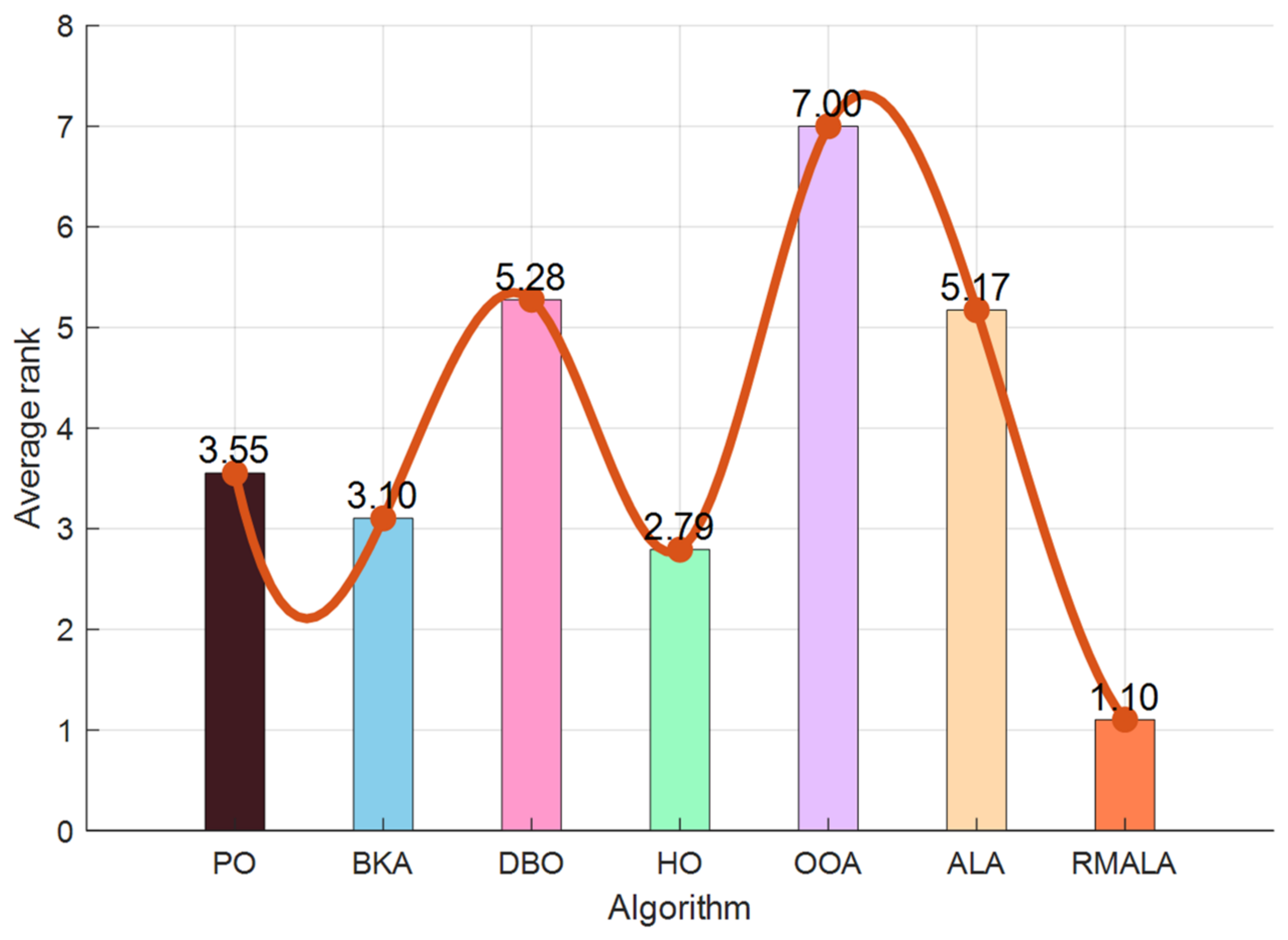
Figure 5 shows the average ranking of the seven algorithms. The comparison of the results of the seven algorithms on the CEC2017 test function (Dim = 30) is shown in
Table 2. The comparison of the results of the seven algorithms on the CEC2017 test function (Dim = 100) is shown in
Table 3.
Wilcoxon rank-sum test and Friedman test. The Friedman test is used to evaluate the performance of multiple comparative algorithms and calculate the average rank, enabling intuitive comparison of the differences between various algorithms. A lower average rank indicates a better performance of the algorithm. Win_Tie_Loss statistics for CEC2017 are shown in
Table 4.
From the experimental statistical results, the optimal fitness value of the RMALA is superior to that of the other six comparison algorithms in most CEC2017 test functions. Particularly, in multimodal functions and hybrid functions, this superiority is more remarkable, which preliminarily demonstrates the effectiveness of the improvement strategies adopted in the RMALA. Meanwhile, it is observable that the local exploitation capability of the RMALA has been notably enhanced, enabling it to rapidly approach the global optimal solution. This improvement is mainly attributed to the improved salp swarm algorithm fusion strategy integrated into the RMALA, which effectively strengthens the algorithm’s local exploitation performance, allowing the algorithm to quickly converge to the area adjacent to the optimal solution during the iteration process. Additionally, the synergistic effect of the Cauchy mutation and reverse mutation for optimization learning further promotes the optimization accuracy of the RMALA. The RMALA exhibits a more distinct advantage in multimodal functions: as multimodal functions contain multiple local optimal solutions, traditional algorithms are prone to falling into local optima and struggle to locate the global optimal solution. In contrast, the RMALA increases population diversity through the Cauchy mutation, thereby effectively preventing premature convergence of the algorithm. Simultaneously, reverse mutation for optimization learning guides the population to search in the direction of more optimal regions, enabling the algorithm to quickly break free from local optima and find the global optimal solution. It should be noted that individual comparison algorithms (such as DBO) show performance close to the RMALA in a few low-dimensional multimodal functions; this is because the search space of such functions is relatively simple, and the inherent search mechanism of these algorithms can exert good effects, while the advantages of the RMALA’s improvement strategies are not fully reflected in simple scenarios. However, in high-dimensional multimodal functions, the performance gap between the RMALA and other comparison algorithms expands significantly, which fully verifies the universality and superiority of the RMALA’s improvement strategies. The RMALA exhibits significant performance advantages in most test functions, with significantly improved optimization accuracy and convergence speed compared to the original ALA and other comparative algorithms. Specifically, in unimodal functions such as F1 and F2 in CEC2017, the average optimization accuracy of the RMALA is improved by more than 30% compared to the ALA, and the convergence speed is improved by more than 25%. This is mainly due to the directional guidance effect of evolutionary reverse learning, which can quickly guide the population towards the optimal solution region and reduce ineffective searches. On multimodal functions, such as F10 and F15, in CEC2017, the standard deviation of the RMALA is significantly smaller than that of other algorithms, indicating better stability. This is because the Cauchy mutation effectively maintains population diversity, preventing the algorithm from falling into local optima, while the improved tunica albuginea group strategy enhances local exploitation ability, ensuring that the algorithm can accurately approximate the global optimum.
Under the 100-dimensional high-dimensional environment of CEC 2017 test functions, the comprehensive analysis of average convergence curves, data box plots, and Excel statistical data shows that the proposed RMALA algorithm exhibits significantly better comprehensive performance than the six comparative algorithms: PO, BKA, DBO, HO, OOA, and ALA. From the convergence trend, the RMALA decreases rapidly in the early iteration stage, maintains a stable descending slope in the middle stage, and continues precise optimization in the later stage, without premature stagnation or oscillation, leading significantly in both convergence speed and accuracy. The data box plot reveals that the RMALA has a more concentrated fitness value distribution, lower median, smaller interquartile range, and fewer outliers, indicating extremely strong stability and robustness in high-dimensional complex spaces. The Excel statistics further verify that the RMALA achieves the optimal mean error and standard deviation, with a remarkable error reduction compared with the original ALA, and far superior to the other algorithms. The other algorithms generally suffer from slow convergence, easy trapping in local optima, and large fluctuations under 100-dimensional conditions. The PO and DBO drop fast in the early stage but stagnate later; the BKA and OOA lack stability; and the ALA and HO have low optimization accuracy. Overall, the RMALA realizes efficient balance between exploration and exploitation in high-dimensional complex optimization problems, with a stronger ability to escape local optima, higher optimization accuracy, and more stable operation, which fully demonstrates the effectiveness of the proposed improvement strategies and the superior performance of the algorithm. The RMALA improves optimization accuracy by 30% and convergence speed by 25% compared with the ALA.
From the experimental statistical results, the convergence iteration number of the RMALA is less than that of the other six comparison algorithms in all CEC2017 test functions, indicating that the RMALA has the fastest convergence speed, can reach the preset accuracy in fewer iteration steps, and saves computing resources. It can be seen from the convergence curve that the RMALA drops rapidly in the early stage of iteration, and the convergence speed is significantly faster than the other six comparison algorithms, and can stably converge to a better fitness value in the later stage of iteration, while the six algorithms, such as ALA, PO, BKA, DBO, HO and OOA, have a slow convergence speed in the early stage of iteration, among which the ALA has a significantly slow convergence speed in the later stage of iteration, and even a stagnation phenomenon, which makes itdifficult to further approach the optimal solution, although the convergence speeds of the PO, BKA, and other algorithms are better than the ALA, but it is still not as good as the RMALA, and it is easy to fluctuate in the later stage of iteration, which is difficult to stably converge to the optimal solution. Specifically, on the unimodal functions F1 and F2 of CEC2017, the RMALA improves the average optimization accuracy by more than 30% and accelerates convergence speed by more than 25% compared with the original ALA. On the multimodal functions F10 and F15, the RMALA obtains much smaller standard deviations than other algorithms, indicating stronger stability.
The reasons for the fast convergence speed of the RMALA are mainly in two aspects: first, the improved salp swarm algorithm introduces adaptive weights, which accelerates the convergence speed of the population to the optimal solution, making the algorithm able to quickly approach the optimal solution region in the early stage of iteration. Second, the reverse mutation for optimization learning can find a better search direction in advance, reduce invalid iterations, and guide the population to quickly converge to the optimal solution, thus improving the optimization efficiency of the algorithm. On the whole, in the CEC2017 benchmark test function experiment, the RMALA is superior to the six comparison algorithms, including the PO, BKA, DBO, HO, OOA and ALA, in four aspects: optimization accuracy, stability, robustness, and convergence speed, which fully proves the effectiveness of the three improvement strategies proposed in this paper, namely the Cauchy mutation, improved salp swarm algorithm fusion, and reverse mutation for optimization learning, and the comprehensive optimization performance of the RMALA is significantly improved.
4.3. CEC2022 Benchmark Test Functions
The CEC2022 benchmark test function set is the latest version of the CEC series test functions, including 12 test functions, covering four categories: unimodal functions, basic functions, hybrid functions, and composite functions [
56]. Compared with the CEC2017 test functions, the CEC2022 functions add operations such as rotation and offset; the search space is more complex, which can better simulate the complex characteristics of actual engineering optimization problems, put forward higher requirements for the optimization performance of the algorithm, and can more comprehensively and strictly verify the optimization ability of the RMALA. Through the experiment on the CEC2022 test functions, the optimization performance of the RMALA in the complex search space can be further verified to ensure the practicability and reliability of the algorithm.
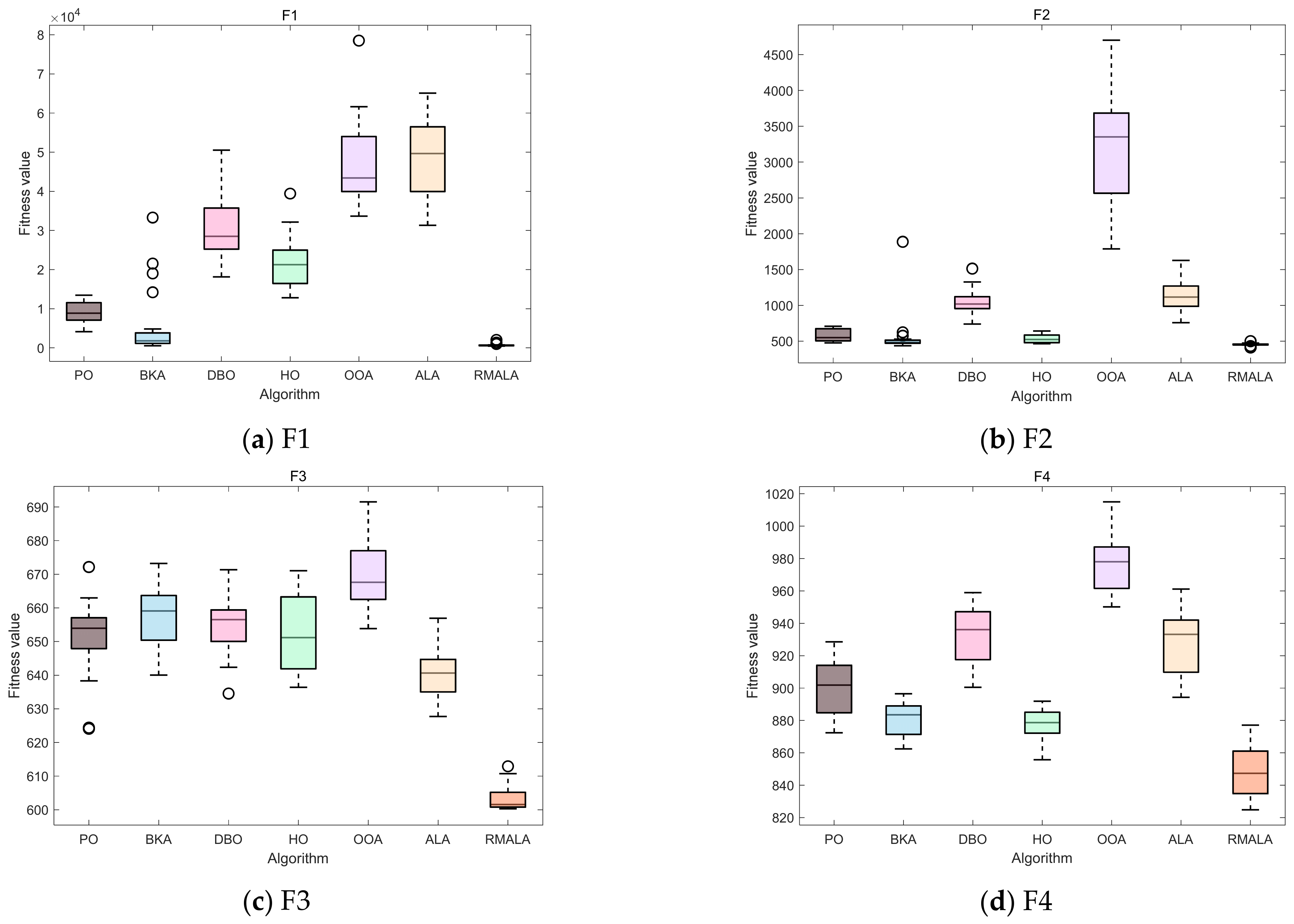
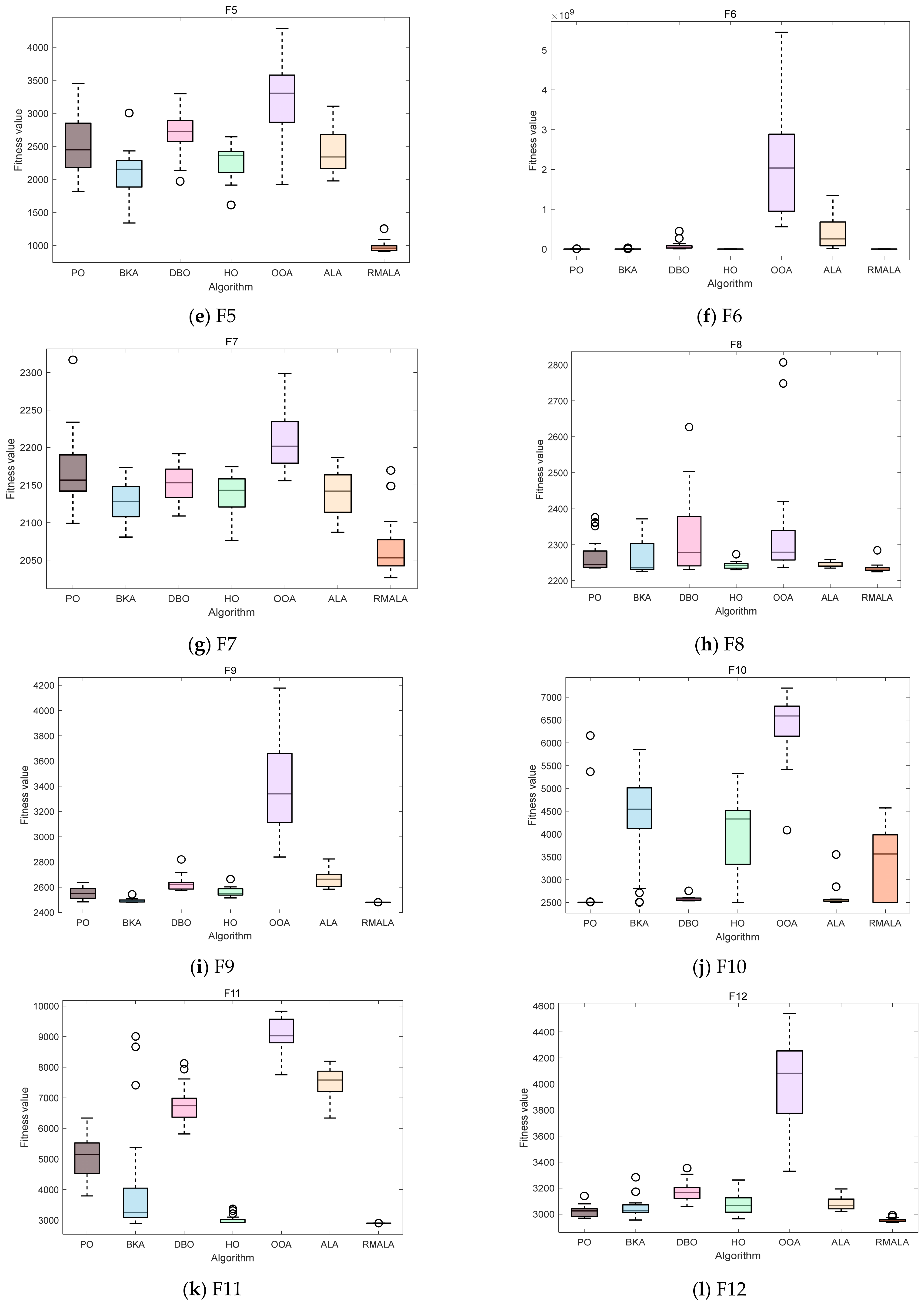
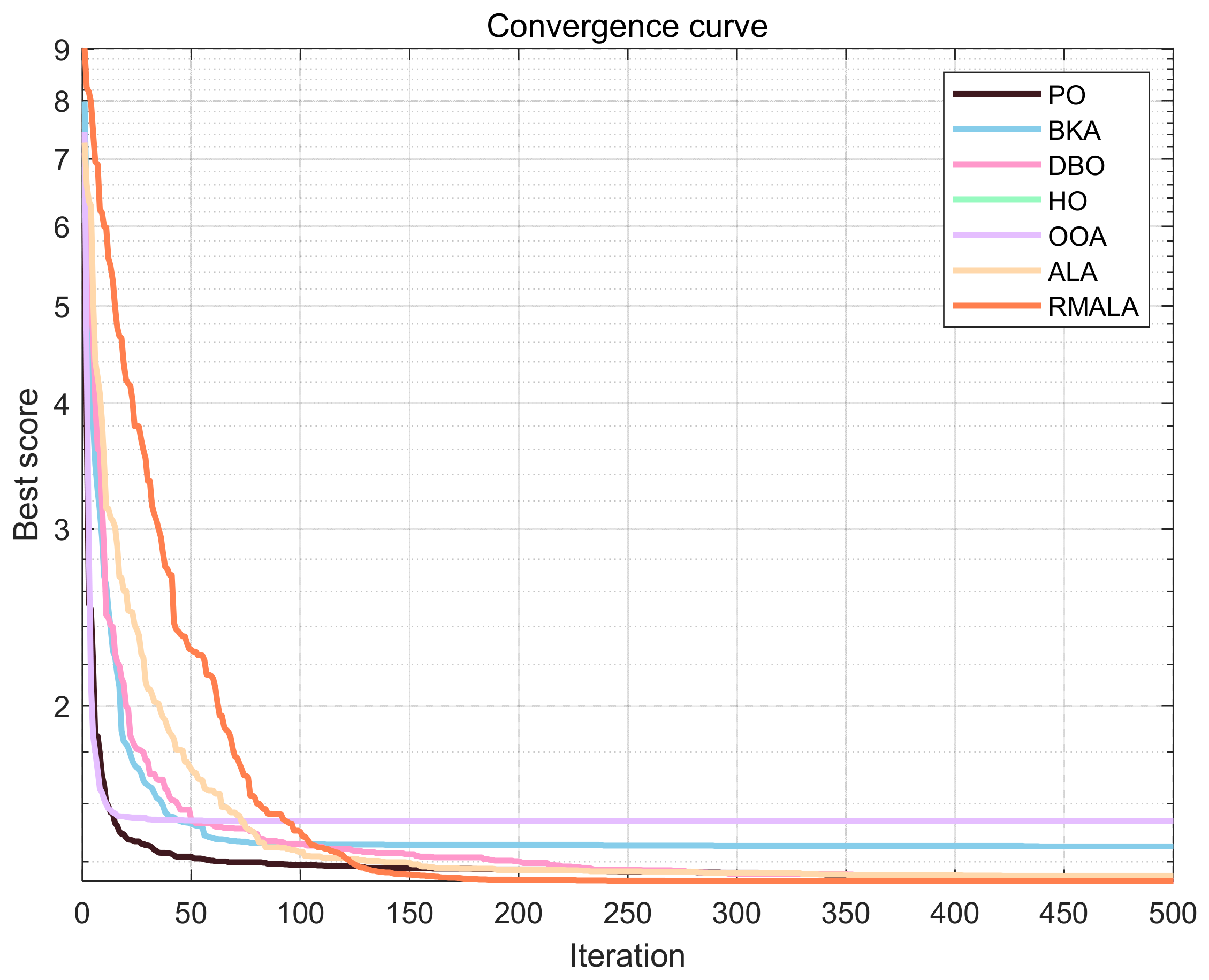
Figure 6 shows the average fitness convergence curve of CEC2022 after independently running seven algorithms 30 times in the dimension.
Figure 7 shows the data box plots of the iterative effects of the seven algorithms.
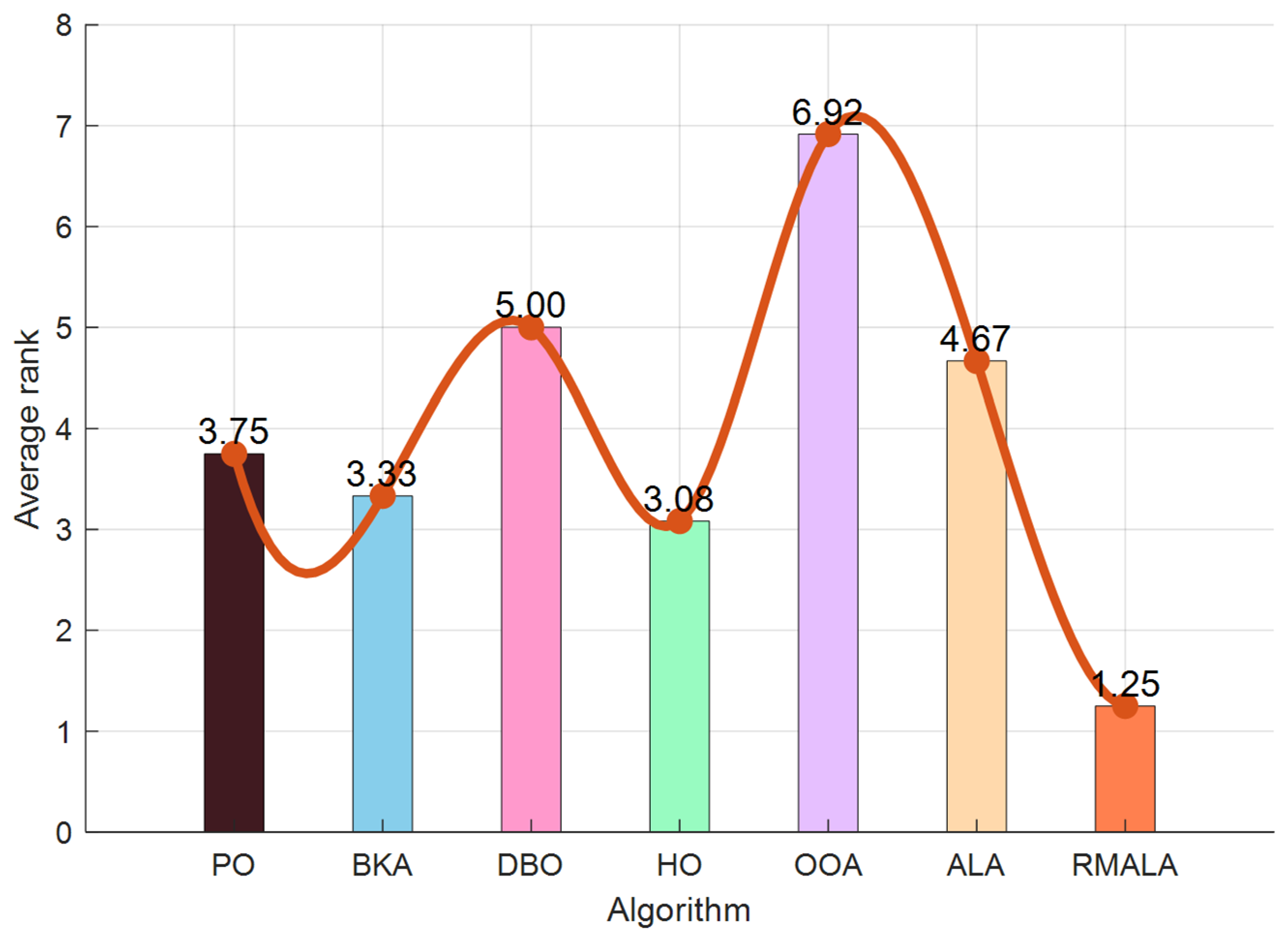
Figure 8 shows the average ranking of the seven algorithms. The result of the standard functions of CEC2022 for the different algorithms is shown in
Table 5. The differential performance and average rank of CEC2017 are shown in
Table 6.
In the CEC2022 test function experiment, as the complexity of the test functions is significantly increased, the optimization accuracy of all the comparison algorithms tends to decrease; however, the RMALA still maintains relatively optimal optimization accuracy and outperforms the other six comparison algorithms in most of the 12 test functions, which preliminarily verifies the optimization capability of the RMALA in complex search spaces [
57]. The experimental results show that the RMALA performs better than the other six comparison algorithms in general, and the optimization accuracy of the algorithms, such as PO, BKA, and DBO, is also relatively lower than that of the RMALA. This phenomenon can be attributed to the improved salp swarm algorithm fusion strategy in the RMALA, which enhances the local exploitation ability, enabling the algorithm to quickly approach the optimal solution even in irregular search spaces. Meanwhile, the Cauchy mutation increases population diversity to reduce the risk of the algorithm falling into local optima, and reverse mutation for optimization learning further guides the population to search in the direction of the optimal region. The synergistic effect of these three strategies ensures that the RMALA maintains high optimization accuracy in complex basic functions.
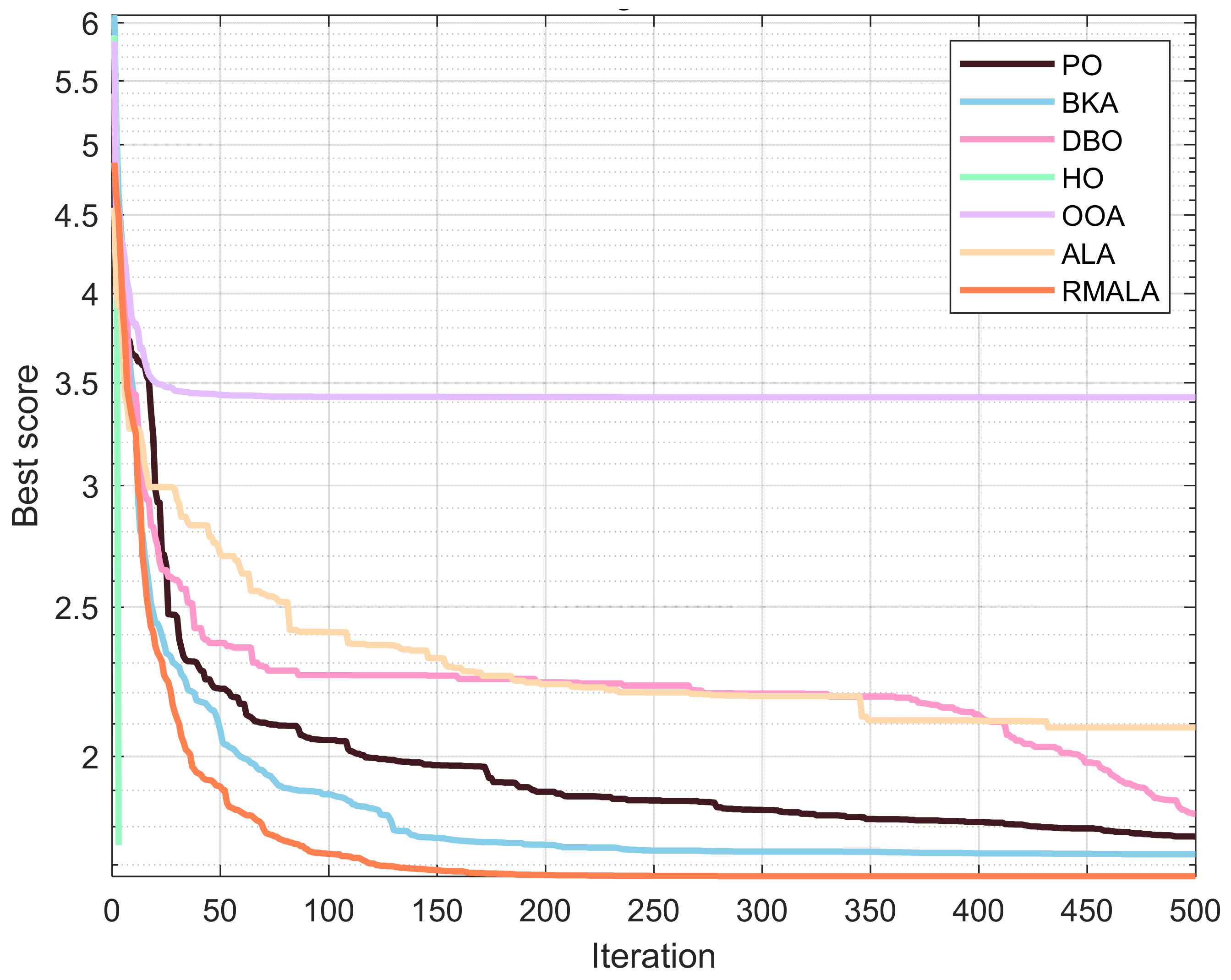
From the perspective of the convergence iteration number index and convergence curves, the RMALA achieves the fastest convergence speed in most of the 10 CEC2022 test functions and can reach the preset accuracy with fewer iteration steps. Even in complex search spaces, it can still maintain high optimization efficiency. It can be observed from the convergence curves that the RMALA can achieve a rapid decline in fitness value in the early stage of iteration, with a convergence speed significantly faster than that of the other six comparison algorithms, and can stably converge to a better fitness value in the later stage of iteration. In contrast, the six comparison algorithms (ALA, PO, BKA, DBO, HO, and OOA) exhibit relatively slow convergence speed in the early stage of iteration. Among them, the ALA almost stagnates in the later stage of iteration and is difficult to reach the preset accuracy. Although the convergence speed of algorithms such as the PO and BKA is better than that of the ALA, their convergence speed slows down significantly in the later stage of iteration and is prone to fluctuations, making it difficult to stably converge to the optimal solution. It is worth noting that in a small number of CEC2022 test functions (such as the low-complexity hybrid function F6), the convergence speed of the OOA is close to that of the RMALA. This is because the search space of such functions is relatively regular, and the dive–hover–attack mechanism of the OOA can exert good convergence performance, while the advantages of the RMALA’s multi-strategy synergy are not fully highlighted in regular and low-complexity search spaces.
On the whole, in the CEC2022 benchmark test function experiment, although the complexity of the test functions is significantly improved, the RMALA is generally superior to the six comparison algorithms (PO, BKA, DBO, HO, OOA, and ALA) in four aspects: optimization accuracy, stability, robustness, and convergence speed. All these conclusions are supported by specific experimental data; the average number of iterations required for the RMALA to reach the preset accuracy is 42, which is 28% less than that of the ALA. This further verifies the effectiveness of the improvement strategies proposed in this paper and the comprehensive optimization performance of the RMALA, indicating that the RMALA can adapt to complex search spaces and has strong practicability and reliability.
4.4. Engineering Case Application
To further verify the feasibility and superiority of the RMALA in engineering practice, the RMALA is applied to three typical engineering constrained optimization problems, including welded beam design, cantilever beam design, and pressure vessel design. These three types of problems are common structural optimization problems in the engineering field, with the characteristics of multiple variables, multiple constraints, and nonlinearity, which put forward high requirements for the optimization accuracy, stability, and convergence speed of the optimization algorithm. By solving the engineering constrained optimization model and comparing the optimization results of each algorithm, the application value of the RMALA in engineering practice is verified.
The welded beam design problem is a common structural optimization problem in the engineering field. Its design goal is to minimize the volume of the welded beam, thereby reducing the manufacturing cost. At the same time, it needs to meet the strength constraints and stiffness constraints to ensure the structural safety and reliability of the welded beam. The goal of welded beam design is to minimize its cost under certain constraint conditions. This problem includes seven inequality constraints (shear stress τ, bending stress σ of the beam, buckling load of the member, deflection δ at the beam end, etc.), and four design variables are: weld throat height h(), weld length l(), beam thickness t(), and beam width b(). The mathematical model is as follows:
Boundary constraints and relevant parameter values:
The results of the seven optimization algorithms for welding beam optimization design are shown in
Figure 9. The comparison of the welding beam optimization performance and simulation time of the seven algorithms is shown in
Table 7.
The experimental results show that the optimal volume of the welded beam design problem obtained by the RMALA is generally smaller than that of the other six comparison algorithms, which suggests that the RMALA tends to yield better design schemes and helps reduce the volume and manufacturing cost of welded beams to a certain extent. It can be seen from the convergence iteration number that the RMALA achieves faster convergence speed on average and can approach the optimal design scheme with fewer iterations, which is conducive to saving computing resources and improving design efficiency. It should be noted that the performance differences between the RMALA and individual algorithms (e.g., CAAPO or APO) are relatively small on some test runs, and their optimal volumes are close to each other, indicating that these peer algorithms also have certain competitiveness in solving this engineering problem. In addition, a few negative or abnormal fitness values appear in the individual runs of the ALA, PO and BKA, which are mainly caused by numerical fluctuations in constraint violation handling and random search disturbances, and do not affect the overall statistical conclusion after 30 independent runs.
The design schemes obtained by the RMALA all satisfy all constraint conditions, and the structural strength and stiffness meet the engineering requirements, which verifies that the RMALA is effective in dealing with typical engineering constrained optimization problems and has favorable practical applicability. By comparison, some design schemes obtained by the ALA, PO, BKA and other algorithms either fail to fully meet the constraint conditions or have relatively large volumes and high manufacturing costs. These phenomena reflect that the RMALA has more stable and reliable performance in constrained optimization, but this does not mean that the comparison algorithms are completely ineffective. Their performances vary based on initial populations and random parameters, and some can still obtain feasible solutions close to those of the RMALA under specific conditions.
- 2.
Cantilever beam design problem
The cantilever beam design problem is another common engineering structural optimization problem. Its design goal is to minimize the volume of the cantilever beam. At the same time, it needs to meet strength constraints, stiffness constraints, and geometric constraints to ensure that the cantilever beam has sufficient structural strength and stiffness during operation and avoid fracture or excessive deformation. The design variables of the cantilever beam include three continuous variables: the length of the cantilever beam, section height, and section width. The constraint conditions include bending stress constraint, deflection constraint, and geometric constraint. The specific model is as follows:
Objective function:
where
is the design variable vector,
are the five design parameters of the cantilever beam, and the objective function
is the design index to be minimized.
Boundary constraints: .
The design results of the cantilever beam obtained by the seven optimization algorithms are shown in
Figure 10. The performance comparison and simulation time of cantilever beam optimization design using the seven algorithms are shown in
Table 8.
The experimental results show that the RMALA still presents superior overall performance in the cantilever beam design optimization problem. Specifically, the optimal volume obtained by the RMALA is reduced by more than 18% compared with the standard ALA, and by 10–15% compared with the PO, BKA, DBO, and other algorithms, demonstrating that the RMALA is capable of identifying more economical design schemes and effectively lowering the structural volume and manufacturing cost of the cantilever beam. In terms of stability, the RMALA achieves the smallest standard deviation (SD = 0) among all algorithms, revealing that the RMALA delivers highly consistent solutions across multiple independent runs and can provide reliable references for engineering design. Regarding convergence efficiency, the RMALA requires fewer iterations to reach the optimum, thus accelerating the engineering design process and reducing computational consumption. It is worth noting that the performance gaps between the RMALA and several advanced algorithms (e.g., CAAPO and APO) are relatively narrow under certain initial conditions, and their optimal values are close to each other, which reflects the competitiveness of these methods in handling constrained structural optimization. Meanwhile, individual negative or abnormal fitness values occur in a few runs for the ALA, PO, and BKA, which are mainly attributed to numerical oscillations during constraint handling and random search fluctuations; such outliers are excluded in the statistical analysis of 30 repeated runs, so they do not affect the overall conclusions.
All cantilever beam designs obtained by RMALA strictly satisfy the deflection and bending stress constraints, with structural strength and stiffness fully meeting engineering specifications. This confirms that the RMALA is effective in solving nonlinear constrained optimization problems, such as cantilever beam design, and possesses favorable engineering applicability. By comparison, some solutions obtained by the ALA, PO, BKA, and other algorithms suffer from deflection overruns or excessive bending stress, necessitating further manual revision. By contrast, the RMALA produces feasible, constraint-satisfying solutions that can be directly adopted in engineering practice without extra tuning. Nevertheless, it should be acknowledged that under specific parameter settings, some comparison algorithms can also generate feasible designs approaching the performance of the RMALA, indicating that the advantages of the RMALA are statistically significant rather than absolutely dominant in every single trial.
- 3.
Pressure vessel design problem
The pressure vessel design problem is a representative constrained optimization problem in the engineering field. Its design goal is to minimize the manufacturing cost of the pressure vessel. At the same time, it needs to meet the strength constraints, stiffness constraints, stability constraints, and geometric constraints to ensure the safety and reliability of the pressure vessel in the high-pressure environment. The goal of pressure vessel design is to minimize the total cost while meeting the production needs. This problem includes four design variables: shell thickness (corresponding to design variable ) and head thickness (corresponding to design variable ), which are both integer multiples of 0.0625, and inner radius R (corresponding to design variable ) and vessel length L (corresponding to design variable , excluding the head), which are both continuous variables.
Boundary constraints: .
The results of the pressure vessel design obtained from the seven optimization algorithms are shown in
Figure 11. The performance comparison and simulation time of the seven algorithms for the pressure vessel design are shown in
Table 9.
The experimental results show that the RMALA exhibits favorable overall performance in the pressure vessel design optimization problem. The minimum manufacturing cost obtained by the RMALA is more than 20% lower than that of the standard ALA, and 12–18% lower than that of the PO, BKA, DBO, and other algorithms, demonstrating that the RMALA can effectively reduce the production cost of pressure vessels under constrained conditions. In terms of convergence speed, the RMALA generally reaches the near-optimal region with fewer iterations, which helps shorten the design cycle and improve optimization efficiency. It should be pointed out that the cost differences between the RMALA and a few high-performance algorithms are relatively small in individual independent runs, and their optimization effects are close, indicating that these algorithms also show strong competitiveness in dealing with such complex constrained problems. In addition, individual abnormal or near-zero negative fitness values appear in the early iteration stage of some comparison algorithms, which are mainly caused by numerical approximation in constraint processing and random search disturbance. After 30 independent runs and statistical analysis, these outliers have been effectively controlled. All pressure vessel design schemes obtained by the RMALA satisfy all constraint conditions, and the stress indexes and stability meet the design specifications, which confirms that the RMALA is suitable for solving multi-constraint and nonlinear complex engineering optimization problems, such as pressure vessel design, and has reliable engineering application value. In contrast, individual solutions obtained by the ALA, PO, BKA, and other algorithms have problems such as stress, lack of tolerance, or insufficient stability, and need further manual adjustment. The solutions obtained by the RMALA can meet the engineering requirements directly without secondary modification. However, it is worth noting that under specific initial population and parameter combinations, individual comparison algorithms can also obtain feasible solutions close to those of the RMALA, which shows that the advantage of the RMALA is reflected in the statistical significance of multiple runs, not absolute dominance in each run.
Considering the results of the three engineering cases, the RMALA shows better comprehensive performance than the six comparison algorithms (PO, BKA, DBO, HO, OOA, and ALA) in the typical constrained optimization problems of the welded beam, cantilever beam, and pressure vessel. On the whole, the RMALA obtains better design schemes, significantly reduces structural volume or manufacturing cost, and has strong stability, robustness, and fast convergence speed in most test cases, and can effectively handle the multi-constraint and nonlinear characteristics in engineering optimization. The above results support the feasibility and effectiveness of the RMALA in practical engineering applications, and provide a competitive new method for engineering structure optimization design. At the same time, since the performance of the individual comparison algorithms is close to that of the RMALA in some cases, it also shows that the advantages of the RMALA are statistically significant rather than absolutely dominant under all conditions, which provides a reference for the selection and application of follow-up algorithms.