
Hybrid Neural Network Architecture for Automated Liver and Tumor Segmentation Using Ensemble Learning on CT Images

Abstract
1. Introduction
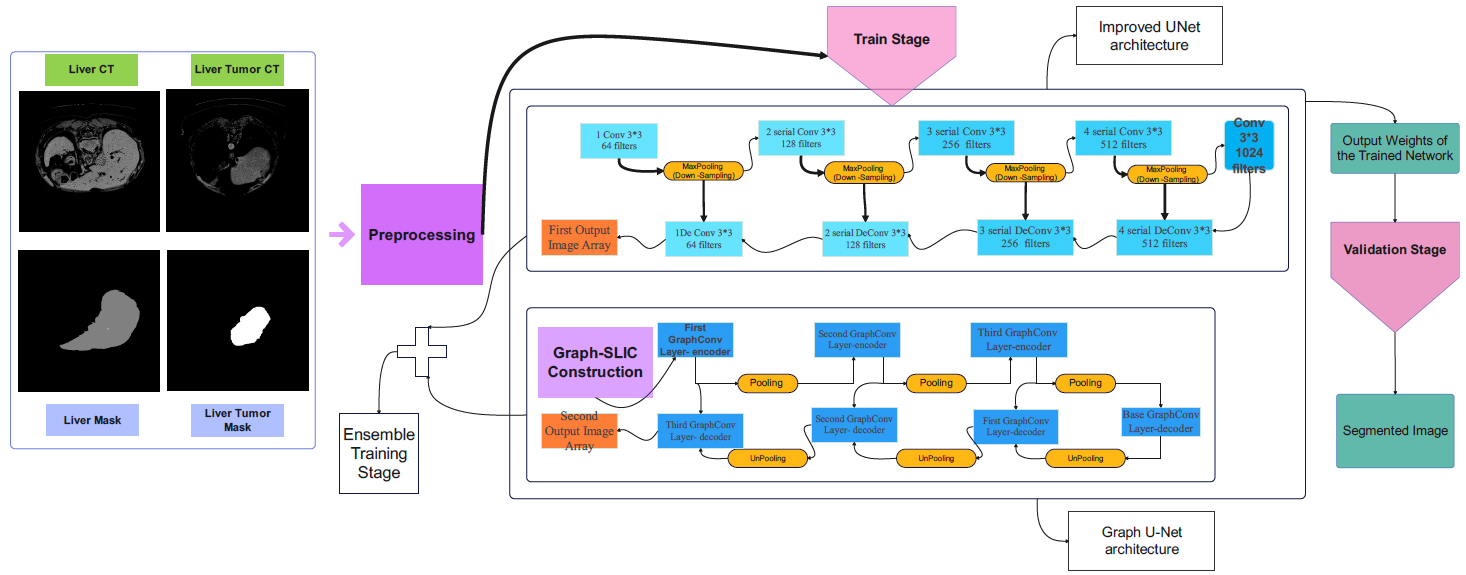
- A hybrid ensemble neural network architecture is developed for automatic liver and liver tumor segmentation in CT images by integrating an improved U-Net and a Graph U-Net within a unified framework.
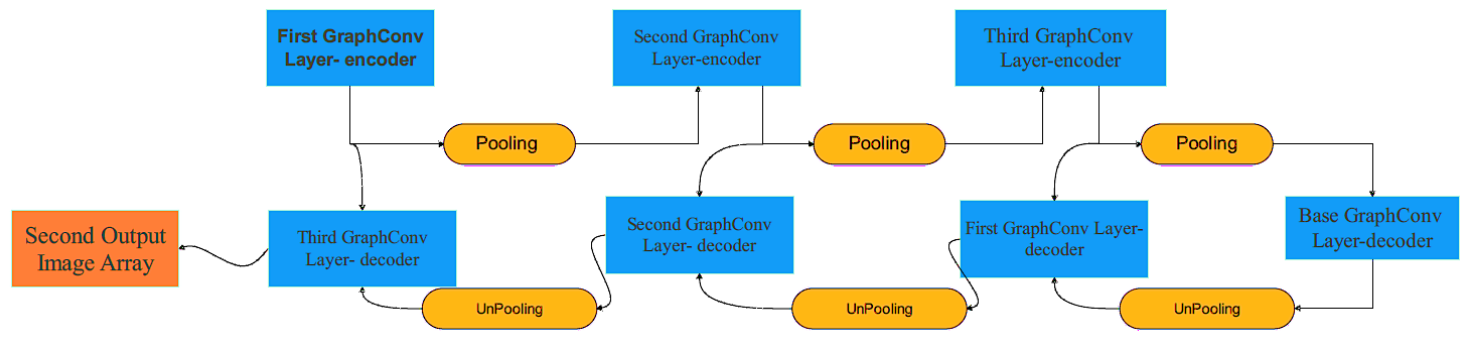
- A SLIC-based graph construction strategy is introduced to convert CT images into superpixel-level graph representations, where each superpixel is treated as a graph node and adjacency relationships are modeled as graph edges. This enables the Graph U-Net to capture irregular spatial boundaries and region-level anatomical dependencies that may be missed by conventional convolutional networks.
- The improved U-Net component extracts fine-grained local, boundary-related, and pixel-level features, while the Graph U-Net component models spatial dependencies among irregular image regions; their ensemble combination provides complementary representations for more accurate segmentation.
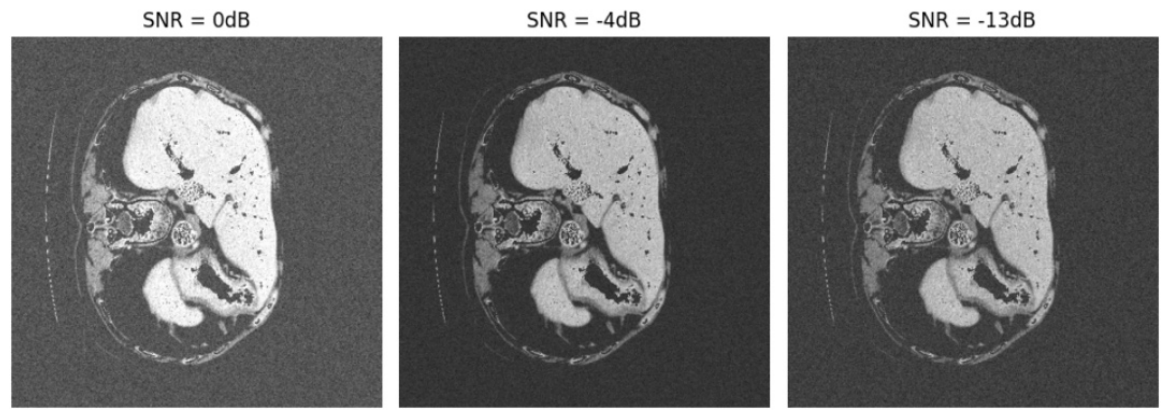
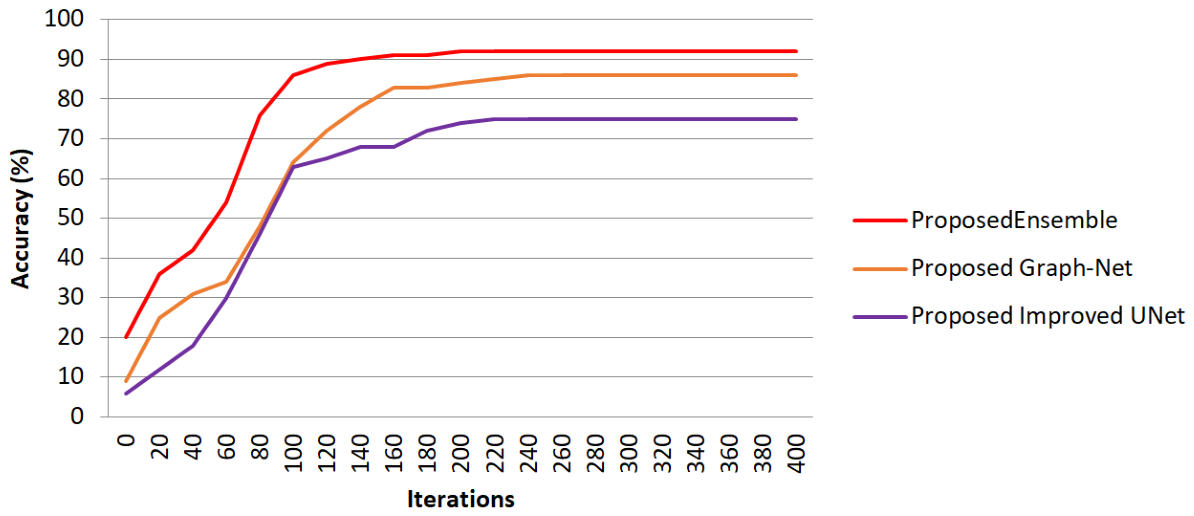
- The proposed framework is evaluated under both normal and noisy CT imaging conditions with different SNR levels, demonstrating improved robustness compared with the individual network components.
- A progressive comparative evaluation is conducted against representative and recent segmentation models, including U-Net-based, residual, multi-resolution, graph-based, and attention-related approaches, to demonstrate the effectiveness and competitiveness of the proposed architecture.
2. Materials and Methods
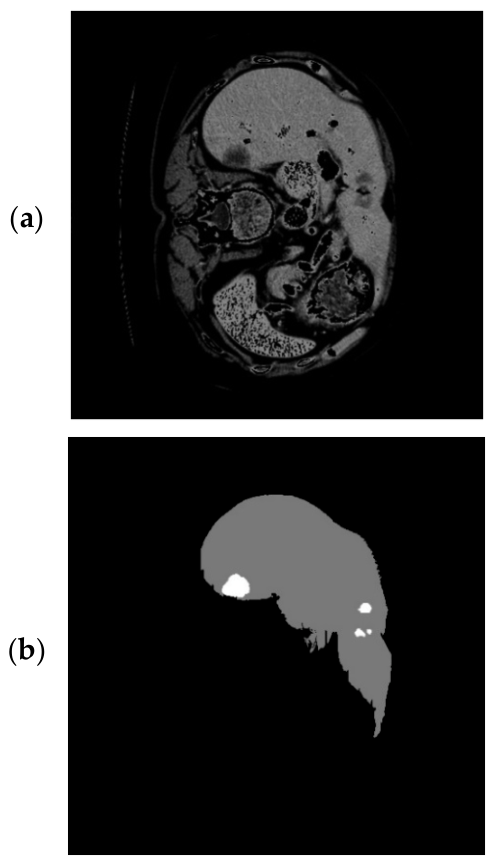
2.1. LiTS17 Database
2.2. Overview of the Graph Convolutional Network Model
2.3. General Model of SLIC Algorithm
2.4. Overview of the U-Net Networks
3. The Suggested Model
3.1. Pre-Processing Stage
3.2. Graph SLIC Stage
3.3. Proposed Deep Ensemble Network
3.3.1. Improved U-Net Part of the Proposed Architecture
3.3.2. Graph U-Net Part of the Proposed Ensemble Network
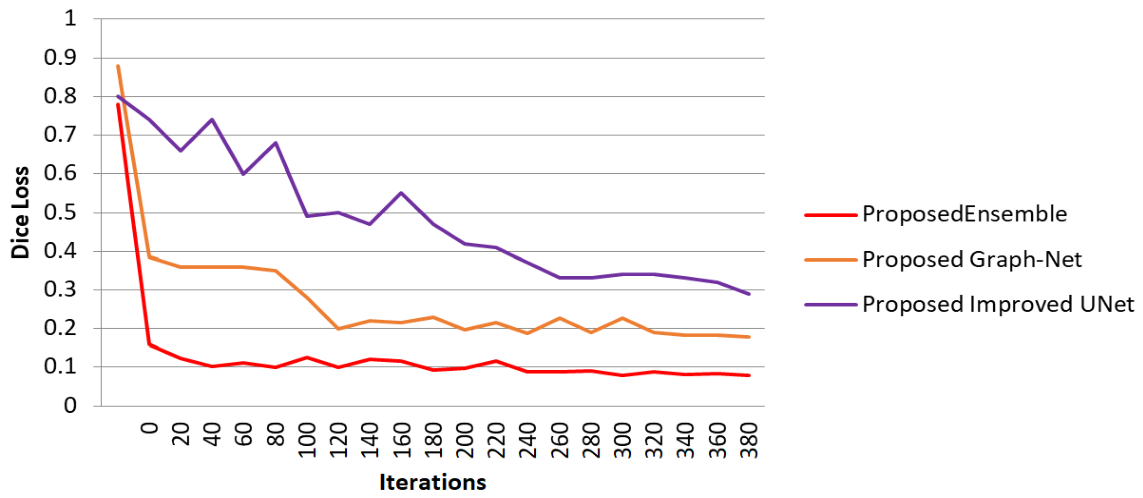
3.4. Training and Evaluation
4. Results
4.1. Quantitative Segmentation Performance
4.2. Discussion
5. Conclusions
Author Contributions
Funding
Institutional Review Board Statement
Informed Consent Statement
Data Availability Statement
Conflicts of Interest
References
- Smith, J.; Johnson, A.; Brown, M. The Role of the Liver in Human Physiology. J. Physiol. 2022, 98, 350–359. [Google Scholar]
- Lee, T.; Wu, Z. Anatomical Review of Liver Structure. Clin. Anat. 2023, 34, 123–135. [Google Scholar]
- Patel, R.; Gupta, A.; Sharma, S. Hepatocellular Carcinoma: Pathophysiology and Clinical Features. Hepatol. Res. 2021, 45, 150–160. [Google Scholar]
- Zhang, L.; Li, J.; Chen, Z. Global Trends in Liver Cancer Incidence and Mortality. World J. Hepatol. 2020, 19, 900–910. [Google Scholar]
- World Health Organization (WHO). Cancer Mortality Statistics, WHO Report; World Health Organization (WHO): Geneva, Switzerland, 2018. [Google Scholar]
- American Cancer Society (ACS). Liver Cancer Statistics, ACS Annual Report; American Cancer Society (ACS): Atlanta, GA, USA, 2020. [Google Scholar]
- Liu, X.; Zhang, Y.; Sun, H. Liver Cancer Incidence in East Asia: A Comparative Study. Asian Pac. J. Cancer Prev. 2021, 22, 451–459. [Google Scholar]
- Chen, Y.; Li, Q.; Wang, W. Global Epidemiology of Liver Cancer. Lancet Oncol. 2023, 23, 50–60. [Google Scholar]
- Zhang, B.; Zhao, L.; Guo, H. Imaging Techniques for Hepatic Tumors: A Review of Sonography, CT, MRI, and PET. J. Med. Imaging 2020, 58, 25–33. [Google Scholar]
- Wang, H.; Yang, J. A Comparative Study of Imaging Techniques in Liver Cancer Diagnosis. Radiol. Rev. 2021, 72, 412–420. [Google Scholar]
- Xu, P.; Liu, X.; Li, Y. CT Scanning in Liver Tumor Detection: Current Challenges and Future Directions. Int. J. Radiol. 2022, 41, 88–96. [Google Scholar]
- Yao, L.; Zhang, Y.; Li, J. Challenges in Tumor Detection in CT Imaging. J. Med. Phys. 2021, 29, 191–200. [Google Scholar]
- Li, M.; Wang, Z.; Zhao, X. Artifacts in CT Imaging and Their Impact on Liver Cancer Diagnosis. Radiol. Imaging Sci. 2022, 65, 225–234. [Google Scholar]
- Ahmed, F.; Wang, L.; Yang, M. Automated Tumor Segmentation in Liver CT Scans Using Deep Learning. J. Comput. Radiol. 2024, 54, 102–110. [Google Scholar]
- Kumar, R.; Singh, P.; Sharma, A. Machine Learning Approaches for Liver Tumor Detection in CT Scans. Med. Image Anal. 2023, 58, 150–160. [Google Scholar]
- Wang, X.; Li, J.; Zhang, P. Challenges in Applying Deep Learning to Liver Tumor Detection in Clinical Environments. J. Digit. Health 2022, 10, 102–111. [Google Scholar]
- Zheng, Y.; Li, X.; Wang, Z. Application of 4D Information with LSTM and CNN Models for Liver Tumor Detection and Segmentation. J. Med. Imaging 2022, 58, 150–159. [Google Scholar]
- Hänsch, M.; Müller, K.; Schlegel, J. Evaluation of the 3D U-Net Architecture for Liver Tumor Segmentation: Challenges and Advantages. Med. Image Anal. 2021, 64, 212–220. [Google Scholar]
- Ahmad, A.; Basha, M.; Kumar, R. Fast-Processing Liver Tumor Segmentation Using Simple Deep Learning Models. Comput. Methods Programs Biomed. 2021, 201, 105–113. [Google Scholar]
- Rahman, M.; Islam, S.; Islam, M. ResNet-U-Net Hybrid Approach for Liver Tumor Segmentation. J. Comput. Assist. Tomogr. 2020, 44, 898–905. [Google Scholar]
- Manjunath, D.; Sethi, S.; Gupta, A. Modified U-Net Networks for Liver Tumor Segmentation in CT Imaging. J. Digit. Imaging 2022, 35, 239–247. [Google Scholar]
- Manghi, S.; Rizzo, M.; Gallo, M. Advanced Liver Tumor Segmentation Models: A Comprehensive Evaluation. Comput. Med. Imaging Graph. 2025, 88, 1–12. [Google Scholar]
- Rahman, M.; Ghosh, R.; Uddin, M. Hybrid Deep Learning Model for Liver Tumor Segmentation Using ResUNet and Inception v4. IEEE Trans. Med. Imaging 2025, 42, 748–756. [Google Scholar]
- Balaguer-Montero, J.; García-Gómez, J.; García-Carrillo, P. SALSA: A Fully Automated Tool for Liver Tumor Detection and Segmentation. Med. Phys. 2025, 49, 4920–4930. [Google Scholar]
- Goceri, E.; Kose, B.; Ozturk, H. Hybrid U-Net Model for Liver Tumor Segmentation Using Residual Connections and Transformer-Based Attention. Med. Image Anal. 2025, 69, 105–113. [Google Scholar]
- Ekşi, S.; Baloğlu, M.; Yüceer, M. Comparison of U-Net, DeepLabV3+, and SegFormer Models for Liver Tumor Segmentation. J. Med. Imaging 2025, 60, 132–141. [Google Scholar]
- Chen, Y.; Li, X.; Du, Y.; Jiang, H.; Liu, X.; Ma, N.; Wang, X. SBM–Attention U-Net: A Hybrid Transformer Network for Liver Tumor Segmentation in Medical Images. Sensors 2026, 26, 1851. [Google Scholar] [CrossRef]
- Li, Y.; Qin, J.; Qin, G.; Zhang, F. MAFA-TransUNet: Multi-Scale Attention and Feature Aggregation with Transformer U-Net for Liver Tumor Segmentation. Biomed. Signal Process. Control. 2026, 113, 109259. [Google Scholar] [CrossRef]
- Sun, P.; Yu, J.; Gu, Q.; Zhang, L.; Sun, Y.; Wang, Q.; Gu, L.; Zhu, J. Clinically Oriented Automatic 2D Liver Tumor Segmentation: LCMambaNet with a State-Space Model and Liver Cancer-Specific Attention. Front. Oncol. 2026, 16, 1676424. [Google Scholar] [CrossRef]
- Zhu, J.; Xu, C.; Lei, C.; Zhang, G.; Fang, S.; Zhang, S.; Chen, J.; Wang, X. HMC-Transducer: Hierarchical Mamba-CNN Transducer for Robust Liver Tumor Segmentation. npj Digit. Med. 2026, 9, 176. [Google Scholar] [CrossRef] [PubMed]
- LiTS17 Challenge. Liver Tumor Segmentation Challenge 2017 (LiTS17). 2017. Available online: https://academictorrents.com/details/27772adef6f563a1ecc0ae19a528b956e6c803ce (accessed on 1 February 2026).
- Defferrard, M.; Bresson, X.; Vandergheynst, P. Convolutional neural networks on graphs with fast localized spectral filtering. Adv. Neural Inf. Process. Syst. 2016, 29. Available online: https://proceedings.neurips.cc/paper_files/paper/2016/hash/04df4d434d481c5bb723be1b6df1ee65-Abstract.html (accessed on 1 February 2026).
- Lazcano, A.; Herrera, P.J.; Monge, M. A combined model based on recurrent neural networks and graph convolutional networks for financial time series forecasting. Mathematics 2023, 11, 224. [Google Scholar] [CrossRef]
- Fabijanska, A. Graph Convolutional Networks for Semi-Supervised Image Segmentation. IEEE Access 2022, 10, 104144–104155. [Google Scholar] [CrossRef]
- Zhang, J.; Zhang, Y.; Jin, Y.; Xu, J.; Xu, X. Mdu-net: Multi-scale densely connected u-net for biomedical image segmentation. Health Inf. Sci. Syst. 2023, 11, 13. [Google Scholar] [CrossRef]
- Weng, W.; Zhu, X.; Jing, L.; Dong, M. Attention mechanism trained with small datasets for biomedical image segmentation. Electronics 2023, 12, 682. [Google Scholar] [CrossRef]
- Soltanpour, M.; Greiner, R.; Boulanger, P.; Buck, B. Improvement of Automatic Ischemic Stroke Lesion Segmentation in CT Perfusion Maps Using a Learned Deep Neural Network. Comput. Biol. Med. 2021, 137, 104849. [Google Scholar] [CrossRef]
- Wang, G.; Song, T.; Dong, Q.; Cui, M.; Huang, N.; Zhang, S. Automatic Ischemic Stroke Lesion Segmentation from Computed Tomography Perfusion Images by Image Synthesis and Attention-Based Deep Neural Networks. Med. Image Anal. 2020, 65, 101787. [Google Scholar] [CrossRef] [PubMed]
- Alom, M.Z.; Hasan, M.; Yakopcic, C.; Taha, T.M.; Asari, V.K. Recurrent Residual Convolutional Neural Network Based on U-Net (R2U-Net) for Medical Image Segmentation. arXiv 2018, arXiv:1802.06955. [Google Scholar]
- Clerigues, A.; Valverde, S.; Bernal, J.; Freixenet, J.; Oliver, A.; Lladó, X. Acute Ischemic Stroke Lesion Core Segmentation in CT Perfusion Images Using Fully Convolutional Neural Networks. Comput. Biol. Med. 2019, 115, 103487. [Google Scholar] [CrossRef]
- Wang, P.; Chen, P.; Yuan, Y.; Liu, D.; Huang, Z.; Hou, X.; Cottrell, G. Understanding Convolution for Semantic Segmentation. In 2018 IEEE Winter Conference on Applications of Computer Vision (WACV); IEEE: New York, NY, USA, 2018; pp. 1451–1460. [Google Scholar]
- Bandegi, M.; Biltekin, E.; Akay, Y.M.; Ozpolat, B.; Akay, M. MicroRNA-873 Suppresses Viability and Invasion of Colorectal Cancer through KRAS/MAPK Signaling and Sensitizes Tumor Spheroids to 5-Fluorouracil in a 3D Microwell Model. IEEE Open J. Eng. Med. Biol. 2026, 7, 146–157. [Google Scholar] [CrossRef] [PubMed]
- Sarvestani, N.; Shams, F.; Mirshahi, A.; Pato, M.; Farbod, A.J.; Khayatderafshi, A.; Payami, M.; Abdous, A. From Tests to Truth: A Misclassification-Aware Machine Learning Framework for Estimating Brucellosis Seroprevalence in Wild Canids. PLoS Negl. Trop. Dis. 2026, 20, e0014029. [Google Scholar] [CrossRef]
- Vaghfi Mohebbi, P.; Lu, Y.; Miao, Z.; Balasundaram, B.; Kalgotra, P.; Sharda, R. Identifying Most Lethal Cliques in Disease Comorbidity Graphs. IISE Trans. Healthc. Syst. Eng. 2025, 15, 183–200. [Google Scholar] [CrossRef]
- Li, B.; Karami, M.; Junayed, M.S.; Nabavi, S. Multi-Modal Spatial Clustering for Spatial Transcriptomics Utilizing High-Resolution Histology Images. In Proceedings of the 2024 IEEE International Conference on Bioinformatics and Biomedicine (BIBM), Lisbon, Portugal, 2024; IEEE: Piscataway, NJ, USA, 2024; pp. 3469–3474. [Google Scholar] [CrossRef]
- Asadalizadeh, M.; Rahbar, M.K.M.; Mahmoudie, T.; Abbasi, M.; Akbari, M.; Shakiba, D.; Shabestari, A.M.; Ebrahimifar, M. Anti-Diabetic Drugs and Cancer: Integrated Mechanisms of Tumor Suppression and Clinical Translation. Indian J. Clin. Biochem. 2026, 1–23. [Google Scholar] [CrossRef]
- Jafarkhani, S.; Amiri, E.; Moazzeni, S.; Zohoorian-Abootorabi, T.; Eftekhary, M.; Aminnezhad, S.; Khakbiz, M. Exploring the Effects of Micro-Nano Surface Topography on MG63 Osteoblast-like Cell Responses: An In Vitro Study. Colloids Surf. A Physicochem. Eng. Asp. 2023, 675, 131872. [Google Scholar] [CrossRef]
- Khakbiz, M.; Chagami, M.; Sheibani, S.; Amiri, E.; Moazzeni, S.; Shakibania, S.; Hou, Y.; Lee, K.B. Enhancement of Corrosion, Biocompatibility and Drug Delivery Properties of Nitinol Implants Surface by Al-Zn-LDH Nanohybrids. Colloids Surf. A Physicochem. Eng. Asp. 2025, 704, 135524. [Google Scholar] [CrossRef]
- Ghadimi, M. Perioperative Anesthetic Management of Reductive Glossectomy in an Adult Patient Suffer from Hypertention with Macroglossia: A Case Report. Int. J. High Risk Behav. Addict. 2025, 14, e159032. [Google Scholar] [CrossRef]
- Momtazi, H.; Davoudi, A.; Ayatollahi, S. Cone-Beam Computed Tomography (CBCT) Assessment of the Inter-Radicular Bone Thickness in the Anterior Maxilla in an Iranian Population. J. Maxillofac. Oral Surg. 2025, 1–8. [Google Scholar] [CrossRef]
- Neshatfar, S.; Magner, A.; Sekeh, S.Y. Promise and Limitations of Supervised Optimal Transport-Based Graph Summarization via Information Theoretic Measures. IEEE Access 2023, 11, 87533–87542. [Google Scholar] [CrossRef]
- Neshastehriz, A.; Hormozi-Moghaddam, Z.; Kichi, Z.A.; Taheri, S.M.; Amini, S.M.; Aghaei, A. Overcoming Breast Cancer Cell Treatment Resistance by Optimizing Sonodynamic Therapy and Radiation Sensitizers on lncRNA PVT1 and miR-1204 Expression. Photodiagnosis Photodyn. Ther. 2025, 51, 104433. [Google Scholar] [CrossRef]
- Moghaddam, Z.H.; Mokhtari-Dizaji, M.; Nilforoshzadeh, M.A.; Bakhshandeh, M. Ultrasound Waves Effect on the Proliferation of Fibroblast Cells: Collagen Type I Expression. J. Biomed. Phys. Eng. 2025, 15, 249. [Google Scholar] [CrossRef]
- Mohseni, M.; Faghihi, R.; Haghighatafshar, M.; Entezarmahdi, S.M. Effects of the Attenuation Correction and Reconstruction Method Parameters on Conventional Cardiac Dynamic SPECT. Medicine 2018, 97, e12239. [Google Scholar] [CrossRef] [PubMed]
- Hosseini Doost, S.E.; Sepehrdoust, H.; Khodabakhshi, A.; Mesahi, S. Investigating Interactions among Health Care Indicators, Income Inequality and Economic Growth: A Case Study of Iran. Iran. Appl. Econ. Stud. 2021, 10, 69–94. [Google Scholar] [CrossRef]
- Motavaselian, M.; Bayati, F.; Amani-Beni, R.; Khalaji, A.; Haghverdi, S.; Abdollahi, Z.; Sarrafzadeh, A.; Rafie Manzelat, A.-M.; Rigi, A.; Arabzadeh Bahri, R.; et al. Diagnostic Performance of Magnetic Resonance Imaging for Detection of Acute Appendicitis in Pregnant Women; a Systematic Review and Meta-Analysis. Arch. Acad. Emerg. Med. 2022, 10, e81. [Google Scholar] [CrossRef]
- Reda, A.; Hasanzadeh, A.; Ghozy, S.; Sanjari Moghaddam, H.; Adl Parvar, T.; Motevaselian, M.; Kadirvel, R.; Kallmes, D.F.; Rabinstein, A. Risk of Symptomatic Intracranial Hemorrhage after Mechanical Thrombectomy in Randomized Clinical Trials: A Systematic Review and Meta-Analysis. Brain Sci. 2025, 15, 63. [Google Scholar] [CrossRef]
- Shamabadi, A.; Karimi, H.; Arabzadeh Bahri, R.; Motavaselian, M.; Akhondzadeh, S. Emerging Drugs for the Treatment of Irritability Associated with Autism Spectrum Disorder. Expert Opin. Emerg. Drugs 2024, 29, 45–56. [Google Scholar] [CrossRef] [PubMed]
- Farrokhi, M.; Motavaselian, M.; Jafari Khouzani, P.; Moghadam Fard, A.; Daeizadeh, F.; Pourrahimi, M.; Mehrabani, R.; Amani-Beni, R.; Farrokhi, M.; Jalayer Sarnaghy, F.; et al. Diagnostic Performance of Ultrasonography for Identification of Small Bowel Obstruction: A Systematic Review and Meta-Analysis. Arch. Acad. Emerg. Med. 2024, 12, e33. [Google Scholar] [CrossRef]
- Younesi Ramdani, A.; Alizadeh, M.H.; Minoonejad, H.; Emami Hashemi, S.A. Comparison of the Static and Dynamic Balance of Female and Male Methadone-Maintained Opioid Dependents with Healthy Subjects. Sci. J. Rehabil. Med. 2015, 4, 41–48. [Google Scholar]
- Younesi Ramdani, A.; Alizadeh, M.H.; Minoonejad, H.; Emami Hashemi, S.A. Comparison of the Spinal Posture in Sagittal Plane of Female and Male Methadone-Maintained Opioid Dependents with Healthy Subjects. Res. Sport Rehabil. 2018, 6, 75–84. [Google Scholar]
- Jafari, N.; Sheikhfarshi, S.; Raisali, F.; Aghaei, P.; Azini, P.; Estejab, H. Design Strategies to Foster Improved Experiences for Patients in Rehabilitation. HERD Health Environ. Res. Des. J. 2025, 18, 111–124. [Google Scholar] [CrossRef] [PubMed]
- Azini, P.; Estejab, H.; Raisali, F.; Jafari, N.; Hedayat, D. Leveraging Extended Reality Technologies to Enhance the Architectural Design of Healthcare Environments: A Systematic Review. Appl. Ergon. 2026, 131, 104656. [Google Scholar] [CrossRef] [PubMed]
- Raeisi, Z.; Roshanzamir, A.; Abedi Lomer, F.; Ahmadi Lashaki, R. YOLOv8 with Innovative Dilated Residual and Attention Modules for Mammographic Tumor Detection. Comput. Electr. Eng. 2025, 130, 110903. [Google Scholar] [CrossRef]
- Khandan Khadem-Reza, Z.; Ahmadi Lashaki, R.; Shahram, M.A.; Zare, H. Automatic Diagnosis of Autism Spectrum Disorders in Children through Resting-State Functional Magnetic Resonance Imaging with Machine Vision. Quant. Imaging Med. Surg. 2025, 15, 4935–4946. [Google Scholar] [CrossRef]
- Babior, L.; Sayyadzadeh, I. Optimizing Dijkstra’s Algorithm: Enhancing Pathfinding Efficiency through Heuristics and Structural Techniques. In Proceedings of the 2025 Systems and Information Engineering Design Symposium (SIEDS 2025); IEEE: Charlottesville, VA, USA, 2025; pp. 313–317. [Google Scholar]
- Nikzat, P.; Hosseinzadeh, S. A Practical Model to Measure E-Service Quality and E-Customer Satisfaction of Crypto Wallets. Open J. Bus. Manag. 2025, 13, 1634–1660. [Google Scholar] [CrossRef]
- Zenhari, S.; Ni, J.; Werkle, K.; Möhring, H.-C. Prediction of Surface Roughness Based on Fusion Model. Procedia CIRP 2026, 138, 568–572. [Google Scholar] [CrossRef]
- Behnam, R.; Baghaee, H.R.; Gharehpetian, G.B.; Ahmadiahangar, R.; Rosin, A. Resilient Reliability/Loss-Based Distribution Network Reconfiguration: A Strategy against FDI Attacks during State Estimation Procedure. IEEE Trans. Netw. Sci. Eng. 2025, 12, 1994–2006. [Google Scholar] [CrossRef]
- Farahani, M.; Khodaygan, S. Minimization of non-repeatable runout (NRRO) in high-speed spindle bearings (No. 2021-01-5023). In SAE Technical Paper; SAE International: Warrendale, PA, USA, 2022. [Google Scholar] [CrossRef]
- Geldi Nejad, M.G. Pata and Diploma: Strategies for Sustaining Indigenous Knowledge Transmission in the Modern Music Schools of Turkmenistan. Asian Music 2025, 56, 4–30. [Google Scholar] [CrossRef]
- Chang, Y.; Winkler, A.J.; Noori, A.; Knyazikhin, Y.; Myneni, R.B. Precipitation Leads the Long-Term Vegetation Increase in the Conterminous United States Drylands. Environ. Res. Lett. 2025, 20, 044006. [Google Scholar] [CrossRef]
- Jamshidi, S.; Dehnavi, A.; Vaez Roudbari, M.; Yazdani, M. An Integrated Approach through Controlled Experiment and LCIA to Evaluate Water Quality and Ecological Impacts of Irrigated Paddy Rice. Environ. Sci. Pollut. Res. 2024, 31, 45264–45279. [Google Scholar] [CrossRef]
- Khashei, Z. The Role of Passive Systems in Providing Comfort in Traditional Houses in Isfahan: A Case Study of the Karimi House. WIT Trans. Ecol. Environ. 2010, 128, 271–280. [Google Scholar] [CrossRef]
- Badkoobeh Hezaveh, S.; Ranjbar, M.; Nabavi, B. Promoting Visible-Light Degradation of Toluene over a Simple Constructed TiO2/Pd Nanocomposite as Photocatalytic Coating Air Purification Filter. Colloid Nanosci. J. 2024, 2, 228–237. [Google Scholar] [CrossRef]
- Nabavi, B.; Jafari Ghalehkohne, S.; Shayegan, K.J.; Tervo, E.J.; Atwater, H.; Zhao, B. High-Temperature Strong Nonreciprocal Thermal Radiation from Semiconductors. ACS Photonics 2025, 12, 2767–2774. [Google Scholar] [CrossRef]
- Bevilacqua, C.; Sohrabi, P.; Hamdy, N. Linking Land Uses and Ecosystem Services through a Bipartite Spatial Network: A Framework for Urban CO2 Mitigation. Sustainability 2025, 17, 10113. [Google Scholar] [CrossRef]
- Bevilacqua, C.; Sohrabi, P.; Hamdy, N. Integrating Ecosystem Services into Urban Carbon Dynamics: A Dual-Scale Spatial Analysis of Land Use, Emissions, and Planning. Land 2025, 14, 2286. [Google Scholar] [CrossRef]
- Bevilacqua, C.; Vitiello, G.; Sebillo, M.M.L.; Provenzano, V.; Sohrabi, P.; Hamdy, N.; Trapani, F.; Pizzimenti, P. A Multidisciplinary Approach to Plan Ecosystem Services for Cities in Transition. In Proceedings of the 1st ACM SIGSPATIAL International Workshop on Geospatial AI for Urban Sustainability; ACM: New York, NY, USA, 2025. [Google Scholar] [CrossRef]
- Jadidi, V.; Tarahomi Ardakani, H.; Hanif, H.R.; Naseri, S.Z. Examining How New Technologies Affect Management and Decision-Making Processes in Organizations. Int. J. Adv. Stud. Humanit. Soc. Sci. 2025, 14, 25–32. [Google Scholar]
- Jadidi, V. The Impact of Artificial Intelligence on Judicial Decision-Making Processes. Zenodo 2025, 1, 271–281. [Google Scholar] [CrossRef]
- Nezhad, A.H.; Azizi, Y. GPS Clock Based One Way Delay Measurement and Modeling in Web Environment. In 2014 4th International Conference on Computer and Knowledge Engineering (ICCKE); IEEE: New York, NY, USA, 2014; pp. 312–315. [Google Scholar]
- Limke, A.; Islam, S.; Riahi, B.; Tian, X.; Hill, M.; Cateté, V.; Barnes, T. What Does It Take to Support Problem Solving in Programming Classrooms? A New Framework from the K-12 Teacher Perspective. In Extended Abstracts of the CHI Conference on Human Factors in Computing Systems; ACM: New York, NY, USA, 2025; pp. 1–7. [Google Scholar] [CrossRef]
- Riahi, B.; Cateté, V. Comparative Analysis of STEM and Non-STEM Teachers’ Needs for Integrating AI into Educational Environments. In Learning and Collaboration Technologies; Smith, B.K., Borge, M., Eds.; Lecture Notes in Computer Science; Springer: Cham, Switzerland, 2025; Volume 15807. [Google Scholar] [CrossRef]
- Ramey, K.E.; Velasquez, A.; Cheyney, K.; Beck, M.; Cota, M.; Schamberger, B.; Baradaran Shoraka, Z. Culturally Revitalizing STEAM Learning as a Space for Ecologically Situated Identity Work. In Proceedings of the 19th International Conference of the Learning Sciences—ICLS 2025; International Society of the Learning Sciences: Helsinki, Finland, 2025; pp. 226–234. [Google Scholar]
- Perez, G.; Shrestha, P.; Cameron, T.; Waight, N.; Kayumova, S.; Rish, R.; Tripp, J.; Mozaffari, F.; Scheuneman, S.M. The Role of Peer Interaction and Language Resources in Informal Engineering Learning Environments: The Case for Learning through Biking. In 2025 ASEE Annual Conference & Exposition; ASEE Conferences: Montreal, QC, Canada, 2025. [Google Scholar] [CrossRef]
- Waight, N.; Rish, R.; Tripp, J.; Scheuneman, S.; Mozaffari, F.; Goehrig, F.; Jackson, D.; Robert, S.; Wisoff, S.; Marks, D.R. Mobilizing Youth STEM Learning Trajectories on Bicycles. In Proceedings of the International Society of the Learning Sciences Annual Meeting; International Society of the Learning Sciences: Helsinki, Finland, 2025; pp. 1958–1962. [Google Scholar]
- Tavana, M.; Saberi, E.; Poost Dooz, A.; Mina, H. A Multi-Depot Vehicle Routing Optimization Model for Quick Commerce Last-Mile Delivery. Electron. Commer. Res. Appl. 2026, 77. [Google Scholar] [CrossRef]
- Barati-Nia, A. Characterizing the Effect of Plasticity Index on Monotonic and Cyclic Shear Behavior of Natural Low-Plastic Silt Mixtures. Ph.D. Thesis, Portland State University, Portland, OR, USA, 2026. [Google Scholar]
- The Ecotourism-Extraction Nexus: Balancing Conservation, Resource Use, and Community Well-Being. In Global Nexus Handbook; Wiley: Hoboken, NJ, USA, 2025. [CrossRef]
- Fani, M.; Hashamdar, M. The Comparative Effect of Using Visual and Auditory Input Enhancement on the Use of Cohesive Devices in the Writing of Iranian EFL Field-Dependent and Independent Learners. J. Lang. Horiz. 2017, 1, 73–87. [Google Scholar] [CrossRef]
- Zarei, M.; Zarei, O.; Karimi, M.; Skandari, M.R.; Haghighatjoo, M.; Khordehbinan, M.W. The Application of Multi-Criteria Decision Analysis in Gaining a Premier Sort of Stability in Airplane Safety. Saf. Reliab. 2024, 43, 45. [Google Scholar] [CrossRef]
- Gheitarani, F.; Ravanbeh, S.; Abdoli, N.; Yousefi, F.; Goldarzehi, R.; Atrian, A. Categorization of Blockchain Technology Applications in Human Resource Management: An Interpretive Structural Modeling Approach. SSRN Electron. J. 2024. 16 Pages. Available online: https://papers.ssrn.com/sol3/papers.cfm?abstract_id=4829626 (accessed on 1 February 2026).
- Mozaffari, F.; Ghodratinia, Z. Extroversion and Introversion: The Effect of Teacher’s Personality on Elementary EFL Learners’ Achievement. IOSR J. Humanit. Soc. Sci. 2015, 20, 61–64. [Google Scholar] [CrossRef]
- Abouali, L.; Kaner, J. Pre-Islamic Religious Motifs (550 BC to 651 AD) on Iranian Minor Art with Focus on Rug Motifs. HTS Teol. Stud. Theol. Stud. 2022, 79, 8341. [Google Scholar]
- Abouali, L.; Wu, Z.; Kaner, J. Chinese Visual Traditions Encountered on Safavid Furniture. Bull. Transilv. Univ. Brașov Ser. II For. Wood Ind. Agric. Food Eng. 2018, 11, 81–94. [Google Scholar]
- Jafari, B.; Omidi, F.; Rekabdar, G. A Model for Determining the Strategies and Methods of Developing Iran’s Transit and Customs Cooperation with Other Countries. Program Dev. Res. 2023, 3, 120–164. [Google Scholar] [CrossRef]
- Jafari, B.; Behnam Far, F.; Babaei, A.; Faraji, M. Branding an Important Step in Business Success. Mod. Appl. Sci. 2016, 10, 127. [Google Scholar] [CrossRef]
- Rasouli, M.; Shahghasempour, L.; Shirbaghaee, Z.; Hosseinzadeh, S.; Abbaszadeh, H.-A.; Fattahi, R.; Ranjbari, J.; Soleimani, M. Mesenchymal Stem Cell Therapy Using Pal-KTTKS-Enriched Carboxylated Cellulose Improves Burn Wound in Rat Model. Arch. Dermatol. Res. 2024, 316, 353. [Google Scholar] [CrossRef]
- Rasouli, M.; Fattahi, R.; Nuoroozi, G.; Zarei-Behjani, Z.; Yaghoobi, M.; Hajmohammadi, Z.; Hosseinzadeh, S. The Role of Oxygen Tension in Cell Fate and Regenerative Medicine: Implications of Hypoxia/Hyperoxia and Free Radicals. J. Cell Commun. Signal. 2023, 25, 195–215. [Google Scholar] [CrossRef]
- Shirbaghaee, Z.; Heidari Keshel, S.; Rasouli, M.; Valizadeh, M.; Hashemi Nazari, S.S.; Hassani, M.; Soleimani, M. Report of a Phase 1 Clinical Trial for Safety Assessment of Human Placental Mesenchymal Stem Cells Therapy in Patients with Critical Limb Ischemia (CLI). Stem Cell Res. Ther. 2023, 14, 174. [Google Scholar] [CrossRef]
- Babenko, A.; Ghasali, E.; Jie, L.; Orooji, Y. The Mechanical Behavior of 2D Metal Borides—MBenes: A Detailed Review. Mater. Today Phys. 2025, 52, 101671. [Google Scholar] [CrossRef]
- Cheng, Y.; Ghasali, E.; Raza, S.; Hayat, A.; Ming, L.; Ye, J.; Zhang, P.; Babenko, A.; Jie, L.; Orooji, Y. Achieving High Entropy in Rare Earth Oxides: A Detailed Experimental Procedure. J. Rare Earths 2025, 44, 900–909. [Google Scholar] [CrossRef]
- Ali, H.; Orooji, Y.; Ajmal, Z.; Abboud, M.; Abu-Dief, A.M.; Abu Al-Ola, K.A.; Hassan, H.M.A.; Yue, D.; Guo, S.-R.; Hayat, A. A Comprehensive Review Based on the Synthesis, Properties, Morphology, Functionalization, and Potential Applications of Transition Metals Nitrides. Coord. Chem. Rev. 2025, 526, 216353. [Google Scholar] [CrossRef]
- Attar, M.R.; Darband, G.B.; Davoodi, A.; Passandideh-Fard, M. Tuning Surface Wettability for a Capillary-Fed Evaporative Heat Sink. Surf. Interfaces 2026, 80, 108337. [Google Scholar] [CrossRef]
- Attar, M.R.; Davoodi, A. A Review on Advanced AFM and SKPFM Data Analytics for Quantitative Nanoscale Corrosion Characterization. Corros. Mater. Degrad. 2025, 6, 58. [Google Scholar] [CrossRef]
- Attar, M.R.; Kazemi, M.; Salami, B.; Noori, H.; Passandideh-Fard, M.; Hosseinpour, S.; Mohammadi, M. Improving Thermal Management of CPU by Surface Roughening of Heat Sinks. Arab. J. Sci. Eng. 2024, 49, 2153–2164. [Google Scholar] [CrossRef]
- Azandariani, A.K.; Gordon, M.; Kaiser, I.; DadeMatthews, O.; Mirjalili, A.; Spielmann, G.; Kim, H.K. Assessing Gluteus Medius Volume with Freehand 3DUS: Validating a Practical Imaging Tool for Complex Muscle Morphology. Med. Biol. Eng. Comput. 2026, 64, 963–973. [Google Scholar] [CrossRef] [PubMed]
- Tran, T.M.; Razavi, S.M.; Wu, D.H.; Khanmohammadi, S. Continuous Energy Landscape Model for Analyzing Brain State Transitions. arXiv 2026, arXiv:2601.06991. [Google Scholar] [CrossRef]
- Faiz, R.; Danala, G.; Arezoumand, A.; Lucero, P.; Hegde, S.; Ray, B.; Ebert, D. Development of Composite Clinical-Radiological Tool to Predict Functional Outcomes after Ischemic Stroke Treatment. In Medical Imaging 2025: Clinical and Biomedical Imaging; SPIE: Bellingham, WA, USA, 2025; Volume 13410, pp. 116–122. [Google Scholar]
- Safaripour, A.; Keshtan, S.B.; Boumeri, E.; Alisofi, M.; Rabiei, A.; Dehvari, S.; Soltanzadeh, A. Absorbable versus Non-Absorbable Sutures in Upper Eyelid Blepharoplasty: A Systematic Review of Clinical Outcomes and Follow-Up Burden. BMC Ophthalmol. 2025, 25, 553. [Google Scholar] [CrossRef]
- Ansari, F.K.; Asadiof, F.; Ghadiminia, N.; Naeim, M. The Role of Artistic Creativity in Predicting Difficulties in Emotion Regulation and Reducing Social Anxiety: Insights from a Cross-Sectional Analysis. Ann. Med. Surg. 2026, 88, 233–240. [Google Scholar] [CrossRef]
- Giannelos, S.; Pudjianto, D.; Strbac, G. Smart Home Economic Operation under Uncertainty: Comparing Monte Carlo and Stochastic Optimization Using Gaussian and KDE-Based Data. Oper. Res. Perspect. 2025, 15, 100348. [Google Scholar] [CrossRef]
- Kaloev, M.; Krastev, G. Tailored Learning Rates for Reinforcement Learning: A Visual Exploration and Guideline Formulation. In Proceedings of the 2023 7th International Symposium on Innovative Approaches in Smart Technologies (ISAS), Istanbul, Turkiye, 23 November 2023; pp. 1–7. [Google Scholar] [CrossRef]






| Layer Number | Layer | Shape of Weight Vector | Layer Number | Layer | Shape of Weight Vector |
|---|---|---|---|---|---|
| 1 | First Graph Layer | [M1, Slices, Slices] | 12 | Graph Up-Pooling | [Slices/4] |
| 2 | Batch Normalization | [Slices] | 13 | First decoder part-Graph Layer | [M3, Slices/4, Slices/4] |
| 3 | Graph Pooling | [Slices/2] | 14 | Batch Normalization | [Slices/4] |
| 4 | Second Graph Layer | [M2, Slices/2, Slices/2] | 15 | Graph Up-Pooling | [Slices/2] |
| 5 | Batch Normalization | [Slices/2] | 16 | Second decoder part-Graph Layer | [M2, Slices/2, Slices/2] |
| 6 | Graph Pooling | [Slices/4] | 17 | Batch Normalization | [Slices/2] |
| 7 | Third Graph Layer | [M3, Slices/4, Slices/4] | 18 | Graph Up-Pooling | [Slices] |
| 8 | Batch Normalization | [Slices/4] | 19 | Third decoder part-Graph Layer | [M1, Slices, Slices] |
| 9 | Graph Pooling | [Slices/8] | 20 | Batch Normalization | [Slices] |
| 10 | Base Graph Layer | [M4, Slices/8, Slices/8] | |||
| 11 | Batch Normalizayion | [Slices/8] |
| Layer | Layer Name | Activation Function | Output Dimension | Size of Kernel | Stride Shape | Number of Kernels |
|---|---|---|---|---|---|---|
| 1 | Conv2-D | ReLU | (Batch, 256, 256, 64) | 3 × 3 | 1 × 1 | 64 |
| 2 | MaxPooling 2-D | - | (Batch, 128, 128, 64) | 64 | ||
| 3 | Conv2-D | ReLU | (Batch, 128, 128, 128) | 3 × 3 | 1 × 1 | 128 |
| 4 | Conv2-D | ReLU | (Batch, 128, 128, 128) | 3 × 3 | 1 × 1 | 128 |
| 5 | MaxPooling 2-D | - | (Batch, 64, 64, 128) | 128 | ||
| 6 | Conv2-D | ReLU | (Batch, 64, 64, 256) | 3 × 3 | 1 × 1 | 256 |
| 7 | Conv2-D | ReLU | (Batch, 64, 64, 256) | 3 × 3 | 1 × 1 | 256 |
| 8 | Conv2-D | ReLU | (Batch, 64, 64, 256) | 3 × 3 | 1 × 1 | 256 |
| 9 | MaxPooling 2-D | - | (Batch, 32, 32, 256) | 256 | ||
| 10 | Conv2-D | ReLU | (Batch, 32, 32, 512) | 3 × 3 | 1 × 1 | 512 |
| 11 | Conv2-D | ReLU | (Batch, 32, 32, 512) | 3 × 3 | 1 × 1 | 512 |
| 12 | Conv2-D | ReLU | (Batch, 32, 32, 512) | 3 × 3 | 1 × 1 | 512 |
| 13 | Conv2-D | ReLU | (Batch, 32, 32, 512) | 3 × 3 | 1 × 1 | 512 |
| 14 | MaxPooling 2-D | - | (Batch, 16, 16, 512) | 512 | ||
| 15 | Conv2-D | ReLU | (Batch, 16, 16, 1024) | 3 × 3 | 1 × 1 | 1024 |
| 16 | Conv2-D transpose | ReLU | (Batch, 32, 32, 512) | 2 × 2 | 2 × 2 | 512 |
| 17 | Concatenate | (Batch, 32, 32, 1024) | - | |||
| 18 | Conv2-D | ReLU | (Batch, 32, 32, 512) | 2 × 2 | 2 × 2 | 512 |
| 19 | Conv2-D | ReLU | (Batch, 32, 32, 512) | 2 × 2 | 2 × 2 | 512 |
| 20 | Conv2-D | ReLU | (Batch, 32, 32, 512) | 2 × 2 | 2 × 2 | 512 |
| 21 | Conv2-D | ReLU | (Batch, 32, 32, 512) | 2 × 2 | 2 × 2 | 512 |
| 22 | Conv2-D transpose | ReLU | (Batch, 64, 64, 256) | 3 × 3 | 1 × 1 | 256 |
| 23 | Concatenate | (Batch, 64, 64, 512) | - | |||
| 24 | Conv2-D | ReLU | (Batch, 64, 64, 256) | 3 × 3 | 1 × 1 | 256 |
| 25 | Conv2-D | ReLU | (Batch, 64, 64, 256) | 2 × 2 | 2 × 2 | 256 |
| 26 | Conv2-D | ReLU | (Batch, 64, 64, 256) | 2 × 2 | 2 × 2 | 256 |
| 27 | Conv 2-D transpose | ReLU | (Batch, 128, 128, 128) | 3 × 3 | 1 × 1 | 128 |
| 28 | Concatenate | (Batch, 128, 128, 256) | - | |||
| 29 | Conv2-D | ReLU | (Batch, 128, 128, 128) | 3 × 3 | 1 × 1 | 128 |
| 30 | Conv2-D | ReLU | (Batch, 128, 128, 128) | 3 × 3 | 1 × 1 | 128 |
| 31 | Conv2-D transpose | ReLU | (Batch, 256, 256, 64) | 2 × 2 | 2 × 2 | 64 |
| 32 | Concatenate | (Batch, 256, 256, 128) | - | |||
| 33 | Conv 2-D | ReLU | (Batch, 256, 256, 64) | 3 × 3 | 1 × 1 | 64 |
| Parameters | Search Scope | Optimal Value |
|---|---|---|
| Optimizer of Improved U-net | Adam | Adam |
| Cost function of first part | MAE, Dice Loss | Dice Loss |
| SLIC | 10, 20, 40, 60 | 20 |
| Learning rate of first part of Ensemble Net | 0.01, 0.001, 0.0001 | 0.001 |
| M1, M2, M3, M4 of Graph Convolutional Network | 2, 3, 4 | 2 |
| Optimizer of Graph Unet | Adam | Adam |
| Learning rate of Graph Net | 0.0001, 0.00001 | 0.0001 |
| Number of Graph layers in decoder part | 2, 3, 4 | 3 |
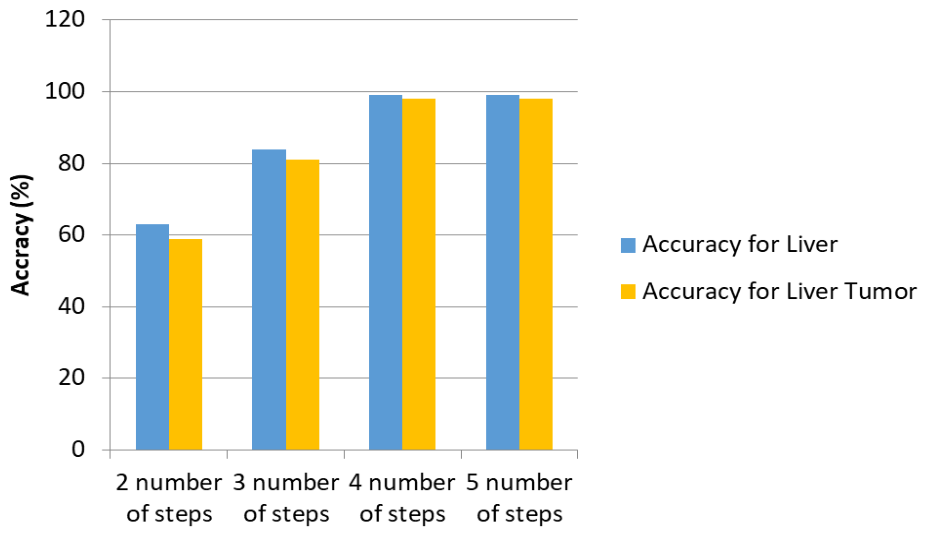
| Number of steps in encoder part of the Improved u-net | 3, 4 | 4 |
| Lesion | Methods | Accuracy (%) | Sensitivity (%) | Dice-Coeff (%) | Mean-IoU (%) |
|---|---|---|---|---|---|
| Liver | Proposed Ensemble | 99.2 | 99.3 | 90.8 | 89.9 |
| Liver Tumor | Proposed Ensemble | 98.1 | 98.4 | 90.3 | 89.4 |
| Number of SLIC | Lesion | Accuracy (%) | Dice-Coeff (%) |
|---|---|---|---|
| 10 | Liver | 90.8 | 83.4 |
| 20 | 99.2 | 90.8 | |
| 30 | 99.2 | 90.8 | |
| 10 | Liver Tumor | 86.6 | 81.5 |
| 20 | 98.1 | 90.3 | |
| 30 | 98.1 | 90.3 |
| Hyperparameter | Tested Values | Best Value | Observation |
|---|---|---|---|
| Learning rate | 1 × 10⁻⁵, 5 × 10⁻⁵, 1 × 10⁻⁴, 5 × 10⁻⁴ | 1 × 10⁻⁴ | Lower values slowed convergence; higher values reduced training stability |
| Batch size | 4, 8, 16 | 8 | Batch size 8 provided a balance between stable optimization and generalization |
| Training epochs | 50, 100, 150 | 100 | Performance improved up to 100 epochs and then showed limited additional gain |
| Graph convolution layers | 1, 2, 3, 4 | 3 | Three layers provided effective spatial modeling; deeper graph layers may cause over-smoothing |
| Methods | SNR: −4 dB | SNR: 0 dB | SNR: 10 dB | Noise Free |
|---|---|---|---|---|
| Proposed Improved Unet | 81.5 | 82.3 | 86 | 95.6 |
| Proposed Ensemble | 85 | 86 | 89.2 | 99.2 |
| Method | Dataset | Task | Accuracy (%) | Sensitivity (%) | Dice Coefficient (%) | IoU/Jaccard (%) | Ref. |
|---|---|---|---|---|---|---|---|
| MultiresUnet | Liver CT/LiTS-related | Liver/tumor segmentation | 76.52 | 74.18 | 75.93 | 73.03 | [33] |
| SLNet | Liver CT | Liver/tumor segmentation | — | 64 | 54 | — | [34] |
| R2U-Net | Medical image segmentation/liver CT | Liver/tumor segmentation | 96.86 | — | — | — | [35] |
| MT-UNet++/UNet++-based model | LITS2017 | Liver segmentation | — | — | 95.80 | 90.57 | [36] |
| SBM–Attention U-Net | 3Dircadb | Liver/tumor segmentation | — | — | 93.77 | 88.89 | [37] |
| SBM–Attention U-Net | LiTS | Liver/tumor segmentation | — | — | 92.57 | 87.04 | [37] |
| SBM–Attention U-Net | CHAOS | Liver segmentation | — | — | 96.11 | 92.59 | [37] |
| Improved SwinUNet | LiTS | Liver segmentation | — | — | 95.59 | 91.55 | [38] |
| Improved SwinUNet | LiTS | Liver tumor segmentation | — | — | 76.14 | 61.47 | [38] |
| Improved SwinUNet | 3D-IRCADb | Liver segmentation | — | — | 96.10 | 92.49 | [38] |
| Improved SwinUNet | 3D-IRCADb | Liver tumor segmentation | — | — | 71.38 | 55.51 | [38] |
| DiNA-SwinUNet | LiTS | Liver segmentation | — | — | 97.50 | 95.12 | [39] |
| DiNA-SwinUNet | SLIVER07 | Liver segmentation | — | — | 96.40 | 93.05 | [39] |
| RMAU-Net/ResUNet++-related model | LiTS | Liver segmentation | — | — | 95.52 | 91.42 | [40] |
| RMAU-Net/ResUNet++-related model | LiTS | Liver tumor segmentation | — | — | 76.16 | 61.50 | [40] |
| RMAU-Net/ResUNet++-related model | 3D-IRCADb | Liver segmentation | — | — | 96.97 | 94.12 | [40] |
| RMAU-Net/ResUNet++-related model | 3D-IRCADb | Liver tumor segmentation | — | — | 83.07 | 71.04 | [40] |
| LiTS benchmark top algorithms | LiTS Challenge | Liver segmentation | — | — | 96.30 | 92.86 | [41] |
| LiTS benchmark top algorithms | LiTS Challenge | Liver tumor segmentation | — | — | 67.40–73.90 | 50.83–58.60 | [41] |
| Proposed Improved U-Net | Selected LiTS17 subset | Liver segmentation | 95.60 | — | — | — | This study |
| Proposed Ensemble | Selected LiTS17 subset | Liver segmentation | 99.20 | 99.3 | 90.80 | 89.90 | This study |
| Proposed Ensemble | Selected LiTS17 subset | Liver tumor segmentation | 98.10 | 98.4 | 90.30 | 89.40 | This study |
Disclaimer/Publisher’s Note: The statements, opinions and data contained in all publications are solely those of the individual author(s) and contributor(s) and not of MDPI and/or the editor(s). MDPI and/or the editor(s) disclaim responsibility for any injury to people or property resulting from any ideas, methods, instructions or products referred to in the content. |
© 2026 by the authors. Licensee MDPI, Basel, Switzerland. This article is an open access article distributed under the terms and conditions of the Creative Commons Attribution (CC BY) license.
Share and Cite
Khoshkhabar, M.; Meshgini, S.; Afrouzian, R. Hybrid Neural Network Architecture for Automated Liver and Tumor Segmentation Using Ensemble Learning on CT Images. Biomimetics 2026, 11, 366. https://doi.org/10.3390/biomimetics11060366
Khoshkhabar M, Meshgini S, Afrouzian R. Hybrid Neural Network Architecture for Automated Liver and Tumor Segmentation Using Ensemble Learning on CT Images. Biomimetics. 2026; 11(6):366. https://doi.org/10.3390/biomimetics11060366
Chicago/Turabian StyleKhoshkhabar, Maryam, Saeed Meshgini, and Reza Afrouzian. 2026. "Hybrid Neural Network Architecture for Automated Liver and Tumor Segmentation Using Ensemble Learning on CT Images" Biomimetics 11, no. 6: 366. https://doi.org/10.3390/biomimetics11060366
APA StyleKhoshkhabar, M., Meshgini, S., & Afrouzian, R. (2026). Hybrid Neural Network Architecture for Automated Liver and Tumor Segmentation Using Ensemble Learning on CT Images. Biomimetics, 11(6), 366. https://doi.org/10.3390/biomimetics11060366