
Article

MKT-GMM: A Motion Knowledge Transferring Framework for Robot Trajectory Adaptation to Variable Via-Points

1
Huazhong Institute of Electro-Optics, Wuhan 430223, China
2
State Key Laboratory of Intelligent Manufacturing Equipment and Technology, School of Mechanical Science and Engineering, Huazhong University of Science and Technology, Wuhan 430074, China
*
Author to whom correspondence should be addressed.
Biomimetics 2026, 11(5), 351; https://doi.org/10.3390/biomimetics11050351

Submission received: 17 March 2026 / Revised: 8 May 2026 / Accepted: 12 May 2026 / Published: 19 May 2026
(This article belongs to the Section Bioinspired Sensorics, Information Processing and Control)

Abstract

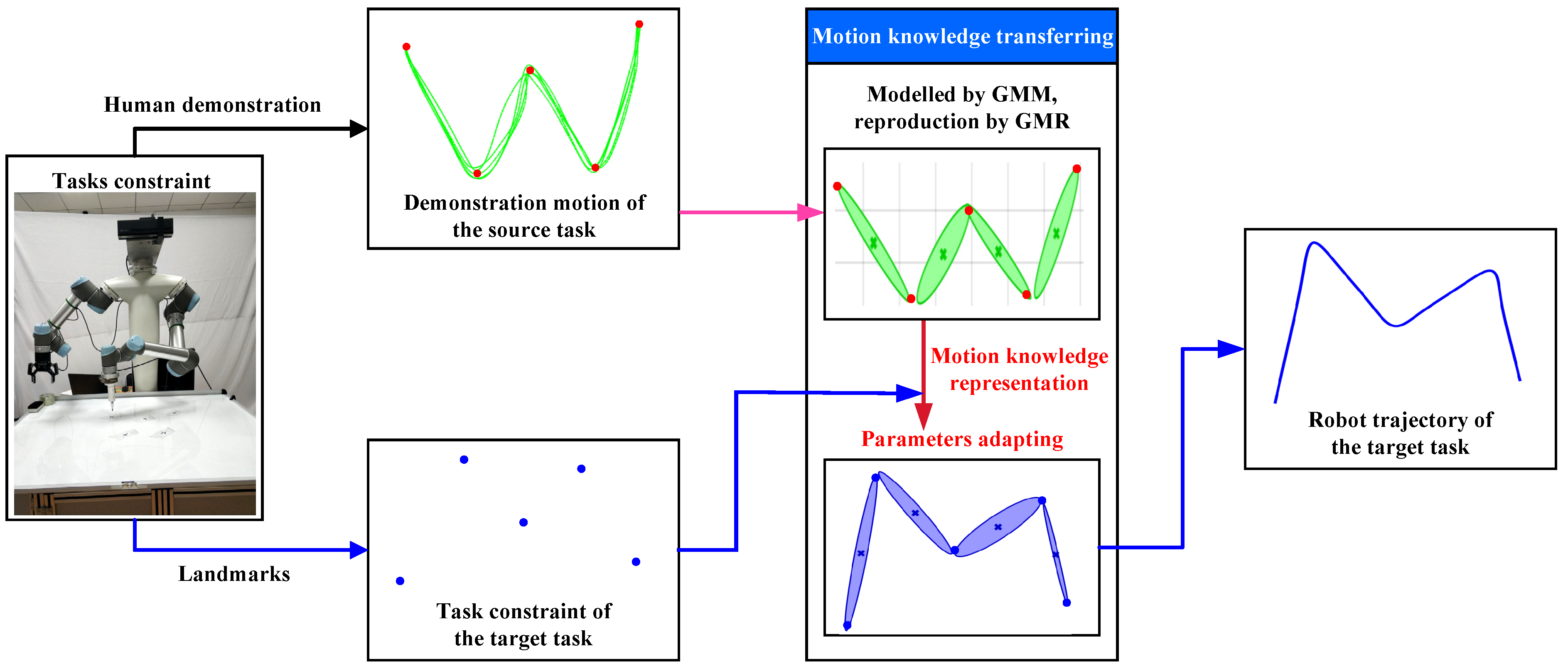
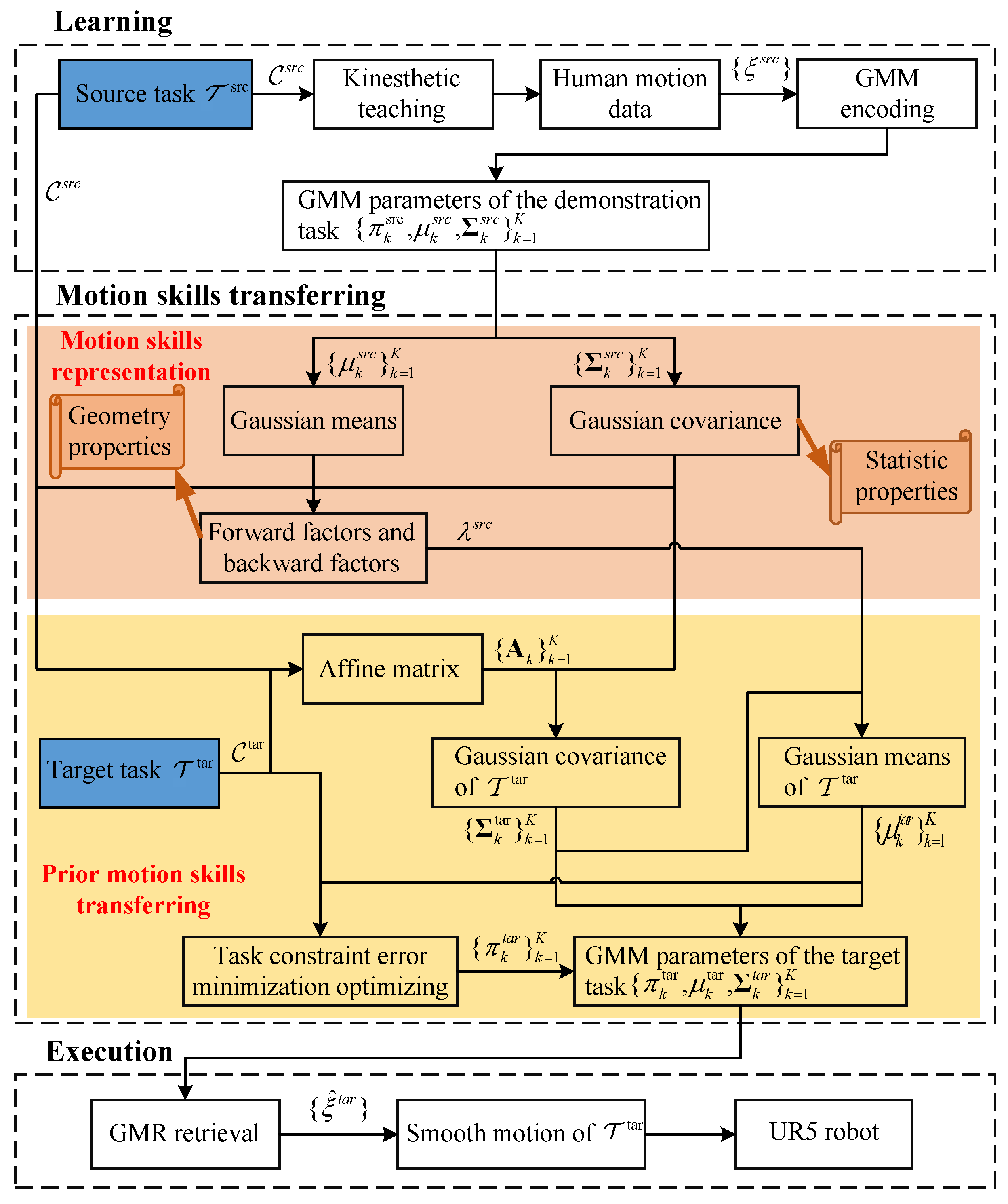
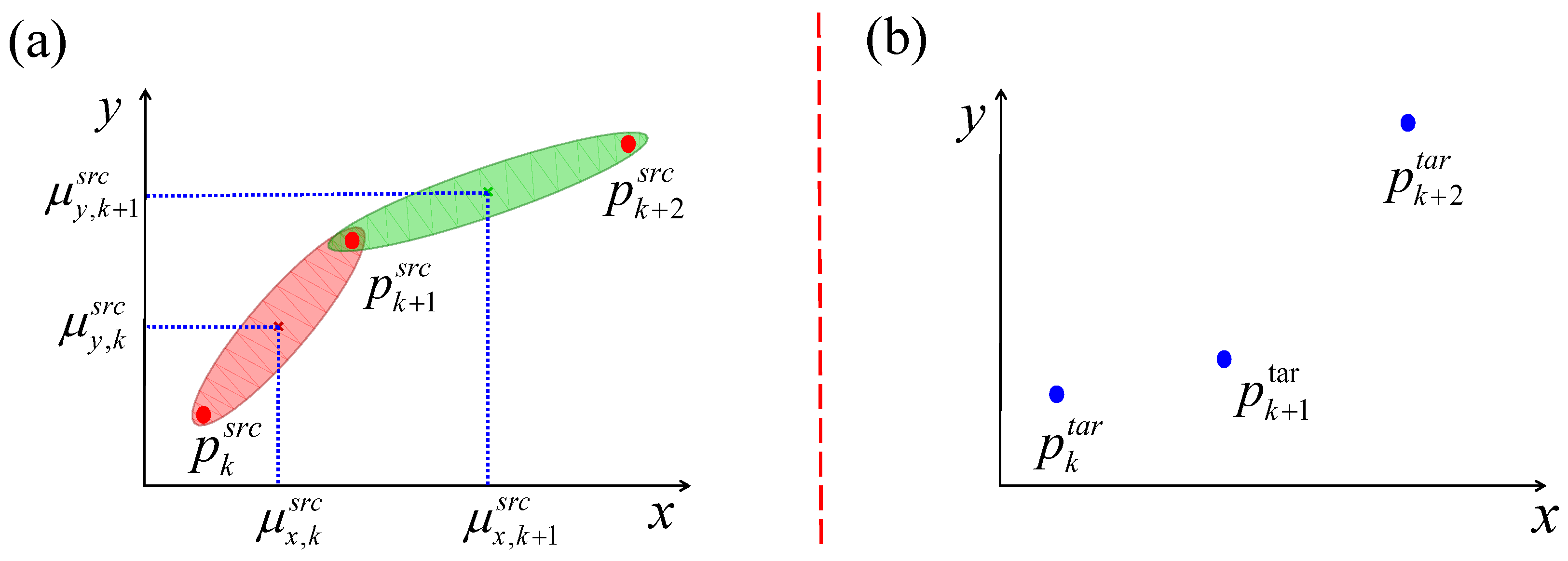
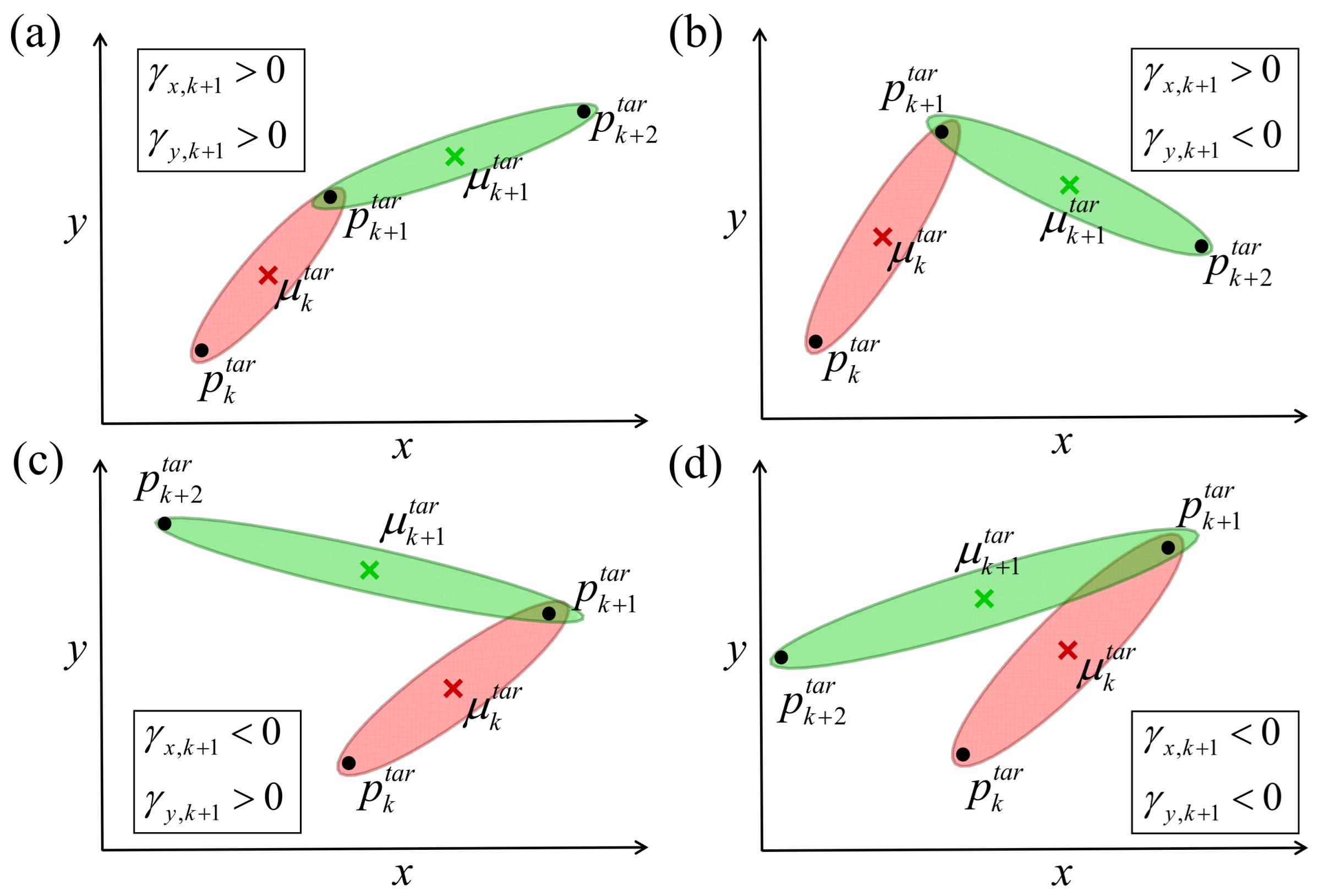
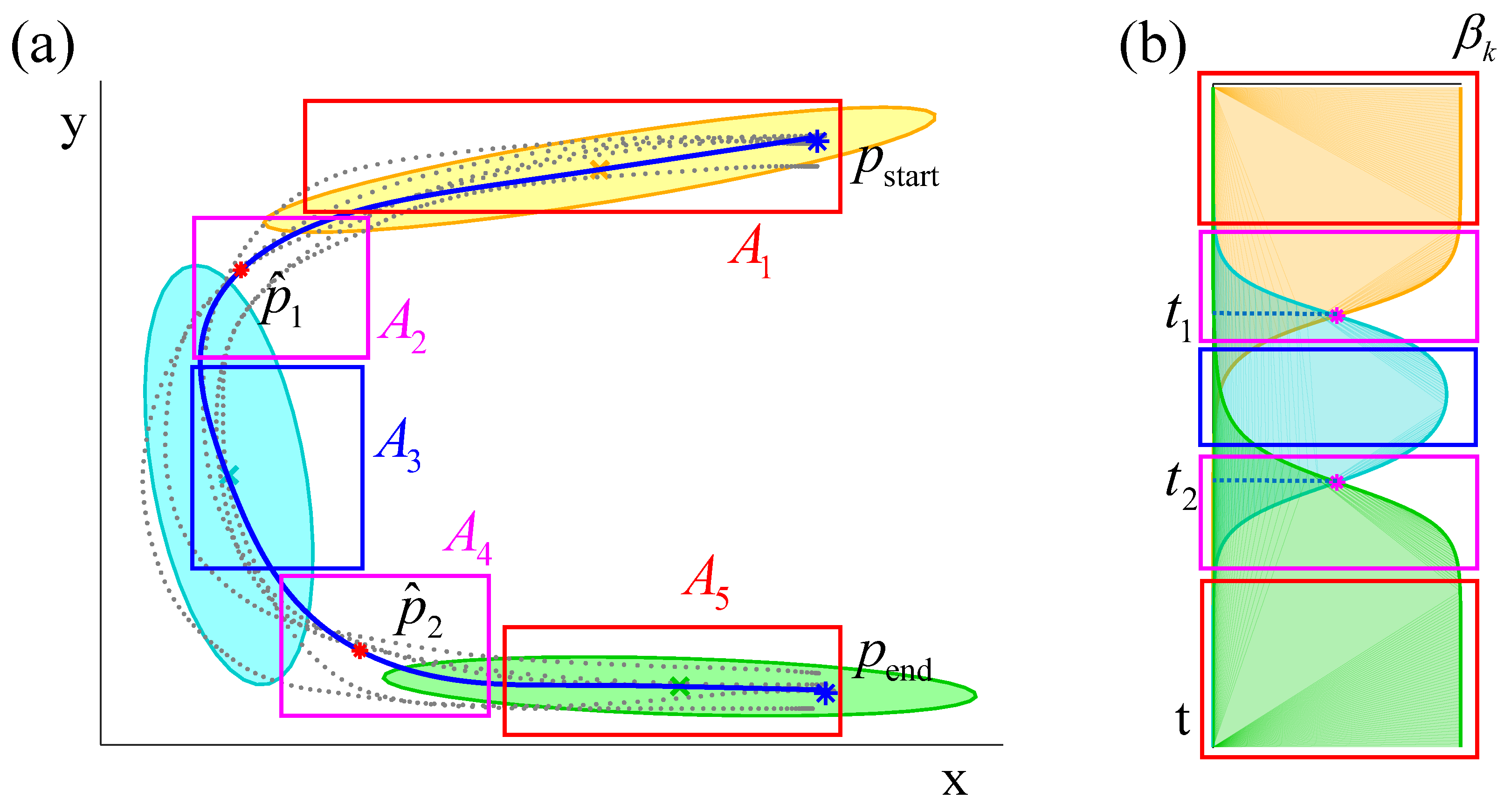
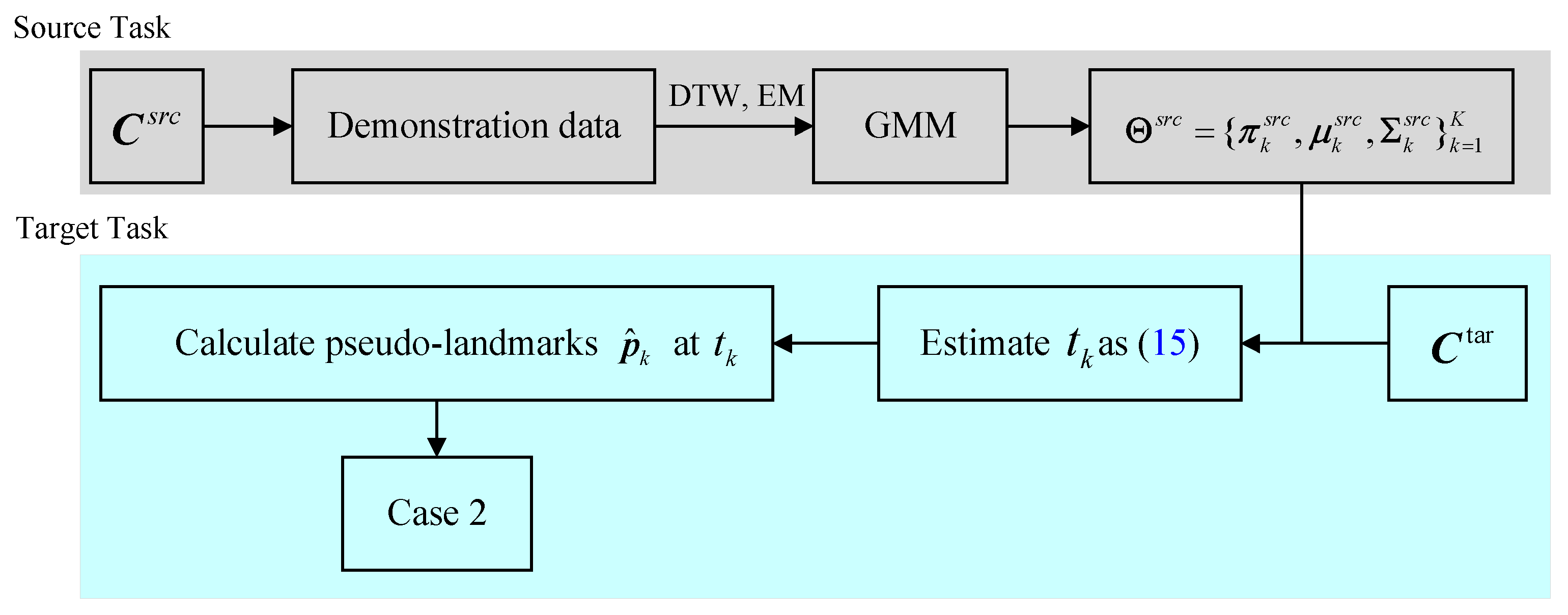
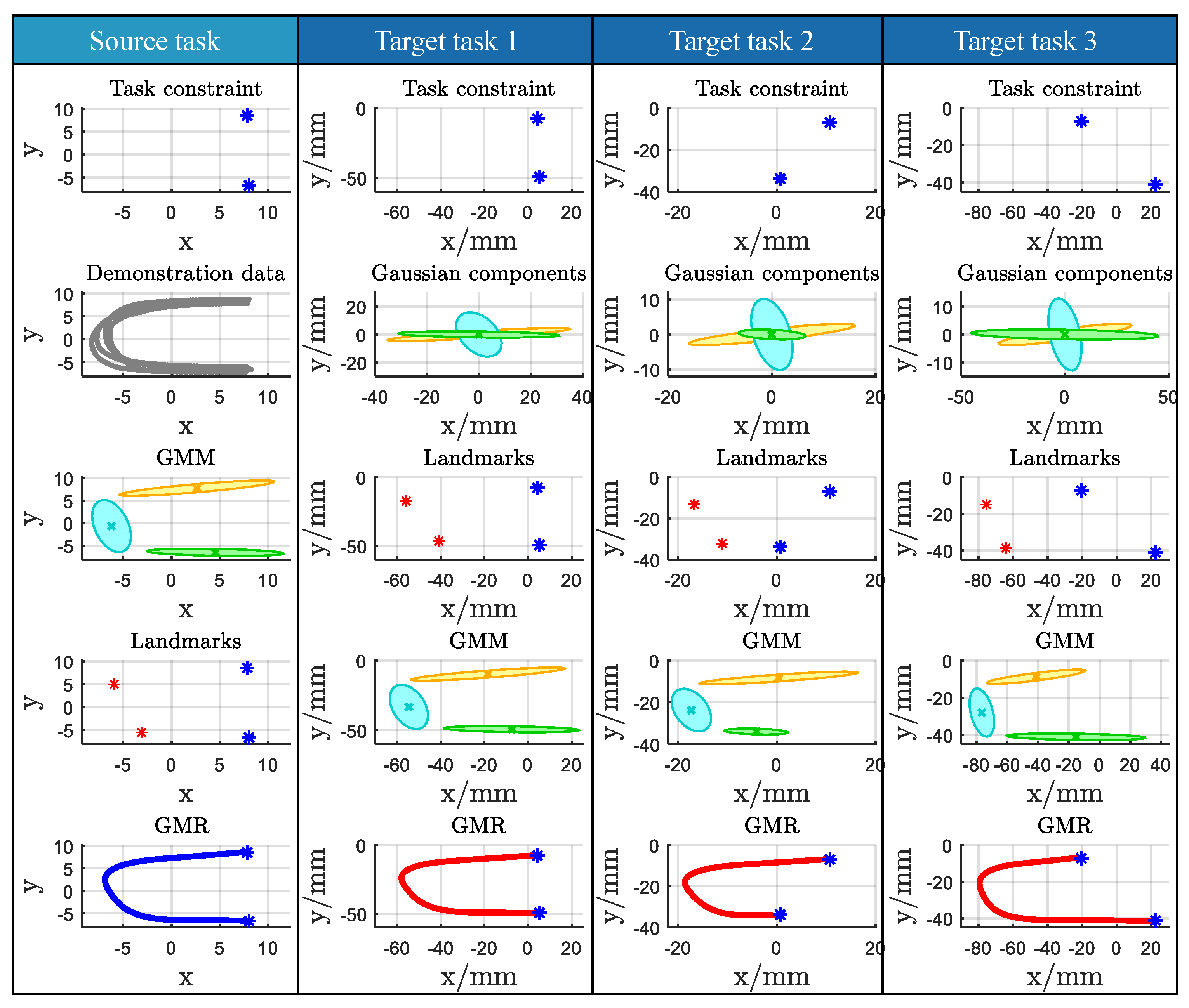
Human motion provides a valuable source of information for robotic skill acquisition, and Learning from Demonstration (LfD) has been widely adopted as an intuitive paradigm for enabling robots to learn tasks from human demonstrations. However, the lack of an explicit representation of transferable motion knowledge significantly limits the adaptability of LfD when tasks involve varying spatial constraints or environmental configurations. To address this challenge, this paper proposes a motion representation framework based on two fundamental properties of motion and introduces a novel Motion Knowledge Transferring Gaussian Mixture Model (MKT-GMM) for trajectory generalization across related tasks. In the proposed framework, demonstration trajectories from a source task are first collected through kinesthetic teaching and encoded using a Gaussian Mixture Model (GMM), where each Gaussian component represents a local motion primitive. Transferable motion knowledge is captured by jointly preserving the statistical characteristics of individual motion primitives and the geometric relationships between adjacent primitives. For a target task in which only task constraints are specified, the learned motion knowledge is transferred by adapting the GMM parameters through affine transformations combined with constraint-error minimization, enabling feasible trajectories to be generated without additional demonstrations or model retraining. The final motions are reconstructed using Gaussian Mixture Regression (GMR), ensuring smooth and consistent trajectory generation. To further improve the robustness of trajectory transfer, a pseudo via-point mechanism is introduced to automatically generate intermediate constraints when explicit via-points are unavailable. Experiments conducted on a robotic manipulation platform, including handwriting motion learning and pick-and-place tasks under varying task configurations, demonstrate that the proposed method effectively captures transferable motion knowledge and achieves reliable trajectory generalization for previously unseen tasks.
Keywords: learning from demonstration; GMM/GMR; motion knowledge representation; kinesthetic teaching; trajectory optimization learning from demonstration; GMM/GMR; motion knowledge representation; kinesthetic teaching; trajectory optimization