
Biomimetic Planning and Design of Five-Minute Living Circle Residential Areas Inspired by Cellular Structure



Abstract
1. Introduction
2. Materials and Methods
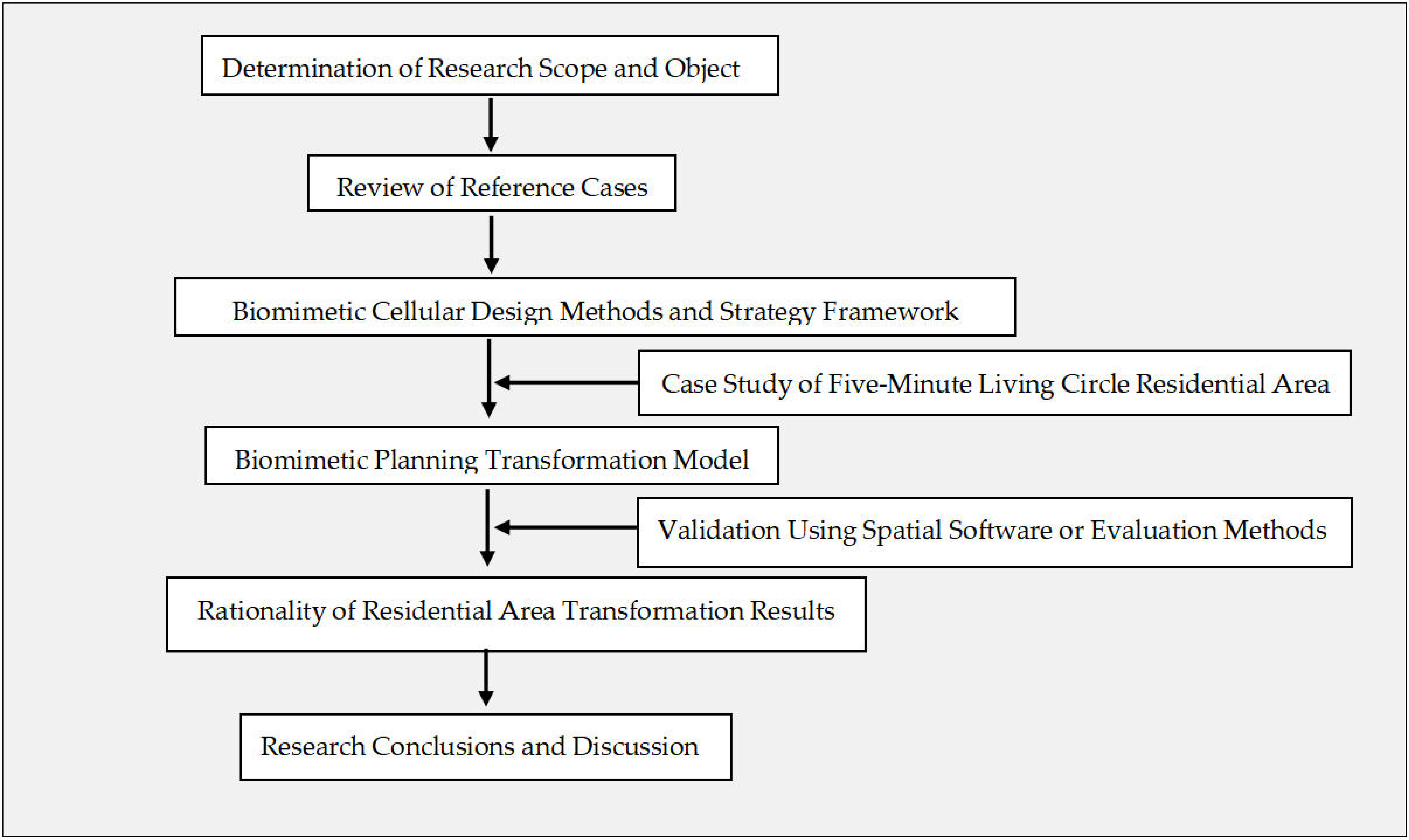
2.1. Overall Research Framework
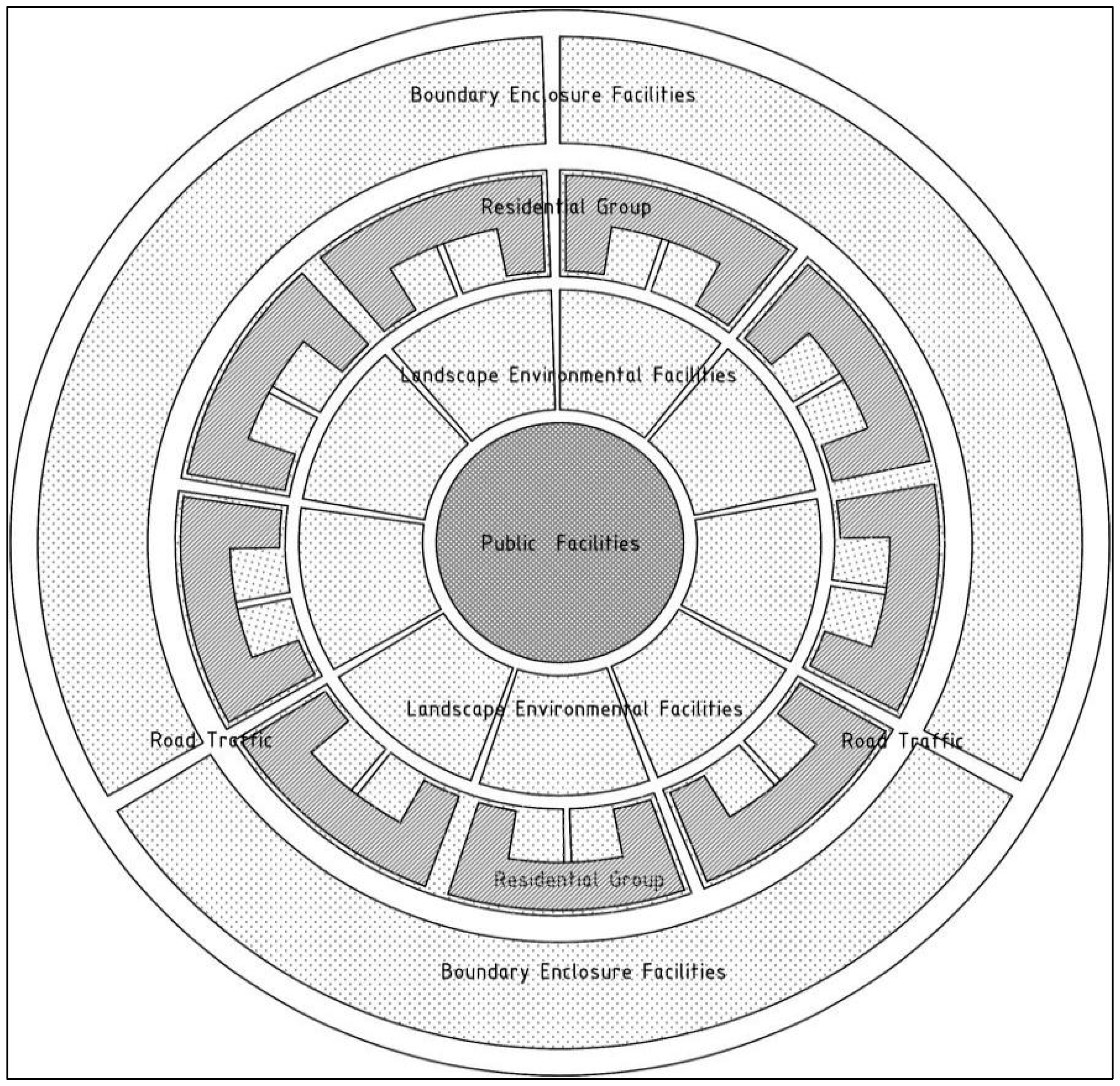
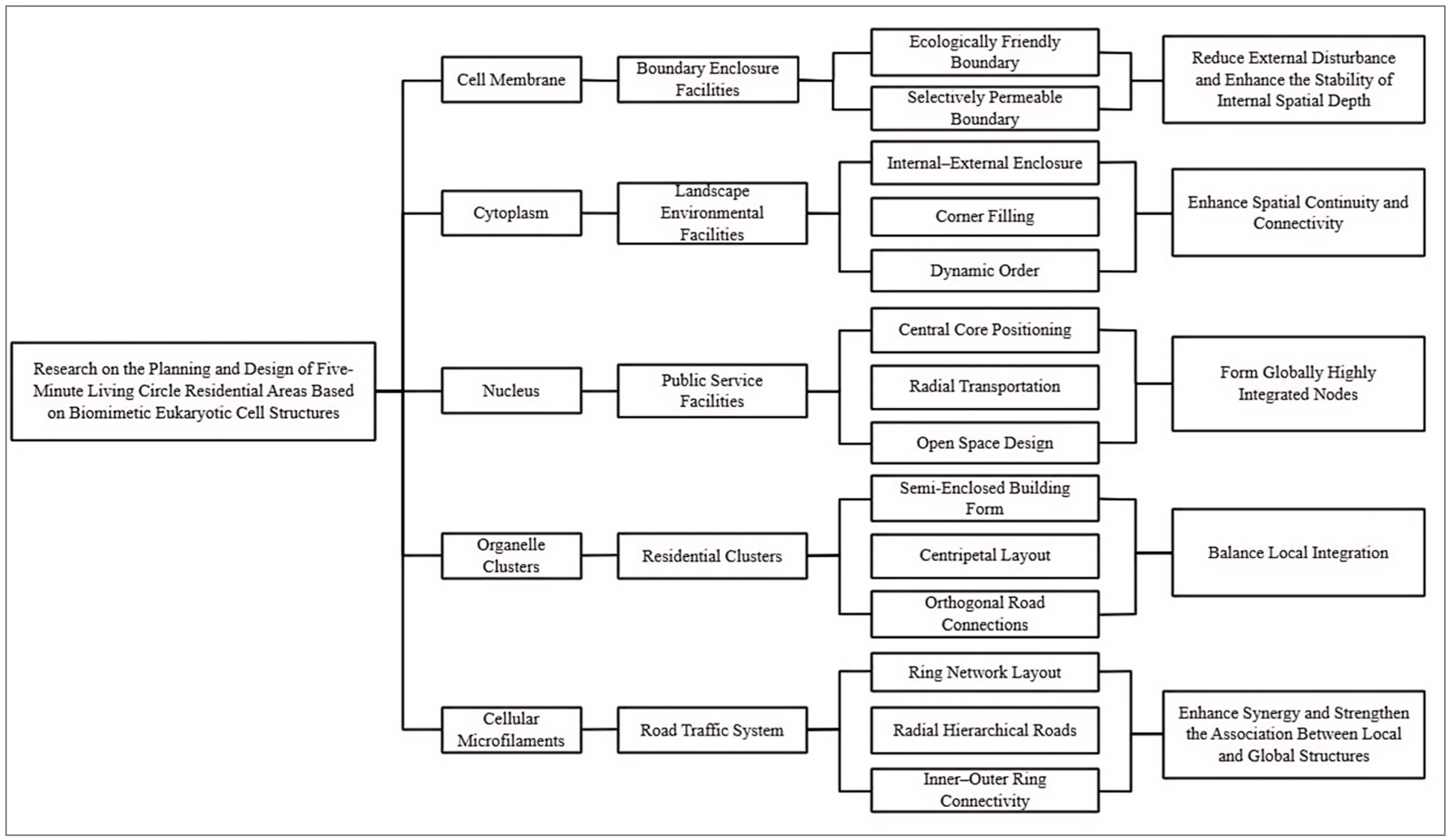
2.2. Planning Strategies for Residential Areas Based on Biomimetic Cellular Structures
2.2.1. Boundary Enclosure Facilities Analogous to the Cell Membrane
- (1)
- Ecologically friendly boundary: natural elements such as vegetation, water bodies, and rocks are used to construct boundaries, providing ecological services including biodiversity habitats, soil and water conservation, and microclimate regulation.
- (2)
- Selectively permeable boundary: boundary enclosure design considers the regulation of pedestrian flow, vehicular movement, air circulation, and sound transmission. For example, green belts can replace solid walls to provide natural barriers while allowing airflow and visual permeability. Both visual and physical barriers can be implemented, using vegetation, landscape walls, or artistic installations as visual screens, and physical barriers such as security fencing where necessary to ensure residential safety.
2.2.2. Landscape Environmental Facilities Analogous to the Cytoplasm
- (1)
- Internal–external enclosure: similar to the cytoplasm, landscape elements form grouped enclosures at both inner and outer levels.
- (2)
- Corner filling: under practical site conditions, areas that do not conform to the planned ring-like cellular residential structure are filled with landscape greenery.
- (3)
- Dynamic order: landscape elements within the residential area are arranged in an orderly manner to reflect the functional efficiency of cytoplasmic space, while also accommodating temporal changes such as seasonal variation and maintaining ecosystem services and biodiversity in accordance with the dynamic ecological balance of the cytoplasm.
2.2.3. Public Service Facilities Analogous to the Nucleus
- (1)
- Central core positioning: identify the central location of the residential area as the primary concentration of public service facilities, ensuring comprehensive service coverage within a five-minute walking radius of approximately 300 m.
- (2)
- Radial transportation: ensure accessibility to the core area by connecting all parts of the residential area through road networks and public transportation, enabling services and resources to radiate outward across the residential area, similar to the nucleus.
- (3)
- Open space design: design open spaces such as plazas and parks within the core area to serve as venues for gathering and leisure activities for residents.
2.2.4. Residential Clusters Analogous to Organelle Clusters
- (1)
- Semi-enclosed building form: each residential cluster adopts a C-shaped semi-enclosed configuration, creating both private and public spaces to form cohesive residential units.
- (2)
- Centripetal layout: spatial relationships among residential clusters are organized concentrically, with a radius of approximately 300 m.
- (3)
- Orthogonal road connections: convenient transportation links between residential clusters are ensured by using orthogonally intersecting internal roads connected directly to building entrances, facilitating daily mobility and rapid response in emergency situations.
2.2.5. Road Traffic Systems Analogous to Microfilaments
- (1)
- Ring network layout: a circular road network is designed to traverse the entire residential area, ensuring efficient connections among residential clusters, similar to the continuous network of microfilaments.
- (2)
- Radial hierarchical roads: different levels of roads—such as primary roads, secondary roads, branch roads, and pedestrian paths—are planned to mimic microfilaments of varying scales, accommodating diverse traffic flows and functional requirements.
- (3)
- Inner–outer connectivity: the connectivity between the inner and outer layers of the road network is enhanced to ensure that all parts of the residential area can conveniently access the transportation system, analogous to the extensive distribution of microfilament networks.
2.3. Sample Residential Area Planning and Model Selection
2.3.1. Five-Minute Living Circle Residential Area

| Distance and Scale | Fifteen-Minute Living Circle Residential Area | Ten-Minute Living Circle Residential Area | Five-Minute Living Circle Residential Area | Residential Block |
|---|---|---|---|---|
| Walking Distance (m) | 800–1000 | 500 | 300 | - |
| Residential Population (persons) | 50,000–100,000 | 15,000–25,000 | 5000–12,000 | 1000–3000 |
| Number of Housing Units | 17,000–32,000 | 5000–8000 | 1500–4000 | 300–1000 |
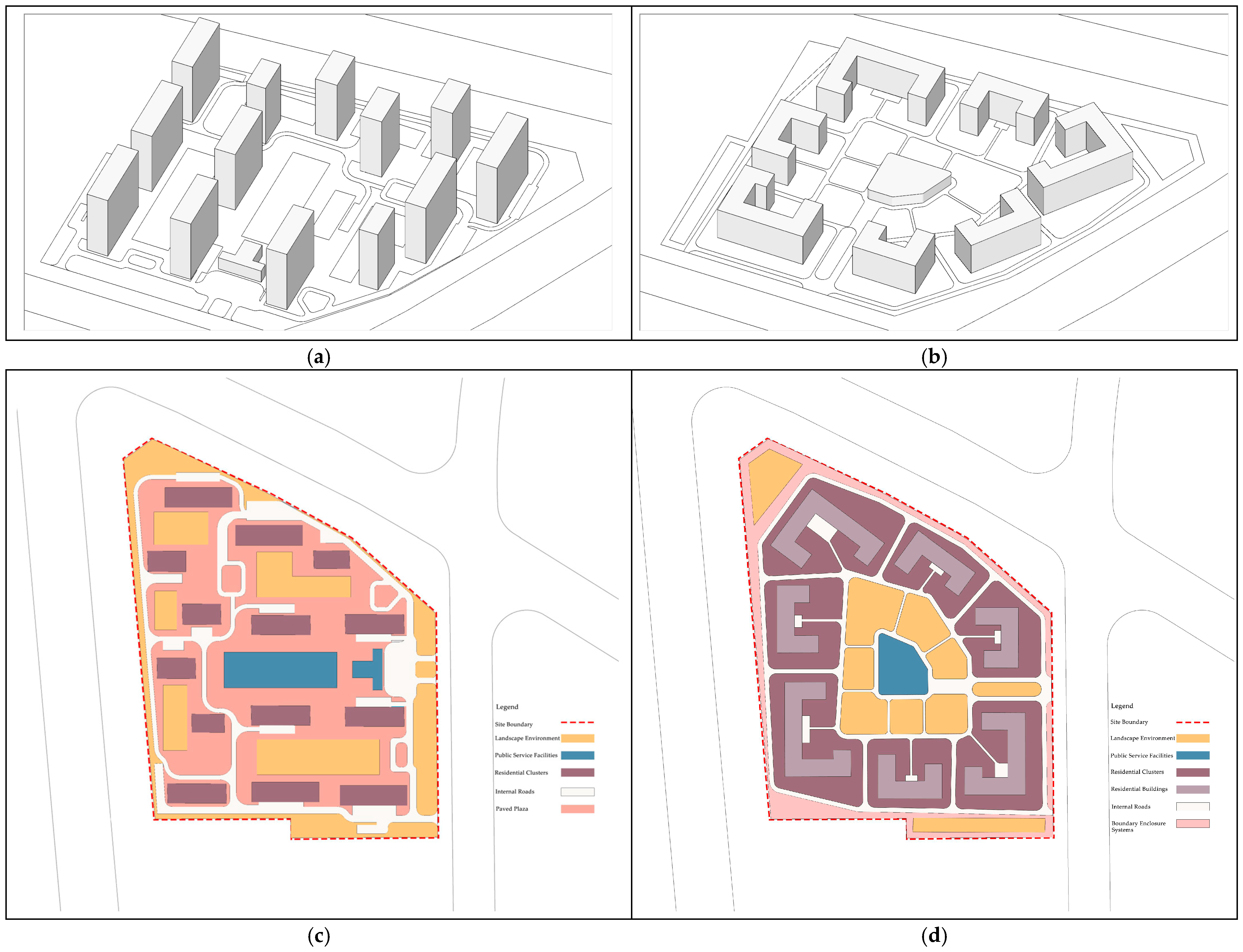
2.3.2. Transformation of a Five-Minute Living Circle Residential Area in Nanchang
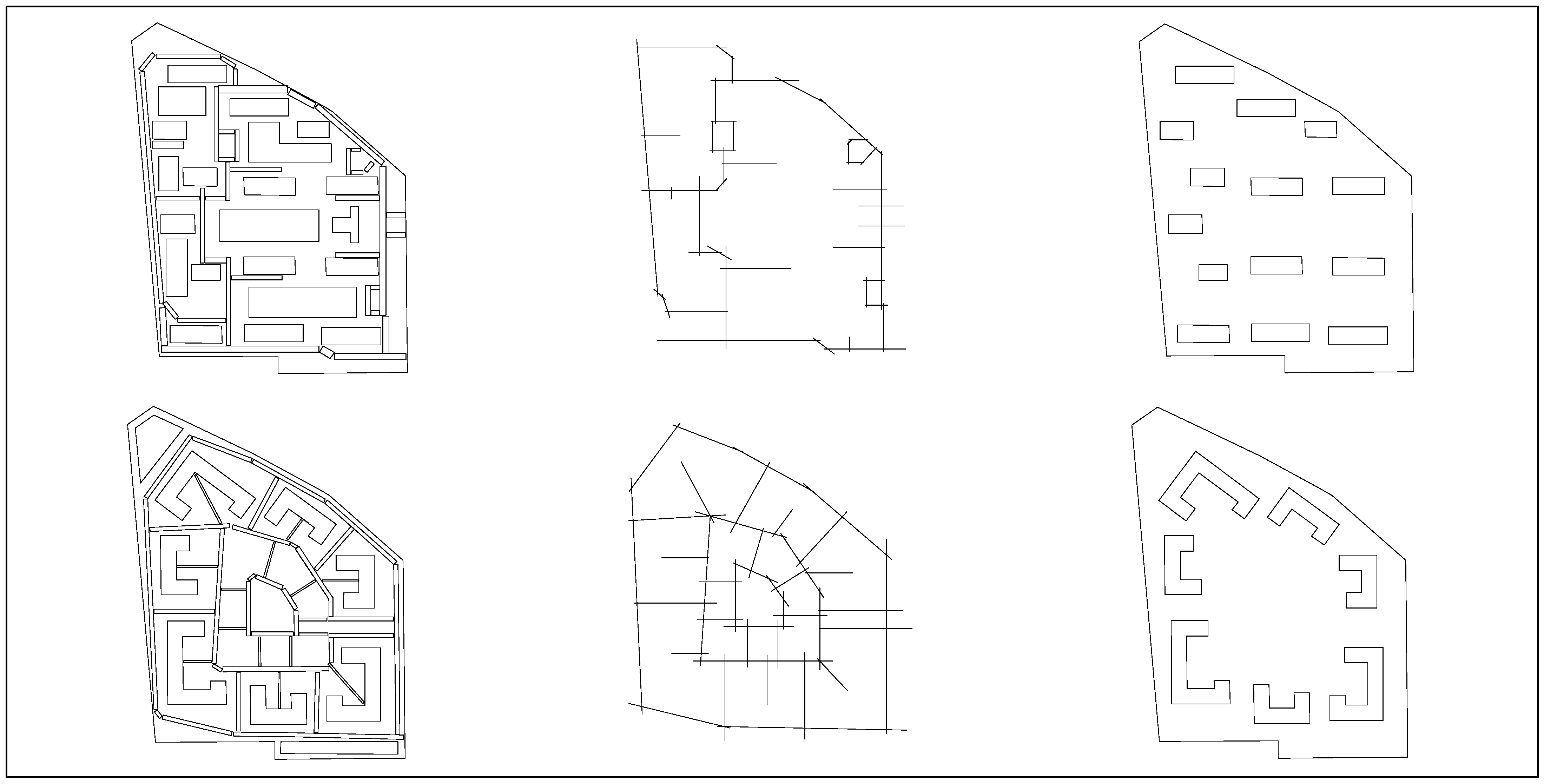
2.4. Space Syntax Analysis
2.4.1. Space Syntax Methods
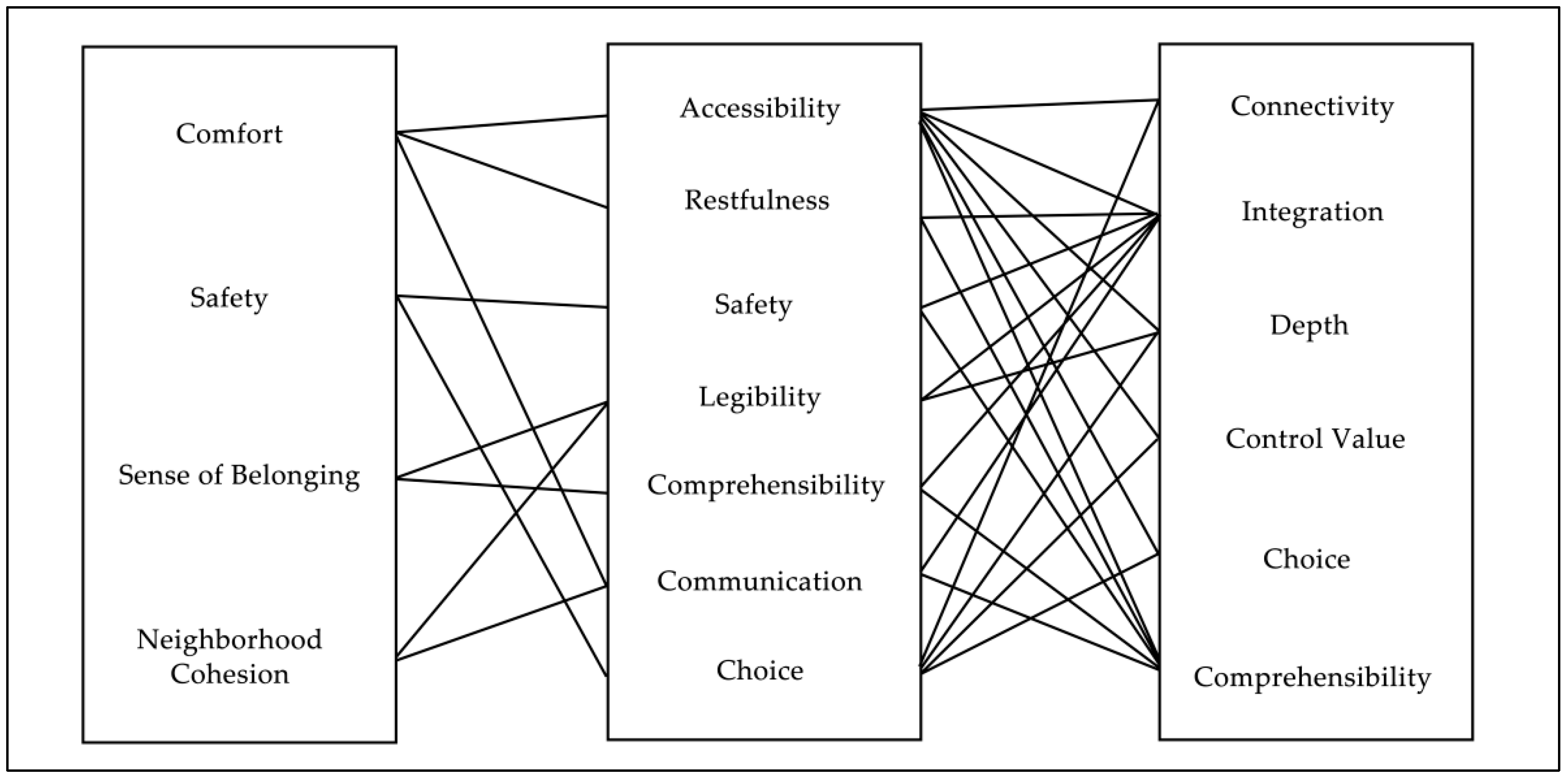
2.4.2. Space Syntax Variables
- (1)
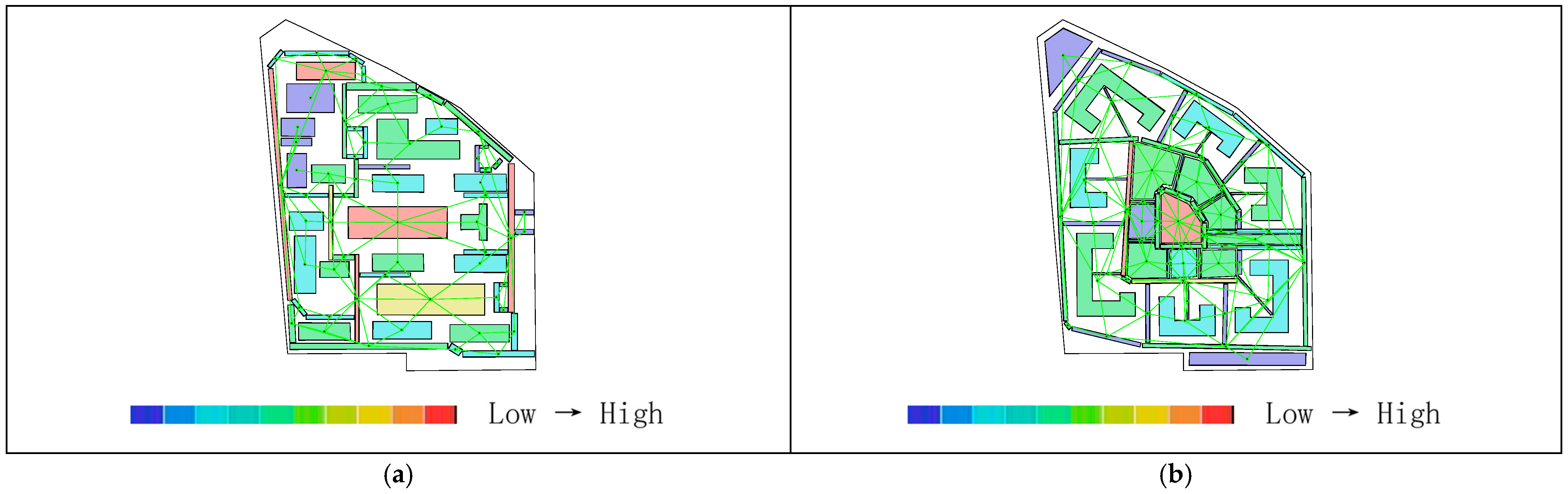
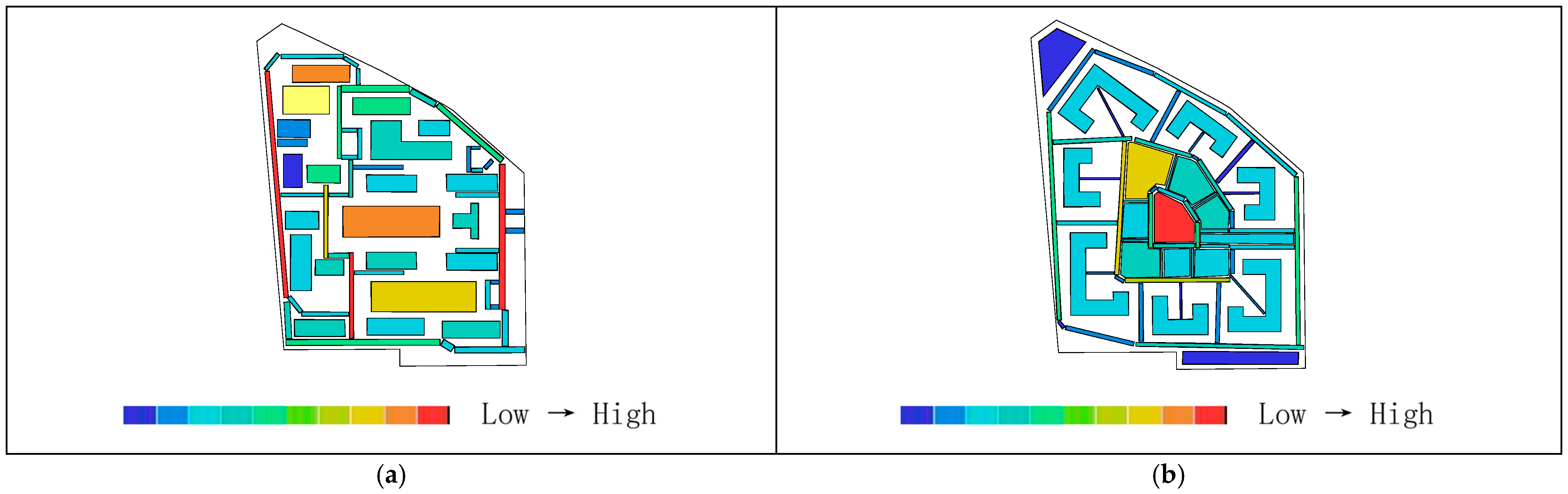
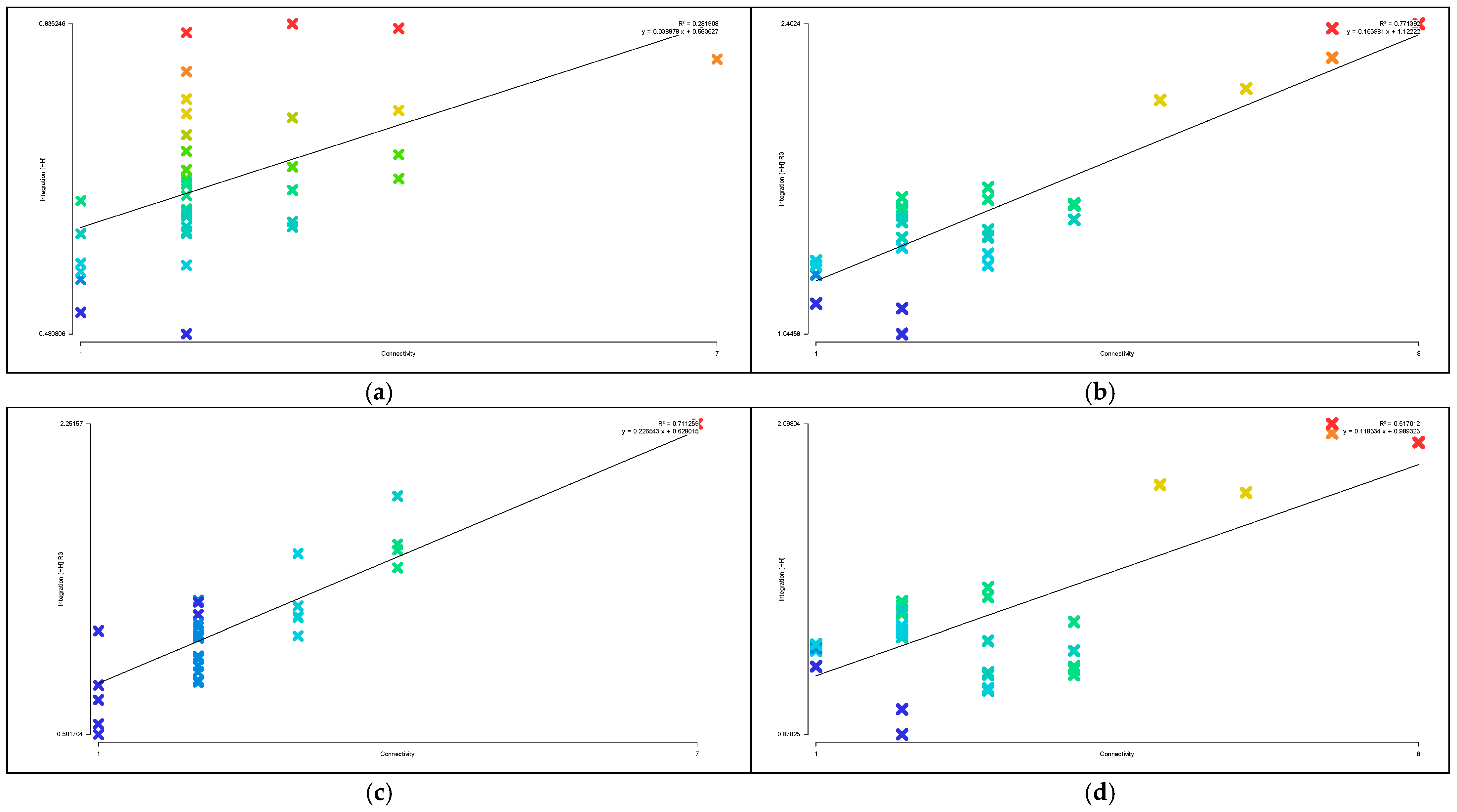
- Connectivity: Connectivity refers to the degree of linkage between nodes in a spatial network, representing the number of spaces directly connected to a given node. A higher connectivity value indicates that a space is linked to more adjacent spaces, reflecting stronger spatial interaction, easier access to surrounding spaces, and greater permeability [45,46].
- (2)
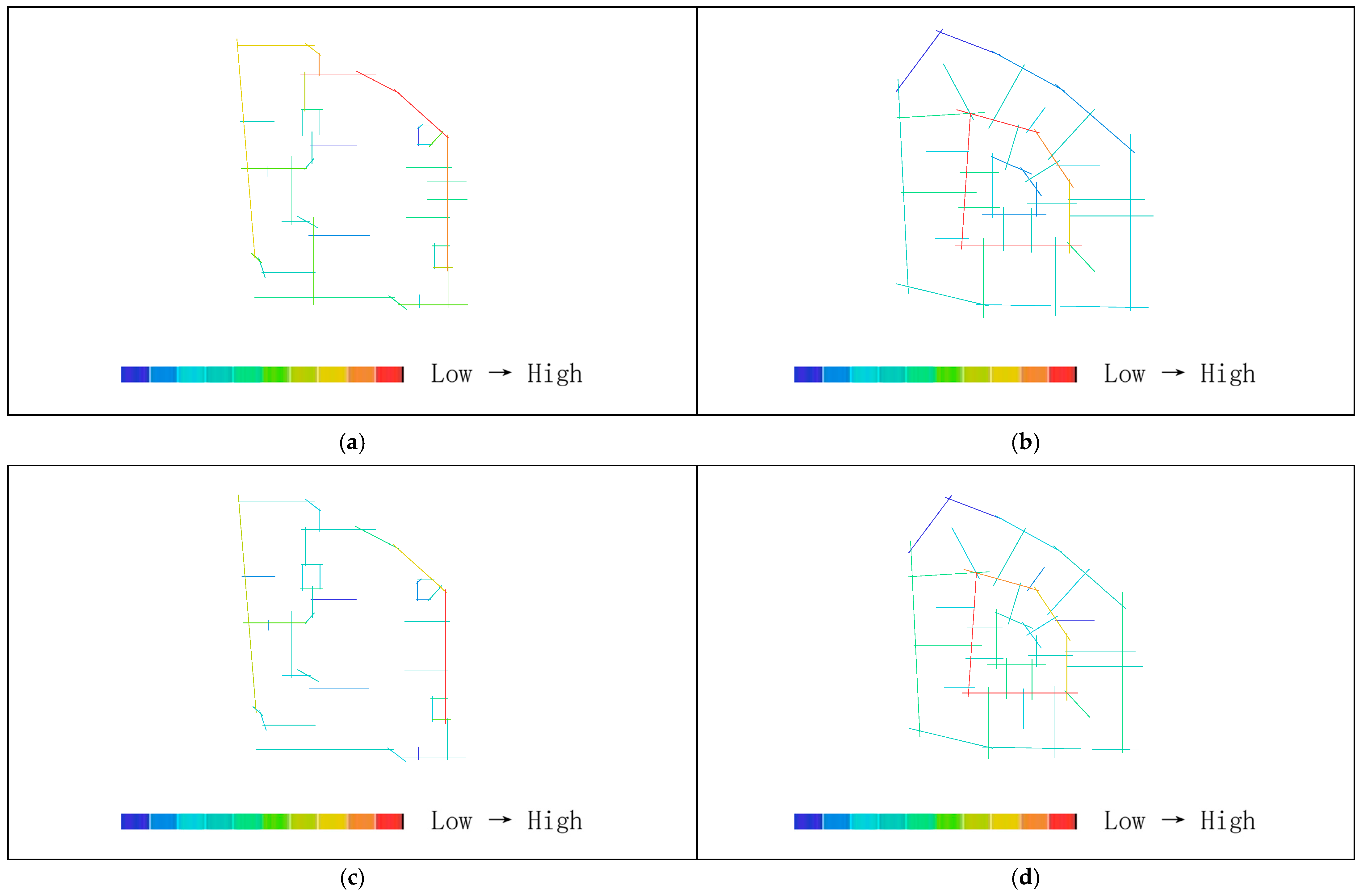
- Control Value: Control value reflects the degree to which a spatial node controls movement within the network and is generally related to its connectivity. A higher control value indicates that a space has a broader field of view, allowing greater visibility and supervision over the spatial system, and thus occupies a relatively more important position within its surrounding area. The calculation formula is shown in Equation (2):
- (3)
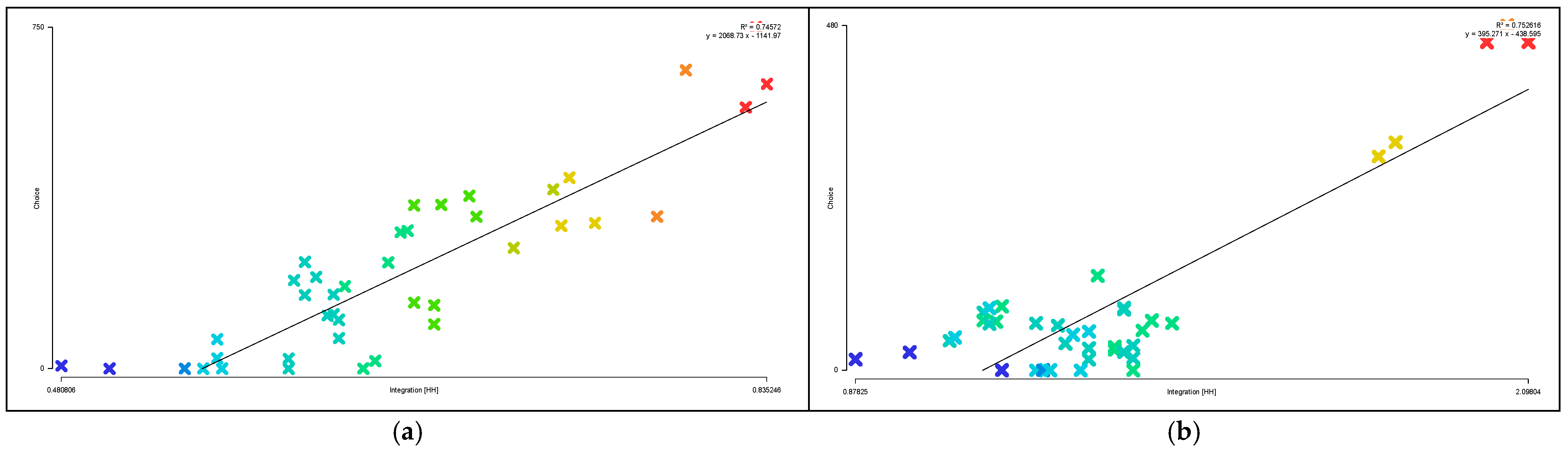
- Choice: Choice measures the number of alternative paths available from a given node, reflecting the diversity of routes and the potential for movement. A higher choice value indicates that a space is more likely to be traversed by pedestrian flow and has greater potential attractiveness for movement.
- (4)
- Depth: Depth represents the “distance” from the outermost part of the network to a specific node, defined as the shortest path length from one node to the farthest node in the network. Mean depth refers to the average depth of a space within the spatial system. A higher mean depth value indicates that the space is farther from other spaces and requires more steps to reach them, implying lower accessibility and convenience. The calculation is shown in Equation (3):
- (5)
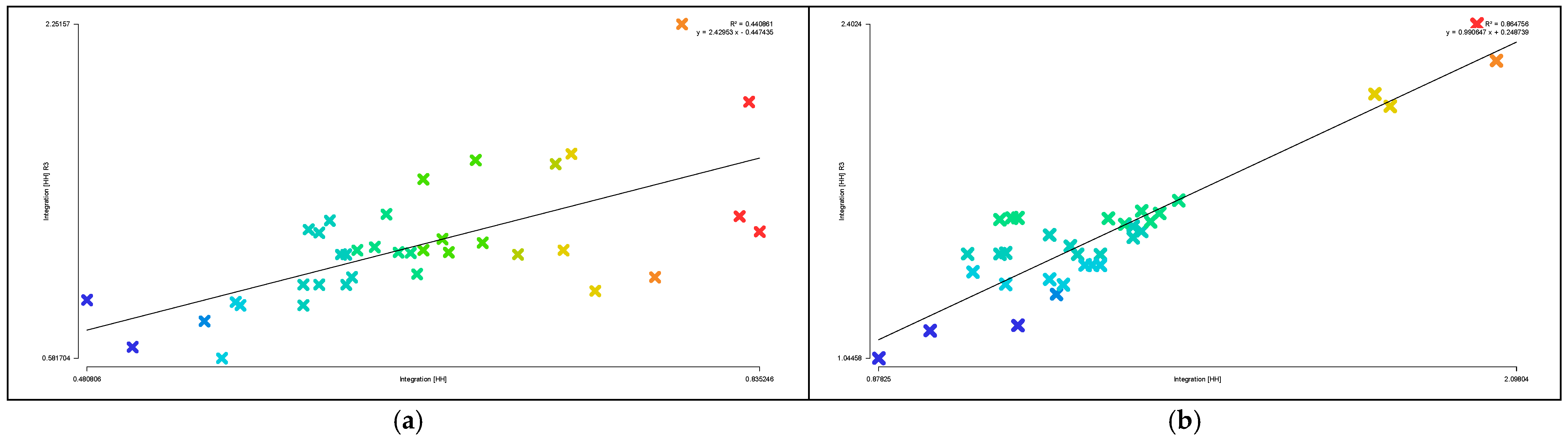
- Integration: Integration evaluates the centrality of nodes within a spatial network. Nodes with higher integration values are more centrally located within the network. The calculation formulas are shown in Equations (5) to (8):
- (6)
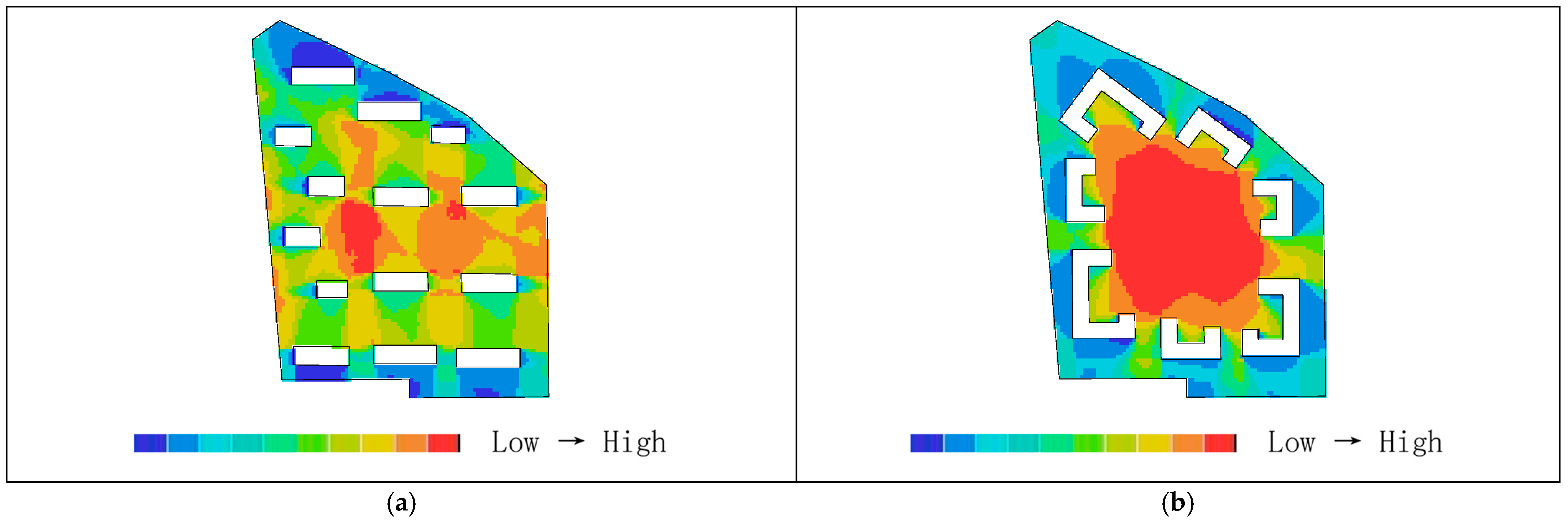
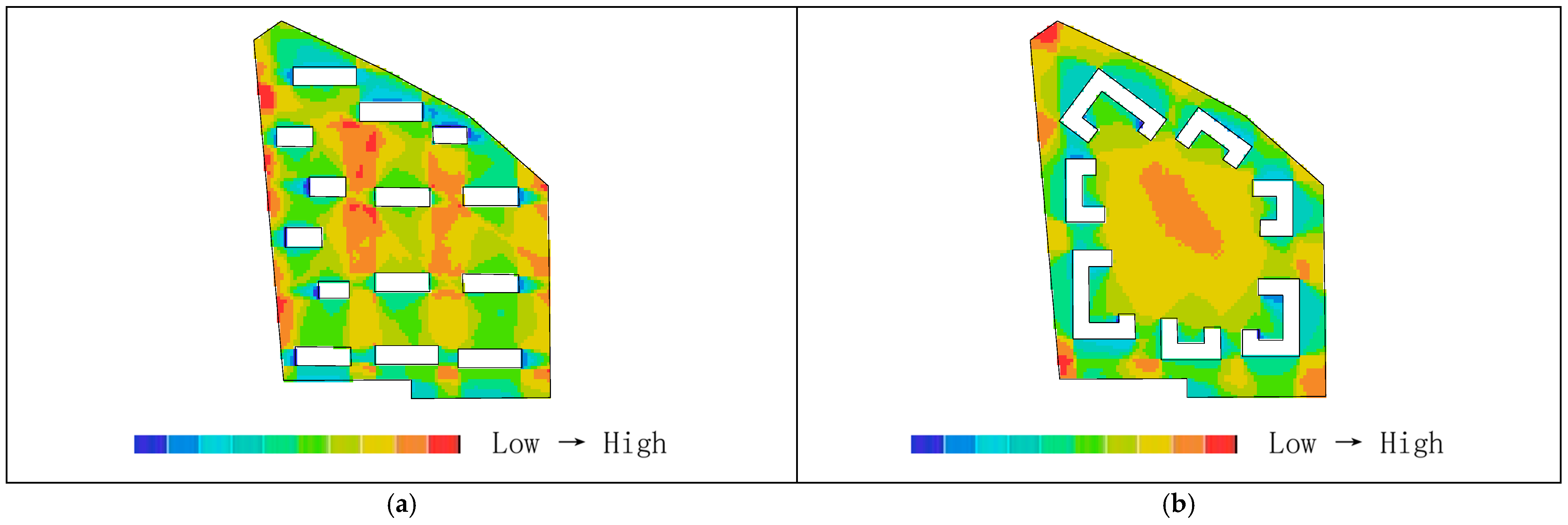
- Aggregation: Aggregation represents the degree to which certain spatial features or activities are concentrated and is used to evaluate the clustering characteristics of space. A higher visual aggregation value of a given space indicates stronger constraints imposed by surrounding spatial interfaces, resulting in a more restricted field of view and a higher sense of spatial enclosure. The calculation formula is shown in Equation (9):
- (7)
- Synergy: Synergy measures the interaction and coordination among different spatial elements, reflecting the degree of spatial integration. A higher synergy value of a given space indicates a stronger relationship between local spatial structure and the overall spatial system. The calculation formula is shown in Equation (10):
- (8)
- Comprehensibility: Comprehensibility evaluates the clarity and intelligibility of spatial layout, influencing human spatial cognition. A higher comprehensibility value indicates that spaces with higher local connectivity also exhibit higher global integration, suggesting that the spatial system is clear, intelligible, and well-structured. The calculation formula is shown in Equation (11):
- (9)
- Pedestrian Interface Value: The pedestrian interface value measures the level of activity along pedestrian interfaces and is generally related to commercial activities and pedestrian density. A higher pedestrian interface value indicates a stronger capacity of a space to accommodate both internal movement and external through-flow of pedestrians, and a lower likelihood of traffic congestion. The calculation formula is shown in Equation (12):
2.4.3. Social and Spatial Attributes of Space Syntax Parameters in Residential Areas
3. Results
3.1. Convex Space Analysis
3.2. Axial Analysis
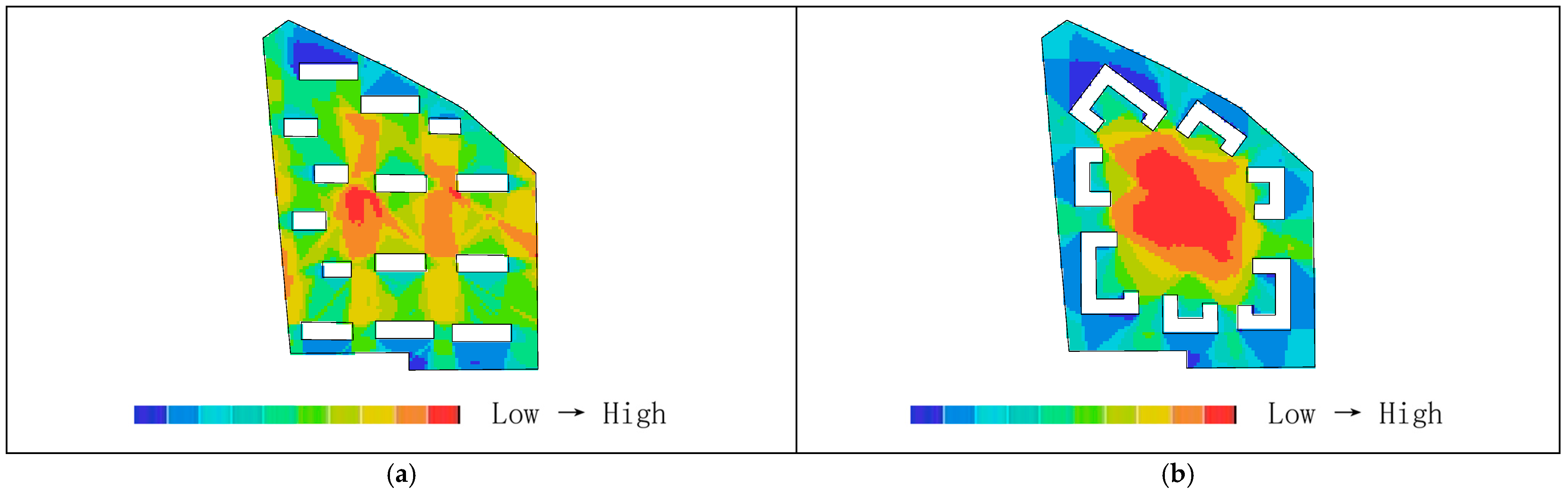
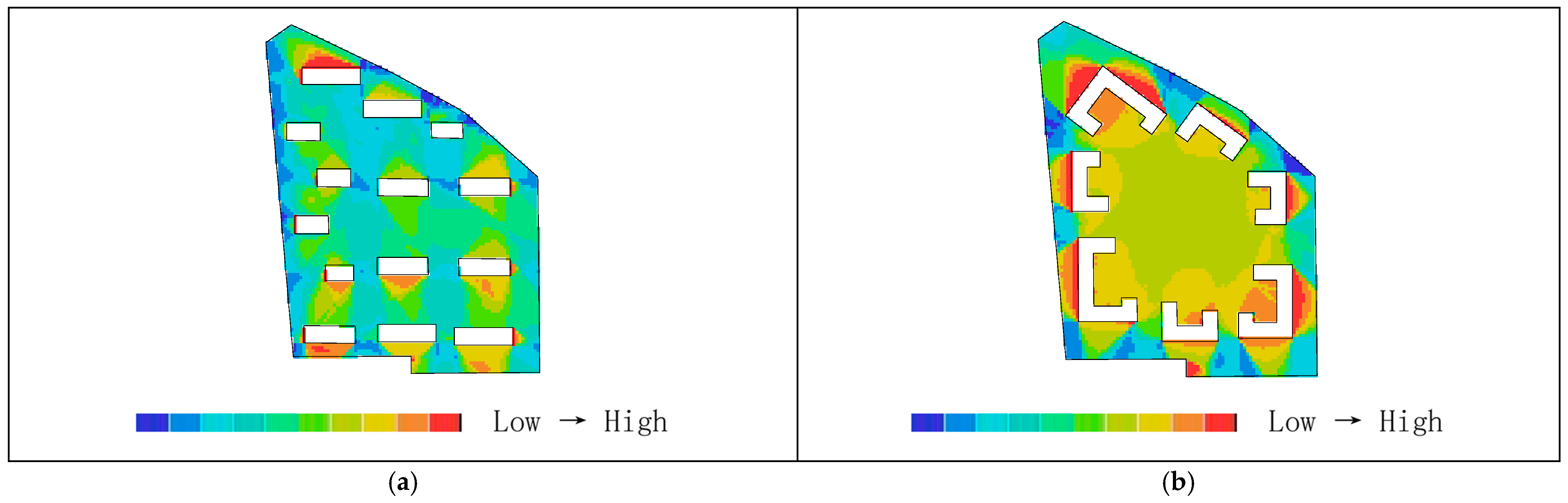
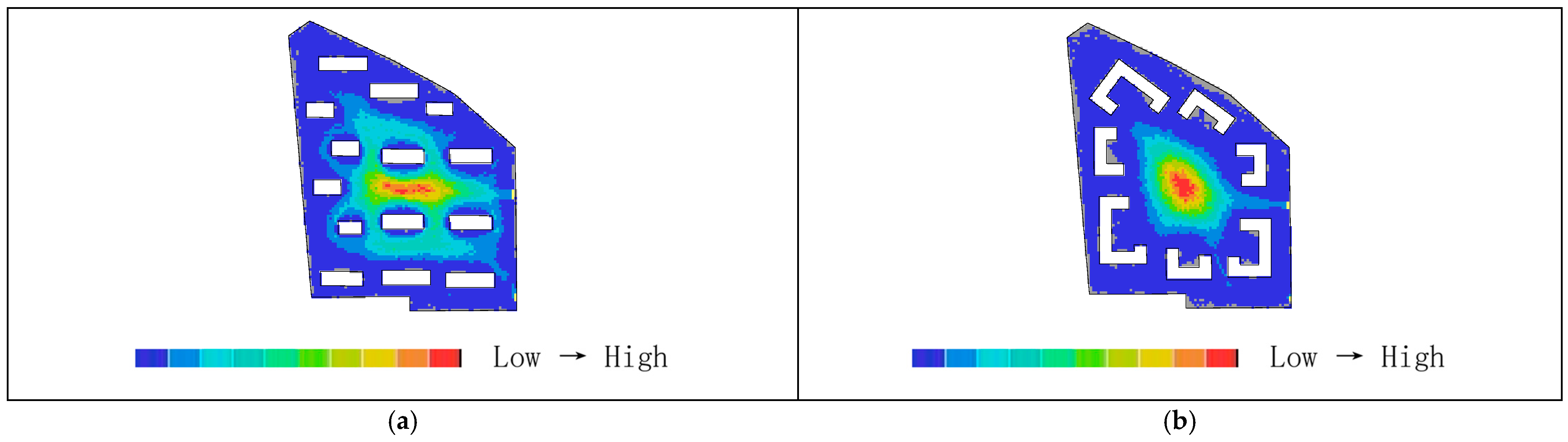
3.3. Visibility Analysis
4. Discussion
4.1. Integration of Biomimetic Design Methods and Space Syntax
4.2. Spatial Accessibility and Urban Vitality of Five-Minute Living Circles Under Biomimetic Mechanisms
4.3. Transformation from Single-Cell to Multicellular Spatial Organization Structures and Application Prospects in Residential Area Planning
4.4. Limitations and Future Research Directions of the Biomimetic Planning Method
5. Conclusions
Author Contributions
Funding
Institutional Review Board Statement
Informed Consent Statement
Data Availability Statement
Acknowledgments
Conflicts of Interest
References
- Vincent, J.F.V.; Bogatyreva, O.A.; Bogatyreva, N.R.; Bowyer, A.; Pahl, A.K. Biomimetics: Its practice and theory. J. R. Soc. Interface 2006, 3, 471–482. [Google Scholar] [CrossRef]
- Pearson, D. Organic Architecture; Dong, W., Translator; Jiangsu Science and Technology Press: Nanjing, China, 2002. [Google Scholar]
- Li, C. Research on Biomimetic Cellular Architectural Design Methods. Master’s Thesis, Dalian University of Technology, Dalian, China, 2013. [Google Scholar]
- Li, S.; Feng, L. Research on Concepts and Methods of New Organic Architectural Design. Archit. J. 2008, 24, 14–17. [Google Scholar]
- He, J. New Bionic Architecture: A New Architectural Field in the Era of Artificial Life; China Architecture & Building Press: Beijing, China, 2009. [Google Scholar]
- Hensel, M.; Menges, A.; Weinstock, M. Emergent Technologies and Design: Towards a Biological Paradigm for Architecture; Routledge: Oxfordshire, UK, 2013. [Google Scholar]
- Wang, J. From Form Analysis to Morphological Generation. Master’s Thesis, Shandong Jianzhu University, Jinan, China, 2023. [Google Scholar]
- Butt, A.N. Biomimicry and the BREEAM category of energy for sustainable architecture and sustainable urbanism. GSC Adv. Res. Rev. 2022, 12, 109–122. [Google Scholar] [CrossRef]
- Richard, T.; Forman, T.; Godron, M. Landscape Ecology; John Wiley: New York, NY, USA, 1986. [Google Scholar]
- Richard, T.; Forman, T. Land Mosaics. The Ecology of Landscapes and Regions; Cambridge University Press: Cambridge, UK, 1995. [Google Scholar]
- Barthlott, W.; Rafiqpoor, M.D.; Erdelen, R.W. Bionics and biodiversity–bio-inspired technical innovation for a sustainable future. In Biomimetic Research for Architecture and Building Construction: Biological Design and Integrative Structures; Springer: Berlin/Heidelberg, Germany, 2016; pp. 11–55. [Google Scholar]
- Yu, K.; Zhang, D. Living Cells, Landscape Patterns, and Innovation Networks—Planning of Zhongguancun Life Science Park. Archit. J. 2001, 35, 37–40. [Google Scholar]
- Yang, C. Conceptual Planning and Design of Foshan International Procurement and Regional Logistics Center Based on Cellular Functional Principles. Ind. Constr. 2013, 43, 66–70. [Google Scholar] [CrossRef]
- Fang, C.; Yang, C. Ecology, System, and Efficiency—Analysis of the Conceptual Planning and Design Scheme of Foshan International Procurement and Regional Logistics Center. Fujian Archit. 2013, 04, 83–86. [Google Scholar]
- van Nes, A.; Yamu, C. Space syntax applied in urban practice. In Introduction to Space Syntax in Urban Studies; Springer: Berlin/Heidelberg, Germany, 2021; pp. 213–237. [Google Scholar]
- Mu, Y. A Concise Introduction to Space Syntax, 2nd ed.; Institute of Architecture, Shenzhen University: Shenzhen, China, 2012. [Google Scholar]
- Hillier, B.; Hanson, J. The Social Logic of Space; Cambridge University Press: Cambridge, UK, 1984. [Google Scholar]
- Hillier, B. Space is the Machine: A Configurational Theory of Architecture; Cambridge University Press: Cambridge, UK, 2007. [Google Scholar]
- Hillier, B. The common language of space: A way of looking at the social, economic and environmental functioning of cities on a common basis. J. Environ. Sci. 1999, 11, 344–349. [Google Scholar]
- Hanson, J. Decoding Homes and Houses; Cambridge University Press: Cambridge, UK, 2003. [Google Scholar]
- Zhou, Y. Research on the Layout of Community-Level Public Activity Spaces in Chengdu Based on Space Syntax Theory. Master’s Thesis, Southwest Jiaotong University, Chengdu, China, 2021. [Google Scholar] [CrossRef]
- Ji, Y. Research on the Morphology and Regeneration of Resettlement Residential Areas Based on Space Syntax. Master’s Thesis, Southeast University, Nanjing, China, 2021. [Google Scholar] [CrossRef]
- Roozkhosh, F.; Molavi, M.; Salaripour, A. Comparison of walkability in different urban districts using space syntax. J. Archit. Urban. 2020, 44, 1–10. [Google Scholar] [CrossRef]
- Li, R.; Liang, M. Spatial Characteristics of Suburban Villages Based on Spatial Syntax. Sustainability 2022, 14, 14195. [Google Scholar] [CrossRef]
- Khorsheed, J.B.; Goriel, W.A.S. Analytical Study of University Campuses’ Walkability using Space Syntax Analysis: University of Duhok (UoD) as a Case Study. J. Eng. Res. 2021, 9, 1–15. [Google Scholar] [CrossRef]
- Bindajam, A.A.; Mallick, J. Impact of the Spatial Configuration of Streets Networks on Urban Growth: A Case Study of Abha City, Saudi Arabia. Sustainability 2020, 12, 1856. [Google Scholar] [CrossRef]
- Xiao, Z.; Chai, Y.; Zhang, Y. A Review of Research and Planning Practice Progress on Life Circle Planning at Home and Abroad. Planners 2014, 10, 89–95. [Google Scholar]
- Yu, Y. From Traditional Residential Planning to Life Circle-Based Residential Planning. City Plan. Rev. 2019, 43, 17–22. [Google Scholar]
- Lyu, K.; Wei, G.Y.; Liu, Y.; Li, Y. A Study on the Shenzhen-Hong Kong Cross-Border Living Circle Based on Spatiotemporal Behavior. Planners 2024, 40, 47–54. [Google Scholar]
- Zhu, C.; Wang, D.; Ma, L. Research on the Allocation of Urban and Rural Public Service Facilities Based on Life Circles: A Case Study of Xiantao. In Proceedings of the Annual National Planning Conference 2010: Planning Innovation, Urban Planning Society of China, Chongqing, China, 2010; Chongqing Publishing House: Chongqing, China, 2010. [Google Scholar]
- Chai, Y.; Zhang, X.; Sun, D. Urban Life Circle Planning Based on Spatiotemporal Behavior: A Case Study of Beijing. Urban Plan. Forum 2015, 3, 61–69. [Google Scholar]
- Meng, X.; Zhu, L. Research on Informal Spaces in Five-Minute Living Circles Based on Openness and Sharing. In Proceedings of the Annual National Planning Conference 2019: Vibrant Urban and Rural Areas, Better Human Settlements (Housing and Residential Planning); School of Architecture and Art, Central South University: Chongqing, China, 2019. [Google Scholar] [CrossRef]
- Chen, H.; Wen, G.; Gu, W. Analysis and Optimization of Service Capacity of Supporting Facilities in Five-Minute Living Circle Residential Areas. Hous. Real Estate 2024, 6, 40–43. [Google Scholar]
- Pavé, A. Biological and ecological systems hierarchical organization. In Hierarchy in Natural and Social Sciences; Springer: Berlin/Heidelberg, Germany, 2006; pp. 39–70. [Google Scholar]
- West, G.B. Scale: The Universal Laws of Growth, Innovation, Sustainability, and the Pace of Life in Organisms, Cities, Economies, and Companies; Penguin: London, UK, 2017. [Google Scholar]
- Wolman, A. The metabolism of cities. Sci. Am. 1965, 213, 179–190. [Google Scholar] [CrossRef]
- Angelo, H.; Wachsmuth, D. Why does everyone think cities can save the planet? Urban Stud. 2020, 57, 2201–2221. [Google Scholar] [CrossRef]
- Chang, J.; Ge, Y.; Wu, Z.; Du, Y.; Pan, K.; Yang, G.; Ren, Y.; Heino, M.P.; Mao, F.; Cheong, K.H.; et al. Modern cities modelled as “super-cells” rather than multicellular organisms: Implications for industry, goods and services. BioEssays 2021, 43, 2100041. [Google Scholar] [CrossRef] [PubMed]
- Neuman, M. The Compact City Fallacy. J. Plan. Educ. Res. 2005, 25, 11–26. [Google Scholar] [CrossRef]
- Hu, X. Research on Cellular Urban Planning. Mod. Prop. Manag. (First Ten Day Period) 2015, 14, 141–142. [Google Scholar] [CrossRef]
- GB50180-2018; Standard for Urban Residential Area Planning and Design. Ministry of Housing and Urban-Rural Development of the People’s Republic of China: Beijing, China; State Administration for Market Regulation: Beijing, China; China Architecture & Building Press: Beijing, China, 2018.
- Zhang, D.; Setola, N.; Chen, Y. Analysis of Cross-Generational Co-Living Space Configuration in Residential Communities—Case Study in China and Italy Based on Space Syntax. Buildings 2024, 14, 346. [Google Scholar] [CrossRef]
- Zhang, Y.; Wang, J. Re-discussion on “Space Syntax”. Archit 2004, 3, 33–44. [Google Scholar]
- Li, Z.; Li, C.; Yao, P.; Liu, X. Graph Kernel Based on Space Syntax and Shortest Path. Comput. Eng. Appl. 2014, 19, 118–122. [Google Scholar] [CrossRef]
- Zhang, Z.; Zhang, J. Analysis of Campus Traffic Space Based on Space Syntax: A Case Study of the Chenggong Campus of Yunnan University. Intell. Build. Smart City 2019, 1, 88–91. [Google Scholar] [CrossRef]
- Cheng, H.; Wang, B. Morphological Evolution and Evaluation of Typical Areas in Shanghai Based on Space Syntax. J. Tongji Univ. (Nat. Sci. Ed.) 2017, 45, 833–838+902. [Google Scholar]
- Qin, T. Analysis of Road Structure and Land Price in Xuzhou Based on Space Syntax. J. Cap. Norm. Univ. (Nat. Sci. Ed.) 2010, 1, 55–59. [Google Scholar]
- Fu, B.; Wu, J.; Chen, X. Space Syntax and Its Application in Urban Transportation Research. Urban Plan. Int. 2009, 1, 79–83. [Google Scholar]
- Zhang, Y. Spatial and Configurational Analysis Based on Visibility. Master’s Thesis, Southeast University, Nanjing, China, 2004. [Google Scholar]
- Jiang, L. Research on Openness of Residential Blocks Based on Space Syntax: A Case Study of Sichuan Region. Master’s Thesis, Southwest Jiaotong University, Chengdu, China, 2017. [Google Scholar]
- Gehl, J. Life Between Buildings: Using Public Space; China Architecture & Building Press: Beijing, China, 2002. [Google Scholar]
- Liu, T. Research on Improvement Strategies for Intergenerational Shared Spaces Based on Space Syntax. Master’s Thesis, Northeast Petroleum University, Daqing, China, 2023. [Google Scholar] [CrossRef]
- Fayemi, P.E.; Maranzana, N.; Aoussat, A.; Bersano, G. Bio-Inspired Design Characterization and Its Links. In DS 77: Proceedings of the DESIGN 2014 13th International Design Conference; The Design Society: Glasgow, Scotland, 2014. [Google Scholar]
- Kruiper, R.; Vincent, J.F.V.; Abraham, E.; Soar, R.C.; Konstas, I.; Chen-Burger, J.; Desmulliez, M.P.Y. Towards a design process for computer-aided biomimetics. Biomimetics 2018, 3, 14. [Google Scholar] [CrossRef]
- Metwally, W.M. Biomimicry and Green Architecture: Nature-Inspired Innovations for Sustainable Buildings. Sustainability 2025, 17, 7223. [Google Scholar] [CrossRef]
- Wan, G. Research on Optimization of Public Green Space Layout in Living Circle Residential Areas in Daowai District, Harbin. Master’s Thesis, Northeast Forestry University, Harbin, China, 2021. [Google Scholar] [CrossRef]
- Burton, E. Inclusive Urban Design: Streets for Life; China Architecture & Building Press: Beijing, China, 2009. [Google Scholar]
- Carr, S.; Francis, M.; Rivlin, L.G.; Stone, A.M. Public Space; Cambridge University Press: Cambridge, UK, 1993. [Google Scholar]
- Wu, C.; Ye, X.; Ren, F.; Du, Q. Check-in behaviour and spatio-temporal vibrancy: An exploratory analysis in Shenzhen, China. Cities 2018, 77, 104–116. [Google Scholar] [CrossRef]
- Qin, L.; Zong, W.; Peng, K.; Zhang, R. Assessing Spatial Heterogeneity in Urban Park Vitality for a Sustainable Built Environment: A Case Study of Changsha. Land 2024, 13, 480. [Google Scholar] [CrossRef]
- Badarnah, L.; Kadri, U. A methodology for the generation of biomimetic design concepts. Archit. Sci. Rev. 2015, 58, 120–133. [Google Scholar] [CrossRef]
- Volstad, N.L.; Boks, C. On the use of biomimicry as a useful tool for the industrial designer. Sustain. Dev. 2012, 20, 189–199. [Google Scholar] [CrossRef]
- Lu, Y.; Yang, Y.; Sun, G.; Gou, Z. Associations between overhead-view and eye-level urban greenness and cycling behaviors. Cities 2019, 88, 10–18. [Google Scholar] [CrossRef]
- Tu, W.; Zhu, T.; Xia, J.; Zhou, Y.; Lai, Y.; Jiang, J.; Li, Q. Portraying the spatial dynamics of urban vibrancy using multisource urban big data. Comput. Environ. Urban Syst. 2020, 80, 101428. [Google Scholar] [CrossRef]
- Sharifi, A. Resilient urban forms: A review of literature on streets and street networks. Build. Environ. 2019, 147, 171–187. [Google Scholar] [CrossRef]
- Chen, Z.; Dong, B.; Pei, Q.; Zhang, Z. The impacts of urban vitality and urban density on innovation: Evidence from China’s Greater Bay Area. Habitat Int. 2022, 119, 102490. [Google Scholar] [CrossRef]
- Yin, Y.; Wu, Q.; Zhao, Z.; Chen, X. Quantifying centrality using a novel flow-based measure: Implications for sustainable urban development. Comput. Environ. Urban Syst. 2025, 116, 102217. [Google Scholar] [CrossRef]




| Cellular Structure | Core Biological Mechanism | Translated Spatial Rules | Corresponding Planning Intervention Measures | Expected Space Syntax Outcomes |
|---|---|---|---|---|
| Cell membrane | Selective permeability, physical barrier, signal recognition, dynamic regulation | Flexible boundary control; orderly interaction between internal and external spaces | Ecological hedge boundaries, intelligent access-controlled entrances and exits, noise buffer zones, visually and ventilatively permeable interfaces | Improved connectivity of boundary spaces; reduced mean depth in peripheral areas; enhanced system intelligibility and safety |
| Cytoplasm | Whole-area homogeneous permeation, matrix support, microenvironmental regulation, dynamic buffering | Continuous landscape coverage; corner-space filling; homogeneous distribution of public spaces | Whole-area green permeation, landscaping of idle plots, buffer green spaces between clusters, microclimate-adaptive landscape layout | Overall improvement in spatial connectivity; balanced distribution of local integration; significant improvement in visual integration and spatial permeability |
| Nucleus | Central regulation, signal radiation, resource coordination, genetic information control | Centralized core services; 300 m radius-based radiation; coordinated functional scheduling | Layout of public service centers, radial service paths, core open spaces, aggregation of one-stop service facilities | Significant improvement in global integration; increased choice and control values in the core area; enhanced spatial aggregation effect |
| Organelle clusters | Functional specialization, distributed autonomy, unit coordination, locally efficient operation | Functional differentiation of residential clusters; semi-enclosed layout; centripetal organization | C-shaped semi-enclosed residential buildings, 300 m centripetal clusters, orthogonal road connections, distributed convenience service nodes | Balanced distribution of local integration; improved connectivity among clusters; enhanced system synergy and local operational efficiency |
| Cellular microfilaments | Structural support, directional material transport, hierarchical network, dynamic circulation guidance | Pedestrian priority; hierarchical road network; ring-shaped and radial layout; internal–external connectivity | Three-level road system, ring-shaped main roads, radial pedestrian paths, separation of pedestrian and vehicular traffic, rapid emergency access routes | Optimized road integration and choice; reduced mean depth; substantial improvement in axial synergy and spatial intelligibility |
| Convex Space Analysis Before Transformation | Maximum | Minimum | Mean | Standard Deviation |
| Global Integration | 1.52 | 0.88 | 1.27 | 0.17 |
| Local Integration | 2.47 | 1.00 | 1.74 | 0.32 |
| Mean Depth | 4.17 | 3.23 | 3.791 | 0.39 |
| Connectivity | 9.00 | 1.00 | 3.74 | 1.87 |
| Convex Space Analysis After Transformation | Maximum | Minimum | Mean | Standard Deviation |
| Global Integration | 2.25 | 1.16 | 1.64 | 0.22 |
| Local Integration | 2.75 | 1.54 | 2.12 | 0.27 |
| Mean Depth | 4.03 | 2.57 | 3.18 | 0.29 |
| Connectivity | 14.00 | 2.00 | 5.44 | 2.20 |
| Axial Analysis Before Transformation | Maximum | Minimum | Mean | Standard Deviation |
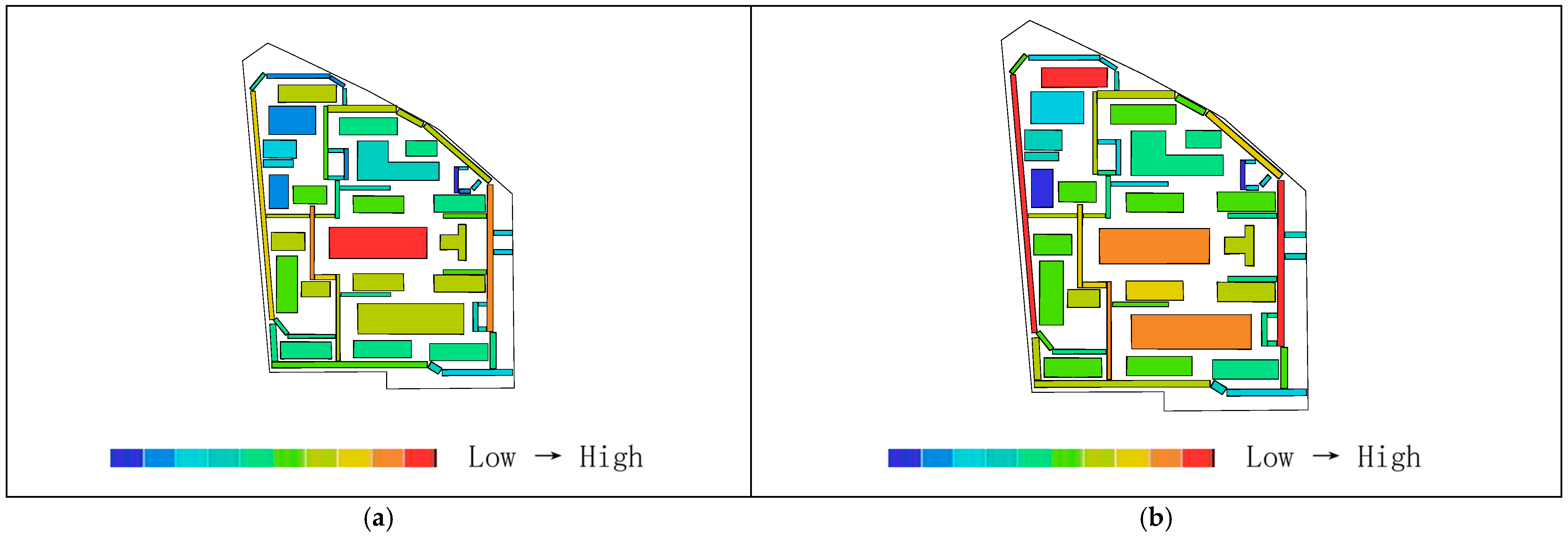
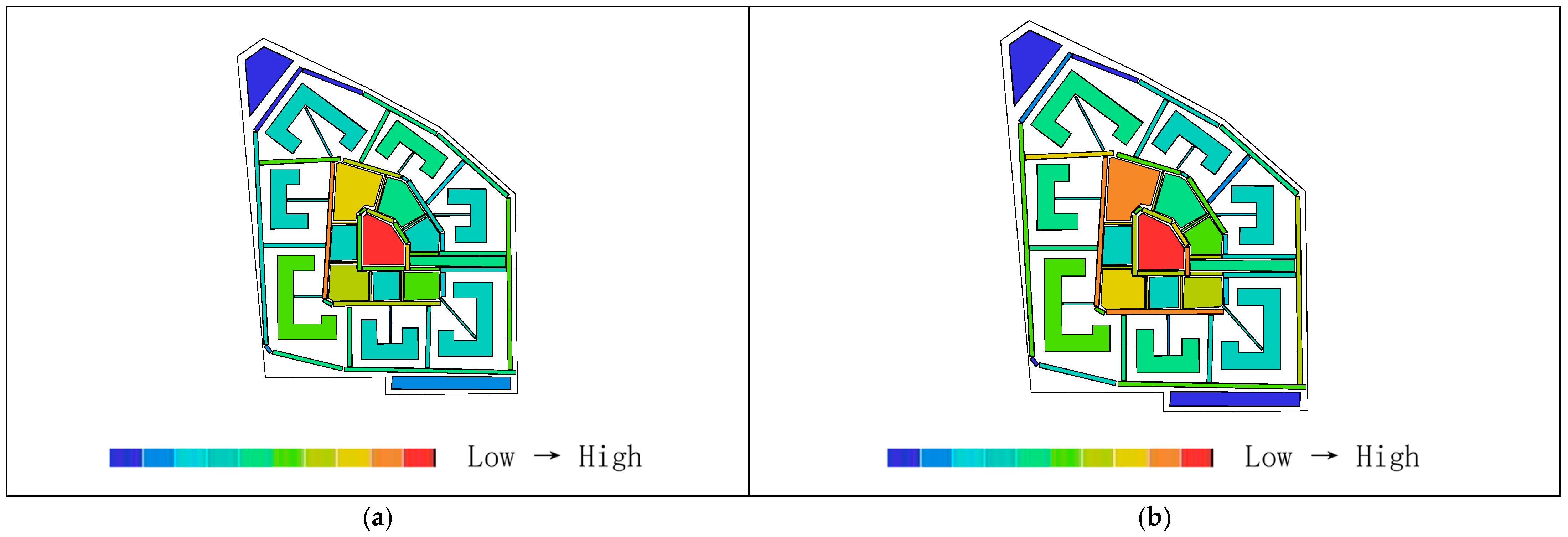
| Global Integration | 0.84 | 0.48 | 0.65 | 0.08 |
| Local Integration | 2.25 | 0.58 | 1.13 | 0.30 |
| Choice | 750.00 | 0 | 203.41 | 196.58 |
| Control Value | 5.09 | 0.14 | 1.00 | 0.86 |
| Axial Analysis After Transformation | Maximum | Minimum | Mean | Standard Deviation |
| Global Integration | 2.10 | 0.88 | 1.33 | 0.28 |
| Local Integration | 2.40 | 1.04 | 1.57 | 0.30 |
| Choice | 480.00 | 0 | 88.10 | 126.84 |
| Control Value | 3.77 | 0.13 | 1.00 | 0.93 |
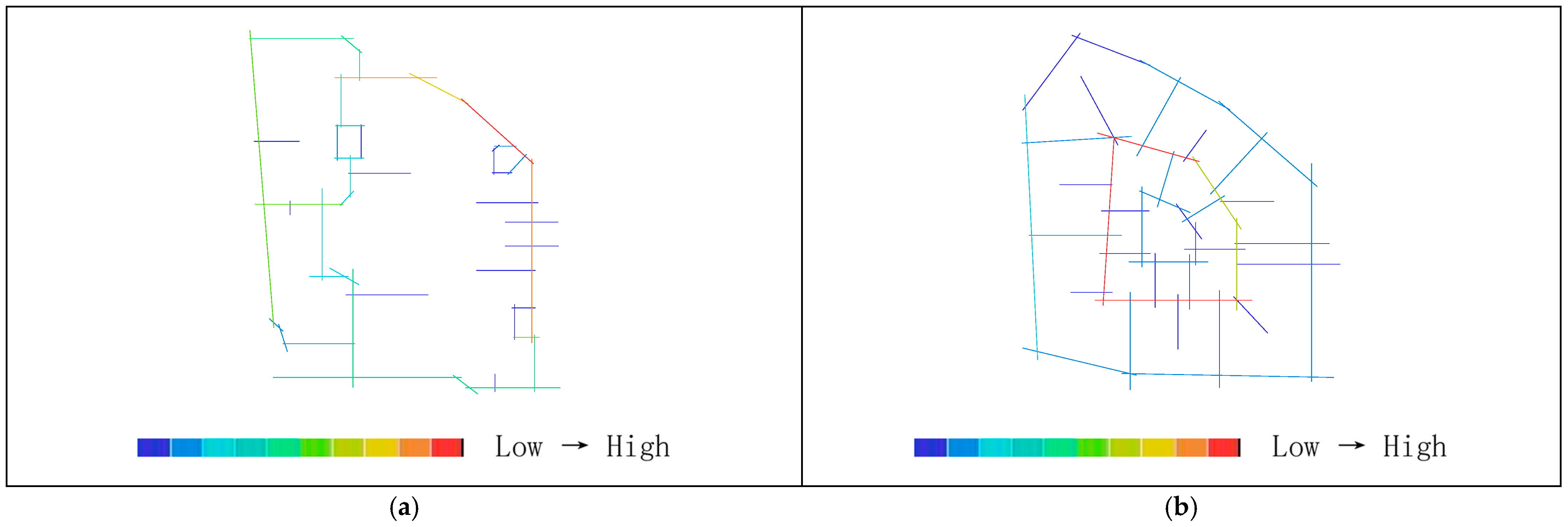
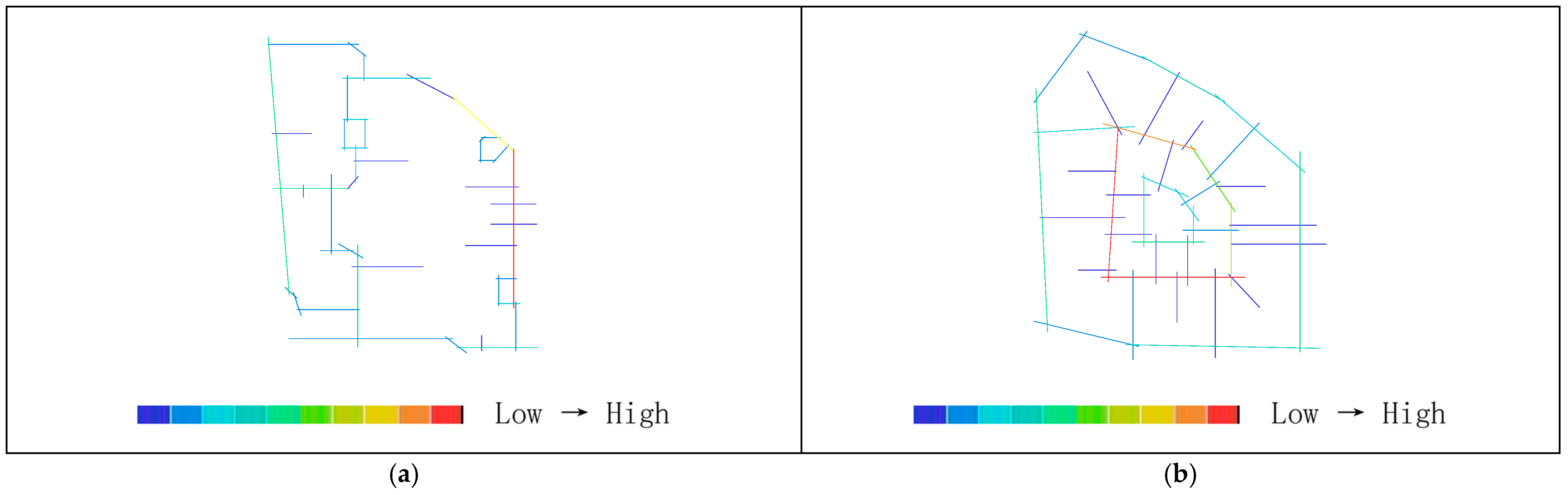
| Visibility Analysis Before Transformation | Maximum | Minimum | Mean | Standard Deviation |
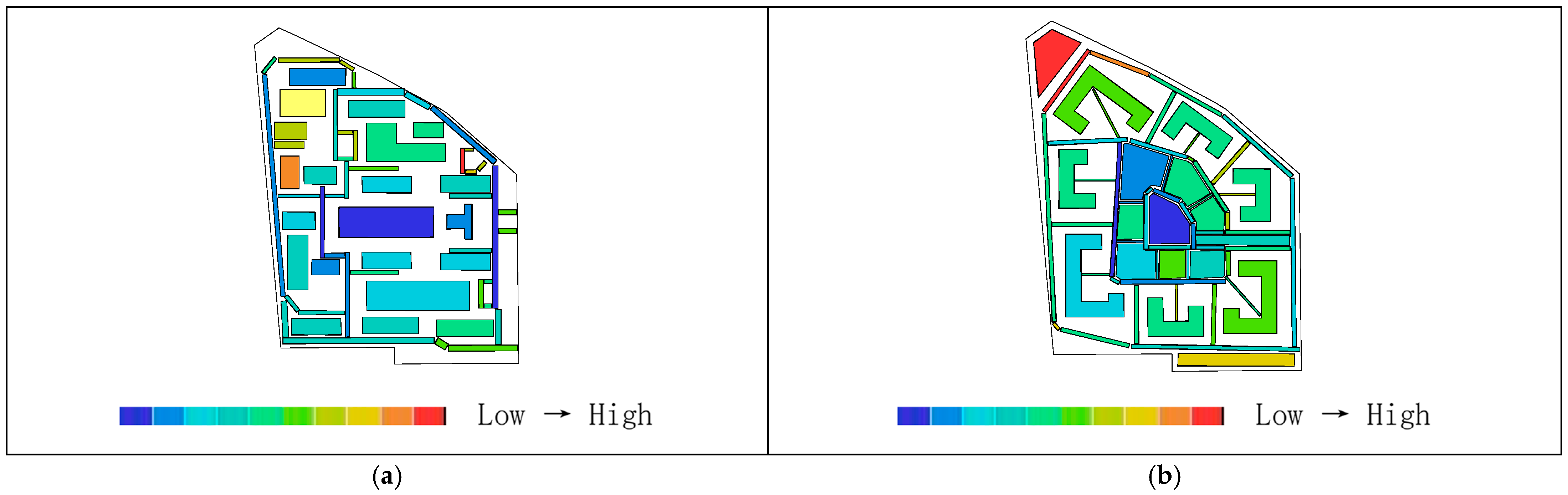
| Global Integration | 17.98 | 6.46 | 12.93 | 2.46 |
| Connectivity | 2866 | 259 | 1751.69 | 640.26 |
| Control Value | 1.46 | 0.22 | 1.00 | 0.21 |
| Clustering Coefficient | 1.00 | 0.36 | 0.64 | 0.11 |
| Agent | 482.00 | −1 | 65.83 | 84.67 |
| Visibility Analysis After Transformation | Maximum | Minimum | Mean | Standard Deviation |
| Global Integration | 24.44 | 6.54 | 15.21 | 5.29 |
| Connectivity | 3774 | 103 | 2233.33 | 1185.55 |
| Control Value | 1.56 | 0.07 | 1.00 | 0.24 |
| Clustering Coefficient | 1.00 | 0.394 | 0.76 | 0.13 |
| Agent | 639 | −1 | 62.08 | 115.94 |
Disclaimer/Publisher’s Note: The statements, opinions and data contained in all publications are solely those of the individual author(s) and contributor(s) and not of MDPI and/or the editor(s). MDPI and/or the editor(s) disclaim responsibility for any injury to people or property resulting from any ideas, methods, instructions or products referred to in the content. |
© 2026 by the authors. Licensee MDPI, Basel, Switzerland. This article is an open access article distributed under the terms and conditions of the Creative Commons Attribution (CC BY) license.
Share and Cite
Pei, P.; Wang, Y.; Xia, F.; Wang, Y.; Wei, Y. Biomimetic Planning and Design of Five-Minute Living Circle Residential Areas Inspired by Cellular Structure. Biomimetics 2026, 11, 342. https://doi.org/10.3390/biomimetics11050342
Pei P, Wang Y, Xia F, Wang Y, Wei Y. Biomimetic Planning and Design of Five-Minute Living Circle Residential Areas Inspired by Cellular Structure. Biomimetics. 2026; 11(5):342. https://doi.org/10.3390/biomimetics11050342
Chicago/Turabian StylePei, Pan, Yihan Wang, Feijie Xia, Yueqing Wang, and Yangyang Wei. 2026. "Biomimetic Planning and Design of Five-Minute Living Circle Residential Areas Inspired by Cellular Structure" Biomimetics 11, no. 5: 342. https://doi.org/10.3390/biomimetics11050342
APA StylePei, P., Wang, Y., Xia, F., Wang, Y., & Wei, Y. (2026). Biomimetic Planning and Design of Five-Minute Living Circle Residential Areas Inspired by Cellular Structure. Biomimetics, 11(5), 342. https://doi.org/10.3390/biomimetics11050342