1. Introduction
Confronted by the intertwined crises of dwindling energy resources and escalating environmental degradation, the development of clean and renewable wind energy has become a globally prioritized strategic emerging industry for countries worldwide. As a renewable energy source with wide distribution and enormous development potential, harnessing wind power on a massive scale is a key strategy for mitigating the impacts of global climate change [
1,
2]. As the core component for wind energy capture, the blade plays a decisive role in the aerodynamic efficiency of wind turbines. Therefore, further improving the wind energy conversion efficiency has emerged as an urgent and pivotal challenge in the aerodynamic optimization of wind turbine blades. After hundreds of millions of years of evolution, avians have evolved swept and curved wings with excellent aerodynamic configurations, enabling them to achieve precise control of flight attitudes. Inspired by this, researchers have carried out aerodynamic investigations on wind turbines equipped with bionic swept blades. Ding and Zhang [
3] performed an optimization design of swept blades by taking the sweep onset section and the first-order derivative of the tip sweep curve as design variables, considering both annual energy production and blade root loading as integrated optimization goals. Results showed that, compared with the baseline case, the annual energy production of the swept case increased by 1.34%, accompanied by a reduction in load applied at the root of the blade, thereby lowering the operational cost of the wind turbine. Pavese et al. [
4] implemented a swept design on a 10 MW wind turbine blade, which reduced the structural load of the wind turbine by decreasing the inflow angle of attack. It was found that mildly and purely shaped representations represented the optimal choice. Khalafallah et al. [
5] investigated how blade sweep influences the aerodynamic behavior of wind turbines across various operating scenarios. They discovered that swept blades achieved higher power coefficients near the blade root, which increased with increasing thrust. The optimal wind turbine performance was obtained when the sweep initiation position was located at 25% of the rotor radius. Sessarego et al. [
6] incorporated neural network architectures with gradient-driven algorithms to enhance the aerodynamic design of swept blades. Relative to the conventional baseline case, their optimized blades yielded an approximate 1% increase in mean power generation and an average 0.02% increase in thrust. Kaya et al. [
7] adopted numerical simulations to optimize the parameters of swept blades for a 0.94 m diameter wind turbine, aiming at maximizing the power at a specified tip-speed ratio (TSR). The findings revealed a 4.28% improvement for the optimized swept-blade design when the TSR was 6.0, and the incoming flow turbulence intensity was 2.0%. Iswahyudi et al. [
8] considered the sweep angle and anhedral angle in the design of three-dimensional blades to improve aerodynamic performance. Wind tunnel test results revealed that the performance improvement was attributed to the rolled-up tip vortex formed at the tip, which reduced the stall area on the inner blade by establishing a vortex-affected zone. The optimized blade achieved a maximum improvement of 37% in its output power. Iswahyudi et al. [
9] also examined how variations in blade design influence the aerodynamic performance of small-scale horizontal-axis wind turbines and concluded that the swept configuration improved starting performance and reduced low-frequency noise. Pietrykowski et al. [
10] developed a vertical-axis wind turbine with variable blade swept area, aiming to boost torque generation and electrical output across an extended spectrum of rotational speeds. This design adjusts the swept area of the wind turbine by changing the angles between the blade groups (ranging from 30° to 120°). Wind tunnel tests confirmed enhanced aerodynamic performance: the turbine achieved a relatively high torque coefficient of approximately 0.3 within the range of TSR (approximately 0.2–0.3) that is wider than the conventional configuration, while both the optimal TSR for maximum power and that for peak torque migrated to higher values compared to conventional configurations. Meanwhile, Veloso et al. [
11] combined blade element momentum (BEM) theory with Newton’s second law to systematically analyze how blade sweep angle affects key startup characteristics, including initial torque, axial thrust, and the minimum wind velocity required for rotor initiation, in small-scale wind turbines.
In addition, Pholdee et al. [
12] optimized the blade pitch angle and leading-edge curvature to maximize the torque-to-thrust coefficient ratio. Abdolahifar et al. [
13] conducted three-dimensional numerical simulations to compare the aerodynamic characteristics of V-shaped wind turbines with and without twist against the baseline configuration. Within the TSR range of 0.69–1.5, the swept configuration of V-shaped blades induced inevitable spanwise flow, leading to aerodynamic performance degradation, which rendered V-shaped blade turbines less advantageous under low TSR conditions. Prakash et al. [
14] proposed a novel bionic blade design drawing inspiration from the pectoral fins of the bottlenose dolphin. The swept blade altered the surface pressure distribution and promoted fluid accumulation toward the mid-span region. Their results validated a maximum torque increase of 15.7%. Li et al. [
15] noted that the conventional BEM method failed to simulate the wake effect and coned rotor of swept wind turbines. Accordingly, necessary corrections were implemented for optimizing the chord length and twist angle profiles along curved blade geometries to ensure an identical spanwise circulation distribution to that of the baseline condition. The modifications eliminated differences arising from projection-based modeling, facilitating a uniform assessment of how wake dynamics influence aerodynamic loading and flow induction. In addition, Li et al. [
16] proposed a streamlined engineering aerodynamic framework that integrates a near-wake vortex representation with a far-wake vortex cylinder formulation. The model was specially developed for the load calculation of swept wind turbine blades, abandoning the Prandtl tip-loss correction used in traditional BEM methods, and it can be applied to the aerodynamic study of generalized blade geometries in future research. According to the above literature review, swept blades exhibit multiple advantages: wind turbines featuring blades with an increased swept area are capable of generating greater wind energy conversion efficiency and delivering higher annual energy yields; they can also reduce blade loads to a certain extent, thus improving operational stability while maintaining favorable aerodynamic performance.
On the other hand, as rotating machinery for primary energy conversion, wind turbines operating downstream usually suffer from reduced inflow velocity and drastic variations in the angle of attack along the rotating blades due to the non-uniform natural inflow and wake effects, forcing wind turbines to operate under off-design conditions for extended periods [
17]. In addition, yaw, gusts, high T.I., and complex surrounding terrain can impose unsteady loads on rotating blades, which further reduce wind energy conversion efficiency, cause output power fluctuations, and generate fatigue loads and noise. It is worth noting that vertical-axis wind turbines (VAWTs) and horizontal-axis wind turbines (HAWTs) respond differently to turbulence. The rotational plane of HAWT rotors is perpendicular to the inflow, and the blades periodically enter and exit the wind shear zone and wake region. In contrast, VAWTs exhibit more uniform stress distribution, are insensitive to wind direction, and feature relatively mild flow separation and vortex shedding, leading to lower sensitivity to T.I. Therefore, the influence of inflow T.I. should be comprehensively accounted for during the aerodynamic configuration optimization of HAWTs [
18,
19].
Relevant studies have confirmed the above issues. Talavera and Shu [
20] conducted wind tunnel tests on an individual wind turbine as well as a pair of turbines operating under both low turbulence and turbulent flow states. Results showed strong correlations between the power coefficient and inflow T.I. in both single and array configurations. Yang et al. [
21] also obtained similar findings through wind tunnel experiments. Ahmadi-Baloutaki et al. [
22] generated three turbulent inflow conditions with T.I. = 5%, 7.5%, and 10% by placing grid structures inside the test section to evaluate the aerodynamic performance of a model wind turbine. Results indicated that turbulent inflow increased the output power and enhanced the self-starting performance. Using the movement of stirring blades in the 0.13 m active turbulence grids mounted at the test section entrance, Li et al. [
23] examined the effects of three inflow turbulence intensities on rotor power and thrust coefficients, and the results showed that the output power was optimal at T.I. = 8.0%, superior to that at T.I. = 1.4% and 13.5%. Ahmadi and Yang [
24] analyzed the spectral characteristics of rotor output power and velocity on the rotating plane in a low-turbulence environment employing numerical simulations integrated with the actuator line approach, revealing strong correlations between the two quantities over the entire frequency range. Besides the strong correlation with power characteristics, spatial correlations exist between extreme loads on wind turbines and flow field turbulence patterns. Tian et al. [
25] examined how wind turbines respond under varying load conditions in an atmospheric boundary layer via wind tunnel tests, finding that inflow shear affected the time-averaged loads, while T.I. dominated the fatigue load behavior. Zhang et al. [
26] observed that reducing the size of the downstream turbine markedly altered the upstream turbine’s wake configuration and enhanced wake re-energization through intensified large-scale vortex mixing.
In summary, the aerodynamic behavior of test wind turbines is strongly influenced by the T.I. of the inflow. However, the above studies on turbulent inflow were all based on straight-bladed wind turbines. At present, the understanding of the aerodynamic performance of swept-blade wind turbines under turbulent inflow remains inadequate. Meanwhile, relevant experimental studies are still rare owing to constraints imposed by the testing environment. Therefore, conclusions from straight-bladed turbines require verification for swept-blade configurations. To address these gaps, two grid-generated turbulent flow fields were designed in a wind tunnel, and an aerodynamic test platform for wind turbines was established in this study. Comparative experiments were conducted on a baseline blade and a swept-blade wind turbine under varying conditions. To provide a reference for the aerodynamic optimization of swept blades, this study analyzed the influence of inflow T.I. on the aerodynamic characteristics of the swept-bladed turbine. The paper is organized as follows.
Section 2 outlines the experimental configuration, including the turbulent flow field configuration, the wind turbine model, and the blade sweep design approach.
Section 3 presents a detailed analysis and discussion of the output power and wake characteristics under different T.I. conditions. Lastly, the key findings of this research are summarized in
Section 4.
2. Experimental Apparatus and Setup
The experiment took place in the wind tunnel lab of Yangzhou University. The test section measures 3.0 m × 1.5 m × 3.0 m, with a maximum inflow velocity of 50 m/s [
27]. An AC motor with a power of 185 kW and a rated speed of 600 r/min is installed in the wind tunnel power section. Total-pressure and static-pressure sensors are mounted at the entrance to the test section for real-time pressure monitoring. Based on the measured data, a feedback control system adjusts the motor speed to achieve precise regulation of the inflow velocity.
2.1. Turbulent Flow Field Modulation
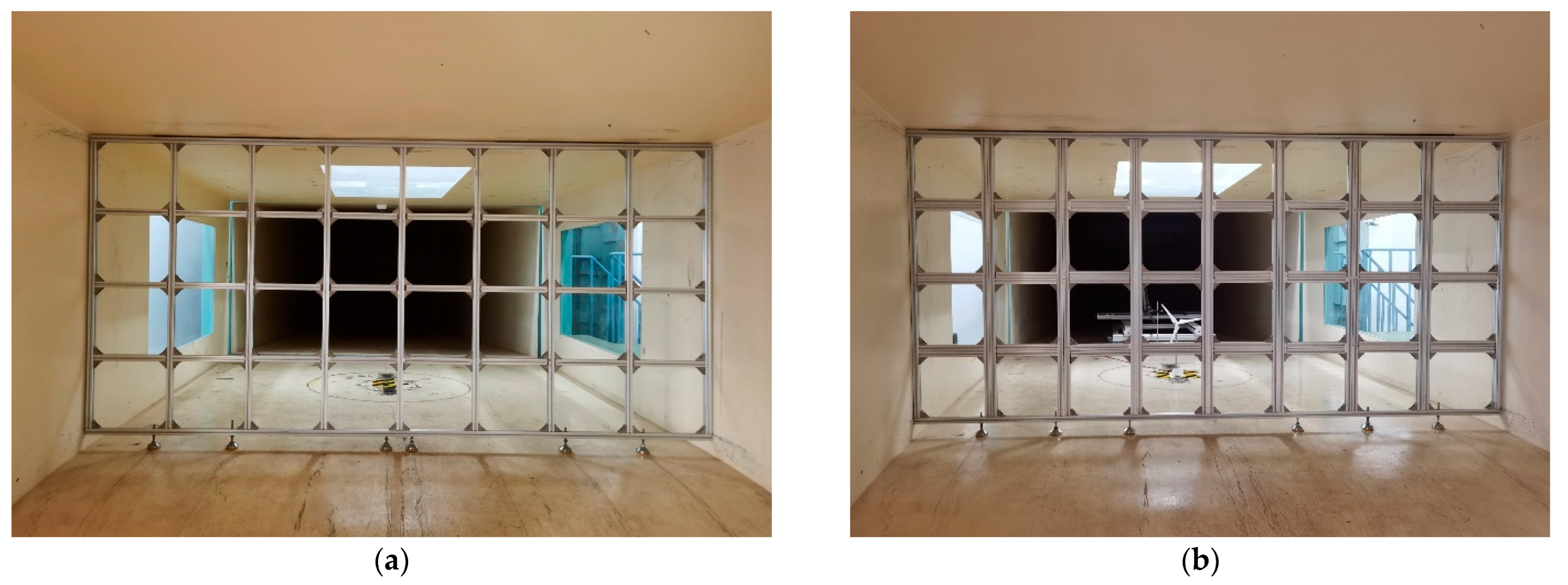
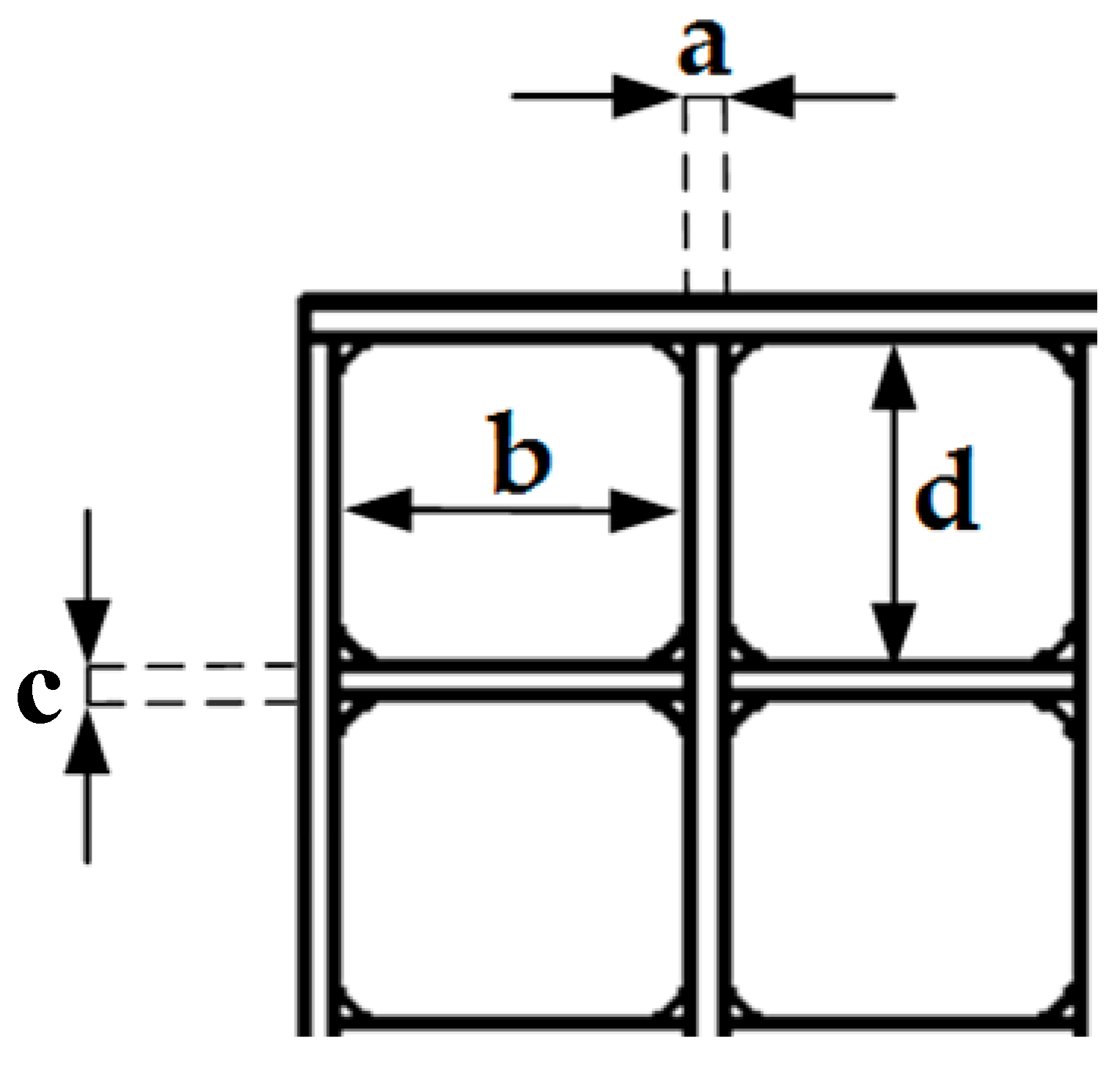
Grids are widely employed in wind tunnel experiments to generate turbulent inflows. By adjusting the size of the grids, the downstream flow structure can be modified, thereby regulating the T.I. at the test location. In the present study, two types of grids with different dimensions, as designed by our laboratory, were adopted, and their configurations are illustrated in
Figure 1 and
Figure 2.
The transverse bar width is denoted as a, the transverse opening width as b, the longitudinal bar width as c, and the longitudinal opening width as d. The thickness of both grids is 3.0 cm, and the detailed dimensions are listed in
Table 1. In practice, rubber feet were fixed to the ground of the test section, and rubber pads were placed on the top to increase friction and ensure installation stability. A two-dimensional hot-wire probe (55P61, Dantec, Copenhagen, Denmark) was adopted for flow field measurements, with a sampling frequency of 5 kHz and a sampling time of 20 s. In the subsequent tests, the wind turbine rotor was positioned 1.6 m downstream of the grids, and the flow field was measured at the hub height of the rotor. The measurement height was approximately 48 cm above the wind tunnel floor. Data were acquired at 41 points, with an interval of 2.0 cm from the centerline to both lateral sides of the wind tunnel. It is important to highlight that the average velocity at the rotor section during data collection was 7.0 m/s, which corresponds to the target inflow speed in the following tests.
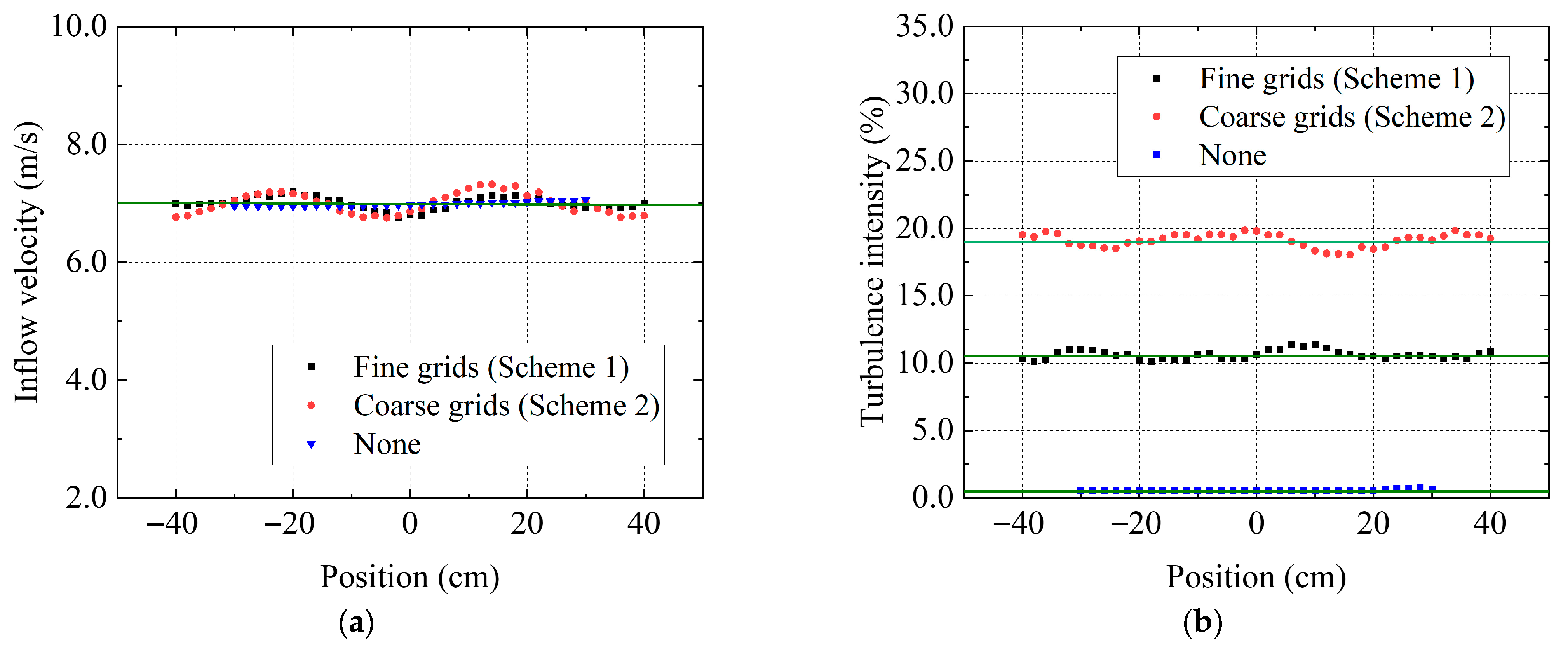
Figure 3 depicts the distributions of inflow velocity and T.I. at the hub height without the model installed. The black dots denote the experimental results of scheme 1, whereas the red dots represent scheme 2. The flow field distribution without grid installation was also added as a comparative case. Due to the blockage by the grids, highly unsteady turbulent fluctuations exist in the downstream region, leading to variations at different lateral positions. It is worth noting that T.I. is calculated as the ratio of the root-mean-square (RMS) magnitude of the instantaneous velocity fluctuations to the time-averaged inflow velocity. Based on the measurements, the mean velocity of the tested flow field was 7.0 m/s. The averaged T.I. values were 10.5% for scheme 1, 19.0% for scheme 2, and 0.5% for the scheme without grid installation, which are indicated by the green lines in this figure.
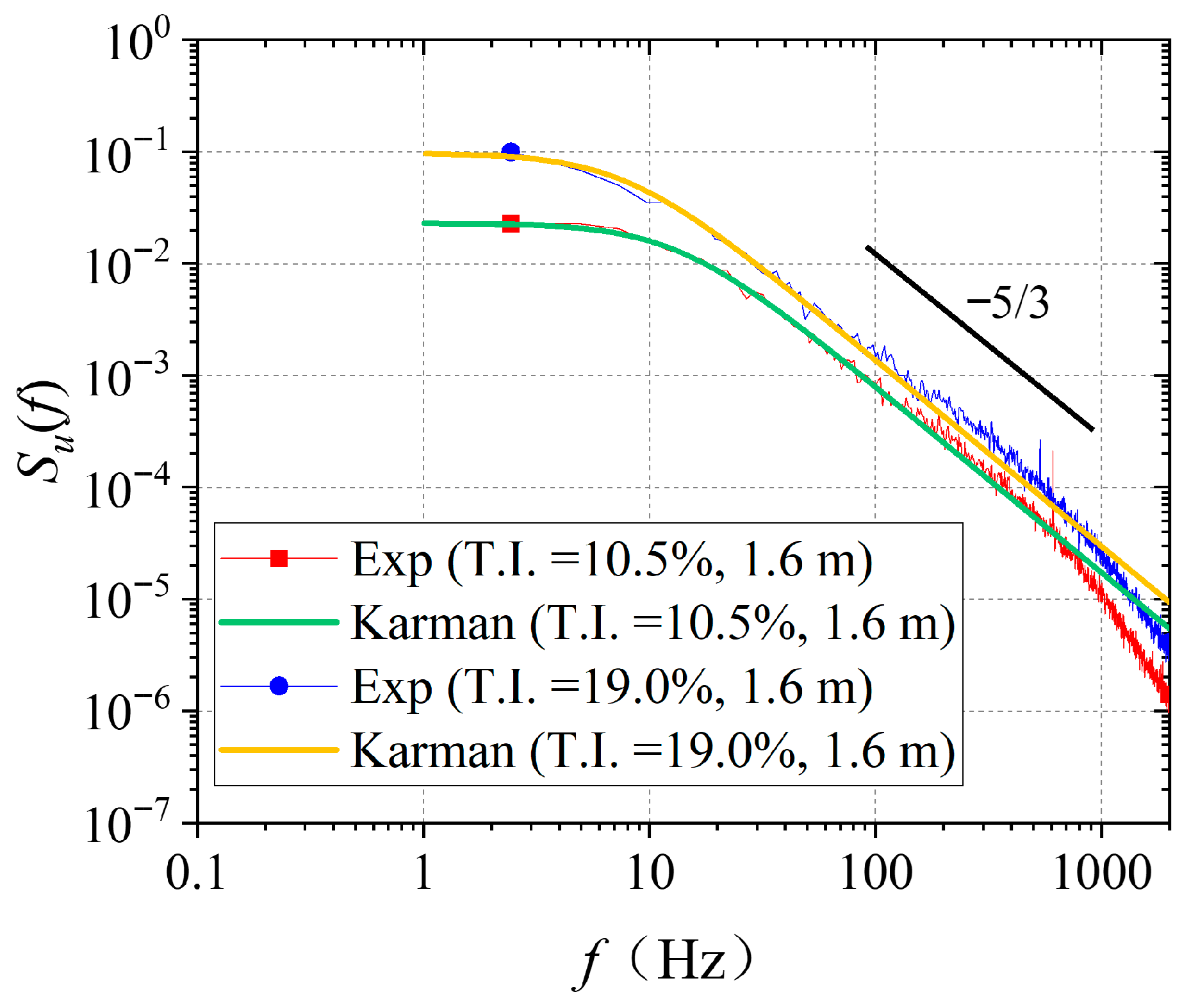
Figure 4 presents the PSD of the fluctuating velocity 1.6 m downstream of the grids. The PSD distributions of the grid-generated turbulent flows agree well with the corresponding Karman spectrum [
28]. The streamwise PSD function
Su(
f) is given by Equation (1):
In Equation (1), Su(f) is the PSD function of the fluctuating velocity u in the direction of the streamwise. 4, 70.8, and 5/6 are obtained by fitting the results from wind tunnel tests and actual measurements. It is a characteristic parameter of this empirical spectral model. σu is the standard deviation of the streamwise fluctuating velocity u, and Lu is the streamwise integral length scale of the fluctuating velocity u, U is the mean inflow velocity, and f is the pulsation frequency.
It can be observed that the amplitude of Su(f) rises as the T.I. increases. The T.I. of scheme 1 is lower than that of scheme 2. The amplitude of Su(f) decreases rapidly when the frequency exceeds approximately 10 Hz, indicating that the vortices contributing most to the fluctuating energy are all below this frequency. In the inertial subrange of turbulence, the variation in PSD with frequency follows the −5/3 power law. It is used to judge whether the experimentally measured turbulence spectrum in the inertial subrange follows the energy cascade law of classical isotropic turbulence. In addition, the two cases show similar trends in the PSD. This is because grids with similar structural configurations possess an inherent similarity in the frequency-domain distribution of the energy of the generated turbulence.
2.2. Wind Tunnel Test Setup
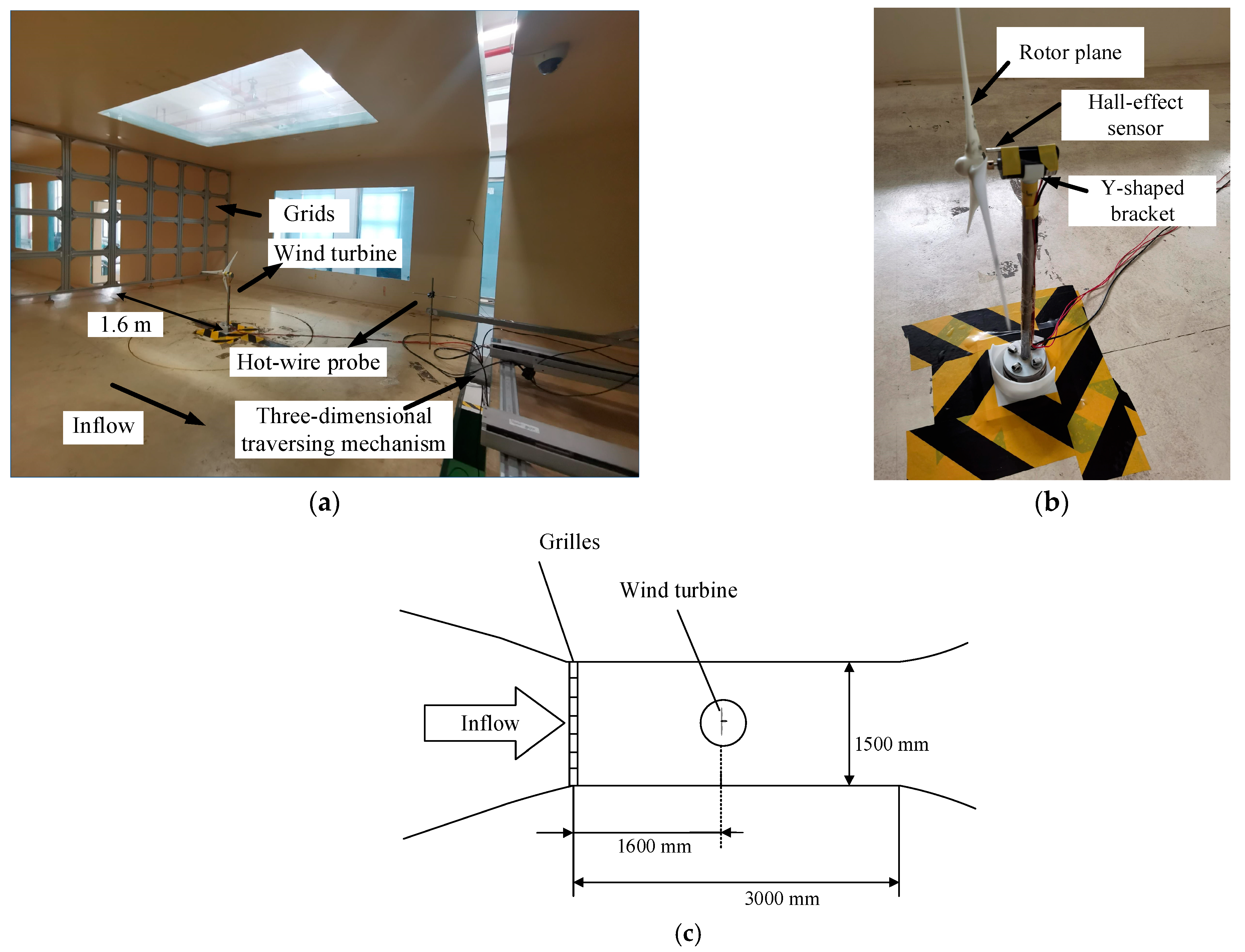
Figure 5 presents the experimental configuration, where the grid was positioned at the entrance of the test section, and two Pitot tubes were deployed 1.6 m away from the grid to record the inflow wind speed at the rotor plane of the model. The yaw angle of the model turbine could be precisely controlled by adjusting the servo motor mounted under the turntable in the test section. A miniature DC motor was fixed on the tower via a Y-shaped bracket. To avoid vibration during rotor rotation, both the tower and the base plate were made of steel. A miniature linear Hall-effect sensor of M4 size was installed downstream of the rotor for real-time rotational speed monitoring. Further details of this model wind turbine can be found in Refs. [
29,
30]. In this test, the rotor was fabricated using 3D resin printing.
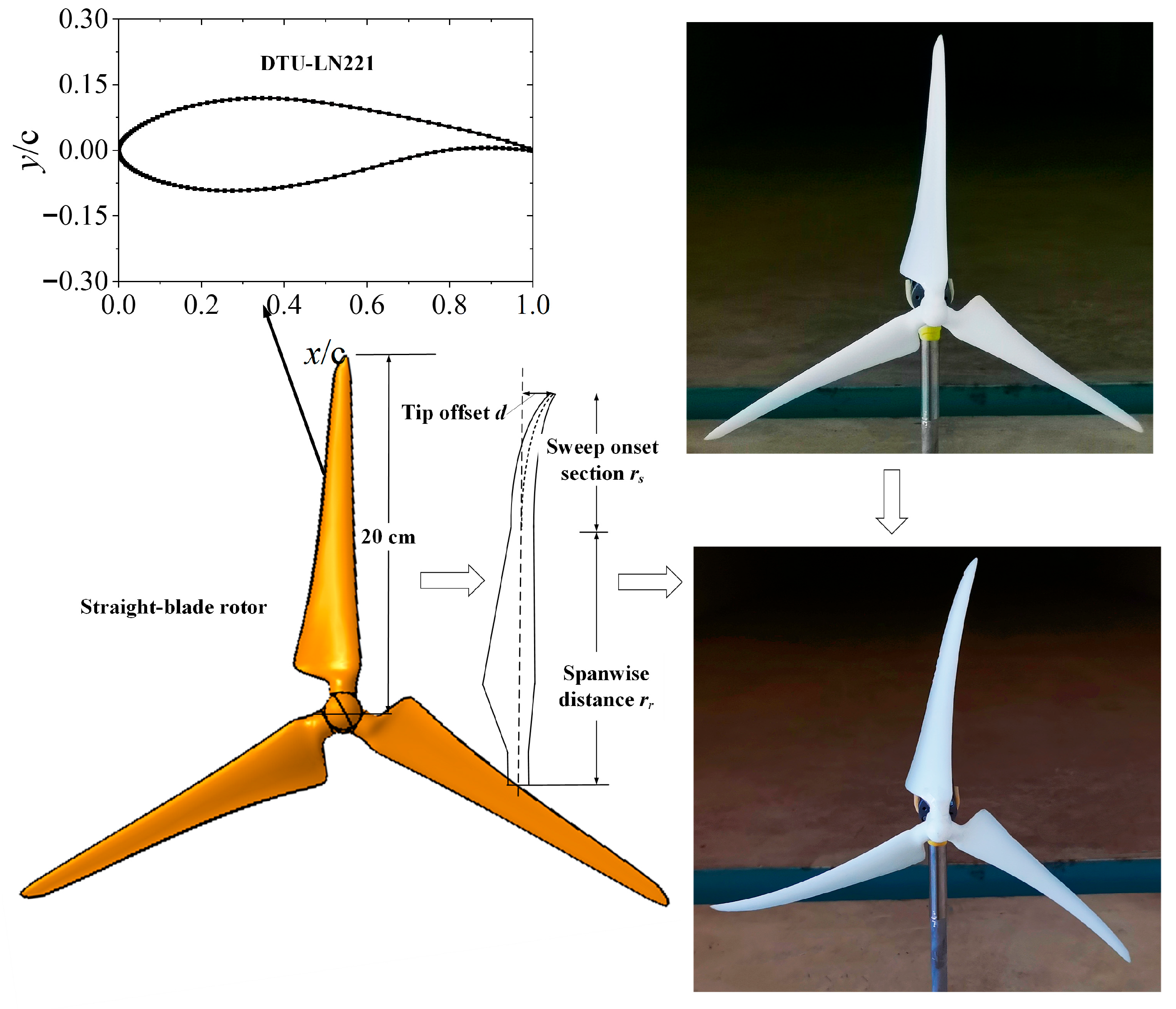
Figure 6 illustrates the baseline straight-blade rotor, which has a diameter of 0.4 m and employs the DTU-LN221 airfoil, which was originally developed by the Technical University of Denmark. The airfoil has been optimized for low-Reynolds-number conditions, effectively alleviating the insufficient spanwise velocity near the root region due to the small relative radius, as well as tip losses caused by three-dimensional effects in the tip region.
During the design of the bionic swept blades, various mathematical models have been proposed in previous studies [
31,
32,
33] to determine the swept configuration. Most of these methods obtain the spatial offset of each blade section relative to the aerodynamic centerline through exponential equations. In this study, the blade was designed from the parameterized swept model established by Kaya et al. [
34]. This model parameterizes the tip offset
d and the sweep initiation position
rs. The corresponding design formula is given by Equation (2).
In the equation,
z is the offset relative to the aerodynamic centerline of the baseline case,
rr is the spanwise distance, and
R is the rotor radius.
M represents the sweep strength, which is set to 2.0 in this study.
Ps,
Prs, and
Pr are obtained from
d/
R,
rs/
R, and
rr/
R, respectively. In the present investigation, the sweep initiation position is set at 20% relative radius (
Prs = 0.20), the tip offset is set to 10% (
Ps = 0.10), meaning the blade sweep direction is consistent with the rotor’s rotational direction. In our previous uniform inflow experiments, this swept blade configuration achieved the optimal power coefficient. Therefore, the configuration is also employed when investigating the effect of T.I. [
35]. It should be emphasized that the wind tunnel blockage ratio caused by the swept area under yaw-free conditions is approximately 2.79%, which is below the commonly accepted threshold of 5% for blockage correction [
36]. Therefore, the wind tunnel blockage effect can be reasonably neglected. The mean inflow velocity at hub height was fixed at 7.0 m/s. This velocity was selected based on previous studies [
23,
37], which indicated that the influence of T.I. on the power performance becomes weaker when the inflow wind speed exceeds 8.0 m/s.
2.3. Measurement of Aerodynamic Power
In wind tunnel tests, a dynamic torque sensor can be installed between the model wind turbine and the motor to directly measure the output torque and thus obtain the shaft power. However, torque sensors are relatively large in size and require matching with large-scale wind turbines and generators. In this study, a miniature DC motor was adopted, which exhibits relatively low electromechanical conversion efficiency. Therefore, it is not feasible to use electrical power to characterize wind turbine performance. Owing to mechanical and electrical inefficiencies inherent in the generator, the experimentally obtained electrical power is lower than the shaft power, and the difference between them represents the power loss caused by friction torque.
To indirectly obtain the shaft power of the miniature wind turbine, a method based on fitting the shaft power as a function of armature current and rotational speed was adopted in this study [
38,
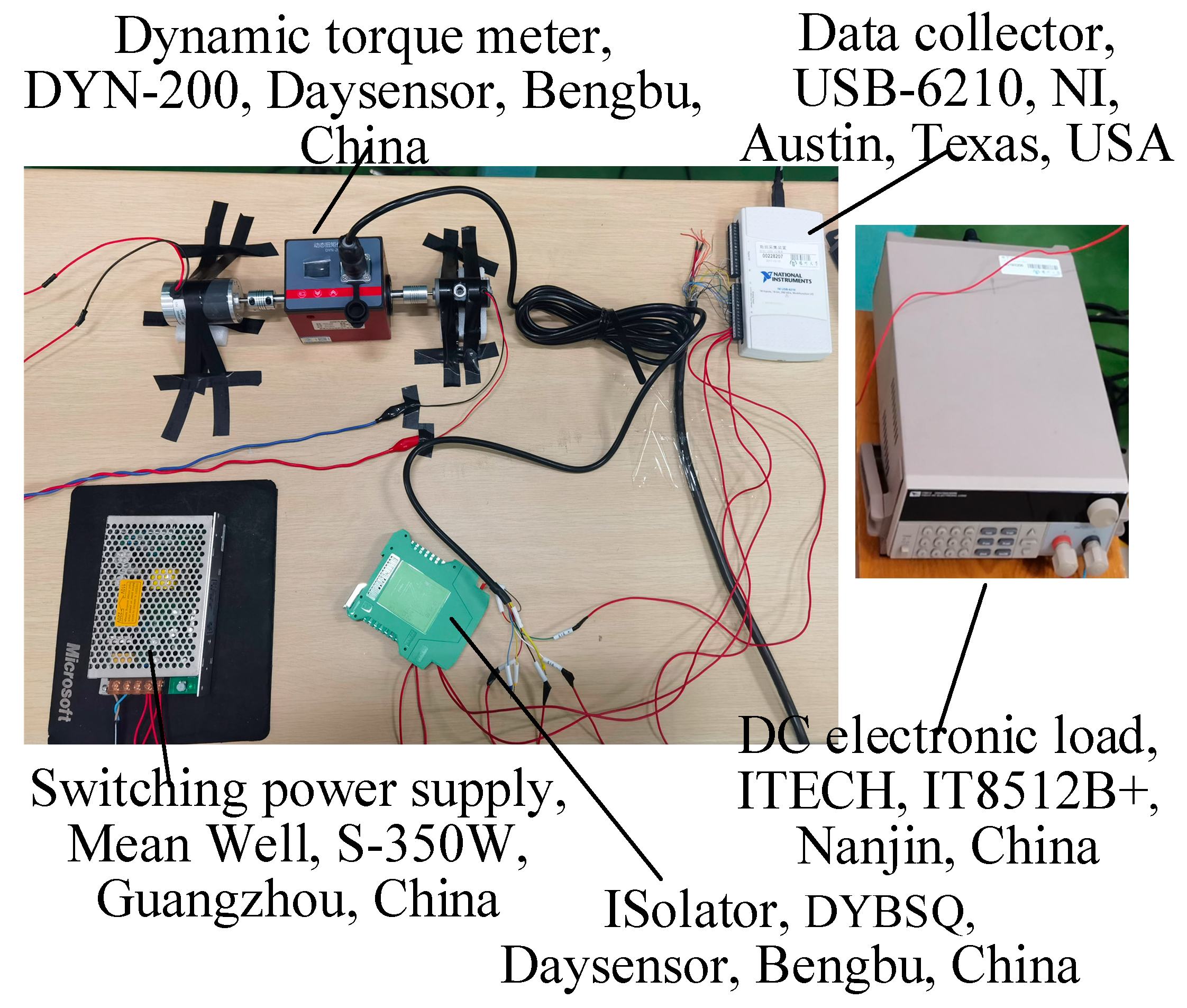
39]. Under steady-state operation of the generator, the armature voltage scales linearly with rotational speed, while the armature current is directly proportional to the electromagnetic torque. Additionally, the frictional torque exhibits a linear dependence on rotational speed. Consequently, shaft power can be formulated as a function of both rotational speed and armature current. In the experiments, the output voltage (slightly lower than the armature voltage), output current (i.e., armature current), and rotational speed can be directly measured. Therefore, the functional relationship among the generator’s shaft power, output current, and rotational speed is calibrated in advance, and the shaft power can be back-calculated from the measured current and rotational speed during wind tunnel tests. Since it is difficult to cover working conditions with various combinations of rotational speed and current in the wind tunnel, a dedicated calibration setup was built before the tests (as shown in
Figure 7).
Two miniature DC motors were coaxially connected via a coupling and a dynamic torque transducer. One was connected to a controllable DC power supply and used as a motor, whose speed was regulated by adjusting the voltage. The other was connected to a controllable DC load and used as a generator, whose output current was controlled by adjusting the resistance. By fitting the calibrated experimental data, the functional expression among the shaft power
Ps, rotational speed
n, and armature current
I was obtained, as given in Equation (3). Additionally, our previous research has proved that the polynomial fitting shows an excellent fit with an R-squared (R
2) value of 0.9916 and a Root Mean Square Error (RMSE) value of 0.165 W [
29].
In Equation (3), Ps is the shaft power (W), I is the armature current (A), and n is the rotational speed (r/min). It is worth noting that a difference in order of magnitude leads to large discrepancies in the magnitudes of fitting coefficients for different terms.
In the actual power measurement, a data acquisition device (USB-6210, National Instruments, Austin, TX, USA) was used with a sampling frequency of 10 kHz and a sampling duration of 5.0 s, ensuring that each test case covered at least 50 rotor rotation cycles. The power coefficient
Cp is defined in Equation (4).
In Equation (4), Cp is the power coefficient, and ρ is the air density.
2.4. Wake Flow Field Measurement
As illustrated in
Figure 5a, a hot-wire anemometry probe was mounted on a three-dimensional traversing mechanism via a fixed support, allowing accurate positioning within the measurement domain. It is important to note that the rotor of the model wind turbine spins in a clockwise direction when viewed from the upstream side. The hot-wire probe (55P61, Dantec, Copenhagen, Denmark) was adopted to simultaneously acquire the instantaneous streamwise and cross-stream velocities. Given the long duration of wake measurements, regular velocity calibrations using a Pitot tube were performed during the tests. Moreover, the internal temperature of the test section was kept stabilized to minimize measurement inaccuracies arising from fluctuations in ambient conditions.
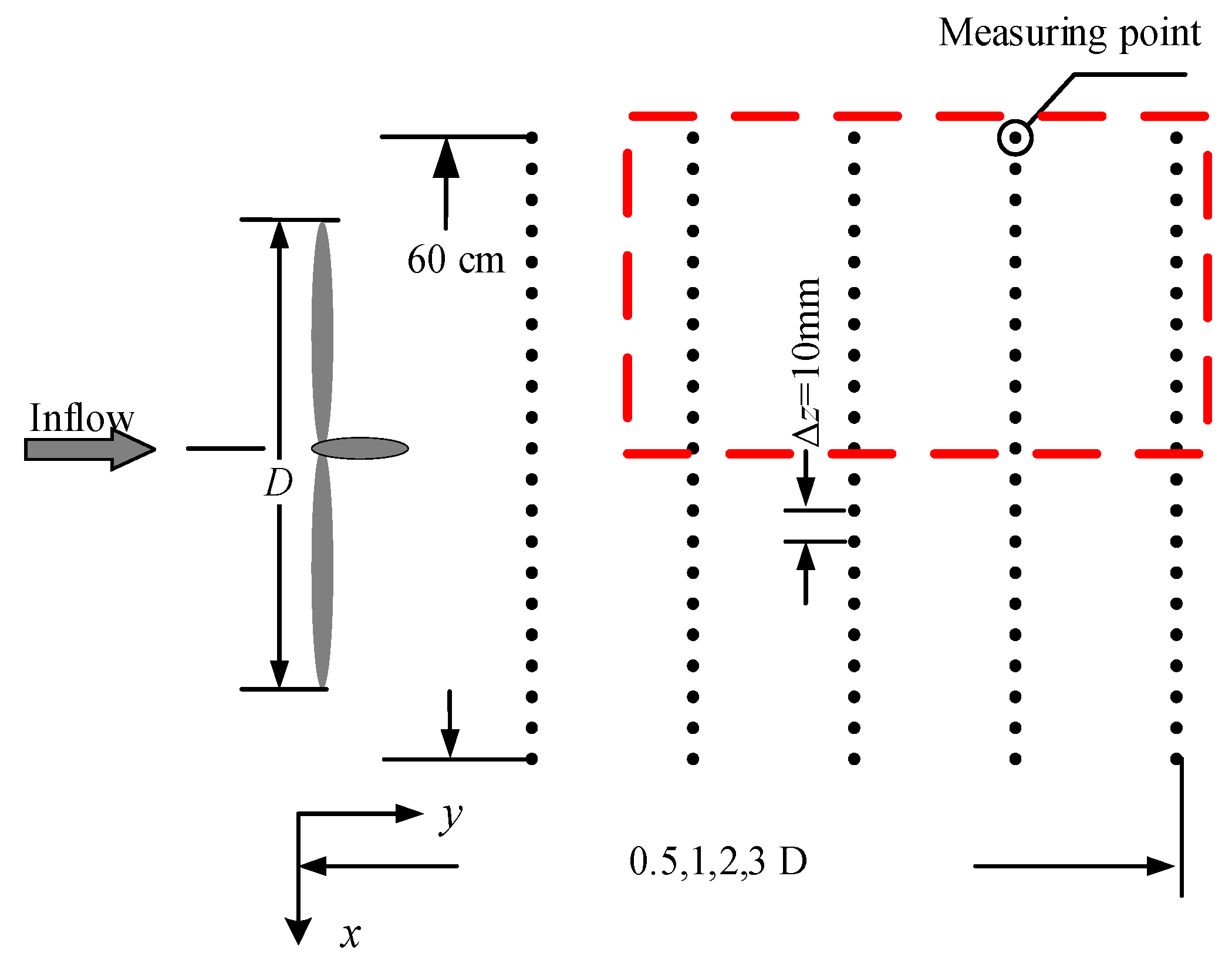
The measurement layout is illustrated in
Figure 8. Measurement locations were positioned at the hub height across vertical planes situated at distances of 0.5, 1, 2, and 3 rotor diameters downstream from the rotor plane. Points were spaced at 1.0 cm intervals centered on the hub, extending 30.0 cm to both lateral sides, yielding a total of 61 points per cross-section. The acquisition rate of the hot-wire anemometry system was configured at 5 kHz. The arrangement for the swept cases matched exactly with the baseline cases. It is worth mentioning that previous wind-tunnel studies [
40,
41] have demonstrated that, when the rotor diameter is adopted as the characteristic length, flow statistics in the near-wake region become stable once the Reynolds number exceeds 9.3 × 10
4. In other words, similar flow characteristics occur when the Reynolds number exceeds a sufficiently large threshold. In the present experiments, the corresponding value is about 1.9 × 10
5, which is well above this threshold. Accordingly, aerodynamic characteristics in the present tests can be regarded as representative of a larger-sized wind turbine.
2.5. Uncertainty Analysis
The accuracy of measured data is critical to ensuring the reliability of experimental conclusions. Given the inevitable errors involved in the test procedure, an uncertainty analysis was performed. The uncertainty is divided into two categories: systematic uncertainty introduced by the measurement system itself, and random uncertainty caused by the dispersion of measured data. For systematic uncertainty, it mainly stems from the instrument accuracy of the measurement sensors. The instruments used for power measurement include the Pitot tube, Hall sensor, torque meter, and data acquisition devices.
Table 2 summarizes the measurement devices along with their respective precision specifications. The inflow velocity is derived from the dynamic pressure measured by the Pitot tube, whose uncertainty is 0.1%. Meanwhile, the measurement uncertainty introduced by the corresponding data acquisition collector is 0.05%. The uncertainties introduced by the dynamic torque meter and data acquisition unit are 0.2% and 0.1%, respectively. The Hall sensor has a resolution of 0.01 Hz, the angular accuracy of the wind tunnel turntable is 1/4444.44°, and the hot-wire anemometer offers a voltage measurement precision of 1 mV, which all correspond to a measurement accuracy of 0.1%; their contributions to uncertainty are regarded as negligible. The variation in air density due to wind tunnel temperature fluctuations introduces an uncertainty of approximately 0.2%. Meanwhile, considering the manufacturing tolerance of the blades and positioning errors of the measurement points, their combined contribution to the total error is less than 1%. Based on the above analysis, the overall systematic uncertainty of the current experiments is approximated to be no greater than 3%.
For random uncertainty, due to the strong turbulent fluctuations in the inflow and flow field disruptions caused by the turbine tower and its supporting components, notable fluctuations and dispersion exist in the measured data [
42,
43]. To minimize the impact of such random fluctuations on the analytical results, a large number of time-series samples were recorded during the tests, and statistical averaging was applied to improve the reliability of the power and wake characteristics. In addition, to minimize random errors in wake velocity measurements, all instruments were sufficiently warmed up prior to formal testing to mitigate the influence of thermal drift on measurement accuracy.
4. Conclusions
In this study, a swept-blade wind turbine aerodynamic test platform was established. A bionic swept design was applied to a conventional horizontal-axis wind turbine. The power and wake characteristics of the bionic swept-blade turbine were investigated at inflow turbulence intensities of 0.5%, 10.5%, and 19.0%, and the aerodynamic improvements induced by blade sweep were examined. The key findings are outlined below:
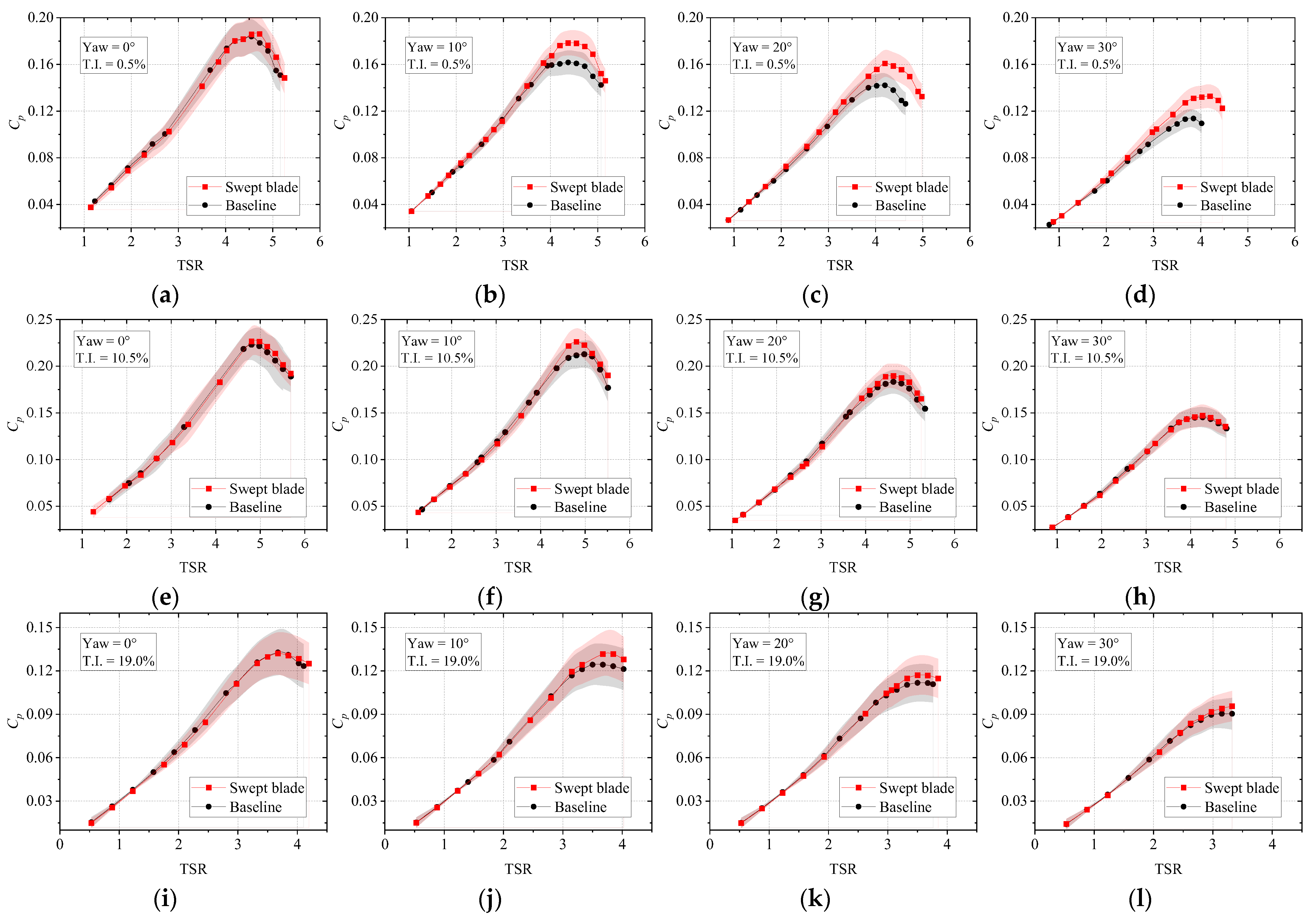
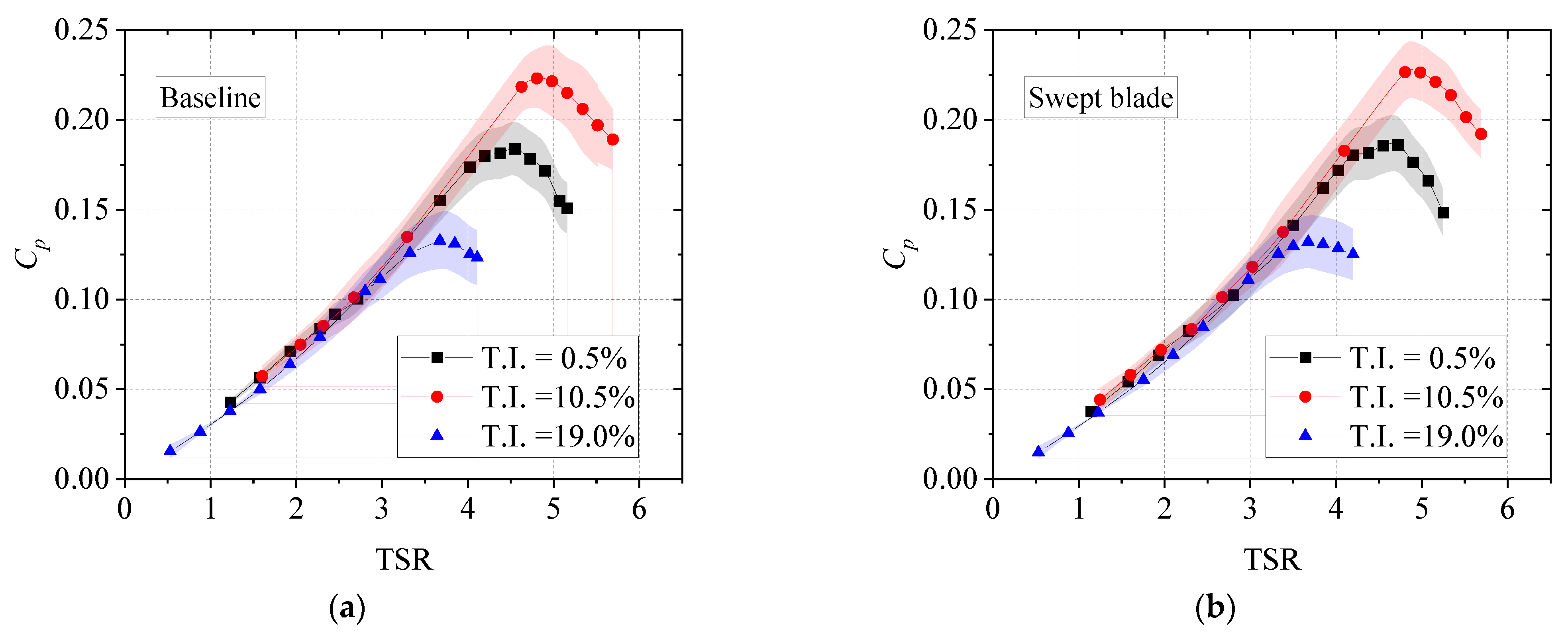
When the TSR is below 3.0, the influence of T.I. on the power coefficient is comparatively weak, and both the power coefficient and its trend are similar among the three inflow conditions. At high TSR values, however, the inflow T.I. significantly affects the peak power coefficient. The baseline turbine achieves its peak power coefficient, 0.223, under the condition of T.I. = 10.5%. While at low TSR, the power coefficient exhibits only a marginal variation between the swept-blade and baseline turbine configurations. By contrast, the improvement in power coefficient from swept blades becomes more pronounced at high TSR and under yawed conditions. Under yaw-free conditions, the maximum power coefficient enhancements observed are 1.26%, 1.58%, and −0.54%, respectively. At a 20° yaw angle, the corresponding enhancements rise to 13.17%, 3.44%, and 4.68%, respectively. It is worth noting that this beneficial effect tends to be weakened under high turbulence conditions.
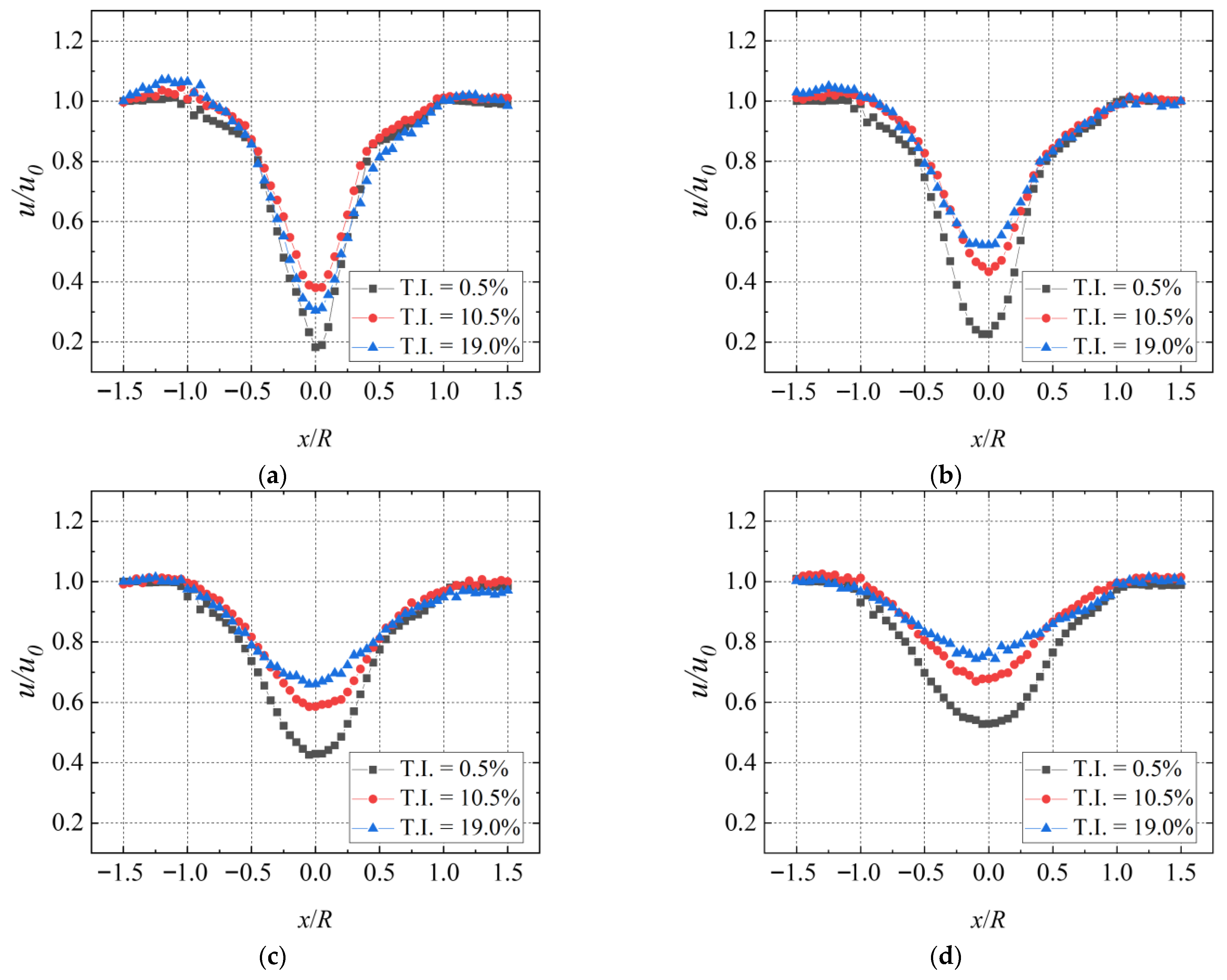
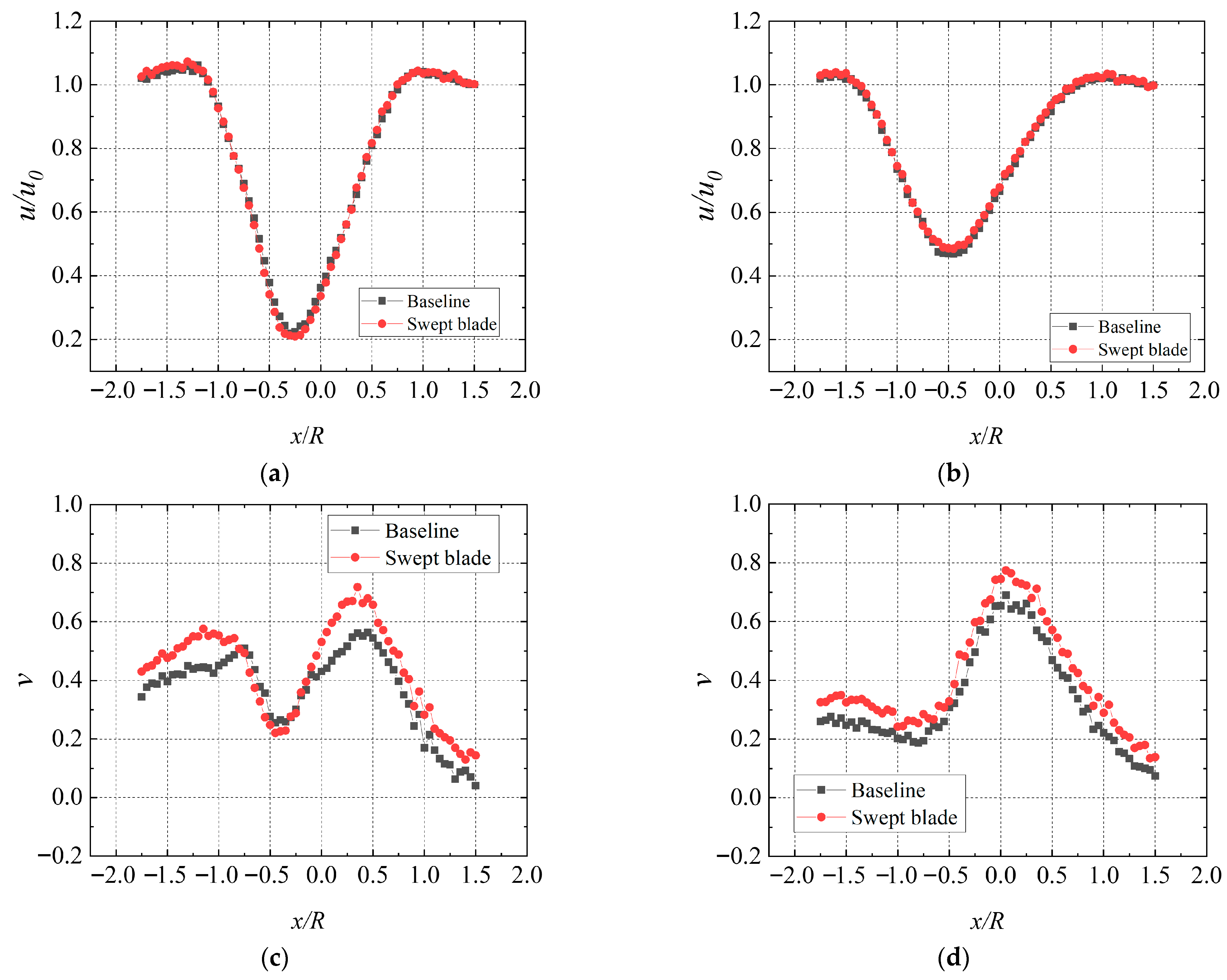
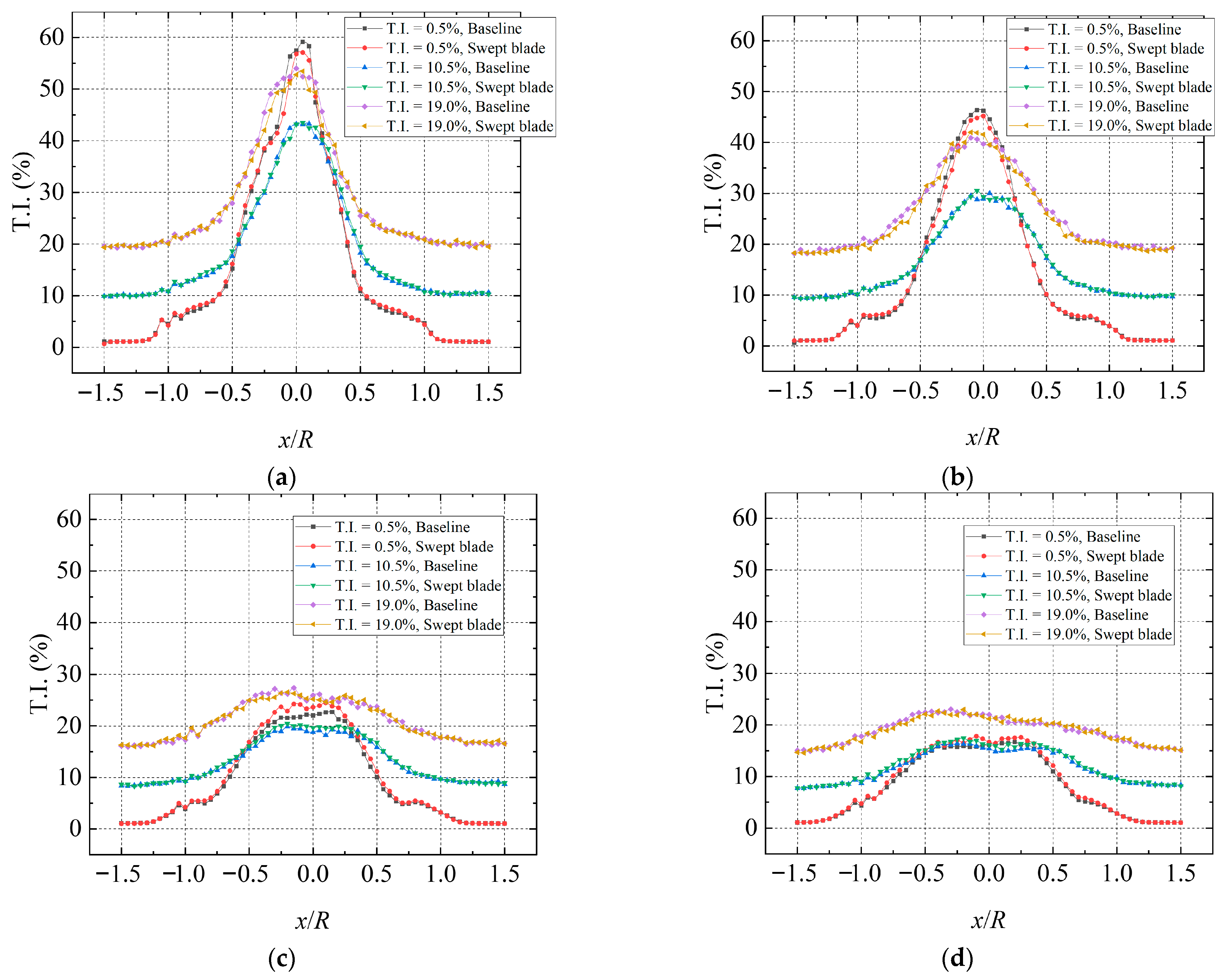
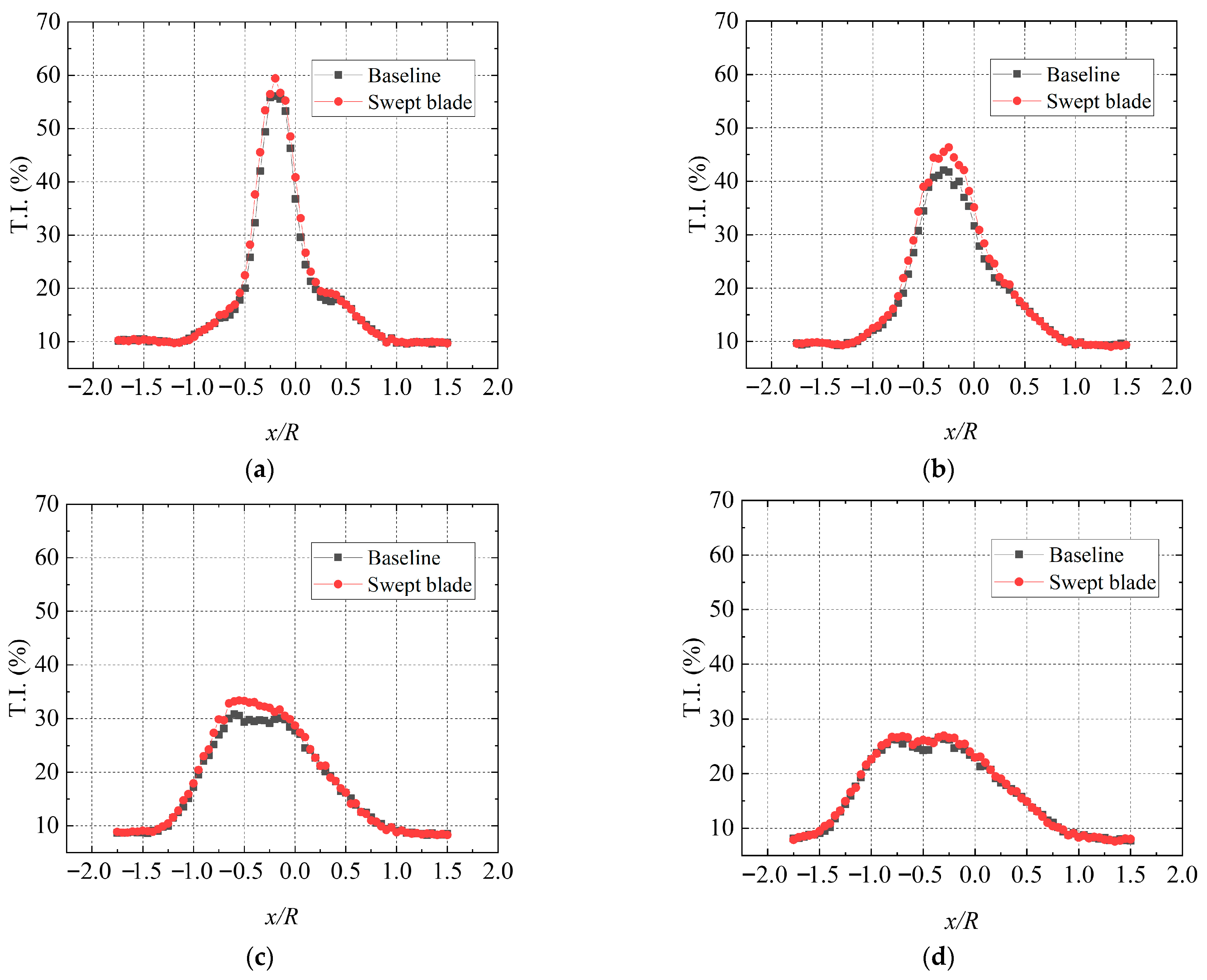
Inflow T.I. has a considerable influence on the wake velocity recovery. A higher inflow T.I. leads to faster streamwise velocity recovery. For the forward-swept-blade turbine, the mean streamwise wake velocity within the near-wake zone shows a similar trend to that of the baseline turbine. However, the cross-stream velocity in the near-wake region is considerably higher. In this experiment, the maximum difference value at the 1D position was approximately 0.2 m/s. Clearly, the swept blade design increases the energy dissipation in the rotating wake. The results of wake T.I. indicate that a higher inflow T.I. corresponds to a wider influence region on the wake T.I. distribution. The wake T.I. of the forward swept-blade turbine shows a slight increase at most positions compared with the baseline case, particularly in the region close to the central axis. That is, the swept-blade design increases the streamwise T.I., and the aerodynamic performance improvement is achieved at the cost of a moderate increase in structural loads.
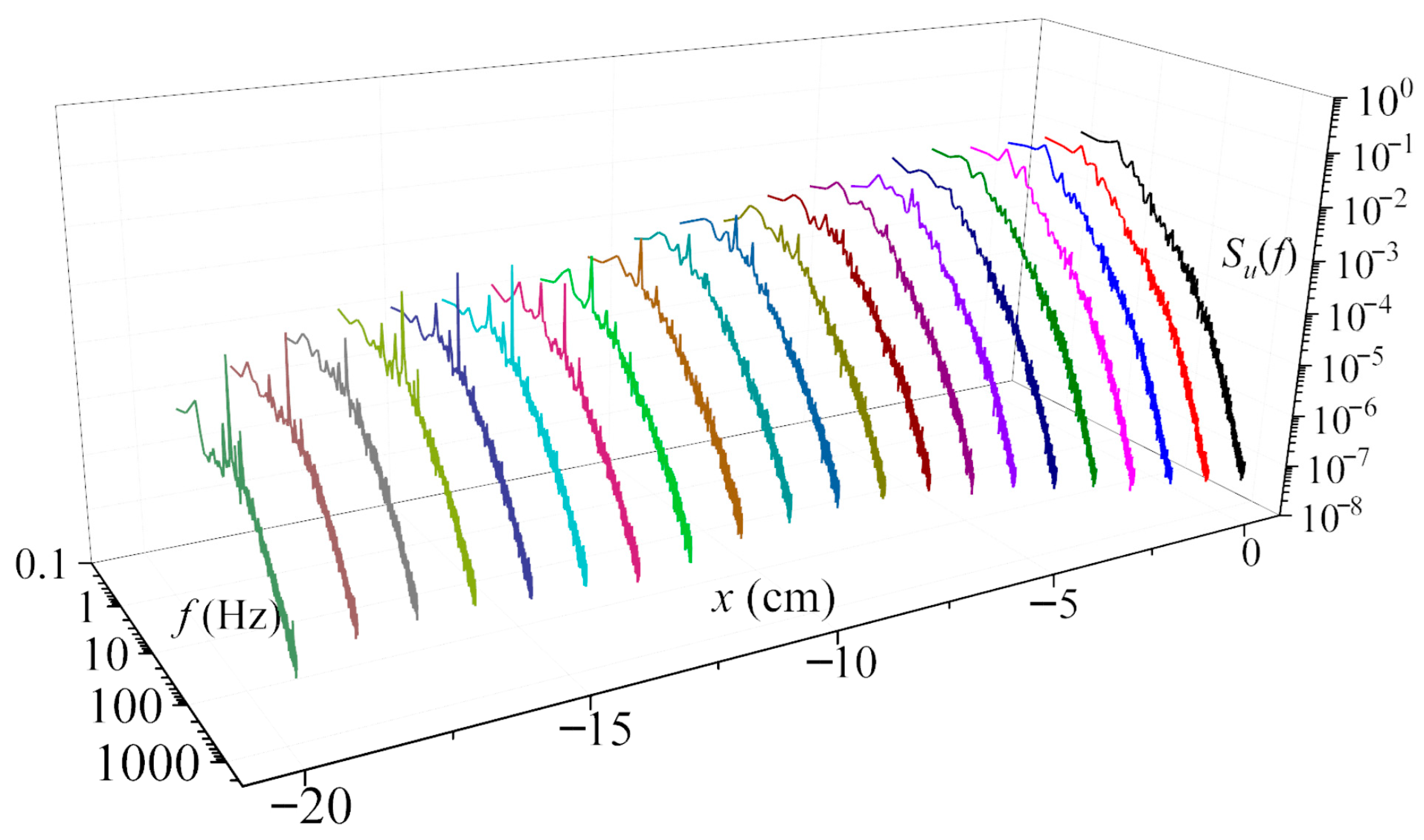
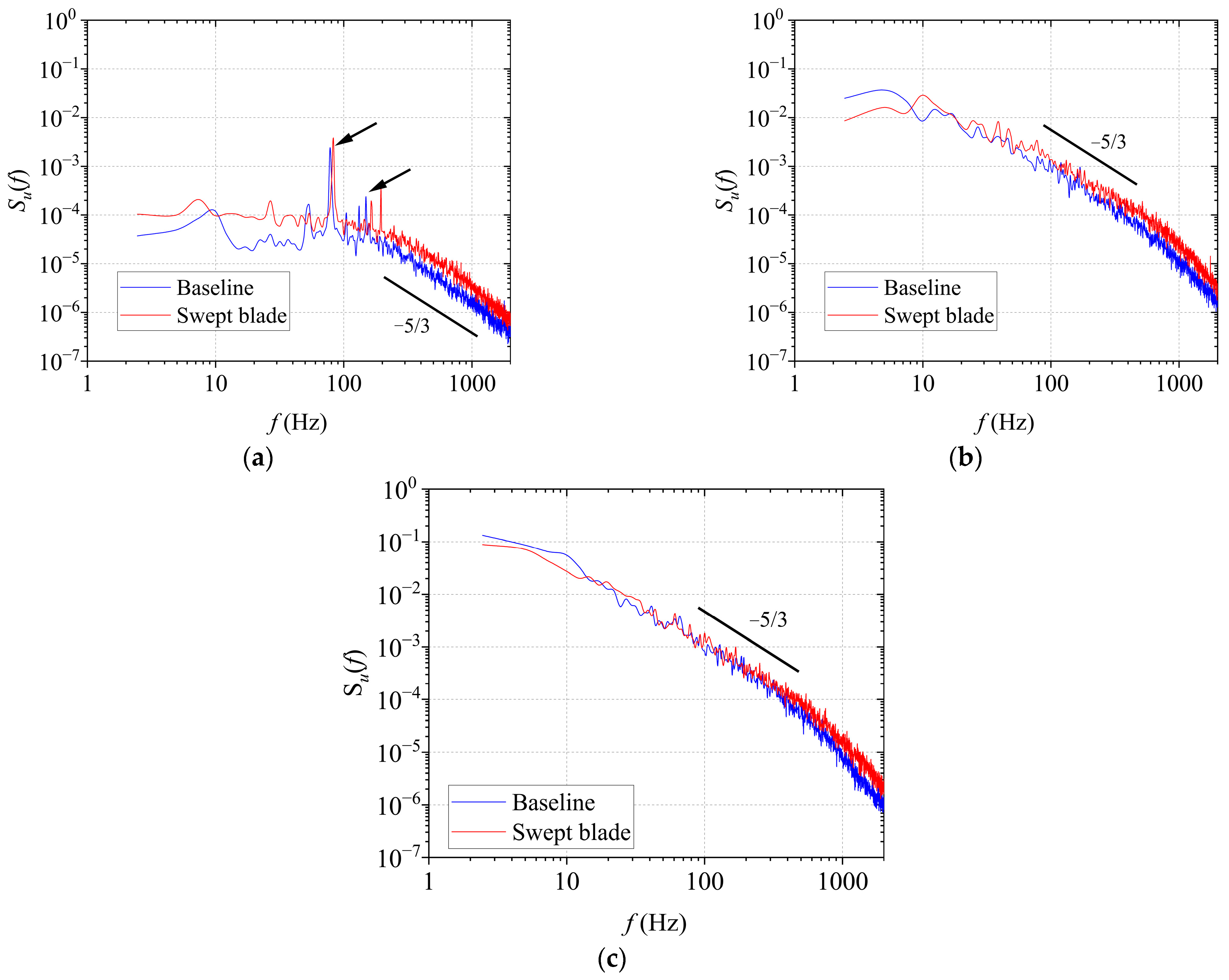
In addition, PSD analysis was performed to examine the turbulent kinetic energy distribution at different wake positions. At T.I. = 0.5%, the wake velocity PSD at the blade tip exhibits prominent peaks at the triple rotational frequency, the value is approximately 78 Hz in this experiment, and its harmonics for both the baseline and swept-blade turbines. Under turbulent inflow, these harmonic peaks are significantly weaker than those under low-turbulence conditions. Meanwhile, the PSD amplitude under the forward swept-blade case is higher than that of the baseline, and this feature is more evident in the medium-to-high frequency range. The results presented herein offer valuable insights to guide the aerodynamic design of swept blades.
As a promising passive flow control method, bionic blade sweep is applicable at least for small-scale horizontal-axis wind turbines. By correcting aerodynamic data for Reynolds number and three-dimensional flow effects, and validating the corrected data against field measurements, the model test could establish a reliable foundation for full-scale wind turbine design. However, this study does not consider the effects of wind shear, tower shadow, and pitch angle on the aerodynamic performance of swept blades, introducing a certain discrepancy between the present results and the actual operating conditions of full-scale turbines. Moreover, the quantitative impact of varying blade sweep configurations on turbine aerodynamic performance warrants further investigation and will be addressed in subsequent work.