
Article

Learning Nonlinear Dynamics of Flexible Structures for Predictive Control Using Gaussian Process NARX Models

by
Nasser Ayidh Alqahtani
Department of Mechanical Engineering, College of Engineering, Qassim University, Buraidah 51452, Saudi Arabia
Biomimetics 2026, 11(4), 253; https://doi.org/10.3390/biomimetics11040253

Submission received: 11 January 2026 / Revised: 4 March 2026 / Accepted: 13 March 2026 / Published: 7 April 2026
(This article belongs to the Special Issue Design of Natural and Biomimetic Flexible Biological Structures)

Abstract

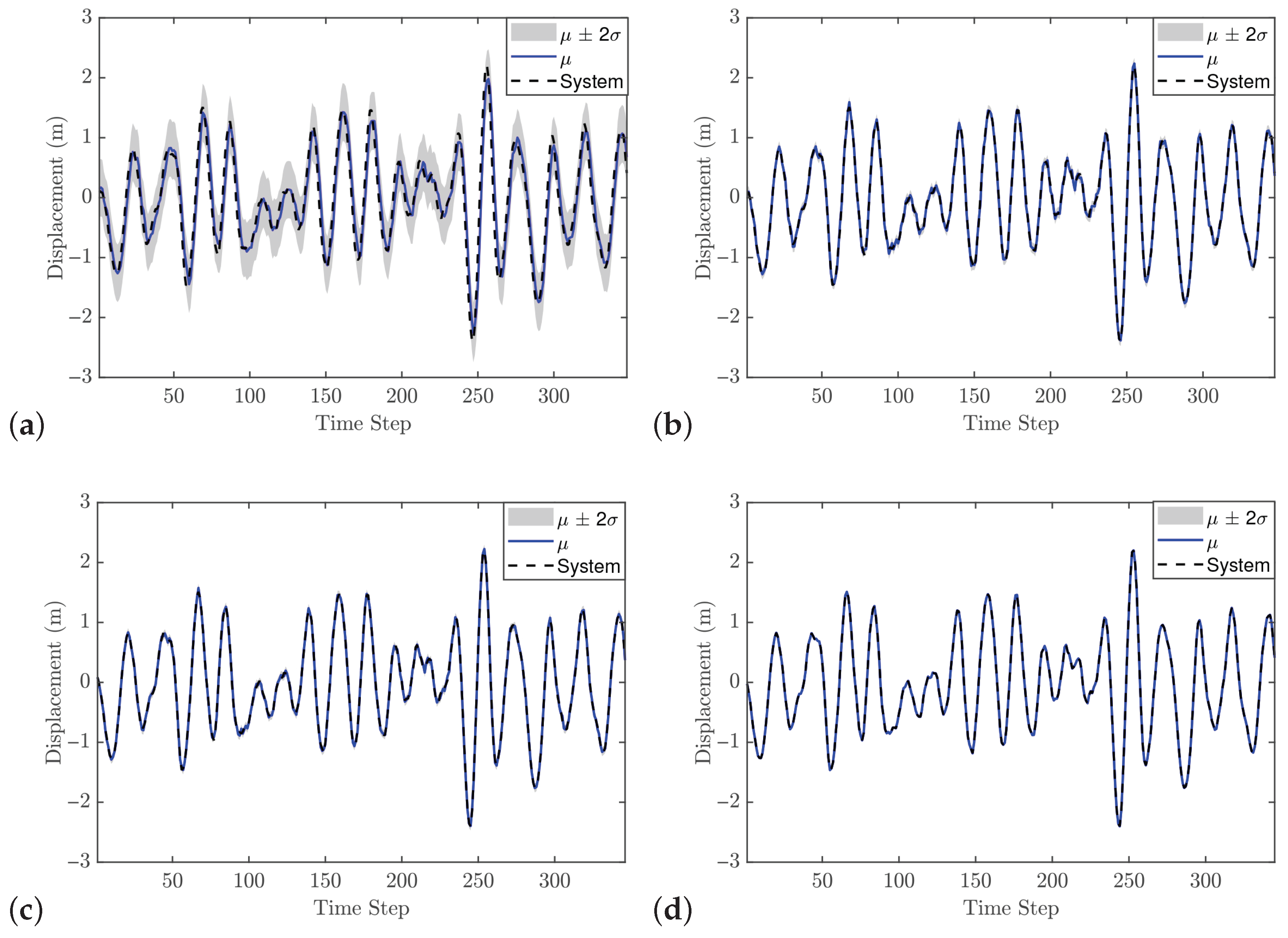
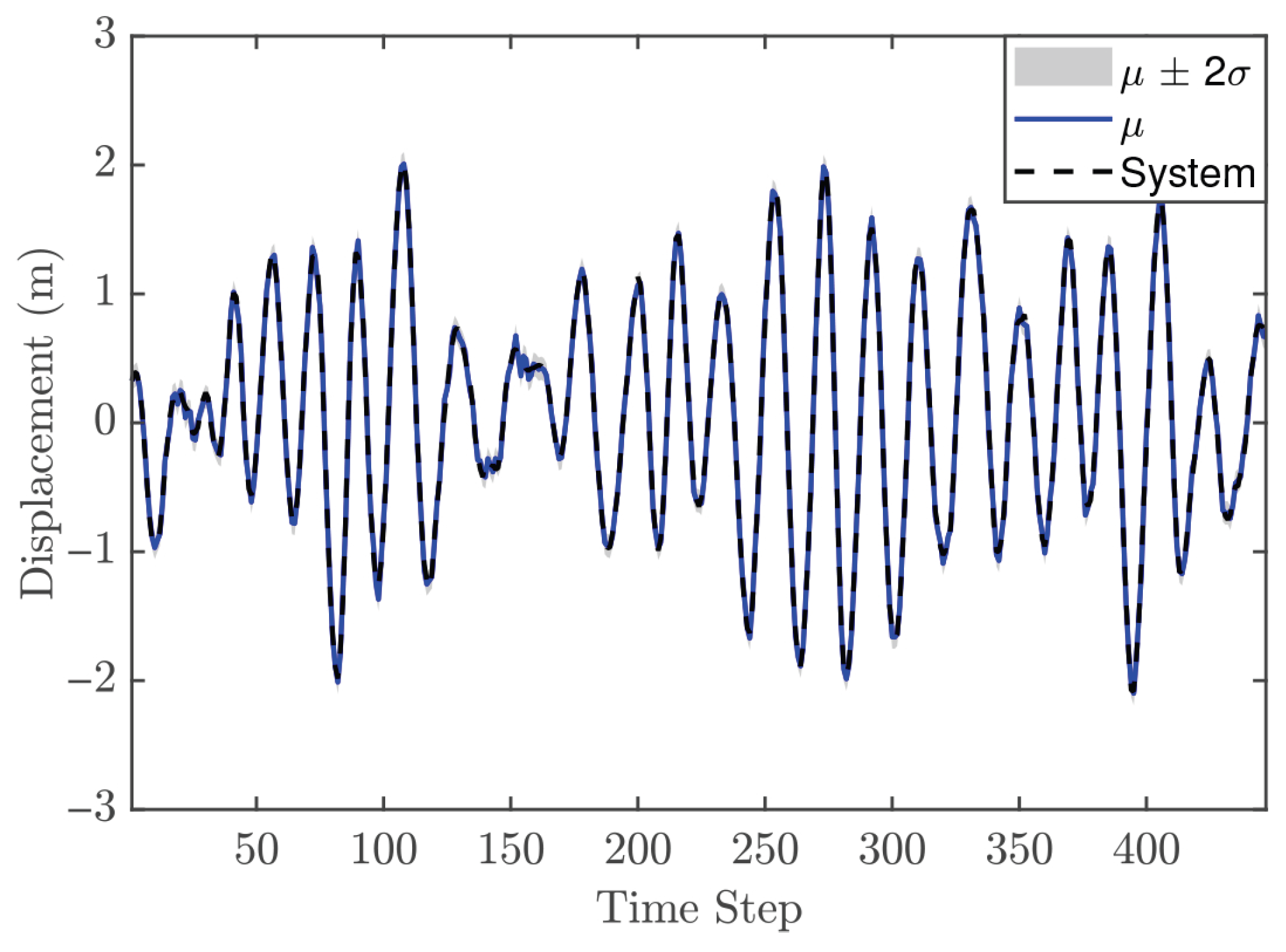
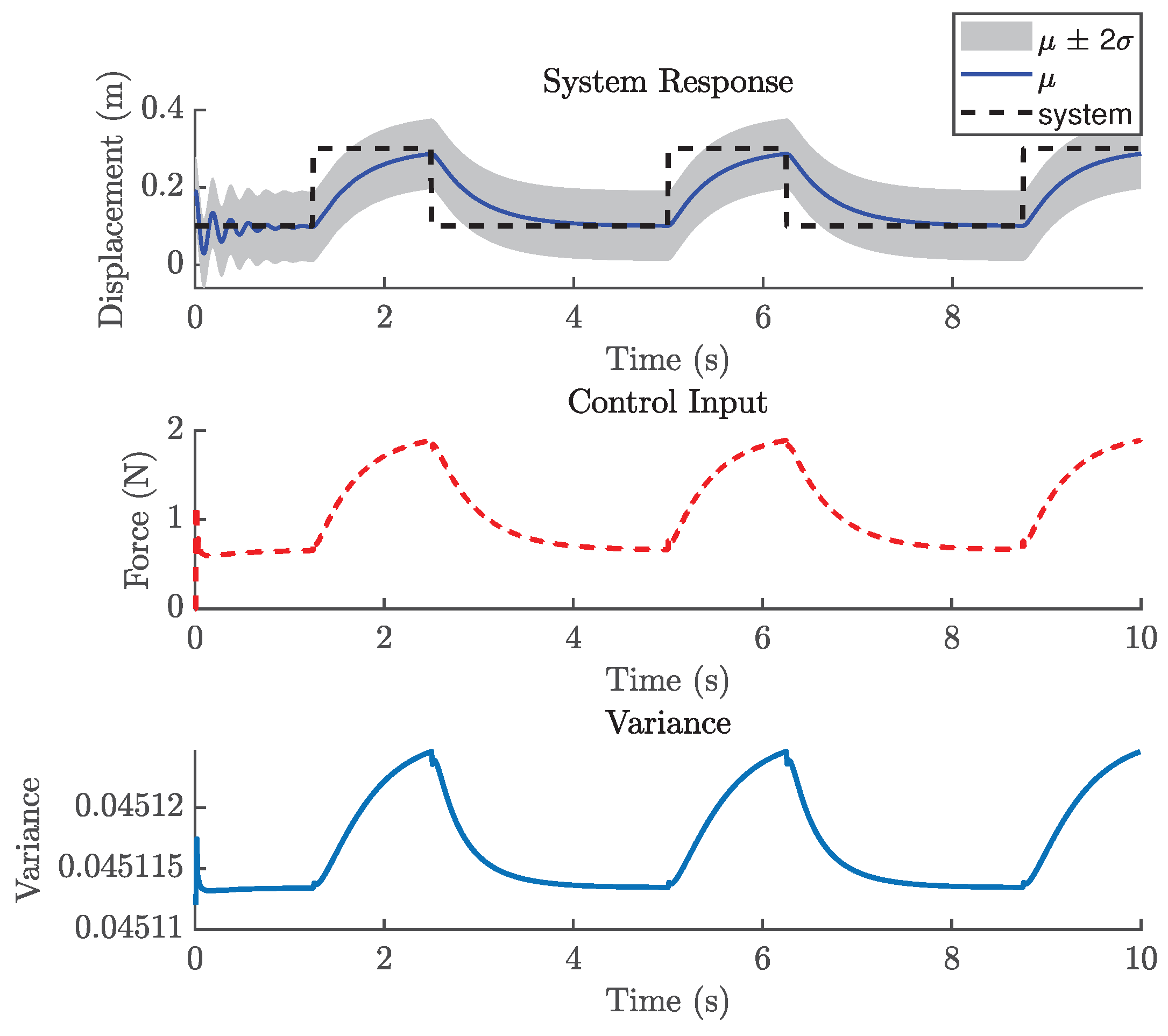
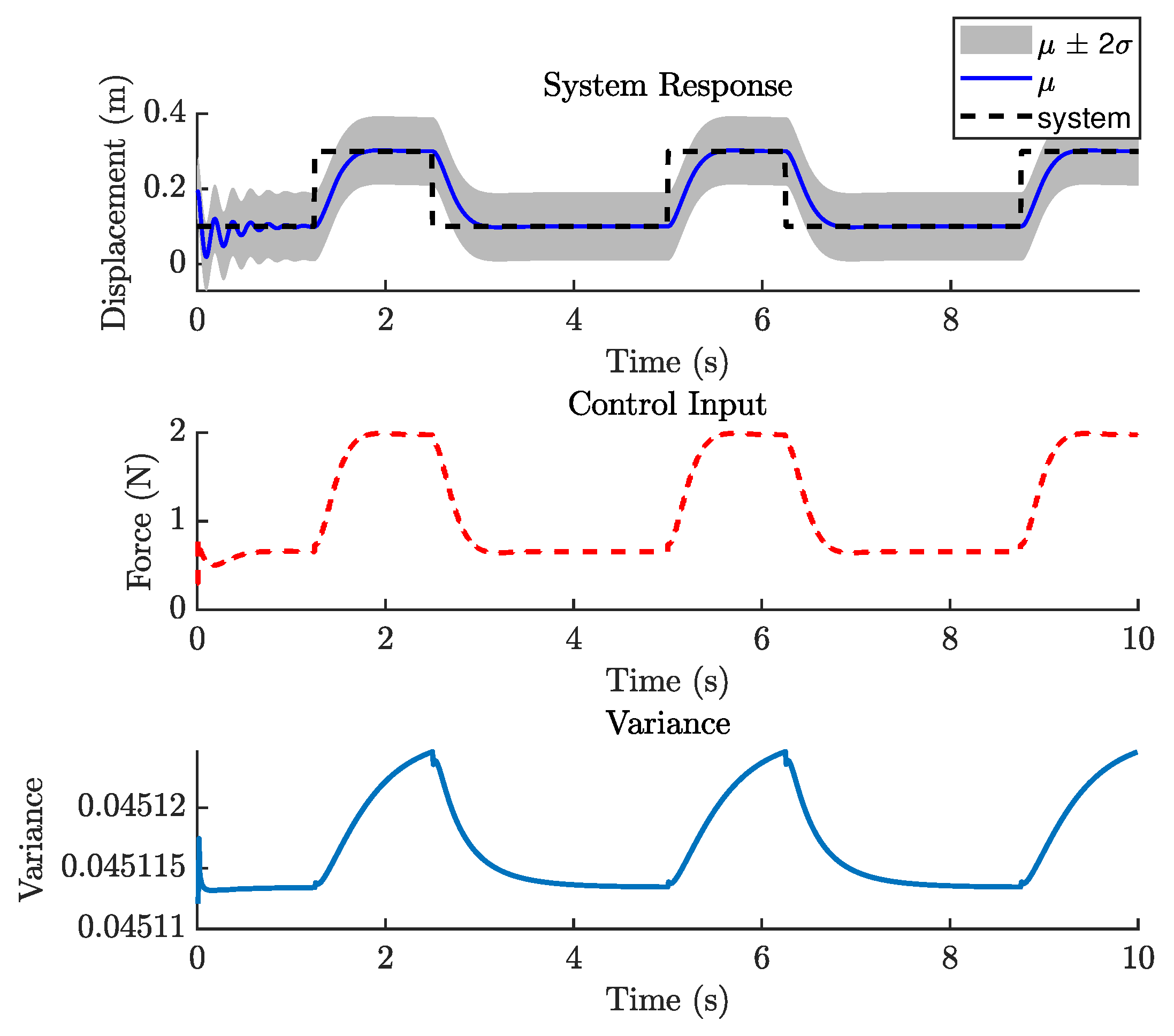
Biological systems regulate motion and suppress unwanted vibrations through learning, adaptation, and predictive control under uncertainty. Inspired by these principles, Bayesian system identification has emerged as a powerful framework for modeling and estimation, particularly in the presence of uncertainty in structural systems. Flexible structures in aerospace and robotics require advanced control to mitigate vibrations under model uncertainty. This paper proposes a data-driven strategy leveraging a Gaussian Process (GP) integrated within a Nonlinear Model Predictive Control (NMPC) framework. The core innovation lies in using a Gaussian Process Nonlinear AutoRegressive model with eXogenous input (GP-NARX) as a probabilistic predictor to capture structural dynamics while quantifying uncertainty. The operational mechanism involves a tight coupling where the GP provides multi-step-ahead forecasts that the NMPC optimizer uses to minimize a cost function subject to constraints. Validated through simulations on Duffing oscillators, linear oscillators, and cantilever beams, the GP-NMPC achieved an 88.2% reduction in displacement amplitude compared to uncontrolled systems. Quantitative analysis shows high predictive accuracy, with a Root Mean Square Error (RMSE) of 0.0031 and a Standardized Mean-Squared Error (SMSE) below 0.05. Furthermore, Mean Standardized Log Loss (MSLL) evaluations confirm the reliability of the predictive uncertainty within the control loop. These results demonstrate strong performance in both regulation and tracking tasks, justifying this Bayesian-predictive coupling as a powerful approach for high-performance structural vibration control and a potential foundation for bio-inspired mechanical design.
Keywords: nonlinear model predictive control; Gaussian Process Nonlinear AutoRegressive model with eXogenous input; predictive functional control; advanced process control nonlinear model predictive control; Gaussian Process Nonlinear AutoRegressive model with eXogenous input; predictive functional control; advanced process control