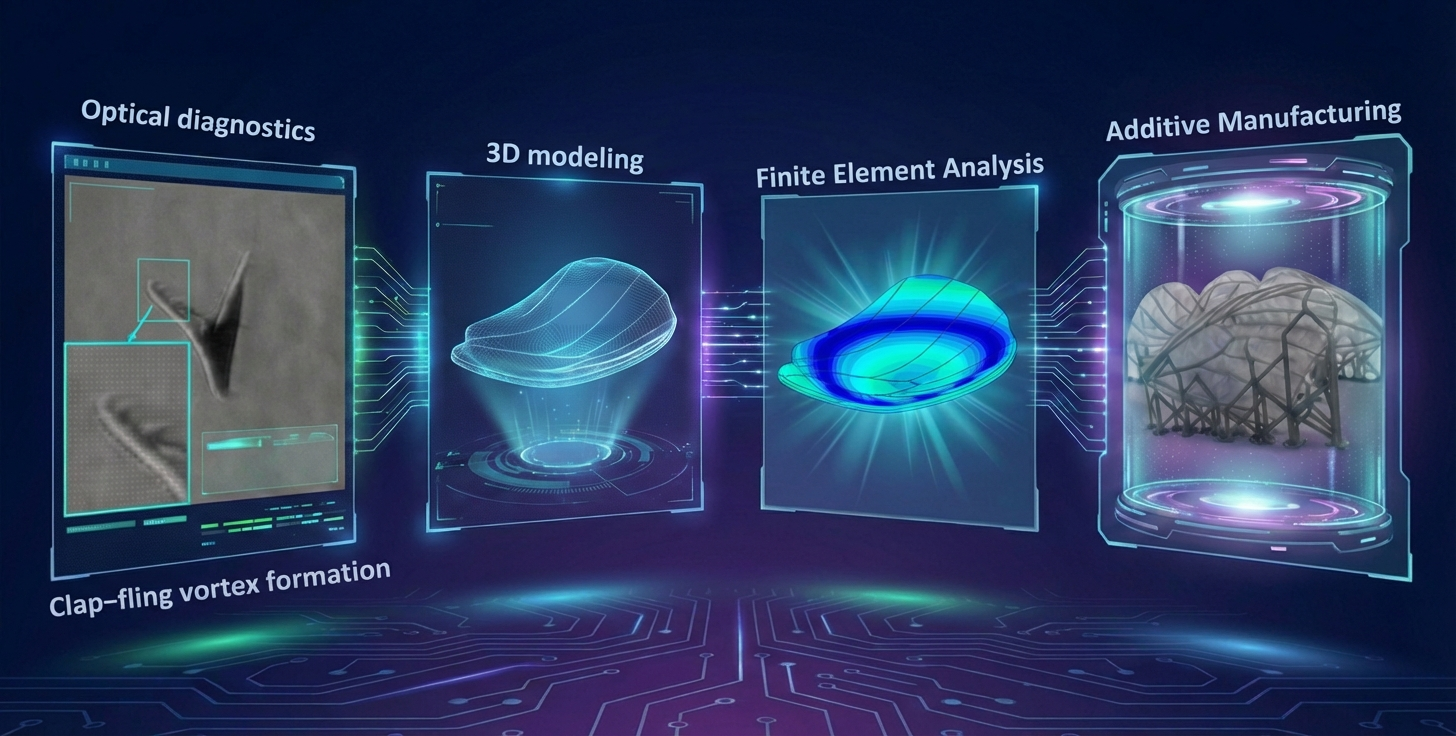

Butterfly Clap–Fling Flight Mechanisms Observed by Schlieren Imaging for the Design of Bio-Inspired Micro Air Vehicles

 , , ,
, , ,  and
and 
Abstract
1. Introduction
1.1. Background: Butterfly Flight and Unsteady Aerodynamics
1.2. Flow Visualization in Insect Flight
1.3. Motivation and Objectives
2. Experimental Setup and Methods
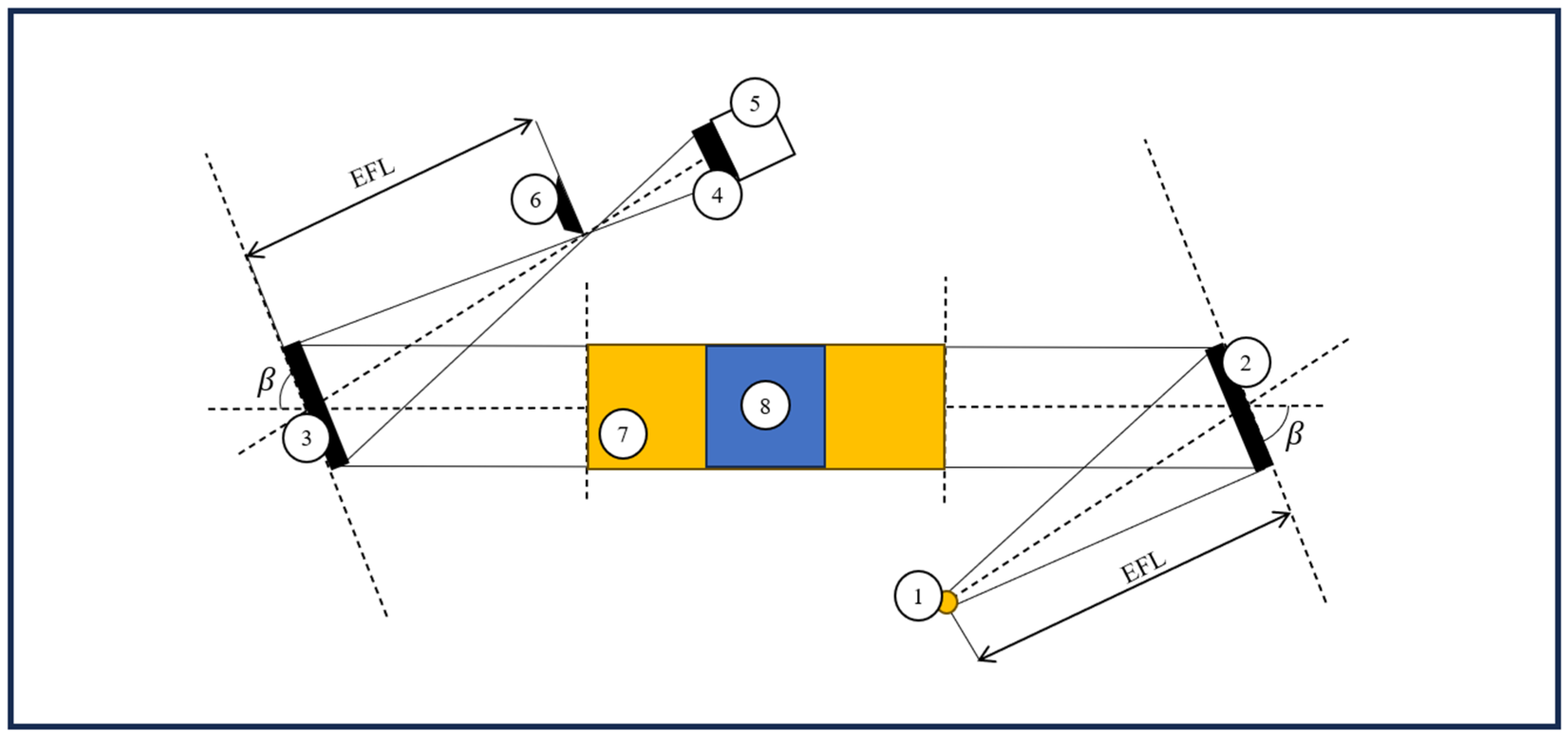
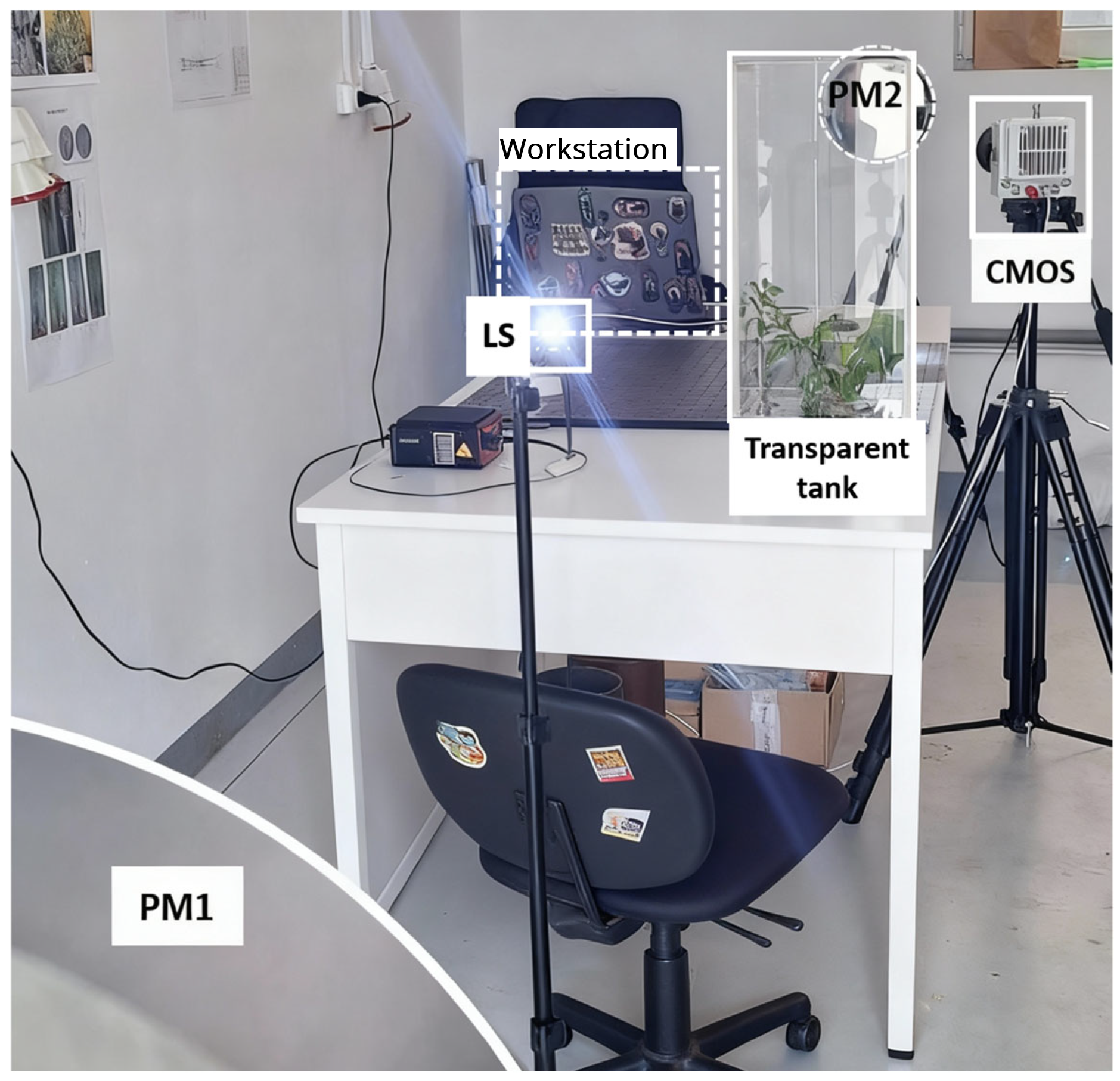
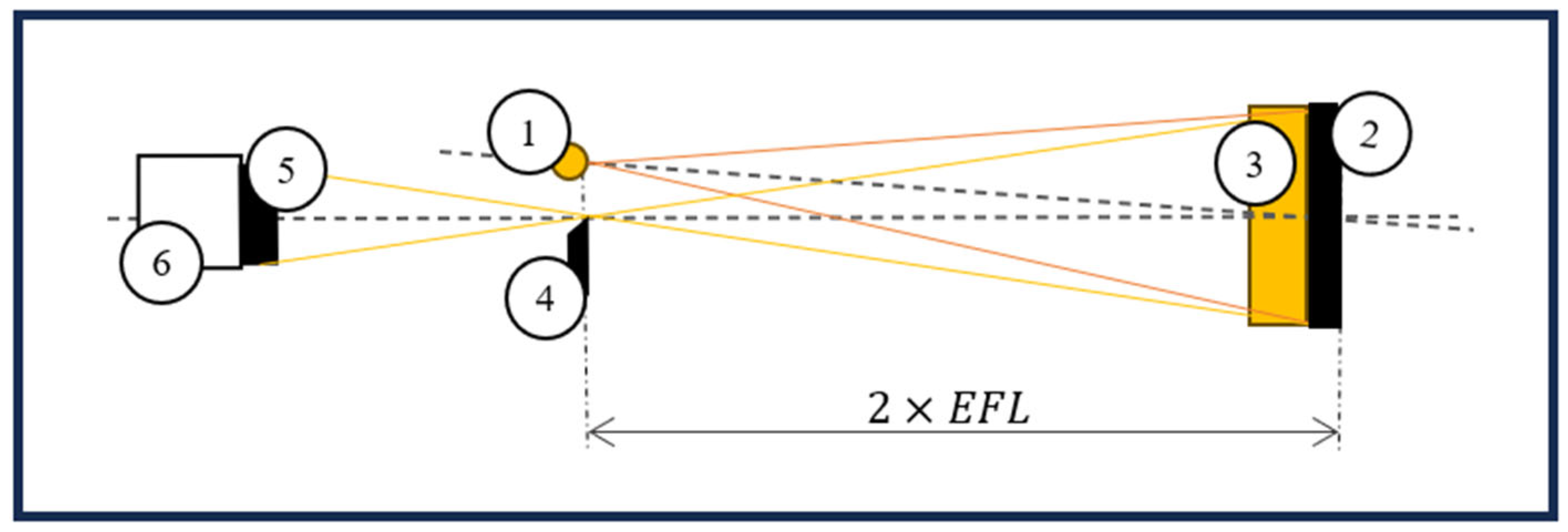
2.1. Schlieren System and Imaging Parameters
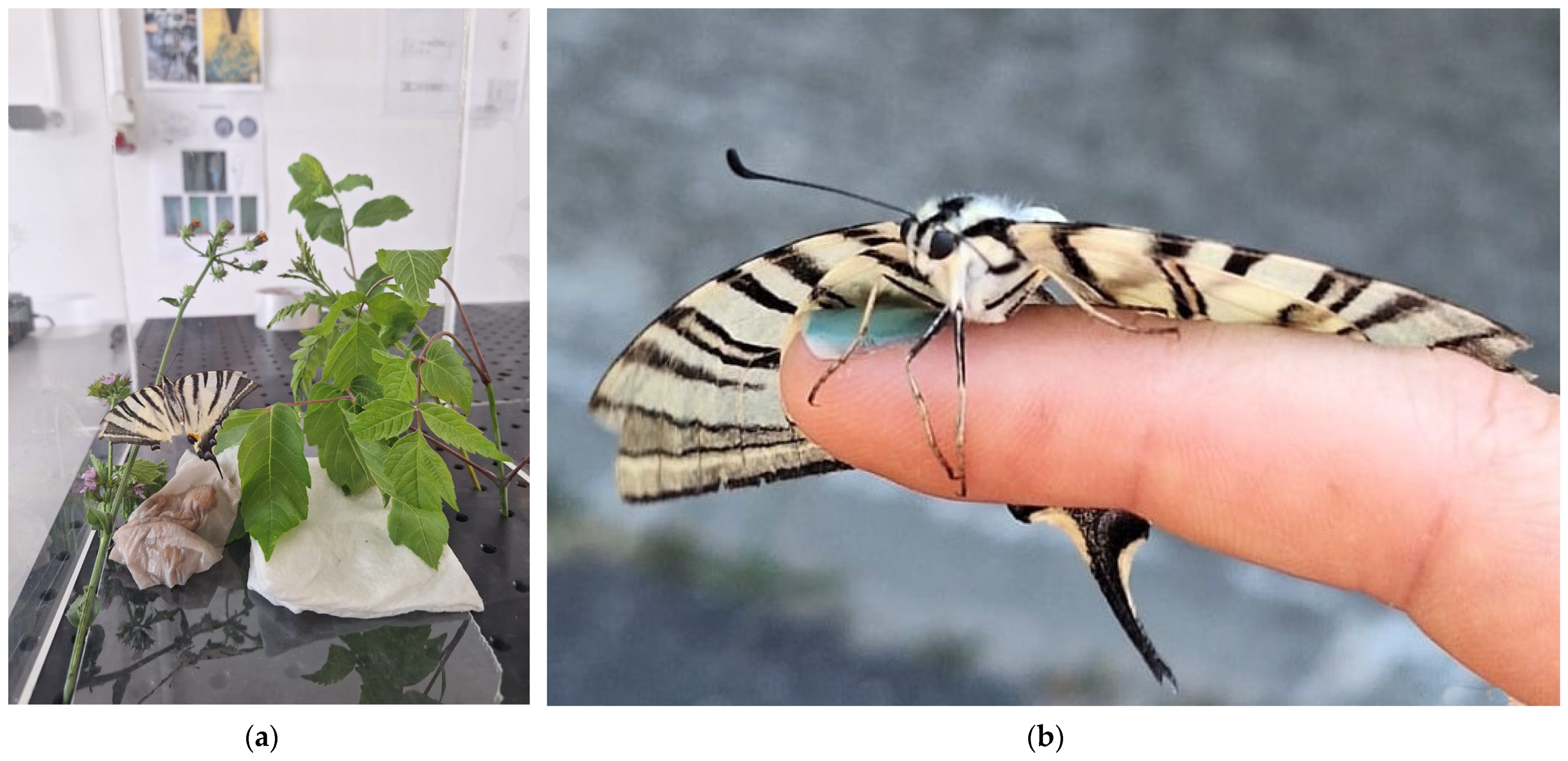
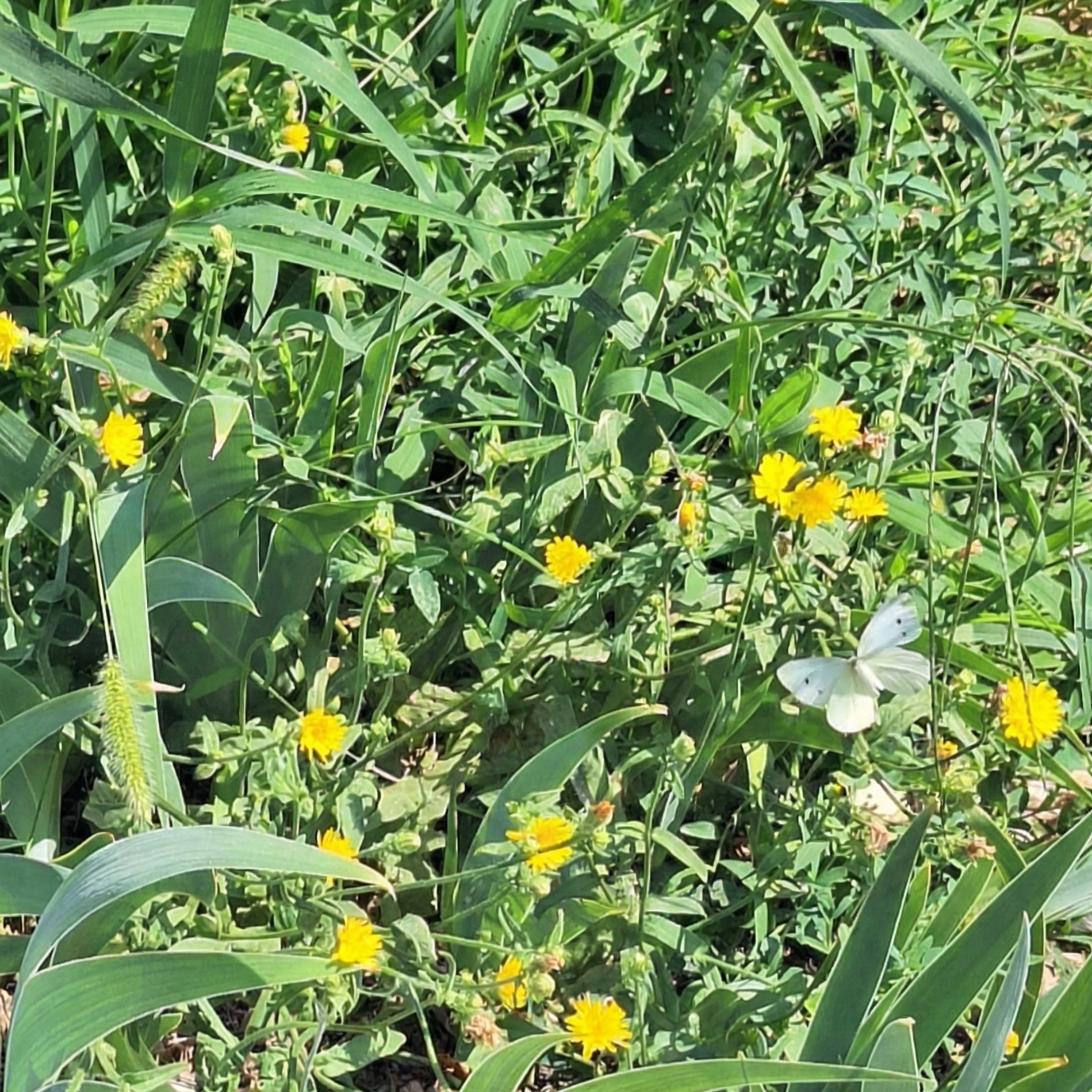
2.2. Test Conditions and Specimen
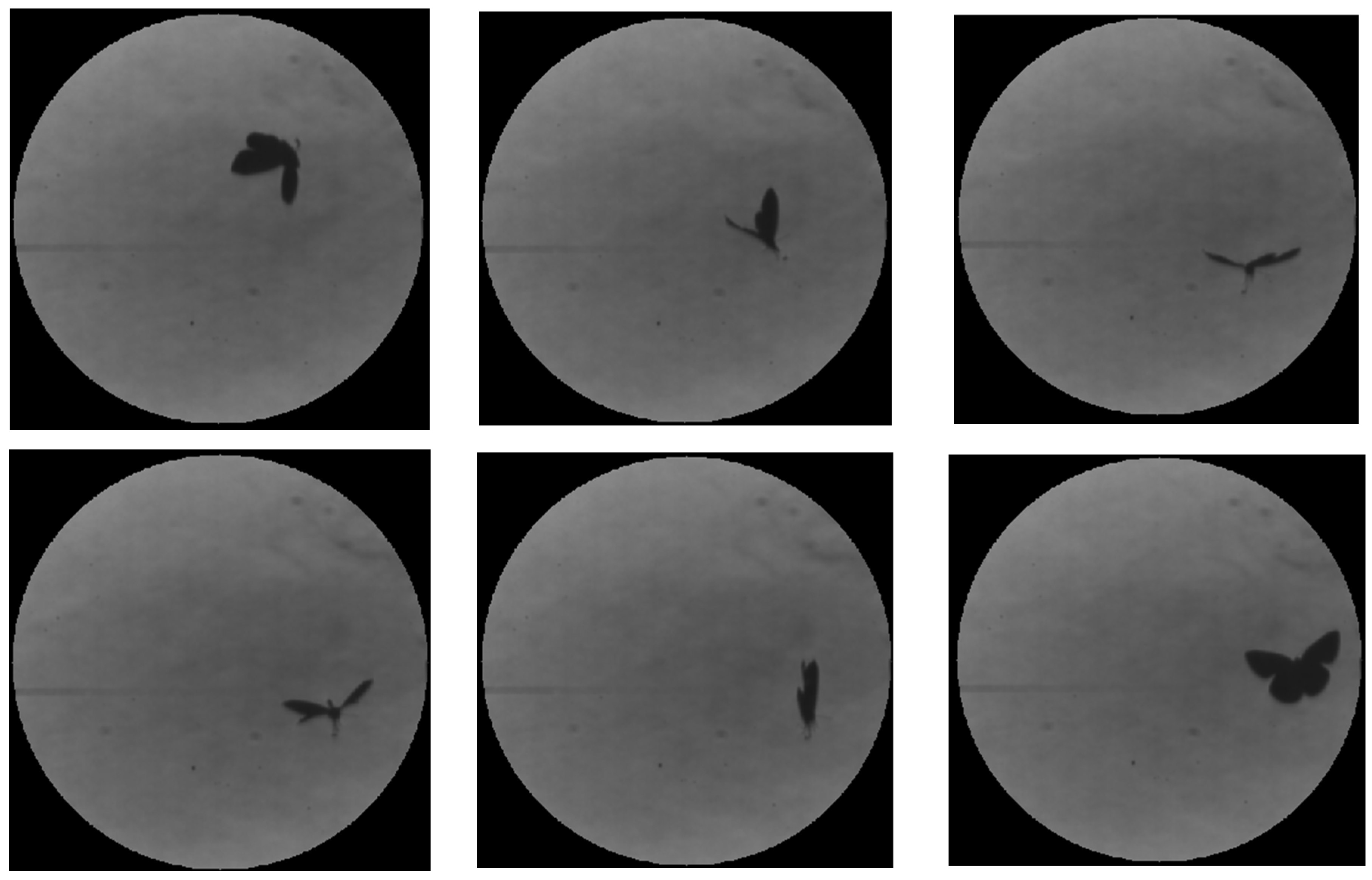
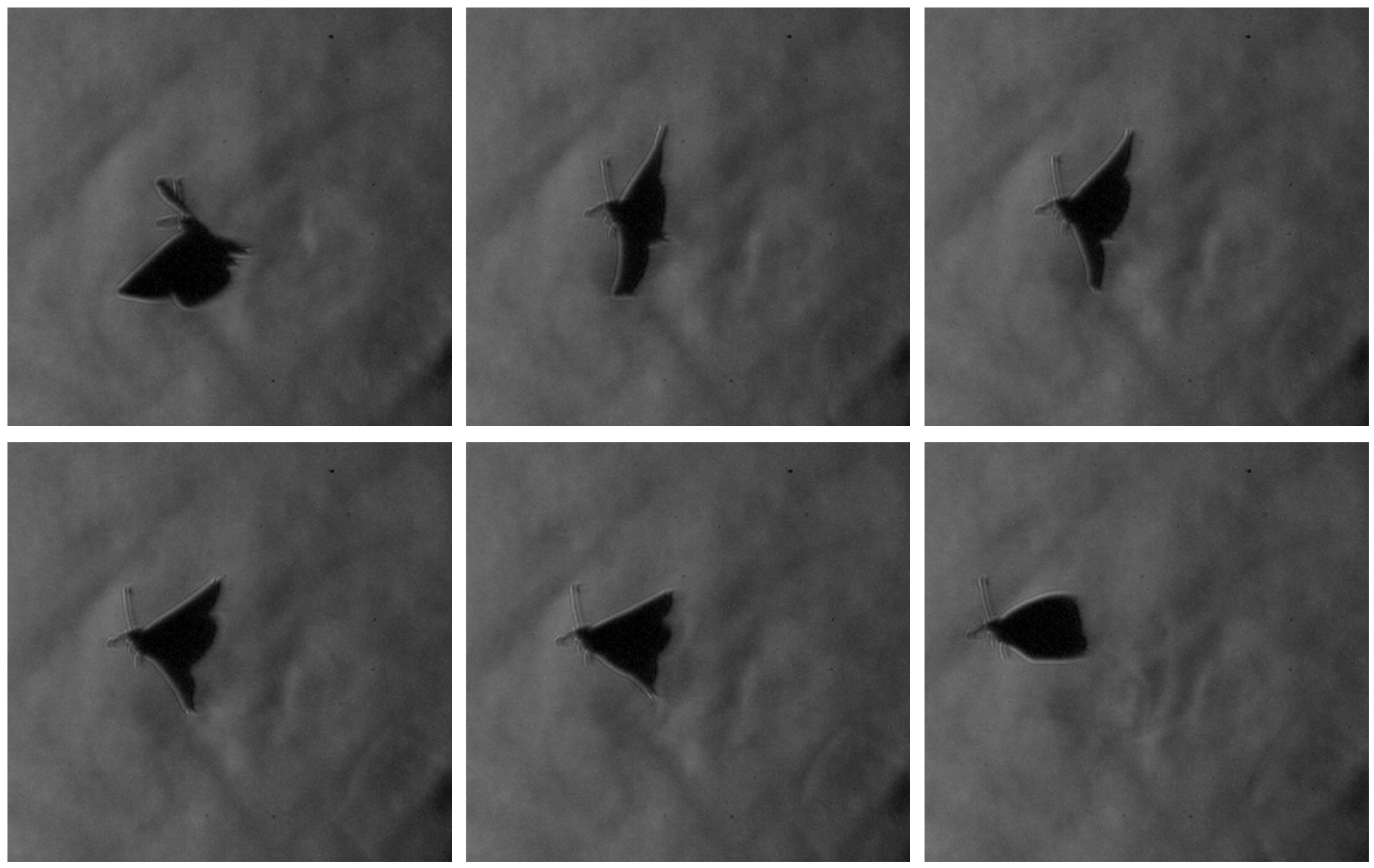
2.3. Observations from Butterfly Schlieren Imaging
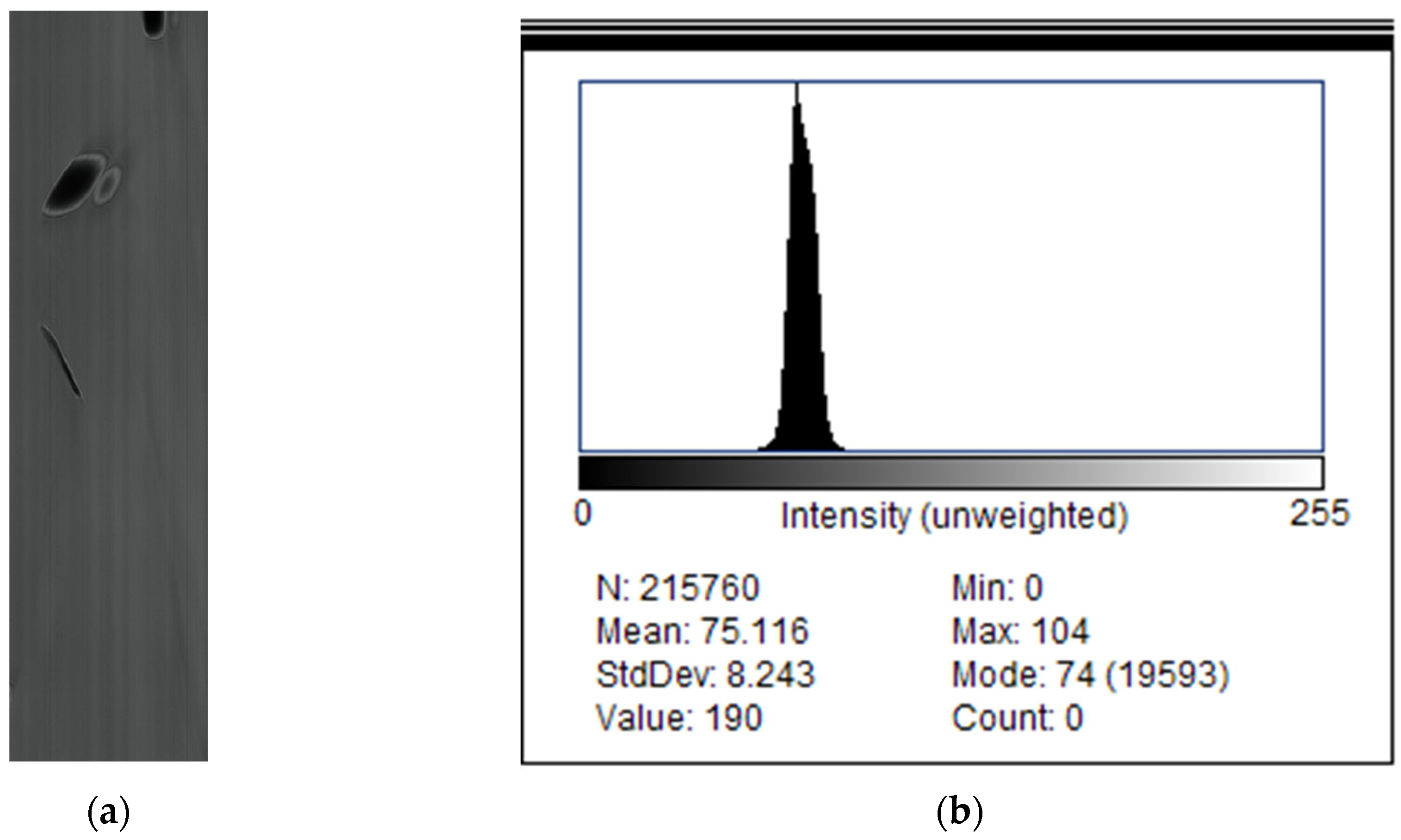
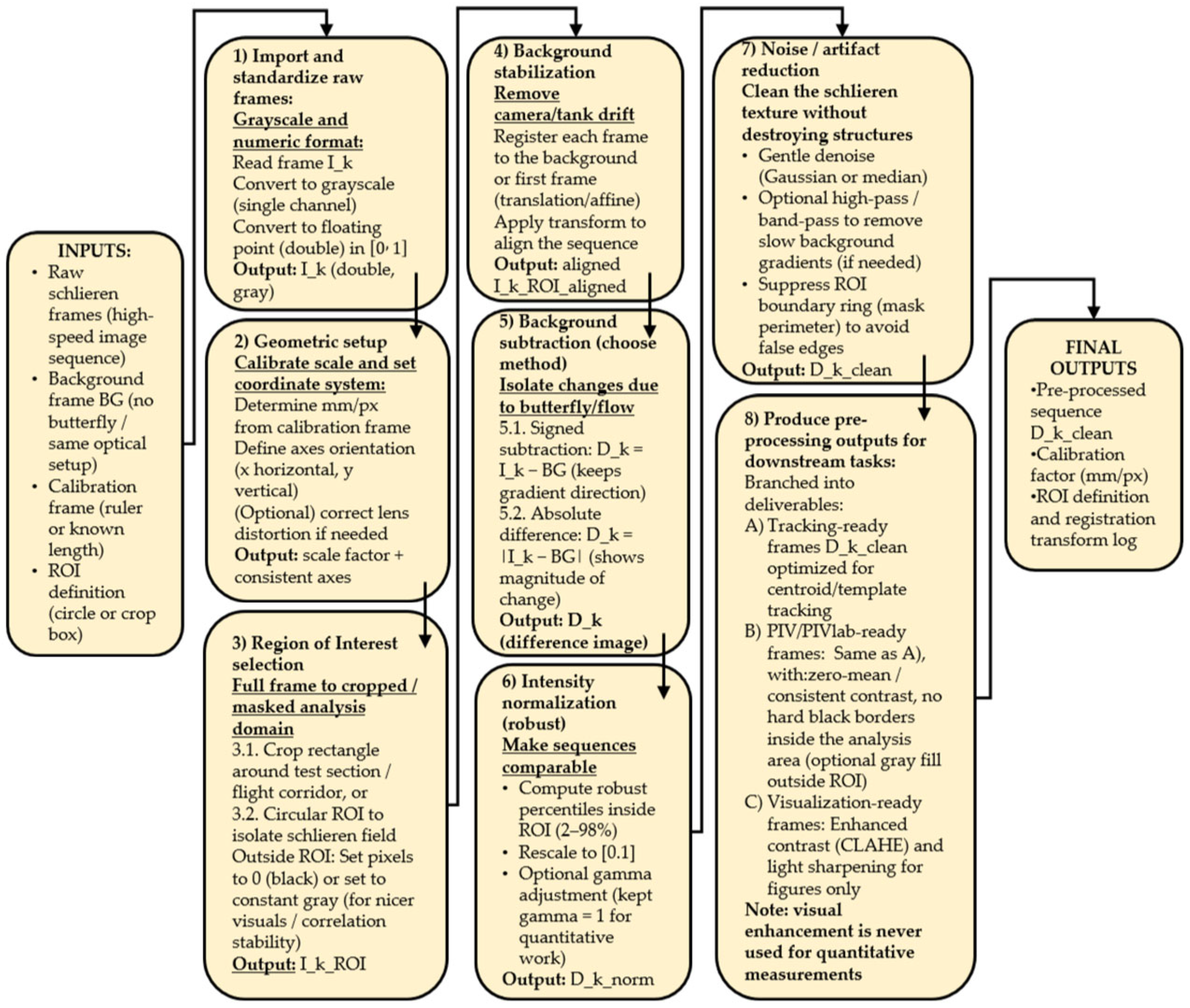
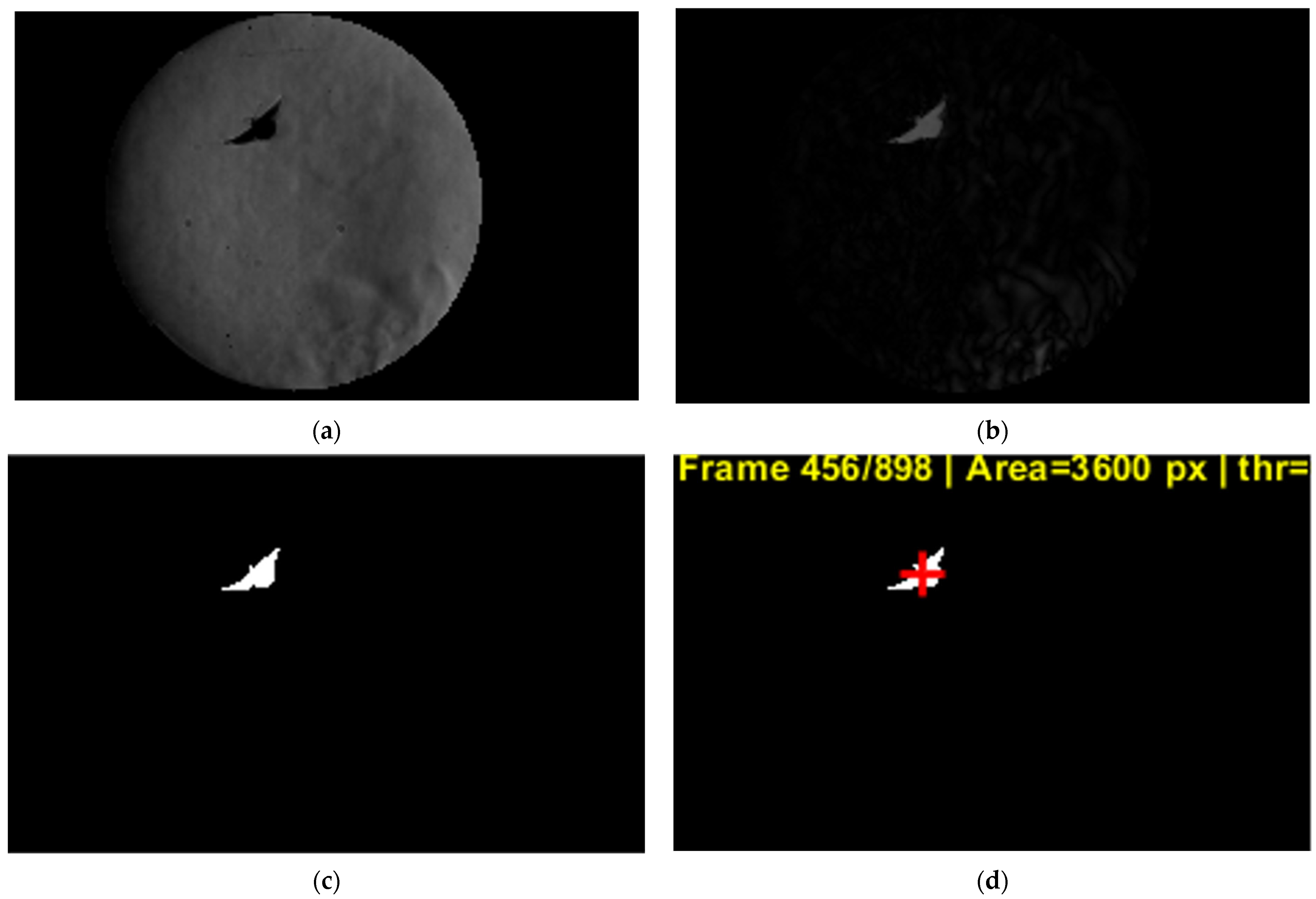
2.3.1. Image Pre-Processing
2.3.2. Kinematic Extraction
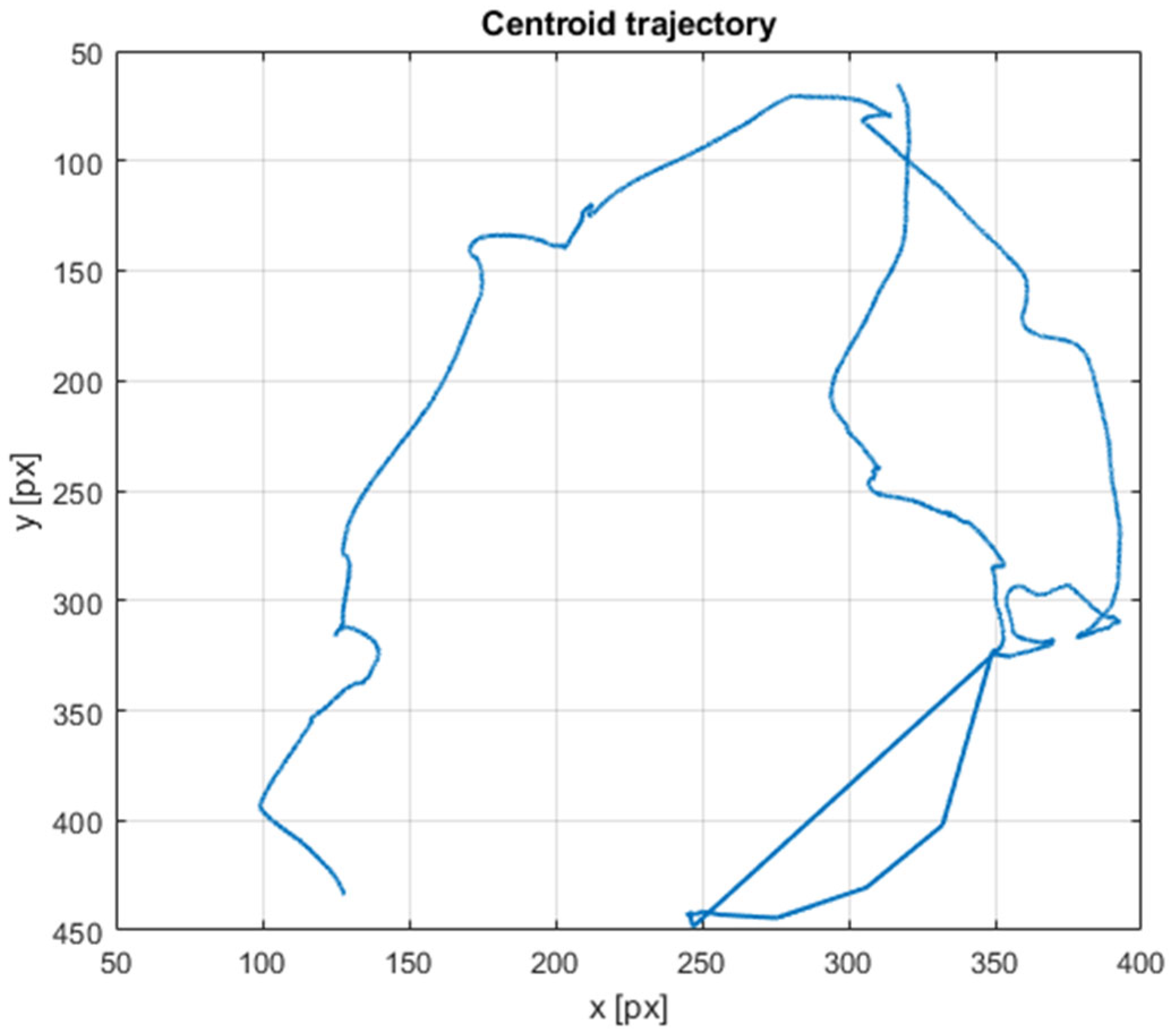
Trajectory Reconstruction
Membrane Deformation Tracking
Body Positioning and Control
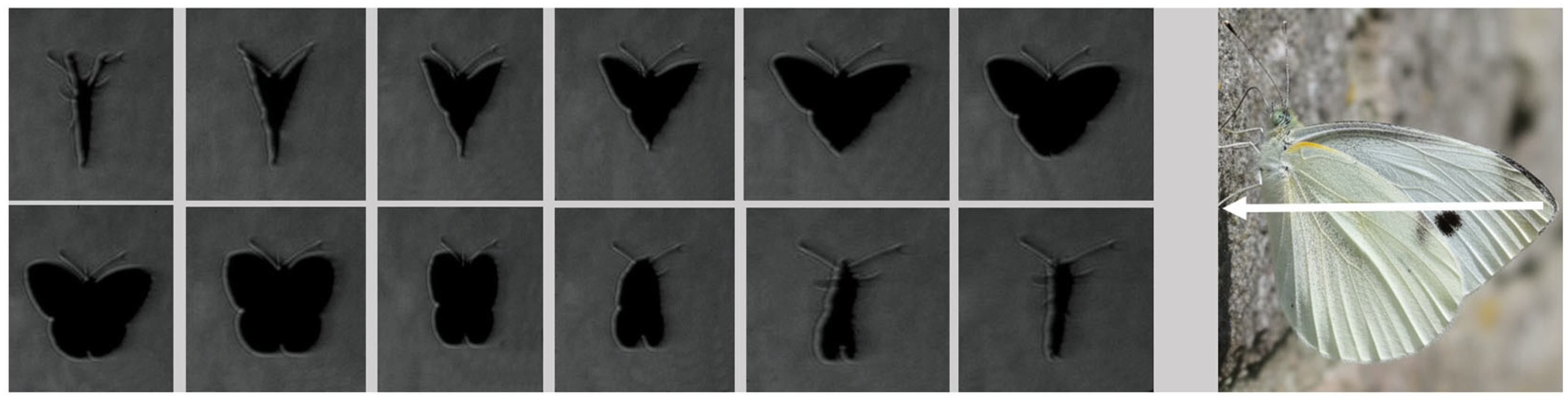
Fling Motion
Wake and Vortex Identification
2.3.3. Other Important Qualitative Observations
2.3.4. Non-Dimensional Metrics
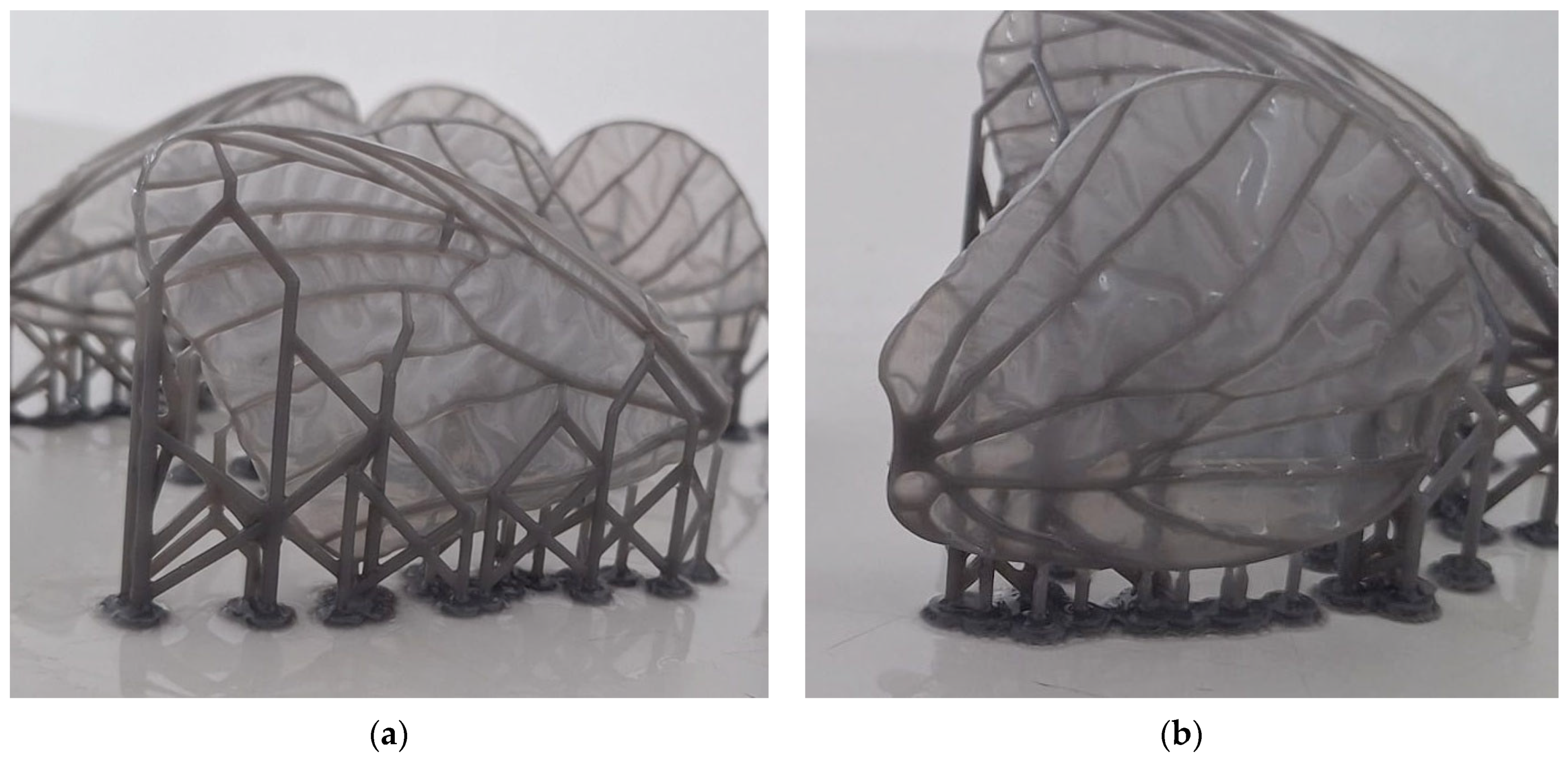
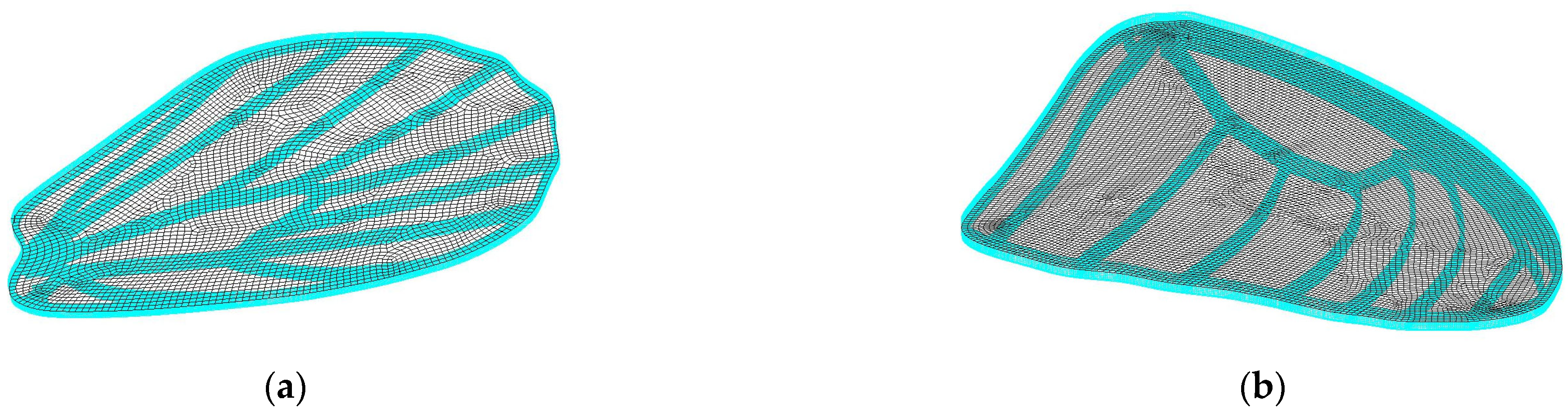
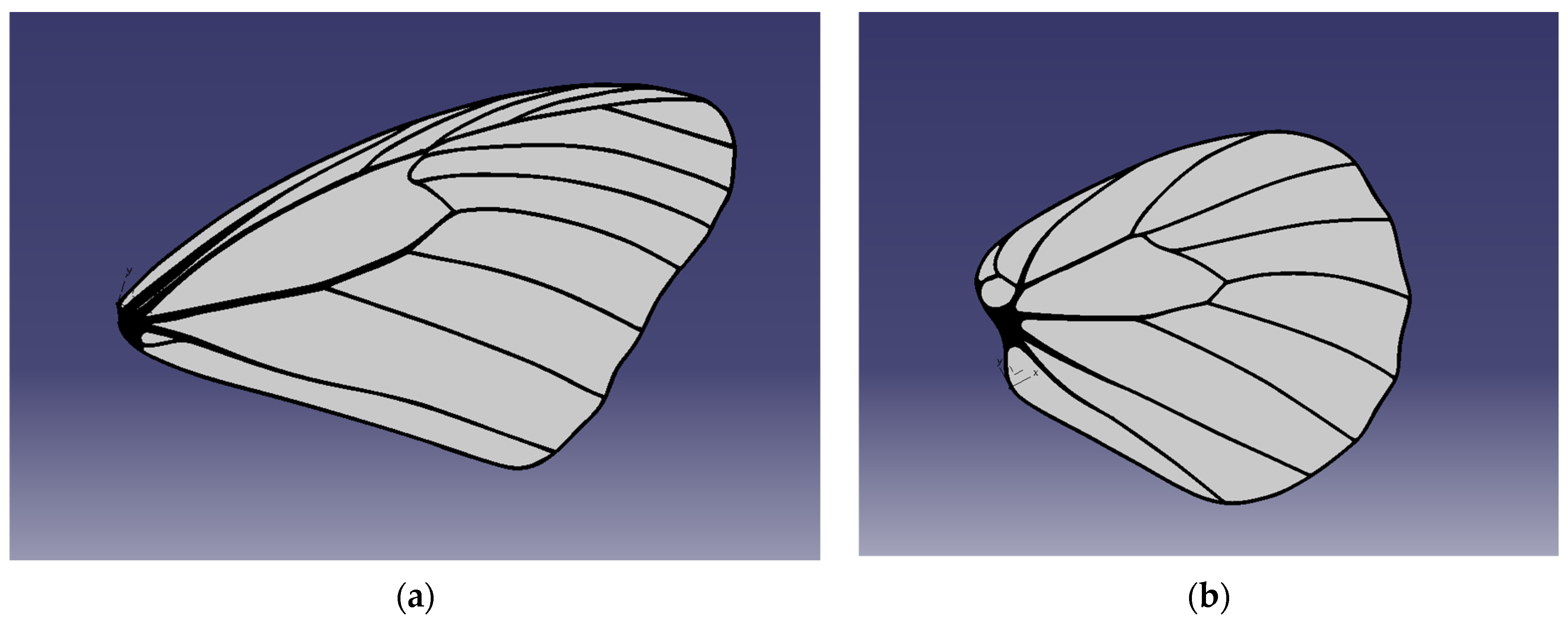
2.4. Additive Manufacturing and FEA Simulation
3. Results
3.1. Image-Based Quantitative Results
3.1.1. Membrane Deformation Tracking
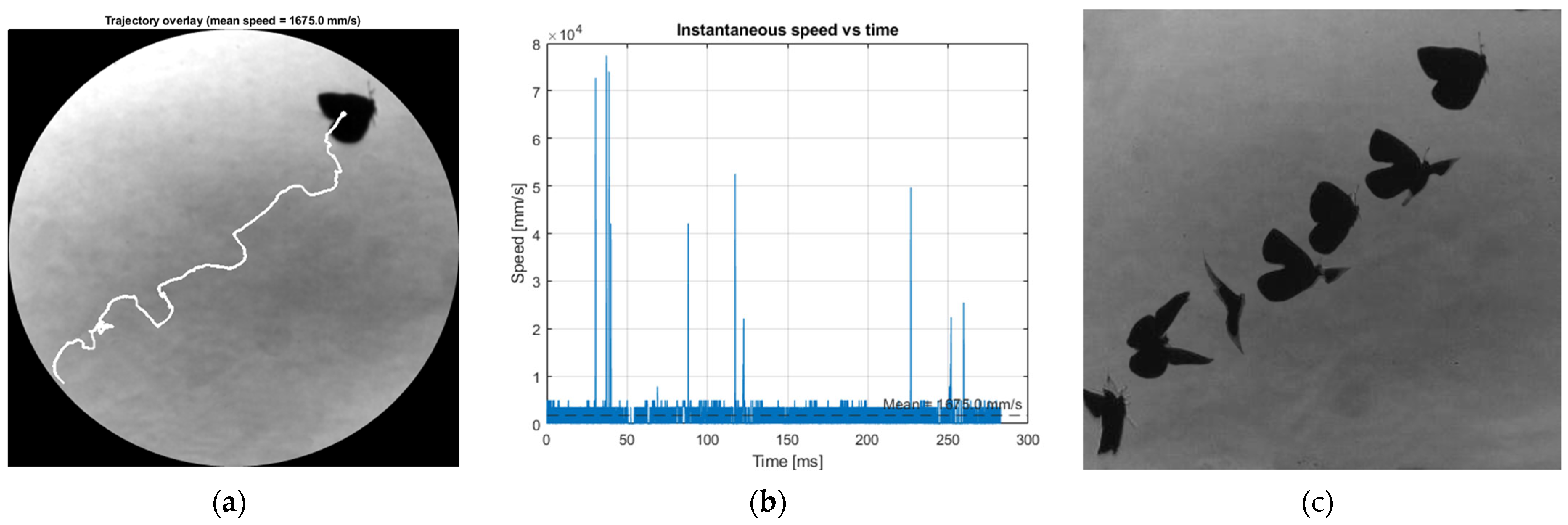
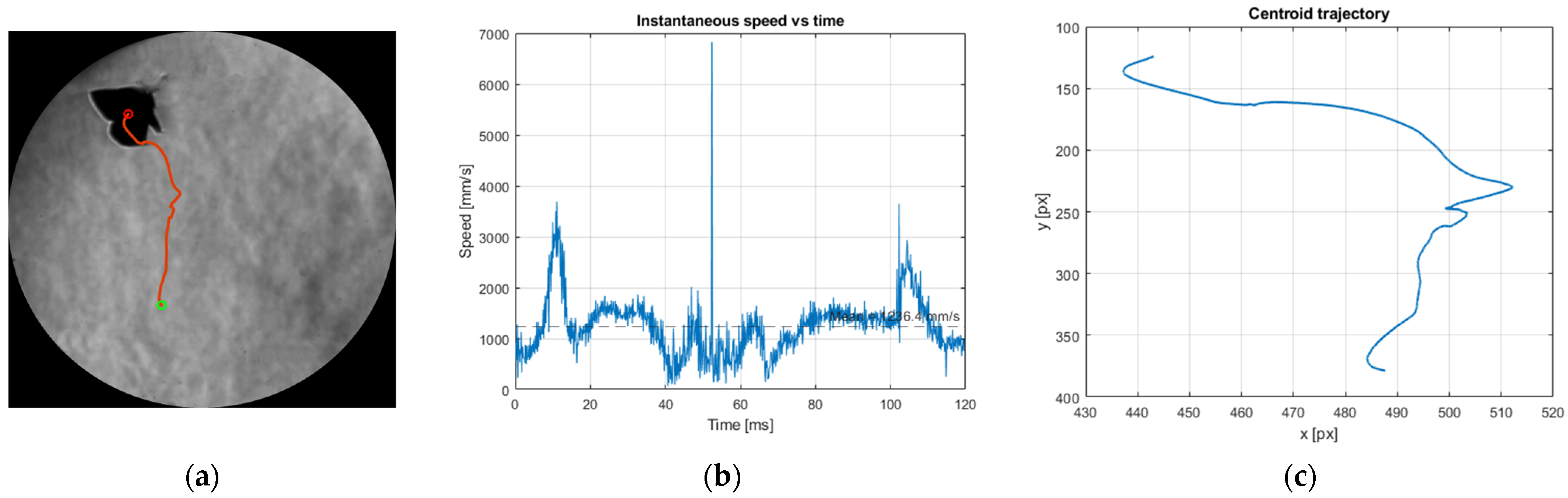
3.1.2. Free Flight Kinematics and Trajectories
3.1.3. Strouhal Number for Vertical Ascent, Thermal Riding and Hovering
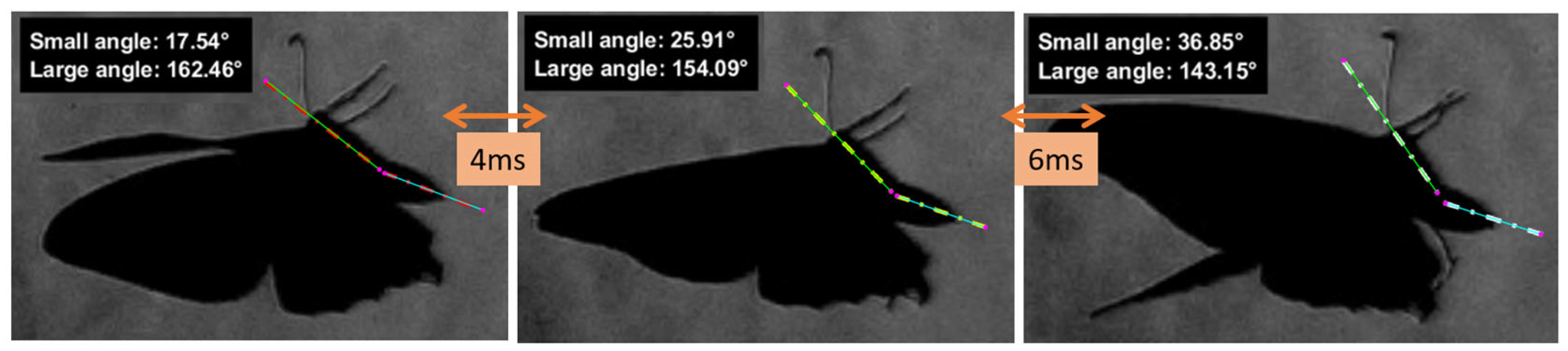
3.1.4. Thorax-Driven Manoeuvring and Directional Control
3.1.5. Inversion and Righting Manoeuvre
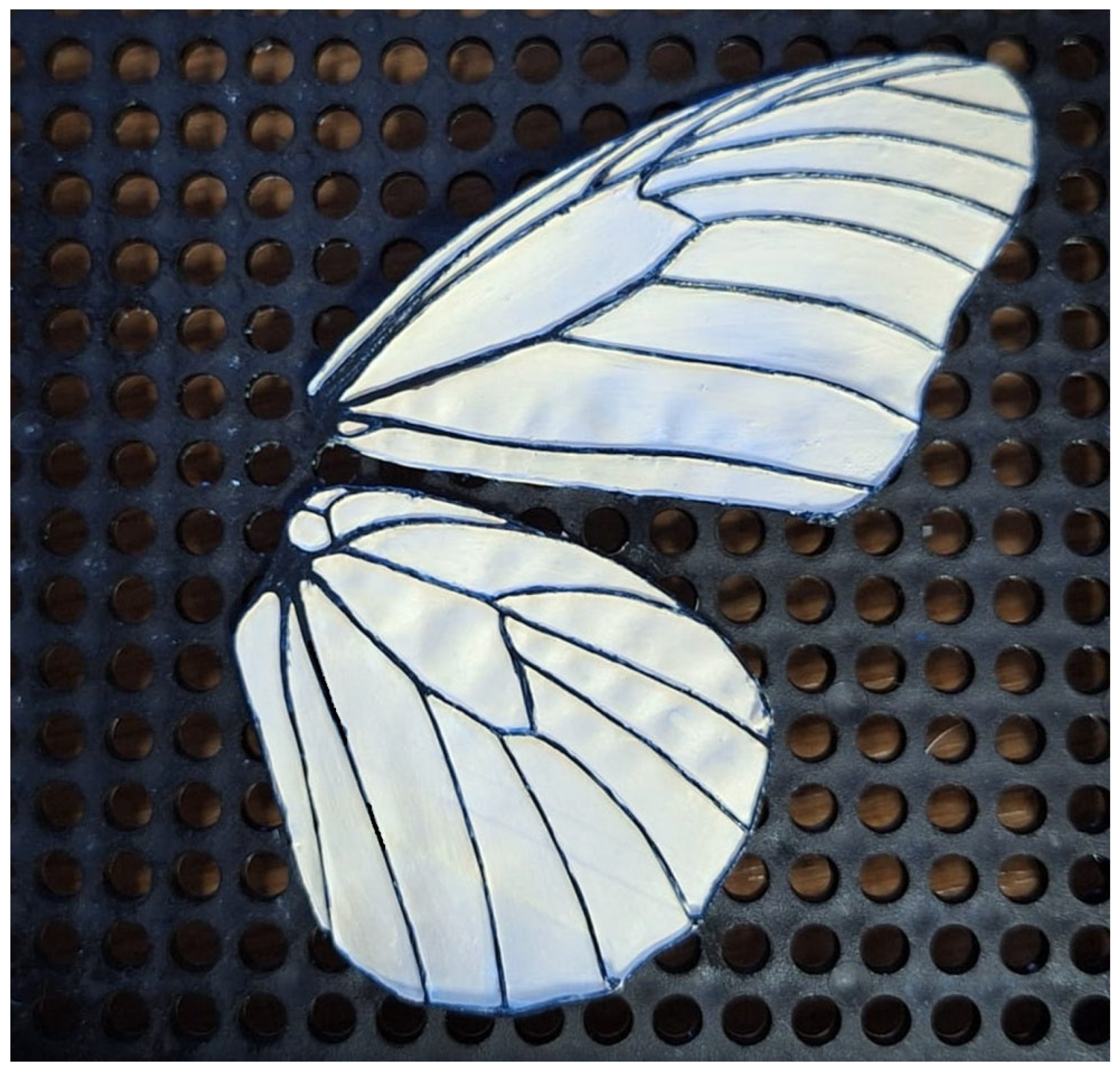
3.2. Additive Manufacturing of the Future Prototype Wings
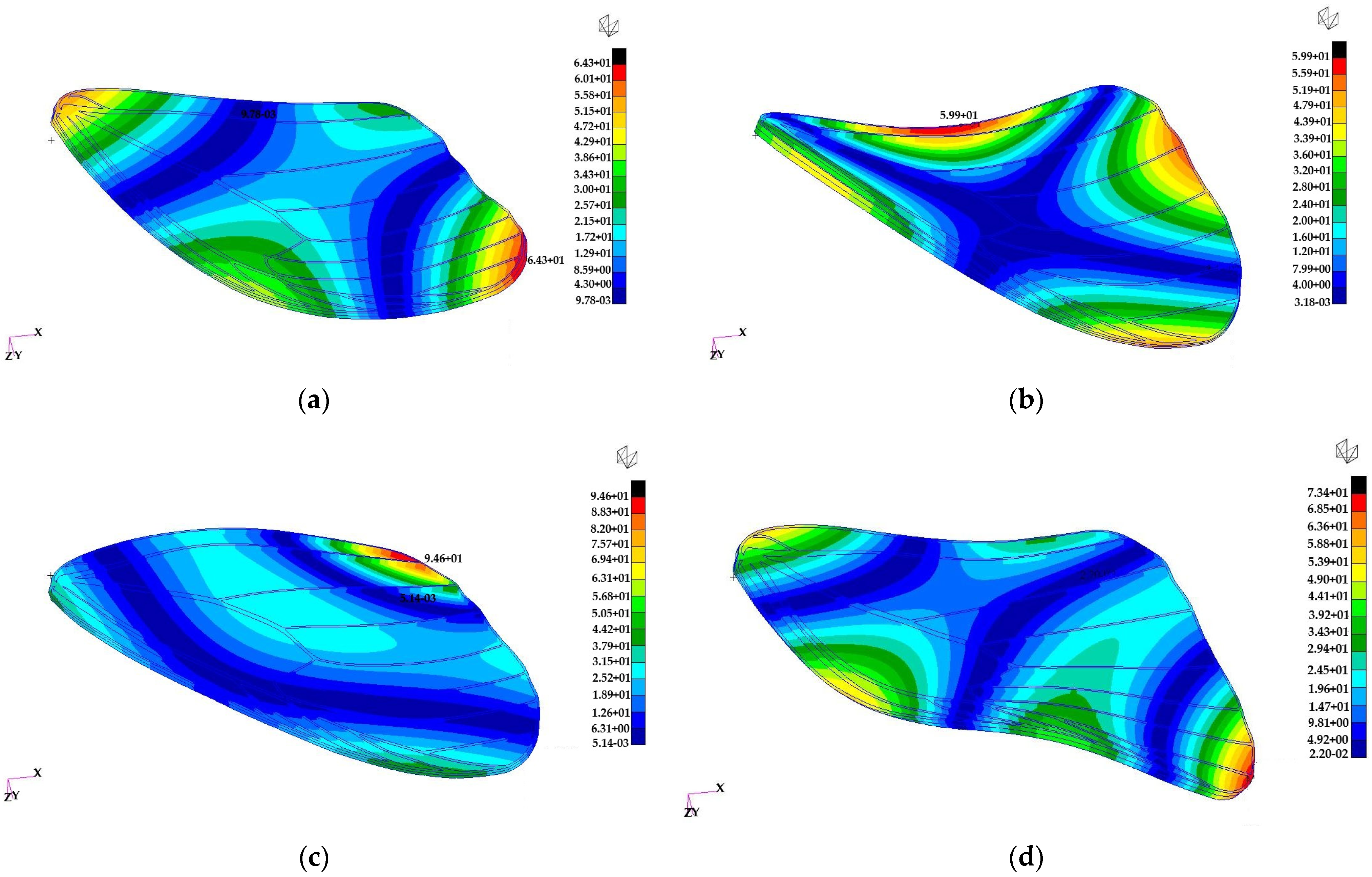
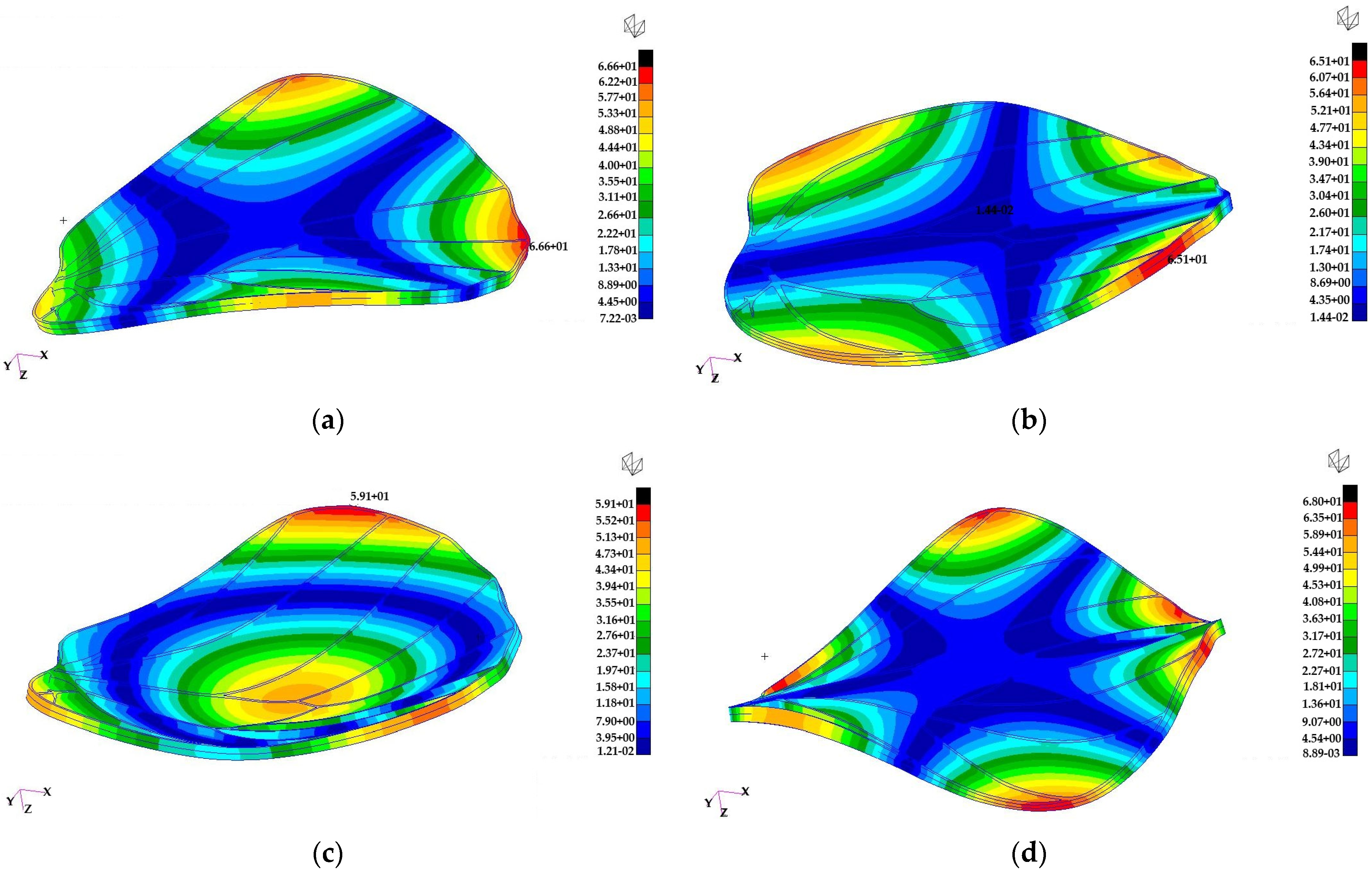
3.3. FEA
- •
- The first bending eigenvector resembles the (1, 1) mode of a circular plate.
- •
- The second bending eigenvector resembles the (2, 1) mode of a circular plate.
- •
- The third bending eigenvector resembles the (0, 1) mode of a circular plate.
- •
- The fourth bending eigenvector resembles the (3, 1) mode of a circular plate.
4. Discussion
4.1. Wing–Body Coupling in Butterfly Flight
4.2. Aerodynamic Role of the Upstroke
4.3. Energy-Saving Flight Strategies and Ambient Flow Exploitation
4.4. Implications for Biomimetic Flapping Wing MAV Design
4.5. Relation to Previous Work and Novel Contributions
- •
- Providing high-speed schlieren visualization of freely flying butterflies.
- •
- Demonstrating attached flow on cupped wings during the upstroke.
- •
- Linking thorax-driven body reorientation directly to wake asymmetry.
- •
- Quantifying Strouhal behaviour across ascent and plume-assisted regimes.
4.6. Limitations and Future Directions
- •
- Coupled CFD–FSI simulations informed by experimentally extracted membrane kinematics.
- •
- Closed-loop control strategies inspired by thorax-driven manoeuvring.
- •
- Experimental validation of hybrid rotor flap configuration interacting with flexible membranes.
5. Conclusions and Future Work
- •
- Flexible membrane wings with controlled cupping for clap–fling force augmentation.
- •
- Structural mode tuning through additive manufacturing to achieve favourable aeroelastic coupling.
- •
- Integration of body segment or internal mass motion to emulate thorax-driven manoeuvring.
- •
- Hybrid flight strategies capable of interacting with ambient flow disturbances rather than resisting them.
- •
- Operation in a low-density CO2 atmosphere with significantly reduced Reynolds numbers.
- •
- Increased stroke amplitude and frequency requirements to compensate for reduced aerodynamic force.
- •
- Structural mass optimization and material selection for extreme temperature ranges.
- •
- Potential hybridization with auxiliary propulsion (e.g., rotor-assisted or impulsive boost mechanisms) to ensure takeoff robustness.
- •
- Construction and experimental validation of the first Earth flight prototype using the additively manufactured wing structures characterized in this study.
- •
- Coupled CFD–FSI simulations incorporating experimentally derived membrane kinematics to refine aerodynamic performance predictions.
- •
- Development of bio-inspired control strategies based on thorax-driven inertia redistribution and distributed aeroelastic feedback.
- •
- Scaling analysis and atmospheric adaptation studies to assess feasibility under Martian gravity and atmospheric density conditions.
Author Contributions
Funding
Institutional Review Board Statement
Informed Consent Statement
Data Availability Statement
Acknowledgments
Conflicts of Interest
References
- Shyy, W.; Kang, C.; Chirarattananon, P.; Ravi, S.; Liu, H. Correction to “Aerodynamics, sensing and control of insect-scale flapping-wing flight”. Proc. R. Soc. Math. Phys. Eng. Sci. 2016, 472, 20160096. [Google Scholar] [CrossRef]
- Shyy, W.; Lian, Y.; Tang, J.; Viieru, D.; Liu, H. Aerodynamics of Low Reynolds Number Flyers; Cambridge University Press: Cambridge, UK, 2007. [Google Scholar] [CrossRef]
- Lissaman, P.B.S. Low-Reynolds-Number Airfoils. Annu. Rev. Fluid Mech. 1983, 15, 223–239. [Google Scholar] [CrossRef]
- Santhanakrishnan, A.; Jones, S.K.; Dickson, W.B.; Peek, M.; Kasoju, V.T.; Dickinson, M.H.; Miller, L.A. Flow structure and force generation on flapping wings at low Reynolds numbers relevant to the flight of tiny insects. Fluids 2018, 3, 45. [Google Scholar] [CrossRef]
- Chen, L.; Wu, J.; Zhang, Y. Leading-edge vortex attachment and vorticity transport enhancement on swept revolving wings. J. Fluid Mech. 2025, 1023, A8. [Google Scholar] [CrossRef]
- Ellington, C.P.; Van den Berg, C.; Willmott, A.P.; Thomas, A.L.R. Leading-edge vortices in insect flight. Nature 1996, 384, 626–630. [Google Scholar] [CrossRef]
- Beem, H.R.; Rival, D.E.; Triantafyllou, M.S. On the stabilization of leading-edge vortices with spanwise flow. Exp. Fluids 2012, 52, 511–517. [Google Scholar] [CrossRef]
- Chen, L.; Wu, J. Coexistence of dual wing–wake interaction mechanisms during the rapid rotation of flapping wings. J. Fluid Mech. 2024, 987, A16. [Google Scholar] [CrossRef]
- Hord, K.; Lian, Y. Leading edge vortex circulation development on finite aspect ratio pitch-up wings. AIAA J. 2016, 54, 2755–2767. [Google Scholar] [CrossRef]
- Sun, M. Miniature insect flight. arXiv 2023, arXiv:2304.00211. [Google Scholar] [CrossRef]
- Michelson, R.C.; Naqvi, M.A. Beyond biologically-inspired insect flight. In RTO/AVT Lecture Series on Low Reynolds Number Aerodynamics on Aircraft Including Applications in Emerging UAV Technology; von Karman Institute for Fluid Dynamics: Brussels, Belgium, 2003; pp. 1–19. [Google Scholar]
- Cheng, X.; Sun, M. Wing-kinematics measurement and aerodynamics in a small insect in hovering flight. Sci. Rep. 2016, 6, 25706. [Google Scholar] [CrossRef] [PubMed]
- Liu, H. Integrated modeling of insect flight: From morphology, kinematics to aerodynamics. J. Comput. Phys. 2009, 228, 439–459. [Google Scholar] [CrossRef]
- Sane, S.P. The aerodynamics of insect flight. J. Exp. Biol. 2003, 206, 4191–4208. [Google Scholar] [CrossRef]
- Weis-Fogh, T.; Amos, W.B. Evidence for a new mechanism of cell motility. Nature 1972, 236, 301–304. [Google Scholar] [CrossRef]
- Weis-Fogh, T. Unusual mechanisms for the generation of lift in flying animals. Sci. Am. 1975, 233, 80–87. [Google Scholar] [CrossRef]
- Kolomenskiy, D.; Moffatt, H.K.; Farge, M.; Schneider, K. The Lighthill–Weis-Fogh clap–fling–sweep mechanism revisited. J. Fluid Mech. 2011, 676, 572–606. [Google Scholar] [CrossRef]
- Ennos, A.R. The kinematics and aerodynamics of the free flight of some Diptera. J. Exp. Biol. 1989, 142, 49–85. [Google Scholar] [CrossRef]
- Ennos, A.R. Inertial and aerodynamic torques on the wings of Diptera in flight. J. Exp. Biol. 1989, 142, 87–95. [Google Scholar] [CrossRef]
- Le Roy, C.; Bharathi, I.; Engels, T.; Muijres, F.T. Diptera flight diversity is shaped by aerodynamic constraints, scaling, and evolutionary trade-offs. bioRxiv 2025. [Google Scholar] [CrossRef]
- Muijres, F.T.; Le Roy, C.; Bharathi, I.; Engels, T.; Gorb, S.N. The comparative biofluidmechanics of Diptera flight. In Abstract Book SEB Annual Conference; Society for Experimental Biology: Lancaster, UK, 2025; pp. 43–44. [Google Scholar]
- Wakeling, J.M. Odonatan wing and body morphologies. Odonatologica 1997, 26, 35–52. [Google Scholar]
- Lamb, G.; Magesh, A.; Mahavratayajula, A.; Pechiammal, A.; Bhargava, D.; Holloway, J.; Miramontes, A. A CFD investigation of dragonfly flight: Aerodynamic analysis of corrugated wings using static and dynamic meshing in OpenFOAM. In AIAA Regional Student Conferences; AIAA: Reston, VA, USA, 2025. [Google Scholar] [CrossRef]
- Chitsaz, N.; Siddiqui, K.; Marian, R.; Chahl, J. An experimental study of the aerodynamics of micro corrugated wings at low Reynolds number. Exp. Therm. Fluid Sci. 2021, 121, 110286. [Google Scholar] [CrossRef]
- Rüppell, G.; Hilfert-Rüppell, D. Slow motion analysis of flight curves in Odonata. Int. J. Odonatol. 2025, 28, 23–39. [Google Scholar] [CrossRef]
- Zhang, Y.; Wang, X.; Wang, S.; Huang, W.; Weng, Q. Kinematic and Aerodynamic Investigation of the Butterfly in Forward Free Flight for the Butterfly-Inspired Flapping Wing Air Vehicle. Appl. Sci. 2021, 11, 2620. [Google Scholar] [CrossRef]
- Sunada, S.; Kawachi, K.; Watanabe, I.; Azuma, A. Performance of a butterfly in take-off flight. J. Exp. Biol. 1993, 183, 249–277. [Google Scholar] [CrossRef]
- Zhu, H.; Zhang, Y. Effect of morphological characteristics on the aerodynamic performance of a flexible flapping butterfly wing. Phys. Fluids 2025, 37, 091906. [Google Scholar] [CrossRef]
- Imura, T.; Fuchiwaki, M.; Tanaka, K. Dynamic Behaviors of Butterfly Wing and Their Application to Micro Flight Robot. In Fluids Engineering Division Summer Meeting, Proceedings of the Fluids Engineering Division Summer Meeting, Vail, CO, USA, 2–6 August 2009; ASME: New York, NY, USA, 2009; Volume 43727, pp. 1687–1694. [Google Scholar]
- Fang, Y.-H.; Tang, C.-H.; Lin, Y.-J.; Yeh, S.-I.; Yang, J.-T. The Lift Effects of Chordwise Wing Deformation and Body Angle on Low-Speed Flying Butterflies. Biomimetics 2023, 8, 287. [Google Scholar] [CrossRef] [PubMed]
- Wu, J.; Chu, S.; Chen, L.; Zhang, Y. The roles of body and wing pitching angles in hovering butterflies. Phys. Fluids 2025, 37, 051904. [Google Scholar] [CrossRef]
- Edmund Optics. Precision Parabolic Mirrors. Available online: https://www.edmundoptics.com/f/precision-parabolic-mirrors/11895/ (accessed on 18 December 2025).
- LS-W1 Datasheet. Available online: https://www.edmundoptics.com/p/ls-wl1-laser-driven-white-light-source-kit/49417/?srsltid=AfmBOoqgSmOryb7OlsxNI5Bnmx3mNm66CwZCopG8PN2bEXrdmVCtQmCs (accessed on 15 September 2025).
- Vision Research. Phantom VEO 710 High-Speed Camera Datasheet; Rev. 3 June 2023. Available online: https://komiweb.co.kr/2015/images/data/DS_WEB-VEO710.pdf (accessed on 18 December 2025).
- Tamron. SP AF 70–200 mm F/2.8 Di LD (IF) Macro Review. Available online: https://www.dpreview.com/reviews/tamron-70-200-2p8-c16/6 (accessed on 18 December 2025).
- Johansson, L.C.; Henningsson, P. Butterflies fly using efficient propulsive clap mechanism owing to flexible wings. J. R. Soc. Interface 2021, 18, 20200854. [Google Scholar] [CrossRef]
- MATLAB—MathWorks. Available online: https://www.mathworks.com/products/matlab.html (accessed on 18 December 2025).
- ImageJ.JS. Available online: https://ij.imjoy.io/ (accessed on 18 December 2025).
- Fuchiwaki, M.; Kuroki, T.; Tanaka, K.; Tababa, T. Dynamic behavior of the vortex ring formed on a butterfly wing. Exp. Fluids 2013, 54, 1450. [Google Scholar] [CrossRef]
- Form 3+: Industrial-Quality Desktop Resin 3D Printer | Formlabs. Available online: https://formlabs.com/3d-printers/form-3/?srsltid=AfmBOopWGzD4FdwVnt9UlbNGaAa-w1T4hf49_nAtQRV2OFtWNTqEEk7I (accessed on 18 December 2025).
- Tough 2000 Resin | Formlabs Dental. Available online: https://dental.formlabs.com/eu/store/materials/tough-2000-resin/ (accessed on 18 December 2025).
- Yu, W.; Zhang, H.; Xu, R.; Sun, Y.; Wu, K. Characterization of wingbeat frequency of different taxa of migratory insects in Northeast Asia. Insects 2022, 13, 520. [Google Scholar] [CrossRef]
- Taylor, G.K.; Nudds, R.L.; Thomas, A.L.R. Flying and swimming animals cruise at a Strouhal number tuned for high power efficiency. Nature 2003, 425, 707–711. [Google Scholar] [CrossRef] [PubMed]
- PreForm 3D Printing Software: Prepare Your Models for Printing | Formlabs. Available online: https://formlabs.com/software/preform/?srsltid=AfmBOor6FohO3Uan_EpZ1DEjpBsJJhrOEbDMeI-xO_L9Fb3aQcT_7daE (accessed on 26 January 2026).
- Cleaning and maintaining the Form Wash—Support | Formlabs. Available online: https://support.formlabs.com/s/article/Cleaning-and-maintaining-the-Form-Wash?language=en_US (accessed on 15 December 2025).











| Insect Type | Approx. Re Number |
|---|---|
| Thrips (tiny insects) | ~10 [10,11] |
| Fruit fly (Drosophila sp.) | ~120 [1] |
| Vegetable leafminer/small dipterans | ~21–40 [12] |
| Honeybee/Bumblebee (Apis, Bombus) | ~230–3000 (varies by species/flight condition) [13] |
| Hawkmoth/larger Lepidoptera | ~5000–6000 [1] |
| Large dragonflies (Odonata) | ~1000 [14] |
| General insect flight range | ~10–104 [1,2] |
| Component | Model Specifications | Key Parameters | Notes |
|---|---|---|---|
| Parabolic mirrors | Al-plated | EFL = 1524 mm | Used in Toepler—single mirror |
| From Edmund Optics [32] | Diameter = 254 mm λ/8 | Used in Z-type/shadowgraph | |
| Light source | LS-S1 [33] | Output diameter 0.5 mm | Laser-pumped, wavelength 440–750 nm |
| High-speed camera | Phantom Veo 10 L [34] | Max. resolution 120 × 820 at max. 7500 fps | Used at different recording speed |
| Camera lens | Tamron Nikon [35] | 70–200 mm F/2.8, MACRO | Used with adjusted zoom and diaphragm opening |
| Knife edge | Anti-reflective black metal sheet | - | Mounted on tripod |
| Data acquisition system | Alienware M15 | Ethernet cable connection, | Live feed, downloading videos from camera buffer |
| Video | Settings | Analysed Specimen | Purpose of Recording |
|---|---|---|---|
| 1 | Camera: Resolution: 1280 800, 7500 fps, exposure: 0.5 Z-type schlieren | Iphiclides podalirius | Control mechanism by thorax swing and wing deformation |
| Trajectory reconstruction | |||
| 2 | Resolution: 1280 800, 7500 fps, exposure: 1 | Pieris rapae | Thermal fling |
| 3 | Normal upstroke–downstroke visualization | ||
| 4 | Extreme manoeuvring case | ||
| 5 | Vertical plane walk | ||
| 6 | Wing deformation | ||
| 7 | Tip wing vortex tracking |
| Flight Condition | Mean Velocity [m/s] | Wingbeat Frequency [Hz] | Strouhal Number |
|---|---|---|---|
| Diagonal flight | 1.675 | ~15–16 | - |
| Vertical ascent | 1.236 | 13.3 | 0.18 |
| Thermal riding | Low (plume-assisted) | ~13–15 * | 0.56 |
| Near hover | 0 | ~13–15 * | Not reported |
Disclaimer/Publisher’s Note: The statements, opinions and data contained in all publications are solely those of the individual author(s) and contributor(s) and not of MDPI and/or the editor(s). MDPI and/or the editor(s) disclaim responsibility for any injury to people or property resulting from any ideas, methods, instructions or products referred to in the content. |
© 2026 by the authors. Licensee MDPI, Basel, Switzerland. This article is an open access article distributed under the terms and conditions of the Creative Commons Attribution (CC BY) license.
Share and Cite
Prisăcariu, E.-G.; Strătilă, S.; Dumitrescu, O.; Sima, M.; Roșu, R.A.; Vlăducă, I. Butterfly Clap–Fling Flight Mechanisms Observed by Schlieren Imaging for the Design of Bio-Inspired Micro Air Vehicles. Biomimetics 2026, 11, 184. https://doi.org/10.3390/biomimetics11030184
Prisăcariu E-G, Strătilă S, Dumitrescu O, Sima M, Roșu RA, Vlăducă I. Butterfly Clap–Fling Flight Mechanisms Observed by Schlieren Imaging for the Design of Bio-Inspired Micro Air Vehicles. Biomimetics. 2026; 11(3):184. https://doi.org/10.3390/biomimetics11030184
Chicago/Turabian StylePrisăcariu, Emilia-Georgiana, Sergiu Strătilă, Oana Dumitrescu, Mihail Sima, Raluca Andreea Roșu, and Iulian Vlăducă. 2026. "Butterfly Clap–Fling Flight Mechanisms Observed by Schlieren Imaging for the Design of Bio-Inspired Micro Air Vehicles" Biomimetics 11, no. 3: 184. https://doi.org/10.3390/biomimetics11030184
APA StylePrisăcariu, E.-G., Strătilă, S., Dumitrescu, O., Sima, M., Roșu, R. A., & Vlăducă, I. (2026). Butterfly Clap–Fling Flight Mechanisms Observed by Schlieren Imaging for the Design of Bio-Inspired Micro Air Vehicles. Biomimetics, 11(3), 184. https://doi.org/10.3390/biomimetics11030184