1. Introduction
Among aquatic organisms, fish are renowned for their precise control during swimming, exhibiting high maneuverability and low energy consumption [
1]. As aquatic vertebrates with over 500 million years of evolutionary history, fish can be likened to precise biological machines. Under the precise regulation of neural signals, fish achieve undulatory motion by rhythmically contracting their muscles to drive the associated passive tissues like skin and vertebrae [
2], converting stored biochemical energy into mechanical energy for propulsion. This process represents an optimal response to evolutionary pressures over millions of years [
3]. The locomotion patterns formed to meet basic survival needs, such as predation, predator evasion, reproduction, and migration, provide important insights for the design of biomimetic propulsors.
In traditional metal or non-metal propeller-driven Autonomous Underwater Vehicles (AUVs), although inspired by fish, the biomimetic process partially loses the superior performance of fish [
4,
5] for the following reasons: 1. Difficulty in achieving omni-directional vector propulsion, making adaptation to complex deep-sea terrains challenging. 2. High navigation noise, easily disturbing the surrounding waters. 3. Insufficient response speed in low-speed environments. However, features such as low noise, high propulsion efficiency, and high maneuverability have broad application prospects in environmental assessment, seabed mapping, and scientific research assistance [
6,
7]. In-depth studies of fish high-maneuvering movements using experimental and numerical simulation techniques will undoubtedly inspire engineers to improve the efficiency and performance of biomimetic underwater propulsors [
8,
9,
10].
With the advancement of experimental equipment and machine vision principles, capturing and reconstructing the three-dimensional motion of live fish has become increasingly accurate [
11,
12], meeting the requirements for biological motion simulation studies. In the field of Computational Fluid Dynamics (CFD), researchers have progressively developed a class of computational methods capable of simulating self-propelled motion, known as the Free Swimming Algorithm [
13,
14]. This approach couples fluid dynamics equations with rigid-body dynamics equations, enabling dynamic simulations of self-propelled systems such as biological propulsion and bionic robots.
Traditional hydrodynamic simulations of fish swimming usually use tethered models, where the airfoil is fixed in a uniform flow, and the fish body deformation is prescribed by given wave equations. However, in these simulations, fish body deformation is independent of fluid forces, and its position is unaffected by fluid forces and moments. Self-propelled algorithms, which solve motion equations to obtain the fish body’s position, have emerged to discuss kinematic characteristics (position, velocity, acceleration) under known deformation conditions. This approach ensures that the fish body is no longer constrained in a fixed flow, fully considering fluid–structure interaction (FSI) and maintaining momentum and angular momentum conservation throughout the fish’s motion [
15]. For large deformation movements, particle methods (such as the immersed boundary method [
16,
17] and smoothed particle hydrodynamics [
18]) are more robust than traditional CFD methods. The development of high-performance parallel processing and adaptive mesh refinement technologies has enabled in-depth studies of muscle work and skeletal structure performance under large deformation movements [
19,
20].
According to Breder’s classification system, fish swimming modes can be broadly divided into two categories: body and caudal fin (BCF) propulsion and median and paired fin (MPF) propulsion [
21]. More than 88% of fish species rely on BCF propulsion for both locomotion and maneuvering [
22,
23], with Carangidae species being a prime example. Fish employing BCF propulsion typically exhibit superior maneuverability, enabling them to perform rapid, burst-like movements within a short time frame, achieving high levels of both translational and rotational motion. In contrast, MPF propulsion is characterized by its low energy consumption and high efficiency under the condition of relatively low velocity. Zebrafish, a species of Carangidae, also utilize BCF propulsion. Due to their ease of cultivation and size, zebrafish are frequently used as model organisms in studies of propulsion performance. Additionally, during the growth and development from juveniles to adults, zebrafish serve as a useful model for studying the transition from simpler sub-Carangidae swimming modes to the more advanced Carangidae mode.
Fast-start movements in fish can significantly alter their motion within a short time frame and are categorized into S-type faststart (S-start), C-type faststart (C-start), and C-type turning (C-turn), in which the latter two are collectively designated as C-type maneuvers. The S-start is typically associated with predatory behavior, with the northern pike’s hunting motion being a classic example. Both the C-start and C-turn are named after the “C” shape the fish’s body adopts during the preparatory phase, and they are further distinguished by their functional objectives. A C-start, which lasts less than 100 ms, is characterized by a rapid increase in translational velocity with limited rotational movement, primarily serving as a predator evasion tactic [
24]. In contrast, a C-turn has a slightly longer duration (around 400 ms), allowing the fish to achieve a larger rotational angle. These type of maneuvers represents a compromise between swimming performance and energy efficiency, making them particularly suitable for investigating flow control strategies in fish locomotion [
25].
The hydrodynamic mechanisms underlying fish C-type maneuvers trace back to the seminal work of Weihs [
26], who first analyzed turning maneuvers using fluid dynamic principles, partitioning the fast-start into preparatory, propulsive, and coasting stages. The proposed added-mass model—where thrust generation arises from body-bending-induced fluid acceleration—remains the theoretical cornerstone for interpreting C-type maneuver dynamics. Experimentally, Domenici and Blake [
27] established standardized performance metrics (turning angle, duration, peak angular velocity) across species, revealing that C-starts achieve angular velocities exceeding 3000 deg/s whereas C-turns operate at 1000 deg/s—a distinction critical for understanding their divergent hydrodynamic regimes.
Tytell and Lauder [
28] employed time-resolved DPIV to resolve the three-dimensional vorticity evolution during Lepomis macrochirus escape responses, identifying three distinct jet structures (Jets 1–3) that correlate precisely with phase-specific body deformations. This work demonstrated that local vorticity generation along the body segments constructs coherent momentum jets through superposition. Numerically, Borazjani and Sotiropoulos [
29] utilized the immersed boundary method to elucidate the effects of Reynolds number on carangiform swimming, revealing that body undulation increases drag in transitional regimes (Re ≈ 300), but reduces form drag in inertial regimes (Re ≈ 4000), providing crucial insights into velocity-dependent efficiency in C-type maneuvers. Gazzola et al. [
30] further integrated evolutionary optimization with remeshed vortex methods, validating that hydrodynamic constraints dominate C-start kinematic selection and revealing an energy transduction pathway where preparatory-stage fluid entrainment (added-mass effect) is subsequently released as propulsive jet vortices.
Recent advances include Zhang et al.’s [
31] vorticity-moment analysis of pressure gradient evolution during Carassius auratus turning, which identified strong negative-pressure zones on the concave body surface that transition to positive pressure as curvature waves propagate. Additionally, Liu et al. [
32] demonstrated that large-angle C-turns (>140°) require the synergistic enhancement of initial velocity and deformation amplitude, establishing inertial dominance as a governing mechanism whereby elevated initial speeds augment inertial momentum and effective angle of attack for vorticity generation.
Despite these advances, critical gaps persist regarding the dynamic coupling among body deformation, initial swimming conditions, and flow structures. Specifically, (i) the partitioning of C-type deformation characteristics warrants deeper subdivision; (ii) a unified control framework encompassing both C-turns and C-starts remains elusive; and (iii) the spatiotemporal correlation between transient pressure fields and vorticity structures—particularly the antagonistic pressure pattern during the preparatory phase and its neuromuscular coupling—requires validation using self-propelled simulations.
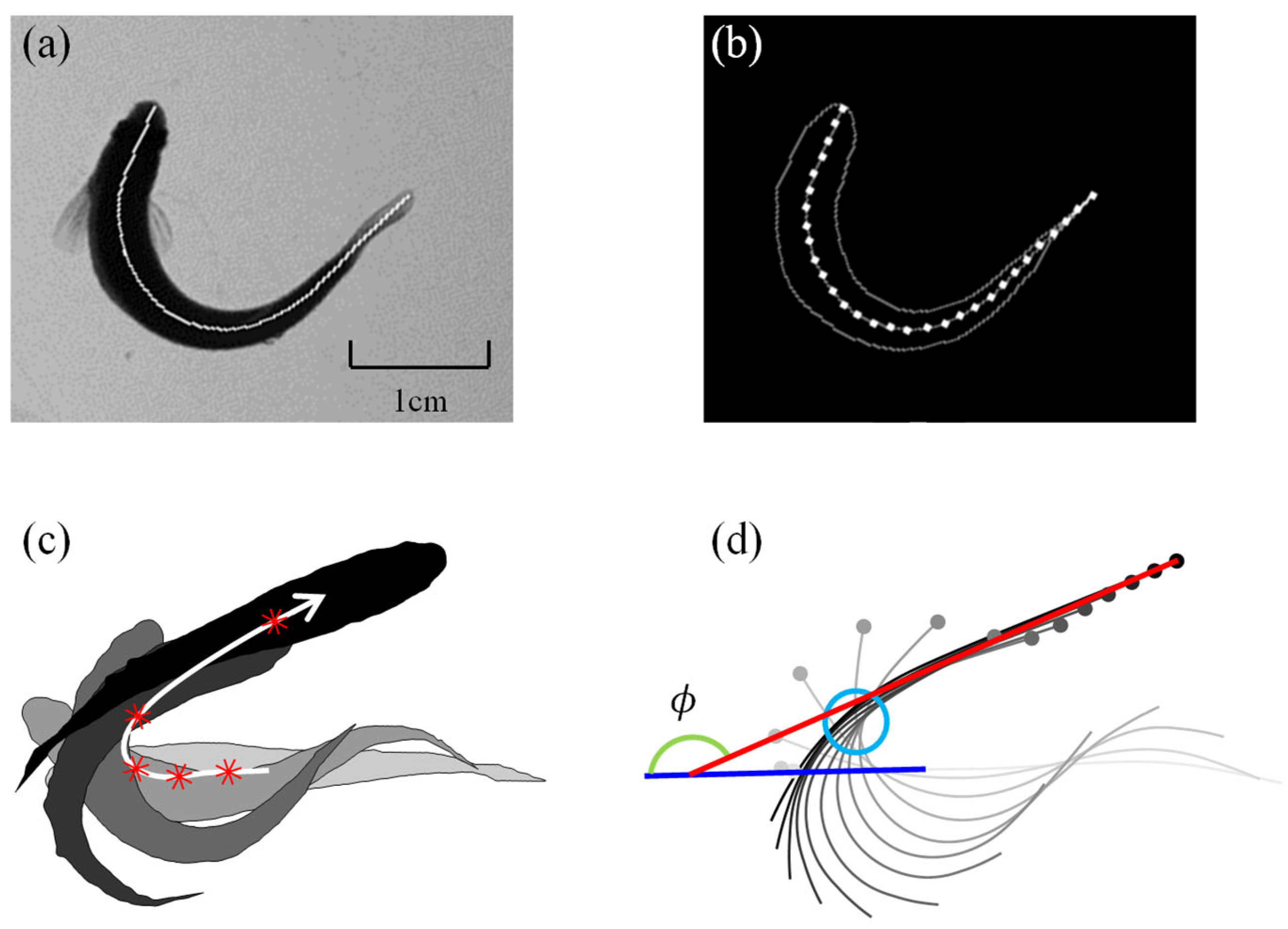
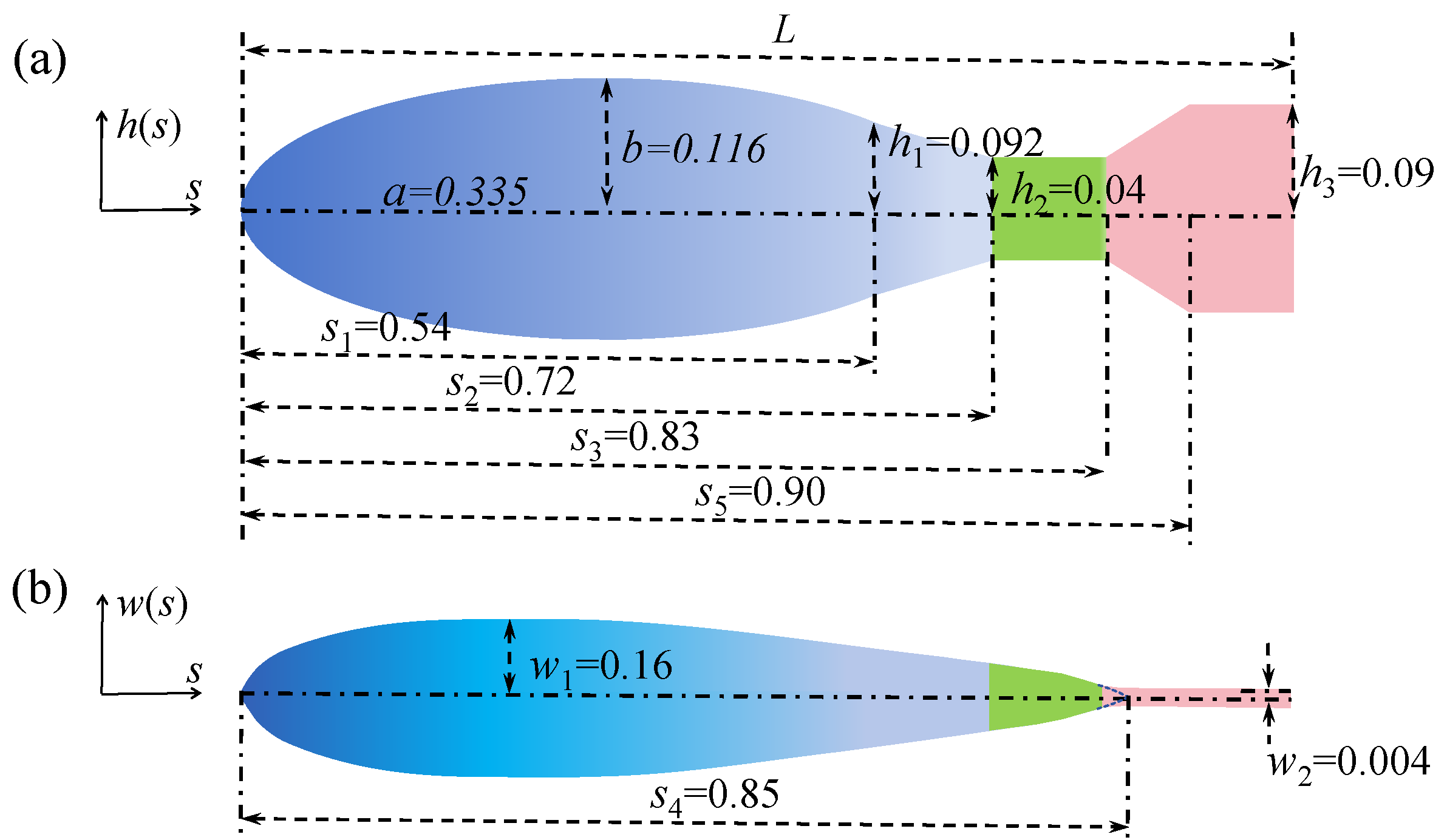
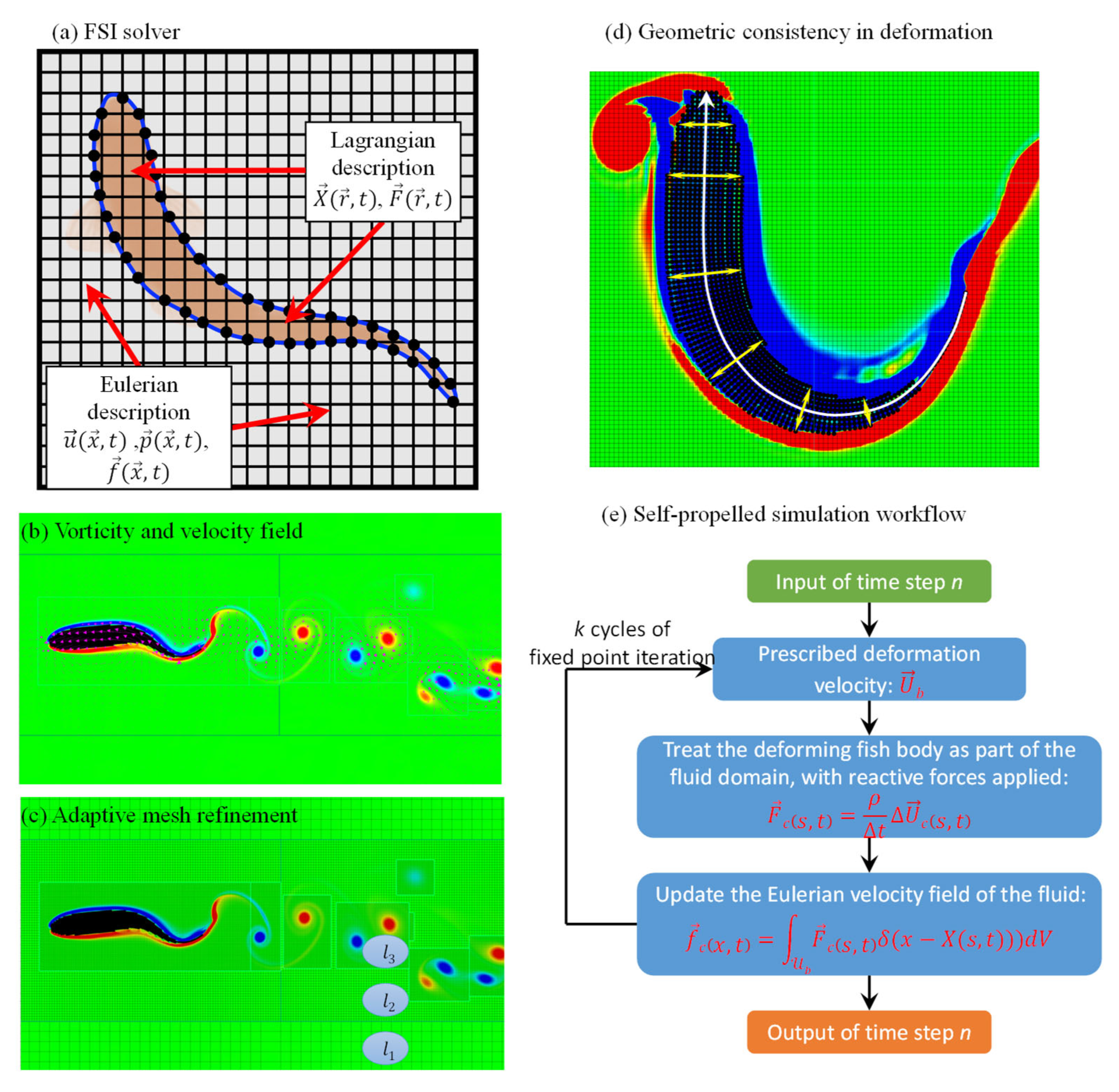
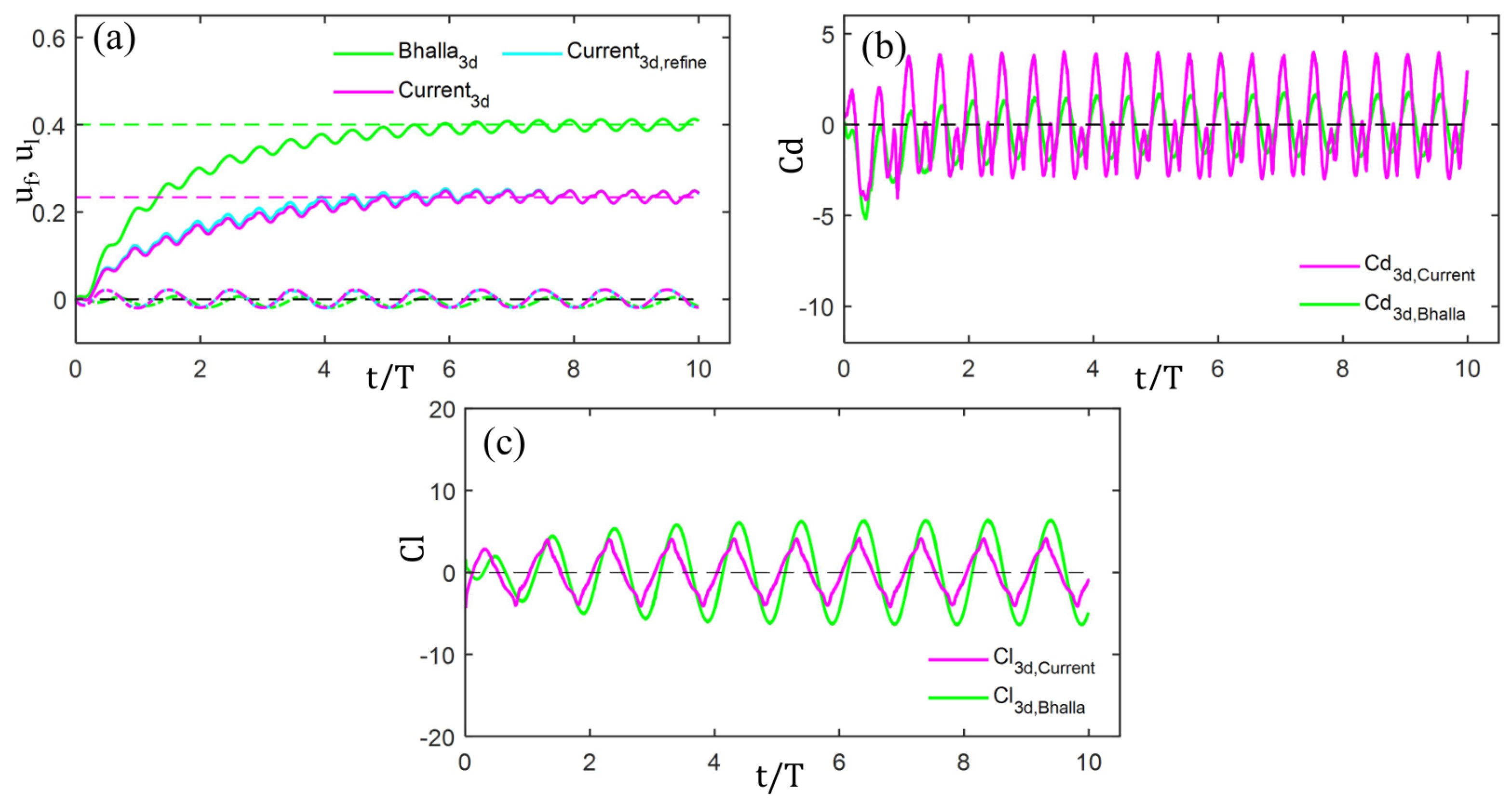
This study investigates the control strategies and hydrodynamic mechanisms of yaw maneuvers in carangiform fish, using zebrafish C-type maneuvers as a model system. By integrating high-speed videography with self-propelled numerical simulations, we establish a three-phase analytical framework: (1) Experiment and Modeling: Morphological features of turning maneuvers were captured via high-speed imaging (
Section 2.1), followed by geometric model reconstruction (
Section 2.2). Autonomous propulsion simulations were implemented on the IBAMR platform (
Section 2.3) and validated (
Section 2.4). (2) Control Variable Identification: Time-varying curvature profiles of single maneuvers and statistical patterns from repeated trials revealed two critical control variables: C-shape deformation amplitude (
Section 3.1) and initial maneuver velocity (
Section 3.2). (3) Flow Field Analysis: Vorticity and pressure fields were analyzed to elucidate transient hydrodynamic structures (
Section 3.3), force dynamics, and three-dimensional vorticity diffusion characteristics (
Section 3.4) during maneuvers. The results demonstrate that large-angle yaw escapes in carangiform fish require synergistic coupling of body inertia and fluid viscous effects.
3. Results and Discussion
3.1. C-Shaped Deformation
This study investigates the control strategies of yaw maneuvers in Carangidae fish through integrated experimental observations and numerical simulations. Two critical control parameters were identified: C-shaped deformation amplitude and initial maneuver velocity. For distinct C-start maneuvers, the most significant variation observed experimentally lies in the deformation characteristics. To elucidate the influence of deformation on locomotion, we first present a representative 156.3° C-turn case, illustrating the correlation between body posture and deformation magnitude. Subsequently, differences in midline curvature for C-type maneuvers with varying deformation amplitudes are compared to derive the generalized patterns.
When characterizing C-type maneuvers, significant body deformation necessitates quantifying curvature dynamics in the head-fixed coordinate system for precise kinematic representation. Normalizing midline curvature
by body length
L yields the deformation–posture relationship [
42]:
This normalization enables the cross-species comparison of Carangidae maneuvers. Experimentally, midline data preprocessing (interpolation and filtering) mitigates discretization artifacts in digital image analysis prior to curvature calculation [
43]. In self-propelled simulations, curvature profiles are embedded into the motion file “IBEELKinematics3d.cpp” to accurately replicate body kinematics. As shown in Equation (9), the deflection angle
at any midline point is obtained through integration, followed by coordinate transformation to derive positions
in the head coordinate system.
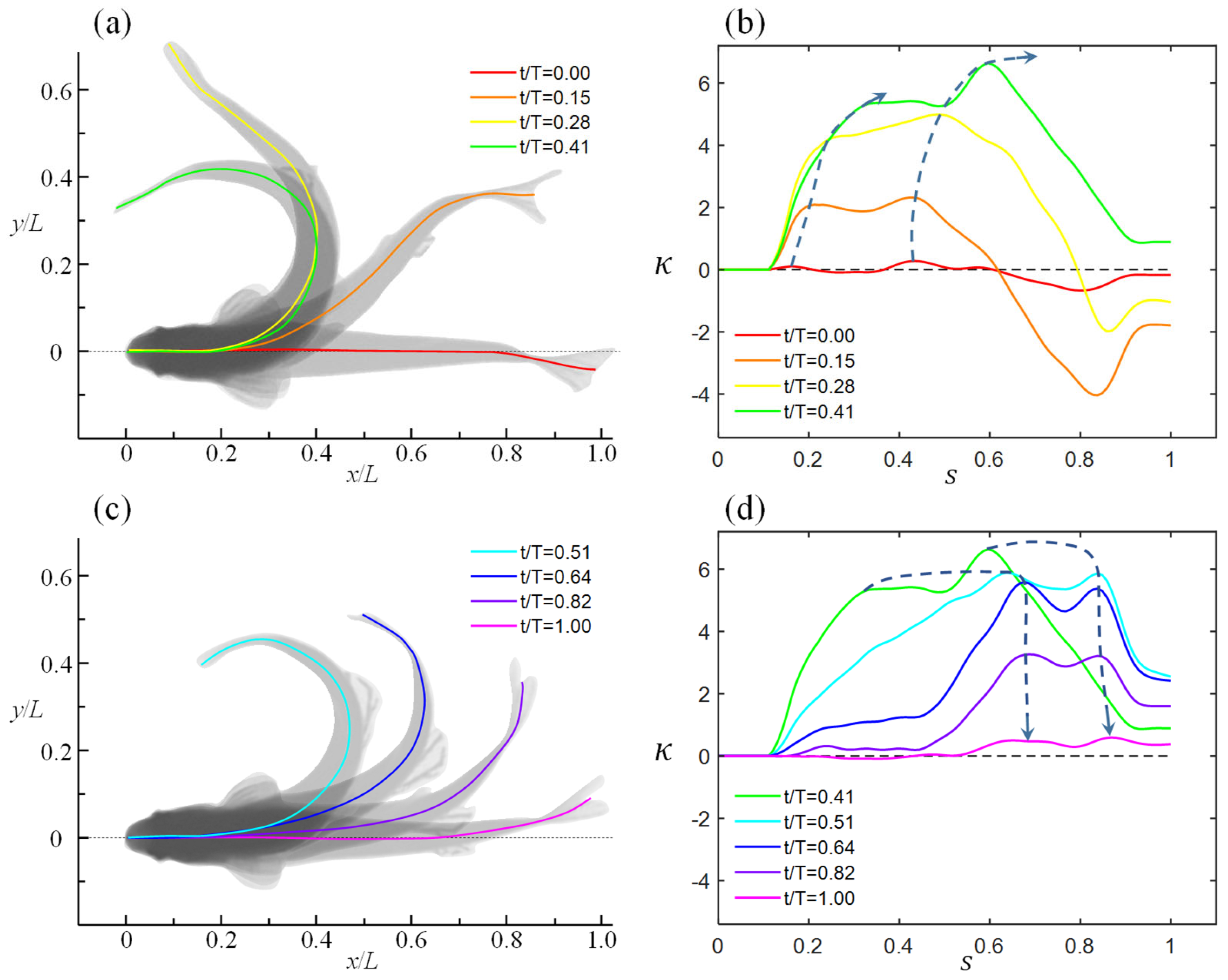
As depicted in
Figure 5, C-type maneuvers are segmented into bending and recovery (swing back) phases based on the rotation direction. Subplots (a) and (b) illustrate the posture evolution and curvature dynamics at four characteristic timepoints during bending, while (c) and (d) display analogous data for the recovery phase. Blue dashed arrows annotate curvature trends at key locations, dynamically reflecting body oscillation properties. Timepoints are normalized by total maneuver duration (
) as
.
During the transition from gliding to bending phase, the midline curvature exhibits a “standing wave-like” elevation, with key characteristic values progressively increasing, indicating amplified body deformation. As time evolves, the standing wave curvature (annotated by blue dashed arrows) propagates posteriorly, transitioning into a traveling wave pattern. Notably, at and 0.28 (orange and yellow curvature profiles), the caudal peduncle-to-tail region moves opposite to the overall bending direction, demonstrating a counter-swing posture. This phenomenon arises from limited muscular capacity in the peduncle and passive deformation of the tail fin. Under strong fluid–body interactions, such counter-swing effectively enhances yaw propulsion.
In the return phase (
Figure 5c,d), the body achieves forward propulsion via inertia after acquiring yaw angular velocity. Morphologically, the fish gradually straightens from its bent posture. Midline curvature initially displays traveling wave propagation, with key features shifting posteriorly during the return motion (blue dashed arrows in
Figure 5d). Beyond
(light-blue curve), corresponding to body straightening.
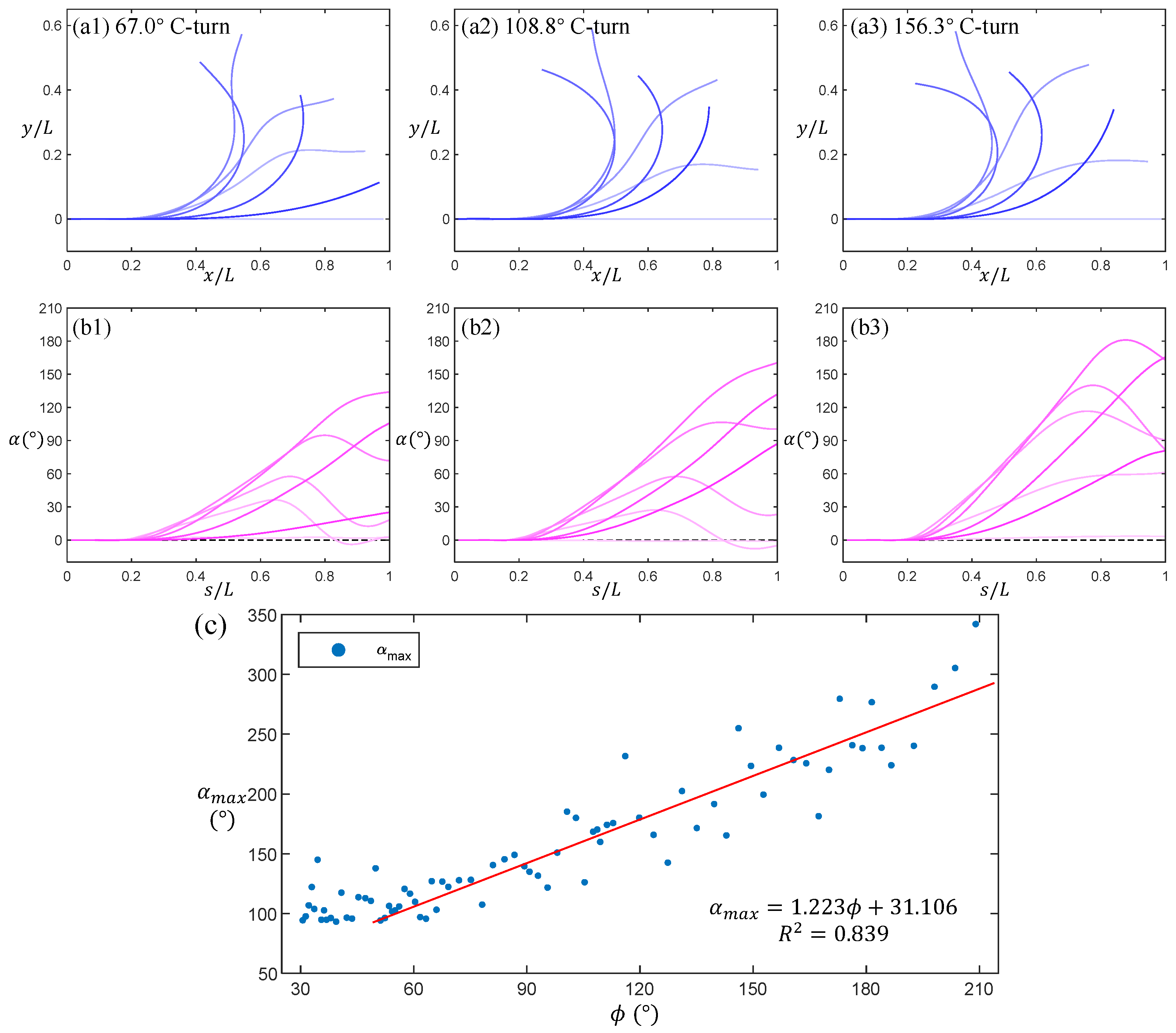
In order to validate this universality, 80 experimental trials of C-type maneuvers (rotation angles from 30° to 220°) were analyzed.
Figure 6a1–a3 illustrates the deformation characteristics in the head frame for representative maneuvers at 67.0°, 108.8°, and 156.3° rotations. For each trial, one gliding, three bending, and three recovery phases were sampled. Temporal evolution is indicated by blue curves transitioning from light to dark. Quantitative analysis reveals that deformation amplitude scales positively with total rotation angle.
Figure 6b1–b3 displays the bending angles
derived from curvature integration (Equation (9)). Pink curves (light-to-dark gradient) temporally correspond to subfigures (a1–a3). These data visually demonstrate the spatiotemporal propagation of deformation features, elucidating the evolutionary mechanics of C-type maneuvers.
The maximum bending angle on the midline in the head-fixed coordinate system,
, serves as an effective indicator of body deformation amplitude.
Figure 6c plots the statistical distribution of
against the body rotation angle
for 80 C-turn trials, revealing distinct patterns across angle ranges. For small-angle C-turns (
),
remains relatively constant with no significant dependence on
. In contrast, for larger rotations (
),
exhibits a linear correlation with
(the regression equation and coefficient of determination
R2 are provided in the figure). Notably, within this larger angle range, the maximum midline curvature
shows no significant variation, suggesting that while the maximum curvature is constrained by a physiological upper limit, fish achieve larger-angle deformation by engaging different body segments in the bending process. This explains why greater deformation amplitude (higher
) results in larger rotation angles for C-turns.
These patterns are consistently observed in almost all yaw maneuvers of Carangidae fish, indicating that the C-turn is an efficient, evolutionarily optimized solution for rapid directional changes. The linear correlation between and for large = angle turns, combined with the invariant , highlights a biomechanical trade-off: fish maximize rotation angle by distributing bending across multiple body segments rather than exceeding the maximum curvature limit of a single segment.
In summary, the sequence “standing wave generation—traveling wave propagation—standing wave attenuation” provides a qualitative description of the deformation law for C-type maneuvers. For a successful C-turn, the bending phase is the core control strategy, which is characterized by controlled body deformation. Furthermore, the recovery phase, where the body gradually straightens via inertia, acts as an indispensable flow control mechanism to stabilize propulsion after the initial turn. Future studies could use sensitivity analysis to quantify how key kinematic parameters—such as midline curvature and timing—affect turning performance and vortex formation. Such parametric investigations provide a robust framework to clarify control variable importance and guide adaptive bio-inspired propulsion design [
44].
3.2. Inertial Velocity of Maneuvers
In the C-turn maneuvers control of fish, the deformation parameter
is a critical factor. However, given the comparable densities of fish bodies and water, both body inertia (initial velocity) and fluid inertia (Reynolds number) play pivotal roles during maneuvers:
The Reynolds number () characterizes the relative importance of inertial to viscous forces in flow. Its value depends not only on the characteristic body length L and maneuver duration T, but also on fluid properties (density ρ, dynamic viscosity μ). For adult zebrafish performing C-turns, typically ranges between 1000 and 30,000. Additionally, the influence of body inertia cannot be overlooked. Physically, (1) deformation feature, curvature , reflects instantaneous body deformation; (2) fluid effect, , indicates viscous influence on maneuver dynamics; and (3) inertial contribution, initial velocity , quantifies the inertial drive enabling yaw motion.
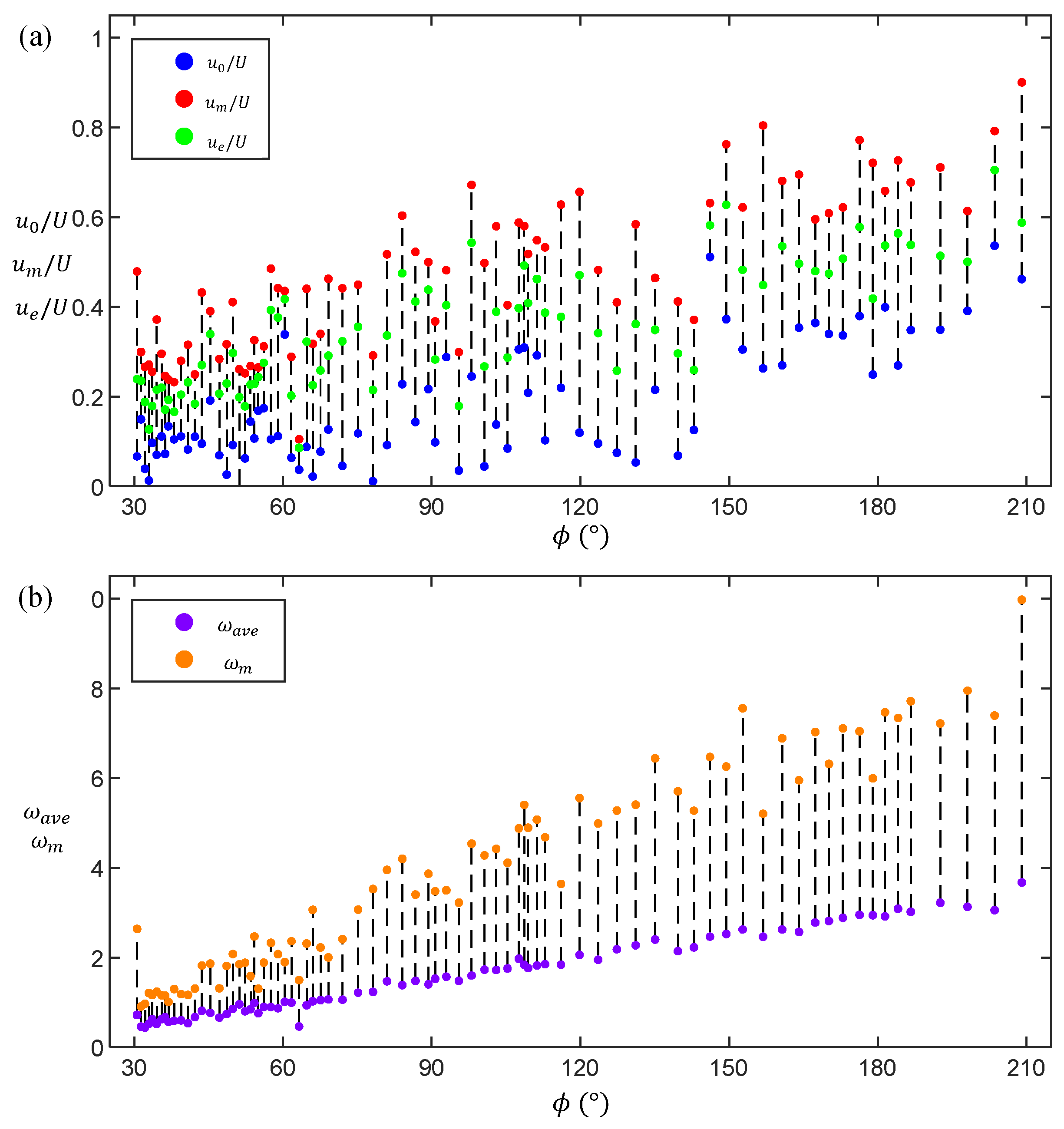
Figure 7a statistically analyzes the translational features of 80 C-turns, displaying initial centroid velocity
(blue circles), maximum velocity
(red circles), and final velocity
(green circles). All velocities are normalized by
and connected by dashed lines. The results show that, for small yaw angles (
), translational velocity variations are minor, with generally low
and slight post-maneuver acceleration. Here, 140° separates moderately from large-angle turns, consistent with fast-start studies identifying reorientation angles above 120° as distinct [
27]. This reflects lower translational demands for small-angle yaws. For large-angle yaws (
), higher initial velocities
are observed and substantial translational speeds persist throughout, indicating greater reliance on initial kinetic energy (inertia).
Figure 7b illustrates the angular velocity characteristics across yaw angles, including average angular velocity
(purple circles) and maximum angular velocity
(yellow circles). Both correlate positively with total yaw angle
. Given
, the time scale
varies minimally across maneuvers, with key differences arising in achieved angular velocities (notably
).
In summary, within fluid environments of fixed physical properties, efficient large-angle yaw maneuvers in fish primarily rely on enhanced body deformation
and sufficient initial impulse
. The observed inertial dominance in large-angle C-turns is consistent with findings in other carangiform species of similar size, such as trout and sunfish, where initial body momentum plays a crucial role in enabling rapid directional changes during escape responses [
27,
45]. This cross-species similarity suggests that inertial-driven turning may be a conserved control strategy among fishes that rely on C-type maneuvers for predator evasion.
3.3. Flow Field Structure and Force Characteristics
Building on the experiments, the prior sections outline the key control strategies for C-turns. The subsequent sections employ self-propelled simulations to investigate flow field evolution, force mechanisms, and vorticity transport during maneuvers.
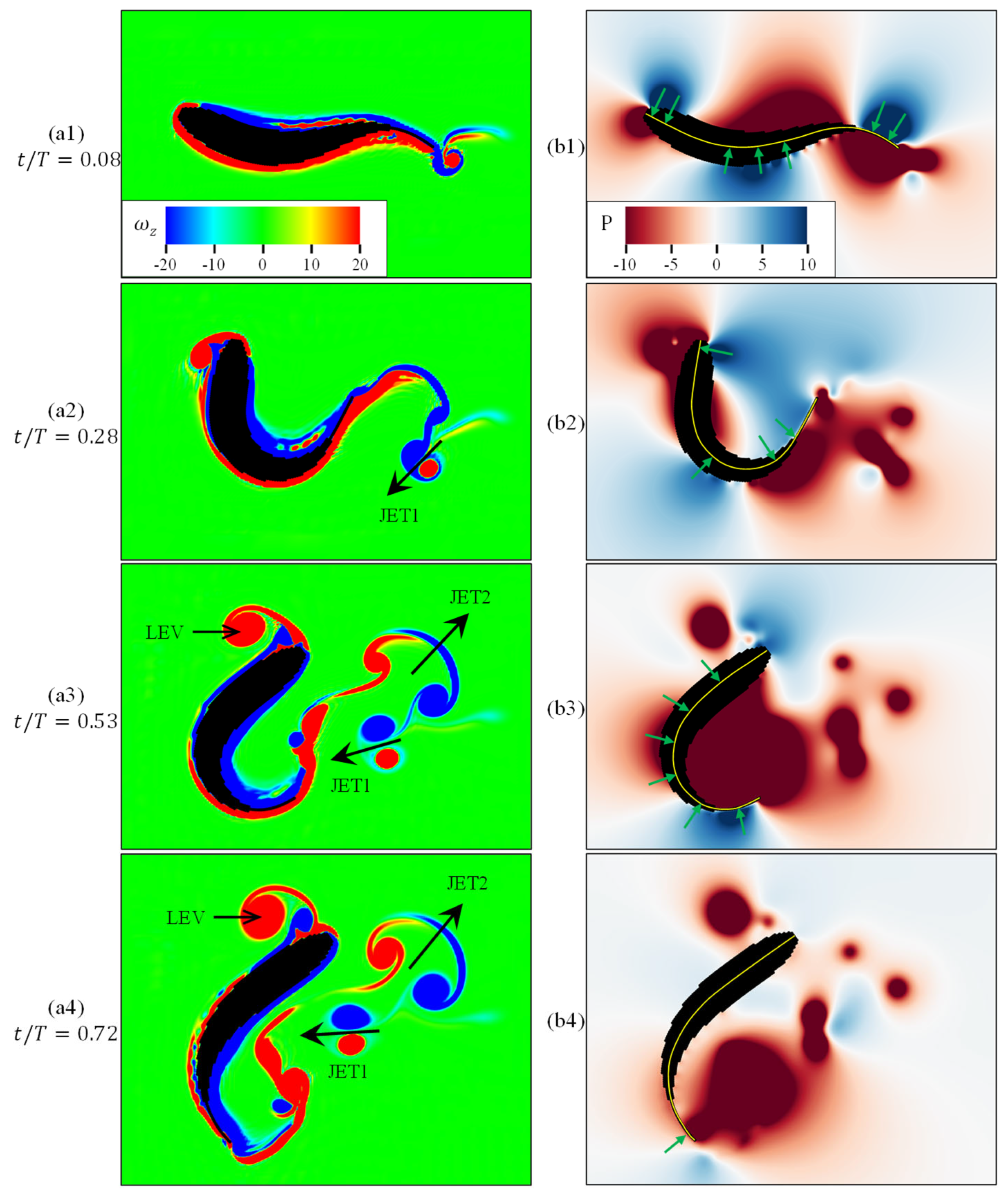
Figure 8 presents the simulation results for a 156.3° C-turn, showing vorticity
and pressure
P fields at the z = 0 plane. The vorticity field reveals development of leading-edge vortices (LEVs) and tail-fin jets (JETs), while the pressure field visualizes the force distribution on the body surface. The added-mass force
, arising from fluid momentum changes induced by body undulation [
46], is expressed as
where
denotes lateral undulation velocity and
represents equivalent fluid added mass. Integrating this force over the body surface yields pressure-resultant forces whose forward projections contribute to propulsion efficiency.
The flow evolution and force mechanisms during the C-turn (
Figure 8) are as follows, with the simulated vortex and jet structures corroborated by particle image velocimetry (PIV) experiments [
47]:
(1) Initiation phase (): Minimal body deformation and underdeveloped flow disturbances (a1–b1). A distinct pressure pattern emerges: the head and tail regions exhibit pressures aligned in one direction, while the mid-body shows opposing pressure. This antagonistic pressure distribution is a direct hydrodynamic signature of rapid white muscle contraction on one side of the body, actively curving the anterior section and initiating the C-shape posture. This active muscular input is crucial for setting the initial conditions that enhance subsequent rotational performance.
(2) Deformation accumulation phase (): Body forms a C-shape (a2), inducing significant fluid momentum changes. LEV develops anteriorly, while primary jet (JET1) emerges posteriorly; both coincide with low-pressure zones (b2). The maintenance of this bent posture against increasing fluid loads requires sustained muscular contraction. The centroid velocity and direction remain stable during this phase, defining it as a preparatory stage where active body shaping stores energy in the fluid field.
(3) Recovery phase (): A high-intensity jet (JET2) at the tail signifies the peak of fluid momentum exchange, driven by the rapid straightening of the body. The pressure field shows a synergistic pattern: a strong medial low-pressure region (associated with the jet) is flanked by lateral high-pressure zones (b3). This pressure gradient is the combined result of the tail’s active recoil (muscular action) and the inertial reaction of the accelerated fluid, which together drive a marked increase in translational velocity.
(4) Extension phase (): LEV shedding continues, and jet structures dissipate viscously (a4). The fluid–structure coupling weakens, and the pressure field homogenizes (b4). The maneuver concludes with the fish gliding, with its motion now governed primarily by the inertia imparted during the earlier active phases.
Energy transfer pathways during C-turns involve muscle contraction overcoming viscous dissipation to input mechanical energy into the “fish-water” system, converting it to translational/rotational kinetic energy, vortex kinetic energy (LEV/JET), and pressure potential energy. Evolutionarily enhanced caudal fins and peduncles amplify energy transfer efficiency by increasing contact area.
3.4. Three-Dimensional Diffusion of Vorticity
During the execution of a C-type maneuver by Carangiform fish, the inertial interaction between the fish body and the fluid is undoubtedly significant, resulting in the dissipation of a portion of the energy. However, viscous forces also play a crucial role. Acting as a key linkage during the motion, they connect different kinematic phases and induce a series of secondary flow effects. Among these, the most prominent are the generation and evolution of jet structures and vortex rings. These phenomena not only influence the local dynamics of the flow field, but also significantly impact the propulsive efficiency and motion stability of the fish body.
Viscous effects exert a profound influence on the fish maneuvering process. Under the inertial-dominated motion mode, the final kinematic state of the fish body is closely related to the timing and amplitude of the tail recoil. To overcome drag, the fish relies on muscle contraction to generate torque for energy transfer. Concurrently, to move effectively by utilizing the fluid’s reactive force, structures such as fins optimize fluid interaction by increasing the contact area. However, under viscous effects, the drag experienced by the fish body also increases with contact area. The velocity attenuation caused by viscous forces inevitably limits the motion efficiency of the fish. Therefore, the fish needs to enhance its energy utilization efficiency by strategically leveraging flow field structures. For instance, flow structures induced by the motion of the anterior body segment (or anterior region) in a preceding phase can be effectively captured and utilized by the posterior segment (or posterior region) in a subsequent phase, thereby achieving energy recovery and redistribution.
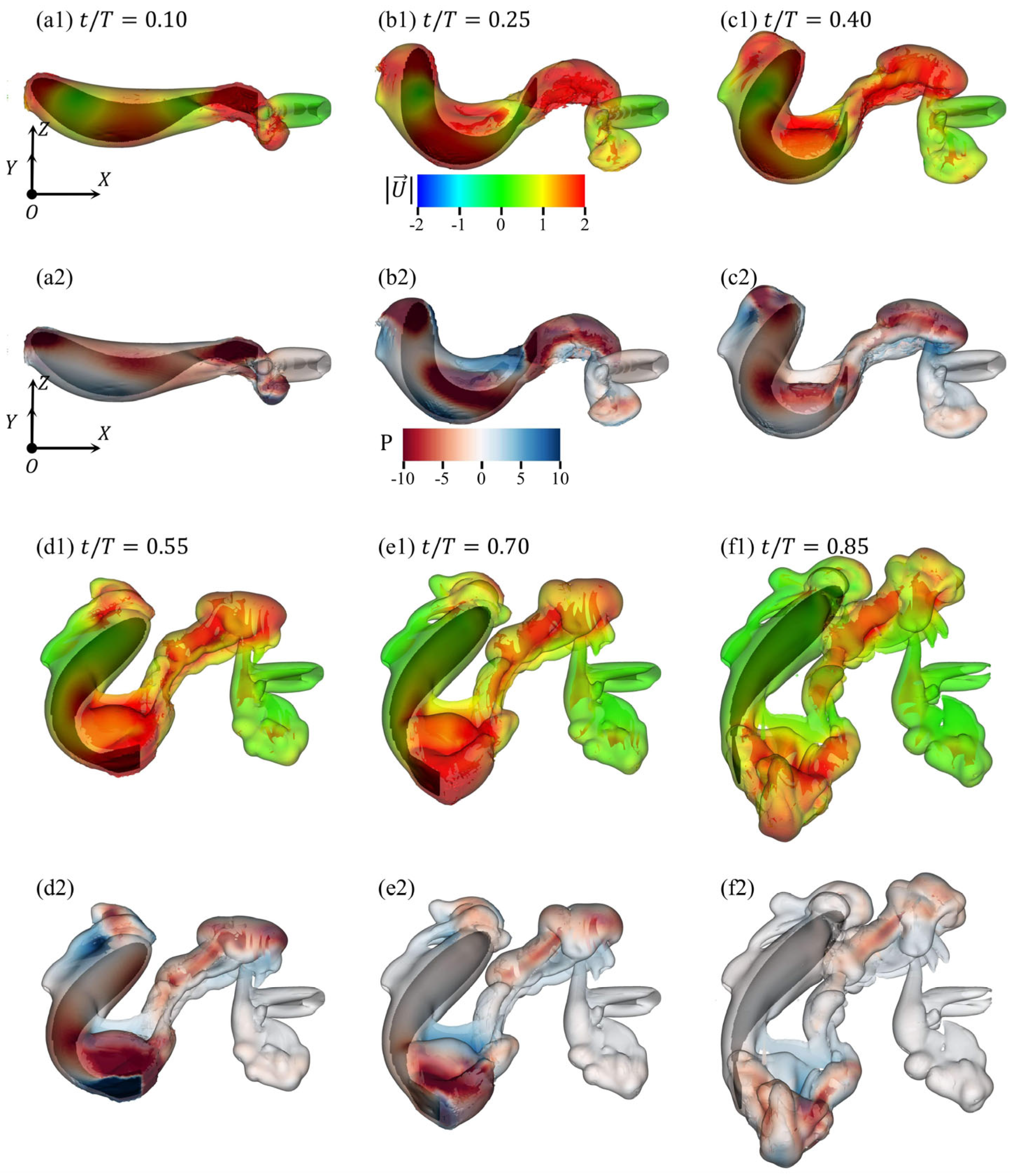
To analyze the complex three-dimensional flow field characteristics generated by zebrafish maneuvering,
Figure 9 presents the three-dimensional flow patterns and pressure values on the iso-surface of vorticity magnitude
at different characteristic time instants (expressed as the ratio of the instant to the total maneuver time
). The vorticity magnitude threshold (
was selected to consistently capture the primary coherent vortex structures, such as the leading-edge vortex (LEV) and the tail-fin jet. The evolution and interaction of these vortices were quantified by tracking the spatial position and morphology of their iso-surfaces over time, providing a clear representation of vortex dynamics without explicit point-wise core tracking. The color coding for velocity magnitude and pressure value at points on the iso-surface is shown in the legends below
Figure 9b1 and
Figure 9b2, respectively.
During the body bending phase, the difference in the lateral forces acting on the body segments anterior and posterior to the center of mass causes a deflection in the direction of motion. Upon entering the recovery phase, the fish body continues to change its direction of motion due to inertia while simultaneously utilizing the reactive force from the fluid on the caudal peduncle and tail fin to maintain propulsion. During the maneuver, the fluid, subjected to the reactive impulse from the fish body, typically forms vortex ring structures that subsequently diffuse and evolve within the fluid. In large-angle yaw maneuvers, the fish body can even exploit disturbance structures formed by prior flow fields to minimize drag. As shown in
Figure 9e1,f1, the fish body traverses the leading-edge separation vortex structure formed during the bending phase and closely follows the jet structure generated by tail oscillation during propulsion. This maneuvering strategy not only contributes to energy savings, but also enhances the stability of the entire yaw motion.
In an earlier study (
Figure 8b1–b4), to clearly illustrate the fluid inertial forces acting on a fish during maneuvering, the vorticity and pressure characteristics were depicted within the
plane. However, the complete three-dimensional simulated flow field clearly reveals that the so-called “positive and negative vortex pair” induced by the jet structure is actually the manifestation of a three-dimensional vortex ring structure on a specific cross-section. This interpretation aligns with experimental observations of fish swimming. For instance, Drucker and Lauder [
48], using three-dimensional digital particle image velocimetry (DPIV), demonstrated that the pectoral fins of bluegill sunfish shed closed vortex rings during steady swimming, with the paired counter-rotating vortices observed in any two-dimensional plane representing slices through a coherent toroidal structure. Our simulations, while resolving the dominant vortex ring topology, inherently involve modeling simplifications such as prescribed body kinematics and rigid structural assumptions. These simplifications, though necessary for computational tractability, may not capture all of the subtleties of vortex ring connectivity or secondary three-dimensional instabilities present in the wake of a living, compliant fish. Nevertheless, the consistent identification of vortex rings as the primary wake structure across both high-fidelity simulations and experimental studies underscores the robustness of this hydrodynamic feature in fish locomotion. The diffusion process of this vortex ring proceeds as the jet develops throughout the flow domain, with the vorticity and pressure distributions gradually stabilizing over time. Therefore, throughout these C-type maneuvers, inertial effects primarily govern the kinematic performance of the fish body (such as velocity, turning angle, displacement), while viscous effects predominantly shape the vortical structures within the flow field and their evolutionary process.
In summary, the yaw maneuver of a fish body exemplifies a highly efficient utilization of fluid viscous effects by aquatic organisms. Viscosity exhibits a dual effect on fish propulsion: on the one hand, it continuously dissipates mechanical energy through vortex dissipation mechanisms; on the other hand, it provides the fish body with an additional source of thrust. By precisely regulating the flow field evolution and fully exploiting its structural characteristics (such as capturing leading-edge vortices and conforming to jet structures), fish significantly enhance swimming efficiency while effectively reducing energy loss. This flow field management strategy, culminating in the inertial-driven vortex ring of the C-turn, is specialized for rapid, large-angle reorientation. It differs from the hydrodynamic signatures of other common maneuvers, such as S-type starts or gradual turns, which may rely on more sequential vortex shedding and force continuity over a distributed spatial or longer temporal scale to serve different functions like predation or navigation [
49]. This adept modulation exemplifies their high adaptability to their living environment. Building on these insights, machine learning approaches such as physics-informed neural networks (PINNs) may provide a promising means to further relate kinematic regulation to complex hydrodynamic outputs, including pressure fields and vortex dynamics [
50].
From a biological perspective, the observed rapid yaw reorientation is consistent with the sensorimotor and neural control mechanisms reported in fish escape responses, where fast neural activation tightly couples body kinematics with flow-induced forces [
27]. Moreover, yaw control strategies and the relative dominance of inertial versus viscous effects are known to vary with body size and swimming speed, placing the present findings within a broader ecological and scaling context [
51]. The concentration of force production into inertial-driven vortex structures may also confer energetic advantages by enabling effective reorientation over short time scales, as suggested by prior studies on unsteady swimming efficiency [
52].
4. Conclusions
This study systematically elucidates the control strategies and hydrodynamic mechanisms underlying C-type maneuvers in zebrafish (Danio rerio, a representative cyprinid species) using integrated high-speed photography experiments and self-propelled numerical simulations. The principal findings are summarized as follows:
(1) Kinematic and curvature characteristics: The midline curvature of the fish body exhibits a “two peak and one valley” mode. Characteristic curvature points delineate a three-phase dynamic process: initiation of standing waves, propagation of traveling waves, and attenuation of standing waves. This kinematic paradigm governs both C-start (translation-dominated) and C-turn (rotation-dominated) maneuvers.
(2) Core strategies of yaw maneuvers: Increasing body curvature amplitude enhances momentum transfer efficiency between the fish and surrounding fluid, while elevated initial velocity leverages body inertia to optimize directional changes. Their synergistic interaction significantly improves escape performance. Muscle contractions inject energy into the fish–fluid system via body deformation, with the caudal peduncle serving as the primary energy transduction module.
(3) Force dynamics and vortex mechanisms: Through the active modulation of transient vortex structures, zebrafish achieve dynamic equilibrium between viscous drag and propulsive gains via the synergistic effects of added-mass forces and vortex-induced forces. This hydrodynamic strategy maximizes energy utilization efficiency during maneuvering.
The closed-loop regulatory framework integrating “Deformation, Flow Field, Stress, and Kinematics” execution constitutes the cornerstone of zebrafish maneuver control. These insights offer three key principles for bio-inspired underwater vehicle design:
First, optimal maneuverability requires matching swimming speed ranges with context-appropriate body curvature amplitudes.
Second, vortex energy harvesting through caudal peduncle and fin structures enhances propulsion efficiency.
Third, phase synchronization between propulsor deformation and vortex field structures is critical during maneuver execution.
In practice, translating these principles to engineering applications requires consideration of several implementation challenges. Actuator bandwidth must be sufficient to replicate rapid and precisely timed body deformations, structural compliance should allow for energy storage and release without compromising stability, and control strategies must handle the coupled nonlinear dynamics between deformation, fluid forces, and vehicle motion. Acknowledging these factors highlights both the opportunities and limitations of applying zebrafish-inspired maneuvers to agile AUVs while emphasizing the value of biological insights in guiding design trade-offs.




 ,
,