Article

Parameter Optimization of Biodegradable Composite PLA–Wood with New-Generation Infill Pattern

by
Mehmet Kivanc Turan
1,
Altug Bakirci
2,
Yusuf Alptekin Turkkan
3,* and
Fatih Karpat
1
1
Department of Mechanical Engineering, Bursa Uludag University, 16059 Bursa, Türkiye
2
R&D Department, Ermetal Otomotiv ve Esya San. Tic. A.S., 16110 Bursa, Türkiye
3
Department of Electronics and Automation, Bursa Uludag University, 16850 Bursa, Türkiye
*
Author to whom correspondence should be addressed.
Biomimetics 2026, 11(2), 106; https://doi.org/10.3390/biomimetics11020106

Submission received: 8 January 2026 / Revised: 25 January 2026 / Accepted: 29 January 2026 / Published: 2 February 2026

Abstract

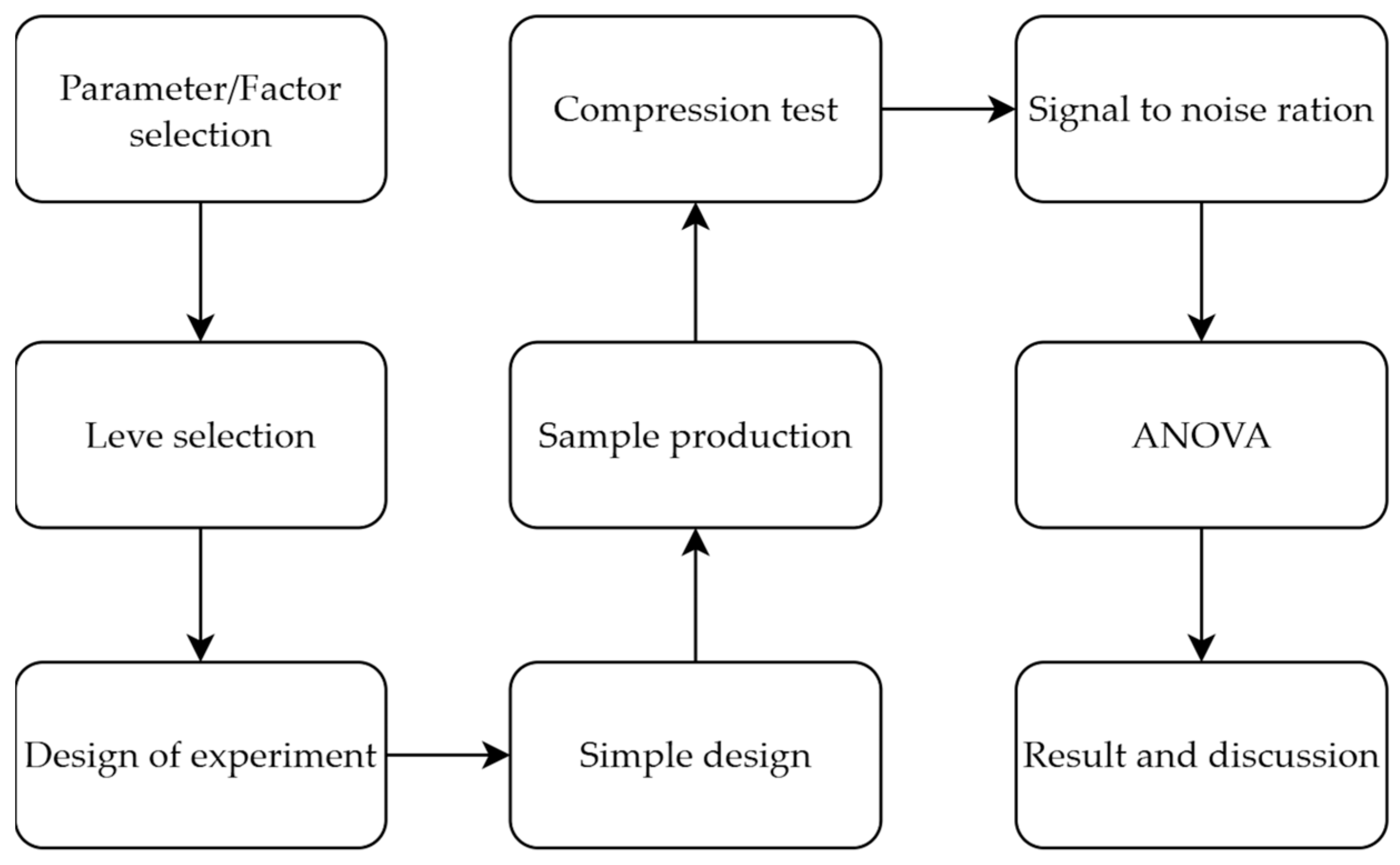
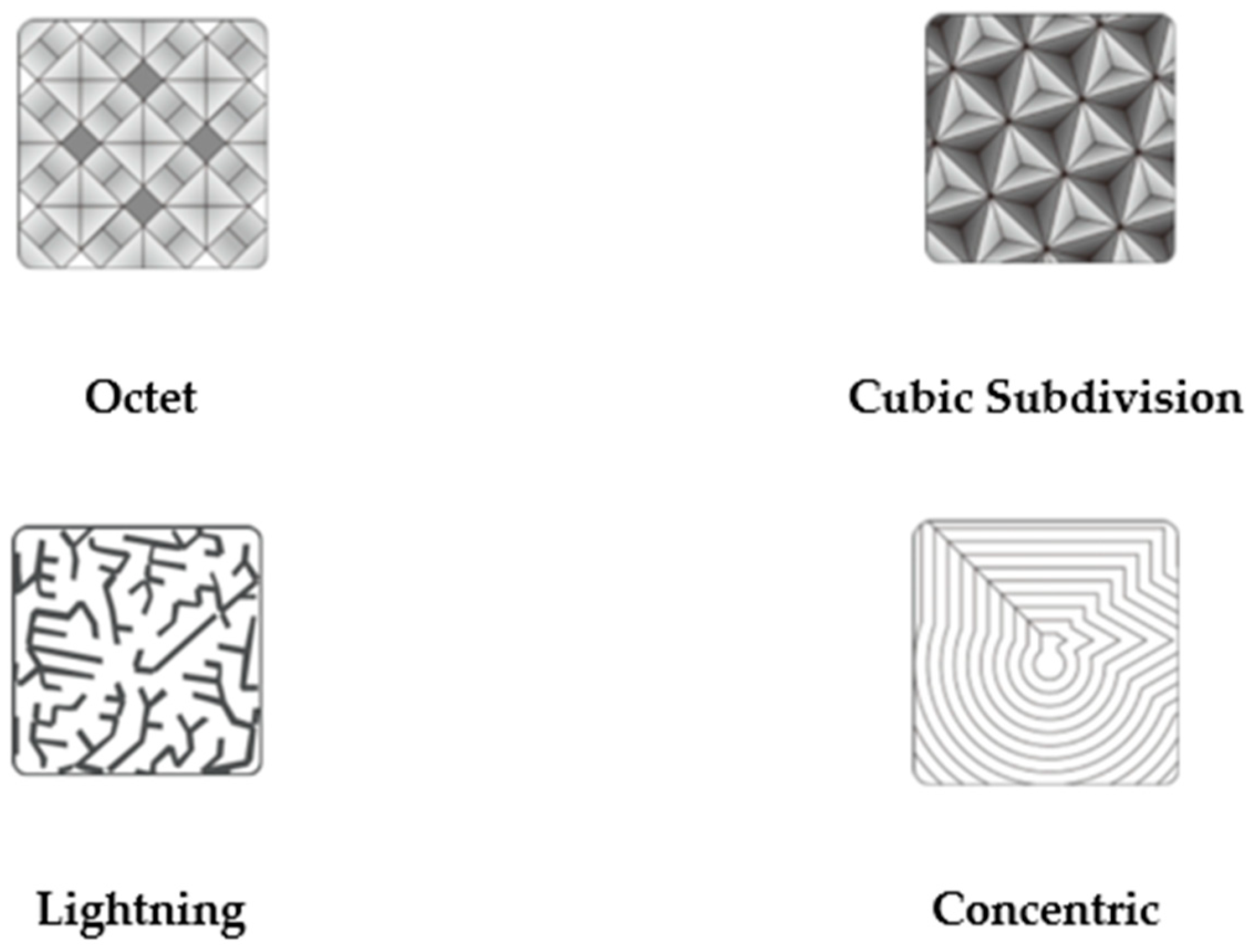
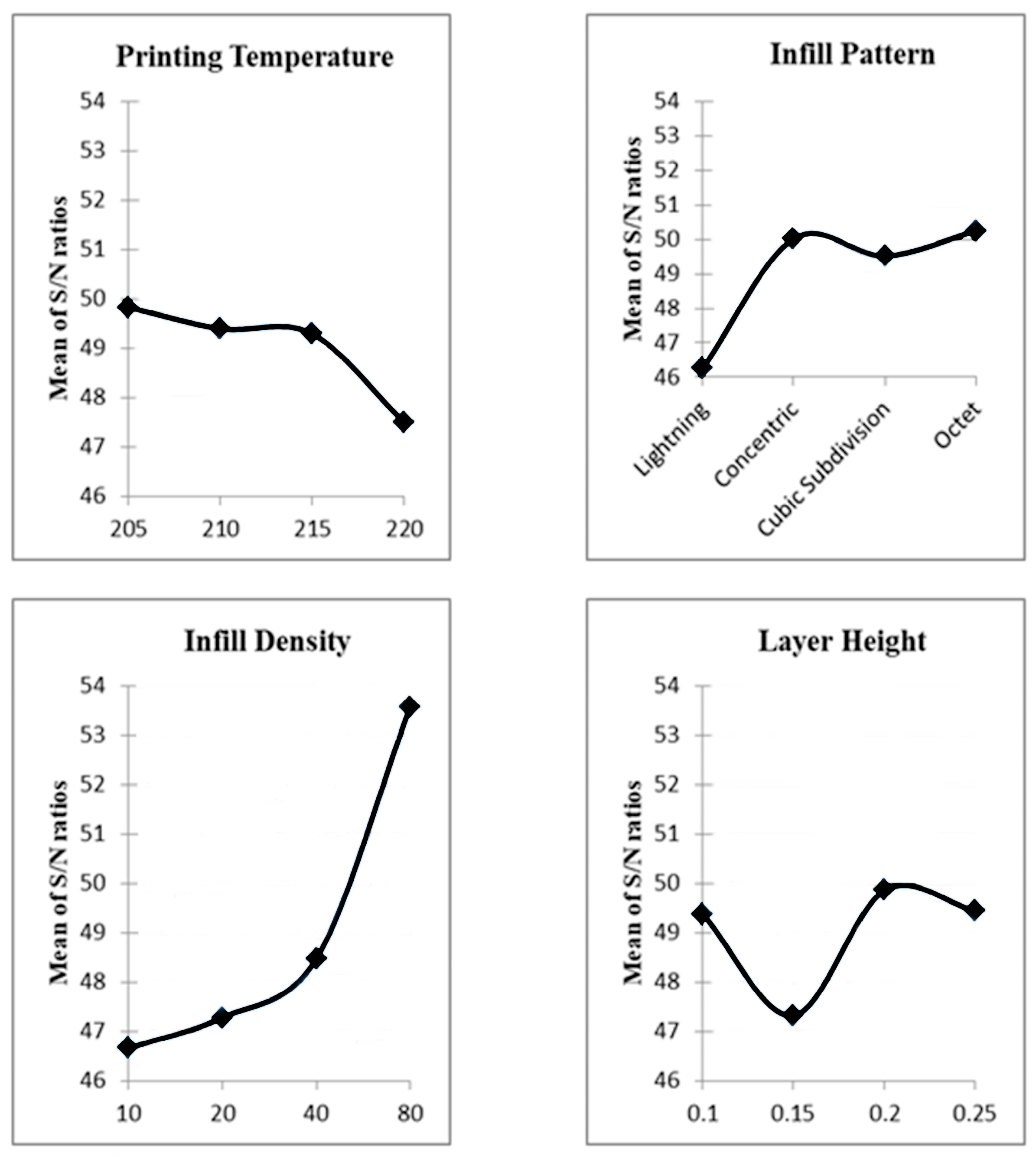
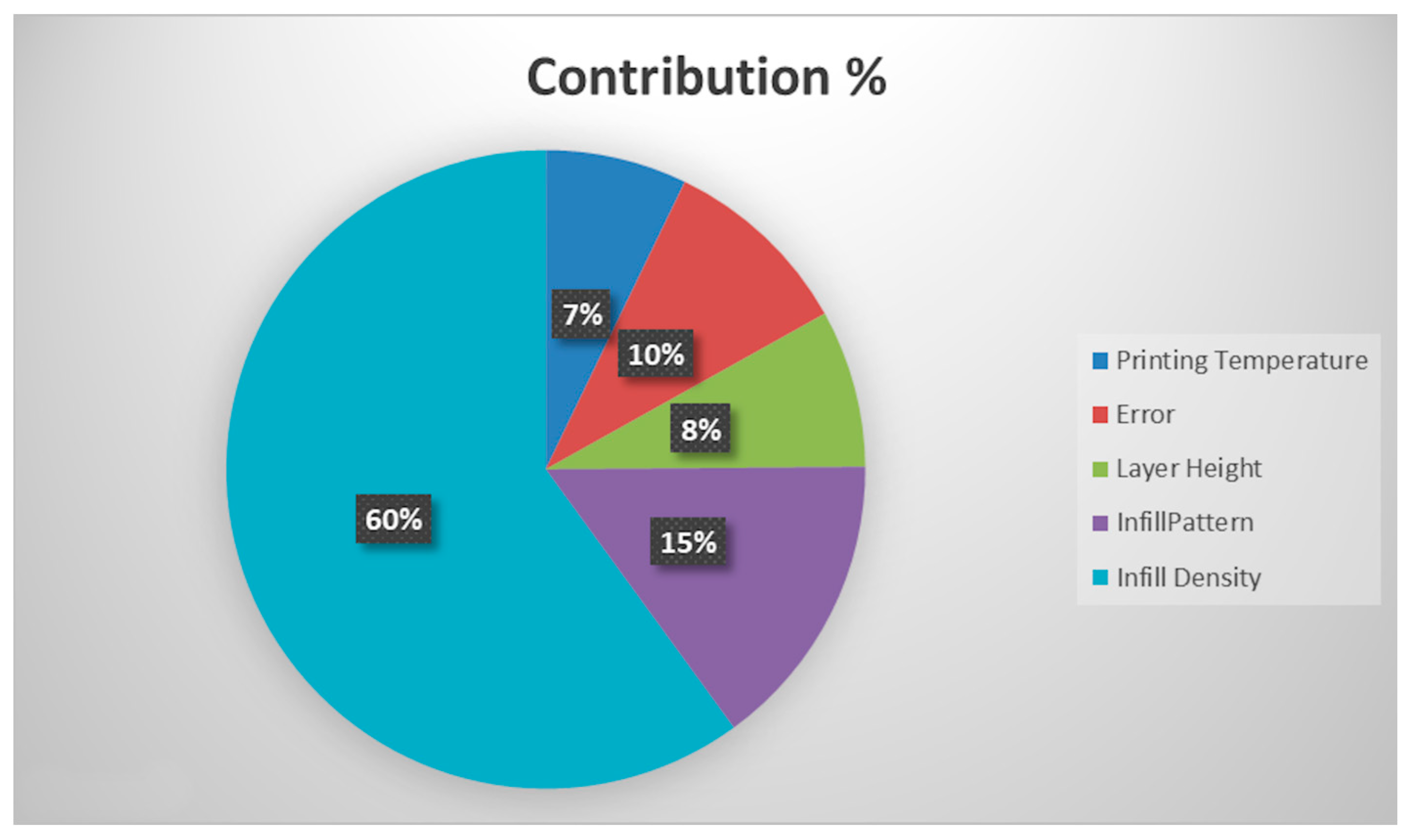
The increasing interest in sustainable materials has led to the development of bio-based composites for additive manufacturing applications. This study aimed to investigate the influence of key printing parameters and new-generation infill patterns together on the maximum compressive force of PLA–wood bio-composites produced by Material Extrusion. By optimizing this material, low-cost wood-like products can be produced. New-generation 3D infill patterns (octet, cubic-subdivision, and lightning which is a biomimetic infill pattern) infill densities, printing temperatures, and layer heights were selected as variables/factors, and the Taguchi method was applied for design of the experiment. The signal-to-noise ratio and Analysis of Variance were used to evaluate the statistical significance and contribution of each parameter to the mechanical response. The signal-to-noise ratio indicated that the optimal printing settings were as follows: printing temperature, 205 °C; infill density, 80%; infill pattern, octet; and layer height, 0.2 mm (7123.4 N). ANOVA results showed that infill density was the most significant factor affecting maximum compressive force at 60%, while infill pattern also exhibited a notable effect. According to these results, infill density and infill pattern are the most important factors for achieving high compressive strength. These findings suggest that optimizing infill architecture and density can improve the mechanical performance of PLA–wood composites, also they can offer assistive design guidelines for lightweight and eco-friendly components.
Keywords: additive manufacturing; ANOVA; fused filament fabrication; PLA–wood bio-composite; Taguchi additive manufacturing; ANOVA; fused filament fabrication; PLA–wood bio-composite; Taguchi