2.1. Details of Simulations
Cylindrical molecular brushes composed of a primary main chain (backbone) and multiple grafted to it double-comb side chains were modeled on a cubic lattice using the numerical self-consistent field method of Scheutjens-Fleer (see Materials and Methods section) under good (athermal) solvent conditions. Excluded volume interactions between the grafted chains induce elongation and stiffening of the primary backbone of the molecular brush. As a result of these interactions, the backbone is stretched over length scales substantially larger than the cross-sectional brush thickness. Consequently, the molecular brush acquires local cylindrical symmetry, which means that it can undergo only smooth radial bending on scales comparable to or larger than the brush thickness controlled by the size of the side chains, thus justifying a description of the bottle-brush within the framework of cylindrical symmetry. Therefore, to investigate the structural properties of cylindrical brushes formed by comb-like grafts with either uniform or DC architectures, we employed a simplified model, assuming cylindrically symmetric density profile of the monomer units of the comb-like grafts with respect to a straight backbone.
The primary backbone was assumed to be phantom-like, with no excluded-volume interactions with the monomer units of the grafts. This simplification facilitates computational modeling and does not affect the results, provided that the primary backbone is strongly stretched and neighbouring comb-like grafts are strongly overlapped, the conditions fulfilled in the systems studied.
The monomer units comprising the grafted comb-like chains were assumed to be identical in size to each other and to the solvent molecules. The length unit was taken as the linear size of a monomeric unit, a, and the energy unit was taken as , where is the Boltzmann constant, and T is the absolute temperature. The grafting density of the primary side chains to the backbone was defined as , where h is the distance between the adjacent grafting points of the side chains.
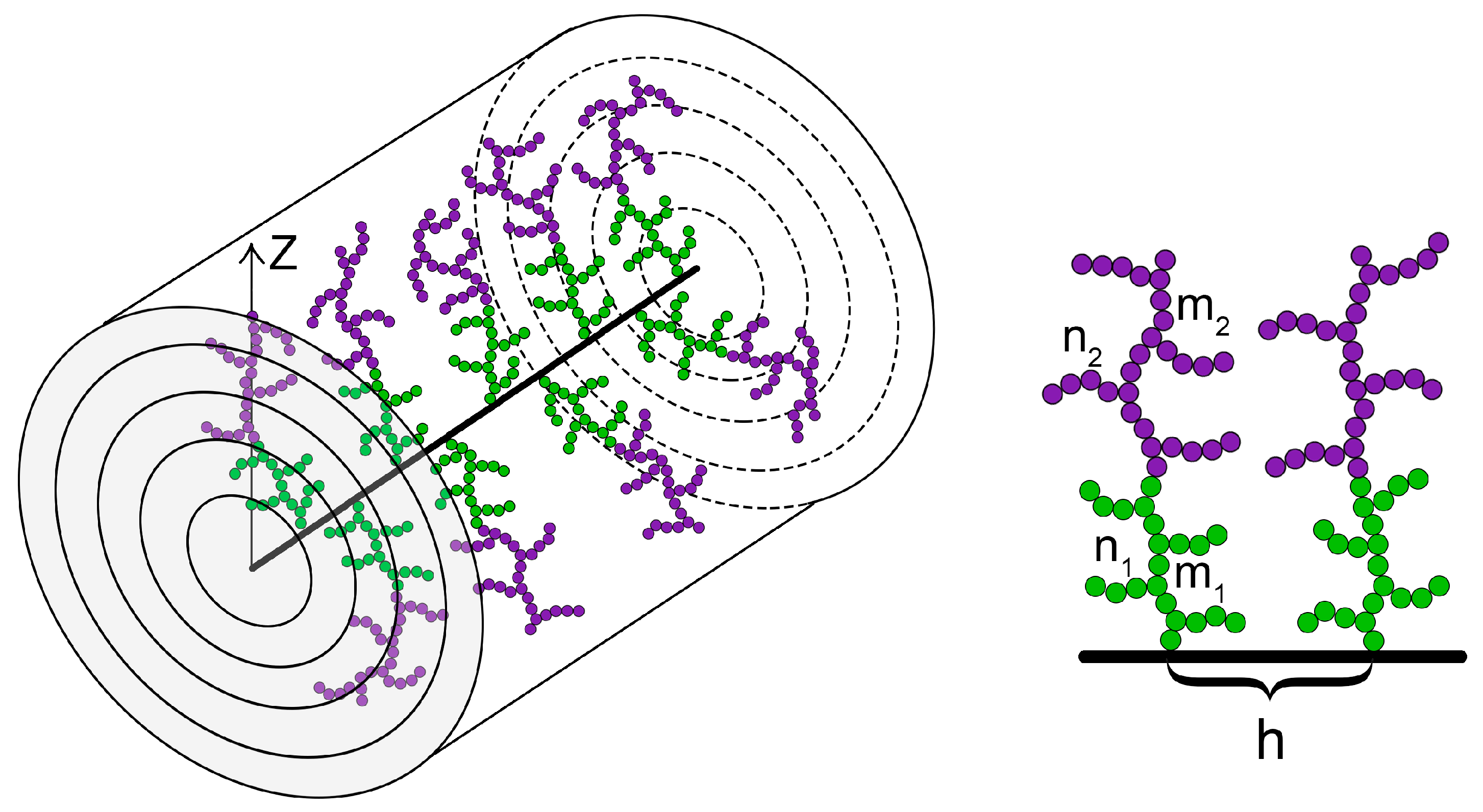
We focused our study on brushes composed of double-comb-like (DC) macromolecules, Figure 11. Each DC macromolecule is attached by one end of its main chain to the primary main chain (backbone) of the bottle-brush.
The secondary side chains in DC polymers were arranged in two domains: adjacent to the backbone (proximal) and peripheral. The secondary side chains in the proximal domain have contour length
while the side chains in the peripheral domain have length
. The ratio of side-chain lengths in the two domains was adjusted such that the total degree of polymerization of the cylindrical DC molecular brush remained constant
As a particular case, bottle-brushes formed by comb-like grafts with monodisperse secondary side chains,
, were considered. Here,
and
denote the numbers of branching points in the proximal (inner) and peripheral (outer) domains of the DC grafts, respectively, and
and
are the corresponding contour lengths of the spacers between these branching points. The degree of polymerization of the backbone is determined as
For simplicity, the cases where
and
were considered.
A comparative analysis of the conformational properties of molecular brushes with monodisperse secondary side chains () and bidisperse secondary side chains with and in the grafts was performed. Extreme cases were also examined, in which either the proximal or the peripheral domains represent linear chains (that is, or ).
2.2. Molecular Brushes with Comb-like Side Chains
Let us first consider the symmetric case, where the contour lengths of the spacers and secondary side chains are equal in both domains ( and ). That is, we consider a cylindrical brush of comb-like chains with side chains of length n separated by spacers with length m.
An analytical formulation of the self-consistent field theory for planar and curved polymer brushes incorporates a parabolic molecular potential [
25,
26]:
where
H is the brush thickness,
a is the size of the monomer units,
z is the distance from the grafting surface,
is the Boltzmann constant, and
T is the absolute temperature. The parameter
(the topological ratio) characterizes the degree of branching of the brush-forming chains. For comb-shaped grafted chains with long backbones
The parabolic shape of the potential in Equation (
3) is directly related to the Gaussian (linear) elasticity of the tethered side chains [
27]. The volume fraction of monomer units,
, is related to the potential
as:
where
is the free energy density of interactions between monomer units in a semidilute solution,
and
are the second and third virial coefficients of the monomer-monomer interactions respectively,
is Flory-Huggins parameter. Under good solvent conditions (
), the polymer volume fraction profile is given by
Equation (
6) is valid in both planar and curved geometries, provided that the potential
supports a finite density of terminal monomer units (free ends) throughout the brush volume. This condition is satisfied in planar and concave brushes, but breaks down in a convex cylindrical brush with formation of the so-called “dead” zone near the brush backbone.
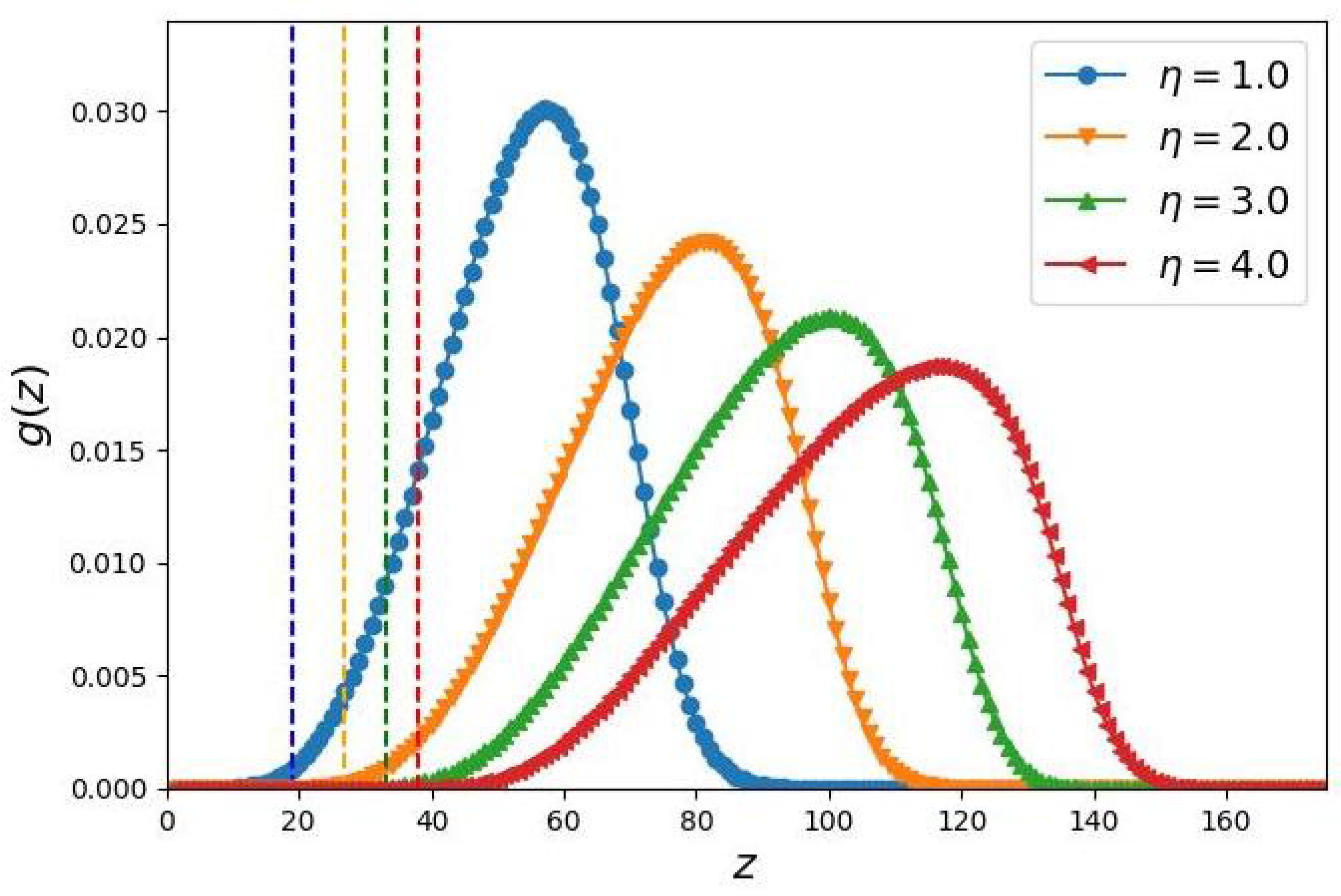
The presence of “dead” zones in cylindrical brushes composed of comb-like chains is demonstrated in
Figure 1, which shows the results of the numerical SF-SCF simulations. The probability of encountering a terminal segment of the side chain backbone is close to zero in a sufficiently large region of space around the axis of the brush.
The comprehensive account of “dead” zones and the corresponding modification of the parabolic potential in convex polymer brushes of linear polymers was peformed by Ball et al. [
28] and Belyi [
29] An simplified analytical model accounting for the presence of a “dead” zone in solvated convex brushes of linear polymer chains was developed by Wijmans and Zhulina [
30]. Their model combines a presumed power-law decay of the polymer concentration within the “dead” zone with a parabolic profile in the outer brush region. Here, we extend this approach to cylindrical brushes composed of grafted comb-like chains.
The free energy per unit length of the backbone in the “dead” zone is expressed as the sum of the elastic chain-stretching term and the contribution from excluded-volume interactions:
Here A is a scaling factor that is often introduced in box models to ensure consistency with simulation and experimental data, and is the width of the “dead” zone. We have also assumed that within the “dead” zone, only the backbone of the comb-like graft is subject to stretching, while the side chains remain unextended.
Minimizing the free energy
with respect to
yields the following expression for the polymer volume fraction profile in the “dead” zone:
In the outer peripheral zone with distributed free ends of the chains, the volume fraction of monomers remains parabolic:
with
X denoting the fraction of monomer units within the peripheral zone, and
H representing the width of this zone.
The values of X, H, and are specified by three conditions:
(1) continuity of the volume fraction profile
at
:
(2) the normalization condition of
in the inner layer, ensuring the conservation of a given fraction
of monomer units:
(3) the normalization condition of
in the outer layer:
Solution of the system of Equations (
11)–(
13) reveals that the ratio of the width of the “dead” zone to that of the peripheral zone yields
Furthermore, the fraction of monomer units
X in the peripheral zone is a constant value specified as
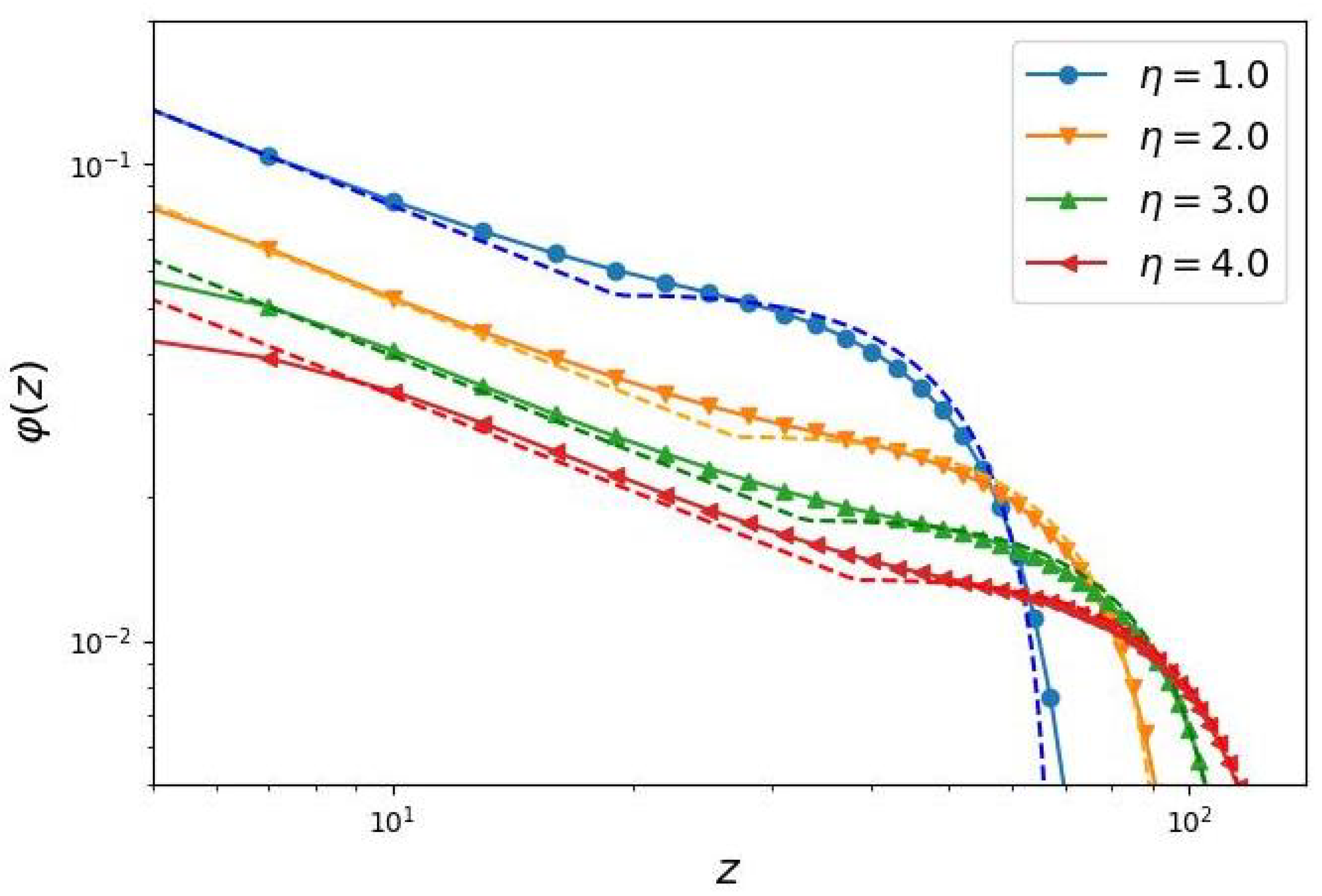
The approximation of the numerically modeled profiles
using an analytical function (Equation (
9)) results in a best-fit parameter value of
(see
Figure 2). At
, this fraction
X is equal to
, indicating that, regardless of the grafting density, the degree of polymerization or architecture of the grafted comb-like chains, approximately
of the monomer units reside in the peripheral zone, while only about
are located in the “dead” zone. The width of the “dead” zone is approximately three times smaller than the width of the peripheral zone (the ratio
).
The width
of the “dead” zone is described by the following equation:
while the width
H differs from
in Equation (
16) only by the numerical prefactor:
The derived formulas (Equations (
15)–(
17)) allow for the construction of the analytical volume fraction profiles (
9) and (
10), taking into account “dead” zones. A comparison between the proposed analytical theory and direct numerical simulations is shown in
Figure 2. The results demonstrate reasonably good agreement.
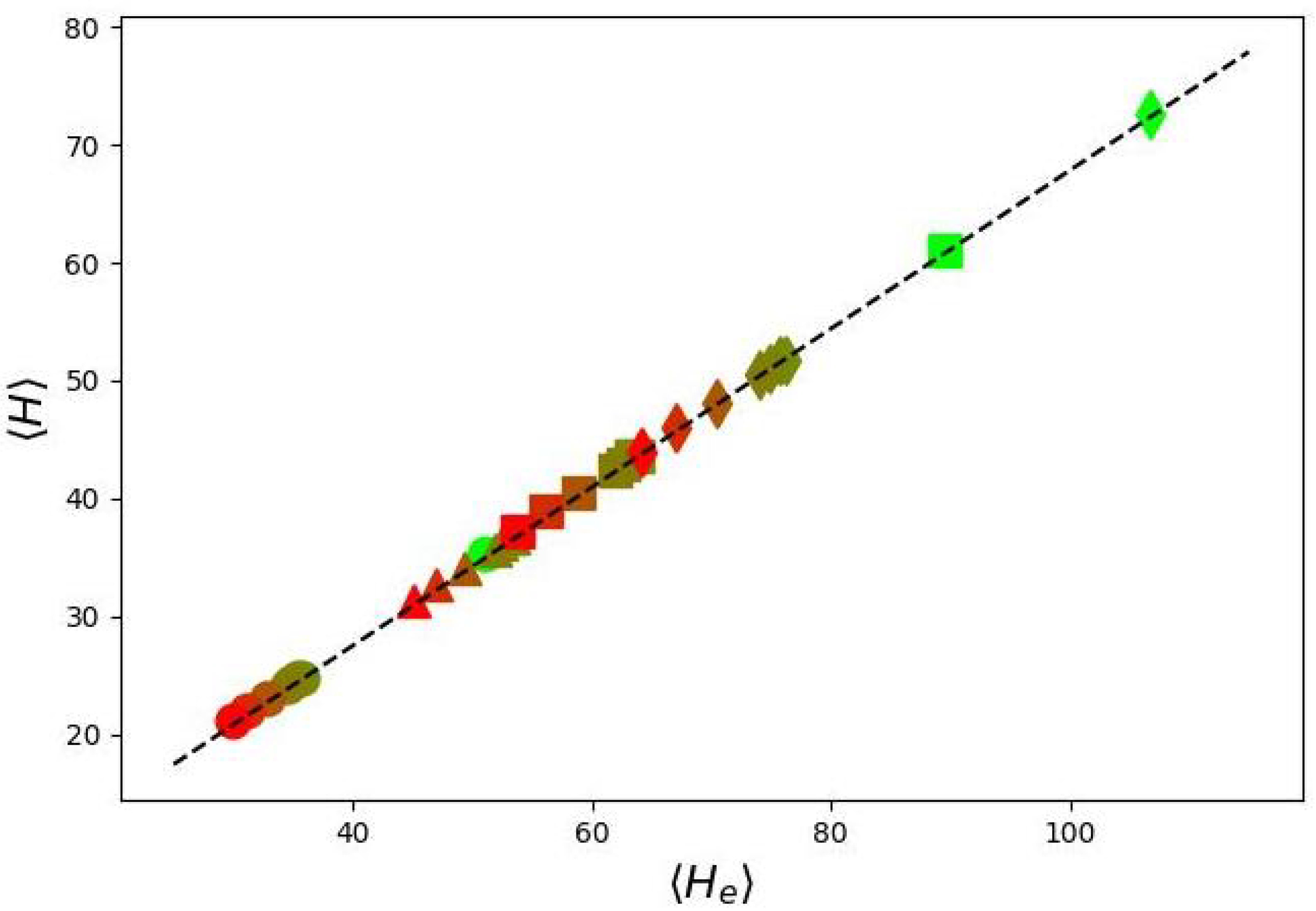
The average half-thickness of a molecular brush can be characterized by the first moment of the radial distribution of the polymer volume fraction around the brush axis:
or alternatively, by the first moment of the radial distribution of the free ends of the grafted comb-like side chains
As shown in
Figure 3, for cylindrical molecular brushes composed of monodisperse comb-like side chains under good solvent conditions, these two characteristics are directly proportional.
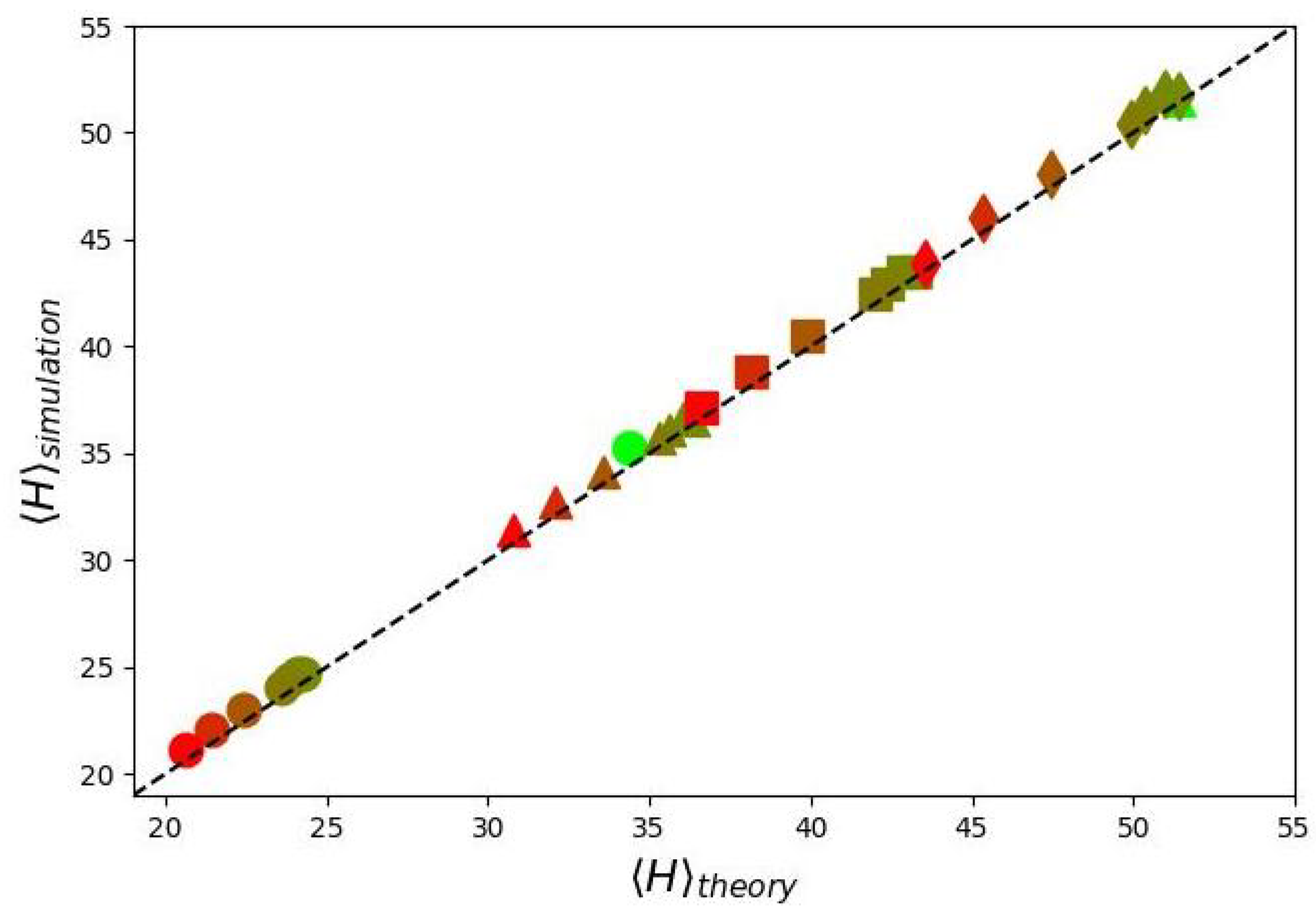
If the “dead” zone is neglected and the parabolic potential is extended to the whole cylindrical brush, the first moment
takes the following form:
Surprisingly, despite of a significant effect of “dead” zone on the shape of
, Equation (
20) provides a reasonably accurate description of the numerically calculated
(see
Figure 4).
2.3. Molecular Bruhes with Double-Comb (DC) Side Chains
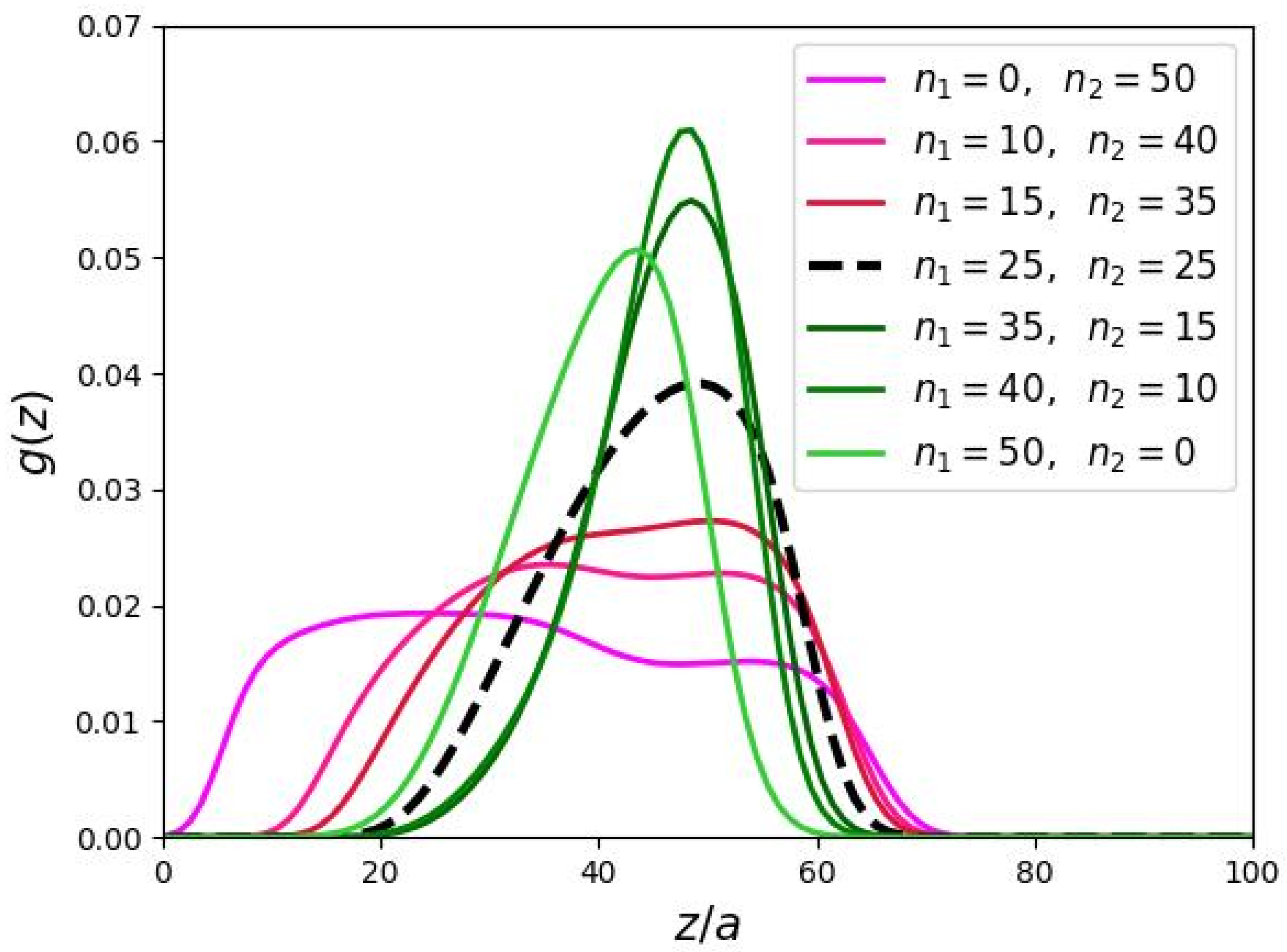
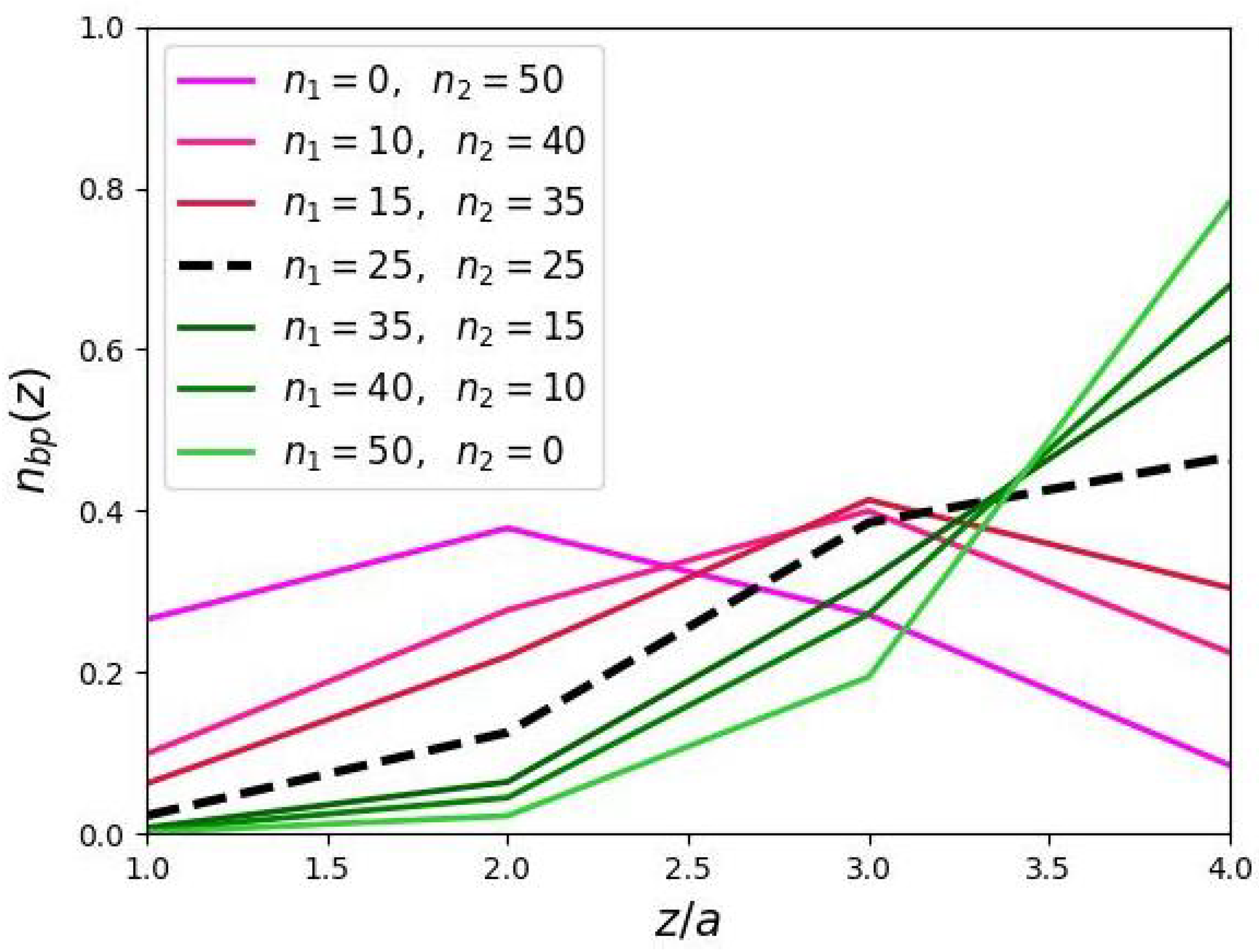
We now consider cylindrical molecular brushes composed of double-comb (DC) chains. In all cases, the total number of secondary side chains per DC is kept constant at 20, and the secondary side chains are grafted onto every third monomeric unit along the main chains of the DCs (). The degrees of polymerization of the secondary side chains in proximal and peripheral domains of the bottle-brush forming DCs ( ( and , respectively) are varied so that , ensuring a constant total degree of polymerization of the DCs (). The branching parameter (), is tuned solely by adjusting the contour length of the side chain in each domain.
The radial distributions
of the end-points of the DC backbones are shown in
Figure 5. When branching is increased in the peripheral domain, the width of the “dead” zone decreases, indicating a more uniform spatial distribution of end-points across the brush volume. In contrast, increasing branching in the proximal domain leads to reduced stretching of the DCs main chains, but their end-point distributions remain sharp.
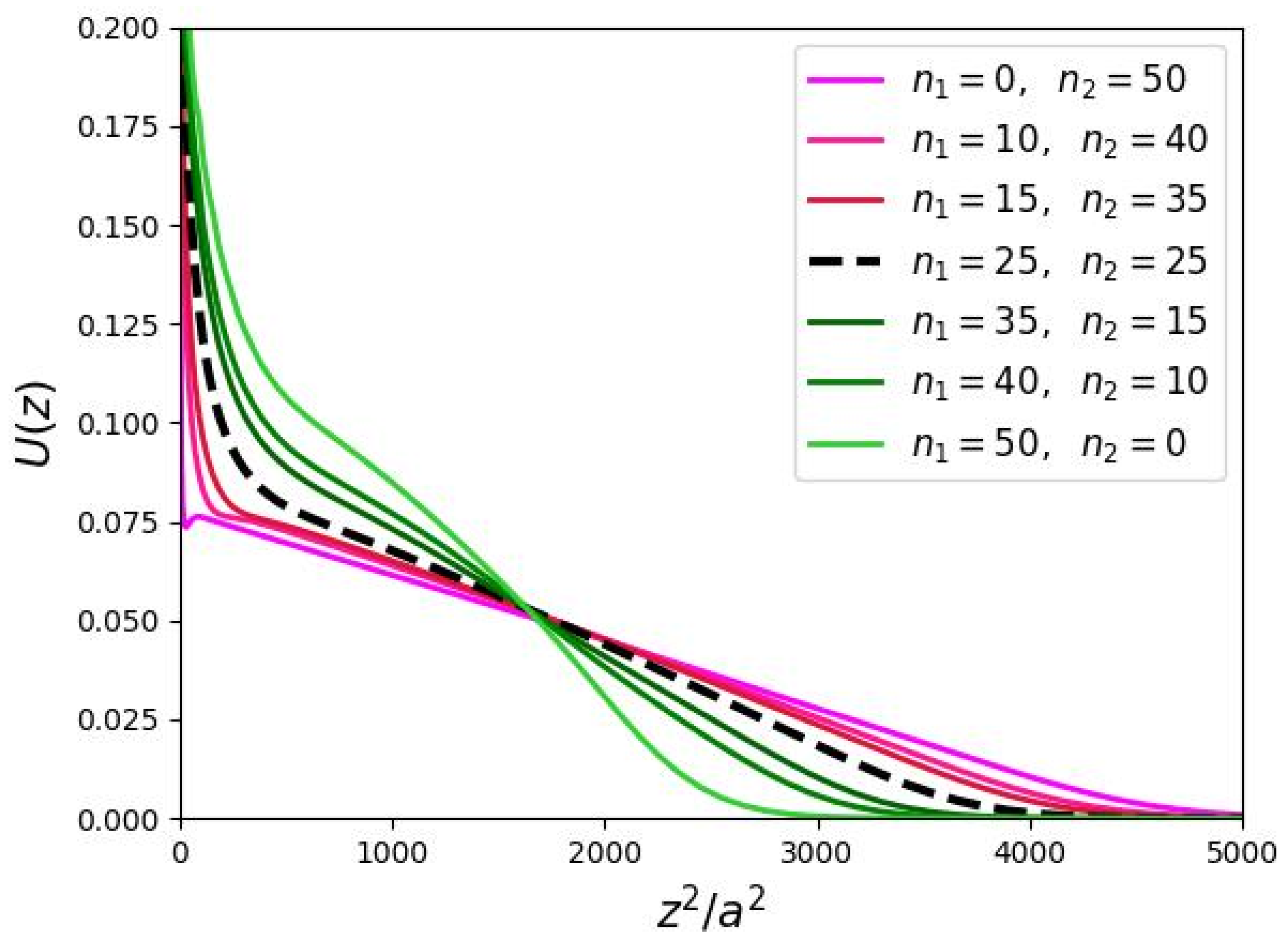
As shown in the previous section, the analytical theory predicts a parabolic shape of the molecular potential (a linear dependence of the potential on the squared radial distance
from the brush axis) for bottle-brushes formed by comb-like polymers with monodisperse side chains (
) in the major part of the brush. However, an increase in length
of the side chain in the proximal domain combined with the decrease in length
to the side chain in the peripheral domain, leads to significant deviations in
from the parabolic shape (
Figure 6).
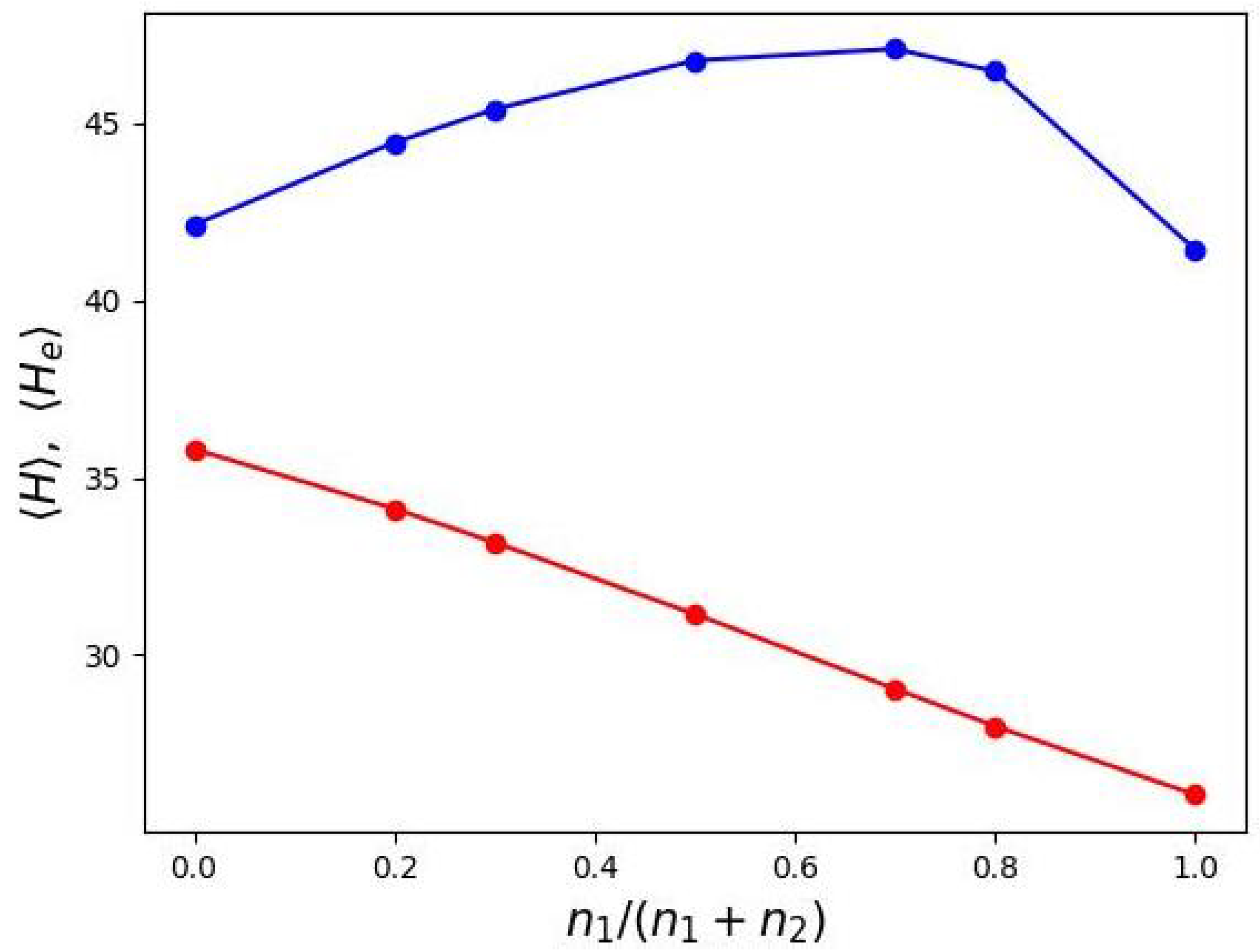
The non-monotonic variation of the “dead” zone width with ratio
is reflected in the behavior of the first moments
and
(Equations (
18) and (
19)). In contrast to the monodisperse case (
) in which
and
are proportional, their proportionality breaks down for DC grafts. While
decreases monotonically and nearly linearly with increasing
,
exhibits a pronounced maximum as a function of
(
Figure 7).
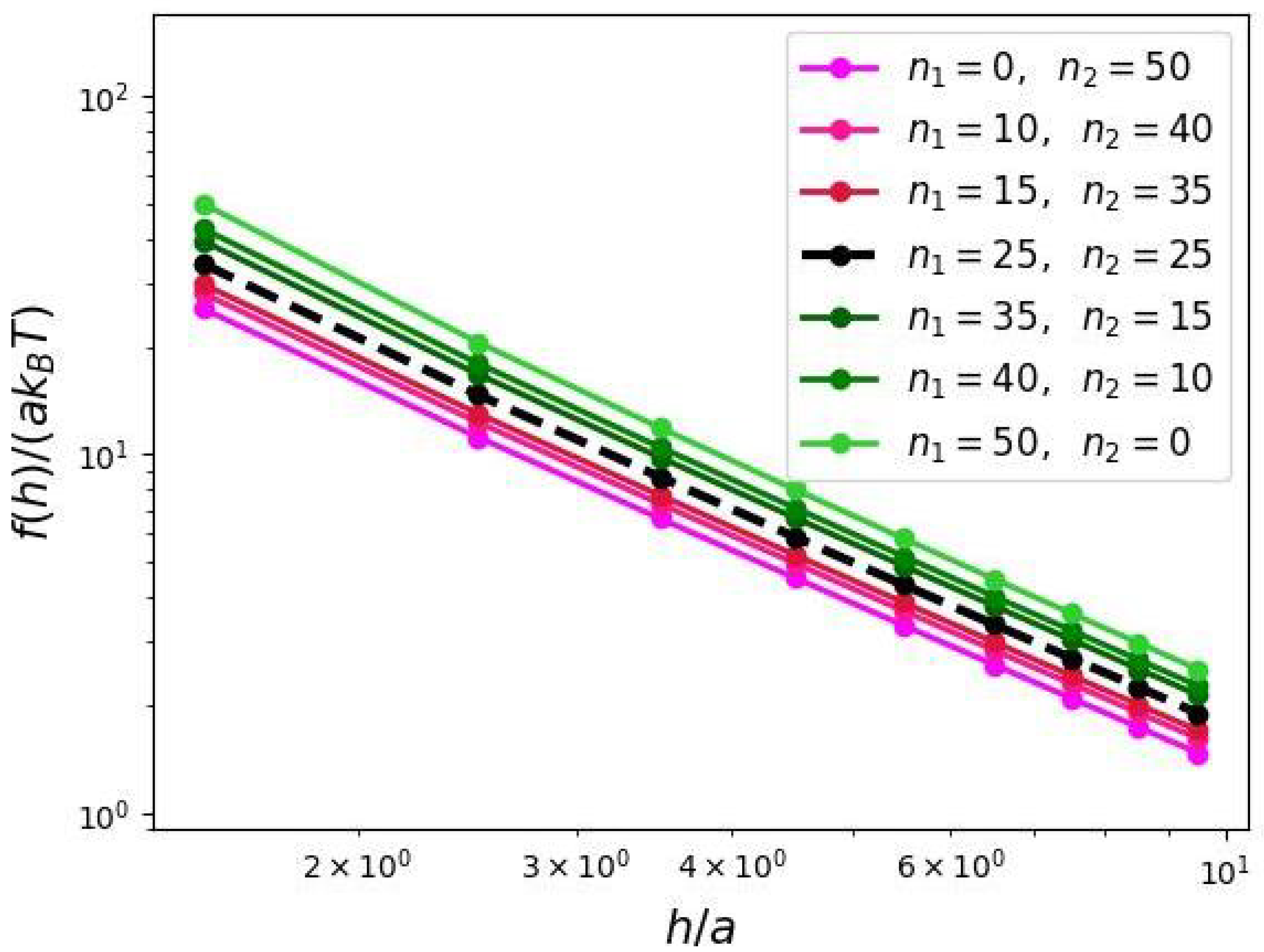
To evaluate how the architecture of the grafted DC polymers influences tension imposed on the brush axis, the free energy
F per grafted chain was calculated as a function of distance
h between grafting points. In the parabolic potential framework, the free energy per chain in a cylindricaal brush with monodisperse comb-like grafts is given by:
and axial force is then obtained as the negative derivative of this free energy with respect to
h:
As it follows from Equation (
22), axial tension
f imposed by the grafts in the brush backbone is expected to increase upon increasing branching of the grafts (increase in
) and decrease as
as a function of distance
h between grafts.
The results of SF-SCF calculations presented in
Figure 8 indicate that DC chains with proximal domain containing a larger fraction of the total polymer material exhibit a stronger tension on the brush axis compared to those with a dominant peripheral domain. In all cases the numerically calculated dependences
demonstrate the value of exponent close to
predicted by Equation (
22).
To minimize steric interactions, the side chains tend to extend in the radial direction, exerting a “detatching” force at the grafting point perpendicular to the backbone. This effect is best illustrated by the stretching of the root spacer, i.e., the spacer between the grafting point and the first branching point in the grafted DC chain (
Figure 9). As shown in
Figure 9, the elongation of the root spacer correlates with the axial force exerted on the brush axis by DC chains with more massive peripheral domain (mimicing aggrecan monomers). The greater the axial force, the greater the stretching of the root spacer.
To assess the contribution of side chain interactions to the enhanced bending rigidity of a bottle-brush polymer, a uniform curvature is applied to the backbone, characterized by a radius
R much larger than the brush half-thickness
H. The resulting excess free energy per grafted side chain, induced by bending at radius
R, can be determined through the following expansion:
Due to symmetry, the odd-order terms in the expansion vanish. The leading contributions arise from the even-order terms, where
and
are dimensionless numerical coefficients. By definition, the bending modulus
characterizes the free energy cost of bending,
The induced persistence length
is related to the bending modulus
as
Based on the above equations, as well as Equations (
17) and (
21), it is straightforward to show that under athermal solvent conditions the induced persistence length is equal to
and does not depend on the architecture of the grafted chains given their identical grafting density and degree of polymerization.
The applied here numerical SF-SCF method allows for direct calculation of the free energy
F and the brush thickness
H in the brush straight configuration. Then the induced persistent length
can be evaluated using Equation (
25). The results of SF-SCF numerical evaluation of
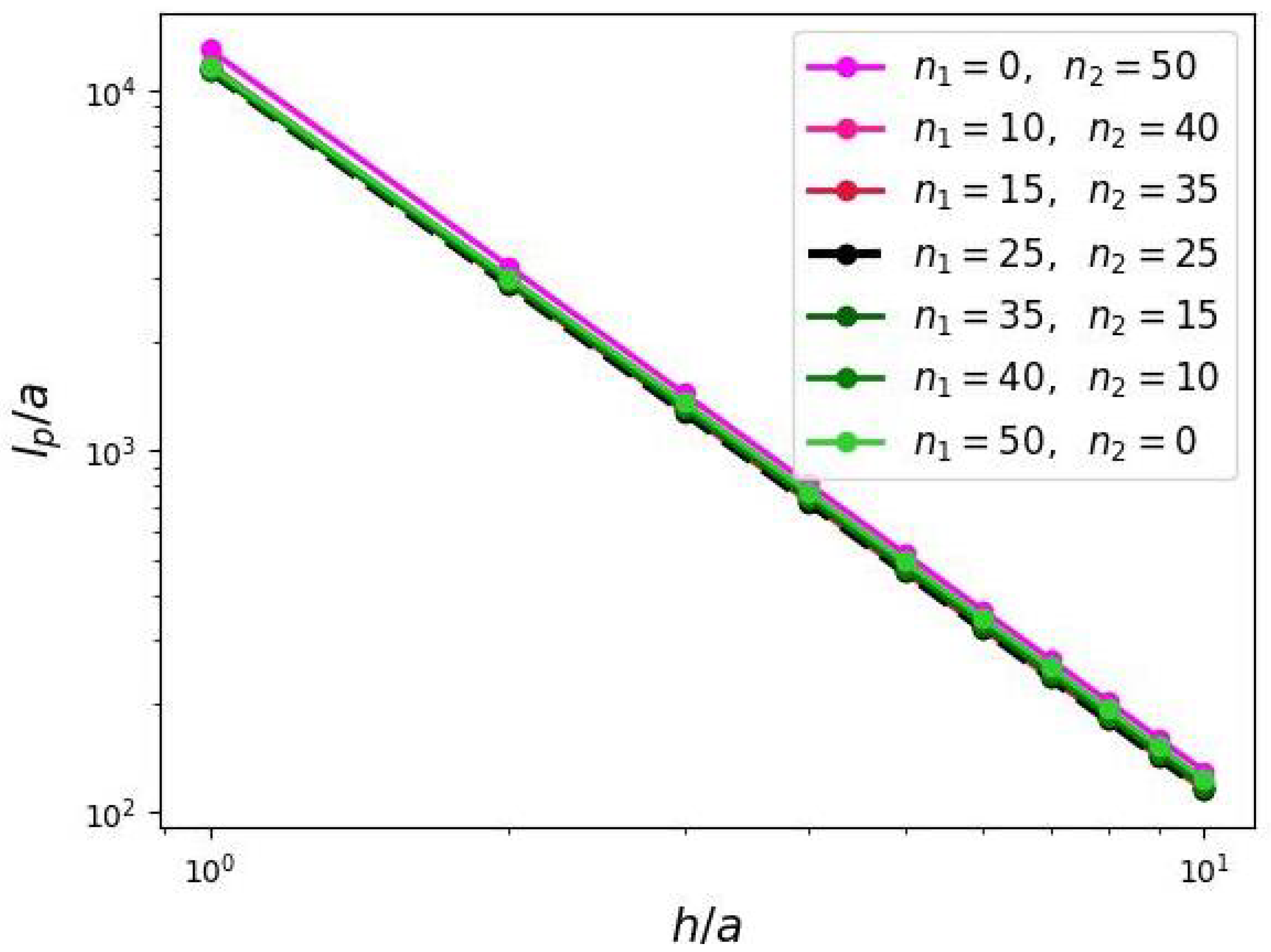
are presented in
Figure 10. As the distance
h between grafting points of the side chains along the brush axis increases, the induced persistence length
decreases. These dependences follow power-law behavior with exponents of
, in agreement with Equation (
26), regardless of the distribution of monomer units of secondary side chains between proximal and peripheral domains of the bottle-brush-forming DC chains.
The performed SF-SCF modeling demonstrated that molecular brushes composed of DC side chains exhibit a fundamentally different structure compared to bottle-brushes with monodisperse comb-shaped chains. By tuning the ratio of lengths of the side chains in proximal and peripheral domains, the spatial distribution of the end-points of the main chains of the grafts within the brush could be precisely controlled. The latter could be a key factor in designing molecular-brush-based nanocontainers for targeted substance delivery. Furthermore, adjusting the architecture of grafted DC chains during synthesis allows for a significant modulation of the brush thickness while preserving intact the induced backbone rigidity. This feature enables regulation of the liquid-crystalline behavior in semi-dilute solutions and the mechanical properties of bottle-brush-based gels.