1. Introduction
The reduction in carbon dioxide emissions to combat the consequences of climate change is a global imperative that was emphasized in the Paris Agreement [
1]. In this context, hydrogen is likely to play a role in our future society, especially as we move towards a low-carbon strategy. This potential for hydrogen-based energy systems identified early this century is now a reality rather than a vision of the future. In fact, hydrogen technologies are being implemented in many end-use applications. In particular, in the transport sector, the introduction of fuel cell vehicles will require the development of an extensive network of Hydrogen Refueling Stations (hereinafter referred to as HRSs), which will need to have ensured operational safety in order to gain public acceptance. Therefore, the successful integration of hydrogen into industries like mobility and transportation hinges on establishing safety and efficiency throughout its entire value chain.
Some of these fundamental challenges are being tackled by the international SUSHy project [
2], which seeks to face the challenges associated with the widespread deployment of emerging hydrogen technologies. These challenges arise not only from the complex technical processes involved in hydrogen production and distribution but also from the socioeconomic uncertainties affecting its safe and sustainable deployment. Given the limited availability of data and the multifaceted nature of these barriers, addressing and overcoming them demands crucial international and interdisciplinary cooperation.
Safety is emerging as a crucial element in achieving a profitable, sustainable and green hydrogen economy. Some of the challenges involved are technological, but others are linked to regulations and the precise development of safety systems linked to the entire hydrogen value chain [
3]. In-depth analysis of hydrogen-related events can play a pivotal role in addressing this challenges. Fuyuan Yang et al. [
4], in a review of 120 hydrogen safety incidents, studied precise aspects of leakage and diffusion ignition and explosion. They concluded that failures of pipes, valves, and filters within the hydrogen system accounted for the majority of abnormal process occurrences. Their statistical approach can be complemented by a more qualitative approach, such as that of Youhyun Lee [
5], which addresses safety based on lessons learned from three relevant events in South Korea. Both approaches can provide relevant information for HRSs. As noted by Yuxuan Xing [
6] (p. 415), “a comprehensive risk identification of multiple typical accident including hydrogen and non-hydrogen accidents at HRSs is necessary”. From this wide perspective, it is worth emphasizing the significance of conducting analyses considering the comparison between the different components of the hydrogen value chain.
Before presenting the methodology and the results of the study, two aspects considered within the hydrogen value chain and the importance of the events analysis are defined. Firstly, the term “hydrogen value chain” is often used to refer to broad categories that can range from hydrogen plant design to end-user applications. In this research, four categories have been considered: production, storage, delivery, and applications (
Table 1).
These value chain categories can be clearly extrapolated to HRSs. Thus, an HRS requires a process of hydrogen production (on-site or off-site), storage (tanks or cylinders), delivery (when hydrogen is produced off-site) and hydrogen handling (during refueling activities).
Secondly, this study is based on the information available in the Hydrogen Incidents and Accidents Database (HIAD) 2.0. The database was requested on the 15 June 2022 via the Odin portal (
https://odin.jrc.nl, accessed on 15 June 2022). This database is a repository of systematic data describing hydrogen-related accidents, incidents or near misses. HIAD 2.0 was developed by the Joint Research Centre (JRC) of the European Commission as part of the Hydrogen Safety Network of Excellence (HySafe) during 2004–2009 with the aim of learning lessons and preventing future events. The richness of its information has allowed general descriptive studies in the field of safety [
15]. Its information also permits targeted analyses, such as the Campari study [
16], which, with the aim to prevent hydrogen-related material failures, uses business analytics to identify lessons learned related to inspection and maintenance processes. Therefore, valuable knowledge for the improvement of the safety of HRSs can be generated from the exploitation of HIAD 2.0 information.
In line with these research approaches, the present study analyzes hydrogen-related events compiled in the HIAD 2.0 (considering the hydrogen value chain, the core event, the type of failure and the damage) with the goal of providing reliable and useful insights into critical processes for safety that can be extrapolated to hydrogen refueling stations.
2. Materials and Methods
The HIAD was firstly developed within the HySAFE Network of Excellence by the JRC in 2006 [
15]. Subsequently, it was updated to HIAD 2.0 in 2017, with the latest version, HIAD 2.1, being released in 2023. This database was created to store valuable information about accidents and incidents associated with the production, transportation (by road, rail, or pipeline), supply, and commercial utilization of hydrogen. It is regularly updated with the latest details about each event to incorporate the most recent findings from accident investigations [
17]. At the time of the study, HIAD 2.0 was only available by requesting access rights via the Odin portal [
18]. For this research, the database was requested and received on June 2022. The dataset has been used in accordance with the conditions and statements of the European Commission JRC.
The current study’s sample has been obtained from the events collected in the HIAD 2.0, specifically incidents and accidents across the entire hydrogen value chain, excluding HRSs. These events (registered until 31 December 2022, with references ranging from ID 10 to ID 1036) were selected and analyzed based on their potential extrapolation to HRSs processes.
The following two phases were involved in the development of this research.
2.1. Review and Selection of Events from HIAD 2.0
This task was carried out in an identification-review process by the researchers’ project, as follows.
- (a)
Individual review of the database to classify the events considering the stages of the value chain.
- (b)
Cross-checking of the events selected by the other members of the research team.
- (c)
Joint review (between the researchers) of unclear events as to their position within the value chain or their potential impact on HRSs. Consensus was essential for the event inclusion.
The review process allowed the classification of the events into three categories, as follows.
2.2. Analysis of Events
The database review permitted the identification of a total of 224 events. A mixed-methods approach was employed in analyzing selected events to provide “completeness” to the study, considering that the database contains both quantitative and qualitative information [
19].
The quantitative analysis exploited data on the number of injured people and number of fatalities. Additionally, a quantitative variable was generated in order to generate a severity indicator.
Fatality rate: Multiple metrics exist to express the mortality risk of hydrogen systems [
20]. The current research refers to “fatality rate” as the proportion of fatalities relative to the total number of events occurring within a defined time frame. The “fatality rate” concept serves as a valuable and straightforward metric to understand the potential fatalities associated with abnormal events in hydrogen chain value.
For the qualitative analysis, two variables were generated from the information available as “full description”.
Core event: The most significant aspects of the incident, considering, as far as possible, its main adverse manifestation. This variable provides a synthetic view of the extended event (i.e., ID. 707. Leak on a hydrogen tank caused an explosion and subsequent fire).
Type of failure: The defects or flaws that seem to be associated with the occurrence of the event. Accurate identification of the knowledge associated with the failure of a given event is essential for learning from the event and preventing similar incidents from happening in the future (i.e., ID. 707. Tank material with fatigue corrosion).
Accordingly, the analysis sought to identify the failures, processes and nature of the consequences associated, considering the hydrogen value chain, enabling the extrapolation of this knowledge to hydrogen refueling stations.
4. Discussion
This study has systematically reviewed, selected, and categorized the events collected in the HIAD 2.0, considering the different stages of the hydrogen value chain and its possible extrapolation to hydrogen refueling stations. The damage was quantified in terms of both injuries and fatalities. Simultaneously, the core event of each incident and accident, serving as the focal points leading to abnormal situations, was scrutinized, generating categories and typologies of events.
In this section, three central aspects are emphasized: (1) main findings comparing events by hydrogen value chain; (2) lessons derived from the characterization of events (processes and activities) across the different stages of the hydrogen value chain; (3) key concepts in terms of HRS safety. Additionally, the research limitations and potential avenues for further research are outlined.
Firstly, the study reveals varying levels of risk associated with the different stages of the hydrogen value chain. A significant finding is the disparity between event frequency and severity. The nonlinear relationship between prevalence (number of events) and damage is noteworthy. Consequently, certain stages of the hydrogen value chain experience a higher frequency of abnormal situations, while others, with fewer incidents, pose a potentially higher severity of consequences.
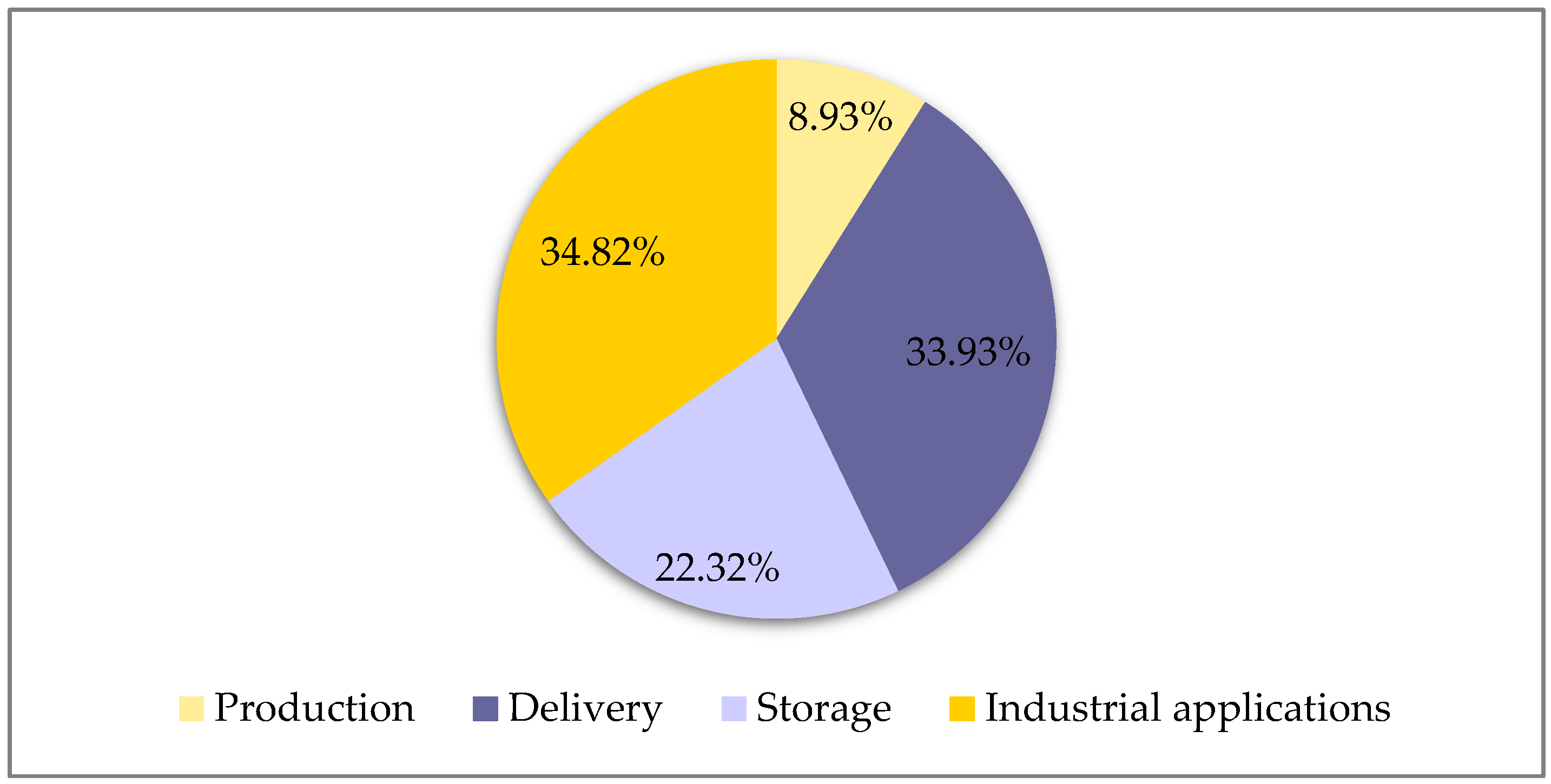
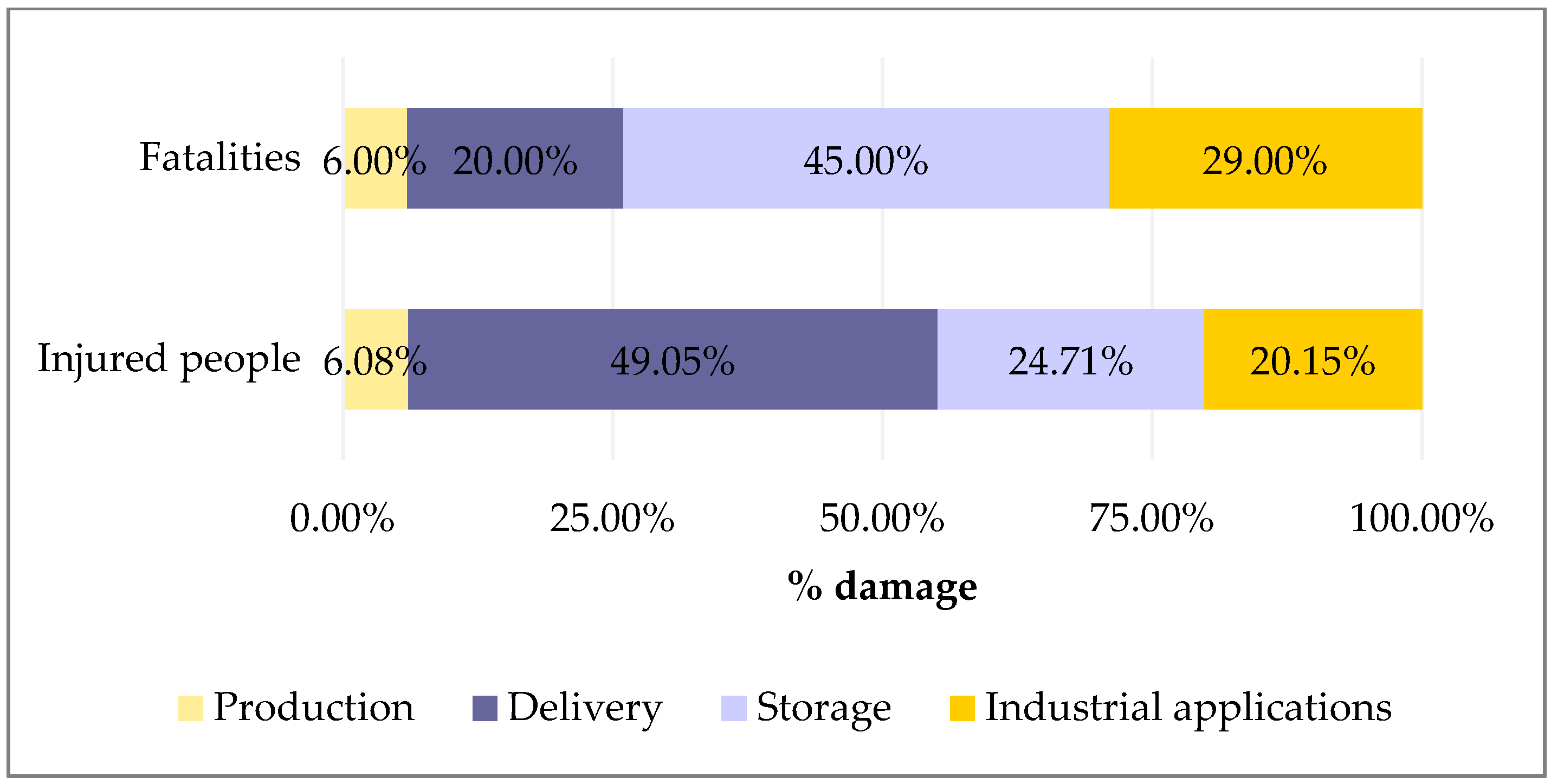
Specifically, hydrogen industrial uses and delivery correspond to the majority of incidents in terms of frequency, a closer examination shows that a higher number of events is not necessarily associated with more significant human damage. Fatality rate emerges as a crucial indicator of the potential severity of events within the hydrogen storage value chain. Simply put, any abnormal event in the storage process substantially increases the risk of fatalities with a 90% fatality rate (45 fatalities in 50 accidents). Paradoxically, the delivery process, despite having the highest absolute number of events together with industrial events, boasts the lowest fatality rate among the categories, standing at 26.32% (20 fatalities in 76 events).
Secondly, the study has enabled the characterization of types of abnormal events within each stage of the hydrogen value chain with a significant level of detail. This thorough analysis reveals relevant aspects for the safety of both the different activities/processes within the hydrogen value chain and refueling facilities.
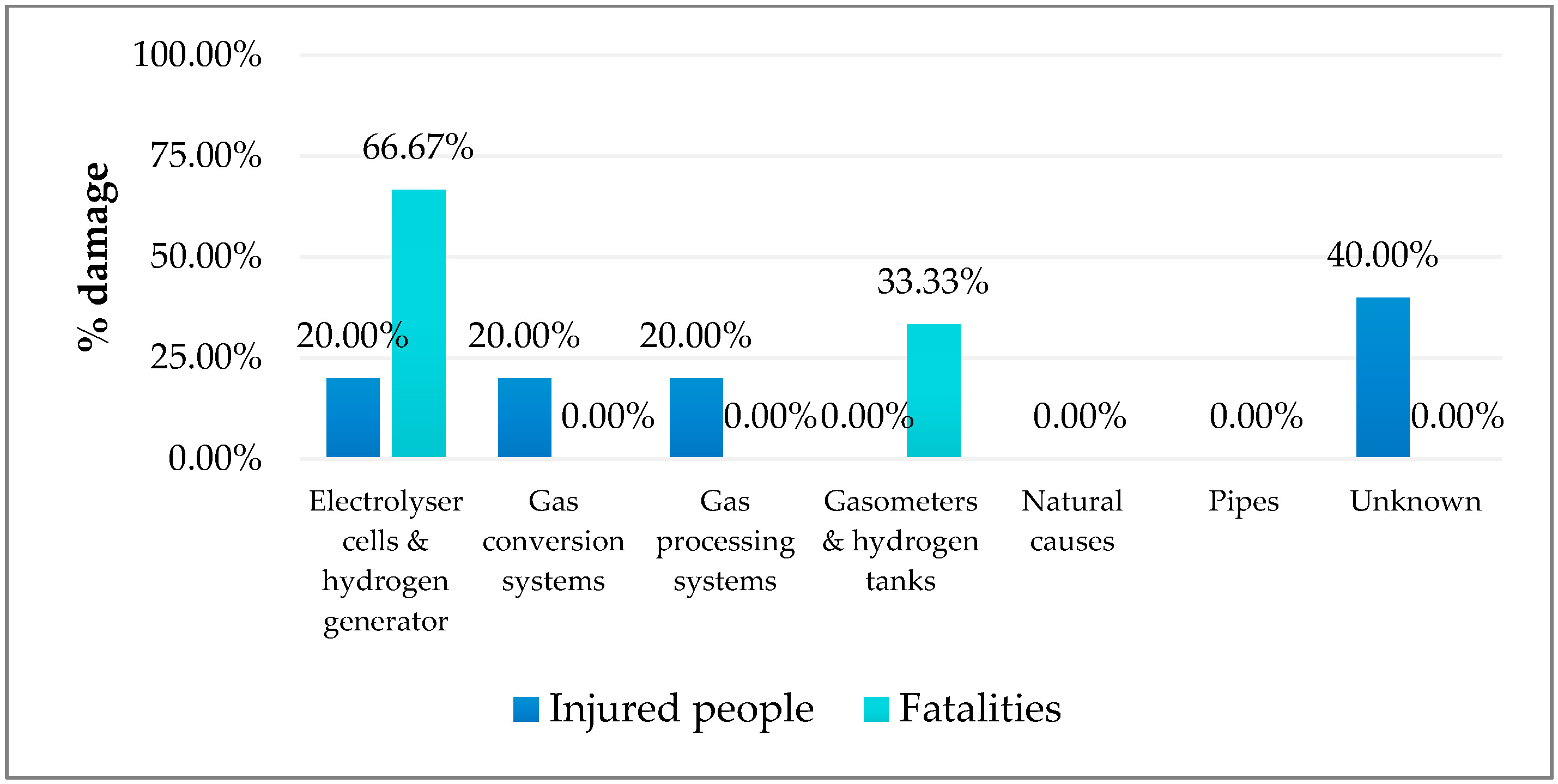
In the context of the hydrogen production, 50% of the events are associated with two types of components, electrolyzers and gas holders/tanks, which are the factors leading to 100% of the mortality. It could be inferred that the greatest danger during production is related to electrolyzers and their associated gas storage. However, it is crucial to note that in the case of electrolyzers, the last fatal event recorded in HIAD 2.0 was in 2006, and hydrogen production technology has also evolved significantly in recent decades [
21].
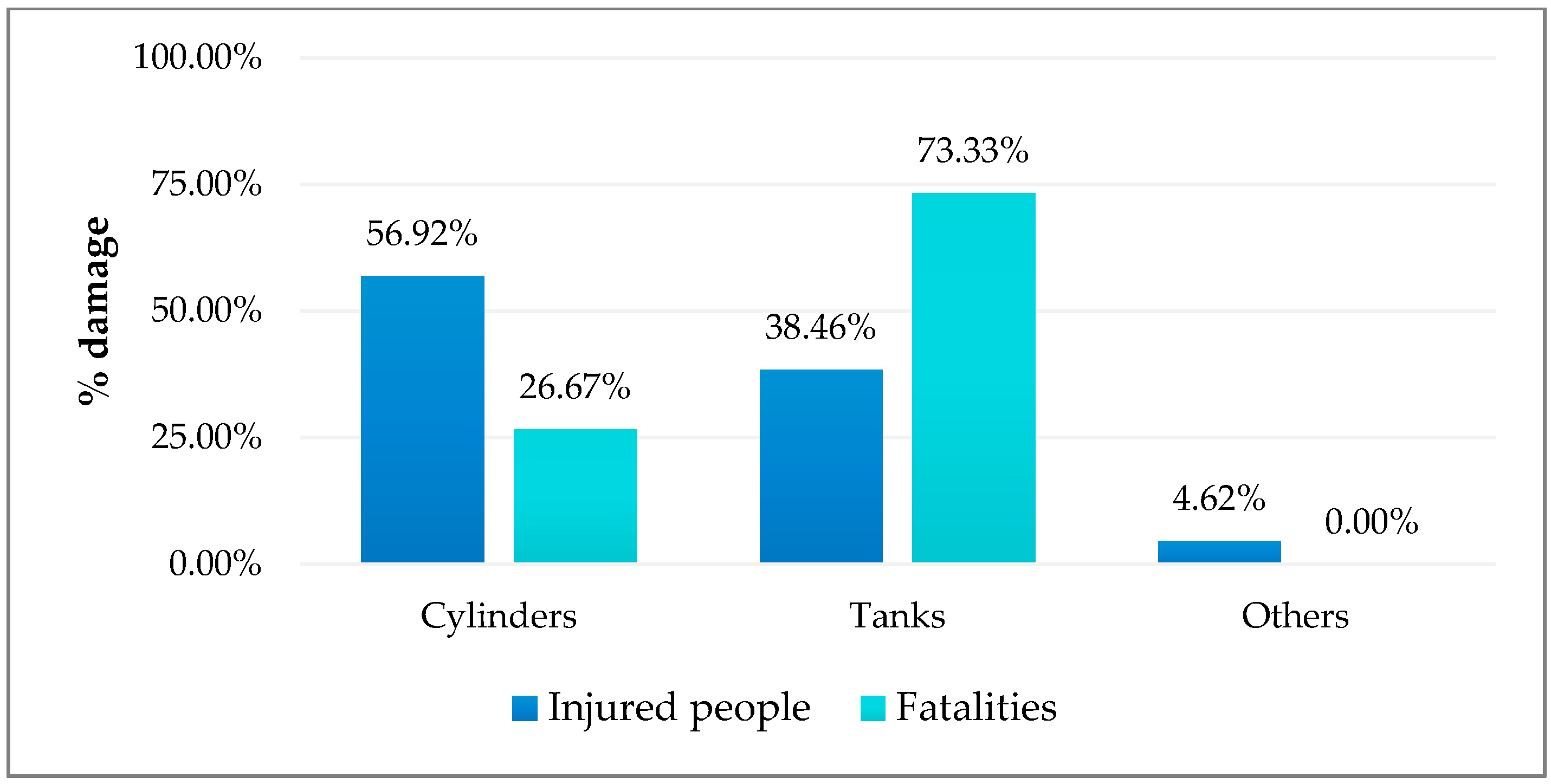
As regards hydrogen storage, which has the most severe consequences in terms of fatalities, a detailed analysis can pinpoint the activities that pose the greatest safety concerns. The initial conclusion is intuitive: the potential for serious consequences increases proportionally with the amount of hydrogen stored. Therefore, the fatality rate for incidents involving storage tanks is 4.68 times higher than the fatality rate for those involving issues with storage cylinders (despite a similar frequency of events recorded in the database). Additionally, the analysis provides a more nuanced understanding of critical activities/processes for these two storage modes.
For tank storage, two high-risk activities/processes are identified: works inside the tank and degassing. Conversely, for cylinder storage, critical activities/processes are associated with filling hydrogen containers and operation/works with hydrogen cylinders. It is also noteworthy that for both types of storage, human activities (operations conducted by people in the storage area) present a high-risk factor. It is also important to highlight the considerable number of storage events in the data (28%) with limited information, which impedes the identification of the processes/activities involved.
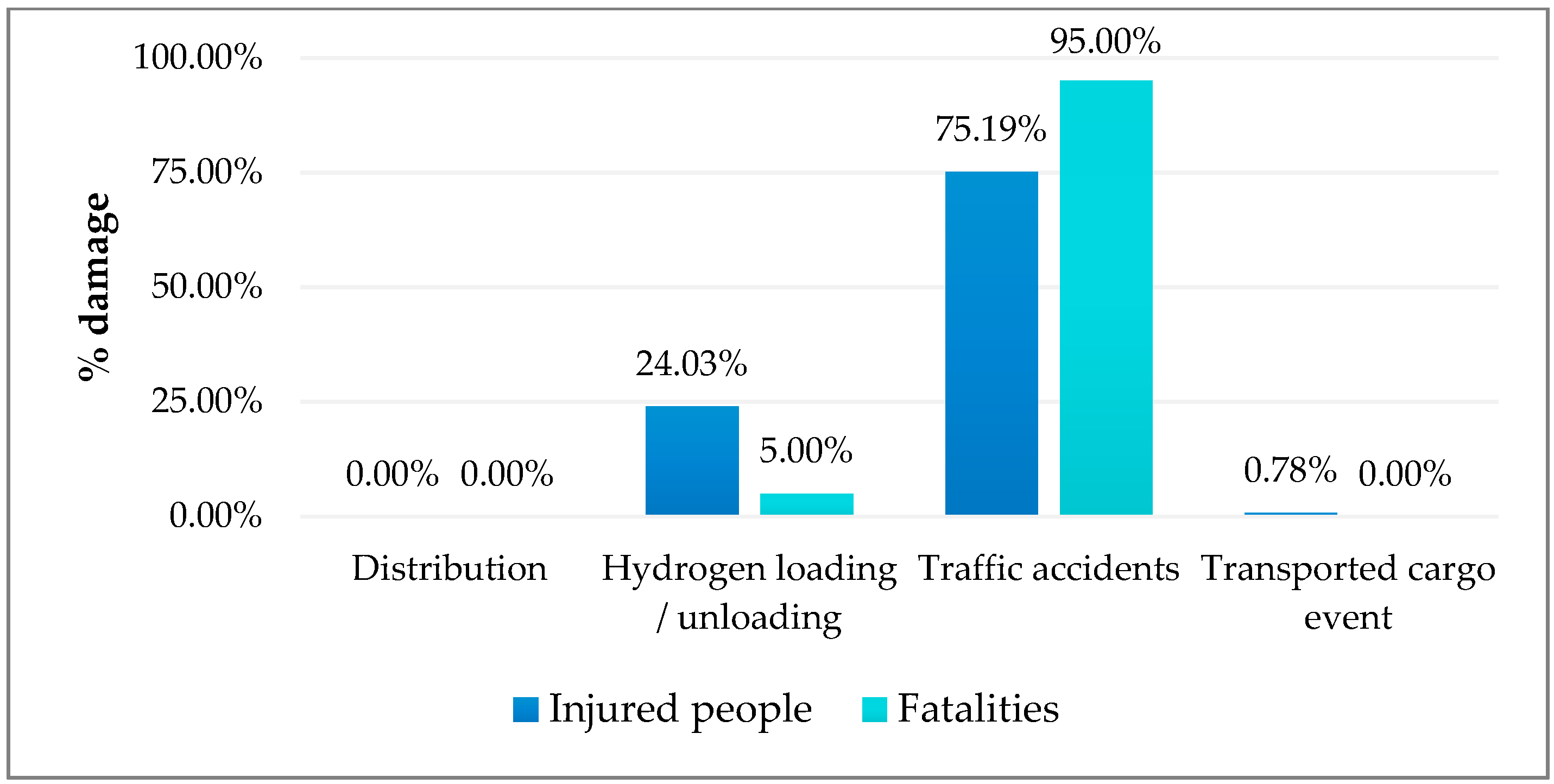
Concerning the delivery stage of the hydrogen value chain, events can be broadly categorized into two types: those related to distribution (large pipelines) and those related to transport (mostly road transport by trucks). Notably, the most prominent and significant risk associated with hydrogen delivery lies in the transportation phase, which is related to cargo incidents, hydrogen charge incidents, and traffic accidents. Even though they occur with nearly equal frequency, the fatality rate indicates that traffic accidents have the most significant safety risk (76% of all hydrogen delivery fatalities), especially in the case of collisions with other vehicles, which have been identified as the leading cause of fatalities in hydrogen delivery.
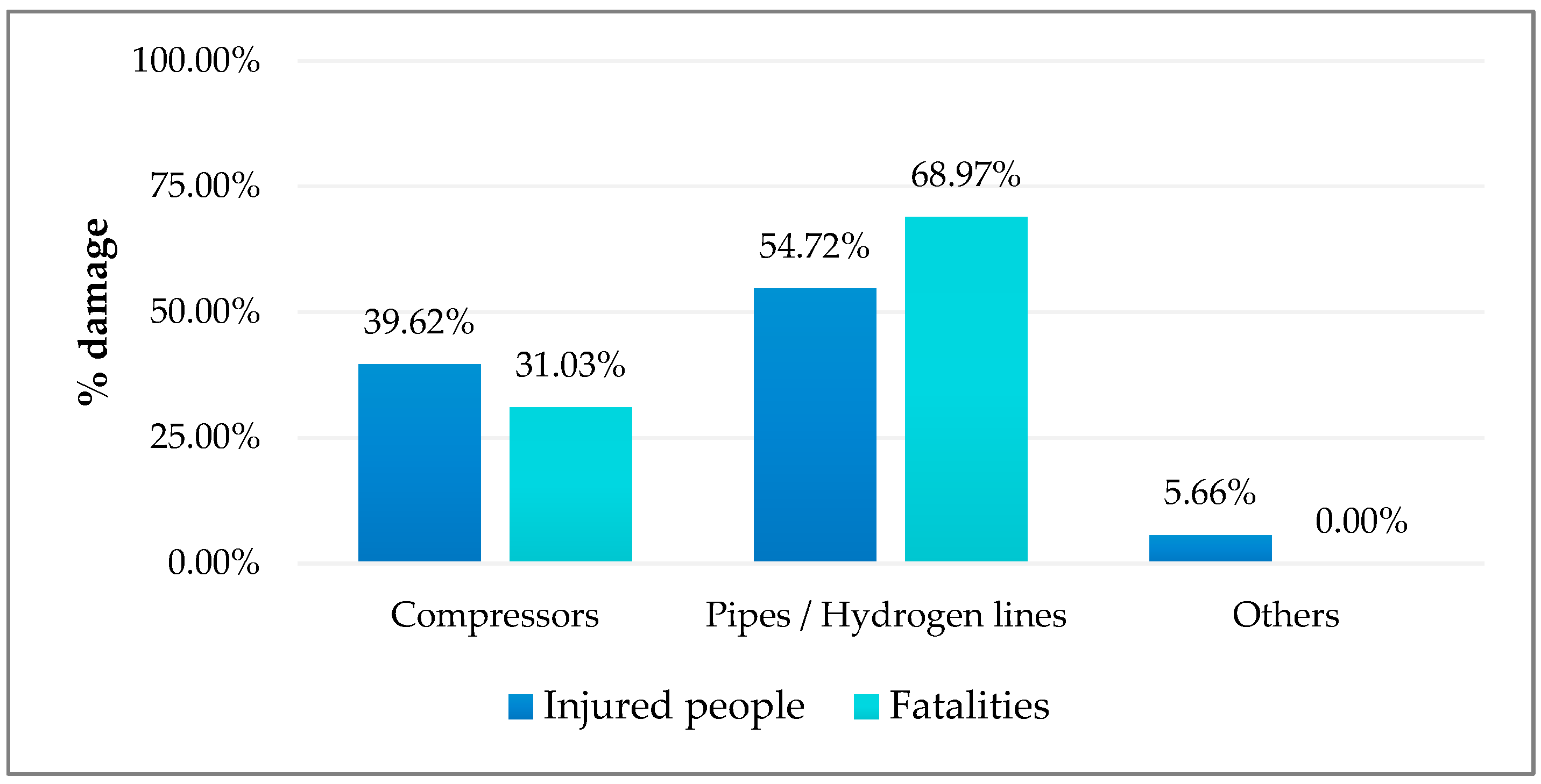
Finally, examining incidents related to hydrogen industrial uses, two primary event types can be extrapolated to hydrogen refueling stations. These are incidents involving compressors (with a fatality rate of 47.37%) and incidents in hydrogen pipes inside industrial installations (fatality rate of 36.36%). As to compressors, the critical and hazardous process is linked to the pipe compressor connection. This connection can fail (two events, two fatalities) or experience a suction pipe rupture (two events, three fatalities). Conversely, fatalities resulting from failures in hydrogen pipes and lines are primarily associated with leaks caused by human activities (seven events, seven fatalities) and welding failures (two events, seven fatalities).
Thirdly, this study provides insights highly relevant to the safety of hydrogen refueling stations. The knowledge provided by the dissection of the events carried out in this research makes it possible to establish a hierarchy of the potential risk entailed by the different processes and activities that take place in HRSs. This extrapolation of risks can be carried out both by the results of the macro-vision of the hydrogen value chain events and by the findings obtained in the microanalysis of specific HRS events (research in progress in another study) [
22].
The findings of the study bear noteworthy implications for the safety of hydrogen refueling stations. Specifically, those gleaned from the storage, delivery, and industrial utilization of hydrogen should be carefully accounted for, owing to its nearly seamless translation from procedural contexts to HRSs. The extrapolation of these findings must consider that hydrogen refueling stations can be either on-site or off-site, depending on whether they incorporate hydrogen production or not. Both primarily operate on processes encompassing hydrogen storage and delivery, which manifest as having the highest potential for fatal accidents. Consequently, enhanced safety protocols are crucial during these stages. For storage, activities within tanks and during offloading hydrogen for subsequent storage at refueling facilities should be prioritized, while in delivery-hase road transport, which emerges as a critical aspect, demands attention. Additionally, heightened vigilance is essential for tasks involving hydrogen compressors and piping. Such undertakings play a pivotal role in industrial hydrogen uses and are susceptible to generating leaks, thereby posing a significant risk.
On-site hydrogen refueling stations, while not the most common type, must also address the inherent challenges of hydrogen production. Stringent safety measures are paramount, especially when dealing with electrolyzers and gasometers/tanks, critical components for hydrogen production. Mishandling these components could result in explosion hazards caused by equipment malfunctions, overheating, and corrosion, amongst others. Hence, adherence to strict safety protocols is imperative in such scenarios.
It should also be underlined that the analysis of events underscores the substantial role of human actions in contributing to incidents and accidents. Specifically, in processes with direct applicability to hydrogen refueling stations, operator-induced failures can have severe repercussions, including equipment damage, fires, explosions, and even personal injuries.
In sum, the findings emphasize the importance of implementing rigorous safety measures, technological advancements, and improved incident reporting and data collection to mitigate risks and improve the safety of hydrogen-related activities. The main findings are shown in
Table 27.
Lastly, some relevant limitations of the study must be acknowledged. The quality and consistency of the information contained in the database (gathered by third parties) has conditioned the breadth of the analysis. As West et al. [
23] pointed out, the lack of consistent data reporting poses a challenge to exploit this database. Thus, some of the events do not have sufficient information to identify the critical activities/processes that contributed to the development of the incident. Also, the analysis is based on data collected up to 2022, which would need to be extended with the most recent incidents. To finish, as mentioned before, the analysis does yet not include knowledge from the events occurring in HRSs, which is part of another study.
Further research and collaborative efforts in the hydrogen industry are necessary to continually improve safety protocols and minimize the impact of incidents and accidents.
5. Conclusions
This review and analysis of the events recorded in the HIAD 2.0 has enabled the identification of risks and hazards associated with each stage of the hydrogen value chain (production, storage, distribution and industrial applications). These insights, related to frequency, severity, activities/processes and types of failures, provide valuable knowledge for enhancing the safety of HRSs.
One of the main findings of the study is related to the binomial frequency–severity, revealing that the event frequency does not necessarily translate into greater severity. In this sense, incidents and accidents occurring during storage operations, while constituting 22.32% of the total, bear an alarming 90% fatality rate. This high severity is linked to critical practices such as performing work activities inside the tanks and degassing processes.
The analysis also identifies critical equipment/systems in the different stages of the hydrogen value chain. This is the case of electrolyzers and storage devices in events during hydrogen production or compressors and hydrogen pipes inside the installations where hydrogen is being used. Additionally, loading and unloading hydrogen for transfer or receipt and transporting hydrogen by road are crucial processes/activities during hydrogen delivery.
These findings can be instrumental in improving the safety of hydrogen refueling stations. HRSs also face the challenges of storage, delivery, use, and production (for on-site installations). This knowledge can help stakeholders in the hydrogen industry, including operators of refueling stations, regulatory bodies, and technology developers, take specific actions that foster safer environments for both workers and the public. This proactive approach to safety is essential for the successful growth of the hydrogen economy and the widespread adoption of hydrogen as an energy carrier.