
Article

Open-Set Recognition of Wood Species Based on Deep Learning Feature Extraction Using Leaves
1
College of Mechanical and Electrical Engineering, Northeast Forestry University, Harbin 150040, China
2
Dean’s Office, The Open University of Harbin, Harbin 150001, China
3
School of Computer and Information Engineering, Harbin University of Commerce, Harbin 150028, China
4
Department of Diagnostic Radiology and Nuclear Medicine, University of Maryland School of Medicine, Baltimore, MD 21201, USA
*
Author to whom correspondence should be addressed.
J. Imaging 2023, 9(8), 154; https://doi.org/10.3390/jimaging9080154

Submission received: 25 May 2023 / Revised: 18 July 2023 / Accepted: 20 July 2023 / Published: 30 July 2023
(This article belongs to the Topic Applications in Image Analysis and Pattern Recognition)

Abstract

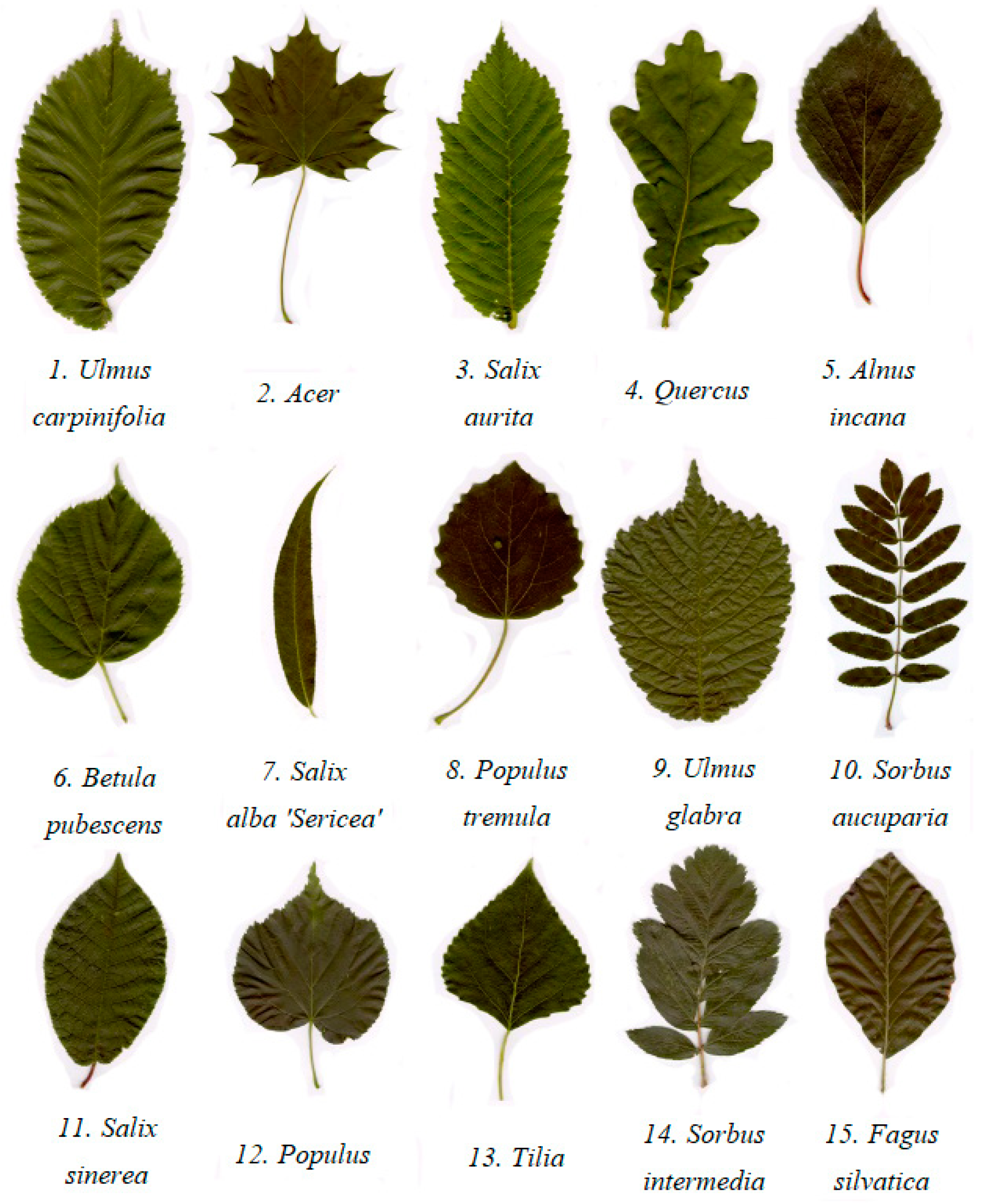
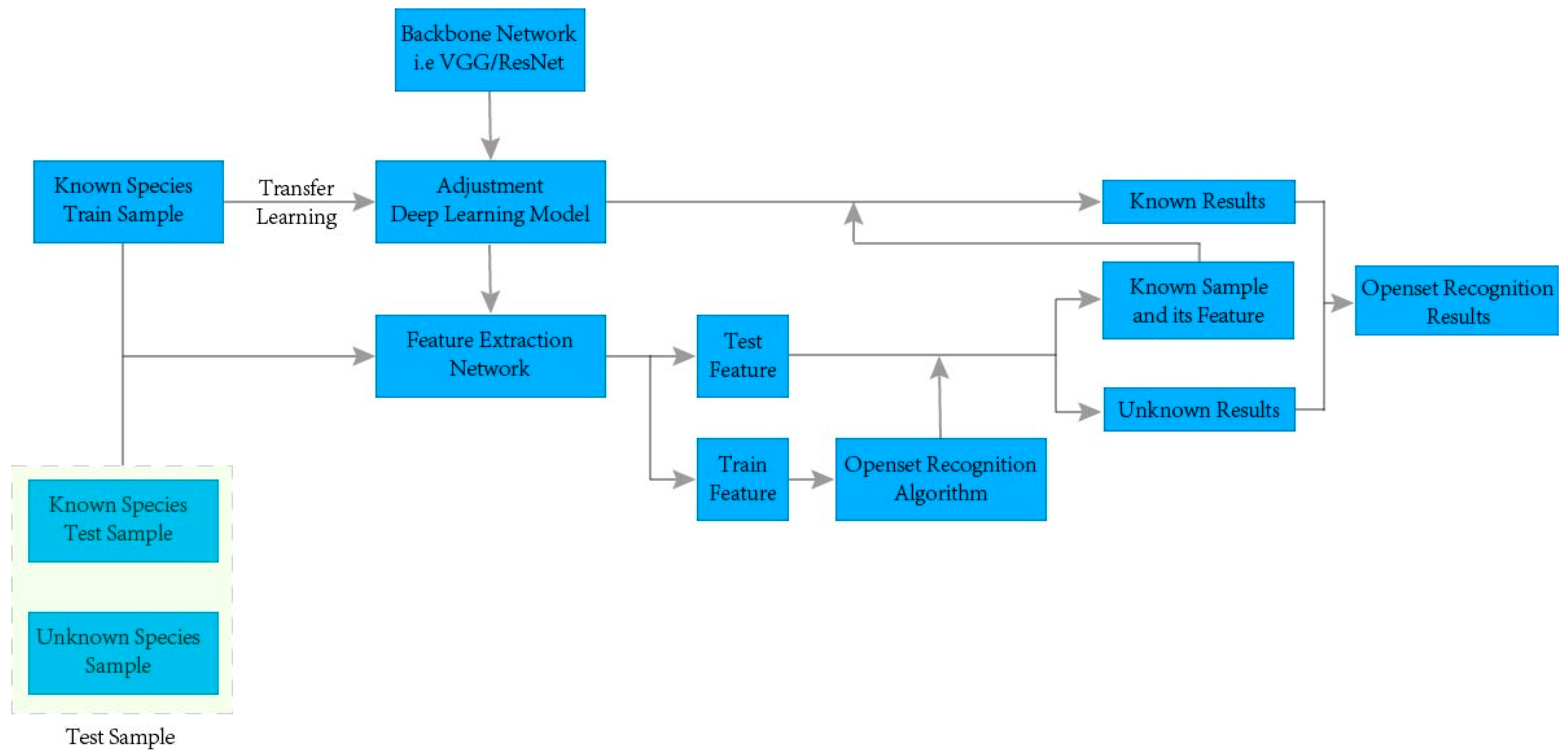
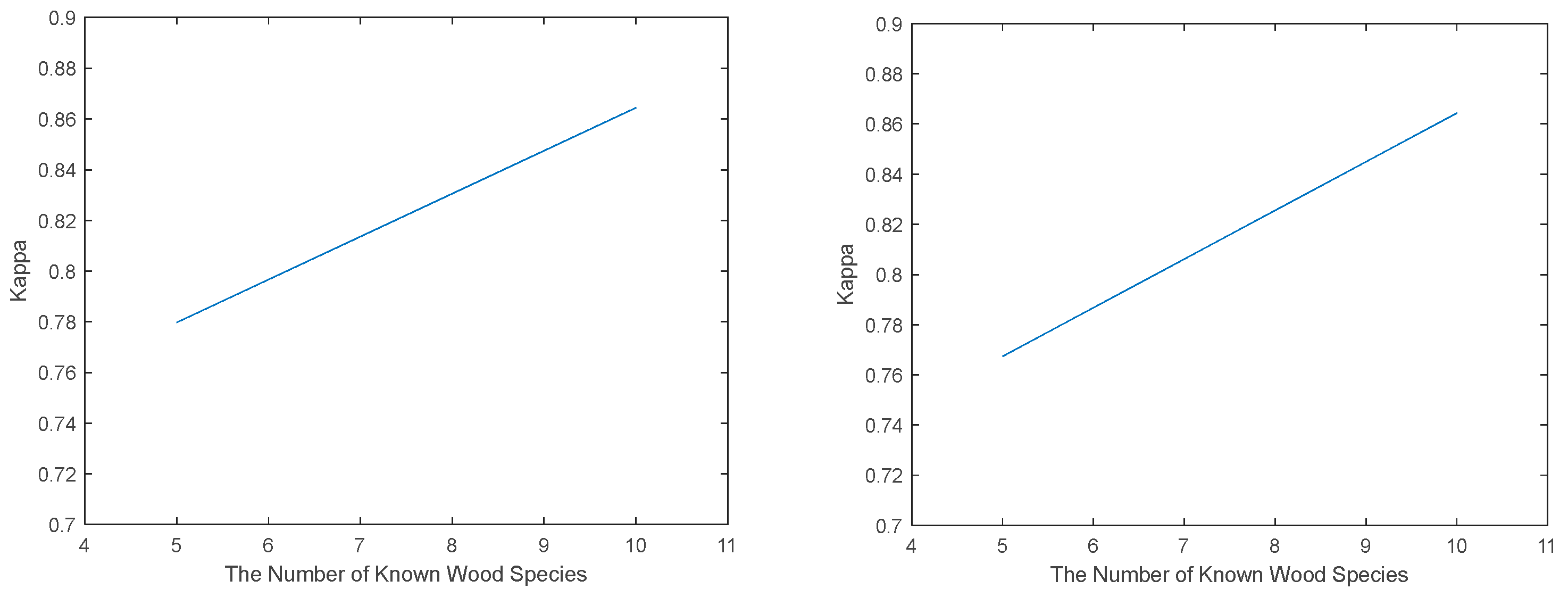
An open-set recognition scheme for tree leaves based on deep learning feature extraction is presented in this study. Deep learning algorithms are used to extract leaf features for different wood species, and the leaf set of a wood species is divided into two datasets: the leaf set of a known wood species and the leaf set of an unknown species. The deep learning network (CNN) is trained on the leaves of selected known wood species, and the features of the remaining known wood species and all unknown wood species are extracted using the trained CNN. Then, the single-class classification is performed using the weighted SVDD algorithm to recognize the leaves of known and unknown wood species. The features of leaves recognized as known wood species are fed back to the trained CNN to recognize the leaves of known wood species. The recognition results of a single-class classifier for known and unknown wood species are combined with the recognition results of a multi-class CNN to finally complete the open recognition of wood species. We tested the proposed method on the publicly available Swedish Leaf Dataset, which includes 15 wood species (5 species used as known and 10 species used as unknown). The test results showed that, with F1 scores of 0.7797 and 0.8644, mixed recognition rates of 95.15% and 93.14%, and Kappa coefficients of 0.7674 and 0.8644 under two different data distributions, the proposed method outperformed the state-of-the-art open-set recognition algorithms in all three aspects. And, the more wood species that are known, the better the recognition. This approach can extract effective features from tree leaf images for open-set recognition and achieve wood species recognition without compromising tree material.
Keywords: leaf open-set recognition; deep learning feature extraction; weighted SVDD leaf open-set recognition; deep learning feature extraction; weighted SVDD