1. Introduction
Rare earth elements (REE) are considered to be highly critical metals due to their supply and demand imbalance [
1]. Despite their high geological abundance when compared with the other critical metals, mineable REE concentrations are less common [
2]. Moreover, there is a highly unbalanced REE supply chain, where major deposits of rare earth elements are located in China, Brazil, and Vietnam, corresponding to 72.5% of the world’s rare-earths reserves [
3]. Beyond supply imbalance, severe environmental problems in local mining sites have been reported due to the enormous applied pressures due to the low recovery from primary resources [
4,
5,
6]. Despite supply chain and environmental issues, the global demand for REE has increased enormously, due to their wide applications such as: rechargeable batteries, autocatalytic converters, super magnets, mobile phones, LED lighting, superconductors, glass additives, fluorescent materials, phosphate binding agents, solar panels, magnetic resonance imaging (MRI), etc. [
7]. In recent years, the European Union, as well as other countries, has started initiatives to establish and ensure resilient REE supply chains [
8,
9,
10]. In this frame, there is tremendous effort for the recovery of RREE from secondary resources. Waste of electric and electronic equipment (WEEE) and permanent magnets are the most examined secondary REE resources due to their enormous end-of-life scrap rate [
11]. In numerous studies, hydrometallurgical treatment of secondary resources was examined as a low temperature, less energy intensive recycling method. Chemical leaching followed by solvent extraction processes for the clean separation of REE are reported as promising routes for WEEE, magnets, batteries, and other industrial residues [
4,
5,
6,
7]. Despite the increasing amount of waste and the extensive research conducted, there are still many challenges hindering recovery of REE from WEEE such as: their trace amounts in small electronic components, uniform dispersion in materials like touch screens, and the difficulty of separating and purifying individual REE’s—considering the proper handling of scraps that have some toxic elements to inhibit health and environmental issues [
12]. These challenges emphasize the need for research and development into alternative REE resources with effective and environmentally friendly recovery routes.
In this conceptual work, we explore the potential of RE-silicate environmental barrier coatings (EBCs) as potential secondary REE resources. RE-silicate EBCs have been developed to improve the life time of hot-gas exposed SiC/SiC ceramic matrix composites (CMCs) in gas turbine engines with high efficiencies. Ytterbium (Yb)-based RE-silicate EBCs are considered the most promising protective coatings for SiC/SiC CMC enabling them to withstand temperatures above 1480 °C in oxidizing, water-rich combustion atmospheres [
13], where the reaction of SiO
2 constituents with H
2O leads to the formation of volatile SiOH4 species and subsequent recession Yb-monosilicate (Yb
2SiO
5) as well as Yb-disilicate(YbDS) (Yb
2Si
2O
7) which are employed as EBCs for SiC/SiC CMC; the former due to its very high stability against SiOH
4 volatilization, the latter due to its good thermal/mechanical compatibility with SiC/SiC CMC. Consequently, bi-layer EBC-systems for SiC/SiC CMC, comprising a Yb
2Si
2O
7 base coat and a Yb
2SiO
5 top coat, are being developed. Although there is limited open information on real designs of such EBC systems, the use of SiC/SiC shrouds in General Electrics’ Leap-X turbine engines since 2018, and the envisaged market entry of GE’s 9X engines with additional SiC/SiC components in 2027, makes it plausible that a substantial and growing amount of RE-silicate-based EBCs will be in service. It is therefore anticipated that, in the near future, many aircraft engines will undergo maintenance, repair, overhaul or go out of service, where end-of-life (EOL) EBCs are produced which can be considered as a secondary resource for Yb and other REE. Aircraft engine operation also includes high-temperature interaction of EBCs with ingested, airborne mineral dusts, originating from multiple sources like volcanic ash, desert sand, concrete dust, etc. Many studies report on the thermal-chemical reaction of RE-silicates with such Fe-Ca-Al-Mg-Si-Oxides, commonly referred to as CMAS corrosion where RE-silicates decompose and form new compounds such as RE-garnets or RE-oxyapatites [
14,
15,
16]. Therefore, RE of EOL-EBCs are evidently not only bound in coating materials, but can also be enriched in CMAS corrosion products.
In this conceptual study, we explore the potential use of “end-of-life” (EOL) Yb-silicate-based EBCs as a novel secondary Yb2O3 resource. For this purpose, three fictional ytterbium (Yb)-based EBCs were assessed; a YbMS- YbDS mixture representative of a double layer EBC (see above), and pure YbMS, and YbDS, respectively. A real EOL scenario was mimicked by exposing these three distinct sintered EBCs to a model Fe,Ti-CMAS. These fictional EOL coatings were exposed to sulfuric acid leaching with predetermined acid molarity, solid to liquid ratio, temperature, and duration. Promising preliminary Yb leaching efficiencies were reported and further improvement potential was discussed by modifying leaching process parameters. Moreover, starting materials and leach residues were investigated in terms of their microstructure and phase components to understand the effect and mechanism of leaching process. The distinct selectivity of sulfuric acid against YbMS and YbDS was reported, emphasizing possible strategies for the repair or overhaul of multilayer EBCs.
2. Results
Initially, lab-duplicated EOL coatings comprising a Yb
2SiO
5–Yb
2Si
2O
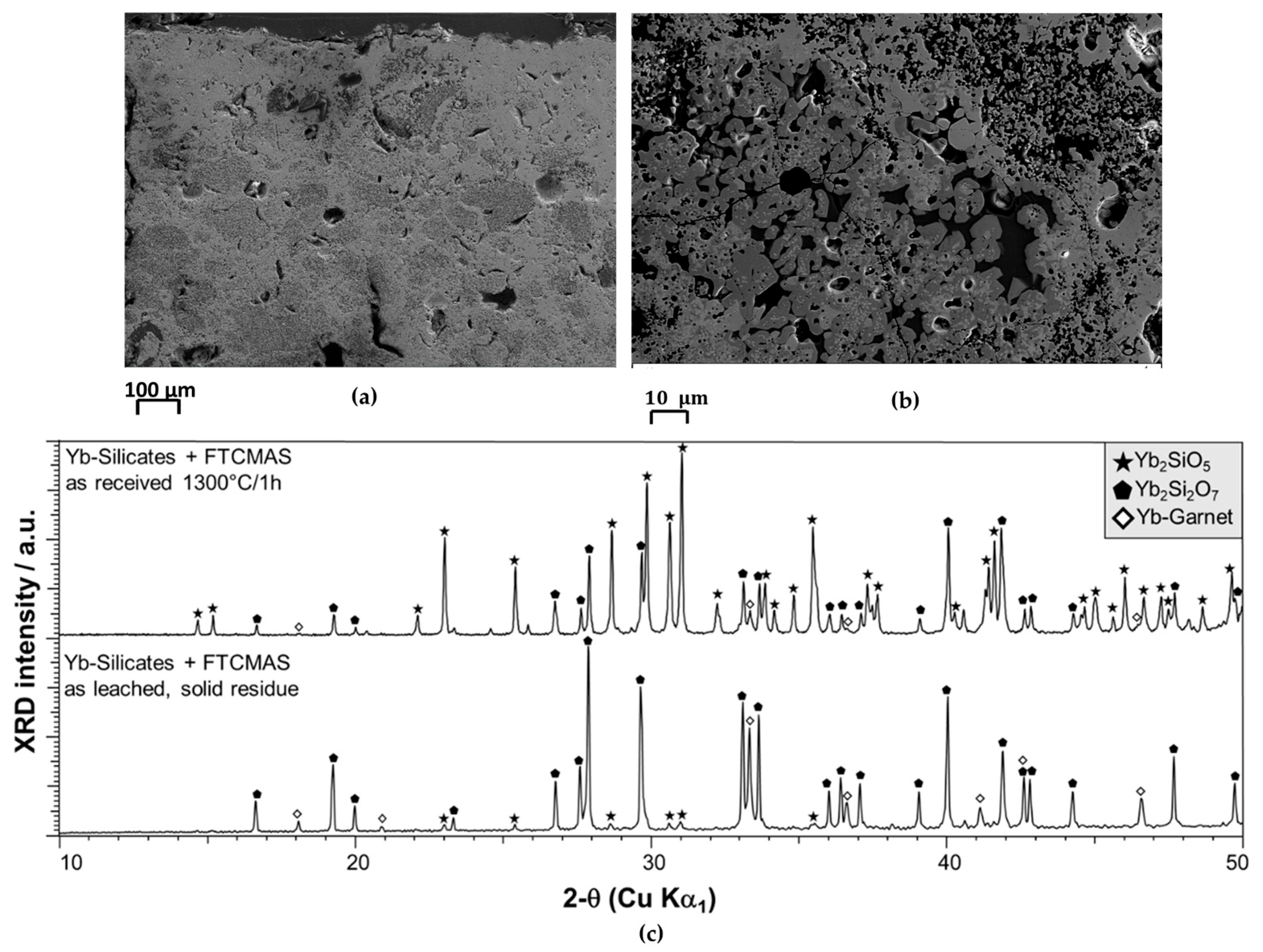
7 mixture was exposed to 2 M sulfuric acid leaching at 70 °C for 1 h. Initial material including CMAS corroded and leaching residue were analyzed by XRD and SEM/EDS methods to reveal the effect of leaching, as given in
Figure 1.
SEM microstructures reveal the distinct change in the microstructure, where leaching resulted in a significantly cavitated and porous structure (
Figure 1b) due to the leached-out constituents after sulfuric acid treatment. In parallel to SEM findings, XRD diffractograms plotted in
Figure 1c reveals the drastic change in the phase components of EBC-CMAS after undergoing sulfuric acid leaching. The initial fictional EOL mixed coating consists of Yb
2SiO
5 and Yb
2Si
2O
7, as expected. In addition to those dominant phases, a CMAS reaction product, an Yb-garnet, was detected. After leaching, the remaining solid residue was enriched in terms of Yb
2Si
2O
7 and Yb-garnet, where a significant amount of the initial major phase Yb
2SiO
5 disappeared.
It is also possible to observe two distinct morphologies in solid residue given in
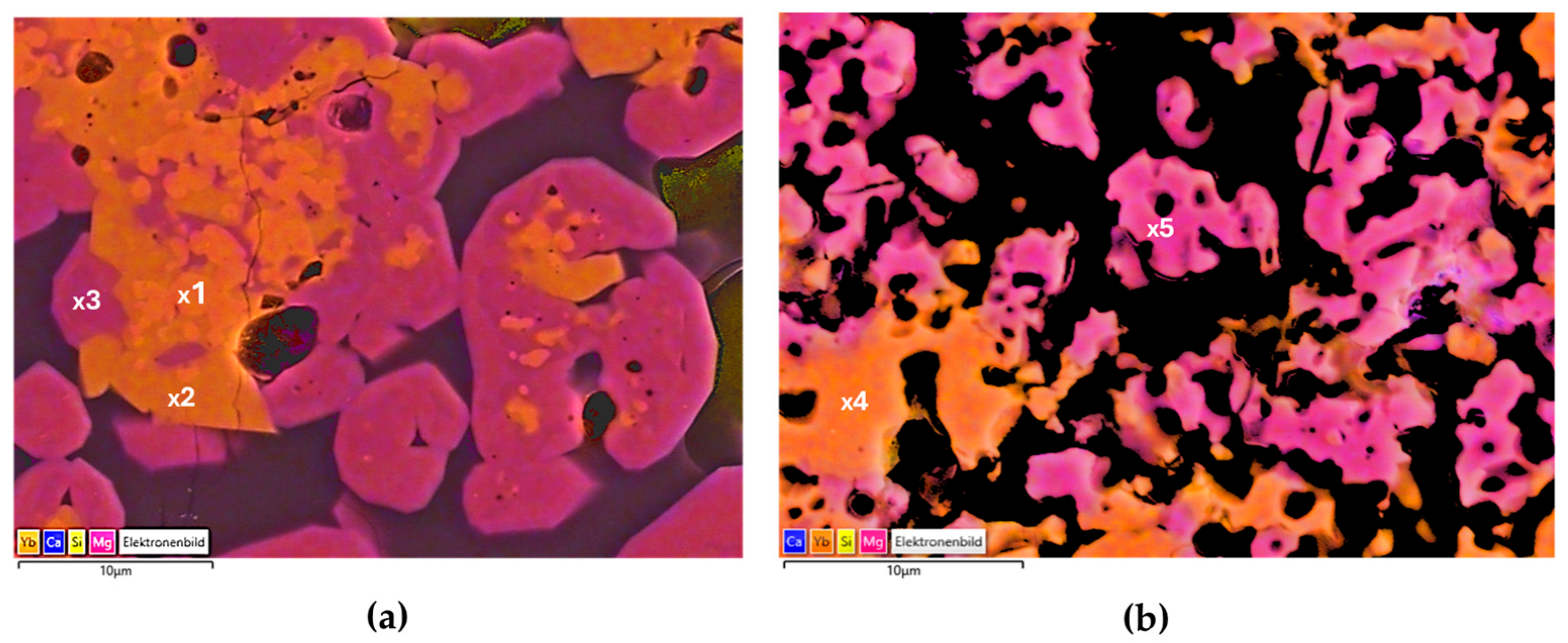
Figure 1b. While the former exhibits darker gray, smaller irregular shaped particles, the latter comprises bigger granulates encapsulating brighter smaller particles inside. In order to reveal the details of solid residue and understand the leaching mechanism better, SEM/EDS mapping was performed, as shown in
Figure 2.
Figure 2 represents the EDS mappings of two aforementioned distinct regions of solid leach residue; point EDS analysis in
Table 1 reveals the stoichiometry of distinct phases labeled in
Figure 2. In both regions, a dominant remaining phase, which is labeled in a pink color (#3, #5), is corresponding to Yb-garnet. Beside Yb-garnet, light orange-colored grains are abundant in solid residue, which correspond to Yb
2Si
2O
7 as revealed by point EDS analyses (#2, #4). In parallel with the XRD findings, EDS mapping of the solid residue point out that Yb-garnet and Yb
2Si
2O
7 phases remain undissolved after sulfuric acid leaching. Moreover, small amounts of Yb
2SiO
5 detected in XRD analysis were also displayed as dark orange-colored grains Yb
2SiO
5 (#1). Mappings uncovered that remaining Yb
2SiO
5 grains are encapsulated in Yb-garnet and Yb
2Si
2O
7 with no free and accessible surfaces, which prevents the access of leaching medium. In the light of these initial XRD and SEM/EDS findings, it is plausible that sulfuric acid leaching is selective and efficient for Yb
2SiO
5.
In order to corroborate these preliminary findings, two additional experiments with lab duplicated EOL coatings constating of monophase Yb
2SiO
5 and Yb
2Si
2O
7 were performed. As-prepared samples exhibited almost monophase composition, minor amounts of the concurrent Yb-silicates could be detected by XRD, respectively. Both simulated EOL materials were exposed to standard H
2SO
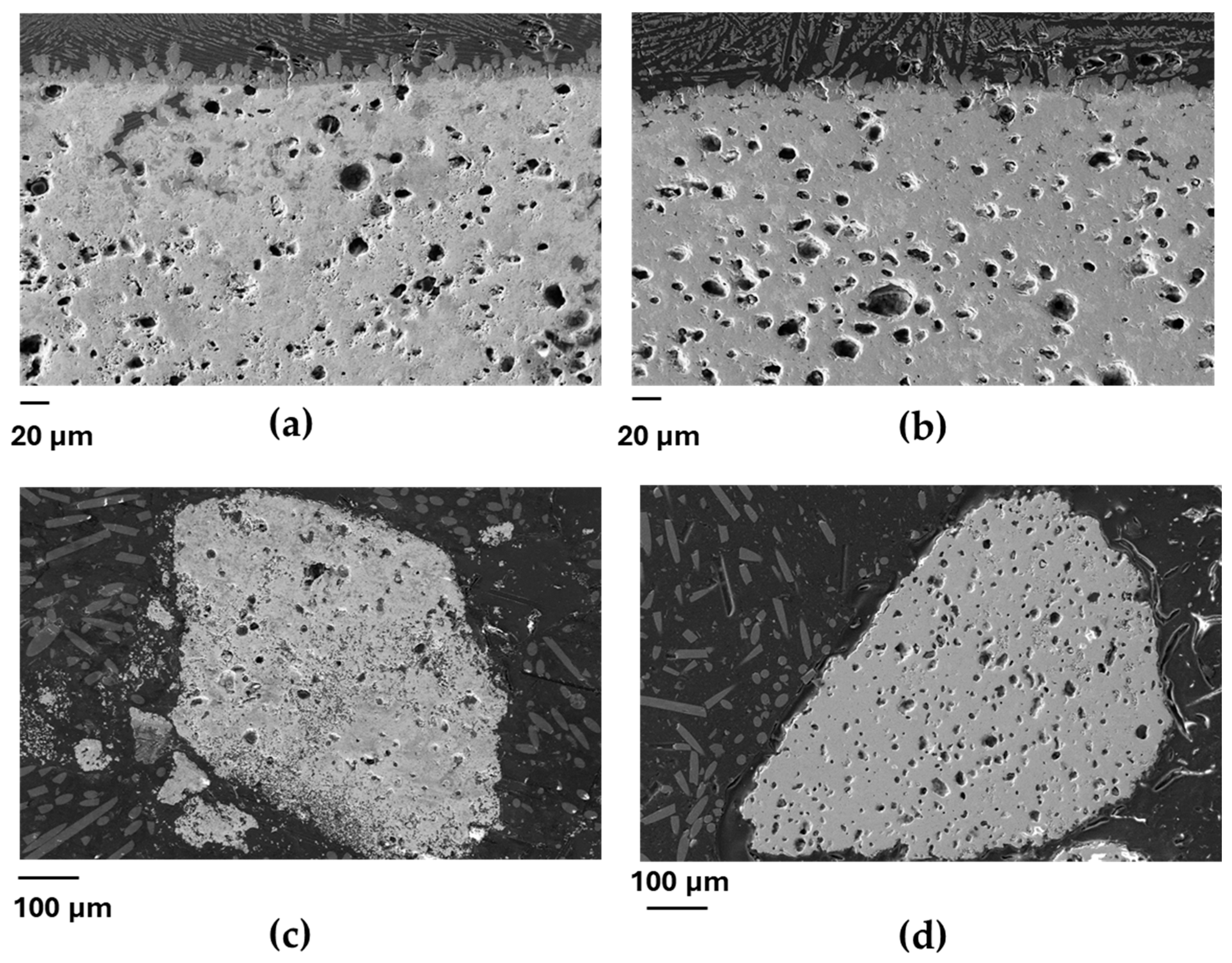
4 leaching as described before. SEM microstructures given in
Figure 3 show the appearance of two pure EOL coatings and solid residues after sulfuric acid leaching.
SEM microstructures of lab-duplicated EOL coatings in
Figure 3a,b provide an overview of CMAS corroded Yb
2SiO
5 and Yb
2Si
2O
7, respectively. The distinct appearance of solid residues of both coatings in
Figure 3c,d, supports the concept of selectivity of sulfuric acid leaching for Yb
2SiO
5. Solid residue of Yb
2SiO
5 exhibits a heavily attacked and structurally degraded morphology, due to high leaching efficiencies. On the other hand, the dense and unaffected image of Yb
2Si
2O
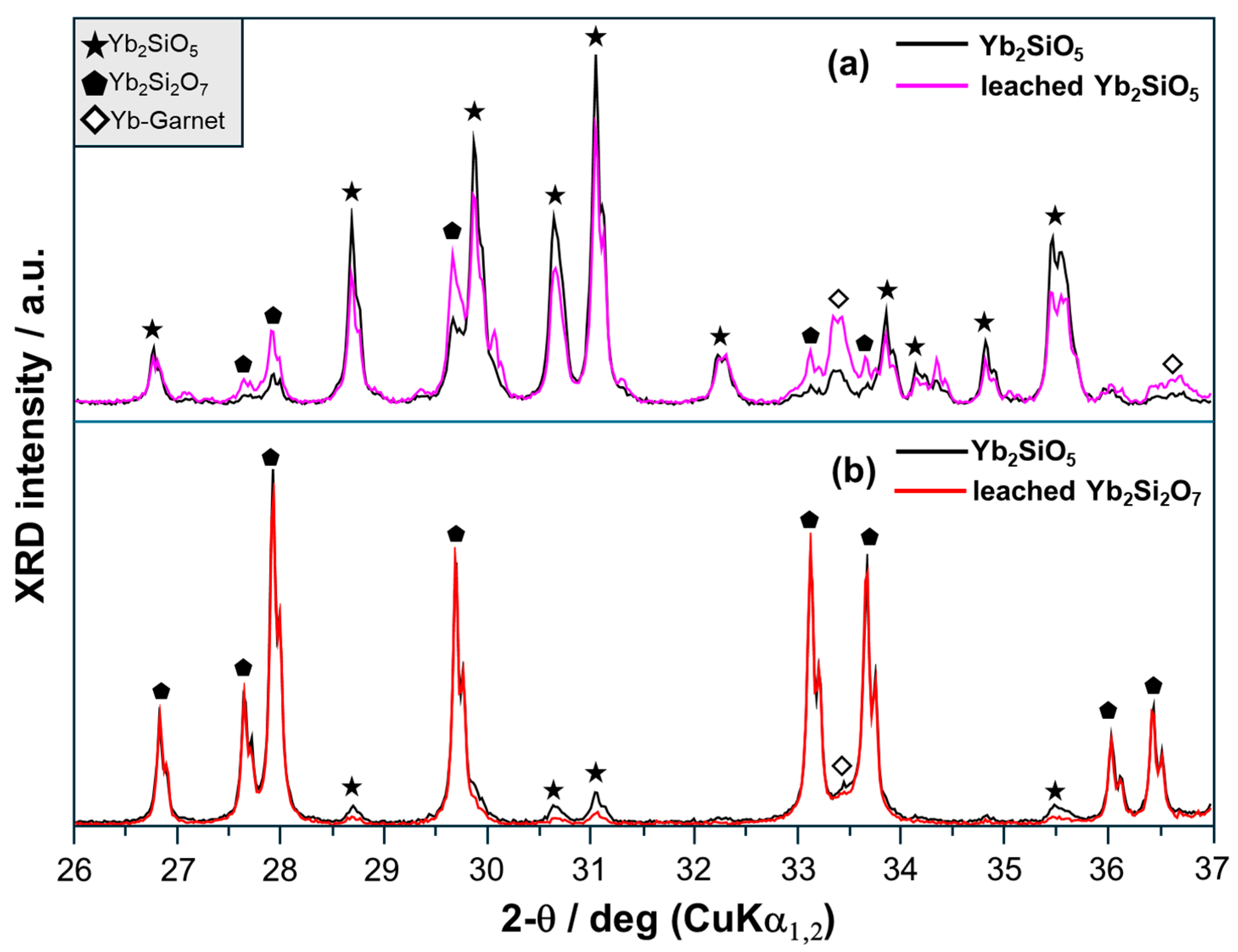
7 residue proves a less efficient leaching process. A deeper insight is provided by detailed XRD profiles of both materials as plotted in
Figure 4. Evidently, the peak intensity ratio between Yb
2SiO
5 (star tickmarks) and Yb
2Si
2O
7 (pentagon tickmarks) in the Yb
2SiO
5 sample (a, black curve) has shifted significantly towards Yb
2Si
2O
7 in the leached Yb
2SiO
5 sample (a, magenta curve): peak intensities of Yb
2SiO
5 significantly decrease after leaching while Yb
2Si
2O
7 is relatively increasing; a similar trend is observed for Yb-garnet (diamond tickmarks). In contrast, the leached Yb
2Si
2O
7 sample (b, magenta line) does not show significantly changing Yb
2Si
2O
7 peak intensities with respect to unleached Yb
2Si
2O
7; (b, black line and pentagon tickmarks). However, even the minor, co-existing Yb
2SiO
5 phase shows a similar trend; i.e., decreasing intensities after leaching (b, star tickmarks). Thus, XRD analyses of unleached and leached Yb-silicates confirm the high leaching selectivity of Yb
2SiO
5 in comparison with Yb
2Si
2O
7 and Yb-garnets.
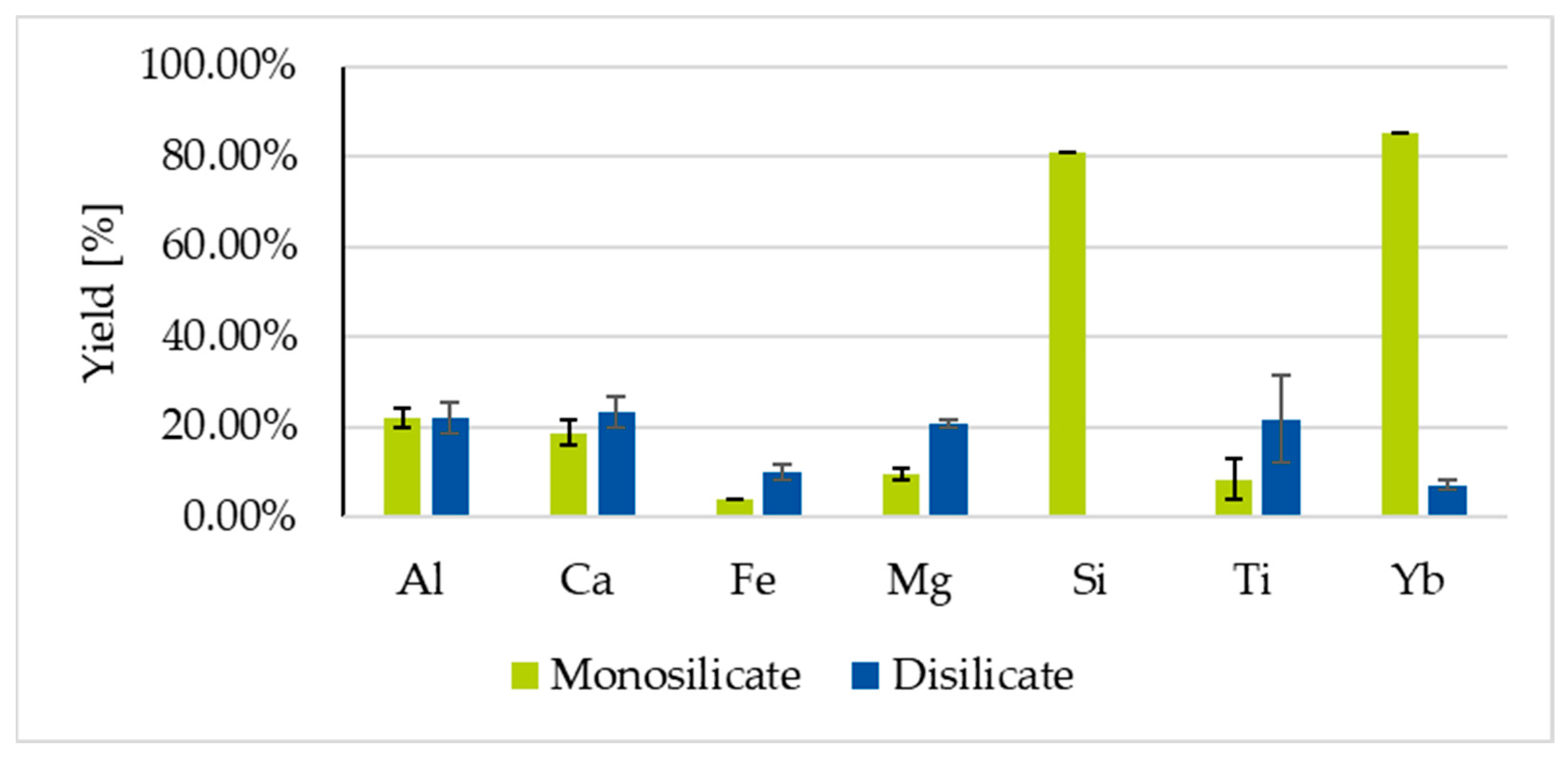
Metal extraction efficiencies are calculated on the basis of ICP-OES analyses of the leachate liquors, respectively.
Figure 5 reveals the distinct chemical stability of Yb
2SiO
5 and Yb
2Si
2O
7-based EOL coatings during sulfuric acid leaching. Despite remarkably high dissolution rates of Yb and Si from Yb
2SiO
5, it can be assumed that the amounts Yb and Si leached out from Yb
2Si
2O
7 are negligible. The extraction efficiencies of CMAS components are similar for two coatings. In the case of Mg and Ti there is a slight difference, which may be due to the distinct CMAS corrosion garnet phases.
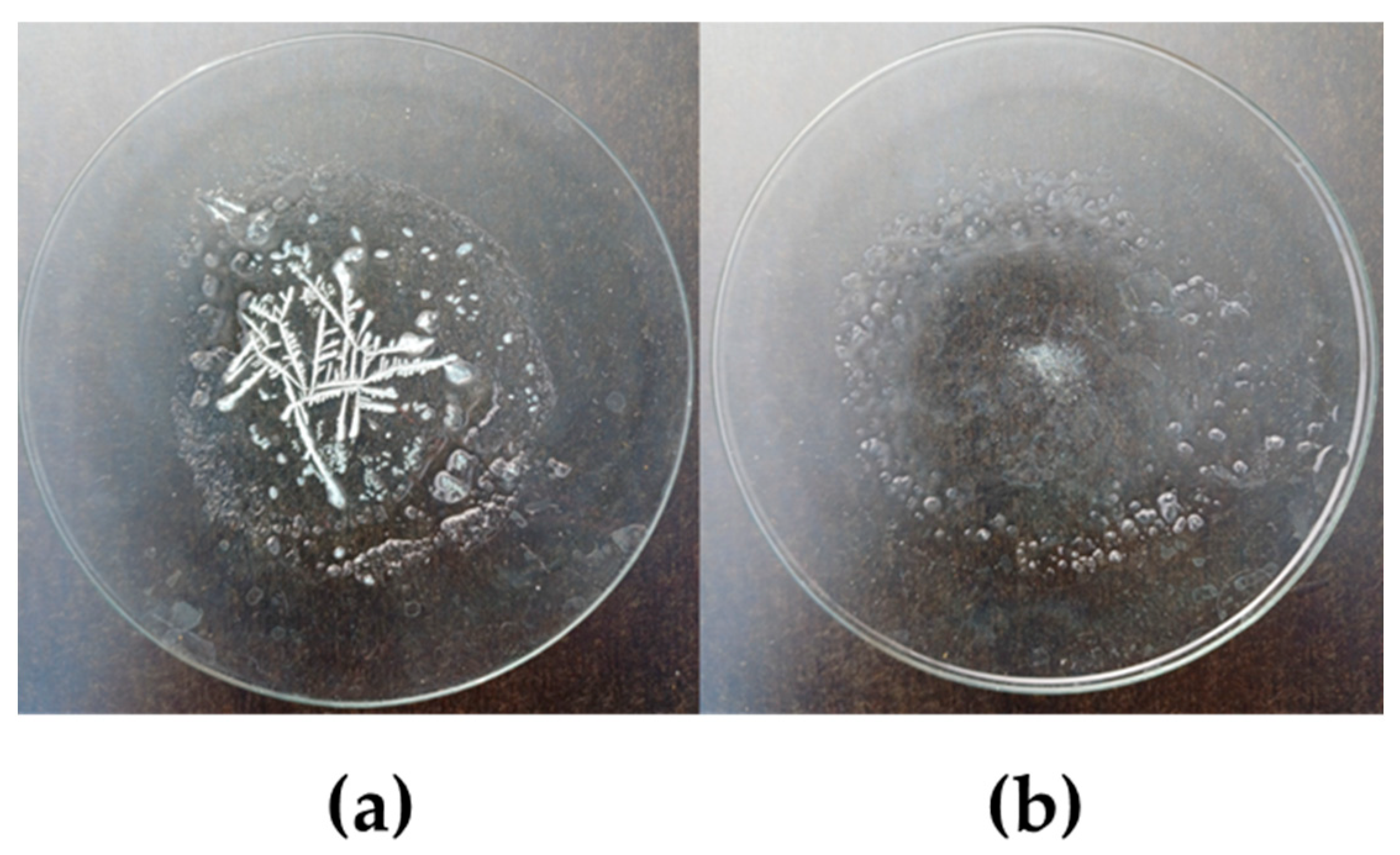
Pregnant leach liquors of Yb
2SiO
5 and Yb
2Si
2O
7 were stored at 100 °C for 24 h in a watch glass, as represented in
Figure 6. Both liquors still showed no complete drying and some gelatinous features. However, the Yb
2SiO
5 sample showed significant precipitation of bright, dendritic crystals.
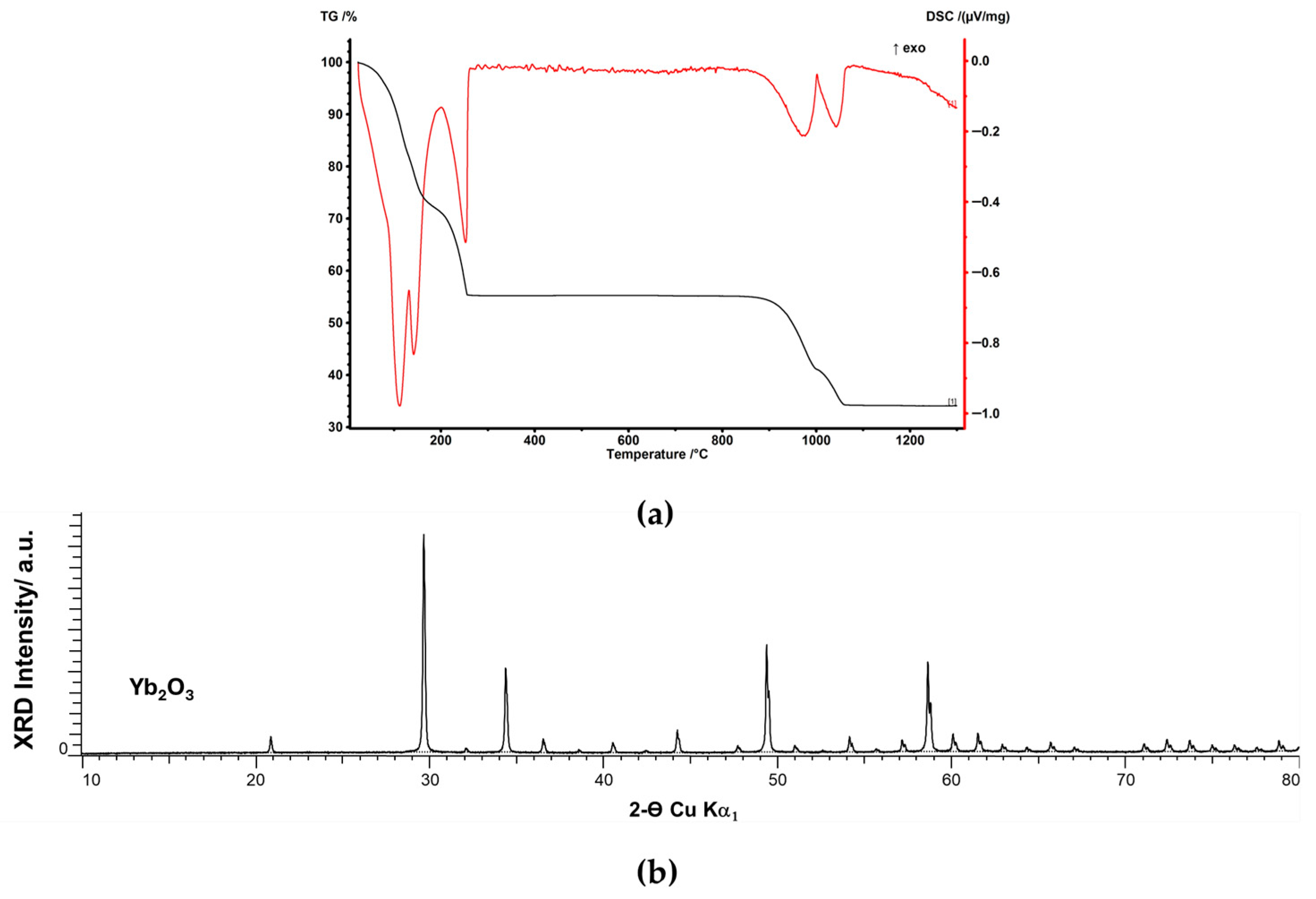
The precipitates from the leach liquor of Yb
2SiO
5 were extracted and analyzed in a simultaneous thermal analysis to reveal its nature and reaction products, as given in
Figure 7.
Thermal analysis indicates that upon heating with 5/min rate in air, this leachate undergoes several endothermic reactions, resulting in almost 50% weight loss. As mentioned previously, Yb should be dissolved in sulfuric acid and forms Yb sulfates. DSC and TGA signals point out that product undergoes several endothermic reactions, matching very well with this is ytterbium (III) sulfate octahydrate Yb
2(SO
4)
3·8H
2O as previously reported [
17]. The weight loss that readily starts upon heating at lower temperatures is due to the dehydration of crystal octahydrate. Reactions taking place at higher temperatures (~800 °C) may be due to the stepwise decomposition into metal sulphate hydrate, anhydrous metal sulphate, basic metal sulphate or metal oxide, as previously reported [
17]. After 1050 °C, mass loss reaches a steady state, indicating the termination of the Yb
2O
3 formation sequence; in agreement with the XRD analysis given in
Figure 5. Thus, it can be stated that significant amounts of phase-pure Yb
2O
3 can be recovered from pregnant leach liquors by a simple extraction of precipitated Yb
2(SO
4)
3·8H
2O and subsequent thermal treatment.
3. Discussion
Metal extraction rates of leaching experiments with Yb
2SiO
5 and Yb
2Si
2O
7, together with the microstructural analyses of solid residues, confirms the preliminary findings on mixed Yb
2SiO
5/Yb
2Si
2O
7 coatings and highlights the selectivity of sulfuric acid leaching for Yb
2SiO
5. Almost 90% of Yb existing in the fictional Yb
2SiO
5 EOL coating could be leached out through a standard hydrometallurgical process, which is highly promising. Optimized leaching efficiencies can certainly be achieved by future parametric studies. Elongated leaching times, adapted temperature, different s/L ratios or varying acid concentrations may yield higher efficiency and more selective Yb leaching, as reported in previous studies [
18,
19].
Beyond improvement of leaching efficiencies in a technical sense, it is also crucial to understand the origin of the distinct leaching mechanisms of Yb
2SiO
5 and Yb
2Si
2O
7-based coatings. Despite extensive research on the high temperature water vapor and CMAS corrosion mechanisms of those two phases, to best of our knowledge, there is no open literature on their behavior in acid leaching. Nonetheless, considering the crystal structure information of both Yb-silicate phases and their distinct CMAS corrosion mechanisms, we will try to discuss plausible mechanisms behind distinct acid leaching efficiencies. To begin, Yb
2SiO
5 exhibits a monoclinic structure with 4 Si-O and 14 Yb-O bonds with isolated SiO
4 tetrahedral units. On the other hand, Yb
2Si
2O
7 also exhibits a monoclinic structure with 7 Si-O bonds and 14 Yb-O bonds with a bridging Si-O-Si bond connecting SiO
4 tetrahedral units [
20,
21]. In order to leach Yb
2SiO
5 and Yb
2Si
2O
7, it is essential to break these aforementioned bonds. Since Si-O bonds have higher bond energies with respect to Yb-O bonds, it can be assumed that the determining step for an effective leaching process is the breakage of Si-O bonds. The more complex silicate network and the higher amount of Si-O bonds in Yb
2Si
2O
7 when compared to Yb
2SiO
5, is considered a plausible structural feature for dramatically lower dissolution rates of Yb and Si, as represented in
Figure 3. Distinct polymorphs may result in different leaching stabilities; however, this is beyond the scope of the current study [
22].
The leaching reaction in aqueous solution may start with the dissolution of Yb by breaking Yb-O bonds as in Equation (1).
Yb is soluble in sulfuric acid and will precipitate as Yb sulfate octahydrate, which can be easily transformed into Yb
2O
3. Released silica is not easily soluble in acidic conditions and rather generates monosilicic acid (Si(OH)
4) through following Reaction 2 [
23].
Monosilicic acid (Si(OH)
4) polymerizes through condensation of silanol (SiOH) groups to form siloxane (Si–O–Si) bonds. Depending on temperature, pH, and impurities, colloidal silica may produce an open network structure, i.e., a silica gel [
24]. Due to the highly stable crystal structure with a strong network of SiO
2 and bridging Si-O-Si bonds, identical leaching conditions with Yb
2SiO
5 leaching may not have been enough to break those bonds of Yb
2Si
2O
7 and dissolve Yb and precipitate Yb-Sulfate Octahydrate. Interestingly, the inferior H
2SO
4 leaching stability of Yb
2SiO
5 marks the opposite trend as observed in terms of water-vapor stability, where Yb
2SiO
5 is considered much more stable than Yb
2Si
2O
7. As water-vapor recession is commonly related to hydroxylation of the SiO
2 component to volatile Si(OH)
4, the sulfuric acid attack clearly represents a totally different mechanism, one that is controlled by the susceptibility of the Yb
2O
3 component versus acid dissolution.
Another difference to consider for EOL Yb
2SiO
5 and Yb
2Si
2O
7 coatings is the CMAS corrosion mechanism [
25,
26]. In the present experimental setup, both Yb
2SiO
5 and Yb
2Si
2O
7 were dissolved and reprecipitate as Yb-garnets and small Yb
2Si
2O
7 crystals after exposure to the molten CMAS. The formation of un-leachable Yb
2Si
2O
7 from the reaction of Yb
2SiO
5 with CMAS lowers the potential for Yb-recovery from Yb
2SiO
5 EOL EBCs. Leaching experiments indicate that Yb-garnets can also be considered stable with respect to Yb
2SiO
5, thus will presumably not contribute significantly to the leaching efficiency of EOL EBC systems. On the other hand, the formation of Yb-garnet as a predominant corrosion product can be considered as CMAS composition-specific, in particular the actual Si/Ca ratio. It is important to note that depending on the type and ratio of A and B, (A
3][B
2][X
3]O
12) may result in a distinct chemical stability against acid leaching. Higher amounts of Ca and Mg at A site may increase the solubility of the garnet phase but REE such as Yb prefer to locate at B site, which makes their recovery challenging [
27]. Moreover, in alternative CMAS corrosion scenarios with the preferred formation of a RE-oxyapatite phase (i.e., Ca
2Yb
8(SiO
4)
6O
2), the formation of a continuous and dense garnet layer may be suppressed. The stability of Yb-oxyapatite or other RE-oxyapatites versus H
2SO
4 leaching remains the subject of future work. Regarding the residual CMAS overlay on top of the simulated EOL EBCs, there is evidently some solubility of CaO, MgO, Al
2O
3, FeO, and TiO
2 while the overall microstructure did not show significant leaching attack, i.e., there is still a substantial amount of frozen, silica-rich CMAS melt present. It can be anticipated that both residual CMAS and a continuous, dense Yb-garnet layer build up an impermeable barrier or ‘sealing’ which prevents hydrometallurgical leaching, even in cases of a well-leachable EBC material like Yb
2SiO
5.
Since the resulting leaching solution is still contaminated with other elements such as Si or Ca, beyond thermal treatment, solvent extraction could be employed as a standard method for purifying REE in primary production. In most cases, many extraction steps are required in succession to obtain a high-quality product that is suitable for REE applications, such as in the electronics industry [
28].
Table 2 lists some extraction agents and the leaching solution.
For the approach described above, the first entry in
Table 1 is of particular interest. The accompanying elements in the source material analyzed by El-Nadi et al. [
33] overlap with those in Yb silicate. However, the greater differences lie in the concentration of the elements. It can therefore be assumed that the system needs to be adjusted, but that the extraction medium is promising.
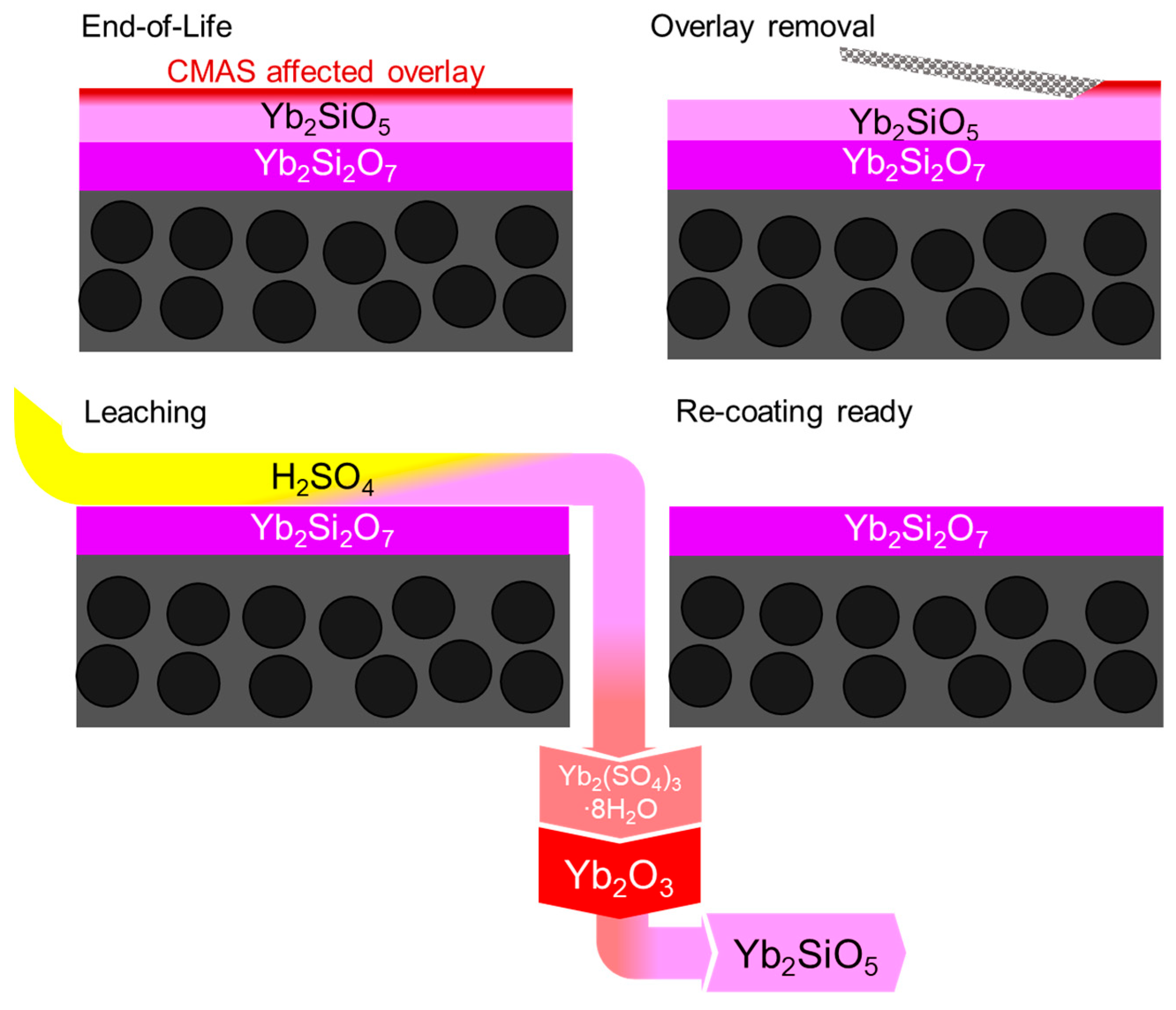
In light of the results of this conceptual work, we can also propose a concept for a sustainable repair or overhaul procedure of SiC ceramic matrix composites with multilayer Yb-silicate EBCs, as represented in
Figure 8.
Multilayer EBCs comprising Yb
2SiO
5 top layer and Yb
2Si
2O
7 bottom layer have been investigated and declared as a superior alternative, bringing together the high water-vapor corrosion resistance of Yb
2SiO
5 and the thermal/mechanical compatibility of Yb
2Si
2O
7 to both top-coat and SiC base material. Relatively lower silica activity of Yb
2SiO
5 provides excellent resilience against water vapor corrosion and acts as a protection layer covering inner Yb
2Si
2O
7 regions, which provides enhanced crack propagation resistance and associated oxidation protection for SiC [
34,
35]. This design, which aims to enhance corrosion and mechanical properties, remarkably also favors a new repair/overhaul concept. As revealed in this study, it is possible to solve Yb
2SiO
5 selectively and recover high amounts of Yb through sulfuric acid leaching. As proposed in
Figure 8, the Yb
2SiO
5 top layer may be used as a Yb-secondary resource. After service life, CMAS-affected overlays with residual CMAS and chemically stable reaction products like apatite or garnet may be removed mechanically, i.e., by grit blasting. Subsequently the Yb
2SiO
5 top layer may be removed by sulfuric acid treatment. Thanks to the multilayer design, the H
2SO
4-stable Yb
2Si
2O
7 layer can remain on top of the SiC base material and could be coated again with a Yb
2SiO
5 top coat. It must be emphasized, however, that in a technological approach of SiC and some SiO
2 formed during operation of the ceramic matrix composites presumably will be partially exposed to H
2SO
4. However, with exception of hydrofluoric acid, both Si-phases can be considered stable vs. attack of aqueous acids. Moreover, leaching experiments in this study were performed on powders after mixing and crushing of the entire system, i.e., including the CMAS-affected overlay. An efficient transfer concept will be considered to achieve the same extraction efficiencies, where acid is sprayed onto the coating and where acid and leachate have different interaction volumes. In any case, either Yb-based compounds may be precipitated through solvent extraction or phase pure Yb
2O
3 can be recovered through thermal treatment.
4. Materials and Methods
Lab-duplicated EOL coatings were mimicked in lab conditions by CMAS corrosion of Yb-based EBC compositions. Initially, base coating compositions of ytterbium monosilicate, ytterbium mono-disilicate, and ytterbium disilicate were prepared by mixing relative amounts of Yb
2O
3 and SiO
2 powders (ChemPur, Karlsruhe, Germany) to ensure the homogeneity of the powder mixture. Three powder mixtures were pressed into tablets and subsequently sintered at 1650 °C for 2 h to ensure complete crystallization and phase formation. Afterwards, a thin “CMAS-affected” overlayer was generated by depositing an ethanol-based slurry of Fe, Ti-containing CMAS powder—with an approximate load of 5 mg/cm
2—on the surface of sintered EBC pellets. After drying, the samples were heated at 1300 °C for 2 h enabling melting and reaction of Fe, Ti-CMAS with the Yb silicates. The used Fe,Ti-CMAS powder had a previously described specific chemical composition with percental weight portions of 22 CaO, 8 MgO, 18 Al
2O
3, 40 SiO
2, 10 FeO, and 2 TiO
2 [
36]. The mimicked EOL CMAS corroded EBC were crushed into fine powder in an agate mortar. Fine powder comprising residual CMAS, CMAS-affected overlay, and unreacted coating were exposed to acid leaching. Leaching experiments were performed with 2 M sulfuric acid (H
2SO
4,VWR International GmbH, Darmstadt, Germany) at 70 °C for 1 h using a solid to liquid ratio of 1/20 in a 3-neck round-bottom flask with a reflux condenser. At the end of 1 h, samples from leach liquor were vacuum filtered and leach residues were dried overnight at 105 °C. The mixing in the leaching reactor was performed using a magnetic stirrer (Carl Roth GmbH+Co. KG, Karlsruhe, Germany). Leaching parameters were determined on the basis of previous work [
37]. The input material and the leaching solution were analyzed using ICP-OES(Agilent 5900 ICP-OES, Santa Clara, CA, USA). The solid material was completely dissolved using microwave pressure digestion. The ICP-OES results are given in % for solids and in mg/L for solutions. The following standards were used for the ICP OES Carl-Roth Single-Element Standard 1000 mg/L for Al, Ca, Si, Ti Yb, Fe and Mg. Metal yields were calculated on the basis of ICP-OES analyses of the leachate liquors with following formula:
Phase contents of the initial materials and the solid leaching products were monitored by X-ray-powder diffraction with CuKα radiation (XRD; D8 Advance, Bruker AXS, Germany). Microstructural and chemical analyses were performed by scanning electron microscopy (Ultra 55, Zeiss, Germany) and energy-dispersive spectroscopy (EDS; UltiMate, Oxford, UK). The weight changes and thermal reactions were analyzed under air atmosphere (80 wt. % N2, 20 wt. % O2) upon heating to 1300 °C by 5 k/min heating rate using simultaneous thermal analysis (STA 409 F3 Jupiter, Netzsch, Germany). In order to evaluate leaching efficiency, leachates were analyzed by ICP-OES (Spectro Arcos, SPECTRO Analytical Instruments GmbH, Kleve, Germany) technique.