1. Introduction
The worldwide hearing aid sector is seeing substantial expansion, propelled by the rising incidence of hearing impairment, technical innovations, and increased awareness of auditory health. The market, valued at USD 10.12 billion in 2025, is anticipated to attain USD 12.87 billion by 2030, exhibiting a compound annual growth rate (CAGR) of 4.94%. Innovations, including invisible, AI-integrated, and Bluetooth-enabled hearing aids, are improving user experiences, while the increasing geriatric population highlights the growing need for these devices. Government initiatives that enhance early detection and awareness campaigns further stimulate market growth [
1]. The World Health Organization estimates that some 430 million adults suffer from significant hearing loss, a number expected to rise with aging demographics [
2]. This signifies a rising demand for hearing aid devices, requiring an assessment of their environmental impacts. Despite their small size, hearing aids contain numerous technological components (microchips, microphones, receivers) and materials (plastics, metals, batteries) that may collectively pose environmental concerns.
The swift escalation in resource depletion and environmental degradation over the past five decades [
3] and the approach of critical planetary thresholds for vital Earth systems that could result in irreversible harm [
4] substantiate these environmental concerns; thus, the advancement of more sustainable products, among them hearing aid devices, is essential. Life Cycle Assessment (LCA), as delineated by ISO 14040/14044 [
5,
6], is a method for the evaluation of environmental impacts throughout a product’s full life cycle and serves as a crucial instrument for addressing these impacts. LCA enables designers and engineers to measure impacts from raw material extraction to production, usage, and end-of-life, guiding more sustainable decisions [
5,
6].
A literature review indicates a significant scarcity of published LCA studies concerning hearing aids or analogous personal medical electronics. Consequently, the formulation of LCAs for hearing aid devices and their assessment for potential product enhancements is crucial for sustainable development. This article delineates the results of a cradle-to-grave LCA of a hearing aid device product system produced by Widex [
7] and, based on these findings, identifies environmental improvement opportunities.
3. Methodology Overview
This study conducted a cradle-to-grave LCA of a hearing aid product system, in accordance with the ISO 14040/14044 standards for LCA [
5,
6]. The specific hearing aid device is the Widex SMART RIC [
7], selected due to data availability and for representing a modern version of a behind-the-ear hearing aid device, launched in 2024. The evaluation employed an attributional LCA methodology, which focused on assigning the environmental impacts linked to the production and utilization of the product in its current state, without projecting future alterations or speculative scenarios. All LCA modeling was conducted utilizing Simapro software v10.2.0.1 [
33], employing ecoinvent v3.11 [
34] cut-off as the source of background inventory data for materials and processes. The environmental impact was characterized using the ReCiPe 2016 Midpoint (H) method [
35], which offers an extensive array of impact categories, such as climate change, ecotoxicity, and resource depletion. The results were also normalized using World (2010) H [
36].
To guarantee the accuracy of the life cycle model, comprehensive primary data were gathered for the hearing aid product system. The inventory was derived from the bill of materials (BOM) for the device and accessories, disassembled units to weigh components, supplier specification documents, and consultations with the manufacturer for confidential data on materials and production procedures. These inputs included all significant materials (plastics, metals, electronic components, etc.), manufacturing processes, energy and auxiliary materials, logistics, electricity usage and consumables, and end-of-life procedures.
Overall, the methodology adheres to the standard four phases of LCA: goal and scope definition, life cycle inventory (LCI), life cycle impact assessment (LCIA), and interpretation [
5,
6]. The following sections describe the goal and scope in detail, present the LCIA results, and then interpret those results to derive improvement and innovation opportunities.
4. Goal, Scope, Boundaries, and Assumptions
4.1. Goal
The main objective of this LCA study was to measure the environmental impacts of a hearing aid product system and to pinpoint critical “hotspots” in its life cycle that present potential for environmental improvement. In other words, the study aims to provide a comprehensive environmental profile of hearing aid devices from cradle to grave, and to identify which materials, components, or life-cycle phases exert the most influence on impacts. This information is aimed at directing design enhancements and informing stakeholders (manufacturers, consumers, and policymakers) of potential changes to minimize the device’s footprint.
4.2. Scope
The scope of the assessment is a cradle-to-grave analysis of a modern hearing aid device system, covering all stages from raw material extraction to end-of-life disposal. Repairing and refurbishing scenarios are excluded from the scope. The functional unit of the study is defined as follows:
“One pair of behind-the-ear hearing aid devices, including all accessories related to the product system plus the related packaging, supporting 5 years of typical use by a consumer in Europe.”
The functional unit considers two hearing aids (for the left and right ears), accompanying accessories (external charger, USB cable, USB charger, receiver units, silicone domes, cleaning picks, cleaning cloth, wax guards), and requisite packaging (boxes, manual, plastic bags, etc.). The devices are assumed to function for 5 years without critical failure, with an average utilization of 16 h daily per device, representing the full-day usage pattern of hearing aid users. This usage aligns with the context that dependent individuals are very likely to use the device throughout their entire day. Europe was selected as the site for the use phase due to its designation as one of the company’s primary markets.
4.3. System Boundaries
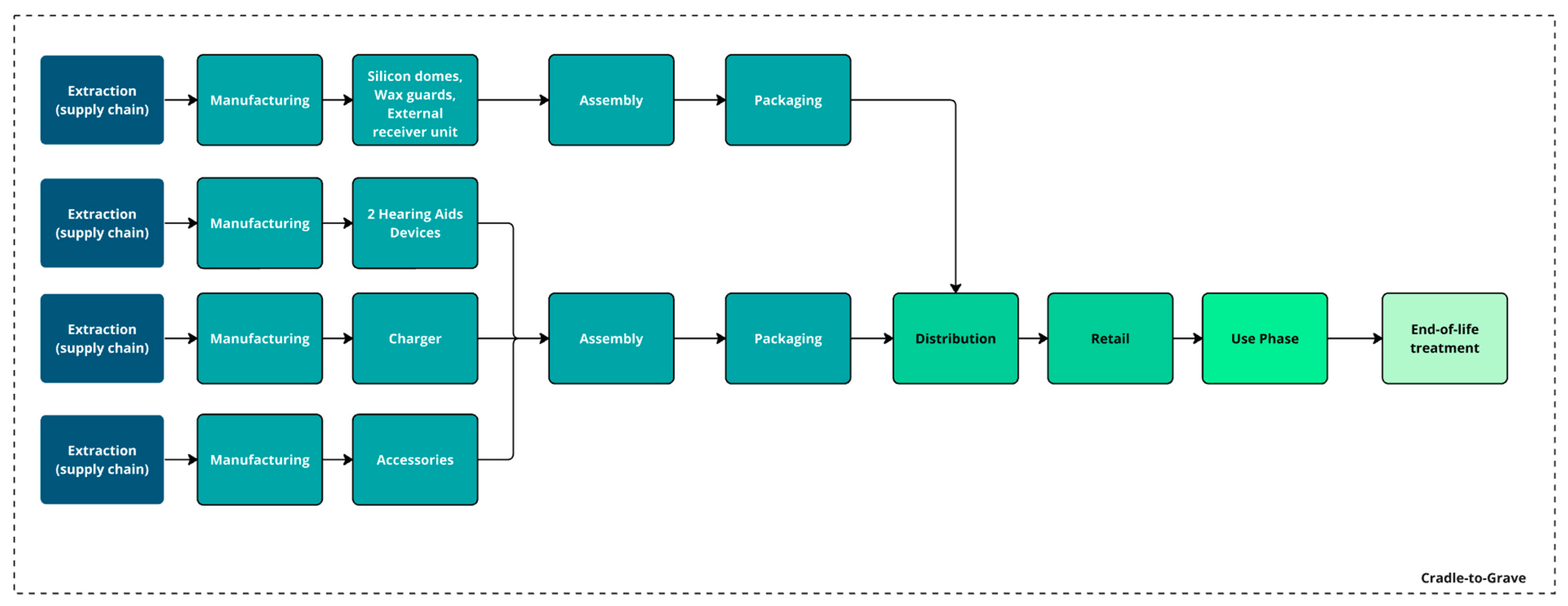
A cradle-to-grave boundary means the LCA covers the following stages: material extraction and production, manufacturing and assembly, distribution, use, and disposal.
Figure 1 delineates the system boundaries. The material extraction and production phase encompasses the extraction and processing of all materials utilized in hearing aids, alongside the manufacturing of batteries and electronic components, and ‘also includes the transportation from the supplier to the manufacturing plant. The manufacturing and assembly phase includes the production of components (such as circuit boards, microphones, receivers, etc.), the assembly of hearing aid units in the factory, and the packaging. The distribution includes the delivery of the final product to the end user, structured on general logistics averages (regional or worldwide shipping routes).
The use phase of the hearing aids involves everyday usage powered by rechargeable batteries. The research incorporates electricity consumption for charging the hearing aids over a period of five years. The charging energy was calculated based on battery capacity, charging frequency, and charging inefficiencies, and is presumed to reflect European electricity generation (average EU grid mix). Consumables, including silicone domes and receivers, were incorporated into the use phase. The end-of-life (EoL) phase addresses the disposal or recycling of hearing aids after five years. The study, informed by European end-of-life treatment statistics, assumes a specific collection rate and processing methodology: a part of the devices is collected as e-waste and recycled, while the rest is relegated to landfill or incinerated, consistent with EU averages for electronics. Material recovery for the recycled fraction is modeled with relevant credits or avoided loads as applicable. All emissions from final disposal are included through their respective processes.
4.4. Assumptions
Numerous assumptions support the goal and scope. The projected five-year product lifespan depends on proper device care; premature failure and subsequent replacement, which would proportionately elevate environmental impacts, are not included in this research. The model assumes user behavior characterized by an average daily usage of 16 h and standard charging efficiency rates, excluding extreme usage scenarios. Transportation distances represent conventional worldwide supply chain routes. End-of-life treatment scenarios adhere to EU e-waste management statistics; in areas without established e-waste collection systems, environmental impacts would likely increase. The assumptions were employed to create a representative, yet broad, model that mirrors the hearing aid devices currently available in the market.
Considering the assumptions, the LCA aims to comprehensively encompass the whole life cycle of hearing aids, using precise foreground data and a broad set of impact categories. This comprehensive approach establishes the base to determine the hotspots in the life cycle and so indicates where improvement opportunities should be focused.
5. Life Cycle Inventory
The Life Cycle Inventory (LCI) phase is essential in quantifying all material and energy inputs and outputs associated with the product system throughout its life cycle. For this study, an LCA was developed for a pair of rechargeable behind-the-ear hearing aid devices, including their accessories, packaging, use phase, and end-of-life. The inventory captures cradle-to-grave processes and was constructed in accordance with ISO 14040 and ISO 14044 guidelines [
5,
6].
Due to confidentiality agreements and intellectual property considerations with the partner company, Widex [
7], the complete inventory dataset cannot be publicly disclosed. However, the methodology used for data collection and modeling is summarized in
Table 2 and described below to ensure as much transparency and reproducibility of the assessment approach as possible.
Table 2 outlines the main LCI entry categories and corresponding data sources or modeling techniques applied in the LCA. Component identification and material composition were determined using a combination of bill of materials (BOM), manufacturer spec sheets, and direct interviews. Whenever possible, physical disassembly and weighing were conducted to validate and complement the BOM. Process selection was based on the most geographically and technologically representative datasets available in inventory databases, using a cut-off system model.
In-house manufacturing processes and energy consumption were derived from direct engagement with engineers at Widex [
7], including machinery specifications and internal process documentation. Each process was modeled individually using the corresponding inventory data. Packaging weight was measured manually, while transportation distances from the manufacturing facility in Southeast Asia to the European distribution center were confirmed through interviews.
The use phase inventory considered device specifications, daily usage patterns, battery performance, and expected product lifetime. Literature sources were used to validate assumptions. End-of-life scenarios were based on regional waste treatment data and average recycling rates in Europe for lithium-ion batteries and electronics.
6. Life Cycle Assessment Results
The results obtained using the ReCiPe 2016 Midpoint (H) [
34] include indicators across multiple impact categories, and the impact analysis is summarized in
Table 3. Among these, Global warming, a highly pertinent issue today, exhibited a total impact of 9.42 kg CO
2 eq per functional unit. Other important categories encompassed Human carcinogenic toxicity, with an impact of 3.13 kg 1,4-DCB, and Mineral resource scarcity, with 0.276 kg Cu eq, the highest and lowest impacts according to the normalization.
Following characterization of the impacts, the results were normalized using World (2010) H [
36] to evaluate their relative importance. Normalization revealed that Human carcinogenic toxicity accounted for the largest share of the total environmental burden, providing insights into the most impactful aspects of the system. A full overview of normalized scores is presented in
Table 4.
The analysis also identified key contributors to the total impact. For example, the main process associated with Human carcinogenic toxicity was the treatment of electric arc furnace slag, accounting for approximately 70% of the total impact. This hotspot does not originate from the product’s end-of-life, but rather from upstream metallurgical processes involved in the production of steel and ferroalloys used in device components. The high contribution is linked to heavy-metal emissions and leachates associated with slag handling and disposal, making metallurgical waste treatment a dominant driver of carcinogenic toxicity in the system.
This evaluation can be reiterated to pinpoint the critical components and processes associated with the most significant environmental impacts of all of them. Since this study does not concentrate on any specific impact, the chosen categories evaluated for improvement are derived from normalization and from trending subjects related to sustainability.
7. Improvement and Innovation Opportunities
According to the normalization results, the impacts with the greatest relative scores are Human carcinogenic toxicity, Freshwater ecotoxicity, and Marine ecotoxicity. Given the similar causes of Freshwater ecotoxicity and Marine ecotoxicity, Marine ecotoxicity will be excluded. Additionally, global warming and fossil resource scarcity will also be evaluated as frequently discussed or assessed topics [
37]. This way, four environmental impacts were selected to illustrate how LCA helps to identify actionable environmental improvement opportunities and potential innovations. The four selected impact categories are Human carcinogenic toxicity, Freshwater ecotoxicity, Global warming, and Fossil resource scarcity.
7.1. Human Carcinogenic Toxicity
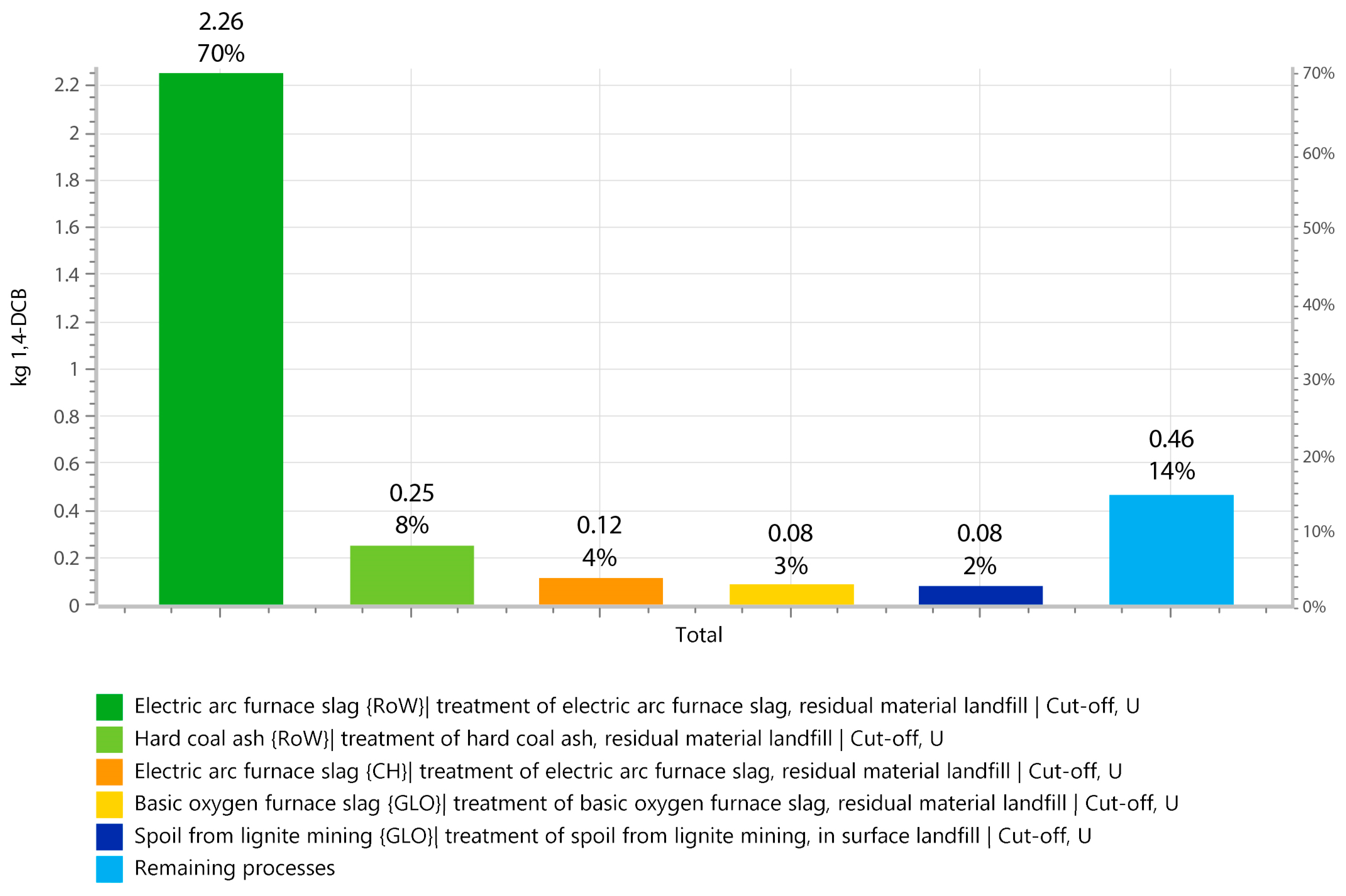
In the impact category of Human Carcinogenic Toxicity, the LCA revealed a total impact of 3.24 kg 1,4-DCB eq. The single largest contributor was the treatment of electric arc furnace slag in residual landfills, which accounted for 2.26 kg 1,4-DCB eq (≈70%) of the total impact. This burden does not originate from the end-of-life of the hearing aid itself, but rather from upstream metallurgical processes in the supply chain, particularly steel and ferroalloy production. Other significant contributors included hard-coal ash treatment (0.25 kg; 8%), a variant of electric arc furnace slag treatment (0.12 kg; 4%), basic oxygen furnace slag (0.08 kg; 3%), and spoil from lignite mining (0.08 kg; 2%). Together, metallurgical waste treatments explain more than 85% of the total impact, underlining the critical role of raw-material sourcing and waste management in toxicity profiles.
Figure 2 presents the top five contributor processes to the impact category.
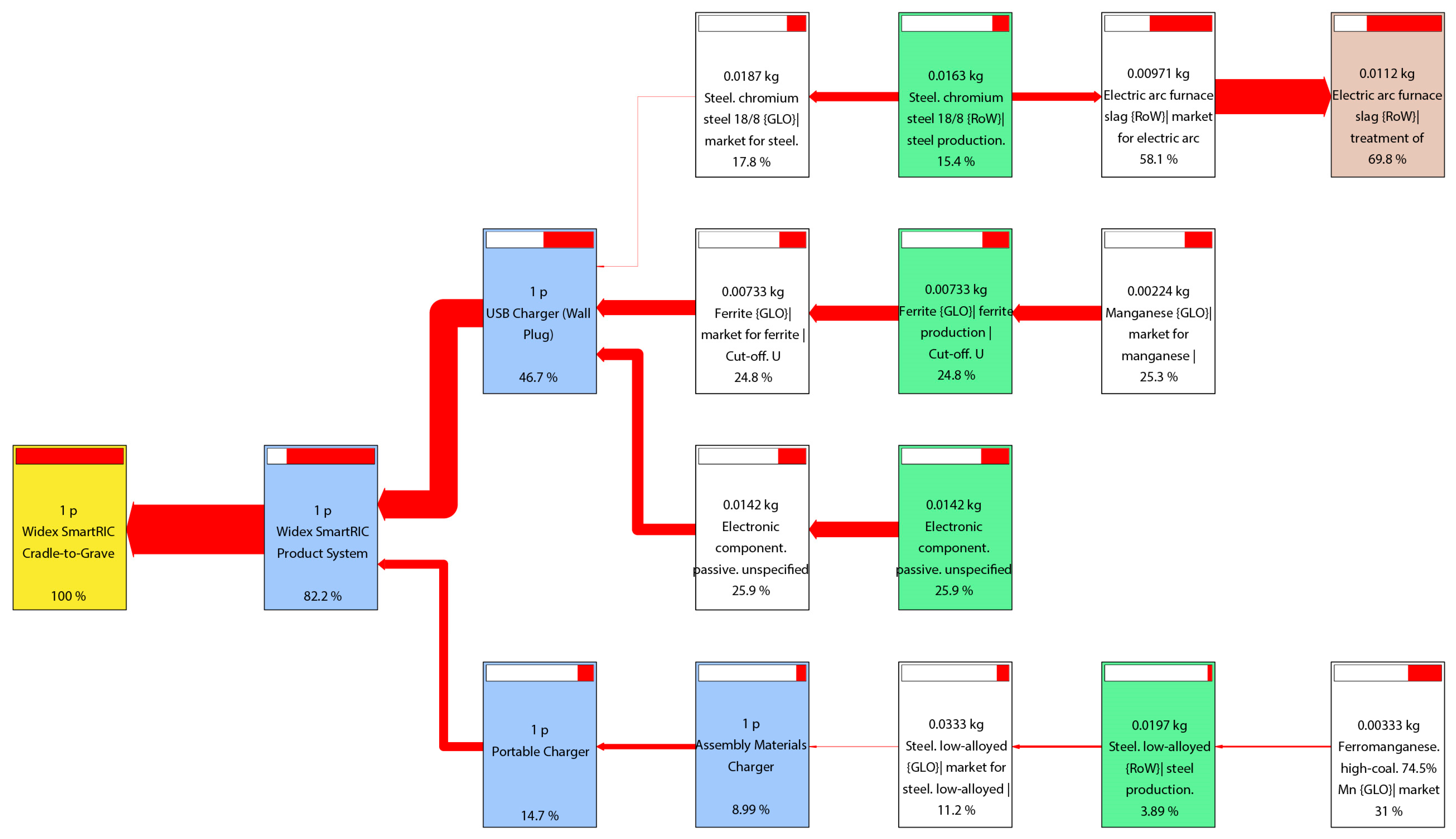
Within the product system, based on the Sankey diagram (
Figure 3), the USB charger remains the most impactful sub-assembly, responsible for nearly half of the total product system contribution (46.7%). This is largely driven by electronic component production (≈26%) and ferrite core manufacturing (≈25%), which are strongly tied to manganese mining and ferromanganese production, particularly coal-intensive smelting routes (≈31% at the sub-process level). These inputs link directly to the slag and ash waste streams identified as hotspots in the overall results. Furthermore, the production of passive electronic components (e.g., resistors, capacitors, inductors) adds further burdens due to the complexity and intensity of mineral extraction and metallurgical refining.
The Sankey diagram highlights that impacts are dominated by upstream material production and waste-treatment flows, with metallurgical by-products and electronic component supply chains capturing virtually the entire impact share. No distinct use-phase contributions are discernible, reinforcing that the principal opportunities for mitigation lie in raw-material selection, component manufacturing, and effective end-of-life management rather than in consumer use.
Figure 3 presents the Sankey diagram demonstrating the impact share on each process.
To reduce these burdens, several strategies can be considered: design changes such as substitution of materials in high-impact components, for instance, replacing ferrite cores with less energy-intensive alternatives or sourcing manganese from operations with improved waste-treatment practices; and adopting recyclable or biodegradable materials in disposable elements. Finally, closing material loops through effective recycling and end-of-life strategies, particularly for metals, offers additional potential to mitigate emissions from landfill and incineration.
7.2. Freshwater Ecotoxicity
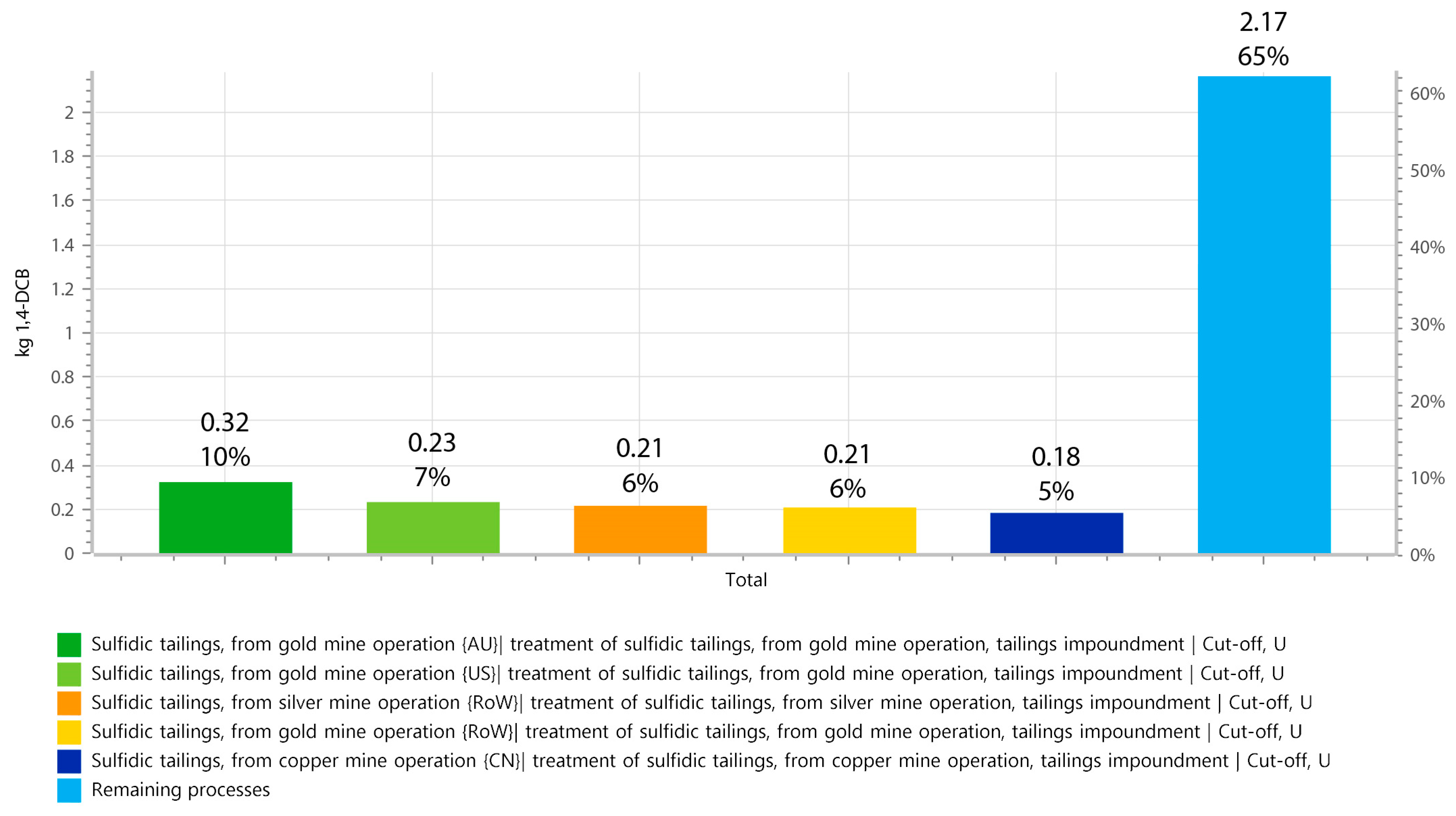
In the impact category of Freshwater Ecotoxicity, the LCA revealed a total impact of 3.32 kg 1,4-DCB eq. The burden is strongly associated with sulfidic tailings from metal-mining operations, which dominate the top contributors. Specifically, gold-mining tailings contribute 0.32 kg 1,4-DCB eq (10%) and 0.23 kg 1,4-DCB eq (7%); additional contributors include silver-mining tailings (0.21 kg; 6%), further gold-mining tailings (0.21 kg; 6%), and copper-mining tailings (0.18 kg; 5%). Together, these five processes account for ≈35% of the category total, while the remaining processes sum to 2.17 kg (65%) spread across broader electronic and metallurgical supply chains.
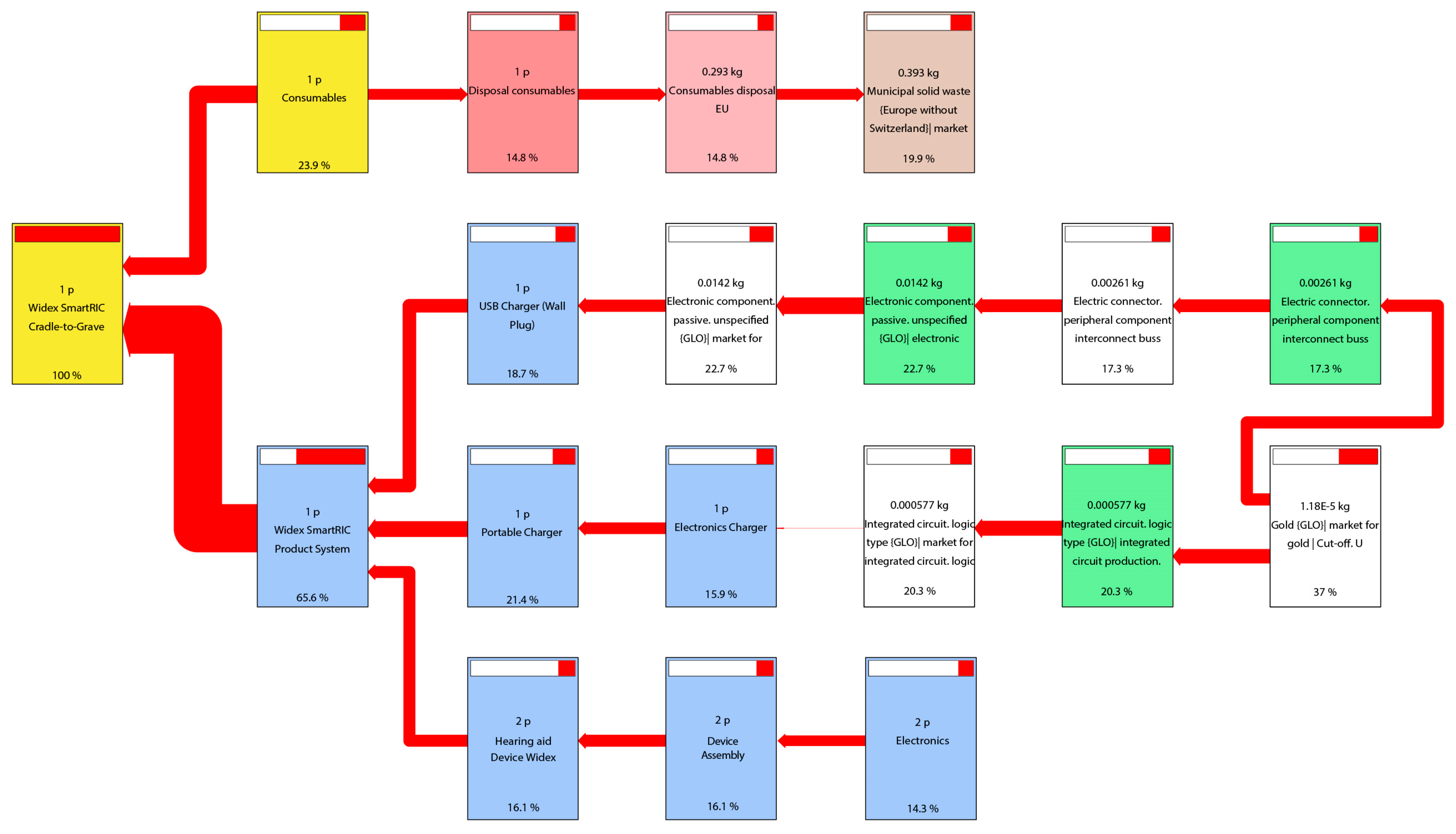
From a subsystem perspective, the USB charger and associated electronic components are clear hotspots, aligning with the upstream demand for gold, silver, and copper in circuit assemblies. The Sankey shows prominent shares for Portable Charger (≈21.4%), USB Charger (≈18.7%), and charger electronics (≈15.9%), reflecting the concentration of precious-metal-intensive parts in these sub-assemblies. Tailings are problematic due to the leaching of heavy metals into aquatic ecosystems, which drives persistent ecotoxic burdens.
Figure 4 presents the top five contributors to freshwater ecotoxicity.
Looking at the Use Phase, the Sankey diagram demonstrates a visible contribution from in-use replacements and their disposal: the Consumables branch accounts for ≈23.9% of the total, and Disposal of consumables contributes ≈14.8%. This indicates that periodic replacements (e.g., receiver-related parts, wax-guard filters, silicone domes) and their end-of-life handling are material drivers in this category.
Figure 5 presents the Sankey diagram of freshwater ecotoxicity impacts.
To mitigate these burdens, strategies should target reduced dependence on high-impact metals and improved material efficiency: redesign electronics to minimize gold/silver, extend component lifetimes to reduce replacement frequency, prioritize suppliers with best-practice mine-waste management, and expand closed-loop recycling for precious and base metals. These interventions reduce ecotoxic releases while advancing circular economy and responsible sourcing goals.
7.3. Global Warming
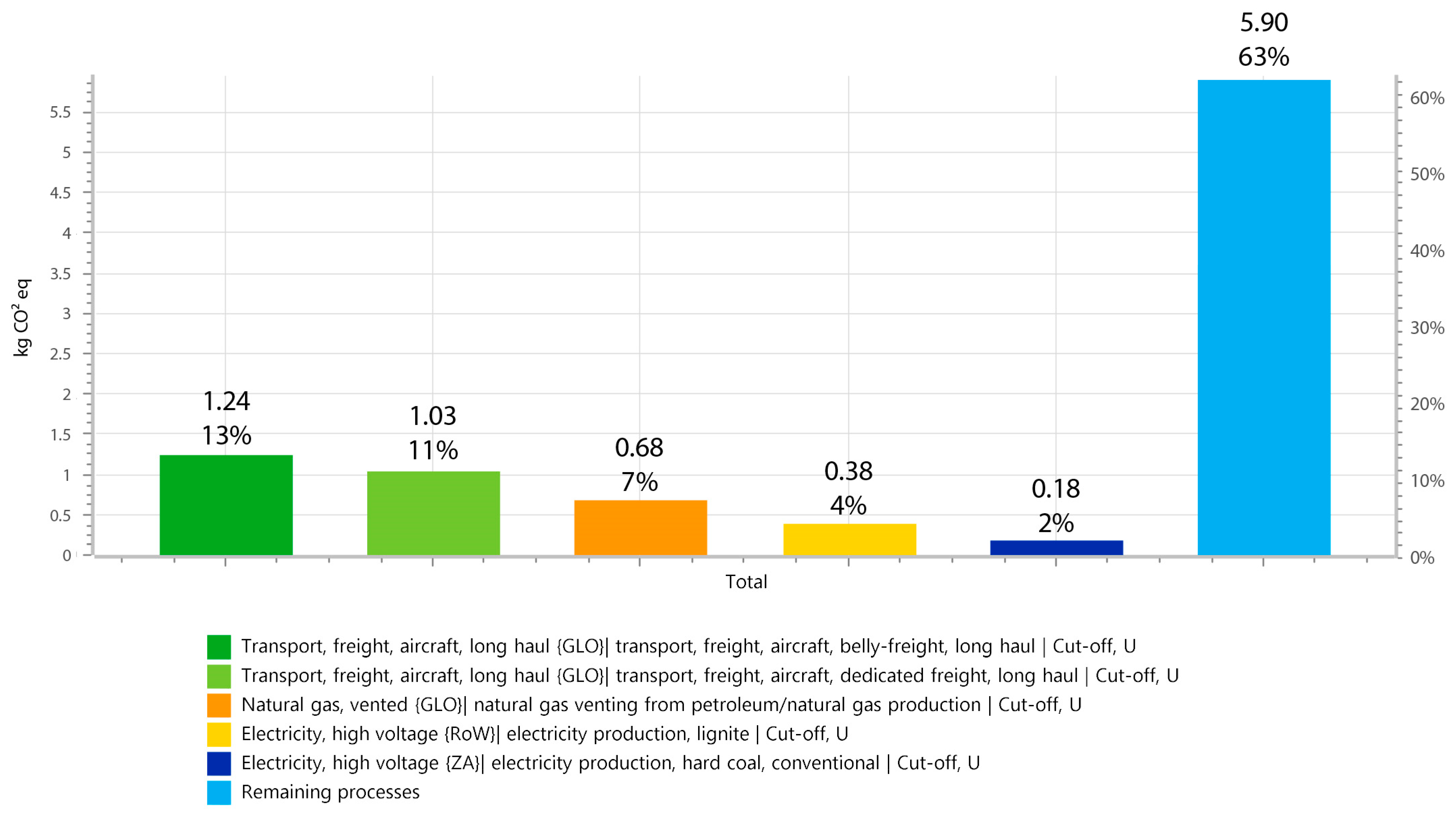
In the impact category of Global Warming Potential (GWP), the LCA revealed a total impact of 9.42 kg CO
2 eq per functional unit. The contribution analysis shows that the majority of impacts are spread across a broad set of processes, with the top five contributors accounting for ≈37% of the total and the remaining processes summing to 5.90 kg CO
2 eq (63%). The largest single hotspots are long-haul air freight processes at 1.24 kg CO
2 eq (13%) and 1.03 kg CO
2 eq (11%), followed by natural gas, vented at 0.68 kg CO
2 eq (7%), electricity, high voltage {RoW} at 0.38 kg CO
2 eq (4%), and electricity, high voltage {ZA} at 0.18 kg CO
2 eq (2%). Together, these processes highlight the role of air logistics and fossil-based electricity mixes in driving greenhouse gas emissions across upstream operations.
Figure 6 presents the top five contributing processes to the impact category.
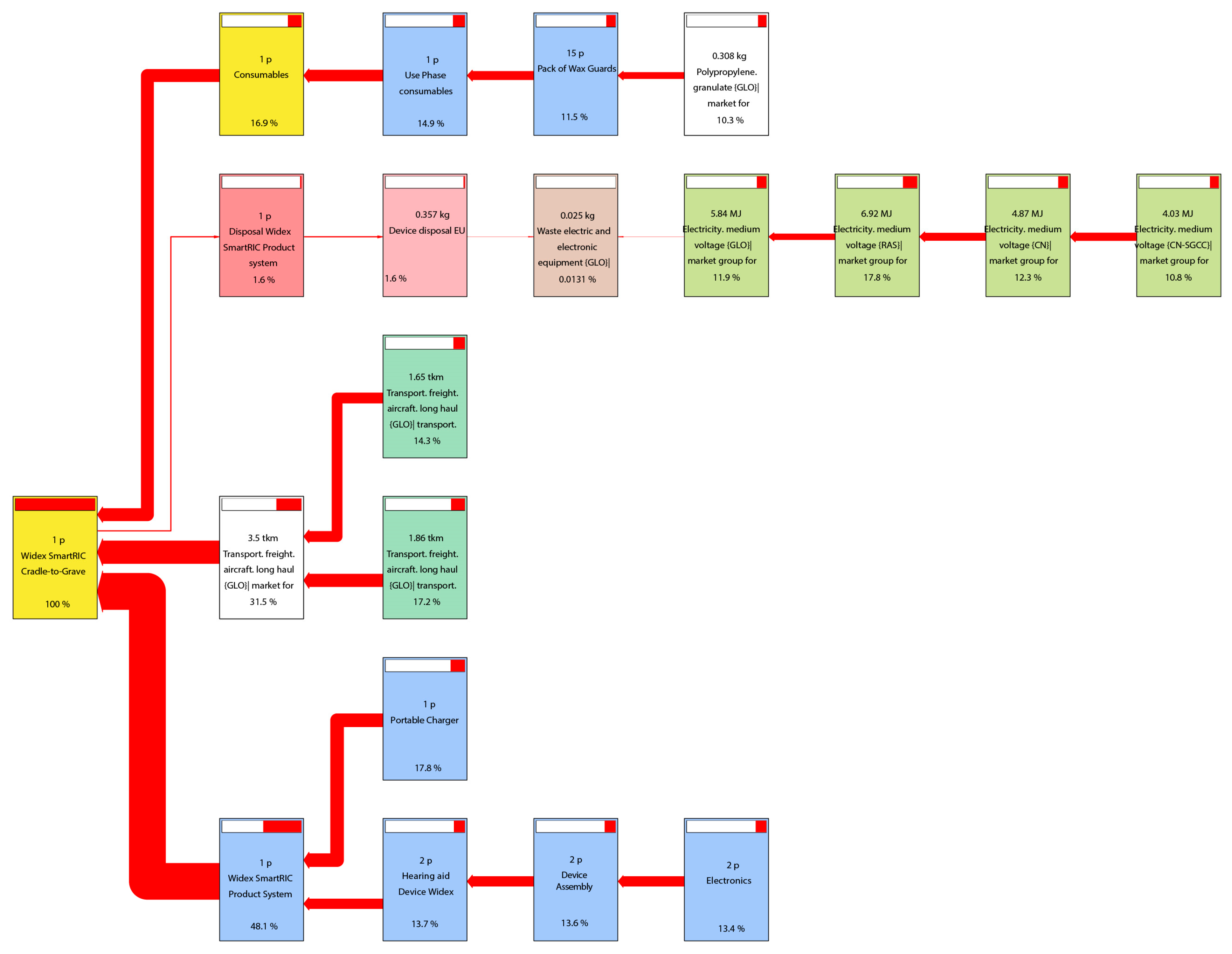
From a subsystem perspective, the Sankey diagram shows that manufacturing of the product system accounts for ~48.1% of total GWP, with notable shares for the Portable Charger (~17.8%) and the electronics/device cluster (~13–14% each for Electronics, Device Assembly, and Hearing Aid Device). Air freight transportation has a significant impact, with ~31.5% of the total influence. Use-phase replacements also carry a visible burden: Consumables are ~16.9% overall, with the Pack of Wax Guards representing ~11.5%. End-of-life is comparatively minor (~1.6%).
Figure 7 presents the Sankey diagram illustrating the relative contribution of each subsystem and upstream process.
To tackle these impacts, multiple strategies can be considered. Reduced air freight dependence via mode shifting (sea/rail where feasible), improved routing, and shipment consolidation could curb the two largest hotspots. Engaging suppliers on cleaner electricity mixes (or contractual renewable energy) could address grid electricity contributions across regions. Extending component lifetimes and optimizing consumables (e.g., wax-guard packs) could reduce replacement frequency. On the system level, eco-design should be pursued for material and energy efficiency, and recyclability/recycled content should be increased in plastics and metals to further lower the product system’s carbon footprint.
7.4. Fossil Resource Scarcity
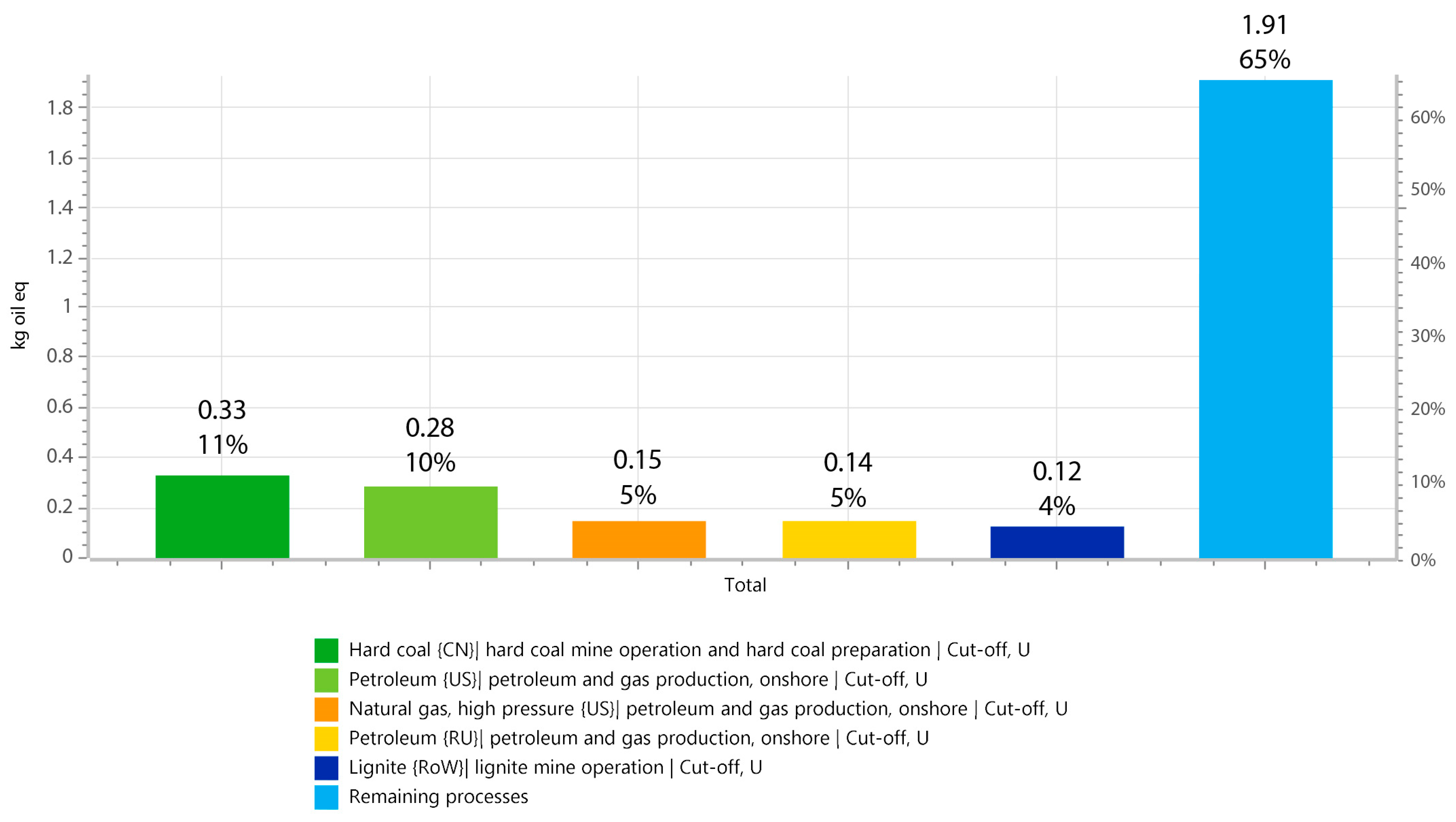
In the impact category of Fossil Resource Scarcity, the LCA revealed a total impact of 2.94 kg oil eq per functional unit. The single largest contributor was hard coal (CN) at 0.33 kg oil eq (11%), followed by petroleum (US) at 0.28 kg oil eq (10%), natural gas, high pressure at 0.15 kg oil eq (5%), petroleum (RU) at 0.14 kg oil eq (5%), and lignite mining (RoW) at 0.12 kg oil eq (4%). Together, these top five processes represent ≈35% of the category total, with the remaining processes summing to 1.91 kg oil eq (65%) across broader upstream activities.
Figure 8 presents the top five contributing processes.
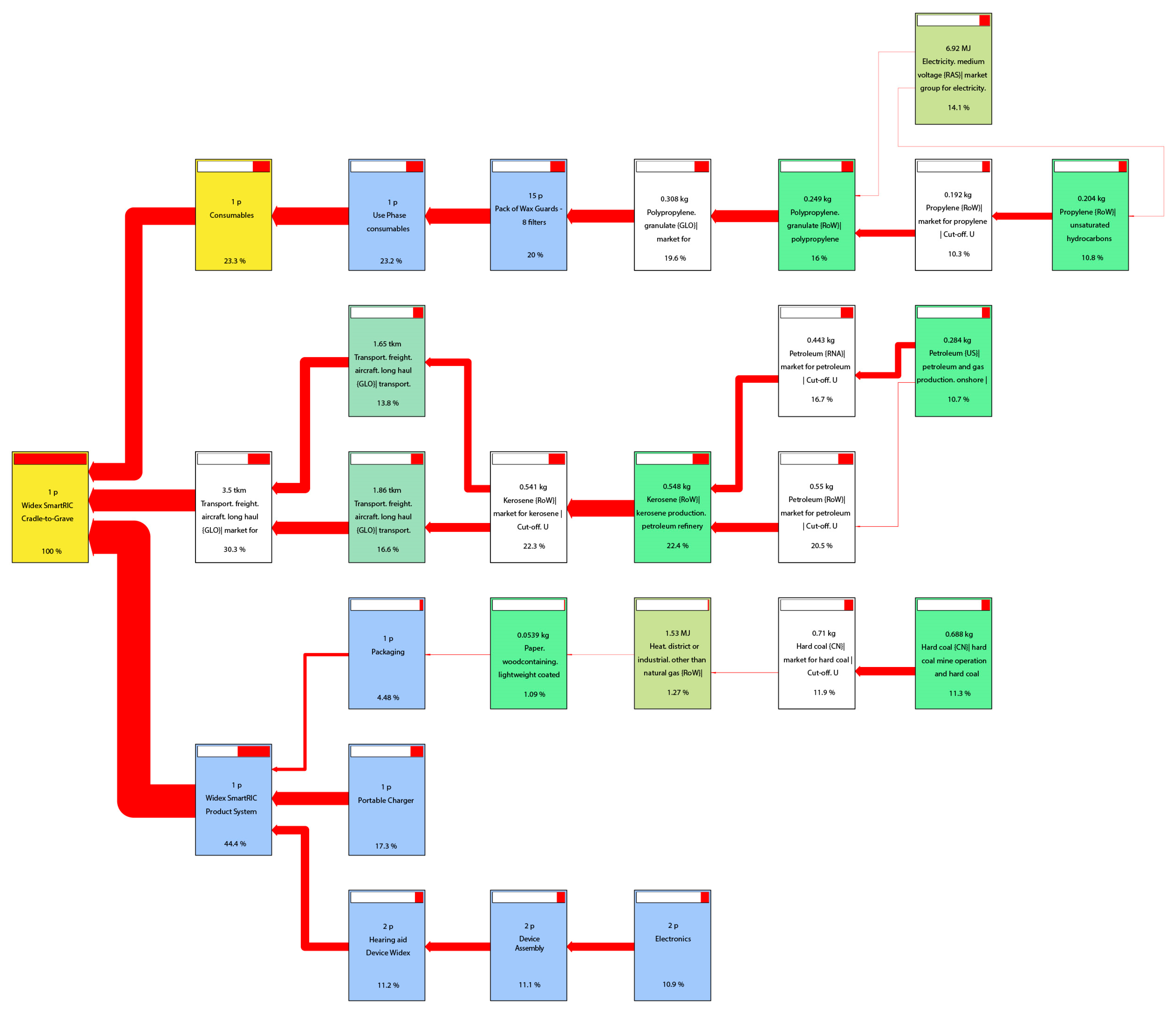
From a subsystem perspective, the Sankey highlights use-phase consumables (~23.2%)—notably the Pack of Wax Guards (~20%)—and the Portable Charger (~17.3%) as visible hotspots, alongside manufacturing clusters for Electronics/Device/Hearing-aid (each ~11%). Prominent upstream nodes include polypropylene granulate (~16–20%), propylene feedstocks (~10–11%), and petroleum/kerosene nodes linked to logistics, indicating the dual role of petrochemical materials and fossil fuels in driving scarcity.
Figure 9 illustrates the Sankey across the product system.
Unlike categories such as global warming, where energy use dominates, fossil resource scarcity emphasizes depletion of finite fossil feedstocks—both as energy carriers (coal, gas, oil) and as chemical precursors for plastics—together shaping the product’s footprint.
Different strategies can be considered to mitigate these impacts. On the materials side, reducing polymer dependence—through lightweighting, shifting to recycled resins, or substituting with bioplastics—could significantly reduce the demand for virgin fossil feedstocks. On the energy side, supplier engagement in regions with lower coal dependence, or a shift toward renewable electricity and heat, would help reduce the burdens associated with fossil energy inputs. Furthermore, extending the lifespan of disposable consumables (wax guards, receivers, domes) and adopting circular material flows through recycling initiatives would lower cumulative fossil resource demand across the product’s life cycle.
7.5. Discussion
To synthesize the insights generated from the impact assessment, a consolidated overview of the key environmental hotspots and corresponding mitigation strategies was developed.
Table 5 summarizes the main improvement and innovation opportunities identified through the LCA for each of the four selected impact categories—Human Carcinogenic Toxicity, Freshwater Ecotoxicity, Global Warming, and Fossil Resource Scarcity. These recommendations were derived from the hotspot analysis conducted in the Results section and reflect interventions that are potentially both technically viable and environmentally impactful, which would need to be modeled to validate their potential. Grouped by strategy type, they offer a practical foundation for eco-design decision-making, supporting the integration of sustainability into material selection, product architecture, logistics, and end-of-life planning.
Numerous interventions, such as material substitutions, component redesign for durability, or alterations in supply chain energy and material sourcing models, are not as innovative as the term “innovation” may suggest; rather, they are direct interpretations of data gathered by an external researcher. However, they emphasize the importance of including LCA in the product development process. These improvement and innovation opportunities show how studies could be further developed, validated, and implemented through active collaboration with industry partners, such as Widex [
7].
By leveraging insights from real manufacturing practices, supply chain constraints, and user behavior, companies can ensure that the proposed changes are practically feasible and aligned with product performance and environmental goals. Essentially, LCA serves as a decision-support tool that allows these potential adaptations to be modeled and tested virtually before any capital investment is made, reducing uncertainty and guiding the selection of the most impactful and cost-effective strategies. Embedding this type of iterative, evidence-based process into product development not only strengthens the environmental profile of products but also enhances innovation and risk management for companies operating in sensitive and highly regulated sectors.
7.6. Scenarios
To complement the assessment, three sensitivity scenarios were developed to explore the robustness of the results, the influence of key methodological choices, and to validate a potential mitigation strategy, presented in
Table 6. These scenarios focus on two central aspects of the life cycle model: (i) the electricity mix assumed for the use phase, which directly affects the charging of the hearing aids, and (ii) the treatment of plastics, which determines whether or not the system benefits from the substitution of virgin polymers with recycled content. By varying these parameters, the sensitivity analysis provides insight into the extent to which the device’s environmental performance depends on contextual conditions and LCA modeling assumptions.
7.6.1. High-Carbon Electricity Grid (Poland)
The first scenario replaces the EU-27 + UK average electricity mix used in the baseline model with the Polish grid, which is dominated by coal and therefore represents a fossil-intensive, high-carbon energy system, according to the database [
34]. Importantly, this change is restricted to the use-phase electricity consumption associated with daily recharging; the production stage inventories remain unchanged.
The results demonstrate the influence of coal-based generation on energy-sensitive indicators. Global warming potential increases from 9.42 to 9.94 kg CO2 eq, while fossil resource scarcity rises from 2.94 to 3.06 kg oil eq. Air-pollutant-related categories also exhibit modest increases: terrestrial acidification from 6.62 × 10⁻² to 6.89 × 10⁻² kg SO2 eq, ozone formation (human health) from 3.31 × 10⁻² to 3.40 × 10⁻² kg NOx eq, and ozone formation (terrestrial ecosystems) from 3.46 × 10⁻² to 3.55 × 10⁻² kg NOx eq. These changes are consistent with the elevated sulfur dioxide and nitrogen oxide emissions characteristic of coal combustion. In contrast, ionizing radiation decreases from 0.590 to 0.489 kBq Co-60 eq, owing to the smaller role of nuclear power in the Polish electricity mix compared to the EU average. All other impact categories remain effectively stable.
7.6.2. Low-Carbon Electricity Grid (Norway)
The second scenario substitutes the baseline grid with the Norwegian electricity mix, which is almost entirely derived from hydropower and other renewable sources, according to the database [
34]. As in the high-carbon case, the substitution is applied solely to the use-phase electricity required for charging, without altering the production stage.
The results reveal a clear reduction in climate- and fossil-related indicators. Global warming potential decreases to 8.83 kg CO2 eq, and fossil resource scarcity drops to 2.79 kg oil eq, reflecting the near absence of fossil inputs in Norway’s grid. Ionizing radiation also decreases to 0.467 kBq Co-60 eq. However, this scenario introduces a trade-off: water consumption increases from 7.27 × 10⁻² to 9.30 × 10⁻² m3, reflecting the water use intensities attributed to hydropower in life cycle inventories.
7.6.3. Enhanced Plastic Recovery (40% Recycled Plastic)
The third scenario examines the implications of the cut-off approach applied in the baseline model. Under the cut-off approach, the system bears the full burden of virgin plastic production and waste treatment, while potential environmental benefits from recycling (i.e., displacement of virgin polymer production) are excluded from the analysis. To test the effect of this methodological assumption, the scenario models 40% of the plastics used in injection molding as recycled content rather than virgin polymer.
This adjustment yields modest but systematic improvements. Global warming potential decreases from 9.42 to 9.10 kg CO2 eq, fossil resource scarcity from 2.94 to 2.68 kg oil eq, and water consumption from 7.27 × 10⁻² to 6.59 × 10⁻² m3. Other categories remain largely unaffected.
7.7. Uncertainty Analysis
Life Cycle Assessment results are influenced by both methodological assumptions and data-related variability. Since the inventory of the hearing aid device system combines measured data, supplier information, and approximations from databases, it is important to evaluate the robustness of the findings. Uncertainty analysis provides insight into how sensitive the results are to the assumptions made and whether the main conclusions are held when variability is accounted for.
In this study, a Monte Carlo simulation with 1000 runs was performed to quantify the uncertainty of midpoint impact results. The outputs include descriptive statistics (mean, median, standard deviation), coefficients of variation (CV), and 95% confidence intervals (2.5% and 97.5% percentiles), which together provide a comprehensive picture of result stability.
Other than the uncertainty already embedded in the ecoinvent database processes, not all processes in the inventory were assigned uncertainty distributions. Instead, the focus was placed on parameters with both strong influence on the overall results and inherent uncertainty in their quantification. Two groups of exchanges were varied:
Electronic components—This includes integrated circuits, passive electronic elements (resistors, capacitors, ferrite cores), and connectors. Electronics were repeatedly identified as dominant contributors to multiple impact categories in the contribution and Sankey analyses. Many electronic components were modeled using proxy datasets or approximations of similar components, as exact data were unavailable. This introduces uncertainty, since the modeled processes may not fully capture the specific materials and energy requirements of the device. For these reasons, a lognormal distribution with a geometric standard deviation (SD2 = 1.1) was applied, equivalent to a ±10% variation around the most likely value.
Air transportation—in the baseline assessment, the air freight accounted for ~31,5% of the global warming potential. Real-world transport distances, load factors, and aircraft efficiency can differ significantly from database averages. Applying uncertainty ensures these variations are captured in the analysis. Long-haul air freight was modeled with lognormal variation (SD2 = 1.1) as well.
Other exchanges, such as plastics, packaging, short-distance transport, and end-of-life processes, were left deterministic. These flows were either modeled with higher confidence (e.g., masses measured directly) or contributed marginally to the total impacts, such that their inclusion in the uncertainty analysis would not materially change the results. The simulation used the following parameters:
Number of runs: 1000 Monte Carlo iterations.
Distributions used: lognormal (SD2 = 1.1) for selected electronic components and air freight and inherent distributions related to the ecoinvent database processes.
Software environment: SimaPro Monte Carlo tool, with midpoint impact assessment performed using ReCiPe.
The results of the Monte Carlo simulation are summarized in
Table 7, which reports the mean, median, standard deviation (SD), coefficient of variation (CV), and the 95% confidence intervals for each impact category.
Several categories can be considered stable, as they showed low coefficients of variation below 15%. These include global warming (CV = 5.7%), fossil resource scarcity (CV = 9.4%), ozone formation for both human health and terrestrial ecosystems (CV = 9.0%), and marine eutrophication (CV = 10.8%). For these categories, the narrow 95% confidence intervals—such as global warming ranging from 8.5 to 10.6 kg CO2 eq—indicate that the baseline point estimates are reliable and robust despite the modeled variability.
Other categories presented moderate variability, with coefficients of variation between 15% and 30%. Examples include freshwater ecotoxicity (CV = 20.3%), freshwater eutrophication (CV = 26.4%), terrestrial ecotoxicity (CV = 25.6%), and land use (CV = 22.6%). These results reflect a moderate sensitivity to the applied uncertainty. Finally, a subset of categories exhibited very high variability, with coefficients of variation exceeding 40%. These include human carcinogenic toxicity (CV = 47.4%), ionizing radiation (CV = 158%), and human non-carcinogenic toxicity (CV = 301%). Water consumption has an exacerbated variation (CV = 2640%), demonstrating a higher instability.
8. Conclusions
This study provided a thorough cradle-to-grave Life Cycle Assessment (LCA) of a behind-the-ear hearing aid system, highlighting significant environmental impacts and suggesting improvement and innovation opportunities based on sustainability principles. The analysis examined four strategically chosen impact categories: Human Carcinogenic Toxicity, Freshwater Ecotoxicity, Global Warming, and Fossil Resource Scarcity, clarifying how material composition, component design, transportation logistics, and end-of-life treatments influence the device’s overall environmental footprint.
The results identified distinct hotspots across life cycle stages: metal mining and sulfidic tailings as major drivers of freshwater ecotoxicity, ferroalloy processing and slag treatment contributing substantially to carcinogenic emissions, and air transportation, fossil fuel extraction, and polymer production dominating global warming and fossil resource scarcity impacts. In response, pragmatic options were proposed, including sustainable material sourcing, durability-focused product design, polymer reduction through lightweighting and substitution, and circular end-of-life strategies. These measures were further categorized by strategy type to facilitate practical implementation and align design interventions with environmental priorities.
The data reported in this research are preliminary and intended only for academic purposes. The studies depend on data that have not undergone independent verification by a third party. The environmental impact estimates and interpretations presented here should be viewed as indicative rather than conclusive. The assessment represents the most accurate information available throughout the study, but it does not serve as a formal or audited review of environmental performance.
This study underscores the significance of LCA as a proactive decision-support instrument that can be incorporated into the product development process to foresee environmental impacts and facilitate innovation. Through precise inventory modeling, iterative design assessment, and close collaboration with industry partners, the environmental performance of products can be enhanced without sacrificing user requirements or technical specifications.