1. Introduction
Lithium-ion batteries (LIBs) are used extensively throughout the world, as they serve as one of the most dominant energy storage technologies in modern society [
1,
2,
3]. It is used in most modern-day electronics, electric vehicles (EVs), and grid renewable energy storage [
2]. Their widespread use is due to their high energy density, long cycle life, and relatively low self-discharge rate [
3]. Despite these advantages, lithium-ion batteries inevitably degrade over time because of mechanical, chemical, and thermal usage. The internal changes that accompany this degradation include electrode delamination, separator shrinkage, jelly roll deformation, and the formation of microcracks [
4]. These changes reduce the performance of the cells and, in some cases, can create safety hazards such as internal short circuits and thermal runaway.
Traditional methods for assessing the health of a lithium-ion battery often rely on electric measurements such as capacity retention, state-of-health estimation models, electrochemical impedance spectroscopy (EIS), and voltage analysis [
5,
6]. While these methods allow for the assessment of the overall performance of a cell, they provide limited information about internal structural changes [
6]. As such, there is increasing interest in the use of imaging techniques to directly observe and quantify these internal features [
7,
8,
9]. Among these techniques, X-ray computed tomography (CT) and micro-computed tomography (µCT) stand out as powerful tools for non-destructive battery characterization. They provide a non-destructive and high-resolution three-dimensional (3D) view of the internal architecture of a battery cell, enabling researchers to examine key components including electrodes, separators, current collectors, and the jelly roll arrangement [
10,
11,
12,
13,
14]. Pietsch and Wood [
11] provided a practical guide for applying X-ray tomography to battery research, while Wood [
12] further reviewed the role of X-ray tomography in battery research and development, highlighting its ability to reveal internal structural features, degradation mechanisms, manufacturing defects, and electrochemical changes that are otherwise inaccessible through conventional diagnostic methods. In addition, Villarraga-Gómez et al. [
13] highlighted the evolution of X-ray computed tomography from medical imaging to dimensional metrology, emphasizing its growing role in high-resolution industrial inspection. Similarly, Heenan et al. [
14] reviewed developments in tomography-based characterization of electrochemical devices and discussed its importance for understanding degradation and failure mechanisms. Le Houx and Kramer [
15] summarized advances in X-ray tomography for battery electrode characterization and highlighted the technique’s increasing importance in battery research, while Villarraga-Gómez et al. [
16] further emphasized the growing importance of CT-based characterization for battery research and development.
Various studies have applied CT imaging to investigate battery degradation, manufacturing quality, and failure mechanisms [
17,
18,
19]. Ziesche et al. [
17] demonstrated the use of correlative neutron and X-ray tomography combined with virtual unrolling techniques to investigate internal structural evolution in lithium-ion batteries. Wu et al. [
18] analyzed manufacturing-induced defects and structural deformations using CT imaging, while Dayani et al. [
19] performed multi-level X-ray computed tomography investigations from the cell level down to individual particles, illustrating the capability of CT imaging to characterize battery structures across multiple length scales. Jnawali et al. [
20] used X-ray tomography and virtual unrolling to evaluate long-term cycling degradation in cylindrical lithium-ion batteries. Evans et al. [
21,
22] further demonstrated the potential of computed tomography for identifying manufacturing defects and cell-to-cell variations that may influence battery performance and reliability. Huang et al. [
23] utilized X-ray micro-computed tomography to characterize internal structures in all-solid-state batteries, while Dong et al. [
24] proposed advanced CT acquisition methods to improve imaging of cylindrical lithium-ion batteries. The availability of large CT datasets, such as those reported by Condon et al. [
25], further highlights the growing role of imaging in battery research. In addition, Min et al. [
26] demonstrated that laboratory-scale X-ray exposure has no measurable impact on battery performance or lifetime, supporting the use of CT imaging as a non-destructive diagnostic technique.
Advances in the studies of deep learning (DL) have enabled opportunities for automated analysis of large imaging datasets. Convolutional neural networks (CNNs) have demonstrated exceptional performance in image classification, segmentation, object detection, and pattern recognition tasks by automatically learning hierarchical feature representations from image data [
27,
28,
29]. In terms of medical imaging applications, deep learning has been extensively used to improve diagnostic accuracy and efficiency by extracting and learning complex spatial features that may be difficult to identify through traditional image-processing techniques [
27,
28]. Similar approaches have increasingly been applied to battery diagnostics, prognostics, and health monitoring. Zhang and Li [
7] reviewed deep learning methods for lithium-ion battery prognostics and health management and highlighted their growing role in battery state estimation and degradation analysis. Sterkens et al. [
30] demonstrated deep learning-based battery recognition using X-ray images, while Zhao et al. [
31] proposed BatSort, a transfer-learning framework for battery sorting and recycling applications. In addition, several advanced deep learning architectures have been investigated for battery diagnostics and health monitoring. Guo et al. [
32], for example, proposed and expanded upon an interpretable temporal convolutional network (TCN)-Transformer that incorporates SHAP (SHAPley Additive exPlanations) analysis for estimating LIB state-of-health (SOH). This allowed for an improvement in predictive accuracy and model interpretability. Wang et al. [
33] similarly developed a diffusion causal Transformer network that integrates physical information to enhance SOH prediction robustness under noisy operating conditions. Huang et al. [
34] proposed a method that uses a privacy-preserving federated learning framework for retired battery-type identification. This study highlights the growing usage of distributed artificial intelligence methods for battery classification and management. These studies demonstrate how advanced deep learning architectures have increasing roles in battery diagnostics and classification, while most existing approaches rely primarily on electrical measurements rather than direct structural imaging.
Transfer learning (TL) is a machine learning technique and a branch of deep learning that involves applying knowledge acquired from training a model on one task to a different yet related task. In terms of neural networks that use TL, the training process occurs in two stages. Initially, the network undergoes training on a dataset which gives it trained weight. Next, the pretrained network is further trained on the specific dataset of interest, allowing fine-tuning. Zhang et al. [
35] investigated transfer learning for intelligent recognition of LIB structural health states using X-ray computed tomography images, showing the feasibility of using deep learning for automated degradation-state classification. Their study demonstrated that transfer learning can successfully extract degradation-related features from battery CT images. Although recent studies have demonstrated the effectiveness of deep learning for battery prognostics, state-of-health estimation, battery sorting, and defect identification [
31,
32,
33,
34,
35], relatively few investigations have focused on automated classification of internal structural degradation states directly from µCT images. Existing battery AI studies predominantly utilize electrical, electrochemical, or operational data, whereas the exploitation of high-resolution tomographic information for structural condition assessment remains limited. Furthermore, many image-based studies emphasize classification accuracy while providing limited discussion regarding domain-specific preprocessing strategies that enhance the extraction of degradation-related structural features.
To address these limitations, this study proposes a transfer learning framework for the classification of internal structural conditions in 18650 format lithium-ion battery cells using images obtained from X-ray µCT tomography. The dataset used includes cells that are pristine, cycle-aged, thermally cycled, and calendar-aged (high-temperature storage). To improve the feature extraction aspect, domain-specific preprocessing is used, where we incorporate centroid-based core cropping and three-slice stacking to capture localized three-dimensional structural information. These processed images are then used to fine-tune a deep convolutional neural network based on the InceptionResNetV2 architecture. The primary contributions of this study are summarized as follows:
A transfer learning framework based on InceptionResNet-V2 is developed for automated classification of lithium-ion battery structural conditions using µCT images.
A domain-specific preprocessing pipeline incorporating centroid-based core cropping and three-slice stacking is proposed to improve the extraction of degradation-related structural features.
The proposed framework is evaluated using four battery structural conditions, including pristine, cycle-aged, calendar-aged, and thermally cycled cells.
Comprehensive model evaluation is performed using accuracy, precision, sensitivity, specificity, and F1-score metrics to assess classification performance.
Therefore, this study demonstrates the feasibility of combining µCT imaging and transfer learning for non-destructive battery structural health assessment. For ease of readability, the abbreviations and nomenclature used throughout this study are provided in
Table 1.
2. Materials and Methods
2.1. Overview of the Proposed Framework
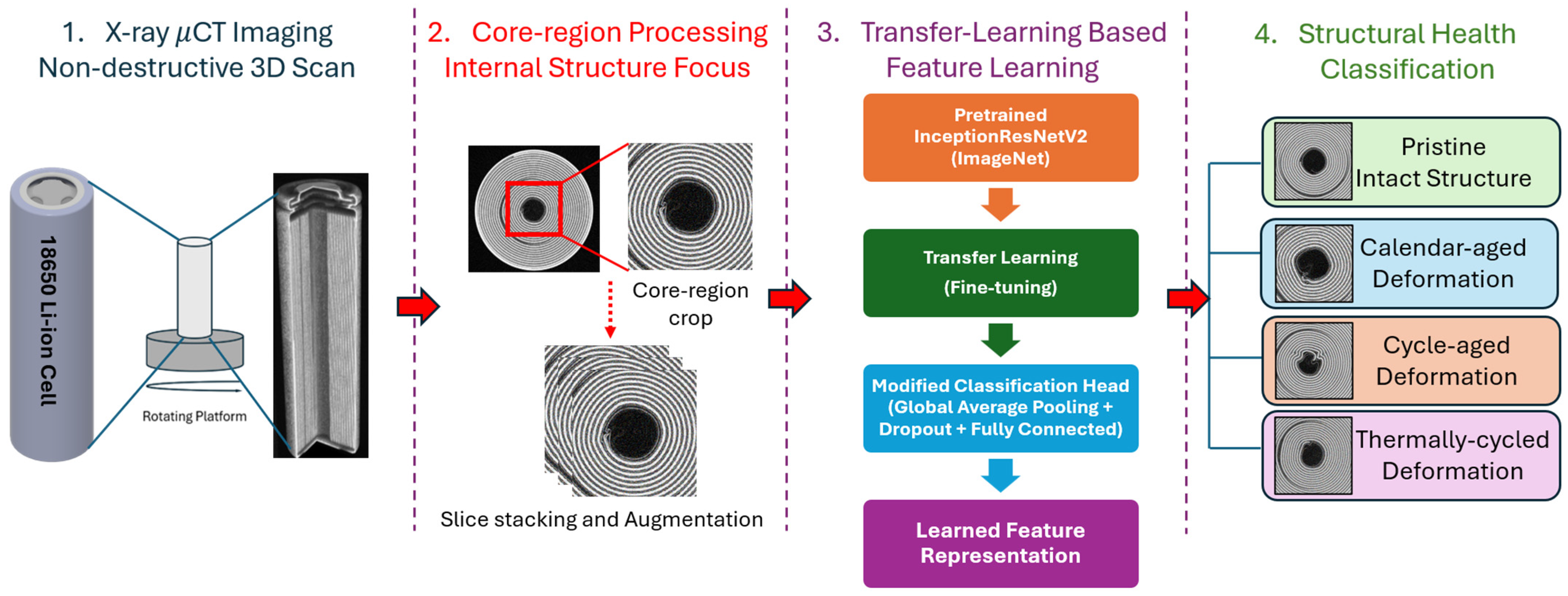
The overall workflow of the proposed lithium-ion battery structural condition classification framework is shown in
Figure 1. The methodology combines X-ray micro-computed tomography (µCT) imaging, domain-specific image preprocessing, transfer learning, and performance evaluation to automatically identify battery structural conditions. First, µCT scans of 18650 lithium-ion battery cells were acquired and reconstructed into a series of cross-sectional grayscale images. These images were subsequently processed using a dedicated preprocessing pipeline consisting of centroid-based core cropping, image normalization, and three-slice stacking. The resulting images were then subjected to data augmentation and divided into training, validation, and testing datasets.
The processed images were used to fine-tune a pretrained InceptionResNet-V2 convolutional neural network. Transfer learning enables the network to leverage features learned from large-scale image datasets while adapting to battery-specific structural characteristics observed in µCT imagery. Following training, the model was evaluated using an independent testing dataset, and performance was quantified using accuracy, precision, sensitivity, specificity, and F1-score metrics. The proposed framework was designed to provide an approach for identifying structural degradation patterns in lithium-ion batteries while preserving computational efficiency.
2.2. µCT Imaging
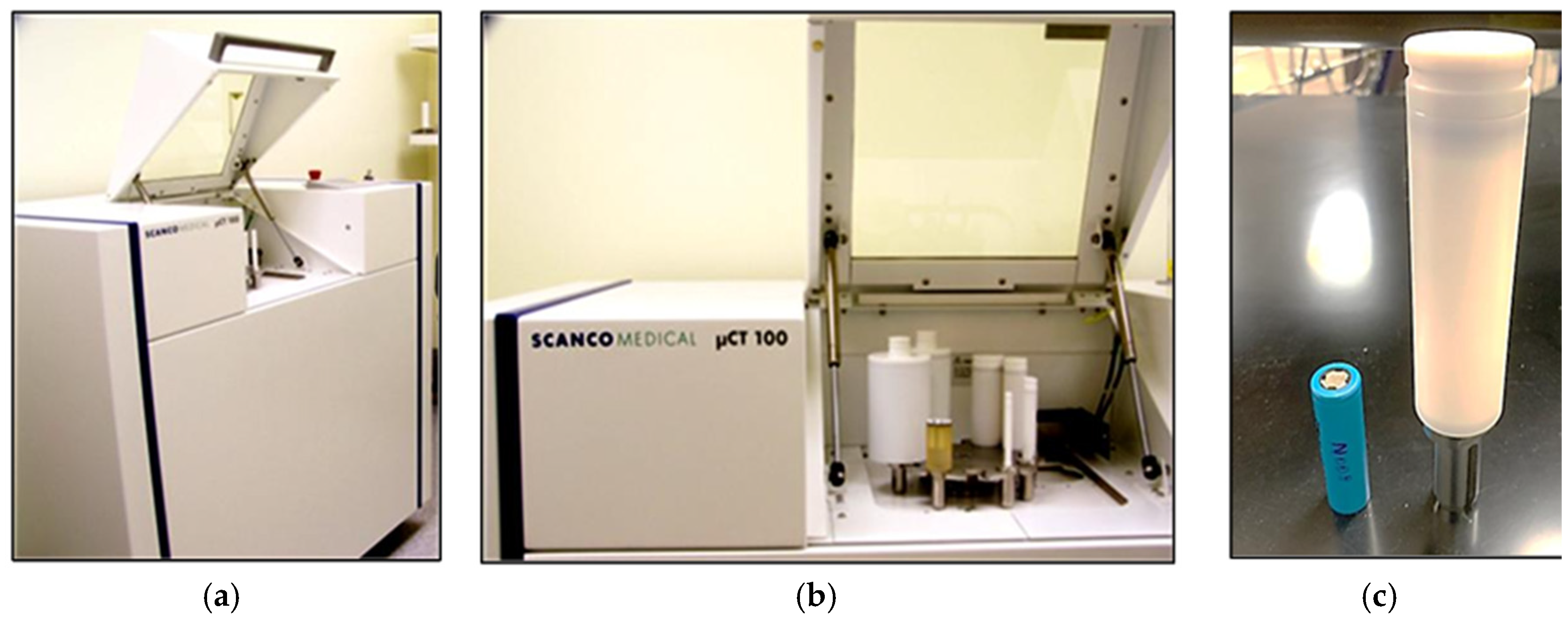
The experimental data were collected using the Scanco X-ray 100 cabinet µCT scanner (Scanco Medical AG, Brüttisellen, Switzerland).
Figure 2 illustrates the scanner used, the holder employed, and an 18650 LIB cell. In
Figure 2a, the full view of the cabinet can be seen.
Figure 2b shows the rotary stand with which we can place sample holders containing samples for measurement.
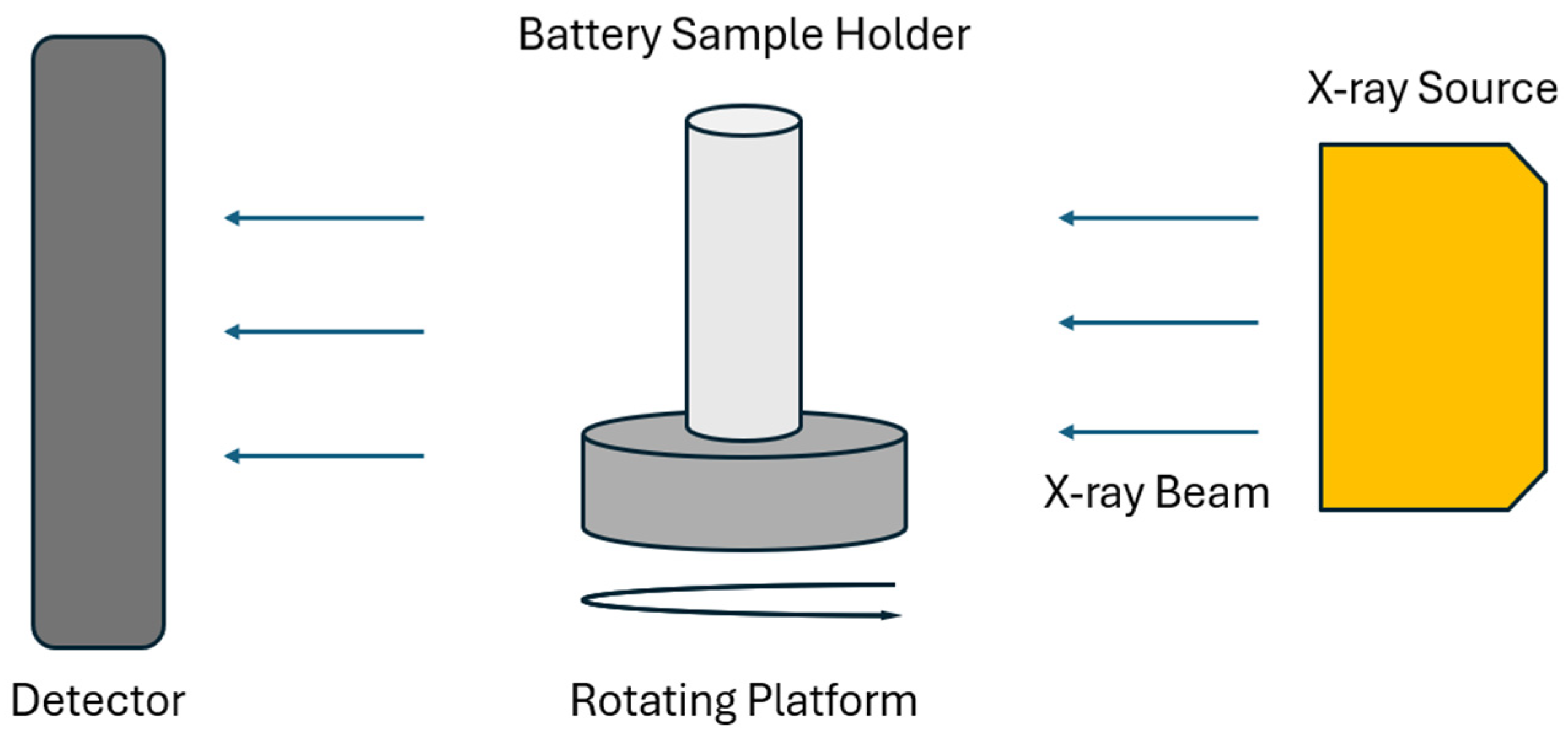
Figure 2c is a schematic of the scanning process, in which X-rays emitted from the source penetrate the lithium-ion battery sample.
The detector captures the transmitted X-rays after they pass through the sample and converts them into digital signals, which are then used for image reconstruction.
Figure 3 illustrates the schematic of the micro-CT scanning process. In this setup, X-rays are emitted from the source and directed toward the battery sample mounted on a rotating platform. As the X-rays penetrate the sample, variations in material density and internal structure attenuate the beam differently. The transmitted X-rays are then recorded by the detector, producing a series of projection images at multiple angles. These projections are subsequently reconstructed to generate high-resolution cross-sectional images that reveal the internal morphology of the battery.
The specifications and capabilities of the Scanco X-ray 100 cabinet µCT scanner are shown in
Table 2. The cabinet scanner allows for non-destructive 3D imaging of small-to-medium-sized samples, enabling detailed internal structure analysis at micrometer-scale resolution. The enclosed cabinet design provides both radiation shielding for operator safety and mechanical stability for consistent scanning conditions.
The scans were conducted at an operating voltage of 90 kV and a current of 200 µA, corresponding to a total power output of 18 W. These parameters were chosen to provide sufficient X-ray penetration through the dense electrode and current collector materials of the 18650 lithium-ion cells while maintaining high image contrast. An air filter was used to reduce beam hardening effects, and the system’s default calibration settings were applied to ensure measurement consistency across all samples. The high-resolution mode was selected to capture detailed structural features, such as electrode layer spacing and micro-scale defects, which are essential for accurate structural health assessment. Each cell was mounted in a 35 mm sample holder designed for cylindrical samples. Reconstruction times ranged from 30 min to 2 h depending on the acquisition parameters, and the system can accommodate samples with diameters up to 50 mm. The operating parameters used for high-resolution imaging of the lithium-ion battery cells are provided in
Table 3.
2.3. InceptionResNetV2 Architecture
InceptionResNet-V2, a convolutional neural network pretrained on the ImageNet dataset, is used as the foundation for the transfer-learning framework. This architecture combines the representational strength of deep residual connections with the multi-scale feature extraction capabilities of Inception modules, making it suited for identifying the subtle morphological changes present in X-ray micro-CT images of lithium-ion batteries suitable for identifying the subtle morphological changes present in X-ray micro-CT images of lithium-ion batteries.
InceptionResNetV2 combines the strengths of Inception modules and residual connections within a single architecture. This hybrid design enables the network to efficiently capture features at multiple spatial scales while maintaining stable training behavior. Residual connections allow information to flow through deep networks without degradation, reducing training difficulty and improving convergence speed. Additionally, the use of parallel convolutional paths with different kernel sizes within Inception blocks allows the model to learn both fine-scale and coarse-scale structural patterns simultaneously.
The architecture is composed of multiple stacked blocks that integrate convolutional layers, feature merging, nonlinear activation functions, and residual pathways. This design has demonstrated strong performance in complex image analysis tasks, particularly in domains where subtle structural differences must be identified. For this reason, InceptionResNetV2 was selected as the pretrained backbone for this study, providing a robust and transferable feature extraction foundation for classifying structural health conditions in micro-CT images of lithium-ion batteries.
2.4. Dataset Preparation
Four 18650 lithium-ion battery cells representing distinct structural conditions were investigated in this study, including pristine, cycle-aged, calendar-aged, and thermally cycled cells. One representative cell was scanned for each condition using X-ray micro-computed tomography (µCT). Multiple radial slices were extracted from each scan volume and processed to generate image samples for model development. The reported image counts therefore represent individual CT slice samples rather than independent physical battery cells.
Table 4 shows the details of the dataset prepared for the study.
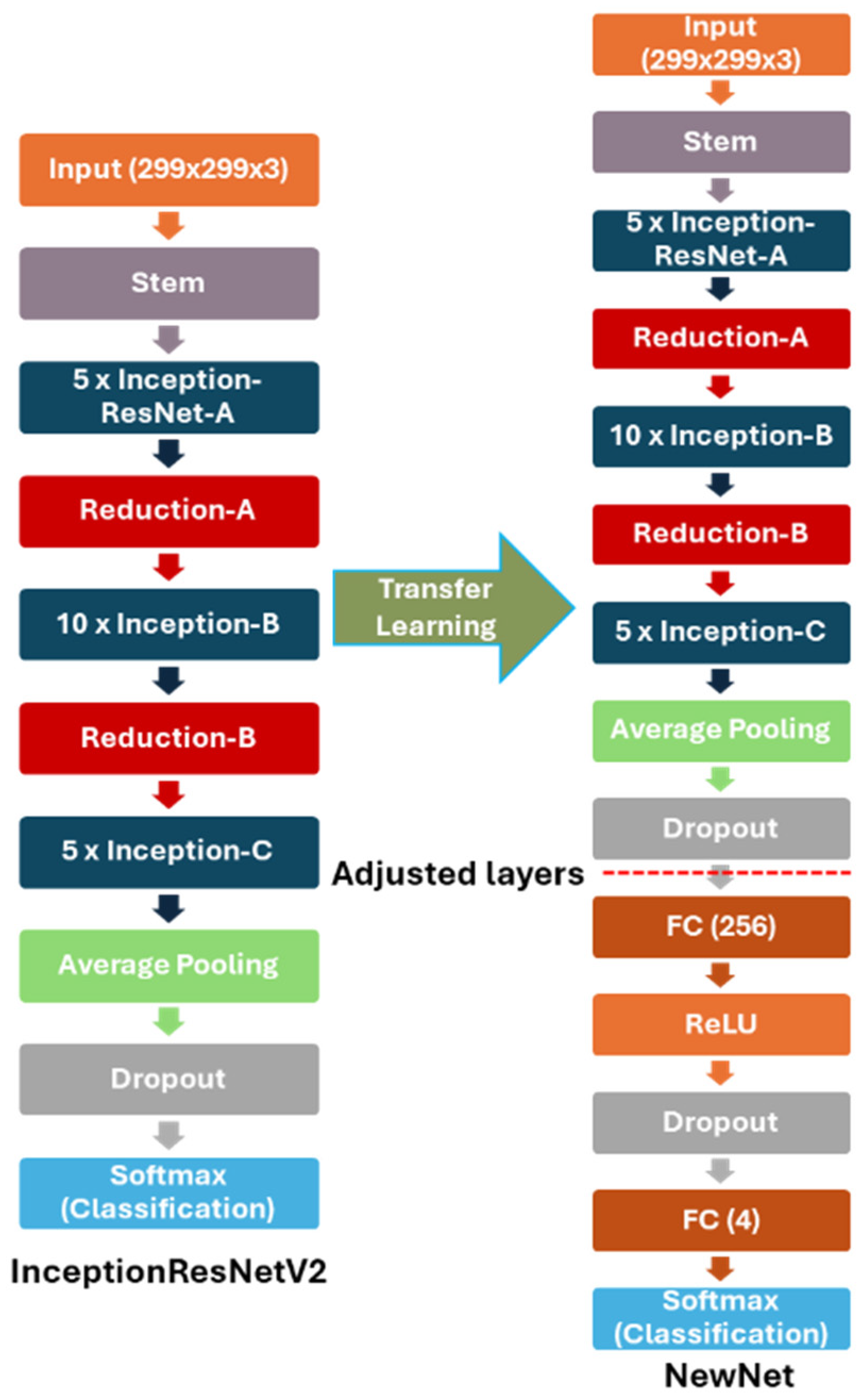
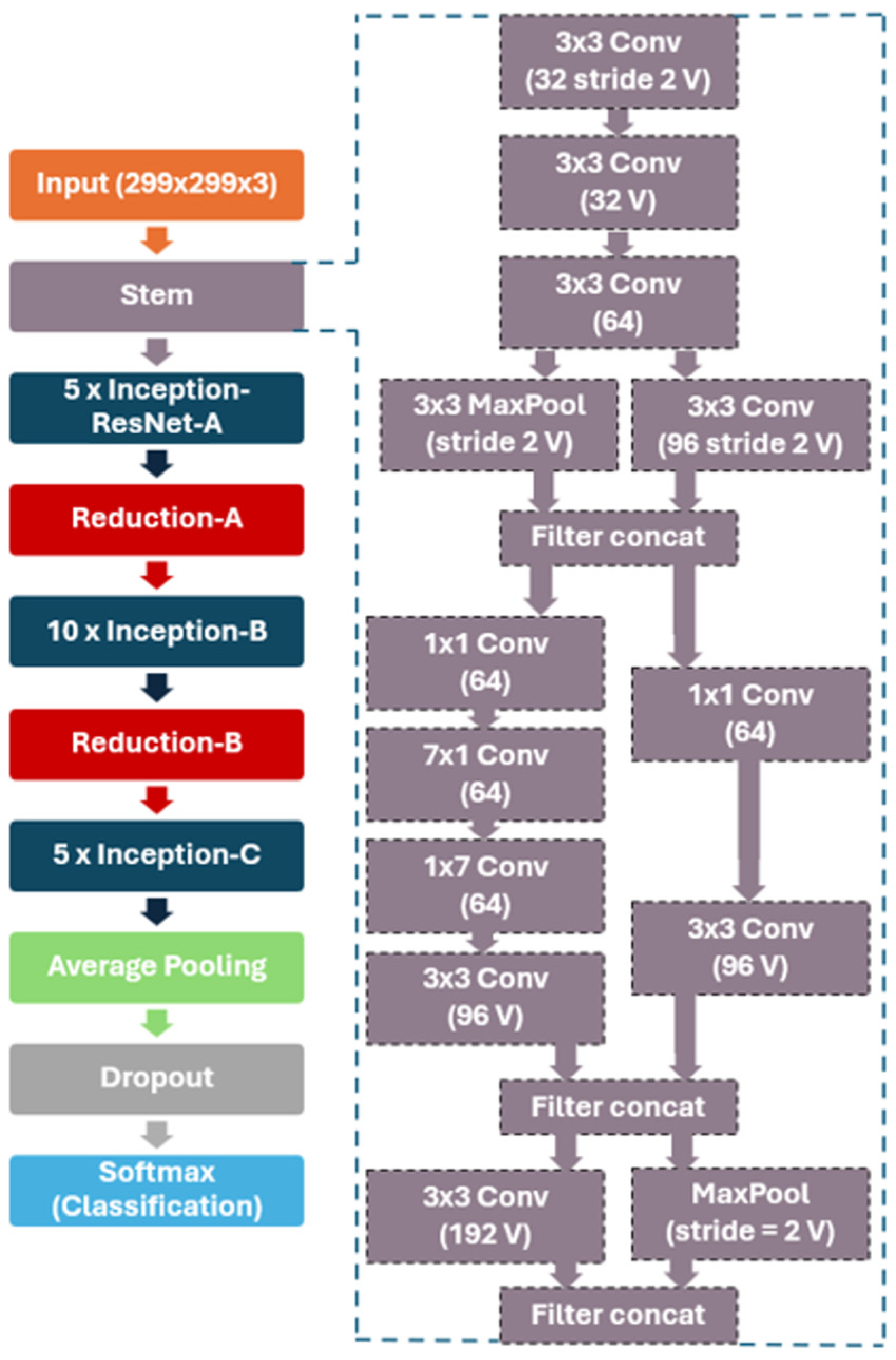
Figure 4 shows the schematic of the baseline Inception-ResNet-v2 network used in this study. The processed image dataset was divided into training (80%) and validation (20%) subsets. The training dataset was used for network optimization, while the validation dataset was used to monitor convergence during training. In addition, a separate independent testing dataset was reserved for final performance evaluation. The confusion matrix, accuracy, precision, sensitivity, specificity, and F1-score reported in this study were all calculated using the independent testing dataset. The following
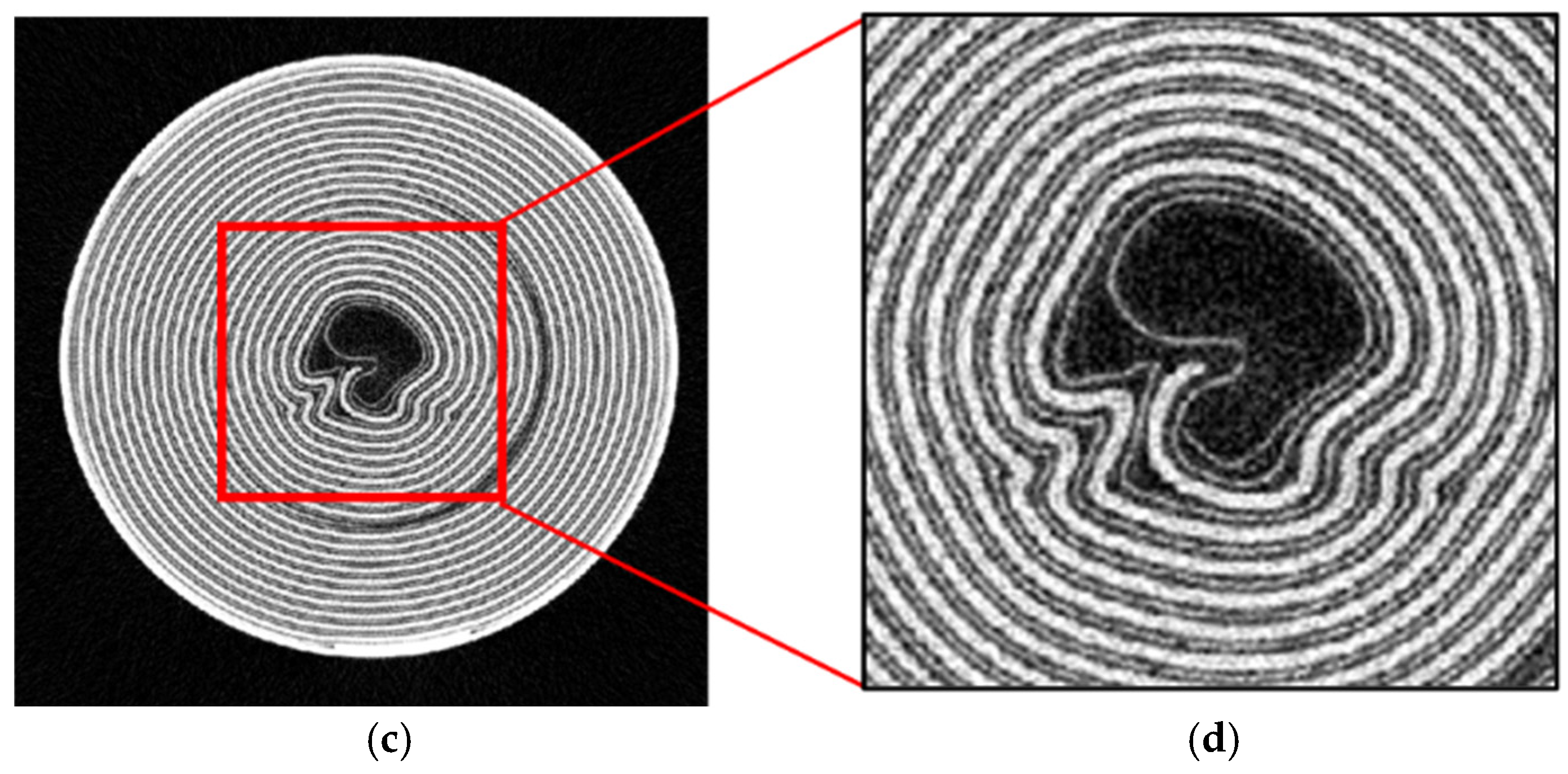
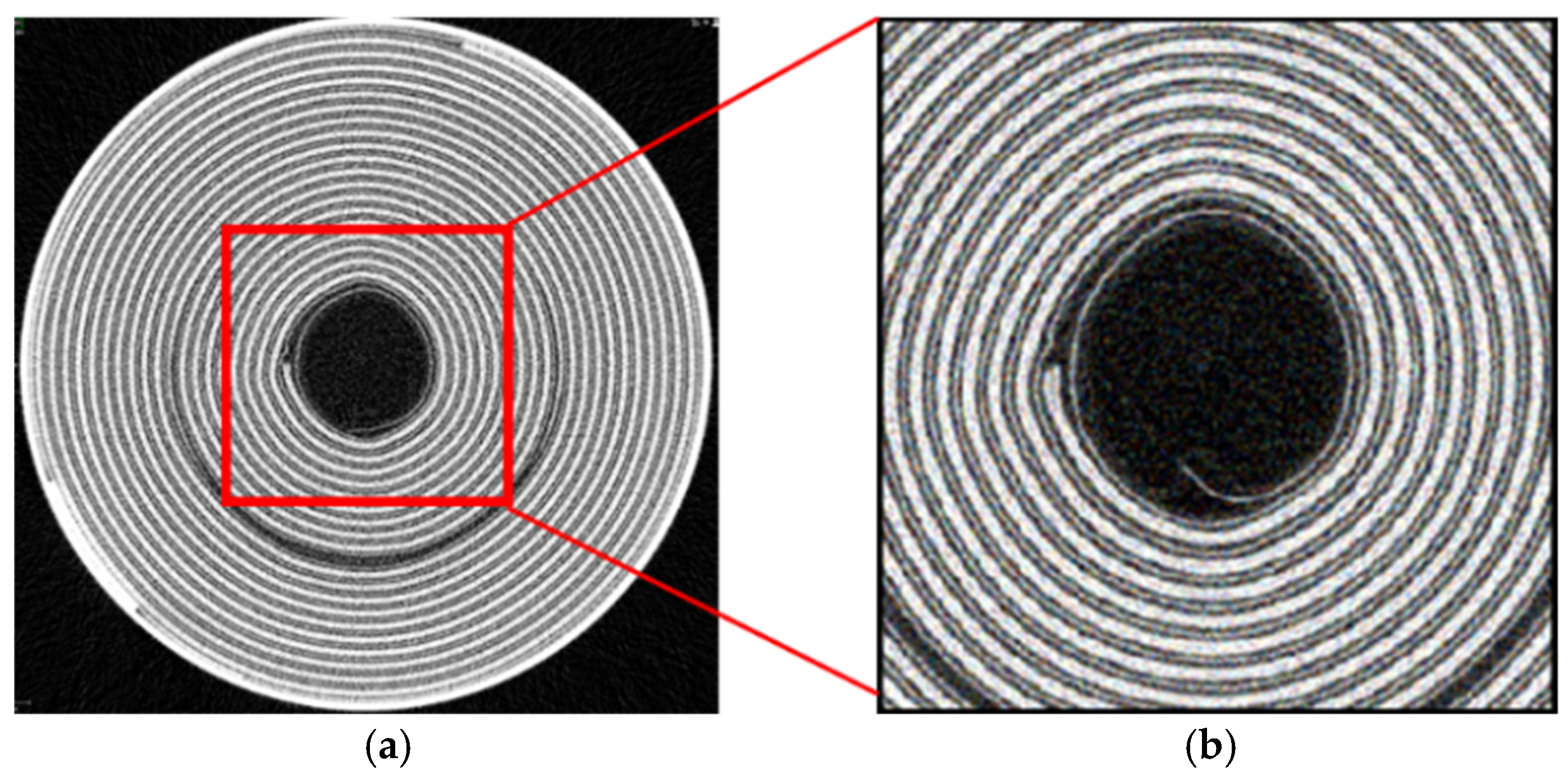
Figure 5 shows the digital reconstruction of the CT scans carried out for the pristine and the cycle-aged cell, and a zoom-enhanced image of the core winding region.
Figure 5a and
Figure 5c show full radial cross-sectional CT scans of a pristine cell and a thermally cycled cell, respectively.
Figure 5b,d presents magnified views of the highlighted regions, allowing for comparison of the internal electrode structure. The pristine cell exhibits a uniform and concentric winding pattern, while the thermally cycled cell shows noticeable distortion and irregularities in the winding geometry.
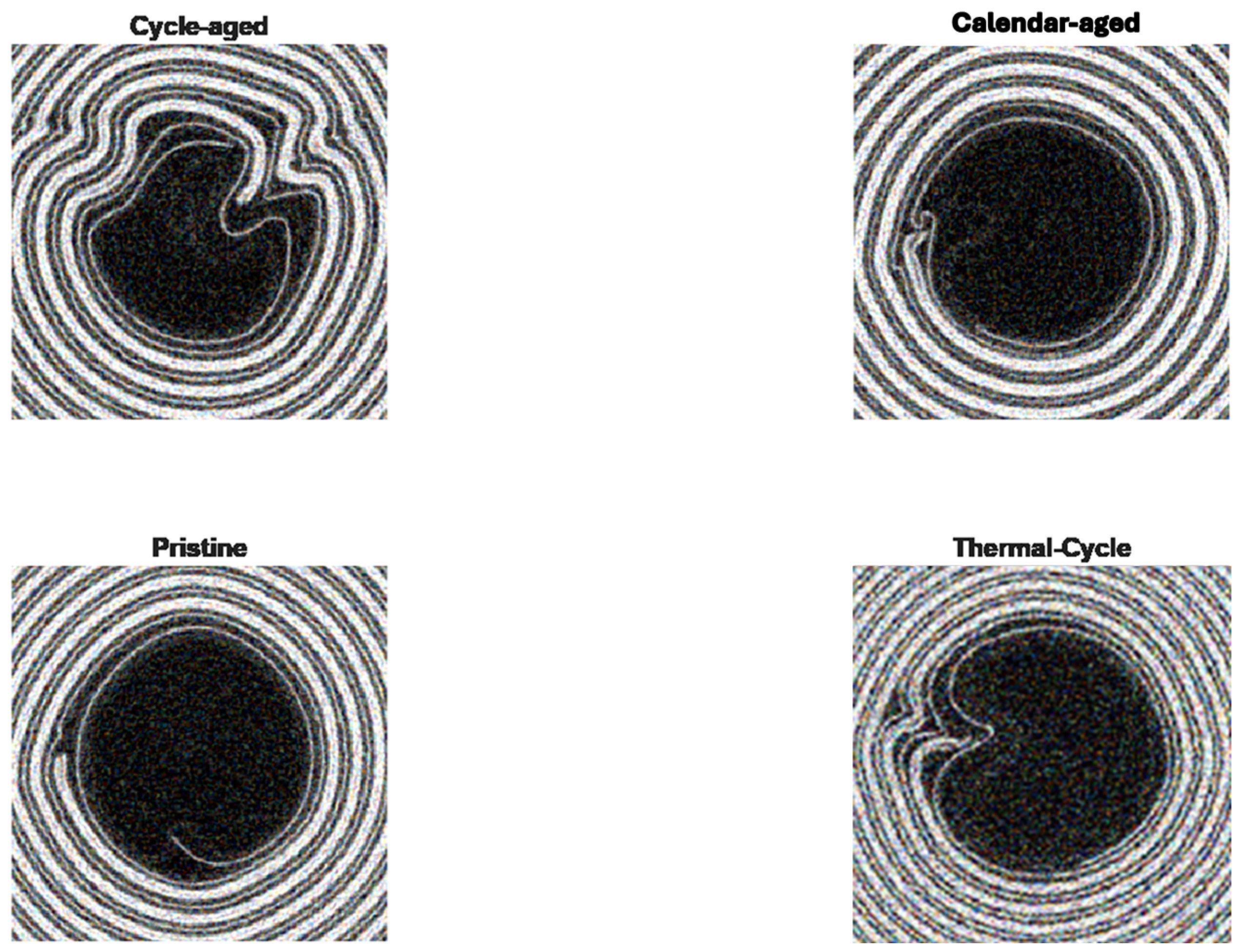
Figure 6 presents representative cropped µCT images highlighting the internal structural differences among the four lithium-ion battery conditions considered in this study.
Each battery condition exhibits distinct structural characteristics within the electrode winding region. The cycle-aged cell exhibits the most severe structural disruption, with significant warping and non-uniform spacing throughout the electrode layers. The calendar-aged cell shows slight irregularities and localized deviations near the core, suggesting gradual degradation over time. The pristine cell displays a highly uniform and concentric spiral structure, indicating minimal deformation and consistent electrode spacing. More pronounced deformation is observed in the thermal-cycle condition, as distortion of the winding structure becomes more evident due to repeated thermal stress. These visual differences demonstrate how various aging mechanisms impact the internal morphology of lithium-ion batteries and provide the basis for feature extraction in the proposed deep learning model.
2.5. Preprocessing
The X-ray micro-computed tomography image dataset was preprocessed in MATLAB R2025b to ensure consistency in spatial resolution, structural focus, and compatibility with the deep learning framework prior to model training. All CT images were organized into class-labeled subfolders corresponding to the four lithium-ion battery structural conditions investigated in this study.
To adapt the network for CT-based structural classification, several domain-specific modifications were introduced. First, radial slices from the CT images were obtained from the scanner. Then, the battery’s central winding region was extracted using an automated center-crop operation. To provide a three-dimensional image, three adjacent slices were stacked into an RGB-like representation, allowing the pretrained 2D network to capture inter-slice continuity without requiring a full 3D model. These stacked samples were then normalized, contrast-corrected, and augmented with transformations, and the number of images was balanced across all battery conditions to prevent class bias.
Data augmentation was applied to the training dataset using small, controlled geometric transformations. These augmentations included limited rotations, translations, and scaling operations.
Table 5 below shows the data augmentations used and their parameters.
2.6. Proposed Transfer Learning Architecture
The proposed convolutional neural network, referred to as NewNet, is built upon the pretrained InceptionResNet-V2 architecture and is designed to classify lithium-ion battery structural conditions from X-ray micro-computed tomography (µCT) images. The network processes input images in a sequential, layer-by-layer manner, where progressively deeper layers extract increasingly complex representations of the internal battery structure. This hierarchical feature extraction enables the model to identify subtle differences among pristine, cycle-aged, calendar-aged, and thermally cycled cells based on their internal deformation patterns.
InceptionResNet-V2 serves as the backbone of the proposed framework, leveraging its deep convolutional layers and residual connections to extract robust and multi-scale visual features. The early layers of the network retain their pretrained weights to capture general low-level patterns such as edges, gradients, and textures, while the deeper layers are fine-tuned to learn battery-specific structural signatures. These signatures include variations in core symmetry, spiral winding distortion, void formation, and localized density irregularities that arise from aging and thermal abuse. Residual connections within the architecture facilitate efficient gradient flow during training, allowing the network to learn deep representations without degradation in performance.
To adapt the pretrained model for the battery classification task, the original classification head is removed and replaced with a custom task-specific head. This new head consists of multiple dropout layers for regularization, an intermediate fully connected layer that enhances feature abstraction, and a final fully connected layer sized to the number of battery condition classes. A SoftMax activation function converts the network outputs into class probabilities, followed by a class-weighted classification layer that mitigates the influence of residual class imbalance during training.
All input images are resized to 299 × 299 × 3 pixels to match the input requirements of InceptionResNet-V2. Because the original µCT images are grayscale, a three-slice stacking approach is used, where three adjacent axial slices are combined into an RGB-like representation. This strategy allows the two-dimensional network to capture limited three-dimensional structural continuity without the computational cost of full 3D convolutional models. Additionally, a centroid-based cropping technique is used to isolate the central winding region of the battery. This focused cropping ensures that the model concentrates on the most structurally relevant features while reducing background variability. The images are further normalized and contrast-adjusted to ensure consistency across the dataset.
Training is performed using the cross-entropy loss function and the Adam optimizer, with an initial learning rate of 0.0001. The network is trained for approximately 12 to 20 epochs, depending on the convergence behavior observed during validation. To improve generalization and reduce overfitting, data augmentation techniques including small random rotations, translations, and scaling are applied during training. These augmentations are intentionally constrained to preserve deformation-related features while increasing dataset diversity. GPU acceleration is used throughout training to enable efficient optimization and rapid experimentation with architectural and hyperparameter configurations.
Among several pretrained architectures evaluated, including ResNet, GoogleNet, VGG variants, and AlexNet, InceptionResNet-V2 showed the most promising performance for this application due to its combination of deep feature extraction, residual learning, and computational efficiency. These characteristics make it particularly well suited for identifying internal structural degradation in lithium-ion batteries using µCT imaging.
Figure 7 shows the proposed transfer learning framework. The pretrained InceptionResNetV2 network acts as the feature extraction baseline, while the original classification head is replaced with a custom classification head designed for lithium-ion battery structural condition classification.
3. Results and Discussion
3.1. Model Evaluation Metrics and Result Analysis
Regarding model evaluation criteria, the standards commonly used in image classification models were applied. These include accuracy, precision, sensitivity, specificity, and F1-score. The formulae for these evaluation criteria are detailed below, where
TP represents true positive,
FP represents false positive,
FN represents false negative, and
TN represents true negative. Together, they provide a comprehensive understanding of the model’s predictive behavior, particularly in multi-class classification problems where class imbalance and misclassification costs must be carefully considered.
Accuracy represents the proportion of correctly classified samples relative to the total number of test samples. While accuracy provides an overall measure of performance, it does not fully capture how well individual classes are identified, especially when certain classes are more difficult to distinguish.
Precision measures how many of the samples predicted as a given class are correct. A high precision value indicates a low false-positive rate, meaning the model is not frequently mislabeling other battery conditions as that class.
Sensitivity, also referred to as recall, quantifies the model’s ability to correctly identify samples belonging to a given class. High sensitivity is particularly important for detecting degradation or abnormal battery conditions, where failing to identify a damaged cell could have safety implications.
Specificity measures the ability of the model to correctly identify samples that do not belong to a given class, effectively capturing how well false positives are avoided.
The F1-score combines both precision and sensitivity into a single metric, providing a balanced assessment of classification performance. This metric is particularly useful when evaluating models on datasets where class distributions may vary.
Table 6 shows the evaluation metrics per class when tested on the independent testing dataset.
The pristine class achieved the highest performance, with a precision of 97.87% and a sensitivity of 100%, indicating that all pristine samples were correctly identified while very few non-pristine samples were incorrectly classified as pristine. The cycle-aged class achieved a sensitivity of 95.65%, suggesting that only a small number of cycle-aged samples were misclassified. Similarly, the calendar-aged class achieved perfect sensitivity, indicating that all calendar-aged samples were successfully detected. The thermally cycled class exhibited the lowest sensitivity (92.11%), which may be attributed to overlapping structural characteristics between thermal cycling and other degradation mechanisms.
Table 7 shows the overall/macro metrics results for the model evaluation criteria.
In this study, the model achieved an overall accuracy of 96.62%, indicating that the majority of battery CT images were correctly classified into their respective structural condition categories. The reported macro-averaged precision of 95.62% demonstrates that, on average, the model makes reliable class assignments when it predicts a particular battery condition. The model achieved a macro-averaged sensitivity of 96.94%, indicating strong performance in correctly detecting the true structural condition of batteries across all classes. The high macro-averaged specificity of 98.92% suggests that the model is highly effective at distinguishing between different battery conditions and minimizing incorrect cross-class predictions. The macro-averaged F1-score of 96.16% reflects a strong balance between correctly identifying battery conditions and minimizing misclassification errors. Overall, the reported evaluation metrics indicate that the proposed InceptionResNet-V2-based transfer learning model performs robustly across multiple lithium-ion battery structural conditions. The high accuracy, combined with strong precision, sensitivity, specificity, and F1-score values, demonstrates the model’s capability to reliably classify µCT images and effectively capture battery-specific deformation patterns.
To further assess the effectiveness of the proposed framework, the overall performance metrics were compared with representative battery imaging and deep learning studies reported in the literature.
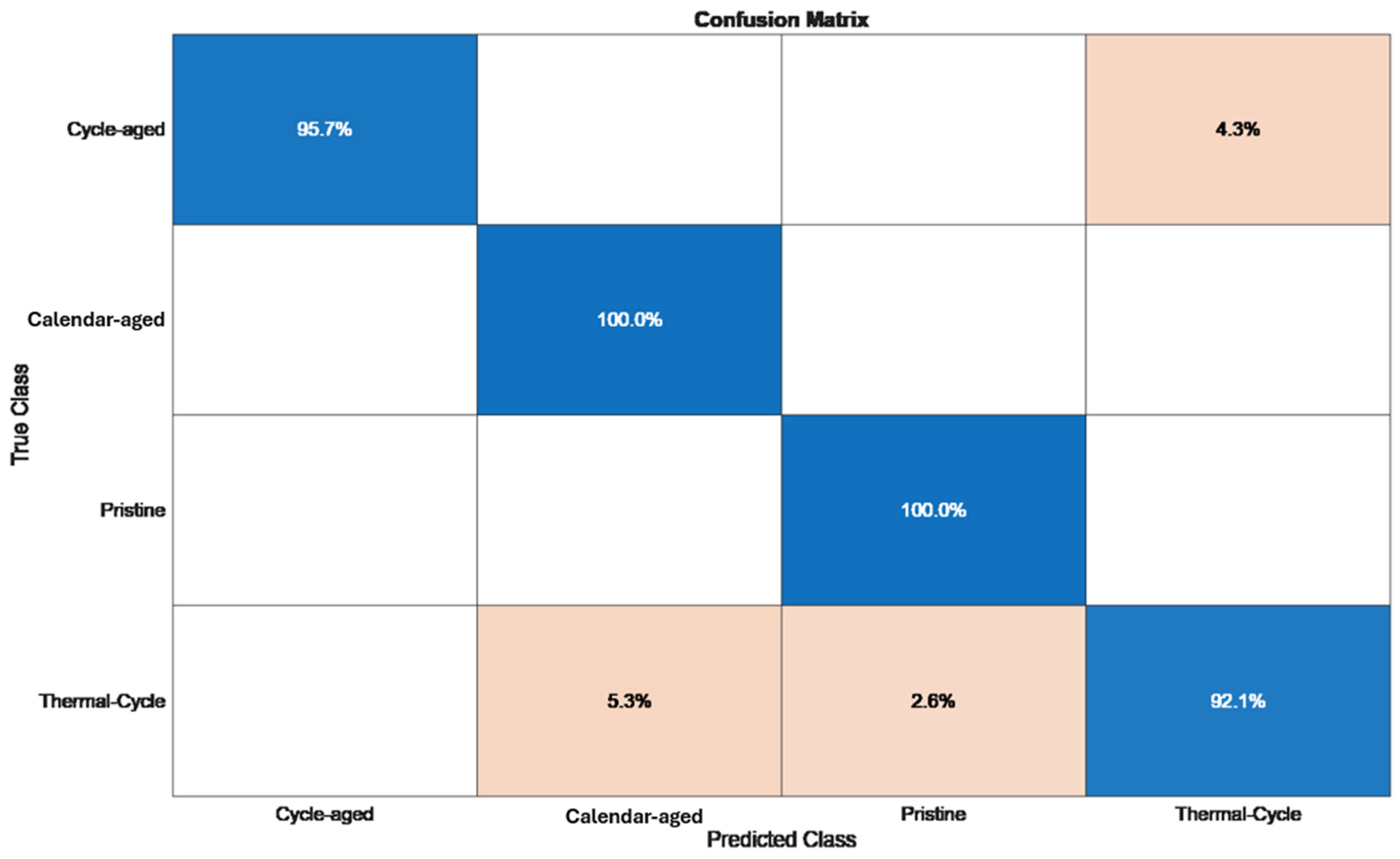
Table 8 presents the confusion matrix for the proposed NewNet model applied to four lithium-ion battery.
Table 8 compares the proposed NewNet framework with representative battery imaging and deep learning studies reported in the literature. The proposed framework achieved an overall accuracy of 96.62%, precision of 95.62%, sensitivity of 96.94%, specificity of 98.92%, and F1-score of 96.20%. Although Zhang et al. [
32] and Zhu et al. [
33] reported slightly higher classification accuracies of 99.54% and 99.20%, respectively, both studies focused primarily on defect detection using XCT datasets. In contrast, this study addresses structural condition classification of lithium-ion batteries using µCT images and incorporates a preprocessing pipeline based on centroid-based core cropping. Direct comparison among studies should be interpreted with care, as there is a lack of literature that specifically investigates structural condition classification of lithium-ion batteries using transfer learning. Therefore, the comparison includes related battery imaging studies involving defect detection, battery recognition, and battery-type classification tasks. Despite these differences, the proposed framework achieved comparable performance relative to existing approaches and demonstrated strong sensitivity and F1-score values for identifying degradation-related structural features. Compared with BatSort [
31] and X-ray-based battery detection approaches reported by Baker et al. [
34] and Sterkens et al. [
30], the proposed framework achieved higher recall and F1-score values, further demonstrating the effectiveness of the proposed methodology for battery structural condition assessment.
Figure 8 presents the confusion matrix for the proposed NewNet model applied to four lithium-ion battery structural conditions derived from µCT imaging: cycle-aged, calendar-aged, pristine, and thermally cycled. The confusion matrix summarizes the classification performance by comparing the true class labels with the predicted class labels for the independent test dataset. Diagonal elements represent correctly classified samples, while off-diagonal elements indicate misclassifications between battery conditions.
The model demonstrates strong classification performance across most classes. Cycle-aged cells are correctly identified with a rate of 95.7%, with a small portion (4.3%) misclassified as thermally cycled, indicating that the model identifies some visual similarity between these two degradation mechanisms. Calendar-aged cells achieve perfect classification accuracy, with 100% of samples correctly identified, suggesting that high-temperature-induced structural features are highly distinguishable in the cropped µCT scanned images.
Pristine cells are also classified with high accuracy, achieving a correct classification rate of 100%. Thermally cycled cells achieve a correct classification rate of 92.1%, with some confusion between calendar-aged (5.3%) and pristine (2.6%) classes. This indicates there are overlapping structural deformation patterns caused by long-term aging processes.
In addition to the class-specific performance shown in the confusion matrix, the overall classification accuracy achieved by the proposed model is 96.62%. This metric reflects the proportion of correctly classified samples across all battery conditions in the test dataset. The high overall accuracy indicates that the combination of core-focused cropping and InceptionResNetV2-based transfer learning enables robust discrimination between pristine, cycle-aged, calendar-aged, and thermally cycled lithium-ion battery cells.
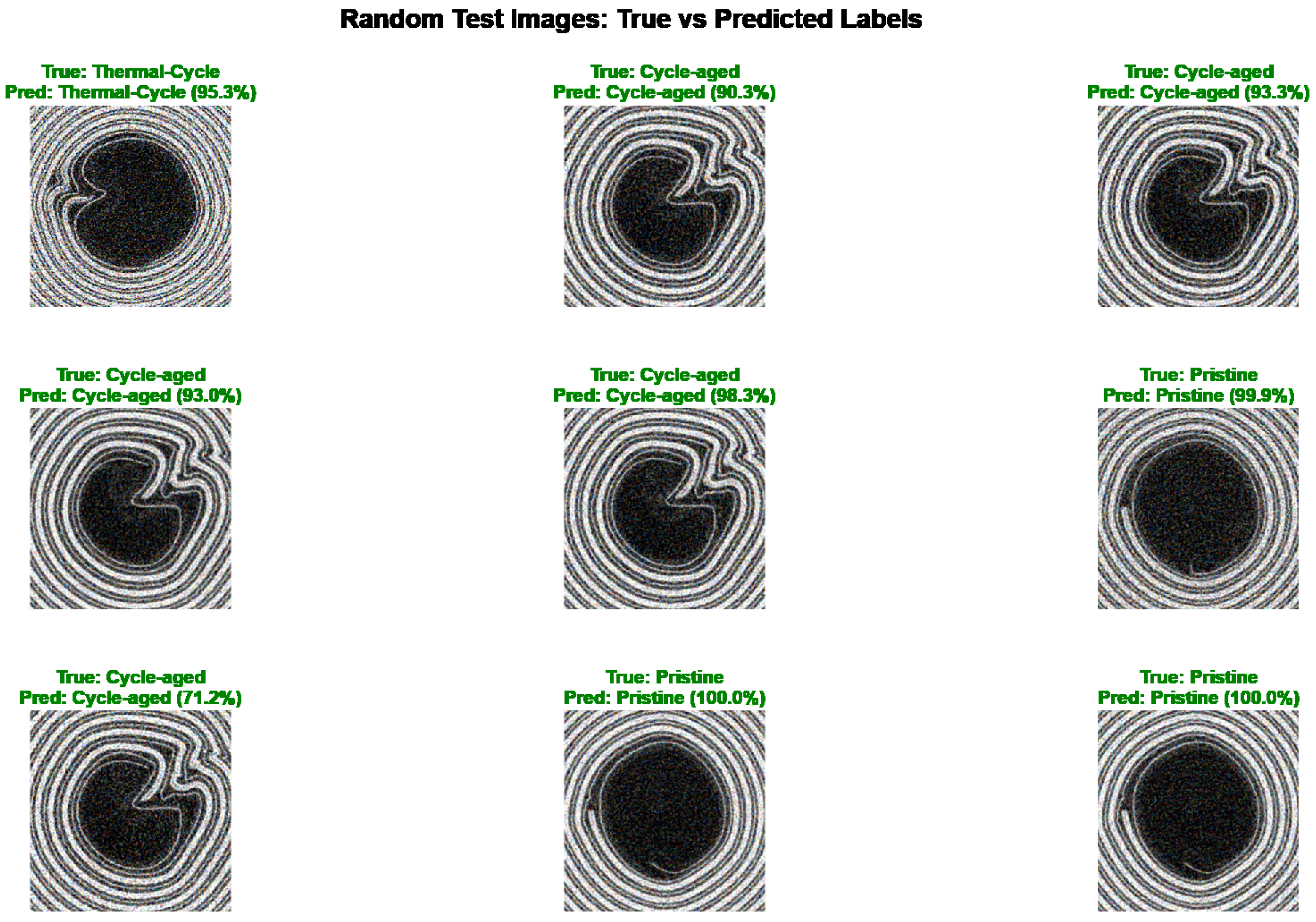
Figure 9 illustrates the NewNet testing predicted results and confidence using the processed X-ray CT scans of 18650 lithium-ion battery cells for nine randomly chosen images. The reconstructed images can reveal differences in internal electrode structure between pristine, cycle-aged, calendar-aged, and thermally cycled cells. The predicted class labels range across multiple structural health states depending on the degree of deformation detected.
Correctly classified samples are predicted with high confidence, often exceeding 90–100%. Pristine classification is noted to have the highest confidence in comparison to the other classes due to its distinct internal structure. On the other hand, thermally cycled cells hover around 90–95% confidence of classification. A majority of the cycle-aged µCT images were classified with a confidence of 90% and above; however, some images hover around 70% confidence. This may be due to confusion between similar internal deformation with another cell. These relatively high confidence values indicate that the model has learned stable and discriminative structural features for these battery conditions. This trend demonstrates that the model’s confidence scores provide good results for prediction reliability, with lower confidence often corresponding to ambiguous or transitional structural features.
3.2. Limitations and Future Work
Despite the results obtained in this study, several limitations should be acknowledged. Each degradation class was represented by a single physical battery cell, and the reported image samples therefore originated from the same specimen within each class. While the results demonstrate the feasibility of the proposed framework, future work should include larger numbers of batteries to evaluate cell-to-cell variability and improve model generalization. Additional battery chemistries, form factors, and degradation conditions will also be investigated.
4. Conclusions
This study demonstrates the feasibility and effectiveness of using deep learning-based transfer learning for non-destructive structural health classification of lithium-ion batteries using X-ray micro-computed tomography data. By combining centroid-based core cropping, three-slice stacking to capture limited three-dimensional context, and fine-tuning of the InceptionResNet-V2 architecture, the proposed framework successfully learns deformation-relevant features directly from internal battery structures. Quantitative evaluation shows strong performance across multiple battery conditions, achieving an overall classification accuracy of 96.62% along with high precision, sensitivity, specificity, and F1-scores. The proposed framework achieved competitive performance relative to previously reported battery imaging studies while addressing the more challenging task of structural condition classification from µCT images.
A detailed analysis of confusion matrices, confidence scores, and visual prediction results reveals that the model is particularly effective at identifying distinct degradation modes such as calendar-aging and thermal cycling, while appropriately expressing uncertainty in cases where structural differences are subtle. Visual inspection further confirms that the model’s decisions are grounded in physically meaningful features, including core asymmetry, winding distortion, and density variations within the electrode structure.
Overall, the results highlight the potential of deep learning–assisted CT analysis as a scalable, non-destructive diagnostic tool for lithium-ion battery assessment. The proposed approach offers a pathway toward automated structural health monitoring that can support battery safety evaluation, degradation analysis, and lifecycle management. While this study focuses on a limited number of degradation categories, future work will aim to expand the dataset, refine degradation labels, and improve sensitivity to early-stage damage, further enhancing the applicability of this framework to real-world battery systems.