3.1. Analysis of ISC Characteristics Coupled with Dynamic Discharge in NCM Batteries
This section investigated the patterns of temperature, voltage, and mass loss changes during nail penetration-induced ISC in NCM lithium-ion batteries under operating conditions (i.e., during discharge operation). It provided a reference for a comprehensive understanding of the behavior and mechanism of ISCs coupled with dynamic discharge in lithium-ion batteries. The analysis corresponded to tests 1–6 in the nail penetration coupled with charge/discharge experiments, as listed in
Table 2.
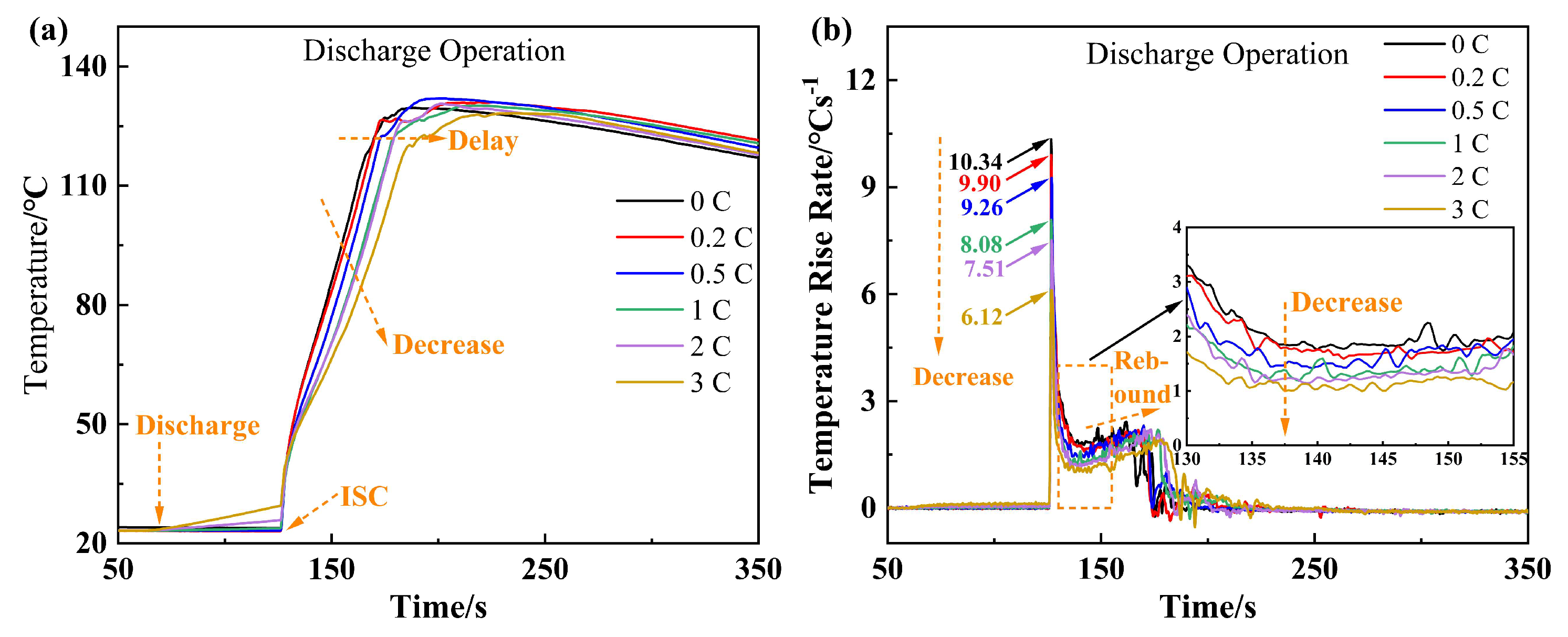
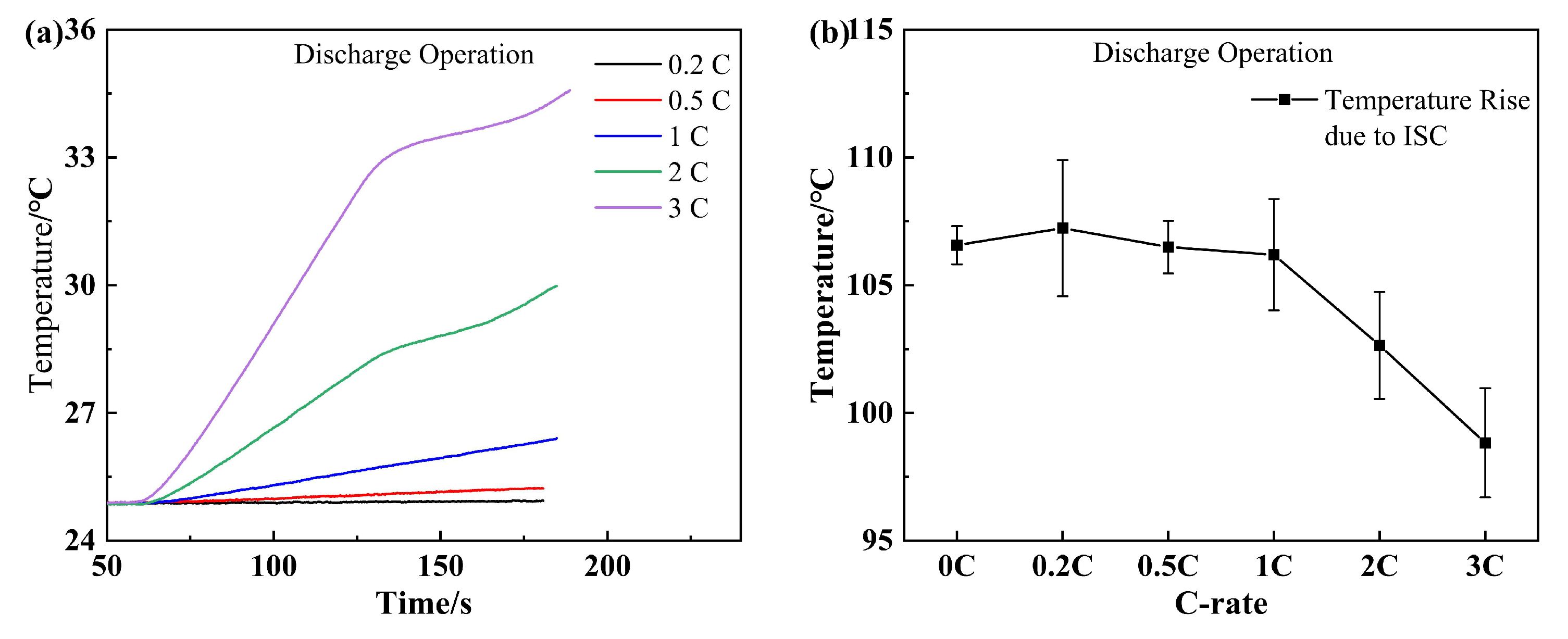
Figure 2a shows the temperature variation during the ISC coupled with the discharge operation. The results indicated that the C-rate significantly influenced the thermal behavior of the battery. First, during the discharge-only phase, no temperature rise was observed at 0.2 C. The temperature increases caused by discharging at 0.5 C, 1 C, 2 C, and 3 C rates were 0.12 °C, 0.53 °C, 2.59 °C, and 6.29 °C, respectively. The increase in the discharge rate led to higher local current density and overpotential, which intensified polarization and accelerated the electrochemical reaction rate. This resulted in increased heat generation from ohmic resistance, reaction, and polarization [
37], ultimately causing the battery temperature to rise more rapidly with increasing discharge rate.
Secondly, during the phase of ISC coupled with discharge, the discharge operation delayed and attenuated the occurrence of macroscopic phenomena. As shown in
Table 3, the onset times for smoke emission, bulging, and electrolyte leakage were delayed with increasing C-rate. This indicated that under discharge operation, the sensitivity of the ISC, characterized by the temperature rise rate, decreased as the C-rate increased. The sensitivity ranking of the ISC, from high to low, was: 0 C > 0.2 C > 0.5 C > 1 C > 2 C > 3 C. It is important to emphasize that the times in
Table 3 refer to the time interval from the contact between the steel nail and the battery surface to the occurrence of the macroscopic phenomenon. No significant differences in the maximum temperature were observed in the experiments. ISCs coupled with different discharge rates exhibited similar thermal hazards.
Subsequently, the temperature rise rate during discharge-coupled ISC was quantitatively analyzed. As shown in
Figure 2b, the peak temperature rise rates during the initial ISC stage under 0 C, 0.2 C, 0.5 C, 1 C, 2 C, and 3 C discharge conditions were 10.34 °C/s, 9.90 °C/s, 9.26 °C/s, 8.08 °C/s, 7.51 °C/s, and 6.12 °C/s, respectively. The peak temperature rise rate decreased with increasing discharge rate, indicating that the discharge operation reduced the risk of immediate thermal runaway upon ISC initiation. During discharge, a higher current rate resulted in lower lithium concentration in the cathode electrolyte at the same SOC, while the lithium concentration on the surface of cathode particles became higher [
38]. This made the cathode electrolyte more prone to lithium depletion and the cathode particle surface more susceptible to lithium saturation during an ISC. The enhanced limitation of Li
+ transport significantly suppressed the rate of the internal electrochemical reaction, leading to a reduction in both the surge current and the peak temperature rise rate. It is noteworthy that during the sustained ISC stage, the battery’s temperature rise rate decreased with increasing discharge rate. This demonstrated that the discharge operation suppressed heat generation from the ISC, and the degree of suppression increased with the current. This phenomenon will be explained in detail in subsequent analysis combined with voltage and discharge current data. Furthermore, the elevated temperature improved the electrochemical kinetics within the battery, which increased heat generation during the ISC and resulted in a rebound of the temperature rise rate.
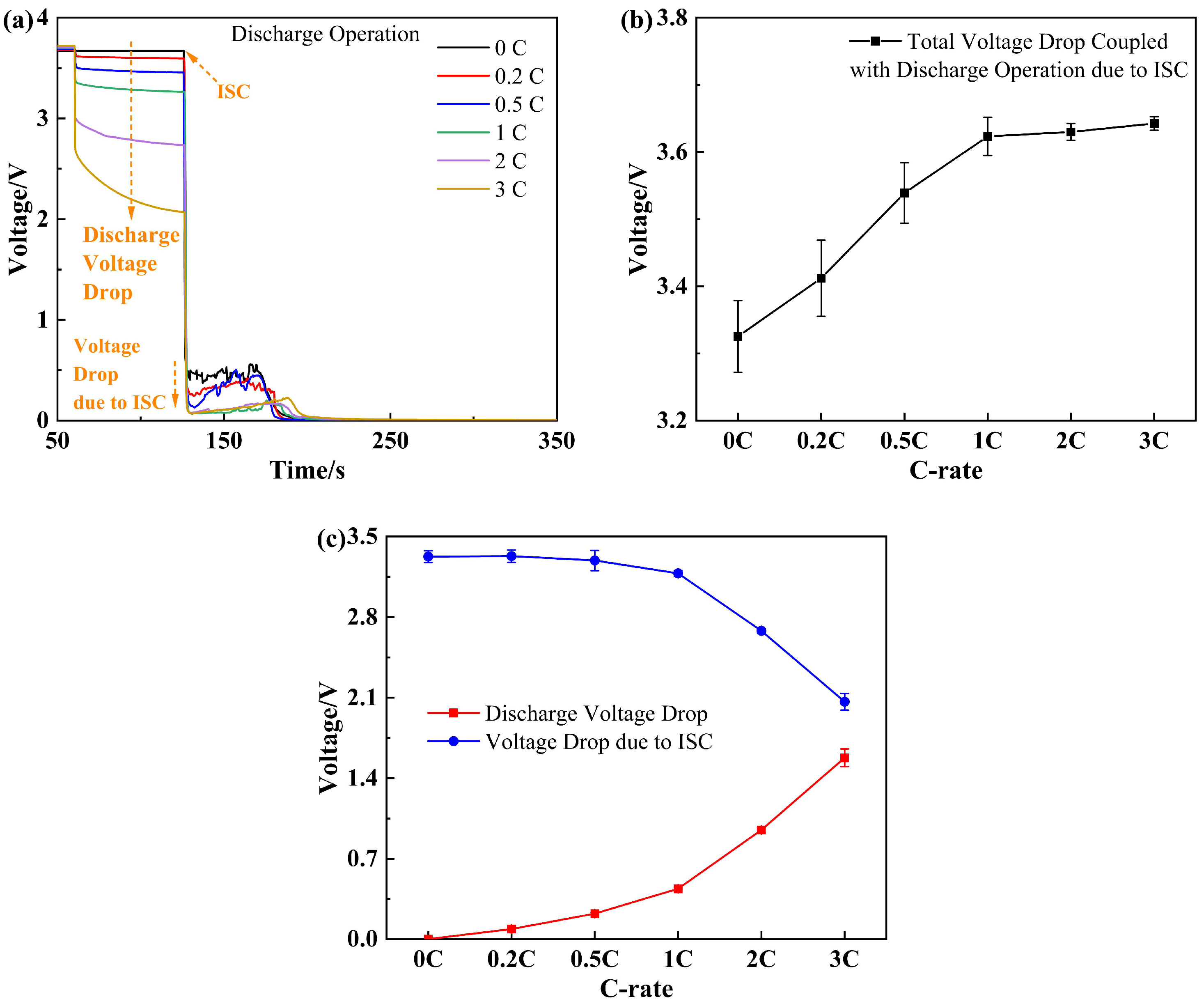
The NCM batteries exhibited different voltage behaviors during the ISC under various discharge rates, as shown in
Figure 3a. The entire process was divided into three distinct stages. In the first stage (discharge-only stage), the battery was in a constant current discharge state for one minute before nail penetration. As the discharge rate increased, the polarization effect intensified and more capacity was discharged within the same time, leading to an accelerated drop in terminal voltage. In the second stage (discharge-coupled ISC stage), the battery experienced a hard short circuit immediately upon nail penetration and the voltage dropped sharply from its initial value to nearly 0 V. Subsequently, the voltage entered a relatively stable plateau, indicating that the ISC had reached a steady state. The voltage value during the plateau increased slightly with the discharge rate, reflecting differences in the total resistance of the short-circuit loop at different rates. In the third stage (final stage of the short circuit), as the battery energy was gradually depleted, the voltage rapidly decayed exponentially from the plateau to 0 V. Under high-rate discharge conditions, this decay process was more prolonged because the elevated Internal temperature Improved the electrochemical kinetics, thereby delaying the moment of complete battery failure.
Figure 3b summarizes the total voltage drop during the discharge operation coupled with ISC. An increased voltage drop indicated a higher short-circuit current and a lower short-circuit resistance, reflecting an increase in the severity of the internal short circuit [
28]. In this experiment, the average voltage drops for ISC coupled with 0 C, 0.2 C, 0.5 C, 1 C, 2 C, and 3 C discharge were 3.33 V, 3.41 V, 3.54 V, 3.62 V, 3.62 V, and 3.64 V, respectively. The results showed that in the lower discharge rate range (0 C to 1 C), the total voltage drop increased with the discharge rate. However, in the higher discharge rate range (1 C to 3 C), no significant difference in the total voltage drop was observed. This trend indicated that as the discharge rate increased, the total resistance of the discharge-coupled ISC first decreased and then stabilized, while the total current gradually increased and eventually reached a plateau. It should be noted that, according to the equivalent circuit model, the total resistance is the parallel combination of the short-circuit resistance and the discharge resistance, and the total current is the sum of the short-circuit current and the discharge current.
The limitation of Li+ transport rate within the NCM battery is likely the main cause of this phenomenon. At low C-rate discharge, the internal Li+ transport rate had not yet reached its upper limit. Therefore, as the C-rate increased, the discharge resistance decreased, leading to a reduction in total resistance and an increase in total current. However, during high C-rate discharge, the internal Li+ transport rate had already reached its upper limit, thereby stabilizing both the total resistance and the total current.
The total voltage drop during the discharge operation coupled with ISC consisted of two components: the discharge voltage drop and the ISC voltage drop. The ISC voltage drop referred to the instantaneous voltage drop at the moment of ISC initiation and reflected the severity of the internal short circuit. The discharge voltage drop referred to the decrease in terminal voltage during discharge, as shown in
Figure 3c. Under pure short-circuit conditions (0 C), the ISC voltage drop remained at a relatively high level. Under low-rate discharge conditions, the ISC voltage drop showed no significant change compared to the pure short-circuit case, indicating that low-rate discharge had a limited effect on the severity of the internal short circuit. As mentioned previously, the discharge voltage drop increased monotonically with the discharge rate. However, under high-rate discharge conditions, the ISC voltage drop exhibited a clear decreasing trend, demonstrating that high-rate discharge significantly suppressed the severity of the internal short circuit, and this suppressive effect intensified with increasing discharge rate. The underlying mechanism was that during high-rate discharge, the Li
+ transport rate within the battery had already reached its upper limit. A “Li
+ competition” relationship was established between the discharge operation and the ISC. The discharge process “occupied” a portion of the Li
+ flux, thereby weakening the Li
+ pathway in the internal short-circuit loop, which in turn suppressed the short-circuit current and the corresponding voltage drop.
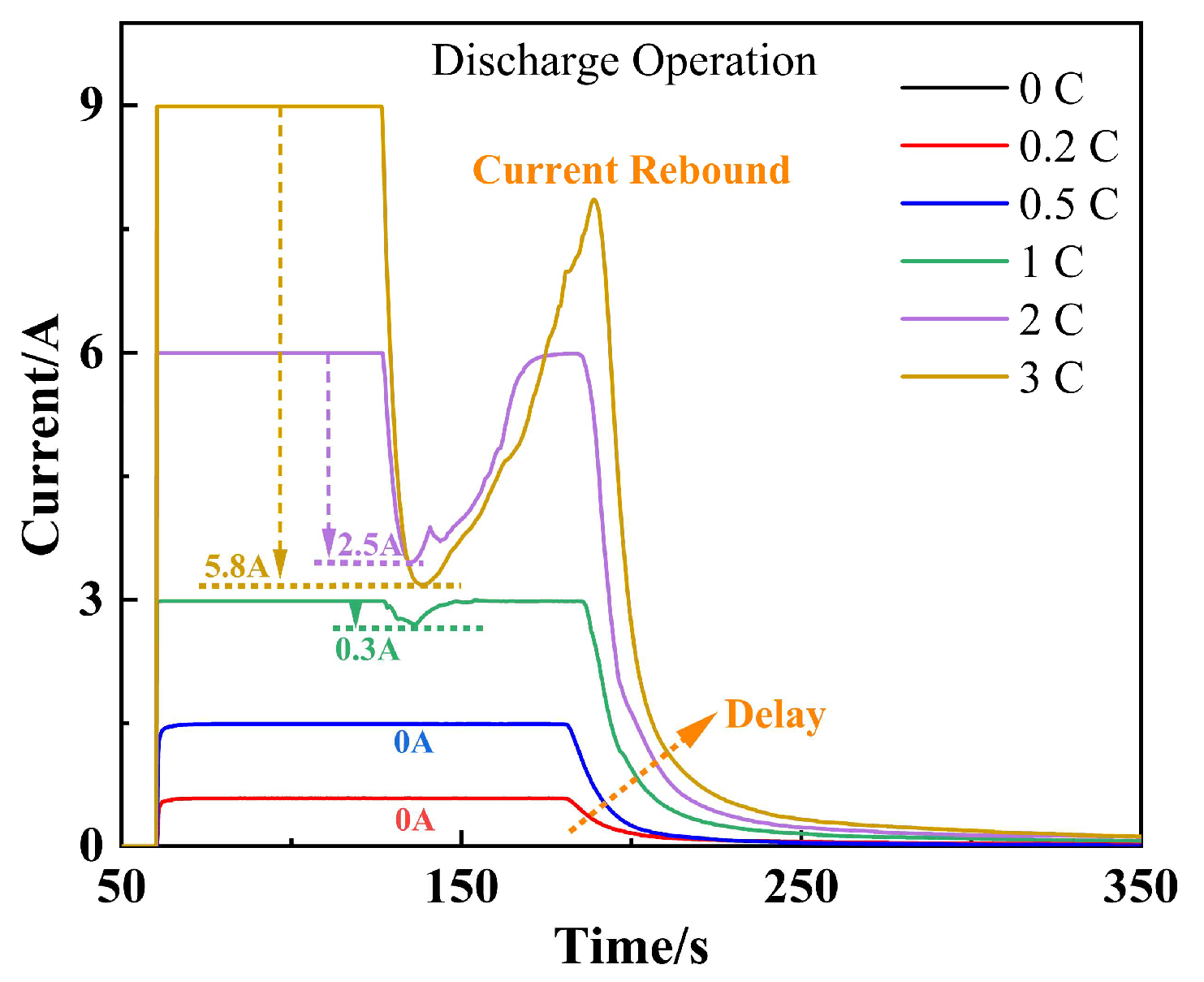
The discharge operation significantly influenced the ISC; conversely, the ISC also affected the discharge current, as shown in
Figure 4. During the ISC, the current under 0 C, 0.2 C, and 0.5 C discharge conditions remained in a constant-current state and was unaffected by the ISC. In contrast, under 1 C, 2 C, and 3 C discharge conditions, the current exhibited a noticeable drop after the ISC was triggered, decreasing by 0.3 A, 2.5 A, and 5.8 A, respectively. The magnitude of the drop increased with the C-rate. Combined with temperature and voltage data, this confirms that at higher discharge rates, the Li
+ transport rate reached its upper limit, simultaneously suppressing both the ISC and the discharge process. The higher the C-rate, the more pronounced this suppressive effect. It is noteworthy that after the discharge current dropped to its lowest point, a rebound phenomenon occurred. This was because the elevated temperature reduced the viscosity of the electrolyte and increased the ion diffusion coefficient, ionic conductivity, and chemical reaction rate at the electrode/electrolyte interface [
25], thereby raising the upper limit of the Li
+ transport rate and restoring the discharge current. After the short circuit ended, the current gradually decreased to 0 A in an exponential manner, and this process was delayed with increasing C-rate.
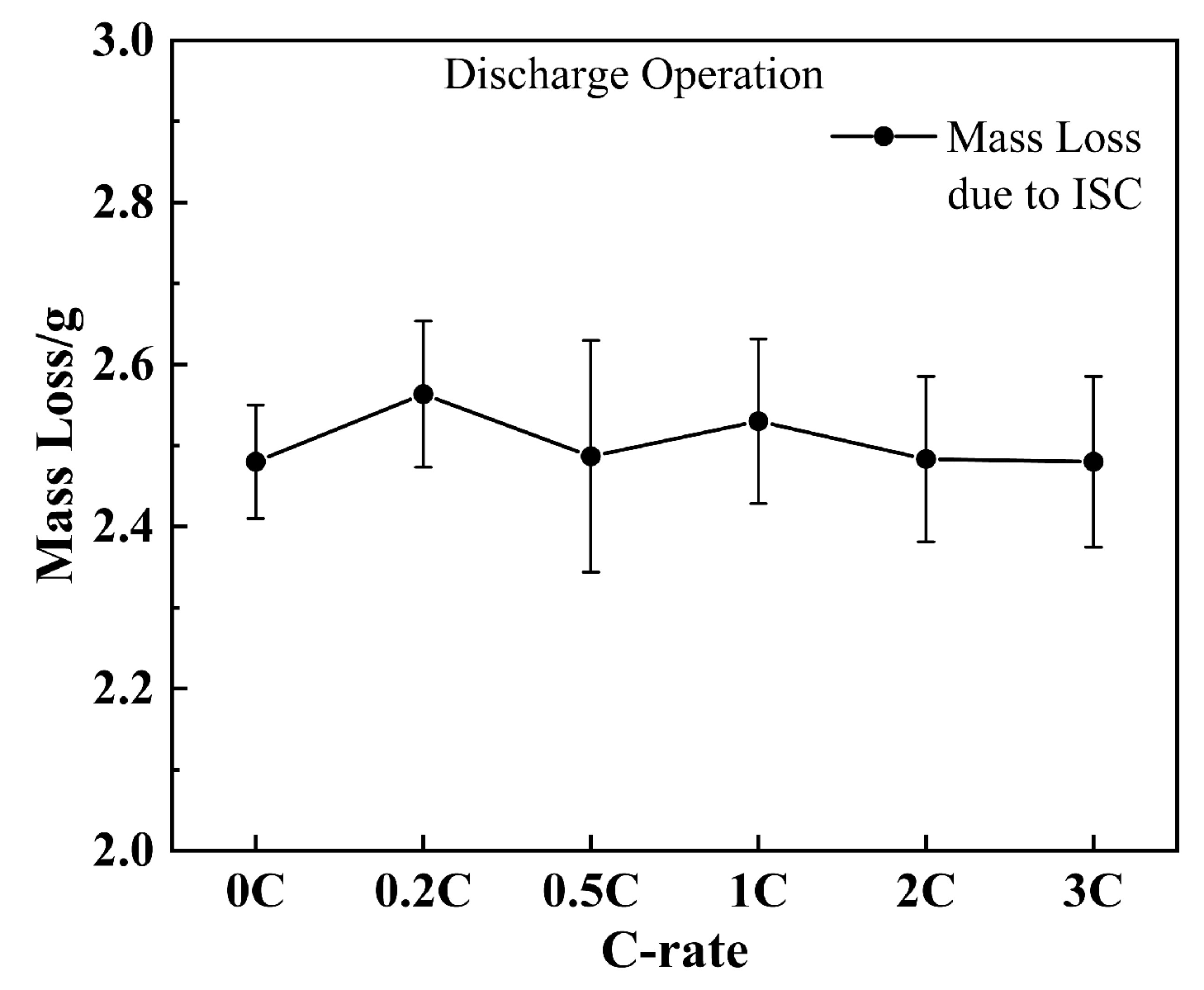
Figure 5 shows the mass loss during discharge operation coupled with ISC. Due to the similar maximum temperatures, the mass loss under different discharge current-coupled ISC conditions showed no significant difference, accounting for approximately 5% of the total battery mass. This value is considerably lower than that observed in thermal runaway scenarios, with electrolyte evaporation being the primary cause [
39]. Under these conditions, the heat dissipation caused by mass loss was low, and the heat dissipation conditions across different test scenarios were similar. Therefore, it can be concluded that the temperature rise during discharge operation coupled with ISC consisted of two components: the temperature rise caused by heat generation from the discharge operation and the temperature rise caused by heat generation from the ISC.
To further clarify the contribution of discharge heat generation and ISC heat generation to the temperature rise, the temperature variation of the NCM battery during the discharge process was first investigated. As shown in
Figure 6a, the current was set to the actual current during discharge-coupled ISC (as shown in
Figure 4), and the time duration was set as the interval between the start of discharge and the point when the ISC reached its maximum temperature (as shown in
Figure 2). The temperature rises caused by discharge at 0.2 C, 0.5 C, 1 C, 2 C, and 3 C rates were found to be 0.07 °C, 0.35 °C, 1.53 °C, 5.13 °C, and 9.69 °C, respectively, indicating that the temperature rise rate during discharge-only increased significantly with the discharge rate. Subsequently, the ISC-induced temperature rise was obtained by subtracting the discharge-induced temperature rise from the total temperature rise. As shown in
Figure 6b, no significant difference was observed in the ISC-induced temperature rise at low C-rates, while a noticeable decrease occurred at higher C-rates. This demonstrated that at higher discharge rates, the suppression of the ISC in the NCM battery increased with rising current, leading to reduced heat generation.
3.2. Analysis of ISC Characteristics Coupled with Dynamic Charging in NCM Batteries
This section investigated the patterns of temperature, voltage, and mass loss changes during nail penetration-induced ISC in NCM lithium-ion batteries under charging conditions. A method for measuring the short-circuit resistance during nail penetration abuse was proposed. The findings provide a reference for a comprehensive understanding of the behavior and mechanism of internal short circuits coupled with dynamic charging in lithium-ion batteries. The analysis corresponded to tests 1, 7–10 in the nail penetration coupled with charge/discharge experiments, as listed in
Table 2.
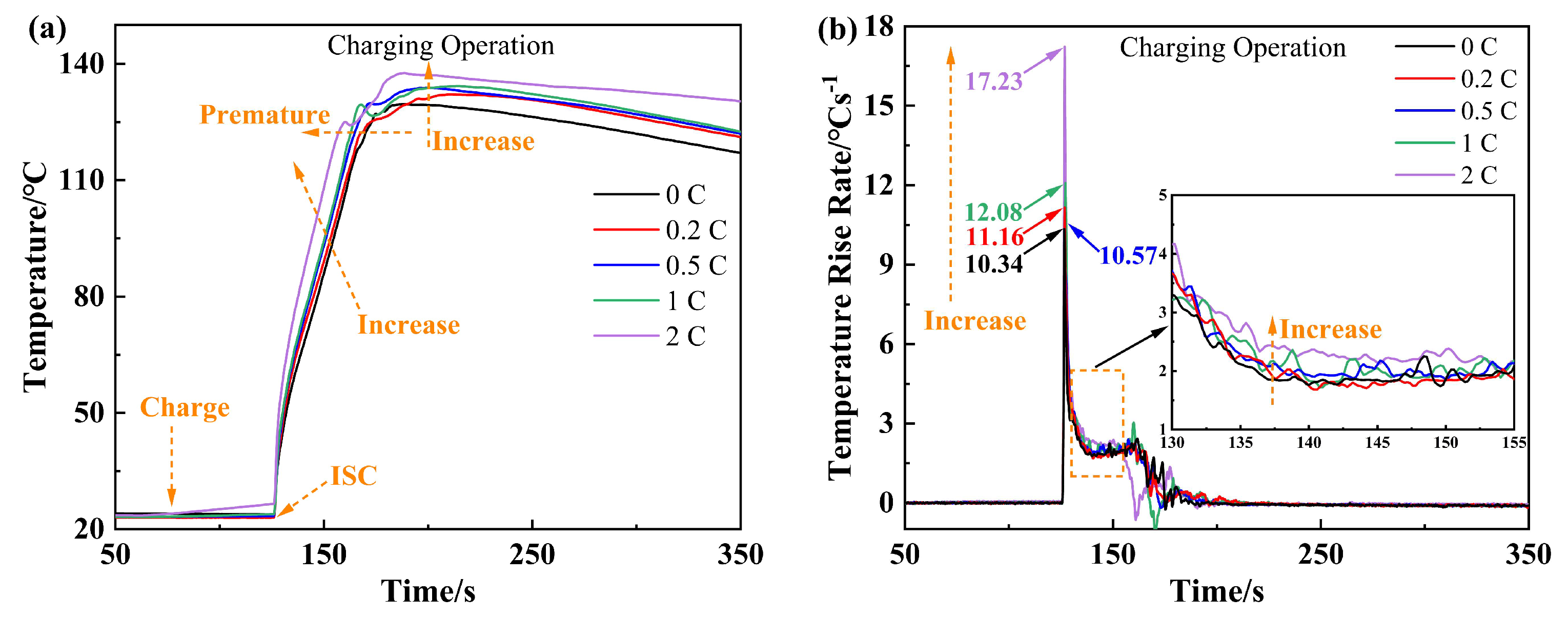
Figure 7a shows the temperature variation during the charging operation coupled with ISC. First, during the charging-only phase, no temperature rise was observed at a 0.2 C rate. The temperature increases caused by charging at 0.5 C, 1 C, and 2 C rates were 0.19 °C, 0.64 °C, and 3.02 °C, respectively. Similar to the discharge operation, the battery temperature rise accelerated with increasing current rate. At the same C-rate, the temperature rise induced by charging was higher than that caused by discharge. It should be noted that a comparison between
Figure 2a and
Figure 7a revealed that under the same C-rate, the temperature rise caused by the charging operation was generally larger than that caused by the discharge operation. Taking the 2 C rate as an example, the temperature rise during the discharge phase was 2.5 °C, while that during the charging phase was 3.02 °C, with the latter being approximately 17% higher than the former. Similarly, at 0.5 C and 1 C rates, the temperature rises during charging (0.19 °C and 0.64 °C, respectively) were also higher than those during discharging (0.12 °C and 0.53 °C, respectively). This comparison indicated that the charging operation produced more significant thermal effects than the discharge operation. The main reason was that the Joule heat and polarization heat generated by the internal resistance of the battery were more concentrated during the charging process.
Secondly, during the charging-coupled ISC phase, the charging operation accelerated and intensified the occurrence of macroscopic phenomena. As shown in
Table 4, the onset times for smoke emission, swelling, and electrolyte leakage occurred earlier with increasing C-rate. This indicated that under charging operation, the sensitivity of the ISC increased with the C-rate. The sensitivity ranking, from high to low, was: 2 C > 1 C > 0.5 C > 0.2 C > 0 C. Regarding the maximum temperature, it increased with the C-rate during the charging-coupled ISC, demonstrating greater heat generation and higher thermal hazard.
Subsequently, a quantitative analysis was performed on the temperature rise rate during the charging-coupled ISC. As shown in
Figure 7b, the peak temperature rise rates during the ISC stage under 0 C, 0.2 C, 0.5 C, 1 C, and 2 C charging conditions were 10.34 °C/s, 11.16 °C/s, 10.57 °C/s, 12.08 °C/s, and 17.23 °C/s, respectively. The slight decrease at 0.5 C might have been caused by experimental randomness. Overall, the peak temperature rise rate increased with the C-rate, indicating that the charging operation raised the risk of thermal runaway immediately upon ISC initiation. The mechanism inducing this phenomenon was the same as that for the discharge-coupled ISC, both being caused by changes in the internal Li
+ concentration of the battery. During charging, a higher C-rate resulted in a higher lithium concentration in the cathode electrolyte and a lower lithium concentration on the surface of the cathode particles at the same SOC [
38]. This made it more difficult for the cathode electrolyte to be depleted of lithium and for the cathode particle surface to become saturated with lithium during an ISC, thereby weakening the suppressive effect of Li
+ transport limitations on the internal electrochemical reaction rate. Consequently, both the surge current and the peak temperature rise rate increased. During the sustained ISC stage, the temperature rise rate at 0.2 C showed no significant difference from that at 0 C, while the rates at 0.5 C, 1 C, and 2 C increased sequentially, confirming the enhanced sensitivity of the charging-coupled ISC.
In summary, the thermal characteristics of charging-coupled ISC were almost entirely opposite to those of discharge-coupled ISC. As the C-rate increased, the surge current, maximum temperature, and temperature rise rate all exhibited an upward trend. This intensified both the sensitivity and hazard of the charging-coupled ISC, making this behavior noteworthy.
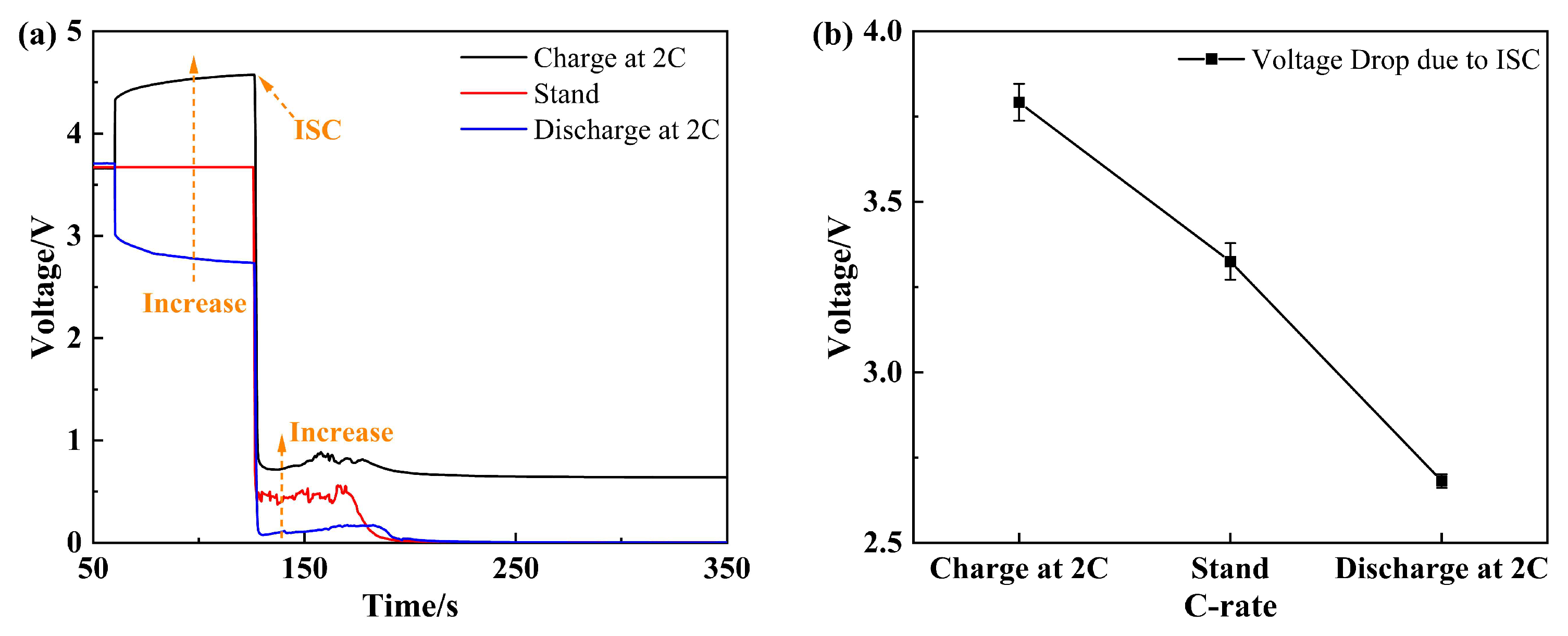
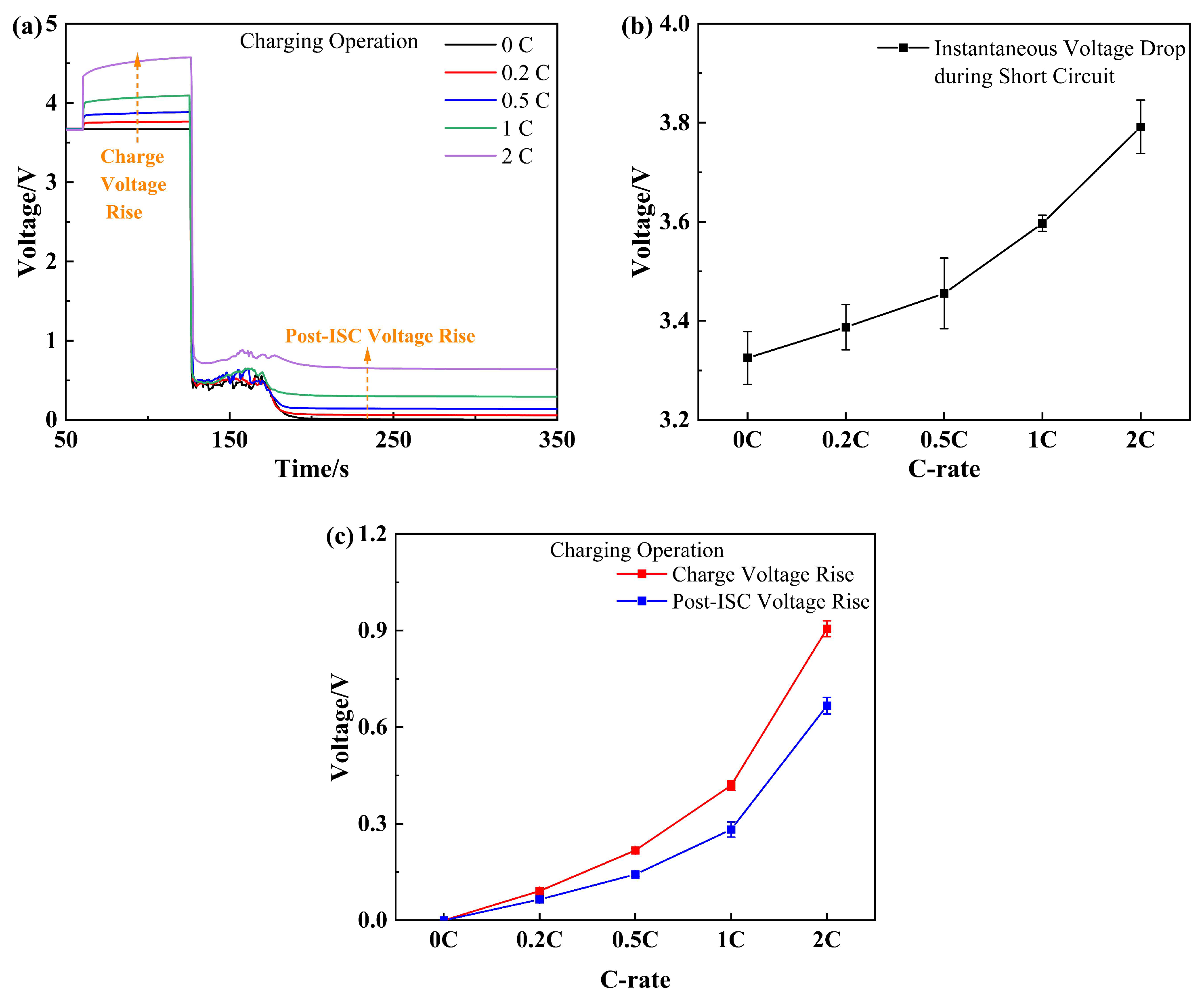
Figure 8 shows the variations in voltage, instantaneous voltage drop during the short circuit, charging voltage rise, and post-ISC voltage rise during the charging operation coupled with ISC. The results indicated that during the charging-only phase, the voltage behavior was opposite to that during the discharge-only phase. The average voltage rises under 0 C, 0.2 C, 0.5 C, 1 C, and 2 C charging were 0 V, 0.09 V, 0.22 V, 0.42 V, and 0.91 V, respectively. Due to intensified polarization effects and increased capacity input, the voltage accelerated more rapidly with increasing C-rate.
The total voltage drop during the ISC is shown in
Figure 8b. The average voltage drops under charging conditions from 0 C to 2 C were 3.33 V, 3.39 V, 3.46 V, 3.60 V, and 3.79 V, respectively. The total voltage drop increased with the C-rate, indicating that the short-circuit current rose and the severity intensified during charging-coupled ISC.
During the charging-coupled ISC phase, the battery experienced a hard short circuit. After the ISC, the voltage did not drop to 0 V but stabilized at a constant value. This value increased with the charging rate, with average values from 0 C to 2 C being 0 V, 0.06 V, 0.14 V, 0.28 V, and 0.67 V, respectively. When the charging was terminated, the voltage instantly dropped to 0 V, confirming that the NCM battery had completely failed at this point. The post-ISC voltage rise represented the terminal voltage across the short-circuit resistance, supplied by the charging voltage source. During the stable ISC period, the voltage behavior under 0.2 C, 0.5 C, and 1 C charging was similar, while the voltage under 2 C charging was significantly higher than in other conditions. Combined with the post-ISC voltage rise, it can be concluded that at low charging rates, the terminal voltage across the short-circuit resistance was dominated by the battery voltage. In contrast, under 2 C charging, the increased voltage from the charging source became the dominant factor for the terminal voltage across the short-circuit resistance.
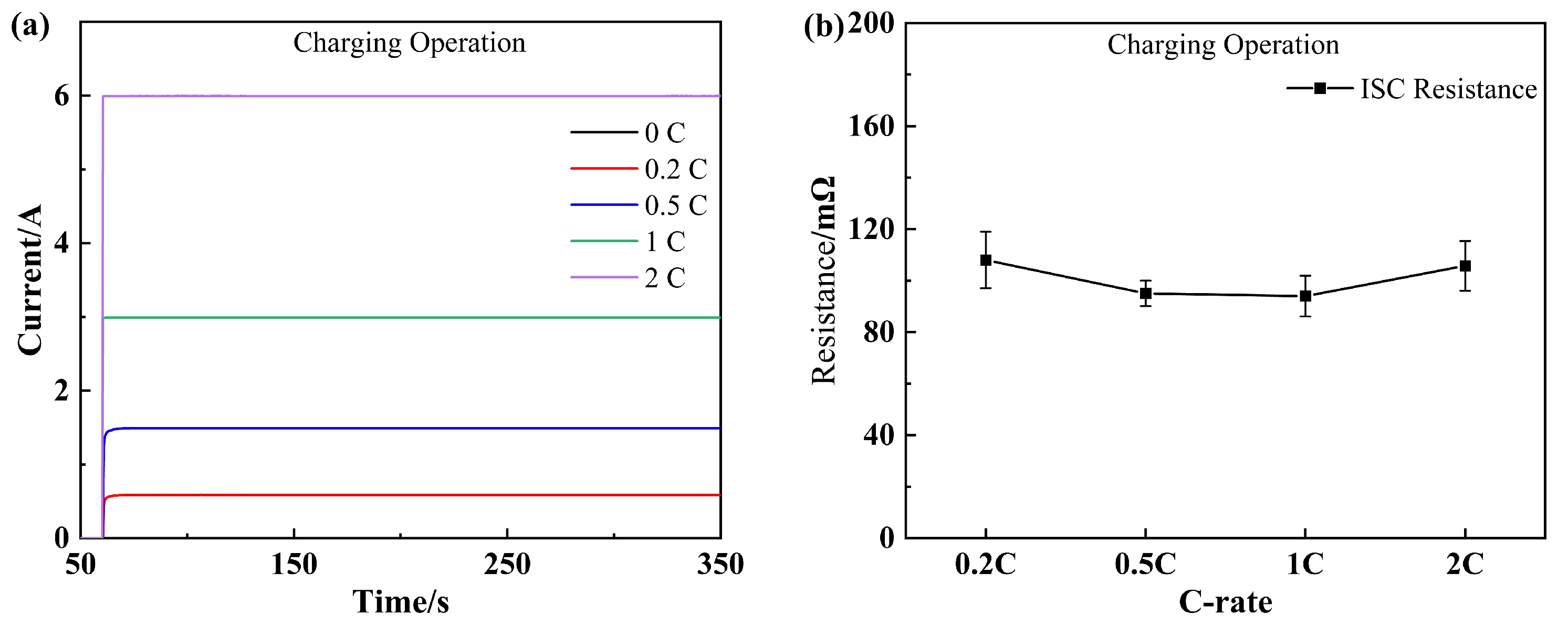
Figure 9a shows the variation in charging current during the ISC. It can be seen that the current remained constant under all test conditions, and the ISC had no impact on the charging current. During the charging-coupled ISC process, the short-circuit resistance consisted of the inherent resistance of the steel nail and the contact resistance between the nail and the battery, which remained essentially constant. Based on the above analysis, after the ISC ended, the terminal voltage across the short-circuit resistance was the post-ISC voltage rise, and the current was the charging current. Using Ohm’s law, the short-circuit resistance could be calculated, as shown in
Figure 9b. The average short-circuit resistances at 0.2 C, 0.5 C, 1 C, and 2 C rates were 108 mΩ, 95 mΩ, 94 mΩ, and 105 mΩ, respectively, showing good consistency. Using the charging process to measure the short-circuit resistance induced by nail penetration proved to be a feasible method, providing a basis for setting resistance parameters in numerical simulations.
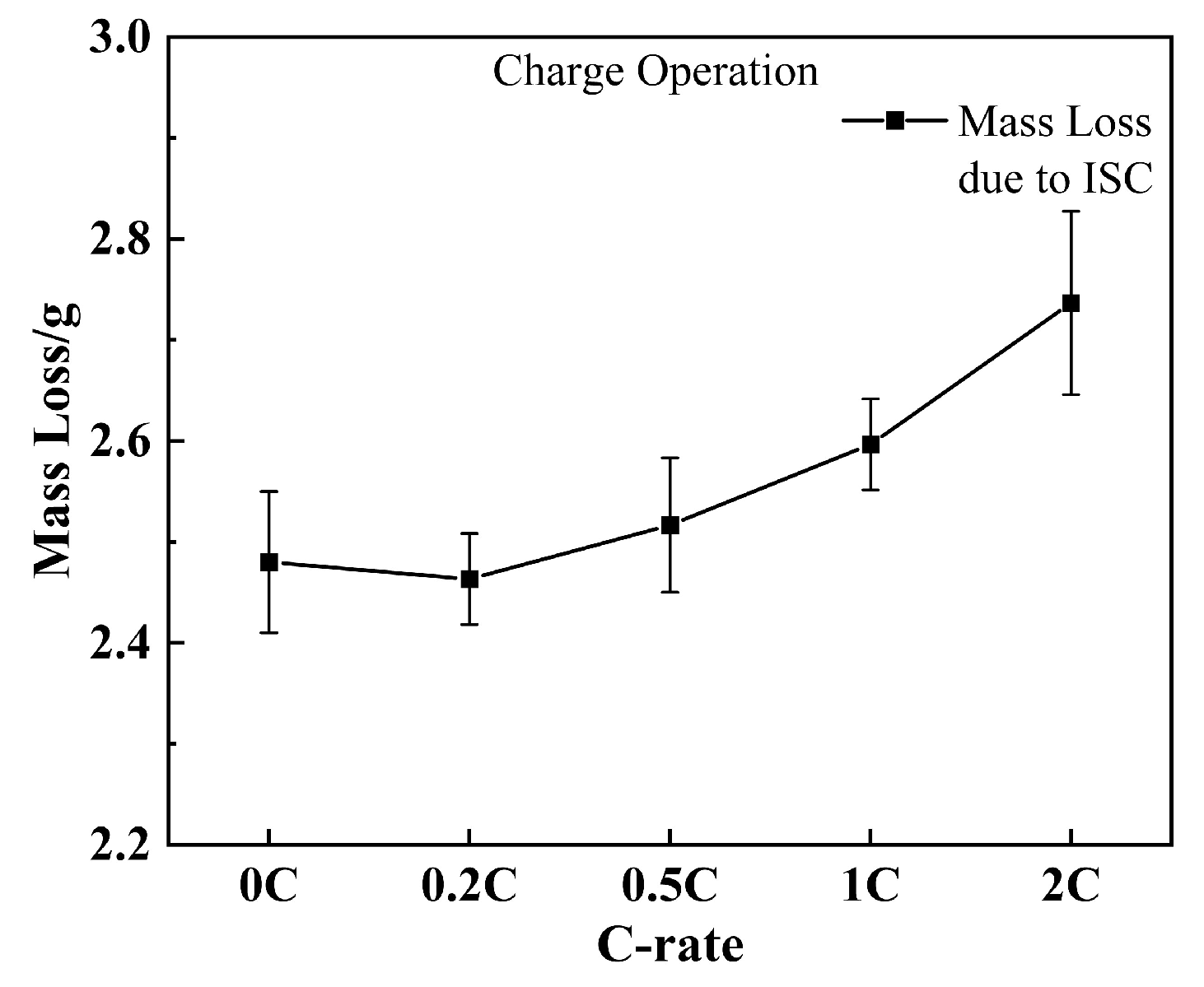
The mass loss resulting from the charging operation coupled with ISC is shown in
Figure 10. The average mass losses under 0 C, 0.2 C, 0.5 C, 1 C, and 2 C charging rates were 2.48 g, 2.46 g, 2.52 g, 2.60 g, and 2.74 g, respectively. The experimental results indicated that charging at higher C-rates increased the mass loss of the lithium-ion battery, thereby elevating the hazard associated with charging-coupled ISC. At lower C-rates, due to minimal temperature variation, no significant difference in mass loss was observed.
3.3. Comparison and Mechanism Analysis of ISCs Coupled with Dynamic Charge/Discharge
The experimental results indicated that the charge/discharge operations caused significant changes in the temperature, voltage, and mass loss of the NCM battery during the ISC. These operations substantially affected the battery’s ISC sensitivity, hazard level, and thermal runaway risk, necessitating further comparative analysis. This section comprehensively compared the ISC characteristics of the battery under resting (0 C) and 2 C charge/discharge conditions, corresponding to tests 1, 5, and 10 in the nail penetration coupled with charge/discharge experiments, as listed in
Table 2.
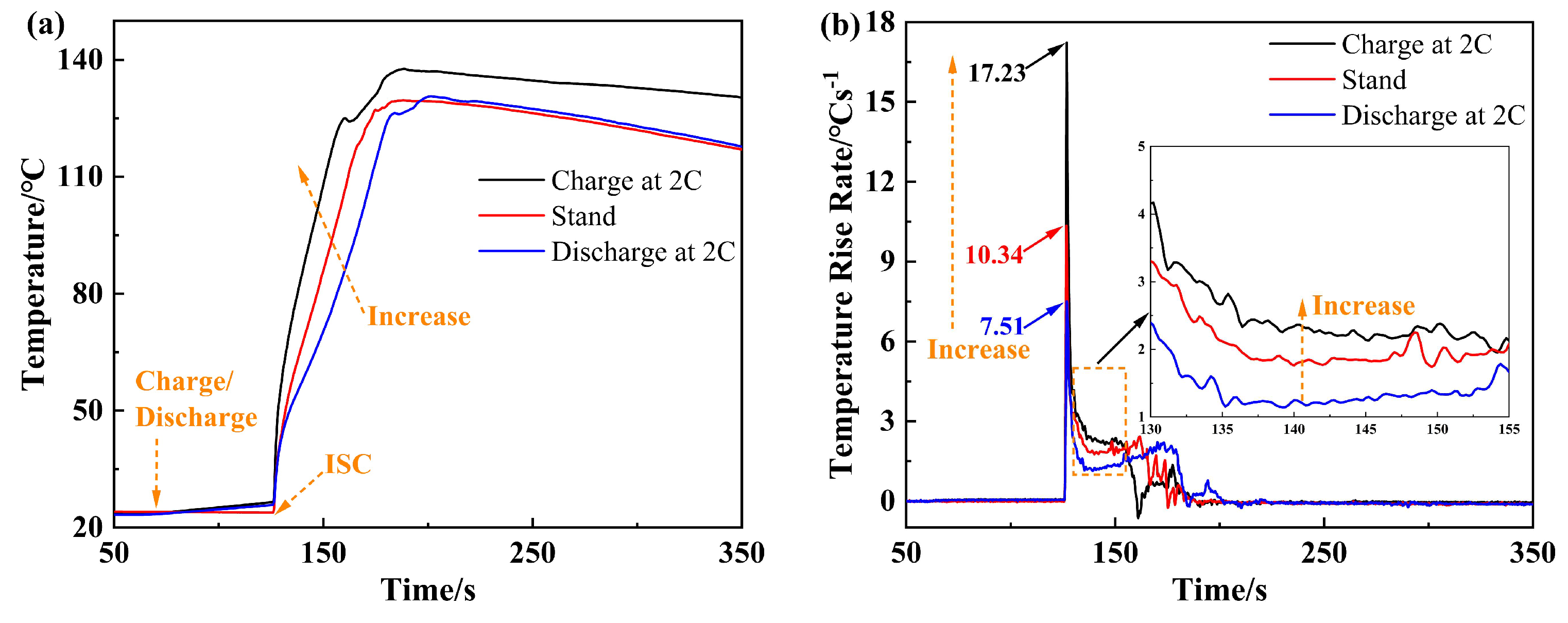
Figure 11 shows the temperature and temperature rise rate during the ISC under resting and 2 C charge/discharge conditions.
During the charge/discharge-only phase, the 2 C charging process resulted in a temperature rise of 3.02 °C, which was higher than the 2.59 °C observed under 2 C discharging. Both charging and discharging caused the battery to generate heat, raising the initial temperature at which the ISC was triggered and increasing the risk of thermal runaway [
40]. During the ISC, the influence of charge/discharge operations on the peak initial temperature rise rate, caused by the surge current, exhibited completely opposite effects. Charging increased the surge current, leading to a higher peak temperature rise rate, while discharging had the opposite effect. The ranking of the surge current and peak initial temperature rise rate, from highest to lowest, was: charging > resting > discharging. Compared to charging, the risk of immediate thermal runaway upon ISC initiation was lower during discharging. In the stable ISC phase, the temperature rise rate ranked from highest to lowest was: charging > resting > discharging. The sensitivity of the ISC was lower during discharging compared to charging. However, due to its longer short-circuit duration, the maximum temperature showed no significant difference from that of the resting battery, indicating that the hazard of the ISC cannot be overlooked. The charging-coupled ISC had the shortest duration but the highest temperature rise, representing a greater hazard from the internal short circuit.
The voltage and ISC voltage drop during the ISC under resting and 2 C charge/discharge conditions are shown in
Figure 12. A hard short circuit occurred under all conditions. The ISC voltage drop, from largest to smallest, was: charging > resting > discharging. This indicated that the severity of the charging-coupled ISC was the highest, while the discharge operation weakened the coupled ISC, thereby improving the thermal safety of the battery. Furthermore, during the discharge process, only the battery acted as the voltage source. Battery failure meant the discharge ceased, resulting in a lower risk of thermal runaway.
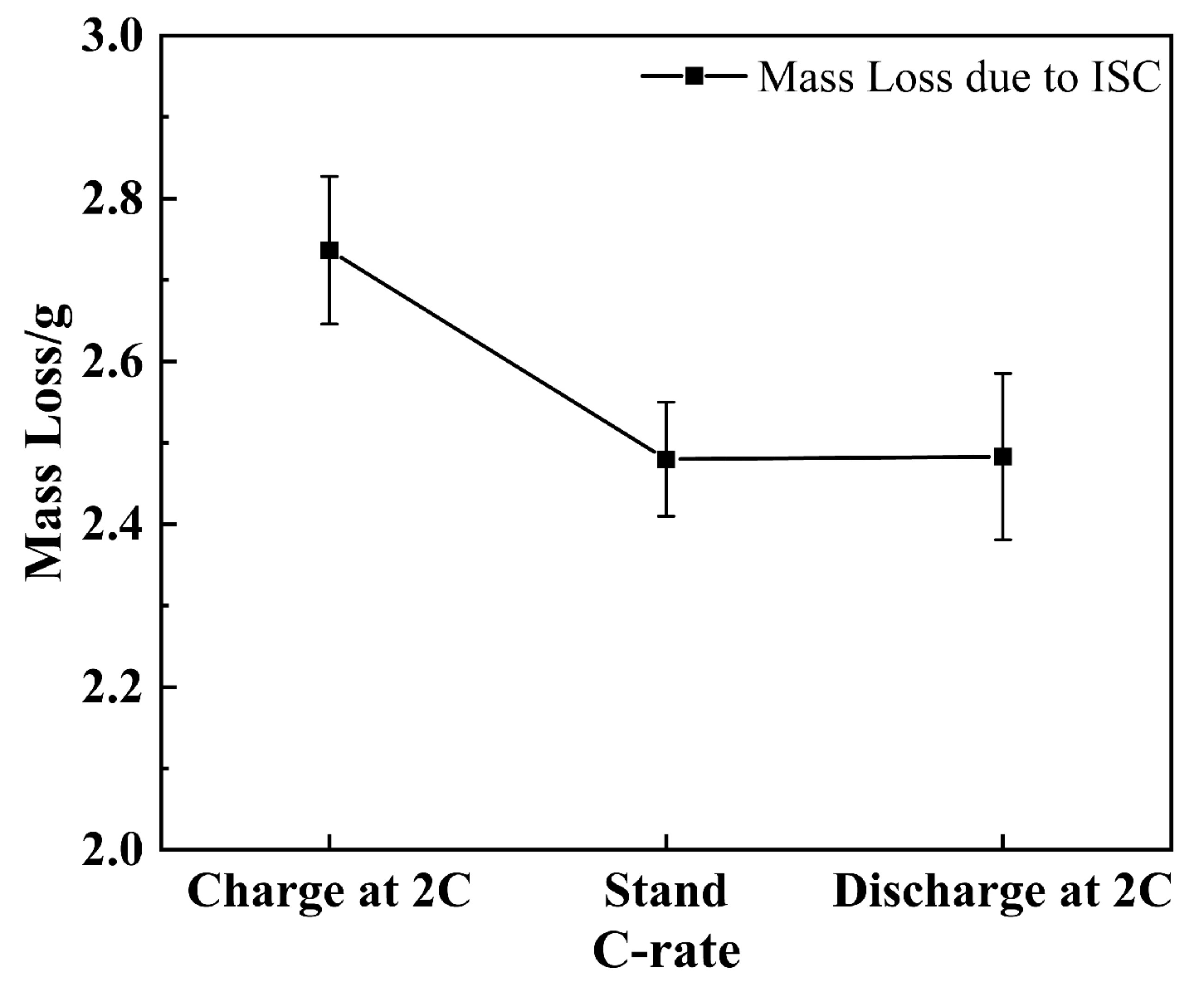
The mass loss during the ISC under resting and 2 C charge/discharge conditions is shown in
Figure 13. Among these, the 2 C charging-coupled ISC exhibited the highest mass loss, with an average of 2.74 g, accounting for approximately 5.6% of the total battery mass. The resting and 2 C discharge-coupled ISC showed similar mass losses, with an average of 2.48 g, accounting for about 5% of the total battery mass. The mass loss, ranked from highest to lowest, was: charging > resting ≈ discharging. This indicated that charging increased the mass loss during the ISC, thereby elevating the hazard associated with the coupled internal short circuit.
Based on the above analysis, during the discharge-coupled ISC process, this study found that a mutual inhibitory effect existed between the discharge operation and the ISC. The inhibition of the discharge was manifested as a reduction in the discharge current, while the inhibition of the ISC was reflected in decreases in the surge current, temperature rise rate, short-circuit voltage drop, and short-circuit temperature rise. As a result, the sensitivity, hazard level, and thermal runaway risk of the battery were significantly reduced, thereby improving its thermal safety.
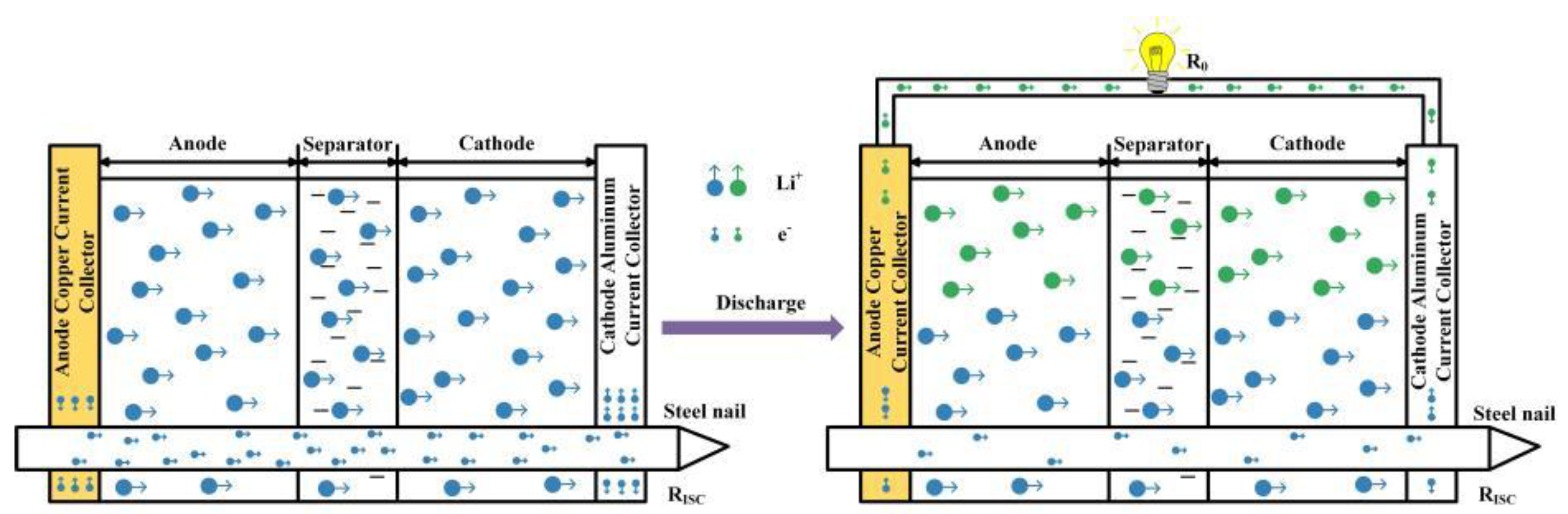
The coupling mechanism between discharge and ISC is illustrated in
Figure 14. The circuit during an internal short circuit in a lithium-ion battery consists of two parts: the Li
+ circuit formed by the anode-separator-cathode, and the e
− circuit formed by the negative current collector-steel nail-positive current collector. The current in the Li
+ circuit is determined by the upper limit of the electrochemical reaction rate inside the battery, which is much lower than that in the e
− circuit. When a hard short circuit occurred, the electrochemical reaction rate inside the battery reached its upper limit. At this point, the Li
+ circuit had already reached its current limit. Due to this reaction rate limitation, discharging the battery could not alter the current magnitude in the Li
+ circuit. Instead, it created “Li
+ competition” between the discharge and the ISC. To maintain its current, the discharge process “occupied” a portion of the Li
+, thereby weakening the Li
+ circuit in the ISC loop. This subsequently suppressed the e
− circuit, reduced the short-circuit current, and decreased the heat generation from the ISC. The discharge process was also inhibited, with its current significantly lower than the set value. Since the discharge resistance was considerably higher than the ISC resistance, the heat generated by discharge was relatively low. Consequently, the total heat generation during discharge-coupled ISC decreased.
Compared to the ISC under resting and discharging conditions, the charging-coupled ISC exhibited higher surge current, temperature rise rate, maximum temperature, and short-circuit voltage drop. This led to greater ISC sensitivity, higher hazard potential, and an increased risk of thermal runaway. The charging operation significantly reduced the thermal safety of the battery during the internal short circuit.
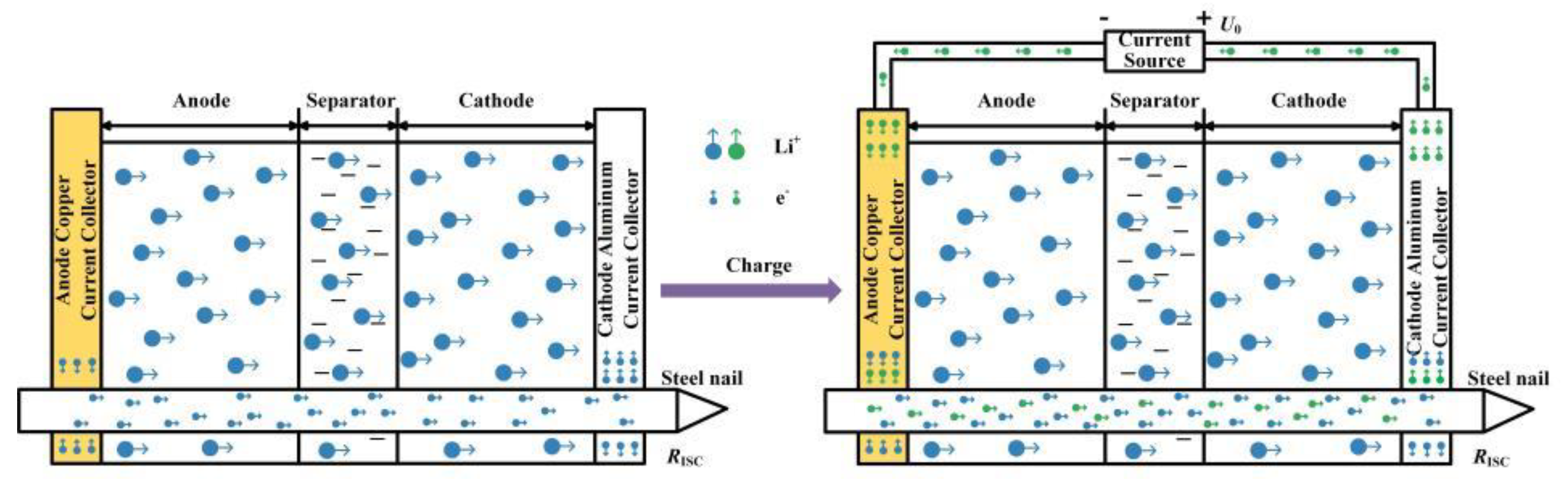
The mechanism of the ISC under charging conditions is illustrated in
Figure 15. During the charging-only phase, the electrical energy output from the voltage source was continuously converted into the electrochemical energy of the battery. The charging circuit consisted of an e
− circuit and a Li
+ circuit. During the sustained ISC phase, experimental results confirmed that the battery underwent short-circuit discharge. According to Kirchhoff’s current law, the current direction in the circuit was unique. Therefore, the charging circuit changed to: voltage source → positive current collector → steel nail → negative current collector → voltage source. This circuit did not involve the Li
+ circuit, meaning there was no “Li
+ competition” with the ISC. Instead, it combined with the current output from the battery to form the short-circuit current, leading to an increase in the short-circuit current, greater heat generation, and reduced thermal safety. After the ISC ended, the battery failed and stopped discharging. At this point, the charging circuit remained unaffected, and the voltage source continued to supply current, heating the current collectors and the steel nail. This sustained the possibility of thermal runaway in the battery.