
Review

A Review of Modelling, State of Charge Estimation and Management Methods of EV Lithium-Ion Batteries
School of Engineering, Lancaster University, Lancaster LA1 4YW, UK
*
Author to whom correspondence should be addressed.
Batteries 2026, 12(3), 92; https://doi.org/10.3390/batteries12030092
Submission received: 10 February 2026 / Revised: 1 March 2026 / Accepted: 5 March 2026 / Published: 8 March 2026
(This article belongs to the Special Issue Towards a Smarter Battery Management System: 3rd Edition)

Abstract

Electric Vehicles (EVs) can contribute significantly to reducing greenhouse gas emissions and addressing climate change problems. Modern EVs are primarily powered by electrochemical batteries such as lead-acid (Pb-acid), nickel-metal hydride (NiMH), sodium-ion (Na-ion), solid-state and lithium-ion (Li-ion) batteries. When compared to other battery types, Li-ion batteries are the most suitable for EV applications due to their practical features such as their high energy density, high charging and discharging efficiency and extended lifetime. However, the main risk of Li-ion batteries is that they are exposed to thermal runaway phenomena, which raises severe concerns about the safety of EV propulsion systems. Thermal runaways should be considered carefully as they cannot be stopped once they start and can lead to battery explosion. One of the main reasons leading to this phenomenon is abusing the state of charge (SoC) of the battery. Therefore, the battery management system (BMS) plays a crucial role in mitigating the stimulation of the thermal runaway process by accurately estimating and properly managing the battery cells. To help researchers and designers with understanding this matter, this paper proposes a review of the most effective SoC estimation methods for EV Li-ion batteries and links these methods with practical energy management systems in the EV market.

1. Introduction

The world is facing a serious climate change issue due to increased pollution caused by greenhouse gas emissions. The global surface temperature has increased by 1.24 °C when compared to levels in the previous century, which has led the global sea level to rise by approximately 25 cm since then [1,2,3]. The effect of this increase on both temperature and sea level forms a major threat to the future of the planet. Thus, governments and policymakers are focusing on finding solutions that can tackle this threat by reducing dependence on fossil fuels while ensuring that economic growth remains unaffected [4,5,6].
Transportation is one of the sectors that can contribute to the mitigation of this issue because it is responsible for more than 25% of greenhouse gas emissions. Globally, there are around 1.4 billion light-duty vehicles on the roads, with a prediction to reach 1.75 billion by 2050, and they form a major part of greenhouse gas emissions [7,8,9,10]. In this context, electric vehicles (EVs) can play an important role in reducing the pollution associated with the transportation sector by depending on electro-chemical batteries as the energy source instead of petrol or diesel [11,12,13,14]. The positive effect of promoting EVs in the transportation sector can be materialised if the batteries are charged by clean energy sources such as solar photovoltaic (PV), wind, tidal, and other similar renewable energy sources. Recently, there has been strong progress in improving these clean sources, with about 32% of the total electricity being produced by renewable energy sources [7]. The increased deployment of EVs, associated with increased dependence on renewable energy sources, can play a massive role in addressing climate change issues and help bring the global temperature back to a normal, pre-Industrial Revolution level.
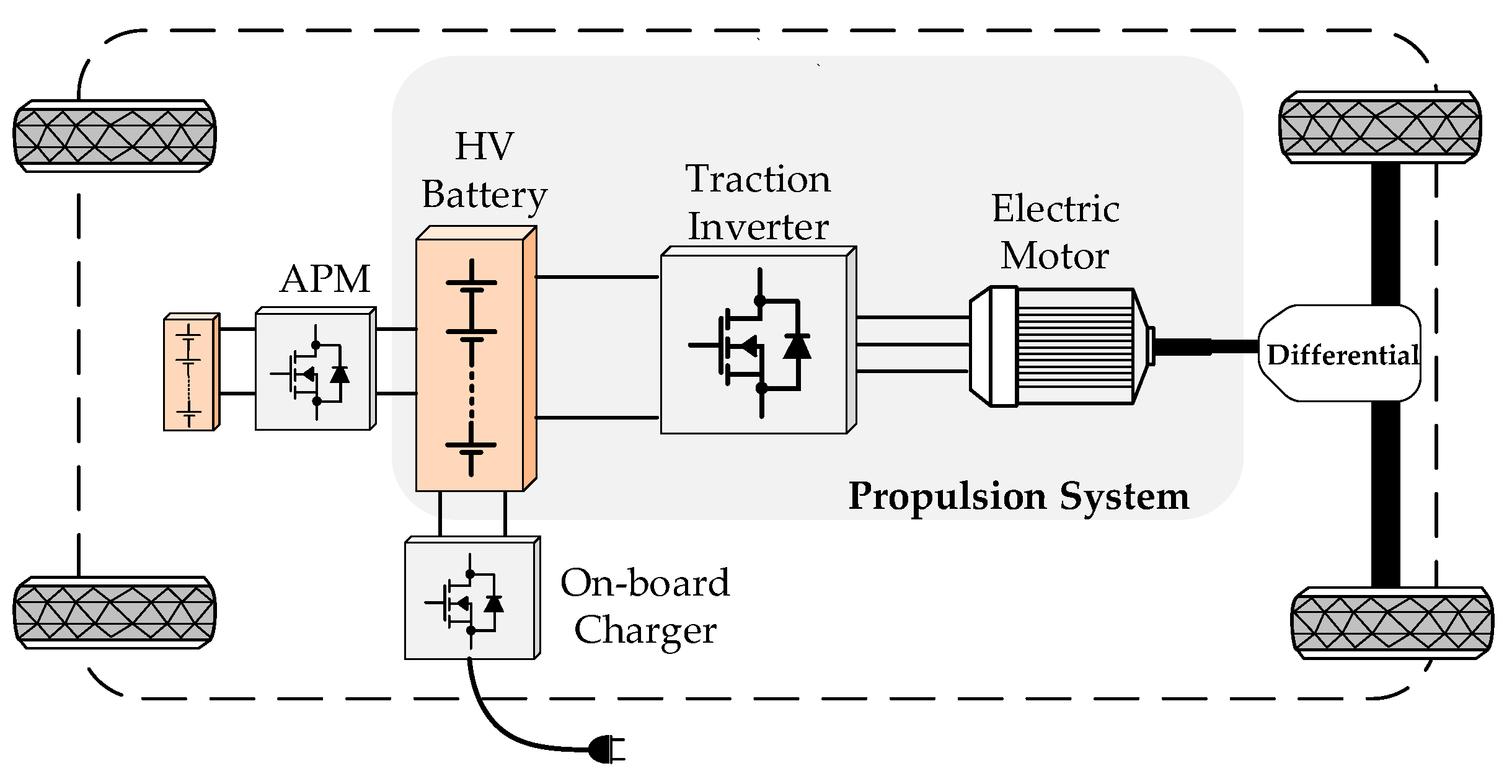
As shown in Figure 1, the propulsion system of a typical battery EV (BEV) consists of the traction battery pack, which stores the electrochemical energy, the traction inverter, which directs the electrical energy produced by the battery to the traction motor, the motor controller, which regulates the motor speed and torque, the on-board charger, and other auxiliary components [15]. The battery pack is the most critical component of this propulsion system since it holds a high amount of energy, especially when the travel range of the vehicle is large [16]. Lead-acid (Pb-acid) batteries are safe and mature technologies. However, they have a relatively low energy density of around 60 watt-hour (Wh) per litre and 40 Wh per kg when compared with petrol, which has a useful energy density at the wheels of around 2000 Wh per litre and 2700 Wh per kg [17]. Accordingly, the use of Pb-acid batteries is limited to the low-voltage control system, which is responsible for powering the controllers, the lighting system, and other auxiliary systems that require low currents [18]. The nickel-metal hydride batteries (NiMH) have low energy density, higher self-discharge, and higher cost than the Pb-acid batteries, which makes them unsuitable for EV applications [19]. Sodium-ion (Na-ion) batteries form new technologies that can have lower costs and better safety when compared to other types, such as Lithium-ion (Li-ion) batteries. Their supply chain security is high, and they have fewer geopolitical constraints. However, it is still immature technology and needs significant research effort to be compatible with the modern EV, especially with the desired large travel range of more than 600 km. Solid-state batteries are a promising technology but, similarly to Na-ion batteries, are still immature and expensive. Li-ion batteries have several advantages that make them the most suitable for EV applications. They have the highest energy density and efficiency of 600 Wh per litre and 250 Wh per kg [20,21,22,23]. Also, their operational range can last for 3000 charging/discharging cycles, which extends their lifetime to around 15 years. The charging/discharging efficiency can reach 95% with a relatively low self-discharge rate when compared to other battery types [24,25]. The Li-ion batteries benefited from a long research effort to improve their electrical performance, establish their supply chain, and reduce their manufacturing costs. For these reasons, they emerged as powerhouses in both EV and renewable energy storage applications [24,25]. Further information regarding the rationale behind battery cell material design can be found in [26].
Despite the advantages of Li-ion batteries, they suffer from numerous critical operational and safety issues that must be carefully considered to improve the deployment of EVs and the trust of customers in them [5,27,28,29,30]. Li-ion batteries are viewed as a real safety threat since they are thermally unstable, which means that they can catch fire if abused or mishandled during the storage or transportation stages [31]. This can stimulate the thermal runaway process, which can occur days or even weeks after the incident. Allianz group in the United Kingdom warned car traders that there has been an increased rate in the frequency and intensity of EV battery fires in the previous five years [32]. The toxic materials that can be produced from such fires may cause severe consequences to buildings, equipment, and lives [33]. Several incidents occurred between 2020 and 2025, among which a faulty EV battery was dismantled and stored in the maintenance workshop to be inspected, where the thermal runaway process occurred during this waiting period [34,35]. Therefore, understanding the thermal runaway process of Li-ion batteries and dealing properly with this phenomenon is critical for the future of EV deployment, should the Li-ion batteries not be replaced by another safer technology. The proper design of a rechargeable Li-ion battery pack with a liquid-cooled system can improve the thermal management under high discharge rate while ensuring that the cell temperatures stay within the acceptable operating limits [26]. The research in [36] introduced a liquid-cooled hexagonal battery module configuration, which managed to reduce the temperature rise and thermal gradients even at double and triple the maximum discharge currents. The strong heat dissipation capabilities were confirmed by the lowered thermal resistance, showing that the developed modular architecture is a promising solution for both EV and energy storage applications requiring reliable and scalable thermal control.
While driving an EV, its battery pack is discharged, and therefore the battery cells’ state-of-charge (SoC) will drop to a low level as the motor is absorbing electrical energy. On-board and off-board chargers are then needed to bring the SoC back to its usual full charge of 100%, provided that the charger has not been disconnected before [37,38,39]. Several studies have revealed that the probability of the thermal runaway phenomenon increases when the SoC is high and increases further when the cells are either overcharged or have mechanical deformation. When several cells are embedded in a battery pack, either in parallel or in series, the probability of the thermal runaway becomes dependent on several parameters, among which is the balancing technique of the Li-ion cells [40,41,42]. Thus, the battery management system (BMS), which is responsible for balancing the cells and ensuring that they are operating in the acceptable range, becomes crucial in the safety process [43]. The BMS monitors the battery cells constantly and ensures that they operate at reasonable voltages, currents, and temperature values [44].
The thermal runaway is a chemical process that occurs in Li-ion batteries, producing a huge amount of energy. The process progresses very quickly once started, and it becomes impossible to stop it with any type of cooling, leading to an uncontrollable rise in cell temperature, which is in the range of 150 to 180 °C [45,46]. Usually, the process starts in one cell and spreads quickly to the adjacent ones, even if they are not faulty [47]. The main reasons for this process are mechanical deformation, such as crushing or puncturing the cells, electrical failures resulting from higher voltages or currents, or over-discharging, which leads to reducing the voltages of the cells below the minimum values [48,49]. Also, internal faults in the cells that can be formed during manufacturing or excessive usage can lead to thermal runaway [50,51]. As this phenomenon is dangerous and can affect the progress of EV applications negatively, battery cells and packs must be designed to assume there will be a thermal runaway at least in one cell. Accordingly, the design should reduce the probability of igniting the thermal runaway process, guarantee that the reason can be found if it occurs, reduce the exposure to humans, and reducing the consequences and effects [52,53].
BMSs play a critical role in cell monitoring and balancing functions necessary to ensure even distribution of charge and temperature between the different cells in the battery modules [54,55,56]. The BMS of a typical EV monitors all voltages, currents, temperatures, and SoCs, controls the charging and discharging processes, and protects them from faults and short circuits [57,58,59,60,61]. Thus, it is necessary for the BMS to be able to measure, detect, and predict the SoC accurately and practically to enable the control algorithms to operate as intended. The accurate detection becomes more complicated when the discharging currents, and accordingly temperatures, vary significantly during the driving mode.
To help EV researchers and designers understand the BMS, this paper reviews the most effective methods and algorithms for SoC estimation in Li-ion batteries. Compared with other reviews in the literature on the same topic, the paper will present the SoC estimation methods to the real-world traction control systems in EVs, with the aim of offering insights that are useful for both academic researchers and practicing engineers in industry.
Section 2 in this paper presents the main parameters of Li-ion batteries that are necessary to understand the operation within the context of EV applications. Section 3 presents the main charge estimation methods for Li-ion batteries, especially those employed in present EV systems. Section 4 reviews the main battery management systems employed in modern EVs as well as the motorsport industry. Section 5 presents the main conclusions of this review.

2. Li-Ion Battery Parameters

The performance of the Li-ion cells depends on many factors that determine the response of the whole battery pack to the required operating conditions of the EV [62]. Thus, understanding these parameters is necessary to help EV battery designers to improve the efficiency of the developed systems, reduce the generated heat, health deterioration with time, and other safety requirements according to the EV specifications. The following subsections present the main parameters:

2.1. Capacity (C)

The battery capacity, which is measured in Ampere-hour (Ah), represents the total electric charge that can be delivered to the EV during a specific period of time at a specified current. The typical capacity of a Li-ion battery varies between 20 Ah and 200 Ah, depending on its construction. For low-capacity cells, the batteries are usually connected in series-parallel combinations to increase the operational capacity and voltage. For example, the Tesla Model 3 EV employs cylindrical 21700 battery cells, which have an average cell capacity of 4.9 Ah and a nominal voltage of 3.6 V [42,43,44]. The cylindrical cells are usually designed with dimensions of 21 mm in diameter and 70 mm in height, while the weight of the cell is 70 g approximately. To reach the required voltage and capacity, the battery pack of the EV is designed by connecting 96 cells in series and 46 in parallel (91s46p) with a total number of cells of 4416. Therefore, the total nominal voltage and capacity of the battery pack are 355 V and 255 Ah. Table 1 shows the voltage, capacity, and energy of other common EV structures in the industry.
The capacity of Li-ion cells is affected negatively by current stresses during both acceleration, regenerative braking, and DC fast charging. During light driving, the typical current absorbed from the battery pack is between 50 A and 100 A, while it increases to 300–800 A during acceleration and DC fast charging [63]. Consequently, the associated power losses increase the temperature of the battery cells, which creates lithium plating risks. The temperatures of the cells must be kept within a specified range to ensure that the lifetime of the cells is not deteriorated [64].
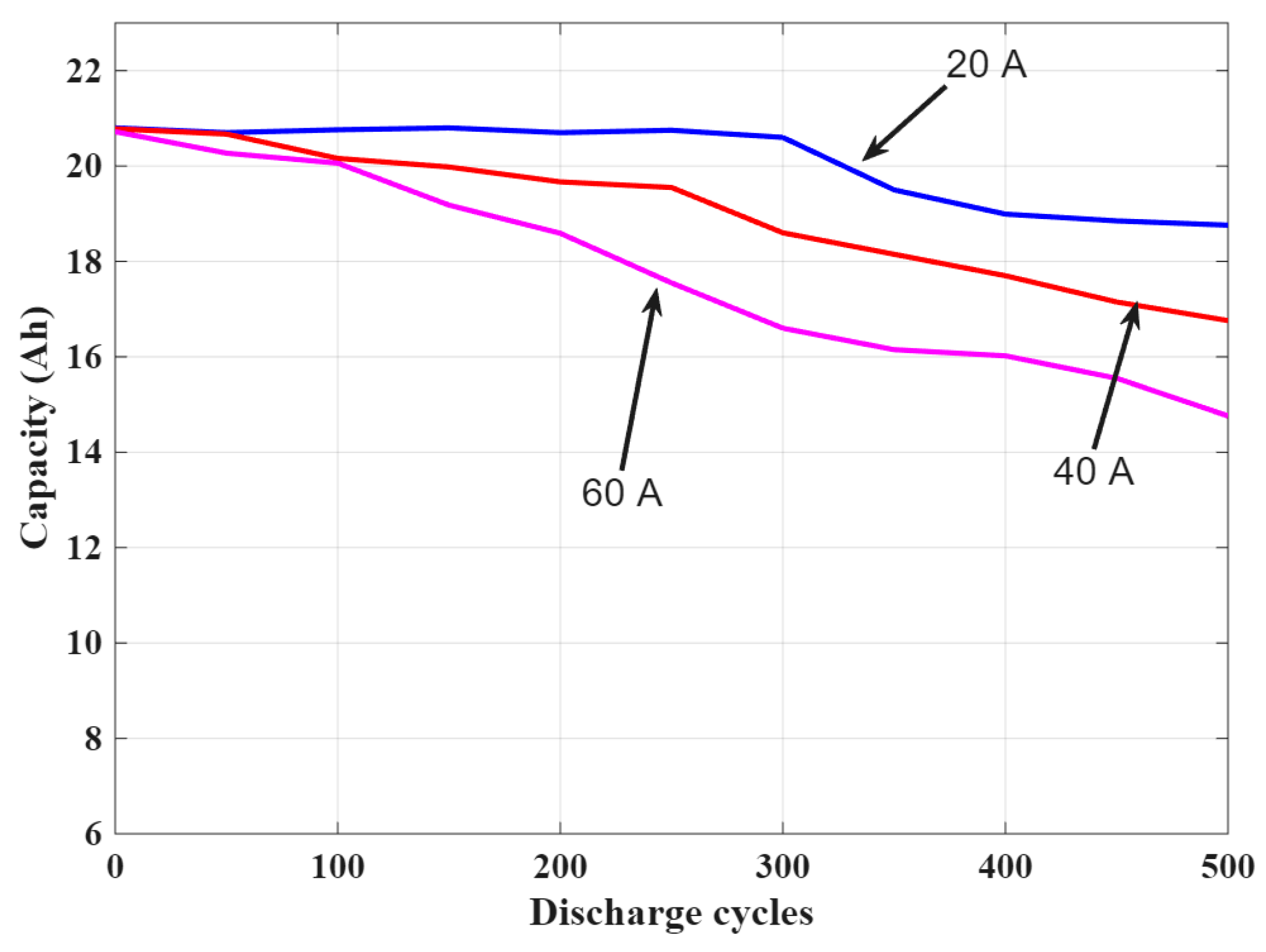
The capacity, and hence the useful energy of the cell, decreases significantly at low temperatures. Operating at high temperatures leads to fast degradation of the cell’s capacity and increases the risk of fire ignition. Operating the battery pack under uneven temperatures leads to uneven ageing of the battery cells [65,66,67,68]. In this context, the cooling system of the EV battery pack is critical to control the temperatures of the cells and ensure a safe operation. The capacity of Li-ion battery cells reduces with the number of discharged cycles. Figure 2 shows the experimental results of discharging three packs of Li-ion batteries at different discharge currents. The packs are composed of eight Samsung 18650 cells connected in parallel to form a 3.6 V–20 Ah module. The study in [8] presents different long-term tests for different cells.
Because of the nature of the operation, EV battery packs are subject to high vibrations, especially during acceleration and braking. Excessive vibrations have a negative effect on the capacity of battery cells, where the highest degradation effect occurs at 50 Hz [9,10,11].

2.2. Internal Resistance (Ri)

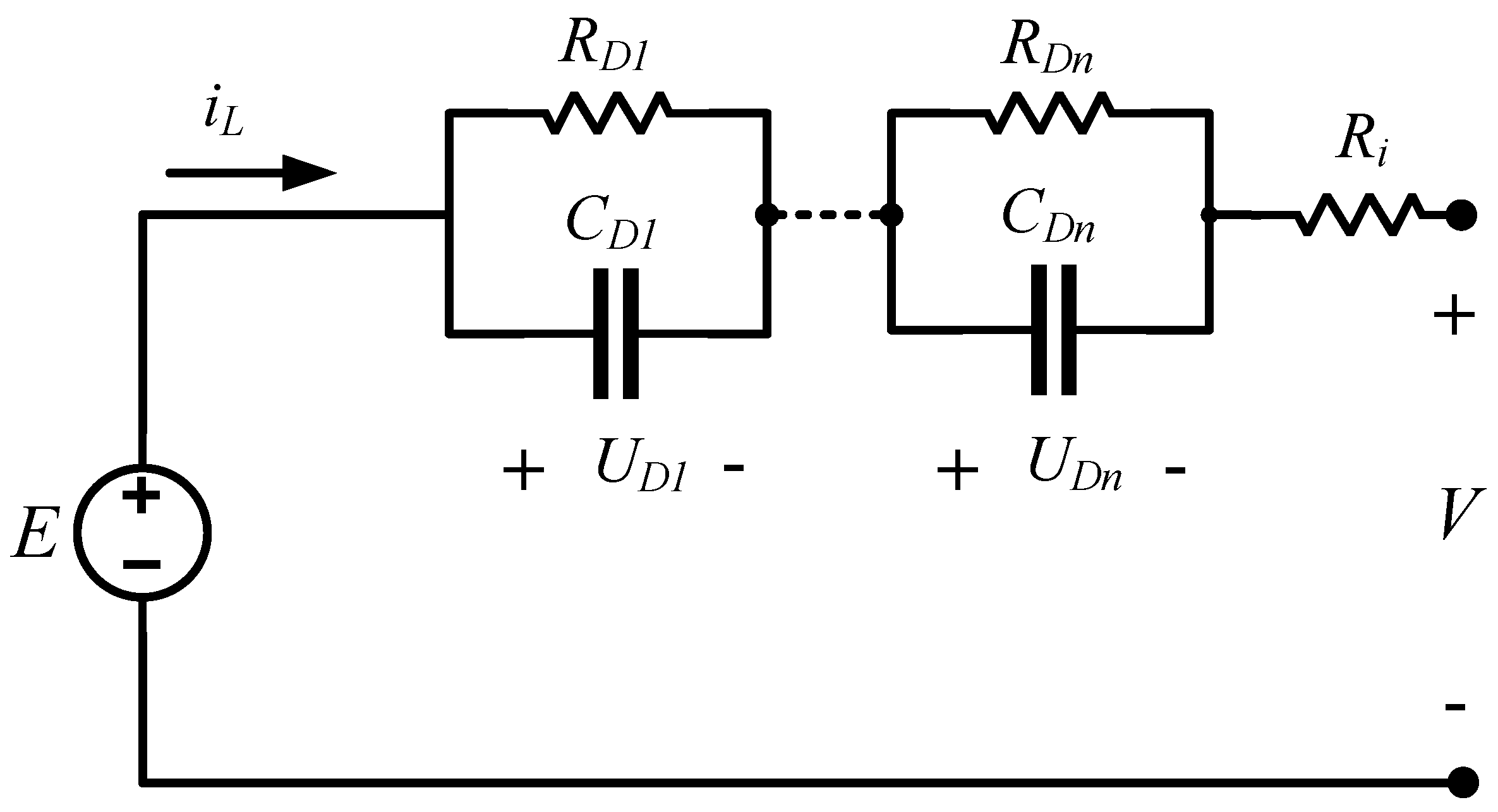
The chemical reaction taking place inside the battery cell is a non-linear complicated process. From an electrical design perspective, estimating the internal resistance of Li-ion batteries is necessary in the electrical design process to calculate the voltage loss, heat generation, power capability, and the efficiency of the battery [17,18,19]. The internal resistance appears in the equivalent electrical circuit of the cell, which can be represented in different structures, see Figure 3. The equivalent circuit comprises an open circuit voltage (E), which is dependent on the SoC of the cell. The internal resistance (Ri) simulates the charge dissipation in the electrical double layer [23,68]. The dynamic resistance and capacitance (RD and CD) simulate the diffusion process during current variations.
An accurate estimation of Ri enables the correct calculation for voltage drops during acceleration and voltage rise during either regenerative braking or charging, which is required to determine the set points for the BMS operation [2]. Also, Ri is used to determine the heat dissipation and, accordingly, the required cooling system. The value can be used to predict hot spots in the battery pack and thermal runaway.
The solid electrolyte interphase (SEI) is a thin graphite layer created on the anode surface, which plays an important role in protecting the cell, preventing continuous decomposition in the electrolyte, and improving the performance of the cell. However, this layer becomes thicker with operation, leading the internal resistance to increase due to the poor electronic paths [63]. The thickening process of the SEI is accelerated by aggressive driving and harsh braking as the current absorbed from the whole battery pack becomes higher. The thickness of the SEI layer is increased by storing the cells for long durations with either high or low SoC [39,40]. Other mechanical factors, including poor electrolyte wetting, delamination of electrodes, and cell swelling, can increase the thickness of the SEI and hence increase the internal resistance of the cells. Increasing the value of Ri beyond the design limits leads to reducing the output voltage, and hence the current, of the battery pack, meaning that lower torques will be produced [53]. Also, the heat dissipation will increase beyond the capability of the cooling system, which increases the risks of fires, especially when local hotspots are created [54]. High Ri values require a higher voltage from the charger to inject the same current into the battery cells. This means that either the charging process will be slower or it will not be possible, in case the charger cannot increase its output DC voltage [29].

2.3. Energy Efficiency

The amount of the useful energy extracted from the battery cell as a percentage of the charged energy is defined as the energy efficiency (EF). The EF is an indicator of the cell’s capability to convert chemical energy to electricity and vice versa [5,20,21,22,23,24,25,26,27,28,29]. The EF of a typical Li-ion battery reduces when the SoC is either higher than 80% or lower than 20%. Fast charging and discharging deteriorate the EF of the cell as the increased currents lead to the lithium plating phenomenon, which consumes the charge irreversibly.
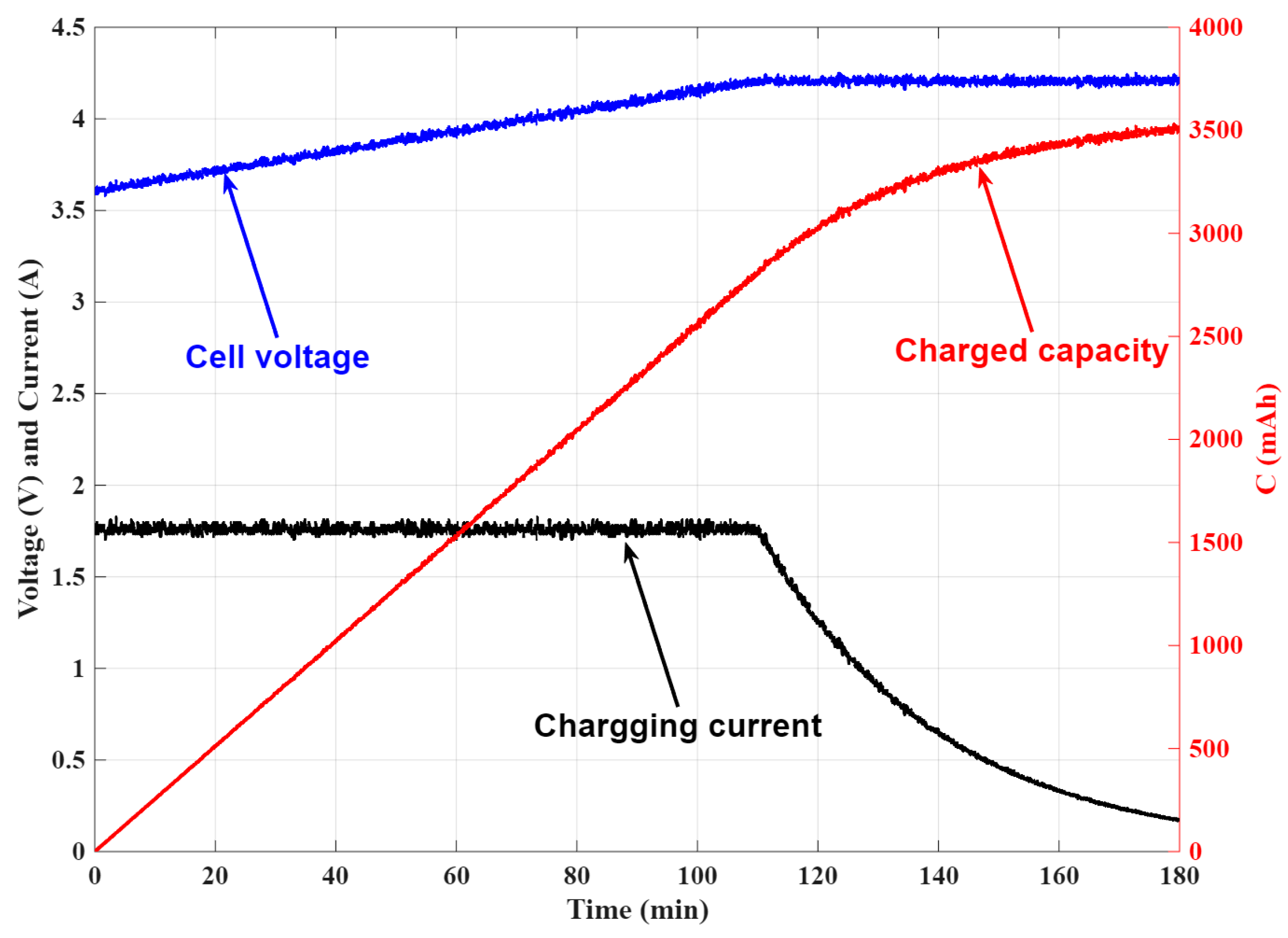
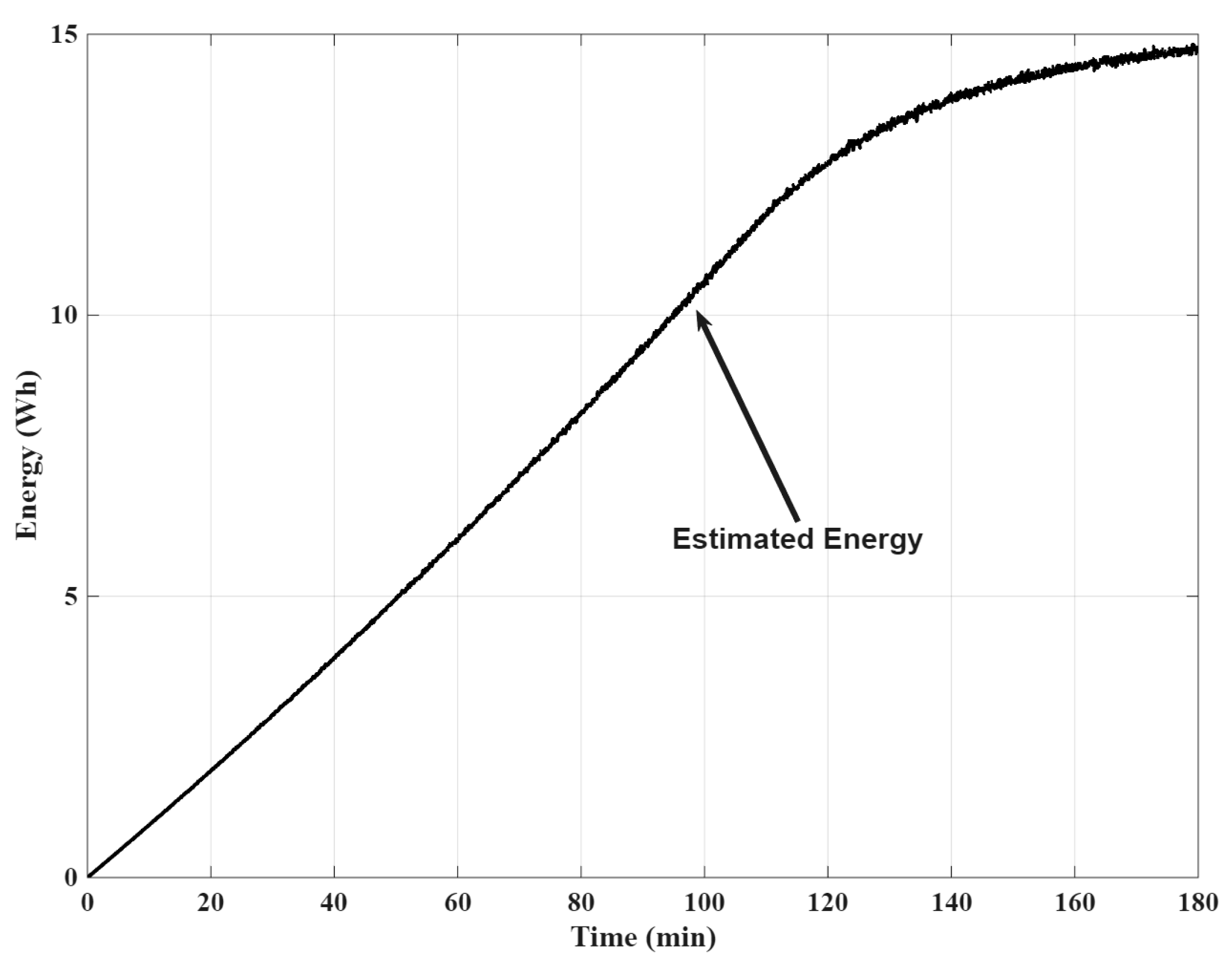
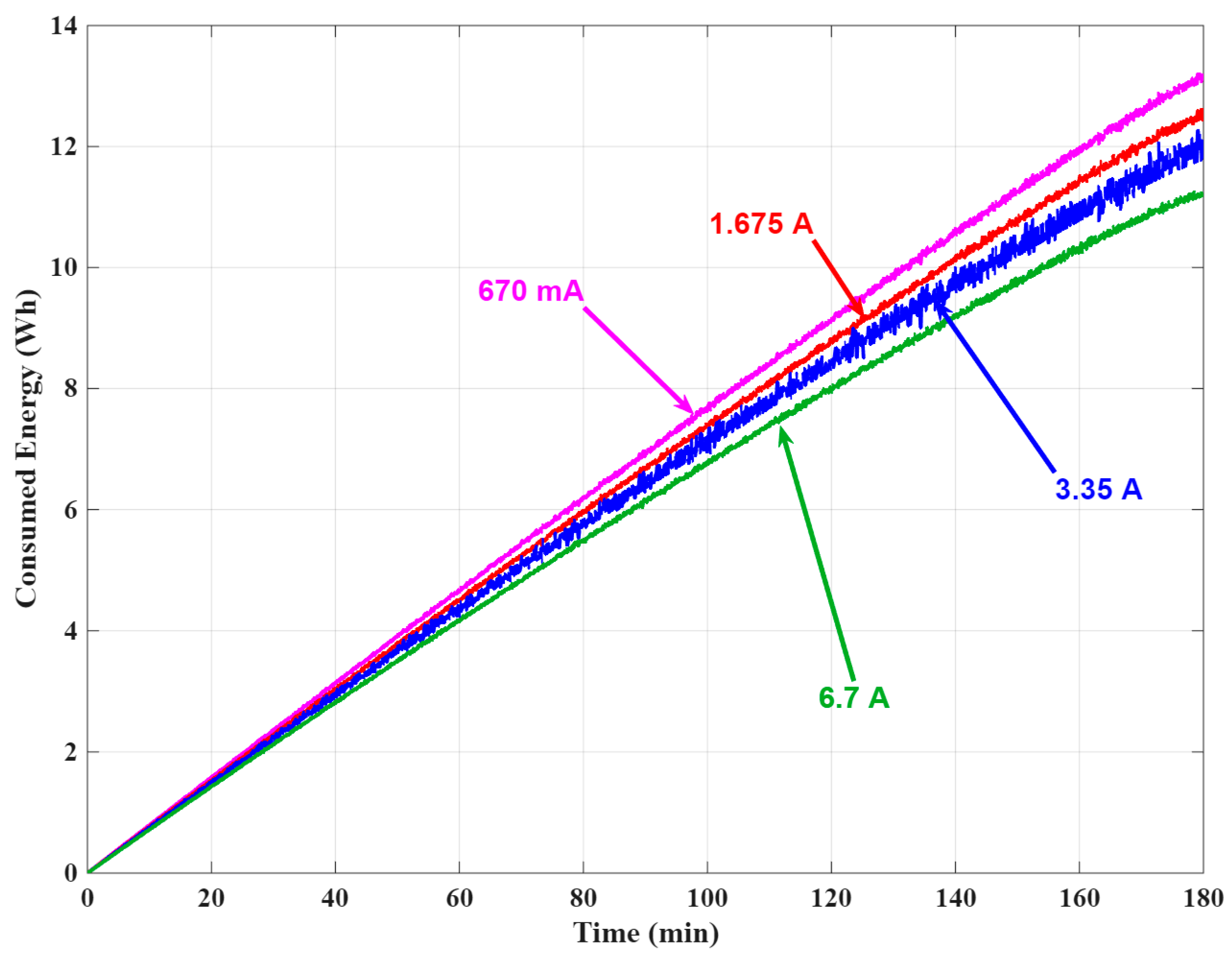
To present the EF parameter practically, Figure 4 shows the experimental testing of a Panasonic NCR18650 Li-ion battery (Cnom = 3450 mAh and Vnom = 3.6 V) during charging at a constant current of 1.75 A, then a constant voltage of 4.2 V. Figure 5 shows the calculated energy stored in the battery cell, where the final value was estimated as 14.66 Wh. It can be seen from Figure 4, Figure 5 and Figure 6 that the EF for this specific battery cell is ~90% at 670 mA. It has been reduced by increasing the current until it reached ~76% at 6.7 A.

2.4. State of Health (SoH)

It should be noted that the previous tests were conducted on one Li-ion battery cell and therefore the values may vary with other cells depending on their state of health (SoH). The SoH is represented as 100% for a new battery and declines with the operation and time. The most critical factor that affects the SoH is the high temperature because it accelerates the side reactions, grows the SEI layer, and can cause electrolyte breakdown. It is estimated that the SoH degradation is doubled for every 10 °C rise in temperature [5]. Also, extremely low temperatures may cause lithium plating risks during charging. Excessive fast charging and discharging have a negative impact on the SoH of the battery and can cause permanent capacity loss due to lithium plating. The internal resistance of the battery cell may increase with higher discharge currents. It is usually advised by battery manufacturers that the cells should not be discharged beyond a certain limit known as the maximum depth of discharge (DoD). The DoD can be calculated from 100%-SoC [2]. It is advised that the cycle life of an EV battery pack can be increased by around 3 times if the DoD is kept above 30%. As the DoD and SoC are directly related to the cell voltage, keeping the latter in the correct limit is crucial for improving the SoH and extending the lifetime of the battery. In this context, the BMS plays a crucial role in improving the SoH of the EV battery by monitoring, estimating, and controlling the whole system [69].
The SoH of a Li-ion battery has a direct impact on the SoC estimation methods because they rely on the relationship between voltage, current and stored energy, where these relationships are affected by ageing. The degradation of the SoH reduces the nominal capacity of the battery, which means that it holds less energy than assumed. The increase in the internal resistance raises the voltage drops under loading conditions, which in turn affects the SoC estimation.
Several strategies were proposed to improve the SoH of Li-ion batteries and reduce the deterioration due to fast charging and discharge [26,36]. This includes multi-stage constant current (CC) and constant voltage (CV) optimisation, pulse charging, temperature, and adaptive charging profiles according to the estimated SoC. When lithium plating risk is detected at low temperature or high SoC, these strategies can dynamically limit the current to maintain fast charging capability while reducing electrochemical stresses [70,71,72].
Moreover, effective thermal management can play a crucial role in reducing the growth of the SEI layer, as it can reduce the cell temperatures. Charging control algorithms can incorporate real-time thermal feedback in order to derate the current when the critical thermal conditions are detected [70,71,72].

2.5. Self-Discharge

Due to the internal chemical reactions that continue to take place inside the cell, Li-ion batteries can lose the stored energy over time, even if they are connected to an electrical load. This self-discharge is accelerated by storing the cells in a high-temperature room, and it can be doubled when the storage temperature exceeds 40 °C. Increasing the SoC above 80% or reducing it below 10% before storage increases the self-discharge phenomenon. Storing a Li-ion battery at a room temperature of 20–25 °C can lead the battery to lose 1–3% of its stored charge per month. This percentage drops to 0.5–1% if the temperature reduces to 10–15 °C [73]. The Li-ion cells have a lower self-discharge when compared with other types, such as nickel-cadmium or lead-acid batteries; however, it is still a critical issue with the progress of EV applications, especially in some African and Asian countries.

3. SoC Estimation

It can be seen from the previous sections that measuring the Li-ion cells’ temperature and estimating their SoC are crucial for improving the performance of EV batteries and ensuring the safety of the users. The probability of thermal runaways increases dramatically with high temperatures and over-charging due to lithium plating and electrolyte decomposition. Besides the safety reasons, EV users need to have an accurate prediction for the remaining energy and travel distance, which is directly dependent on the SoC. The accurate estimation of the SoC enables the necessary functions such as determining the charge and discharge limits, torque and speed control, regenerative braking limits, detecting unbalanced cells, and controlling the temperature of the cells. Providing customers with the correct EV warranty conditions depends on the accurate measurement of the SoC, and therefore, it is necessary to improve user trust as users expect the SoC calculations in the EV to be accurate and stable [18,19,20,21,22,23,24,25]. The internal temperature of the Li-ion battery cannot be measured directly due to technical challenges and a lack of sensors. However, the surface temperature can be measured using different sensors, and therefore, the internal temperature can be estimated. Thermocouples can be used to measure the cell surface temperature as well as the temperature of the cooling plates. They can provide a wide temperature range and have a fast response.
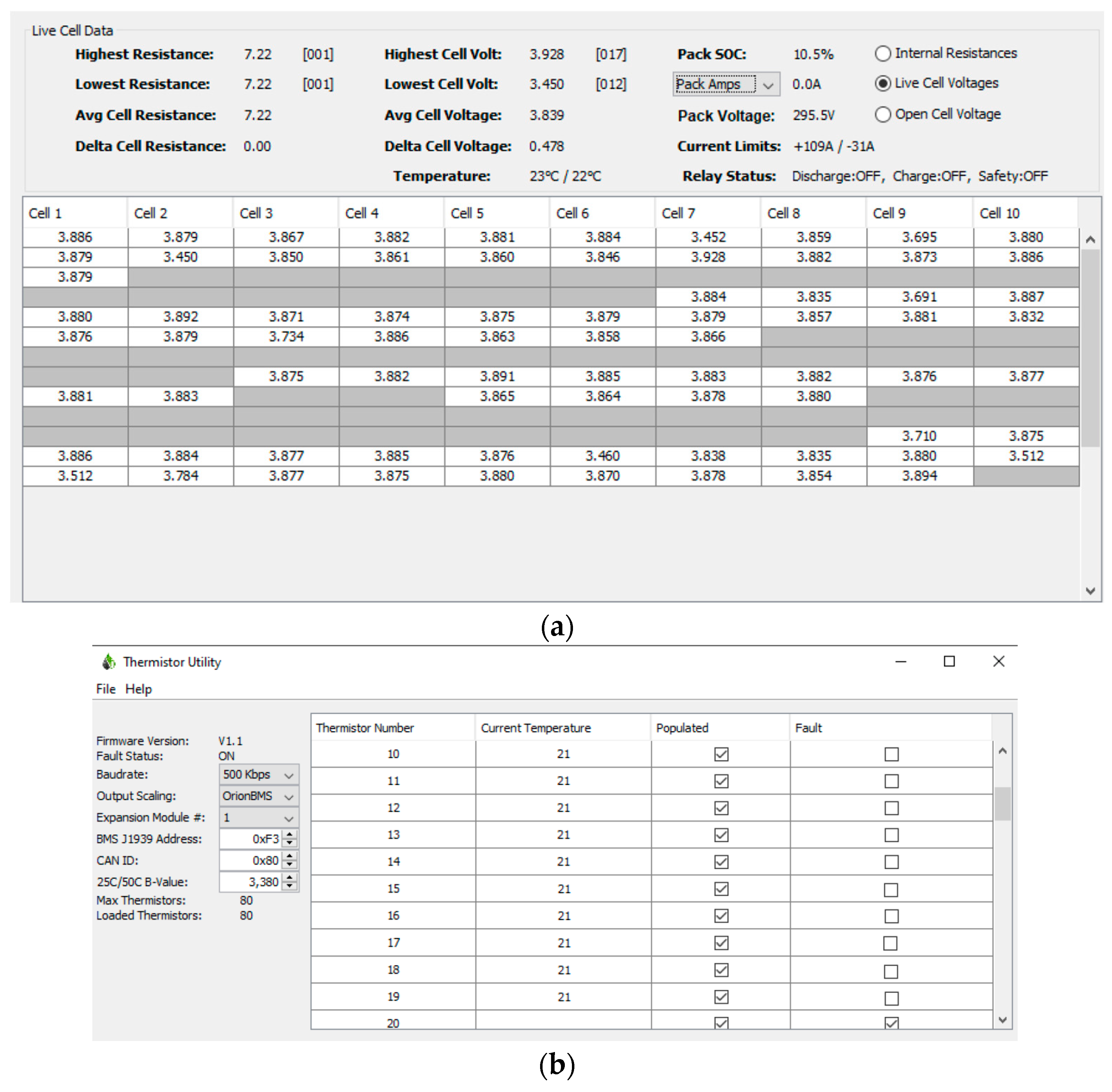
However, they are less accurate when compared with other types, especially when the environment inside the battery box is noisy due to high-frequency switching. Thermistors use semiconductor resistance, which varies strongly with temperature, to sense the surface temperature of the cells as well as the temperature in between the adjacent cells. They can be manufactured with a small size, low cost, and provide high sensitivity to temperature variation. On the downside, they have a nonlinear response to the temperature, which means that the values must be calibrated inside the BMS, and also, unlike thermocouples, they have a limited temperature range. Widely used BMSs such as Orion BMS 2 employ thermistors directly connected to the cells, with the possibility to add an expansion pack, which allows monitoring of different spots in the battery pack. Other automotive-related battery products use temperature sensors that behave like Zener diodes, such as the ones in Li8P25RT battery modules. The module has four-built-in temperature sensors placed in contact with battery cells. The output voltage of the Zener diodes is inversely proportional to the temperature, which can be measured in the range between −40 °C and 120 °C. A summary of the temperature sensing method is presented in Table 2.
Unlike the temperature, the SoC is not directly measurable and therefore can be only estimated from the voltage, current, and temperature. The next subsections present the most effective methods for SoC estimation that are used in practical BMS devices for EV battery systems.

3.1. Coulomb Counting

Coulomb counting is the most intuitive method to measure the SoC of battery cells as it measures the current i(t) fed into or generated from the battery cell and uses this value to estimate the charge over time t. This charge Q(t) can be calculated from:
Q t = t 0 t 1 i t   d t
where t0 is the initial time and t1 is the time after charging or discharging. Accordingly, the SoC can be estimated from:
S o C t = S o C t 0     1 C n o m t 0 t 1 i τ   d τ
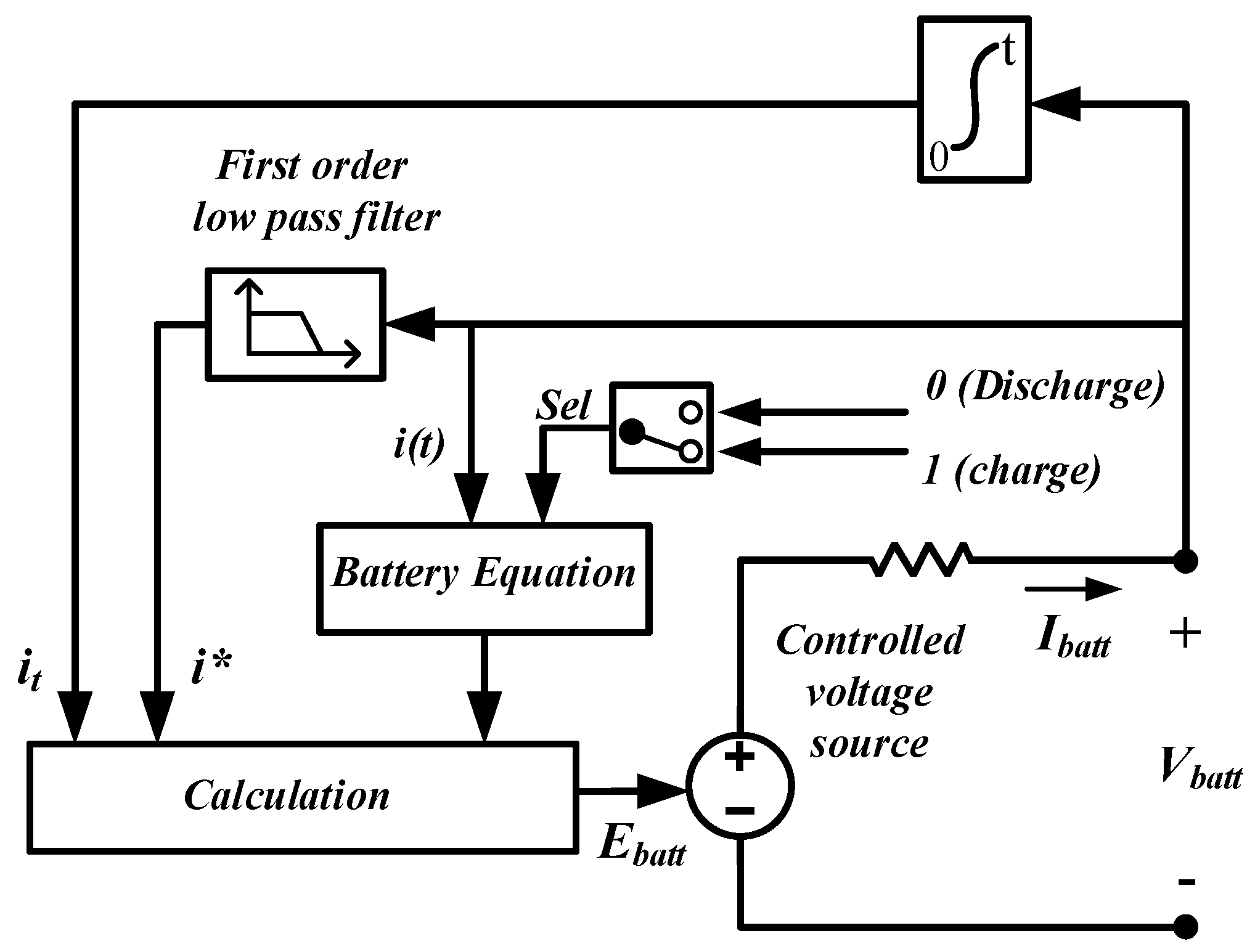
SoC(t0) denotes the state of charge at the initial conditions while Cnom is the nominal battery capacity in Ah. The integration is conducted continuously in real time as shown in Figure 7.
The BMS implements the digital integrator using the following discrete equation:
S o C k = S o C k 1   I k · Δ t C n o m
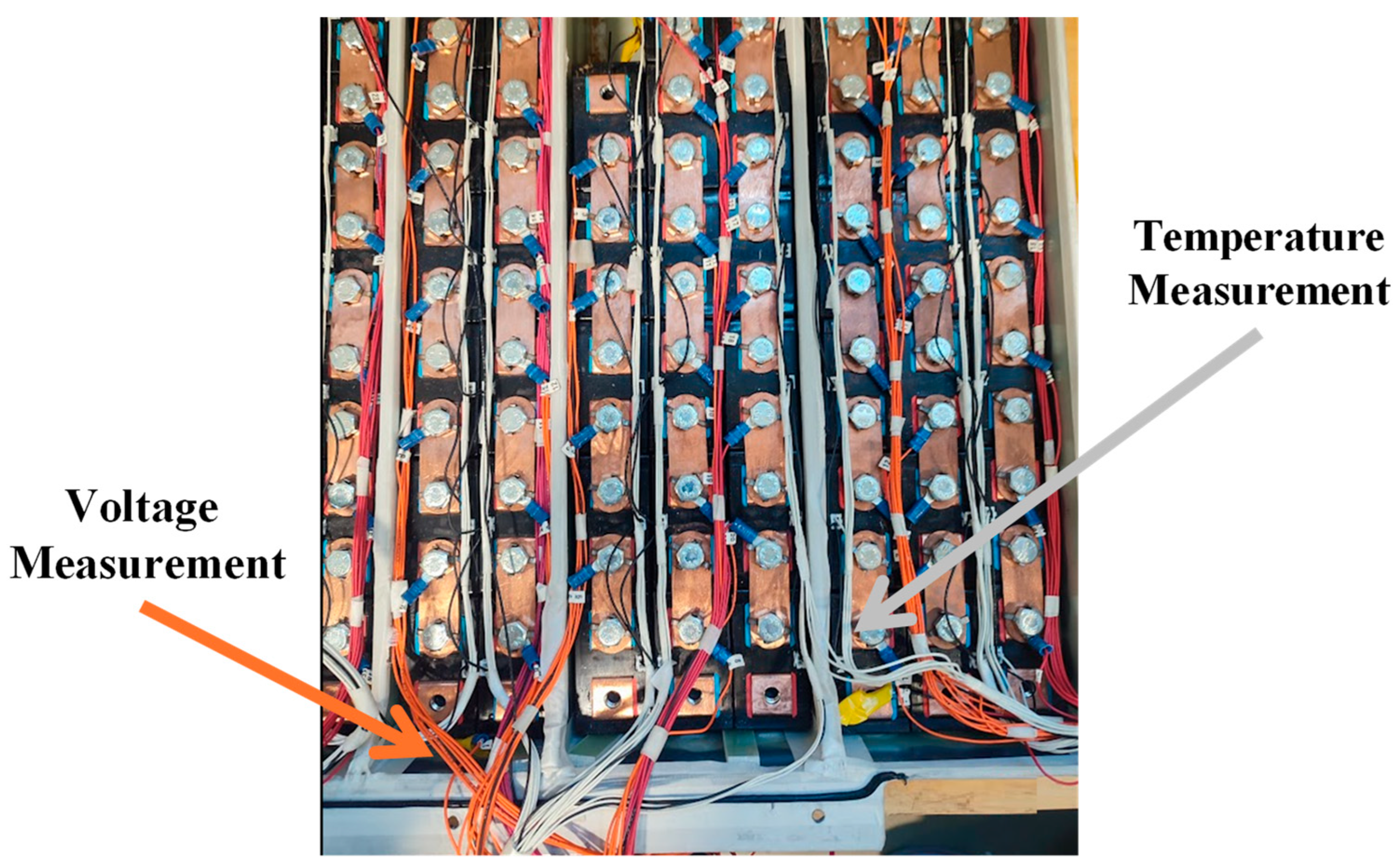
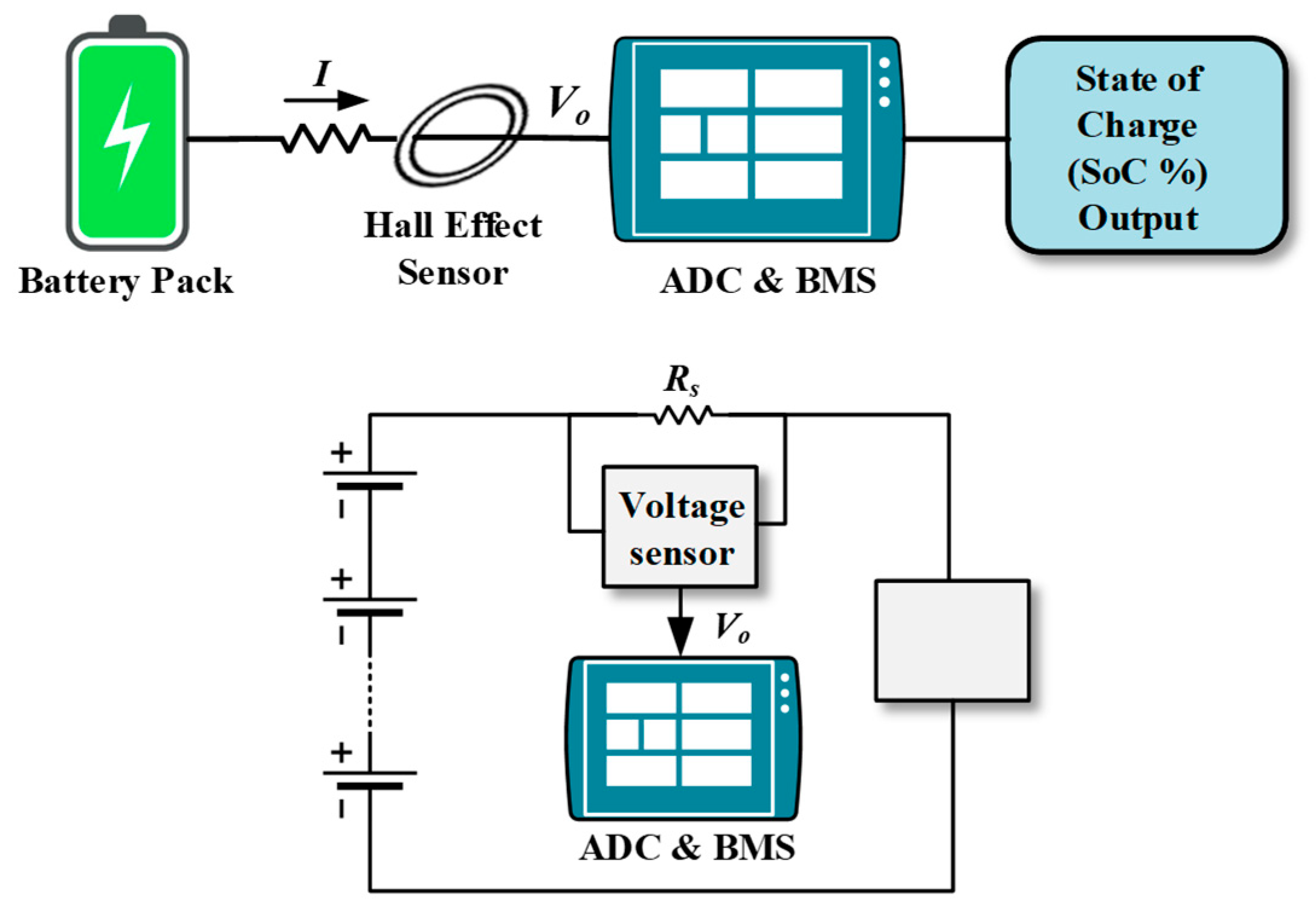
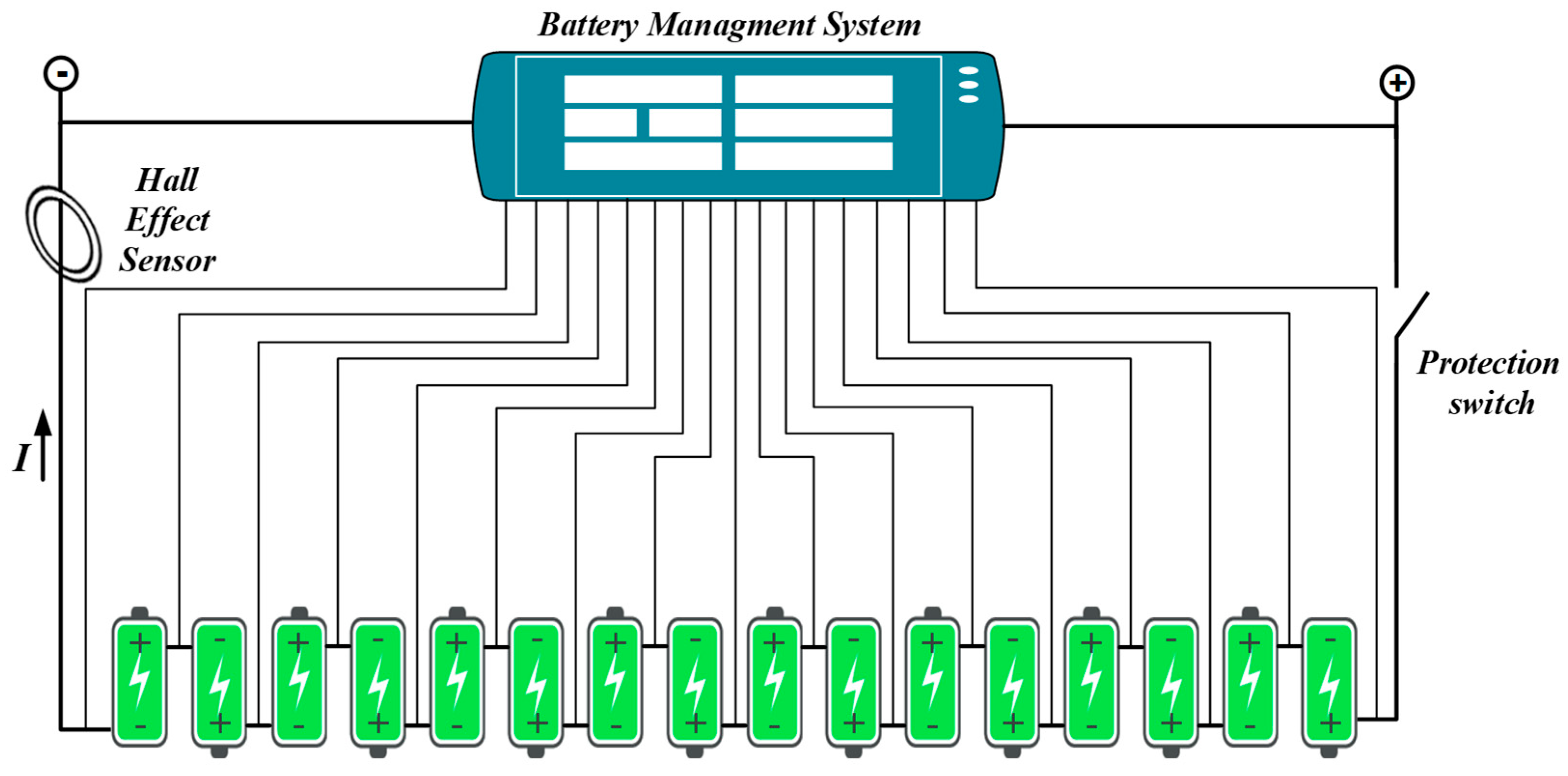
where Ik is the measured current at a digital sample k and Δt is the sampling interval. It can be seen from Equations (1)–(3) that the coulomb counting method is computationally simple to be conducted by the BMS microcontroller. Also, it works efficiently if the sampling time is short enough to linearize the calculations. The calculations can be conducted online while the EV is driving, braking or when the battery is charging. The main drawback of this method is that the calculations depend mainly on the nominal capacity of the battery cell, which drifts over time as mentioned in Section 2.1. Also, a large error in the current sensor measurement can lead to large drifts in the SoC calculations if not compensated and corrected by the algorithm. The current is usually measured by a Hall effect sensor, which generates a 0–5 V signal compatible with the analogue-to-digital (ADC) converter of the BMS microcontroller, see Figure 8. Other BMSs may use a shunt resistor in series with the battery, where the generated voltage is used to estimate the current. Although this method is cheap, it can cause inaccuracy in the current measurement when the value of the series resistance drifts with the temperature. The initial estimation for the SoC is crucial and must be corrected over time.
Due to the change in the total ampere-hour baseline, the degradation of the SoH of the battery cell can cause underestimation as well as overestimation of the cell’s SoC. Therefore, the cell’s capacity will need to be recalibrated dynamically using the measured SoH and combined with the periodic recalibration.

3.2. Coulomb Counting with Open-Circuit Voltage Loop-Up Table

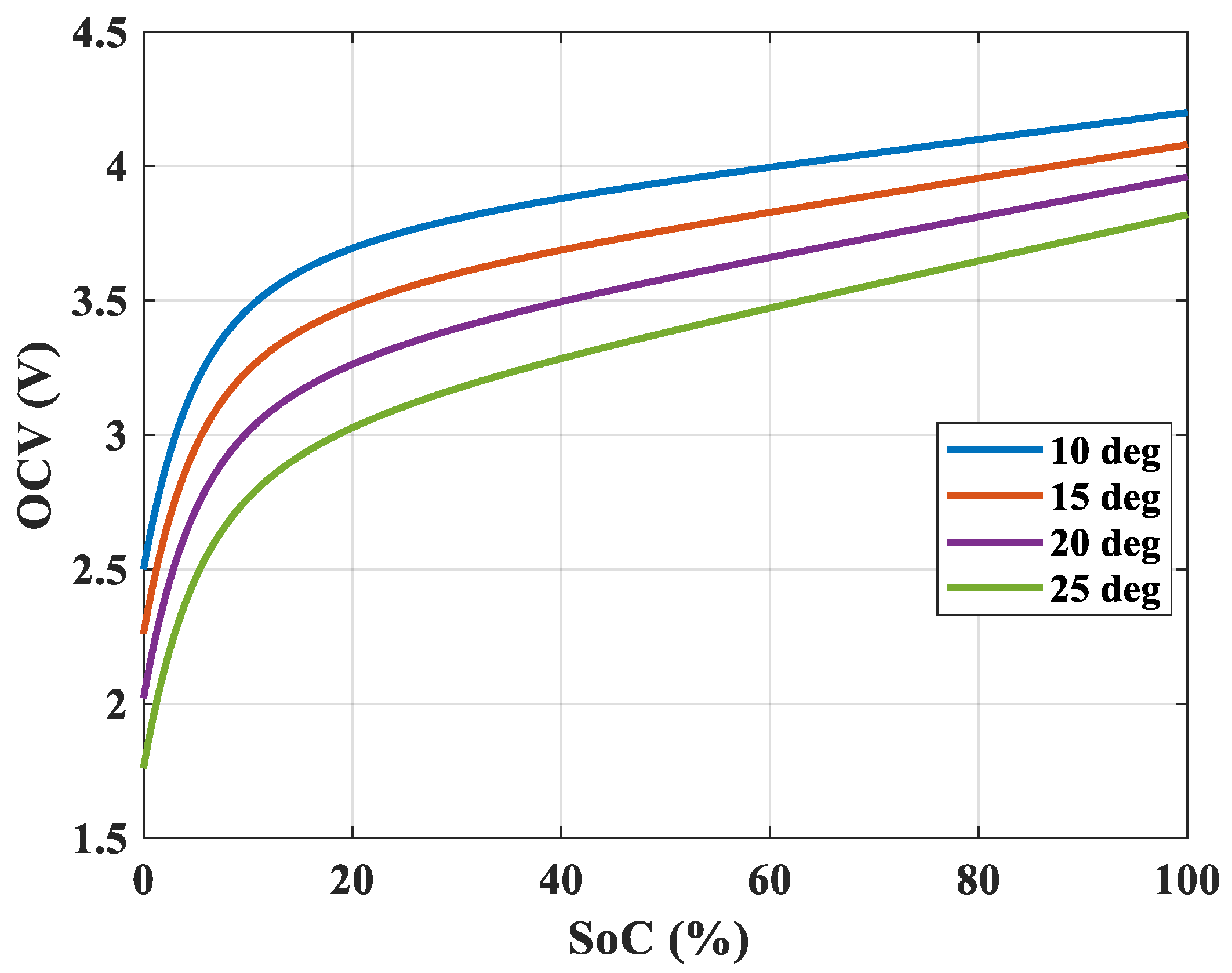
This method is introduced to improve the performance of the previous method by adding further accuracy for calculating the initial SoC at the beginning of the operation. It can be seen from Figure 4 that there is a direct relation between the voltage and the SoC, although this relation is not linear. This method depends on the coulomb counting method during normal operation, whether driving or charging. Then, the open-circuit voltage (OCV) look-up table is used to calibrate the SoC value and fix the errors that occur over time. The BMS stores a calibrated curve showing the relation between the SoC and the OCV as:
S o C = f ( O C V , T )
where T is the temperature of the cell. Before the operation starts, the BMS measures the voltage of the battery cells and uses the look-up table to estimate the initial SoC at the beginning. Figure 9 shows an example of the function in Equation (4) for a 18650 Li-ion battery cell. During the operation, the BMS uses Equation (4) to estimate the running SoC with time. The BMS then compares the battery’s voltage with the stored value when the battery is at rest or when the current is very low. The BMS will then apply correction algorithms to ensure that the stored values are corrected with time. Usually, the Kalman Filter (KF) is used to correct the voltage drifts optimally and update the stored look-up tables.
The OCV curves vary with ageing, especially at high and low SoC values, which means that the SoC estimation will drift. Therefore, adaptive OCV tables and SoH correction factors are implemented with the algorithm.

3.3. Model-Based Estimation Methods

Evaluation of the mathematical model of the battery cell can be used to explain the behaviour of the cell at different voltages, currents, charge, and temperature. There are three main categories for model-based SoC estimation methods [38]. The Electrochemical (EM) method, Equivalent Circuit Model (ECM) method, and Electrochemical Impedance Model (EIM) method. The EM method attempts to describe the oxidation, diffusion, and kinetics that occur inside the battery cell [39]. An example is the Doyle-Fuller-Newman model, which uses differential equations to describe the lithium concentration and its effects on the electrochemical voltage and currents [40,41,42]. Although it is an accurate method, it is complicated mathematically and requires high computational efforts that may not be possible by the microcontroller of the BMS [43]. The ECM method depends on the electrical circuit of the battery cell and attempts to describe the behaviour using equivalent resistors, capacitors, and voltage sources. In this way, the ECM does not describe the internal physical reactions of the cell and therefore depends on the parameter identification. On the other hand, they required lower computational effort because they did not need accurate physical quantities [18]. The EIM method represents the behaviour of the battery cell using the analysis of the electrochemical impedance as a function of frequency. It employs the ohmic resistance, charge transfer resistance, double-layer capacitance and diffusion phenomenon [19]. The EIM method is very sensitive to changes in SoC and can provide better fault detection and diagnosis. However, because of its complexity and dependence on frequency analysis, it is less common for practical EV BMSs [58].
The three model-based methods can be integrated with mathematical algorithms such as the Kalman Filter (KM), which can aid in an accurate estimation of the SoC [16]. The KM predicts the next state using the prediction mathematical algorithm and then corrects the model using the real measurements in the next sample [19]. The accuracy and speed of the algorithm convergence depend mainly on the parameter selections of the filter. Also, the performance is affected significantly by Gaussian noise and the errors in estimating the initial SoC.
The parameters used in the model-based method, such as internal resistance, polarisation, and diffusion elements, vary with time and ageing, which can lead to model divergence. Therefore, adaptive parameter estimation, such as dual KF for both SoC and SoH, can be employed to allow online identification of resistances and capacitances.

3.4. Data-Driven SoC Estimation Methods

The internal structure of the battery cell can be modelled without the need for describing the parameters explicitly. This means that the battery cell can be modelled as a black box which predicts the system behaviour using the measured quantities without relying on the physical knowledge of the system’s internal chemical behaviour. This data-driven method is effective in processing the non-linear behaviour of the Li-ion battery cell and estimating the SoC. It can provide a high level of prediction where the complex relationship between the inputs and outputs is extracted without the need for an explicit physical model.
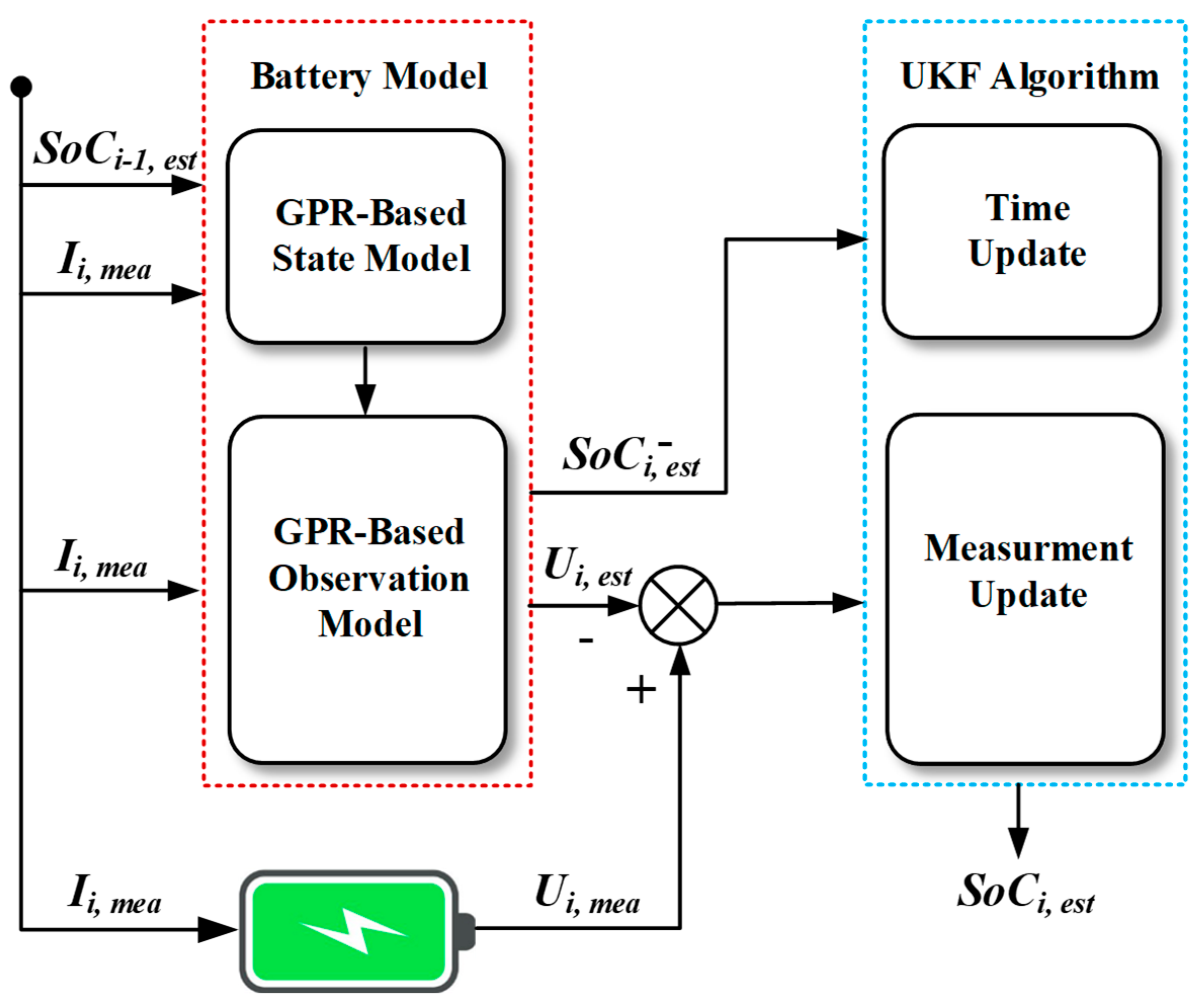
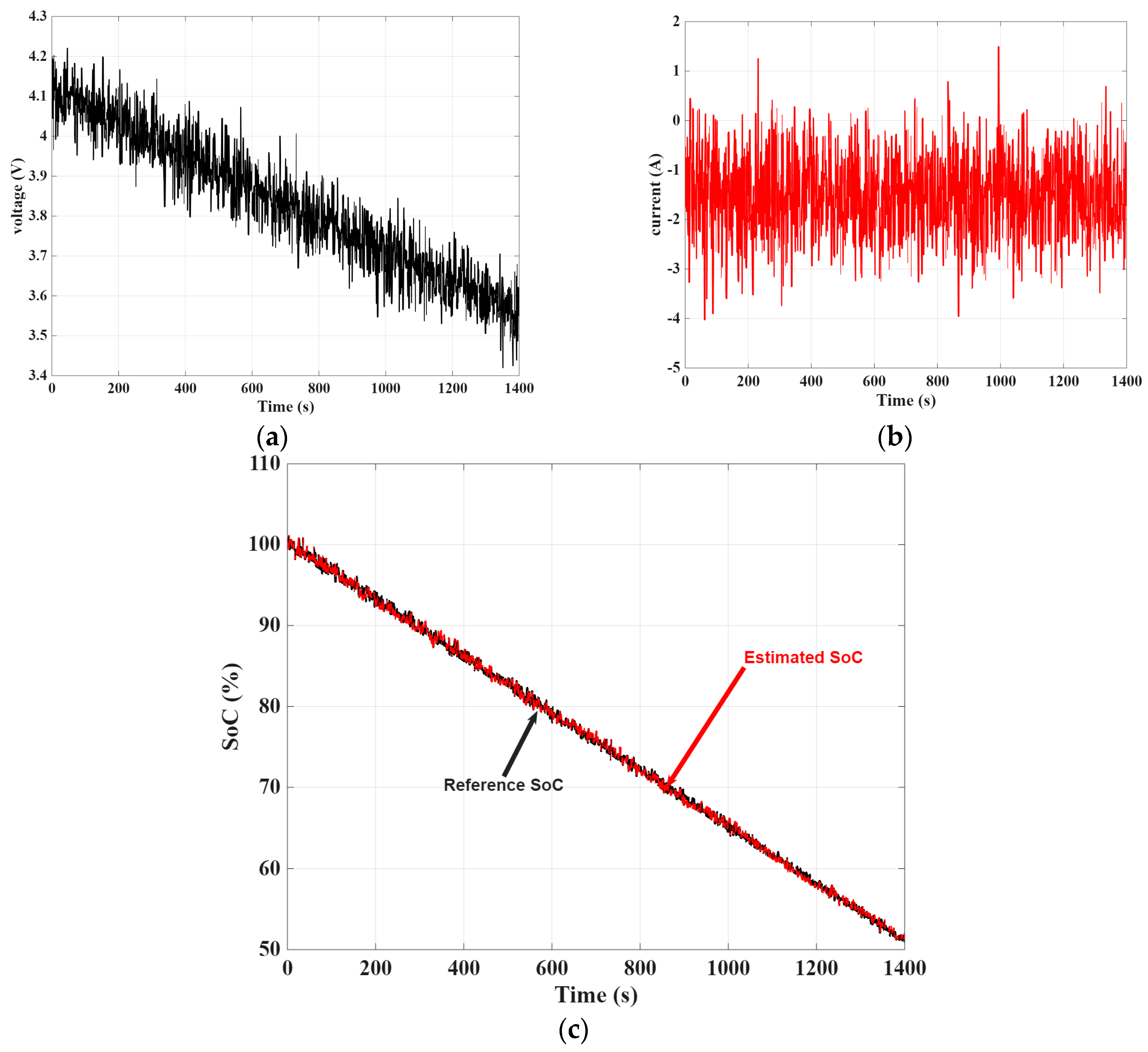
Artificial Neural Networks (ANNs) have been used where the currents, voltages and temperatures are fed as inputs while the SoC is extracted as an output [74,75]. Fuzzy logic controllers and support vector machines can be used to represent the complicated nonlinear behaviour of the Li-ion battery cells, which can provide good predictions and convergence if they are given sufficient initial and operational conditions. A good example is given in [76] where the proposed SoC estimation method employs a Gaussian Process Regression (GPR) algorithm with KF to improve the prediction of the system’s parameters. The GPR algorithm learns the battery behaviour from data while the KF recursively estimates the SoC during the operation. As shown in Figure 10, the measured current and voltage are divided into training data to build the GPR models and test data to validate the models online. The GPR-based state model learns the SoC changing behaviour as a function of current and time [77]. Using a Gaussian process hypothesis and Hyperparameter optimisation, it then captures the dynamics of the battery without an explicit physical model. The GPR-based model then learns the relationship between the SoC, flowing currents, and terminal voltages to predict the battery cell’s voltage from the estimated SoC and measured current [78]. The KF runs in real time to predict the SoC in the next sample and estimates the associated uncertainty. In the next sample, it corrects the SoC from the measured voltage and current and then re-evaluates the uncertainty.
The method in Figure 10 has been reproduced experimentally using a 18650 Li-ion battery, where the results of these experiments are shown in Figure 11. The voltage of the cell is measured as shown in Figure 11a with the current profile as in Figure 11b. The estimated and reference SoCs are shown together in Figure 11c.
The method allows for a good prediction of the remaining SoC in the EV battery cells according to the tuning of the GPR algorithms. The experimental results confirmed the good accuracy and the low estimation error with good robustness. However, it is noted that the online algorithm requires a high computational burden, which necessitates an expensive microcontroller in the BMS. Therefore, the method can be used as an assistive high-level algorithm, depending on the conventional coulomb counting methods as primary SoC estimators [73,74,75,76,77,78].
The data-driven and Artificial Intelligence methods are usually trained on fresh battery cells, and therefore, the prediction may degrade when the SoH declines. Thus, periodic retraining and/or online learning may be required to include the effect of SoH degradation on the model and its resultant data.

3.5. Comparative Evaluation of SoC Estimation Methods

Based on the presented methods, this subsection will provide a comparative evaluation of SoC estimation methods in terms of accuracy, computational cost, robustness, and suitability for EV applications.

3.5.1. Accuracy

Pure coulomb counting methods are accurate in short-time intervals but suffer from cumulative charge calculation drifts during long durations. The error in estimating the SoC of a typical EV battery can exceed 5% overtime, which may not be corrected, as it may increase to 10% with current sensor inaccuracy, capacity uncertainty, and discretisation errors by the microcontroller during integrating the charger. Thus, adding a periodic correction using an OCV-SoC lookup table can improve the long-term accuracy. It should be noted that this will mainly depend on the availability of rest durations where the algorithm can rectify the errors. In EV applications, the accuracy of a coulomb counting method with an OCV lookup table can provide moderate accuracy.
The Model-based SoC methods, including KF-based techniques, can provide high dynamic accuracy by combining the discrete current integration with voltage feedback correction techniques. The error of these methods in EV applications is usually in the range of 2–3% under standard EV driving cycles. It should be noted that the performance of these methods will depend mainly on the correct parameter identification and the effectiveness of the model fidelity.
The data-driven methods provide lower errors compared to the model-based SoC estimation methods. The accuracy in these methods depends mainly on the correct representation of the trained datasets, the level of including the temperature and ageing effects, and the modification of the data with any degradation under unseen conditions.

3.5.2. Computation Cost

The computational demand of the coulomb counting methods is minimal, as a single numerical integration step is conducted in each sampling period. Accordingly, the required memory is relatively small when compared to other methods, which makes this method more suitable for low-cost microcontrollers. Incorporating an OCV lookup table to improve the accuracy will add more computational efforts, especially when interpolation is required. However, this method remains feasible for EV applications, especially for low-end automotive hardware systems.
The Model-based model SoC estimation methods require moderate computational cost, especially when matrix multiplication is needed. However, there are several microcontrollers available in the EV market that can handle the implementation of these methods effectively while keeping the cost balanced with the performance gains.
The data-driven methods require higher computational efforts, especially when the feedforward neural networks and deep models are necessary. The required memory is significantly larger than that of the other SoC estimation methods, especially when real-time operation is required.

3.5.3. Robustness

Compared to other SoC estimation methods, the coulomb counting method exhibits lower robustness due to its sensitivity to errors and offsets in current measurement, in ability to correct the integrated errors, and its incapability to detect ageing. Adding an OCV lookup table to the coulomb counting technique can improve the robustness if the rest periods are sufficient to update the OCV curves with ageing. It should be noted that the performance will deteriorate if temperature and ageing are not detected and modelled.
The Model-based methods increase the robustness of the SoC estimation as they can include the temperature states of the battery cells. The method can also mitigate the errors in the current and voltage measurements using internal filtering. The SoH estimation can be included to extend the robustness of the whole estimation method.
The data-driven methods improve the robustness significantly within the training domain. However, as it is a data-dependent method, it becomes weaker outside the training distribution with new chemistries, and ageing will require data retraining.

3.5.4. Suitability for EV Applications

Based on the presented discussion, it can be understood that coulomb counting methods are not suitable for EV applications as standalone SoC estimators for the EV battery pack because of their drift and limited robustness. Incorporating the OCV lookup table makes the SoC estimator more suitable for low-cost EVs, medium hybrid vehicles, and EV systems with long rest periods. Model-based SoC estimators are highly suitable for commercial EV battery systems as they offer high dynamic accuracy, real-time feasibility, and strong noise rejection. It can be seen as the optimum trade-off between performance, cost and complexity. The data-driven SoC estimators are promising for next-generation BMSs, especially if they can be combined with adaptive learning, where the models can update themselves after deployment to include battery ageing, temperature dependence, cell-to-cell variability, and other relevant issues. However, this comes at the cost of increased sensitivity to domain change, higher computational efforts, and increased challenges to comply with the strict EV safety conditions. The main findings of this comparison are summarised in Table 3.

3.5.5. Examples for EV SoC Estimators

Recently, model-based SoC estimators have been used widely in modern EV battery systems [79,80,81,82,83]. However, EV manufacturers usually combine more than one method of SoC estimation. For example, the Toyota Prius employs robust KF observers with a conservative lookup table for calibration. Their old Plug-in Hybrid EV (PHEV) combined the coulomb counting method with an OCV lookup table for calibration. Tesla (Model S, 3, X, and Y) uses advanced KF variants for SoH and SoC estimators, where these techniques are usually patented. They also use a capacity buffer and multiple correction strategies to ensure accuracy and protect the system against over- or under-estimation. BMW (iX, i4, iX3) has an energy management system based on a robust model estimation with the SoC tracked across the temperature ranges. Other companies, such as Renault and Nissan, still use coulomb counting methods with periodic OCV corrections. Table 4 summarises the main SoC estimation methods employed in common modern EVs.

4. Energy Management Systems

A BMS in an EV is a critical electronic and electrical system responsible for monitoring the cells’ voltages, currents, and temperatures in addition to other components such as SoC and SoH [84,85,86]. The BMS protects the cells from being charged above or below the safe limits [57]. It monitors the thermal quantities and operates the cooling system as required [54]. It also plays an important role in balancing the charge evenly across the cells. The number of cells increases with the energy capacity of the EV. Increasing this capacity is essential to increase the travel distance of the EV and therefore reduce customers’ anxiety about EVs [58]. The BMS functions become more challenging with the increased number of Li-ion battery cells in the system because the physical connections become numerous and the computational effort increases accordingly [59].
Because several cells are connected in series, their voltage differences must be maintained within a small range, practically 10 mV, with a temperature difference of around 3 °C. If the voltage differences are high while the current flowing through from the cells is the same during discharging, the absorbed energy from the cells will be different, which will be reflected in their temperatures [60]. Also, the low-SoC cells may be over-discharged, which can cause copper dissolution and possible internal fault [61]. During the charging process, the cells with high SoC may overcharge, which leads to lithium plating risks and potentially thermal runaway [45,46,47,48]. A large mismatch between the cells’ voltages, and hence SoCs, can lead to different ageing rates, which means that the total pack’s voltage can be within the safe range while some cells are at risk of destruction [51,52,53]. The BMS helps the EV system to unify the states of the cells as much as possible, so their lifetime is increased. The lifetime of a typical EV battery pack is in the range of 10–15 years.
Balancing the SoC of Li-ion batteries is the only practical solution in the EV application because replacing the cells individually is not usually possible, which means that the battery pack is as strong as its weakest battery cell [87]. Thus, the BMS should measure cell voltages, identify divergence, and balance cells either actively or passively. The balancing process prevents this divergence from becoming catastrophic [39,43].
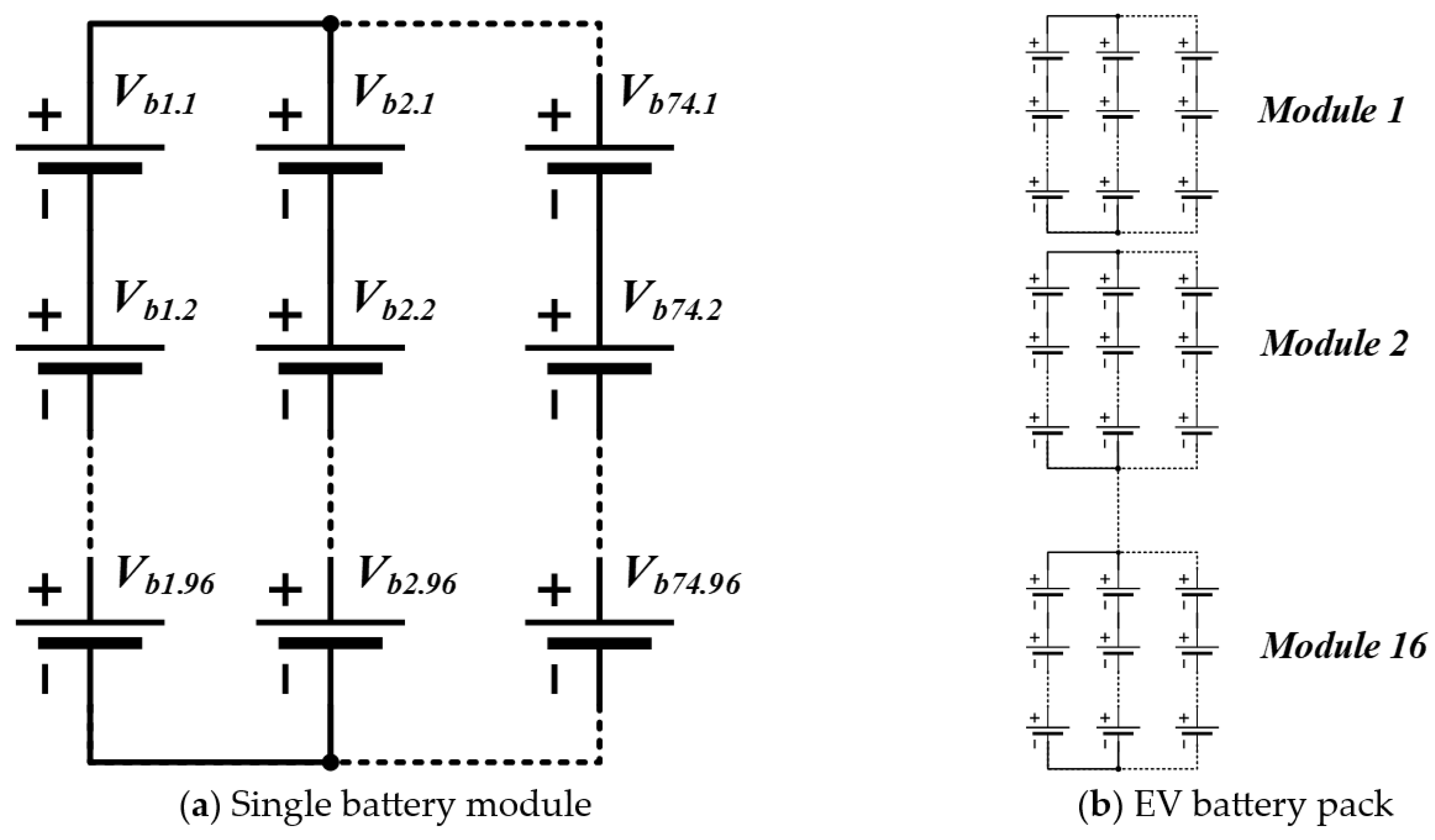
A typical EV battery system is composed of series modules, sometimes referred to as segments, which boost the voltage to the required voltage. These modules are composed of a series/parallel combination of Li-ion battery cells to boost both voltage and capacity. For example, the 355 V Tesla Model X battery is composed of 16 modules in series, each module is composed of 6 in series and 74 in parallel cylindrical 18650 Li-ion battery cells. In total, the EV battery pack is seen as a 96s74p system, see Figure 12. The next subsections will present an overview of the main configurations and requirements of practical BMSs in the EV market.

4.1. Centralised BMS

A centralised BMS monitors all cells or modules using one controller, where the voltage, current, and temperature-sensing wires are connected directly between the components and this single unit [88,89,90,91]. The cell balancing, charge estimation, device protection, and fault diagnostics are handled in one electronic control unit (ECU), see Figure 13, where a single printed circuit board (PCB) is responsible for monitoring the battery cells and taking the appropriate actions.
The centralised BMSs have been preferred in EV systems during the past decades because of their simple and economical construction compared to other decentralised and modular systems. Because there are no master–slave communication channels, fewer ECUs can be used, which makes it easier to design, manufacture, commission, and debug. The reduced component count leads to reduced overall cost, which makes it attractive for low-voltage and low-cell-count systems [92,93]. The direct measurement of all cells using hardware connections and wires reduces the latency of measurement signals, which improves the fast protection of the battery components [94,95]. Because the measurements are sent directly to the central ECU, the SoC estimation and balancing algorithm run in the same unit, which improves the efficiency and simplifies the validation and safety analyses.
On the downside, wiring becomes excessive when the cell counts increase. An example is shown in Figure 14, where when the number of series cells increases to 72, the number of voltage measurement wires increases to 73, which adds complexity to the design process. The long analogue signal wires increase the noise susceptibility in the system and add to the weight of the system. Also, the troubleshooting process becomes more complicated with a single-point failure with one ECU, which means that the whole system will be out of service if this central unit is damaged. Also, these configurations have constraints on the placement of the thermal measurement sensors, as they should be close to the ECU for signal integrity issues. This goes against the main target of distributed thermal measurement sensors, which is to measure the hotspot areas in the battery pack, especially those that are at the corners of the container and between the plates.
For these reasons, a centralised BMS is more suitable for small-sized EVs that are designed to operate at low speeds and hence require lower voltages. Centralised BMS configurations are widely used in motorsport EVs, especially in university undergraduate student competitions, as well as in research vehicles. An example is the ORION BMS2 centralised system, which is used extensively in Formula Student (FS) competitions. As shown in Figure 15, the central unit measures cell voltages, temperatures and currents using the directly connected cables and estimates the SoC of the cells and pack using the coulomb counting method with the aid of look-up tables, as explained earlier in Section 3.

4.2. Modular BMS

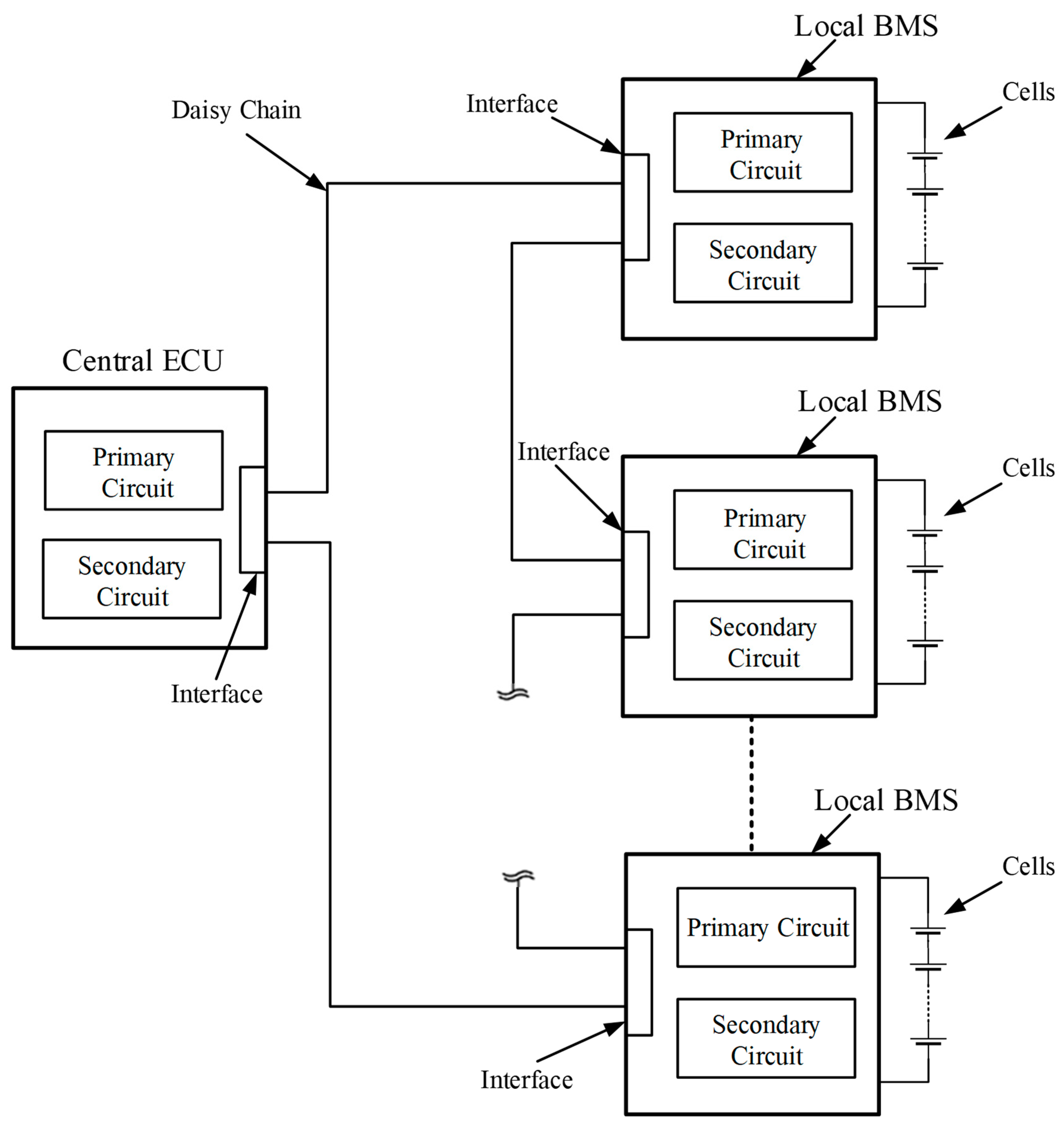
Modular BMS architectures are widely used in modern EV propulsion systems, especially when the battery capacity and voltage are increased. The modular BMS is referred to in some textbooks, papers, and industrial notes as Distributed BMS [96,97,98,99]. In such systems, local monitoring ECUs are installed on each battery module, from where they communicate with a global ECU that coordinates the local ones via a suitable communication link. The most common communication link is the Controller Area Network (CAN) bus.
The modular BMS structure allows for a high degree of scalability when additional battery modules are required. As shown in Figure 16, each group of battery cells is controlled by a local BMS module, which monitors the voltages, currents, and temperature of the group. The local BMS module sends the measurements to the master controller via the communication link. Unlike the centralised structure, the modular BMS allows operating at 800 V, which is a trend in the EV market recently. Voltage and temperature sensors can be placed very close to the battery cells, allowing better observability and controllability over the battery pack. There is no need for long high-voltage wires connected between the cells and the global BMS because this is replaced by the digital communication link. This reduces the harness weight and the number of hardware failure points [99,100,101]. The modular structure improves the fault diagnostic process and helps in identifying the faulty cell in a shorter time compared to the centralised BMS. One of the most important features of this type is that each module can be tested before the pack is assembled in the EV. For these reasons, several major EV manufacturers depend on the modular BMS architecture for their designs, see Table 5.
On the downside, the cost of modular BMS is higher than that of the centralised system, especially for low-voltage packs. This is due to the increased count of PCBs, ECUs, and isolation systems. The robustness of the communication link is critical for the operation of the EV.
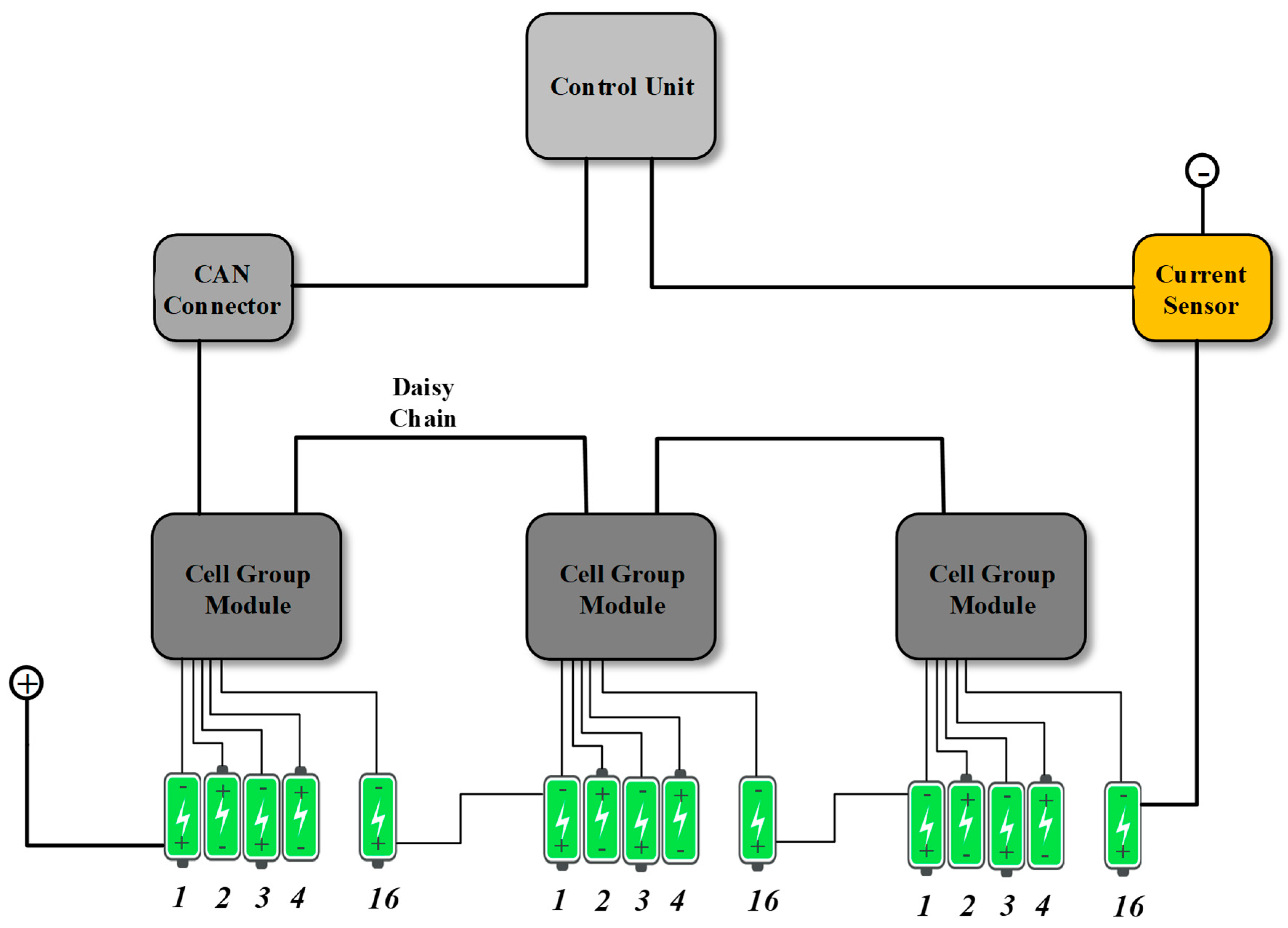
The failure of the communication link due to interference issues, which increase with the increasing switching frequency of the propulsion inverter. Increasing this switching frequency is essential in modern EV systems to reduce the size and weight of the propulsion inverters and motors. The high mechanical vibration and shocks that are natural in this application can lead to severe issues in the communication link, which must be carefully addressed. One of the common examples of modular BMS employed in the automotive and motorsport industry is the EMUS BMS shown in Figure 17. The system is suitable for Li-ion cylindrical and pouch cells with a CAN communication link, which can operate at baud rates from 50 to 1000 kbits per second. The cells are monitored and managed by cell group modules, which can accommodate up to 16 cells in series. The cell group modules can be powered by the cells themselves, and the communication between cell group modules is established via a daisy chain. The system can work efficiently for up to 800 V and high-capacity EVs.
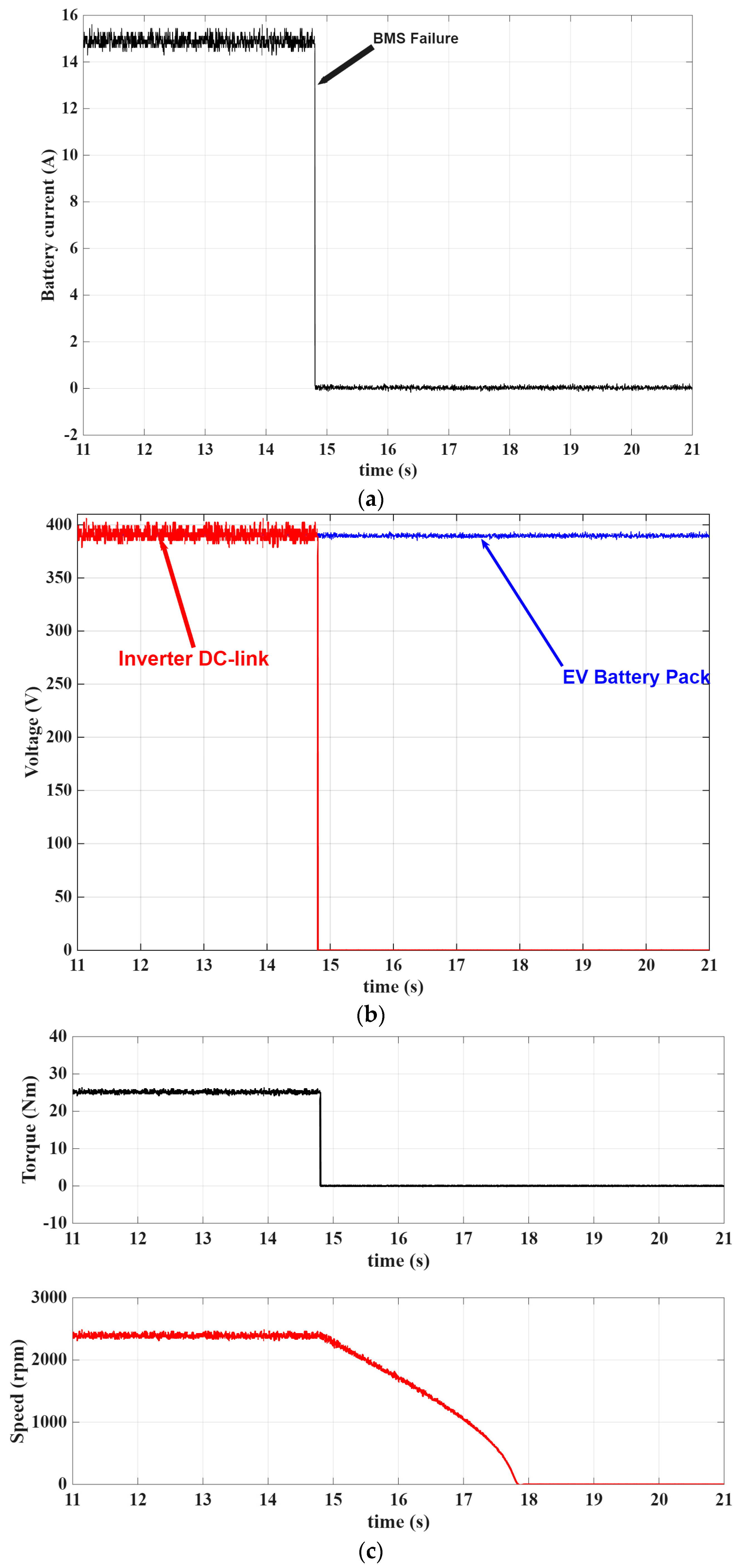
Usually, the BMS is required to send a safety signal to the central controller of the EV to ensure that all components are operating within an acceptable range in terms of voltages, temperatures, SoC, and currents. This safety signal trips the propulsion system by disconnecting the EV battery from the propulsion inverter as a safety measure. One of the major drawbacks of connecting the cell group modules in series is the exposure to losing the whole link if a segment of the chain is broken due to mechanical or vibration shocks. This leads to sending a false tripping signal to the central controller and disconnecting the propulsion system unnecessarily. Figure 18 shows the experiments for this unnecessary tripping case when the daisy chain communication of a 400 V battery system is disconnected from a BAMOCARD3 three-phase voltage source inverter driving an EMRAX 208 Permanent Magnet Synchronous Motor. Figure 18a shows the total current absorbed by the battery pack, and Figure 18b shows the total voltage of the battery pack as measured by the three-phase inverter, along with the real voltage of the battery pack. Figure 18c shows the torque and speed of the motor.
Some research efforts have attempted to address this practical problem and reduce the impact of communication failures on the performance of the EV propulsion system. In [102], a redundant Modula BMS included a multi-channel, bi-directional daisy-chained communication loop, which improves the redundancy of the communication link.
As shown in Figure 19, the central microcontroller manages the components at a system level, where it communicates with the local units through the redundant daisy chain. Each local unit monitors, controls corresponding battery cells, and communicates commands via the differentially connected daisy-chain loop, which uses several communication channels in different frequency ranges in parallel. Although the proposed system is likely to fix the false tripping issue discussed in Figure 18, it should be noted that the authors could not test this practically in this review paper.

4.3. Decentralised BMS

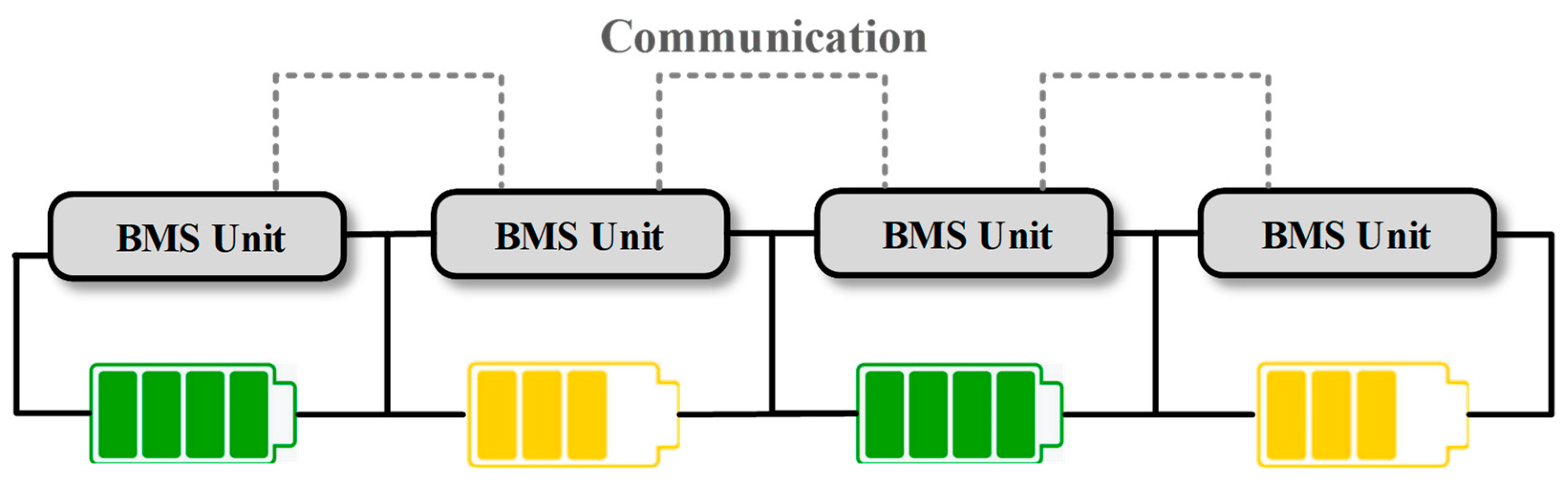
In this system, each cell or a small group of cells has its own control system and there is no central BMS unit to master the communication, commands, and responses [44]. This architecture is introduced to reduce the problems of the centralised control structures, see Figure 20. The BMS local units monitor and control the cells individually and function locally [57]. The communication link eases the exchange of information and the coordination between the local units. The system reduces the points of failure, increases the controllability and observability of the cells, and improves the scalability of the system [58]. On the other hand, the system is expensive when compared to other types due to the increased electronics per cell. Due to the lack of a central controller, the local units make decisions individually, which requires a very complicated software algorithm for each unit to communicate and synchronise with other units safely [61]. Usually, droop control algorithms are used to ensure even power sharing between the series-connected batteries in the group [103,104,105].
So far, the employment of fully decentralised BMS architecture is limited to aerospace and military battery systems with minimal involvement in EV propulsion systems. Although the ISO 26262 standard, which regulates EV systems in many countries, does not explicitly ban the use of fully decentralised BMS architectures, its safety requirements tend to discourage EVs from adopting fully decentralised BMS designs. For example, the ISO 26262 standard states that the BMS should be responsible for over-voltage and overload protections as well as the contactor control between the battery pack and the motor inverter. It should also be responsible for thermal shutdown and torque derating at increased temperatures. In the fully decentralised BMS, this responsibility is shared between different peers and there is no clear authority in the system. Another example is that the ISO 26262 standard dictates that determinism is mandatory for safety, which means that using the same feeding inputs should lead to the same outputs. However, in a fully decentralised BMS architecture, the messages may be communicated between the local units in different orders, which means that different decisions may be made for the same inputs.
For these reasons, the fully decentralised BMS may not be used in the EV propulsion systems in the foreseeable future. However, the concept of decentralised control can influence other designs due to the proposed features. These features include the close intelligence to the battery cells, which provides more local monitoring and diagnostics.

4.4. Comparative Evaluation of EV BMS Architectures

One of the most important aspects of designing a BMS for an EV system is the scalability and expandability of the design. The voltages of a typical EV battery pack range from 48 V in medium hybrid vehicles to 800 V in high-performance EVs, with 400 V being the typical average value for a long time. The BMS architecture must be capable of handling the increase in cell count and pack voltage which will lead to an increase in the module count. The centralised BMS architecture has limited scalability, with the wiring complexity increasing significantly with the increasing cell count, which makes it impractical for large packs. The modular BMS architecture provides higher scalability, where each module monitors a segment of cells, and therefore, these segments can be extended to increase the size of the battery pack. The decentralised BMS architecture is very scalable, which is ideal for futuristic high-cell-count systems.
The EV electrical subsystems must adhere to functional safety requirements such as ISO 26262, which requires reducing the single point of failure risk, increasing the ability to isolate faulty modules, and ensuring predictability and determinism. The centralised BMS architecture has an increased single point of failure risk because a single master controller is responsible for monitoring and control. Modular BMS architectures improve fault isolation and reduce the risk of losing the full system if one module fails. However, this must be accompanied by modularising the power electronic system as well. Decentralised BMSs have better fault containment potential where local processing reduces cascaded failures. However, they struggle to adhere to the EV safety standards, especially when predictability and determinism are not proven.
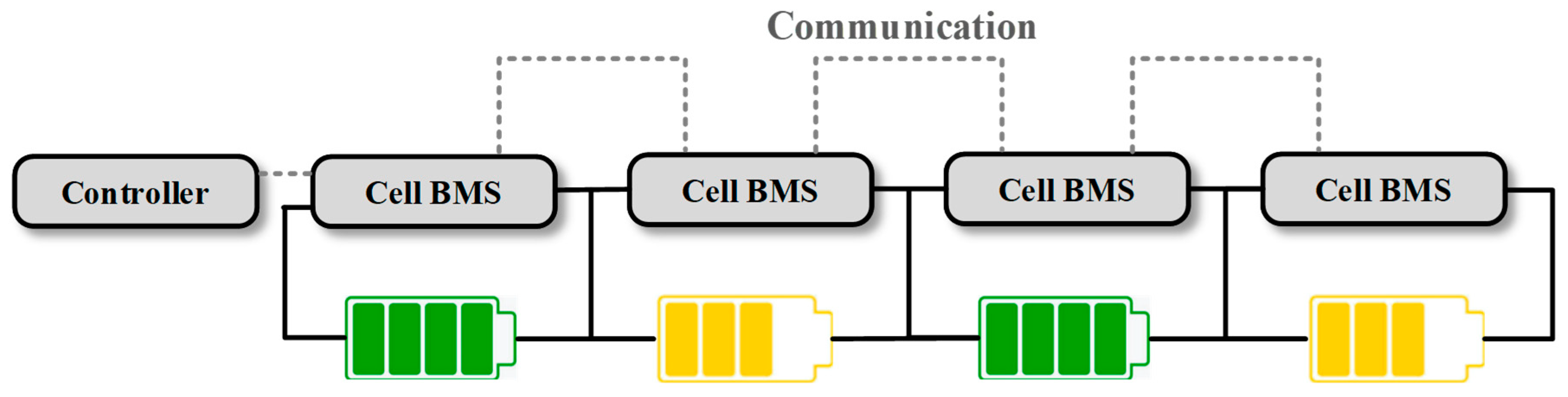
Wiring complexity and physical integration are important aspects that are considered when selecting the BMS architecture for an EV. The wiring loom directly impacts the cost, reliability, assembly complexity and susceptibility to electro-magnetic interference (EMI). Centralised BMSs have long sensing wires to all cells, which increases the risk of noise and EMI interference and leads to heavy cable harness. Modular BMSs require shorter local-sensing wires and exhibit better EMI rejection. Also, they have reduced harness length. Decentralised BMSs require minimal sensing harness because communication networks replace the long analogue wiring. However, this communication network must be robust and immune to EMI.
Cost and implementation complexity should be considered before choosing a suitable BMS for an EV. This includes the cost of the hardware components, the number of required PCBs, the number of required microcontrollers, the communication network cost, and the development complexity. From the previous sections, it can be noted that the centralised BMS architectures have the lowest hardware cost, especially when they are employed in low-voltage small EVs. The modular BMSs are considered a balanced trade-off between performance and cost. Decentralised BMSs have a higher component count and therefore a higher cost. Moreover, the complexity of the required software, as well as the advanced communication and synchronisation, adds to the total cost of the system. Table 6 summarises and compares the main features of EV BMS architectures.

5. Conclusions

The performance of EV battery packs deteriorates with time and with the style of charging and discharging the battery cells. For BMS devices that manage the operation of the battery pack, it is necessary to estimate the battery cells’ SoC in both a fast and accurate manner. The paper presented several methods for estimating the SoC of Li-ion batteries accurately, especially those that are used in modern EV propulsion systems. The estimation methods vary between being fast and practical and being thorough and complicated. The traditional estimation methods, such as OCV algorithms, are not suitable for modern EVs as they are unreliable due to their dependence on open circuit voltage, not to mention other important factors such as battery cycling patterns, cell characteristics, and other power components. The combination of fast algorithms with more advanced algorithms seems to be a viable solution for achieving both accuracy and speed. Algorithms based on artificial intelligence that deal with the battery system as a black box are promising in this application if they are combined with other reliable, robust, and well-established methodologies, such as coulomb counting with a voltage lookup table. Thus, this combination is seen in several modern EVs, with the latter being in the primary layer, whereas the former is used in the secondary layer as a complementary approach.
BMSs are important in this context to carry out the estimation process and then act upon it to balance the battery cells and determine the conditions of the battery system before delivering power to the propulsion system. Centralised BMSs may not be suitable for future EVs because of several practical reasons, including the need for numerous connections between the battery cells and the central control unit. Most current EV battery systems employ a modular BMS, also referred to as a distributed approach, to monitor and control the battery pack. Modular BMS devices combine the modularity required for practicality and size reduction with the predictability and clearly defined authority of a central controller, which is necessary for compliance with ISO 26262 standards.

Author Contributions

Conceptualization, M.A. and A.D.; methodology, M.A. and A.D.; software, M.A. and A.D.; validation, M.A. and A.D.; formal analysis, A.D.; investigation, A.D.; resources, A.D.; data curation, M.A. and A.D.; writing—original draft preparation, M.A. and A.D.; writing—review and editing, A.D.; visualisation, M.A. and A.D.; supervision, A.D.; project administration, A.D.; funding acquisition, A.D. All authors have read and agreed to the published version of the manuscript.

Funding

This research received no external funding.

Data Availability Statement

No new data were created or analysed in this study. Data sharing is not applicable to this article.

Conflicts of Interest

The authors declare no conflicts of interest.

References

  1. Li, J.; Zhang, X.; Guo, L.; Zhong, J.; Wang, D.; Wu, C.; Jiang, L. If Some Critical Regions Achieve Carbon Neutrality, How Will the Global Atmospheric CO2 Concentration Change? Remote Sens. 2024, 16, 1486. [Google Scholar] [CrossRef]
  2. Alawi, A.; Saeed, A.; Sharqawy, M.H.; Al Janaideh, M. A comprehensive review of thermal management challenges and safety considerations in lithium-ion batteries for electric vehicles. Batteries 2025, 11, 275. [Google Scholar] [CrossRef]
  3. Nasr Esfahani, F.; Darwish, A.; Massoud, A. PV/Battery Grid Integration Using a Modular Multilevel Isolated SEPIC-Based Converter. Energies 2022, 15, 5462. [Google Scholar] [CrossRef]
  4. Cavus, M.; Bell, M. Enabling Smart Grid Resilience with Deep Learning-Based Battery Health Prediction in EV Fleets. Batteries 2025, 11, 283. [Google Scholar] [CrossRef]
  5. Ghandi, A.; Paltsev, S. Global CO2 impacts of light-duty electric vehicles. Transp. Res. Part D Transp. Environ. 2020, 87, 102524. [Google Scholar] [CrossRef]
  6. Benitto, A.; Rajendran, G.; Sathyabalu, H.V.; Balamurugan, S. Real-Time Implementation of Battery Management System in Electric Vehicles. In 2021 Innovations in Power and Advanced Computing Technologies (i-PACT); IEEE: New York, NY, USA, 2021; pp. 1–6. [Google Scholar]
  7. Twidale, S. Renewables Provided Record 32% of Global Electricity in 2024, Ember Says. Reuters. 8 April 2025. Available online: https://www.reuters.com/sustainability/climate-energy/renewables-provided-record-32-global-electricity-2024-ember-says-2025-04-07/ (accessed on 1 March 2026).
  8. Novak, M.; Chysky, J.; Novak, L. Data from long time testing of 18650 lithium polymer batteries. Data Brief 2020, 29, 105137. [Google Scholar] [CrossRef]
  9. Shi, D.; Cui, Y.; Shen, X.; Gao, Z.; Ma, X.; Li, X.; Fang, Y.; Wang, S.; Fang, S. A review of the combined effects of environmental and operational factors on lithium-ion battery performance: Temperature, vibration, and charging/discharging cycles. RSC Adv. 2025, 15, 13272–13283. [Google Scholar] [CrossRef]
  10. Hooper, M.; Williams, D.; Roberts-Bee, K.; McGordon, A.; Whiffin, P.; Marco, J. Defining a vibration test profile for assessing the durability of electric motorcycle battery assemblies. J. Power Sources 2023, 557, 232541. [Google Scholar] [CrossRef]
  11. Hadj Abdallah, S.; Almousa, M.T.; Ben Salem, F.; Tounsi, S. Systemic Optimization of Electric Vehicles Power System. World Electr. Veh. J. 2025, 16, 207. [Google Scholar] [CrossRef]
  12. Darwish, A.; Elgenedy, M.A.; Williams, B.W. A Review of Modular Electrical Sub-Systems of Electric Vehicles. Energies 2024, 17, 3474. [Google Scholar] [CrossRef]
  13. Darwish, A. A Modular Step-Up DC/DC Converter for Electric Vehicles. Energies 2024, 17, 6305. [Google Scholar] [CrossRef]
  14. Abolghasemi, M.; Soltani, I.; Shivaie, M.; Vahedi, H. Recent advances of step-up multi-stage DC-DC converters: A review on classifications, structures and grid applications. Energy Rep. 2025, 13, 3050–3081. [Google Scholar] [CrossRef]
  15. Nasr Esfahani, F.; Suri, N.; Ma, X. Machine Learning Forecasting and GAN-Based Scenario Control for EV Charging and PV Integration. In Proceedings of the IECON 2025—51st Annual Conference of the IEEE Industrial Electronics Society, Madrid, Spain, 14–17 October 2025. [Google Scholar]
  16. Fesli, U.; Özdemir, M.B. Electric Vehicles: A Comprehensive Review of Technologies, Integration, Adoption, and Optimization. IEEE Access 2024, 12, 140908–140931. [Google Scholar] [CrossRef]
  17. Chen, C.; Xiong, R.; Shen, W. A lithium-ion battery-in-the-loop approach to test and validate multiscale dual H infinity filters for state-of-charge and capacity estimation. IEEE Trans. Power Electron. 2017, 33, 332–342. [Google Scholar] [CrossRef]
  18. Dini, P.; Colicelli, A.; Saponara, S. Review on modeling and soc/soh estimation of batteries for automotive applications. Batteries 2024, 10, 34. [Google Scholar] [CrossRef]
  19. Xiong, R.; Cao, J.; Yu, Q.; He, H.; Sun, F. Critical review on the battery state of charge estimation methods for electric vehicles. IEEE Access 2017, 6, 1832–1843. [Google Scholar] [CrossRef]
  20. Hassan, F.; El-Bably, M.; Mubarak, R.I. State of Charge (SoC) Accurate Estimation Using Different Models of LSTM. World Electr. Veh. J. 2025, 16, 572. [Google Scholar] [CrossRef]
  21. Karmakar, S.; Bohre, A.K.; Bera, T.K. Recent Advancements in Cell Balancing Techniques of BMS for EVs: A Critical Review. IEEE Trans. Ind. Appl. 2025, 61, 3468–3484. [Google Scholar] [CrossRef]
  22. Link, S.; Neef, C.; Wicke, T. Trends in automotive battery cell design: A statistical analysis of empirical data. Batteries 2023, 9, 261. [Google Scholar] [CrossRef]
  23. Liu, K.; Zou, C.; Li, K.; Wik, T. Charging pattern optimization for lithium-ion batteries with an electrothermal-aging model. IEEE Trans. Ind. Inform. 2018, 14, 5463–5474. [Google Scholar] [CrossRef]
  24. Meng, J.; Luo, G.; Ricco, M.; Swierczynski, M.; Stroe, D.-I.; Teodorescu, R. Overview of lithium-ion battery modeling methods for state-of-charge estimation in electrical vehicles. Appl. Sci. 2018, 8, 659. [Google Scholar] [CrossRef]
  25. Pinto, C.; Barreras, J.V.; Schaltz, E.; Araujo, R.E. Evaluation of advanced control for Li-ion battery balancing systems using convex optimization. IEEE Trans. Sustain. Energy 2016, 7, 1703–1717. [Google Scholar] [CrossRef]
  26. Divakaran, A.M.; Minakshi, M.; Arabzadeh Bahri, P.; Paul, S.; Kumari, P.; Divakaran, A.M.; Manjunatha, K.N. Rational design on materials for developing next generation lithium-ion secondary battery. Prog. Solid State Chem. 2021, 62, 100298. [Google Scholar] [CrossRef]
  27. Vaideeswaran, V.; Bhuvanesh, S.; Devasena, M. Battery management systems for electric vehicles using lithium ion batteries. In 2019 Innovations in Power and Advanced Computing Technologies (i-PACT); IEEE: New York, NY, USA, 2019; Volume 1, pp. 1–9. [Google Scholar]
  28. Shirguppikar, S.; Gavali, P.; Ganachari, V.; Jadhav, P.; Zubairuddin, M.; Khot, S.; Mulla, J.; Todkar, A.S.; Prabhakar, S. Characterization of Li-ion battery and state of charge Estimation methods for diverse battery chemistries: A review. Discov. Appl. Sci. 2025, 7, 1443. [Google Scholar] [CrossRef]
  29. Shu, X.; Chen, Z.; Shen, J.; Guo, F.; Zhang, Y.; Liu, Y. State of charge estimation for lithium-ion battery based on hybrid compensation modeling and adaptive H-infinity filter. IEEE Trans. Transp. Electrif. 2022, 9, 945–957. [Google Scholar] [CrossRef]
  30. Pisani Orta, M.A.; García Elvira, D.; Valderrama Blaví, H. Review of State-of-Charge Estimation Methods for Electric Vehicle Applications. World Electr. Veh. J. 2025, 16, 87. [Google Scholar] [CrossRef]
  31. Sun, P.; Bisschop, R.; Niu, H.; Huang, X. A review of battery fires in electric vehicles. Fire Technol. 2020, 56, 1361–1410. [Google Scholar] [CrossRef]
  32. Allianz UK. Allianz UK Warns Motor Traders of High Risks and Costs of EV Battery Fires, Allianz UK News & Insight. 28 January 2025. Available online: https://www.allianz.co.uk/news-and-insight/news/allianz-uk-warns-motor-traders-of-high-risks-and-costs-of-ev-battery-fires.html (accessed on 10 February 2026).
  33. Wang, Q. Study on Fire and Fire Spread Characteristics of Lithium-Ion Batteries. In Proceedings of the 2018 China National Symposium on Combustion, Harbin, China, 13–16 September 2018. [Google Scholar]
  34. Office for Product Safety and Standards. PLEV Battery Safety Research: Executive Summary and Conclusions; GOV.UK: London, UK, 2025. Available online: https://www.gov.uk/government/publications/personal-light-electric-vehicle-plev-battery-safety-research/plev-battery-safety-research-executive-summary-and-conclusions (accessed on 10 February 2026).
  35. Hu, X.; Wang, Y.; Feng, X.; Wang, L.; Ouyang, M.; Zhang, Q. Thermal stability of ionic liquids for lithium-ion batteries: A review. Renew. Sustain. Energy Rev. 2025, 207, 114949. [Google Scholar] [CrossRef]
  36. Divakaran, A.M.; Hamilton, D.; Manjunatha, K.N.; Minakshi, M. Design, Development and Thermal Analysis of Reusable Li-Ion Battery Module for Future Mobile and Stationary Applications. Energies 2020, 13, 1477. [Google Scholar] [CrossRef]
  37. Xu, D.; Wang, L.; Yang, J. Research on li-ion battery management system. In 2010 International Conference on Electrical and Control Engineering; IEEE: New York, NY, USA, 2010; pp. 4106–4109. [Google Scholar]
  38. Saw, L.; Tay, A.; Zhang, L.W. Thermal management of lithium-ion battery pack with liquid cooling. In 2015 31st Thermal Measurement, Modeling & Management Symposium (SEMI-THERM); IEEE: New York, NY, USA, 2015; pp. 298–302. [Google Scholar]
  39. Reddy, P.; Soni, B.P.; Singh, S. SOC Estimation-Based Battery Management System for Electric Bicycles: Design and Implementation. Eng. Proc. 2025, 118, 76. [Google Scholar] [CrossRef]
  40. Zhou, W.; Zheng, Y.; Pan, Z.; Lu, Q. Review on the battery model and SOC estimation method. Processes 2021, 9, 1685. [Google Scholar] [CrossRef]
  41. Parasumanna, A.B.K.; Karle, U.S.; Saraf, M.R. Material characterization and analysis on the effect of vibration and nail penetration on lithium-ion battery. World Electr. Veh. J. 2019, 10, 69. [Google Scholar] [CrossRef]
  42. Jia, Z.; Jin, K.; Mei, W.; Peng, Q.; Sun, J.; Wang, Q. Advances and perspectives in fire safety of lithium-ion battery energy storage systems. eTransportation 2025, 24, 100390. [Google Scholar] [CrossRef]
  43. Bruen, T.; Hooper, J.M.; Marco, J.; Gama, M.; Chouchelamane, G.H. Analysis of a battery management system (BMS) control strategy for vibration-aged nickel manganese cobalt oxide (NMC) lithium-ion 18650 battery cells. Energies 2016, 9, 255. [Google Scholar] [CrossRef]
  44. Reindl, A.; Meier, H.; Niemetz, M. Scalable, decentralized battery management system based on self-organizing nodes. In Proceedings of the Architecture of Computing Systems—ARCS 2020, Innsbruck, Austria, 12 June 2020; Springer: Cham, Switzerland, 2020; pp. 171–184. [Google Scholar] [PubMed Central]
  45. Javor, D.; Krstić, D.; Raičević, N.; Petrović, N.; Suljović, S.; Procopio, R. Analysis of the Causes and Environmental Consequences of Electric Vehicle Fires. In Proceedings of the 3rd International EUROSA Conference, Vrnjačka Banja, Serbia, 14–17 May 2025. [Google Scholar]
  46. Di Liberto, E.; Borchiellini, R.; Fruhwirt, D.; Papurello, D. A Review of Safety Measures in Battery Electric Buses. Fire 2025, 8, 159. [Google Scholar] [CrossRef]
  47. Lindhout, P.; Reniers, G. A Thorough Investigation into the Current State of the Art in Safety Management on Battery Fire and Explosion Risks. Sustainability 2025, 17, 10578. [Google Scholar] [CrossRef]
  48. Wang, Y.F.; Wang, Y.; Li, X.; Qiao, J.; Wang, Y.; Zhang, H.; Liu, J. Review of Lithium Battery Thermal Runaway Fault Diagnosis Methods and Fire Detection Applications in Electric Vehicles. SSRN 2025, 48. [Google Scholar] [CrossRef]
  49. Bindal, R.; Nigam, A. Study of Battery Management System (BMS) on Fire Mitigation Techniques of Electric Vehicles. In Innovations in Non-Conventional Energy Sources, 1st ed.; CRC Press: Boca Raton, FL, USA, 2025; pp. 15–32. [Google Scholar] [CrossRef]
  50. Wang, T.; Liu, H.; Wang, W.; Jiang, W.; Xu, Y.; Zhu, S.; Sheng, Q. Advances in Thermal Management of Lithium-Ion Batteries: Causes of Thermal Runaway and Mitigation Strategies. Processes 2025, 13, 2499. [Google Scholar] [CrossRef]
  51. Deng, J.; Hu, Z.; Chen, J.; Zhao, J.; Bai, Z. Safety Methods for Mitigating Thermal Runaway of Lithium-Ion Batteries—A Review. Fire 2025, 8, 223. [Google Scholar] [CrossRef]
  52. Sorensen, A.; Utgikar, V.; Belt, J. A Study of Thermal Runaway Mechanisms in Lithium-Ion Batteries and Predictive Numerical Modeling Techniques. Batteries 2024, 10, 116. [Google Scholar] [CrossRef]
  53. Yao, Y.; Peng, X.; Gao, L.; Xing, H.; Xu, X.; Gu, J.; Liu, L.; Yue, S.; Qiu, Y.; Wang, Y.; et al. Experimental and Simulation-Based Study on Thermal Runaway Characteristics of 18650 Lithium-Ion Batteries and Thermal Propagation Patterns in Battery Packs. Batteries 2025, 11, 202. [Google Scholar] [CrossRef]
  54. Yao, Y.; Liu, L.; Gu, J.; Xing, H.; Liu, H.; Cheng, Y.; Wang, Y.; Yue, S.; Qiu, Y.; Zhang, Z. Characteristic Differences of Thermal Runaway Triggered by Overheating and Overcharging in Lithium-Ion Batteries and Multi-Dimensional Safety Protection Strategies. Batteries 2025, 11, 242. [Google Scholar] [CrossRef]
  55. Elsner, F.; Gerhards, P.; Berrier, G.; Vincent, R.; Dubourg, S.; Pischinger, S. Detailed Characterization of Thermal Runaway Particle Emissions from a Prismatic NMC622 Lithium-Ion Battery. Batteries 2025, 11, 225. [Google Scholar] [CrossRef]
  56. Sallard, S.; Nolte, O.; von Roemer, L.; Soltani, B.; Fandakov, A.; Mueller, K.; Kalogirou, M.; Sens, M. Exploring Thermal Runaway: Role of Battery Chemistry and Testing Methodology. World Electr. Veh. J. 2025, 16, 153. [Google Scholar] [CrossRef]
  57. Zhang, Q.; Shang, Y.; Li, Y.; Zhu, R. A Concise Review of Power Batteries and Battery Management Systems for Electric and Hybrid Vehicles. Energies 2025, 18, 3750. [Google Scholar] [CrossRef]
  58. Kertész, N.; Szabó, L. Advances and Future Trends in Battery Management Systems. Eng. Proc. 2024, 79, 66. [Google Scholar] [CrossRef]
  59. Balasingam, B.; Ahmed, M.; Pattipati, K. Battery Management Systems—Challenges and Some Solutions. Energies 2020, 13, 2825. [Google Scholar] [CrossRef]
  60. Khawaja, Y.; Shankar, N.; Qiqieh, I.; Alzubi, J.; Alzubi, O.; Nallakaruppan, M.K.; Padmanaban, S. Battery Management Solutions for Li-ion Batteries Based on Artificial Intelligence. Ain Shams Eng. J. 2023, 14, 102213. [Google Scholar] [CrossRef]
  61. Kurkin, A.; Chivenkov, A.; Aleshin, D.; Trofimov, I.; Shalukho, A.; Vilkov, D. Battery Management System for Electric Vehicles: Comprehensive Review of Circuitry Configuration and Algorithms. World Electr. Veh. J. 2025, 16, 451. [Google Scholar] [CrossRef]
  62. Demirci, O.; Taskin, S.; Schaltz, E.; Demirci, B.A. Review of Battery State Estimation Methods for Electric Vehicles—Part I: SOC Estimation. J. Energy Storage 2024, 87, 111435. [Google Scholar] [CrossRef]
  63. Nasr Esfahani, F.; Darwish, A.; Massoud, A.M. Loop-Shaping Control Design for a New Modular Integrated On-Board EV Charger with RHP Zero Compensation. IET Power Electron. 2025, 18, e70061. [Google Scholar] [CrossRef]
  64. Cavus, M.; Bell, M. A Health-Aware Hybrid Reinforcement–Predictive Control Framework for Sustainable Energy Management in Photovoltaic–Electric Vehicle Microgrids. Batteries 2026, 12, 5. [Google Scholar] [CrossRef]
  65. Abbas, S.M.; Gstrein, G.; Golubkov, A.W.; Korak, O.; Erker, S.; Ellersdorfer, C. Influence of Lithium Plating on the Thermal Properties of Automotive High Energy Pouch Batteries. Batteries 2025, 11, 338. [Google Scholar] [CrossRef]
  66. Gao, Z.-W.; Lan, T.; Yin, H.; Liu, Y. Development and Commercial Application of Lithium-Ion Batteries in Electric Vehicles: A Review. Processes 2025, 13, 756. [Google Scholar] [CrossRef]
  67. Parvizi, P.; Jalilian, M.; Amidi, A.M.; Zangeneh, M.R.; Riba, J.-R. From Present Innovations to Future Potential: The Promising Journey of Lithium-Ion Batteries. Micromachines 2025, 16, 194. [Google Scholar] [CrossRef]
  68. Pesaran, A.A. Lithium-Ion Battery Technologies for Electric Vehicles: Progress and Challenges. IEEE Electrif. Mag. 2023, 11, 35–43. [Google Scholar] [CrossRef]
  69. Tang, K.; Luo, B.; Chen, D.; Wang, C.; Chen, L.; Li, F.; Cao, Y.; Wang, C. The State of Health Estimation of Lithium-Ion Batteries: A Review of Health Indicators, Estimation Methods, Development Trends and Challenges. World Electr. Veh. J. 2025, 16, 429. [Google Scholar] [CrossRef]
  70. Lin, X.; Khosravinia, K.; Hu, X.; Li, J.; Lu, W. Lithium plating mechanism, detection, and mitigation in lithium-ion batteries. Prog. Energy Combust. Sci. 2021, 87, 100953. [Google Scholar] [CrossRef]
  71. Wassiliadis, N.; Schneider, J.; Frank, A.; Wildfeuer, L.; Lin, X.; Jossen, A.; Lienkamp, M. Review of fast charging strategies for lithium-ion battery systems and their applicability for battery electric vehicles. J. Energy Storage 2021, 44, 103306. [Google Scholar] [CrossRef]
  72. Dong, G.; Feng, Y.; Lou, Y.; Zhang, M.; Wei, J. Data-driven fast charging optimization for lithium-ion battery using Bayesian optimization with fast convergence. IEEE Trans. Transp. Electrif. 2024, 10, 4173–4183. [Google Scholar] [CrossRef]
  73. Phogat, P.; Deya, S.; Wana, M. Powering the sustainable future: A review of emerging battery technologies and their environmental impact. RSC Sustain. 2025, 3, 3266–3306. [Google Scholar] [CrossRef]
  74. Santhanagopalan, S.; White, R.E. State of charge estimation using an unscented filter for high power lithium ion cells. Int. J. Energy Res. 2010, 34, 152–163. [Google Scholar] [CrossRef]
  75. Zhang, F.; Liu, G.; Fang, L. Battery state estimation using unscented Kalman filter. In Proceedings of the 2009 IEEE International Conference on Robotics and Automation, Kobe, Japan, 12–17 May 2009; pp. 1863–1868. [Google Scholar] [CrossRef]
  76. Chen, X.; Chen, X.; Chen, X. A Novel Framework for Lithium-Ion Battery State of Charge Estimation Based on Kalman Filter Gaussian Process Regression. Energy Rep. 2021, 7, 5498–5510. [Google Scholar] [CrossRef]
  77. Peng, S.; Chen, C.; Shi, H.; Yao, Z. State of charge estimation of battery energy storage systems based on adaptive unscented Kalman filter with a noise statistics estimator. IEEE Access 2017, 5, 13202–13212. [Google Scholar] [CrossRef]
  78. Xu, Y.; Hu, M.; Zhou, A.; Li, Y.; Li, S.; Fu, C.; Gong, C. State of charge estimation for lithium-ion batteries based on adaptive dual Kalman filter. Appl. Math. Model. 2020, 77, 1255–1272. [Google Scholar] [CrossRef]
  79. Choi, J.H. Battery Management System, Battery Management Method, Battery Pack and Electric Vehicle. U.S. Patent 2021/0199724 A1, 1 July 2021. [Google Scholar]
  80. Noirjean, J. Method for Estimating the State of Charge of a Battery in a System Having a Low Power Consumption, and System for Implementing the Estimation Method. U.S. Patent 2024/0319279 A1, 26 September 2024. [Google Scholar]
  81. Uchida, Y.; Machida, K.; Moriya, Y.; Tanaka, N.; Kubo, K.; Uchiyama, M. Battery System and SOC Estimation Method for Secondary Battery. U.S. Patent 11,353,514 B2, 7 June 2022. [Google Scholar]
  82. Tesla Motors, Inc. Response System for Detection of Overcharge Event in a Series Connected Battery Element. U.S. Patent Application US10355498B2, 27 March 2014. [Google Scholar]
  83. Bayerische Motoren Werke AG. System and Method for Estimating State of Charge of a Battery in a Motor Vehicle. Canadian Patent Application CA3162747A1, 27 September 2017. [Google Scholar]
  84. Kim, C.H.; Kim, M.Y.; Moon, G.W. A modularized charge equalizer using a battery monitoring IC for series-connected Li-Ion battery strings in electric vehicles. IEEE Trans. Power Electron. 2013, 28, 3779–3787. [Google Scholar] [CrossRef]
  85. Li, L.; Zhao, X.; Zhu, J.; Xing, J.; Xing, S. Research on dynamic equalization for lithium battery management system. In IEEE 29th Chinese Control And Decision Conference (CCDC); IEEE: New York, NY, USA, 2017; pp. 6884–6888. [Google Scholar]
  86. Lorentz, V.; Wenger, M.; Giegerich, M.; Zeltner, S.; März, M.; Frey, L. Smart battery cell monitoring with contactless data transmission. In Advanced Microsystems for Automotive Applications 2012; Meyer, G., Ed.; Springer: Heidelberg, Germany, 2012; pp. 15–26. [Google Scholar]
  87. Nasr Esfahani, F.; Darwish, A.; Alotaibi, S.; Campean, F. Hierarchical Control Design of a Modular Integrated OBC for Dual-Motor Electric Vehicle Applications. IEEE Access 2025, 13, 196306–196327. [Google Scholar] [CrossRef]
  88. Reindl, A.; Meier, H.; Park, M.N.S. Decentralized Battery Management System with Customized Hardware Components. In Proceedings of the 2021 IEEE 19th Student Conference on Research and Development (SCOReD), Kota Kinabalu, Malaysia, 23–25 November 2021; pp. 350–355. [Google Scholar]
  89. Shiue, M.-T.; Ou, Y.-C.; Wu, C.-F.; Wang, Y.-F.; Liu, B.-J. Design and Implementation of a Decentralized Node-Level Battery Management System Chip Based on Deep Neural Network Algorithms. Electronics 2026, 15, 296. [Google Scholar] [CrossRef]
  90. Čermák, K.; Bartl, M. Decentralized Battery Management System. In Proceedings of the 2014 15th International Scientific Conference on Electric Power Engineering (EPE), Brno-Bystrc, Czech Republic, 12–14 May 2014; pp. 599–603. [Google Scholar]
  91. Caspar, M.; Schürmann, T.; Anneken, M.; Hohmann, S. Active Balancing Control for Distributed Battery Systems Based on Cooperative Game Theory. J. Energy Storage 2023, 68, 107585. [Google Scholar] [CrossRef]
  92. García, E.; Quiles, E.; Correcher, A. Distributed Intelligent Battery Management System Using a Real-World Cloud Computing System. Sensors 2023, 23, 3417. [Google Scholar] [CrossRef]
  93. Cao, Z.; Gao, W.; Fu, Y.; Mi, C. Wireless Battery Management Systems: Innovations, Challenges, and Future Perspectives. Energies 2024, 17, 3277. [Google Scholar] [CrossRef]
  94. Ghazali, A.K.; Aziz, N.A.A.; Hassan, M.K. Advanced Algorithms in Battery Management Systems for Electric Vehicles: A Comprehensive Review. Symmetry 2025, 17, 321. [Google Scholar] [CrossRef]
  95. Gabbar, H.A.; Othman, A.M.; Abdussami, M.R. Review of Battery Management Systems (BMS) Development and Industrial Standards. Technologies 2021, 9, 28. [Google Scholar] [CrossRef]
  96. Gozdur, R.; Przerywacz, T.; Bogdański, D. Low Power Modular Battery Management System with a Wireless Communication Interface. Energies 2021, 14, 6320. [Google Scholar] [CrossRef]
  97. Cevallos-Sierra, J.; Santos Silva, C. Modelling Decentralised Energy Storage Systems Using Urban Building Energy Models. Urban Sci. 2025, 9, 468. [Google Scholar] [CrossRef]
  98. Chatzigeorgiou, N.G.; Theocharides, S.; Makrides, G.; Georghiou, G.E. A Review on Battery Energy Storage Systems: Applications, Developments and Research Trends of Hybrid Installations in the End-User Sector. J. Energy Storage 2024, 86, 111192. [Google Scholar] [CrossRef]
  99. Lipu, M.S.H.; Al Mamun, A.; Ansari, S.; Miah, M.S.; Hasan, K.; Meraj, S.T.; Abdolrasol, M.G.M.; Rahman, T.; Maruf, M.H.; Sarker, M.R.; et al. Battery Management, Key Technologies, Methods, Issues, and Future Trends of Electric Vehicles: A Pathway toward Achieving Sustainable Development Goals. Batteries 2022, 8, 119. [Google Scholar] [CrossRef]
  100. Triviño, A.; López, A.; Yuste, A.J.; Cuevas, J.C. Decentralized EV Charging and Discharging Scheduling Algorithm Based on Type-II Fuzzy-Logic Controllers. J. Energy Storage 2024, 93, 112054. [Google Scholar] [CrossRef]
  101. Bhushan, N.; Mekhilef, S.; Tey, K.S.; Shaaban, M.; Seyedmahmoudian, M.; Stojcevski, A. Overview of Model- and Non-Model-Based Online Battery Management Systems for Electric Vehicle Applications: A Comprehensive Review of Experimental and Simulation Studies. Sustainability 2022, 14, 15912. [Google Scholar] [CrossRef]
  102. Martin, N.; Mitros, A.; Mellone, C.A.; Dimen, I. Multi-Channel and Bi-Directional Battery Management System. U.S. Patent 10741888B2, 11 August 2018. [Google Scholar]
  103. Papageorgiou, P.; Oureilidis, K.; Tsakiri, A.; Christoforidis, G. A Modified Decentralized Droop Control Method to Eliminate Battery Short-Term Operation in a Hybrid Supercapacitor/Battery Energy Storage System. Energies 2023, 16, 2858. [Google Scholar] [CrossRef]
  104. Staņa, Ģ.; Kroičs, K. Adaptive Droop Control for Power Distribution of Hybrid Energy Storage Systems in PV-Fed DC Microgrids. Energies 2025, 18, 5137. [Google Scholar] [CrossRef]
  105. Berschneider, E.; Wagner, B.; Meindl, M.; Eckardt, B. Centralized SoC Balancing for Batteries with Droop-Controlled DC/DC Converters for Electric Aircraft. Batteries 2025, 11, 411. [Google Scholar] [CrossRef]
Figure 1. Propulsion system of a typical EV.
Batteries 12 00092 g001
Figure 2. Experimental testing for Li-ion 18650 battery cells under different discharge currents.
Batteries 12 00092 g002
Figure 3. Equivalent circuit of Li-ion battery cell.
Batteries 12 00092 g003
Figure 4. Testing of a Panasonic 18650 Li-ion battery during charging.
Batteries 12 00092 g004
Figure 5. Estimation of the stored energy in the Panasonic 18650 Li-ion battery.
Batteries 12 00092 g005
Figure 6. Useful energy of the Panasonic 18650 Li-ion battery cell at constant discharge currents.
Batteries 12 00092 g006
Figure 7. Simplified schematic for coulomb counting method.
Batteries 12 00092 g007
Figure 8. Current measurements in the coulomb counting method.
Batteries 12 00092 g008
Figure 9. An example of Li-ion battery cell OCV.
Batteries 12 00092 g009
Figure 10. Schematic diagram for the Data Driven method in [76].
Batteries 12 00092 g010
Figure 11. Reproduced SoC estimation of 18650 battery cell based on the data-driven method in [76]: (a) cell voltage, (b) current, and (c) references and estimated SoC.
Batteries 12 00092 g011
Figure 12. Tesla Model X battery configuration.
Batteries 12 00092 g012
Figure 13. Centralised BMS system.
Batteries 12 00092 g013
Figure 14. An example of connections in a centralised BMS.
Batteries 12 00092 g014
Figure 15. Live results from a centralised BMS: (a) voltages, currents, and SoC. (b) Temperatures.
Batteries 12 00092 g015
Figure 16. Modular BMS.
Batteries 12 00092 g016
Figure 17. EMUS modular (distributed) BMS.
Batteries 12 00092 g017
Figure 18. Experimental results for a modular BMS-based EV system: (a) EV battery current, (b) battery and DC-link voltage, and (c) EV torque and speed.
Batteries 12 00092 g018
Figure 19. Multi-channel modular BMS in [102].
Batteries 12 00092 g019
Figure 20. Fully decentralised BMS.
Batteries 12 00092 g020
Table 1. Common EV battery cells and packs.
EVCell TypeCell Capacity (Ah) and Voltage (V)Pack
Construction
Pack
Capacity (Ah)
Pack Voltage
(V)
Pack
Useful
Energy (kWh)
Tesla Model 3Cylindrical 21700
Batteries 12 00092 i001
~4.9 and ~3.6 91s46p255355~80
Chevy BoltPouch NMC622
Batteries 12 00092 i002
~55 and ~3.6596s3p165350~57
Nissan LeafPrismatic
NMC
Batteries 12 00092 i003
~55 and ~496s4p260360~40
BYD HanBlade
Batteries 12 00092 i004
~65 and ~3.2110s3p195352~68.5
Table 2. Summary of temperature sensing of Li-ion EV batteries.
TypeMethodLocationAdvantagesDisadvantages
ThermocoupleVoltage generated by temperature difference
Surface
Wide range
Fast response
Low cost
Low accuracy
Resistance Temperature Detector (RTD)Resistance changes with temperature
Surface
Between cells
Good accuracy
Linear
Expensive
Slow response
ThermistorsSemiconductor
resistance varies strongly with temperature
Surface
Between cells
Cooling plates
Small
Sensitive
Low cost
Nonlinear
Low temp. range
Zener diodeGenerate voltage inversely proportional to the temperature
Surface
Between cells
Cooling plates
Small
Sensitive
Nonlinear
Expensive
Table 3. Summary of comparison of SoC estimators.
MethodCoulomb CountingCoulomb Counting with OCVModel-BasedData Driven
AccuracyLowMediumHighHigh with training
DriftPoor due to accumulating errorsModerateGoodRetraining-dependent
Temperature robustnessPoorModerateGoodData-dependent
Ageing robustnessPoorLimited GoodLimited without training
Computational costVery lowLowMediumHigh
Memory MinimalLowModerateHigh
SensorsCurrentCurrent
Voltage
Current
Voltage
Temperature
Current
Voltage
Temperature
Implementation complexitySimpleSimpleModerateHigh
Real-time feasibility in automotive applicationsExcellentExcellentExcellentFeasible
Suitability for EV applicationsLimitedModerateHighly suitablePromising but not dominant
Table 4. Main SoC estimation methods in common modern EVs.
MakeLikely SoC Estimation ApproachNotes
TeslaModel-based (KF) + Coulomb Counting + OCVAdvanced observer filters
GM UltiumModel-based + Adaptive FilteringModular battery system with wireless BMS
Hyundai/Kia (E-GMP)Model-based (KF)Predictive BMS
Mercedes-Benz EQModel-based (KF)Modular BMS
Ford Mach-E/F-150 LightningModel-basedConventional Automotive System
Lucid AirModel-basedHigh accuracy
Porsche TaycanAdaptive Model-basedEmphasis on thermal monitoring
Jaguar i-PACEModel-basedAutomotive filter logic
Honda e/Acura EVsModel-based-
Chinese EVs (NIO/XPeng/Li Auto)Not reportedLikely Model-based
Table 5. Examples for EVs with modular BMS.
ModelEnergyVoltageTarget RangeNotes
Tesla Model 382 kWh (76 kWh usable)375 V470 kmCylindrical NCA cells
Nissan Leaf40 kWh (39 kWh usable)350 V270 kmPrismatic
Chevrolet Bolt65 kWh350–400 V410 kmPouch
BYD Han Base76.9 kWh400 V605 kmLFP Blade
BYD Hand Flagship76.9 kWh400610 kmLFP Blade
Table 6. Summary of comparison of BMS architectures for EV systems.
ParameterCentralisedModularDecentralised
ScalabilityLowHighVery high
Fault toleranceLowMedium-HighHigh
Wiring complexityHighMediumLow
CostLowMediumHigh
Implementation complexityLowMediumHigh
Memory MinimalLowModerate
SensorsCurrentCurrent
Voltage
Current
Voltage
Temperature
Implementation complexitySimpleSimpleModerate
Disclaimer/Publisher’s Note: The statements, opinions and data contained in all publications are solely those of the individual author(s) and contributor(s) and not of MDPI and/or the editor(s). MDPI and/or the editor(s) disclaim responsibility for any injury to people or property resulting from any ideas, methods, instructions or products referred to in the content.