
Article

Internal Temperature Estimation for Lithium-Ion Cells Based on a Layered Electro-Thermal Equivalent Circuit Model
1
College of Energy Engineering, Zhejiang University, Hangzhou 310027, China
2
Provincial Key Laboratory of New Energy Vehicles Thermal Management, Longquan 323700, China
3
Longquan Industrial Innovation Research Institute, Longquan 323700, China
*
Author to whom correspondence should be addressed.
Batteries 2024, 10(11), 406; https://doi.org/10.3390/batteries10110406

Submission received: 16 August 2024 / Revised: 9 September 2024 / Accepted: 30 September 2024 / Published: 18 November 2024

Abstract

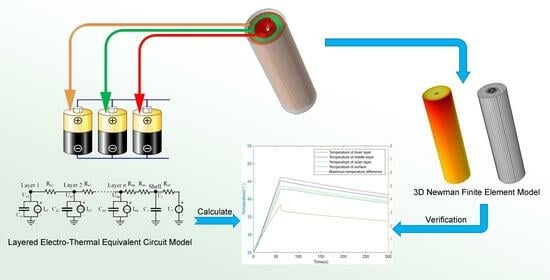
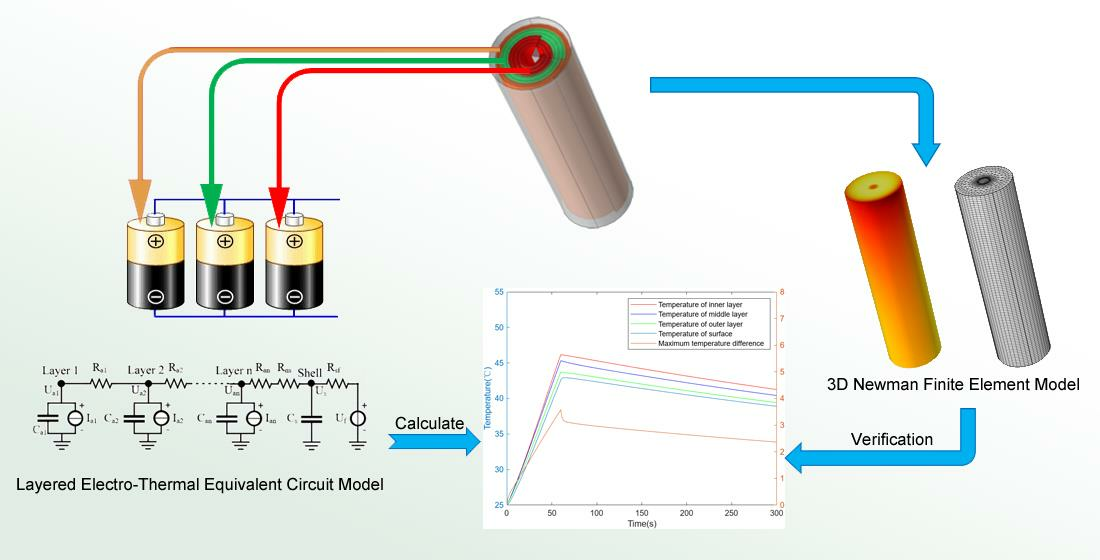
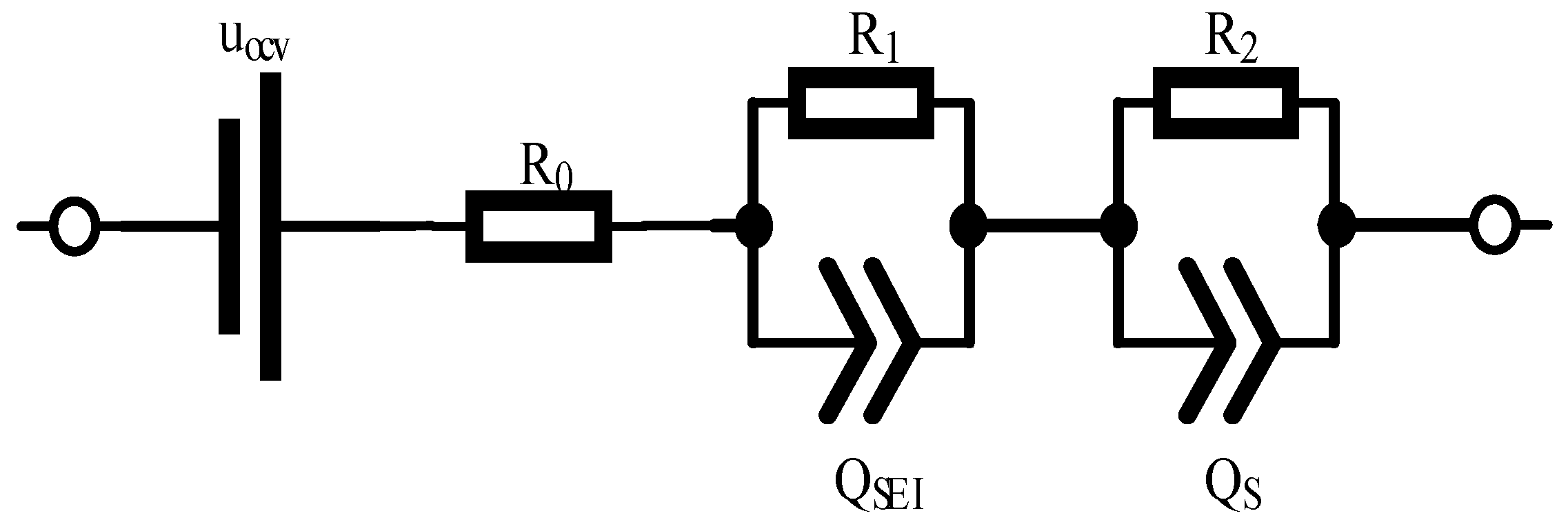
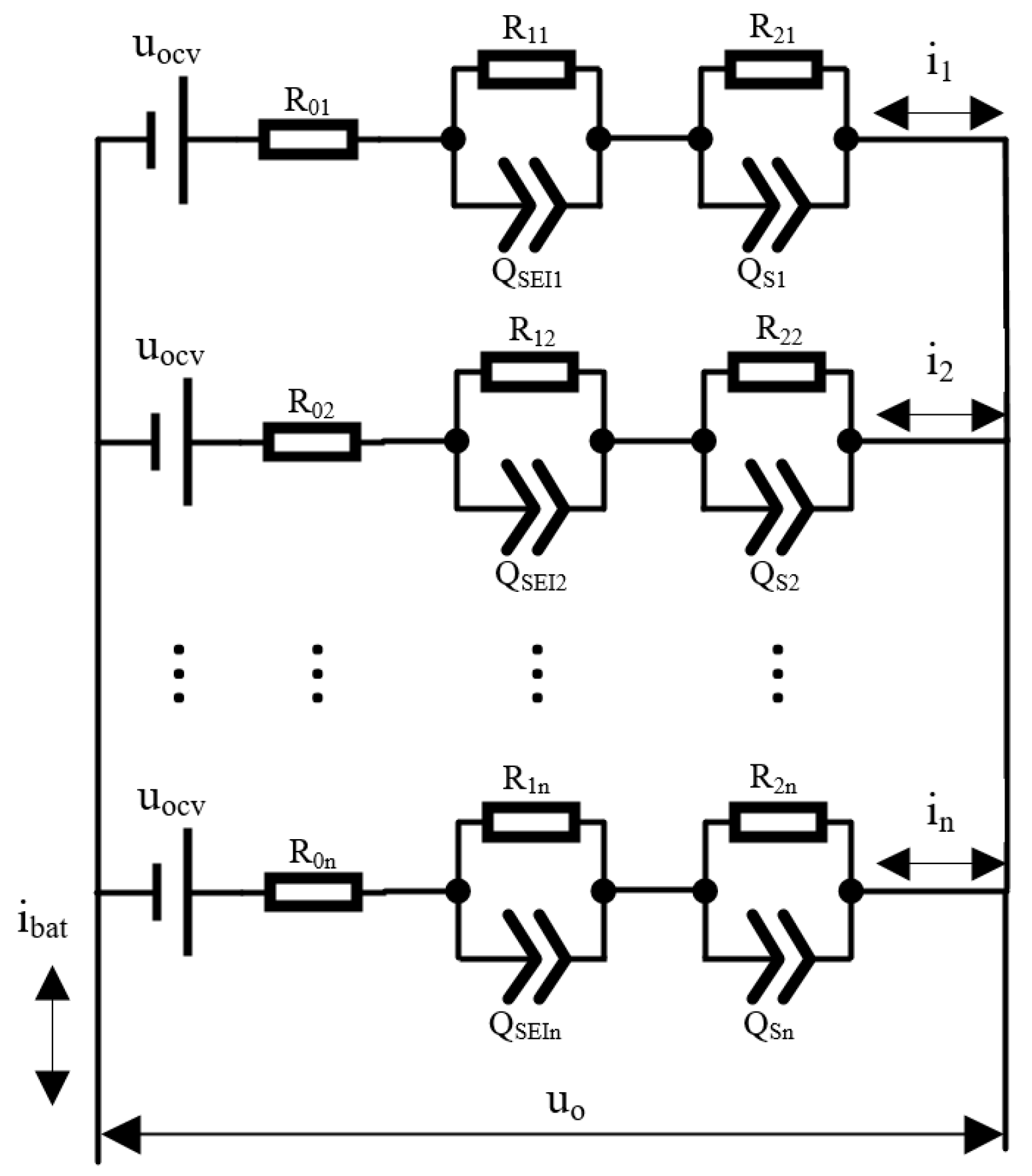
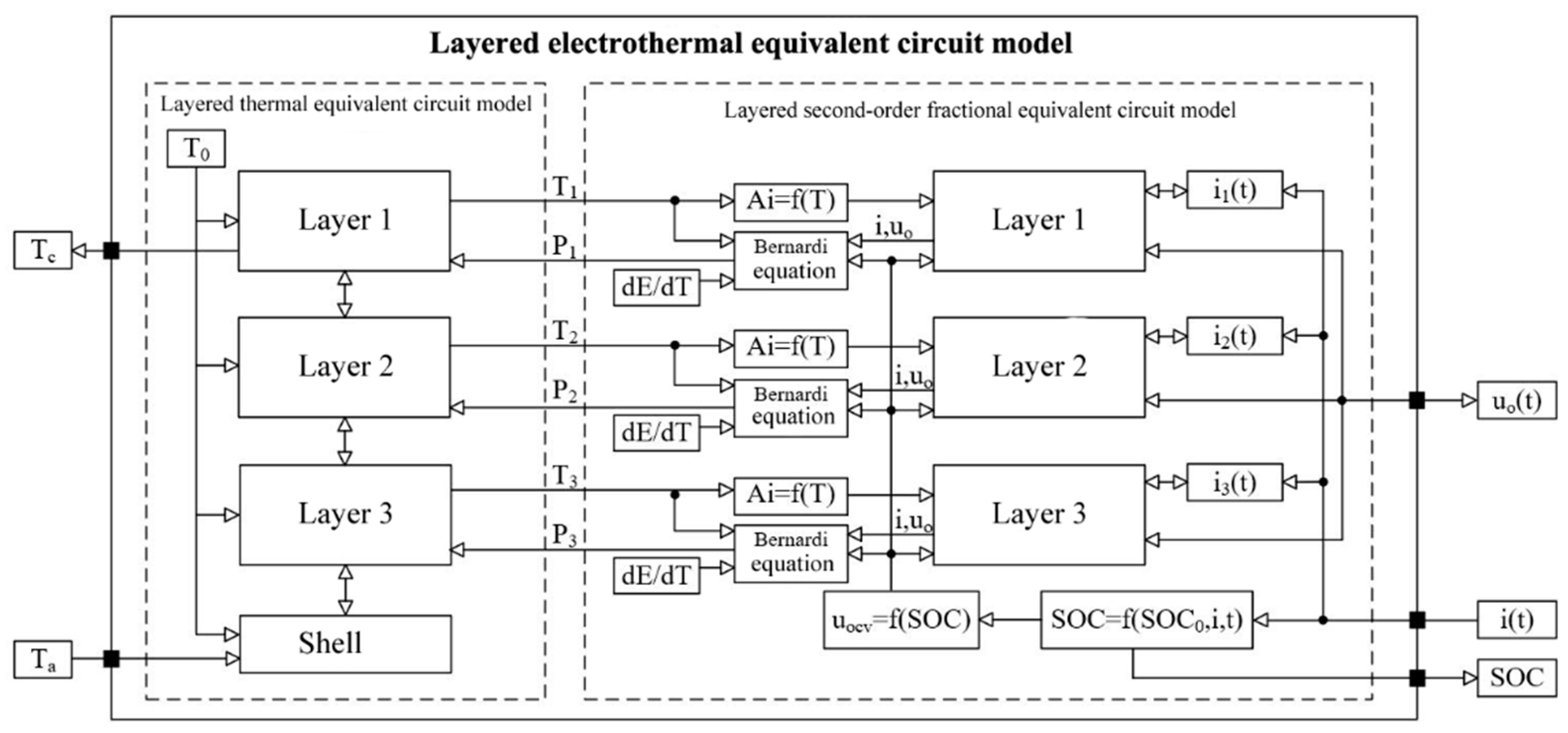
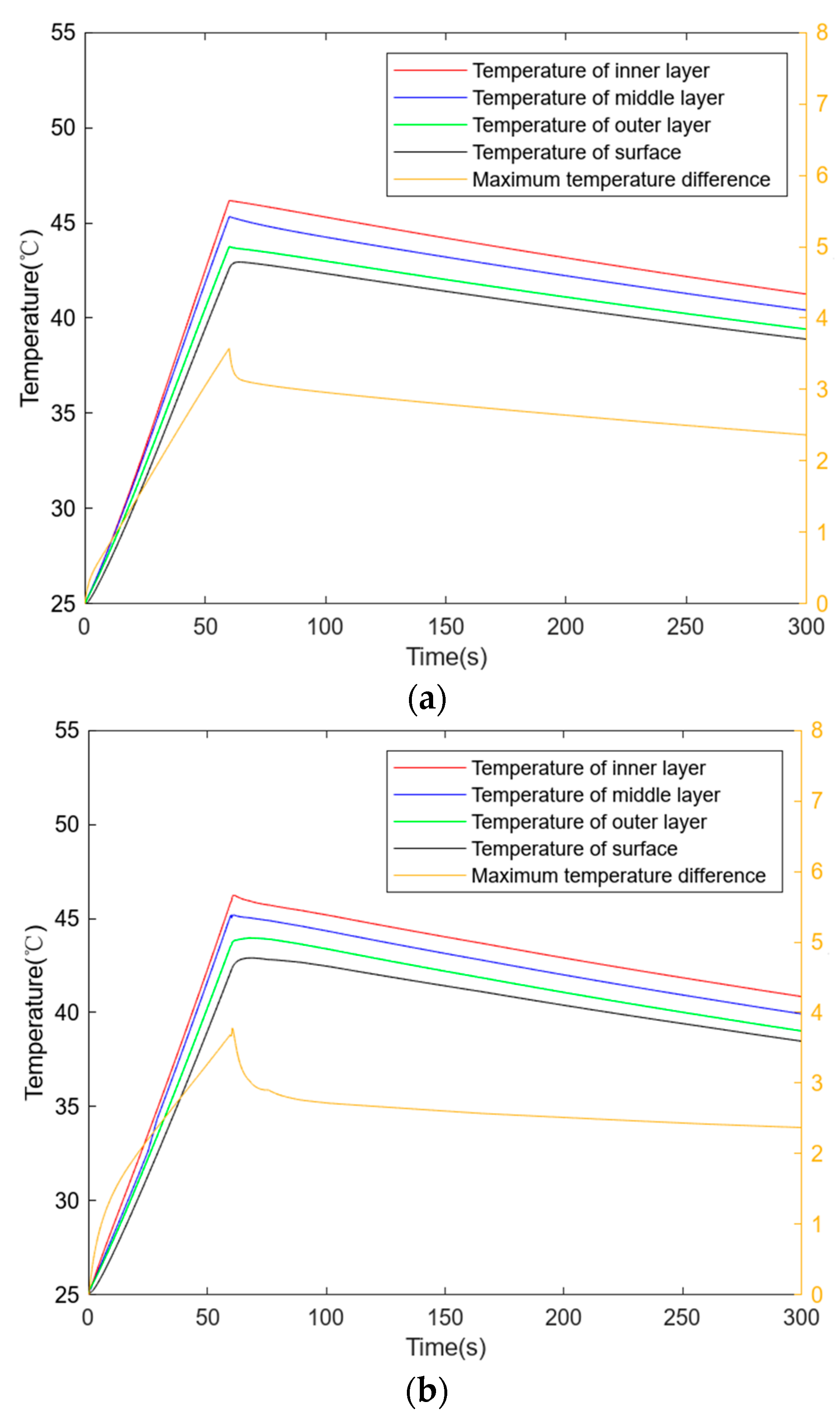
In the domain of Battery Management System (BMS) research, the precise acquisition and estimation of internal temperature distribution within lithium-ion cells is a significant challenge. The commercial viability precludes the use of internal temperature sensors, and existing methodologies for online estimation of internal temperatures under various electrical loads are constrained by computational limitations and model accuracy. This study presents a layered electro-thermal equivalent circuit model (LETECM), developed by integrating a layered second-order fractional equivalent circuit model with a layered thermal equivalent circuit model. A lithium-ion battery divided into three layers was employed to illustrate the development of this LETECM. The model’s precision was validated against a 3D Newman Finite Element Model (3DNFEM), constructed using actual battery parameters. Given that the thermal gradient inside the battery is usually more pronounced under high load conditions, a 10C direct current discharge for 60 s followed by a rest period of 240 s was adopted as the test condition in the simulation. The results indicate that at the end of the DC discharge, the temperature difference between the inner layer and the surface of the battery was the largest and the maximum temperature difference predicted by the LETECM was 3.58 °C, while the 3DNFEM exhibited a temperature difference of 3.74 °C. The trends in each layer temperature and battery surface temperature obtained by the two models are highly consistent. The proposed model offers computational efficiency and maintains notable accuracy, suggesting its potential integration into BMS for real-time online applications. This advancement could provide critical internal temperature data for refining battery charging and discharging performance assessments and lifespan predictions, thereby optimizing battery management strategies.
Keywords: lithium-ion battery; internal temperature distribution; electro-thermal model lithium-ion battery; internal temperature distribution; electro-thermal model
Graphical Abstract