Article

Effects of Temperature Management on Off-Season Flowering and Flower Quality of Vanda ‘Pakchong Blue’

by
Soraya Ruamrungsri
1,2,3,
Takonwan Sirisawad
2,
Pornwajana Kongkeaw
1,
Kanokwan Panjama
1,2,3 and
Chaiartid Inkham
2,3,4,*
1
Department of Plant and Soil Science, Faculty of Agriculture, Chiang Mai University, Chiang Mai 50200, Thailand
2
H.M. The King’s Initiative Centre for Flower and Fruit Propagation, Chiang Mai 50230, Thailand
3
Economic Flower and Horticultural Crops Research Cluster, Chiang Mai University, Chiang Mai 50200, Thailand
4
Multidisciplinary Research Institute, Chiang Mai University, Chiang Mai 50200, Thailand
*
Author to whom correspondence should be addressed.
Horticulturae 2026, 12(7), 892; https://doi.org/10.3390/horticulturae12070892
Submission received: 16 June 2026 / Revised: 12 July 2026 / Accepted: 17 July 2026 / Published: 20 July 2026

Highlights

What are the main findings?
  • Floral buds of Vanda ‘Pakchong Blue’ were initiated during the hot season but frequently aborted before anthesis under high-temperature conditions.
  • An evaporative-cooling greenhouse enabled successful off-season flowering, advanced flowering time, and improved flower quality compared with a shaded greenhouse.
  • Prolonged exposure to 18 °C delayed flowering but did not significantly affect vegetative growth.
What are the implications of the main findings?
  • Temperature regulation is a practical strategy for achieving year-round production of high-quality Vanda orchids under tropical conditions.
  • These findings provide a scientific basis for developing climate-resilient orchid production systems and improving the commercial supply of off-season flowers.

Abstract

Blue Vanda hybrids, including Vanda ‘Pakchong Blue’, frequently fail to flower during Thailand’s hot season (March–May), resulting in reduced market supply despite strong commercial demand. This study investigated flowering behavior and the effects of temperature management on growth, flowering, and flower quality of Vanda ‘Pakchong Blue’. In the first experiment, flowering behavior was examined through weekly histological observations of plants maintained under high-temperature conditions following inflorescence removal. Floral buds were initiated under high temperatures but failed to complete development and subsequently aborted. The period from floral initiation to anthesis was approximately 75 days. In the second experiment, plants were subjected to low-temperature treatments (18 ± 2 °C) for 0, 4, or 6 weeks and subsequently transferred to either an evaporative-cooling greenhouse (ECG) or a shaded greenhouse (SG). Plants grown in the ECG flowered during the off-season (March–May), whereas those grown in the SG flowered during the natural flowering season (August–September). Flowering in the ECG occurred 136–156 days earlier than in the SG and produced superior flower quality, including longer inflorescences and a greater number of florets. Exposure to 18 °C for 4 and 6 weeks delayed flowering by 24 and 45 days, respectively, but had no significant effect on vegetative growth. These findings demonstrate that successful off-season flowering and improved flower quality were primarily associated with cultivation in the evaporative-cooling greenhouse, whereas prolonged exposure to 18 °C delayed flowering without affecting vegetative growth. This study provides the first detailed characterization of floral bud development and flowering responses to different temperature-management strategies in this cultivar and highlights the potential of evaporative-cooling greenhouse technology for sustainable orchid production, climate-resilient floriculture systems, and year-round supply of high-quality flowers under tropical conditions.

1. Introduction

Vanda orchids are among the most economically important tropical orchids in the global floriculture industry due to their large, colorful, and long-lasting flowers. Among commercial Vanda hybrids, blue-flowered cultivars derived from Vanda coerulea, such as Vanda ‘Pakchong Blue’, are particularly valuable in both domestic and international markets for their unique flower color and high ornamental quality [1,2,3]. However, commercial production of these orchids is constrained by pronounced seasonal fluctuations in flowering, leading to an inconsistent flower supply throughout the year.
In Thailand, flowering of blue Vanda hybrids is severely reduced during the hot season (March–May), when daytime temperatures frequently exceed 35 °C. Under these conditions, flower buds often fail to develop fully and may abort before anthesis, leading to significant shortages during periods of high market demand. This limitation poses a major challenge for orchid growers and exporters who require a reliable year-round supply of high-quality flowers. Therefore, developing effective strategies to regulate flowering under high-temperature conditions is essential for improving production efficiency and economic returns.
Temperature is one of the most important environmental factors regulating flowering in orchids. Previous studies have demonstrated that temperature influences floral induction, floral differentiation, and flower development through its effects on hormonal regulation, carbohydrate metabolism, and reproductive meristem activity [3,4,5]. In commercial orchid production, temperature manipulation has become one of the most effective environmental approaches for regulating flowering time and improving production scheduling under greenhouse cultivation [6,7,8,9,10]. Studies in Phalaenopsis have consistently demonstrated that daytime temperature is a major environmental factor regulating flowering, with elevated temperatures suppressing inflorescence initiation and reproductive development, whereas appropriate temperature regimes promote reproductive development and influence flowering performance [6,7,8,9,10,11]. Collectively, these studies indicate that temperature regulates not only the transition from vegetative to reproductive growth but also the successful progression of flower development following floral initiation.
Similarly, studies on Vanda orchids have shown that environmental manipulation, including short-day treatments and cultivation in evaporative-cooling greenhouse systems, can modify flowering time and support off-season flowering [12,13]. Vanda species produce axillary racemose inflorescences, with flowers developing sequentially along the inflorescence axis [2].
Although temperature-mediated flowering responses have been investigated in several orchid species, information regarding floral developmental behavior and temperature requirements in Vanda ‘Pakchong Blue’ remains limited. In particular, the developmental processes associated with flower bud initiation and abortion under high-temperature conditions have not been clearly characterized. Although high-temperature inhibition of flowering has been extensively documented in Phalaenopsis, relatively little information is available regarding floral developmental behavior, flower bud abortion, and temperature requirements in blue-flowered Vanda hybrids. Furthermore, the combined effects of low-temperature exposure and evaporative-cooling greenhouse conditions on off-season flowering and flower quality in this cultivar have not been fully evaluated.
To our knowledge, no study has simultaneously characterized floral developmental stages and evaluated the combined effects of low-temperature exposure and evaporative-cooling greenhouse cultivation on off-season flowering in Vanda ‘Pakchong Blue’. This knowledge gap limits the development of effective temperature-management strategies for year-round flower production under tropical conditions.
Therefore, this study aimed to characterize flower bud development and investigate the effects of temperature regimes on flowering responses of Vanda ‘Pakchong Blue’.

2. Materials and Methods

2.1. Experiment I: Flowering Behavior and Floral Development

The flowering behavior and floral developmental stages of Vanda ‘Pakchong Blue’ were investigated using three-year-old plants grown in a greenhouse with 50% shade at H.M. The King’s Initiative Centre for Flower and Fruit Propagation, Chiang Mai, Thailand. During the study period, plants were grown under average environmental conditions of approximately 30 ± 2 °C air temperature, 60% relative humidity (RH), and a photosynthetic photon flux density (PPFD) of approximately 350 μmol m−2 s−1.
Histological observations were conducted from January to March. Prior to the experiment, all existing inflorescences were removed to stimulate the development of new floral buds. A total of 75 plants were used. Floral buds were sampled weekly for histological observation. Three plants were randomly selected at each sampling date, and 1–2 developing buds located above the removed inflorescence were collected for anatomical examination of floral development. After the completion of the histological observations, the remaining experimental plants were continuously monitored for flowering behavior until successful flowering was observed in late June.
Air temperature and relative humidity inside the greenhouse were continuously monitored using HOBO UX100-011A temperature and relative humidity data loggers (Onset Computer Corporation, Bourne, MA, USA). Photosynthetic photon flux density (PPFD) was measured using an LI-250A light meter equipped with a quantum sensor (LI-COR Biosciences, Lincoln, NE, USA). Photoperiod was calculated from sunrise and sunset times obtained from the Thai Meteorological Department for Hang Dong District, Chiang Mai Province, Thailand.

2.2. Histological Analysis

Collected floral buds were fixed in formalin–acetic acid–alcohol (FAA) solution for 7 days and subsequently dehydrated through a graded ethanol and tertiary butyl alcohol (TBA) series (50%, 70%, 85%, 95%, and 100%). The samples were then infiltrated sequentially with pure TBA, a 1:1 mixture of TBA and liquid paraffin, and pure paraffin before embedding in Paraplast. Embedded samples were sectioned and processed for histological observation according to standard plant microtechnique procedures, as described by Johansen [14].
Embedded samples were incubated at 60 °C for at least 48 h to ensure complete paraffin infiltration. Longitudinal sections (17 μm thick) were prepared using a rotary microtome and mounted on adhesive-coated microscope slides. Sections were deparaffinized with xylene, rehydrated through an ethanol series, stained with hematoxylin, and observed under a light microscope to determine floral developmental stages.

2.3. Experiment II: Effects of Temperature Regimes on Growth and Flowering

Three-year-old Vanda ‘Pakchong Blue’ plants were acclimatized for one month in a greenhouse with 50% shade prior to treatment application.
The experiment was arranged in a completely randomized design (CRD) with six treatment combinations and 13 replications per treatment. Each plant was considered one experimental unit, resulting in a total of 78 plants.
The six treatment combinations consisted of three durations of low-temperature treatment (0, 4, and 6 weeks at 18 ± 2 °C) combined with two growing environments: a shaded greenhouse (SG) and an evaporative-cooling greenhouse (ECG).
The treatments were as follows:
  • T1: 0 weeks at 18 °C + SG;
  • T2: 0 weeks at 18 °C + ECG;
  • T3: 4 weeks at 18 °C + SG;
  • T4: 4 weeks at 18 °C + ECG;
  • T5: 6 weeks at 18 °C + SG;
  • T6: 6 weeks at 18 °C + ECG.
Plants assigned to the 0-week treatment (T1 and T2) did not receive any low-temperature pretreatment. Instead, they were transferred directly from the acclimatization greenhouse to their designated growing environments without exposure to the 18 ± 2 °C chamber. Thus, the 0-week treatment represented the complete absence of low-temperature pretreatment. In contrast, plants assigned to the 4- and 6-week treatments were maintained at 18 ± 2 °C, 80% relative humidity (RH), and a photosynthetic photon flux density (PPFD) of approximately 53 μmol m−2 s−1 for the designated treatment duration.
Following completion of the low-temperature treatments, plants were transferred to their designated growing environments. The evaporative-cooling greenhouse (ECG) was maintained at approximately 25 ± 2 °C and 70–80% RH, whereas plants in the shaded greenhouse (SG) were grown under 50% shade under ambient environmental conditions until flowering.
Air temperature and relative humidity were recorded continuously inside each greenhouse using HOBO UX100-011A temperature and relative humidity data loggers (Onset Computer Corporation, Bourne, MA, USA). Photosynthetic photon flux density (PPFD) was measured using an LI-250A light meter equipped with a quantum sensor (LI-COR Biosciences, Lincoln, NE, USA). Monthly mean, maximum, and minimum air temperatures were calculated from the recorded data. Photoperiod was calculated from sunrise and sunset times obtained from the Thai Meteorological Department for Hang Dong District, Chiang Mai Province, Thailand, during the experimental period. Detailed monthly environmental conditions, including average, maximum, and minimum air temperatures, relative humidity (RH), photosynthetic photon flux density (PPFD), and photoperiod recorded inside both greenhouse systems during Experiment II, are presented in Supplementary Table S1.

2.4. Growth and Flowering Assessments

Vegetative growth was evaluated monthly by measuring:
  • Plant height (cm);
  • Leaf length (cm);
  • Number of leaves per plant.
Flowering performance was evaluated based on:
  • Days to inflorescence emergence, defined as the number of days from treatment initiation until an inflorescence reaches at least 0.5 cm in length;
  • Percentage of flowering plants;
  • Inflorescence length (cm);
  • Number of florets per inflorescence;
  • Flower diameter (cm).

2.5. Statistical Analysis

Data from Experiment II were analyzed using one-way analysis of variance (ANOVA) under a completely randomized design (CRD), with six treatment combinations as the main treatment factor. When significant differences were detected by the F-test, treatment means were compared using Fisher’s least significant difference (LSD) test at p ≤ 0.05. Flowering percentage data were analyzed using the Fisher–Freeman–Halton exact test because flowering status was a binomial outcome. Statistical analyses were performed using IBM SPSS Statistics for Windows, Version 29.0 (IBM Corp., Armonk, NY, USA) for continuous variables and R version 4.6.1 (R Foundation for Statistical Computing, Vienna, Austria) for the Fisher–Freeman–Halton exact test.

3. Results

3.1. Experiment I. Flowering Behavior and Floral Development

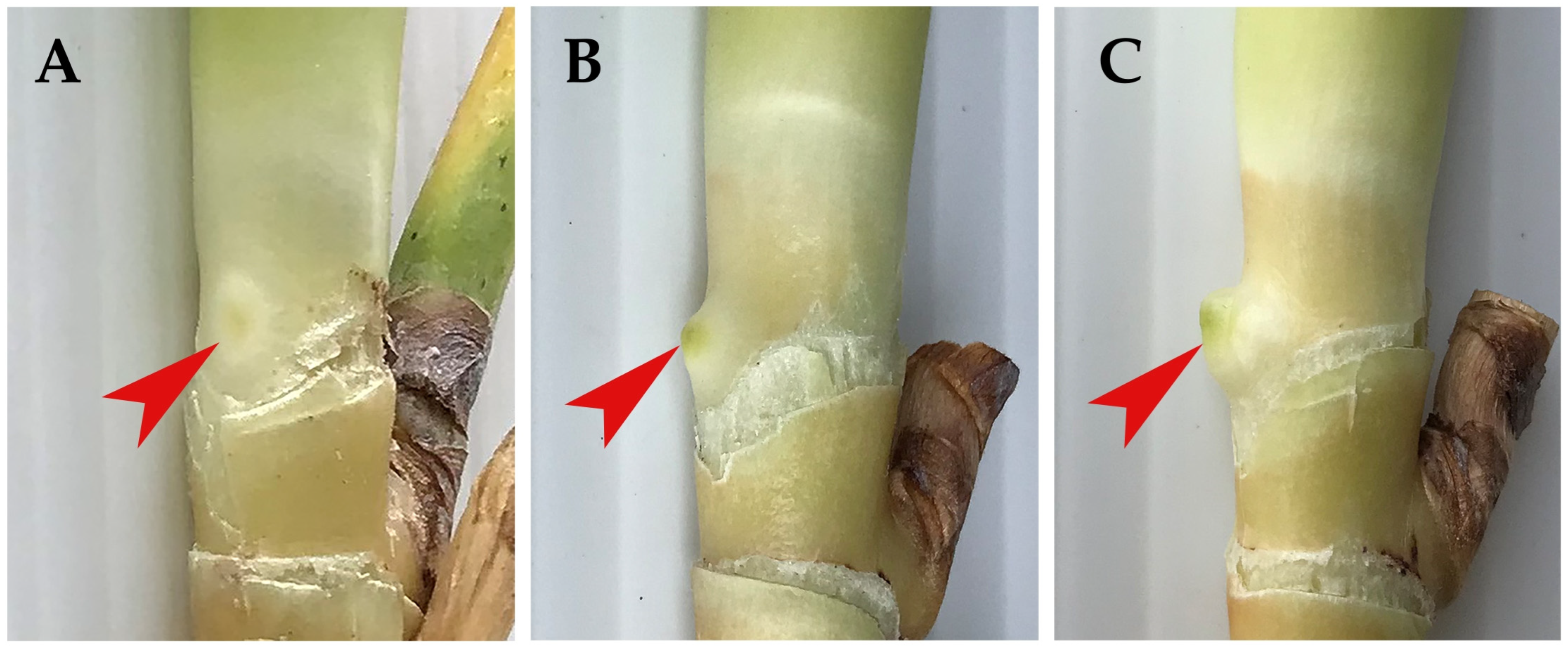
Following the removal of existing inflorescences in January, axillary buds remained dormant for approximately seven weeks. Active axillary buds first appeared during the second week of March and continued to develop for approximately three weeks (Figure 1). However, all developing buds subsequently aborted before reaching anthesis.
Morphological observations showed a gradual transition from dormant axillary buds to floral buds. Initially, axillary buds appeared flat and inactive (Figure 1A). During floral initiation, bud primordia became swollen and distinguishable from vegetative buds (Figure 1B). Continued development resulted in further enlargement of the developing floral buds, accompanied by continued differentiation of floral primordia around the apical meristem (Figure 1C).
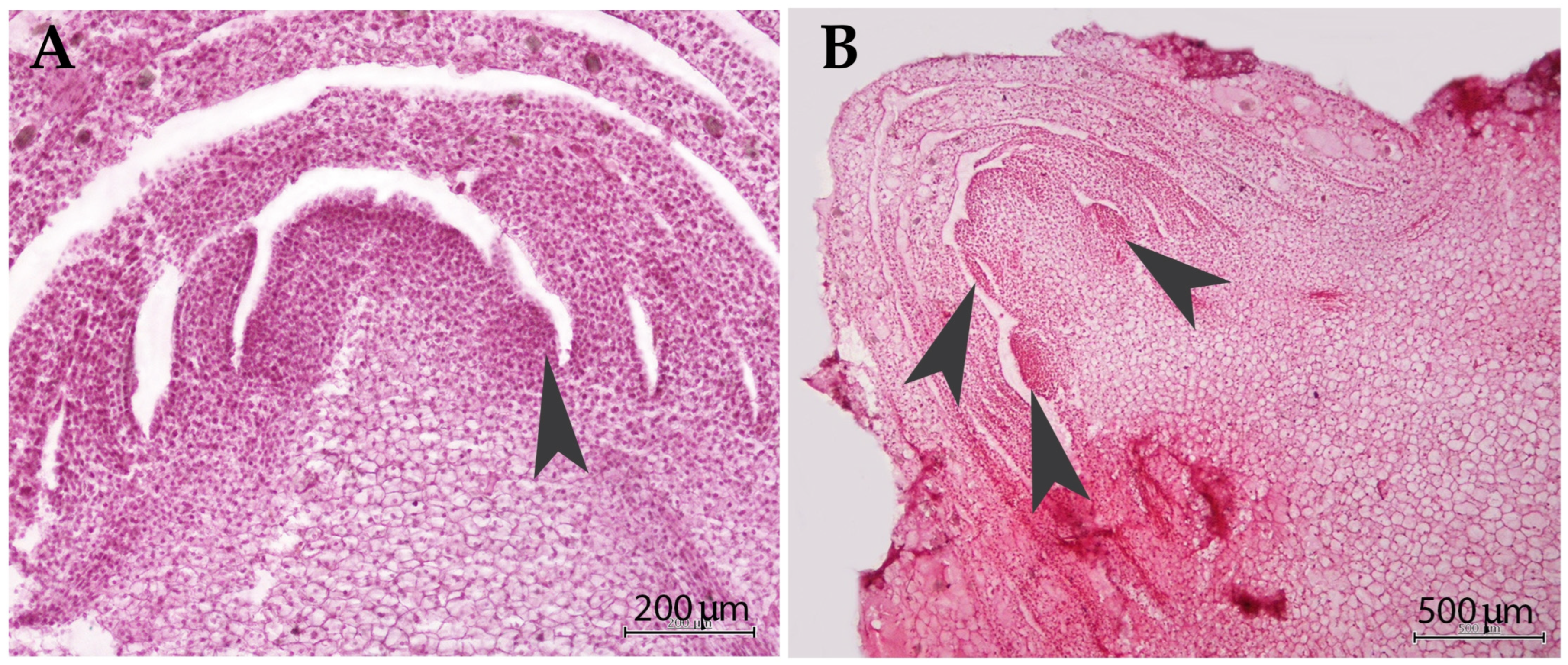
Histological examination confirmed floral initiation and differentiation during this period (Figure 2). Longitudinal sections of developing buds revealed the formation of floral primordia surrounding the apical meristem (Figure 2A). As development progressed, flower buds approximately 0.5 cm in length exhibited a larger meristematic region and a greater number of differentiated floral primordia (Figure 2B).
Following the completion of the histological observations, the remaining experimental plants were continuously monitored for flowering behavior. A second flush of flower bud development was observed in mid-May. Similar to the March flush, these flower buds developed for approximately three weeks before aborting. Successful flower development was first observed in the last week of June, when flower buds continued to develop and eventually reached anthesis.
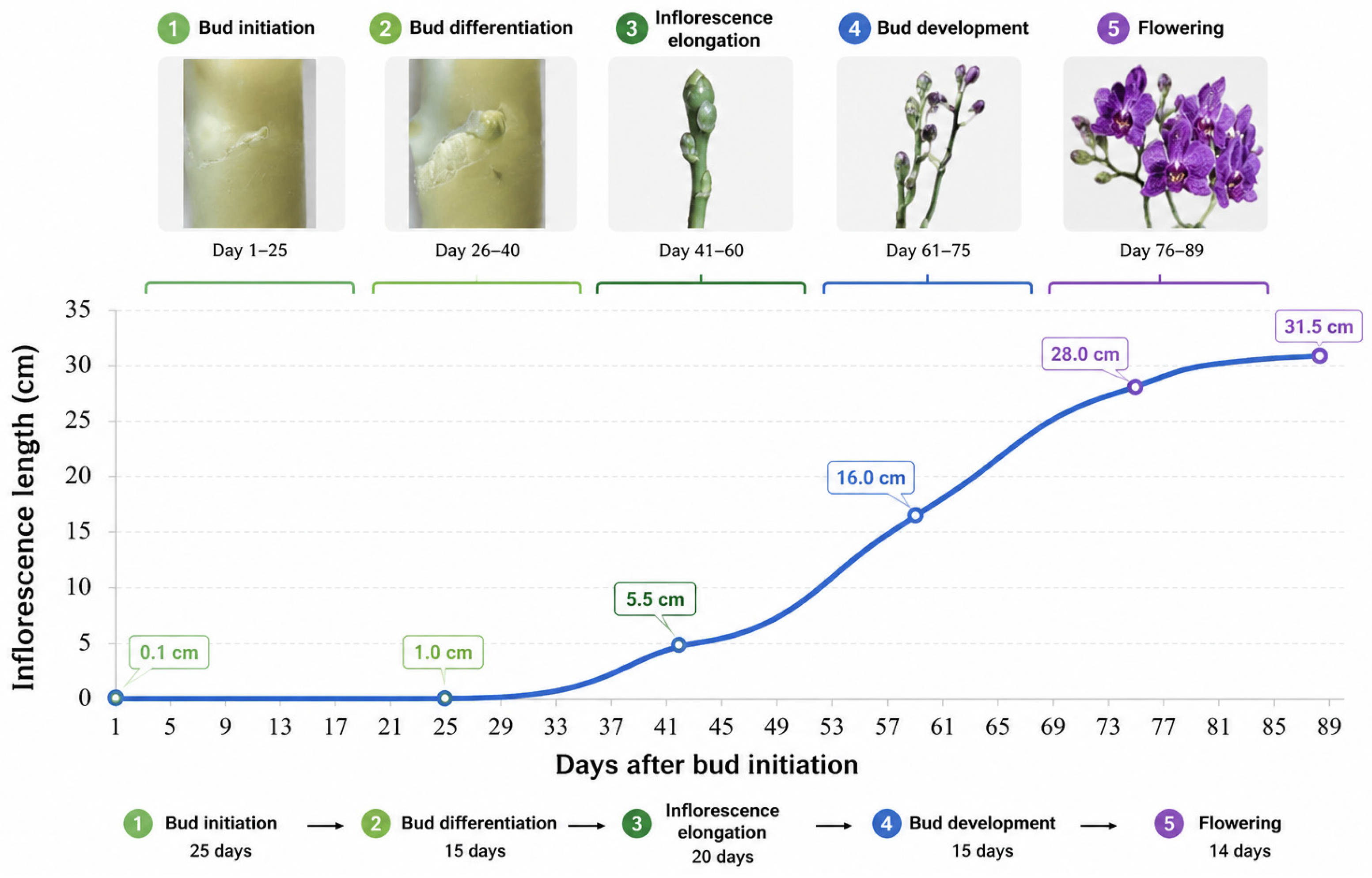
Flower buds remained enclosed beneath the leaf sheath for approximately four weeks before emerging through the leaf axil. From floral bud initiation to anthesis, the complete developmental process required approximately 75 days (Figure 3). Five sequential developmental stages were identified: bud initiation, bud differentiation, inflorescence elongation, bud development, and flowering. Inflorescence length increased progressively throughout development, with the greatest rate of elongation occurring between 55 and 75 days after bud initiation.

3.2. Environmental Conditions During the Experimental Period

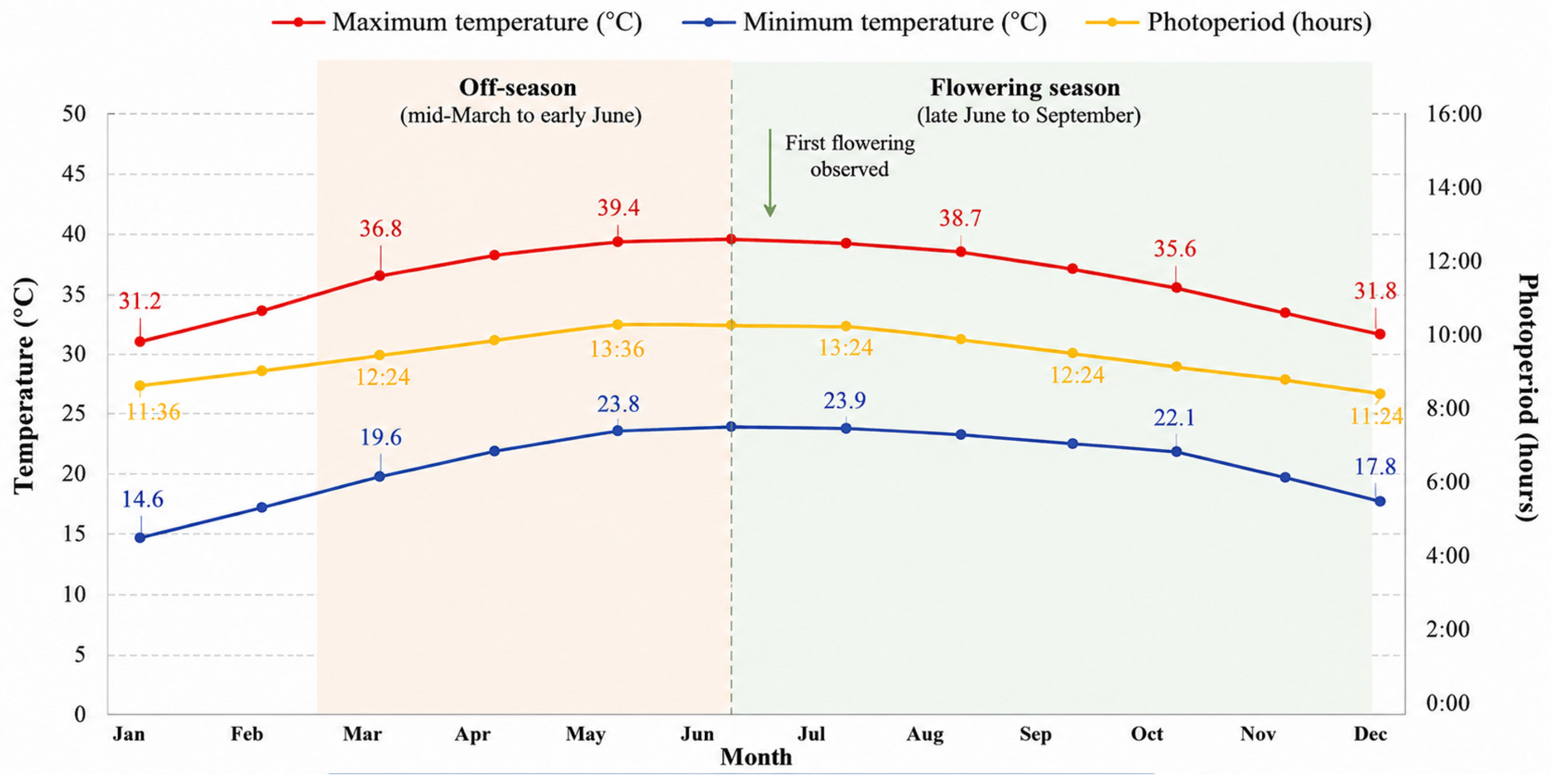
Seasonal changes in maximum temperature, minimum temperature, and photoperiod are shown in Figure 4. Flower bud initiation occurred during the off-season period from mid-March to early June, when maximum temperatures ranged from 36.8 to 39.4 °C and the photoperiod increased from approximately 12.4 to 13.6 h day−1. Although flower buds were initiated during this period, they subsequently aborted before anthesis.
Successful flower development was first observed in late June and continued throughout the flowering season. This transition coincided with a gradual decline in maximum temperature, while minimum temperatures remained relatively stable (Figure 4).

3.3. Experiment II. Effects of Temperature Regimes on Growth and Flowering

3.3.1. Vegetative Growth Responses

Plant height, number of leaves, and leaf length increased gradually throughout the experimental period in all treatments. However, no significant differences were observed among temperature treatments or growing environments at any evaluation date (Table 1, Table 2 and Table 3).
At 28 weeks after treatment (WAT), plant height ranged from 17.27 to 18.91 cm (Table 1), whereas the number of leaves ranged from 16.80 to 18.71 leaves per plant (Table 2). Leaf length ranged from 19.33 to 20.29 cm (Table 3). These results indicate that exposure to 18 °C for up to 6 weeks did not significantly affect the vegetative growth of Vanda ‘Pakchong Blue’ during the experimental period.

3.3.2. Flowering Responses

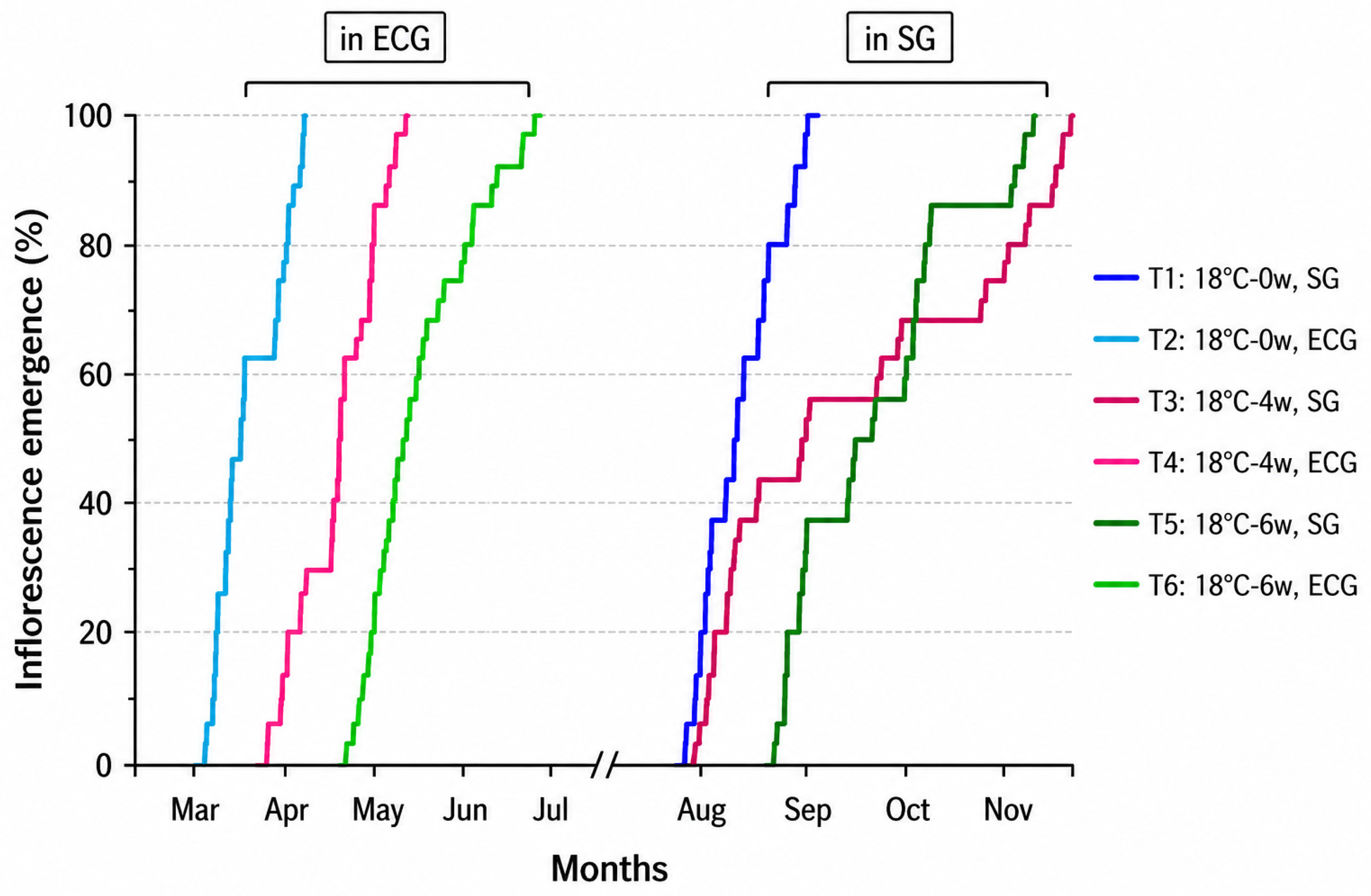
Days to inflorescence emergence differed significantly among the six treatment combinations combinations (Table 4). Plants grown in the evaporative-cooling greenhouse (ECG) consistently flowered earlier than those grown in the shaded greenhouse (SG). Under ECG conditions, inflorescence emergence occurred at 81.9, 105.7, and 126.9 days after treatment initiation for the 0-, 4-, and 6-week low-temperature treatments, corresponding to flowering in March, April, and May, respectively. In contrast, plants grown in the SG flowered during the natural flowering season, with inflorescence emergence at 217.9, 260.6, and 262.8 days after treatment initiation, corresponding to August, September, and September, respectively.
Increasing the duration of low-temperature exposure delayed flowering under both growing environments. Compared with untreated plants, exposure to 18 °C for 4 and 6 weeks delayed flowering by approximately 24 and 45 days, respectively, under ECG conditions. A similar trend was observed under SG conditions.
Flowering percentage remained consistently high across all treatments, ranging from 92.3% to 100% (Table 4). Statistical analysis using the Fisher–Freeman–Halton exact test indicated that flowering percentage did not differ significantly among treatments (exact p = 1.000). All plants grown in the ECG flowered successfully (100%), whereas flowering percentages in the SG ranged from 92.3% to 100%. Although inflorescence emergence was observed in 92.3% of plants in treatment T5, floral development did not progress to anthesis, and the developing flower buds subsequently aborted.

3.3.3. Flower Quality

Flower quality characteristics were significantly influenced by growing environment (Table 5). Plants grown in the ECG generally produced higher-quality flowers than those grown in the SG. Inflorescence length ranged from 32.06 to 34.60 cm under ECG conditions, significantly exceeding the values recorded in SG-grown plants. Similarly, the number of florets per inflorescence ranged from 6.00 to 6.29 under ECG conditions, whereas SG-grown plants produced only 3.75–4.71 florets per inflorescence.
The longest inflorescences (34.60 cm) were observed in untreated plants grown in the ECG (T2), while the highest number of florets per inflorescence (6.29) was recorded in plants exposed to 18 °C for 6 weeks and subsequently grown in the ECG (T6). Flower diameter was not significantly affected by treatment and ranged from 10.13 to 11.02 cm.
Flower quality parameters could not be determined for treatment T5 because the inflorescences aborted before anthesis. Consequently, inflorescence length, number of florets per inflorescence, and flower diameter were not recorded for this treatment.

4. Discussion

Previous studies have demonstrated that flowering in Vanda is not strongly influenced by photoperiod under tropical conditions. Most Vanda species grow and flower normally under daylengths of approximately 12 h [2], while previous work demonstrated that short-day treatment had only a limited effect on flowering time in Vanda compared with temperature regulation [13]. In the present study, the photoperiod ranged from approximately 11.4 to 13.6 h throughout the year (Figure 4), representing only minor seasonal variation. Therefore, the observed seasonal differences in flowering of Vanda ‘Pakchong Blue’ were unlikely to be attributable to photoperiod alone. Instead, the present results suggest that temperature was the primary environmental factor influencing flower development under the conditions of this study. This interpretation is consistent with previous studies in Phalaenopsis, which have identified temperature as a major environmental factor regulating flowering and reproductive development under controlled cultivation [6,7,8,9,10].
Results from Experiment 1 indicated that floral bud initiation occurred during the off-season period from mid-March to early June, but many developing buds subsequently aborted before anthesis. As shown in Figure 4, this period coincided with maximum temperatures ranging from 36.8 to 39.4 °C. In contrast, successful flower development and anthesis were first observed from late June onward when maximum temperatures gradually declined. Similar responses have previously been reported in Vanda grown under evaporative-cooling conditions, where appropriate temperature management promoted successful flowering [12]. These observations suggest that floral induction and floral development are regulated by different environmental requirements. Floral initiation can occur under a relatively wide range of conditions, whereas successful floral differentiation and flower development require more favorable temperatures. Comparable responses have also been documented in Phalaenopsis, where reproductive development is strongly influenced by temperature. Elevated temperatures suppress inflorescence initiation and subsequent reproductive development, whereas appropriate temperature regimes promote floral transition and normal inflorescence development [6,7,8,9,10,11]. Together, these findings indicate that floral initiation and subsequent floral development are regulated by distinct temperature requirements.
The inhibitory effects of high temperature on reproductive development observed in the present study are consistent with findings in other orchid genera. In Phalaenopsis, flowering is strongly inhibited when day temperatures exceed approximately 26–29 °C, regardless of night temperature, indicating that elevated daytime temperatures suppress floral initiation and reproductive development [6,7]. Likewise, prolonged exposure to elevated temperatures has been shown to suppress inflorescence initiation and reduce flowering in several Phalaenopsis hybrids [6,7,11]. High temperatures are known to disrupt reproductive processes by impairing floral organ development, increasing respiration rates, reducing carbohydrate availability, and altering endogenous hormone balance [5]. More recently, Lee et al. [11] demonstrated that intermittent exposure to high temperatures significantly reduced leaf soluble sugar contents and inhibited inflorescence initiation in Phalaenopsis, providing direct physiological evidence that heat-induced alterations in carbohydrate metabolism are closely associated with impaired reproductive development. Therefore, the flower bud abortion observed in Vanda ‘Pakchong Blue’ during April and May may have been associated with heat stress during critical stages of floral differentiation and development. Although these physiological processes were not directly measured in the present study, the observed flowering responses are consistent with previously proposed mechanisms of heat stress in plants, including orchids [5,11].
Experiment 2 further suggests the importance of temperature management for successful off-season flowering. Plants grown in the evaporative cooling greenhouse (ECG), where daytime temperatures were maintained below approximately 27 °C, flowered during the off-season between March and May, whereas plants grown in the shaded greenhouse (SG) flowered only during the natural flowering season (Table 4). The flowering curves presented in Figure 5 clearly show that flowering occurred substantially earlier in all ECG treatments compared to the corresponding SG treatments. Moreover, flowering percentages reached 100% across all ECG treatments, and flower quality was generally superior, particularly in terms of inflorescence length and the number of florets (Table 5). These results suggest that maintaining moderate temperatures may promote floral development and improve floral quality. These findings are consistent with previous studies in Phalaenopsis, which demonstrated that temperature management during reproductive development can regulate flowering time, influence inflorescence development, and ultimately affect flowering performance under protected cultivation [6,9,10].
The superior flowering performance under ECG conditions may be attributed to the maintenance of favorable temperatures throughout the flowering process. Orchid flowering consists of several sequential developmental stages, including floral induction, floral initiation, floral differentiation, inflorescence elongation, and anthesis [1,2]. Once floral primordia are initiated, environmental conditions must remain favorable for continued development. In the present study, ECG conditions may have enhanced floral bud survival and supported continuous reproductive development, whereas fluctuating high temperatures under SG conditions may have contributed to delayed flowering and flower bud abortion. This interpretation is supported by previous studies indicating that favorable temperature conditions during reproductive development contribute to normal inflorescence initiation and subsequent development, whereas supraoptimal temperatures can suppress reproductive development and reduce flowering performance [6,7,8,9,10,11].
The duration of low-temperature exposure also influenced flowering behavior. Increasing the duration of 18 °C treatment from 0 to 4 and 6 weeks delayed flowering by approximately 24 and 45 days, respectively, under ECG conditions. Furthermore, flowering became less synchronized as treatment duration increased. As illustrated in Figure 5, plants receiving a 6-week low-temperature treatment required approximately 40 days to reach 92% flowering, compared with only 20 and 24 days for the 0- and 4-week treatments, respectively. Similar responses were observed under SG conditions, where longer treatment durations extended the flowering period and reduced flowering uniformity. These findings suggest that prolonged low-temperature exposure modifies the timing of reproductive development and may alter the rate at which floral buds progress through subsequent developmental stages. Temperature regimes have also been shown to modify flowering time and subsequent inflorescence development in Phalaenopsis, indicating that reproductive development is highly responsive to changes in thermal conditions during flower development [6,9,10].
The strong influence of environmental conditions observed in the present study is consistent with findings reported for other high-value vegetatively propagated crops. In saffron (Crocus sativus L.), which is also propagated clonally, environmental variation has been shown to substantially influence vegetative growth, flowering performance, and overall productivity despite limited genetic variation among planting materials. Multi-site evaluations have demonstrated that differences in cultivation environments can significantly affect crop performance and determine the expression of economically important traits [15,16]. These observations support the broader concept that optimization of the growing environment is a key strategy for improving productivity and product quality in vegetatively propagated horticultural crops. The present findings extend this concept to Vanda orchids by demonstrating that appropriate temperature management, particularly through evaporative cooling, is critical for achieving reliable off-season flowering and improved flower quality under tropical conditions.
Although flowering responses differed markedly among treatments, vegetative growth was not significantly affected. Plant height, leaf number, and leaf length increased gradually throughout the experiment, with no significant differences among treatments (Table 1, Table 2 and Table 3). These results are consistent with previous studies in Vanda, in which environmental manipulation primarily affected flowering responses rather than vegetative growth [12,13]. Minor chlorotic streaks occasionally developed on newly emerging leaves after low-temperature exposure, which may reflect temporary disturbances in chloroplast development under cool conditions. However, these symptoms were localized and did not affect overall plant growth or vigor.
Overall, the present results suggest that floral initiation in Vanda ‘Pakchong Blue’ can occur year-round, whereas successful flower development appears to depend on favorable temperatures during subsequent developmental stages. The findings further suggest that high temperatures during the hot season may contribute to flower bud abortion, while maintaining daytime temperatures below approximately 27 °C in an evaporative-cooling greenhouse can facilitate successful off-season flowering and improve flower quality. Collectively, these results demonstrate that successful off-season flowering depends not only on floral initiation but also on maintaining favorable temperatures throughout the entire reproductive developmental process.


5. Conclusions

Temperature is a key environmental factor regulating flowering in Vanda ‘Pakchong Blue’. Floral initiation can occur throughout the year; however, successful flower development and anthesis require favorable temperatures during subsequent reproductive stages. High temperatures during the hot season promoted flower bud abortion and prevented successful flowering, whereas plants grown in an evaporative cooling greenhouse (ECG) with daytime temperatures maintained below approximately 27 °C completed floral development and flowered successfully during the off-season.
Exposure to 18 °C for extended periods delayed flowering but did not significantly affect vegetative growth. In addition, ECG-grown plants produced earlier flowering and generally superior flower quality compared with plants grown under shaded greenhouse conditions.
These findings indicate that cultivation in an evaporative-cooling greenhouse is an effective strategy for achieving off-season flowering and improving flower quality in Vanda ‘Pakchong Blue’, whereas prolonged low-temperature pretreatment primarily delayed flowering without improving flowering performance. The results provide practical guidance for temperature management to schedule flowering and support year-round commercial orchid production under tropical conditions.

Supplementary Materials

The following supporting information can be downloaded at: https://www.mdpi.com/article/10.3390/horticulturae12070892/s1, Table S1: Monthly environmental conditions recorded inside the evaporative-cooling greenhouse (ECG) and shaded greenhouse (SG) during Experiment II.

Author Contributions

Conceptualization, C.I. and S.R.; methodology, C.I.; software, T.S. and P.K.; validation, C.I., S.R. and K.P.; formal analysis, T.S. and P.K.; investigation, T.S. and P.K.; resources, S.R., C.I. and K.P.; data curation, S.R., C.I., K.P. and T.S.; writing—original draft preparation, C.I. and S.R.; writing—review and editing, S.R., C.I. and K.P.; visualization, C.I. and S.R.; supervision, C.I.; project administration, S.R.; funding acquisition, S.R. All authors have read and agreed to the published version of the manuscript.

Funding

This project was funded by the National Research Council of Thailand (NRCT; contract number N21A660528/2023).

Data Availability Statement

The data presented in this study are available from the corresponding author upon reasonable request. The data are not publicly available due to institutional policy and ongoing related research.

Acknowledgments

This research work was partially supported by Chiang Mai University. We would like to extend our heartfelt thanks to H.M. The King’s Initiative Centre for Flower and Fruit Propagation for their support in providing the greenhouse. During the preparation of this manuscript, OpenAI ChatGPT (GPT-5.5) was used to assist with English language editing, grammar correction, sentence restructuring, and improvement of manuscript readability. The AI tool was not used to generate, analyze, or interpret scientific data. All experimental work, data analysis, interpretation, and final manuscript revisions were performed and verified by the authors. The authors have reviewed and edited the output and take full responsibility for the content of this publication.

Conflicts of Interest

The authors declare no conflicts of interest.

References

  1. Arditti, J. Fundamentals of Orchid Biology; John Wiley & Sons: New York, NY, USA, 1992. [Google Scholar]
  2. Groves, D. Vandas and Ascocendas and Their Combinations with Other Genera; Timber Press: Portland, OR, USA, 1995. [Google Scholar]
  3. Hew, C.S.; Yong, J.W.H. The Physiology of Tropical Orchids in Relation to the Industry, 2nd ed.; World Scientific Publishing: Singapore, 2004. [Google Scholar]
  4. Glover, B. Understanding Flowers and Flowering, 2nd ed.; Oxford University Press: Oxford, UK, 2014. [Google Scholar]
  5. Wahid, A.; Gelani, S.; Ashraf, M.; Foolad, M.R. Heat tolerance in plants: An overview. Environ. Exp. Bot. 2007, 61, 199–223. [Google Scholar] [CrossRef]
  6. Blanchard, M.G.; Runkle, E.S. Temperature during the day, but not during the night, controls flowering of Phalaenopsis orchids. J. Exp. Bot. 2006, 57, 4043–4049. [Google Scholar] [CrossRef] [PubMed]
  7. Newton, L.A.; Runkle, E.S. High-temperature inhibition of flowering of Phalaenopsis and Doritaenopsis orchids. HortScience 2009, 44, 1271–1276. [Google Scholar] [CrossRef]
  8. Runkle, E.S. Environmental and hormonal regulation of flowering in Phalaenopsis orchids: A mini review. In ISHS Acta Horticulturae 878: I International Orchid Symposium; ISHS: Leuven, Belgium, 2010; Volume 878, pp. 263–268. [Google Scholar]
  9. Paradiso, R.; Maggio, A.; De Pascale, S. Moderate variations of day/night temperatures affect flower induction and inflorescence development in Phalaenopsis. Sci. Hortic. 2012, 139, 102–107. [Google Scholar] [CrossRef]
  10. Paradiso, R.; De Pascale, S. Effects of plant size, temperature, and light intensity on flowering of Phalaenopsis hybrids in Mediterranean greenhouses. Sci. World J. 2014, 2014, 420807. [Google Scholar] [CrossRef] [PubMed]
  11. Lee, H.B.; Lee, J.-H.; Jeong, S.J.; An, S.K.; Kang, B.-C.; Kim, K.S. Intermittent high temperature reduces leaf sugar content and inhibits inflorescence initiation in Phalaenopsis hybrid. Environ. Exp. Bot. 2021, 189, 104562. [Google Scholar] [CrossRef]
  12. Sirisawad, T.; Potapohn, N.; Ruamrungsri, S. Effects of evaporative cooling greenhouse growing on flowering of Vanda. Acta Hortic. 2015, 1078, 107–112. [Google Scholar] [CrossRef]
  13. Ruamrungsri, S.; Sirisawad, T.; Panjama, K.; Potapohn, N.; Inkham, C. Effects of short day cycles on flowering time and nutritional status of Vanda. Hortic. J. 2021, 90, 108–113. [Google Scholar] [CrossRef]
  14. Johansen, D.A. Plant Microtechnique; McGraw-Hill Book Company: New York, NY, USA, 1940. [Google Scholar]
  15. Ben El Caid, M.; Salaka, L.; El Merzougui, S.; Lachguer, K.; Lagram, K.; El Mousadik, A.; Serghini, M.A. Multi-site evaluation of the productivity among saffron (Crocus sativus L.) for clonal selection purposes. J. Appl. Res. Med. Aromat. Plants 2020, 17, 100248. [Google Scholar] [CrossRef]
  16. Ben El Caid, M.; Lachheb, M.; Lagram, K.; Wang, X.; Serghini, M.A. Ecotypic variation and environmental influence on saffron (Crocus sativus L.) vegetative growth: A multivariate performance analysis. J. Appl. Res. Med. Aromat. Plants 2024, 43, 100601. [Google Scholar] [CrossRef]
Figure 1. Morphological stages of floral bud development in Vanda ‘Pakchong Blue’. (A) Dormant axillary bud before floral transition. (B) Early floral bud showing bud swelling during floral bud initiation. (C) Developing floral bud with an enlarged apex and raised tip.
Horticulturae 12 00892 g001
Figure 2. Longitudinal sections of developing floral buds in Vanda ‘Pakchong Blue’. (A) Early floral bud showing the apical meristem and the initiation of floral primordia (arrows). (B) Floral bud approximately 0.5 cm in length, showing a more developed apical meristem and further development of floral primordia (arrows).
Horticulturae 12 00892 g002
Figure 3. Sequential stages of flower development in Vanda ‘Pakchong Blue’ from floral bud initiation to anthesis. Floral development was divided into five stages: bud initiation, bud differentiation, inflorescence elongation, bud development, and flowering. The graph illustrates changes in inflorescence length during development over a total duration of approximately 75 days from bud initiation to the first flower opening.
Horticulturae 12 00892 g003
Figure 4. Seasonal patterns of maximum temperature (Temp-max), minimum temperature (Temp-min), and photoperiod (PP) during the experimental period. Periods of flower bud initiation, flower bud abortion, and successful flowering of Vanda ‘Pakchong Blue’ are indicated to illustrate the environmental conditions associated with floral development.
Horticulturae 12 00892 g004
Figure 5. Cumulative flowering percentage of Vanda ‘Pakchong Blue’ following low-temperature treatments at 18 °C for 0, 4, and 6 weeks, and subsequent cultivation in an evaporative-cooling greenhouse (ECG) or a shaded greenhouse (SG). The x-axis shows calendar months to illustrate the seasonal timing of flowering.
Horticulturae 12 00892 g005
Table 1. Effects of temperature treatment and growing environment during the off-season on plant height of Vanda ‘Pakchong Blue’.
TreatmentPlant Height (cm)
March
(12 WAT)
April
(16 WAT)
May
(20 WAT)
June
(24 WAT)
July
(28 WAT)
T1: 0 weeks at 18 °C + SG16.4716.7017.3418.1818.91
T2: 0 weeks at 18 °C + ECG15.9116.2416.7317.5118.14
T3: 4 weeks at 18 °C + SG16.0016.4817.1817.5118.06
T4: 4 weeks at 18 °C + ECG15.6916.2516.8616.9317.27
T5: 6 weeks at 18 °C + SG15.6516.2916.7817.0917.60
T6: 6 weeks at 18 °C + ECG15.8016.3117.0117.4818.46
F-testnsnsnsnsns
SE0.230.220.230.250.30
Values are presented as treatment means. SE = standard error of the mean. ns = not significant (p > 0.05) according to one-way ANOVA. SG = shaded greenhouse; ECG = evaporative-cooling greenhouse.
Table 2. Effects of temperature treatment and growing environment during the off-season on number of leaves of Vanda ‘Pakchong Blue’.
TreatmentNumber of Leaves
March
(12 WAT)
April
(16 WAT)
May
(20 WAT)
June
(24 WAT)
July
(28 WAT)
T1: 0 weeks at 18 °C + SG15.4016.0016.7017.1017.70
T2: 0 weeks at 18 °C + ECG16.6017.1117.5717.8618.71
T3: 4 weeks at 18 °C + SG15.8016.5017.4017.6018.50
T4: 4 weeks at 18 °C + ECG15.7016.4017.3817.7118.43
T5: 6 weeks at 18 °C + SG15.6016.2017.0017.2018.00
T6: 6 weeks at 18 °C + ECG14.9015.4016.3016.6016.80
F-testnsnsnsnsns
SE0.210.210.220.240.25
Values are presented as treatment means. SE = standard error of the mean. ns = not significant (p > 0.05) according to one-way ANOVA. SG = shaded greenhouse; ECG = evaporative-cooling greenhouse.
Table 3. Effects of temperature treatment and growing environment during the off-season on leaf length of Vanda ‘Pakchong Blue’.
TreatmentLeaf Length (cm)
March
(12 WAT)
April
(16 WAT)
May
(20 WAT)
June
(24 WAT)
July
(28 WAT)
T1: 0 weeks at 18 °C + SG18.7719.1719.6419.9920.29
T2: 0 weeks at 18 °C + ECG18.8919.3119.5019.8319.97
T3: 4 weeks at 18 °C + SG18.6619.0919.8019.9920.21
T4: 4 weeks at 18 °C + ECG18.5819.0819.0519.1619.33
T5: 6 weeks at 18 °C + SG18.1818.6919.1519.3419.51
T6: 6 weeks at 18 °C + ECG18.7419.2019.6419.8519.82
F-testnsnsnsnsns
SE0.140.140.130.130.14
Values are presented as treatment means. SE = standard error of the mean. ns = not significant (p > 0.05) according to one-way ANOVA. SG = shaded greenhouse; ECG = evaporative-cooling greenhouse.
Table 4. Effects of temperature treatment and growing environment on flowering responses of Vanda ‘Pakchong Blue’.
TreatmentDays to Inflorescence Emergence (Days)Flowering MonthFlowering (%)
T1: 0 weeks at 18 °C + SG217.92 dAug.100
T2: 0 weeks at 18 °C + ECG81.92 aMar.100
T3: 4 weeks at 18 °C + SG260.58 eSep.92.3
T4: 4 weeks at 18 °C + ECG105.69 bApr.100
T5: 6 weeks at 18 °C + SG262.83 eSep.92.3
T6: 6 weeks at 18 °C + ECG126.85 cMay100
F-test* -
SE8.77 -
* Significant at p ≤ 0.05 according to one-way ANOVA. Means within the “Days to inflorescence emergence” column followed by different letters are significantly different according to Fisher’s LSD test at p ≤ 0.05. Flowering percentage was analyzed using the Fisher–Freeman–Halton exact test, which indicated no significant differences among treatments (exact p = 1.000). SE = standard error of the mean. SG = shaded greenhouse; ECG = evaporative-cooling greenhouse.
Table 5. Effects of temperature treatment and growing environment on flower quality characteristics of Vanda ‘Pakchong Blue’.
TreatmentInflorescence Length
(cm)
Number of Florets per InflorescenceFlower Diameter (cm)
T1: 0 weeks at 18 °C + SG32.29 b4.71 b11.00
T2: 0 weeks at 18 °C + ECG34.60 a6.20 a11.02
T3: 4 weeks at 18 °C + SG29.75 c3.75 b10.13
T4: 4 weeks at 18 °C + ECG32.06 b6.00 a10.50
T5: 6 weeks at 18 °C + SGNDNDND
T6: 6 weeks at 18 °C + ECG33.00 ab6.29 a11.00
F-test**ns
SE0.390.200.15
* Significant at p ≤ 0.05 according to one-way ANOVA. Means within the same column followed by different lowercase letters are significantly different according to Fisher’s LSD test at p ≤ 0.05. SE = standard error of the mean. ND = not determined because inflorescences aborted before anthesis. SG = shaded greenhouse; ECG = evaporative-cooling greenhouse.
Disclaimer/Publisher’s Note: The statements, opinions and data contained in all publications are solely those of the individual author(s) and contributor(s) and not of MDPI and/or the editor(s). MDPI and/or the editor(s) disclaim responsibility for any injury to people or property resulting from any ideas, methods, instructions or products referred to in the content.