Article

Effects of Leaf Removal on Photosynthetic Activity, Fruit Yield, and Quality of Micro-Dwarf Tomatoes


1
Department of Soil and Water Sciences, Institute of Environmental Sciences, The Robert H. Smith Faculty of Agriculture, Food and Environment, The Hebrew University of Jerusalem, Rehovot 7610001, Israel
2
Department of Mechanical Engineering, Sami Shamoon College of Engineering, 84 Jabotinsky St., Ashdod 77245, Israel
3
Department of Postharvest Science, Agricultural Research Organization, Volcani Center, Rishon LeZion 7505101, Israel
4
The Advanced School for Environmental Studies, The Hebrew University of Jerusalem, Jerusalem 9190401, Israel
*
Author to whom correspondence should be addressed.
Horticulturae 2026, 12(7), 792; https://doi.org/10.3390/horticulturae12070792
Submission received: 27 May 2026 / Revised: 22 June 2026 / Accepted: 25 June 2026 / Published: 29 June 2026

Highlights

What are the main findings?
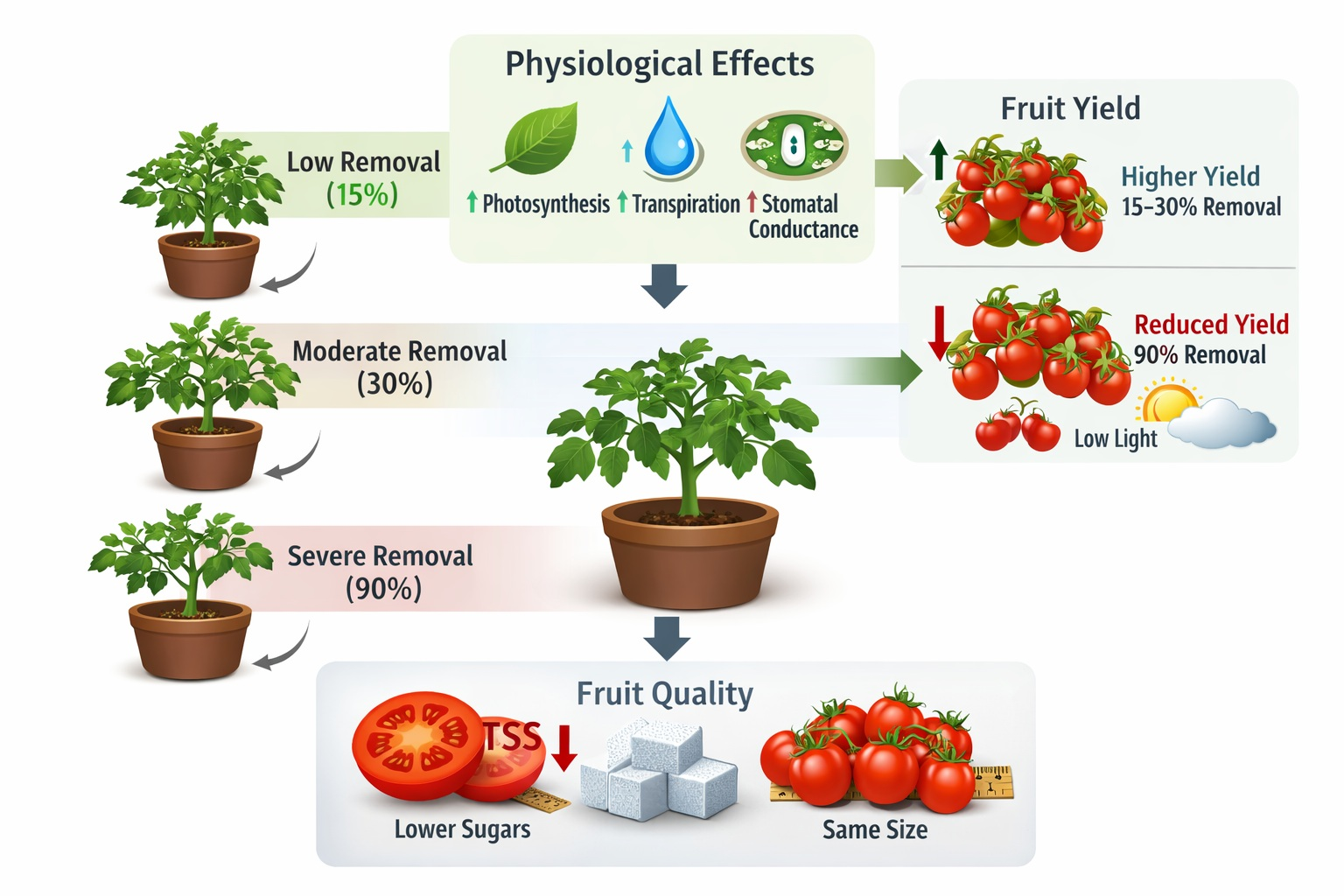
  • Moderate leaf removal (15–30%) maintained or improved yield in micro-dwarf tomatoes.
  • Severe leaf removal (90%) increased leaf photosynthesis but often reduced yield, especially under low light.
  • Fruit quality was largely unaffected, except for lower soluble solids under severe defoliation.
What are the implications of the main findings?
  • Maintaining sufficient leaf area is critical for productivity in compact tomato canopies.
  • Leaf-removal strategies should be tailored to cultivar and light conditions in controlled-environment agriculture.

Abstract
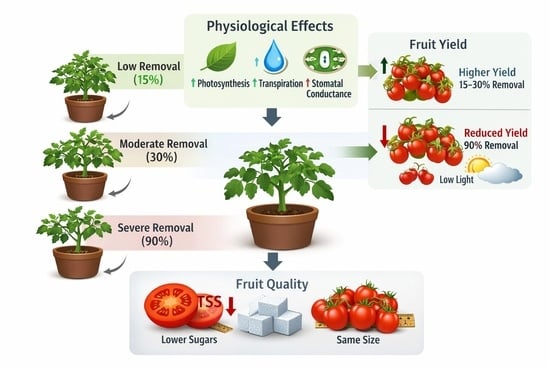
Micro-dwarf tomato cultivars are increasingly considered for urban and controlled-environment agriculture due to their compact architecture and suitability for high-density planting. In this study, we evaluated the effects of different leaf removal intensities on leaf-level physiological performance, fruit yield, and fruit quality in three micro-dwarf tomato cultivars (Mohamed, Hahms Gelbe Topftomate, and Red Robin) grown under contrasting seasonal light conditions. Plants were subjected to low (15%), moderate (30%), or severe (90%) leaf removal, and leaf-level gas exchange was measured across canopy layers, along with yield and fruit quality assessments. Severe leaf removal (90%) increased carbon assimilation, transpiration, and stomatal conductance in middle and lower canopy leaves by up to approximately twofold compared with control plants, indicating improved light availability at the leaf level. However, these physiological enhancements did not consistently translate into higher yield, reflecting reduced whole-plant source capacity under excessive leaf removal. Low to moderate leaf removal (15–30%) generally increased or maintained yield and fruit number, whereas severe leaf removal reduced yield in Hahms Gelbe and Red Robin, particularly under low seasonal radiation. Fruit quality was largely unaffected by leaf removal, except for total soluble solids, which declined by approximately 12% under severe leaf removal across cultivars, consistent with sugar dilution under source limitation. Overall, these results demonstrate that optimal leaf removal in micro-dwarf tomatoes requires balancing improved canopy light distribution with maintenance of sufficient leaf area for carbon assimilation. For the tested compact canopies, LR15–30% represented a generally safe, practical range, whereas LR90% posed a substantial risk of source limitation, particularly at lower radiation; the exact threshold, however, remained cultivar- and light-dependent.

Graphical Abstract

1. Introduction

Ongoing urbanization is increasing the demand for novel farming approaches tailored to food production within cities. These approaches include a range of technologies, such as multi-layered vertical farming systems [1,2]. Certain vegetable cultivars are particularly well suited to such production environments. Among them, dwarf—and especially micro-dwarf—tomato cultivars are characterized by their compact plant architecture [3], resulting from a determinate growth habit that limits plant height.
Micro-dwarf tomatoes were initially developed as recreational plants; however, these same traits may make them highly suitable for urban agriculture. In addition, these cultivars exhibit relatively low light requirements [4], short production cycles [5], and tolerance to high planting densities, all of which are advantageous for cultivation in space-limited urban environments [6]. Despite these promising characteristics, micro-dwarf tomato cultivars remain far less studied for commercial production than standard indeterminate tomato types.
The work of Ke et al. [7,8] shed light on the physiological characteristics of micro-dwarf tomato cultivars. Specifically, they demonstrated that radiation-use efficiency (RUE) and fruit biomass radiation-use efficiency (FBRUE) increase with photosynthetic photon flux density (PPFD) up to the point at which the canopy’s light-absorptive capacity is saturated. Beyond this threshold, FBRUE declines as excess radiation exceeds the plant’s capacity to utilize additional energy.
In light of these findings, and given that micro-dwarf tomato cultivars typically exhibit a bushy architecture with short internodes, partial leaf removal emerges as a potentially powerful tool for regulating canopy light interception and yield. Unlike standard indeterminate tomato cultivars, which require regular pruning to remove axillary shoots and limit excessive branching, compact determinate or semi-determinate cultivars generally do not require such interventions. Nevertheless, leaf removal is commonly practiced in these plants to improve light penetration [9], maintain adequate airflow within the canopy [10], and reduce disease pressure [11]—an approach that may be particularly relevant in high-density, controlled-environment systems where within-canopy light distribution is a key constraint.
Empirical studies indicate that moderate defoliation can increase yield or, at a minimum, maintain it, whereas severe defoliation generally reduces yield. In tomato, removal of lower leaves has been shown to improve yield when the original canopy is overly dense; however, yield losses frequently occur when more than approximately 40% of the total leaf area is removed [12,13,14,15]. Thus, the yield response to leaf removal depends on the intensity and timing of the treatment, the remaining total leaf area, and prevailing environmental conditions such as light availability and temperature. Notably, some studies have reported that removal of up to 60% of leaf area did not result in yield reduction, presumably due to compensatory increases in the photosynthetic rate of the remaining leaves [16]. Unlike standard indeterminate tomatoes, which continue stem elongation and require regular pruning, micro-dwarf tomatoes have determinate growth, short internodes, and dense foliage that increase self-shading while providing less total leaf-area reserve under severe removal. Therefore, defoliation thresholds established for indeterminate cultivars may not transfer directly to micro-dwarf tomatoes.
From a physiological perspective, sugar production in tomato plants is generally sink-limited during early developmental stages and becomes source-limited during fruiting [17,18,19]. Leaf removal alters this balance by reducing total leaf area while potentially increasing photosynthetic productivity of leaves previously shaded. The threshold at which leaf removal becomes detrimental varies with light availability. For instance, under severe leaf removal, plants may be unable to produce sufficient assimilates to sustain desirable total soluble solids (TSS) concentrations in the fruit if the remaining leaf area is inadequate [17].
Within a source–sink framework, when carbon supply is constrained—as under excessive leaf removal—plants tend to prioritize overall fruit growth over sugar accumulation, resulting in dilution of soluble solids within the fruit flesh [20]. This trade-off arises because sink demand for biomass accumulation competes with solute accumulation, and reduced source strength limits the allocation of sugars to the fruit.
However, despite extensive research on leaf removal responses in standard tomato cultivars, the physiological, yield, and quality responses of micro-dwarf tomatoes—particularly under light conditions relevant to urban and controlled-environment agriculture—remain poorly understood.
In this study, we evaluate the effects of leaf removal on yield, carbon assimilation, transpiration, and fruit quality in three micro-dwarf tomato cultivars under two light condition regimes (seasons). The primary objective is to identify the advantages and limitations of different leaf removal intensities and to determine an optimal, balanced leaf removal strategy that maximizes yield while maintaining favorable plant physiological performance and high marketable fruit quality. We hypothesized that LR15% and LR30% would alleviate within-canopy shading while retaining sufficient source area, whereas LR90% would increase gas exchange in remaining leaves but reduce whole-plant productivity, especially under lower seasonal radiation. We further expected these responses to vary among cultivars. Accordingly, this study addresses the following research questions:
How does leaf removal intensity affect leaf-level physiological performance across different canopy layers in micro-dwarf tomato plants?
Does leaf removal enhance yield and fruit number in micro-dwarf tomato cultivars?
How does leaf removal intensity influence fruit quality traits in micro-dwarf tomatoes?

2. Data and Methods

2.1. Plant Material

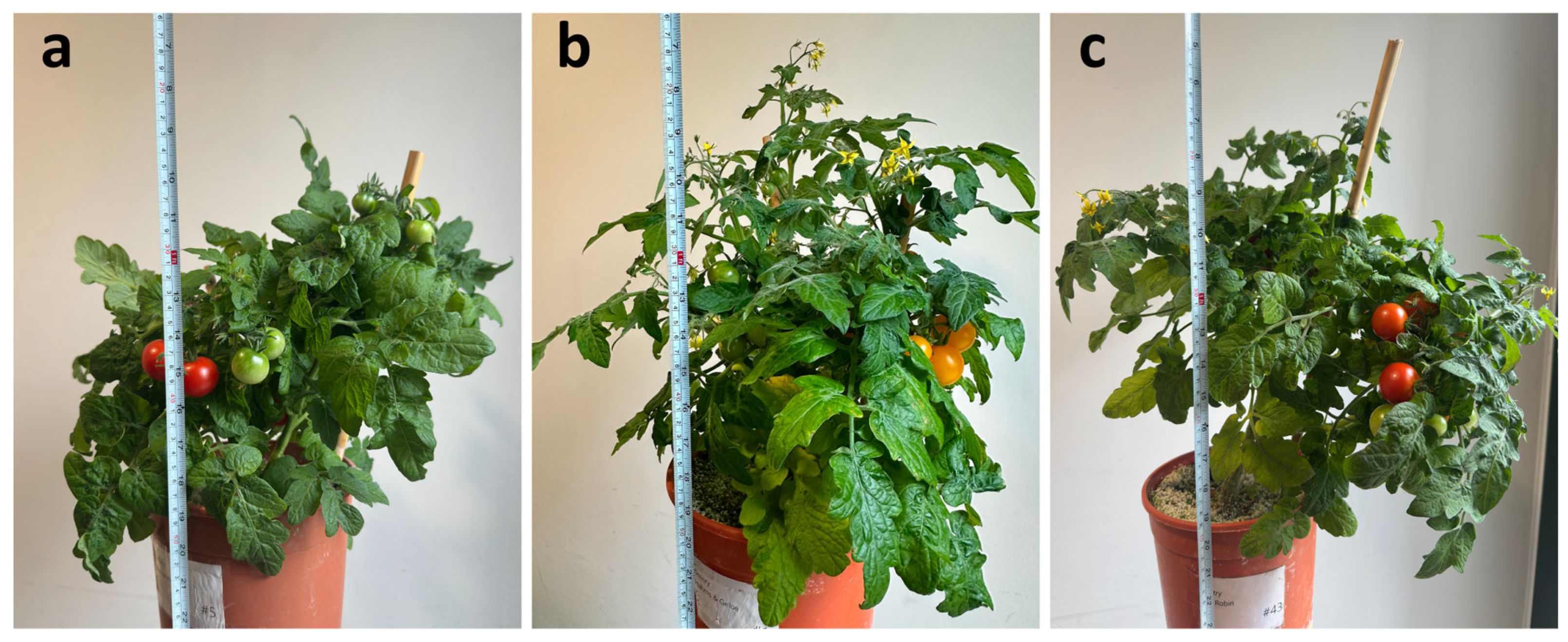
Three micro-dwarf tomato cultivars (Dwarf Tomato Project—A Co-Operative Venture) were selected for this study: Mohamed, Hahms Gelbe Topftomate, and Red Robin (Figure 1).
We chose these varieties for their compact growth habits and suitability for urban farming, particularly in hydroponic systems where space efficiency is crucial. All three micro-dwarf tomato cultivars share a compact, determinate growth habit, making them well-suited for high-density planting and automated management systems. They produce cherry-sized tomatoes averaging 10–12 g each: Mohamed and Red Robin yield red fruits, while Hahms Gelbe produces bright yellow fruits, adding diversity to the dataset and potentially influencing light absorption. Red Robin is specifically known for its adaptability to confined spaces.

2.2. Glasshouse Environmental Conditions

Two experiments were conducted in a controlled glasshouse at the Robert H. Smith Faculty of Agriculture, Food and Environment, the Hebrew University of Jerusalem, Rehovot, Israel (31.90445° N/34.80459° E, [21,22,23]), to assess the consistency and reliability of the method under varying seasonal light conditions. Other conditions—temperature, humidity, irrigation, and fertilizer application—were maintained similarly across both experiments, with daytime and nighttime temperatures and relative humidity held constant throughout (Table 1).
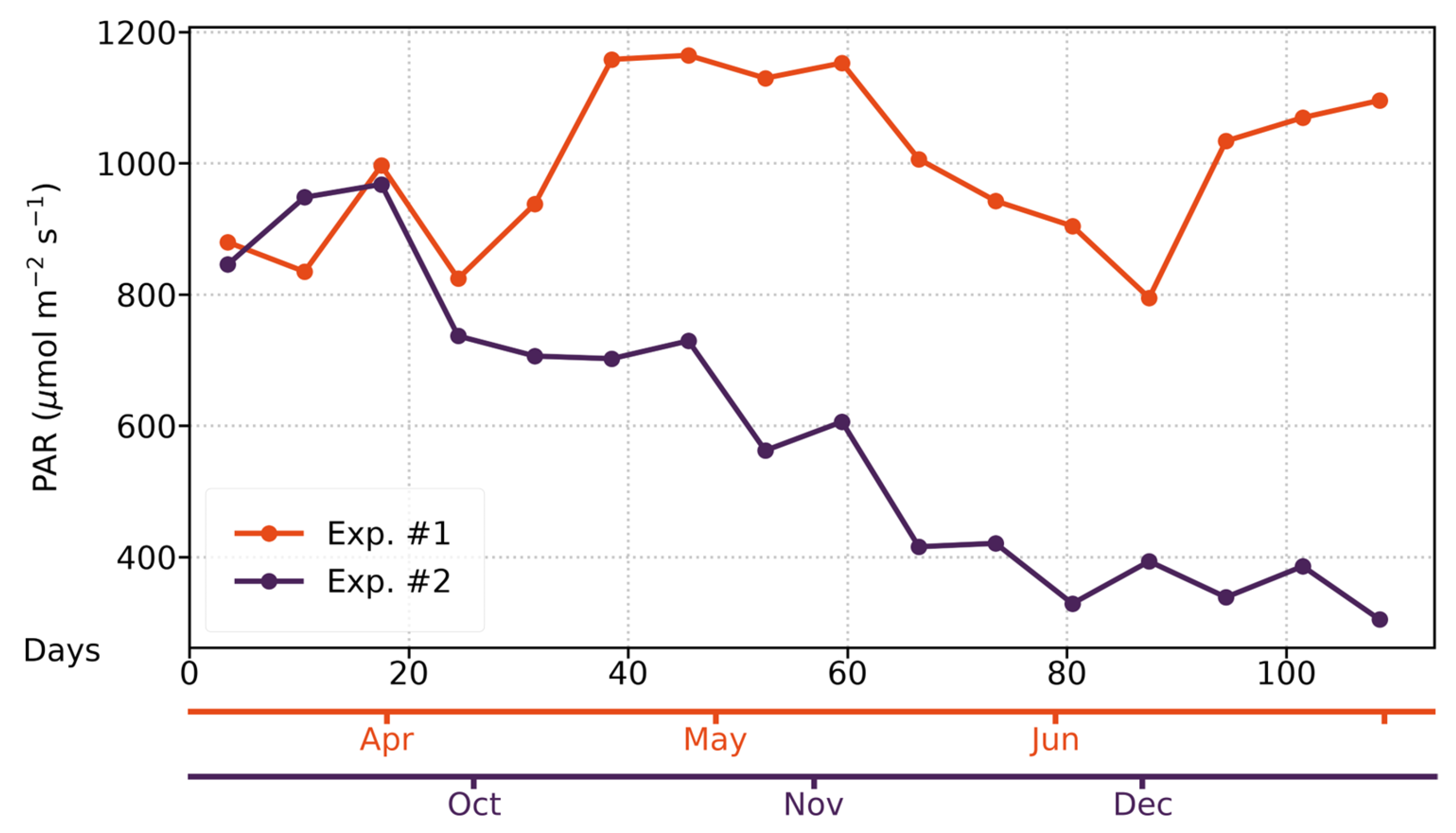
Since the glasshouse lacks artificial lighting, changes in natural solar radiation throughout the season are likely to affect plant growth and yields. Spring and summer in this area benefit from increased natural sunlight, promoting robust vegetation growth and potentially larger leaf areas, whereas autumn and winter receive less sunlight. Accordingly, the first experiment (Exp. #1) was run during the spring and summer, and radiation levels consistently peaked between 800 and 1000 μmol m−2 s−1, while the second experiment (Exp. #2) was conducted in autumn and winter, when radiation levels decrease (Figure 2). While the experiment began in September with light levels comparable to Exp. #1 (around 850 μmol m−2 s−1), in late November and December, the shorter day lengths and the sun’s lower position in the sky caused PAR levels to drop to an average weekly maximum of under 400 μmol m−2 s−1 (Figure 2).

2.3. Experimental Design

A set of 60 plants from three cultivars (20 per cultivar) was used in each experiment. Each cultivar × leaf-removal combination contained five plants, with each individual plant being the biological replicate and experimental unit. Plants were grown from seeds purchased at the LittleIslandSeedCo shop on Etsy (Wheatley River, PE). The seeds were planted on 1 February 2023 in Exp. #1 and on 24 July 2023 in Exp. #2 in disposable planters filled with 80/20 soil and perlite mixture. The planters were topped with thin layers of vermiculite and covered with paper pending germination. All plants were transplanted at 42 days of age on 15 March 2023 in Exp. #1, and at 44 days of age on 6 September 2023 in Exp. #2 into 4 L pots containing 4 mm perlite. At transplantation, the seedlings were no taller than 10 cm and had no visible flower buds.
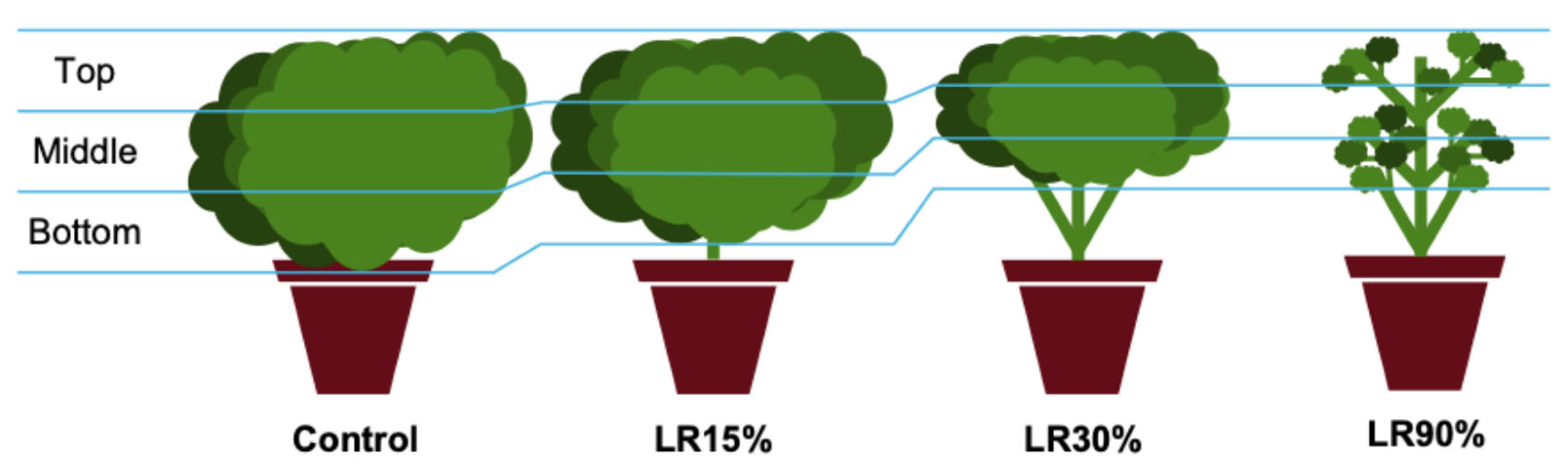
The plants were then evenly divided into four leaf-removal treatment groups (Figure 3). A control group (C), with plants undergoing no deliberate defoliation, except the routine removal of dry or damaged leaves; low-leaf removal (LR) treatment, with approximately 15% of the total leaves removed from the lower part of the plants (LR15%); a moderate-LR treatment, with approximately 30% of the basal leaves removed (LR30%); and a severe-LR treatment, with nearly 90% of the leaves removed (LR90%) as follows, all leaves located within the bottom 30% of the plant height were removed, along with all upper-canopy leaves that were not directly adjacent to flowers or fruits. The “90%” designation was an approximate treatment label based on leaf number and canopy appearance rather than a direct measurement of removed leaf area. The LR90% treatment was intentionally designed as an extreme leaf removal scenario to identify physiological and productivity thresholds under severe source limitation.
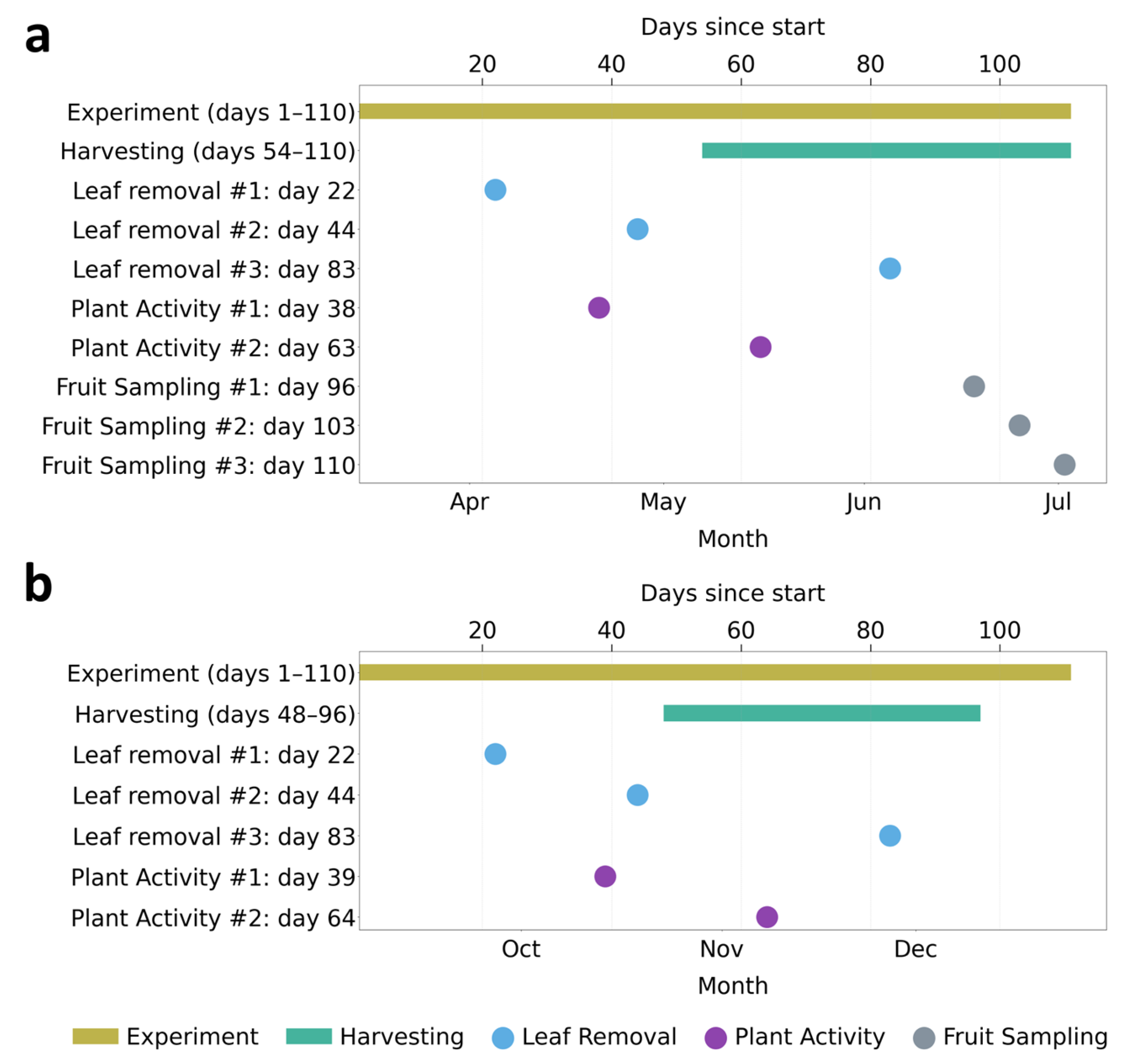
Leaf removal was conducted in three discrete stages corresponding to key phenological phases: at the onset of flowering, at the beginning of fruit formation, and at peak plant productivity, occurring on days 22, 44, and 83 of the experiments, respectively. These dates represented comparable phenological phases, but identical plant size was not assumed because seasonal radiation altered growth rate and canopy development.
The plants were distributed in the glasshouse according to a randomized complete block design to eliminate the effect of the radiation gradient.

2.4. Measurements

During the experiments, specific measurements were taken to estimate plants’ photosynthetic activity, productivity, and fruit quality. The measurements were taken at similar timings across the two experiments when possible.
Figure 4 outlines the different measurements and their timings for each experiment.

2.4.1. Plant Physiological Activity

Plant photosynthetic activity was assessed using an infrared gas analyzer (LI-6800, Licor, Lincoln, NE, USA). The gas analyzer was used to measure the carbon assimilation (An; μmol m−2 s−1), transpiration (Tr; mmol m−2 s−1), and stomatal conductance (gs; mol m−2 s−1). Three plants per cultivar × treatment combination were measured in each campaign. Plants were measured twice when suitable leaves remained available: at the beginning of the fruit-formation stage and during peak productivity (days 38 and 63 in Exp. #1, and days 39 and 64 in Exp. #2). The measurements were conducted between 10 am and 12 pm under sunny conditions. One fully expanded, sun-exposed leaf was selected from each canopy third: bottom, middle, and top (Figure 3). Canopy thirds were defined by relative vertical position, and the exact leaves could differ between campaigns.
The fan speed was set to 10,000 rpm and the flow rate to 500 µmol s−1 in the measurement chamber. RH and temperature were left uncontrolled and therefore reflected ambient glasshouse conditions. Photosynthetic photon flux density (PPFD) was maintained at 1200 µmol m−2 s−1, and the reference CO2 level was set to 400 ppm (ambient conditions). The practice of recording measurements after stabilizing the gas exchange parameters was followed, which took around 1–2 min [21].

2.4.2. Yield

Fruits were collected from the plants when fully ripe (manually assessed by color and firmness). Each fruit was then weighed, and the harvest date and the total number of fruits per harvest were recorded.

2.4.3. Fruit Quality

Chemical analyses were performed to determine the following fruit quality parameters: total soluble solids (TSS), citric acid content, ascorbic acid content, and pH. Fruit-quality assessment was restricted to Exp. #1 because laboratory access during Exp. #2 was disrupted by the war. Consequently, fruit-quality results represent spring–summer conditions only.
Fruits were sampled from the three cultivars in control groups and under treatments across three consecutive sampling dates: 18 June, 25 June, and 2 July 2023 (96, 103, and 110 days from the beginning of Exp. #1). For all cultivars, six control plants were sampled on each of the three dates. For Hahms Gelbe, the treatment groups each comprised six plants, collected on the first sampling date (18 June; 96 days from the beginning of the experiment). For Red Robin, each treatment group comprised six plants collected on the second sampling date (25 June; 103 days from the beginning of the experiment). For Mohamed, each treatment group comprised six plants collected on the final sampling date (2 July; 110 days from the beginning of the experiment). Cultivar-specific treatment samples were analyzed on different dates because laboratory access was limited. Control fruits from all three cultivars were included on every sampling date, and no significant date-related differences were detected among the control samples.
These samples included both ripe and green fruits [24], but in the current study, only results for ripe fruits were analyzed and presented.
Fruits were stored at −80 °C after collection. On the day of the tests, the fruits were unfrozen, and their flesh was filtered through 3 layers of sterile gauze. This juice was used for the tests.
For TSS (°Brix), we used a digital refractometer (Atago, Tokyo, Japan). The juice was pipetted into the chamber and measured three times. The average value was derived.
For citric acid (%) and pH, we used an 855 Robotic Titrosampler (Ω Metrohm, Dr. Golik Scientific Solutions, Tel Aviv, Israel). To prepare samples for this test, 1 mL of juice was diluted in 40 mL of double-distilled water. The titration device was calibrated using 1% citric acid standard solution.
Ascorbic acid (mg/100 g) was measured at room temperature using the Folin reagent method [25]. 200 mg of fruit tissue was mixed with 0.8 mL of 10% trichloroacetic acid [26] and centrifuged at 13,000 rpm for 10 min. Then, 160 μL of DDW, 40 μL of supernatant, and 20 μL of 10-fold-diluted Folin reagent were mixed in a 96-well plate. Absorbance was measured at 760 nm after a 10 min incubation in the dark. The ascorbate concentration was finally calculated from an L-ascorbic acid standard curve.

2.5. Statistical Analyses

Data was analyzed using 3-way and 4-way Analysis of Variance (ANOVA), followed by Tukey’s post hoc HSD and Dunnett’s tests, only after confirming normal data distribution through a Shapiro–Wilk test. The physiological model included leaf removal, cultivar, leaf position, experiment, and their interactions; the yield model included leaf removal, cultivar, experiment, and their interactions; and the fruit-quality model included leaf removal, cultivar, and their interaction. The plant was the biological experimental unit. The two gas-exchange campaigns were pooled and compared; observation date did not significantly affect any measured parameter. The HC3-robust version of Dunnett’s test was used when appropriate, while p-values were Holm-adjusted. All tests were run with α = 0.05 (two-sided). The tests were run in JMP 15 Pro (© SAS Institute, Inc.) and via custom Python 3.14 scripts using statsmodels [27] and SciPy [28] packages.

3. Results

3.1. Leaf-Level Photosynthesis, Transpiration, and Stomatal Conductance

Cultivars did not differ in leaf carbon assimilation (An), transpiration (Tr), or stomatal conductance (gs) rates across experiments (no significant ‘Cultivar’ effect or ‘Cultivar × Experiment’ interaction in Table 2). An, Tr, and gs were all sensitive to leaf removal. Yet, this effect was significant only for LR90% and only in leaves at the middle and bottom layers (‘Leaf position’ in Table 2 and Table 3). LR90% increased gas-exchange rates in middle and bottom leaves in both experiments, with statistically significant increases for gs, An in middle leaves in Exp. #1, and Tr in the bottom leaves (in both experiments), and the middle leaves only in Exp. #1 (Table 2 and Table 3).

3.2. Fruit Yield and Number

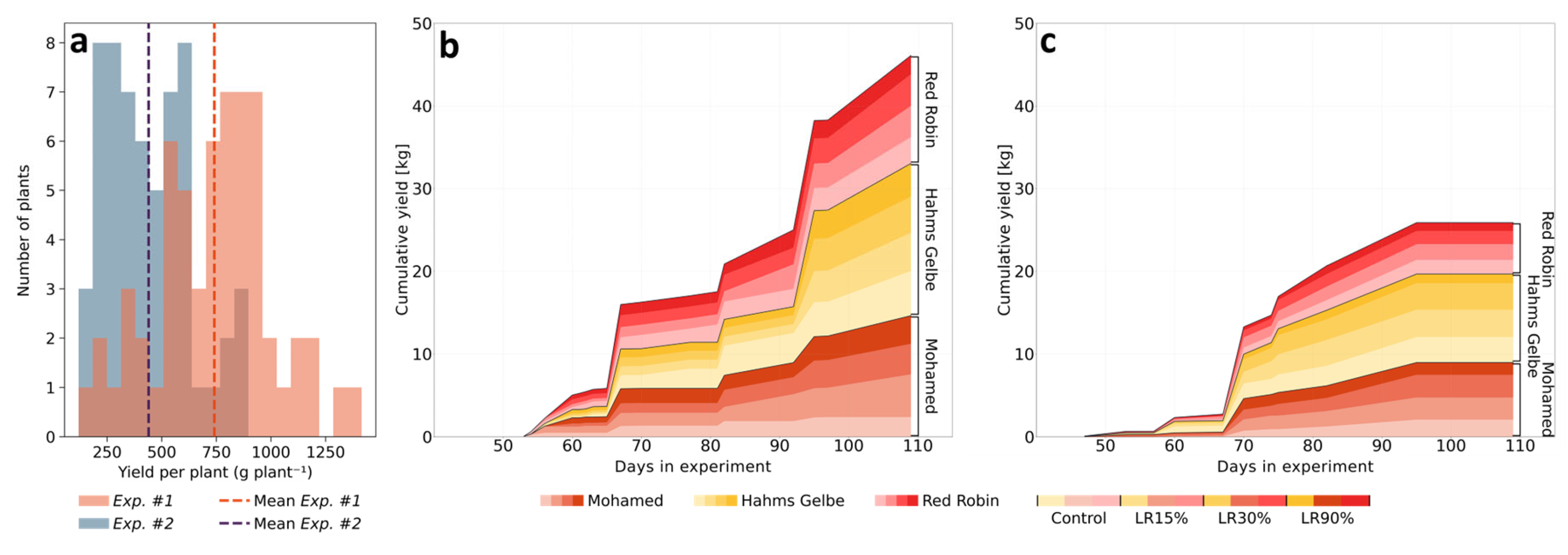
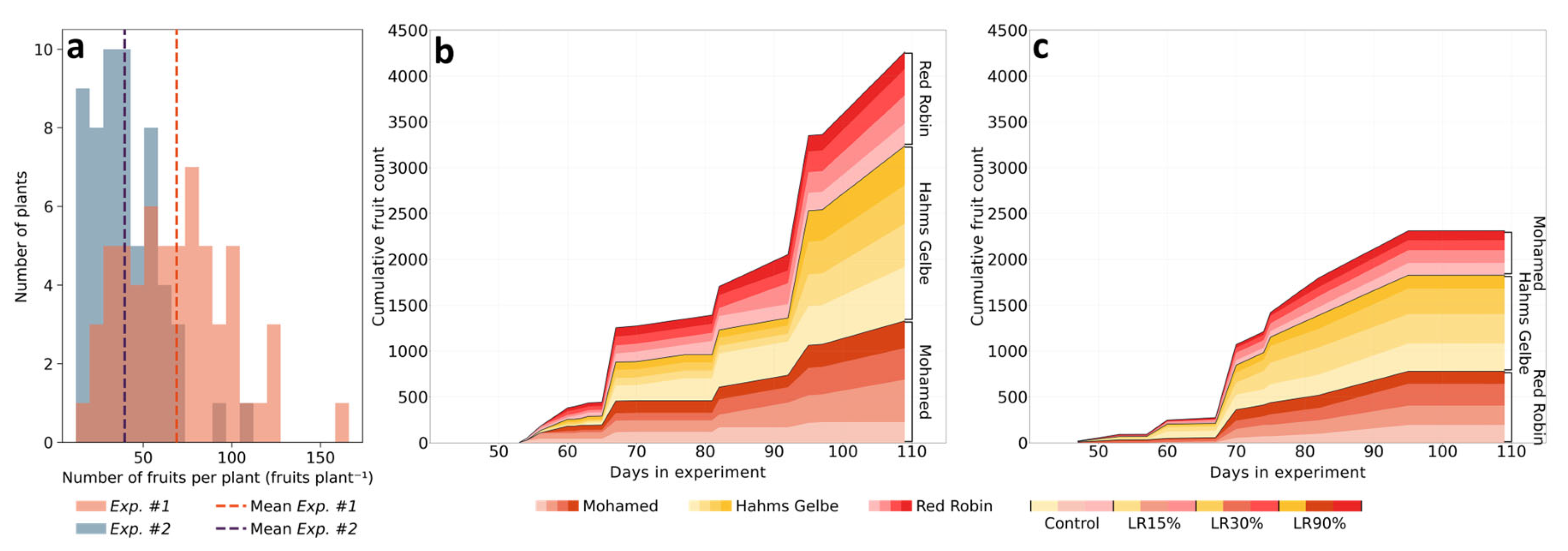
Plants were more productive in Exp. #1 than in Exp. #2 (p < 0.001 from a two-sided t-test; Figure 5a and Figure 6a), as expected from higher radiation during the spring–summer period. Their harvesting period started earlier (Figure 5b,c and Figure 6b,c), and their production rate was higher than that in Exp. #2 throughout the season (a steeper increase in Figure 5b,c, and Figure 6b,c).
Yield and number of fruits were both highest in Hahms Gelbe (910.9 ± 184.1 g plant−1 and 94.7 ± 23.8 fruits plant−1 in Exp. #1; and 539.6 ± 224.2 g plant−1 and 53.5 ± 20.7 fruits plant−1 in Exp. #2) and lowest in Red Robin (619.3 ± 232.4 g plant−1 and 49 ± 19.7 fruits plant−1 in Exp. #1; and 310.8 ± 99.1 g plant−1 and 24.2 ± 7.9 fruits plant−1 in Exp. #2) and Mohamed (693.1 ± 310.2 g plant−1 and 63.1 ± 27 fruits plant−1 in Exp. #1; and 471.6 ± 166 g plant−1 and 41 ± 14.3 fruits plant−1 in Exp. #2).
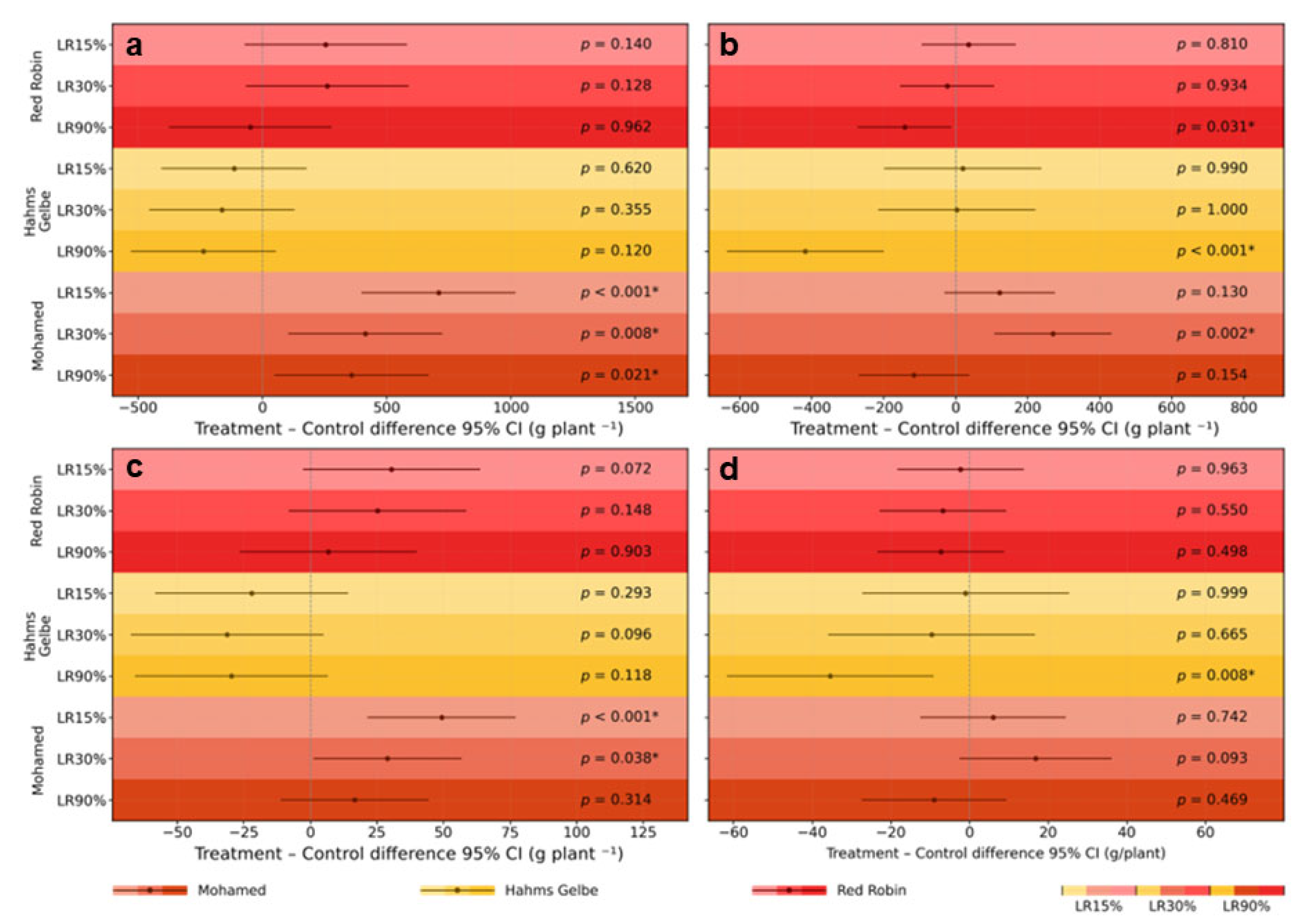
Dunnett’s comparisons showed that, in Exp. #1, Mohamed yield increased from 322.6 ± 138.5 g plant−1 in the control to 1031.5 ± 241.5, 736.8 ± 216.4, and 681.3 ± 124.5 g plant−1 under LR15%, LR30%, and LR90%, respectively (p < 0.001, p = 0.008, and p = 0.021). In Exp. #2, LR90% reduced yield from 638.2 ± 201.8 to 220.9 ± 73.1 g plant−1 in Hahms Gelbe (p < 0.001) and from 343.1 ± 88.7 to 201.6 ± 39.3 g plant−1 in Red Robin (p = 0.031), whereas LR30% increased Mohamed yield from 413.1 ± 76.2 to 683.6 ± 123.7 g plant−1 (p = 0.002). All other cultivar-specific yield comparisons with the corresponding control were not significant (p > 0.05).
Significant effects on fruit number were detected for Mohamed in Exp. #1 under LR15% and LR30% and for Hahms Gelbe in Exp. #2 under LR90%; all other comparisons with the corresponding control were not significant (Dunnett’s test, p > 0.05).
Leaf removal affected both fruit yield and number, with the effect on yield depending on cultivar and seasonal light conditions (‘Leaf removal × Cultivar’ and ‘Leaf removal × Experiment’ significant interactions in Table 4). The effect of light conditions on the number of fruits was only marginally significant (p = 0.075 for ‘Leaf removal × Experiment’).
In general, LR90% had a significant adverse effect on the yield of all three cultivars, with a statistically significant negative effect only on Hahms Gelbe and Red Robin, and only under low light conditions (Exp. #2; Figure 7b). The exception was Mohamed, which showed increased yield even under intense leaf removal, but only under high light conditions (Exp. #1; Figure 7a). The most substantial increase in Mohamed’s yields, however, occurred under low and moderate leaf removal treatments, with +708.9 and +414.2 g plant−1, corresponding to yield increases of ~220% and ~128% for LR15% and LR30%, respectively. A similar leaf removal effect, yet less pronounced than that of yield, was observed on fruit number (Figure 7c,d).

3.3. Fruit Quality

Cultivars did not differ in fruit quality (no ‘Cultivar’ effect in Table 5), while leaf removal affected TSS, regardless of the cultivar (no significant ‘Leaf removal × Cultivar’ interaction in Table 5). The pH, total soluble solids (TSS), and ascorbic acid contents of the fruits were generally within the ranges typically reported for cherry tomatoes, whereas citric acid content was slightly higher, varying between 0.70 and 0.77% (Table 6).
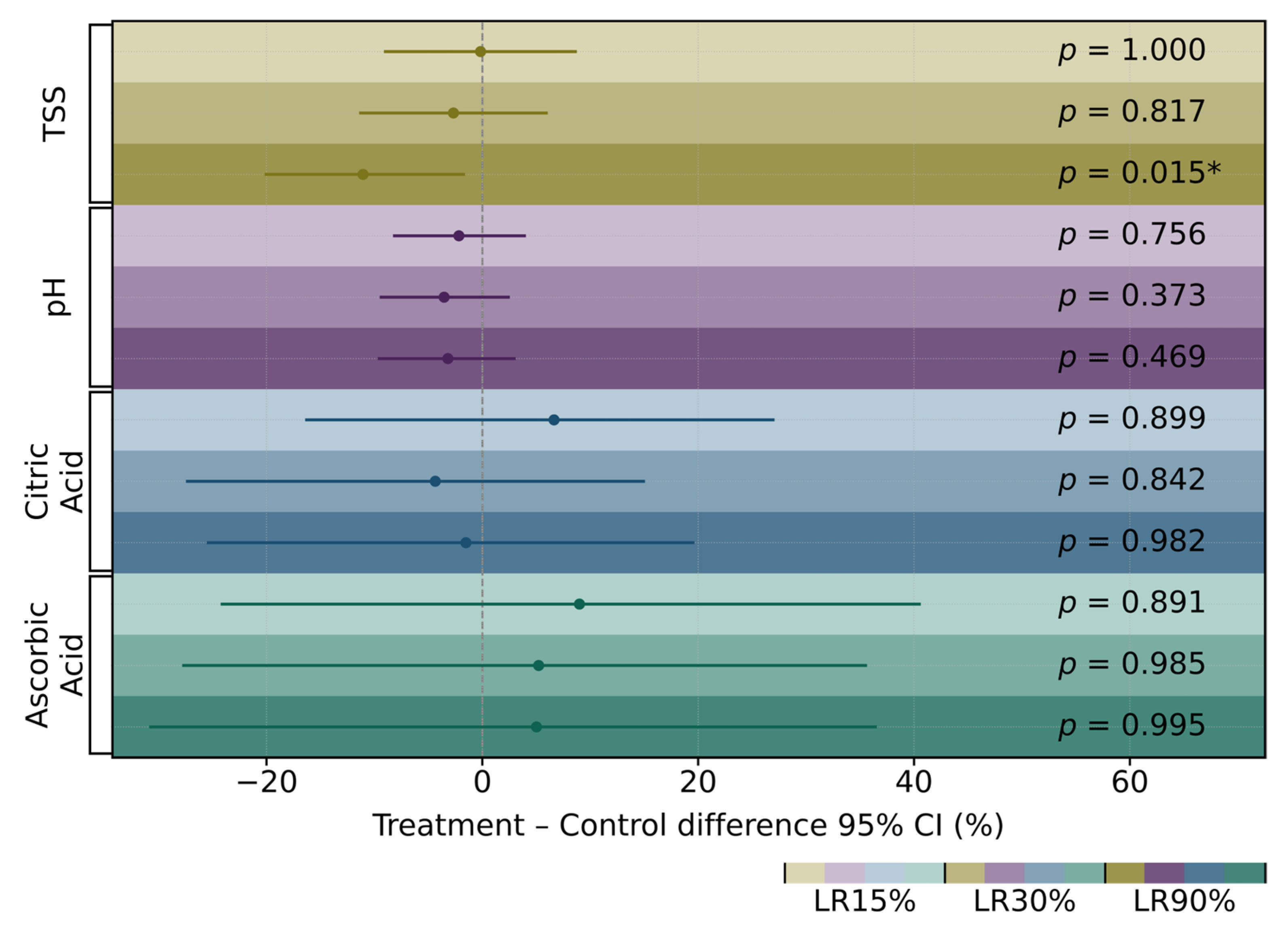
In Exp. #1, severe leaf removal (LR90%) reduced TSS in fruits by 12%, while more moderate LRs (LR15% and LR30%) did not significantly affect TSS (Figure 8). pH, citric, and ascorbic acids were unaffected by leaf removal, while seasonal effects were not assessed because quality parameters were collected only in Exp. #1 (spring–summer light conditions).

4. Discussion

The results of this study demonstrate that the effects of leaf removal on micro-dwarf tomato performance are strongly dependent on removal intensity, cultivar, and seasonal light conditions. While leaf removal altered leaf-level physiological performance in predictable ways, its effects on yield and fruit quality reveal important constraints imposed by compact canopy architecture and source–sink relationships in micro-dwarf tomatoes.

4.1. Leaf Removal Alters Leaf-Level Physiology but Does Not Necessarily Enhance Whole-Plant Carbon Gain

Leaf removal affected leaf-level gas exchange primarily in the middle and lower canopy layers, and only under severe leaf removal (LR90%). In these treatments, carbon assimilation, transpiration, and stomatal conductance increased in remaining leaves, whereas top-canopy leaves maintained relatively stable gas-exchange rates across treatments. This pattern suggests that severe leaf removal alleviated self-shading and improved light availability for previously light-limited leaves, thereby enhancing their photosynthetic activity.
However, increased photosynthetic efficiency at the individual-leaf level did not translate into improved whole-plant productivity in most cultivars. This highlights a key physiological trade-off in compact canopies: while severe leaf removal can improve light penetration and leaf-level photosynthesis, it simultaneously reduces total leaf area and thus the canopy’s overall capacity for radiation interception and carbon assimilation. Consequently, enhanced per-leaf performance may be offset—or even outweighed—by reductions in total source strength. Thus, moderate removal may improve within-canopy light distribution without greatly reducing integrated carbon gain, whereas severe removal can increase per-leaf assimilation while still lowering whole-plant carbon supply.
This decoupling between leaf-level physiology and whole-plant performance is consistent with previous findings in micro-dwarf tomato systems, where radiation-use efficiency declines once light availability exceeds the canopy’s absorptive or biochemical capacity [7,8]. Our results emphasize that, in compact micro-dwarf canopies, maintaining sufficient leaf area is critical for sustaining whole-plant carbon gain, even when individual leaves operate more efficiently.

4.2. Yield Responses Reveal Cultivar-Specific Optima and Source Limitations Under Severe Leaf Removal

Low and moderate leaf removal (LR15% and LR30%) generally increased or maintained yield and fruit number in two of the three cultivars, confirming that limited leaf removal can be beneficial in compact tomato canopies. These treatments likely improved light distribution within the canopy without substantially compromising total leaf area, thereby optimizing the balance between radiation interception and photosynthetic efficiency.
In contrast, severe leaf removal (LR90%) caused pronounced yield reductions in most cultivars, particularly under low-light conditions (Exp. #2). This aligns with previous studies showing that excessive defoliation reduces yield once the reduction in source capacity outweighs gains in light penetration and gas exchange [14,15,16]. Under low seasonal radiation, this threshold appears to be reached more rapidly, rendering plants especially vulnerable to source limitation.
Notably, the cultivar Mohamed deviated from this general pattern, exhibiting increased yield even under severe leaf removal during the high-light spring–summer season. This suggests a cultivar-specific response that may reflect differences in canopy architecture, source–sink balance, or intrinsic fruit sink strength. One possible explanation is that Mohamed may be relatively sink-limited under control conditions, such that severe leaf removal reduces vegetative competition and reallocates assimilates toward fruit growth when light availability is not limiting. Alternatively, differences in leaf orientation or canopy density may allow Mohamed to benefit more from improved light penetration following leaf removal. While these hypotheses cannot be fully resolved within the scope of this study, they highlight the importance of genetic background in determining optimal leaf removal strategies for micro-dwarf tomatoes. Canopy leaf area, fruit-load dynamics, sink strength, and phenological differences were not measured directly; these explanations therefore remain hypotheses rather than demonstrated mechanisms.

4.3. Fruit Quality Responses Indicate Sugar Dilution Under Severe Source Limitation

Fruit quality was largely unaffected by leaf removal, with the exception of total soluble solids (TSS), which declined from 5.73 ± 0.61 °Brix in control plants to 5.09 ± 0.43 °Brix under LR90%, indicating reduced soluble-solids accumulation under severe source limitation.
From a source–sink perspective, severe leaf removal likely constrained assimilate supply during fruit development, while sink demand for biomass accumulation remained relatively stable. Under such conditions, plants tend to prioritize fruit growth over solute accumulation, leading to reduced sugar concentration in the fruit flesh [17,20]. The sensitivity of TSS to severe leaf removal, even when yield effects were cultivar- and season-dependent, underscores that fruit quality may be a more sensitive indicator of source limitation than yield alone in compact tomato systems.

4.4. Implications for Micro-Dwarf Tomato Management in Controlled Environments

Together, these findings indicate that management strategies developed for standard indeterminate tomato cultivars cannot be directly transferred to micro-dwarf tomatoes. In compact architectures, excessive leaf removal rapidly induces source limitation, even when leaf-level photosynthetic rates increase. Low-to-moderate leaf removal can improve canopy structure and productivity, but optimal removal thresholds are both cultivar-specific and light-dependent. Fanourakis et al. [29] emphasize that greenhouse vegetables respond differently to agronomic practices because of species-specific source–sink regulation and canopy architecture. In tomato, canopy management can improve yield and resource-use efficiency when it improves light distribution without excessively reducing assimilatory leaf area. In the compact canopies studied here, LR15–30% could improve light distribution while retaining sufficient source area, whereas LR90% often crossed into source limitation, especially under lower radiation.
These insights are particularly relevant for urban and controlled-environment agriculture, where high planting densities and fixed light regimes exacerbate canopy self-shading. In such systems, carefully calibrated leaf removal can be a valuable tool for optimizing light distribution and radiation-use efficiency, provided that sufficient leaf area is maintained to support whole-plant carbon assimilation. Manual removal must nevertheless be justified against labor cost; the present study did not include an economic analysis and therefore cannot establish profitability. Potential benefits include improved airflow, lower disease risk, and easier access for harvesting or automated pruning. The LR15–30% range provides a starting point for testing in vertical farms and high-density pot systems, but cultivar- and light-specific validation is required. Moderate leaf removal may also improve water-use efficiency by reducing the transpiring leaf area, but this possibility requires direct investigation. Future work should examine whether cultivar-specific architectural traits can be leveraged to refine leaf-removal strategies and improve productivity in space-limited growing systems. These findings support the development of cultivar-specific canopy management strategies for micro-dwarf tomatoes grown in controlled environments.

5. Conclusions

Across the tested micro-dwarf tomato cultivars, removing approximately 15–30% of leaves generally maintained or increased yield and fruit number without severely reducing the source area. In contrast, LR90% frequently reduced yield and TSS, particularly under lower seasonal radiation. Thus, LR15–30% is a practical starting range, whereas severe defoliation should be avoided unless cultivar performance and light availability have been validated.

Author Contributions

Conceptualization, D.U., C.G. and D.H.; Methodology, D.U., C.Z. and D.H.; Software, D.U.; Validation, D.U.; Formal analysis, D.U.; Investigation, D.U., C.G., C.Z. and D.H.; Resources, C.G., C.Z. and D.H.; Data curation, D.U.; Writing—original draft, D.U.; Writing—review and editing, D.U., C.G., C.Z. and D.H.; Visualization, D.U. and D.H.; Supervision, C.G. and D.H.; Project administration, C.G. and D.H.; Funding acquisition, C.G. and D.H. All authors have read and agreed to the published version of the manuscript.

Funding

This research was partially funded by the Chief Scientist of the Israel Ministry of Agriculture and Rural Development through grant 12-03-0010.

Institutional Review Board Statement

Not applicable.

Informed Consent Statement

Not applicable.

Data Availability Statement

The raw data supporting the conclusions of this article are freely available for download from the Zenodo repository: https://zenodo.org/records/20424709 (accessed on 28 May 2026).

Acknowledgments

The authors thank Yedidya Harris for maintaining the greenhouse plants and Gabriel Mulero for assisting with data collection and measurements. D.U. acknowledges personal funding from the SCE-HUJI Scholarship Program for Ph.D. students and the Scholarships for Research Students from the Ministry of Aliyah and Integration of Israel. D.U. is a Ph.D. student at the Faculty of Agriculture, Food, and Environment under the supervision of D.H. and C.G.

Conflicts of Interest

The authors declare no conflicts of interest.

References

  1. Harbinson, J.; Taylor, C.R. Food for thought. EMBO Rep. 2025, 26, 3982–3990. [Google Scholar] [CrossRef] [Scilit]
  2. van Delden, S.H.; SharathKumar, M.; Butturini, M.; Graamans, L.J.A.; Heuvelink, E.; Kacira, M.; Kaiser, E.; Klamer, R.S.; Klerkx, L.; Kootstra, G.; et al. Current status and future challenges in implementing and upscaling vertical farming systems. Nat. Food 2021, 2, 944–956. [Google Scholar] [CrossRef] [Scilit]
  3. Martí, E.; Gisbert, C.; Bishop, G.J.; Dixon, M.S.; García-Martínez, J.L. Genetic and physiological characterization of tomato cv. Micro-Tom. J. Exp. Bot. 2006, 57, 2037–2047. [Google Scholar] [CrossRef] [Scilit] [PubMed]
  4. Kato, K.; Maruyama, S.; Hirai, T.; Hiwasa-Tanase, K.; Mizoguchi, T.; Goto, E.; Ezura, H. A trial of production of the plant-derived high-value protein in a plant factory: Photosynthetic photon fluxes affect the accumulation of recombinant miraculin in transgenic tomato fruits. Plant Signal. Behav. 2011, 6, 1172–1179. [Google Scholar] [CrossRef] [Scilit] [PubMed]
  5. Sun, H.J.; Uchii, S.; Watanabe, S.; Ezura, H. A highly efficient transformation protocol for Micro-Tom, a model cultivar for tomato functional genomics. Plant Cell Physiol. 2006, 47, 426–431. [Google Scholar] [CrossRef] [Scilit] [PubMed]
  6. Meissner, R.; Jacobson, Y.; Melamed, S.; Levyatuv, S.; Shalev, G.; Ashri, A.; Elkind, Y.; Levy, A. A new model system for tomato genetics. Plant J. 1997, 12, 1465–1472. [Google Scholar] [CrossRef] [Scilit]
  7. Ke, X.; Yoshida, H.; Hikosaka, S.; Goto, E. Optimization of photosynthetic photon flux density and light quality for increasing radiation-use efficiency in dwarf tomato under led light at the vegetative growth stage. Plants 2022, 11, 121. [Google Scholar] [CrossRef] [Scilit] [PubMed]
  8. Ke, X.; Yoshida, H.; Hikosaka, S.; Goto, E. Photosynthetic photon flux density affects fruit biomass radiation-use efficiency of dwarf tomatoes under LED light at the reproductive growth stage. Front. Plant Sci. 2023, 14, 1076423. [Google Scholar] [CrossRef] [Scilit] [PubMed]
  9. Appolloni, E.; Paucek, I.; Pennisi, G.; Manfrini, L.; Gabarrell, X.; Gianquinto, G.; Orsini, F. Winter Greenhouse Tomato Cultivation: Matching Leaf Pruning and Supplementary Lighting for Improved Yield and Precocity. Agronomy 2023, 13, 671. [Google Scholar] [CrossRef] [Scilit]
  10. Qin, F.F.; Du, F.L.; Xu, H.L.; Xu, Q.C. Light penetration and leaf photosynthesis in canopy of tomato and Aralia cordata in comparison with wheat. Acta Hortic. 2011, 907, 355–358. [Google Scholar] [CrossRef] [Scilit]
  11. Decognet, V.; Ravetti, F.; Martin, C.; Nicot, P.C. Improved leaf pruning reduces development of stem cankers caused by grey mould in greenhouse tomatoes. Agron. Sustain. Dev. 2009, 30, 465–472. [Google Scholar] [CrossRef] [Scilit]
  12. Stacey, D.L. The effect of artificial defoliation on the yield of tomato plants and its relevance to pest damage. J. Hortic. Sci. 1983, 58, 117–120. [Google Scholar] [CrossRef] [Scilit]
  13. Slack, G. The effects of leaf removal on the development and yield of glasshouse tomatoes. J. Hortic. Sci. 1986, 61, 353–360. [Google Scholar] [CrossRef] [Scilit]
  14. Saiful Islam, A.F.M.; Monjurul Haque, M.; Tabassum, R.; Muzahedul Islam, M. Effect of defoliation on growth and yield response in two tomato (Solanum lycopersicum Mill.) varieties. J. Agron. 2016, 15, 68–75. [Google Scholar] [CrossRef] [Scilit]
  15. Mondal, M.M.A. Defoliation impacts on morpho-physiological attributes and yield of tomato. SAARC J. Agric. 2022, 20, 87–96. [Google Scholar] [CrossRef] [Scilit]
  16. Raya, V.; Parra, M.; Cid, M.d.C.; Santos, B.; Ríos, D. Effect of Different Intensities of Leaf Removal on Tomato Development and Yield. Horticulturae 2024, 10, 1136. [Google Scholar] [CrossRef] [Scilit]
  17. Ho, L.C. The mechanism of assimilate partitioning and carbohydrate compartmentation in fruit in relation to the quality and yield of tomato. J. Exp. Bot. 1996, 47, 1239–1243. [Google Scholar] [CrossRef] [Scilit] [PubMed]
  18. Iqbal, N.; Masood, A.; Khan, N.A. Analyzing the significance of defoliation in growth, photosynthetic compensation and source-sink relations. Photosynthetica 2012, 50, 161–170. [Google Scholar] [CrossRef] [Scilit]
  19. Li, T.; Heuvelink, E.; Marcelis, L.F.M. Quantifying the source–sink balance and carbohydrate content in three tomato cultivars. Front. Plant Sci. 2015, 6, 416. [Google Scholar] [CrossRef] [Scilit] [PubMed]
  20. Falchi, R.; Bonghi, C.; Drincovich, M.F.; Famiani, F.; Lara, M.V.; Walker, R.P.; Vizzotto, G. Sugar Metabolism in Stone Fruit: Source-Sink Relationships and Environmental and Agronomical Effects. Front. Plant Sci. 2020, 11, 573982. [Google Scholar] [CrossRef] [Scilit] [PubMed]
  21. Jiang, D.; Mulero, G.; Bonfil, D.J.; Helman, D. Early or late? The role of genotype phenology in determining wheat response to drought under future high atmospheric CO2 levels. Plant Cell Environ. 2022, 45, 3445–3461. [Google Scholar] [CrossRef] [Scilit] [PubMed]
  22. Mulero, G.; Jiang, D.; Bonfil, D.J.; Helman, D. Use of thermal imaging and the photochemical reflectance index (PRI) to detect wheat response to elevated CO2 and drought. Plant. Cell Environ. 2023, 46, 76–92. [Google Scholar] [CrossRef] [Scilit] [PubMed]
  23. Usenko, D.; Helman, D.; Giladi, C. Using 3D reconstruction from image motion to predict total leaf area in dwarf tomato plants. Comput. Electron. Agric. 2025, 237, 110627. [Google Scholar] [CrossRef] [Scilit]
  24. Fass, E.; Shlomi, E.; Ziv, C.; Glickman, O.; Helman, D. Machine learning models based on hyperspectral imaging for pre-harvest tomato fruit quality monitoring. Comput. Electron. Agric. 2025, 229, 109788. [Google Scholar]
  25. Jagota, S.K.; Dani, H.M. A new colorimetric technique for the estimation of vitamin C using Folin phenol reagent. Anal. Biochem. 1982, 127, 178–182. [Google Scholar] [CrossRef] [Scilit] [PubMed]
  26. Kim, S.R.; Lane, R.H.; Abdel-Ghany, M.; Stitt, K.R. Influence of Extractant on L-Ascorbic Acid Recovery From Selected Foods and Beverages. J. Food Qual. 1987, 10, 1–7. [Google Scholar] [CrossRef] [Scilit]
  27. Seabold, S.; Perktold, J. Statsmodels: Econometric and Statistical Modeling with Python. Proc. 9th Python Sci. Conf. 2010, 2010, 92–96. [Google Scholar] [CrossRef] [Scilit]
  28. Virtanen, P.; Gommers, R.; Oliphant, T.E.; Haberland, M.; Reddy, T.; Cournapeau, D.; Burovski, E.; Peterson, P.; Weckesser, W.; Bright, J.; et al. SciPy 1.0: Fundamental algorithms for scientific computing in Python. Nat. Methods 2020, 17, 261–272. [Google Scholar] [CrossRef] [Scilit] [PubMed]
  29. Fanourakis, D.; Makraki, T.; Vlachogiannakis, E.; Tsaniklidis, G.; Körner, O.; Ntatsi, G. Innovations in Agronomy and Their Impact on Greenhouse Vegetable Yields: Species-Specific Perspectives. Horticulturae 2026, 12, 684. [Google Scholar] [CrossRef] [Scilit]
Figure 1. Pictures of (a) Mohamed, (b) Hahms Gelbe Topftomate, (c) Red Robin micro-dwarf tomato cultivars. The plants in the pictures have not had their leaves removed.
Horticulturae 12 00792 g001
Figure 2. Average weekly maximum photosynthetically active radiation (PAR) levels during the 110 days of the experiments and their corresponding growing seasons (Exp. #1 from March to June 2023 in orange and Exp. #2 from September to December 2023 in dark purple).
Horticulturae 12 00792 g002
Figure 3. The leaf removal treatments, showing no leaf removal (control), and leaf removal of various intensities, with low (LR15%), moderate (LR30%), and severe (LR90%) leaf removals from the bottom of the plants (except for LR90%, which also included leaf removal from the upper canopy). The scheme for analyzing photosynthetic activity across the top, middle, and bottom canopy layers is also shown.
Horticulturae 12 00792 g003
Figure 4. Timelines of the two experiments and measurements: (a) Exp. #1 was conducted in the spring and summer of 2023, and (b) Exp. #2 was conducted during the autumn and winter of 2023. Fruit quality sampling was conducted only in Exp. #1.
Horticulturae 12 00792 g004
Figure 5. Yield distributions of the two experiments (Exp. #1 and Exp. #2). (a) The overall distribution for all harvest periods, and their distribution over time in (b) Exp. #1 and (c) Exp. #2. Areas of different hues indicate cultivars within treatments, with the least saturating color representing no leaf removal, and the most saturated color representing 90% leaf removal.
Horticulturae 12 00792 g005
Figure 6. Fruit quantity distributions of the two experiments (Exp. #1 and Exp. #2). (a) The overall distribution for all harvest periods, and their distribution over time in (b) Exp. #1 and (c) Exp. #2. Areas of different hues indicate cultivars within treatments, with the least saturating color representing no leaf removal, and the most saturated color representing 90% leaf removal.
Horticulturae 12 00792 g006
Figure 7. Results of Dunnett’s test for leaf removal treatments effect on (a,b) yield and (c,d) fruit number per cultivar in Exp. #1 (a,c) and (b,d) Exp. #2. * Significant differences from the corresponding control within each cultivar and experiment according to Dunnett’s test (p < 0.05).
Horticulturae 12 00792 g007
Figure 8. Leaf removal effects on fruit quality (TSS, pH, citric acid, and ascorbic acid). The p-values represent the results of Dunnett’s test. * Significant differences from the corresponding control within each cultivar and experiment according to Dunnett’s test (p < 0.05).
Horticulturae 12 00792 g008
Table 1. Durations and growing conditions of the two experiments (Exp. #1 and Exp. #2).
ParameterExp. #1Exp. #2
TimelineMarch 2023–June 2023
(Spring to early summer)
September 2023–December 2023
(Autumn to early winter)
Temperature (fixed)24 °C (daytime)/18 °C (nighttime)
Relative humidity70–75% (daytime)/90–97% (nighttime)
Lighting conditionsNatural sunlight. Average daily solar radiation was higher during this period, typical for Mediterranean spring and early summer (Figure 2).Natural sunlight. Shorter daylight hours and lower natural solar radiation due to seasonal changes (Figure 2).
IrrigationPlants were grown in 4 L pots filled with perlite, a soilless medium facilitating hydroponic growth. An automated drip irrigation system supplied 150 mL of water per plant five times daily, once every two hours, starting at 7:00 a.m.
NutritionNutrient solutions were provided in the irrigation water, containing balanced macro- and micronutrients suitable for tomato cultivation.
Pest controlIntegrated pest management strategies, including regular inspections and pesticide application, were employed to prevent infestations that could affect plant growth and leaf area.
Table 2. Effect estimations (p-values) for leaf-level carbon assimilation (An), transpiration (Tr), and stomatal conductance (gs) based on a 4-way ANOVA. Highlighted in bold are the statistically significant effects (p < 0.05).
An (µmol m−2 s−1)Tr (mmol m−2 s−1)gs (mol m−2 s−1)
Leaf removal0.004<0.001<0.001
Cultivar0.8840.7270.109
Leaf position<0.001<0.001<0.001
Experiment0.900<0.001<0.001
Leaf removal × Cultivar0.6090.7920.138
Leaf removal × Leaf position0.2480.3710.035
Leaf removal × Experiment0.9250.7530.160
Cultivar × Leaf position0.9970.9850.768
Cultivar × Experiment0.8040.5390.309
Leaf position × Experiment 0.0100.0820.015
Leaf removal × Cultivar × Leaf position0.8380.9200.370
Leaf removal × Cultivar × Experiment0.8030.5710.356
Leaf removal × Leaf position × Experiment0.6950.7000.379
Cultivar × Leaf position × Experiment0.9600.9850.794
Leaf removal × Cultivar × Leaf position × Experiment0.9940.8930.338
Table 3. Mean values ± standard deviation (SD) of leaf-level carbon assimilation (An), transpiration (Tr), and stomatal conductance (gs) rates per treatment and leaf position for Exp. #1 and Exp. #2. Highlighted in bold are the significantly different from the control group according to Dunnett’s test (p < 0.05), calculated separately for each leaf position across the two experiments.
ExperimentLeaf PositionTreatmentAn (µmol m−2 s−1)Tr (mmol m−2 s−1)gs (mol m−2 s−1)
Exp. #1TopC18.6 ± 4.27.2 ± 1.40.62 ± 0.15
Exp. #1TopLR15%17.9 ± 4.87.2 ± 1.50.58 ± 0.17
Exp. #1TopLR30%16.9 ± 4.07.9 ± 1.10.61 ± 0.13
Exp. #1TopLR90%19.7 ± 5.58.3 ± 1.30.66 ± 0.15
Exp. #1MiddleC6.4 ± 5.13.0 ± 2.50.21 ± 0.21
Exp. #1MiddleLR15%7.7 ± 5.43.5 ± 2.30.25 ± 0.21
Exp. #1MiddleLR30%4.6 ± 4.22.5 ± 2.00.14 ± 0.13
Exp. #1MiddleLR90%13.5 ± 3.06.2 ± 1.60.43 ± 0.17
Exp. #1BottomC4.8 ± 4.42.2 ± 2.00.13 ± 0.15
Exp. #1BottomLR15%5.0 ± 3.82.5 ± 1.90.15 ± 0.15
Exp. #1BottomLR30%7.3 ± 3.53.0 ± 1.60.16 ± 0.10
Exp. #1BottomLR90%7.8 ± 3.74.6 ± 2.20.29 ± 0.16
Exp. #2TopC18.6 ± 4.27.2 ± 1.40.62 ± 0.15
Exp. #2TopLR15%17.9 ± 4.87.2 ± 1.50.58 ± 0.17
Exp. #2TopLR30%16.9 ± 4.07.9 ± 1.10.61 ± 0.13
Exp. #2TopLR90%19.7 ± 5.58.3 ± 1.30.66 ± 0.15
Exp. #2MiddleC6.4 ± 5.13.0 ± 2.50.21 ± 0.21
Exp. #2MiddleLR15%7.7 ± 5.43.5 ± 2.30.25 ± 0.21
Exp. #2MiddleLR30%4.6 ± 4.22.5 ± 2.00.14 ± 0.13
Exp. #2MiddleLR90%13.5 ± 3.06.2 ± 1.60.43 ± 0.17
Exp. #2BottomC4.8 ± 4.42.2 ± 2.00.13 ± 0.15
Exp. #2BottomLR15%5.0 ± 3.82.5 ± 1.90.15 ± 0.15
Exp. #2BottomLR30%7.3 ± 3.53.0 ± 1.60.16 ± 0.10
Exp. #2BottomLR90%7.8 ± 3.74.6 ± 2.20.29 ± 0.16
Table 4. Effect estimations (p-values) for fruit yield and number from a 3-way ANOVA. Highlighted in bold are the significant effects (p < 0.05).
FactorYield (g Plant−1)Fruit Number (# Plant−1)
Leaf removal<0.0001<0.0001
Cultivar<0.0001<0.0001
Experiment<0.0001<0.0001
Leaf removal × Cultivar<0.0001<0.0001
Leaf removal × Experiment0.0050.075
Cultivar × Experiment 0.0660.013
Leaf removal × Cultivar × Experiment0.0010.003
Table 5. Effect estimations for fruit quality (citric acid, pH, total soluble solids, and ascorbic acid) based on a two-way ANOVA. Significant effects (p < 0.05) are highlighted in bold.
FactorCitric Acid (%)pHTSS (%)Ascorbic Acid (mg/100 g)
Leaf removal0.7230.4580.0260.84
Cultivar0.0640.3460.6480.532
Leaf removal × Cultivar0.5640.7620.3430.363
Table 6. Mean values ± standard deviation (SD) of pH, total soluble solids (TSS), citric acid content, and ascorbic acid content. Highlighted in bold are the treatments that differ significantly (p < 0.05) from the control group according to Dunnett’s test.
TreatmentpHTSS (°Brix)Citric Acid (%)Ascorbic Acid (mg/100 g)
C4.75 ± 0.435.73 ± 0.610.74 ± 0.2119.87 ± 9.14
LR15%4.72 ± 0.425.71 ± 0.770.77 ± 0.2422.52 ± 9.04
LR30%4.58 ± 0.195.57 ± 0.580.70 ± 0.1720.91 ± 4.08
LR90%4.60 ± 0.305.09 ± 0.430.72 ± 0.2020.87 ± 6.63
Disclaimer/Publisher’s Note: The statements, opinions and data contained in all publications are solely those of the individual author(s) and contributor(s) and not of MDPI and/or the editor(s). MDPI and/or the editor(s) disclaim responsibility for any injury to people or property resulting from any ideas, methods, instructions or products referred to in the content.