Article

Effects of Different Colored Films on the Microenvironment and Development of Morchella septimelata and Morchella sextelata

1
College of Life Sciences, Hebei Agricultural University, Baoding 071001, China
2
College of Modern Science and Technology, Hebei Agricultural University, Baoding 071001, China
3
College of Horticulture, Hebei Agricultural University, Baoding 071001, China
*
Authors to whom correspondence should be addressed.
Horticulturae 2026, 12(5), 611; https://doi.org/10.3390/horticulturae12050611 (registering DOI)
Submission received: 12 March 2026 / Revised: 9 May 2026 / Accepted: 11 May 2026 / Published: 14 May 2026
(This article belongs to the Section Medicinals, Herbs, and Specialty Crops)

Abstract

Morchella spp. are rare and highly valued edible fungi that often exhibit unstable yield and quality under protected cultivation due to inadequate regulation of the light and temperature microenvironment. Colored films can effectively optimize these conditions. In this study, the effects of six colored film treatments—white film (WM), red film (RM), green film (GM), blue film (BM), black film (BKM), and silver-black film (SBM)—on the microenvironment and development of Morchella septimelata and M. sextelata were investigated. The results showed that the BM treatment improved the microenvironment and promoted Morchella development. BM exhibited high transmittance, enhancing light intensity and increasing accumulated air and soil temperatures. It also led to the production of the greatest number of mature fruiting bodies, with 46 per square meter for M. septimelata and 54 per square meter for M. sextelata. Agronomic traits were also superior under the BM treatment, with pileus lengths of 82.97 mm for M. septimelata and 70.76 mm for M. sextelata. Compared with WM, BM significantly increased the weight of a single fruiting body and yield by 12.23% and 20.86% for M. septimelata and by 18.14% and 25.34% for M. sextelata, respectively. BM also significantly increased crude fiber content by 16.92% in M. septimelata and 2.63% in M. sextelata. RM significantly increased crude polysaccharide content by 47.42% in M. septimelata and by 44.12% in M. sextelata. This study indicated that BM was the preferred choice for Morchella protected cultivation.

1. Introduction

Morchella spp. belong to the phylum Ascomycota and are rare edible fungi characterized by irregular depressions and folds on their pilei that resemble sheep’s reticula [1]. They have tender flesh and a unique flavor and are rich in polysaccharides [2], amino acids [3], vitamins, and various trace elements [4]. Additionally, because they possess medicinal properties, such as antioxidant and immune-enhancing activities [5,6], Morchella spp. hold extremely high commercial value and occupy a crucial position in the market. Morels, renowned as among the world’s most valuable and rare edible mushrooms, are widely distributed across temperate regions of Europe, Asia, and North America [7,8]. China is the largest morel producer, with the earliest commercial cultivation of these species starting in 2012 [9]. Since then, the cultivation area has expanded rapidly, growing from approximately 67 ha to approximately 29,800 ha [10]. However, the widely cultivated Morchella septimelata and M. sextelata exhibit narrow adaptability to ecological environments, and their cultivation techniques are not yet fully mature. Inadequate regulation of microenvironments such as light and temperature often leads to unstable yields and substantial quality differences, directly restricting the large-scale development of protected cultivation [11].
Mulch film coverage effectively improves the light environment and regulates air and soil temperatures, significantly affecting crop growth and the soil ecosystem [12]. In apricot orchards, the light environment is significantly optimized by reflective and heat-insulating mulch films, with light intensity increasing by 161.04–208.71% and reflectivity increasing by 2.6–3.3 times to promote fruit ripening. Moreover, soil temperature and humidity are effectively regulated by waterproof and breathable mulch films, and the nutrient content of the fruit improves accordingly [13]. With respect to strawberry production, soil temperature is significantly increased by black and red mulch films, whereas it is maintained at a relatively low level by white films, and field humidity is stably maintained by all three types of film [14]. In Platostoma palustre cultivation, soil temperature in the 0–20 cm layer is elevated by black and red mulch films compared with white films, and the lowest temperature in this layer is observed with white mulch films, rendering them unsuitable for the growth of P. palustre [15]. Under nonflooded rice growth conditions, soil temperature in the 0–25 cm layer during the growth period is increased by black, bicolor and transparent plastic mulch films; black and bicolor plastic mulch films effectively increase rice yield, whereas transparent plastic mulch films easily induce high-temperature stress, usually leading to yield reduction [16]. With respect to protected tomato production, daily air temperature accumulation is greatest under silver mulch films and lowest under black films; all mulch films reduce water evaporation and stabilize soil temperature in protected growing systems [17].
Morchella field cultivation has developed rapidly, and plastic mulch cultivation is now widely adopted [18]. Mulch films of different colors absorb and reflect light of different wavelengths and thus modify temperature and light conditions in the cultivation environment [19]. Many environmental factors, such as temperature and light quality, control the growth and development of edible fungi [20]. Auricularia heimuer has the highest mycelial growth rate and fresh weight at 35 °C, with mycelial growth inhibited at 15 °C and severely suppressed at 45 °C, potentially even inducing mycelial mortality [21]. The optimum growth temperature of Coprinellus saccharinus mycelium is 25 °C; its growth is significantly inhibited at 15 °C and 35 °C, and a temperature difference of 2–4 °C is required for primordium induction [22]. The optimum growth temperature of Bjerkandera adusta mycelium is 30 °C; the optimum temperature for mycelial colonization is 25 ± 1 °C, and a diurnal temperature variation of 25–30 °C during the day and 16–18 °C during the night is required for primordium induction [23]. Red light is the optimal light quality for primordium formation and fruiting body development in Pleurotus eryngii [24]. Blue light is the optimal light quality for regulating the color, agronomic traits, and antioxidant capacity of Sarcomyxa edulis [25]. Green light is beneficial to the growth and nutrient accumulation of Ganoderma lingzhi [26]. Blue light irradiation of Lentinula edodes mycelial sticks enhances fruiting body yield, agronomic traits, and textural quality [27]. Blue light irradiation at 800–1200 lx delays spore release, reduces respiration, maintains energy levels, and preserves the contents of umami amino acids and umami nucleotides in L. edodes [28]. Yellow light treatment helps improve the color, biomass, and adenosine content of Cordyceps militaris stroma, whereas white light increases polysaccharide content [29].
The growth and development of Morchella spp., typical soil saprophytic fungi, are highly sensitive to microenvironmental factors such as light quality and temperature. Colored films have been widely studied in crop production, but their application in the production of other edible fungi, especially soil saprophytic species, remains unexplored. Existing studies on colored films in Morchella have focused solely on yield [30]. No research has been conducted on blue film mulching, and a systematic analysis of the spectral characteristics of different colored films is lacking. In this study, M. septimelata and M. sextelata were used as experimental materials. Six colored film treatments were applied: white film (WM), red film (RM), green film (GM), blue film (BM), black film (BKM), and silver-black film (SBM). The cultivation microenvironment, number of fruiting bodies, agronomic traits, yield, and nutritional quality were systematically measured. Microenvironmental parameters were then integrated with developmental and quality indicators, and correlation analysis was performed to elucidate the potential mechanisms through which different light quality environments affect Morchella. These findings provide a theoretical and practical basis for the protected cultivation of Morchella.

2. Materials and Methods

2.1. Experimental Materials

Test strains included M. septimelata ‘G18’ and M. sextelata ‘G5’, both preserved in the Edible Fungi Laboratory of Hebei Agricultural University. The PDA medium contained 200 g potato infusion, 20 g glucose, 20 g agar, and 1 L distilled water. The formulations for stock culture and spawn included 55% wheat grains, 17.5% corn cobs, 17.5% wood chips, 8% wheat bran, 1% lime, and 1% gypsum.

2.2. Experimental Design

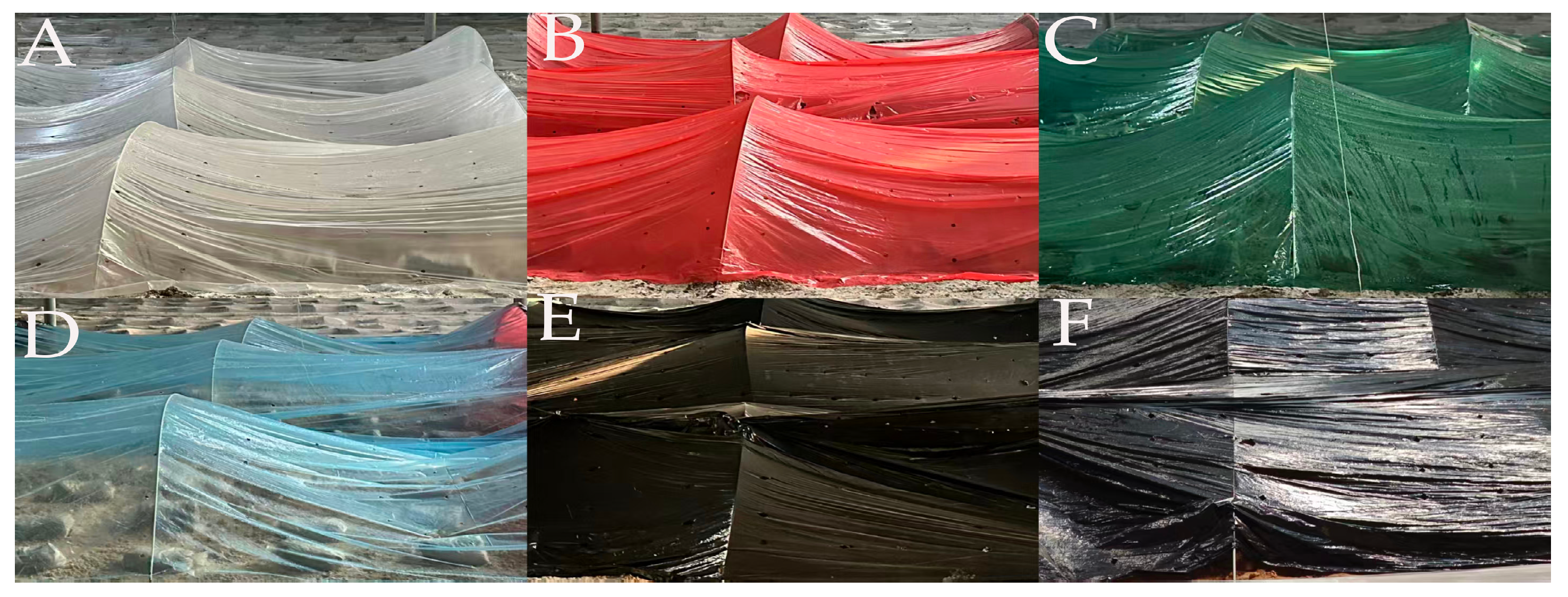
In this experiment, six colored film treatments were included: white film (WM), red film (RM), green film (GM), blue film (BM), black film (BKM), and silver-black film (SBM), all made of polyethylene with a uniform thickness of 0.01 mm (Zhejiang Jialemi Horticultural Technology Co., Ltd., Shaoxing, China) (Figure 1). The experiment adopted a randomized complete block design. Sowing was conducted on 30 November 2024 at Xibaituo Village, Gaoling Town, Wangdu County, Baoding City, Hebei Province. Small arch sheds were built, with dimensions of 3 m × 2 m × 0.6 m (length × width × height). The tops of the sheds were covered with the respective colored films. Each plot had an area of 6 m2 (3 m × 2 m). Exogenous nutrient bags were placed on 15 December 2024, after the mycelia had fully colonized the soil surface. Fruiting induction irrigation was applied on 18 February 2025. Environmental monitoring and growth surveys were initiated on 28 February 2025. During data collection, three technical replicates were performed for each biological replicate.

2.3. Measured Indicators and Methods

2.3.1. Microenvironmental Parameters

Transmittance was measured at 10 cm above the soil surface using a QE 6500 fiber-optic spectrometer (Shanghai Bose Intelligent Technology Co., Ltd., Shanghai, China). Light intensity was determined at 10 cm above the soil surface using an OHSP-350S spectroradiometer (Hangzhou Hongpu Optochromatic Technology Co., Ltd., Hangzhou, China). Air temperature and humidity beneath the mulch film and soil temperature were monitored using a remote environmental monitor S21A-2700 (Xuzhou Fala Electronic Technology Co., Ltd., Xuzhou, China). Air temperature probes were placed 10 cm above the soil surface to collect air temperature and humidity data, and soil temperature probes were placed at a soil depth of 15 cm to collect soil temperature data. Data were recorded every 5 min, and continuous measurements were taken for 30 days. Moreover, the average and accumulated values of air and soil temperatures, as well as average humidity, were calculated for subsequent analysis [30]. The accumulated air temperature and accumulated soil temperature were calculated as follows:
Accumulated   air   temperature ( accumulated   soil   temperature )   = T i
where Ti is the temperature recorded at 5 min intervals. Accumulated temperature is a common metric used to quantify thermal time or heat accumulation over a period and has been widely applied in agricultural and microbiological studies [31].

2.3.2. Number of Fruiting Bodies

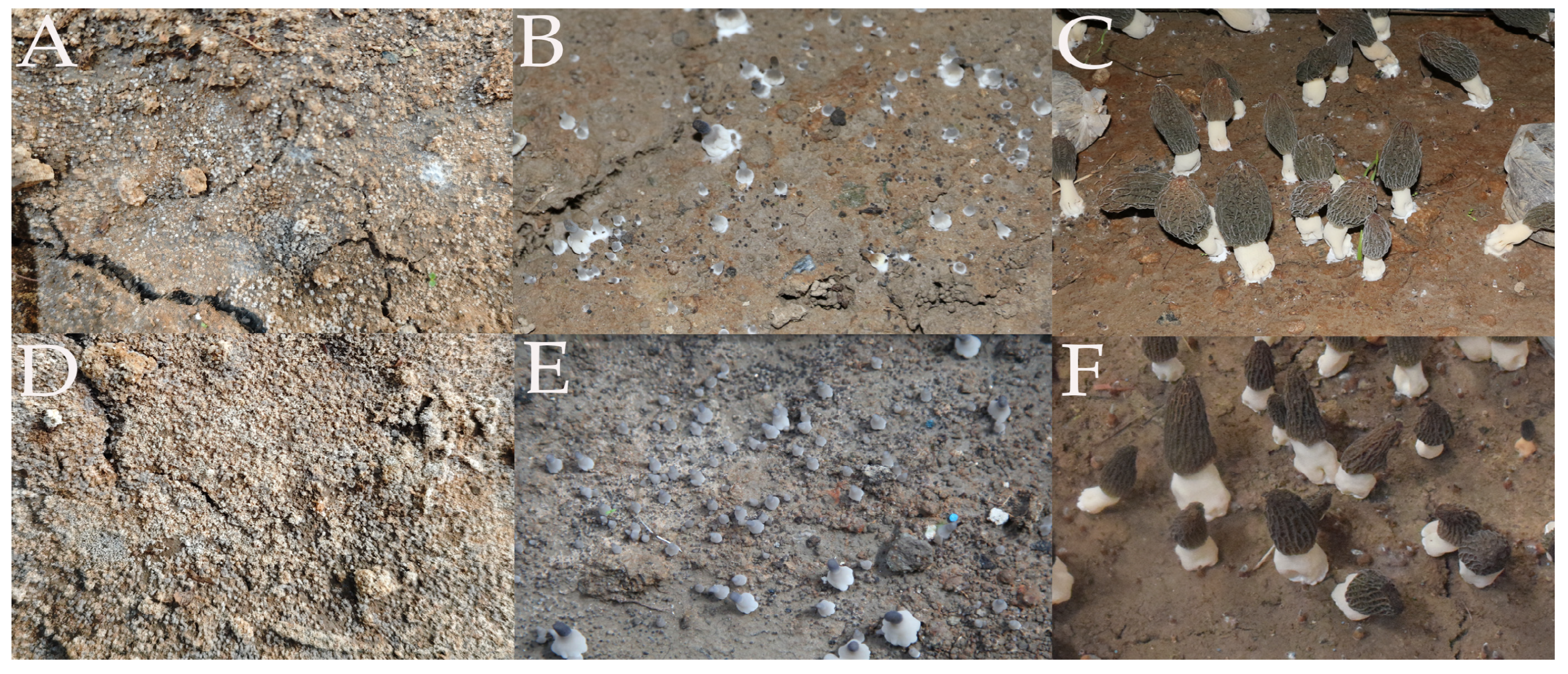
As illustrated in Figure 2, the number of fruiting bodies at the primordium, pinhead and maturation stages of M. septimelata and M. sextelata was recorded per square meter (m2).

2.3.3. Agronomic Traits and Yield of Fruiting Bodies

At the maturation stage of fruiting bodies, ten fruiting bodies were randomly selected for measurement. The length and width of the pileus and stipe were measured using a digital Vernier caliper DWKC-2013 (Delixi Electric Co., Ltd., Wenzhou, China), and the ratio of the pileus length to the stipe length was calculated. The weight of a single fruiting body and the yield per square meter (m2) were determined using an LC-FA004 electronic balance (Shanghai Lichen Instrument Technology Co., Ltd., Shanghai, China).

2.3.4. Determination of Nutritional Quality

Fruiting bodies of Morchella from different colored film treatments were collected and dried in a dark, constant-temperature oven at 55 °C. The dried samples were ground, sieved through a 100-mesh standard sieve, and collected as a fine powder. The powdered samples were subsequently used for the determination of crude protein [32], polysaccharide [33], and fiber [34] contents. Three parallel replicates were established for each treatment to ensure data reliability.

2.4. Data Analysis

The experimental data were analyzed with IBM SPSS Statistics 27.0. Differences between treatments were determined using the LSD multiple range test at a significance level of p < 0.05. Data are presented as the mean ± standard deviation (SD), and plotting was conducted with Origin 2024.

3. Results

3.1. Effects of Different Colored Films on the Microenvironment

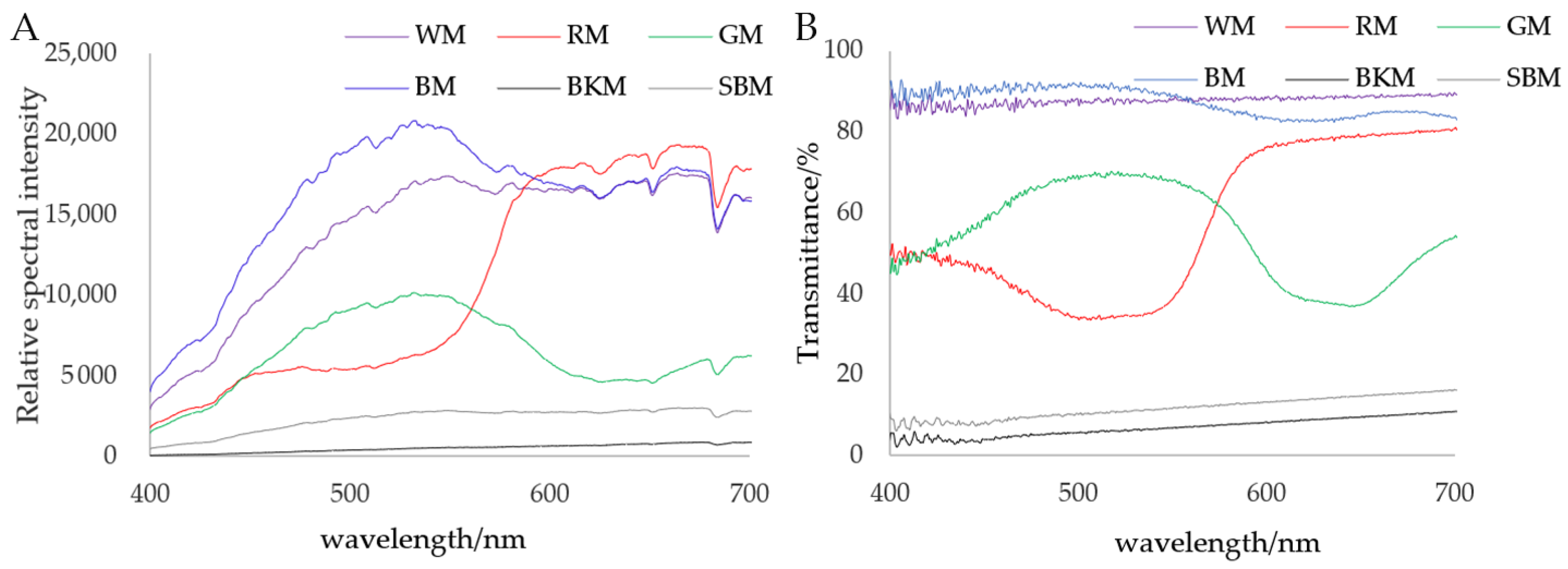
All colored films exhibited transmittance within the visible light spectrum, although with variations across different film types (Figure 3). Compared with the WM treatment, the BM treatment resulted in the highest transmittance of 92% at 405 nm, and its transmittance in the 400–572 nm range was higher. The RM treatment resulted in a relatively high transmittance of 77–80% in the 600–700 nm range, whereas the GM treatment resulted in a moderate transmittance of 59–63% in the 450–550 nm range. By contrast, the BKM and SBM treatments resulted in low transmittance across the entire visible spectrum. Among all the treatments, the BM treatment resulted in the highest transmittance for Morchella, whereas the BKM and SBM treatments resulted in the lowest transmittance.
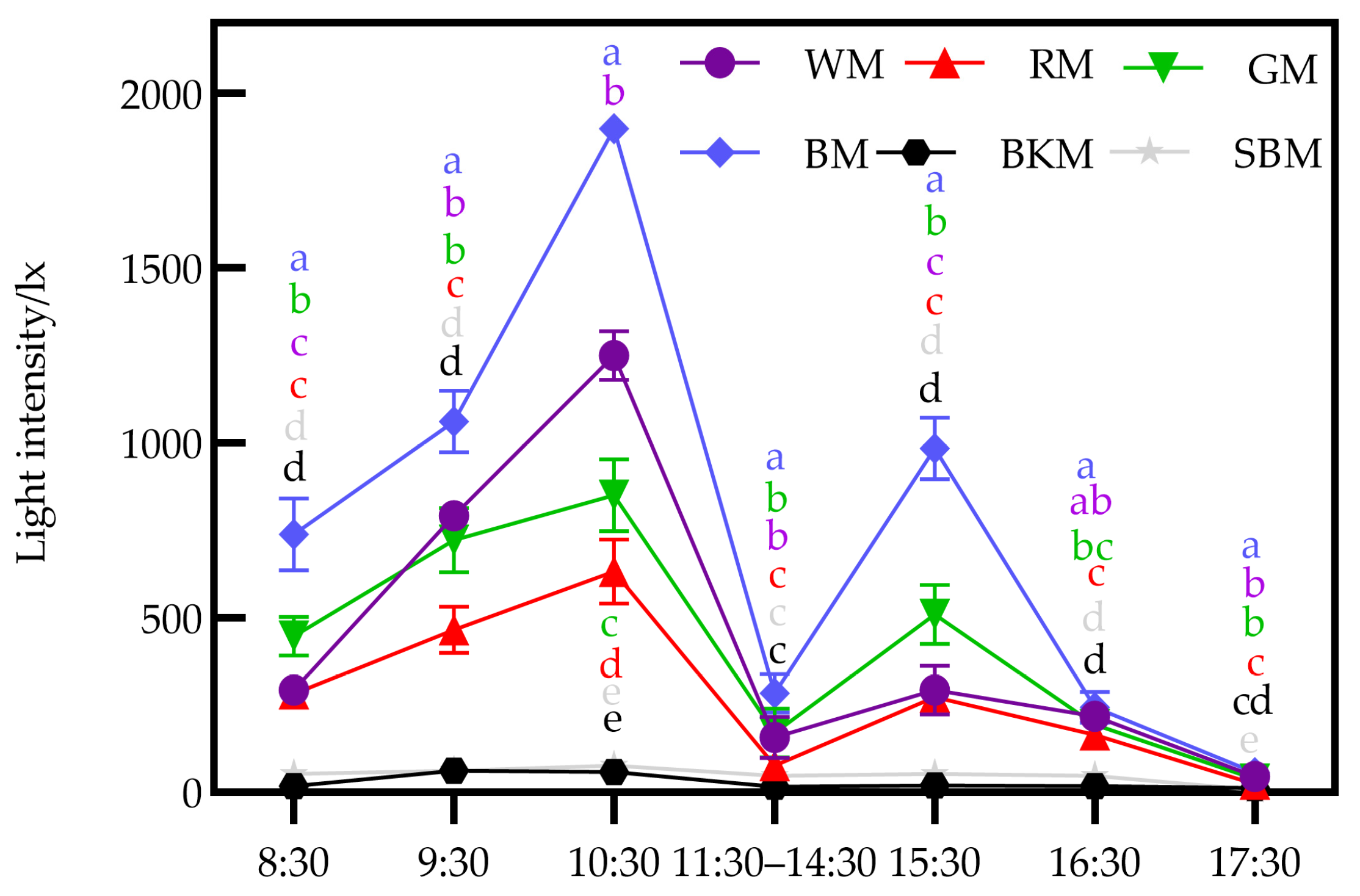
Different colored film treatments affected light intensity. As shown in Figure 4, across different times of day, the WM, RM, GM, BM, and SBM treatments reached maximum light intensity at 10:30, and all six treatments reached minimum intensity at 17:30. Moreover, the BM treatment maintained the highest light intensity throughout the day, reaching a peak of 1898.22 lx at 10:30. This value was significantly greater than those of the WM (1250.18 lx), RM (631.32 lx), and GM (849.49 lx) treatments. By contrast, the BKM and SBM treatments resulted in the lowest light intensities of 58.45 lx and 76.44 lx, respectively.
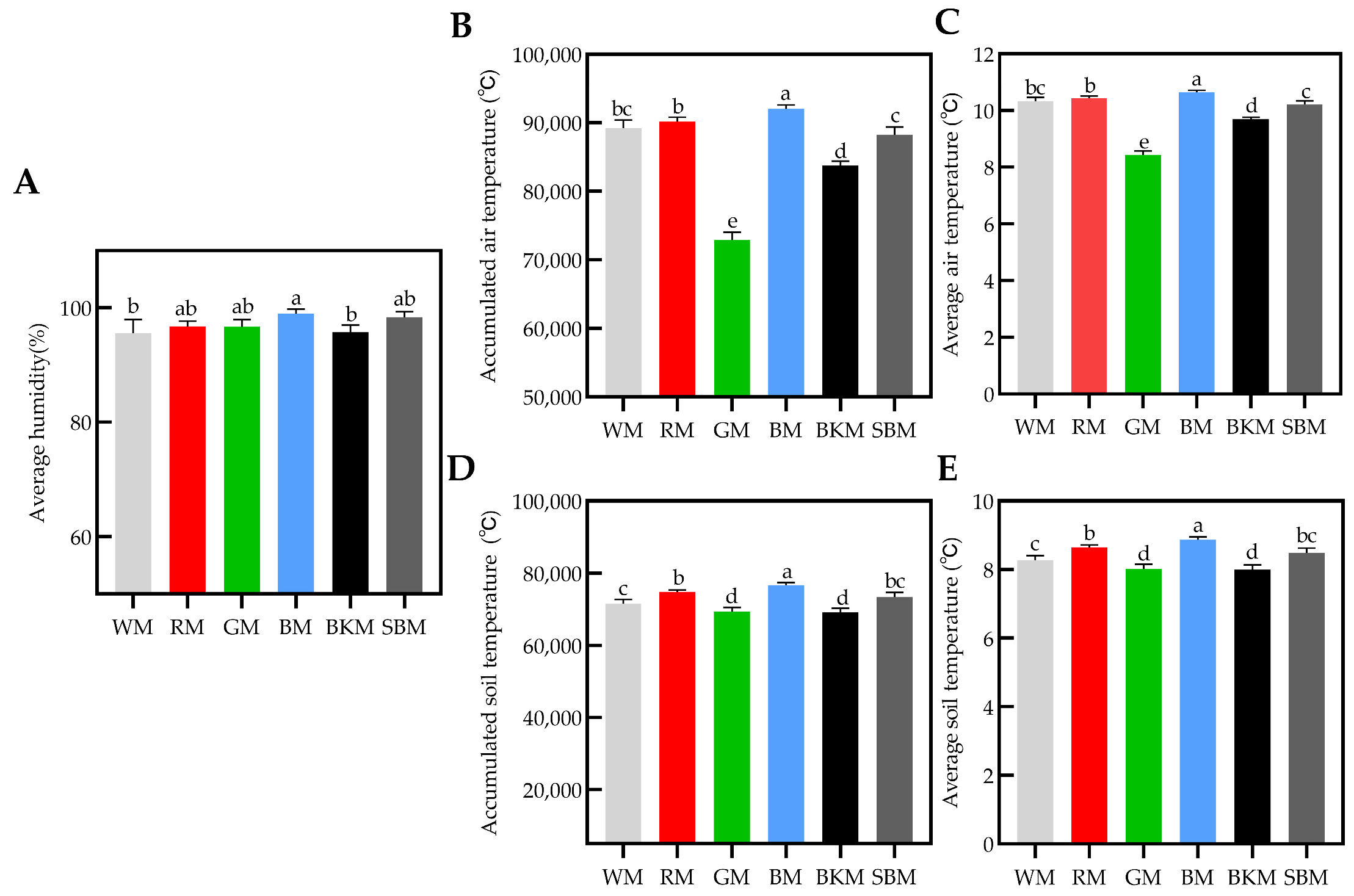
In addition, the effects of different colored film treatments on average humidity, accumulated air temperature, average air temperature, accumulated soil temperature, and average soil temperature were analyzed. As shown in Figure 5, the results indicated that there were no significant differences in average humidity among the RM, GM, BM, and SBM treatments. Air and soil temperatures changed significantly under the different colored film treatments. The accumulated air temperature in the BM treatment was 92,013.9 °C, which was significantly greater than that in the other colored film treatments. Additionally, the accumulated soil temperature in the BM treatment was 76,661.4 °C, which was also significantly greater than that in the other treatments. The BM treatment resulted in the highest average air temperature, whereas the GM treatment resulted in the lowest average air temperature. Thus, the BM treatment significantly increased accumulated air and soil temperatures.

3.2. Effects of Different Colored Films on the Number of Morchella Fruiting Bodies

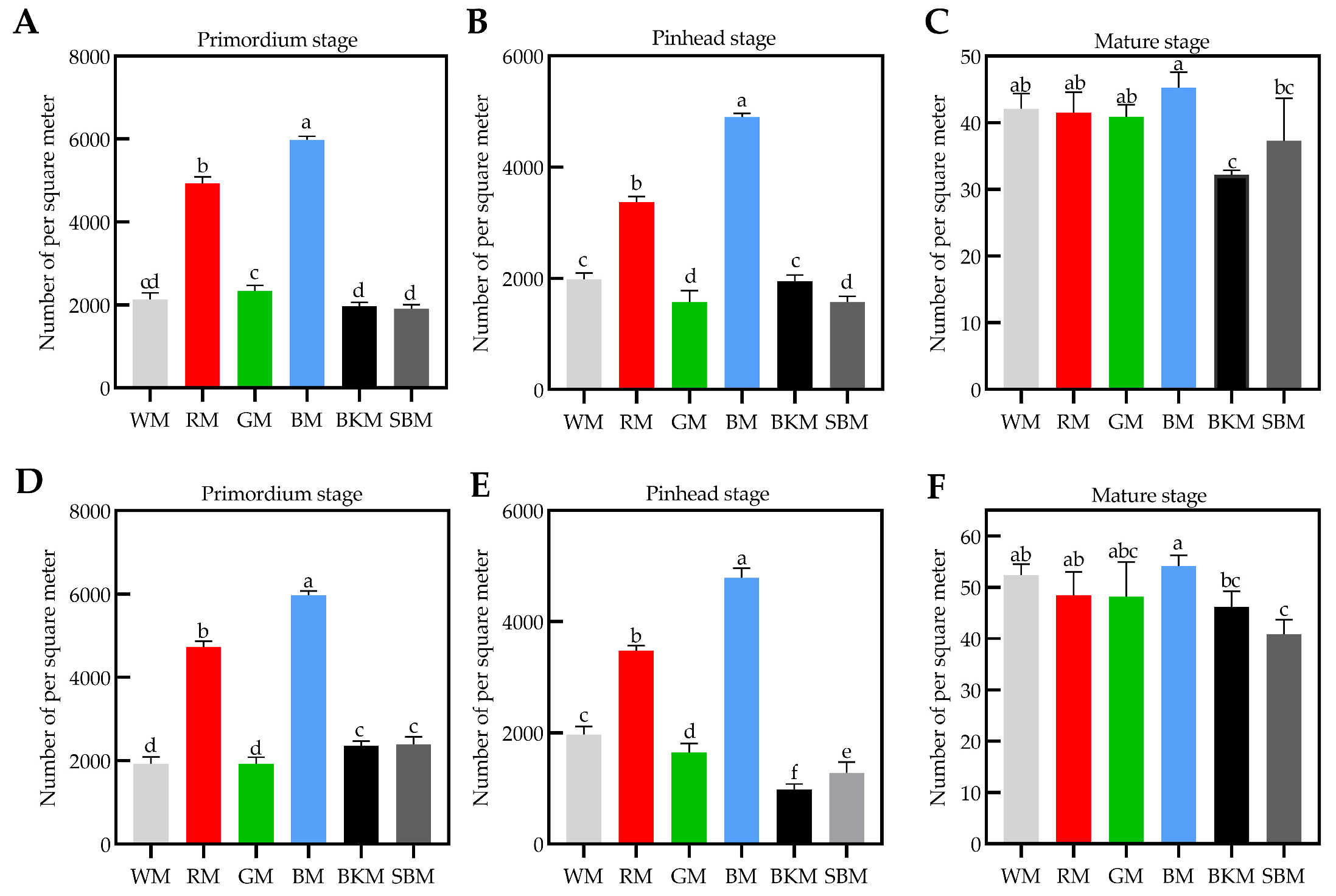
The different colored film treatments affected the number of Morchella fruiting bodies (Figure 6). Under the BM treatment, the number of M. septimelata per square meter at the primordium, pinhead, and maturation stages was 5981, 4899, and 46, respectively, all significantly higher than those under the other treatments. The number of M. sextelata fruiting bodies tended to be similar to that of M. septimelata. Under the BM treatment, the number of M. sextelata per square meter at the primordium, pinhead, and maturation stages was 5977, 4788, and 54, respectively, all significantly higher than those under the other treatments. The BM treatment induced the maximum number of fruiting bodies in Morchella across all developmental stages.

3.3. Effects of Different Colored Films on the Agronomic Traits and Yield of Morchella

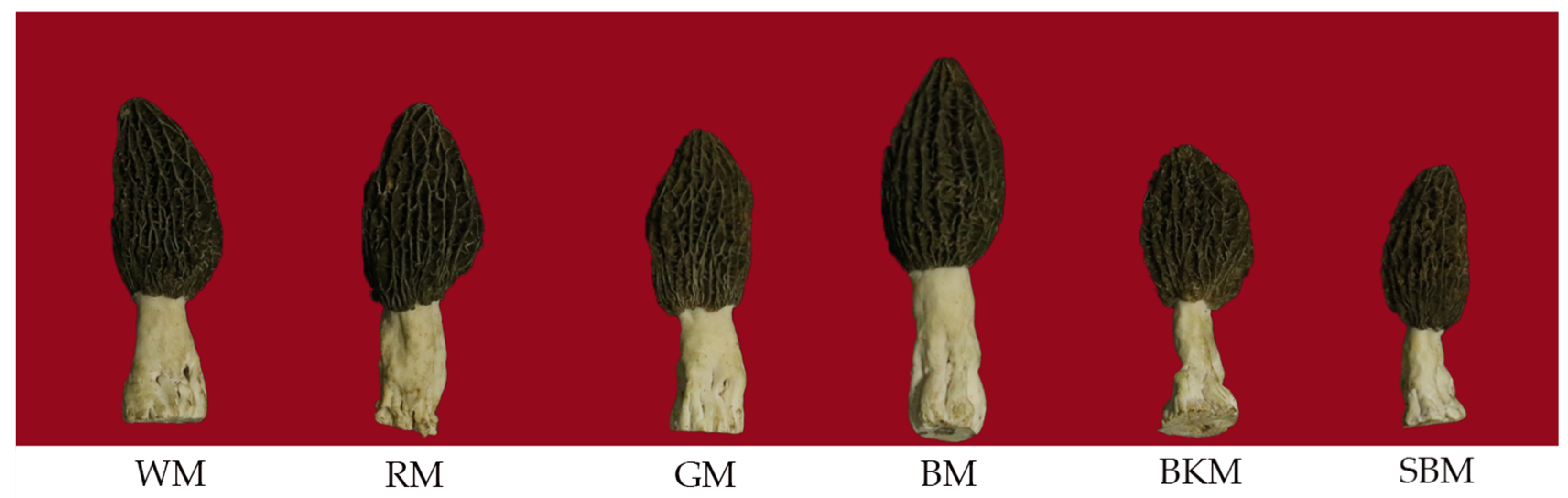
Based on the data in Figure 7 and Table 1, the six colored film treatments affected the morphological characteristics of M. septimelata fruiting bodies. The BM treatment reached the maximum pileus length (82.97 mm), whereas the SBM treatment showed the minimum pileus length (68.40 mm). The pileus width under the BKM and SBM treatments was significantly smaller than that under the other treatments. The highest stipe length was recorded in the BM treatment (58.12 mm), while the lowest stipe length was recorded in the BKM (50.44 mm) and SBM (50.08 mm) treatments. Additionally, the BM treatment resulted in the greatest pileus-to-stipe ratio. In summary, the BM treatment resulted in the greatest pileus and stipe lengths, demonstrating its significant promoting effect on the agronomic traits of M. septimelata.
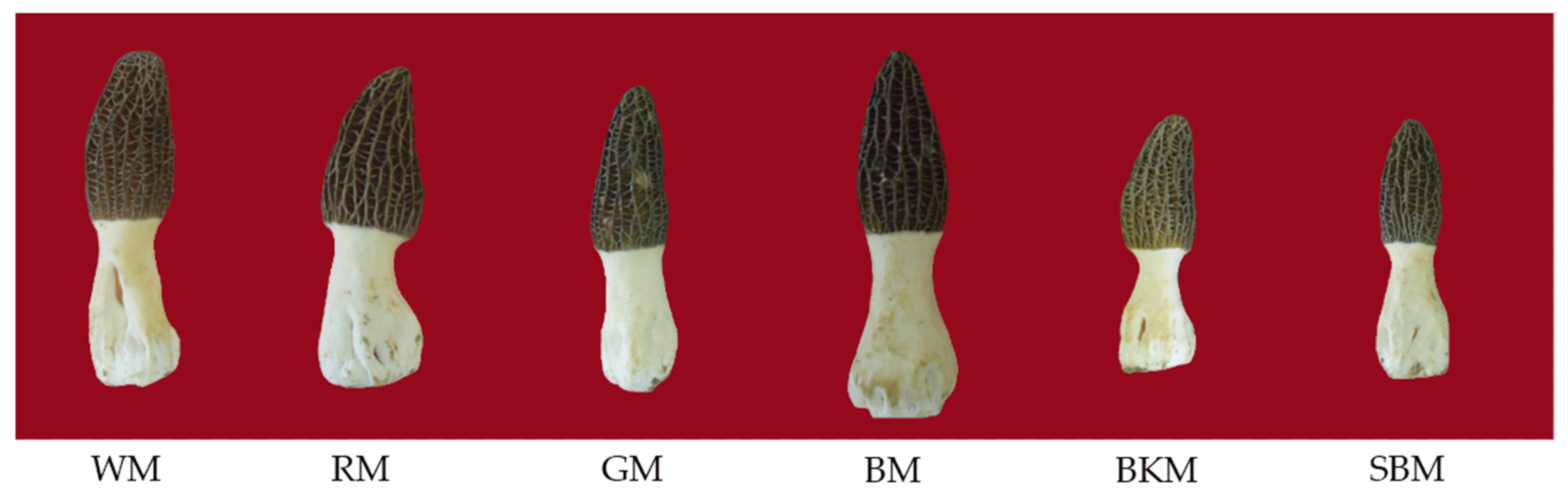
According to the data in Figure 8 and Table 2, the six colored film treatments affected the morphological characteristics of M. sextelata fruiting bodies. The BM treatment reached the maximum pileus length (70.76 mm), whereas the SBM treatment showed the minimum pileus length (42.54 mm). The greatest pileus width (35.26 mm) occurred in the RM treatment, whereas the smallest pileus width (11.54 mm) occurred in the SBM treatment. The greatest stipe length (58.03 mm) was recorded in the BM treatment, and the shortest stipe length (40.87 mm) was recorded in the BKM treatment. The greatest stipe width was observed in the BM (35.14 mm) and RM (33.84 mm) treatments. Furthermore, similar to M. septimelata, the BM treatment resulted in the greatest pileus-to-stipe ratio, indicating that the BM treatment promoted pileus elongation.
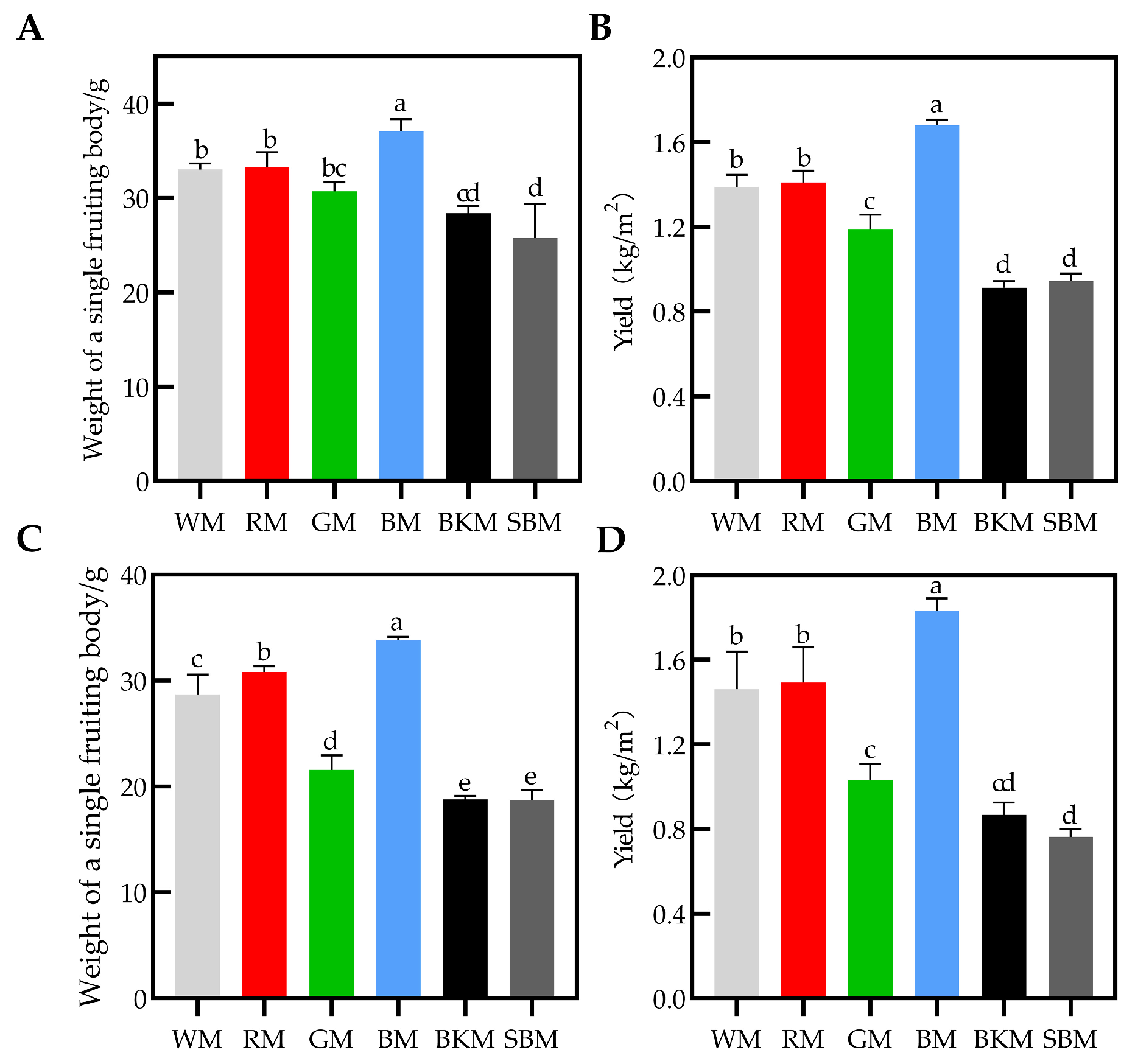
Different colored film treatments resulted in differences in the weight of a single fruiting body and yield of M. septimelata. Compared with the WM treatment, the BM treatment resulted in the greatest weight of a single fruiting body of M. septimelata (37.07 g), representing an increase of 12.23%. Compared with the WM treatment, the SBM treatment resulted in the lowest weight of a single fruiting body (25.73 g), representing a decrease of 22.10% (Figure 9A). In addition, compared with the WM treatment, the BM treatment resulted in the highest yield per square meter of M. septimelata (1.68 kg), representing an increase of 20.86%. Conversely, compared with the WM treatment, the BKM and SBM treatments resulted in the lowest yields, representing decreases of 34.53% and 32.37%, respectively (Figure 9B). Similarly, different colored film treatments also affected the weight of a single fruiting body and yield per square meter of M. sextelata. The weight of a single fruiting body of M. sextelata was greatest in the BM treatment (33.87 g), representing an increase of 18.14%. By contrast, the BKM (18.77 g) and SBM (18.70 g) treatments resulted in the lowest weight of a single fruiting body (Figure 9C). In addition, the yield of M. sextelata was greatest in the BM treatment (1.83 kg), representing an increase of 25.34%, whereas the lowest yield (0.76 kg) occurred in the SBM treatment (Figure 9D). Overall, the BM treatment significantly increased the weight of a single fruiting body and yield of Morchella.

3.4. Effects of Different Colored Films on the Crude Protein, Polysaccharide, and Fiber Contents of Morchella

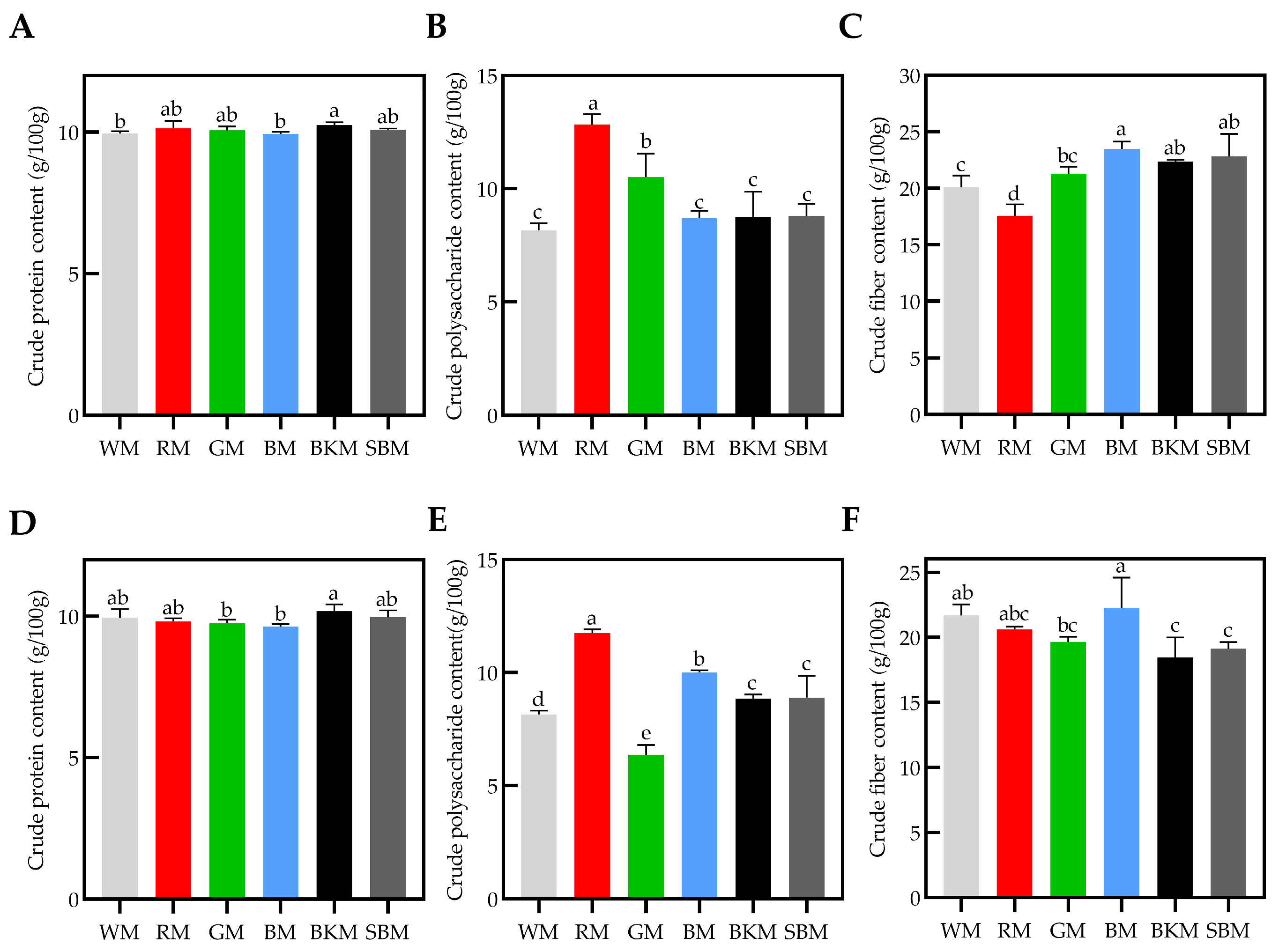
Crude protein, crude polysaccharide, and crude fiber contents are important indicators of the nutritional quality of Morchella fruiting bodies. In this study, the different colored film treatments affected the nutritional quality of M. septimelata and M. sextelata (Figure 10). No significant differences in crude protein content were detected among the RM, GM, BKM, and SBM treatments for M. septimelata. The crude polysaccharide content of M. septimelata was the highest in the RM treatment (12.84 g/100 g), representing an increase of 47.42% compared with that in the WM treatment. The crude fiber content was the highest in the BM treatment (23.49 g/100 g), representing an increase of 16.92% compared with that in the WM treatment. No significant differences in crude protein content were detected among the WM, RM, BKM, and SBM treatments for M. sextelata. The crude polysaccharide content of M. sextelata was the highest in the RM treatment (11.76 g/100 g), representing an increase of 44.12% compared with that in the WM treatment. The BM treatment also increased the crude fiber content of M. sextelata, representing an increase of 2.63% compared with that in the WM treatment. The RM treatment was most effective at increasing crude polysaccharide content, whereas the BM treatment performed best at increasing crude fiber content.

3.5. Correlation Analysis of Different Colored Films on the Microenvironment and Development of M. septimelata and M. sextelata

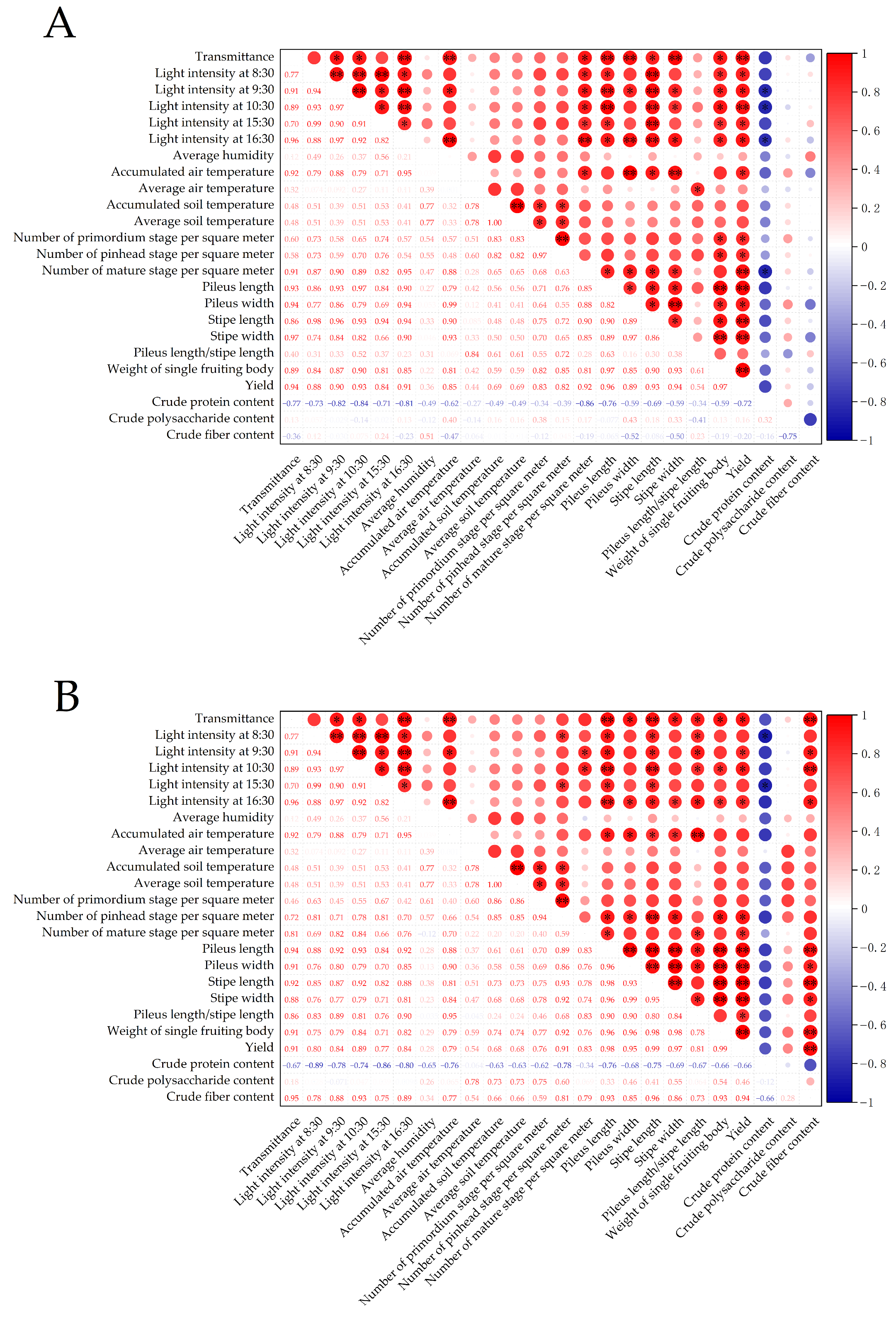
To gain insight into the relationships between the different colored film treatments of M. septimelata and M. sextelata and the development indicators of morels, a correlation analysis was performed. The results (Figure 11) indicated that in M. septimelata, light intensities at various time points were positively correlated with most development indicators. Among them, light intensities at 9:30 and 16:30 were significantly positively correlated with the number of maturation stages per square meter, pileus length, pileus width, stipe length, stipe width, weight of a single fruiting body, and yield. The number of maturation stages per square meter was significantly positively correlated with pileus length and width, stipe length and width, and yield. Crude protein content was significantly negatively correlated with the number of maturation stages per square meter. In M. sextelata, light intensity at 16:30 was significantly positively correlated with pileus length, pileus width, stipe length, stipe width, weight of a single fruiting body, and yield. Moreover, crude fiber content was significantly and positively correlated with pileus length and width, stipe length and width, weight of a single fruiting body, and yield. In summary, light intensity was positively correlated with agronomic traits and yield in both species.

4. Discussion

Colored films are pivotal regulatory factors in Morchella cultivation, and they significantly impact environmental factors, including transmittance, light intensity, and temperature. Blue films exhibit higher transmittance, whereas black mulch films exhibit lower transmittance [35]. In this study, the transmittance of 92% at 405 nm was highest under the BM treatment. However, the transmittance was maintained at a relatively low level across all wavelengths under the BKM and SBM treatments. Black and silver-black films are known to result in low light intensity inside and outside the mulch [30]. Consistent with these findings, the light intensity under the BM treatment was significantly greater than that under the other treatments at all sampling time points, whereas the black and silver-black films maintained light intensity at low levels. In this study, compared with those in the other colored film treatments, the accumulated air temperature, accumulated soil temperature, average air temperature and average soil temperature in the BM treatment were significantly greater, whereas all the temperature indicators in the BKM and SBM treatments remained consistently low. Correlation analysis revealed that light intensity at 9:30 and 16:30 was significantly positively correlated with yield-related traits and agronomic characteristics in Morchella. However, Li [30] reported that a higher accumulated air temperature was observed under green film treatment, and these findings may be associated with the film thickness and application method.
Different colored films affect the number, morphology, weight of a single fruiting body, and yield of Morchella. Among all the treatments, the BM treatment had the most obvious promoting effect on Morchella. Under the BM treatment, blue light was the dominant light quality. In ascomycetes and basidiomycetes, blue light is primarily perceived by the photoreceptors WC-1 and WC-2, which activate downstream transcriptional cascades that regulate morphogenesis, secondary metabolism, and oxidative stress responses [36,37]. In C. militaris, the blue light receptor gene Cmwc-1 is inactivated via homologous recombination. The strains with this inactivated gene exhibited markedly thicker aerial hyphae, disordered fruiting body development, a significant reduction in conidial formation, and decreased production of carotenoids and cordycepin [38]. Mixed irradiation with far-red light and blue light significantly increased the fresh weight of Lyophyllum decastes fruiting bodies, decreased the number of fruiting bodies and promoted pileus pigmentation [39]. Far-red light treatment increased the number of primordia during the development of Pleurotus citrinopileatus, and blue light treatment increased the color uniformity and yield of the pileus [40]. Similar promoting effects of blue light on fruiting body development have been observed in Pleurotus ostreatus [41], and Hericium coralloides [42]. In this study, the BM treatment resulted in the greatest number of primordia and pinhead and mature-stage fruiting bodies in M. septimelata and M. sextelata. This treatment also promoted pileus elongation and increased the weight of the fruiting body and yield. By contrast, the BKM and SBM treatments resulted in fewer fruiting bodies and lower yields of Morchella. This may be due to the low light transmittance of these two films. A nearly dark environment is formed under the films and hinders the normal development of Morchella, which is consistent with the findings of Li [30]. Silver-black film and black film treatments cause ascomata malformation in M. importuna, and these ascomata fail to mature normally.
Nutritional quality is a core indicator for evaluating the edibility of Morchella fruiting bodies. Different light qualities produced by different colored films further regulate the accumulation of nutritional components [43]. The mechanism by which light quality regulates nutritional quality is closely related to the differential regulation of primary and secondary metabolism by fungal light signaling pathways. Integrated transcriptomic and metabolomic analyses in Flammulina filiformis revealed that blue light promoted lysine and carbohydrate synthesis, whereas red light upregulated the expression of glycosyltransferase genes involved in polysaccharide biosynthesis [44]. Red light increased the water-soluble polysaccharide content in Pleurotus eryngii, whereas white light promoted protein accumulation [45]. Similarly, other studies have shown that blue light or combined light treatments increase crude protein and polysaccharide contents in Lyophyllum decastes [39], red light increases crude fiber content in Tremella fuciformis, blue light promotes crude polysaccharide content [46], red light increases crude polysaccharide content in Pleurotus ostreatus, and yellow light increases crude protein content [47]. Blue light irradiation optimizes the nutritional and flavor qualities of P. citrinopileatus, increasing the proportions of umami and sweet amino acids and increasing the odor activity values (OAVs) of key aroma compounds [48]. In this experiment, the crude polysaccharide content increased under the RM treatment, whereas the crude fiber content increased under the BM treatment, indicating that the RM can promote the accumulation of crude polysaccharides in Morchella and that the BM can facilitate the accumulation of crude fiber. Correlation analysis further revealed that the crude fiber content of M. sextelata was positively correlated with agronomic traits and yield, whereas the crude protein content of M. septimelata was negatively correlated with yield-related parameters. However, this study evaluated only crude protein, crude polysaccharide, and crude fiber contents. A more comprehensive assessment of nutritional quality, including detailed analyses of amino acid profiles, bioactive compounds, and other functional components, is needed to fully elucidate the effects of colored films on Morchella quality.
Our research on the systematic analysis of the colored film-mediated regulation of the cultivation microenvironment and fruiting body development in M. septimelata and M. sextelata provides a theoretical foundation for the optimization of microenvironment regulation and cultivation technology in the protected cultivation of Morchella. The results of this study revealed that BM can synergistically promote morphological development, yield improvement and crude fiber accumulation in Morchella by optimizing the light quality composition and increasing the light intensity and the accumulated temperature effect. This discovery provides technical evidence for the precise regulation of the cultivation microenvironment in the protected production of Morchella. The colored film regulation patterns associated with the microenvironment and development of Morchella observed in this study may serve as a technical reference for its protected cultivation. However, further validation across multiple locations and seasons is needed. Future work may also explore the transition from cultivation environment regulation to light quality-mediated metabolic regulation and quality improvement, particularly through more detailed compositional analyses.

5. Conclusions

These findings indicate that different colored films significantly influence the microenvironment and development of M. septimelata and M. sextelata. BM treatment improved the light environment and increased the number of fruiting bodies, the pileus length, the weight of a single fruiting body and yield, and the crude fiber content under the conditions of this study. BM has application potential for the protected cultivation of Morchella within the scope of this study, but its broader applicability requires further validation through trials across additional sites and seasons.

Author Contributions

Conceptualization, J.W. and S.L.; methodology, J.W. and S.L.; software, B.Z.; validation, B.Z.; formal analysis, B.Z.; investigation, B.Z., W.Z., H.L., P.Z. and X.L. (Xiaofeng Li); resources, J.W. and S.L.; data curation, B.Z.; writing—original draft preparation, B.Z.; writing—review and editing, J.W., S.L., X.L. (Xiaofeng Li), G.L., X.L. (Xiao Li) and A.M.; visualization, B.Z.; supervision, M.L. and J.T.; project administration, J.W., S.L. and M.L.; funding acquisition, J.W., S.L. and M.L. All authors have read and agreed to the published version of the manuscript.

Funding

This research was funded by the Central Guidance for Local Science and Technology Development Fund Project (No. 246Z6310G), China Agriculture Research System (CARS-24), Innovation Team of Edible Fungi of Hebei Modern Agricultural Industrial Technology System (No. HBCT2023090202), Talent Introduction Scientific Research Special Project of Hebei Agricultural University (No. YJ201849), Key Research and Development Planning Project in Science and Technology of Hebei Province (No. 21326315D), and Natural Science Foundation of Hebei Province (No. C2023204076).

Data Availability Statement

The original contributions presented in this study are included in the article. Further inquiries can be directed to the corresponding authors.

Conflicts of Interest

The authors declare no conflicts of interest.

References

  1. Hobbie, E.A.; Weber, N.S.; Trappe, J.M. Mycorrhizal vs saprotrophic status of fungi: The isotopic evidence. New Phytol. 2001, 150, 601–610. [Google Scholar] [CrossRef]
  2. Tian, J.; Zhang, Z.; Shang, Y.; Zheng, Y. Extraction, structure and antioxidant activity of the polysaccharides from morels (Morchella spp.): A review. Int. J. Biol. Macromol. 2024, 264, 130656. [Google Scholar] [CrossRef]
  3. Liu, T.; Wu, X.; Long, W.; Xu, Y.; Yu, Y.; Wang, H. The effects of different postharvest drying temperatures on the volatile flavor components and non-volatile metabolites of Morchella sextelata. Horticulturae 2024, 10, 812. [Google Scholar] [CrossRef]
  4. Li, Y.; Chen, H.; Zhang, X. Cultivation, nutritional value, bioactive compounds of morels, and their health benefits: A systematic review. Front. Nutr. 2023, 10, 1159029. [Google Scholar] [CrossRef]
  5. Li, F.; Jin, Y.; Wang, J.; Xu, H. Structure identification of two polysaccharides from Morchella sextelata with antioxidant activity. Foods 2022, 11, 982. [Google Scholar] [CrossRef]
  6. Xu, J.; Xu, D.; Hu, Q.; Ma, N.; Pei, F.; Su, A.; Ma, G. Immune regulatory functions of biologically active proteins from edible fungi. Front. Immunol. 2023, 13, 1034545. [Google Scholar] [CrossRef] [PubMed]
  7. Xu, L.; Pan, X.; Li, D.; Wang, Z.; Tan, L.; Chang, M.; Feng, C.; Cheng, Y.; Geng, X.; Meng, J. Structural characterization, rheological characterization, hypoglycemic and hypolipidemic activities of polysaccharides from Morchella importuna using acidic and alkaline deep eutectic solvents. LWT 2024, 193, 115742. [Google Scholar] [CrossRef]
  8. Cheng, X.; Wang, J.W.; Li, T.D.; Wang, B.; Bao, K.; Song, M.; Wang, S.; Wen, T.; Chen, L.; Zhu, Z. Preparation, structural characterization and protective effect on PC12 cells of polysaccharides from the stipe of Morchella esculenta. Process Biochem. 2024, 144, 199–209. [Google Scholar] [CrossRef]
  9. He, P.; Yu, M.; Cai, Y.; Liu, W.; Wang, W.; Wang, S.; Li, J. Effect of aging on culture and cultivation of the culinary-medicinal mushrooms Morchella importuna and M. sextelata (Ascomycetes). Int. J. Med. Mushrooms 2019, 21, 1089–1098. [Google Scholar] [CrossRef]
  10. Liu, W.; He, P.X.; Shi, X.F.; Xu, W.J.; Zhang, Y.; Yu, F.Q. Research progress on cultivation history and related basic research of Morchella in China. Edible Med. Mushrooms 2022, 30, 261–270. (In Chinese) [Google Scholar]
  11. Shao, G.G.; Zhang, R.Y. Research progress in genetic breeding and cultivation techniques of Morchella spp. Edible Fungi China 2025, 44, 1–11. (In Chinese) [Google Scholar]
  12. Zhang, S.; Lin, C.X.; Guo, J.L.; Yang, X.H. Effects of different mulching materials on soil temperature and humidity, growth and fruit quality of plum. North. Hortic. 2021, 11, 18–25. (In Chinese) [Google Scholar]
  13. Li, Y.; Li, J.; Ma, W.; Guo, L. Comparative analysis of the effects of different mulching materials on microclimate and fruit quality in apricot orchards. Horticulturae 2025, 11, 355. [Google Scholar] [CrossRef]
  14. Shiukhy, S.; Raeini-Sarjaz, M.; Chalavi, V. Colored plastic mulch microclimates affect strawberry fruit yield and quality. Int. J. Biometeorol. 2015, 59, 1061–1066. [Google Scholar] [CrossRef]
  15. Chen, H.; Huang, S.; Quan, C.; Chen, Z.; Xu, M.; Wei, F.; Tang, D. Effects of different colors of plastic-film mulching on soil temperature, yield, and metabolites in Platostoma palustre. Sci. Rep. 2024, 14, 5110. [Google Scholar] [CrossRef] [PubMed]
  16. Zhang, Y.; Huang, C.; Zhao, L.; Feng, S.; Zhao, Z.; Zhang, L. Effects of different colors of film mulch on soil temperature and rice growth in a non-flooded condition. J. Sci. Food Agric. 2023, 103, 6352–6361. [Google Scholar] [CrossRef]
  17. Li, W.L.; Lin, C.X.; Zhang, J. Effects of different colors of mulch on the growth, development and fruit quality of facility tomatoes. North. Hortic. 2024, 15, 40–45. (In Chinese) [Google Scholar]
  18. Liu, W.; He, P.; Shi, X.; Zhang, Y.; Perez-Moreno, J.; Yu, F. Large-scale field cultivation of Morchella and relevance of basic knowledge for its steady production. J. Fungi 2023, 9, 855. [Google Scholar] [CrossRef] [PubMed]
  19. Li, R.; Gao, Y.; Cai, B.; Li, G.; Xue, Z.; Wang, X.X.; Li, Q. RPO film effectively promotes fruit quality and yield of cucumber through adjusting greenhouse environment and hormone contents. BMC Plant Biol. 2024, 24, 1250. [Google Scholar] [CrossRef]
  20. Nakazawa, T.; Miyazaki, Y.; Kaneko, S.; Shishido, K. Stimulative effects of light and a temperature downshift on transcriptional expressions of developmentally regulated genes in the initial stages of fruiting-body formation of the basidiomycetous mushroom Lentinula edodes. FEMS Microbiol. Lett. 2008, 289, 67–71. [Google Scholar] [CrossRef]
  21. Nie, C.; Wei, S.; Wu, S.; Qi, L.; Feng, J.; Wang, X. Transcriptomic and metabolic profiling reveals adaptive mechanisms of Auricularia heimuer to temperature stress. PeerJ 2025, 13, e19713. [Google Scholar] [CrossRef] [PubMed]
  22. Zhao, Y.; Kang, X.; Chang, G.L.; Wang, L.A.; Peng, H.F.; Tian, J.H.; Li, S.M.; Li, G.J. Biological characteristics, domestic cultivation and antioxidant activities of Coprinellus saccharinus. Mycosystema 2026, 45, 145–156. (In Chinese) [Google Scholar]
  23. Kang, X.; Chang, G.L.; Ren, J.; Wang, L.A.; Li, X.; Li, S.M.; Li, G.J. Biological characteristics, domestic cultivation and antioxidant activities of Bjerkandera adusta. J. Hebei Agric. Univ. 2025, 48, 26–36. (In Chinese) [Google Scholar]
  24. Sun, Y.J.; Li, M.; Li, S.M.; Tian, J.H.; Wang, S.N.; Li, S. Effect of different light quality on the growth of Pleurotus eryngii. North. Hortic. 2014, 19, 142–144. (In Chinese) [Google Scholar]
  25. Tian, T.; Hu, H.Y.; Ma, Y.S.; Qin, J.W.; Li, C.T.; Li, Y. Effects of light quality on agronomic traits, antioxidant capacity and nutritional composition of Sarcomyxa edulis. Sci. Rep. 2024, 14, 24762. [Google Scholar] [CrossRef]
  26. Liu, Y.; Luo, Y.; Guo, W.; Zhang, X.; Zheng, W.; Chen, X. Study on the effects of different light supply modes on the development and extracellular enzyme activity of Ganoderma lucidum. Agriculture 2024, 14, 835. [Google Scholar] [CrossRef]
  27. Jiang, N.; Yu, C.X.; Dong, H.R.; Zhou, F.; Li, Z.P.; Li, Y. Effects of illumination of different lights on agronomic traits and texture quality of fruiting bodies of Lentinula edodes. Mycosystema 2021, 40, 3169–3181. (In Chinese) [Google Scholar]
  28. Wang, Y.; Hou, Z.; Li, Y.; Xia, R.; Qiao, Y.; Ren, H.; Lyu, Y.; Pan, S.; Xin, G. Blue light attenuated the umami loss of postharvest Lentinula edodes during spore discharge: Crucial roles of energy status. Food Chem. 2025, 493, 145876. [Google Scholar] [CrossRef]
  29. Ji, W.; Liu, X.M.; Wang, Y.P.; Su, W.Y.; Ren, L.K.; Lin, Q.Y.; Chen, K.L. Effects of different light quality on the growth and development and metabolites of fruiting bodies of Cordyceps militaris. Chin. Wild Plant Resour. 2024, 43, 68–76. (In Chinese) [Google Scholar]
  30. Li, Z.M.; Ma, Y.H.; Liu, P.; Chai, H.M.; Zhao, Y.C. Effects of colored plastic mulches on growth and development of Morchella. Acta Edulis Fungi 2023, 30, 19–29. (In Chinese) [Google Scholar]
  31. Chen, X.H. Impact of ≥0 °C accumulated temperature on the growth development of Morchella importuna. Mycosystema 2018, 37, 1717–1722. (In Chinese) [Google Scholar]
  32. GB 5009.5-2025; National Food Safety Standard Determination of Protein in Food. National Standard of the People’s Republic of China: Beijing, China, 2025.
  33. NY/T 1676-2023; Determination of Crude Polysaccharides in Edible Mushroom—Spectrophotometric Method. Agricultural Industry Standard of the People’s Republic of China: Beijing, China, 2023.
  34. GB/T 5009.10-2003; Determination of Crude Fiber in Vegetable Foods. National Standard of the People’s Republic of China: Beijing, China, 2003.
  35. Zhang, H.; Liu, B. Light transmittance properties, optical effects of colored plastic mulches and their impacts on crop growth and development. Agric. Technol. 2023, 43, 24–27. (In Chinese) [Google Scholar]
  36. Idnurm, A.; Verma, S.; Corrochano, L.M. A glimpse into the basis of vision in the kingdom Mycota. Fungal Genet. Biol. 2010, 47, 881–892. [Google Scholar] [CrossRef] [PubMed]
  37. Fuller, K.K.; Loros, J.J.; Dunlap, J.C. Fungal photobiology: Visible light as a signal for stress, space and time. Curr. Genet. 2015, 61, 275–288. [Google Scholar] [CrossRef]
  38. Yang, T.; Guo, M.; Yang, H.; Guo, S.; Dong, C. The blue-light receptor CmWC-1 mediates fruit body development and secondary metabolism in Cordyceps militaris. Appl. Microbiol. Biotechnol. 2016, 100, 743–755. [Google Scholar] [CrossRef]
  39. Chen, X.; Liu, Y.; Guo, W.; Wang, M.; Zhao, J.; Zhang, X.; Zheng, W. The development and nutritional quality of Lyophyllum decastes affected by monochromatic or mixed light provided by light-emitting diode. Front. Nutr. 2024, 11, 1404138. [Google Scholar] [CrossRef]
  40. Liu, Y.H.; Chen, X.L.; Zheng, W.G.; Zhang, X.; Gao, Y.N.; Guo, W.Z. Effect of LED light irradiation on the growth, development, and spectral characteristics of Pleurotus citrinopileatus Singer. Chin. J. Agrometeorol. 2025, 46, 524–532. (In Chinese) [Google Scholar]
  41. Wang, H.; Tong, X.; Tian, F.; Jia, C.; Li, C.; Li, Y. Transcriptomic profiling sheds light on the blue-light and red-light response of oyster mushroom (Pleurotus ostreatus). AMB Express 2020, 10, 10. [Google Scholar] [CrossRef] [PubMed]
  42. Zhu, Y.; Jia, C.; Wang, C.; Zhang, S.; Yuan, X.; Yang, J.; Hsiang, T.; Qi, B.; Peng, Z.; Li, Y.; et al. Yield increment and transcriptome response caused by blue light treatment in Hericium coralloides. BMC Genom. 2024, 25, 1244. [Google Scholar] [CrossRef]
  43. Cozzolino, E.; Di Mola, I.; Ottaiano, L.; Bilotto, M.; Petriccione, M.; Ferrara, E.; Mori, M.; Morra, L. Assessing yield and quality of melon (Cucumis melo L.) improved by biodegradable mulching film. Plants 2023, 12, 219. [Google Scholar] [CrossRef]
  44. Wang, H.; Zhao, S.; Han, Z.; Qi, Z.; Han, L.; Li, Y. Integrated transcriptome and metabolome analysis provides insights into blue light response of Flammulina filiformis. AMB Express 2024, 14, 21. [Google Scholar] [CrossRef]
  45. Yue, Z.; Zhang, W.; Liu, W.; Xu, J.; Liu, W.; Zhang, X. Effect of different light qualities and intensities on the yield and quality of facility-grown Pleurotus eryngii. J. Fungi 2022, 8, 1244. [Google Scholar] [CrossRef]
  46. Qi, L.L.; Li, L.Y.; Wu, X.J.; Chen, Z.N.; Zhao, C.G.; Yang, C.; Zeng, H.; Lang, N. Agronomic traits and nutrient contents of Tremella fuciformis fruiting bodies under different light quality and their correlations. Acta Edulis Fungi 2022, 29, 41–47. (In Chinese) [Google Scholar]
  47. Hu, X.Y.; Zhao, H.K.; He, G.Q.; Wei, J.K.; Wu, S.J.; Deng, D.J. Effects of different light qualities on the growth and development of Pleurotus ostreatus. Heilongjiang Agric. Sci. 2018, 6, 106–108. (In Chinese) [Google Scholar]
  48. Chen, X.; Liu, Y.; Guo, W.; Wei, X.; Wang, M.; Zhang, X.; Zheng, W. The effects of different light qualities on the growth and nutritional components of Pleurotus citrinopileatus. Front. Nutr. 2025, 12, 1554575. [Google Scholar] [CrossRef]
Figure 1. Different colored film treatments: (A) white film (WM), (B) red film (RM), (C) green film (GM), (D) blue film (BM), (E) black film (BKM), and (F) silver-black film (SBM).
Horticulturae 12 00611 g001
Figure 2. M. septimelata at the (A) primordium stage, (B) pinhead stage, and (C) maturation stage; M. sextelata at the (D) primordium stage, (E) pinhead stage, and (F) maturation stage.
Horticulturae 12 00611 g002
Figure 3. Different colored films of (A) relative spectral intensity (B) transmittance. Note: white film (WM), red film (RM), green film (GM), blue film (BM), black film (BKM), silver-black film (SBM).
Horticulturae 12 00611 g003
Figure 4. Effects of different colored film treatments (WM: white film; RM: red film; GM: green film; BM: blue film; BKM: black film; SBM: silver-black film) on light intensity. Note: The area (11:30–14:30) indicates the period when the sheds were covered with sunshade cloth to prevent high-temperature stress; therefore, the light intensity remained unchanged during this period. Significant differences are compared among different mulch treatments at each time point. Values labeled with different letters in the graph are significantly different according to the least significant difference (LSD) multiple range test (p < 0.05).
Horticulturae 12 00611 g004
Figure 5. Effects of different colored films (WM: white film; RM: red film; GM: green film; BM: blue film; BKM: black film; SBM: silver-black film) on (A) average humidity, (B) accumulated air temperature, (C) average air temperature, (D) accumulated soil temperature, (E) average soil temperature. Values labeled with different letters in the graph are significantly different based on the least significant difference (LSD) multiple range test (p < 0.05).
Horticulturae 12 00611 g005
Figure 6. Effects of different colored films (WM: white film; RM: red film; GM: green film; BM: blue film; BKM: black film; SBM: silver-black film) on the number of fruiting bodies of M. septimelata and M. sextelata. (A) Number of M. septimelata at the primordium stage per square meter; (B) Number of M. septimelata at the pinhead stage per square meter; (C) Number of M. septimelata at the mature stage per square meter; (D) Number of M. sextelata at the primordium stage per square meter; (E) Number of M. sextelata at the pinhead stage per square meter; (F) Number of M. sextelata at the mature stage per square meter. Values labeled with different letters in the graph are significantly different based on the least significant difference (LSD) multiple range test (p < 0.05).
Horticulturae 12 00611 g006
Figure 7. Effects of different colored films (WM: white film; RM: red film; GM: green film; BM: blue film; BKM: black film; SBM: silver-black film) on the characteristics of the fruiting body of M. septimelata.
Horticulturae 12 00611 g007
Figure 8. Effects of different colored films (WM: white film; RM: red film; GM: green film; BM: blue film; BKM: black film; SBM: silver-black film) on the characteristics of the fruiting body of M. sextelata.
Horticulturae 12 00611 g008
Figure 9. Effects of different colored film treatments (WM: white film; RM: red film; GM: green film; BM: blue film; BKM: black film; SBM: silver-black film) on the weight of a single fruiting body and yield of M. septimelata and M. sextelata. (A) Weight of a single fruiting body of M. septimelata; (B) Yield of M. septimelata; (C) Weight of a single fruiting body of M. sextelata; (D) Yield of M. sextelata. Values labeled with different letters in the graph are significantly different based on the least significant difference (LSD) multiple range test (p < 0.05).
Horticulturae 12 00611 g009
Figure 10. Effects of different color film treatments (WM: white film; RM: red film; GM: green film; BM: blue film; BKM: black film; SBM: silver-black film) on the crude protein, polysaccharide, and fiber contents of M. sextelata and M. septimelata. (A) Crude protein content of M. septimelata; (B) Crude polysaccharide content of M. septimelata; (C) Crude fiber content of M. septimelata; (D) Crude protein content of M. sextelata; (E) Crude polysaccharide content of M. sextelata; (F) Crude fiber content of M. sextelata. Values labeled with different letters in the graph are significantly different based on the least significant difference (LSD) multiple range test (p < 0.05).
Horticulturae 12 00611 g010
Figure 11. Correlation analysis between the Morchella microenvironment and development indicators of different colored film treatments. (A) M. septimelata; (B) M. sextelata. * p ≤ 0.05, ** p ≤ 0.01.
Horticulturae 12 00611 g011
Table 1. Effects of different colored films on the characteristics of the fruiting body of M. septimelata.
TreatmentPileus Length
(mm)
Pileus Width
(mm)
Stipe Length
(mm)
Stipe Width
(mm)
Pileus Length/Stipe Length
WM75.97 ± 0.16 b39.74 ± 0.17 a54.23 ± 0.19 b22.24 ± 1.17 a1.40 ± 0.00 ab
RM75.26 ± 0.16 b40.01 ± 1.42 a54.46 ± 0.53 b22.57 ± 0.47 a1.38 ± 0.01 b
GM73.83 ± 0.83 c39.00 ± 0.81 a55.36 ± 0.74 b21.27 ± 1.09 ab1.33 ± 0.03 c
BM82.97 ± 0.26 a40.38 ± 1.03 a58.12 ± 0.76 a22.58 ± 1.56 a1.43 ± 0.01 a
BKM69.92 ± 0.24 d31.38 ± 0.51 b50.44 ± 0.37 c19.83 ± 1.70 b1.39 ± 0.01 b
SBM68.40 ± 0.59 e31.27 ± 0.77 b50.08 ± 1.42 c19.45 ± 0.19 b1.37 ± 0.19 b
Note: white film (WM), red film (RM), green film (GM), blue film (BM), black film (BKM), silver-black film (SBM). All data are presented as mean ± standard deviation. Values labeled with different letters in the graph are significantly different based on the least significant difference (LSD) multiple range test (p < 0.05).
Table 2. Effects of different colored films on the characteristics of the fruiting body of M. sextelata.
TreatmentPileus Length
(mm)
Pileus Width
(mm)
Stipe Length
(mm)
Stipe Width
(mm)
Pileus Length/Stipe Length
WM60.91 ± 0.09 b28.49 ± 2.32 b51.48 ± 0.12 b27.63 ± 2.36 b1.18 ± 0.00 c
RM61.64 ± 1.19 b35.26 ± 0.52 a51.78 ± 0.59 b33.84 ± 1.23 a1.19 ± 0.01 b
GM54.92 ± 0.76 c23.63 ± 1.51 c45.86 ± 0.41 c22.32 ± 0.25 c1.20 ± 0.01 b
BM70.76 ± 0.68 a35.12 ± 0.59 a58.03 ± 0.55 a35.14 ± 2.94 a1.22 ± 0.00 a
BKM44.57 ± 0.55 d15.12 ± 0.78 d40.87 ± 0.43 e17.29 ± 0.44 d1.09 ± 0.00 d
SBM42.54 ± 0.30 e11.54 ± 0.41 e41.85 ± 0.31 d15.18 ± 0.88 d1.02 ± 0.19 e
Note: white film (WM), red film (RM), green film (GM), blue film (BM), black film (BKM) silver-black film (SBM). All data are presented as mean ± standard deviation. Values labeled with different letters in the graph are significantly different based on the least significant difference (LSD) multiple range test (p < 0.05).
Disclaimer/Publisher’s Note: The statements, opinions and data contained in all publications are solely those of the individual author(s) and contributor(s) and not of MDPI and/or the editor(s). MDPI and/or the editor(s) disclaim responsibility for any injury to people or property resulting from any ideas, methods, instructions or products referred to in the content.