Article

Silicon Sources Differentially Affect Physiological Responses, Nutrient Uptake, and Phenolic Compounds in Sour Passion Fruit


by
Rozane Franci de Moraes Tavares
1,
Almy Junior Cordeiro de Carvalho
2,
Simone de Paiva Caetano Bucker Moraes
3,
Henrique Martins de Oliveira
2,
Álan Chrisleyr Maracahipes
1,
Paulo Cesar dos Santos
3,*,
Moises Zucoloto
3,
Alessandro Coutinho Ramos
4,
Weverton Pereira Rodrigues
5,
Tâmara Moreira Silva
2,
Marta Simone Mendonça Freitas
2,
Gabriel Ramatis Pugliese Andrade
2,
Vinicius de Freitas Manhães
2,
Marlene Evangelista Vieira
6 and
José Luiz Leonardo de Araújo Pimenta
7
1
Faculty of Agricultural, Biological and Applied Social Sciences, Mato Grosso State University Carlos Alberto Reyes Maldonado (UNEMAT), Nova Xavantina 78690-000, MT, Brazil
2
Center for Agricultural Science and Technologies, Northern Fluminense State University Darcy Ribeiro (UENF), Campos dos Goytacazes 28013-602, RJ, Brazil
3
Center for Agricultural Sciences and Engineering, Department of Agronomy, Federal University of Espírito Santo (UFES), Alegre Campus, Alegre 29500-000, ES, Brazil
4
Laboratory of Environmental Microbiology and Biotechnology, Vila Velha University (UVV), Vila Velha 29102-920, ES, Brazil
5
Center for Agricultural Sciences, State University of the Tocatina Region of Maranhão (UEMASUL), Imperatriz 65900-001, MA, Brazil
6
Soil Analysis and Plant Nutrition Laboratory, Amapá State University, Lakes Territory Campus, Amapá 68901-258, AP, Brazil
7
Department of Animal Science, Federal Rural University of Rio de Janeiro (UFRRJ), Seropédica 23897-000, RJ, Brazil
*
Author to whom correspondence should be addressed.
Horticulturae 2026, 12(5), 605; https://doi.org/10.3390/horticulturae12050605 (registering DOI)
Submission received: 25 March 2026 / Revised: 6 May 2026 / Accepted: 6 May 2026 / Published: 14 May 2026
(This article belongs to the Section Plant Nutrition)

Abstract

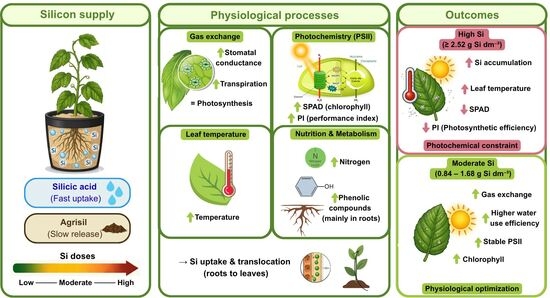
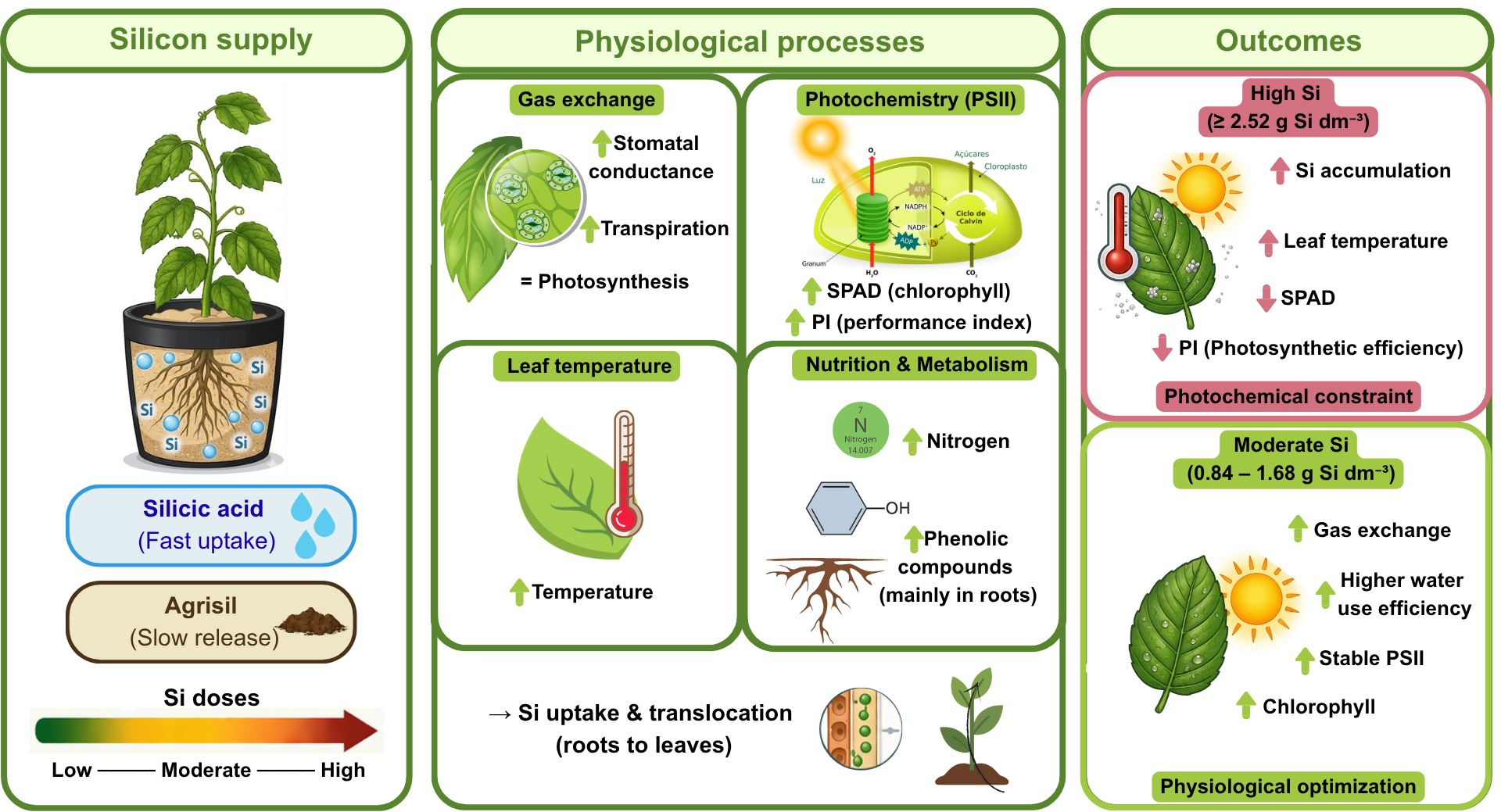
This study evaluated the effects of two silicon sources (silicic acid and Agrisil) and increasing Si concentrations on physiological responses, total polyphenol content, photochemical performance, nutrient uptake, and phenolic metabolism in sour passion fruit (Passiflora edulis Sims) grown under soilless culture conditions. The experiment was conducted in a greenhouse using increasing concentrations of Si applied through the nutrient solution. Gas exchange parameters, chlorophyll index (SPAD), chlorophyll fluorescence variables, leaf temperature, and the contents of Si, nitrogen, and total polyphenols in leaves and roots were evaluated. Moderate Si concentrations enhanced stomatal conductance and transpiration, improving intrinsic water use efficiency, and maintaining higher chlorophyll levels and photochemical performance. In contrast, higher Si concentrations increased Si deposition in leaf tissues, reduced stomatal regulation and transpiration, and increased leaf temperature. These changes were associated with reductions in chlorophyll index and photochemical performance index (PI), as well as increased F0/Fm. Net CO2 assimilation remained relatively stable. Silicon uptake differed between sources, with silicic acid showing faster absorption and Agrisil a more gradual release. Silicon fertilization also increased nitrogen uptake and stimulated the accumulation of phenolic compounds in roots. Overall, moderate silicon supplies enhanced physiological stability, whereas excessive accumulation imposed photochemical constraints.

Graphical Abstract

1. Introduction

Considered a beneficial element for most higher plants, silicon (Si) plays important roles, particularly in plant growth and physiological processes [1]. In soil, silicon occurs mainly as silicic acid, silica, and silicate minerals. Due to its strong affinity with oxygen, its presence in soils is closely associated with the desilication of primary minerals and weathering processes, which represent major sources of plant-available Si [2]. Silicon is released into the soil solution primarily as monosilicic acid (H4SiO4), the form readily absorbed by plant roots. Because of its multiple benefits to plant growth and physiological performance, silicon has also been considered a valuable input for sustainable agricultural systems [3]. However, the physiological responses associated with silicon availability and the use of different silicon sources remain insufficiently understood, particularly in tropical fruit crops.
In plants, silicon has been associated with improved tolerance to abiotic stresses such as drought and salinity [4]. These benefits are often associated with improvements in antioxidant defense systems. In addition, silicon can influence physiological processes related to water relations, gas exchange, and photochemical performance, contributing to plant physiological regulation [5,6].
Silicon accumulation in plant tissues has been associated with structural and physiological changes. Silicon accumulation in the cuticle may influence plant–water relations and transpiration [7,8]. Furthermore, silica deposition in cell walls may alter structural properties of plant tissues, influencing physiological processes [9]. These processes may also influence leaf temperature regulation and energy dissipation under high radiation conditions. Although silicon is not considered an essential element for most plant species, numerous studies have reported positive effects on photosynthetic rate, stomatal conductance, chlorophyll content, photochemical activity, and overall plant growth and development [10]. For example, in cucumber plants, silicon increased polyamine accumulation and improved plant defense responses, resulting in improved physiological performance [11]. Similarly, Gou et al. [12,13] reported that silicon application increased photosynthetic rates and reduced oxidative stress in cucumber plants subjected to nitrate-induced salinity. However, most of these studies have focused on model plants or widely studied crops, and information about the physiological responses to silicon fertilization in tropical fruit crops remains limited.
Sour passion fruit (Passiflora edulis Sims), belonging to the genus Passiflora, has been reported to accumulate silicon mainly in root tissues, and previous studies indicate that silicon fertilization can promote anatomical and physiological adjustments in this crop [14,15]. Despite its economic importance, information on the effects of silicon supply on physiological responses, photochemical performance, and secondary metabolism in this species is still limited. Species of the genus Passiflora are widely cultivated for fruit production and are also used for medicinal and ornamental purposes. Brazil represents the main center of origin and genetic diversity of the genus in tropical America, with approximately 150 native species distributed throughout the country. Among them, Passiflora edulis Sims is the most economically important species and may account for up to 95% of commercial passion fruit production in Brazil [16,17,18].
The preference for sour passion fruit is largely related to its fruit quality and agronomic characteristics, including vigor, fruit size and weight, carotenoid content, acidity, productivity per hectare, and juice yield, which make this species suitable for both fresh consumption and juice processing industries [19,20]. As a result, Brazil has become the largest producer and consumer of passion fruit worldwide [21]. Some studies suggest that silicon may be involved in physiological processes and plant defense mechanisms [11,22]; however, these responses remain insufficiently understood, particularly in economically important dicotyledonous crops such as sour passion fruit. In addition, limited information is available regarding how different silicon sources and concentrations influence gas exchange, photochemical performance, and phenolic compounds in this species.
Therefore, this study aimed to evaluate the effects of two silicon sources, Agrisil and silicic acid, applied at different concentrations on the physiological responses, including gas exchange, photochemical performance, and phenolic compounds of sour passion fruit plants.

2. Materials and Methods

2.1. Experimental Conditions and Design

The experiment was conducted in a greenhouse at the campus of the Universidade Estadual do Norte Fluminense Darcy Ribeiro (UENF), located in Campos dos Goytacazes, Rio de Janeiro, Brazil (21°19′23″ S, 41°10′40″ W; altitude 14 m).
The experimental design consisted of a randomized block design arranged in a factorial arrangement of 6 × 2 × 3, corresponding to six silicon concentrations (0, 0.84, 1.68, 2.52, 3.36, and 4.20 g Si L−1), two commercial silicon sources (silicic acid and Agrisil), and three evaluation dates (115, 136, and 162 days after seed germination). Four blocks were used, with two pots per plot and one plant per pot, totaling 288 experimental units. The evaluation dates were treated as independent observations, with 48 plants used as experimental units for the analyses.
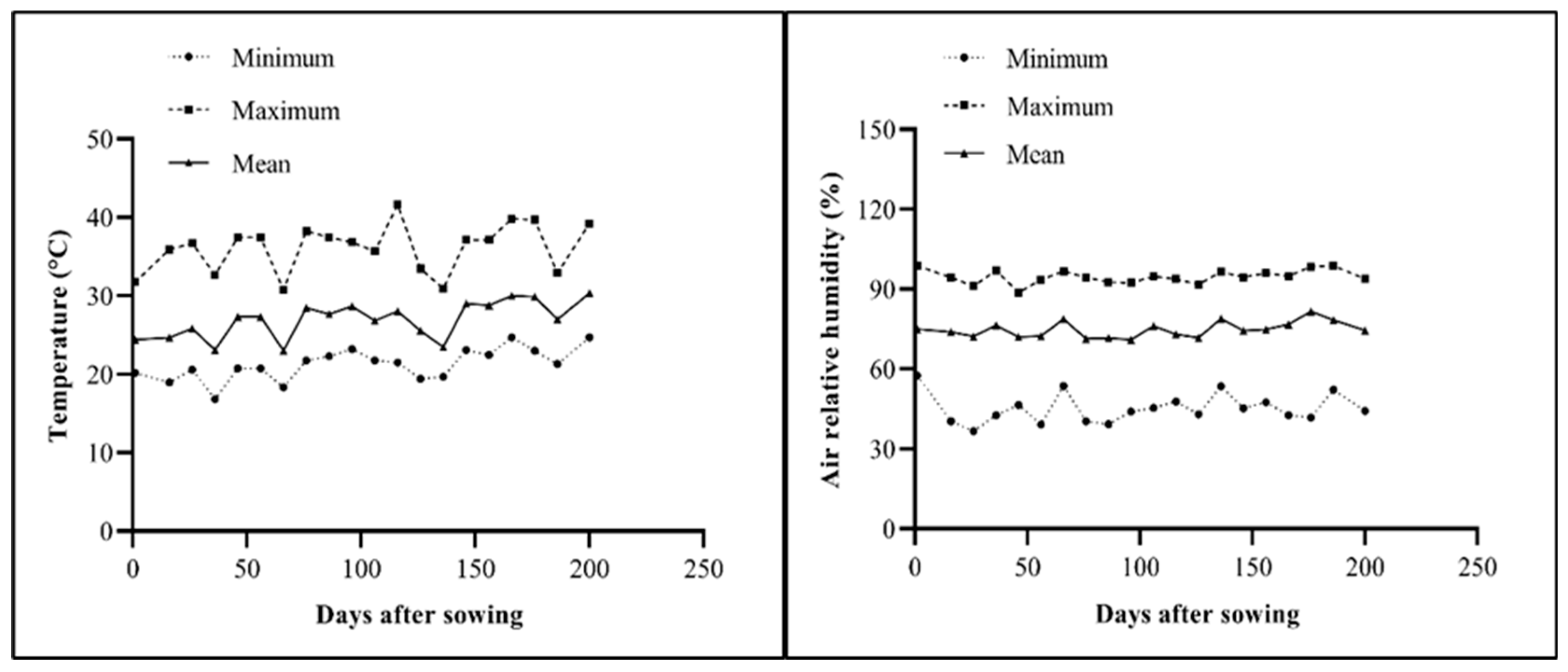
Evaluations were performed at 115, 136, and 162 days after sowing (DAS), corresponding to the final vegetative stage, onset of reproductive differentiation, and early reproductive stage, respectively. Air temperature and relative humidity inside the greenhouse were monitored throughout the experimental period using a HOBO U23-001 Pro v2 datalogger (Onset Computer Corporation, Bourne, MA, USA). Daily averages of temperature and relative humidity during the experimental period are presented in Figure 1.

2.2. Plant Material and Growth Conditions

Seeds of sour passion fruit (Passiflora edulis Sims) cultivar ‘Rio Dourado’ were obtained from the Plant Breeding Laboratory of UENF. Seeds were sown directly in sand previously washed and rinsed with tap water and then with deionized water. Sand was put inside black polyethylene pots with a 5 L volume. Sand was used as an inert substrate due to its negligible nutrient contribution, low chemical reactivity, neutral pH, suitable water retention capacity, and adequate root aeration.
Watering was performed daily during the initial stage to maintain substrate moisture close to 70% of water-holding capacity, ensuring adequate conditions for seedling establishment and early growth.

2.3. Nutrient Solution Management and Silicon Treatment

During the first 15 days after germination, seedlings were watered alternately with 200 mL of deionized water and 1/4 strength of modified Hoagland’s nutrient solution. Then, watering was performed every two days with 1/2 strength of the nutrient solution. From the 22nd day after germination until the end of the experiment, the plants received the full strength of the Hoagland’s nutrient solution, with an average daily application of approximately 450 mL per pot.
The pH of the nutrient solution was maintained at 5.4, adjusted with sodium hydroxide (NaOH), and periodically monitored throughout the experimental period. The solution was kept under acidic conditions, since silicic acid, like boric acid, is a weak acid in aqueous solution. At higher pH, it tends to form complexes with calcium, resulting in highly stable and poorly soluble silicon compounds. Under lower pH conditions, silicic acid remains more available, increasing its uptake by plants.
Irrigation with deionized water was performed every two days to prevent salt accumulation in the substrate, minimizing potential osmotic effects on plant growth. The composition of the modified Hoagland’s nutrient solution used in the experiment is shown in Table 1.

2.4. Silicon Sources and Application

Two commercial sources of silicon were used in the experiment: silicic acid (SiO2·xH2O, analytical grade, containing 99.0–100% SiO2, MERCK®, EMD Millipore Corporation, Darmstadt, Germany) and Agrisil® (containing 98% SiO2, Agrobiológica® Natural Solutions Ltda, São Paulo, Brazil). Before the experiment, the Agrisil fertilizer was chemically characterized to determine its nutritional composition, while the composition of the silicic acid source was obtained according to the manufacturer’s specifications (Table 2).
Silicon treatments started 23 days after seed germination and were subsequently applied at 15-day intervals throughout the experimental period. Silicon concentrations were calculated based on the volume of the substrate in each pot (5 L) and expressed in mg Si L−1. The applied silicon doses corresponded to cumulative amounts supplied over the experimental period. The total amount of silicon was divided into 12 applications, as detailed in Table 3.
Silicon solutions were prepared by dissolving the respective sources according to each Si concentration in 6.25 L of deionized water and were applied at a volume of 250 mL directly to the substrate to ensure Si availability in the root zone throughout plant development.

2.5. Physiological Measurements

Physiological measurements were performed at 115, 136, and 162 days after treatment initiation on the middle third of the fourth or fifth fully expanded leaf, counted from the plant apex, on each experimental unit. Measurements were carried out between 08:00 and 10:00 a.m., under stable environmental conditions to minimize short-term fluctuations in gas exchange.
Leaf chlorophyll index was measured using a portable SPAD chlorophyll meter (SPAD-502, Konica Minolta, Tokyo, Japan). Five readings were taken per leaf, at different points along the leaf blade, and the average value was used.
Net photosynthetic rate (A, μmol CO2 m−2 s−1), stomatal conductance (gs, mol H2O m−2 s−1), transpiration rate (E, mmol H2O m−2 s−1), intercellular CO2 concentration (Ci, μmol mol−1), and leaf temperature (Tleaf, °C) were determined using a portable infrared gas analyzer (IRGA), model LCpro-SD Portable Photosynthesis System® (ADC BioScientific Limited, London, UK), with an artificial light source and CO2 concentration set at 1000 μmol m−2 s−1 and 400 μL L−1, respectively, maintaining constant chamber conditions during all measurements.
Water use efficiency (A/E), intrinsic water use efficiency (A/gs), and carboxylation efficiency (A/Ci) were calculated from the gas exchange parameters.

2.6. Chlorophyll Fluorescence Analysis

Chlorophyll fluorescence was measured using a Pocket PEA fluorometer (Hansatech Instruments Ltd., Norfolk, UK). Leaves were dark-adapted for 30 min using leaf clips prior to the measurements. After dark adaptation, a saturating red-light pulse of 3500 μmol photons m−2 s−1 was applied to determine the minimal fluorescence (F0) and maximal fluorescence (Fm). Variable fluorescence (Fv) was calculated as Fm − F0.
From these values, the following chlorophyll fluorescence parameters were obtained: maximum quantum yield of PSII (Fv/Fm), basal non-photochemical processes in PSII (F0/Fm), maximum photochemical efficiency of PSII (Fv/F0), and the photosynthetic performance index (PI). Measurements were performed on the same leaves used for gas exchange evaluations, ensuring consistency between physiological assessments. Fluorescence parameters were calculated according to the JIP-test described by Strasser et al. [23].

2.7. Silicon (Si), Nitrogen (N), and Total Polyphenol Determination

Leaf (leaf blade + petiole) and root samples were collected at 136 days after treatment initiation, corresponding to the final stage of the experiment, for silicon (Si), nitrogen (N), and total polyphenol determination. These analyses were performed during this evaluation period.
Samples were dried in a forced-air oven at 65 ± 5 °C for 72 h, ground in a Wiley mill equipped (Solab Manufacturer, Piracicaba, SP, Brazil) with a 20-mesh sieve, and stored in hermetically sealed containers until analysis.
For Si and N determination, 0.100 g of dried and ground plant material was weighed. Polypropylene test tubes were used for Si determination, whereas neutral glass tubes were used for N determination; both had a capacity of 100 mL.
Silicon concentration was determined using the yellow colorimetric method based on organic matter oxidation, as described by Korndörfer et al. [24]. Samples were digested with 3 mL of hydrogen peroxide (H2O2), with the addition of two drops of filtered kerosene to control foaming, followed by the addition of 3 mL of sodium hydroxide to enhance the efficiency of the oxidizing agent (H2O2) and increase the pH, thereby maintaining Si in solution.
Silicon accumulation (Si acc) and accumulation per leaf area in plant tissues were calculated according to Equations (1) and (2), based on dry mass and leaf area measurements obtained at the same sampling time:
S i   a c c   ( m g   g 1 ) = S i   c o n c e n t r a t i o n   ×   d r y   m a s s   ( l e a f   o r   r o o t )
S i   a r e a   ( m g   c m 2 ) = S i   a c c u m u l a t i o n   m g   g 1 L e a f   a r e a   ( c m 2 )
Silicon use efficiency in leaves and roots (SiUE), as well as silicon translocation (%), were estimated considering leaf silicon content (mg g−1) as the shoot fraction and calculated according to Equations (3) and (4):
S i U E l e a f   o r   r o o t   ( g   m g 1 ) =   D r y   m a s s   l e a f   o r   r o o t   ( g ) S i   a c c u m u l a t i o n   m g   g 1
  S i t r a n s l o c a t i o n   % = S i   l e a f   m g   g 1 S i   r o o t + S i   s h o o t   ×   100
Nitrogen concentration was determined using the Nessler method after sulfuric acid digestion [25]. Total polyphenol content was determined using 0.375 g of dried and ground plant material, and the analysis was performed according to the method described by Anderson and Ingram [26], using appropriate extraction procedures prior to spectrophotometric quantification.
Absorbance measurements were performed using a Specord UV–Vis spectrophotometer (Analytik Jena, Jena, Germany) at wavelengths of 410 nm for Si, 480 nm for N, and 760 nm for total polyphenols, with calibration curves established for each analyte.

2.8. Statistical Analysis

Data were subjected to ANOVA using GraphPad Prism software (version 9.5.0). The effects of silicon concentrations, sources, and evaluation dates, as well as their interactions, were considered in the statistical model. Initially, data normality was assessed using the Shapiro–Wilk test. When significant effects were detected at the 5% probability level, regression analysis was performed for Si concentrations, and the Scott–Knott test (p ≤ 0.05) was applied for comparison of silicon sources. The model that best fitted the data was selected based on the significance of the regression coefficients and the coefficient of determination (R2).

3. Results

An interaction between treatment application time and silicon concentrations was observed for leaf temperature and the leaf greenness index. An interaction between silicon sources and applied concentrations was also observed for stomatal conductance, transpiration rate, and photosynthetic performance index, as indicated in Table 4. For the net photosynthetic rate, significance according to the F-test was detected only for the evaluation date.
For intercellular CO2 concentration, no significant interaction was observed among treatments. In contrast, Rubisco carboxylation efficiency and instantaneous water use efficiency were significantly affected by the evaluation dates (p < 0.05). An interaction between silicon concentrations and sources was observed for intrinsic water use efficiency. Basal quantum yield of non-photochemical processes in PSII was significantly affected by silicon sources (p < 0.01), while maximum photochemical efficiency and maximum quantum yield of PSII were also significantly influenced by silicon sources (p < 0.05) (Table 5).
For nutrient-related variables, significant interactions between silicon sources and concentrations were observed for silicon and nitrogen contents in leaves, as well as for silicon, nitrogen, and total polyphenol contents in roots. In contrast, no interactions were detected for silicon accumulation in leaves and roots or for total polyphenols accumulated in leaves. Silicon sources had a significant effect on accumulated nitrogen and polyphenols in both leaves and roots, as well as on silicon accumulation per leaf area (Si area) and silicon translocation (%). Additionally, an interaction between silicon source and concentration at the 1% significance level was observed for silicon use efficiency in both leaves and roots (Table 6).
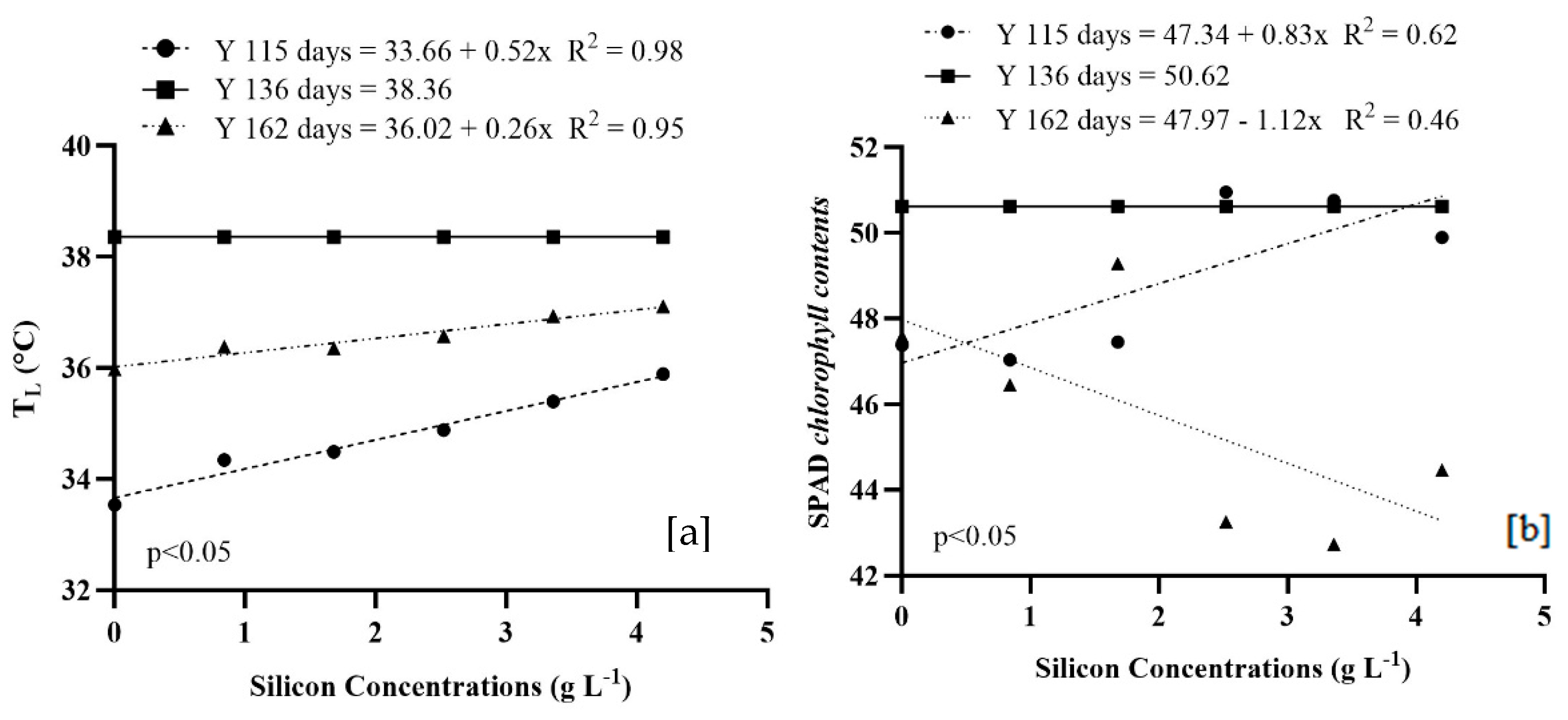
Leaf temperature and leaf greenness index showed a linear increasing response during the treatment date at 115 days (Figure 2a,b). At this stage, an increase of 7.01% in leaf temperature was observed at the concentration of 4.20 g Si, while leaf greenness increased by 7.54% at the concentration of 2.52 g Si compared to the control. At 136 days, both leaf temperature and greenness remained stable, with mean values of 38.36 °C and 50.62, respectively. At 162 days, leaf temperature increased again by approximately 3.14%, while leaf greenness decreased by 10.21% and 6.57% at concentrations of 3.36 and 4.20 g Si, respectively, compared to the control (Figure 2a,b).
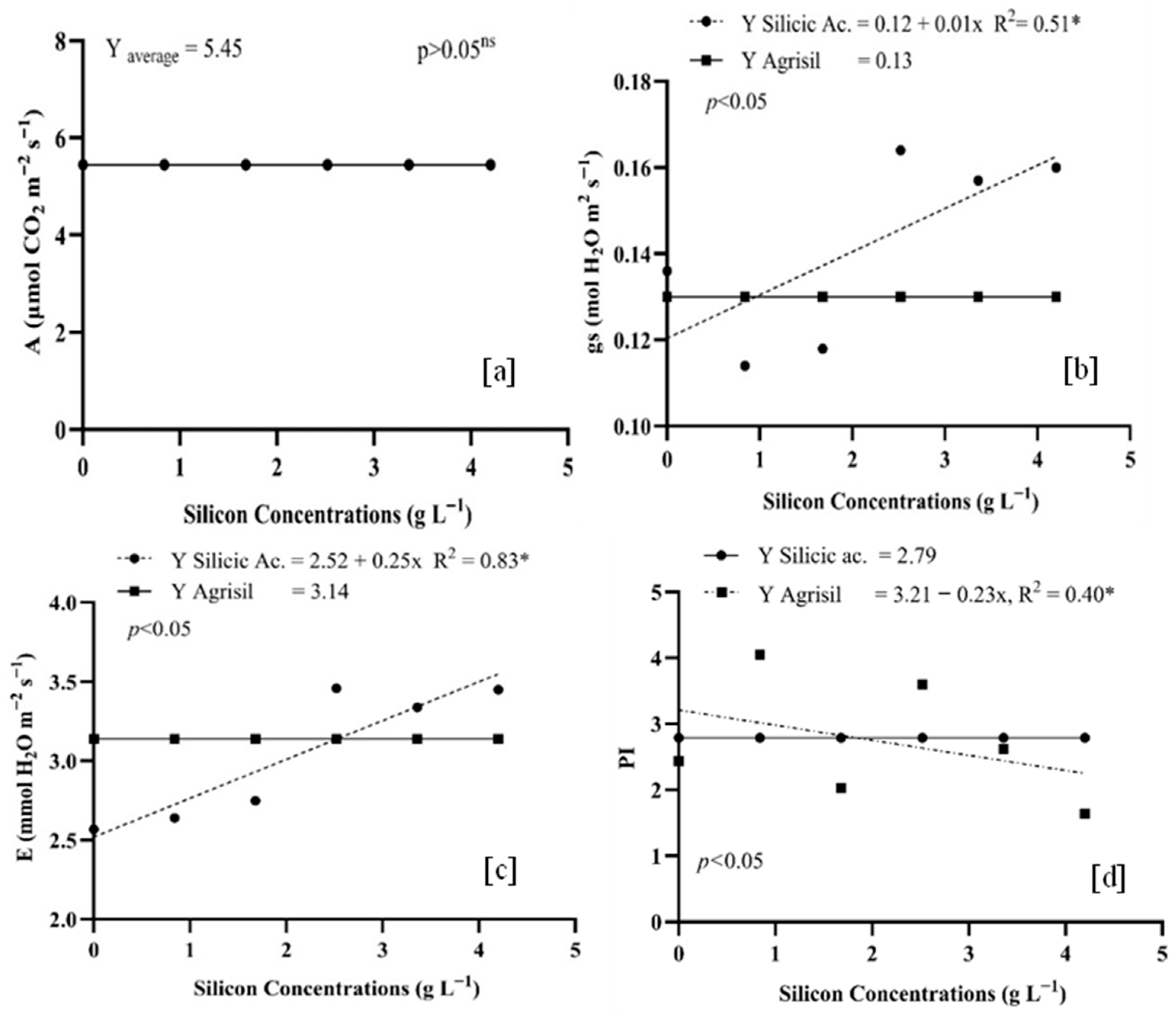
As shown in Table 7, a reduction of 25% in net photosynthetic rate was observed when comparing the evaluation dates at 115 and 136 days after sowing, followed by a 17% recovery over the subsequent 26 days. In addition, net photosynthetic rate did not vary across silicon concentrations, with an overall mean of 5.45 μmol CO2 m−2 s−1 (Figure 3a).
For instantaneous water use efficiency, plants at 115 DAS, corresponding to the vegetative stage, showed higher efficiency compared with plants at the reproductive differentiation and early reproductive stages. A reduction of 24% in instantaneous water use efficiency was observed at 136 DAS, followed by a recovery of 17% at 162 DAS (Table 7).
A similar pattern was observed for Rubisco carboxylation efficiency. Plants at 115 DAS showed higher values, with an average of 0.022 μmol CO2 m−2 s−1 per μmol mol−1. In comparison, plants at 136 DAS exhibited a 27% reduction in carboxylation efficiency, whereas at 162 DAS an increase of 19% was observed (Table 7).
With respect to silicon concentrations, instantaneous water use efficiency and Rubisco carboxylation efficiency did not respond to increasing Si levels in the nutrient solution. Therefore, mean values across concentrations were considered, with averages of 1.93 μmol CO2 fixed per mmol H2O transpired and 0.02 μmol CO2 m−2 s−1 per μmol.mol−1 (Table 5). For plants fertilized with Agrisil, stomatal conductance and transpiration rate did not vary with increasing silicon concentration in the nutrient solution, with mean values of 0.13 mol H2O m−2 s−1 and 3.14 mmol H2O m−2 s−1, respectively (Figure 3b,c). In contrast, plants treated with silicic acid showed a linear increasing response for these variables, with increases of 14.29% in stomatal conductance and 34.63% in transpiration from the concentration of 2.52 g Si compared to the control (Figure 3b,c).
The photosynthetic performance index (PI) (Figure 3d) showed higher sensitivity compared to the maximum quantum yield of PSII. In plants treated with silicic acid, PI remained relatively constant across silicon concentrations, with a mean value of 2.79 (Figure 3d). In contrast, plants fertilized with Agrisil exhibited a linear decreasing response, with a reduction of 32.51% in PI at the concentration of 4.20 g Si compared to the control (Figure 3d). Conversely, the concentration of 0.84 g Si maintained photosynthetic performance at 66.67% relative to the control.
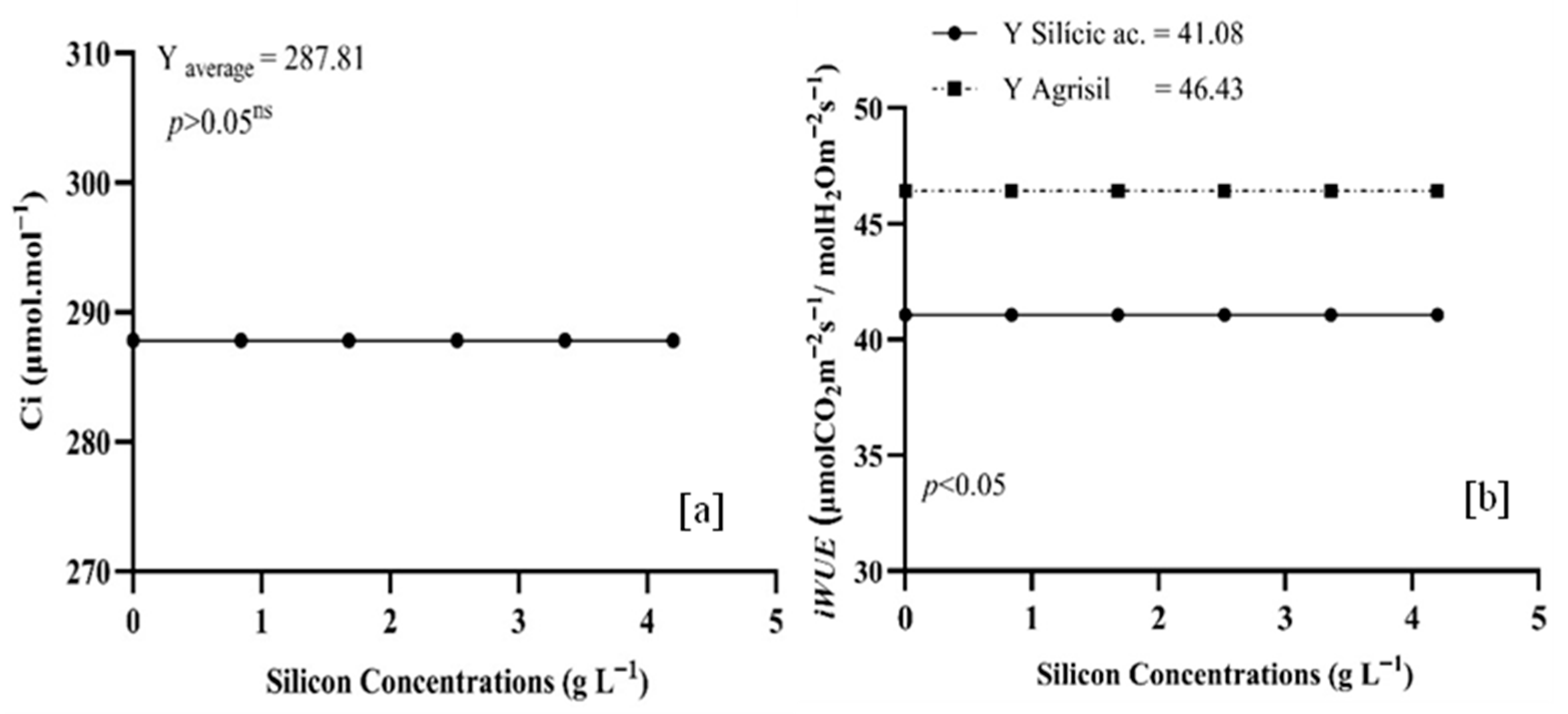
Similar to the net photosynthetic rate in Figure 3a, intercellular CO2 concentration remained constant throughout the silicon application period, with an average value of 288 μmol mol−1 (Figure 4a). This result indicates that CO2 assimilation was not limited by stomatal diffusion in the evaluated plants.
For intrinsic water use efficiency, plants fertilized with Agrisil differed from those treated with silicic acid; however, no clear response trend was observed as a function of silicon concentrations for either fertilizer (Figure 4b).
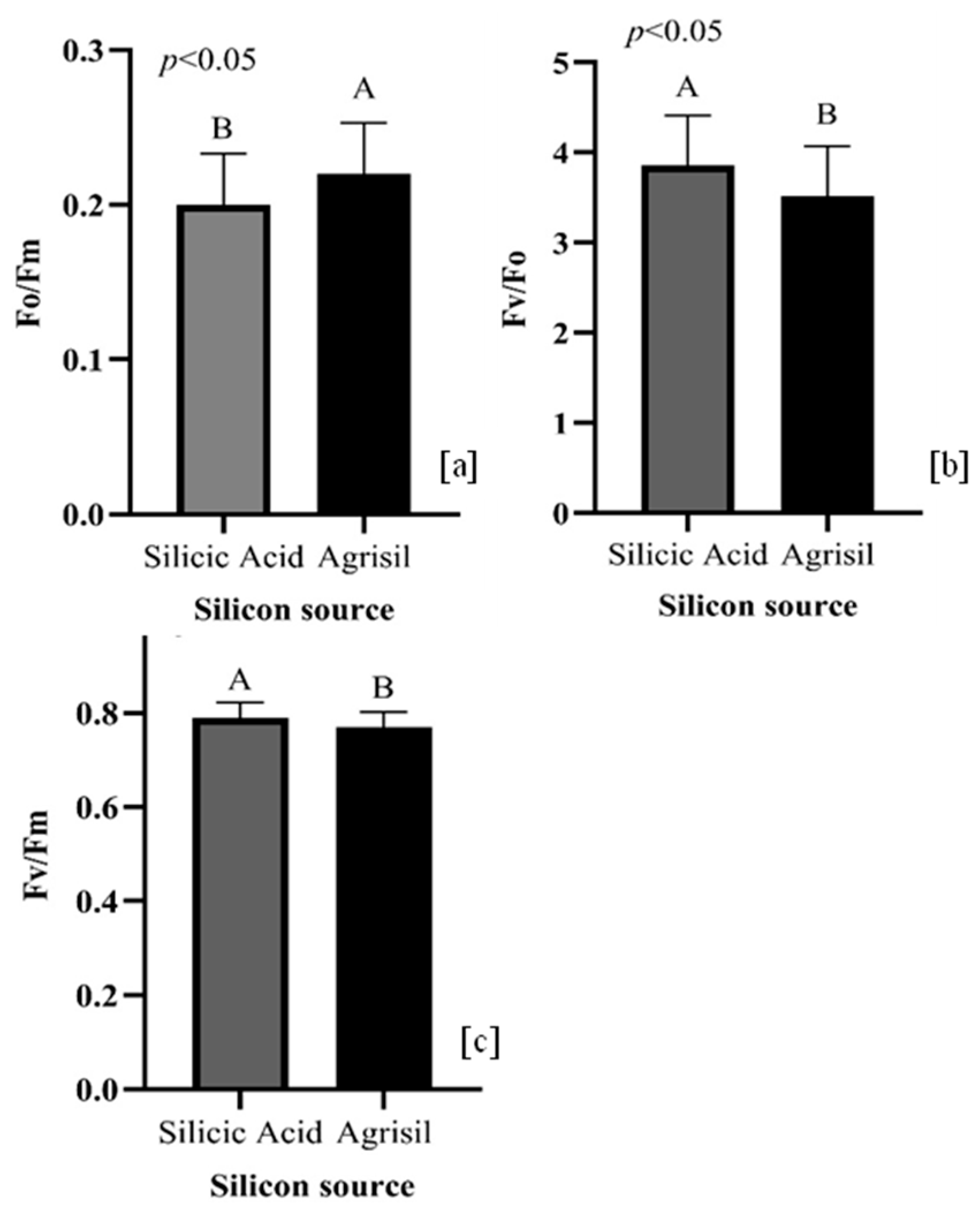
Differences between silicon sources (silicic acid and Agrisil) were observed for chlorophyll fluorescence parameters. Higher mean values for maximum photochemical efficiency (Fv/F0 = 3.86) and maximum quantum yield of PSII (Fv/Fm = 0.79) were found in plants treated with silicic acid (Figure 5b,c).
In contrast, Agrisil showed a higher basal quantum yield of non-photochemical processes (F0/Fm), with a mean of 0.22, indicating approximately 10% greater energy dissipation as heat compared with silicic acid (Figure 5a).
For silicon concentrations, mean values were calculated for chlorophyll fluorescence parameters, yielding values of 3.69, 0.22, and 0.78, respectively, for variables, maximum photochemical efficiency of PSII (Fv/F0), basal quantum yield of non-photochemical processes in PSII (F0/Fm), and maximum quantum yield of PSII (Fv/Fm) (Table 5).
The mathematical models describing the response of nutrient concentrations and accumulation in sour passion fruit plants represent the behavior of the variables as a function of silicon concentrations (Table 8).
For leaf silicon concentration, both silicic acid and Agrisil treatments showed quadratic regression responses (Table 8). In plants treated with silicic acid, a maximum estimated value of 2.93 g kg−1 of leaf Si was estimated at 3.13 g Si based on the regression model, representing an increase of 11% compared to the control. For Agrisil, a minimum estimated value of 0.66 g kg−1 of leaf Si was estimated at 2.32 g Si based on the regression model, with increases occurring from 3.36 g Si onward, reaching a 17% increase relative to the control (Table 8).
For leaf nitrogen concentration, no variation was observed in plants treated with silicic acid, with a mean value of 39.58 g kg−1. In contrast, plants fertilized with Agrisil showed a quadratic response (Table 8). Total polyphenol concentration in leaves was not affected by silicon concentrations or sources (Table 8).
In roots, silicon, nitrogen, and total polyphenol concentrations also exhibited distinct responses depending on the silicon source (Table 8). Total polyphenols in roots showed linear responses to silicon concentrations (Table 8).
For silicon accumulation in leaves, plants fertilized with Agrisil showed a 22% increase, estimated at 2.52 g Si based on the regression model, compared to the control, whereas no variation was observed in plants treated with silicic acid (Table 8).
Silicon use efficiency also showed responses dependent on source and concentration (Table 8).
No regression responses were observed for accumulated nitrogen and total polyphenols in leaves and roots; therefore, means across sources were considered. Higher leaf values were observed in Agrisil-treated plants, except for total polyphenols accumulated in roots, which were higher in silicic acid-treated plants (Table 9).
Silicon deposition and translocation (%) in leaf tissues varied between silicon sources (Table 10). Plants treated with silicic acid showed an average deposition of 0.015 mg cm−2, whereas Agrisil-treated plants showed 0.013 mg cm−2. Mean silicon deposition per leaf area was 0.014 mg cm−2. Sour passion fruit plants exhibited high silicon translocation capacity, with an average value of 76.3% (Table 10).

4. Discussion

Silicon supply induced physiological and nutritional changes in sour passion fruit plants, indicating an interaction between silicon uptake, its redistribution within plant tissues, and the performance of the photosynthetic apparatus, as supported by the high Si translocation values presented in Table 10. The plants exhibited a high capacity for Si absorption and translocation, with root-to-leaf transport rates ranging from approximately 74% to 79% (Table 10), suggesting that most of the silicon absorbed was mobilized via the transpiration stream in the xylem and accumulated in leaf tissues. This behavior is consistent with the passive transport mechanism of monosilicic acid (H4SiO4), which follows water movement toward photosynthetically active organs [2], where it may be polymerized and deposited as amorphous silica or phytoliths [10,27].
The dynamics of Si uptake varied among the evaluated sources, as shown in Table 8 for Si accumulation. Compared with the overall mean (Table 6), Si accumulation in roots increased by 13% for silicic acid and decreased by 12% for Agrisil. In leaves, Si accumulation decreased by 2% and 16%, respectively (based on the regression model for Agrisil).
However, positive responses were observed in leaf deposition in sour passion fruit plants, as indicated by the leaf silicon concentrations presented in Table 8. The silicic acid fertilizer exhibited faster absorption, reaching maximum values estimated at approximately 3.13 g Si based on the leaf regression model, which is consistent with its chemical composition and high purity, promoting higher availability of the element in the growing media. However, Si uptake from this source decreased at higher concentrations, which may indicate polymerization of monosilicic acid in the medium, as partial polymerization occurs at concentrations above 56 mg Si L−1 under saturated conditions [27].
In contrast, Si supplied by Agrisil showed a more gradual absorption pattern, with a maximum estimated near 2.32 g Si based on the leaf regression model and continued uptake at higher applied concentrations (Table 8). This behavior may be attributed to the composition of the fertilizer, which is derived from rocks or slags, resulting in lower solubility and slower release of silicon. Thus, differences in the chemical composition of the fertilizers directly influence Si availability and uptake dynamics in plants (Table 2).
Regardless of the source, roots retained approximately 24% of the absorbed Si relative to leaves, although the proportion translocated to the shoot was high (Table 10). The results indicate that moderate silicon supply is associated with improved physiological stability. The increase in phenolic compounds (Table 9) suggests a response related to plant protection under higher temperatures (Figure 1), as these compounds are involved in plant defense, especially under abiotic stress conditions [28].
The high translocation indices observed in this study (Table 10) indicate that the species has a significant capacity for internal transport of silicon. This result suggests that sour passion fruit behaves as an intermediate silicon accumulator, benefiting from moderate silicon availability but showing limitations under excessive supply. This behavior depends on phylogenetic characteristics and environmental conditions, particularly silicon availability in the soil or nutrient solution [29]. Excessive silicon uptake may be associated with increased leaf temperature and reduced efficiency of photosystem II [30,31,32,33], as observed in Figure 2a and Figure 3d.
The increase in leaf Si concentration influenced plant physiological regulation. At moderate concentrations (0.84 and 1.68 g Si), higher stomatal conductance and transpiration rates were observed (Figure 3b,c), suggesting improved gas exchange and heat dissipation. In contrast, higher Si concentrations (≥2.52 g) promoted greater deposition of biogenic silica in epidermal tissues, which may increase structural rigidity and alter stomatal and transpiration dynamics [34,35]. As a result, reduced thermal dissipation may contribute to increased leaf temperature, particularly under high radiation conditions in protected environments [32,33].
An increase in leaf temperature (Figure 2a) can affect the stability of the photosynthetic apparatus. Under such conditions, part of the energy absorbed by chlorophyll may be dissipated as heat or fluorescence, reducing photochemical efficiency [36]. This response was accompanied by a reduction in leaf greenness (SPAD index) at higher Si concentrations (Figure 2b), indicating a decrease in chlorophyll content. Reduced pigment levels compromise light absorption and energy transfer, as reflected in chlorophyll fluorescence responses (Figure 5) [37].
Both fertilizers influenced the maximum quantum yield of PSII (Fv/Fm), with values approaching the lower threshold of the optimal range (0.75–0.85) [38]. Although Fv/Fm values remained within the range considered normal (Figure 5c), indicating proper structural functioning of PSII [39], a reduction in PI was observed at higher Si concentrations. This suggests increased energy dissipation through non-photochemical processes, supported by an increase in the F0/Fm ratio (Figure 5a).
In this study, the photosynthetic performance index (PI) proved to be more sensitive than the Fv/Fm ratio for detecting physiological changes associated with silicon concentrations, which showed a marked decline at higher Si doses (3.36 and 4.20 g), particularly in plants treated with Agrisil (Figure 3d). This reduction in PI was associated with a concurrent decrease in chlorophyll content and increased temperature [32,33], suggesting a coordinated response of the photosynthetic apparatus to elevated silicon levels. For Agrisil, this effect may be linked to increased energy dissipation as heat through non-photochemical processes in PSII [40]. Additionally, maximum photochemical efficiency values for both fertilizers remained below the critical range (4–6), indicating a potential limitation in the efficiency of energy conversion within the photosynthetic system [41].
Despite these changes in photochemical parameters, the net photosynthetic rate is relatively stable across silicon concentrations (Figure 3a) [15], indicating diffusion limitations. Thus, the reduction in carboxylation efficiency may be associated with it [42].
In addition to physiological effects, silicon application also influenced mineral nutrition and secondary metabolism. Increased transpiration (Figure 3c) may enhance mass flow in the nutrient solution, contributing to greater nitrogen (N) uptake (Table 9), as this element is predominantly absorbed via this mechanism [43]. The observed N concentrations remained within the adequate range for the crop, indicating a positive interaction between Si and N under the evaluated conditions.
Silicon fertilization also affected phenolic metabolism. Although total polyphenol concentrations in leaves were not influenced by silicon treatments (Table 8), an increase was observed in roots (Table 9), especially in plants treated with silicic acid. This response may be related to the role of silicon in plant defense, as it may stimulate the synthesis of secondary metabolites such as phytoalexins [10,44,45].
Overall, the results indicate that sour passion fruit has a high capacity for silicon uptake and translocation (Table 10), with silicon use efficiency depending on both source and applied concentration (Table 8). Moderate Si concentrations were associated with improved gas exchange (Figure 3) and photochemical stability (Figure 5), whereas higher concentrations promoted greater silica deposition, increased leaf temperature (Figure 2), and made adjustments in energy dissipation.

5. Conclusions

The results indicate that silicon supply promotes physiological adjustments in sour passion fruit plants grown under greenhouse conditions. Silicon concentrations between 0.84 and 1.68 g Si L−1 were associated with higher stomatal conductance and transpiration, without compromising the photochemical stability of photosystem II. Chlorophyll fluorescence parameters remained within the range considered adequate for physiologically active leaves, indicating that moderate silicon supply contributed to the maintenance of photochemical efficiency.
Sour passion fruit plants showed the capacity to absorb and translocate silicon to the shoots, with high translocation rates, suggesting characteristics consistent with intermediate silicon accumulators. Differences were observed between silicon sources in terms of availability dynamics. Silicic acid showed greater efficiency at intermediate concentrations (1.68 g Si L−1), whereas Agrisil presented a more gradual response, with better performance from 2.52 g Si L−1, reflecting differences in the release and availability of soluble silicon in the nutrient solution.
Overall, moderate silicon supply was associated with improved gas exchange and maintenance of photochemical stability, whereas higher concentrations were related to increased leaf temperature and changes in energy dissipation. These results indicate that silicon influences physiological processes linked to stomatal regulation and photochemical performance.

Author Contributions

Conceptualization, R.F.d.M.T. and A.J.C.d.C.; data curation, H.M.d.O. and T.M.S.; formal analysis, R.F.d.M.T., A.J.C.d.C., H.M.d.O., Á.C.M., P.C.d.S., W.P.R. and T.M.S.; investigation, R.F.d.M.T. and G.R.P.A.; methodology, R.F.d.M.T., A.J.C.d.C., H.M.d.O., Á.C.M., W.P.R., T.M.S., M.S.M.F., G.R.P.A., V.d.F.M. and M.E.V.; visualization, A.C.R.; writing—original draft preparation, R.F.d.M.T., A.J.C.d.C., S.d.P.C.B.M., Á.C.M., P.C.d.S., M.Z., A.C.R., W.P.R., M.S.M.F., G.R.P.A., V.d.F.M., M.E.V. and J.L.L.d.A.P.; writing—review and editing, R.F.d.M.T., A.J.C.d.C., S.d.P.C.B.M., P.C.d.S., M.Z., A.C.R., M.S.M.F., V.d.F.M., M.E.V. and J.L.L.d.A.P. All authors have read and agreed to the published version of the manuscript.

Funding

The authors acknowledge the financial support for this research and the doctoral scholarship provided by Coordenação de Aperfeiçoamento de Pessoal de Nível Superior (CAPES). The authors also thank Fundação de Amparo à Pesquisa do Estado do Rio de Janeiro (FAPERJ) and Fundação de Amparo à Pesquisa e Inovação do Espírito Santo (FAPES) for financial support and for promoting scientific and technical publications. The authors have reviewed and edited the output and take full responsibility for the content of this publication.

Data Availability Statement

The original contributions presented in this study are included in the article. Further inquiries can be directed to the corresponding author.

Acknowledgments

I would like to thank the LFIT group at CCTA/UENF, my advisor Almy Junior Cordeiro de Carvalho, my colleagues and laboratory partners Paulo Cesar Santos, Gabriella Linhares, Rômulo Beltrame, Jessica da Glória, Diego Corona, Késia Corona, Henrique Martins, David Gomes, Detony Petry, and Nayara, Sasha, Adrielly, Dádiva Paula, Ygor, and João Pedro for their support, dedication, and valuable contributions to this research.

Conflicts of Interest

The authors declare no conflicts of interest.

References

  1. Epstein, E.; Bloom, A. Mineral Nutrition of Plants: Principles and Perspectives, 2nd ed.; Planta: Londrina, Brazil, 2006. [Google Scholar]
  2. Liang, Y.; Nikolic, M.; Bélanger, R.; Gong, H.; Song, A. Silicon in Agriculture: From Theory to Practice; Springer: Dordrecht, The Netherlands, 2015. [Google Scholar] [CrossRef]
  3. Ahmed, M.; Hasanuzzaman, M.; Raza, M.A.; Malik, A.; Ahmad, S. Plant nutrients for crop growth, development and stress tolerance. In Sustainable Agriculture in the Era of Climate Change; Roychowdhury, R., Choudhury, S., Hasanuzzaman, M., Srivastava, S., Eds.; Springer: Cham, Switzerland, 2020; pp. 43–92. [Google Scholar] [CrossRef]
  4. Seleiman, M.F.; Al-Suhaibani, N.; Ali, N.; Akmal, M.; Alotaibi, M.; Refay, Y.; Dindaroglu, T.; Abdul-Wajid, H.H.; Battaglia, M.L. Drought stress impacts on plants and different approaches to alleviate its adverse effects. Plants 2021, 10, 259. [Google Scholar] [CrossRef]
  5. Xu, J.; Guo, L.; Liu, L. Exogenous silicon alleviates drought stress in maize by improving growth, photosynthetic and antioxidant metabolism. Environ. Exp. Bot. 2022, 201, 104974. [Google Scholar] [CrossRef]
  6. Aziz, H.A.; Sharaf, M.; Omar, M.; Abou El-Yazied, A.; AlJwaizea, N.I.; Ismail, S.; Omar, M.M.; Alharbi, K.; Elkelish, A.; Tawfik, M. Improvement of selected morphological, physiological, and biochemical parameters of banana (Musa acuminata L.) using potassium silicate under drought stress condition grown in vitro. Phyton 2023, 92, 1019–1036. [Google Scholar] [CrossRef]
  7. Guntzer, F.; Keller, C.; Meunier, J.-D. Benefits of plant silicon for crops: A review. Agron. Sustain. Dev. 2012, 32, 201–213. [Google Scholar] [CrossRef]
  8. Yin, L.; Wang, S.; Liu, P.; Wang, W.; Cao, D.; Deng, X.; Zhang, S. Silicon-mediated changes in polyamine and 1-aminocyclopropane-1-carboxylic acid are involved in silicon-induced drought resistance in Sorghum bicolor. Plant Physiol. Biochem. 2014, 80, 268–277. [Google Scholar] [CrossRef]
  9. Ma, J.F.; Yamaji, N. A cooperated system of silicon transport in plants. Trends Plant Sci. 2015, 20, 435–442. [Google Scholar] [CrossRef]
  10. Frew, A.; Weston, L.A.; Reynolds, O.L.; Gurr, G.M. The role of silicon in plant biology: A paradigm shift in research approach. Ann. Bot. 2018, 121, 1265–1273. [Google Scholar] [CrossRef]
  11. Yin, J.; Jia, J.; Lian, Z.; Hu, Y.; Guo, J.; Huo, H.; Zhu, Y.; Gong, H. Silicon enhances salt tolerance of cucumber through increasing polyamine accumulation and decreasing oxidative damage. Ecotoxicol. Environ. Saf. 2019, 169, 8–17. [Google Scholar] [CrossRef]
  12. Gou, T.; Chen, X.; Han, R.; Liu, J.; Zhu, Y.; Gong, H. Silicon can improve seed germination and ameliorate oxidative damage of bud seedlings in cucumber under salt stress. Acta Physiol. Plant. 2020, 42, 12. [Google Scholar] [CrossRef]
  13. Gou, T.; Yang, L.; Hu, W.; Chen, X.; Zhu, Y.; Guo, J.; Gong, H. Silicon improves the growth of cucumber under excess nitrate stress by enhancing nitrogen assimilation and chlorophyll synthesis. Plant Physiol. Biochem. 2020, 152, 53–61. [Google Scholar] [CrossRef]
  14. Costa, B.N.S.; Dias, G.M.G.; Costa, I.J.S.; Assis, F.A.; Silveira, F.A.; Pasqual, M. Effects of silicon on the growth and genetic stability of passion fruit. Acta Sci. Agron. 2016, 38, 503–511. [Google Scholar] [CrossRef]
  15. Costa, B.N.S.; Costa, I.J.S.; Dias, G.M.G.; Assis, F.A.; Pio, L.A.S.; Soares, J.D.R.; Pasqual, M. Morpho-anatomical and physiological alterations of passion fruit fertilized with silicon. Pesq. Agropec. Bras. 2018, 53, 163–171. [Google Scholar] [CrossRef]
  16. Faleiro, F.G.; Junqueira, N.T.V.; Braga, M.F. Passion fruit research and development. In Agricultura Tropical; Albuquerque, A.C.S., Silva, R.C., Eds.; Embrapa: Brasília, Brazil, 2008; pp. 411–416. [Google Scholar]
  17. Bernacci, L.C.; Cervi, A.C.; Milward-de-Azevedo, M.A.; Nunes, T.S.; Imig, D.C.; Mezzonato, A.C. Passifloraceae. In Lista de Espécies da Flora do Brasil; Jardim Botânico do Rio de Janeiro: Rio de Janeiro, Brazil, 2015. Available online: http://floradobrasil2015.jbrj.gov.br/FB86373 (accessed on 14 May 2020).
  18. Pacheco, G.; Simão, M.J.; Vianna, M.G.; Garcia, R.O.; Vieira, M.L.C.; Mansur, E. In vitro conservation of Passiflora: A review. Sci. Hortic. 2016, 211, 305–311. [Google Scholar] [CrossRef]
  19. Zeraik, M.L.; Pereira, C.A.M.; Zuin, V.G.; Yariwake, J.H. Passion fruit: A functional food? Rev. Bras. Farmacogn. 2010, 20, 459–471. [Google Scholar] [CrossRef]
  20. Meletti, L.M.M. Advances in passion fruit cultivation in Brazil. Rev. Bras. Frutic. 2011, 33, 83–91. [Google Scholar] [CrossRef]
  21. Dias, T.J.; Cavalcante, L.F.; Freire, J.L.O.; Nascimento, J.A.; Beckmann-Cavalcante, M.Z.; Santos, G.P. Chemical quality of yellow passion fruit grown in soil with biofertilizer and irrigated with saline water. Rev. Bras. Eng. Agríc. Ambient. 2011, 15, 229–236. [Google Scholar] [CrossRef]
  22. Sun, H.; Gao, F.; Kong, X.; Jiao, Z.; Tan, Z.; Wu, J.; He, B.; Duan, Y. Characterization of two proline-rich proteins involved in silicon deposition in cucumber. Front. Plant Sci. 2025, 16, 1664009. [Google Scholar] [CrossRef]
  23. Strasser, R.J.; Tsimilli-Michael, M.; Srivastava, A. Analysis of the chlorophyll fluorescence transient. In Chlorophyll Fluorescence: A Signature of Photosynthesis; Papageorgiou, G.C., Govindjee, Eds.; Springer: Dordrecht, The Netherlands, 2004; pp. 321–362. [Google Scholar] [CrossRef]
  24. Korndörfer, G.H.; Pereira, H.S.; Nola, A. Análise de Silício: Solo, Planta e Fertilizante; Universidade Federal de Uberlândia: Uberlândia, Brazil, 2004; pp. 1–34. [Google Scholar]
  25. Jackson, M.L. Soil Chemical Analysis; Prentice Hall: Saddle River, NJ, USA, 1965; pp. 1–498. [Google Scholar]
  26. Anderson, J.D.; Ingram, J.S.I. Tropical Soil Biology and Fertility: A Handbook of Methods, 2nd ed.; CAB International: Wallingford, UK, 1996; pp. 1–171. [Google Scholar] [CrossRef]
  27. Marschner, H. Mineral Nutrition of Higher Plants, 3rd ed.; Elsevier: London, UK, 2012. [Google Scholar]
  28. Nascimento, C.W.A.; Souza Nunes, G.H.; Preston, H.A.F.; Silva, F.B.V.; Preston, W.; Loureiro, F.L.C. Influence of silicon fertilization on nutrient accumulation, yield and fruit quality of melon grown in northeastern Brazil. Silicon 2020, 12, 937–943. [Google Scholar] [CrossRef]
  29. Hodson, M.J.; White, P.J.; Mead, A.; Broadley, M.R. Phylogenetic variation in the silicon composition of plants. Ann. Bot. 2005, 96, 1027–1046. [Google Scholar] [CrossRef]
  30. Misra, A.N.; Misra, M.; Singh, R. Chlorophyll fluorescence in plant biology. In Biophysics; Misra, A.N., Ed.; Intech: Rijeka, Croatia, 2012; pp. 171–192. [Google Scholar] [CrossRef]
  31. Wang, S.; Liu, P.; Chen, D.; Yin, L.; Li, H.; Deng, X. Silicon enhanced salt tolerance by improving root water uptake and decreasing ion toxicity in cucumber. Front. Plant Sci. 2015, 6, 759. [Google Scholar] [CrossRef]
  32. Roháček, K. Chlorophyll fluorescence parameters: Definitions, photosynthetic meaning, and mutual relationships. Photosynthetica 2002, 40, 13–29. [Google Scholar] [CrossRef]
  33. Muneer, S.; Park, Y.G.; Kim, S.; Jeong, B.R. Foliar or subirrigation silicon supply mitigates high temperature stress in strawberry. J. Plant Growth Regul. 2017, 36, 836–845. [Google Scholar] [CrossRef]
  34. Ahmed, M.; Kamran, A.; Asif, M.; Qadeer, U.; Ahmed, Z.I.; Goyal, A. Silicon priming: A potential source to impart abiotic stress tolerance in wheat: A review. Aust. J. Crop Sci. 2013, 7, 484–491. [Google Scholar]
  35. Ahmed, M.; Qadeer, U.; Ahmed, Z.I.; Hassan, F.U. Improvement of wheat (Triticum aestivum) drought tolerance by seed priming with silicon. Arch. Agron. Soil Sci. 2016, 62, 299–315. [Google Scholar] [CrossRef]
  36. Mathur, S.; Agrawal, D.; Jajoo, A. Photosynthesis: Response to high temperature stress. J. Photochem. Photobiol. B 2014, 137, 116–126. [Google Scholar] [CrossRef]
  37. Khan, W.U.D.; Aziz, T.; Hussain, I.; Ramzani, P.M.A.; Reichenauer, T.G. Silicon: A beneficial nutrient for maize crop to enhance photochemical efficiency of photosystem II under salt stress. Arch. Agron. Soil Sci. 2017, 63, 599–611. [Google Scholar] [CrossRef]
  38. Stirbet, A.; Govindjee. On the relation between the Kautsky effect (chlorophyll a fluorescence induction) and photosystem II. J. Photochem. Photobiol. B 2011, 104, 236–257. [Google Scholar] [CrossRef]
  39. Bolhar-Nordenkampf, H.R.; Long, S.P.; Baker, N.R.; Oquist, G.; Schreiber, U.; Lechner, E.G. Chlorophyll fluorescence as a probe of the photosynthetic competence of leaves in the field: A review of current instrumentation. Funct. Ecol. 1989, 3, 497–514. [Google Scholar] [CrossRef]
  40. Lípová, L.; Krchňák, P.; Komenda, J.; Ilík, P. Heat-induced disassembly and degradation of chlorophyll-containing protein complexes in vivo. Biochim. Biophys. Acta 2010, 1797, 63–70. [Google Scholar] [CrossRef]
  41. Zanandrea, I.; Nassi, F.L.; Turchetto, A.C.; Braga, E.J.B.; Peters, J.A.; Bacari, M.A. Efeito da salinidade sob parâmetros de fluorescência em Phaseolus vulgaris. Rev. Bras. Agrociência 2006, 12, 157–161. [Google Scholar]
  42. Singh, S.; Parihar, P.; Singh, R.; Singh, V.P.; Prasad, S.M. Heavy metal tolerance in plants: Role of transcriptomics, proteomics, metabolomics, and ionomics. Front. Plant Sci. 2016, 6, 1143. [Google Scholar] [CrossRef] [PubMed]
  43. Prado, R.M. Nutrição de Plantas, 2nd ed.; UNESP: São Paulo, Brazil, 2020. [Google Scholar]
  44. Fawe, A.; Abou-Zaid, M.; Menzies, J.G.; Bélanger, R.R. Silicon-mediated accumulation of flavonoid phytoalexins in cucumber. Biochem. Cell Biol. 1998, 88, 396–401. [Google Scholar] [CrossRef]
  45. Souri, Z.; Khanna, K.; Karimi, N.; Ahmad, P. Silicon and plants: Current knowledge and future prospects. J. Plant Growth Regul. 2021, 40, 906–925. [Google Scholar] [CrossRef]
Figure 1. Mean maximum, minimum, and average air temperature (°C), and maximum, minimum, and average relative humidity (%), recorded during the cultivation of sour passion fruit plants under greenhouse conditions in Campos dos Goytacazes, RJ, Brazil.
Horticulturae 12 00605 g001
Figure 2. Leaf temperature (TL) (a) and green intensity (SPAD) (mean across silicon sources) (b) in sour passion fruit plants as a function of silicon concentrations and treatment duration (days) in greenhouse-grown plants.
Horticulturae 12 00605 g002
Figure 3. Net photosynthetic rate (A) (mean of silicon sources and treatment application time) (a); stomatal conductance (gs) (b); transpiration rate E (c) (mean of treatment application time) and photosynthetic performance index (PI) (mean of treatment application time) (d) of sour passion fruit plants as a function of silicon doses applied to plants grown in a greenhouse. Regression (α = 0.05). Silicon concentrations (g L−1): 0 (no Si application); 1 = 0.84; 2 = 1.68; 3 = 2.52; 4 = 3.36; and 5 = 4.20.* Significance levels p ≤ 0.05. ns = not significant.
Horticulturae 12 00605 g003
Figure 4. Intercellular CO2 concentration (Ci) (a) (mean of silicon sources, silicon concentrations, and treatment application time) and intrinsic water use efficiency [iWUE] (A/gs) (mean of treatment application time) (b) of sour passion fruit plants as a function of silicon doses applied to plants grown in a greenhouse. Regression (α = 0.05). Silicon concentrations (g L−1): 0 (no Si application); 1 = 0.84; 2 = 1.68; 3 = 2.52; 4 = 3.36; and 5 = 4.20. ns = not significant.
Horticulturae 12 00605 g004
Figure 5. Basal quantum yield of non-photochemical processes in PSII (F0/Fm) (a), maximum photochemical efficiency of PSII (Fv/F0) (b), and maximum quantum yield of PSII (Fv/Fm) (mean of silicon concentrations and treatment application time) (c) of sour passion fruit plants as a function of silicon doses applied to plants grown in a greenhouse. Means followed by different letters within the column differ significantly at the 5% probability level according to the Scott–Knott test.
Horticulturae 12 00605 g005
Table 1. Composition of the full modified Hoagland’s nutrient solution used in the experiment with sour passion fruit plants under different silicon concentrations. Campos dos Goytacazes, RJ, Brazil, 2020.
Stock SolutionComplete (mL L−1)
Ca(NO3)2 4H2O (2 mol L−1)1.5
KNO3 (2 mol L−1)2.0
MAP (1 mol L−1) *0.5
MgSO4 (1 mol L−1)2.0
FeEDTA (25 g L−1) **1.0
MICRO ***1.0
H3BO3 (25 mM)1.0
(NH4)2SO4 (1 mol L−1)0.5
* MAP: monoammonium phosphate (NH4H2PO4), ** FeEDTA g L−1: Ferric chloride (FeCl3)—10 g and disodium EDTA—15 g; *** Micronutrients: ZnSO4·7H2O—578 mg L−1, CuSO4·5H2O—0.125 mg L−1, MnSO4 H2O—845 mg L−1, KCl—3728 mg L−1, and (NH4)6Mo7O24·4H2O—88 mg L−1.
Table 2. Chemical composition of the silicon sources used in the experiment. Macronutrients are expressed in g kg−1 and micronutrients in mg kg−1 for Agrisil, and in percentage (%) for silicic acid (Si. ac.), according to manufacturer specifications.
SourcesCaMgKPSBCuFeMnMoNioZnCl
g kg−1mg g−1
Agrisil1.390.441.231.280.2329.351.6413722.190.830.8428.3-
%%
Si. ac.-------0.03--- 0.05
Table 3. Silicon amounts applied to the substrate in an experiment with sour passion fruit (Passiflora edulis Sims) grown under soilless culture conditions.
Si Concentration (mM)First ApplicationSecond Application12th ApplicationTotal Si Applied
(g)
Si (mg)Si
(mg L−1)
Si
(mg)
Si
(mg L−1)
Si
(mg)
Si
(mg L−1)
00000000
0.51470147014700.84
1.02814028140281401.68
1.54221042210422102.52
2.05628056280562803.36
2.57035070350703504.20
Table 4. Mean squares from ANOVA for the variation sources, degrees of freedom (df), and coefficients of variation (CV) obtained for leaf temperature (Tleaf, °C), leaf greenness index (SPAD), net photosynthetic rate (A, μmol CO2 m−2 s−1), transpiration rate (E, mmol H2O m−2 s−1), stomatal conductance (gs, mol H2O m−2 s−1), and photosynthetic performance index (PI) of sour passion fruit plants as a function of silicon doses applied to plants grown in a greenhouse.
Source of VariationdfTleafSPADAEgsPI
Blocks32.52 *41.46 ns10.56 *0.38 ns0.00 ns3.38 ns
Silicon dose54.11 **5.08 ns0.96 ns2.35 *0.00 ns8.50 **
Silicon source134.81 **4.45 ns1.73 ns0.44 ns0.00 ns0.12 ns
Evaluation date2155.88 **313.85 **29.81 **2.17 *0.05 **19.32 **
Dose × source51.25 ns37.63 ns1.72 ns1.60 *0.001 *4.90 *
Dose × date101.42 *46.24 *1.89 ns0.40 ns0.00 ns1.39 ns
Source × date23.10 *1.21 ns0.35 ns0.20 ns0.00 ns0.00 ns
Dose × source × date100.255 ns24.00 ns2.07 ns0.45 ns0.00 ns0.53 ns
Residual1050.8616.581.700.560.0021.40
CV (%)-6.368.4123.7024.1823.7543.00
Mean-14.5948.445.443.100.142.76
Significance levels: ** p ≤ 0.01; * p ≤ 0.05; and ns = not significant.
Table 5. Mean squares from ANOVA for the variation sources, degrees of freedom (df), and coefficients of variation (CV) obtained for intercellular CO2 concentration (Ci, μmol mol−1), Rubisco carboxylation efficiency (A/Ci, μmol CO2 m−2 s−1 per μmol mol−1), instantaneous water use efficiency (WUE, μmol CO2 m−2 s−1 per mmol H2O m−2 s−1), intrinsic water use efficiency (iWUE, μmol CO2 m−2 s−1 per mol H2O m−2 s−1), basal quantum yield of non-photochemical processes in PSII (F0/Fm), maximum photochemical efficiency of PSII (Fv/F0), and maximum quantum yield of PSII (Fv/Fm) in sour passion fruit plants as a function of silicon doses applied under greenhouse conditions.
Source of VariationdfCiA/CiWUEiWUEF0/FmFv/F0 Fv/Fm
Blocks33830.3 *0.00 *1.81 *152.3 ns0.00 ns0.26 ns0.00 ns
Silicon dose5598.2 ns0.00 ns1.50 ns333.7 ns0.00 ns0.50 ns0.00 ns
Silicon source134.6 ns0.00 ns0.05 ns1028.1 ns0.01 *4.37 **0.01 *
Evaluation date2727.5 ns0.00 **3.18 *980.4 *0.00 ns0.17 ns0.00 ns
Dose × source51633.2 ns0.00 ns0.57 ns498.6 *0.00 ns0.34 ns0.00 ns
Dose × date10394.3 ns0.00 ns0.65 ns30.46 ns0.00 ns0.07 ns0.00 ns
Source × date2699.3 ns0.00 ns0.32 ns9.91 ns0.00 ns0.01 ns0.00 ns
Dose × source × date101151.3 ns0.00 ns0.08 ns125.11 ns0.00 ns0.14 ns0.00 ns
Residual1051152.00.000.66174.370.0010.290.00
CV (%)-12.0027.0042.0030.0014.8914.704.00
Mean-287.810.021.9343.760.223.690.78
Significance levels: ** p ≤ 0.01; * p ≤ 0.05; and ns = not significant.
Table 6. Mean square values based on the F-test for the different sources of variation, degrees of freedom (df), and coefficients of variation (CV) obtained from ANOVA for silicon (Si), nitrogen (N), and total polyphenol (TP) concentration (C, g kg−1) and accumulation (A, mg g−1) in leaves and roots and Silicon accumulation per leaf area (Si area, mg cm−2), and silicon translocation (%) of sour passion fruit plants as a function of silicon doses applied under greenhouse conditions.
Source of VariationLeafSi Area
dfSiN CTP CSi AN ATP AEUSi
Blocks30.03 ns23.15 *0.39 ns5.89 ns656.14 ns198.44 ns0.00 ns0.00 ns
Silicon dose50.44 *69.23 **2.21 ns9.80 ns720.66 ns137.54 ns0.01 **0.00 ns
Silicon source12.17 **0.06 ns0.92 ns3.42 ns13,394.74 **1504.72 *0.04 **0.00 *
Dose × source50.37 *48.88 **2.05 ns18.08 ns1001.60 ns233.21 ns0.01 **0.00 ns
Residual330.086.690.975.70485.13127.350.000.00
CV (%) 10.226.536.3219.8212.9917.009.2728.00
Mean 2.8139.6215.6012.05169.6067.170.360.014
Source of VariationRootSi (%)
dfSiN CTP CSi AN ATP AEUSi
Blocks30.05 ns4.93 ns0.12 ns2.27 ns165.32 ns1.63 ns0.00 ns78.6 ns
Silicon dose52.31 **38.27 **0.43 ns2.14 ns129.25 ns1.67 ns0.02 **11.5 ns
Silicon source18.93 **546.55 **11.03 **11.22 ns739.00 *16.91 *0.09 **300.5 *
Dose × source51.14 **90.66 **1.08 *4.89 ns280.14 ns2.87 ns0.01 *32.4 ns
Residual330.157.090.303.42166.703.050.0047.44
CV (%) 12.3110.1220.5848.0039.4452.0011.549.03
Mean 3.1226.322.653.8833.003.340.3476.30
Significance levels: ** p ≤ 0.01; * p ≤ 0.05; and ns = not significant.
Table 7. Net photosynthetic rate (μmol CO2 m−2 s−1), Rubisco carboxylation efficiency (A/Ci, μmol CO2 m−2 s−1/μmol mol−1), and instantaneous water use efficiency [WUE] (A/E, μmol CO2 m−2 s−1/mmol H2O m−2 s−1) averages in leaves of sour passion fruit plants as a function of silicon doses applied under greenhouse conditions.
VariableEvaluation Period
115136162
Net photosynthetic rate6.23 A4.66 C5.45 B
WUE2.18 A1.66 B1.94 A
A/Ci0.022 A0.016 C0.019 B
Means followed by the same uppercase letter within a line are not significantly different according to the Scott–Knott test (p ≤ 0.05).
Table 8. Polynomial regression models describing the responses of silicon (Si), nitrogen (N), and total polyphenol (TP) concentration (g kg−1) and accumulation (mg g−1) in leaves and roots of sour passion fruit plants as a function of silicon doses applied under greenhouse conditions. The estimated silicon dose corresponding to the vertex of the regression equation, response type, predicted value (Ŷ), and variation relative to the control treatment are presented.
VariableOrganNutrientsSourceRegression Equation (Ŷ)R2
Concentration (g kg−1)LeafSiliconSilicic acidŶ = 2.70 + 0.293x − 0.05x20.61 *
SiliconAgrisilŶ = 2.35 − 0.093x + 0.07x20.76 *
NitrogenSilicic acidŶ = 39.58
NitrogenAgrisilŶ = 42.55 − 3.450x + 0.673x20.66 *
Total polyphenolsSilicic acidŶ = 15.35
Total polyphenolsAgrisilŶ = 15.38
RootSiliconSilicic acidŶ = 3.55
SiliconAgrisilŶ = 2.49 − 0.184x + 0.090x20.80 *
NitrogenSilicic acidŶ = 29.31 − 7.632x + 1.493x20.44 *
NitrogenAgrisilŶ = 29.69
Total polyphenolsSilicic acidŶ = 2.78 + 0.170x0.33 *
Total polyphenolsAgrisilŶ = 2.49 − 0.151x0.32 *
Si Accumulation (mg g−1)LeafSiliconSilicic acidŶ = 11.79
SiliconAgrisilŶ = 10.10 + 0.140x + 0.297x20.93 *
RootSiliconSilicic acidŶ = 4.37
SiliconAgrisilŶ = 3.40
SiEU
(g mg−1)
LeafSiliconSilicic acidY= 0.360 − 0.012x0.48 *
SiliconAgrisilY= 0.433 + 0.006x − 0.079x20.70 **
RootSiliconSilicic acidY = 0.352 − 0.073x + 0.015x20.32 *
SiliconAgrisilY = 0.4061 + 0.0240x − 0.0117x20.78 **
Significance levels: ** p ≤ 0.01; * p ≤ 0.05.
Table 9. Nitrogen (N) and total polyphenol (TP) accumulation (mg g−1) average in leaves and roots of sour passion fruit plants as a function of silicon doses applied under greenhouse conditions.
SourcesNutrients
Nitrogen AccumulationTotal Polyphenols AccumulationNitrogen AccumulationTotal Polyphenols Accumulation
LeafRoot
Silicic ac.153.00 B61.57 B29.00 B3.93 A
Agrisil186.30 A73.00 A37.00 A2.75 B
Means followed by the same uppercase letter within a column are not significantly different according to the Scott–Knott test (p ≤ 0.05).
Table 10. Silicon deposited per leaf area and silicon translocation from roots to leaves in sour passion fruit plants cultivated under greenhouse conditions, as affected by two silicon sources [means of the experimental data and Si concentrations] in sour passion fruit plants as a function of silicon doses applied to plants grown in a greenhouse, evaluated 165 days after sowing.
SourcesSilicon Area
(mg cm−2)
Silicon Translocation
(%)
Silicic acid0.015 A74 B
Agrisil0.013 B79 A
Means followed by the same uppercase letter within a column are not significantly different according to the Scott–Knott test (p ≤ 0.05).
Disclaimer/Publisher’s Note: The statements, opinions and data contained in all publications are solely those of the individual author(s) and contributor(s) and not of MDPI and/or the editor(s). MDPI and/or the editor(s) disclaim responsibility for any injury to people or property resulting from any ideas, methods, instructions or products referred to in the content.