Development of a CRISPR/Cas9 Platform in Datura inoxia for Disrupting Tropane Alkaloid Biosynthesis to Generate Non-Toxic Germplasm

 and
and
Abstract
1. Introduction
2. Materials and Methods
2.1. Plant Material
2.2. Callus Induction and Shoot Regeneration
2.3. Construction of CRISPR/Cas9 Genome Editing Vectors
2.4. Agrobacterium-Mediated Transformation of D. inoxia
2.5. Mutant Identification and Phenotypic Observation
2.6. Extraction and HPLC-HRMS Analysis of Hyoscyamine and Scopolamine
2.7. Chemicals and Reagents
3. Results
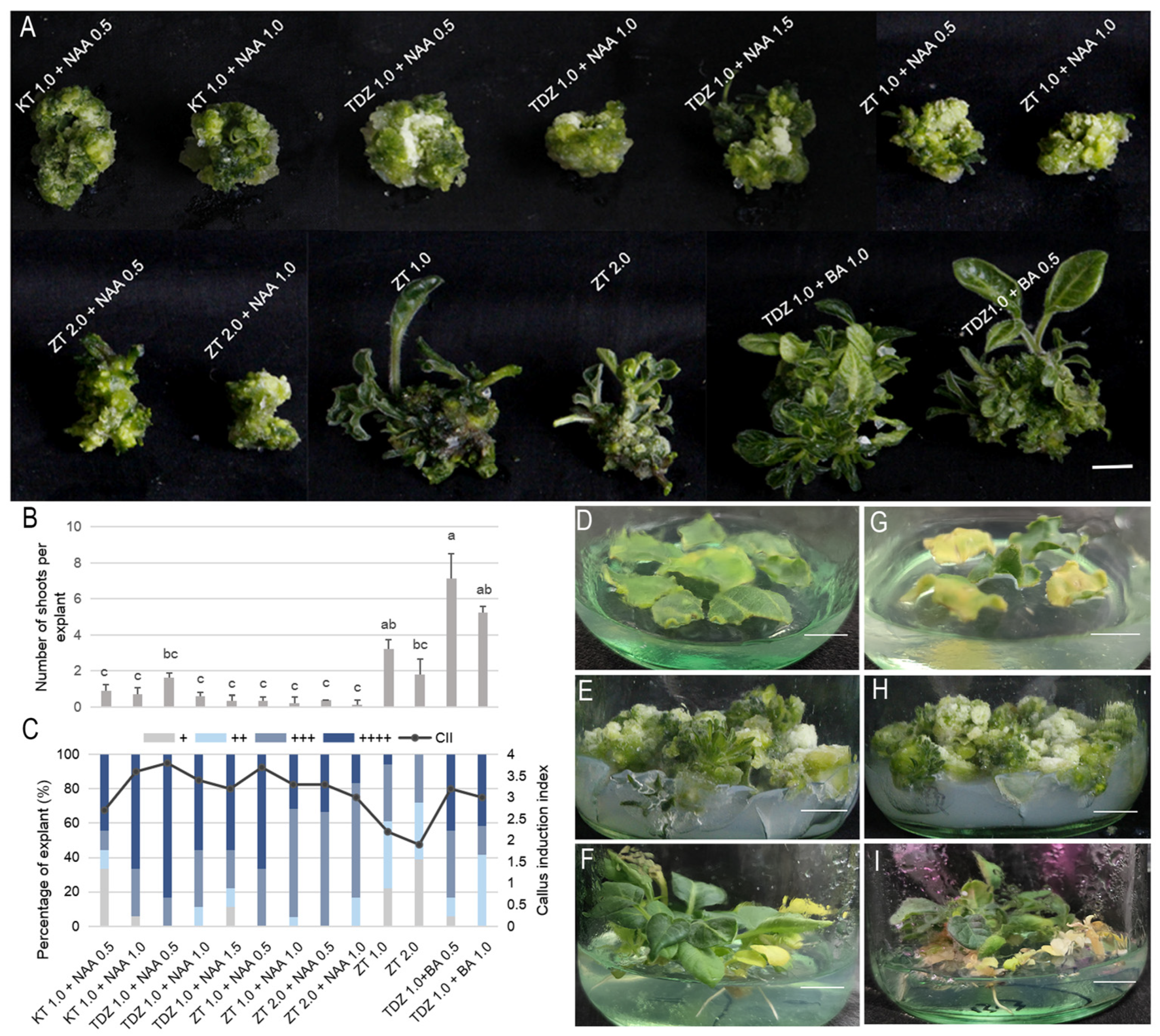
3.1. Establishment of a Regeneration System for D. inoxia
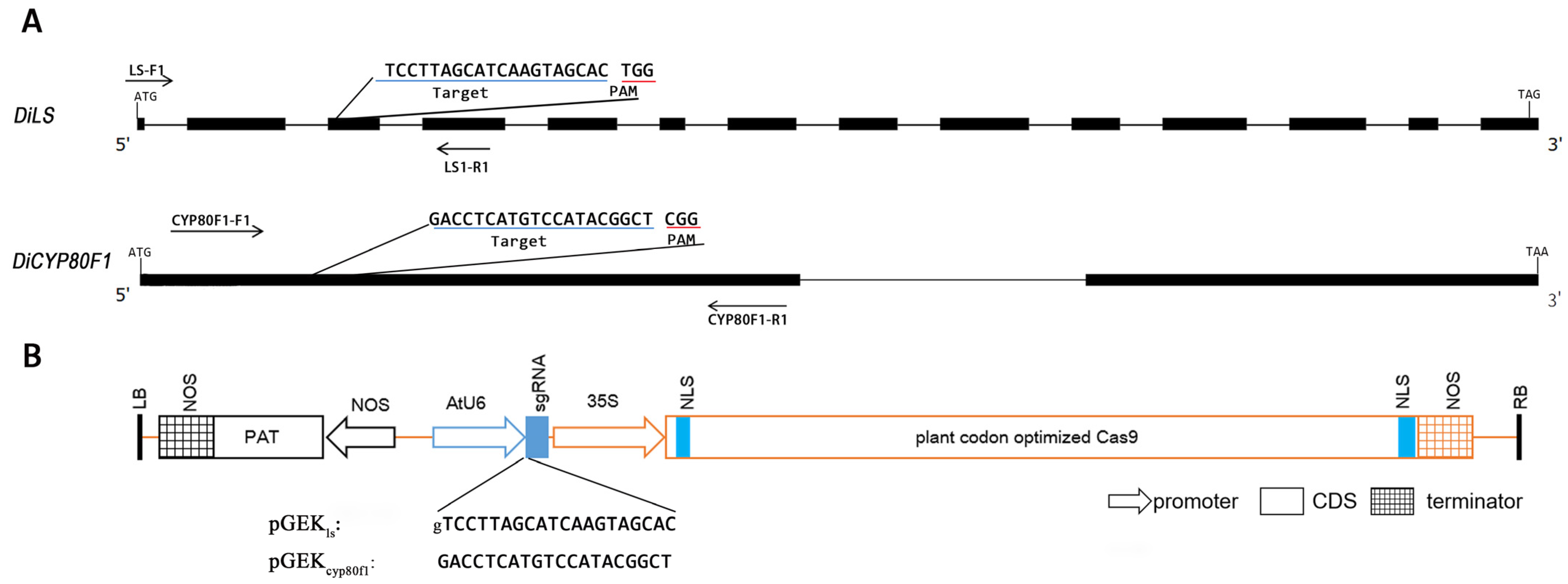
3.2. Construction of CRISPR/Cas9 Vectors for DiLS and DiCYP80F1 Knockout
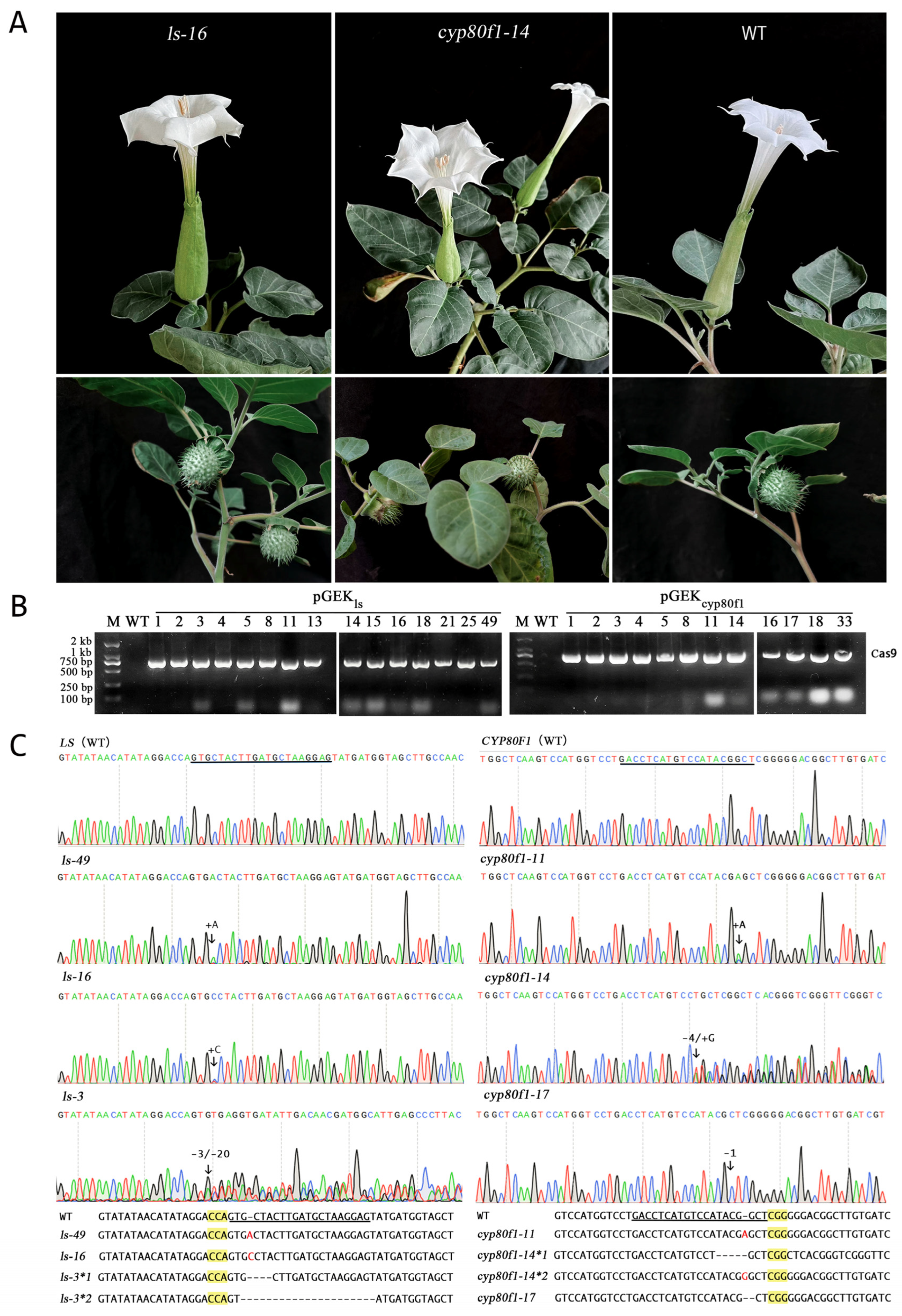
3.3. Generation of Dils and Dicyp80f1 Mutants
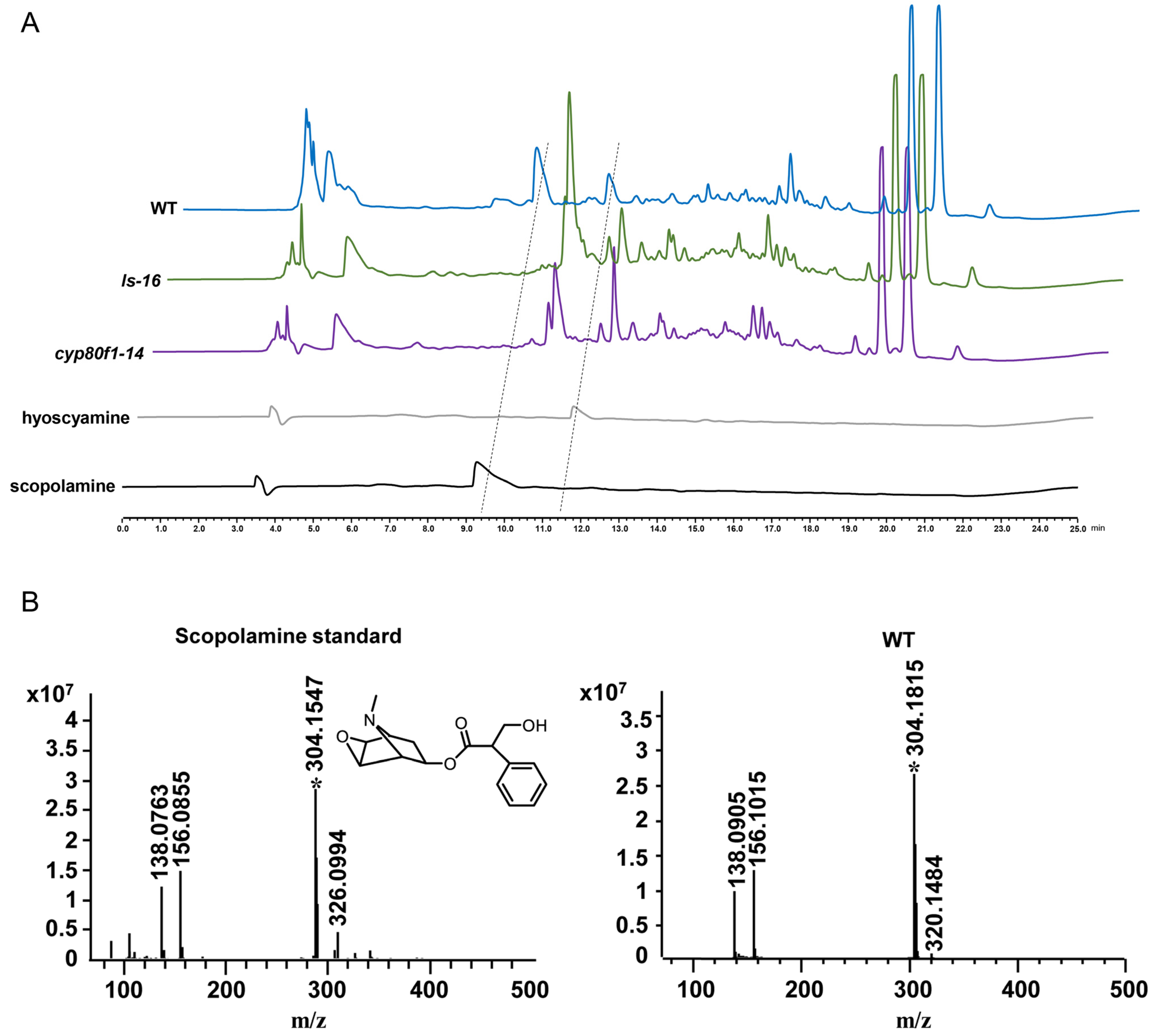
3.4. Ablation of Hyoscyamine and Scopolamine in Mutant Plants
4. Discussion
5. Conclusions
Supplementary Materials
Author Contributions
Funding
Data Availability Statement
Conflicts of Interest
Abbreviations
| TDZ | thidiazuron |
| 6-BA | 6-benzylaminopurine |
| KT | kinetin |
| ZT | zeatin |
| NAA | α-naphthaleneacetic acid |
| HRMS | high-resolution mass spectrometry |
| HPLC | High-Performance Liquid Chromatography |
| CRISPR | Clustered Regularly Interspaced Short Palindromic Repeats |
| SCPL | serine carboxypeptidase-like |
References
- Blakeslee, A.F.; Belling, J.; Farnham, M.E.; Bergner, A.D. A Haploid Mutant in the Jimson Weed, “Datura stramonium”. Science 1922, 55, 646–647. [Google Scholar] [CrossRef]
- Sanders, M.E. Embryo Development in Four Datura Species Following Self and Hybrid Pollinations. Am. J. Bot. 1948, 35, 525–532. [Google Scholar] [CrossRef]
- Buchholz, J.T.; Williams, L.F.; Blakeslee, A.F. Pollen-Tube Growth of Ten Species of Datura in Interspecific Pollinations. Proc. Natl. Acad. Sci. USA 1935, 21, 651–656. [Google Scholar] [CrossRef]
- Pabón-Mora, N.; Litt, A. Comparative Anatomical and Developmental Analysis of Dry and Fleshy Fruits of Solanaceae. Am. J. Bot. 2011, 98, 1415–1436. [Google Scholar] [CrossRef]
- Knapp, S. Tobacco to Tomatoes: A Phylogenetic Perspective on Fruit Diversity in the Solanaceae. J. Exp. Bot. 2002, 53, 2001–2022. [Google Scholar] [CrossRef]
- Susan, M. Datura. In Wisconsin Horticulture; University of Wisconsin-Madison: Madison, WI, USA, 2026; Available online: https://hort.extension.wisc.edu/articles/datura/ (accessed on 4 February 2026).
- Yang, J.; Zhang, W.W.; Gong, L. Datura: An Enigmatic and Checkered Past. In The Great Botanical Migration: Invasive Alien Species in Chinese History, 1st ed.; China Machine Press: Beijing, China, 2024; pp. 46–55. [Google Scholar]
- Cinelli, M.A.; Jones, A.D. Alkaloids of the Genus Datura: Review of a Rich Resource for Natural Product Discovery. Molecules 2021, 26, 2629. [Google Scholar] [CrossRef]
- Sharma, M.; Dhaliwal, I.; Rana, K.; Delta, A.; Kaushik, P. Phytochemistry, Pharmacology, and Toxicology of Datura Species—A Review. Antioxidants 2021, 10, 1291. [Google Scholar] [CrossRef] [PubMed]
- Mahdeb, N.; Benouadah, Z.; Zebiche, T.; Hadjadj, R.; Bouzidi, A. Acute Datura Stramonium Poisoning in East of Algeria—Three Cases. Annu. Res. Rev. Biol. 2016, 11, 1–4. [Google Scholar] [CrossRef]
- Trancă, S.D.; Szabo, R.; Cociş, M. Acute Poisoning Due to Ingestion of Datura stramonium—A Case Report. Rom. J. Anaesth. Intensive Care 2017, 24, 65–68. [Google Scholar] [CrossRef] [PubMed][Green Version]
- Kerchner, A.; Farkas, Á. Worldwide Poisoning Potential of Brugmansia and Datura. Forensic Toxicol. 2020, 38, 30–41. [Google Scholar] [CrossRef]
- Huang, J.P.; Wang, Y.J.; Tian, T.; Wang, L.; Yan, Y.; Huang, S.X. Tropane Alkaloid Biosynthesis: A Centennial Review. Nat. Prod. Rep. 2021, 38, 1634–1658. [Google Scholar] [CrossRef]
- Zhang, F.; Qiu, F.; Zeng, J.; Xu, Z.; Tang, Y.; Zhao, T.; Gou, Y.; Su, F.; Wang, S.; Sun, X.; et al. Revealing Evolution of Tropane Alkaloid Biosynthesis by Analyzing Two Genomes in the Solanaceae Family. Nat. Commun. 2023, 14, 1446. [Google Scholar] [CrossRef]
- Moyano, E.; Jouhikainen, K.; Tammela, P.; Palazon, J.; Cusido, R.M.; Pinol, M.T.; Teeri, T.H.; Oksman-Caldentey, K.-M. Effect of PMT Gene Overexpression on Tropane Alkaloid Production in Transformed Root Cultures of Datura metel and Hyoscyamus muticus. J. Exp. Bot. 2003, 54, 203–211. [Google Scholar] [CrossRef]
- Zhang, L.; Ding, R.; Chai, Y.; Bonfill, M.; Moyano, E.; Oksman-Caldentey, K.-M.; Xu, T.; Pi, Y.; Wang, Z.; Zhang, H.; et al. Engineering Tropane Biosynthetic Pathway in Hyoscyamus niger Hairy Root Cultures. Proc. Natl. Acad. Sci. USA 2004, 101, 6786–6791. [Google Scholar] [CrossRef]
- Li, R.; Reed, D.W.; Liu, E.; Nowak, J.; Pelcher, L.E.; Page, J.E.; Covello, P.S. Functional Genomic Analysis of Alkaloid Biosynthesis in Hyoscyamus niger Reveals a Cytochrome P450 Involved in Littorine Rearrangement. Chem. Biol. 2006, 13, 513–520. [Google Scholar] [CrossRef] [PubMed]
- Amdoun, R.; Khelifi, L.; Khelifi-Slaoui, M.; Amroune, S.; Benyoussef, E.-H.; Thi, D.V.; Assaf-Ducrocq, C.; Gontier, E. Influence of Minerals and Elicitation on Datura stramonium L. Tropane Alkaloid Production: Modelization of the in Vitro Biochemical Response. Plant Sci. 2009, 177, 81–87. [Google Scholar] [CrossRef]
- Hasebe, F.; Yuba, H.; Hashimoto, T.; Saito, K.; Funa, N.; Shoji, T. CRISPR/Cas9-Mediated Disruption of the PYRROLIDINE KETIDE SYNTHASE Gene Reduces the Accumulation of Tropane Alkaloids in Atropa belladonna Hairy Roots. Biosci. Biotechnol. Biochem. 2021, 85, 2404–2409. [Google Scholar] [CrossRef]
- Biswas, D.; Chakraborty, A.; Mukherjee, S.; Ghosh, B. Hairy Root Culture: A Potent Method for Improved Secondary Metabolite Production of Solanaceous Plants. Front. Plant Sci. 2023, 14, 1197555. [Google Scholar] [CrossRef] [PubMed]
- Rahman, R.A.; El-Din, E.-W.H.; El-Said, A.G.A. Agrobacterium-Mediated Transformation of Datura metel (L.) and Tropane Alkaloids Determination. Res. J. Cell Mol. Biol. 2008, 2, 62–66. Available online: https://www.academia.edu/3025974/ (accessed on 4 February 2026).
- Rajewski, A.C.; Elkins, K.B.; Henry, A.; Van Eck, J.; Litt, A. In Vitro Plant Regeneration and Agrobacterium tumefaciens–Mediated Transformation of Datura stramonium (Solanaceae). Appl. Plant Sci. 2019, 7, e01220. [Google Scholar] [CrossRef]
- Yamamoto, T.; Kashojiya, S.; Kamimura, S.; Kameyama, T.; Ariizumi, T.; Ezura, H.; Miura, K. Application and Development of Genome Editing Technologies to the Solanaceae Plants. Plant Physiol. Biochem. 2018, 131, 37–46. [Google Scholar] [CrossRef]
- D’Orso, F.; Hill, L.; Appelhagen, I.; Lawrenson, T.; Possenti, M.; Li, J.; Harwood, W.; Morelli, G.; Martin, C. Exploring the Metabolic and Physiological Roles of HQT in S. lycopersicum by Gene Editing. Front. Plant Sci. 2023, 14, 1124959. [Google Scholar] [CrossRef]
- Thomazella, D.P.D.T.; Seong, K.; Mackelprang, R.; Dahlbeck, D.; Geng, Y.; Gill, U.S.; Qi, T.; Pham, J.; Giuseppe, P.; Lee, C.Y.; et al. Loss of Function of a DMR6 Ortholog in Tomato Confers Broad-Spectrum Disease Resistance. Proc. Natl. Acad. Sci. USA 2021, 118, e2026152118. [Google Scholar] [CrossRef] [PubMed]
- Clasen, B.M.; Stoddard, T.J.; Luo, S.; Demorest, Z.L.; Li, J.; Cedrone, F.; Tibebu, R.; Davison, S.; Ray, E.E.; Daulhac, A.; et al. Improving Cold Storage and Processing Traits in Potato through Targeted Gene Knockout. Plant Biotechnol. J. 2016, 14, 169–176. [Google Scholar] [CrossRef]
- Liu, Y.; Merino, I.; Gutensohn, M.; Johansson, A.I.; Johansson, K.; Andersson, M.; Hofvander, P.; Sitbon, F. Glycoalkaloid-Free Starch Potatoes Generated by CRISPR /Cas9-Mediated Mutations of Genes in the Glycoalkaloid Biosynthesis Pathway Enable More Sustainable Uses of By-Products From Starch Production. Plant Biotechnol. J. 2026, 24, 1344–1358. [Google Scholar] [CrossRef]
- Ferrero, M.; Valentino, D.; Milani, A.M.; Comino, C.; Lanteri, S.; Acquadro, A.; Moglia, A. Enhancing Tolerance to Phytophthora spp. in Eggplant through DMR6–1 CRISPR/Cas9 Knockout. Plant Stress 2024, 14, 100691. [Google Scholar] [CrossRef]
- Zhao, C.; Lou, H.; Liu, Q.; Pei, S.; Liao, Q.; Li, Z. Efficient and Transformation-free Genome Editing in Pepper Enabled by RNA Virus-mediated Delivery of CRISPR/Cas9. J. Integr. Plant Biol. 2024, 66, 2079–2082. [Google Scholar] [CrossRef]
- Zeng, L.; Zhang, Q.; Jiang, C.; Zheng, Y.; Zuo, Y.; Qin, J.; Liao, Z.; Deng, H. Development of Atropa belladonna L. Plants with High-Yield Hyoscyamine and without Its Derivatives Using the CRISPR/Cas9 System. Int. J. Mol. Sci. 2021, 22, 1731. [Google Scholar] [CrossRef]
- Schachtsiek, J.; Stehle, F. Nicotine-free, Nontransgenic Tobacco (Nicotiana tabacum L.) Edited by CRISPR-Cas9. Plant Biotechnol. J. 2019, 17, 2228–2230. [Google Scholar] [CrossRef] [PubMed]
- Heo, J.; Bang, W.Y.; Jeong, J.C.; Park, S.-C.; Lee, J.M.; Choi, S.; Lee, B.; Lee, Y.K.; Kim, K.; Park, S.J. The Comparisons of Expression Pattern Reveal Molecular Regulation of Fruit Metabolites in S. nigrum and S. lycopersicum. Sci. Rep. 2022, 12, 5001. [Google Scholar] [CrossRef]
- Shimatani, Z.; Kashojiya, S.; Takayama, M.; Terada, R.; Arazoe, T.; Ishii, H.; Teramura, H.; Yamamoto, T.; Komatsu, H.; Miura, K.; et al. Targeted Base Editing in Rice and Tomato Using a CRISPR-Cas9 Cytidine Deaminase Fusion. Nat. Biotechnol. 2017, 35, 441–443. [Google Scholar] [CrossRef] [PubMed]
- Veillet, F.; Chauvin, L.; Kermarrec, M.-P.; Sevestre, F.; Merrer, M.; Terret, Z.; Szydlowski, N.; Devaux, P.; Gallois, J.-L.; Chauvin, J.-E. The Solanum Tuberosum GBSSI Gene: A Target for Assessing Gene and Base Editing in Tetraploid Potato. Plant Cell Rep. 2019, 38, 1065–1080. [Google Scholar] [CrossRef]
- Vu, T.V.; Nguyen, N.T.; Kim, J.; Song, Y.J.; Nguyen, T.H.; Kim, J.-Y. Optimized Dicot Prime Editing Enables Heritable Desired Edits in Tomato and Arabidopsis. Nat. Plants 2024, 10, 1502–1513. [Google Scholar] [CrossRef] [PubMed]
- Murashige, T.; Skoog, F. A Revised Medium for Rapid Growth and Bio Assays with Tobacco Tissue Cultures. Physiol. Plant. 1962, 15, 473–497. [Google Scholar] [CrossRef]
- Xie, X.; Ma, X.; Zhu, Q.; Zeng, D.; Li, G.; Liu, Y.G. CRISPR-GE: A Convenient Software Toolkit for CRISPR-Based Genome Editing. Mol. Plant 2017, 10, 1246–1249. [Google Scholar] [CrossRef]
- Xiao, A. CasOT: A Genome-Wide Cas9/gRNA off-Target Searching Tool. Bioinformatics 2014, 30, 1180–1182. [Google Scholar] [CrossRef]
- Zhang, B.; Yang, X.; Yang, C.; Li, M.; Guo, Y. Exploiting the CRISPR/Cas9 System for Targeted Genome Mutagenesis in Petunia. Sci. Rep. 2016, 6, 20315. [Google Scholar] [CrossRef]
- Liu, W.; Xie, X.; Ma, X.; Li, J.; Chen, J.; Liu, Y.G. DSDecode: A Web-Based Tool for Decoding of Sequencing Chromatograms for Genotyping of Targeted Mutations. Mol. Plant 2015, 8, 1431–1433. [Google Scholar] [CrossRef]
- Schlesinger, D.; Davidovich Rikanati, R.; Faigenboim, A.; Vendramin, V.; Cattonaro, F.; Inbar, M.; Lewinsohn, E. Tropane Alkaloid Biosynthesis in Datura innoxia Mill. Roots and Their Differential Transport to Shoots. Phytochem. Lett. 2021, 43, 219–225. [Google Scholar] [CrossRef]
- Wang, F.; Sun, Y.; Zhang, H.; Cheng, M.; Zhang, L.; Sun, M. Plant Regeneration and Clonal Propagation System of Datura metel. J. Chin. Med. Mater. 2014, 37, 179–182. [Google Scholar] [CrossRef]
- Jensen, K.T.; Fløe, L.; Petersen, T.S.; Huang, J.; Xu, F.; Bolund, L.; Luo, Y.; Lin, L. Chromatin Accessibility and Guide Sequence Secondary Structure Affect CRISPR-Cas9 Gene Editing Efficiency. FEBS Lett. 2017, 591, 1892–1901. [Google Scholar] [CrossRef]
- Verkuijl, S.A.; Rots, M.G. The Influence of Eukaryotic Chromatin State on CRISPR–Cas9 Editing Efficiencies. Curr. Opin. Biotechnol. 2019, 55, 68–73. [Google Scholar] [CrossRef]
- Zhang, B.; Qin, X.; Han, Y.; Li, M.; Guo, Y. Dorsoventrally Asymmetric Expression of miR319/TCP Generates Dorsal-Specific Venation Patterning in Petunia Corolla Tube. J. Exp. Bot. 2024, 75, 3401–3411. [Google Scholar] [CrossRef]
- Mugford, S.T.; Qi, X.; Bakht, S.; Hill, L.; Wegel, E.; Hughes, R.K.; Papadopoulou, K.; Melton, R.; Philo, M.; Sainsbury, F.; et al. A Serine Carboxypeptidase-Like Acyltransferase Is Required for Synthesis of Antimicrobial Compounds and Disease Resistance in Oats. Plant Cell 2009, 21, 2473–2484. [Google Scholar] [CrossRef]
- Stehle, F.; Brandt, W.; Stubbs, M.T.; Milkowski, C.; Strack, D. Sinapoyltransferases in the Light of Molecular Evolution. Phytochemistry 2009, 70, 1652–1662. [Google Scholar] [CrossRef] [PubMed]
- Pal, S.; Krishna, R.; Dedhia, L.; Panwar, H.S.; Karkute, S.G.; Rai, N.; Kumar, R.; Pandey, S.; Singh, A.K. CRISPR Mediated Gene Editing for Economically Important Traits in Horticultural Crops: Progress and Prospects. Transgenic Res. 2025, 34, 26. [Google Scholar] [CrossRef]
- Bertier, L.D.; Ron, M.; Huo, H.; Bradford, K.J.; Britt, A.B.; Michelmore, R.W. High-Resolution Analysis of the Efficiency, Heritability, and Editing Outcomes of CRISPR/Cas9-Induced Modifications of NCED4 in Lettuce (Lactuca sativa). G3 Genes Genomes Genet. 2018, 8, 1513–1521. [Google Scholar] [CrossRef] [PubMed]
- Sun, X.; Li, M.; Wang, H.; Yang, Y.; Kang, Y.; Sun, P.; Dong, J.; Jin, M.; Jin, W. Possible Reversion of CRISPR-Cas9-Edited Sequences in Octoploid Strawberry. CRISPR J. 2025, 8, 375–389. [Google Scholar] [CrossRef] [PubMed]



| Primer ID | Sequence (5′→3′) | Aplication |
|---|---|---|
| LS-F1 | AACGACACATATGCGTGAACT | ls mutant genotyping |
| LS-R1 | GAGCCATTTGTAGATTATCTGAGTG | |
| CYP80F1-F1 | CCCATGTCCTTCTCCCTCTT | cyp80f1 mutant genotyping |
| CYP80F1-R1 | TTGTATGTTCCTTGGAAATCCC | |
| LS-sgF1 | gTCCTTAGCATCAAGTAGCACgttttagagctagaaatagc | Construction of pGEKls |
| LS-sgR1 | GTGCTACTTGATGCTAAGGACaatcactacttcgactctag | |
| CYP-sgF1 | GACCTCATGTCCATACGGCTgttttagagctagaaatagc | Construction of pGEKcyp80f1 |
| CYP-sgR1 | AGCCGTATGGACATGAGGTCaatcactacttcgactctag | |
| Cas9-F | CGCTGTTGTTGGAACCGCTCTTA | Amplification of the Cas9 gene |
| Cas9-R | GCTGCTTCTGCTCGTTATCCTCTG |
Disclaimer/Publisher’s Note: The statements, opinions and data contained in all publications are solely those of the individual author(s) and contributor(s) and not of MDPI and/or the editor(s). MDPI and/or the editor(s) disclaim responsibility for any injury to people or property resulting from any ideas, methods, instructions or products referred to in the content. |
© 2026 by the authors. Licensee MDPI, Basel, Switzerland. This article is an open access article distributed under the terms and conditions of the Creative Commons Attribution (CC BY) license.
Share and Cite
Zou, X.; Yuan, T.; Zhang, Y.; Zhang, X.; Niu, G.; Guo, Y. Development of a CRISPR/Cas9 Platform in Datura inoxia for Disrupting Tropane Alkaloid Biosynthesis to Generate Non-Toxic Germplasm. Horticulturae 2026, 12, 495. https://doi.org/10.3390/horticulturae12040495
Zou X, Yuan T, Zhang Y, Zhang X, Niu G, Guo Y. Development of a CRISPR/Cas9 Platform in Datura inoxia for Disrupting Tropane Alkaloid Biosynthesis to Generate Non-Toxic Germplasm. Horticulturae. 2026; 12(4):495. https://doi.org/10.3390/horticulturae12040495
Chicago/Turabian StyleZou, Xianfang, Tianxing Yuan, Yuxin Zhang, Xiaohan Zhang, Guoqing Niu, and Yulong Guo. 2026. "Development of a CRISPR/Cas9 Platform in Datura inoxia for Disrupting Tropane Alkaloid Biosynthesis to Generate Non-Toxic Germplasm" Horticulturae 12, no. 4: 495. https://doi.org/10.3390/horticulturae12040495
APA StyleZou, X., Yuan, T., Zhang, Y., Zhang, X., Niu, G., & Guo, Y. (2026). Development of a CRISPR/Cas9 Platform in Datura inoxia for Disrupting Tropane Alkaloid Biosynthesis to Generate Non-Toxic Germplasm. Horticulturae, 12(4), 495. https://doi.org/10.3390/horticulturae12040495