Article

The ARF Family Transcription Factor PrARF9 Positively Affects Fatty Acid Accumulation in Paeonia rockii


1
College of Landscape Architecture and Art, Northwest A&F University, Yangling District, Xianyang 712100, China
2
Oil Peony Engineering Technology Research Center of National Forestry Administration, Yangling District, Xianyang 712100, China
3
Longchi Peony Research Institute, Heze 274000, China
*
Author to whom correspondence should be addressed.
Horticulturae 2026, 12(4), 450; https://doi.org/10.3390/horticulturae12040450
Submission received: 22 February 2026 / Revised: 30 March 2026 / Accepted: 2 April 2026 / Published: 5 April 2026

Abstract

Fatty acids play critical roles in plant growth and stress adaptation, primarily through modulating membrane fluidity. This study combined bioinformatics (genome-wide identification and chromosomal localization) with experimental techniques (RT-qPCR, VIGS, and GC) to investigate the ARF family in Paeonia rockii. Seventeen PrARF genes were identified, showing evolutionary collinearity with Arabidopsis thaliana and Vitis vinifera and uneven chromosomal distribution. Among these, PrARF9 was specifically and highly expressed during late seed development, exhibiting a pattern highly consistent with the fatty acid synthesis key gene PrFAD3 and the accumulation trend of α-linolenic acid (ALA). In Nicotiana benthamiana, transient overexpression of PrARF9 upregulated its homologous gene NbFAD3, resulting in increased total fatty acid content and elevated lipid droplet accumulation. In contrast, in Paeonia rockii, silencing of PrARF9 downregulated PrFAD3 expression and reduced fatty acid levels, whereas overexpression of PrARF9 produced the opposite effect. We present a comprehensive analysis of the ARF gene family in P. rockii, combined with functional verification of a candidate gene regulating lipid synthesis. In summary, PrARF9 positively regulates PrFAD3, thereby participating in oil accumulation and ALA synthesis in P. rockii.

1. Introduction

Fatty acids (FAs) are carboxylic acid compounds characterized by saturated or unsaturated carbon chains. In plants, they also serve as precursors for signaling molecules involved in growth and developmental regulation. Therefore, investigating fatty acid accumulation and compositional changes in ornamental plants is crucial for enhancing their stress tolerance and ornamental value. Linoleic acid (LA, C18:2) and α-linolenic acid (ALA, C18:3) are key PUFAs that act as precursors for the ω-6 and ω-3 fatty acid metabolic pathways, respectively [1].
Fatty acid biosynthesis in plants comprises two core stages: de novo fatty acid synthesis in plastids, followed by triacylglycerol (TAG) assembly in the endoplasmic reticulum [2]. Fatty acid synthesis in seeds initiates in plastids, where fatty acids are mainly exported to the cytoplasm as monounsaturated oleic acid (C18:1), along with small amounts of palmitic acid (C16:0) and stearic acid (C18:0) [3]. After these newly synthesized fatty acids enter the endoplasmic reticulum, they first bind to the sn-2 position of phosphatidylcholine (PC) and then undergo desaturation reactions under the catalytic action of fatty acid desaturases (FADs) to be gradually converted into polyunsaturated linoleic acid and linolenic acid [4]. Two key metabolic pathways are involved in TAG assembly. The first is the classic Kennedy pathway, which catalyzes the sequential esterification of fatty acids onto the glycerol backbone through enzymes such as glycerol-3-phosphate acyltransferase (GPAT), lysophosphatidic acid acyltransferase (LPAAT) and diacylglycerol acyltransferase (DGAT) [5]. The second is the acyl-CoA-independent pathway, in which phospholipid:diacylglycerol acyltransferase (PDAT) transfers the acyl group from the sn-2 position of phospholipids to the sn-3 position of diacylglycerol, thereby generating TAG and lysophospholipids [6]. As key enzymes in the eukaryotic desaturation pathway, FAD2 and FAD3 play a central role in the synthesis of polyunsaturated fatty acids. In Camelina sativa, the FAD3 gene is predominantly expressed in leaves and seeds and is also involved in regulating membrane lipid components and fatty acid composition. The linolenic acid content in the Arabidopsis thaliana AtFAD3 mutant decreased from 20.3% in the wild type to 2.3% [7], demonstrating the critical role of the FAD3 gene in regulating the synthesis of polyunsaturated fatty acids.
Fatty acid accumulation is a key process during seed maturation. It is regulated by complex genetic networks and biochemical mechanisms involving transcription factors and plant hormones such as auxin, gibberellin, jasmonic acid, and abscisic acid [8]. Jasmonic acid (JA), as an important fatty acid-derived signaling molecule, uses ALA as its direct biosynthetic substrate, and exogenous JA application can significantly promote TAG synthesis [9]. In A. thaliana, the expression levels of the key JA biosynthesis genes Lipoxygenase (LOX) 2 and LOX4 directly regulate the activity of the desaturases Acyl-lipid desaturase (ADS) 4.1 and ADS4.2 [10,11], thereby regulating UFA production [12,13]. Additionally, ectopic expression of LEAFY COTYLEDON 1 (LEC1) has been shown to promote cell division and embryonic differentiation through auxin and sugar signaling pathways [14,15] and simultaneously activate the expression of seed maturation-related genes, thereby significantly increasing seed oil content [16]. In A. thaliana, the B3 family transcription factors consist of FUSCA3 transcription factor (FUS3), ABSCISIC ACID INSENSITIVE 3 (ABI3) and LEAFY COTYLEDON (LEC) 2. Together with LEC1 of the NF-Y family, these form the LEC1–ABI3–FUS3–LEC2 (LAFL) gene regulatory network, which governs the accumulation of storage compounds during seed maturation [17]. LEC2 participates in somatic embryogenesis by regulating the promoter activity of the auxin-related factors YUC4 and IAA30 [18,19]. Auxin coordinates the biosynthetic balance between abscisic acid and gibberellin by inducing FUS3 expression, thereby regulating plant development [20].
Auxin response factors (ARFs), as a key family of transcriptional regulatory factors in the plant hormone signal transduction pathway, mediate the expression of downstream genes in response to fluctuations in intracellular auxin levels [21]. The canonical auxin signaling pathway, mediated jointly by ARFs, TIR1/AFB receptors, and Aux/IAA proteins, represents one of the core signal transduction mechanisms in plants [22]. Based on phylogenetic analysis of A. thaliana, the ARF family can be divided into three evolutionary clades, namely Clade A, Clade B and Clade C; members of Clade A contain a glutamine-rich (Q-rich) domain in their middle region, thus possessing transcriptional activation activity. Each ARF protein comprises two conserved domains: an N-terminal B3 DNA-binding domain (DBD), which specifically recognizes the auxin response element (AuxRE, core sequence: TGTCTC) in the promoter regions of target genes to exert its transcriptional regulatory function [23]; and a C-terminal Phox and Bem1p (PB1) domain, which mediates interactions with Aux/IAA proteins and enhances DNA-binding capacity through ARF dimerization [24]. Members of the ARF family are extensively involved in the entire process of plant growth and development. To date, 23 ARF genes have been identified in A. thaliana, and 25 homologs have been characterized in Oryza sativa. Functional studies have demonstrated that AtARF9 regulates flowering time, organ abscission, and floral organ senescence by controlling senescence-associated gene networks [25]. Thus, it is hypothesized that in P. rockii, PrARF9, along with other ARF family members, is also involved in the regulation of vegetative growth. AtARF6 and AtARF8 show functional redundancy in floral organ maturation and hypocotyl development and jointly regulate the balance between reproductive and vegetative growth in plants [26]. In lateral root development, AtARF7 and AtARF19 act at distinct stages, with double mutants displaying severe defects [27]. In addition, VvARF18 modulates seed development in V. vinifera [28]. Under unfavorable seed germination conditions, ARF10 and ARF16 are activated by auxin signals to enhance abscisic acid (ABA) biosynthesis, thereby inhibiting seed germination [29]. These studies have revealed the functional specificity and network complexity of ARF family members in the regulation of plant growth and development. However, the role of ARF transcription factors in fatty acid biosynthesis in P. rockii has not yet been experimentally characterized, representing a significant gap in our understanding of lipid regulatory networks in this species.
Tree peony seed oil is a high-quality edible oil characterized by a high content of unsaturated fatty acids (UFAs, approximately 92%), with ALA accounting for 45%. Among these, ALA is particularly valuable for its critical roles in plant physiology, human health, and potential applications in bioenergy and biomaterials [30,31], highlighting tree peony as a promising oil crop for cultivation on hilly and marginal lands. The primary objective of this study was to functionally characterize ARF transcription factors in the fatty acid metabolism of P. rockii seeds, an area that remains experimentally unexplored. While ARFs are well-known regulators of auxin-responsive growth and development, their specific roles in fatty acid biosynthesis, particularly in non-model oilseed species like tree peonies, are poorly understood. In this study, 17 ARF genes were identified in Paeonia rockii, and their expression patterns were analyzed by qRT-PCR during different seed maturation stages. Among them, PrARF9 exhibited the most pronounced and consistent expression. Therefore, we hypothesize that PrARF9 is involved in fatty acid synthesis in tree peony seeds. To date, the role of ARF transcription factors in fatty acid biosynthesis in P. rockii remains uncharacterized experimentally. Therefore, to test this hypothesis, we further validated its functional role in oil biosynthesis.

2. Materials and Methods

2.1. Plant Materials and Growth Conditions

Seeds and other organ samples of P. rockii were collected from the Resource Garden of Northwest A&F University in Shaanxi Province. All collected materials were stored at −80 °C prior to analysis, except for seeds designated for VIGS analysis, which were used within 90 days of collection. N. benthamiana plants used for heterologous expression assays were grown in a climate-controlled chamber at 22 °C under a 16 h light/8 h dark photoperiod. Isolated embryos of P. rockii were cultured on WPM medium at 26 °C for 21 days under a 16 h/8 h light/dark cycle.

2.2. Identification of PrARF Transcription Factors

PrARF genes were identified at the genome level using the available reference genome data. The genome data were obtained from the genome resource at the China National GeneBank DataBase (CNGB, https://ftp.cngb.org/pub/CNSA/data5/CNP0003098/CNS0560369/CNA0050666/) (accessed on 5 April 2025). Bidirectional BLAST searches (https://blast.ncbi.nlm.nih.gov/Blast.cgi) (accessed on 11 April 2025) were performed between the P. rockii proteome and A. thaliana ARF protein sequences retrieved from the TAIR database (TAIR10, https://www.arabidopsis.org) (accessed on 9 April 2025), using an e-value threshold of 1 × 10⁻⁵ with a requirement for >50% sequence similarity and >80% query coverage to ensure robust homolog detection. To further validate candidate proteins as authentic ARFs, domain analysis was conducted using the InterPro databases. Only proteins containing both the characteristic B3 DNA-binding domain (PF02362) and the Auxin_resp (PF06507; AUX/IAA family) domain were retained for subsequent analysis. Subsequent analysis was performed using TBtoolsII, and V. vinifera genome data were obtained from NCBI (https://www.ncbi.nlm.nih.gov/datasets/genome/GCF_030704535.1/) (accessed on 20 April 2025). Based on the physical positions on chromosomes, the transcription factors were designated PrARF1–PrARF17.

2.3. Bioinformatics Analysis

The conserved domains of the PrARF9 protein were analyzed using the CD-Search database of the National Center for Biotechnology Information (NCBI). Phylogenetic analysis was performed using the neighbor-joining method in MEGA 7.0 with 1000 bootstrap replicates, and multiple sequence alignment was carried out using CLUSTALX 2.1. The DNA-binding sites and protein interaction regions of PrARF9 were predicted via the PredictProtein tool (https://predictprotein.org/) (accessed on 9 April 2025). Following the method of Mirdita et al. in 2022 [32], the three-dimensional structure of PrARF9 was predicted using ColabFold-AF2, and the resulting structural model was visualized using UCSF ChimeraX 1.9. The CDS sequences and amino acid sequences of the transcription factors are listed in Appendix B Table A1 and Table A2, respectively.

2.4. Subcellular Localization

To generate the 35S:PrARF9-GFP fusion construct, the coding sequence of PrARF9 (without a stop codon) was cloned into the pCAMBIA2300-GFP vector. Agrobacterium tumefaciens GV3101 strains harboring the 35S:PrARF9-GFP construct, or the empty vector, were cultured overnight (16–18 h) in the dark, resuspended to an OD600 of 0.6 in infiltration buffer, and then separately infiltrated into leaves of Nicotiana benthamiana. Two days after infiltration, the leaves were stained with a 0.5 mM nuclear dye 4′,6-diamidino-2-phenylindole (DAPI) solution, followed by the detection of fluorescent signals using a confocal laser scanning microscope (Leica SP8, Olympus, Tokyo, Japan). GFP fluorescence was excited at 488 nm and detected at 498–535 nm (laser intensity: 12%; gain: 500). DAPI fluorescence was excited at 405 nm and detected at 430–470 nm (laser intensity: 6.8%; gain: 500).

2.5. Heterologous Overexpression Assay in N. benthamiana

For the transient overexpression (OE) assay in N. benthamiana, the CDS of PrARF9 was cloned into the pBI101 vector, yielding the recombinant 35S:PrARF9 plasmid. Agrobacterium GV3101 suspensions carrying pBI101-PrARF9 or the empty vector were adjusted to an OD600 of 0.8, incubated in the dark for 3 h, and then infiltrated into leaves of N. benthamiana [33]. The leaves were collected at 7 days post-infiltration for expression analysis and fatty acid (FA) quantification, and oil droplet accumulation in the leaves was visualized using the Leica SP8 CLSM described above.

2.6. VIGS Assay

First, a 230 bp PrARF9 fragment was cloned into the pTRV2 vector to obtain TRV2-PrARF9. TRV2 (empty vector) and TRV2-PDS (targeting phytoene desaturase as a visual silencing marker) were used as the negative control and silencing efficiency control, respectively. Agrobacterium GV3101 suspensions containing pTRV1 and pTRV2 were adjusted to an OD600 of 1.0, mixed at a 1:1 ratio, and incubated without agitation in the dark for 2–3 h prior to use. For the seed-based virus-induced gene silencing (VIGS) assay, the seeds were immersed in infiltration buffer and subjected to two rounds of vacuum treatment at −0.08 MPa for 10 min each, then rinsed with deionized water and placed on moist filter paper for 2 days at 8 °C in the dark. Finally, the seeds were cultured on moist filter paper in a constant-temperature incubator at 26 °C for 6 days under a light/dark cycle of 16 h to 8 h. For the VIGS assay on isolated embryos, embryos cultured for 21 days were infiltrated as described above. After the infiltration, the embryos were cultured in the dark for 24 h on WPM medium in a constant temperature and humidity incubator, followed by standard culture for 3 days under a 16 h/8 h light/dark cycle. For each treatment group, samples were collected from 8 independent seedlings and 20 seeds, each serving as an independent biological replicate for expression analysis and fatty acid quantification. Silencing efficiency was verified by qRT-PCR, confirming a reduction in PrARF9 transcript levels of at least 70% relative to the TRV2 control.

2.7. Fatty Acid Quantification

Fatty acid (FA) content was determined as follows. FAs were extracted from 0.1 g of lyophilized powder of P. rockii seeds and isolated embryos and from N. benthamiana leaves, as previously described [34]. Individual fatty acid contents were quantified using a gas chromatography system (Shimadzu Corporation; Nexis GC-2030, Agilent Technologies, Shanghai, China). To ensure analysis accuracy, FA concentrations in N. benthamiana and tree peony were normalized using tridecanoic acid (ANPEL, Aladdin, Shanghai, China) as an internal control. Three biological replicates were conducted for each experiment.

2.8. Expression Analysis

To quantify gene expression levels in P. rockii and N. benthamiana, total RNA was extracted and reverse-transcribed according to the manufacturer’s protocol (Omega Bio-tek, Atlanta, GA, USA). Real-time quantitative PCR (RT-qPCR) was performed using the SYBR Green PCR Premix Kit (Takara, Dalian, Liaoning, China) on a StepOne Real-Time PCR System (Thermo Fisher Scientific, Suzhou, Jiangsu, China). Relative gene expression was calculated using the 2−ΔΔCt method (Livak and Schmittgen), with 18S rRNA and NbL23 used as reference genes for normalization in P. rockii and N. benthamiana, respectively. Three biological replicates were conducted for each experiment. The primer sequences for plasmid construction and real-time quantitative PCR are listed in Appendix B, Table A3 and Table A4, respectively.

2.9. Statistical Analysis

All experiments were performed with at least three independent biological replicates unless otherwise stated. Data are presented as means ± standard deviation (SD). Statistical comparisons between two groups were performed using Student’s t-test, while comparisons among three or more groups were conducted using one-way analysis of variance (ANOVA) followed by Tukey’s honestly significant difference (HSD) post-hoc test. Prior to ANOVA, homogeneity of variance was assessed using Levene’s test. Statistically significant differences are indicated by asterisks in the figures (* p < 0.05; ** p < 0.01). All statistical analyses were performed using GraphPad Prism (version 10.0).

3. Results

3.1. Genome-Wide Identification, Synteny Analysis, and Chromosomal Distribution of the ARF Family in P. rockii

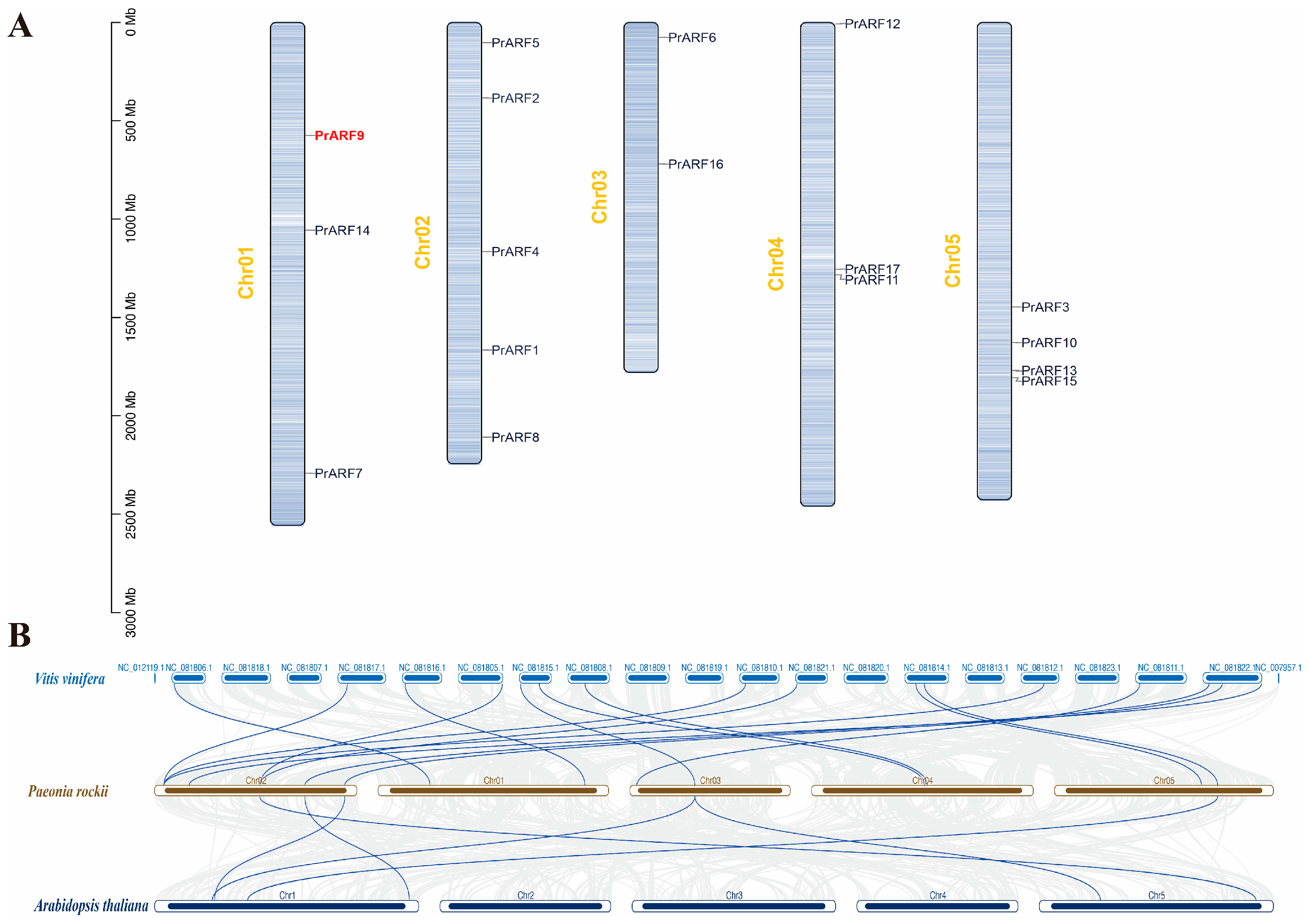
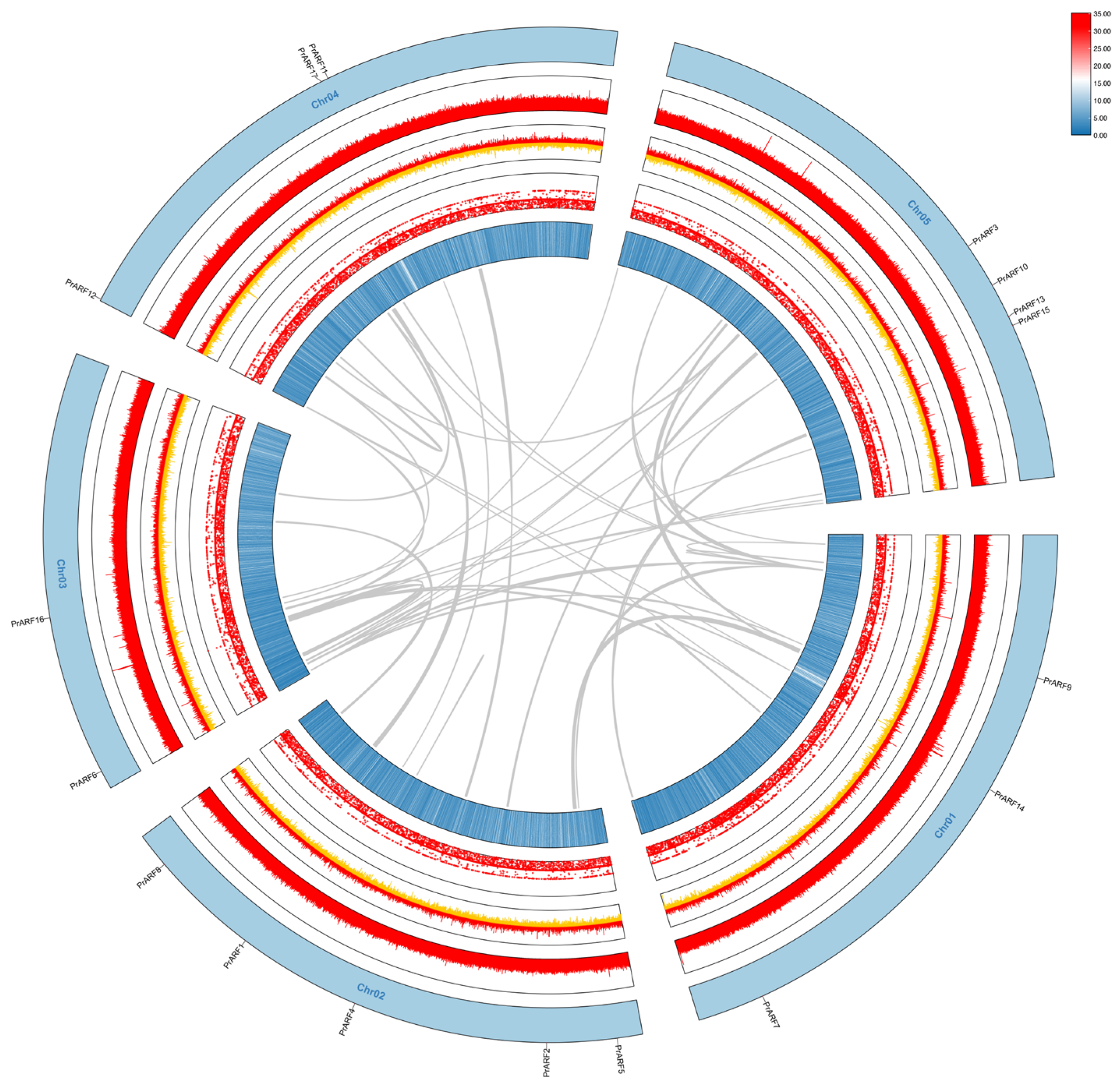
P. ostii is a representative plant of the Sect. Moutan is currently the only species within this section whose genome data have been published. By analyzing the whole-genome sequence of P. ostii, a total of 17 ARF genes were identified, whose potential roles in peony growth and development were subsequently investigated. Chromosomal mapping revealed that these genes are distributed across 5 chromosomes, albeit unevenly (Figure 1A). Specifically, chromosomes 1 and 3 harbor a higher number of PrARF genes, whereas the remaining chromosomes carry fewer members, suggesting non-uniform family expansion across the genome. Furthermore, localized clustering of PrARF genes was observed on certain chromosomes, while other members were distributed in distal or isolated chromosomal regions. Such clustering patterns are often indicative of tandem duplication events and may reflect the local expansion history of this gene family. Evolutionarily, the clustered gene arrangements likely result from relatively recent tandem duplications, which contribute to rapid family expansion and functional diversification. In contrast, the scattered distribution of other members may originate from older segmental or whole-genome duplication events, followed by chromosomal rearrangements that dispersed homologous genes to different genomic locations over time. This uneven genomic distribution highlights the complex evolutionary trajectory of the ARF family in P. rockii, involving both recent localized duplications and ancient large-scale genomic events. Overall, the non-uniform chromosomal distribution and local clustering of PrARF genes provide a structural foundation for subsequent functional analysis of these genes. To investigate the expansion history of the PrARF gene family, an intragenomic synteny scan was performed in P. rockii, identifying PrARF gene pairs associated with segmental duplication (Figure A1); however, no significant collinear blocks were detected within this family. This finding suggests that large-scale segmental duplication was not the primary driver of PrARF family expansion. Nonetheless, the observed chromosomal clustering is consistent with a contribution from tandem duplication, while other mechanisms such as transposition or lineage-specific divergence may also have played a role. Interspecific collinearity analysis with A. thaliana and V. vinifera ARF family genes (Figure 1B) revealed a shared evolutionary relationship among the three species, supporting the use of well-characterized ARF genes from Arabidopsis grapevine to predict the functions of ARF family genes in P. rockii.

3.2. Analysis of the ARF Family in P. rockii

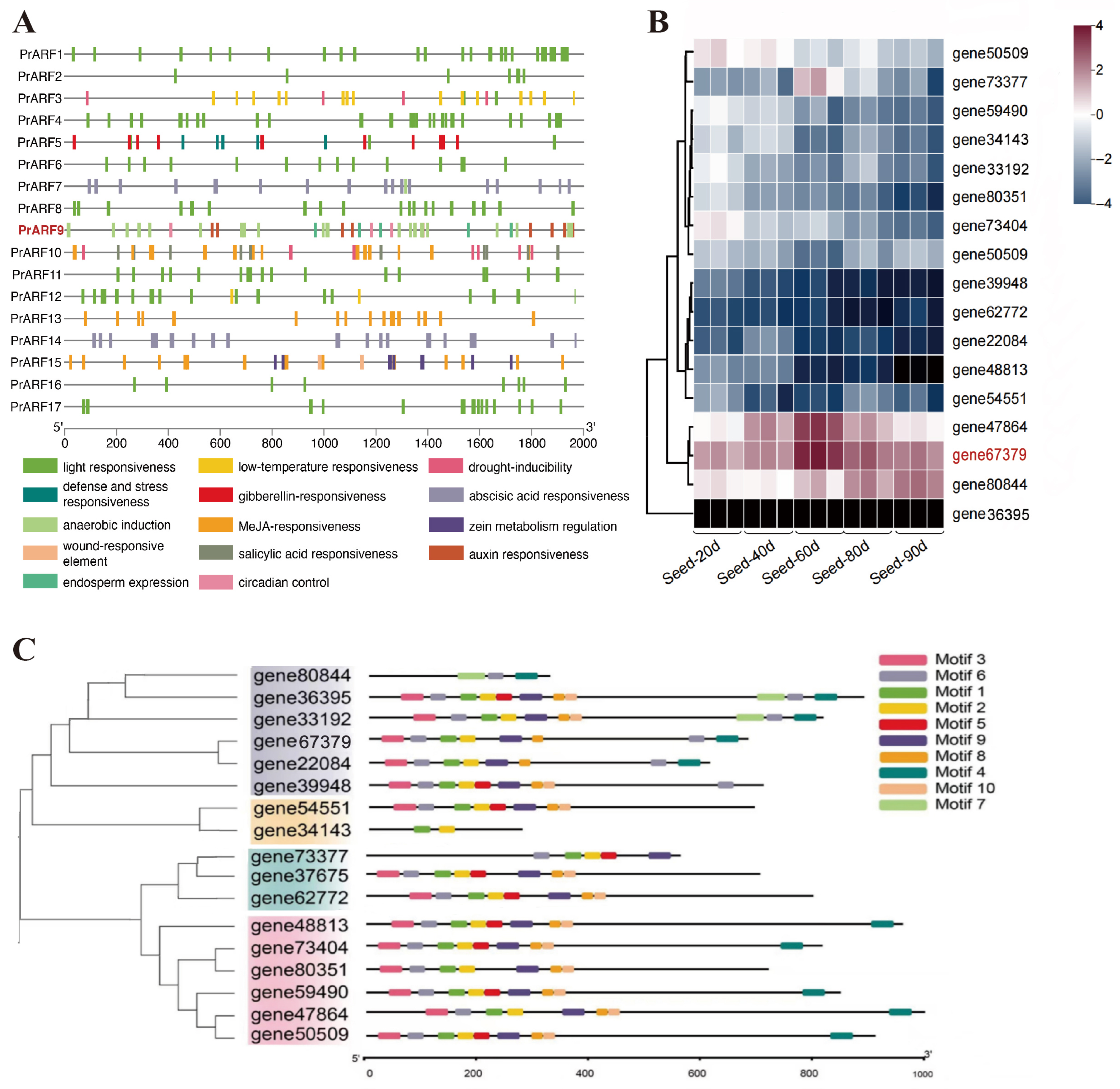
We analyzed the cis-regulatory elements present in the promoter regions of PrARF genes. This gene family contains numerous stress-responsive elements, including those responsive to drought, low temperature, and wound responses. Additionally, we identified multiple hormone-responsive elements, including those for auxin, gibberellin, and jasmonic acid. Notably, the presence of jasmonic acid- and auxin-responsive elements is of particular relevance, as both hormones are known to interact with fatty acid biosynthesis pathways, suggesting that PrARF genes may integrate hormonal signals to regulate lipid metabolism. Furthermore, the presence of circadian rhythm regulatory elements and light-responsive elements suggests that these genes may play important roles in plant growth and development, potentially linking fatty acid metabolism to photoperiodic and diurnal regulatory networks (Figure 2A). We used TBtools to analyze the exon–intron structure of PrARF genes and to construct a phylogenetic tree of the gene family. The analysis identified a total of 10 conserved motifs across the PrARF family, with individual members containing between 1 and 8 motifs; notably, 61% of the genes contain 4–8 conserved motifs (Figure 2C). Subsequently, we analyzed the expression patterns of the 17 identified genes during the seed maturation process, and gene 67379 (subsequently designated PrARF9) exhibited predominant expression during the S4–S6 stages (40–60 days after pollination, DAP), with expression levels showing an initial increase to a peak, followed by a decline (Figure 2B).

3.3. Characteristics of PrARF9

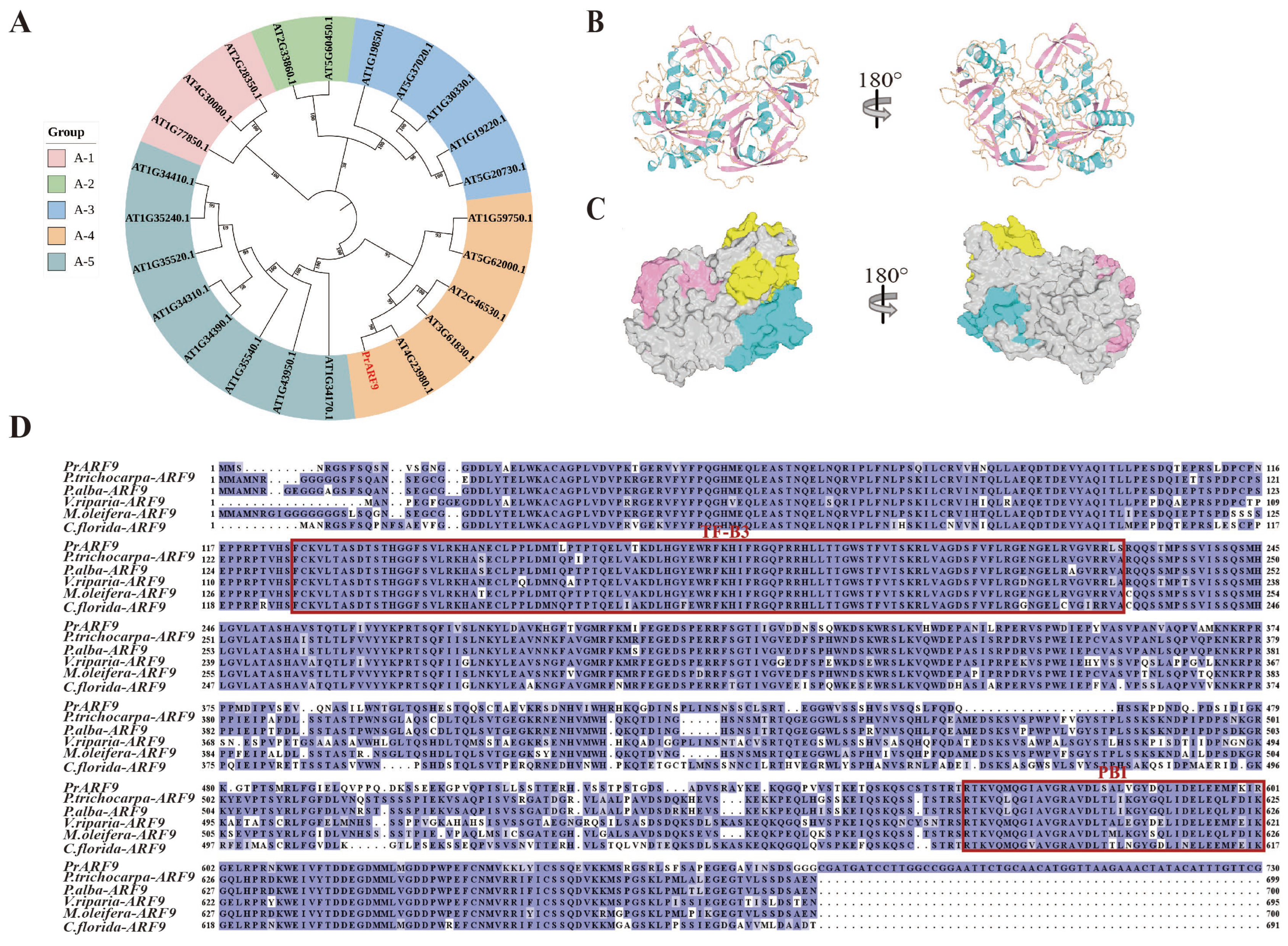
ARFs regulate the auxin signaling process [35,36]. Among the identified members, gene 67379 harbors a complete open reading frame, with its CDS spanning 2022 base pairs and encoding 673 amino acid residues, which contains a conserved ARF domain—a domain characteristic of all ARF family members. A phylogenetic analysis indicated that gene 67379 is most closely related to AtARF9 in A. thaliana, and both are clustered in the A-4 subgroup; this gene was therefore designated PrARF9 (Figure 3A). Alignment of the PrARF9 amino acid sequence with ARF9 homologs from various plants revealed high sequence conservation, with conserved nuclear localization signal sequences, B3-DNA binding regions, and ARF domains (Figure 3D). To better understand the physicochemical properties and potential binding capabilities of PrARF9, we predicted its protein structure and constructed a 3D model. The predicted model revealed that PrARF9 is composed of 22 α-helices and 21 β-sheets, forming a mixed α/β fold (Figure 3B,C). These structural features are consistent with the role of PrARF9 as a transcriptional regulator capable of DNA binding and protein–protein interactions.

3.4. The Expression Pattern of PrARF9

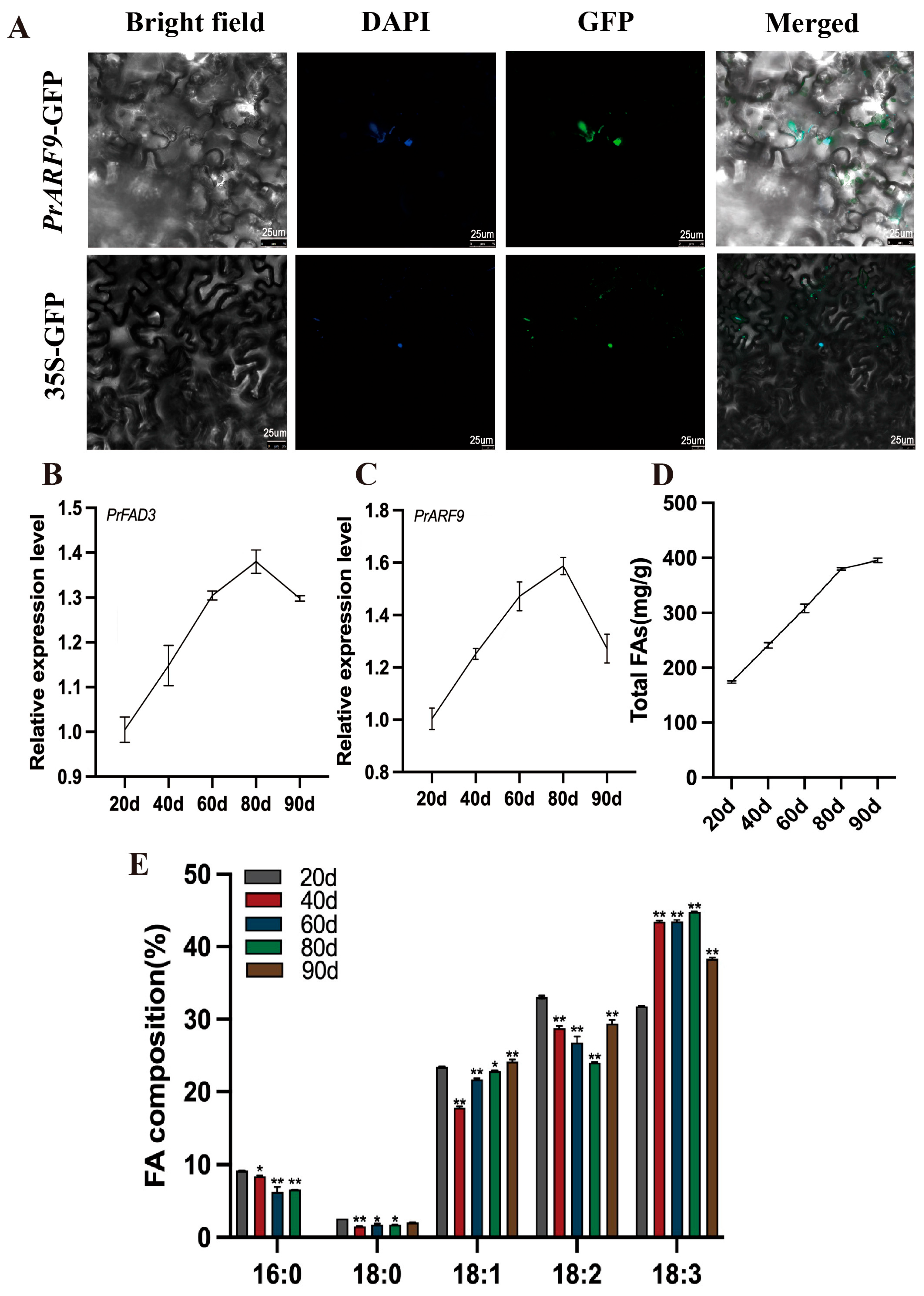
Transcription factors (TFs) typically exert regulatory functions in the nucleus. Through multiple sequence alignment, a conserved nuclear localization signal sequence was identified in PrARF9. To confirm its subcellular localization, we conducted transient expression assays in Nicotiana benthamiana leaves. Using a PrARF9–GFP fusion construct, the GFP fluorescence signal co-localized with the DAPI nuclear signal, whereas GFP fluorescence in the 35S:GFP control was distributed throughout the nucleus and cytoplasm (Figure 4A). These results indicated that PrARF9 likely functions as a transcription factor.
PrARF9 is predominantly expressed in seeds, with its expression level increasing progressively during seed development until 80 days after pollination (DAP) [36]. In this study, RT-qPCR was employed to detect the spatiotemporal expression pattern of PrARF9. Similar to PrFAD3, a key gene in ALA biosynthesis, PrARF9 exhibited seed-preferential expression (Figure 4B,C). The expression level of PrARF9 rose with seed development, reaching its peak at the 80 DAP stage, and then began to decline before seed maturation (at 90 DAP) (Figure 4C). Meanwhile, in terms of phenotypic traits, the total accumulated seed oil content increased with the continuous maturation of seeds (Figure 4D), yet the proportion of C18:3 (α-linolenic acid) peaked at 80 DAP and gradually decreased at 90 DAP (Figure 4E), which was consistent with the expression dynamics of PrARF9 and PrFAD3. Collectively, these findings indicate that PrARF9 may regulate seed oil accumulation and unsaturated fatty acid synthesis.

3.5. Overexpression of PrARF9 Altered the Oil Content and Composition in N. benthamiana Leaves

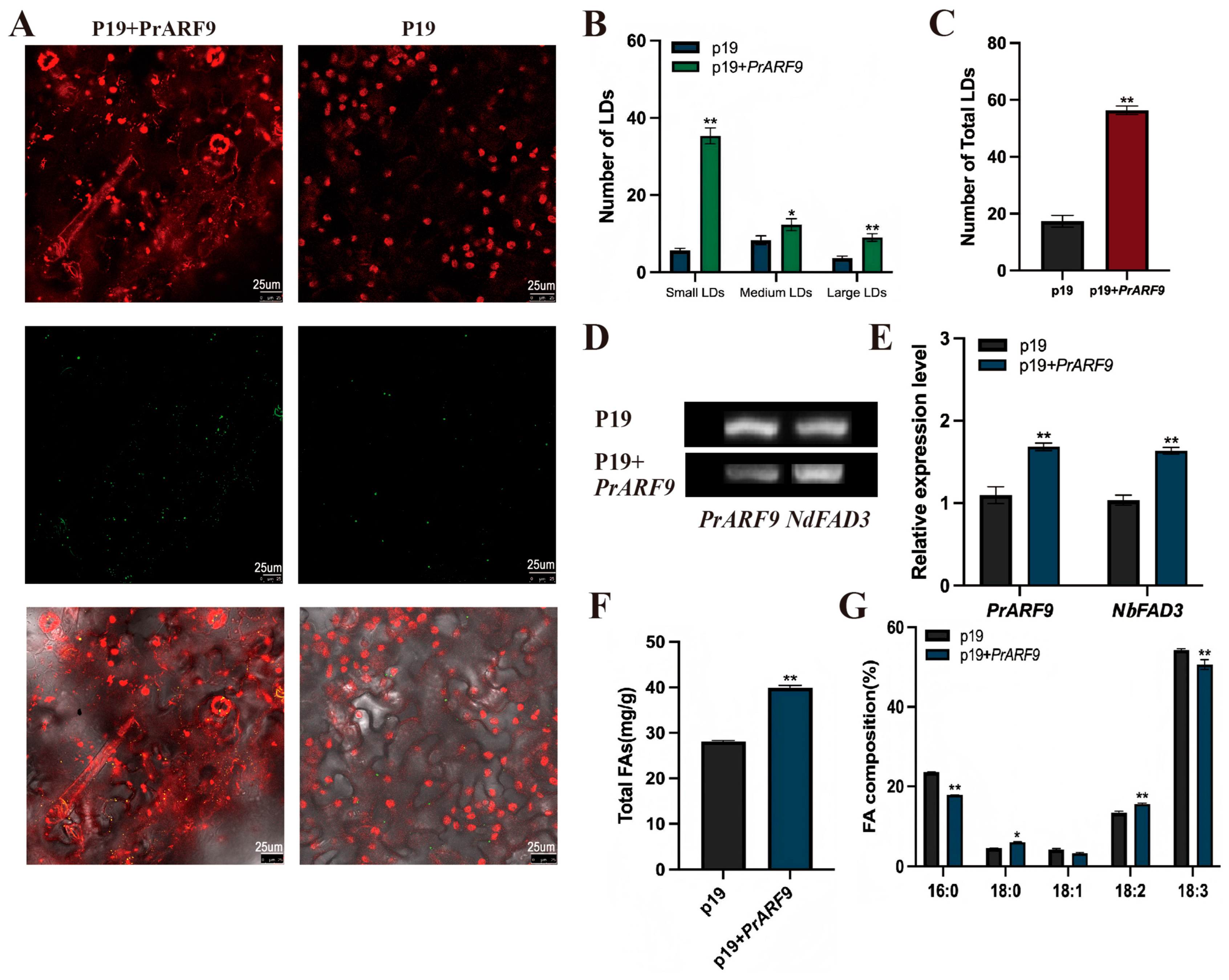
Transient overexpression in N. benthamiana is a powerful tool for dissecting transcription factor function, particularly for traits such as fatty acid accumulation. To investigate the regulatory function of PrARF9 in modulating plant traits, particularly its impact on ALA accumulation, a 35S:PrARF9 construct was introduced into N. benthamiana leaves (Figure 5A). RT-qPCR was performed to determine the expression levels of PrARF9 and NbFAD3, the N. benthamiana homolog of PrFAD3, at 7 days post-infiltration (7 dpi). The results showed that both PrARF9 and NbFAD3 were significantly upregulated, with expression levels elevated by 65% and 63% respectively (Figure 5E). Meanwhile, gas chromatography was employed to quantify the total fatty acid content and fatty acid composition in the leaves. The analysis revealed that overexpression of PrARF9 increased the total fatty acid (FA) content in N. benthamiana leaves by 33% relative to the empty vector control (Figure 5F). Additionally, FA composition was significantly altered, with C18:0 and C18:2 levels increasing by approximately 0.33-fold and 0.15-fold, respectively, whereas C18:1 and C18:3 decreased by 0.22-fold and 0.07-fold, respectively (Figure 5G). To further characterize these effects, we examined lipid droplet (LD) accumulation in N. benthamiana leaves by CLSM. PrARF9 overexpression significantly promoted LD proliferation relative to control leaves (Figure 5A,C), with the total number of LDs across all size ranges increasing approximately 3-fold (Figure 5B). These experimental results indicated that the expression of PrARF9 in N. benthamiana leaves regulates fatty acid composition, at least in part, by promoting NbFAD3 transcription.

3.6. PrARF9 Positively Regulates the Total Oil Content and α-Linolenic Acid Content in Isolated Zygotic Embryos of P. rockii

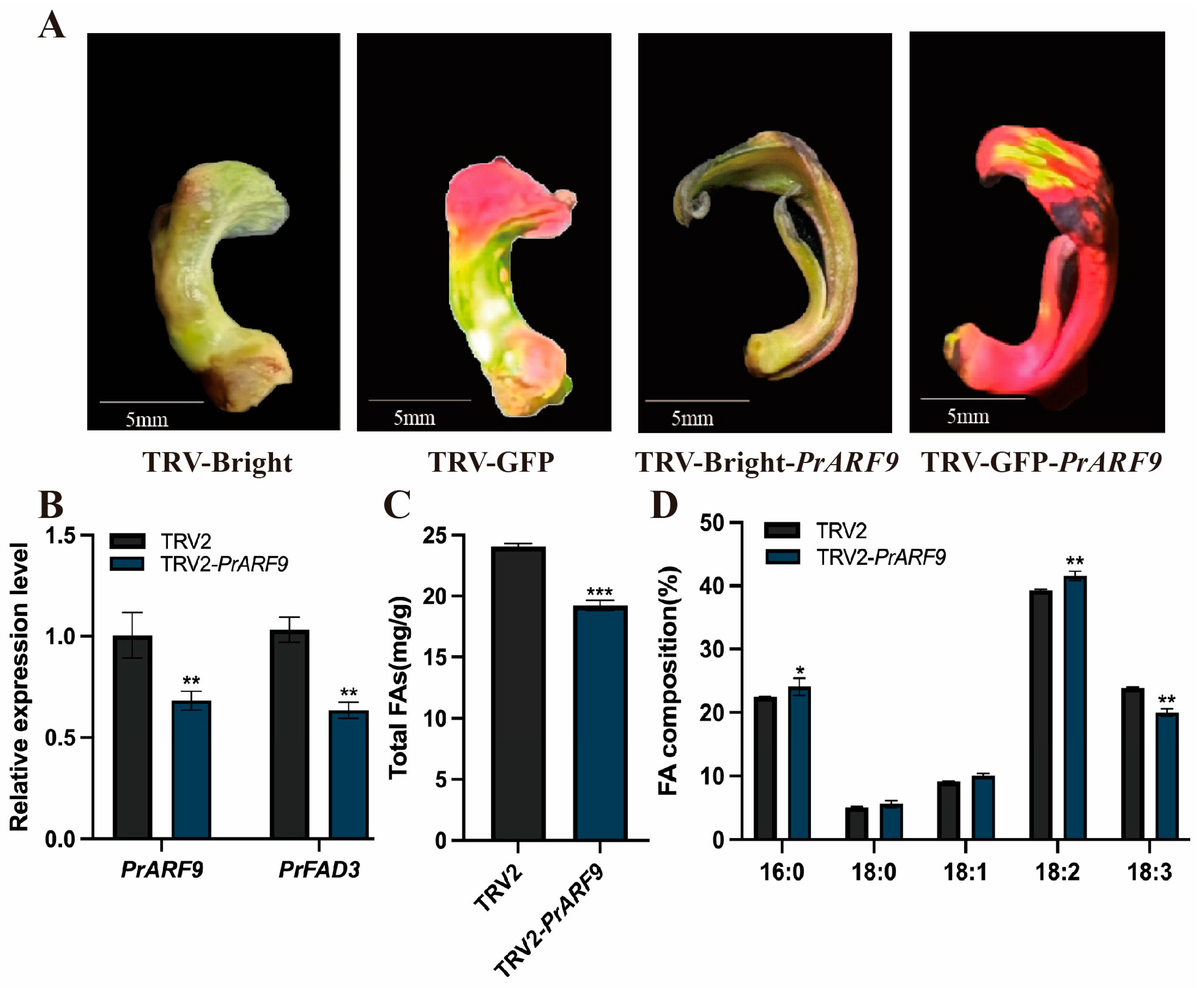
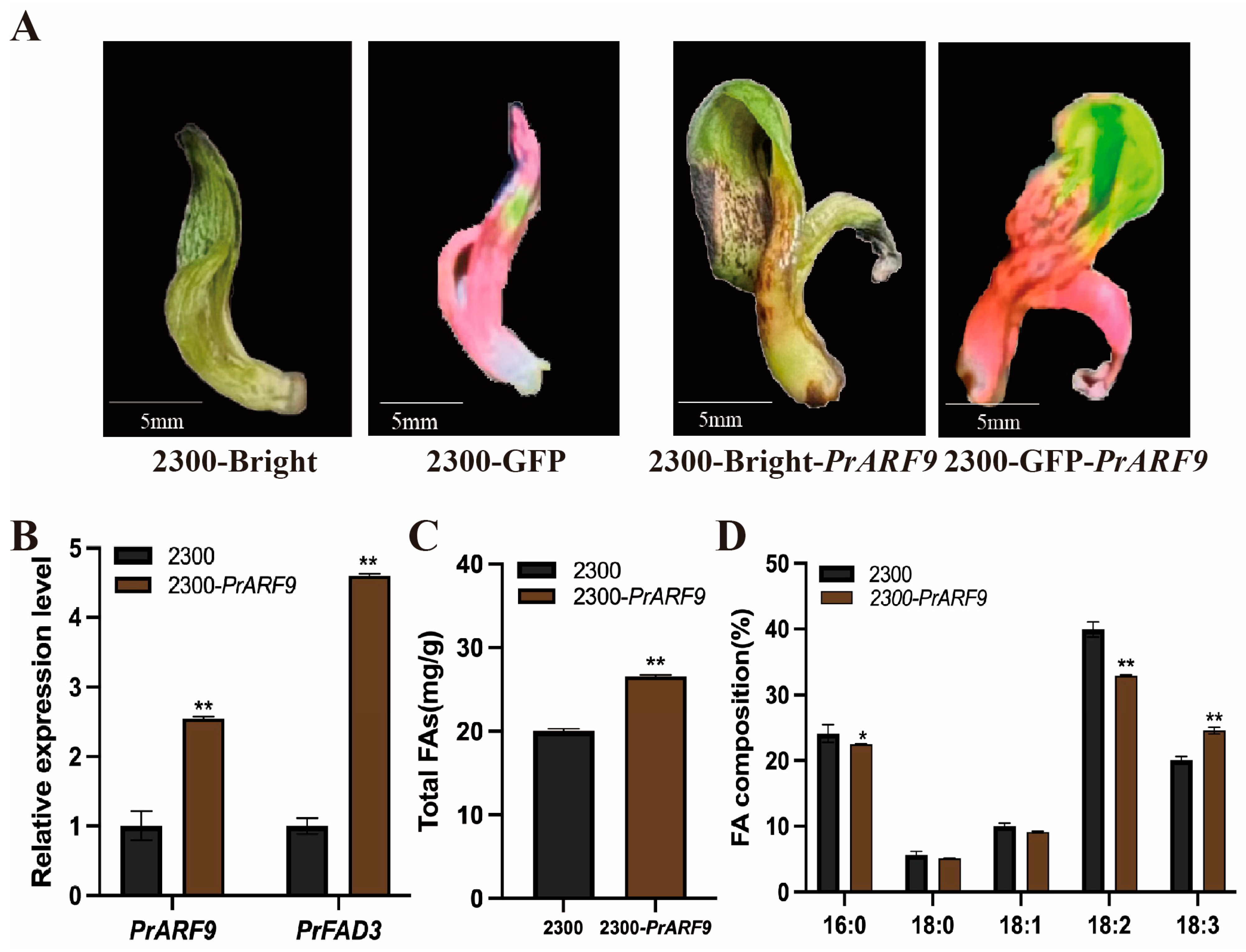
To further explore the regulatory role of PrARF9 in ALA accumulation in isolated zygotic embryos of P. rockii, we adopted a virus-induced gene silencing (VIGS) system to suppress the expression of endogenous PrARF9 (Figure 6A). RT-qPCR revealed a significant reduction in the expression level of the PrARF9 gene in TRV2-PrARF9 transgenic isolated zygotic embryos (Figure 6B). Analysis of total FA levels revealed an approximately 20.8% reduction in FA content in the isolated zygotic embryos of the silenced group compared to the TRV2 control group (Figure 6C). Notably, PrARF9 silencing significantly altered the FA composition: the proportion of C18:2 increased, whereas the ALA content decreased by about 13% (Figure 6D). To test whether PrARF9 regulates the expression of the fatty acid desaturase PrFAD3, we quantified its transcript levels in the silenced embryos. RT-qPCR showed that PrFAD3 expression was downregulated following the inhibition of PrARF9 (Figure 6C). However, opposite results were observed when PrARF9 was transiently overexpressed in isolated zygotic embryos of P. rockii (Figure 7A). RT-qPCR analysis revealed a significant increase in PrARF9 expression in isolated zygotic embryos, which was accompanied by the upregulation of PrFAD3 (Figure 7B). Correspondingly, the total FA level in PrARF9-overexpressing samples increased by approximately 30% (Figure 7C). Furthermore, compared with the control, the proportion of C18:2 declined by 19%, while the ALA content rose by 21% (Figure 7D). These results further confirm that PrARF9 positively regulates fatty acid accumulation and ALA biosynthesis in P. rockii.

3.7. Silencing of PrARF9 in P. rockii Seeds Reduces Total Oil Content and ALA Accumulation

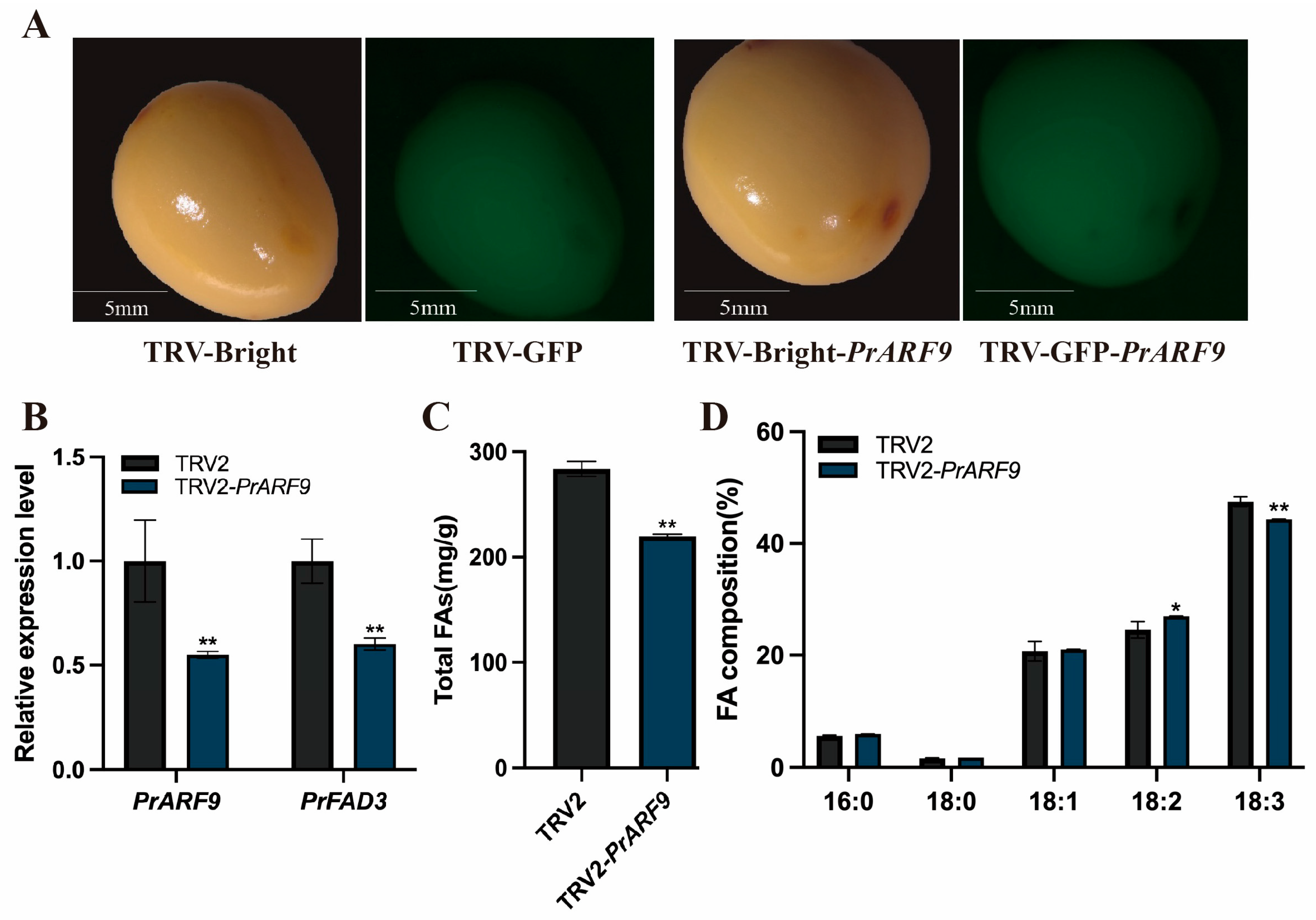
To further validate the functional analysis of PrARF9 in regulating FA and ALA accumulation, we conducted VIGS experiments in P. rockii seeds (Figure 8A). We confirmed suppression of PrARF9 expression in P. rockii seeds using stereomicroscopy and RT-qPCR. Compared to the TRV2 control, PrARF9 expression in TRV2-PrARF9 seeds decreased by nearly 50%, accompanied by a significant reduction in PrFAD3 expression (Figure 8B). Subsequent gas chromatography analysis revealed that total oil content in PrARF9-silenced seeds decreased by approximately 24% (Figure 8C). Furthermore, the content of C18:2 increased by 13.6%, while C18:3 decreased by 21.7% relative to the control (Figure 8D). The results of the seed-based VIGS are largely consistent with the observations in isolated zygotic embryos. Collectively, these results indicate that PrARF9 positively regulates ALA accumulation in P. rockii.

4. Discussion

Fatty acids are a major dietary energy source and supply essential metabolites that humans cannot synthesize endogenously [37]. For plants, fatty acids play crucial roles in various stages of growth and development. In particular, in response to low-temperature stress, plants have evolved adaptive strategies spanning molecular, physiological, and biochemical mechanisms to mitigate the adverse effects of cold. Therefore, studying fatty acid synthesis in P. rockii is of considerable importance. Such research may improve the nutritional quality of peony seed oil and contribute to enhancing cold resistance in this species.
The auxin response factor (ARF) family plays a pivotal role in all aspects of plant growth [38]. Due to the structural differences in their proteins, members of this transcription factor family exert distinct regulatory functions in tissues such as fruits, flowers and leaves across different plant species, participating in plant growth, development, senescence, and abscission while performing the functions of recognition and transcriptional activation or repression respectively [39]. The ARF family exhibits significant species-specific variation in gene number across plants, primarily driven by evolutionary events such as whole-genome duplications and segmental duplications. For instance, the family has expanded notably in Brassica crops while remaining relatively conserved in model plants like A. thaliana (23 members) [40]. Phylogenetic analyses consistently classify ARF proteins into three or four major clades, with their evolutionary relationships indicating an early divergence in land plants and subsequent conserved evolution along distinct lineages [41]. Family expansion is largely attributed to gene duplication, where segmental duplications dominate in species like Coix lacryma-jobi [42], while tandem duplications predominate in Apiaceae species [43]. In this study, PrARF genes were found to be unevenly distributed across 5 chromosomes and to exhibit local chromosomal clustering (Figure 1A). The observed clustering pattern is consistent with a contribution from tandem duplication events, although no significant whole-genome collinear blocks indicative of segmental duplication were detected; the relative contributions of these mechanisms to PrARF family expansion warrant further investigation.
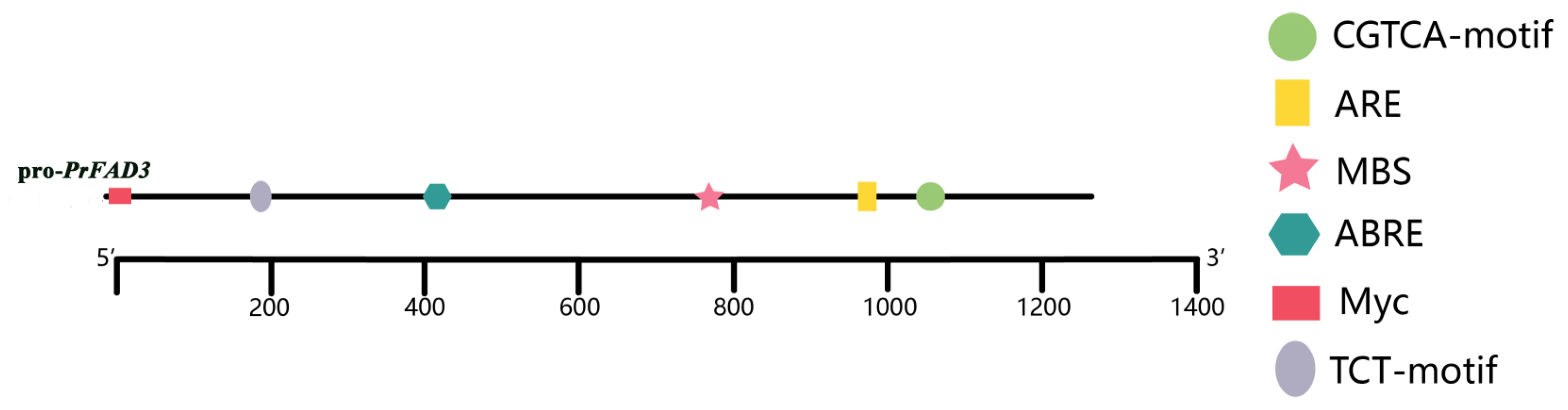
All ARF proteins share highly conserved B3 DNA-binding and Auxin_resp domains, with the amino acid composition of their middle region directly determining their transcriptional regulatory activity [44]. These evolutionary and structural characteristics collectively establish the functional foundation of the ARF family in auxin signaling pathways and plant developmental regulation. Through multiple sequence alignment, PrARF9 was found to possess the typical conserved structural characteristics of the ARF family. The coding sequence of PrARF9 contains a highly conserved N-terminal B3 DNA-binding domain, which is responsible for binding to the promoters of target genes. Analysis of the predicted protein secondary structure revealed that PrARF9 comprises 22 α-helices and 21 β-sheets, forming a mixed α/β fold characteristic of ARF proteins (Figure 3B). Sequence alignment showed that PrARF9 shares a high degree of sequence similarity with ARF9 homologous proteins from other plants. Together, these analyses elucidate the molecular architecture of PrARF9 and provide a structural and mechanistic basis for investigating its role in transcriptional regulation. ARF proteins, including PrARF9, also play critical roles in plant responses to abiotic stresses such as drought and salinity, further underscoring their broad regulatory significance. ARFs usually bind with specificity to TGTCTC auxin response elements (AuxRE) [45]. A key objective of ongoing work is to construct a lipid synthesis regulatory network centered on PrARF9 and to validate its direct regulatory relationship with PrFAD3. To achieve this, we analyzed the motifs in the promoter of PrFAD3 (Figure A2). This promoter mainly contains six key elements, including ARF-binding AuxREs, suggesting that PrFAD3 may be a direct transcriptional target of PrARF9. However, this potential regulatory relationship requires experimental validation, such as chromatin immunoprecipitation (ChIP) or electrophoretic mobility shift assays (EMSA), which will be pursued in future work. The presence of additional cis elements in the PrFAD3 promoter also suggests that other transcription factors may co-regulate its expression, which will inform future predictions of broader regulatory networks. In the context of auxin-mediated metabolic regulation, ARF transcription factors are known to modulate downstream target genes through interaction with the TIR1/AFB–Aux/IAA co-receptor system. The finding that PrARF9 promotes PrFAD3 expression and ALA accumulation suggests a novel link between the canonical auxin signaling pathway and seed fatty acid biosynthesis in P. rockii. This is consistent with emerging evidence that phytohormones, including auxin, can modulate fatty acid desaturation and triacylglycerol assembly during seed maturation, potentially by integrating developmental timing cues with metabolic gene regulation.
Since the core functional sites of many proteins are located in the nucleus, transcription factors typically contain a nuclear localization signal (NLS) [46], which ensures their correct translocation to the nucleus and thus the realization of gene transcriptional regulation. Previous structural analysis of rice ARF proteins identified a classic monopartite NLS in their DNA binding domain (DBD), and this DBD contributes to the nuclear localization of the ARF protein [47]. In this study, subcellular localization assays confirmed that PrARF9 localizes to the nucleus (Figure 4A), validating its potential to function as a transcription regulator. In this study, differential expression analysis of ARF family members during seed maturation (Figure 2B) revealed that PrARF9 is predominantly expressed in P. rockii seeds. Notably, this expression pattern was highly consistent with the accumulation period of UFAs. These findings reveal that PrARF9 may play a regulatory role in UFA accumulation in P. rockii seeds. This hypothesis is further supported by the finding that PrFAD3, a key structural gene in fatty acid synthesis, displayed an expression profile mirroring that of PrARF9. During seed maturation, the expression of PrARF9 and its downstream structural genes exhibited a distinct temporal trend, characterized by an initial increase followed by a decline. This coordinated expression profile further corroborates the regulatory role of PrARF9 in seed oil synthesis.
In the present study, we utilized N. benthamiana as a heterologous system to investigate the functional conservation of PrARF9. The experimental results showed that the expression of the PrFAD3 gene significantly increased the total fatty acid (FA) content and improved its compositional profile. Simultaneously, overexpression of PrARF9 in the isolated zygotic embryos and seeds of Paeonia rockii further confirmed the role of PrARF9 in regulating FAD3-mediated ALA synthesis. However, the regulatory effects on the proportion of fatty acid components were inconsistent between the endogenous validation conducted in P. rockii and the heterologous validation in N. benthamiana. Specifically, N. benthamiana showed significant increases in C18:0 and C18:2, while P. rockii mainly showed an elevation in the C18:3 level. Existing studies have indicated that ARFs from different plant sources can regulate fatty acid synthesis and show species-specific preferences in modulating fatty acid profiles [48,49,50]. The differential effects observed between the two species may therefore reflect the distinct fatty acid metabolic backgrounds of N. benthamiana and P. rockii, as well as possible species-specific co-regulatory factors that interact with ARF9 to determine compositional outcomes. VIGS assays conducted in P. rockii showed that silencing of the PrARF9 gene resulted in a decrease in the expression level of PrFAD3 and alterations in ALA composition (Figure 6C,D and Figure 8C,D). Taken together, these data indicate that PrARF9 expression upregulates PrFAD3, thereby regulating ALA accumulation in P. rockii. In summary, PrARF9 plays a positive regulatory role in fatty acid biosynthesis in plants.
The recruitment of interacting proteins by transcription factors to form functional complexes is a well-established mechanism for regulating gene expression in plants. Studies on Elaeis guineensis (oil palm) have demonstrated that the transcription factor EgWRI1-1 interacts with EgNF-YA3 to form a core module, which further recruits EgABI5 and EgNF-YC2 to assemble a tetrameric complex, thereby hierarchically regulating fatty acid synthesis gene expression [51]. Additionally, studies have shown that ARF transcription factors integrate multiple developmental and environmental signals through multi-level regulation to coordinate complex gene expression programs [52]. Therefore, we hypothesize that PrARF9 may interact with other transcription factors or co-regulators to form a functional complex that collectively governs fatty acid content and composition in P. rockii. It should be emphasized that this remains a working hypothesis, as no interacting proteins or direct-acting transcription factors for PrARF9 have yet been identified experimentally. Further studies will be required to clarify whether PrARF9 directly regulates key genes in the fatty acid biosynthesis pathway of P. rockii using approaches such as co-immunoprecipitation, yeast two-hybrid, or proximity labeling.

5. Conclusions

This study presents the first experimental evidence that an ARF transcription factor, PrARF9, functions as a positive regulator of fatty acid biosynthesis in P. rockii seeds. The central and novel finding is that PrARF9 promotes the expression of the fatty acid desaturase gene PrFAD3, thereby driving the accumulation of α-linolenic acid (ALA) and total seed oil during seed maturation. As a member of the ARF family, PrARF9 is predicted to be activated by the degradation of Aux/IAA repressors in response to auxin signals, allowing it to bind auxin response elements (AuxREs) in target gene promoters. The presence of AuxREs in the PrFAD3 promoter provides a direct mechanistic link. Our findings thus extend the functional repertoire of auxin-mediated transcription beyond classical developmental responses, positioning PrARF9 as a specific transcriptional regulator that channels auxin signaling into the metabolic program for seed oil biosynthesis, particularly for the production of polyunsaturated fatty acids. This establishes a novel and direct molecular connection between a key plant hormone and the synthesis of nutritionally important lipids in tree peony seeds. In summary, this research reveals for the first time that PrARF9, as a key regulator within the auxin signaling pathway, plays a significant positive regulatory role in oil biosynthesis in P. rockii. Short-term, these findings offer a direct molecular target for marker-assisted selection and gene-editing strategies to enhance oil traits in tree peony. Medium-term, the PrARF9–PrFAD3 regulatory axis provides a rational basis for breeding varieties with improved α-linolenic acid content and oil quality, holding nutritional and commercial promise. Long-term, this work advances the understanding of auxin-mediated lipid regulation across species, and the potential link between this module and cold tolerance may support the expansion of peony cultivation into cooler or marginal regions. Future efforts should focus on validating direct transcriptional control, identifying protein interactors, and testing modified lines under field conditions.

Author Contributions

Conceptualization, X.Z. (Xinran Zhang); Funding acquisition, J.Z.; Data curation, X.Z. (Xinran Zhang), F.X.; Formal analysis, X.Z. (Xiaoqing Zhang), F.X.; Project administration, J.Z.; Investigation, X.Z. (Xinran Zhang), F.X.; Methodology, X.Z. (Xinran Zhang); Conceptualization, X.Z. (Xinran Zhang); Visualization, X.Z. (Xinran Zhang), J.Z.; Data curation, X.Z. (Xiaoqing Zhang); Writing—original draft, X.Z. (Xinran Zhang); Writing—review and editing, X.Z. (Xinran Zhang), F.X., X.Z. (Xiaoqing Zhang); Corresponding author, Q.Z. All authors have read and agreed to the published version of the manuscript.

Funding

This research was funded by the Project for the Construction of a Regional Science and Technology Innovation System (2025ZY-QYCXYL-13), the Natural Science Foundation of Shaanxi Province (2024JC-YBMS-166), the National Natural Science Foundation of China (31901357), the Postdoctoral Research Funding Project of Shaanxi Province (2018BSHTDZZ91), and the Sichuan and Chongqing Key Laboratory of Innovation and Utilization of Native Plant Germplasm (XTZW2024-KF03).

Data Availability Statement

Sequence information for the genes analyzed in this study can be retrieved from The Arabidopsis Information Resource (TAIR): (https://www.arabidopsis.org/) (accessed on 9 April 2025). ARF9 (AT4G23980): https://www.arabidopsis.org/locus?key=129875 (accessed on 9 April 2025). The data supporting the findings of this study are available within the article and its Appendix A and Appendix B (Figure 1, Figure 2, Figure 3, Figure 4, Figure 5, Figure 6 and Figure A1; Table A1, Table A2, Table A3 and Table A4).

Conflicts of Interest

Author Junyu Zhang was employed by the company Longchi Peony Research Institute. The remaining authors declare that the research was conducted in the absence of any commercial or financial relationships that could be construed as a potential conflict of interest.

Appendix A

Appendix A.1

To investigate the expansion history of the PrARF family, an intragenomic synteny scan was performed in P. rockii. A total of 17 PrARF gene pairs associated with segmental duplication were identified, but no obvious collinearity relationship was observed among them, which may be related to the strong functional specificity within this gene family.
Figure A1. Visualization of intraspecific collinearity analysis of ARF family genes in P. rockii.
Horticulturae 12 00450 g0a1

Appendix A.2

In order to further explore the regulatory model of oil biosynthesis centered on PrARF9, we analyzed the promoter elements of the key structural gene PrFAD3. Based on these elements, a preliminary prediction of their regulatory relationship can be made, laying the foundation for experimental validation.
Figure A2. Visualization of promoter motif analysis of PrFAD3.
Horticulturae 12 00450 g0a2

Appendix B

Table A1. CDS sequence of the core transcription factor gene for experimentation.
Gene NameCoding Sequence
PrARF9ATGATGTCAAATCGAGGGTCGTTTTCGCAGTCTAATGTCTCAGGTAATGGAGGAGATGATCTATATGCAGAACTATGGAAAGCATGTGCTGGCCCACTCGTTGACGTTCCAAAGACGGGAGAGAGGGTGTACTATTTTCCGCAGGGACACATGGAACAATTAGAAGCTTCAACAAATCAGGAATTGAATCAGAGAATTCCGCTGTTTAATCTTCCTTCGCAGATCCTTTGTCGCGTTGTTCACAATCAGCTGCTGGCTGAACAGGATACAGATGAGGTTTATGCACAAATTACTTTACTTCCCGAATCAGATCAAACTGAGCCTAGAAGTCTTGATCCGTGCCCTAATGAACCACCAAGACCCACAGTTCACTCGTTCTGCAAGGTTTTAACTGCATCGGATACGAGCACCCATGGTGGATTCTCTGTCCTTAGGAAACATGCCAATGAATGCCTTCCTCCGCTGGACATGACCTTACCAACCCCAACTCAAGAATTGGTTACCAAGGATCTTCATGGTTACGAGTGGCGATTTAAGCATATTTTCAGAGGTCAGCCCCGGAGACATTTGCTTACAACAGGATGGAGTACATTTGTTACTTCAAAGAGATTAGTTGCAGGGGACTCTTTTGTTTTTTTGAGAGGGGAGAACGGTGAGTTACGTGTTGGAGTAAGACGTCTTTCTCGGCAACAGAGCACCATGCCATCATCAGTGATTTCAAGTCAGAGCATGCATCTTGGAGTGCTTGCAACTGCATCACATGCTGTTTCAACTCAAACCCTATTCATCGTCTATTACAAGCCCAGGACAAGTCAGTTCATAGTAAGCTTAAACAAGTATTTAGATGCAGTTAAACATGGGTTTACAGTTGGCATGAGATTCAAAATGATATTTGAGGGAGAGGATTCGCCGGAAAGAAGGTTTTCGGGCACTATTATTGGGGTTGATGATAATTCTTCTCAGTGGAAAGATTCCAAGTGGAGATCGTTGAAGGTTCATTGGGATGAACCTGCAAATATTCTAAGACCAGAGAGGGTATCTCCCTGGGATATTGAACCTTATGTAGCTTCTGTTCCTGCAAACGTGGCTCAACCGGTGGCGATGAAGAACAAAAGGCCCCGACCTCCAATGGATATCCCAGTTTCTGAAGTCCAAAATGCATCAATTCTTTGGAATACTGGATTGACTCAGTCGCACGAATCAACACAACAGAGCTGTACTGCCGAAGTCAAAAGAAGTGATAATCATGTTATCTGGCATCGTCATAAGCAGGGAGATATTAATAGCCCACTCATAAACAGCAATAGCAGCTGTTTATCAAGAACTGAAGGAGGCTGGGTATCTTCTTCCCACGTGAGTGTTTCCCAGTCTCTGTTCCAAGATCAGCACTCCTCAAAGCCGGACAATGATCAGCCAGACTCGATTGATATTGGAAAGAAAGGAACACCCACTAGTATGCGTTTGTTTGGTATCGAGTTACAGGTTCCACCACAAGACAAATCTTCTGAAGAAAAGGGTCCCGTTCAGCCCATCAGTTTATTGAGTAGCACCACTGAAAGACATGTTTCAAGTACCCCGTCCACAGGTGATTCAGCTGATGTGTCAAGAGCTTACAAAGAAAAACAGGGCCAGCCAGTGGTATCAACAAAAGAGACTCAGAGCAAGCAGAGTTGCTCTACCTCCACAAGAACTCGAACCAAGGTTCAAATGCAGGGGATTGCAGTTGGTCGTGCTGTGGACTTGTCTGCTTTGGTAGGTTATGATCAGCTCATAGATGAACTCGAGGAGATGTTTAAGATCAGAGGAGAGTTGCGTCCTCGAAATAAGTGGGAAATTGTTTTTACTGACGATGAAGGGGATATGATGCTCATGGGCGATGATCCTTGGCCGGAATTCTGCAACATGGTTAAGAAACTATACATTTGTTCGAGCCAAGAAGTGAAGAAGATGAGTCGAGGAAGCAGGCTCTCTTTCTCTGCGCCTGAAGGCGAGGGGGCTGTAATAAACTCAGATTCTAGCTGA
Table A2. Amino acid sequence of the core transcription factor gene for experimentation. Asterisk (*) denotes the stop codon.
Gene NameAmino Acid Sequence
PrARF9MMSNRGSFSQSNVSGNGGDDLYAELWKACAGPLVDVPKTGERVYYFPQGHMEQLEASTNQELNQRIPLFNLPSQILCRVVHNQLLAEQDTDEVYAQITLLPESDQTEPRSLDPCPNEPPRPTVHSFCKVLTASDTSTHGGFSVLRKHANECLPPLDMTLPTPTQELVTKDLHGYEWRFKHIFRGQPRRHLLTTGWSTFVTSKRLVAGDSFVFLRGENGELRVGVRRLSRQQSTMPSSVISSQSMHLGVLATASHAVSTQTLFIVYYKPRTSQFIVSLNKYLDAVKHGFTVGMRFKMIFEGEDSPERRFSGTIIGVDDNSSQWKDSKWRSLKVHWDEPANILRPERVSPWDIEPYVASVPANVAQPVAMKNKRPRPPMDIPVSEVQNASILWNTGLTQSHESTQQSCTAEVKRSDNHVIWHRHKQGDINSPLINSNSSCLSRTEGGWVSSSHVSVSQSLFQDQHSSKPDNDQPDSIDIGKKGTPTSMRLFGIELQVPPQDKSSEEKGPVQPISLLSSTTERHVSSTPSTGDSADVSRAYKEKQGQPVVSTKETQSKQSCSTSTRTRTKVQMQGIAVGRAVDLSALVGYDQLIDELEEMFKIRGELRPRNKWEIVFTDDEGDMMLMGDDPWPEFCNMVKKLYICSSQEVKKMSRGSRLSFSAPEGEGAVINSDSS *
Table A3. The primers used for plasmid construction in this study.
Primer NamePrimer Sequence (5′–3′)
PrARF9-FATGATGTCAAATCGAGGG
PrARF9-RTCAGCTAGAATCTGAGTT
PrARF9-2300-FacgggggacgagctcGGTACCATGATGTCAAATCGAGGG
PrARF9-2300-RcttgctcaccatggtGTCGACGCTAGAATCTGAGTTTATTAC
PrARF9-101-FGTTCTTCACTGTTGATACATATGATGATGTCAAATCGAGGG
PrARF9-101-RTTGATTCAGAATTCGGATCCTCAGCTAGAATCTGAGTT
PrARF9-TRV2-FAGAAGGCCTCCATGGGGATCCAACCTGCAAATATTCTAAGACC
PrARF9-TRV2-RGGACATGCCCGGGCCTCGAGCGACTGGGAAACACTCACG
PrARF9-BD-FctcagaggaggacctgcataATGATGTCAAATCGAGGG
PrARF9-BD-RccgctgcaggtcgacggatcTCAGCTAGAATCTGAGTT
PrMYB6-AD-FGTTCTTCACTGTTGATACATATGATGGGACGCTCTCCTTGTTG
PrMYB6-AD-RTTGATTCAGAATTCGGATCCTTAATTTGTCAAATCAAAAGAACC
Table A4. The primers used for RT-qPCR in this study.
Primer NamePrimer Sequence (5′–3′)
18S-26S ITSACCGTTGATTCGCACAATTGGTCATCG
TACTGCGGGTCGGCAATCGGACG
NbL23TGAGGACAACAATACCCTTG
GTCCCATCAGGCCTAATCAA
NbFAD3ACCAATGTGAACGGAGATCCC
TCAACATACACGGCAGCGAT
PrARF9TGTACTGCCGAAGTCAAA
GACTGGGAAACACTCACG
PrFAD3TCTTCCCTCAAATCCCACAC
GAGCTCATGGTCGGTCTTGT

References

  1. Lee-Okada, H.-C.; Xue, C.; Yokomizo, T. Recent advances on the physiological and pathophysiological roles of polyunsaturated fatty acids and their biosynthetic pathway. BBA-Mol. Cell Biol. Lipids 2025, 1870, 159564. [Google Scholar] [CrossRef]
  2. Bates, P.D.; Browse, J. The pathway of triacylglycerol synthesis through phosphatidylcholine in Arabidopsis produces a bottleneck for the accumulation of unusual fatty acids in transgenic seeds. Plant J. 2011, 68, 387–399. [Google Scholar] [CrossRef]
  3. Li, Y.; Beisson, F.; Koo, A.J.K.; Molina, I.; Pollard, M.; Ohlrogge, J. Identification of acyltransferases required for cutin biosynthesis and production of cutin with suberin-like monomers. Proc. Natl. Acad. Sci. USA 2007, 104, 18339–18344. [Google Scholar] [CrossRef]
  4. Zhang, S.; Wu, S.; Hou, Q.; Zhao, J.; Fang, C.; An, X.; Wan, X. Fatty acid de novo biosynthesis in plastids: Key enzymes and their critical roles for male reproduction and other processes in plants. Plant Physiol. 2024, 210, 108654. [Google Scholar] [CrossRef]
  5. Maraschin, F.S.; Kulcheski, F.R.; Segatto, A.L.A.; Trenz, T.S.; Barrientos-Diaz, O.; Margis-Pinheiro, M.; Margis, R.; Turchetto-Zolet, A.C. Enzymes of glycerol-3-phosphate pathway in triacylglycerol synthesis in plants: Function, biotechnological application and evolution. Prog. Lipid Res. 2019, 73, 46–64. [Google Scholar] [CrossRef] [PubMed]
  6. Banaś, W.; Sanchez Garcia, A.; Banaś, A.; Stymne, S. Activities of acyl-CoA: Diacylglycerol acyltransferase (DGAT) and phospholipid: Diacylglycerol acyltransferase (PDAT) in microsomal preparations of developing sunflower and safflower seeds. Planta 2013, 237, 1627–1636. [Google Scholar] [CrossRef] [PubMed]
  7. Lemieux, B.; Miquel, M.; Somerville, C.; Browse, J. Mutants of Arabidopsis with alterations in seed lipid fatty acid composition. Theor. Appl. Genet. 1990, 80, 234–240. [Google Scholar] [CrossRef]
  8. Liu, Y.; Hu, Y.; Wei, J.-J.; Jiang, Z.-H.; Han, J.-Q.; Jin, M.; Zhang, L.-Y.; Zheng, L.-Y.; Li, W.; Bi, Y.-D.; et al. Transcription Factor GmERFA Interacts with GmNFYA and Acts as a Negative Regulator of Seed Fatty Acid Accumulation in Soybean. Plant Biotechnol. J. 2025, 23, 5917–5933. [Google Scholar] [CrossRef]
  9. Hu, Y.; Jiang, L.; Wang, F.; Yu, D. Jasmonate regulates the inducer of cbf expression-C-repeat binding factor/DRE binding factor1 cascade and freezing tolerance in Arabidopsis. Plant Cell 2013, 25, 2907–2924. [Google Scholar] [CrossRef] [PubMed]
  10. Mochizuki, S.; Sugimoto, K.; Koeduka, T.; Matsui, K. Arabidopsis lipoxygenase 2 is essential for formation of green leaf volatiles and five-carbon volatiles. FEBS Lett. 2016, 590, 1017–1027. [Google Scholar] [CrossRef]
  11. Troncoso-Ponce, M.A.; Nikovics, K.; Marchive, C.; Lepiniec, L.; Baud, S. New insights on the organization and regulation of the fatty acid biosynthetic network in the model higher plant Arabidopsis thaliana. Biochimie 2016, 120, 3–8. [Google Scholar] [CrossRef]
  12. Mhamdi, A. To Grow or Not to Grow: Specific Lipoxygenases Control Wound-Induced Growth Restriction. Plant Physiol. 2020, 184, 1210–1211. [Google Scholar] [CrossRef]
  13. Sun, Y.; Hegebarth, D.; Jetter, R. Acyl-CoA desaturase ADS4.2 is involved in the formation of characteristic wax alkenes in young Arabidopsis leaves. Plant Physiol. 2021, 186, 1812–1831. [Google Scholar] [CrossRef]
  14. Boulard, C.; Fatihi, A.; Lepiniec, L.; Dubreucq, B. Regulation and evolution of the interaction of the seed B3 transcription factors with NF-Y subunits. BBA-Mol. Cell Biol. Lipids 2017, 1860, 1069–1078. [Google Scholar] [CrossRef] [PubMed]
  15. Braybrook, S.A.; Stone, S.L.; Park, S.; Bui, A.Q.; Le, B.H.; Fischer, R.L.; Goldberg, R.B.; Harada, J.J. Genes directly regulated by LEAFY COTYLEDON2 provide insight into the control of embryo maturation and somatic embryogenesis. Proc. Natl. Acad. Sci. USA 2006, 103, 3468–3473. [Google Scholar] [CrossRef] [PubMed]
  16. Stone, S.L.; Braybrook, S.A.; Paula, S.L.; Kwong, L.W.; Meuser, J.; Pelletier, J.; Hsieh, T.F.; Fischer, R.L.; Goldberg, R.B.; Harada, J.J. Arabidopsis LEAFY COTYLEDON2 induces maturation traits and auxin activity: Implications for somatic embryogenesis. Proc. Natl. Acad. Sci. USA 2008, 105, 3151–3156. [Google Scholar] [CrossRef] [PubMed]
  17. Gazzarrini, S.; Tsuchiya, Y.; Lumba, S.; Okamoto, M.; McCourt, P. The transcription factor FUSCA3 controls developmental timing in Arabidopsis through the hormones gibberellin and abscisic acid. Dev. Cell 2004, 7, 373–385. [Google Scholar] [CrossRef]
  18. Lotan, T.; Ohto, M.; Yee, K.M.; West, M.A.; Lo, R.; Kwong, R.W.; Yamagishi, K.; Fischer, R.L.; Goldberg, R.B.; Harada, J.J. Arabidopsis LEAFY COTYLEDON1 is sufficient to induce embryo development in vegetative cells. Cell 1998, 93, 1195–1205. [Google Scholar] [CrossRef]
  19. Mu, J.; Tan, H.; Zheng, Q.; Fu, F.; Liang, Y.; Zhang, J.; Yang, X.; Wang, T.; Chong, K.; Wang, X.-J.; et al. LEAFY COTYLEDON1 is a key regulator of fatty acid biosynthesis in Arabidopsis. Plant Physiol. 2008, 148, 1042–1054. [Google Scholar] [CrossRef] [PubMed]
  20. Casson, S.A.; Lindsey, K. The turnip mutant of Arabidopsis reveals that LEAFY COTYLEDON1 expression mediates the effects of auxin and sugars to promote embryonic cell identity. Plant Physiol. 2006, 142, 526–541. [Google Scholar] [CrossRef]
  21. Xie, M.; Huang, L.; Song, L.; O’Neil, R.; Lewsey, M.; Chen, H.; Chen, H.; Zhuo, R.; Shokhirev, M.; Alonso, J.; et al. Defining in vivo transcriptional responses to auxin. Preprint 2022. [Google Scholar] [CrossRef]
  22. Vanneste, S.; Friml, J. Auxin: A Trigger for Change in Plant Development. Cell 2009, 136, 1005–1016. [Google Scholar] [CrossRef]
  23. Rienstra, J.; Carrillo-Carrasco, V.P.; de Roij, M.; Hernandez-Garcia, J.; Weijers, D. A conserved ARF–DNA interface underlies auxin-triggered transcriptional response. Proc. Natl. Acad. Sci. USA 2025, 122, e2501915122. [Google Scholar] [CrossRef]
  24. Korasick, D.A.; Chatterjee, S.; Tonelli, M.; Dashti, H.; Lee, S.G.; Westfall, C.S.; Fulton, D.B.; Andreotti, A.H.; Amarasinghe, G.K.; Strader, L.C.; et al. Defining a Two-pronged Structural Model for PB1(Phox/Bem1p) Domain Interaction in Plant Auxin Responses. J. Biol. Chem. 2015, 290, 12868–12878. [Google Scholar] [CrossRef]
  25. Schruff, M.C.; Spielman, M.; Tiwari, S.; Adams, S.; Fenby, N.; Scott, R.J. The AUXIN RESPONSE FACTOR 2 gene of Arabidopsis linksauxin signalling, cell division, and the size of seeds and other organs. Development 2006, 133, 251–261. [Google Scholar] [CrossRef]
  26. Goetz, M.; Vivian-Smith, A.; Johnson, S.D.; Koltunow, A.M. AUXIN RESPONSE FACTOR8 Is a Negative Regulator of Fruit Initiation in Arabidopsis. Plant Cell 2006, 18, 1873–1886. [Google Scholar] [CrossRef]
  27. Feng, Z.; Zhu, J.; Du, X.; Cui, X. Effects of three auxin-inducible LBD members on lateral root formation in Arabidopsis thaliana. Planta 2012, 236, 1227–1237. [Google Scholar] [CrossRef] [PubMed]
  28. Bai, Y.; Wang, Z.; Luo, L.; Xuan, X.; Tang, W.; Qu, Z.; Dong, T.; Qi, Z.; Yu, M.; Wu, W.; et al. Characterization of VvmiR166s-Target Modules and Their Interaction Pathways in Modulation of Gibberellic-AcidInduced Grape Seedless Berries. Int. J. Mol. Sci. 2023, 24, 16279. [Google Scholar] [CrossRef] [PubMed]
  29. Liu, X.; Zhang, H.; Zhao, Y.; Feng, Z.; Li, Q.; Yang, H.-Q.; Luan, S.; Li, J. Auxin controls seed dormancy through stimulation of abscisic acid signaling by inducing ARF-mediated ABI3 activation in Arabidopsis. Proc. Natl. Acad. Sci. USA 2013, 110, 15485–15490. [Google Scholar] [CrossRef]
  30. Deng, R.; Gao, J.; Yi, J.; Liu, P. Could peony seeds oil become a high-quality edible vegetable oil? The nutritional and phytochemistry profiles, extraction, health benefits, safety and value-added-products. Food Res. 2022, 156, 111200. [Google Scholar] [CrossRef] [PubMed]
  31. Li, S.; Yuan, R.; Chen, L.; Wang, L.; Hao, X.; Wang, L.; Zheng, X.; Du, H. Systematic qualitative and quantitative assessment of fatty acids in the seeds of 60 tree peony (Paeonia section Moutan DC.) cultivars by GC–MS. Food Chem. 2015, 173, 133–140. [Google Scholar] [CrossRef]
  32. Li, S.; Xie, Z.; Hu, C.; Zhang, J. A Review of Auxin Response Factors (ARFs) in Plants. Front. Plant Sci. 2016, 7, 47. [Google Scholar] [CrossRef] [PubMed]
  33. Novikova, D.D.; Omelyanchuk, N.; Korosteleva, A.; Albrecht, C.; Lavrekha, V.V.; Weijers, D.; Mironova, V. Mechanism of auxin-dependent gene regulation 1 through composite auxin response elements. Plant Biol. 2024, 19, 603724. [Google Scholar] [CrossRef]
  34. Behera, J.; Rahman, M.; Shockey, J.; Kilaru, A. Acyl-CoA-dependent and acyl-CoA-independent avocado acyltransferases positively influence oleic acid content in nonseed triacylglycerols. Front. Plant Sci. 2023, 13, 1056582. [Google Scholar] [CrossRef]
  35. Yang, W.; Hu, J.; Behera, J.R.; Kilaru, A.; Yuan, Y.; Zhai, Y.; Xu, Y.; Xie, L.; Zhang, Y.; Zhang, Q.; et al. A Tree Peony Trihelix Transcription Factor PrASIL1 Represses Seed Oil Accumulation. Front. Plant Sci. 2021, 12, 796181. [Google Scholar] [CrossRef] [PubMed]
  36. Yang, W.; Xin, Z.; Hu, J.; Zhang, Y.; Zhang, Q.; Niu, L. The tree peony nuclear factor Y transcription factor PrNF-YC2 promotes seed oil accumulation. Plant J. 2023, 115, 546–562. [Google Scholar] [CrossRef] [PubMed]
  37. Mendes, A.; Kelly, A.A.; van Erp, H.; Shaw, E.; Powers, S.J.; Kurup, S.; Eastmond, P.J. bZIP67 Regulates the Omega-3 Fatty Acid Content of Arabidopsis Seed Oil by Activating FATTY ACIDDESATURASE3. Plant Cell 2013, 25, 3104–3116. [Google Scholar] [CrossRef] [PubMed]
  38. Li, Y.; Han, S.; Qi, Y. Advances in structure and function of auxin response factor in plants. J. Integr. Plant Biol. 2023, 65, 617–632. [Google Scholar] [CrossRef]
  39. Hernández-García, J.; Carrillo-Carrasco, V.P.; Rienstra, J.; Tanaka, K.; de Roij, M.; Dipp-Álvarez, M.; Freire-Ríos, A.; Crespo, I.; Boer, R.; van den Berg, W.A.M.; et al. Evolutionary origins and functional diversification of Auxin Response Factors. Nat. Commun. 2024, 15, 10909. [Google Scholar] [CrossRef]
  40. Finet, C.; Berne-Dedieu, A.; Scutt, C.P.; Marletaz, F. Evolution of the ARF gene family in land plants: Old domains, new tricks. Mol. Biol. Evol. 2013, 30, 45–56. [Google Scholar] [CrossRef]
  41. Kumar, R.; Tyagi, A.K.; Sharma, A.K. Genome-wide analysis of auxin response factor (ARF) gene family from tomato and analysis of their role in flower and fruit development. Mol. Genet. Genom. 2011, 285, 245–260. [Google Scholar] [CrossRef]
  42. Zhai, Y.; Shen, X.; Sun, Y.; Liu, Q.; Ma, N.; Zhang, X.; Jia, Q.; Liang, Z.; Wang, D. Genome-wide investigation of ARF transcription factor gene family and its responses to abiotic stress in Coix (Coix lacryma-jobi L.). Protoplasma 2023, 260, 1389–1405. [Google Scholar] [CrossRef]
  43. Pei, Q.; Li, N.; Yang, Q.; Wu, T.; Feng, S.; Feng, X.; Jing, Z.; Zhou, R.; Gong, K.; Yu, T.; et al. Genome-Wide Identification and Comparative Analysis of ARF Family Genes in Three Apiaceae Species. Front. Genet. 2021, 11, 590535. [Google Scholar] [CrossRef]
  44. Guilfoyle, T.J.; Hagen, G. Auxin response factors. Curr. Opin. Plant Biol. 2007, 10, 453–460. [Google Scholar] [CrossRef]
  45. Ulmasov, T.; Hagen, G.; Guilfoyle, T.J. Activation and repression of transcription by auxin-response factors. Proc. Natl. Acad. Sci. USA 1999, 96, 5844–5849. [Google Scholar] [CrossRef]
  46. Ahmad, B.; Lerma-Reyes, R.; Mukherjee, T.; Nguyen, H.V.; Weber, A.L.; Schulze, W.X.; Comer, J.R.; Schrick, K. Nuclear localization of HD-Zip IV transcription factor GLABRA2 is driven by Importin α. J. Exp. Bot. 2024, 75, 6441–6461. [Google Scholar] [CrossRef]
  47. Shen, C.; Wang, S.; Bai, Y.; Wu, Y.; Zhang, S.; Chen, M.; Guilfoyle, T.; Wu, P.; Qi, Y. Functional analysis of the structural domain of ARF proteinsin rice (Oryza sativa L.). J. Exp. Bot. 2010, 61, 3971–3981. [Google Scholar] [CrossRef] [PubMed]
  48. van Erp, H.; Bates, P.D.; Burgal, J.; Shockey, J.; Browse, J. Castor phospholipid: Diacylglycerol acyltransferase facilitates efficient metabolism of hydroxy fatty acids in transgenic Arabidopsis. Plant Physiol. 2011, 155, 683–693. [Google Scholar] [CrossRef] [PubMed]
  49. Chellamuthu, M.; Kumaresan, K.; Subramanian, S.; Muthumanickam, H. Functional Analysis of Sesame Diacylglycerol Acyltransferase and Phospholipid: Diacylglycerol Acyltransferase Genes Using in Silico and In Vitro Approaches. Plant Mol. Biol. Rep. 2019, 37, 146–156. [Google Scholar] [CrossRef]
  50. Parchuri, P.; Pappanoor, A.; Naeem, A.; Durrett, T.P.; Welti, R.; Sreedhar, R.V. Lipidome analysis and characterization of Buglossoides arvensis acyltransferases that incorporate polyunsaturated fatty acids into triacylglycerols. Plant Sci. 2022, 324, 111445. [Google Scholar] [CrossRef]
  51. Yeap, W.; Lee, F.; Shan, D.; Musa, H.; Appleton, D.; Kulaveerasingam, H. WRI1-1, ABI5, NF-YA3 and NF-YC2 increase oil biosynthesis in coordination with hormonal signaling during fruit development in oil palm. Plant J. 2017, 91, 97–113. [Google Scholar] [CrossRef] [PubMed]
  52. Lanctot, A.; Nemhauser, J.L. It’s Morphin’ time: How multiple signals converge on ARF transcription factors to direct development. Curr. Opin. Plant Biol. 2020, 57, 1–7. [Google Scholar] [CrossRef] [PubMed]
Figure 1. Identification and characterization of PrARFs. (A) Chromosomal localization of ARF family genes in P. rockii. The colors on the chromosomes represent chromosomal density, while the blue markers indicate the physical positions of PrARF genes on the chromosomes. The scale on the left denotes the chromosome length in megabases (Mb). Genes focused on in this study are highlighted in red in the figure. (B) Syntenic relationships between P. rockii and A. thaliana as well as V. vinifera. The gray lines indicate whole-genome syntenic homologous gene pairs among these plants, while the blue lines represent syntenic ARF gene pairs.
Horticulturae 12 00450 g001
Figure 2. Analysis of the PrARF family. (A) Visualization of cis-regulatory elements of the ARF family in P. rockii. (B) Expression changes of ARF family genes in P. rockii during seed maturation. Genes focused on in this study are highlighted in red in the figure. (C) Visualization of motif analysis for ARF family transcription factors in P. rockii.
Horticulturae 12 00450 g002
Figure 3. Characteristics of PrARF9. (A) The phylogenetic tree shows that PrARF9 is evolutionarily closest to its homologous protein ARF9 in A. thaliana. Bootstrap values are expressed as a percentage of 1000 replicates and provided at branch nodes. Genes focused on in this study are highlighted in red in the figure. (B) 3D structural prediction of the PrARF9 protein. (C) Predicted tertiary structure of PrARF9: we showcase the DNA-binding site and protein interaction region in blue, yellow, and pink hues. (D) A sequence alignment highlights the similarities between PrARF9’s amino acid sequence and those of ARF9s from various plants, with key domains and transcriptional activation areas underlined. Blue triangles mark the conserved nuclear localization signal sequence.
Horticulturae 12 00450 g003
Figure 4. PrARF9 is a nuclear-expressed transcription factor whose expression level varies with the maturation of peony seeds. (A) Subcellular localization of PrARF9 in N. benthamiana leaf cells. Bars = 25 μm. Blue: DAPI staining; Green: GFP signals. (B,C) Expression patterns of PrARF9 and PrFAD3 at different stages of seed maturation. (D) Oil accumulation during seed maturation. (E) Changes in oil composition during seed maturation. (* p < 0.05, ** p < 0.01).
Horticulturae 12 00450 g004
Figure 5. Overexpression of PrARF9 impacts fatty acid composition of N. benthamiana. (A) Images of lipid droplets (LD, green) and chloroplasts (red) in tobacco leaves. Scale bar = 25 μm. (B) The quantity of LDs in various size ranges within each image area. (C) Number of total LDs. (D) RT-PCR experimental results. (E) Relative expression level of PrARF9 and NdFAD3 in tobacco leaf tissue. (F,G) Oil content and fatty acid composition in leaves overexpressing PrARF9. (* p < 0.05, ** p < 0.01).
Horticulturae 12 00450 g005
Figure 6. The effect of silencing PrARF9 on oil accumulation in zygotic embryos of P. rockii. (A) Fluorescence image of isolated embryonic seedlings taken by a stereomicroscope, scale bar = 5 mm. (B) RT-qPCR analysis of PrARF9 and PrFAD3 expressed in embryonic seedlings. (C) Oil accumulation in embryonic seedlings. (D) Fatty acid composition. (* p < 0.05, ** p < 0.01, *** p < 0.001).
Horticulturae 12 00450 g006
Figure 7. The effect of overexpressing PrARF9 on oil accumulation in P. rockii. (A) Fluorescence image of isolated embryonic seedlings taken by a stereomicroscope, scale bar = 5 mm. (B) RT-qPCR analysis of PrARF9 and PrFAD3 expressed in embryonic seedlings. (C) Oil accumulation in embryonic seedlings. (D) Fatty acid composition. (* p < 0.05, ** p < 0.01).
Horticulturae 12 00450 g007
Figure 8. The effect of silencing PrARF9 on oil accumulation in P. rockii seeds. (A) Fluorescence image of seeds taken by a stereomicroscope, scale bar = 5 mm. (B) RT-qPCR analysis of PrARF9 and PrFAD3 expressed in seeds. (C) Oil accumulation in seeds. (D) Fatty acid composition in the seeds of P. rockii. (* p < 0.05, ** p < 0.01).
Horticulturae 12 00450 g008
Disclaimer/Publisher’s Note: The statements, opinions and data contained in all publications are solely those of the individual author(s) and contributor(s) and not of MDPI and/or the editor(s). MDPI and/or the editor(s) disclaim responsibility for any injury to people or property resulting from any ideas, methods, instructions or products referred to in the content.