Article

Effects of Different Pumpkin Rootstocks on Grafted Cucumber Resistance to Powdery Mildew
1
Engineering Laboratory of Genetic Improvement of Horticultural Crops of Shandong Province, College of Horticulture, Qingdao Agricultural University, Qingdao 266109, China
2
College of Horticulture Science, Zhejiang A&F University, Hangzhou 311300, China
3
State Key Laboratory of Vegetable Biobreeding, Institute of Vegetables and Flowers, Chinese Academy of Agricultural Sciences, Beijing 100081, China
*
Authors to whom correspondence should be addressed.
These authors contributed equally to this work.
Horticulturae 2026, 12(4), 446; https://doi.org/10.3390/horticulturae12040446
Submission received: 29 January 2026 / Revised: 28 March 2026 / Accepted: 30 March 2026 / Published: 3 April 2026

Abstract

Powdery mildew (PM) is a major fungal disease in cucumber (Cucumis sativus L.) cultivation. Grafting serves as an important agricultural practice for improving disease resistance and stress tolerance in scions. This study aimed to determine the effects of different pumpkin rootstocks on PM resistance in grafted cucumber plants. Susceptible ‘Xintai Mici’ cucumber scions were grafted onto 10 different pumpkin rootstock varieties, with self-grafted plants serving as the experimental control. Grafting significantly promoted plant biomass accumulation compared to the self-grafted control, and this enhancement was positively correlated with the rootstock’s root system size. However, grafted plant growth was still negatively affected by PM infection. Among the 10 rootstocks, seedlings grafted onto rootstock GP8 exhibited the lowest disease index, the slowest spore development, and the strongest PM resistance. While some resistant pumpkin rootstocks failed to confer significant PM resistance to their grafted cucumber scions, rootstock GP8 provided consistent PM resistance to its grafted plants. Furthermore, cucumber grafted onto rootstock GP8 showed a significantly enhanced net photosynthetic rate and increased antioxidant enzyme activities (superoxide dismutase, ascorbate peroxidase, and glutathione reductase). Concurrently, these plants accumulated lower levels of superoxide anions and exhibited the smallest increases in malondialdehyde content among all the grafted combinations. Additionally, during PM infection, the expression levels of salicylic acid biosynthesis-related genes (CsICS1 and CsPAL) and downstream disease resistance genes (CsPR1, CsPR5, and CsNPR1) were significantly higher in scions grafted onto rootstock GP8 compared to self-grafted cucumbers. These results suggest that the enhanced PM resistance in grafted cucumber is significantly influenced by the rootstock, potentially through the regulation of photosynthetic performance, reactive oxygen species metabolism, and the expression of genes associated with the salicylic acid signaling pathway in the scion.

1. Introduction

Cucumber (Cucumis sativus L.) is an economically significant vegetable crop in China. Powdery mildew (PM) is one of the three major diseases affecting cucumber and represents the most prevalent fungal disease in both greenhouse and field production. This disease is primarily caused by Podosphaera xanthii [1]. Disease development is favored by high humidity, elevated temperatures, and low-light conditions. The infection process in plants typically follows the following four fundamental stages: (i) Within 1–2 h after spore deposition on leaves, spores germinate and form primary germ tubes. (ii) These tubes penetrate plant epidermal cells via appressoria, leading to the invagination of the host plasma membrane and the formation of primary haustoria. At this stage, no visible symptoms appear, and infected leaves are indistinguishable from healthy ones. (iii) After approximately 48 h, secondary hyphae develop from the primary hyphae on the epidermides of stems and leaves, producing new appressoria that form secondary haustoria within adjacent epidermal cells. (iv) Approximately 5 d post-infection, new conidiophores and spores are produced, initiating a renewed cycle of dispersal and infection [2,3,4,5]. PM can infect cucumber plants throughout their lifecycle, colonizing nearly all above-ground tissues, including the hypocotyl, cotyledons, stems, petioles, leaves, and fruit [1,2]. This results in leaf yellowing and brittle necrosis, a compromised photosynthetic capacity, and a shortened harvesting window, collectively leading to significant reductions in both crop yield and fruit quality [6].
Grafting represents an effective approach to enhancing disease resistance in horticultural crops and is generally considerably safer than chemical or biological control measures [7]. The choice of rootstock variety is a key factor influencing scion resistance to PM, as the scion’s disease response can be modulated by the rootstock’s own resistance profile. For example, in watermelon, grafting susceptible scions onto different resistant rootstocks improves PM resistance in certain scion–rootstock combinations [8]. Similar findings have been reported in pepper grafting studies [9]. Conversely, grafting susceptible scions has been observed to increase the vulnerability of otherwise disease-resistant rootstocks to the soil-borne bacterium. Conversely, grafting susceptible scions can increase the vulnerability of otherwise disease-resistant rootstocks to the bacterium Rallstonia solanacearum [10]. In potato, the use of disease-resistant varieties as rootstocks can enhance scion resistance to late blight [11].
The role of rootstocks in enhancing scion disease resistance is primarily achieved through the regulation of long-distance transport processes, including the translocation of water and nutrients. Such rootstock-mediated physiological adjustments lead to significant modifications in scion traits, including alterations in biomass accumulation, photosynthetic capacity, enzymatic activity, hormonal profiles, and the expression of genes associated with disease resistance [12,13]. Generally, grafting can enhance disease resistance by improving physiological traits of the scion, such as water and nutrient uptake capacity [14,15]. Moreover, different propagation methods can alter the plant’s physiological state and promote its growth and development [16]. Grafting can induce the thickening of the scion leaf epidermis [17], forming a physical barrier that impedes pathogen invasion and reduces subsequent attachment and infection. Beyond structural defenses, rootstocks enhance plant stress tolerance by regulating water uptake and nutrient transport, which in turn improves the photosynthetic capacities of the scions [18]. This enhancement of photosynthesis under stress conditions has been observed across various grafted systems. For example, grafting increases stomatal conductance and photosynthetic capacity in grapevines [19]. In cucumber, grafted plants exhibit higher net CO2 assimilation rates and transpiration rates, along with altered chlorophyll fluorescence parameters, collectively contributing to greater stress tolerance [20]. Similarly, tomato plants grafted onto eggplant rootstocks show improved chlorophyll fluorescence, photosynthetic performance, and enhanced tolerance to waterlogging [21]. Moreover, the use of salt-tolerant rootstocks in sweet pepper helps maintain photosynthetic capacity and nutrient transport under saline conditions, thereby boosting overall stress tolerance [22].
Grafting itself can be considered a form of traumatic stress that activates the plant’s antioxidant defense system [23]. This response typically involves the generation of reactive oxygen species (ROS) and the accumulation of defense-related and antioxidant enzymes [15,23,24]. Grafting modulates antioxidant enzyme activity in tobacco [25] and, under drought stress, enhances photosynthetic capacity while reducing ROS accumulation in tomato scions and grapevines [26]. It also decreases malondialdehyde (MDA) and hydrogen peroxide (H2O2) levels in scions, thereby improving drought tolerance [27]. Furthermore, the post-grafting accumulation of NADPH oxidase has been linked to enhanced PM resistance in pepper scions [9]. At the hormonal and proteomic levels, grafting significantly increases the diversity of proteins released from roots, many of which are associated with resistance to biotic and abiotic stresses [28]. The overexpression of SlNCED1 in tomato rootstocks elevates abscisic acid levels in the scions, thereby improving salinity tolerance [29]. Upon infection with PM, plants typically exhibit a rapid burst of ROS, which stimulates antioxidant capacity and triggers a cascade of defense responses [30,31,32]. Pathogenesis-related (PR) proteins are encoded by a major class of genes associated with disease resistance. In grapevines, PR genes (such as PR-1, PR-4, and PR-5) are markedly upregulated following PM infection, thereby enhancing plant resistance [33]. Among them, PR-1, PR-2, and PR-5 are widely recognized as marker genes for the salicylic acid (SA)-signaling pathways, which function in part through the binding and activation of NPR1 [34]. In cucumber, the upregulation of CsCYP82D102 enhances PR-5 expression and improves PM resistance [35].
PM poses a serious threat to cucumber crop production. However, previous studies have provided limited insights into how different rootstocks influence PM susceptibility in cucumber scions, and the physiological and molecular mechanisms underlying PM resistance in grafted plants remain unclear. In this study, the physiological and biochemical responses of cucumber scions grafted to different pumpkin rootstock varieties were investigated following PM inoculation. Our aim was to elucidate the mechanisms by which rootstocks confer PM resistance to grafted scions.

2. Materials and Methods

2.1. Plant Materials and Growth Conditions

The cucumber (C. sativus L. ‘Xintai mici’) served as the scion. Ten pumpkin (C. moschata D.) varieties (GP3-10 and GP13-14, high-generation inbred squash rootstock germplasm resources provided by the Institute of Vegetables and Flowers, Chinese Academy of Agricultural Sciences) were used as rootstocks in the grafting combinations. Plants were grown in a growth chamber under a 16/8 h (day/night) photoperiod with temperatures of 25 °C/18 °C and relative humidity maintained at 60–70%. Seeds of scions and rootstocks were sown in 50-cell (one cell: 45 × 45 × 45 mm, length × width × height) and 32-cell (one cell: 60 × 60 × 110 mm, length × width × height) polystyrene trays, respectively, containing a commercial organic substrate mixture (Vpeatmoss:Vvermiculite:Vperlite = 1:1:1). Cucumber scions were grafted onto pumpkin rootstocks using hole insertion grafting. For the control group, cucumber plants were self-grafted using the spliced grafting method. Similarly, pumpkin plants were also self-grafted following the same procedure. The hole insertion grafting, specific grafting procedures, and subsequent seedling management during graft union formation followed established protocols [36]. A total of 45–60 plants of each rootstock variety were grafted in our study, with three replicates, and all grafting procedures were performed by the same person.

2.2. Inoculation with PM

PM inoculation was performed when grafted cucumber plants reached the two-true-leaf stage. Fresh spores were collected from severely diseased cucumber plants in a greenhouse and suspended in an aqueous solution containing 0.01% Tween-20 [37]. The spore suspension was adjusted to 104 spores per mL and evenly sprayed onto the true leaves using a hand-held sprayer. At least 5 mL was applied per grafted plant, ensuring uniform distribution of powdery mildew spores. After inoculation, plants were maintained in a growth chamber set at 25 °C day/20 °C night with a 16 h light/8 h dark photoperiod. Disease severity was assessed 15 days after inoculation. The percentage of leaf area covered with pathogen colony on each leaf was visually rated on a 0–5 scale: 0 = no symptoms; 1 = <30% infection; 2 = 30–60%; 3 = >60–80%; 4 = >80%; 5 = leaf senescence. A disease index (DI) was calculated according to the following formula [38]:
DI = [Σ (disease scale × number of leaves at that scale)/(total leaves inoculated × highest disease grade)] × 100.
The experiment was arranged in a randomized design with three replications, each consisting of 45–60 plants per rootstock variety.

2.3. Determination of Biomass

A total of 15 days after PM inoculation, the above-ground fresh weight of scion plants and control plants was measured after rinsing with deionized water. The samples were then oven-dried at 105 °C for 30 min, followed by drying at 75 °C until a constant weight was achieved to determine the dry weight [39]. The daily growth rate was calculated as follows: Absolute Growth Rate (AGR) = (W15d − W0d)/15d, where W15d is the biomass weight at 15 days after PM inoculation; W0d is the biomass weight at 0 days after PM inoculation. The mean value of 8–12 plants was obtained for each rootstock [36].

2.4. Observation of the Growth of PM Mycelium

At 24 h, 72 h, and 8 days after inoculation with PM, leaf samples were collected from the scions of cucumber plants grafted onto different pumpkin rootstocks using a punch. The leaf disks were immersed in a 0.1% (w/v) 3,3′-diaminobenzidine (DAB) (Sinopharm Chemical Reagent Co., Ltd., Shanghai, China) solution and incubated at room temperature in the dark for 8 h. Following incubation, the staining solution was discarded, and an appropriate volume of decolorizing solution (anhydrous ethanol: sterile water: glacial acetic acid: glycerol = 8:1:1:1) (Sinopharm Chemical Reagent Co., Ltd., Shanghai, China) was added. The samples were then left to decolorize at room temperature for 3 days. Subsequently, a 0.4% toluidine blue solution was applied dropwise to the leaf disks. After a 30 min incubation at room temperature, the leaf disks were rinsed seven times with distilled water. The stained leaf tissues were then dissected using forceps, mounted on glass slides with coverslips, and examined under a light microscope at 10× to 40× objective magnification (Leica DM500 microscope, Wetzlar, Germany) to observe the germination of powdery mildew mycelium on the cucumber leaves.

2.5. Measurement of Photosynthetic Parameters

Photosynthetic parameters were measured on the second fully expanded leaf using a portable photosynthesis system 7 days after PM inoculation. The parameters included chlorophyll content (Chlorophyll Meter SPAD-502 Konica Minolta, Osaka, Japan), net photosynthetic rate [μmol/(m2·s)] and intercellular CO2 concentration [μmol/μmol]. Three independent biological samples were analyzed, each consisting of eight grafted plants inoculated with PM.

2.6. ROS-Scavenging Enzyme Activity and MDA Content

Fresh leaf samples (0.3 g) were homogenized in an ice bath with 3 mL of 50 mM phosphate buffer (pH 7.8). The buffer contained 0.2 mM ethylenediaminetetraacetic acid, 2% (w/v) polyvinylpyrrolidone, and 2 mM reduced ascorbic acid (35.2 mg added to 100 mL of buffer). The homogenate was centrifuged at 10,000× g for 25 min at 4 °C, and the resulting supernatant was collected as the crude enzyme extract for subsequent assays of reactive oxygen species (ROS) scavenging enzyme activities and malondialdehyde (MDA) content. Superoxide dismutase (SOD) activity was measured based on its ability to inhibit the photochemical reduction in nitroblue tetrazolium [36]. Peroxidase (POD) activity was determined using the guaiacol method [40]. The activities of catalase (CAT) and ascorbate peroxidase (APX) were assayed according to established protocols [41,42]. Glutathione reductase (GR) and dehydroascorbate reductase (DHAR) activities were determined as described previously [43,44]. Malondialdehyde (MDA) content was quantified by the thiobarbituric acid method [32,45]. Hydrogen peroxide (H2O2) content was measured using the titanium chloride precipitation method [46]. Superoxide anion (O2) production rate was assayed following a previously described procedure [47].

2.7. RNA Extraction and Expression Analysis

On the third day post-inoculation with PM, leaf samples were collected from self-grafted plants and from plants grafted onto pumpkin rootstocks GP4, 6, 8, 9, and 10. Leaf samples were collected from three to five plants per cultivar, pooled into a mixed sample, and equally divided into three replicates. Total RNA was extracted and first-strand cDNA was synthesized following established protocols [48]. The expression levels of key defense-related genes were analyzed via RT-qPCR. This included genes involved in the phenylpropanoid pathway (CsPAL and CsPPO) [49] and the salicylic acid (SA) signaling pathway (CsNPR1, CsPR1, CsPR2, CsPR5, and CsICS1) [50]. The RT-qPCR procedure was performed according to standard protocols, using the primer sequences listed in Table 1. Gene expression data were analyzed using the 2−ΔΔCT method [51].

2.8. Statistical Analysis

Data processing was performed using Excel 2021 for data organization and DPS 9.5 software for statistical analysis of significant differences [35]. All treatments and assays were replicated three times. Data were analyzed by one-way ANOVA, followed by the LSD post hoc test. All results are presented as means ± standard error. Statistical significance was defined as p < 0.05.

3. Results

3.1. Effects of Rootstock on the Biomass and PM Resistance of Grafted Cucumber

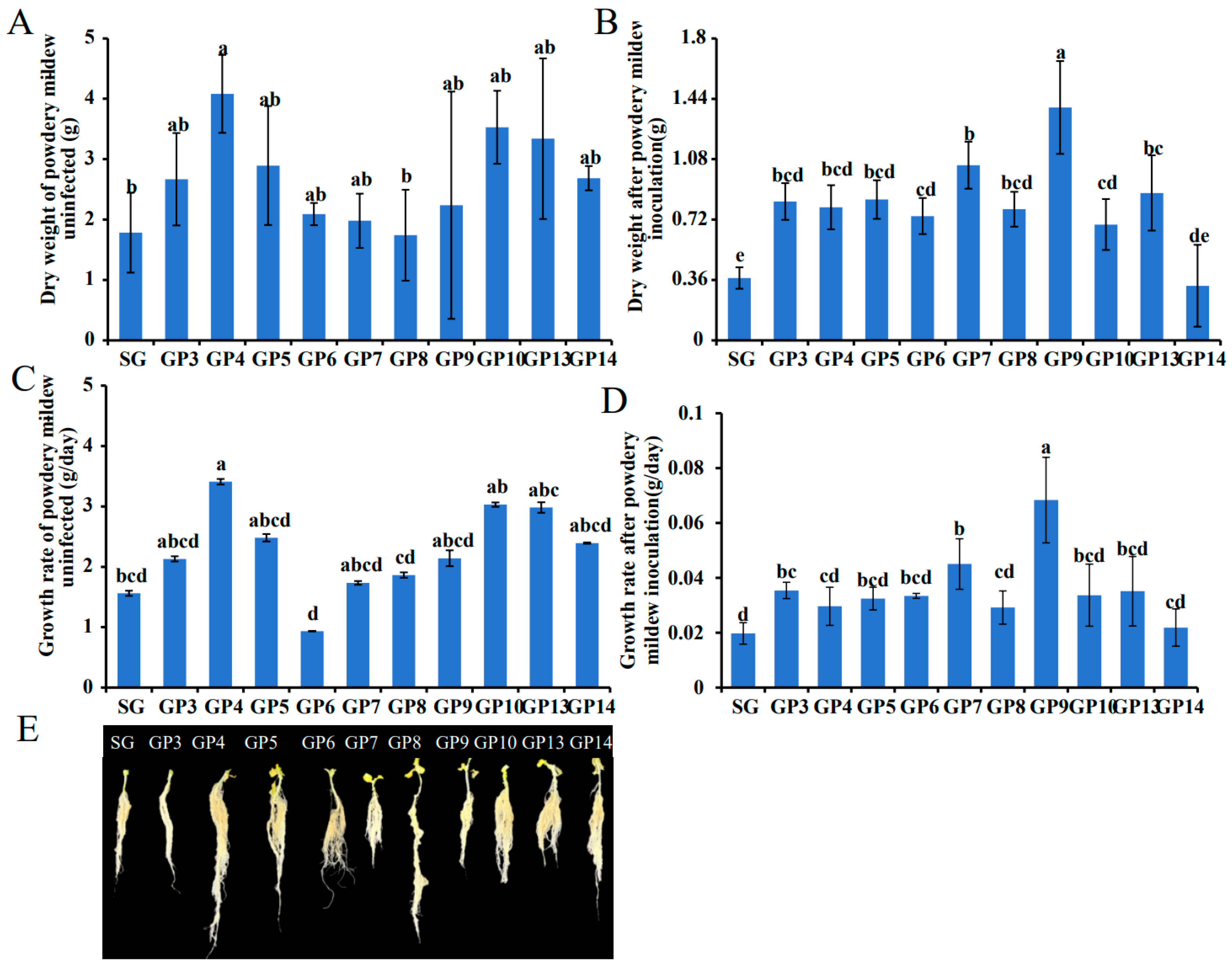
Investigating the relationship between plant biomass and PM resistance, the results indicate the following: among the 10 rootstocks evaluated, cucumber grafted onto GP4 exhibited the highest biomass under non-inoculated conditions (Figure S1A). Following PM inoculation, the biomasses of most grafted combinations were significantly higher than that of the self-grafted control, except for plants grafted onto GP14 (Figure S1B and Figure 1B,D). Following powdery mildew inoculation, the fresh weight and dry weight of GP9 plants exhibited the highest biomass accumulation (Figure S1B and Figure 1B). The plant growth rate followed a trend similar to that of biomass accumulation (Figure 1C,D). Biomass and growth rates of the grafted plants showed no consistent positive correlations with root system size across both non-inoculated and PM-inoculated conditions, as exemplified by rootstocks GP9 and GP10 (Figure 1). Compared to the self-grafted control, the biomass and growth rates of grafts on GP10, which possessed a larger root system than the other rootstocks, did not differ significantly after PM inoculation. In contrast, grafts on GP9, with a comparatively smaller root system, accumulated the highest biomasses under PM stress (Figure 1E). These results indicate that the influence of rootstock on graft biomass and growth rate differed between non-inoculated and PM-inoculated conditions, and that root system size was not the sole determining factor in this process.

3.2. Effects of Rootstocks on Cucumber PM Resistance and Mycelium Growth

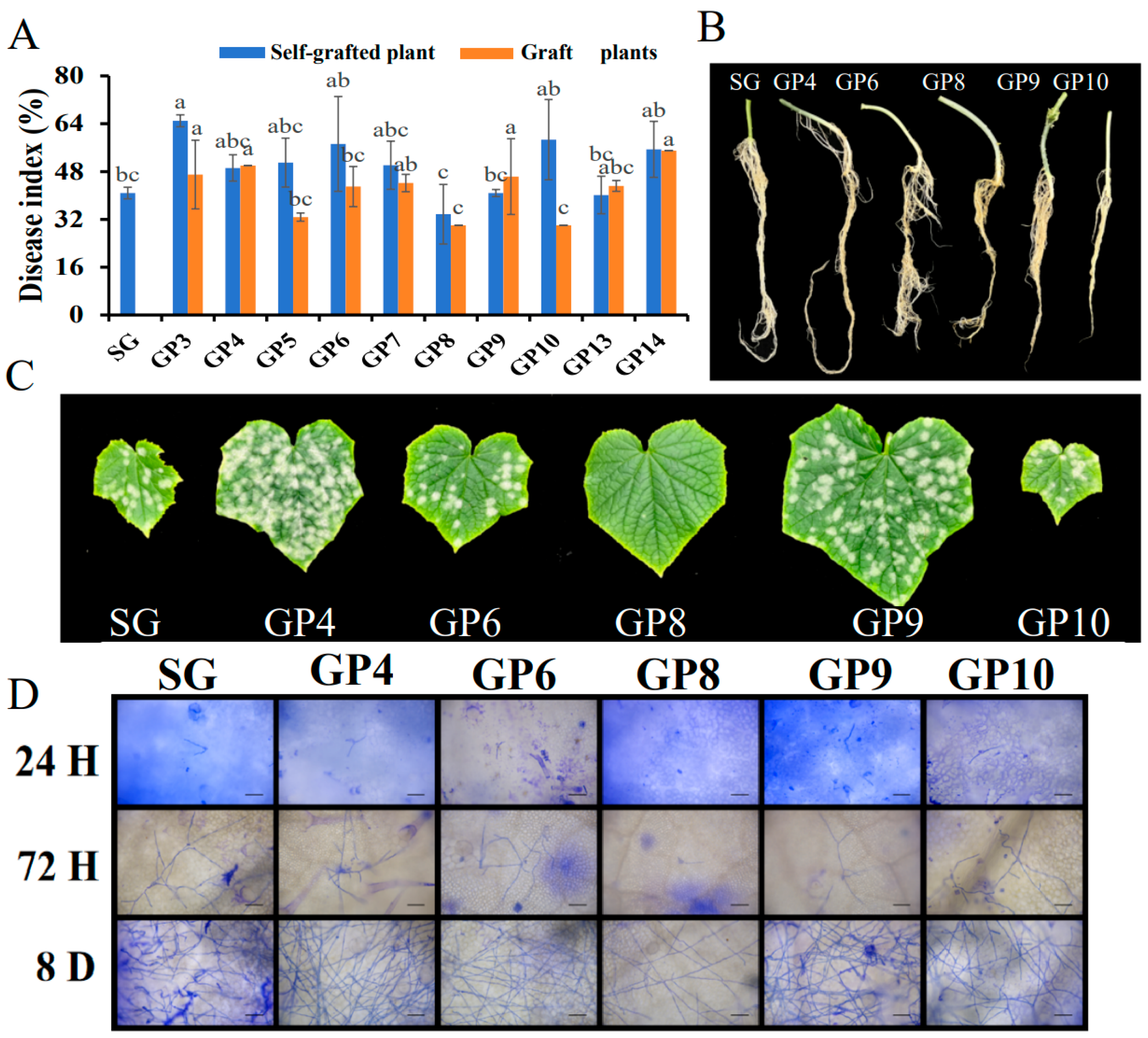
A further assessment of the disease index following PM inoculation (Figure 2A) revealed that grafting increased PM severity in the susceptible ‘Xintai mici’ cucumber when using certain rootstocks, including GP3, 6, 10 and 14. In contrast, grafting onto rootstock GP8 conferred significant PM resistance. Notably, the PM resistance of the grafted cucumber scion did not correspond directly to the resistance of the self-grafted rootstock itself. For instance, while self-grafted GP5, 8, and 10 plants exhibited the lowest disease indices among the 10 evaluated rootstocks; only scions grafted onto GP8 maintained a similarly low index. Conversely, grafting onto rootstocks GP5 and GP10 resulted in significantly higher PM severity levels compared to their self-grafted counterparts. Based on these results, five rootstock varieties were selected to examine leaf disease severity levels and root growth condition, as well as fungal mycelium growth, after PM inoculation (Figure 2B–D). Pronounced differences in PM severity were observed on the second true leaves of cucumber plants grafted onto the five selected rootstocks. Compared to the self-grafted control, grafting onto the PM-resistant rootstock GP8 markedly reduced disease severity on leaves. In contrast, grafting onto the PM-resistant rootstocks GP6 and GP10 increased leaf PM severity compared to the control, as did grafting onto PM-susceptible rootstocks GP4 and GP9 (Figure 2D). In addition, after inoculation with powdery mildew, root growth is inhibited (Figure 1 and Figure 2B). Consistent with these observations, mycelial development on leaves of plants grafted onto GP8 was slower and lower, respectively, at both 72 h and 8 d after inoculation compared to the control. The other rootstock combinations, particularly those of GP4 and GP9, supported relatively faster mycelium growth (Figure 2D).

3.3. Effects of Rootstocks on Grafted Cucumber Photosynthesis After PM Inoculation

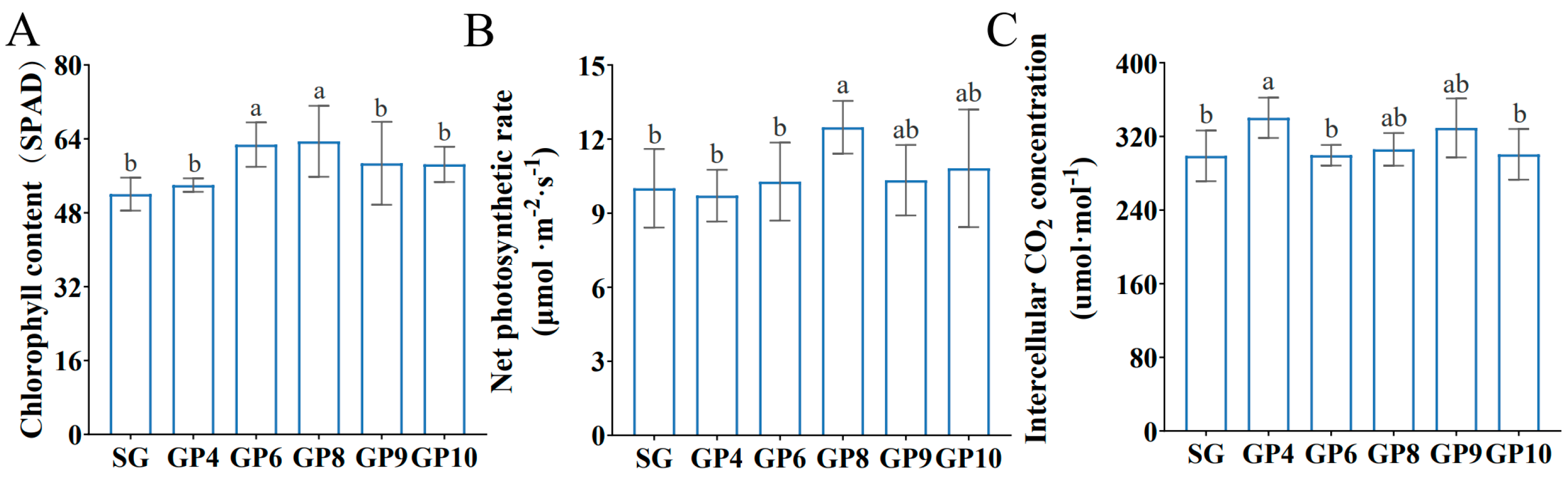
Following PM inoculation, chlorophyl content was highest in cucumbers grafted onto rootstocks GP6 and GP8. In contrast, plants grafted onto rootstocks GP4 and GP10 showed no significant differences compared to the self-rooted control (Figure 3A). The net photosynthetic rate was highest in plants grafted onto rootstock GP8, whereas the rates of plants grafted onto rootstocks GP4, 6, 9, and 10 did not differ significantly from the control (Figure 3B). Similarly, only grafting onto rootstock GP4 resulted in a significantly higher intercellular CO2 concentration compared to the control, with no significant differences observed among the other rootstock combinations (Figure 3C).

3.4. Activities of Reactive Oxygen Defense Enzymes and Lipid Peroxidation Contents

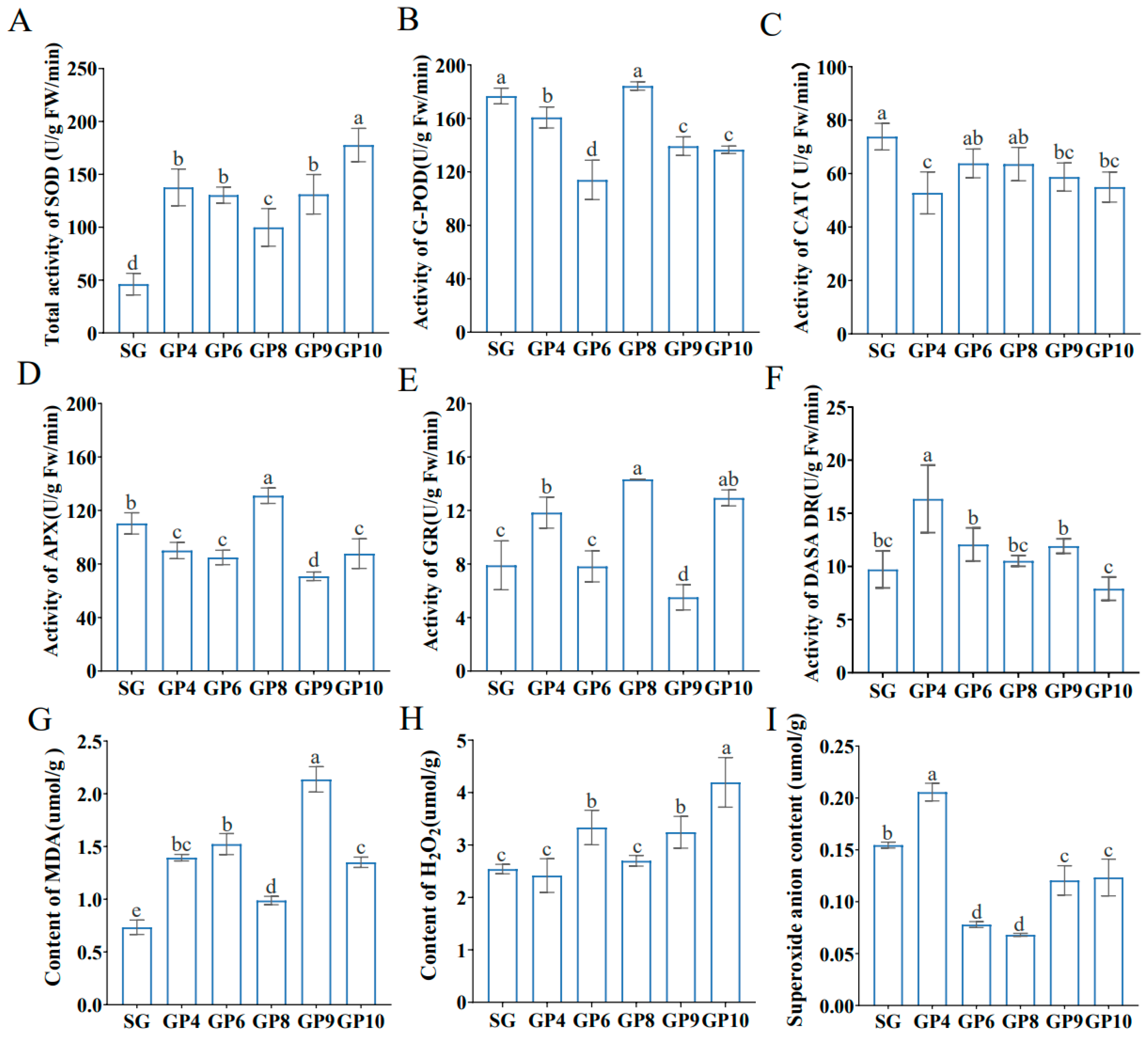
Based on measurements of ROS-scavenging enzyme activities performed 7 d after PM inoculation (Figure 4), grafting significantly increased superoxide dismutase activity (Figure 4A) but reduced catalase activity (Figure 4C) in most grafted combinations compared to the self-grafted control. Guaiacol peroxidase activity was significantly decreased in all the grafted plants, except those on rootstock GP8 (Figure 4B). In addition, plants grafted onto rootstock GP8 exhibited increases in ascorbate peroxidase and glutathione reductase activities by approximately 20% and 80%, respectively, relative to the control (Figure 4D,E). Dehydroascorbate reductase activity showed no significant difference among grafted plants, except for those on rootstock GP4, compared to the self-grafted control (Figure 4F). The aforementioned alterations in antioxidant enzyme activities contributed to seedlings grafted onto rootstock GP8 exhibiting the lowest levels of MDA, H2O2, and superoxide anion (O2) among all the treatments (Figure 4G–I), which likely constitutes a primary mechanism for its enhanced PM resistance. In contrast, seedlings grafted onto rootstock GP4 accumulated the highest O2 content, those on GP9 showed the highest MDA levels, and those on GP10 contained the highest H2O2 concentration, with these factors likely being associated with their increased PM susceptibility levels (Figure 4G–I). Seedlings grafted onto rootstock GP6 displayed moderate levels of MDA, H2O2, and O2, corresponding to their intermediate PM resistance (Figure 4G–I).

3.5. Expression Levels of Defense Genes in Cucumber Grafted onto Different Rootstocks and Self-Grafts

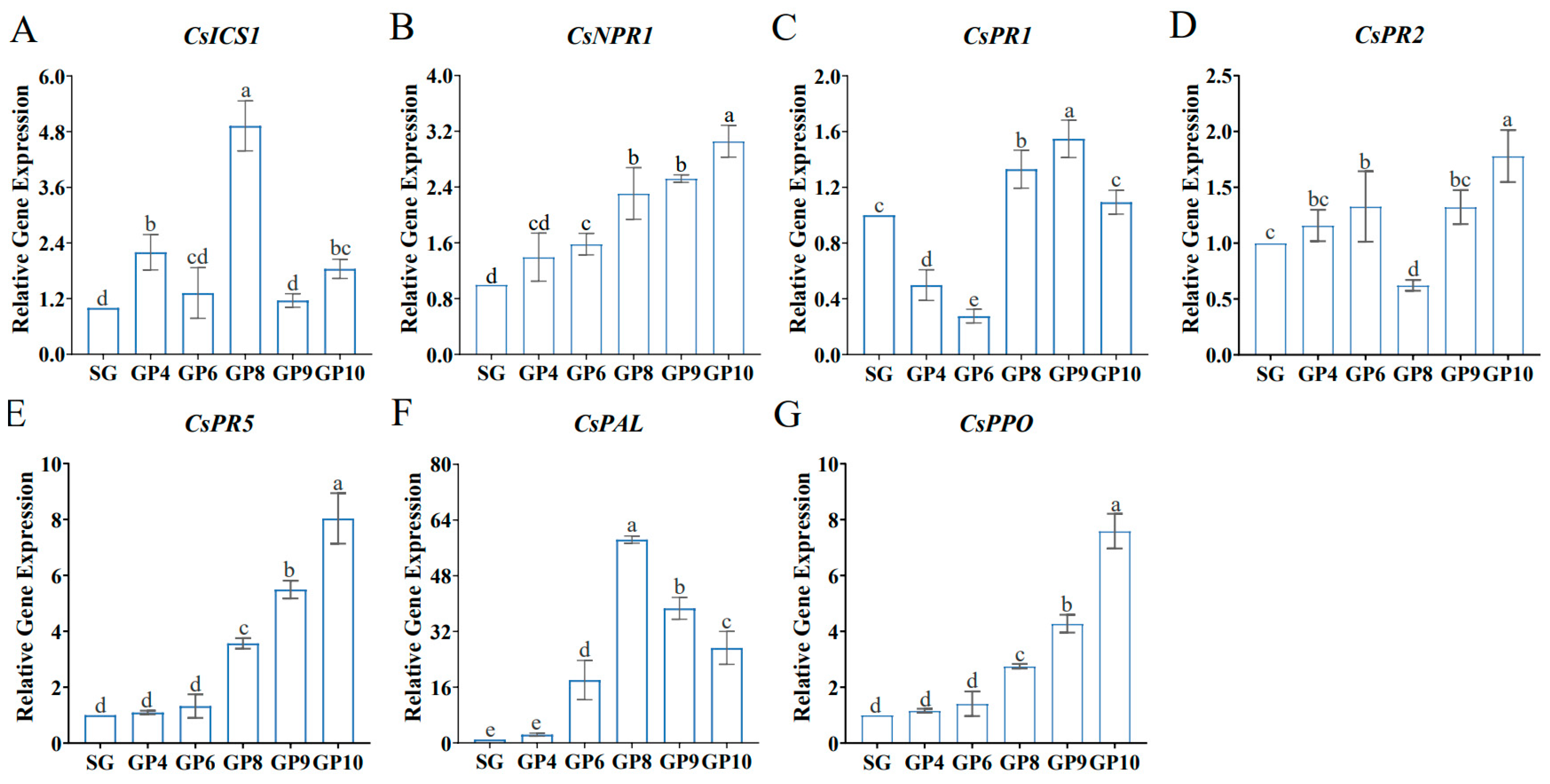
Compared to self-grafted cucumbers, grafting significantly upregulated the expression of CsICS1 and CsNPR1 in leaves 3 d after PM inoculation (Figure 5A,B). In particular, seedlings grafted onto rootstock GP8 showed 3.9-fold and 1.3-fold increases in CsICS1 and CsNPR1 expression, respectively. The expression patterns of CsPR1, CsPR2, and CsPR5 varied across different rootstock-grafted seedlings (Figure 5C–E). Overall, relative to the self-grafted control, seedlings grafted onto rootstocks GP4 and GP6 displayed downregulated expression levels of these PR genes, whereas those grafted onto rootstocks GP8, 9, and 10 exhibited upregulated expression levels. Notably, the expression of CsPR5 was markedly upregulated following PM inoculation in seedlings grafted onto rootstocks GP8, 9, and 10, with increases of 2.5-, 4.5-, and 7.0-fold, respectively, compared to the self-rooted control (Figure 5E). In contrast, the expression levels of CsPAL and CsPPO in seedlings grafted onto rootstock GP4 did not differ significantly from those in the self-grafted plants (Figure 5F,G). Conversely, these two genes were significantly upregulated in seedlings grafted onto rootstocks GP8, 9, and 10, with CsPAL expression in the GP8 combination being 58-fold greater than that of the control (Figure 5F). Collectively, PM infection strongly induced the expression of CsICS1, CsNPR1, CsPR1, CsPR5, CsPAL, and CsPPO in seedlings grafted onto rootstock GP8 (Figure 5).

4. Discussion

4.1. Rootstocks Are Not the Sole Factor Determining Grafted Cucumber Growth and PM Resistance

PM remains one of the three major diseases affecting cucumber, significantly compromising both yield and quality [6]. Grafting is a well-established technique for improving resistance to PM in crops like watermelon [8] and chili pepper [9]. Numerous studies highlight that screening rootstock varieties for disease resistance is essential in obtaining tolerant germplasms, which is crucial for breeding new grafted cultivars to manage PM in both field and greenhouse cucumber production [52]. In this study, 10 pumpkin rootstock varieties were grafted with a susceptible cucumber scion. Grafting generally promoted plant biomass accumulation compared to self-grafted plants, with rootstock GP4 (which possesses a larger root system) showing a particularly pronounced effect. This is consistent with previous reports that grafting enhances biomass accumulation [53]. Following PM infection, this trend became more distinct. The biomasses of all the grafted combinations were significantly greater than that of the self-grafted control, with the exception of plants grafted onto rootstock GP14. However, we observed that the growth rates of plants grafted onto different rootstocks were affected by PM infection, and these rates were not necessarily positively correlated with final plant biomass. For example, while plants grafted onto rootstock GP4 exhibited significantly increased biomasses compared to the self-grafted control under non-inoculated conditions, no significant difference in biomass accumulation or growth rate was detected between the two groups after PM inoculation. In contrast, plants grafted onto rootstock GP9 displayed the opposite trend, with PM infection promoting their biomass accumulation. Overall, post-grafting biomass accumulation did not show a direct relationship with rootstock root system size, a phenomenon that may be attributed to variations in root vitality and nutrient uptake capacity among rootstocks [54]. Additionally, studies indicate that the transport and signaling of photosynthetic assimilates, hormones, and miRNAs between the scion and rootstock can induce modifications in root architecture, nutrient uptake efficiency, and rhizosphere microbial composition, ultimately shaping the growth and stress resistance levels of grafted plants [55,56,57]. In this study, the PM resistance of a rootstock itself was not consistently correlated with the PM resistance of the grafted plant. Notably, grafting onto PM-resistant pumpkin rootstocks GP5 and GP10 significantly increased PM severity on the susceptible cucumber scion. This contrasts with findings for watermelon, in which grafting a susceptible scion onto a PM-resistant rootstock generally reduces disease severity compared to using a susceptible rootstock, although some resistant rootstocks also failed to confer significant resistance to the scion [8]. In our study, mycelium development was markedly limited on the second leaves of cucumber grafted onto rootstock GP8, whereas abundant mycelium chains were visible in other graft combinations at both 72 h and 8 d post-inoculation. The trends in powdery mildew index recorded for GP8 fungal hyphae were consistent with those observed in cucumbers grafted onto different rootstocks. This suppression of pathogen colonization and reproduction directly drove the superior PM resistance conferred by the GP8 rootstock. Structural and biochemical barriers, such as papillae, cell-wall proteins, lignin-like deposits, penetration-resistance proteins, ROS, act as physical defenses against pathogen invasion [58,59]. Additionally, altered water relations in the cucumber scion suppress PM colony development during graft healing [17].

4.2. PM-Resistant Grafting Combinations Have High Net Photosynthetic Rates and Antioxidant Enzyme Activities

In plant defense, reactive oxygen species (ROS) play a dual role. In cucumber, resistance to PM has been linked to ethylene-mediated ROS metabolism [60]. For example, a knockdown of CsMLO8 and CsMLO11 increases ROS levels and improves PM resistance [61]. In contrast to the enhanced PM resistance in cherry pepper grafted onto susceptible sweet pepper, which was attributed to elevations in ROS accumulation and NADPH oxidase activity [9], our study demonstrated a different mechanism in cucumber. The highly PM-resistant rootstock GP 8 was associated with lower levels of ROS and MDA. Such a reduced ROS accumulation likely functions as a localized signal to induce antioxidant defenses and pathogenesis-related gene expression near infection sites [62,63]. The lower ROS levels in plants grafted onto rootstock GP8 are likely a consequence of the significantly higher activities of ROS-scavenging enzymes, including superoxide dismutase, peroxidase, ascorbate peroxidase, and glutathione reductase. A similar association between enhanced antioxidant enzyme activity and improved PM resistance has been reported in pumpkin [49]. PM conidia can cover leaf surfaces and significantly suppress photosynthesis [64]. In contrast, our results demonstrated that cucumbers grafted onto rootstock GP8 maintained higher net photosynthetic rates after PM infection. This effect can be attributed to the following two main factors: their higher chlorophyll contents and their lower levels of oxidative damage (as indicated by reduced MDA and ROS) coupled with elevated activities of ROS-scavenging enzymes. These findings align with observations in highly PM-resistant melon, in which PM inoculation significantly increases net photosynthetic rate, transpiration rate, leaf water-use efficiency, and chlorophyll levels [65]. It is important to note that excessive or misregulated ROS can damage cellular components, such as DNA, proteins, and lipids, ultimately leading to cell death.

4.3. SA-Signaling-Associated and Phenylpropanoid Pathway Genes Were Significantly Activated in PM-Resistant Grafted Cucumbers

The SA pathway is typically associated with defense against biotrophic pathogens, whereas JA and ethylene (ET) are more frequently involved in responses to necrotrophic pathogens [66]. SA biosynthesis proceeds via two routes, namely the phenylalanine ammonia-lyase (PAL) pathway and the isochorismate synthase (ICS) pathway, with PAL and ICS serving as the key enzymes in their respective routes [67]. In Arabidopsis, AtICS1 mediates SA accumulation in leaf tissues under both biotic or abiotic stress [68,69]. Notably, the conversion of chorismate to isochorismate catalyzed by ICS1 is the only chloroplast-localized step in this biosynthetic pathway [70]. For example, in melon, red light promotes the activation of CmWRKY42, which directly binds to the promoter of CmICS to upregulate its expression. This leads to increased SA accumulation and enhanced PM resistance, a transcriptional activation that can be inhibited by CmPIF proteins [71]. Phenylalanine is then transformed into trans-cinnamic acid by PAL, from which salicylic acid is generated through the sequential action of ABNORMAL INFLORESCENCE MERISTEM 1 (AIM1) and a yet-to-be-identified benzoic acid hydrolase [72]. In rice, loss-of-function mutations in OsPAL4 and OsPAL6 reduce SA accumulation and increase susceptibility to multiple pathogens, suggesting that these genes play a dominant role in pathogen-induced SA biosynthesis [73,74]. Our results showed that the expression of CsICS was highest in cucumber grafted onto rootstock GP8 compared to both self-rooted plants and grafts on other rootstocks. The NPR1 gene, known to promote SA accumulation in Arabidopsis [75], was also significantly activated in grafts using rootstock GP8. Furthermore, the SA pathway marker genes PR1 and PR5 exhibited similar upregulation patterns in these grafts. This coordinated induction aligns with reports that the transactivation of PR1a, PR5, and NPR1 depends on transcription factors, such as CmbHLH87, which integrates H2O2 and SA-signaling in tobacco following PM infection [76]. Approximately 90% of pathogen-induced SA biosynthesis occurs via the ICS pathway [77]. Our results suggest that the enhanced PM resistance in cucumber grafted onto rootstock GP8 is mediated through the upregulation of ICS and NPR1, leading to increased SA accumulation. Both PAL and polyphenol oxidase (PPO) are key enzymes in the phenylpropanoid pathway and contribute to PM resistance in cucumber [78]. PePAL knockdown, PAL activity and total lignin content were significantly reduced, while flavonoid levels were markedly decreased [79]. In our study, the expression levels of PAL and PPO were significantly higher in PM-resistant grafts on rootstock GP8 than on other rootstocks. This upregulation may promote lignin deposition and elevate the total phenolic content through enhanced PAL and PPO activities. As the first rate-limiting enzyme in the phenylpropanoid pathway, PAL is involved in the synthesis of phytoalexins, lignins, and phenolic compounds [80]. Consistently, PAL activity has been positively correlated with PM resistance in Poa pratensis [81]. CpVQ20 enhances tobacco resistance to PM by upregulating the expression of PAL, C4H, and F5H, leading to elevated flavonoid and lignin biosynthesis [82]. In contrast, CmbHLH87 can activate PM resistance primarily through SA-dependent defense pathways without significantly altering PAL expression [82]. These examples highlight the diversity of molecular mechanisms underlying PM resistance. Therefore, further studies are needed to elucidate the biological functions of key genes that confer PM resistance to cucumber scions when grafted onto different pumpkin rootstocks.

5. Conclusions

Grafting is an effective agricultural technique for controlling both soil-borne and foliar diseases in plants. In grafted cucumber, the effect of rootstocks on PM resistance varied considerably. The susceptible cucumber cultivar ‘Xintai mici’, when grafted onto the tolerant pumpkin rootstock GP8, exhibited the strongest PM resistance among all the tested rootstock varieties. The underlying mechanism likely involves the activation of the PM defense system in the scion through the rootstock’s own tolerance, slower fungal mycelium development, and higher net photosynthetic rates in the grafted plants. These traits were not positively correlated with plant biomass accumulation or root system size. Concurrently, the elevated activities of ROS-scavenging enzymes reduced ROS accumulation, thereby alleviating oxidative damage. Additionally, the upregulated expression of genes in the SA-signaling pathway likely promoted the accumulation of phenolic compounds and lignin, further enhancing PM resistance in grafted cucumbers. Therefore, selecting suitable rootstocks represents an effective approach for improving PM resistance in cucumber grafting. Further studies are needed to elucidate the precise mechanisms by which rootstocks confer PM resistance, and key regulatory genes should be identified and functionally validated.

Supplementary Materials

The following supporting information can be downloaded at https://www.mdpi.com/article/10.3390/horticulturae12040446/s1; Figure S1: Fresh weight of self-grafted cucumber seedlings and seedlings grafted onto different pumpkin rootstocks under uninoculated and powdery mildew-inoculated conditions.

Author Contributions

Conceptualization, Y.D., C.W. and L.M.; performed the experiments, J.Z., Y.F., S.F. and W.L.; data collation, X.C. and S.F.; writing—original draft preparation, X.C. and J.H.; writing—review and editing, H.W. All authors have read and agreed to the published version of the manuscript.

Funding

This study was supported by the Natural Science Foundation of Zhejiang province (LY24C150002), by the National Natural Science Foundation of China (32472771, 32573014), the project of Shandong Provincial Natural Science Foundation (ZR2025MS403, ZR2024MC015), the “Pioneer” and “Leading Goose” R&D Program of Zhejiang (2023C02027-6), the College Student Innovation and Entrepreneurship Training Program (2540, 1826), Postdoctoral Innovation Project in Shandong Province of China (SDCX-ZG-202501034), and the Key Laboratory of Biology and Genetic Improvement of Horticultural Crops (Vegetables), Ministry of Agriculture and Rural Affairs, China.

Data Availability Statement

The original contributions presented in this study are included in the article/Supplementary Materials. Further inquiries can be directed to the corresponding authors.

Conflicts of Interest

The authors declare no conflict of interest.

References

  1. Bakhat, N.; Vielba-Fernández, A.; Padilla-Roji, I.; Martínez-Cruz, J.; Polonio, Á.; Fernández-Ortuño, D.; Pérez-García, A. Suppression of chitin-triggered immunity by plant fungal pathogens: A case study of the cucurbit powdery mildew fungus Podosphaera xanthii. J. Fungi 2023, 9, 771. [Google Scholar] [CrossRef] [Scilit] [PubMed]
  2. Pawełkowicz, M.; Głuchowska, A.; Mirzwa-Mróz, E.; Zieniuk, B.; Yin, Z.; Zamorski, C.; Przybysz, A. Molecular insights into powdery mildew pathogenesis and resistance in cucurbitaceous crops. Agriculture 2025, 15, 1743. [Google Scholar] [CrossRef] [Scilit]
  3. Padilla-Roji, I.; Ruiz-Jiménez, L.; Bakhat, N.; Vielba-Fernández, A.; Pérez-García, A.; Fernández-Ortuño, D. RNAi technology: A new path for the research and management of obligate biotrophic phytopathogenic fungi. Int. J. Mol. Sci. 2023, 24, 9082. [Google Scholar] [CrossRef] [Scilit] [PubMed]
  4. Kemen, E.; Jones, J.D.G. Obligate biotroph parasitism: Can we link genomes to lifestyles? Trends Plant Sci. 2012, 17, 448–457. [Google Scholar] [CrossRef] [Scilit]
  5. Eichmann, R.; Hückelhoven, R. Accommodation of powdery mildew fungi in intact plant cells. J. Plant Physiol. 2008, 165, 5–18. [Google Scholar] [CrossRef] [Scilit]
  6. He, Y.; Wei, M.; Yan, Y.; Yu, C.; Cheng, S.; Sun, Y.; Zhu, X.; Wei, L.; Wang, H.; Miao, L. Research advances in genetic mechanisms of major cucumber diseases resistance. Front. Plant Sci. 2022, 13, 862486. [Google Scholar] [CrossRef] [Scilit]
  7. Louws, F.J.; Rivard, C.L.; Kubota, C. Grafting fruiting vegetables to manage soilborne pathogens, foliar pathogens, arthropods and weeds. Sci. Hortic. 2010, 127, 127–146. [Google Scholar] [CrossRef] [Scilit]
  8. Kousik, C.S.; Mandal, M.; Hassell, R. Powdery mildew resistant rootstocks that impart tolerance to grafted susceptible watermelon scion seedlings. Plant Dis. 2018, 102, 1290–1298. [Google Scholar] [CrossRef] [Scilit]
  9. Albert, R.; Künstler, A.; Lantos, F.; Ádám, A.L.; Király, L. Graft-transmissible resistance of cherry pepper (Capsicum annuum var. cerasiforme) to powdery mildew (Leveillula taurica) is associated with elevated superoxide accumulation, NADPH oxidase activity and pathogenesis-related gene expression. Acta Physiol. Plant. 2017, 39, 53. [Google Scholar] [CrossRef] [Scilit]
  10. Huang, C.; Wang, Y.; Yang, Y.; Zhong, C.; Notaguchi, M.; Yu, W. A susceptible scion reduces rootstock tolerance to Ralstonia solanacearum in grafted eggplant. Horticulturae 2019, 5, 78. [Google Scholar] [CrossRef] [Scilit]
  11. Li, Y.; Zhao, D. Transcriptome analysis of scions grafted to potato rootstock for improving late blight resistance. BMC Plant Biol. 2021, 21, 272. [Google Scholar] [CrossRef] [Scilit]
  12. Kumbar, S.; Narayanankutty, C.; Sainamole Kurian, P.; Sreelatha, U.; Barik, S. Evaluation of eggplant rootstocks for grafting eggplant to improve fruit yield and control bacterial wilt disease. Eur. J. Plant Pathol. 2021, 161, 73–90. [Google Scholar] [CrossRef] [Scilit]
  13. Long, W.; Huang, G.; Yao, X.; Lv, L.; Yu, C.; Wang, K. Untargeted metabolism approach reveals difference of varieties of bud and relation among characteristics of grafting seedlings in Camellia oleifera. Front. Plant Sci. 2022, 13, 1024353. [Google Scholar] [CrossRef] [Scilit]
  14. San Bautista, A.; Calatayud, A.; Nebauer, S.G.; Pascual, B.; Maroto, J.V.; López-Galarza, S. Effects of simple and double grafting melon plants on mineral absorption, photosynthesis, biomass and yield. Sci. Hortic. 2011, 130, 575–580. [Google Scholar] [CrossRef] [Scilit]
  15. Wang, J.; Jiang, L.; Wu, R. Plant grafting: How genetic exchange promotes vascular reconnection. New Phytol. 2016, 214, 56–65. [Google Scholar] [CrossRef] [Scilit]
  16. Ait Hammou, R.; Harrouni, C.; Ben El Caid, M.; Hallouti, A.; Baroud, S.; Daoud, S. Establishment of argan tree plantlets (Argania spinosa (L.) Skeels) grown from generative and vegetative propagation under different watering regimes at the nursery stage. Biocatal. Agric. Biotechnol. 2022, 44, 102457. [Google Scholar] [CrossRef] [Scilit]
  17. Shibuya, T.; Itagaki, K.; Wang, Y.; Endo, R. Grafting transiently suppresses development of powdery mildew colonies, probably through a quantitative change in water relations of the host cucumber scions during graft healing. Sci. Hortic. 2015, 192, 197–199. [Google Scholar] [CrossRef] [Scilit]
  18. Martínez-Andújar, C.; Martínez-Pérez, A.; Albacete, A.; Martínez-Melgarejo, P.A.; Dodd, I.C.; Thompson, A.J.; Mohareb, F.; Estelles-Lopez, L.; Kevei, Z.; Ferrández-Ayela, A.; et al. Overproduction of ABA in rootstocks alleviates salinity stress in tomato shoots. Plant Cell Environ. 2021, 44, 2966–2986. [Google Scholar] [CrossRef] [Scilit] [PubMed]
  19. Reta, K.; Lupo, Y.; Persi, N.S.; Lazarovitch, N.; Fait, A. Modulation of phenology and agronomical performance of Syrah grafted on two rootstocks under combined salinity and water stress conditions: A three-year field study. Plant Stress 2025, 18, 101050. [Google Scholar] [CrossRef] [Scilit]
  20. Amaro, A.C.E.; Macedo, A.C.; Ramos, A.R.P.; Goto, R.; Ono, E.O.; Rodrigues, J.D. The use of grafting to improve the net photosynthesis of cucumber. Theor. Exp. Plant Physiol. 2014, 26, 241–249. [Google Scholar] [CrossRef] [Scilit]
  21. Mote, P.K.; Khapte, P.S.; Misal, B.B.; Sarode, S.S.; Agale, M.G.; Shinde, G.S.; Changan, S.S.; Salunkhe, V.N.; Reddy, K.S. Eggplant rootstocks enhance flooding tolerance in grafted tomato compared to wild tomato rootstocks. Rhizosphere 2025, 36, 101194. [Google Scholar] [CrossRef] [Scilit]
  22. Penella, C.; Landi, M.; Guidi, L.; Nebauer, S.G.; Pellegrini, E.; Bautista, A.S.; Remorini, D.; Nali, C.; López-Galarza, S.; Calatayud, A. Salt-tolerant rootstock increases yield of pepper under salinity through maintenance of photosynthetic performance and sinks strength. J. Plant Physiol. 2016, 193, 1–11. [Google Scholar] [CrossRef] [Scilit] [PubMed]
  23. Liu, Q.; Wang, X.; Zhao, Y.; Xiao, F.; Yang, Y. Transcriptome and physiological analyses reveal new insights into delayed incompatibility formed by interspecific grafting. Sci. Rep. 2023, 13, 4574. [Google Scholar] [CrossRef] [Scilit] [PubMed]
  24. Fernandez-Garcia, N. Graft union formation in tomato plants: Peroxidase and catalase involvement. Ann. Bot. 2004, 93, 53–60. [Google Scholar] [CrossRef] [Scilit] [PubMed]
  25. Liu, J.; Li, J.; Su, X.; Xia, Z. Grafting improves drought tolerance by regulating antioxidant enzyme activities and stress-responsive gene expression in tobacco. Environ. Exp. Bot. 2014, 107, 173–179. [Google Scholar] [CrossRef] [Scilit]
  26. Jiao, S.; Zeng, F.; Huang, Y.; Zhang, L.; Mao, J.; Chen, B. Physiological, biochemical and molecular responses associated with drought tolerance in grafted grapevine. BMC Plant Biol. 2023, 23, 110. [Google Scholar] [CrossRef] [Scilit]
  27. Zhang, Z.; Cao, B.; Gao, S.; Xu, K. Grafting improves tomato drought tolerance through enhancing photosynthetic capacity and reducing ROS accumulation. Protoplasma 2019, 256, 1013–1024. [Google Scholar] [CrossRef] [Scilit]
  28. Song, Y.; Ling, N.; Ma, J.; Wang, J.; Zhu, C.; Raza, W.; Shen, Y.; Huang, Q.; Shen, Q. Grafting resulted in a distinct proteomic profile of watermelon root exudates relative to the un-grafted watermelon and the rootstock plant. J. Plant Growth Regul. 2016, 35, 778–791. [Google Scholar] [CrossRef] [Scilit]
  29. Kai, W.; Fu, Y.; Wang, J.; Liang, B.; Li, Q.; Leng, P. Functional analysis of SlNCED1 in pistil development and fruit set in tomato (Solanum lycopersicum L.). Sci. Rep. 2019, 9, 16943. [Google Scholar] [CrossRef] [Scilit]
  30. Wojtaszk, P. Oxidative burst: An early plant response to pathogen infection. Biochem. J. 1997, 3, 681–692. [Google Scholar] [CrossRef] [Scilit]
  31. D’Autréaux, B.; Toledano, M.B. ROS as signalling molecules: Mechanisms that generate specificity in ROS homeostasis. Nat. Rev. Mol. Cell Biol. 2007, 8, 813–824. [Google Scholar] [CrossRef] [Scilit]
  32. Ma, A.; Liu, T.; Tian, W.; Chen, H.; Wang, G.; Zhang, B. Physiological and molecular profiling unveils oat (Avena sativa L.) defense mechanisms against powdery mildew. Front. Plant Sci. 2025, 16, 1580472. [Google Scholar] [CrossRef] [Scilit]
  33. Dai, L.; Wang, D.; Xie, X.; Zhang, C.; Wang, X.; Xu, Y.; Wang, Y.; Zhang, J. The novel gene VpPR4-1 from Vitis pseudoreticulata increases powdery mildew resistance in transgenic Vitis vinifera L. Front. Plant Sci. 2016, 7. [Google Scholar] [CrossRef] [Scilit]
  34. Seyfferth, C.; Tsuda, K. Salicylic acid signal transduction: The initiation of biosynthesis, perception and transcriptional reprogramming. Front. Plant Sci. 2014, 5, 697. [Google Scholar] [CrossRef] [Scilit] [PubMed]
  35. Wang, H.; Li, P.; Wang, Y.; Chi, C.; Ding, G. Genome-wide identification of the CYP82 gene family in cucumber and functional characterization of CsCYP82D102 in regulating resistance to powdery mildew. PeerJ 2024, 12, e17162. [Google Scholar] [CrossRef] [Scilit]
  36. Miao, L.; Li, S.; Bai, L.; Anwar, A.; Li, Y.; He, C.; Yu, X. Effect of grafting methods on physiological change of graft union formation in cucumber grafted onto bottle gourd rootstock. Sci. Hortic. 2019, 244, 249–256. [Google Scholar] [CrossRef] [Scilit]
  37. Tan, J.; Zhong, L.; Fan, S.; Cheng, S.; Gao, Y.; Zhang, P.; Miao, L.; Wang, H. Methods for seedling identification of cucumber resistance to powdery mildew and its effect on the growth of cucumber seedlings. Veg. Res. 2024, 4, e030. [Google Scholar] [CrossRef] [Scilit]
  38. Xu, X.; Yu, T.; Xu, R.; Shi, Y.; Lin, X.; Xu, Q.; Qi, X.; Weng, Y.; Chen, X. Fine mapping of a dominantly inherited powdery mildew resistance major-effect QTL, Pm1.1, in cucumber identifies a 41.1 kb region containing two tandemly arrayed cysteine-rich receptor-like protein kinase genes. Theor. Appl. Genet. 2015, 129, 507–516. [Google Scholar] [CrossRef] [Scilit] [PubMed]
  39. Shen, J.-L.; Wang, Y.; Shu, S.; Jahan, M.S.; Zhong, M.; Wu, J.-Q.; Sun, J.; Guo, S.-R. Exogenous putrescine regulates leaf starch overaccumulation in cucumber under salt stress. Sci. Hortic. 2019, 253, 99–110. [Google Scholar] [CrossRef] [Scilit]
  40. Reuveni, R.; Shimoni, M.; Karchi, Z.; Kuc, J. Peroxidase activity as a biochemical marker for resistance of muskmelon (Cucumis melo) to Pseudoperonospora cubensis. Phytopathology 1992, 82, 749–753. [Google Scholar] [CrossRef] [Scilit]
  41. Nakano, Y.; Asada, K. Hydrogen peroxide is scavenged by ascorbate-specific peroxidase in spinach chloroplasts. Plant Cell Physiol. 1981, 22, 867–880. [Google Scholar] [CrossRef] [Scilit]
  42. Patra, H.K.; Kar, M.; Mishra, D. Catalase activity in leaves and cotyledons during plant development and senescence. Biochem. Physiol. Pflanz. 1978, 172, 385–390. [Google Scholar] [CrossRef] [Scilit]
  43. Bidabadi, S.S.; Sabbatini, P.; VanderWeide, J. Iron oxide (Fe2O3) nanoparticles alleviate PEG-simulated drought stress in grape (Vitis vinifera L.) plants by regulating leaf antioxidants. Sci. Hortic. 2023, 312, 111847. [Google Scholar] [CrossRef] [Scilit]
  44. Dalton, D.A.; Russell, S.A.; Hanus, F.J.; Pascoe, G.A.; Evans, H.J. Enzymatic reactions of ascorbate and glutathione that prevent peroxide damage in soybean root nodules. Proc. Natl. Acad. Sci. USA 1986, 83, 3811–3815. [Google Scholar] [CrossRef] [Scilit]
  45. Hodges, D.M.; DeLong, J.M.; Forney, C.F.; Prange, R.K. Improving the thiobarbituric acid-reactive-substances assay for estimating lipid peroxidation in plant tissues containing anthocyanin and other interfering compounds. Planta 1999, 207, 604–611. [Google Scholar] [CrossRef] [Scilit]
  46. Patterson, B.D.; MacRae, E.A.; Ferguson, I.B. Estimation of hydrogen peroxide in plant extracts using titanium(IV). Anal. Biochem. 1984, 139, 487–492. [Google Scholar] [CrossRef] [Scilit]
  47. Tian, M.; Gu, Q.; Zhu, M. The involvement of hydrogen peroxide and antioxidant enzymes in the process of shoot organogenesis of strawberry callus. Plant Sci. 2003, 165, 701–707. [Google Scholar] [CrossRef] [Scilit]
  48. Miao, L.; Qin, X.; Gao, L.; Li, Q.; Li, S.; He, C.; Li, Y.; Yu, X. Selection of reference genes for quantitative real-time PCR analysis in cucumber (Cucumis sativus L.), pumpkin (Cucurbita moschata Duch.) and cucumber-pumpkin grafted plants. PeerJ 2019, 7, e6536. [Google Scholar] [CrossRef] [Scilit]
  49. Zhang, S.; Liu, J.; Xu, B.; Zhou, J. Differential responses of Cucurbita pepo to Podosphaera xanthii reveal the mechanism of powdery mildew disease resistance in pumpkin. Front. Plant Sci. 2021, 12, 633221. [Google Scholar] [CrossRef] [Scilit]
  50. Qi, X.; Li, K.; Chen, L.; Zhang, Y.; Zhang, N.; Gao, W.; Li, Y.; Liu, X.; Fan, Z. Plant defense responses to a novel plant elicitor candidate LY5-24-2. Int. J. Mol. Sci. 2022, 23, 5348. [Google Scholar] [CrossRef] [Scilit]
  51. Miao, L.; Di, Q.; Sun, T.; Li, Y.; Duan, Y.; Wang, J.; Yan, Y.; He, C.; Wang, C.; Yu, X. Integrated metabolome and transcriptome analysis provide insights into the effects of grafting on fruit flavor of cucumber with different rootstocks. Int. J. Mol. Sci. 2019, 20, 3592. [Google Scholar] [CrossRef] [Scilit]
  52. Zhang, P.; Zhu, Y.; Zhou, S. Comparative analysis of powdery mildew resistant and susceptible cultivated cucumber (Cucumis sativus L.) varieties to reveal the metabolic responses to Sphaerotheca fuliginea infection. BMC Plant Biol. 2021, 21, 24. [Google Scholar] [CrossRef] [Scilit] [PubMed]
  53. Li, W.; Fang, C.; Krishnan, S.; Chen, J.; Yu, H.; Murphy, A.S.; Merewitz, E.; Katin-Grazzini, L.; McAvoy, R.J.; Deng, Z.; et al. Elevated auxin and reduced cytokinin contents in rootstocks improve their performance and grafting success. Plant Biotechnol. J. 2017, 15, 1556–1565. [Google Scholar] [CrossRef] [Scilit]
  54. Sallaku, G.; Rewald, B.; Sandén, H.; Balliu, A. Scions impact biomass allocation and root enzymatic activity of rootstocks in grafted melon and watermelon plants. Front. Plant Sci. 2022, 13, 949086. [Google Scholar] [CrossRef] [Scilit] [PubMed]
  55. Guo, T.; Wang, N.; Xue, Y.; Guan, Q.; van Nocker, S.; Liu, C.; Ma, F. Overexpression of the RNA binding protein MhYTP1 in transgenic apple enhances drought tolerance and WUE by improving ABA level under drought condition. Plant Sci. 2019, 280, 397–407. [Google Scholar] [CrossRef] [Scilit]
  56. Lv, X.; Sun, Y.; Hao, P.; Zhang, C.; Tian, J.; Fu, M.; Xu, Z.; Wang, Y.; Zhang, X.; Xu, X.; et al. RBP differentiation contributes to selective transmissibility of OPT3 mRNAs. Plant Physiol. 2021, 187, 1587–1604. [Google Scholar] [CrossRef] [Scilit] [PubMed]
  57. Chai, X.; Pi, Y.; Wang, X.; Zhai, L.; Wu, T.; Zhang, X.; Han, Z.; Wang, Y. Apple scion cultivars regulate root-rhizobacteria crosstalk through photosynthetic product-mediated sugar metabolism. Plant Cell Environ. 2025, 48, 6444–6457. [Google Scholar] [CrossRef] [Scilit]
  58. Meyer, D.; Pajonk, S.; Micali, C.; O’Connell, R.; Schulze-Lefert, P. Extracellular transport and integration of plant secretory proteins into pathogen-induced cell wall compartments. Plant J. 2009, 57, 986–999. [Google Scholar] [CrossRef] [Scilit]
  59. Qin, L.; Liu, L.; Tu, J.; Yang, G.; Wang, S.; Quilichini, T.D.; Gao, P.; Wang, H.; Peng, G.; Blancaflor, E.B.; et al. The ARP2/3 complex, acting cooperatively with Class I formins, modulates penetration resistance in Arabidopsis against powdery mildew invasion. Plant Cell 2021, 33, 3151–3175. [Google Scholar] [CrossRef] [Scilit]
  60. Zhang, D.; Wu, S.; Li, N.; Gao, J.; Liu, S.; Zhu, S.; Li, Z.; Ren, G.; Kuai, B. Chemical induction of leaf senescence and powdery mildew resistance involves ethylene-mediated chlorophyll degradation and ROS metabolism in cucumber. Hortic. Res. 2022, 9, uhac101. [Google Scholar] [CrossRef] [Scilit]
  61. Dong, S.; Liu, X.; Han, J.; Miao, H.; Beckles, D.M.; Bai, Y.; Liu, X.; Guan, J.; Yang, R.; Gu, X.; et al. CsMLO8/11 are required for full susceptibility of cucumber stem to powdery mildew and interact with CsCRK2 and CsRbohD. Hortic. Res. 2024, 11, uhad295. [Google Scholar] [CrossRef] [Scilit]
  62. Shaw, A.K.; Ghosh, S.; Kalaji, H.M.; Bosa, K.; Brestic, M.; Zivcak, M.; Hossain, Z. Nano-CuO stress induced modulation of antioxidative defense and photosynthetic performance of Syrian barley (Hordeum vulgare L.). Environ. Exp. Bot. 2014, 102, 37–47. [Google Scholar] [CrossRef] [Scilit]
  63. Cumplido-Nájera, C.F.; González-Morales, S.; Ortega-Ortíz, H.; Cadenas-Pliego, G.; Benavides-Mendoza, A.; Juárez-Maldonado, A. The application of copper nanoparticles and potassium silicate stimulate the tolerance to Clavibacter michiganensis in tomato plants. Sci. Hortic. 2019, 245, 82–89. [Google Scholar] [CrossRef] [Scilit]
  64. Tsialtas, J.T.; Theologidou, G.S.; Karaoglanidis, G.S. Effects of pyraclostrobin on leaf diseases, leaf physiology, yield and quality of durum wheat under Mediterranean conditions. Crop Prot. 2018, 113, 48–55. [Google Scholar] [CrossRef] [Scilit]
  65. Tian, M.; Yu, R.; Yang, W.; Guo, S.; Liu, S.; Du, H.; Liang, J.; Zhang, X. Effect of powdery mildew on the photosynthetic parameters and leaf microstructure of melon. Agriculture 2024, 14, 886. [Google Scholar] [CrossRef] [Scilit]
  66. Rodriguez, P.A.; Rothballer, M.; Chowdhury, S.P.; Nussbaumer, T.; Gutjahr, C.; Falter-Braun, P. Systems biology of plant-microbiome interactions. Mol. Plant 2019, 12, 804–821. [Google Scholar] [CrossRef] [Scilit] [PubMed]
  67. Arif, Y.; Sami, F.; Siddiqui, H.; Bajguz, A.; Hayat, S. Salicylic acid in relation to other phytohormones in plant: A study towards physiology and signal transduction under challenging environment. Environ. Exp. Bot. 2020, 175, 104040. [Google Scholar] [CrossRef] [Scilit]
  68. Garcion, C.; Lohmann, A.; Lamodière, E.; Catinot, J.; Buchala, A.; Doermann, P.; Métraux, J.-P. Characterization and biological function of the ISOCHORISMATE SYNTHASE2 gene of Arabidopsis. Plant Physiol. 2008, 147, 1279–1287. [Google Scholar] [CrossRef] [Scilit]
  69. Wildermuth, M.C.; Dewdney, J.; Wu, G.; Ausubel, F.M. Isochorismate synthase is required to synthesizesalicylic acid for plant defence. Nature 2001, 414, 562. [Google Scholar] [CrossRef] [Scilit]
  70. Nawrath, C.; Métraux, J.-P. Salicylic acid induction-deficient mutants of arabidopsis express PR-2 and PR-5 and accumulate high levels of camalexin after pathogen inoculation. Plant Cell 1999, 11, 1393–1404. [Google Scholar] [CrossRef] [Scilit]
  71. Wang, L.; Wu, X.; Xing, Q.; Zhao, Y.; Yu, B.; Ma, Y.; Wang, F.; Qi, H. PIF8-WRKY42-mediated salicylic acid synthesis modulates red light induced powdery mildew resistance in oriental melon. Plant Cell Environ. 2023, 46, 1726–1742. [Google Scholar] [CrossRef] [Scilit] [PubMed]
  72. Liang, B.; Wang, H.; Yang, C.; Wang, L.; Qi, L.; Guo, Z.; Chen, X. Salicylic acid is required for broad-spectrum disease resistance in rice. Int. J. Mol. Sci. 2022, 23, 1354. [Google Scholar] [CrossRef] [Scilit]
  73. Duan, L.; Liu, H.; Li, X.; Xiao, J.; Wang, S. Multiple phytohormones and phytoalexins are involved in disease resistance to Magnaporthe oryzaeinvaded from roots in rice. Physiol. Plant. 2014, 152, 486–500. [Google Scholar] [CrossRef] [Scilit]
  74. Tonnessen, B.W.; Manosalva, P.; Lang, J.M.; Baraoidan, M.; Bordeos, A.; Mauleon, R.; Oard, J.; Hulbert, S.; Leung, H.; Leach, J.E. Rice phenylalanine ammonia-lyase gene OsPAL4 is associated with broad spectrum disease resistance. Plant Mol. Biol. 2014, 87, 273–286. [Google Scholar] [CrossRef] [Scilit]
  75. Cao, H.; Bowling, S.A.; Gordon, A.S.; Dong, X. Characterization of an Arabidopsis mutant that is nonresponsive to inducers of systemic acquired resistance. Plant Cell 1994, 6, 1583–1592. [Google Scholar] [CrossRef] [Scilit] [PubMed]
  76. Guo, W.-L.; Chen, B.-H.; Guo, Y.-Y.; Chen, X.-J.; Li, Q.-F.; Yang, H.-L.; Li, X.-Z.; Zhou, J.-G.; Wang, G.-Y. Expression of pumpkin CmbHLH87 gene improves powdery mildew resistance in tobacco. Front. Plant Sci. 2020, 11, 163. [Google Scholar] [CrossRef] [Scilit]
  77. Niu, F.; Cui, X.; Zhao, P.; Sun, M.; Yang, B.; Deyholos, M.K.; Li, Y.; Zhao, X.; Jiang, Y.Q. WRKY42 transcription factor positively regulates leaf senescence through modulating SA and ROS synthesis in Arabidopsis thaliana. Plant J. 2020, 104, 171–184. [Google Scholar] [CrossRef] [Scilit]
  78. Gao, Y.J.; Fu, W.J.; Liu, J.; Chen, Y.J.; Dai, G.H. Morphological changes of Podosphaera xanthii and induced biochemical defenses of cucumber after treated by (+)-(S)-ar-turmerone. Physiol. Mol. Plant Pathol. 2020, 112, 101524. [Google Scholar] [CrossRef] [Scilit]
  79. Sun, H.; Li, H.; Huang, M.; Gao, Z. Expression and function analysis of phenylalanine ammonia-lyase genes involved in Bamboo lignin biosynthesis. Physiol. Plant. 2024, 176, e14444. [Google Scholar] [CrossRef] [Scilit] [PubMed]
  80. Ninkuu, V.; Aluko, O.O.; Yan, J.; Zeng, H.; Liu, G.; Zhao, J.; Li, H.; Chen, S.; Dakora, F.D. Phenylpropanoids metabolism: Recent insight into stress tolerance and plant development cues. Front. Plant Sci. 2025, 16, 1571825. [Google Scholar] [CrossRef] [Scilit] [PubMed]
  81. Dong, W.; Zhang, Y.; Wang, Y.; Zhao, C. Comparative proteomic and metabolomic analysis of resistant and susceptible Kentucky Bluegrass cultivars in response to infection by powdery mildew. BMC Plant Biol. 2024, 24, 1195. [Google Scholar] [CrossRef] [Scilit]
  82. Li, S.-h.; Wang, P. Pumpkin (Cucurbita pepo L.) CpVQ20 increases resistance to powdery mildew of tobacco through flavonoid and lignin biosynthesis pathways. Physiol. Mol. Plant Pathol. 2025, 136, 102562. [Google Scholar] [CrossRef] [Scilit]
Figure 1. Biomass, growth rates, and root phenotypes of self-grafted cucumber seedlings and seedlings grafted onto different pumpkin rootstocks under uninoculated and powdery mildew-inoculated conditions: (A) dry weight of powdery mildew-uninfected seedlings; (B) dry weight at 15 d after powdery mildew inoculation; (C) growth rate of powdery mildew-uninfected seedlings; (D) growth rate at 15 d after powdery mildew inoculation; data were analyzed by one-way ANOVA, followed by the LSD post hoc test. All results are presented as means ± standard error. Statistical significance was defined as p < 0.05, and different letters denote significant differences among treatments. (E) Root phenotypes of self-grafted cucumbers and those grafted onto various pumpkin rootstocks after 15 d under conditions without powdery mildew.
Horticulturae 12 00446 g001
Figure 2. Powdery mildew disease index and phenotypic characteristics of cucumbers grafted onto different pumpkin rootstocks: (A) PM disease indices of cucumber plants grafted onto different pumpkin rootstocks at 15 d after PM inoculation; data were analyzed by one-way ANOVA, followed by the LSD post hoc test. All results are presented as means ± standard error. Statistical significance was defined as p < 0.05, and different letters denote significant differences among treatments. (B,C) Symptomatic root (B) and leaf (C) phenotypes of grafted seedlings onto different rootstocks at 15 d after PM inoculation; (D) development of PM mycelium on leaves of cucumber seedlings grafted onto different rootstocks at 24 h, 72 h, and 8 d post-inoculation.
Horticulturae 12 00446 g002
Figure 3. Photosynthetic characteristics of the cucumber seedlings grafted onto different pumpkin rootstocks and self-grafts at 7 days post-inoculation with powdery mildew: (A) chlorophyll content; (B) net photosynthetic rates of seedling; (C) intercellular CO2 concentration. Data were analyzed by one-way ANOVA, followed by the LSD post hoc test. All results are presented as means ± standard error. Statistical significance was defined as p < 0.05, and different letters denote significant differences among treatments.
Horticulturae 12 00446 g003
Figure 4. Antioxidant enzyme activities in the leaves of cucumber seedlings grafted onto different rootstocks and self-grafts at 7 d post-inoculation with powdery mildew: (A) Superoxide dismutase (SOD) activity; (B) Guaiacol peroxidase (G-POD) activity; (C) Catalase (CAT) activity; (D) Ascorbate peroxidase (APX) activity; (E) Glutathione reductase (GR) activity; (F) Diaminobenzidine peroxidase (DASA) activity; (G) Malondialdehyde (MDA) content; (H) H2O2 content; (I) Superoxide anion content. Data were analyzed by one-way ANOVA, followed by the LSD post hoc test. All results are presented as means ± standard error. Statistical significance was defined as p < 0.05, and different letters denote significant differences among treatments.
Horticulturae 12 00446 g004
Figure 5. Expression levels of defense genes in the leaves of cucumber seedlings grafted onto different rootstocks and self-grafts at 3 d post-inoculation with powdery mildew: (AG) RT-qPCR analysis revealed the expression levels of CsICS1, CsNPR1, CsPR1, CsPR2, CsPR5, CsPAL, and CsPPO genes at 3 d post-inoculation in cucumber seedlings grafted onto different pumpkin rootstocks. The expression levels of each gene in the self-grafted plants were normalized to 1.0. Data were analyzed by one-way ANOVA, followed by the LSD post hoc test. All results are presented as means ± standard error. Statistical significance was defined as p < 0.05, and different letters denote significant differences among treatments.
Horticulturae 12 00446 g005
Table 1. Primer sequences used for gene expression analysis.
Primer NamePrimer Sequences (5′–3′)
ActinF: GTGGTGGTGAATGAGTAGCC
R: TTGGATTCTGGTGATGGTGTC
ICSIF: GCATTCACCTCCGGGATTAT
R: AAGGTGCGAGGAAGATG
NPR1F: CGCTTTGGTGAGGAGTTT
R: CAAGATTACAACAAGGGT
PR1F: AACTCTGGCGGACCTTAC
R: GACTTCCTCCACACTACT
PR2F: TCTTGGTCTTCTTGTGCC
R: GAGCATCAAGTGAACCTC
PR5F: CTTCTGCTAGTTGTGTTG
R: GCAGTCACCCGTCTGGCA
PALF: AACTTCTCCTCAATGGCTTGGT
R: TGAAACATCAATCAAAGGGTTG
PPOF: CTAGCCGTGGAAACCGA
R: TGATTGGCTCACAGTGGA
Disclaimer/Publisher’s Note: The statements, opinions and data contained in all publications are solely those of the individual author(s) and contributor(s) and not of MDPI and/or the editor(s). MDPI and/or the editor(s) disclaim responsibility for any injury to people or property resulting from any ideas, methods, instructions or products referred to in the content.