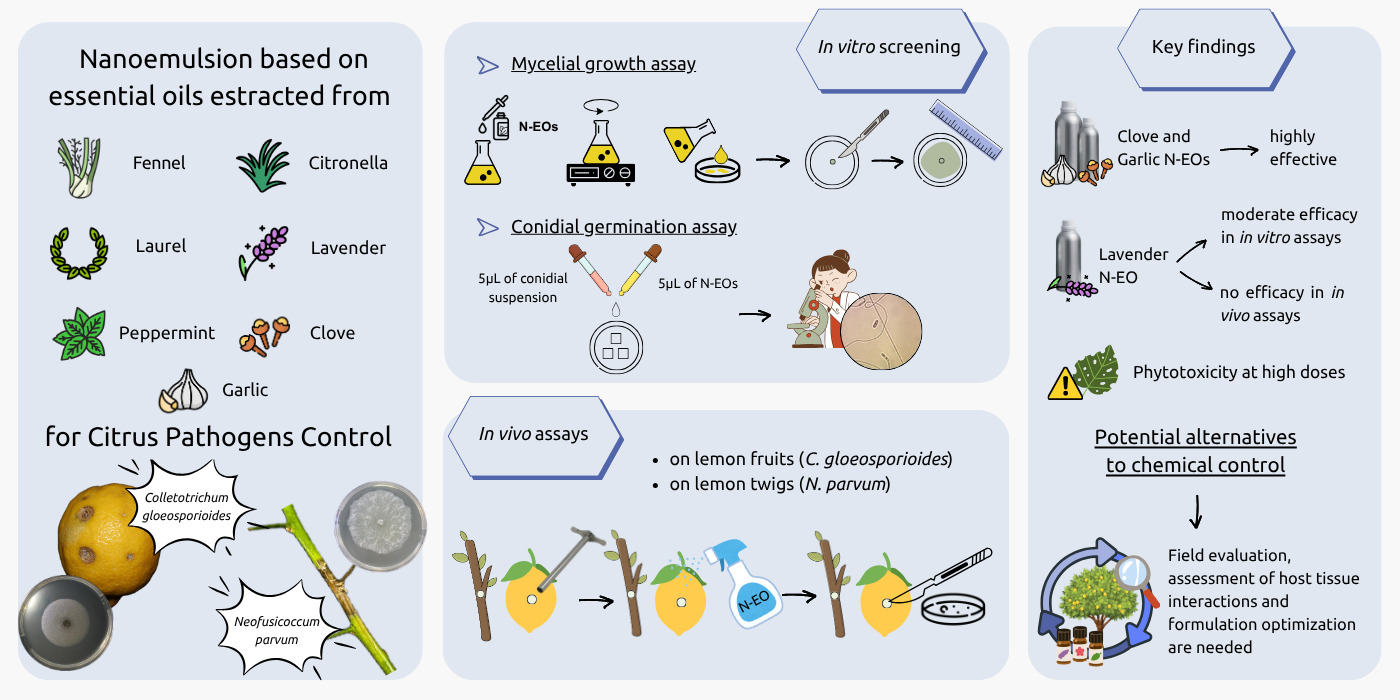


Essential Oil-Based Nanoemulsions as Sustainable Control Method Against Colletotrichum gloeosporioides and Neofusicoccum parvum on Citrus †

 , , , ,
  ,
,  , and
, and
Abstract
1. Introduction
2. Materials and Methods
2.1. Formulation and Physical Characterization of Nanoemulsion Based on Essential Oil (N-EOs)
2.2. Fungal Isolates
DNA Extraction, PCR Amplification and Sequencing
2.3. In Vitro Antifungal Efficacy
2.3.1. Mycelial Growth Inhibition
2.3.2. Conidial Germination Inhibition
2.4. In Vivo Antifungal Efficacy
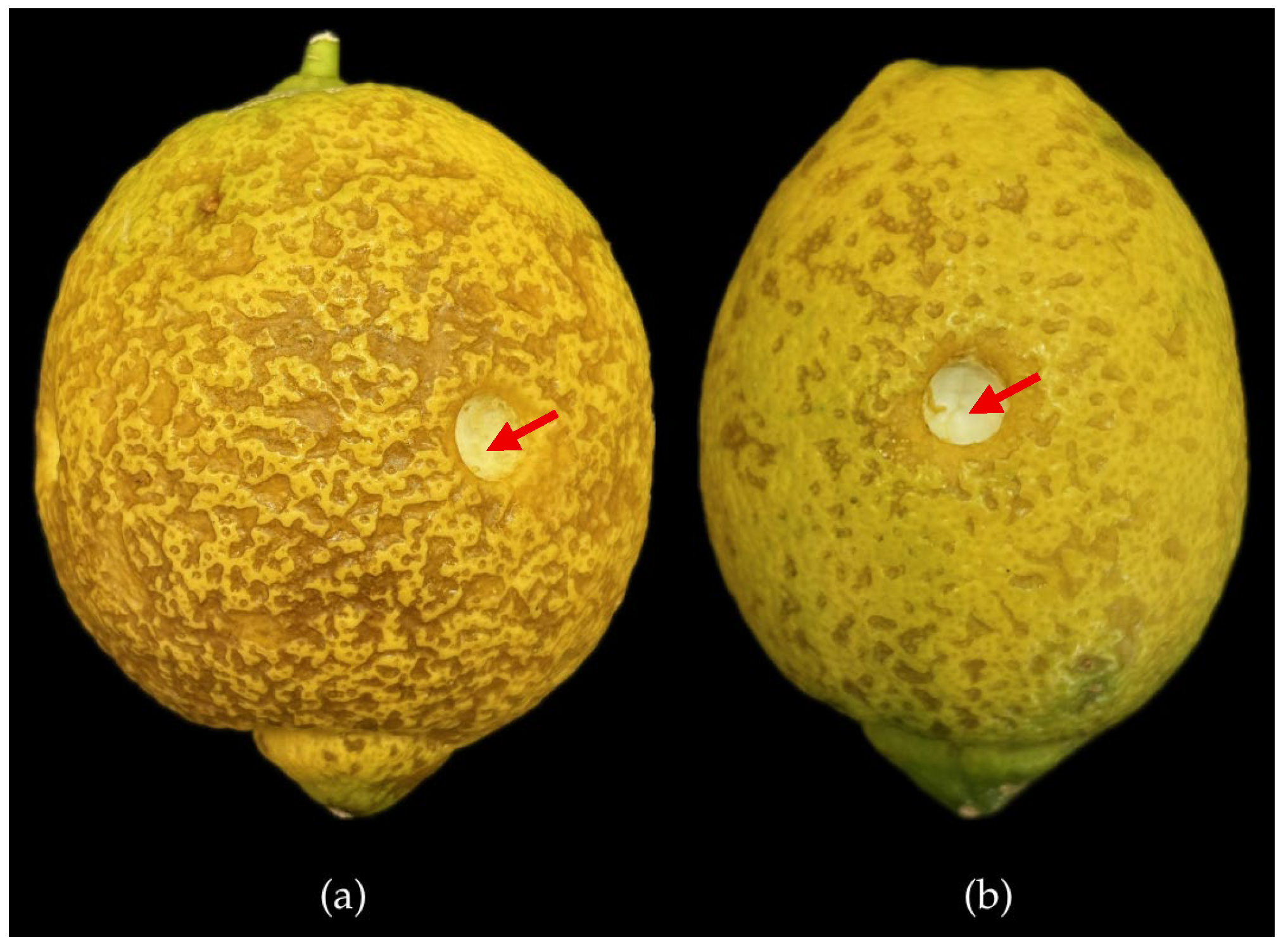
2.4.1. Lemon Fruits Inoculated with Colletotrichum gloeosporioides
2.4.2. Lemon Twigs Inoculated with Neofusicoccum parvum
2.5. Data Analysis
3. Results
3.1. Physical Characterization of Formulated N-EOs
3.2. In Vitro Antifungal Efficacy
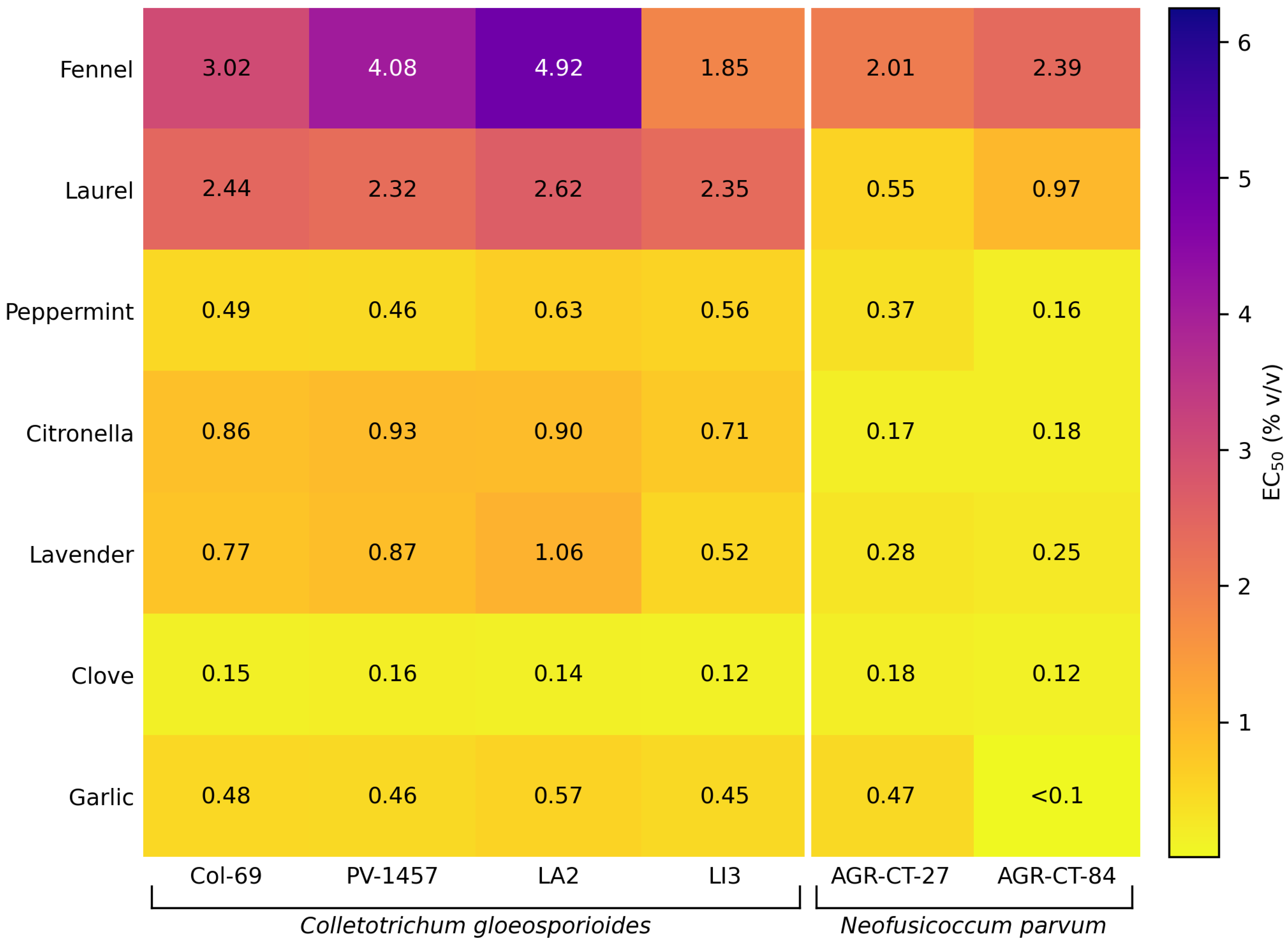
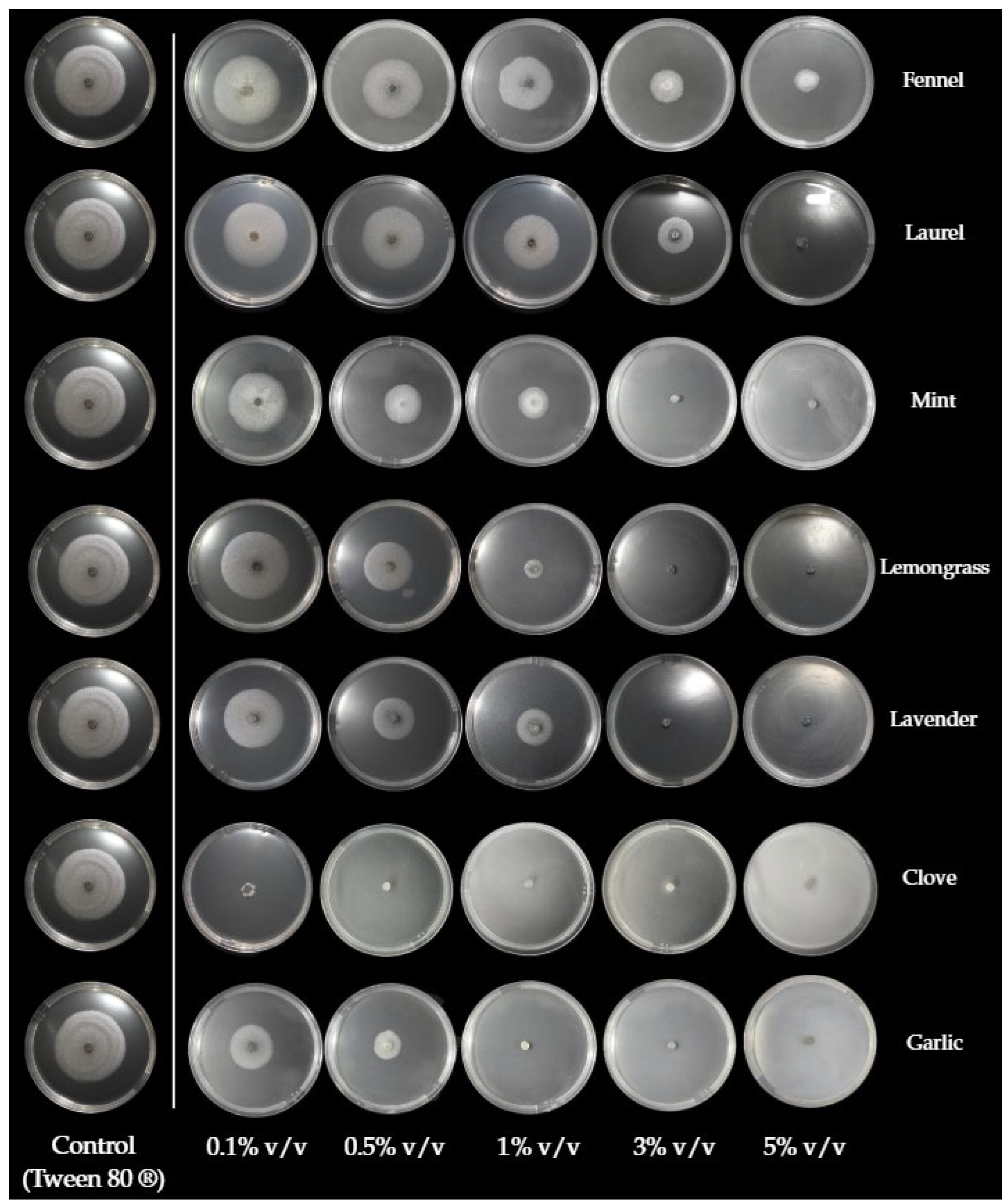
3.2.1. Mycelial Growth Inhibition
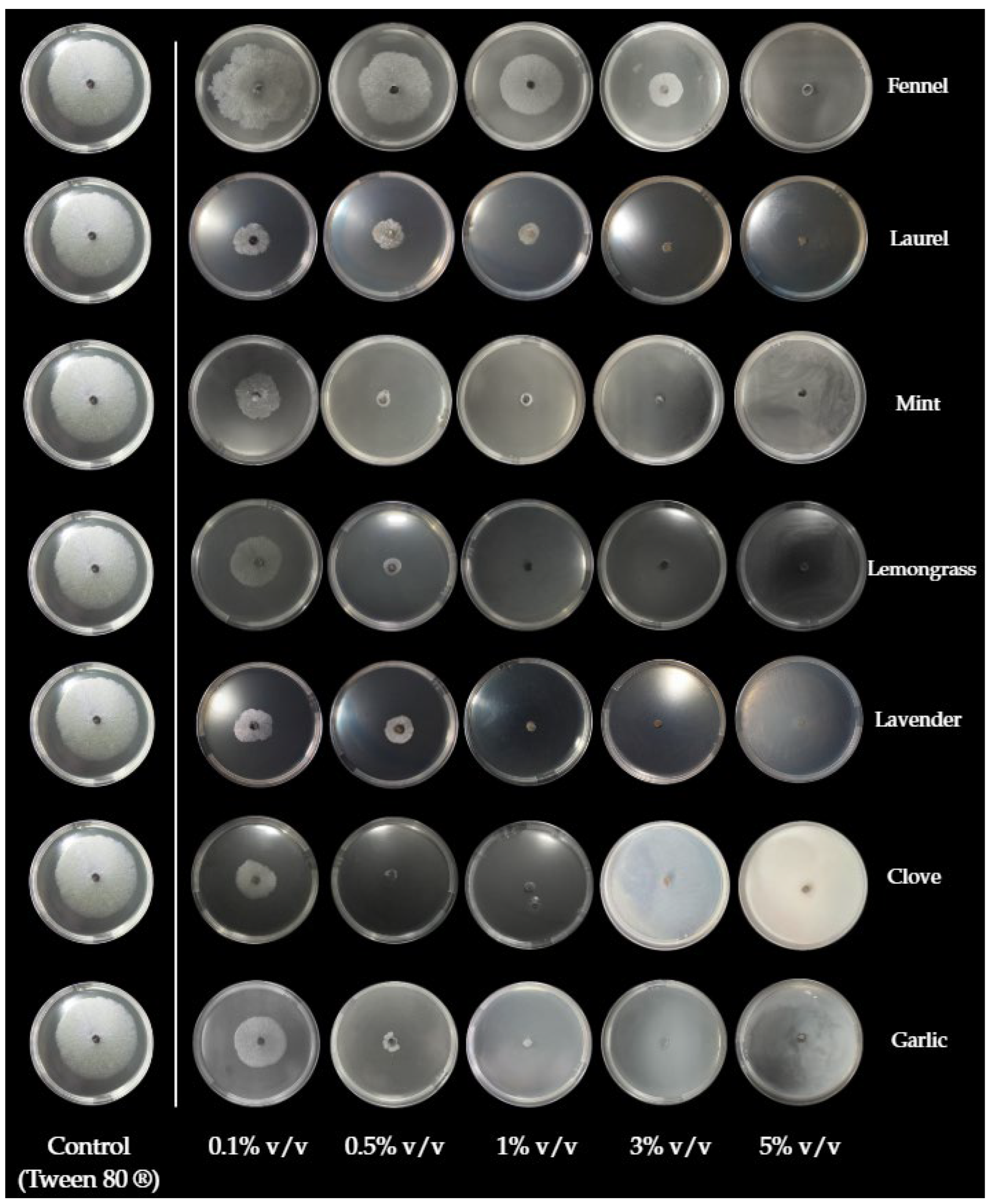
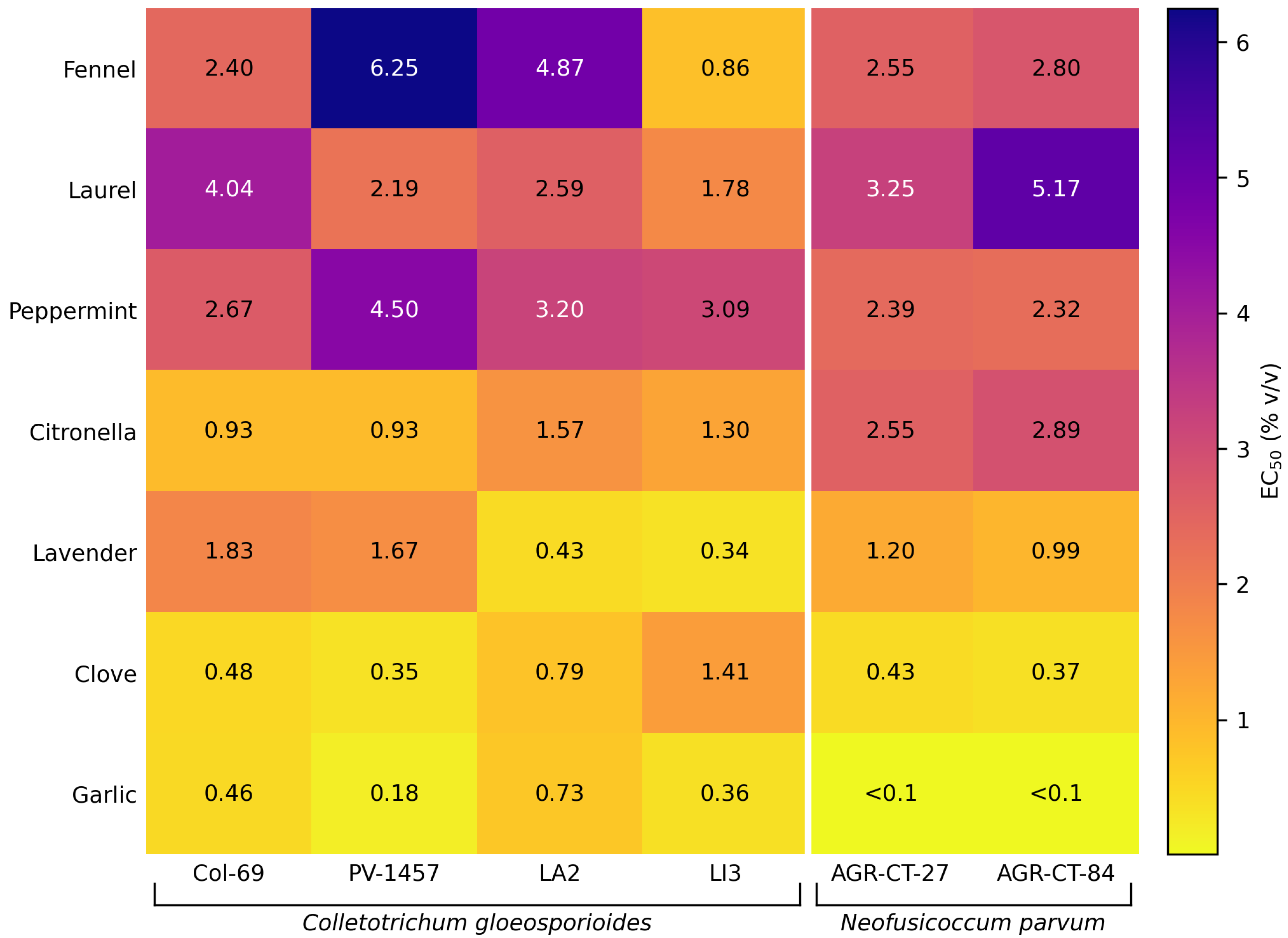
Colletotrichum gloeosporioides
Neofusicoccum parvum
3.2.2. Conidial Germination Inhibition
Colletotrichum gloeosporioides
Neofusicoccum parvum
3.3. In Vivo Antifungal Efficacy
3.3.1. Antifungal Efficacy on Lemon Fruits Against Colletotrichum gloeosporioides
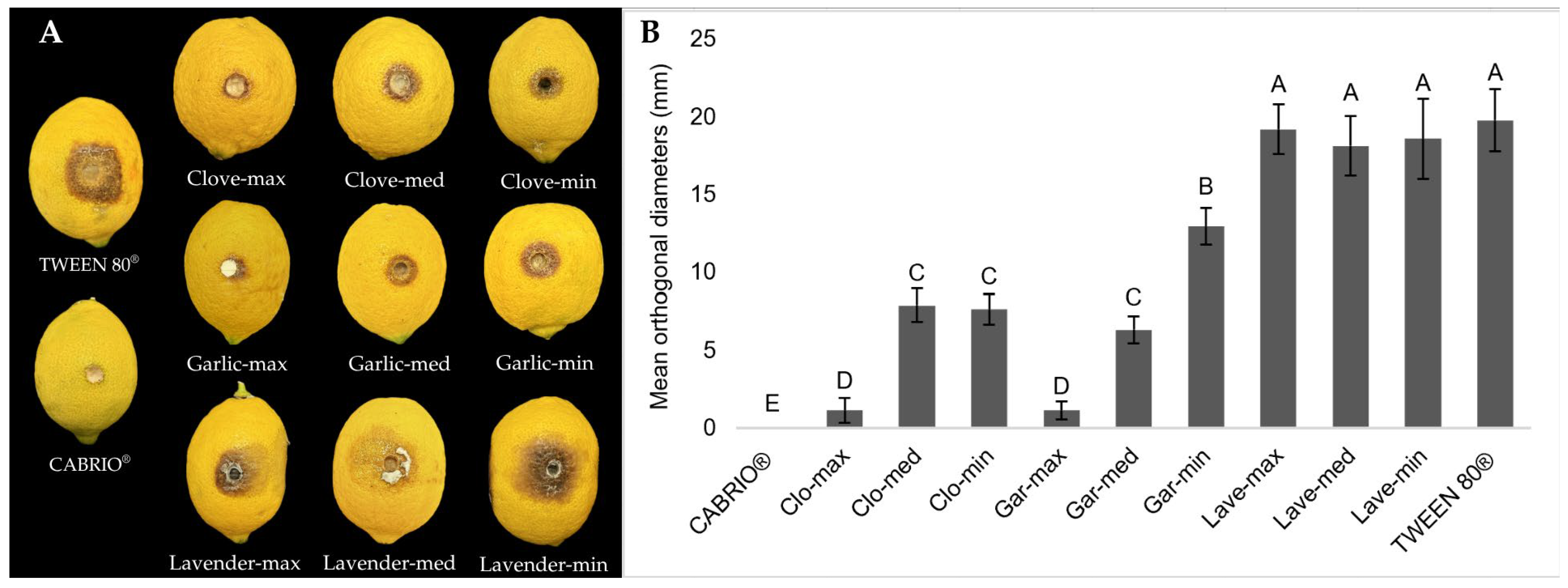
Italian Colletotrichum gloeosporioides
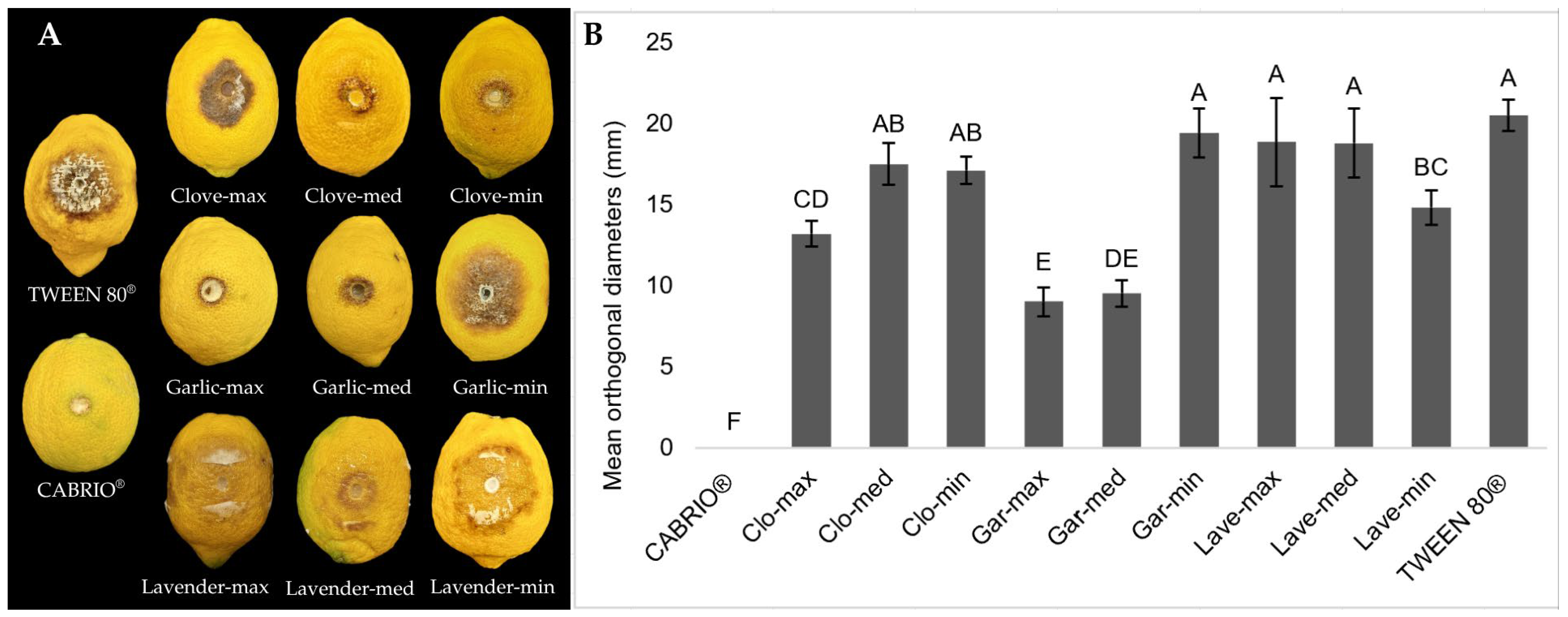
Spanish Colletotrichum gloeosporioides
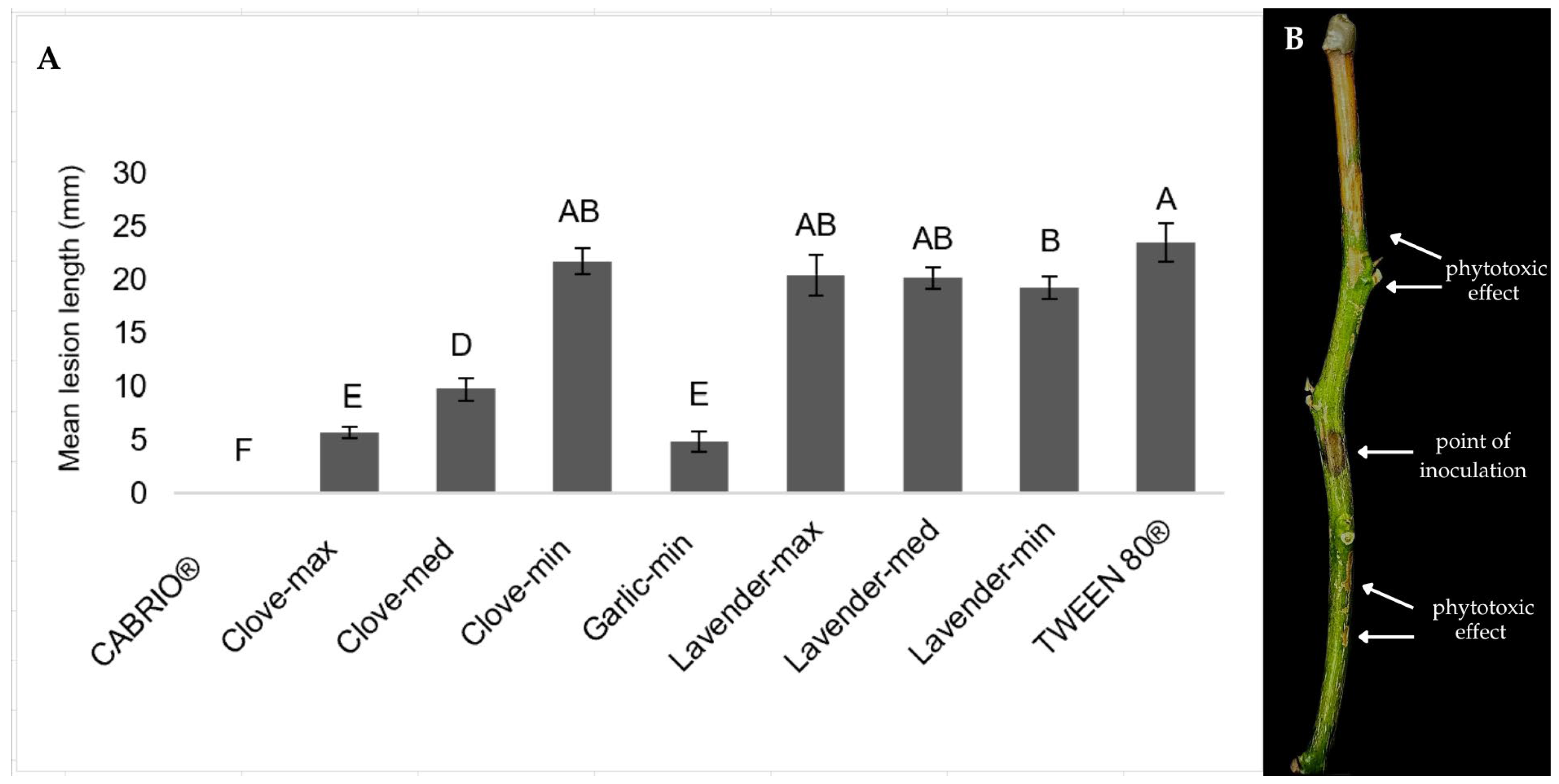
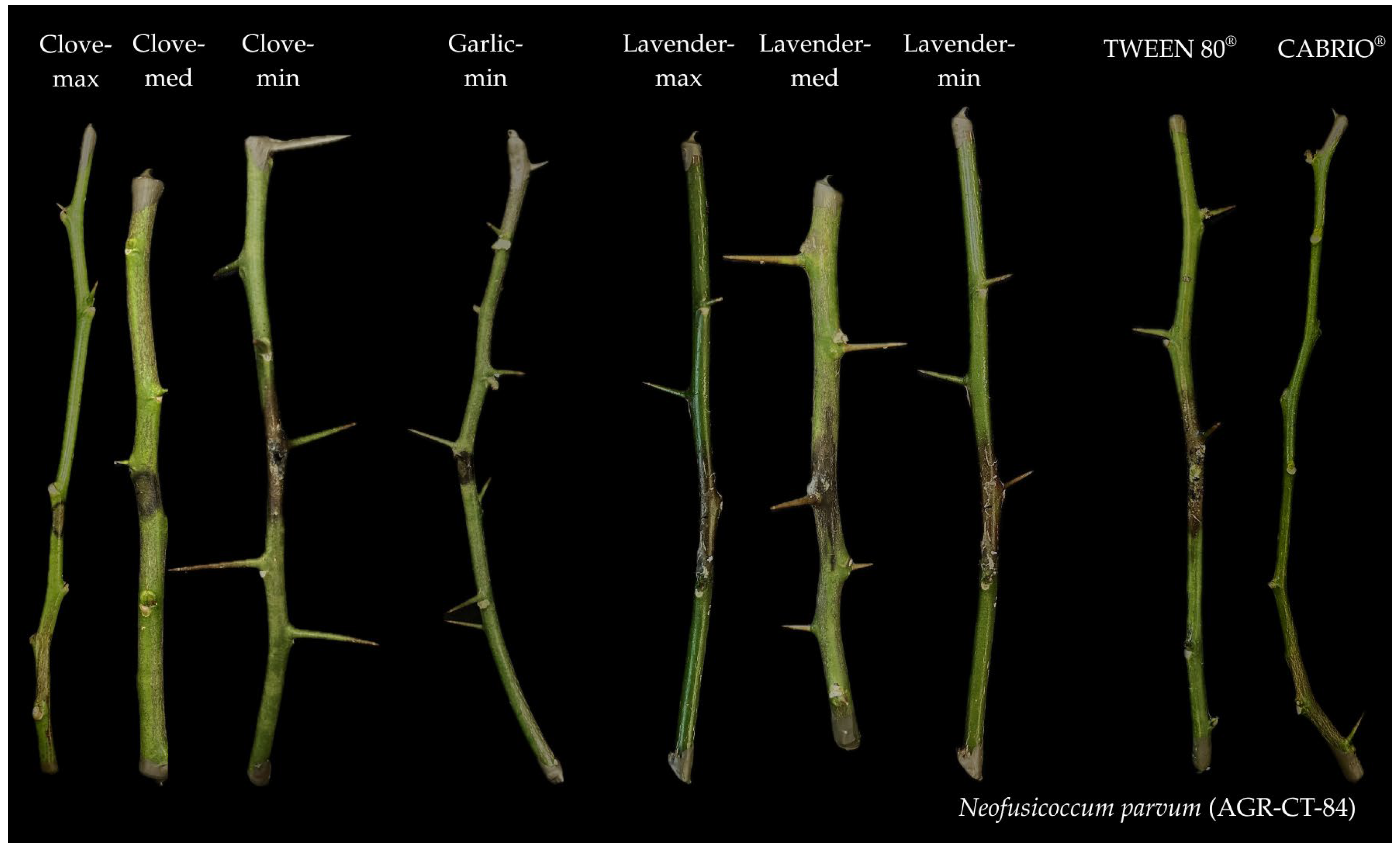
3.3.2. Antifungal Efficacy on Lemon Twigs Against Neofusicoccum parvum
4. Discussion
Author Contributions
Funding
Data Availability Statement
Acknowledgments
Conflicts of Interest
Abbreviations
| N-EO | Essential Oil-Based Nanoemulsion |
| ANOVA | Analysis of Variance |
| LSD | Least Significant Difference |
Appendix A

| Locus | Isolate ID | Genbank Accession Numbers | Reference Specimen x | Genbank y | Identity % |
|---|---|---|---|---|---|
| TUB2 | LA2 | PZ024116 | Colletotrichum gloeosporioides gnqcly2 | KC293626.1 | 99.55 |
| LI3 | PZ024117 | 99.55 | |||
| PV-1457 | PZ024118 | 100 | |||
| ACT | LA2 | PZ024122 | PP424990.1 | 100 | |
| LI3 | PZ024123 | C. gloeosporioides CFCC | 100 | ||
| PV-1457 | PZ024124 | 100 | |||
| CHS-1 | LA2 | PZ024125 | OR282947.1 | 97.09 | |
| LI3 | PZ024126 | C. gloeosporioides 179 | 97.09 | ||
| PV-1457 | PZ024127 | 100 | |||
| GAPDH | LA2 | PZ024119 | C. gloeosporioides UMC013 | MW081164.1 | 100 |
| LI3 | PZ024120 | C. gloeosporioides LGMF1454 | KX059224.1 | 100 | |
| PV-1457 | PZ024121 | C. gloeosporioides UMC013 | MW081164.1 | 100 | |
| ApMat | LA2 | PZ052639 | KJ954541.1 | 99.76 | |
| LI3 | PZ052640 | C. gloeosporioides LF318 | 99.88 | ||
| PV-1457 | PZ052641 | 98.78 |
Appendix B
| N-EOs | EC50 Values (% v/v) | |||
|---|---|---|---|---|
| Col-69 | PV-1457 | LA2 | LI3 | |
| Fennel | 3.02 ± 0.03 a/C | 4.08 ± 0.09 a/B | 4.92 ± 0.13 a/A | 1.85 ± 0.02 b/D |
| Laurel | 2.44 ± 0.06 b/A | 2.32 ± 0.14 b/A | 2.62 ± 0.15 b/A | 2.35 ± 0.03 a/A |
| Peppermint | 0.49 ± 0.02 e/BC | 0.46 ± 0.02 d/C | 0.63 ± 0.01 d/A | 0.56 ± 0.03 d/B |
| Citronella | 0.86 ± 0.02 c/A | 0.93 ± 0.04 c/A | 0.9 ± 0.01 c/A | 0.71 ± 0.02 c/B |
| Lavender | 0.77 ± 0.03 d/C | 0.87 ± 0.04 c/B | 1.06 ± 0.01 c/A | 0.52 ± 0.003 d/D |
| Clove | 0.15 ± 0.001 f/B | 0.16 ± 0.005 e/A | 0.14 ± 0.0 e/B | 0.12 ± 0.0 f/C |
| Garlic | 0.48 ± 0.01 e/B | 0.46 ± 0.02 d/B | 0.57 ± 0.007 d/A | 0.45 ± 0.008 e/B |
| p-value | ≤0.0001 | ≤0.0001 | ≤0.0001 | ≤0.0001 |
| EC90 values (% v/v) | ||||
| Col-69 | PV-1457 | LA2 | LI3 | |
| Fennel | 7.65 ± 0.13 a/B | 7.93 ± 0.05 a/AB | 7.86 ± 0.29 a/AB | 8.71 ± 0.48 a/A |
| Laurel | 4.72 ± 0.04 b/A | 4.59 ± 0.07 b/A | 4.63 ± 0.06 b/A | 4.58 ± 0.01 b/A |
| Peppermint | 1.86 ± 0.09 cd/A | 1.84 ± 0.1 c/A | 1.26 ± 0.05 de/B | 1.91 ± 0.17 c/A |
| Citronella | 2.01 ± 0.01 c/A | 2.1 ± 0.12 c/A | 2.3 ± 0.17 d/B | 1.63 ± 0.3 c/A |
| Lavender | 1.8 ± 0.06 d/C | 2.04 ± 0.09 c/B | 2.35 ± 0.07 c/A | 0.59 ± 0.01 d/D |
| Clove | 0.19 ± 0.003 f/A | 0.18 ± 0.003 e/A | 0.18 ± 0.003 f/A | 0.16 ± 0 d/B |
| Garlic | 0.95 ± 0.03 e/AB | 0.87 ± 0.09 d/B | 1.03 ± 0.02 e/A | 0.55 ± 0.003 d/C |
| p-value | ≤0.0001 | ≤0.0001 | ≤0.0001 | ≤0.0001 |
| N-EOs | EC50 Values (% v/v) | |
|---|---|---|
| AGR-CT-27 | AGR-CT-84 | |
| Fennel | 2.01 ± 0.05 a/A | 2.39 ± 0.14 a/A |
| Laurel | 0.55 ± 0.1 b/B | 0.97 ± 0.1 b/A |
| Peppermint | 0.37 ± 0.003 cd/A | 0.16 ± 0.01 cd/B |
| Citronella | 0.17 ± 0.03 e/A | 0.18 ± 0.02 cd/A |
| Lavender | 0.28 ± 0.006 de/A | 0.25 ± 0.05 c/A |
| Clove | 0.18 ± 0.003 e/A | 0.16 ± 0.0 cd/A |
| Garlic | 0.47 ± 0.003 bc/A | <0.1 x d/B |
| p-value | ≤0.0001 | ≤0.0001 |
| EC90 values (% v/v) | ||
| AGR-CT-27 | AGR-CT-84 | |
| Fennel | 4.94 ± 0.36 a/A | 4.72 ± 0.18 a/A |
| Laurel | 2.35 ± 0.39 b/A | 1.87 ± 0.42 b/A |
| Peppermint | 0.5 ± 0.0 c/A | 0.52 ± 0.01 c/A |
| Citronella | 0.56 ± 0.05 c/A | 0.61 ± 0.02 c/A |
| Lavender | 0.65 ± 0.03 c/A | 0.66 ± 0.05 c/A |
| Clove | 0.21 ± 0.003 c/A | 0.20 ± 0.003 c/A |
| Garlic | 0.55 ± 0.005 c/A | 0.47 ± 0.003 c/A |
| p-value | ≤0.0001 | ≤0.0001 |
| N-EOs | EC50 Values (% v/v) | |||
|---|---|---|---|---|
| Col-69 | PV-1457 | LA2 | LI3 | |
| Fennel | 2.4 ± 0.27 b/C | 6.25 ± 0.01 a/A | 4.87 ± 0.24 a/B | 0.86 ± 0.003 d/D |
| Laurel | 4.04 ± 0.49 a/C | 2.19 ± 0.26 c/C | 2.59 ± 0.03 c/B | 1.78 ± 0.04 b/A |
| Peppermint | 2.67 ± 0.01 b/C | 4.5 ± 0.11 b/A | 3.20 ± 0.29 b/B | 3.09 ± 0.05 a/BC |
| Citronella | 0.93 ± 0.007 d/B | 0.93 ± 0.04 e/B | 1.57 ± 0.006 d/A | 1.30 ± 0.16 c/A |
| Lavender | 1.83 ± 0.05 c/A | 1.67 ± 0.6 d/A | 0.43 ± 0.006 e/B | 0.34 ± 0.0 e/B |
| Clove | 0.48 ± 0.17 e/C | 0.35 ± 0.005 f/C | 0.79 ± 0.03 e/B | 1.41 ± 0.003 c/A |
| Garlic | 0.46 ± 0.02 e/B | 0.18 ± 0.002 f/D | 0.73 ± 0.05 e/A | 0.36 ± 0.003 e/C |
| p-value | ≤0.0001 | ≤0.0001 | ≤0.0001 | ≤0.0001 |
| EC90 values (% v/v) | ||||
| Col-69 | PV-1457 | LA2 | LI3 | |
| Fennel | 2.51 ± 0.18 b/B | 7.79 ± 0.03 a/A | 7.49 ± 0.06 a/A | 1.04 ± 0.012 d/C |
| Laurel | 6.65 ± 0.58 a/D | 2.29 ± 0.17 b/B | 6.3 ± 0.04 c/C | 2.1 ± 0.009 b/A |
| Peppermint | 2.82 ± 0.01 b/D | 7.43 ± 0.02 a/A | 6.83 ± 0.16 b/B | 3.27 ± 0.05 a/C |
| Citronella | 1.81 ± 0.002 c/AB | 1.1 ± 0.18 c/C | 2.3 ± 0.17 d/A | 1.63 ± 0.3 c/BC |
| Lavender | 2.6 ± 0.06 b/A | 1.75 ± 0.35 b/B | 1.96 ± 0.02 e/B | 0.40 ± 0.003 e/C |
| Clove | 0.53 ± 0.09 d/D | 1.06 ± 0.001 c/B | 0.83 ± 0.05 f/C | 1.98 ± 0.01 b/A |
| Garlic | 0.99 ± 0.01 d/A | 0.45 ± 0.001 d/C | 0.75 ± 0.04 f/B | 0.42 ± 0.005 e/C |
| p-value | ≤0.0001 | ≤0.0001 | ≤0.0001 | ≤0.0001 |
| N-EOs | EC50 Values (% v/v) | |
|---|---|---|
| AGR-CT-27 | AGR-CT-84 | |
| Fennel | 2.55 ± 0.11 b/A | 2.8 ± 0.04 b/A |
| Laurel | 3.25 ± 0.05 a/B | 5.17 ± 0.16 a/A |
| Peppermint | 2.39 ± 0.003 b/A | 2.32 ± 0.03 c/A |
| Citronella | 2.55 ± 0.06 b/B | 2.89 ± 0.03 b/A |
| Lavender | 1.20 ± 0.18 c/A | 0.99 ± 0.02 d/A |
| Clove | 0.43 ± 0.08 d/A | 0.37 ± 0.003 e/A |
| Garlic | <0.1 x e/A | <0.1 x f/A |
| p-value | ≤0.0001 | ≤0.0001 |
| EC90 values (% v/v) | ||
| AGR-CT-27 | AGR-CT-84 | |
| Fennel | 2.96 ± 0.15 c/A | 3.51 ± 0.31 c/A |
| Laurel | 5.44 ± 0.11 a/B | 8.09 ± 0.02 a/A |
| Peppermint | 3.73 ± 0.06 b/A | 3.81 ± 0.06 c/A |
| Citronella | 5.69 ± 0.16 a/A | 5.8 ± 0.10 b/A |
| Lavender | 1.38 ± 0.28 d/A | 1.08 ± 0.03 d/A |
| Clove | 0.49 ± 0.07 e/A | 0.42 ± 0.0 e/A |
| Garlic | <0.1 x f/A | <0.1 x f/A |
| p-value | ≤0.0001 | ≤0.0001 |
References
- Zhong, G.; Nicolosi, E. Citrus origin, diffusion, and economic importance. In Citrus Fruit: Biology, Technology and Evaluation; Talon, M., Caruso, M., Gmitter, F.G., Eds.; Academic Press: London, UK, 2020; pp. 5–21. [Google Scholar] [CrossRef] [Scilit]
- FAOSTAT—Food and Agriculture Organization Corporate Statistical Database. Available online: https://www.fao.org/faostat/en/#home (accessed on 10 December 2025).
- CIRAD. Citrus World Statistics 2022; CIRAD: Montpellier, France, 2022. [Google Scholar]
- ISTAT—Seventh General Census of Agriculture: First Results. Available online: https://www.istat.it/it/files//2022/06/REPORT-CENSIAGRI_2021-def.pdf (accessed on 20 August 2025).
- Savary, S.; Ficke, A.; Aubertot, J.N.; Hollier, C. Crop losses due to diseases and their implications for global food production losses and food security. Food Secur. 2012, 4, 519–537. [Google Scholar] [CrossRef] [Scilit]
- Khanchouch, K.; Pane, A.; Chriki, A.; Cacciola, S.O. Major and emerging fungal diseases of citrus in the Mediterranean region. In Citrus Pathology; Cacciola, S.O., Ed.; IntechOpen: London, UK, 2017. [Google Scholar] [CrossRef] [Scilit]
- Camiletti, B.X.; Lichtemberg, P.S.F.; Paredes, J.A.; Carraro, T.A.; Velascos, J.; Michailides, T.J. Characterization of Colletotrichum isolates causing Colletotrichum dieback of citrus in California. Phytopathology 2022, 112, 1454–1466. [Google Scholar] [CrossRef] [Scilit]
- Riolo, M.; Aloi, F.; Pane, A.; Cara, M.; Cacciola, S.O. Twig and shoot dieback of citrus, a new disease caused by Colletotrichum species. Cells 2021, 10, 449. [Google Scholar] [CrossRef] [Scilit] [PubMed]
- Vitale, A.; Aiello, D.; Azzaro, A.; Guarnaccia, V.; Polizzi, G. An eleven-year survey on field disease susceptibility of citrus accessions to Colletotrichum and Alternaria species. Agriculture 2021, 11, 536. [Google Scholar] [CrossRef] [Scilit]
- Aiello, D.; Carrieri, R.; Guarnaccia, V.; Vitale, A.; Lahoz, E.; Polizzi, G. Characterization and pathogenicity of Colletotrichum gloeosporioides and C. karstii causing preharvest disease on Citrus sinensis in Italy. J. Phytopathol. 2015, 163, 168–177. [Google Scholar] [CrossRef] [Scilit]
- Guarnaccia, V.; Groenewald, J.Z.; Polizzi, G.; Crous, P.W. High species diversity in Colletotrichum associated with citrus diseases in Europe. Persoonia 2017, 39, 32–50. [Google Scholar] [CrossRef] [Scilit]
- Fontaine, F.; Trouillas, F.P.; Armengol, J.; Eskalen, A. Fungal trunk diseases: A global threat to grapevines. Annu. Rev. Phytopathol. 2025, 63, 577–602. [Google Scholar] [CrossRef] [Scilit]
- López-Moral, A.; Raya, M.C.; Ruiz-Blancas, C.; Medialdea, I.; Lovera, M.; Arquero, O.; Trapero, A.; Agustí-Brisach, C. Aetiology of branch dieback, panicle and shoot blight of pistachio associated with fungal trunk pathogens in southern Spain. Plant Pathol. 2020, 69, 1237–1269. [Google Scholar] [CrossRef] [Scilit]
- Sohrabi, M.; Mohammadi, H.; León, M.; Armengol, J.; Banihashemi, Z. Fungal pathogens associated with branch and trunk cankers of nut crops in Iran. Eur. J. Plant Pathol. 2020, 157, 327–351. [Google Scholar] [CrossRef] [Scilit]
- Martino, I.; Spadaro, D.; Guarnaccia, V. Fungal trunk pathogens of fruit and nut tree crops: Identification, characterization, detection, and perspectives for a critical global issue. Plant Dis. 2025, 109, 1192–1210. [Google Scholar] [CrossRef] [Scilit]
- Bezerra, J.D.P.; Crous, P.W.; Aiello, D.; Gullino, M.L.; Polizzi, G.; Guarnaccia, V. Genetic diversity and pathogenicity of Botryosphaeriaceae species associated with symptomatic citrus plants in Europe. Plants 2021, 10, 492. [Google Scholar] [CrossRef] [Scilit] [PubMed]
- Mayorquin, J.S.; Wang, D.H.; Twizeyimana, M.; Eskalen, A. Identification, distribution, and pathogenicity of Diatrypaceae and Botryosphaeriaceae associated with citrus branch canker in the southern California desert. Plant Dis. 2016, 100, 2402–2413. [Google Scholar] [CrossRef] [Scilit] [PubMed]
- Kurt, Ş.; Uysal, A.; Guarnaccia, V.; Martino, I.; Soylu, E.M.; Soylu, S.; Oğuz, M. Molecular identification and pathogenicity of Botryosphaeriaceae species associated with citrus wood diseases in the eastern Mediterranean region of Türkiye. J. Plant Pathol. 2025, 107, 1077–1089. [Google Scholar] [CrossRef] [Scilit]
- Gusella, G.; Leonardi, G.R.; La Quatra, G.; Aiello, D.; Voglmayr, H.; Polizzi, G. Re-evaluating the etiology of citrus “Dothiorella gummosis” in Italy. Plant Dis. 2025; online ahead of print. [CrossRef] [Scilit]
- Guarnaccia, V.; Kraus, C.; Markakis, E.; Alves, A.; Armengol, J.; Eichmeier, A.; Compant, S.; Gramaje, D. Fungal trunk diseases of fruit trees in Europe: Pathogens, spread and future directions. Phytopathol. Mediterr. 2022, 61, 563–599. [Google Scholar] [CrossRef] [Scilit]
- Martino, I.; Lione, G.; Garbelotto, M.; Gonthier, P.; Guarnaccia, V. Modeling the effect of temperature on the severity of blueberry stem blight and dieback with a focus on Neofusicoccum parvum and cultivar susceptibility. Horticulturae 2024, 10, 363. [Google Scholar] [CrossRef] [Scilit]
- Castillo, S.; Borrero, C.; Castaño, R.; Rodríguez, A.; Avilés, M. First report of canker disease caused by Neofusicoccum parvum and N. australe on blueberry bushes in Spain. Plant Dis. 2013, 97, 1112. [Google Scholar] [CrossRef] [Scilit]
- Manca, D.; Bregant, C.; Maddau, L.; Montecchio, L.; Linaldeddu, B.T. First report of canker and dieback caused by Neofusicoccum parvum and Diplodia olivarum on oleaster in Italy. Ital. J. Mycol. 2020, 49, 85–91. [Google Scholar] [CrossRef]
- Kim, K.-H.; Kabir, E.; Jahan, S.A. Exposure to pesticides and the associated human health effects. Sci. Total Environ. 2017, 575, 525–535. [Google Scholar] [CrossRef] [Scilit]
- European Commission. Pesticides and Plant Protection. Common Agricultural Policy: Environmental Sustainability—Low-Input Farming. Available online: https://agriculture.ec.europa.eu (accessed on 20 August 2025).
- Wang, D.; Wang, G.; Wang, J.; Zhai, H.; Xue, X. Inhibitory effect and underlying mechanism of cinnamon and clove essential oils on Botryosphaeria dothidea and Colletotrichum gloeosporioides causing rots in postharvest bagging-free apple fruits. Front. Microbiol. 2023, 14, 28. [Google Scholar] [CrossRef] [Scilit]
- Allagui, M.B.; Moumni, M.; Romanazzi, G. Antifungal activity of thirty essential oils to control pathogenic fungi of postharvest decay. Antibiotics 2023, 13, 28. [Google Scholar] [CrossRef] [Scilit] [PubMed]
- Carmello, C.R.; Magri, M.M.R.; Cardoso, J.C. Cinnamon and clove aqueous extracts promote in vitro and postharvest control of Alternaria alternata in tomato fruit. Eur. J. Plant Pathol. 2025, 172, 261–274. [Google Scholar] [CrossRef] [Scilit]
- Shabnam, J.; Sobia, M.; Ibatsam, K.; Rauf, A.; Hussain, S.M. Comparative antimicrobial activity of clove and fennel essential oils against food borne pathogenic fungi and food spoilage bacteria. Afr. J. Biotechnol. 2012, 11, 16065–16070. [Google Scholar] [CrossRef] [Scilit]
- Jiang, H.; Zhong, S.; Schwarz, P.; Chen, B.; Rao, J. Chemical composition of essential oils from leaf and bud of clove and their impact on the antifungal and mycotoxin inhibitory activities of clove oil-in-water nanoemulsions. Ind. Crops Prod. 2022, 187, 115479. [Google Scholar] [CrossRef] [Scilit]
- Ali, A.; Wee Pheng, T.; Mustafa, M.A. Application of lemongrass oil in vapour phase for the effective control of anthracnose of ‘Sekaki’ papaya. J. Appl. Microbiol. 2015, 118, 1456–1464. [Google Scholar] [CrossRef] [Scilit]
- Flores, M.; Poveda, J. Effective control of anthracnose (Colletotrichum gloeosporioides) in postharvest tomato under different storage temperatures using essential oils from eucalyptus (Eucalyptus globulus) and lemongrass (Cymbopogon citratus). Food Biosci. 2025, 69, 106993. [Google Scholar] [CrossRef] [Scilit]
- Angeles Mangoba, M.A.; de Guzman Alvindia, D. Fungicidal Activities of Cymbopogon winterianus against Anthracnose of Banana Caused by Colletotrichum musae. Sci. Rep. 2023, 13, 6629. [Google Scholar] [CrossRef] [Scilit]
- Sharma, A.; Rajendran, S.; Srivastava, A.; Sharma, S.; Kundu, B. Antifungal activities of selected essential oils against Fusarium oxysporum f. sp. lycopersici 1322, with emphasis on Syzygium aromaticum essential oil. J. Biosci. Bioeng. 2017, 123, 308–313. [Google Scholar] [CrossRef] [Scilit]
- Beneti, S.C.; Rosset, E.; Corazza, M.L.; Frizzo, C.D.; Di Luccio, M.; Oliveira, J.V. Fractionation of citronella (Cymbopogon winterianus) essential oil and concentrated orange oil phase by batch vacuum distillation. J. Food Eng. 2011, 102, 348–354. [Google Scholar] [CrossRef] [Scilit]
- Wang, D.; Zhang, J.; Jia, X.; Xin, L.; Zhai, H. Antifungal effects and potential mechanism of essential oils on Colletotrichum gloeosporioides in vitro and in vivo. Molecules 2019, 24, 3386. [Google Scholar] [CrossRef] [Scilit]
- Štůsková, K.; Mondello, V.; Hakalová, E.; Tekielska, D.; Fontaine, F.; Eichmeier, A. Phenolic compounds inhibit viability and infectivity of the grapevine pathogens Diplodia seriata, Eutypa lata, Fomitiporia mediterranea, and Neofusicoccum parvum. Phytopathol. Mediterr. 2023, 60, 307–319. [Google Scholar] [CrossRef] [Scilit]
- Moumni, M.; Romanazzi, G.; Najar, B.; Pistelli, L.; Ben Amara, H.; Mezrioui, K.; Karous, O.; Chaieb, I.; Allagui, M.B. Antifungal activity and chemical composition of seven essential oils to control the main seedborne fungi of cucurbits. Antibiotics 2021, 10, 104. [Google Scholar] [CrossRef] [Scilit] [PubMed]
- Sarkhosh, A.; Schaffer, B.; Vargas, A.I.; Palmateer, A.J.; Lopez, P.; Soleymani, A.; Farzaneh, M. Antifungal activity of five plant-extracted essential oils against anthracnose in papaya fruit. Biol. Agric. Hortic. 2018, 34, 18–26. [Google Scholar] [CrossRef] [Scilit]
- Caprari, C.; Fantasma, F.; Monaco, P.; Divino, F.; Iorizzi, M.; Ranalli, G.; Fasano, F.; Saviano, G. Chemical profiles, in vitro antioxidant and antifungal activity of four different Lavandula angustifolia L. essential oils. Molecules 2023, 28, 392. [Google Scholar] [CrossRef] [Scilit]
- Bhatwalkar, S.B.; Mondal, R.; Krishna, S.B.N.; Adam, J.K.; Govender, P.; Anupam, R. Antibacterial properties of organosulfur compounds of garlic (Allium sativum). Front. Microbiol. 2021, 12, 613077. [Google Scholar] [CrossRef] [Scilit]
- Hosseini, S.; Amini, J.; Saba, M.K.; Karimi, K.; Pertot, I. Preharvest and postharvest application of garlic and rosemary essential oils for controlling anthracnose and quality assessment of strawberry fruit during cold storage. Front. Microbiol. 2020, 11, 1855. [Google Scholar] [CrossRef] [Scilit]
- Roby, M.H.H.; Sarhan, M.A.; Selim, K.A.-H.; Khalel, K.I. Antioxidant and antimicrobial activities of essential oil and extracts of fennel (Foeniculum vulgare L.) and chamomile (Matricaria chamomilla L.). Ind. Crops Prod. 2013, 44, 437–445. [Google Scholar] [CrossRef] [Scilit]
- Abd El-Kareem, M.S.M.; Rabbih, M.A.; Rashad, A.M.; El-Hefny, M. Essential oils from fennel plants as valuable chemical products: Gas chromatography–mass spectrometry, FTIR, quantum mechanical investigation, and antifungal activity. Biomass Convers. Biorefin. 2025, 15, 9173–9191. [Google Scholar] [CrossRef] [Scilit]
- Rabari, V.P.; Chudashama, K.S.; Thaker, V.S. In vitro screening of 75 essential oils against Colletotrichum gloeosporioides: A causal agent of anthracnose disease of mango. Int. J. Fruit Sci. 2018, 18, 1–13. [Google Scholar] [CrossRef] [Scilit]
- Yi, Y.; Liu, R.; Shang, Z.; Wang, K.; Zhang, C.; Wang, Z.; Lou, Y.; Liu, J.; Li, P. Peppermint Essential Oil for Controlling Aspergillus Flavus and Analysis of Its Antifungal Action Mode. Curr. Microbiol. 2025, 82, 140. [Google Scholar] [CrossRef] [Scilit]
- Weisany, W.; Samadi, S.; Tahir, N.A.; Amini, J.; Hossaini, S. Nano-encapsulated with mesoporous silica enhanced the antifungal activity of essential oil against Botrytis cinerea (Helotiales; Sclerotiniaceae) and Colletotrichum nymphaeae (Glomerellales; Glomerellaceae). Physiol. Mol. Plant Pathol. 2022, 122, 101902. [Google Scholar] [CrossRef] [Scilit]
- de Oliveira, K.Á.R.; Berger, L.R.R.; de Araújo, S.A.; Câmara, M.P.S.; de Souza, E.L. Synergistic mixtures of chitosan and Mentha piperita L. essential oil to inhibit Colletotrichum species and anthracnose development in mango cultivar Tommy Atkins. Food Microbiol. 2017, 66, 96–103. [Google Scholar] [CrossRef] [Scilit] [PubMed]
- Petrović, E.; Vrandečić, K.; Ćosić, J.; Siber, T.; Godena, S. Antifungal Efficacy of Essential Oils and Their Predominant Components against Olive Fungal Pathogens. Agriculture 2025, 15, 340. [Google Scholar] [CrossRef] [Scilit]
- Ribeiro-Santos, R.; Andrade, M.; Melo, N.R.; Sanches-Silva, A. Use of essential oils in active food packaging: Recent advances and future trends. Trends Food Sci. Technol. 2017, 61, 132–140. [Google Scholar] [CrossRef] [Scilit]
- Turek, C.; Stintzing, F.C. Stability of essential oils: A review. Compr. Rev. Food Sci. Food Saf. 2013, 12, 40–53. [Google Scholar] [CrossRef] [Scilit]
- Lin, H.-J.; Lin, Y.-L.; Huang, B.-B.; Lin, Y.-T.; Li, H.-K.; Lu, W.-J.; Lin, T.-C.; Tsui, Y.-C.; Lin, H.-T.V. Solid- and vapour-phase antifungal activities of six essential oils and their applications in postharvest fungal control of peach (Prunus persica L. Batsch). LWT 2022, 156, 113031. [Google Scholar] [CrossRef] [Scilit]
- Kalateh-Seifari, F.; Ahari, H.; Moradi, S. A review on the food-based applications of nanometric plant-based essential oils: Nanoencapsulation and nanoemulsion production challenges. Food Bioprocess Technol. 2025, 18, 6095–6115. [Google Scholar] [CrossRef] [Scilit]
- Modafferi, A.; Ricupero, M.; Mostacchio, G.; Latella, I.; Zappalà, L.; Palmeri, V.; Garzoli, S.; Giunti, G.; Campolo, O. Bioactivity of Allium sativum essential oil-based nano-emulsion against Planococcus citri and its predator Cryptolaemus montrouzieri. Ind. Crops Prod. 2024, 208, 117837. [Google Scholar] [CrossRef] [Scilit]
- Moral, J.; Agustí-Brisach, C.; Raya, M.C.; Jurado-Bello, J.; López-Moral, A.; Roca, L.F.; Chattaoui, M.; Rhouma, A.; Nigro, F.; Sergeeva, V.; et al. Diversity of Colletotrichum species associated with olive anthracnose worldwide. J. Fungi 2021, 7, 741. [Google Scholar] [CrossRef] [Scilit]
- Glass, N.L.; Donaldson, G.C. Development of primer sets designed for use with the PCR to amplify conserved genes from filamentous ascomycetes. Appl. Environ. Microbiol. 1995, 61, 1323–1330. [Google Scholar] [CrossRef] [Scilit]
- Carbone, I.; Kohn, L.M. A method for designing primer sets for speciation studies in filamentous ascomycetes. Mycologia 1999, 91, 553–556. [Google Scholar] [CrossRef] [Scilit]
- Guerber, J.C.; Liu, B.; Correll, J.C.; Johnston, P.R. Characterization of diversity in Colletotrichum acutatum sensu lato by sequence analysis of two gene introns, mtDNA and intron RFLPs, and mating compatibility. Mycologia 2003, 95, 872–895. [Google Scholar] [CrossRef] [Scilit] [PubMed]
- Rojas, E.I.; Rehner, S.A.; Samuels, G.J.; Van Bael, S.A.; Herre, E.A.; Cannon, P.; Chen, R.; Pang, J.; Wang, R.; Zhang, Y.; et al. Colletotrichum gloeosporioides s.l. associated with Theobroma cacao and other plants in Panamá: Multilocus phylogenies distinguish host-associated pathogens from asymptomatic endophytes. Mycologia 2010, 102, 1318–1338. [Google Scholar] [CrossRef] [Scilit] [PubMed]
- Tamura, K.; Stecher, G.; Kumar, S. MEGA11: Molecular evolutionary genetics analysis version 11. Mol. Biol. Evol. 2021, 38, 3022–3027. [Google Scholar] [CrossRef] [Scilit] [PubMed]
- Guarnaccia, V.; Aiello, D.; Polizzi, G.; Perrone, G.; Stea, G.; Vitale, A. Emergence of prochloraz-resistant populations of Calonectria pauciramosa and Calonectria polizzii in ornamental nurseries of southern Italy. Plant Dis. 2014, 98, 344–350. [Google Scholar] [CrossRef] [Scilit]
- Chen, S.F.; Morgan, D.P.; Michailides, T.J. Botryosphaeriaceae and Diaporthaceae Associated with Panicle and Shoot Blight of Pistachio in California, USA. Fungal Divers. 2014, 67, 157–179. [Google Scholar] [CrossRef] [Scilit]
- Moral, J.; Agustí-Brisach, C.; Agalliu, G.; de Oliveira, R.; Pérez-Rodríguez, M.; Roca, L.F.; Romero, J.; Trapero, A. Preliminary selection and evaluation of fungicides and natural compounds to control olive anthracnose caused by Colletotrichum species. Crop Prot. 2018, 114, 167–176. [Google Scholar] [CrossRef] [Scilit]
- López-Moral, A.; Agustí-Brisach, C.; Leiva-Egea, F.M.; Trapero, A. Influence of cultivar and biocontrol treatments on the effect of olive stem extracts on the viability of Verticillium dahliae conidia. Plants 2022, 11, 554. [Google Scholar] [CrossRef] [Scilit]
- Uysal, A.; Kurt, Ş.; Guarnaccia, V. Distribution and characterization of Colletotrichum species associated with citrus anthracnose in eastern Mediterranean region of Turkey. Eur. J. Plant Pathol. 2022, 163, 125–141. [Google Scholar] [CrossRef] [Scilit]
- Catalano, C.; Gusella, G.; Inzirillo, I.; Cannizzaro, G.; Di Guardo, M.; La Malfa, S.; Polizzi, G.; Gentile, A.; Distefano, G. Exploring additive and non-additive genetic models to decipher the genetic regulation of almond tolerance to Diaporthe amygdali. Front. Plant Sci. 2025, 16, 1608958. [Google Scholar] [CrossRef] [Scilit]
- Steel, R.G.D.; Torrie, J.H. Principles and Procedures of Statistics: A Biometrical Approach, 2nd ed.; McGraw-Hill: New York, NY, USA, 1981. [Google Scholar]
- Analytical Software. Statistix 10 User’s Manual; Analytical Software: Tallahassee, FL, USA, 2013. [Google Scholar]
- Acidi, A.; Siakhene, N.; Grine, S.; Bouasla, R.; Rizi, A.; Rachedi, K.O.; Dekir, A.; Benaliouche, F.; Bahadi, R.; Taibi, F.; et al. In vitro and in silico studies of antifungal activity of Syzygium aromaticum essential oil and its main constituent ‘eugenol’ against a citrus fungal strain, Fusarium proliferatum. Chem. Afr. 2025, 8, 1365–1376. [Google Scholar] [CrossRef] [Scilit]
- Li, W.-R.; Shi, Q.-S.; Liang, Q.; Huang, X.-M.; Chen, Y.-B. Antifungal effect and mechanism of garlic oil on Penicillium funiculosum. Appl. Microbiol. Biotechnol. 2014, 98, 8337–8346. [Google Scholar] [CrossRef] [Scilit]
- Zhao, Z.; Yu, M.; Wei, Y.; Xu, F.; Jiang, S.; Chen, Y.; Ding, P.; Shao, X. Cinnamon essential oil causes cell membrane rupture and oxidative damage of Rhizopus stolonifer to control soft rot of peaches. Food Control 2025, 170, 111039. [Google Scholar] [CrossRef] [Scilit]
- Khan, I.A. (Ed.) Citrus Genetics, Breeding and Biotechnology; CABI Publishing: Wallingford, UK, 2007. [Google Scholar]
- Hossain, F.; Follett, P.; Dang Vu, K.; Harich, M.; Salmieri, S.; Lacroix, M. Evidence for synergistic activity of plant-derived essential oils against fungal pathogens of food. Food Microbiol. 2016, 53, 24–30. [Google Scholar] [CrossRef] [Scilit]
- Simas, D.L.R.; de Amorim, S.H.B.M.; Goulart, F.R.V.; Alviano, C.S.; Alviano, D.S.; da Silva, A.J.R. Citrus species essential oils and their components can inhibit or stimulate fungal growth in fruit. Ind. Crops Prod. 2017, 98, 108–115. [Google Scholar] [CrossRef] [Scilit]
- Rolli, E.; Marieschi, M.; Maietti, S.; Guerrini, A.; Grandini, A.; Sacchetti, G.; Bruni, R. Phytotoxic effects and phytochemical fingerprinting of hydrodistilled oil, enriched fractions, and isolated compounds obtained from Cryptocarya massoy bark. Chem. Biodivers. 2016, 13, 66–76. [Google Scholar] [CrossRef] [Scilit]
- de Oliveira, M.S.; da Costa, W.A.; Pereira, D.S.; Botelho, J.R.S.; de Alencar Menezes, T.O.; de Aguiar Andrade, E.H.; da Silva, S.H.M.; da Silva Sousa Filho, A.P.; de Carvalho, R.N. Chemical composition and phytotoxic activity of clove (Syzygium aromaticum) essential oil obtained with supercritical CO2. J. Supercrit. Fluids 2016, 118, 185–193. [Google Scholar] [CrossRef] [Scilit]


| Essential Oils | Plant Species | Batch No. |
|---|---|---|
| Citronella | Cymbopogon winterianus Jowitt ex Bor | OL. ES. 46 |
| Clove | Syzygium aromaticum (L.) Merr. & L.M. Perry | OL. ES. 57 |
| Fennel | Foeniculum vulgare Mill. | OL. ES. 54 |
| Garlic | Allium sativum L. | OL. ES. 4 |
| Laurel | Laurus nobilis L. | OL. ES. 67 |
| Lavender | Lavandula angustifolia Mill. | OL. ES. 307 |
| Peppermint | Mentha × piperita L. | OL. ES. 94 |
| Fungal Species | Isolate | Host | Symptoms | Location | References |
|---|---|---|---|---|---|
| Colletotrichum gloeosporioides | Col-69 | Citrus sinensis | Fruit lesions | Fuente Palmera, Córdoba, Spain | [55] |
| PV-1457 | Citrus sinensis | Fruit lesions | Palma del Río, Córdoba, Spain | Present study * | |
| LA2 | Citrus sinensis | Fruit lesions | Sicily, Italy | Present study * | |
| LI3 | Citrus sinensis | Fruit lesions | Sicily, Italy | Present study * | |
| Neofusicoccum parvum | AGR-CT-27 | Citrus limon | Internal wood necrosis | Sicily, Italy | [19] |
| AGR-CT-84 | Citrus limon | Internal wood necrosis | Sicily, Italy | [19] |
| Genomic Region | Forward Primer | Reverse Primer | PCR Conditions | References |
|---|---|---|---|---|
| TUB2 | Bt2a | Bt2b |
| [56] |
| ACT | ACT-512F | ACT-783R |
| [57] |
| CHS-1 | CHS-354R | CHS-79F |
| [57] |
| GAPDH | GDF1 | GDR1 |
| [58] |
| ApMat | AMF1 | AMR1 |
| [59] |
| N-EOs 1 | Size (nm) | PDI 2 | Zeta Potential (mV) |
|---|---|---|---|
| Citronella | 103.8 ± 1.83 d | 0.142 ± 0.006 c | −32.73 ± 2.37 c |
| Clove | 150.43 ± 1.25 a | 0.1943 ± 0.003 a | −29.83 ± 0.60 c |
| Fennel | 120.63 ± 0.87 b | 0.1933 ± 0.007 a | −22.57 ± 0.61 b |
| Garlic | 124.13 ± 6.35 b | 0.1647 ± 0.004 b | −19.93 ± 1.02 ab |
| Laurel | 112.87 ± 1.76 c | 0.12 ± 0.003 d | −16.9 ± 0.2 a |
| Lavender | 123.27 ± 0.25 b | 0.1397 ± 0.002 c | −18.57 ± 0.42 a |
| Peppermint | 146.43 ± 2 a | 0.1493 ± 0.001 c | −19.17 ± 0.93 a |
| F; df; p level | 113, 24; 6; <0.001 | 126.78; 6; <0.001 | 91.77; 6; <0.001 |
Disclaimer/Publisher’s Note: The statements, opinions and data contained in all publications are solely those of the individual author(s) and contributor(s) and not of MDPI and/or the editor(s). MDPI and/or the editor(s) disclaim responsibility for any injury to people or property resulting from any ideas, methods, instructions or products referred to in the content. |
© 2026 by the authors. Licensee MDPI, Basel, Switzerland. This article is an open access article distributed under the terms and conditions of the Creative Commons Attribution (CC BY) license.
Share and Cite
La Quatra, G.; Sánchez-Pereira, L.; Gusella, G.; Martino, I.; Agustí-Brisach, C.; Vitale, A.; Aiello, D.; Polizzi, G. Essential Oil-Based Nanoemulsions as Sustainable Control Method Against Colletotrichum gloeosporioides and Neofusicoccum parvum on Citrus. Horticulturae 2026, 12, 433. https://doi.org/10.3390/horticulturae12040433
La Quatra G, Sánchez-Pereira L, Gusella G, Martino I, Agustí-Brisach C, Vitale A, Aiello D, Polizzi G. Essential Oil-Based Nanoemulsions as Sustainable Control Method Against Colletotrichum gloeosporioides and Neofusicoccum parvum on Citrus. Horticulturae. 2026; 12(4):433. https://doi.org/10.3390/horticulturae12040433
Chicago/Turabian StyleLa Quatra, Greta, Luiza Sánchez-Pereira, Giorgio Gusella, Ilaria Martino, Carlos Agustí-Brisach, Alessandro Vitale, Dalia Aiello, and Giancarlo Polizzi. 2026. "Essential Oil-Based Nanoemulsions as Sustainable Control Method Against Colletotrichum gloeosporioides and Neofusicoccum parvum on Citrus" Horticulturae 12, no. 4: 433. https://doi.org/10.3390/horticulturae12040433
APA StyleLa Quatra, G., Sánchez-Pereira, L., Gusella, G., Martino, I., Agustí-Brisach, C., Vitale, A., Aiello, D., & Polizzi, G. (2026). Essential Oil-Based Nanoemulsions as Sustainable Control Method Against Colletotrichum gloeosporioides and Neofusicoccum parvum on Citrus. Horticulturae, 12(4), 433. https://doi.org/10.3390/horticulturae12040433