Article

Resistance of Mulberry Fruit Sclerotiniosis Pathogens to Thiophanate-Methyl and Boscalid


by
Xiangmo Chen
1,
Tao Chen
2,
Qianqian Zhang
2,
Chengxin Mao
1 and
Chuanqing Zhang
1,*
1
College of Advanced Agricultural Sciences, Zhejiang Agricultural and Forestry University, Hangzhou 311300, China
2
Tongxiang Institute of Agricultural Sciences, Jiaxing City Academy of Agricultural Sciences, Jiaxing 311605, China
*
Author to whom correspondence should be addressed.
Horticulturae 2026, 12(1), 9; https://doi.org/10.3390/horticulturae12010009 (registering DOI)
Submission received: 11 November 2025 / Revised: 11 December 2025 / Accepted: 18 December 2025 / Published: 22 December 2025
(This article belongs to the Section Plant Pathology and Disease Management (PPDM))

Abstract

Fruit sclerotiniosis (FS) is becoming the most important disease in recently transformed mulberry fruit gardens (TFMGs), where traditional production of mulberry leaves for sericulture takes place; FS has a long history as a secondary disease in Zhejiang province, China. Thiophanate-methyl and boscalid are the two main fungicides adopted for the management of FS in these gardens. A decrease in efficacy has been observed by growers and local technicians. For this new situation regarding TFMGs, however, the resistance status of them has not yet been investigated and reported. In the present study, pathogens were isolated from diseased fruits and identified through a combination of morphological characteristics with ITS sequence analysis. Results showed that the pathogens included Scleromitrula shiraiana and Sclerotinia sclerotiorum. All isolates of S. shiraiana (n = 12) and S. sclerotiorum (n = 12) were sensitive to boscalid, and no resistance was detected. The S. shiraiana sub-population was sensitive to thiophanate-methyl, whereas the S. sclerotiorum sub-population developed resistance with a frequency of 33.3%. Thiophanate-methyl-resistant (ThR) S. sclerotiorum grew faster at a low temperature (15 °C) than sensitive ones. These ThR exhibited negative cross-resistance to diethofencarb, as previously observed in Botrytis cinerea, and showed no cross-resistance to procymidone or boscalid. Further studies indicated that resistance to thiophanate-methyl is caused by a novel double mutation (E198V+V349I) in the β-tubulin of S. sclerotiorum. This E198V+V349I mutation produced structural alterations in the β-tubulin protein, the action target of thiophanate-methyl, leading to reorientation of the substrate binding site and conformational change in the active pocket. In conclusion, avoiding the sole use of thiophanate-methyl on TFMGs is necessary. Application of boscalid in combination or rotation with other fungicides without cross-resistance is recommended for the management of FS in TFMG practices.

1. Introduction

Zhejiang Province, particularly Jiaxing, is traditionally the most important mulberry production base for sericulture in China, with a history of several centuries. With economic and technological development, the demand for mulberry leaves has decreased dramatically over the past decade. In recent years, most mulberry gardens in this region have been transformed to cultivate mulberry fruit for fresh consumption. Fruit sclerotiniosis (FS) was relatively minor in traditional mulberry leaf gardens, where fungicides were rarely applied. However, in recently transformed mulberry fruit gardens (TFMGs), FS has become the major constraining disease [1]. Commonly referred to as “white fruit disease” by growers, it primarily affects female flowers and green fruits, as well as new shoots and tender buds of early-maturing mulberry trees. FS can cause fruit deformation, shrinkage, and the formation of internal sclerotia, which severely reduces yields or results in serious crop losses. Four fungal species, including Ciboria shiraiana, Scleromitrula shiraiana, C. carunculoides, and Sclerotinia sclerotiorum, have previously been reported as pathogens of FS in common mulberry fruit gardens [2,3,4,5,6].
Current integrated pest management (IPM) for FS disease combines physical methods, agricultural measures, and chemical control [7], with chemical interventions serving as the primary approach. Thiophanate-methyl is applied during initial flowering, with two to three repeated applications per year [8,9]. Thiophanate-methyl belongs to the benzimidazole (BZI) class of fungicides (a subgroup of the methyl benzimidazole carbamates, MBCs) and acts by binding to β-tubulin subunits, interfering with microtubule assembly and disrupting essential cellular processes such as mitosis, cell division, and intracellular transport [10,11]. Resistance to thiophanate-methyl is predominantly mediated by point mutations in the tub2 gene encoding β-tubulin, which alter the fungicide-binding domain and confer cross-resistance among other BZI fungicides [12,13].
In recent years, due to the declining control efficacy of thiophanate-methyl, farmers have opted to use boscalid for the management of sclerotinia rot in mulberry fruit (http://www.icama.org.cn). Boscalid, a carboxamide fungicide, exerts its biocidal effect by inhibiting the succinate dehydrogenase (SDH) complex (Complex II) in the mitochondrial respiratory chain, thereby disrupting energy metabolism and halting fungal growth and reproduction [14,15]. The single-site mode of action of boscalid renders it highly prone to resistance development, which primarily arises from point mutations in the SdhB, SdhC, or SdhD subunits of the SDH complex; these mutations reduce the binding affinity between the fungicide and its target site, leading to ineffective control in the field [16,17].
From 2022 onward, FS in TFMG regions such as Jiaxing has become increasingly difficult to control. However, in response to this emerging scenario in TFMGs, the resistance status of the causal pathogen to these key fungicides has not yet been evaluated. Therefore, the objectives of this study were to isolate and collect FS pathogens from TFMGs, determine the frequency and level of resistance to thiophanate-methyl and boscalid, and analyze the underlying resistance mechanism. The results of this study will provide a theoretical basis for the scientific control and resistance management of FS in TFMGs.

2. Materials and Methods

2.1. Tested Fungicides

The following fungicides were used: 95% thiophanate-methyl technical material (Zhejiang Tide Crop Technology Co. Ltd., Shaoxing, China), 96% diethofencarb technical material (Shandong Yijia Agrochemical Co. Ltd., Shouguang, China), 97% procymidone (Zhejiang Heben Pesticide & Chemicals Co. Ltd., Wenzhou, China), and 96% boscalid (Zhejiang Heben Pesticide & Chemicals Co. Ltd., Wenzhou, China). Each tested fungicide was dissolved in methanol or acetone to a stock concentration of 10 mg/mL and stored at 4 °C. When the sensitivity test was performed, the fungicide was diluted in potato dextrose agar (PDA) (200 g peeled potatoes, 20 g dextrose, 20 g agar powder, and water up to 1000 mL) to obtain a range of fungicide concentrations.

2.2. Collection of Tested Isolates

Diseased mulberry fruits were collected from different fruit and mulberry farms in Jiaxing City during May 2024. Each specimen was individually bagged and transported to the laboratory. Pathogens were isolated and identified following the method previously reported by Sun et al. [18]. Isolates were cultured in darkness at 25 °C, after which hyphae from colony margins were excised and transferred to fresh PDA plates. This purification procedure was repeated through five successive transfers. Selected hyphae were then transferred to PDA slants for dark incubation and subsequently stored at 4 °C.

2.3. Morphological Characterization

The isolates preserved at 4 °C were transferred to fresh PDA plates and cultured in the dark in the incubator at 25 °C for 4 or 14 days. All isolates were observed and photographed, including the growth of mycelium, colony morphology, etc. [18].

2.4. ITS Analysis

Each isolate was cultured on PDA for 4 or 14 days, and its genomic DNA was extracted using a Fungal Genomic DNA Rapid Extraction Kit (Sangon Biotech, Shanghai, China). The genomic DNA was used as a template to amplify the ITS sequence as described by Sun et al. [18] using the universal primers ITS1 (5′-TCCGTAGGTGAACCTGCGG-3′) and ITS4 (5′-TCCTCCGCTTATTGATATATGC-3′). Then, 6 µL of PCR products was taken in 1% agarose gel for separation and observation; after the target band was observed to be 500 bp, the PCR products were sent to Beijing Tsingke Biotech Co., Ltd. for sequencing. Sequence analysis was carried out using MEGA 11.0, and phylogenetic trees were constructed via the neighbor-joining method.

2.5. Determination of Resistance to Boscalid and Thiophanate-Methyl

The frequency of resistance to boscalid and thiophanate-methyl of the test isolates was detected using the method of differentiated dose [19,20]. All isolates were inoculated onto PDA plates, after pre-cultivation at 25 °C. A mycelial cake with a diameter of 5 mm was punched at the edge of the colony and inoculated onto PDA plates containing 10 μg/mL of boscalid [19] and 5 μg/mL of thiophanate-methyl [20]. PDA plates containing equal volumes of solvent but no fungicide served as the control, with three replicates per treatment. If the tested isolate could grow normally on PDA plates containing 10 μg/mL boscalid or 5 μg/mL thiophanate-methyl, it was considered as resistant, and vice versa as sensitive. The frequency of resistance was calculated according to Equation (1).
Resistance   Frequency   ( % ) = Number   of   resistant   isolates Total   number   of   tested   isolates   ×   100  

2.6. Evaluation of Resistance Level

Sensitivity of S. sclerotiorum isolates to thiophanate-methyl was determined through the mycelial growth rate method. In brief, sensitive isolates were inoculated onto PDA plates amended with 0.001, 0.002, 0.004, 0.008, and 0.016 μg/mL thiophanate-methyl, while resistant isolates were tested on PDA plates containing 10, 20, 40, 80, and 160 μg/mL. Only solvent-amended PDA plates served as controls. After a 3-day incubation at 25 °C in darkness, colony diameters were measured along two perpendicular axes. Mycelial growth inhibition rates were calculated, with toxicity regression equations and EC50 values derived using Data Processing System (DPS) software version 19.05. Resistance levels were calculated according to Formula (2).
Resistant   isolates   ( % )   = The   EC 50   value   of   resistant   isolate The   mean   EC 50   value   of   sensitive   isolates × 100  

2.7. Analysis of Cross-Resistance

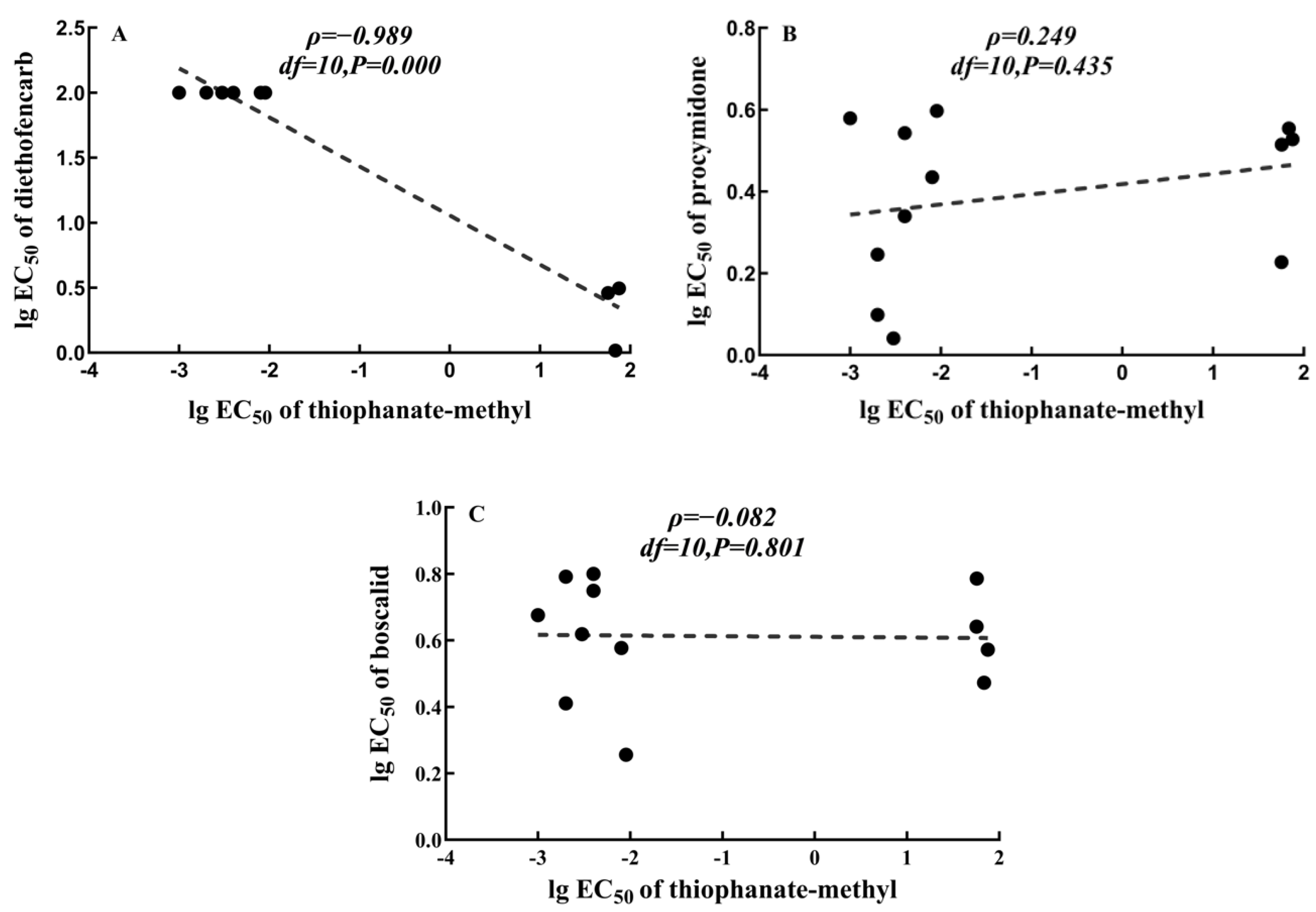
The mycelial growth rate method was used to determine the susceptibility of the 12 isolates of S. sclerotiorum to three fungicides, diethofencarb, boscalid, and procymidone. The adopted serials of gradient concentration were 0.5, 1, 2, 4, and 8 μg/mL (diethofencarb); 0.125, 0.25, 0.5, 1, 2, and 4 μg/mL (boscalid); and 0.5, 1, 2, 4, and 8 μg/mL (procymidone), with three replications per treatment. Only solvent-amended PDA plates served as controls. After a 3-day incubation at 25 °C in darkness, colony diameters were measured along two perpendicular axes. Mycelial growth inhibition rates were calculated, with toxicity regression equations and EC50 values derived using DPS software version 19.0. To analyze whether there was cross-resistance between the two fungicides, Spearman’s rank correlation coefficient was assessed. When p < 0.05 and ρ > 0.6, it indicated that there was strong positive interaction resistance between them [21,22].

2.8. Evaluation of Effect of Temperature on the Growth

Fresh colonies cultured on PDA plates for 4 days were selected, and 5 mm plugs were punched on the same circumference of the colony edges and inoculated on PDA plates, with three replications for each treatment. They were separately placed into incubators of 15, 20, 25, and 30 °C and cultured in the dark for 3 days. Then, the colony diameters at each temperature were measured, and the optimal growth temperatures of different phenotypes of isolates were determined.

2.9. Analysis of Resistance Mechanisms

Genomic DNA was extracted from 12 S. sclerotiorum isolates using the CTAB method. The β-tubulin gene was amplified with specific primers B1-1 (5′-GGGTTTCCAAATCACCCACTCTCTCG-3′) and B3-1 (5′-GAACTCCATCTCGTCCATACCCTCTCA-3′) [20]. Amplification products were electrophoresed on 1% agarose gels for verification prior to sequencing by Beijing Tsingke Biotech Co., Ltd. Sequences were aligned against the reference strain HA61 (GenBank MH796665.1) using DNAMAN software V9.

2.10. Molecular Docking

Protein structures of three β-tubulin variants, wild-type sensitive, E198V single mutant, and E198V+V349I double mutant, were predicted using AlphaFold3 [23]. The model with the highest ranking score was selected as the receptor for molecular docking. Docking simulations were performed with AutoDock Vina [24]. The thiophanate-methyl structure was retrieved from PubChem and energy-minimized. Receptor and ligand structures were prepared using AutoDock Tools 1.5.6 [25]. A 15 Å × 15 Å × 15 Å docking grid was centered on the protein’s active site, with 20 independent docking runs per system.

3. Results

3.1. Morphological Characteristics

Twenty-four isolates of mulberry fruit sclerotiniosis were categorized into two groups based on colony and sclerotia morphology. Group I comprised 12 isolates exhibiting vigorous mycelial growth on PDA after 4 days. Colonies displayed grayish-white surfaces with clustered aerial hyphae that grew appressed to the medium. Black, irregular sclerotia developed by day 14 (Figure 1I-A–I-C). These morphological characteristics aligned with Sclerotinia sclerotiorum.
A total of 12 isolates of Group II exhibited very slow growth. After 14 days of culture, the colony diameter reached only about 4.5 cm. Colonies had a yellowish-white felt-like surface lacking aerial hyphae, with irregular margins. The colony reverse was dark brown. A small, creamy-white conidial mass appeared at the colony center, while granular sclerotia protuberances were visible at the margin (Figure 1II-A–IIC). Based on these morphological characteristics, they were all identified as Scleromitrula shiraiana [18].

3.2. Phylogenetic Analysis

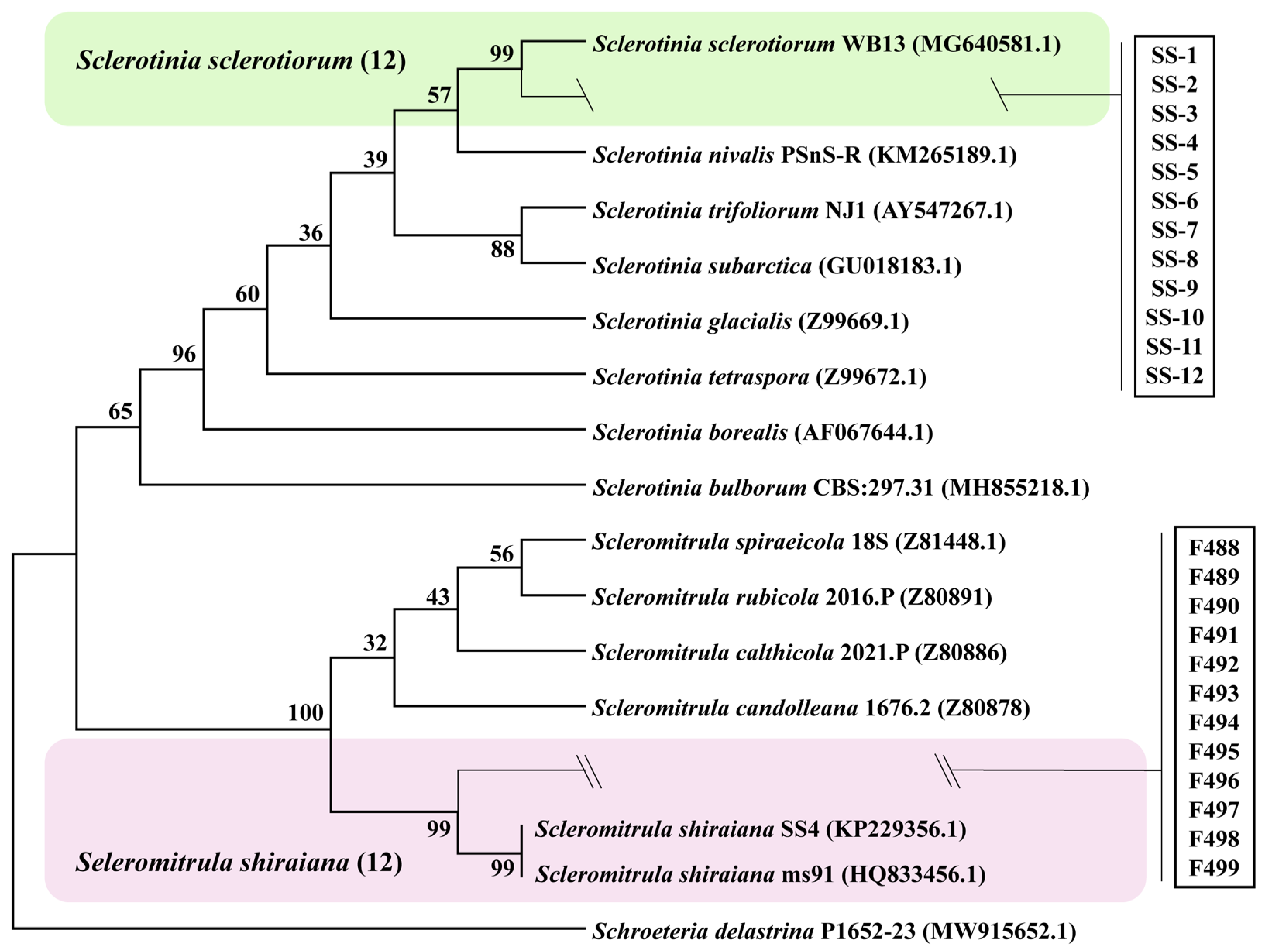
Phylogenetic analysis based on ITS sequences (Figure 2) revealed that 12 isolates (F488~F498) clustered with reference strains of S. shiraiana SS4 and S. shiraiana ms91, while the other 12 isolates (SS-1~SS-12) clustered with S. sclerotiorum WB13. This indicates sequence homology between strains F488 to F499 and S. shiraiana, as well as between strains SS-1 to SS-12 and S. sclerotiorum. Combined with colony morphology characteristics and phylogenetic evidence, the isolated pathogens were, respectively, identified as S. shiraiana (n = 12) and S. sclerotiorum (n = 12).

3.3. Sensitivity to Boscalid and Thiophanate-Methyl

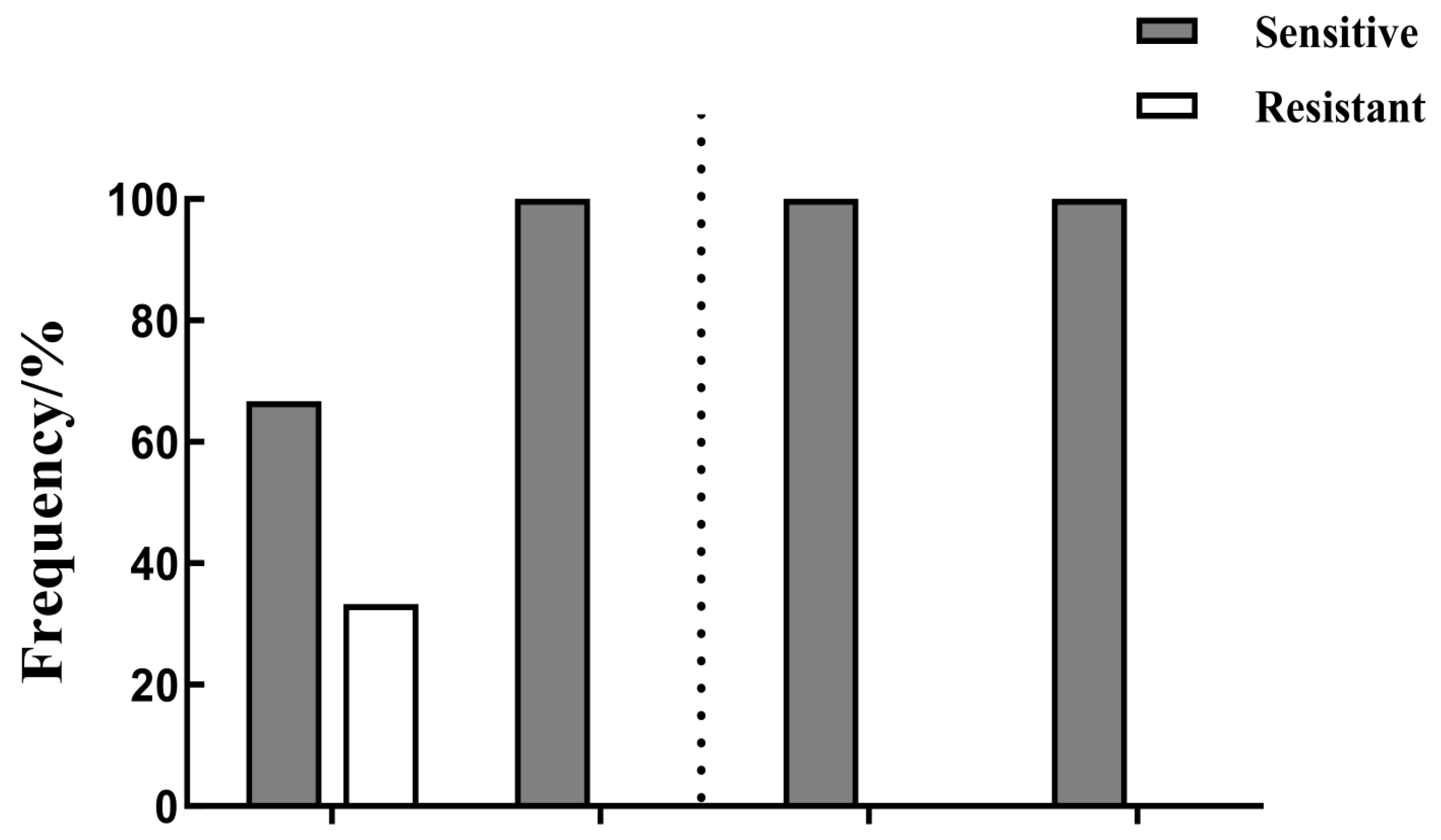
All 24 tested isolates exhibited sensitivity to boscalid. However, analysis revealed that all S. shiraiana isolates (n = 12) remained thiophanate-methyl-sensitive (ThS), whereas four S. sclerotiorum isolates demonstrated resistance to thiophanate-methyl, with a resistance frequency of 33.3% (Figure 3).

3.4. Levels of Resistance to Thiophanate-Methyl

The EC50 values of thiophanate-methyl for the eight ThS isolates ranged from 0.001 to 0.009 μg/mL, with a mean value of 0.0041 ± 0.0029 μg/mL. In contrast, the four thiophanate-methyl resistant (ThR) isolates exhibited EC50 values between 56.721 and 75.463 μg/mL. All isolates demonstrated resistance levels >10,000-fold and were classified as high-level resistant (Table 1).

3.5. Cross-Resistance Between Thiophanate-Methyl and Other Fungicides

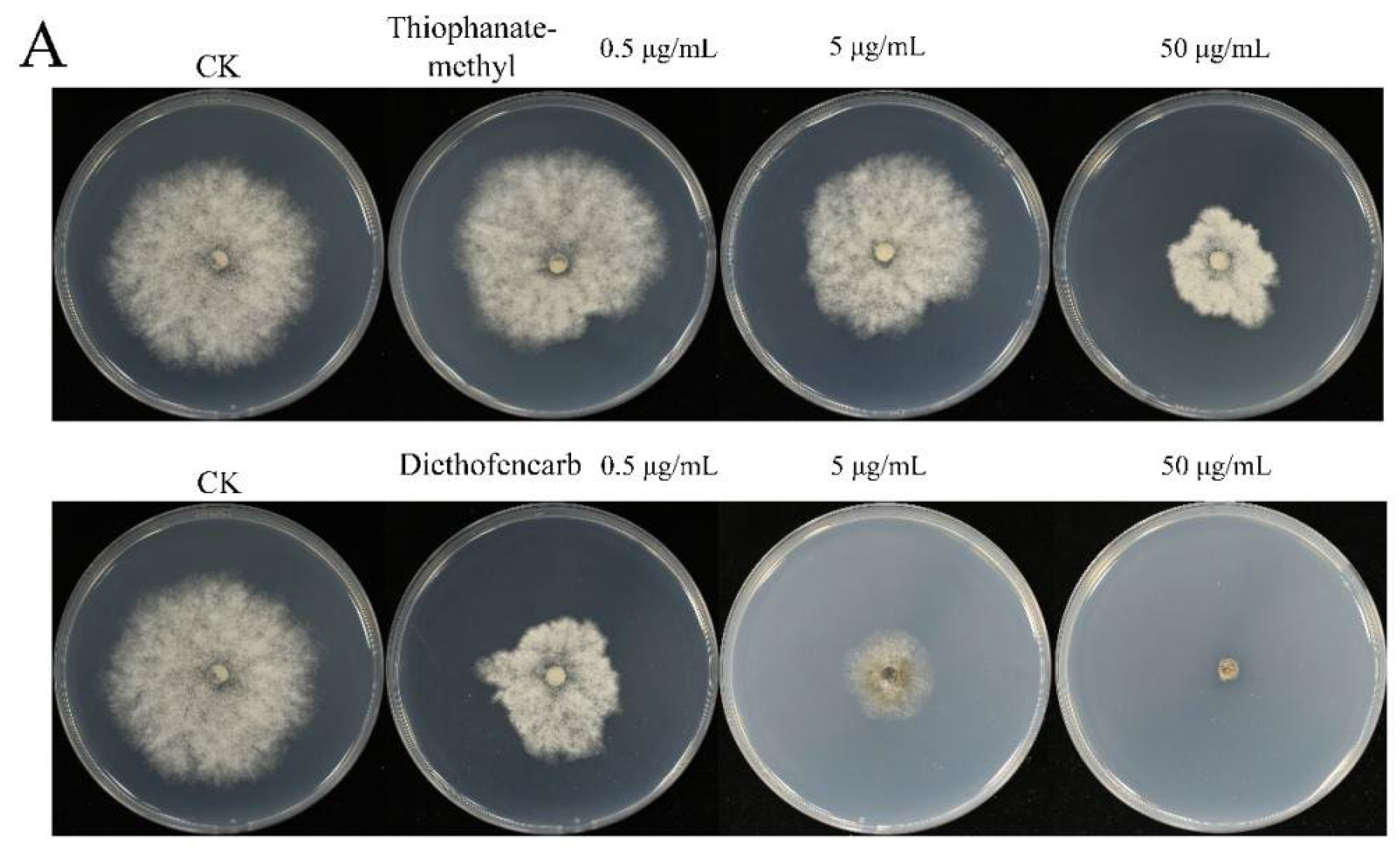
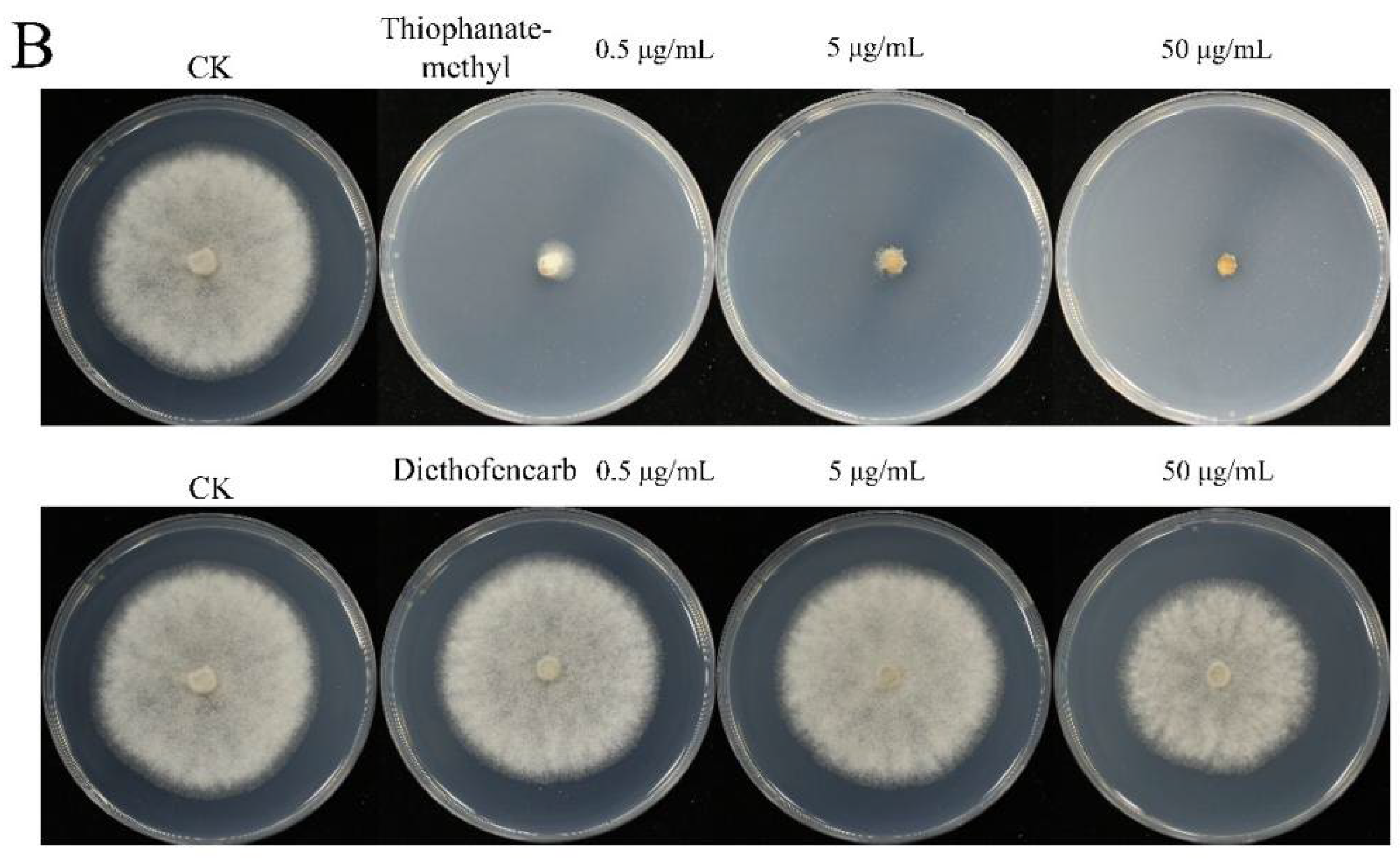
A negative cross-resistance relationship (when populations of harmful organisms such as pathogens and insect pests acquire resistance to one class of pesticides and they exhibit enhanced sensitivity to another class of pesticides) was observed between thiophanate-methyl and diethofencarb. All ThS exhibited resistance to diethofencarb, whereas all four ThR were sensitive to diethofencarb (Figure 4). All isolates remained susceptible to both procymidone and boscalid, indicating no cross-resistance between these fungicides and thiophanate-methyl. These results were further confirmed by the Spearman rank correlation coefficient analysis (Figure 5).

3.6. Effect of Temperature on Growth of ThR

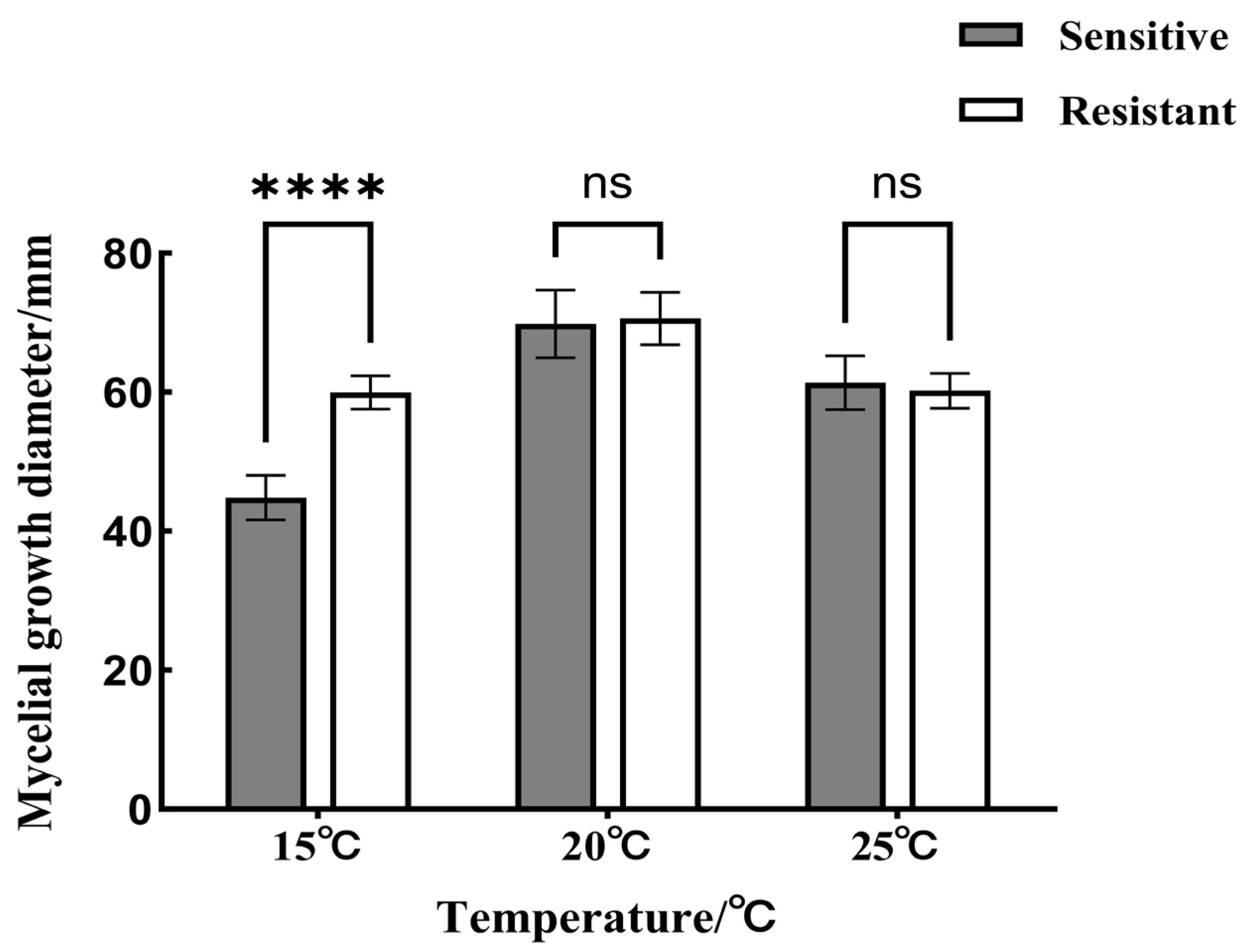
At 15 °C, the mycelial growth of ThR was significantly faster than that of ThS. At 20 °C and 25 °C, growth rates between the two phenotypes were comparable. Neither of them could grow at 30 °C. These results indicated that ThR exhibited better adaptation to lower temperatures (Figure 6).

3.7. Resistance Mechanisms

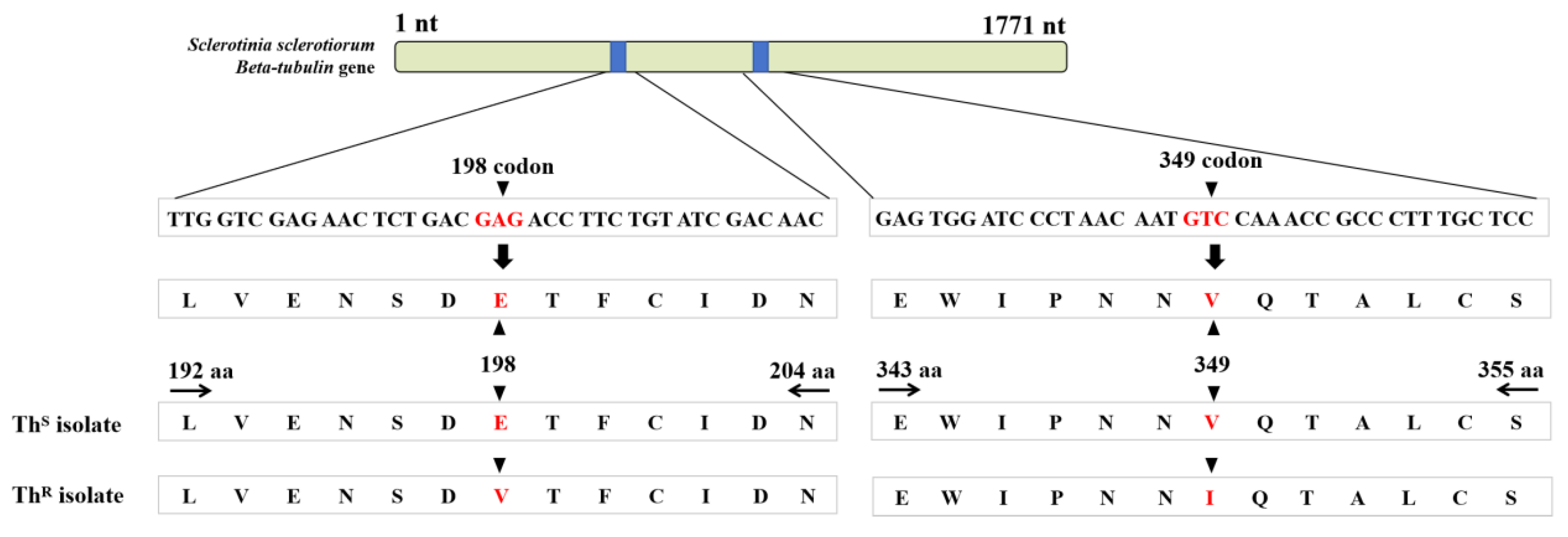
After amplification and analysis of the β-tubulin sequences of resistant and sensitive strains, it was found that the β-tubulin sequences of the ThR isolates were mutated simultaneously at two sites compared to the reference template and ThS (Figure 7). In detail, codon 198 was mutated from GAG to GTG, resulting in the amino acid at this site being mutated from Glutamate (E) to Valine (V); codon 349 was mutated from GTC to ATC, resulting in the amino acid at this site being mutated from Valine (V) to Isoleucine (I).

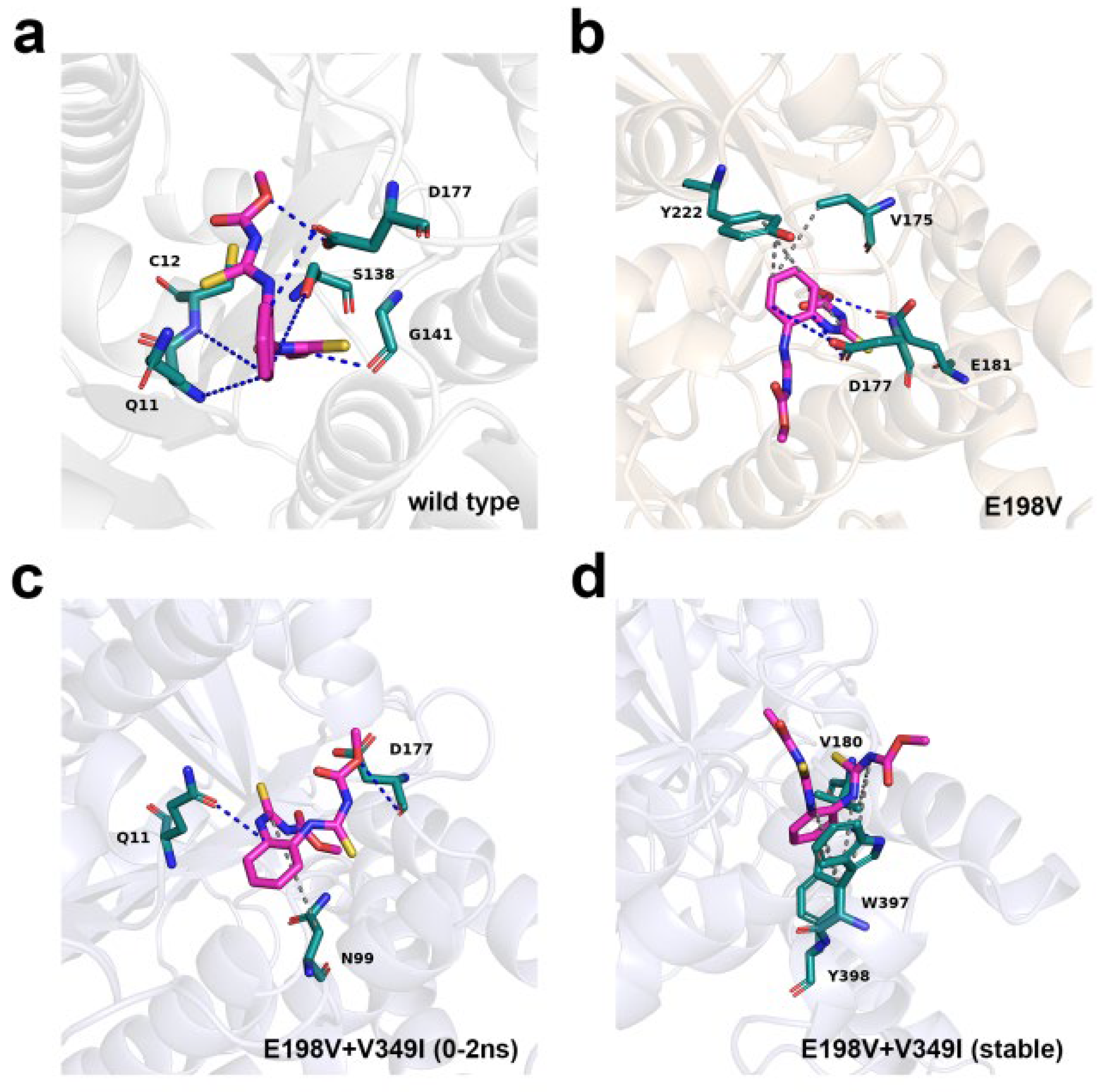
3.8. Binding Pattern of β-Tubulin

The results indicated that the binding pattern of the wild-type target protein to the substrate is quite different from that of the mutant type. As shown in Figure 8, the substrate in the mutant-free wild type is stably bound to the active pocket through a network of hydrogen bonds consisting of Q11, C12, S138, G141, and D177. In the E198V single mutant, the number of hydrogen bonds is reduced from six to three (involving only D177 and E181), along with hydrophobic interactions with V175 and Y222. In contrast, in the E198V+V349I double mutant, a significantly different binding pattern is exhibited: molecular dynamics trajectories show that the substrate maintains binding through hydrogen bonding of Q11 and D177 and hydrophobic interaction of N99 for an initial 2 ns, followed by conformational deviation from the active pocket and ultimately hydrophobic interactions with V180 and W397. Binding free energy calculations further confirmed these results: the binding energies of the wild type (−33.01 kcal/mol), E198V single mutant (−27.09 kcal/mol), and E198V+V349I double mutant (−11.06 kcal/mol) showed a stepwise decrease in binding energy. The significant decrease in this energy further indicated that the occurrence of the mutation attenuated the binding of the protein to the substrate.

4. Discussion

Our study isolated S. shiraiana and S. sclerotiorum from FS in TFMGs in the Jiaxing region, which are among the four species of pathogen causing FS in common mulberry fruit gardens [2,3,4,5,6]. We isolated more samples and obtained more isolates than described here; however, Ciboria shiraiana and C. carunculoides were not detected. For these two main species in TFMGs, S. sclerotiorum had very significant higher abilities of both growth and sclerotia production than those of S. shiraiana.
Thiophanate-methyl is widely used in the prevention and control of FS due to its high activity and low cost [18,26]. However, the MBC group (B1, group 1) of fungicides, including thiophanate-methyl, thiophanate, benomyl, carbendazim, thiabendazole, and fuberidazole, has been classified as a high-risk category for resistance development by the Fungicide Resistance Action Committee (FRAC) (www.frac.info). In the TFMG in Jiaxing where we sampled, the maximum application of thiophanate-methyl had lasted for three years. The resistance frequency of S. sclerotiorum to thiophanate-methyl was 33.33%, with all resistant isolates exhibiting high-level resistance. Interestingly, all isolates in S. shiraiana populations remained sensitive to thiophanate-methyl. S. sclerotiorum itself had very significant higher growth and sclerotia production abilities than S. shiraiana. Moreover, the ThR of S. sclerotiorum exhibited better adaptation to lower temperatures than wild sensitive isolates. In this study, S. sclerotiorum and S. shiraiana were obtained at a ratio of 1:1. In research in common mulberry fruit gardens, the isolation frequency of S. shiraiana was as high as 72.2% [18]. Unfortunately, we did not know the real-world situation and the need to ration them before resistance development in TFMGs. These two fungus pathogens cause the same FS disease and are exposed to the same selection pressures by the same fungicides. However, the development of resistance differed very significantly, which will be an interesting research topic for future studies that are desperate needed.
Further research on the mechanisms of resistance to thiophanate-methyl indicated that all ThR of S. sclerotiorum carried concurrent E198V and V349I mutations in β-tubulin. This double mutation has not been reported for resistance to FRAC B1 (group 1) fungicides [27]. The affinity and binding specificity between fungicides and their target proteins can largely reflect the sensitivity of target organisms to the agents. By investigating the binding modes of fungicides to target proteins, the fungicidal mechanisms and the resistance mechanisms of pathogens can be elucidated [28]. In previous studies, the binding modes of MBC fungicides to the 198th amino acid residue of the β2-tub gene have been extensively reported [29,30]. In this study, we investigated whether there is a synergistic relationship between the newly identified V349I mutation and the E198A mutation. The results showed that the binding energy between thiophanate-methyl and the V349I+E198A double mutant was significantly lower than that between thiophanate-methyl and the E198A single mutant. E198A and E198V mutants exhibited negative cross-resistance to carbendazim and diethofencarb, whereas E198K and E198Q mutants showed no such cross-resistance according to previous studies [31,32,33,34]. This study confirmed that thiophanate-methyl-resistant E198V+V349I double mutants maintain negative cross-resistance to diethofencarb, consistent with reports about single E198V mutants. Previous studies demonstrate that the E198A mutant of Monilinia fructicola had growth rates comparable to wild sensitive isolates at 13 °C, 18 °C, 25 °C, and 28 °C [35,36]. For B. cinerea, E198V mutants displayed significantly slower growth than sensitive strains at 4 °C but comparable growth at 20 °C and 30 °C [31]. This study revealed that in S. sclerotiorum from TFMGs, E198V+V349I double mutants grew significantly faster than sensitive ones at 15 °C. The reason for the overall low frequency of resistance in the Jiaxing mulberry gardens is that mulberry leaf planting occurs over a very long period and does not need to prevent and control FS disease. It was only in the past several years that the application of thiophanate-methyl was started to prevent and control FS in TFMGs.

5. Conclusions

The pathogens of FS in TFMGs included S. shiraiana and S. sclerotiorum. All isolates of S. shiraiana and S. sclerotiorum were sensitive to boscalid. The Scleromitrula shiraiana sub-population (n = 12) was sensitive to thiophanate-methyl, whereas the S. sclerotiorum sub-population (n = 12) developed resistance with a frequency of 33.3%. This high-level resistance to thiophanate-methyl in S. sclerotiorum was caused by a novel double mutation (E198V + V349I) in the β-tubulin. However, it should be noted that with the long-term and large-scale usage of SDHIs such as boscalid, the resistant sub-population would gradually rise and lead to a significant decrease in the control effect in the fields [37,38]. In conclusion, avoiding the sole use of thiophanate-methyl on TFMGs is necessary. Application of boscalid in combination or rotation with other fungicides without cross-resistance is recommended for the management of FS in TFMG practices.

Supplementary Materials

The following supporting information can be downloaded at https://www.mdpi.com/article/10.3390/horticulturae12010009/s1, Table S1: List of strains used in this study.

Author Contributions

C.Z. and Q.Z. supervised the project. X.C., T.C. and C.M. conceived the study and designed the experiments. X.C., Q.Z., C.M. and C.Z. analyzed data and wrote the manuscript. All authors have read and agreed to the published version of the manuscript.

Funding

This research was supported by the Zhejiang Province Sericulture Industry Technology Project (No. 2024-9-21).

Data Availability Statement

The original contributions presented in this study are included in the article/Supplementary Material. Further inquiries can be directed to the corresponding author.

Acknowledgments

The authors gratefully acknowledge the valuable assistance of Xing-Fen Ni, owner of the mulberry garden, for the kind support provided during this research on mulberry gardens.

Conflicts of Interest

The authors declare that they have no known competing financial interests or personal relationships that could have appeared to influence the work reported in this paper.

References

  1. Lv, Z.Y.; Tian, L.C.; He, N.J. Research progress of mulberry sclerotial disease. Acta Phytopathol. Sin. 2023, 53, 1–12. [Google Scholar] [CrossRef]
  2. Hong, S.K.; Kim, W.G.; Sung, G.B.; Nam, S.H. Identification and distribution of two fungal species causing sclerotial disease on mulberry fruits in Korea. Mycobiology 2007, 35, 87–90. [Google Scholar] [CrossRef] [PubMed]
  3. Boland, G.J.; Hall, R. Index of plant hosts of Sclerotinia sclerotiorum. Can. J. Plant Pathol. 1994, 16, 93–108. [Google Scholar] [CrossRef]
  4. Lv, Z.Y.; He, Z.W.; Yuan, J.L.; Hao, L.J.; Song, Z.G.; Chen, G.K.; Ren, J.Q.; He, N.J. Investigation and rapid detection of fungal pathogens causing mulberry sclerotial disease in south-west China. Plant Pathol. 2022, 71, 684–695. [Google Scholar] [CrossRef]
  5. Zhu, Z.X.; Yu, C.; Dong, Z.X.; Mo, R.L.; Zhang, C.; Liu, X.X.; Zuo, Y.Y.; Li, Y.; Deng, W.; Hu, X.M. Phylogeny and fungal community structures of helotiales associated with sclerotial disease of mulberry fruits in China. Plant Dis. 2024, 108, 502–512. [Google Scholar] [CrossRef]
  6. Peng, F.F.; Li, X.L.; Wei, Z.X.; Han, G.H. The complete genome sequence of Sclerotinia sclerotiorum (S1), one of the pathogens causing sclerotinosis in mulberry fruit. PhytoFrontiers 2024, 4, 416–418. [Google Scholar] [CrossRef]
  7. Ju, W.K.; Kim, H.B.; Sung, G.B.; Li, Y.; Park, K.U.; Kim, Y.S. Mulberry popcorn disease occurrence in Korea region and development of integrative control method. Int. J. Indust. Entomol. 2016, 33, 36–40. [Google Scholar] [CrossRef]
  8. Zhang, C.P.; Yu, S.F.; Liu, S.Y.; Ma, H.Y.; Shen, G.X.; Chen, L. A study on appropriate fungicide applying period and control methods against mulberry sclerotium disease. Acta Sericol. Sin. 2018, 44, 216–225. [Google Scholar] [CrossRef]
  9. Yu, C.; Hu, X.M.; Deng, W.; Li, Y.; Han, G.M.; Ye, C.H. Soil fungal community comparison of different mulberry genotypes and the relationship with mulberry fruit sclerotiniosis. Sci. Rep. 2016, 6, 28365. [Google Scholar] [CrossRef]
  10. Chen, F.P.; Tsuji, S.S.; Li, Y.; Hu, M.J.; Bandeira, M.A.; Câmara, M.P.S.; Micheref, S.J.; Schnabel, G. Reduced sensitivity of azoxystrobin and thiophanate-methyl resistance in Lasiodiplodia theobromae from papaya. Pestic. Biochem. Physiol. 2020, 162, 60–68. [Google Scholar] [CrossRef]
  11. Petkar, A.; Langston, D.B.; Buck, J.W.; Stevenson, K.L.; Ji, P.S. Sensitivity of Fusarium oxysporum f. sp. niveum to prothioconazole and thiophanate-methyl and gene mutation conferring resistance to thiophanate-methyl. Plant Dis. 2016, 101, 366–371. [Google Scholar] [CrossRef] [PubMed]
  12. Hu, J.; Deng, S.J.; Gao, T.; Lamour, K.; Liu, X.L.; Ren, H.Y. Thiophanate-methyl resistance in Sclerotinia homoeocarpa from golf courses in China. Pestic. Biochem. Physiol. 2018, 152, 84–89. [Google Scholar] [CrossRef]
  13. Ke, D.F.; Meng, H.; Lei, W.T.; Zheng, Y.L.; Li, L.H.; Wang, M.Y.; Zhong, R.; Wang, M.; Chen, F.P. Prevalence of H6Y mutation in β-tubulin causing thiophanate-methyl resistant in Monilinia fructicola from Fujian, China. Pestic. Biochem. Physiol. 2022, 188, 105262. [Google Scholar] [CrossRef] [PubMed]
  14. Wang, Y.; Duan, Y.B.; Wang, J.X.; Zhou, M.G. A new point mutation in the ironsulfur subunit of succinate dehydrogenase confers resistance to boscalid in Sclerotinia sclerotiorum. Mol. Plant Pathol. 2015, 16, 653–661. [Google Scholar] [CrossRef] [PubMed]
  15. Vega, B.; Dewdney, M.M. Sensitivity of Alternaria alternata from citrus to boscalid and polymorphism in ironsulfur and in anchored membrane subunits of succinate dehydrogenase. Plant Dis. 2015, 99, 231–239. [Google Scholar] [CrossRef]
  16. Zhu, J.M.; Li, J.; Ma, D.C.; Gao, Y.Y.; Cheng, J.G.; Mu, W.; Li, B.X.; Liu, F. SDH mutations confer complex cross-resistance patterns to SDHIs in Corynespora cassiicola. Pestic. Biochem. Physiol. 2022, 186, 105157. [Google Scholar] [CrossRef]
  17. Wang, Q.; Mao, Y.S.; Li, S.X.; Li, T.; Wang, J.X.; Zhou, M.G.; Duan, Y.B. Molecular Mechanism of Sclerotinia sclerotiorum Resistance to Succinate Dehydrogenase Inhibitor Fungicides. J. Agric. Food Chem. 2022, 70, 7039–7048. [Google Scholar] [CrossRef]
  18. Sun, Y.N.; Ai, J.B.; Tang, A.M.; Wu, J.Y.; Zhang, C.Q. Identification of pathogenic fungi causing mulberry fruit sclerotiniose and their resistance to four fungicides in Zhejiang. J. Fruit Sci. 2020, 37, 1934–1940. [Google Scholar] [CrossRef]
  19. Hu, S.M.; Zhang, J.; Zhang, Y.C.; He, S.; Zhu, F.X. Baseline sensitivity and toxic actions of boscalid against Sclerotinia sclerotiorum. Crop Prot. 2018, 110, 83–90. [Google Scholar] [CrossRef]
  20. Duan, Y.B.; Yang, Y.; Wang, Y.; Pan, X.Y.; Wu, J.; Cai, Y.Q.; Li, T.; Zhao, D.L.; Wang, J.X.; Zhou, M.G. Loop-mediated isothermal amplification for the rapid detection of the F200Y mutant genotype of carbendazim-resistant isolates of Sclerotinia sclerotiorum. Plant Dis. 2016, 100, 976–983. [Google Scholar] [CrossRef]
  21. Li, G.X.; Zhang, L.; Wang, H.K.; Li, X.H.; Cheng, F.; Miao, J.Q.; Peng, Q.; Liu, X.L. Resistance to the DMI fungicide mefentrifluconazole in Monilinia fructicola: Risk assessment and resistance basis analysis. Pest Manag. Sci. 2024, 80, 1802–1811. [Google Scholar] [CrossRef] [PubMed]
  22. Peng, Q.; Hao, X.C.; Liu, C.Y.; Li, X.H.; Lu, X.X.; Liu, X.L. Unveiling the resistance risk and resistance mechanism of florylpicoxamid in Corynespora cassiicola from cucumber. Pestic. Biochem. Physiol. 2025, 208, 106228. [Google Scholar] [CrossRef] [PubMed]
  23. Jumper, J.; Evans, R.; Pritzel, A.; Green, T.; Figurnov, M.; Ronneberger, O.; Tunyasuvunakool, K.; Bates, R.; Žídek, A.; Potapenko, A.; et al. Highly accurate protein structure prediction with AlphaFold. Nature 2021, 596, 583–589. [Google Scholar] [CrossRef] [PubMed]
  24. Eberhardt, J.; Santos-Martins, D.; Tillack, A.F.; Forli, S. AutoDock Vina 1.2.0: New docking methods, expanded force field, and python bindings. J. Chem. Inf. Model. 2021, 61, 3891–3898. [Google Scholar] [CrossRef]
  25. Sanner, M.F. Python: A programming language for software integration and development. J. Mol. Graph. Model. 1999, 17, 57–61. Available online: https://pubmed.ncbi.nlm.nih.gov/10660911/ (accessed on 17 December 2025).
  26. He, Z.; Fang, Y.; Zhang, F.C.; Liu, Y.; Wen, X.L.; Yu, C.; Cheng, X.K.; Li, D.C.; Huang, L.; Ai, H.; et al. Toxic effect of methyl-thiophanate on bombyx mori based on physiological and transcriptomic analysis. Genes 2024, 15, 1279. [Google Scholar] [CrossRef]
  27. Dorigan, A.F.; Moreira, S.I.; da Silva Costa Guimarães, S.; Cruz-Magalhães, V.; Alves, E. Target and non-target site mechanisms of fungicide resistance and their implications for the management of crop pathogens. Pest Manag. Sci. 2023, 79, 4731–4753. [Google Scholar] [CrossRef]
  28. Andrea, E.; Katja, B.; Fernando, D.; May, M.; Carmen, C.; Marc, L.; Christian, N.; Jose, M.A.; Karl, H.A.; Michel, O. A new tubulin-binding site and pharmacophore for microtubule-destabilizing anticancer drugs. Proc. Natl. Acad. Sci. USA 2014, 111, 13817–13821. [Google Scholar] [CrossRef]
  29. Bai, Y.Q.; Hou, Y.; Wang, Q.C.; Lu, C.; Ma, X.C.; Wang, Z.S.; Xu, H.L. Analysis of the binding modes and resistance mechanism of four methyl benzimidazole carbamates inhibitors fungicides with Monilinia fructicola β2-tubulin protein. J. Mol. Struct. 2023, 1291, 136057. [Google Scholar] [CrossRef]
  30. Sun, X.M.; Zhao, Y.X. Interactions between benzimidazole fungicides and β2-tubulin of Fusarium graminearum. Mycosystema 2022, 41, 492–500. [Google Scholar] [CrossRef]
  31. Chen, F.; Liu, X.; Schnabel, G. Field strains of Monilinia fructicola resistant to both MBC and DMI fungicides isolated from stone fruit orchards in the eastern United States. Plant Dis. 2013, 97, 1063–1068. [Google Scholar] [CrossRef]
  32. Fan, F.; Hamada, M.S.; Li, N.; Li, G.Q.; Luo, C.X. Multiple fungicide resistance in Botrytis cinerea from greenhouse strawberries in Hubei province, China. Plant Dis. 2017, 101, 601–606. [Google Scholar] [CrossRef]
  33. Malandrakis, A.; Markoglou, A.; Ziogas, B. Molecular characterization of benzimidazole-resistant B. cinerea field isolates with reduced or enhanced sensitivity to zoxamide and diethofencarb. Pest Biochem. Physiol. 2011, 99, 118–124. [Google Scholar] [CrossRef]
  34. Banno, S.; Fukumori, F.; Ichiishi, A.; Okada, K.; Uekusa, H.; Kimura, M.; Fujimura, M. Genotyping of benzimidazole-resistant and dicarboximide-resistant mutations in Botrytis cinerea using real-time polymerase chain reaction assays. Phytopathology 2008, 98, 397–404. [Google Scholar] [CrossRef]
  35. He, M.H.; Li, D.L.; Zhu, W.; Wu, E.J.; Yang, L.N.; Wang, Y.P.; Waheed, A.; Zhan, J.S. Slow and temperature-mediated pathogen adaptation to a nonspecific fungicide in agricultural ecosystem. Evol. Appl. 2018, 11, 182–192. [Google Scholar] [CrossRef] [PubMed]
  36. Fan, F.; Li, X.B.; Yang, Y.Y.; Zhang, J.Y.; Zhu, Y.X.; Yin, W.X.; Li, G.Q.; Luo, C.X. Benzimidazole-resistant isolates with E198A/V/K mutations in the β-tubulin gene possess different fitness and competitive ability in Botrytis cinerea. Plant Dis. 2022, 112, 2321–2328. [Google Scholar] [CrossRef] [PubMed]
  37. Shi, D.Y.; Li, F.J.; Zhang, Z.H.; Xu, Q.N.; Cao, Y.Y.; Jane, I.M.; Li, X.; Wang, J.; Chen, C.J. Physiological and biochemical characteristics of boscalid resistant isolates of Sclerotinia sclerotiorum from asparagus lettuce. J. Integr. Agric. 2023, 22, 3694–3708. [Google Scholar] [CrossRef]
  38. Yi, D.Y.; Yuan, S.K.; Bi, Y.; Ma, C.Y. Sensitivity of Sclerotinia sclerotiorum on oilseed rape from three different regions of China to four fungicides. Plant Prot. 2025, 51, 354–359. [Google Scholar] [CrossRef]
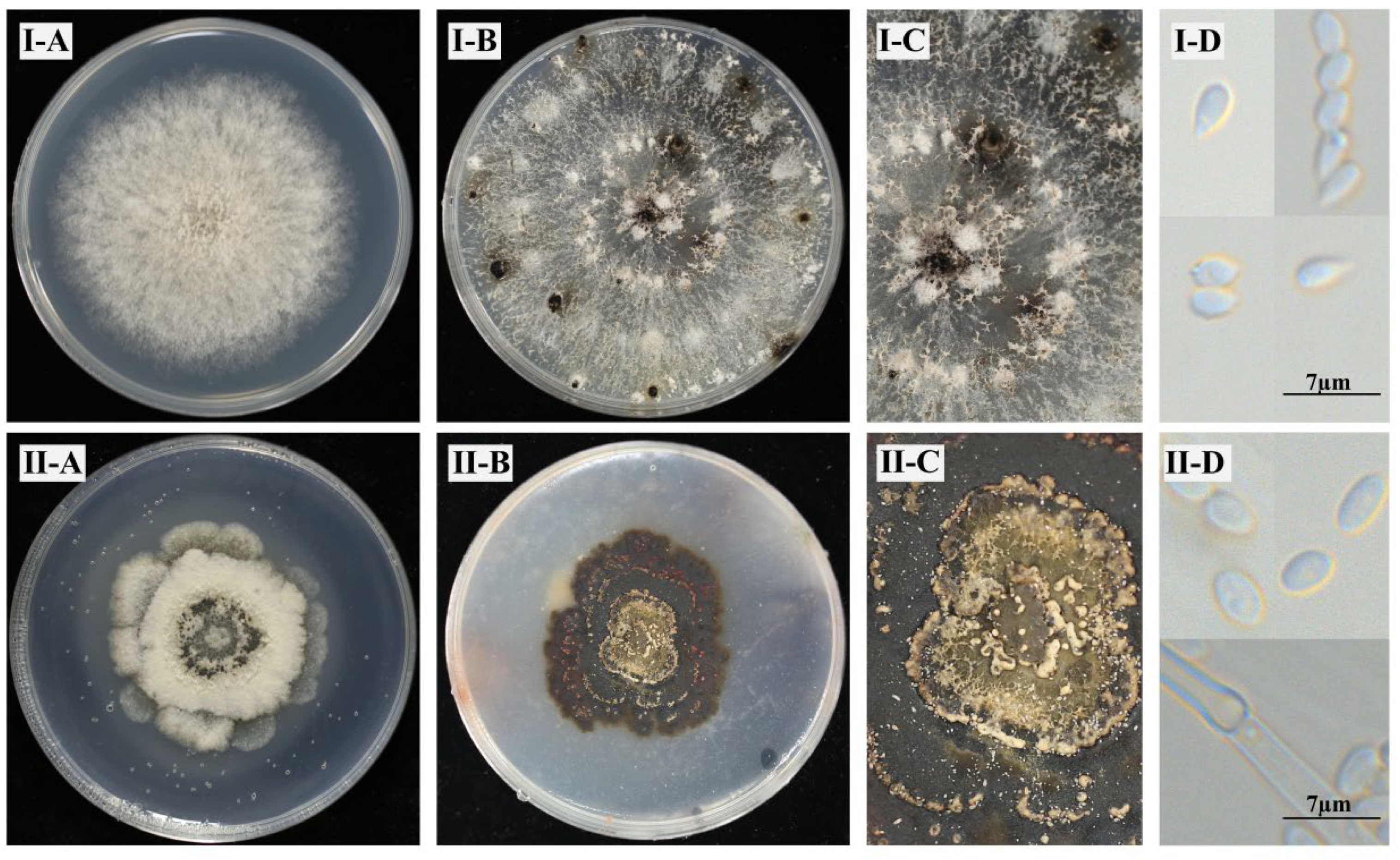
Figure 1. Colony morphology, sclerotium, and conidium of two kinds of pathogens for mulberry fruit sclerotiniosis on PDA medium. (I). Sclerotinia sclerotiorum: (A,B). colony morphology after 4 days and 14 days of culture; (C). sclerotia; (D). conidia. (II). Scleromitrula shiraiana: (A). colony morphology after 14 days of culture; (B). reverse view of the colony after 14 days of culture; (C). sclerotia.; (D). conidia.
Horticulturae 12 00009 g001
Figure 2. Phylogenetic tree based on ITS sequences of the pathogen causing mulberry fruit sclerotiniosis.12 isolates (F488~F498) and two reference were as Scleromitrula shiraiana group indicated with pink, the other 12 isolates (SS-1~SS-12) and the reference were as Sclerotinia sclerotiorum group indicated with green.
Horticulturae 12 00009 g002
Figure 3. Frequency of sensitivity and resistance to thiophanate-methyl and boscalid in S. sclerotiorum and S. shiraiana.
Horticulturae 12 00009 g003
Figure 4. Growth performance of thiophanate-methyl-resistant isolate SS-4 (A) and sensitive isolate SS-2 (B) on thiophanate-methyl (upper panel) and diethofencarb (bottom panel) plates, CK: blank control containing solvent.
Horticulturae 12 00009 g004aHorticulturae 12 00009 g004b
Figure 5. Cross-resistance analysis of S. sclerotiorum to thiophanate-methyl and diethofencarb (A), procymidone (B), and boscalid (C).
Horticulturae 12 00009 g005
Figure 6. Differences in mycelial growth under different temperatures. ns, not significant; ****, significant differences (p < 0.01, Tukey’s honest significant difference test).
Horticulturae 12 00009 g006
Figure 7. Analysis of β-tubulin sequences in thiophanate-methyl-resistant and -sensitive strains. ThR: thiophanate-methyl-resistant strains; ThS: thiophanate-methyl-sensitive strains. The red color indicate the Glutamate (E) coding by GAG to Valine (V) mutation at 198th codon and Valine (V) coding by GTC to Isoleucine (I) at 349th codon.
Horticulturae 12 00009 g007
Figure 8. Analysis of binding modes. (a) Interaction between the wild type and the substrate. (b) Interaction between the E198V single mutant and the substrate. (c) Interaction between the E198V+V349I double mutant and the substrate during the initial 2 ns of simulation. (d) Interaction between the E198V+V349I double mutant and the substrate after simulation stabilization. Blue dashed lines represent hydrogen bonds; gray dashed lines represent hydrophobic interactions.
Horticulturae 12 00009 g008
Table 1. Sensitivity (EC50) of S. sclerotiorum to thiophanate-methyl.
IsolatePhenotypeEC50 (μg/mL)Resistance Factor
SS-1S *0.004-
SS-2S0.008-
SS-3S0.002-
SS-6S0.004-
SS-7S0.003-
SS-9S0.009-
SS-10S0.001-
SS-12S0.002-
SS-4R56.72113,750.55
SS-5R75.46318,294.06
SS-8R68.56216,621.09
SS-11R57.05613,831.76
* S = sensitive, R = resistant.
Disclaimer/Publisher’s Note: The statements, opinions and data contained in all publications are solely those of the individual author(s) and contributor(s) and not of MDPI and/or the editor(s). MDPI and/or the editor(s) disclaim responsibility for any injury to people or property resulting from any ideas, methods, instructions or products referred to in the content.