Article

Overexpression of IlMYB108 from Iris laevigata Confers Enhanced Drought and Salt Tolerance in Nicotiana tabacum

College of Landscape Architecture, Northeast Forestry University, Harbin 150040, China
*
Authors to whom correspondence should be addressed.
Horticulturae 2026, 12(1), 3; https://doi.org/10.3390/horticulturae12010003
Submission received: 25 November 2025 / Revised: 9 December 2025 / Accepted: 17 December 2025 / Published: 19 December 2025
(This article belongs to the Section Floriculture, Nursery and Landscape, and Turf)

Abstract

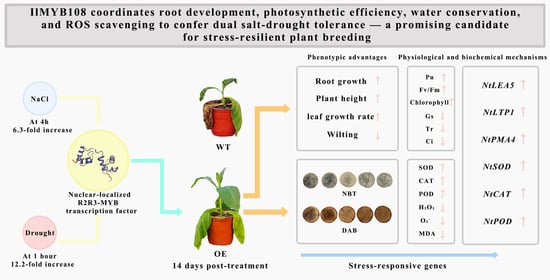
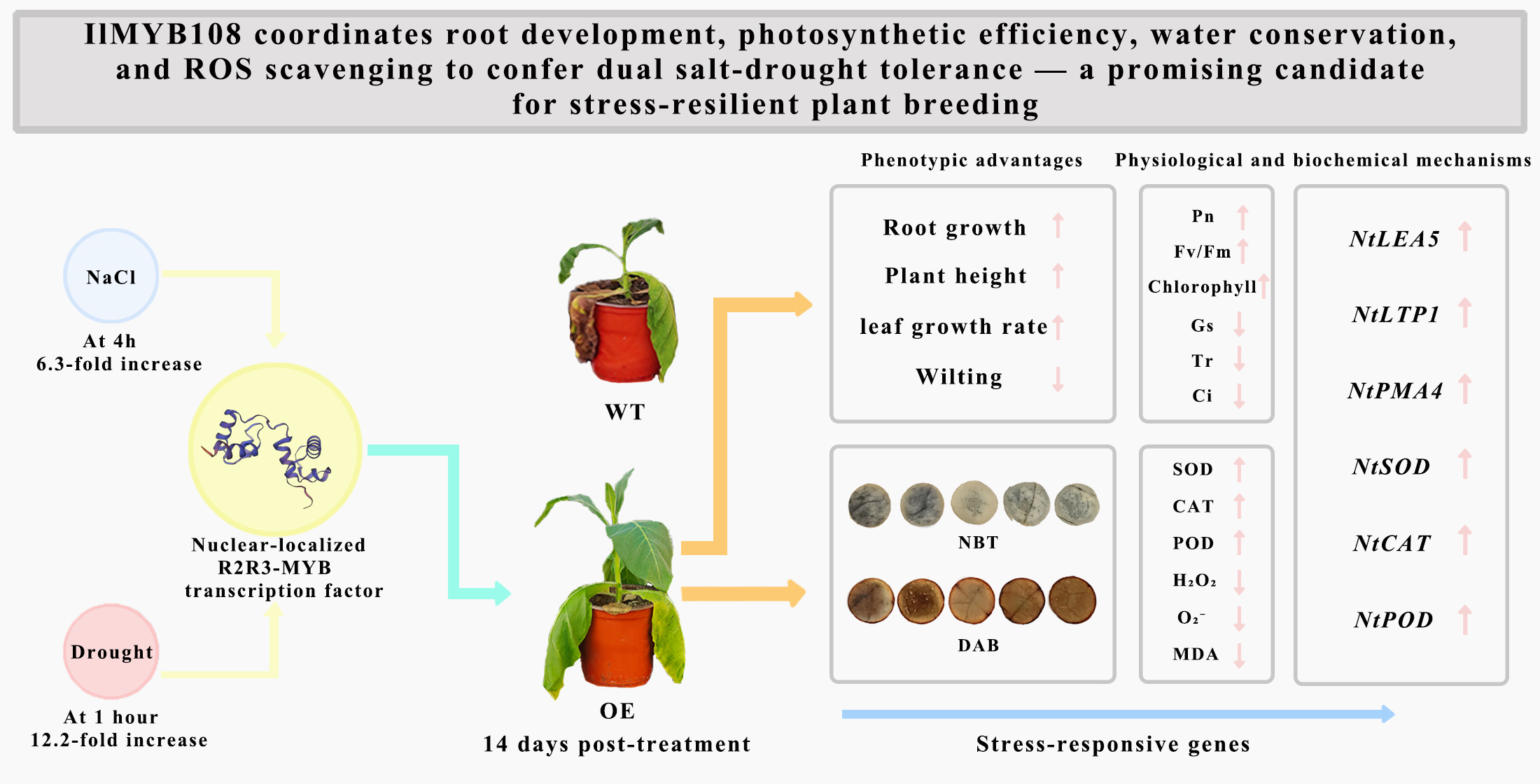
Drought and salinity are critical abiotic stresses that constrain plant growth. Although MYB transcription factors mediate plant responses to abiotic stresses, their functions in the monocot I. laevigata remain unexplored. Here, we identified a nuclear-localized gene, IlMYB108, which was rapidly upregulated under NaCl and PEG-6000 treatments. Overexpression of IlMYB108 in tobacco enhanced root growth under salt and drought conditions. At the seedling stage, transgenic lines maintained higher leaf growth rates and plant height with reduced wilting during 14 days of continuous stress. Physiologically, transgenic plants exhibited a higher net photosynthetic rate (Pn), maximum photochemical efficiency of photosystem II (Fv/Fm), and chlorophyll content, alongside lower stomatal conductance (Gs), intercellular CO2 concentration (Ci), and transpiration rate (Tr). They also accumulated less malondialdehyde (MDA), superoxide anion (O2), and hydrogen peroxide (H2O2), which was attributed to enhanced activities of superoxide dismutase (SOD), catalase (CAT), and peroxidase (POD), as confirmed by p-Nitro-Blue tetrazolium chloride (NBT) and 3,3′-diaminobenzidine tetrahydrochloride (DAB) staining. Moreover, IlMYB108 up-regulated stress-responsive and antioxidant genes. Collectively, IlMYB108 functions as a key gene that enhances tobacco tolerance to salt and drought stress by coordinating root development, photosynthetic efficiency, water balance and antioxidant defense, thereby providing a valuable genetic resource for breeding stress-resilient plants.

Graphical Abstract

1. Introduction

Plants face increasing challenges from abiotic stresses including salinity, drought, and temperature extremes, which are being exacerbated by climate change [1,2]. These environmental pressures significantly impair plant growth and productivity by disrupting cellular homeostasis, causing oxidative damage, and inducing osmotic stress [3,4]. To combat these adversities, plants have developed complex regulatory mechanisms, with transcription factors serving as crucial mediators of stress signal transduction and gene expression regulation [5,6].
The MYB transcription factor family represents one of the most prominent plant-specific transcriptional regulator groups, exhibiting functional versatility in regulating diverse biological processes ranging from growth and development to stress adaptation [7,8,9]. Among its various subfamilies, R2R3-MYB proteins have emerged as particularly significant players in abiotic stress responses due to their characteristic DNA-binding domains that enable precise transcriptional control [10]. Extensive research has elucidated the multifaceted mechanisms through which these transcription factors confer stress tolerance: they orchestrate stomatal aperture regulation to minimize water loss (as exemplified by AtMYB61 in Arabidopsis) [11], potentiate antioxidant defense systems to neutralize reactive oxygen species (as demonstrated by MdoMYB121 in apple) [12], and stimulate osmoprotectant biosynthesis to maintain cellular osmotic balance. Other notable examples include MYB96 in Arabidopsis, which enhances drought resistance through cuticular wax deposition [13], and SlMYB102 in tomato, which ameliorates salt stress by fine-tuning ion homeostasis [14]. These findings collectively underscore MYB transcription factors’ capacity to coordinately regulate intricate stress response networks across diverse plant species [15]. However, despite substantial progress in characterizing MYB proteins in key crop species such as cotton [16,17], wheat [18], rice [19], and potato [20]—where they regulate diverse processes including stress response, grain quality, and development—the functional characterization of MYB proteins in ornamental plants, particularly monocotyledonous species such as I. laevigata, remains markedly understudied. This presents a significant knowledge gap in our understanding of stress adaptation mechanisms in non-crop species.
I. laevigata, valued for its vibrant blue-purple floral displays and exceptional cold tolerance [21,22], faces growing cultivation limitations due to its obligate hygrophytic requirements and increasing soil salinity. This challenge coincides with emerging evidence that MYB108 transcription factors serve as key regulators of abiotic stress responses across plant species. Research has established that MYB108 transcription factors play a critical role in mediating plant responses to drought and salt stress [23]. Specifically, VcMYB108 enhances drought tolerance in blueberry leaves [24], while FvMYB108 from Fragaria vesca significantly improves salt stress resistance in Arabidopsis [25]. In apple, the MdMYB108L transcription factor positively regulates the transcription of MdNHX1, thereby enhancing salt stress tolerance in transgenic plants [26]. Similarly, overexpression of PsnMYB108 in tobacco improves salt stress tolerance by increasing reactive oxygen species scavenging capacity and promoting proline accumulation [27]. The conserved stress-responsive nature of MYB108 orthologs across monocots and dicots suggests their broad potential for developing stress-resilient plants. Critically, our preliminary analysis in I. laevigata identified IlMYB108 as a gene that is rapidly and strongly induced under both salt and drought stress. This observed stress responsiveness, combined with the phylogenetic conservation of MYB108 proteins and I. laevigata’s marked sensitivity to salt and drought conditions, provides compelling justification for hypothesizing that IlMYB108 plays a key role in the plant’s stress adaptation mechanisms and for undertaking its functional characterization.
Therefore, to address this knowledge gap in ornamental plant stress biology, this study aimed to functionally characterize the IlMYB108 gene from I. laevigata. We hypothesized that IlMYB108 functions as a positive regulator of abiotic stress tolerance. To test this hypothesis, we (1) cloned IlMYB108 and analyzed its expression patterns under stress; (2) determined its subcellular localization; and (3) assessed its functional role through heterologous overexpression in tobacco. This work not only elucidates a novel stress-adaptation mechanism in a non-crop monocot but also provides a valuable genetic resource for breeding stress-resilient ornamental cultivars [28,29].

2. Materials and Methods

2.1. Plants Materials

I. laevigata plants used in this study were three-year-old seedlings of uniform size and growth vigor, originally propagated from seeds. To break seed dormancy, a natural cold stratification process was implemented outdoors in the experimental nursery of the School of Landscape Architecture, Northeast Forestry University (126.64° E, 45.72° N) in Heilongjiang Province, China from autumn to spring. Germinated seedlings were subsequently cultivated directly in open-field loam soil under natural environmental conditions, without artificial climate control. This temperate region experiences an average annual temperature of 3.5 °C and receives 530 mm of precipitation.
N. tabacum ‘K326’ (tobacco) seeds were surface-sterilized sequentially with 75% ethanol for 1 min (followed by three rinses with sterile water) and 2% sodium hypochlorite for 10 min (followed by five rinses with sterile water). Sterilized seeds were germinated on full-strength MS medium (pH 5.8) solidified with 0.8% (w/v) agar at 25 °C under a 14 h light/10 h dark photoperiod, with cool-white lamps providing a light intensity of 100 μmol m−2 s−1 in a growth chamber maintained at 60% relative humidity [30]. Seedlings at the 6–8 true leaf stage were utilized for stable genetic transformation and subsequent stress treatment assays.
N. benthamiana seeds were sterilized using the same protocol as tobacco and cultured under the identical growth conditions described above. Plants at the 6–8 true leaf stage were used for transient expression assays, specifically for subcellular localization analysis.

2.2. Cloning of IlMYB108 and Phylogenetic Analysis

Total RNA was extracted from the roots of I. laevigata using the Plant RNA Kit (OMEGA, Norcross, GA, USA), with integrity verified by agarose gel electrophoresis. High-quality RNA was reverse transcribed into complementary DNA (cDNA) using the PrimeScriptTM RT Reagent Kit (TaKaRa, Osaka, Japan).
For gene cloning, the IlMYB108 coding sequence was derived from a previously assembled I. laevigata petal transcriptome. The open reading frame (ORF) was identified and verified using the NCBI ORF Finder tool. Gene-specific cloning primers were designed with Primer Premier 5.0 targeting an annealing temperature of 56 °C, with GC contents of 46% (forward) and 38% (reverse). The primer sequences were: IlMYB108-F1: 5′-TGGAAAGCTTACTAGCCATGGAAGGA-3′; IlMYB108-R1: 5′-AGTACTTATCCCAAGTTTTACAGCTG-3′. The primers were synthesized by RuiBiotech Inc. The target sequence was amplified with the KOD-Plus-Neo Kit (ToYoBo, Osaka, Japan) at an annealing temperature of 56 °C, cloned into the pEASY®-Blunt Zero vector (TransGen, Beijing, China), transformed into Escherichia coli DH5α (WEIDI, Shanghai, China), and sequenced by RuiBiotech (Beijing, China).
For bioinformatic analysis, homologous protein sequences were retrieved by performing a BLASTP search against the NCBI database (accessed on 26 July 2024) using the IlMYB108 protein sequence as the query. Sequences with an E-value cutoff of <1 × 10⁻¹⁰ were initially selected. Candidate sequences were then filtered to retain only those with a query coverage greater than 80% and encoding both complete R2 and R3 MYB conserved region, as confirmed by sequence inspection. The final set of sequences, representing a diverse range of plant species, was aligned using the MUSCLE algorithm within DNAMAN (version 5.2.2). A phylogenetic tree was constructed with MEGA5 (version 10.1.8) using the Neighbor-Joining method with Poisson correction distances. Sites with gaps or missing data were handled using pairwise deletion, and the robustness of the tree topology was assessed with 1000 bootstrap replicates. The physicochemical properties of IlMYB108 were predicted using the ProtParam and ProtScale tools on the ExPASy server (accessed on 26 July 2024). Signal peptide prediction was performed using SignalP 6.0 (accessed on 3 December 2025).

2.3. Subcellular Localization

The subcellular localization of IlMYB108 was predicted and experimentally verified [31]. To construct the plant overexpression vector for IlMYB108 fused with GFP (pBI121-35S::IlMYB108-GFP), a homologous recombination-based cloning strategy was employed. The recipient vector pBI121 was linearized by double digestion with XbaI and BamHI, which cleave within the multiple cloning site located between the CaMV 35S promoter and the NOS terminator. The full-length coding sequence (CDS) of IlMYB108 was then amplified from cDNA using specific primers designed with Primer Premier. The CDS was amplified without its native stop codon to allow in-frame fusion with GFP. The primers contained 5′ homology arms complementary to the termini of the linearized pBI121 vector: IlMYB108-F2 (5′-GAGAACACGGGGGACTCTAGAATGGAAGGAAAAAGAGGCGG-3′) and IlMYB108-R2 (5′-GGACTGACCACCCGGGGATCCCAGCTGCTGCTGAATTAGCCA-3′). Underlined sequences indicate homologous arms. The purified PCR product was recombined into the linearized vector at the defined site, resulting in the construct pBI121-35S::IlMYB108-GFP (designed as a C-terminal GFP fusion), in which the IlMYB108-GFP fusion gene is driven by the constitutive CaMV 35S promoter and transcription is terminated by the downstream NOS terminator. The recombinant plasmid was verified by Sanger sequencing of the entire IlMYB108-GFP junction region to confirm correct insertion and reading frame. For transient expression, the verified plasmid was introduced into Agrobacterium tumefaciens strain GV3101 (WEIDI, Shanghai, China), which carries a rifampicin-resistance plasmid. Transformed agrobacteria were selected and maintained on Luria-Bertani broth (LB)medium (1% tryptone, 0.5% yeast extract, 1% NaCl) containing kanamycin (50 mg/L) and rifampicin (25 mg/L). For infiltration, a single colony was inoculated into 10 mL of LB medium with antibiotics and grown overnight at 28 °C with shaking at 200 rpm. A 100 µL aliquot of this overnight culture was then transferred to 10 mL of fresh LB medium supplemented with antibiotics, 10 mM 2-(N-Morpholino)ethanesulfonic acid (MES)buffer (pH 5.6), and 40 µM acetosyringone (AS), followed by cultivation under the same conditions for 14 h. Bacterial cells were then pelleted by centrifugation at 5000 rpm for 10 min at 24 °C, resuspended in 10 mM MgCl2 to an OD600 of 1.5, supplemented with 200 μM AS, and incubated in the dark for 3 h. Fully expanded leaves from N. benthamiana plants at the 6–8 true leaf stage were used for infiltration. The bacterial suspension was infiltrated into the abaxial side of the leaves using a needleless 1 mL syringe (Jiangsushenli, Changzhou, China), with an approximate volume of 0.5–1 mL per infiltration site. At least three leaves per construct were infiltrated. Plants were maintained under normal growth conditions, and fluorescence was observed 48–72 h post-infiltration. Expression of the fusion protein IlMYB108-GFP was visualized under a Scope.A1 upright fluorescence microscope (Zeiss, Jena, Germany) with an Axiocam 305 color camera in the transformed epidermal cells [22].

2.4. Plant Transformation

A. tumefaciens-mediated transformation of tobacco leaf disk was performed according to a previously published method [32]. Briefly, sterile leaf disks (approximately 1 cm in diameter) were excised from wild type (WT) plants at the 6–8 true leaf stage and infected with a bacterial suspension (OD600: 0.8–1.0) of recombinant A. tumefaciens harboring pBI121::IlMYB108-GFP for 5–10 min. After blotting dry, the infected explants were transferred to co-cultivation medium (MS basal medium) and incubated in the dark at 28 °C for 2 days. Subsequently, they were rinsed and cultured on selection and regeneration medium consisting of MS medium supplemented, 50 mg/L kanamycin (for selection), and 100 mg/L cefotaxime (to inhibit A. tumefaciens). All cultures were maintained at 25 °C under a 16 h light/8 h dark photoperiod and subcultured regularly. Shoots emerged within 3–4 weeks, were excised and rooted on 1/2MS medium containing 50 mg/L kanamycin and 100 mg/L cefotaxime, and finally acclimatized to soil. Using the Plant Genomic DNA Kit (TIANGEN, Beijing, China), we extracted genomic DNA from transgenic plants and confirmed their identity by PCR. A total of five independent T0 transgenic lines were initially obtained. Three T3 homozygous lines (designated OE1, OE2 and OE3) showing uniform growth and stable transgene expression were selected for subsequent stress experiments and phenotypic observations.

2.5. Salt and Drought Stress Treatment

To evaluate salt and drought tolerance, WT and pBI121-GFP empty vector (EV) plants, and three stable T3 overexpression lines were germinated on MS medium containing NaCl (0–300 mM) or mannitol (0–300 mM) under controlled conditions (26 °C, 16/8 h light/dark) for 15 days, with root growth analyzed using vertically oriented Petri dishes [33], with three plates (technical replicates) per genotype and condition, each containing 15–20 uniformly germinated seedlings. For whole-plant stress assays, 30-day-old seedlings grown in potting mix (peat soil/perlite/vermiculite, 3:1:1) were treated with either 300 mM NaCl irrigation (100 mL every 48 h) or 20% PEG-6000. The 300 mM NaCl treatment followed established protocols for inducing severe yet discriminative salt stress in tobacco [21,34]. Concurrently, 20% PEG-6000 was applied to simulate drought stress, a concentration previously validated for effectively imposing osmotic stress in similar experimental systems [35]. Each treatment group consisted of at least 15 plants per genotype. Plants were randomized within the growth chamber. Throughout the stress period, plants were maintained under constant conditions (26 °C, 16/8 h light/dark photoperiod, 60% relative humidity). Phenotypic assessments and leaf sampling were conducted at 0, 7, and 14 days post-treatment (dpt) [21].

2.6. Physiological Performance of Tobacco Under Salt and Drought Stress

Photosynthetic parameters (Pn, Gs, Ci, and Tr) were measured from 8:00 to 9:00 a.m. using an Li-6400 (LI-COR Biosciences, Beijing, China) portable photosynthesis system [36]. All measurements were conducted under steady-state conditions with a photosynthetic photon flux density of 1000 μmol m−2 s−1, a reference CO2 concentration of 400 μmol mol−1, a leaf chamber temperature of 28 °C, and a flow rate of 500 μmol s−1. Light response curves were generated by varying light intensity while maintaining CO2 at 400 μmol mol−1. Similarly, CO2 response curves were obtained by varying CO2 concentration under a constant light intensity of 1000 μmol m−2 s−1 [37]. Chlorophyll content was quantified via acetone extraction (80%), with absorbance of the supernatant measured at 663 nm and 645 nm after homogenization and centrifugation [38,39]. Chlorophyll fluorescence was determined using a PAM-2500 fluorometer (WALZ, Effeltrich, Germany) following 30 min dark adaptation between 11:00 a.m. and 1:00 p.m. [40]. All measurements were performed on the 3rd–4th fully expanded leaves from three biological replicates per genotype (WT, EV, OE) [41].

2.7. Physiological Analysis of Tobacco Under Salt and Drought Stress

CAT activity, H2O2 content, and O2 levels were quantified using commercial assay kits (Grace Biotechnology, Taipei, China; CAT: G0105F, H2O2: G0112F, O2: G0116F) following the manufacturer’s protocols. MDA content, SOD and POD activities were measured as previously described [21,30]. For histochemical staining, leaf disks (1.5 cm diameter) from stressed tobacco plants were subjected to NBT and DAB staining to detect O2 and H2O2 accumulation, respectively, according to established methods [34,42].

2.8. Reverse Transcription PCR (RT-PCR) and RT-qPCR

Gene expression analysis was performed across different I. laevigata tissues (roots, stems, leaves) under normal conditions, and in leaves at 0, 1, 4, 8, 12, and 24 h post salt/drought stress. Randomly selected T3 transgenic tobacco lines were used to assess IlMYB108 expression. Stress-responsive genes (NtLEA5, NtLTP1, NtPMA4, NtPOD, NtSOD, NtCAT) were analyzed in WT, EV, and OE tobacco lines under NaCl and drought stress at 0, 7, and 14 days [43,44]. The method used for total RNA extraction and reverse transcription to cDNA was the same as described above, with purity confirmed by A260/A280 ratios between 1.8 and 2.0. All RT-qPCR primers produced single, bright bands in pre-experimental gel electrophoresis. The IlPP2A (for I. laevigata) and NtTUBA (for tobacco) genes were used as internal reference controls, as their stable expression under comparable abiotic stress conditions has been validated [21]. The primer sequences were as follows: IlPP2A, 5′-TCGCATCAAGACAGGAGAAG-3′ and 5′-GGGAATGAGAAGGGAAGAAT-3′; NtTUBA, 5′-CTCCTATGCTCCTGTCATTTC-3′ and 5′-GGCGAGGATCACACTTAAC-3′. RT-qPCR was performed using the SYBR Green I method (Roche LightCycler® 96 System), following the instructions of UltraSYBR Mixture (CWBIO, Beijing, China) [45]. The RT-qPCR reactions were prepared in a total volume of 20 μL, containing: 10 μL of 2× UltraSYBR Mixture (CWBIO, Beijing, China), 0.5 μL each of forward and reverse primer (10 μM), 2 μL of diluted cDNA template, and 7 μL of RNase-free water. cDNA templates were uniformly diluted 1:10 and adjusted to a consistent concentration prior to use. Each biological sample was analyzed in three technical replicates. The thermal cycling protocol consisted of an initial denaturation at 95 °C for 10 min, followed by 40 cycles of 95 °C for 15 s and 60 °C for 1 min. A melting curve analysis (65 °C to 95 °C, increment 0.5 °C per 5 s) was performed to confirm primer specificity. Primer amplification efficiencies were determined by generating a standard curve from a five-fold serial dilution of a pooled cDNA sample. Efficiencies, calculated using the formula E = [10(−1/k) − 1] × 100%, ranged from 95% to 105% with correlation coefficients (R2) > 0.99. Crucially, the efficiency difference between each target and the reference gene on the same plate was consistently less than 5%. The results were calculated as 2−△△CT. Primer sequences and amplification parameters were in Table S1.

2.9. Statistical Analyses

Statistical analyses were conducted using SPSS (version 26.0). Prior to analysis, the normality of the data was assessed using descriptive statistics and normality plots, and homogeneity of variances was verified. One-way ANOVA (polynomial contrast) was performed, followed by post hoc multiple comparisons using the LSD and Waller-Duncan tests (α = 0.05). p values was provided in the respective figure legends. All figures were prepared using Origin (version 2021).

3. Results

3.1. IlMYB108 Gene Cloning and Phylogenetic Tree Analysis

The 819 bp IlMYB108 gene, encoding 272 amino acids, was successfully cloned from the petal cDNA of I. laevigata via PCR amplification (Figure S1A,B). ProtParam analysis predicted that the IlMYB108 protein has a theoretical molecular weight of 30.70 kDa, a theoretical isoelectric point of 5.09, a total number of negatively charged residues (Asp + Glu) of 39, and positively charged residues (Arg + Lys) of 32, and an instability index (II) of 56.03, which is above the threshold of 40 and thus predicts it to be an unstable protein. According to ProtScale analysis, the highest hydrophilicity score for the IlMYB108 protein was −0.731, suggesting that the IlMYB108 protein is hydrophilic (Figure S2A). Protein secondary structure analysis revealed that α-helices account for 34.19%, extended strands account for 6.25%, β-turns account for 5.88%, and random coils account for 53.68%. A successful tertiary structure model of the protein was constructed (Figure S2B,C). The IlMYB108 protein contains 16 potential serine phosphorylation sites, 11 potential threonine phosphorylation sites, and 2 potential tyrosine phosphorylation sites (Figure S2D). Subcellular localization prediction indicated that the protein is localized in the nucleus (Figure S2E). Furthermore, signal peptide prediction using SignalP 6.0 confirmed the absence of a secretory signal peptide in IlMYB108 (Figure S2F), consistent with its nuclear localization as a transcription factor.
Protein sequence alignment (Figure 1A) confirmed that IlMYB108 contains the highly conserved R2R3-MYB domain, a hallmark of the MYB transcription factor family. To further investigate its sequence similarity relationships, we retrieved 16 homologous protein sequences with high similarity to IlMYB108 via a BLASTP search. A sequence similarity-based phylogenetic dendrogram constructed from these 16 species and IlMYB108 revealed that IlMYB108 shows the highest sequence similarity and clusters most closely with the MYB108 proteins of I. pallida and Crocus sativus (Figure 1B). These findings highlight the conserved nature of the R2R3-MYB domain and provide insights into the sequence-based grouping of IlMYB108 within related MYB proteins.

3.2. Expression of IlMYB108 in I. laevigata

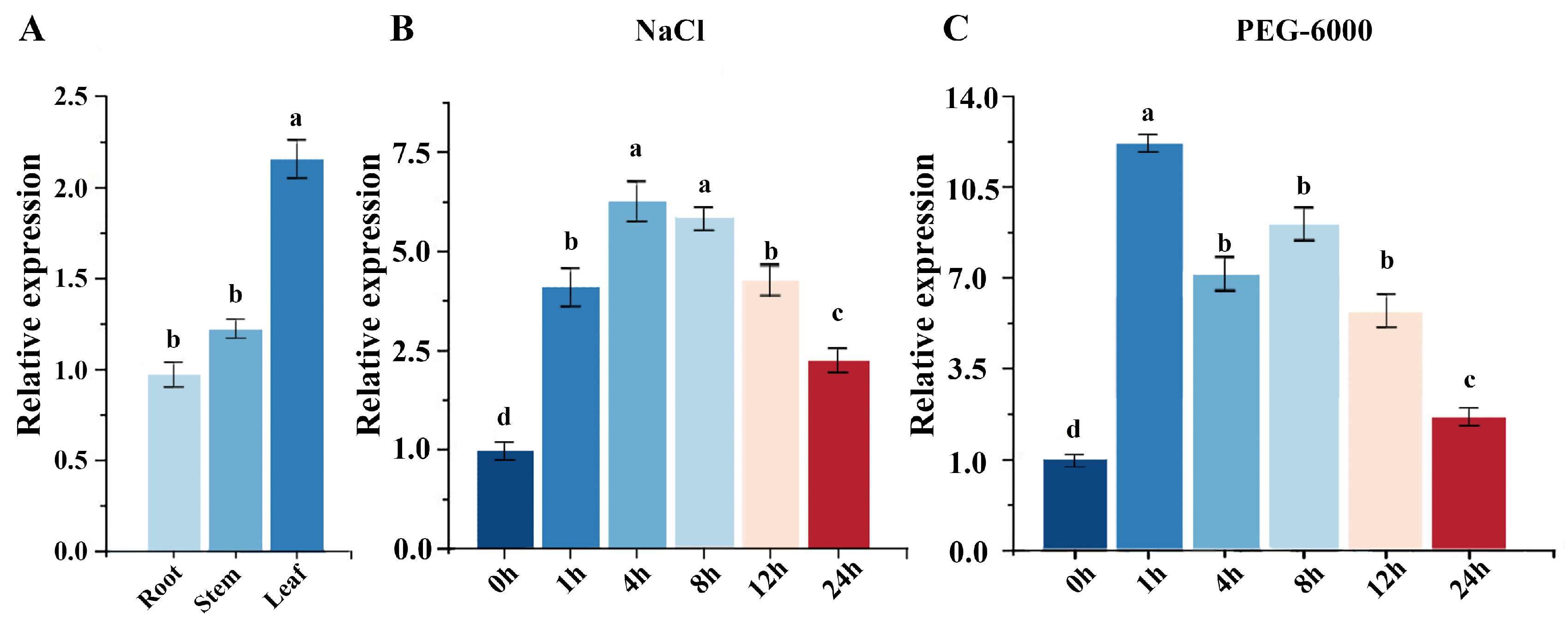
Tissue-specific expression analysis identified leaves as the primary site of IlMYB108 accumulation in I. laevigata, with significantly higher transcript levels than in roots and stems (Figure 2A).
Stress treatments with 300 mM NaCl and 20% PEG-6000 on hydroponically grown plants demonstrated rapid induction of IlMYB108 transcription. Time-course monitoring (0–24 h) revealed peak expression at 4 h (6.3-fold increase) under salt stress and maximum upregulation at 1 h (12.2-fold increase) under drought stress (Figure 2B,C).

3.3. Subcellular Localization of IlMYB108

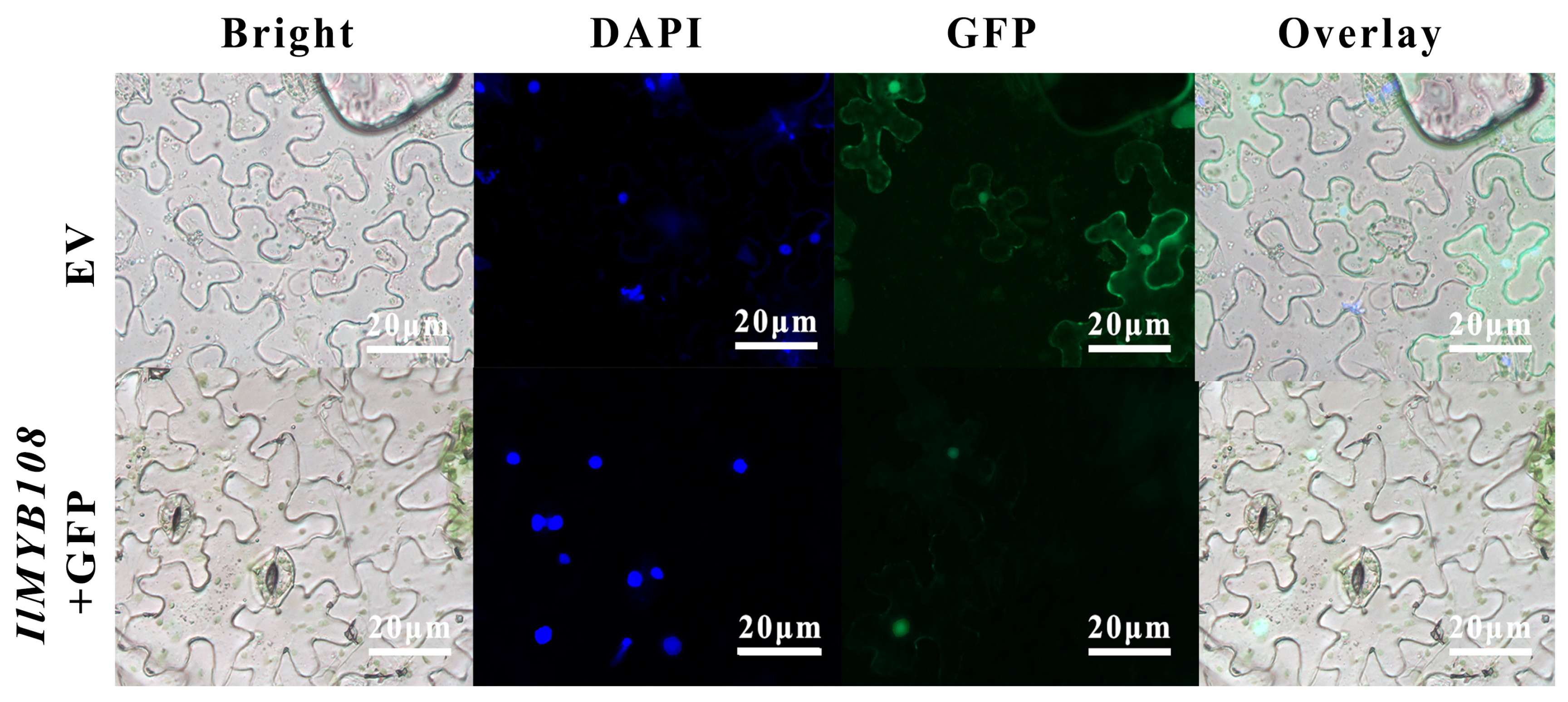
Subcellular localization analysis demonstrated that the transiently expressed IlMYB108-GFP in N. benthamiana leaves exhibited specific nuclear localization and co-localized with DAPI staining. In contrast, the fluorescence signal of the pBI121-GFP empty vector control showed diffuse distribution in both the cytoplasm and nucleus (Figure 3).

3.4. Overexpressing IlMYB108 in Tobacco

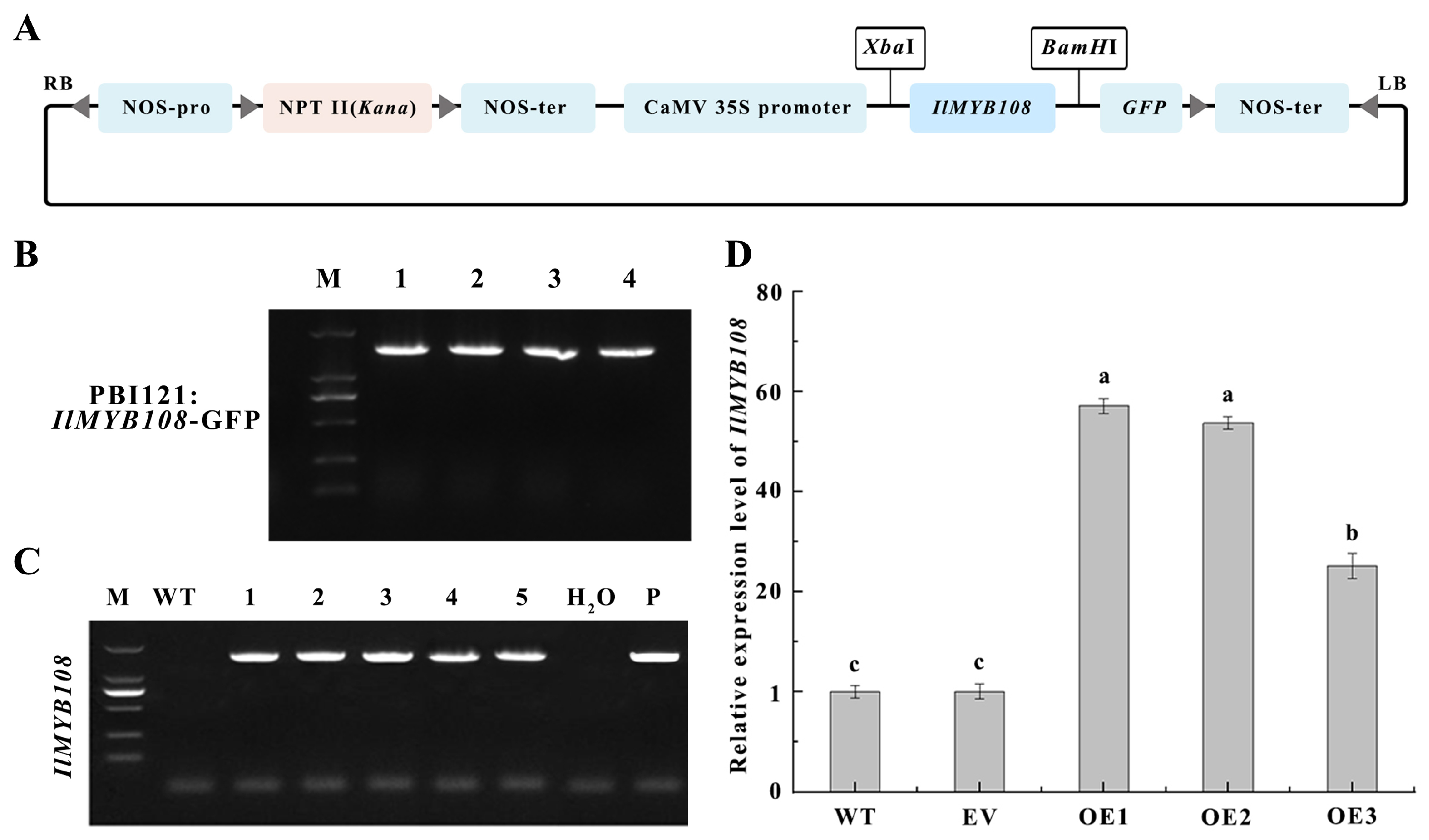
Following the construction of pBI121:IlMYB108-GFP by homologous recombination (Figure 4A,B), five T0 transgenic tobacco lines were generated via Agrobacterium-mediated transformation (Figure 4C). Transgenic OE lines were obtained through selection on hygromycin B and confirmed by PCR. These OE lines exhibited markedly higher IlMYB108 expression compared to WT and EV, as validated by Real-Time quantitative PCR (RT-qPCR) (Figure 4D).

3.5. Root Length Analysis of Overexpressed Tobacco Seeds Under Salt and Drought Stress

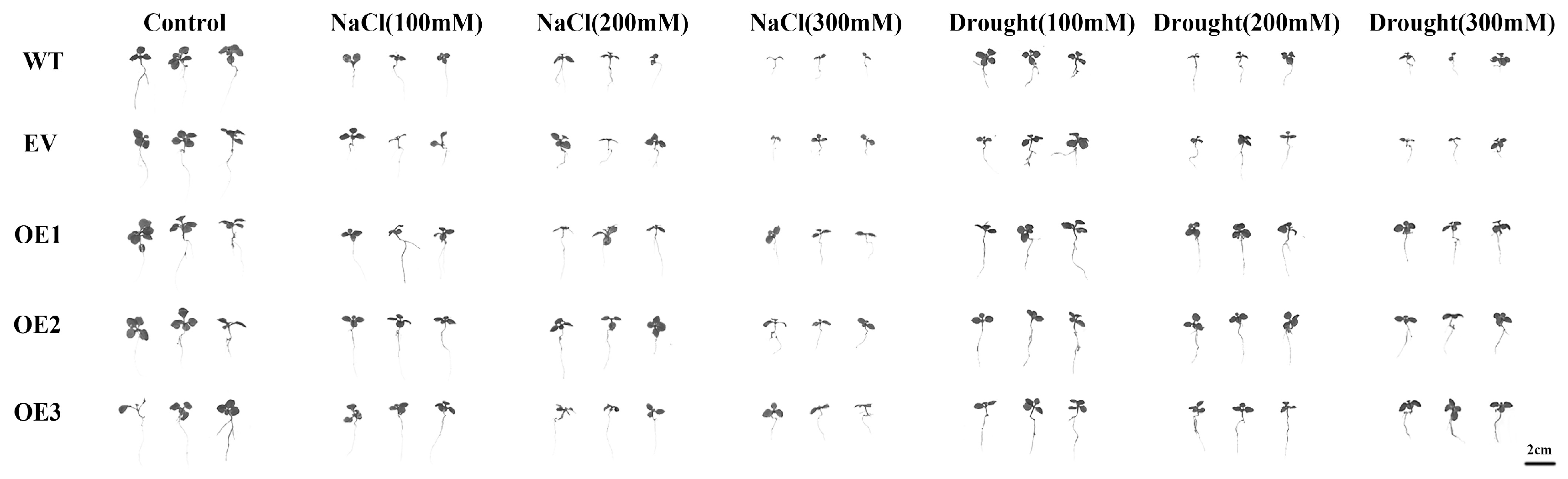
To assess the stress tolerance conferred by IlMYB108, T3 transgenic tobacco seeds (OE1–OE3) were evaluated under salt and drought conditions alongside WT and EV controls (Figure 5). All genotypes showed comparable germination and root development on standard MS medium, confirming that IlMYB108 overexpression does not cause growth penalties under non-stress conditions.
Under salt stress (100–300 mM NaCl) and osmotic stress (100–300 mM mannitol), all three overexpression lines exhibited significantly longer roots than the WT and EV controls (p < 0.05). Under 100 mM NaCl, the average root lengths of OE lines were 4.45 ± 0.12 cm (OE1), 4.32 ± 0.15 cm (OE2), and 4.58 ± 0.10 cm (OE3), compared to 2.75 ± 0.05 cm for WT and 2.78 ± 0.06 cm for EV. At higher salt concentrations (200 mM and 300 mM NaCl), the OE lines maintained significantly greater root lengths (3.55 ± 0.08 cm and 2.75 ± 0.15 cm on average, respectively) than the controls (2.22 ± 0.11 cm and 1.56 ± 0.06 cm on average, respectively).
A parallel trend was observed under mannitol-induced osmotic stress. The average root lengths of OE lines were 4.42 ± 0.14 cm, 3.72 ± 0.09 cm, and 2.85 ± 0.20 cm under 100 mM, 200 mM, and 300 mM mannitol, respectively. These values significantly exceeded those of the WT (2.95 ± 0.08 cm, 2.25 ± 0.05 cm, and 1.65 ± 0.05 cm) and EV controls (3.05 ± 0.10 cm, 2.28 ± 0.08 cm, and 1.68 ± 0.07 cm) at each corresponding concentration.
These results demonstrate that IlMYB108 overexpression significantly enhances root system development under abiotic stress conditions without affecting normal growth, highlighting its potential role in improving stress tolerance by enhancing the response of tobacco seeds to these adverse conditions.

3.6. Overexpressing IlMYB108 in Tobacco Enhances Resistance to Salt and Drought Stress

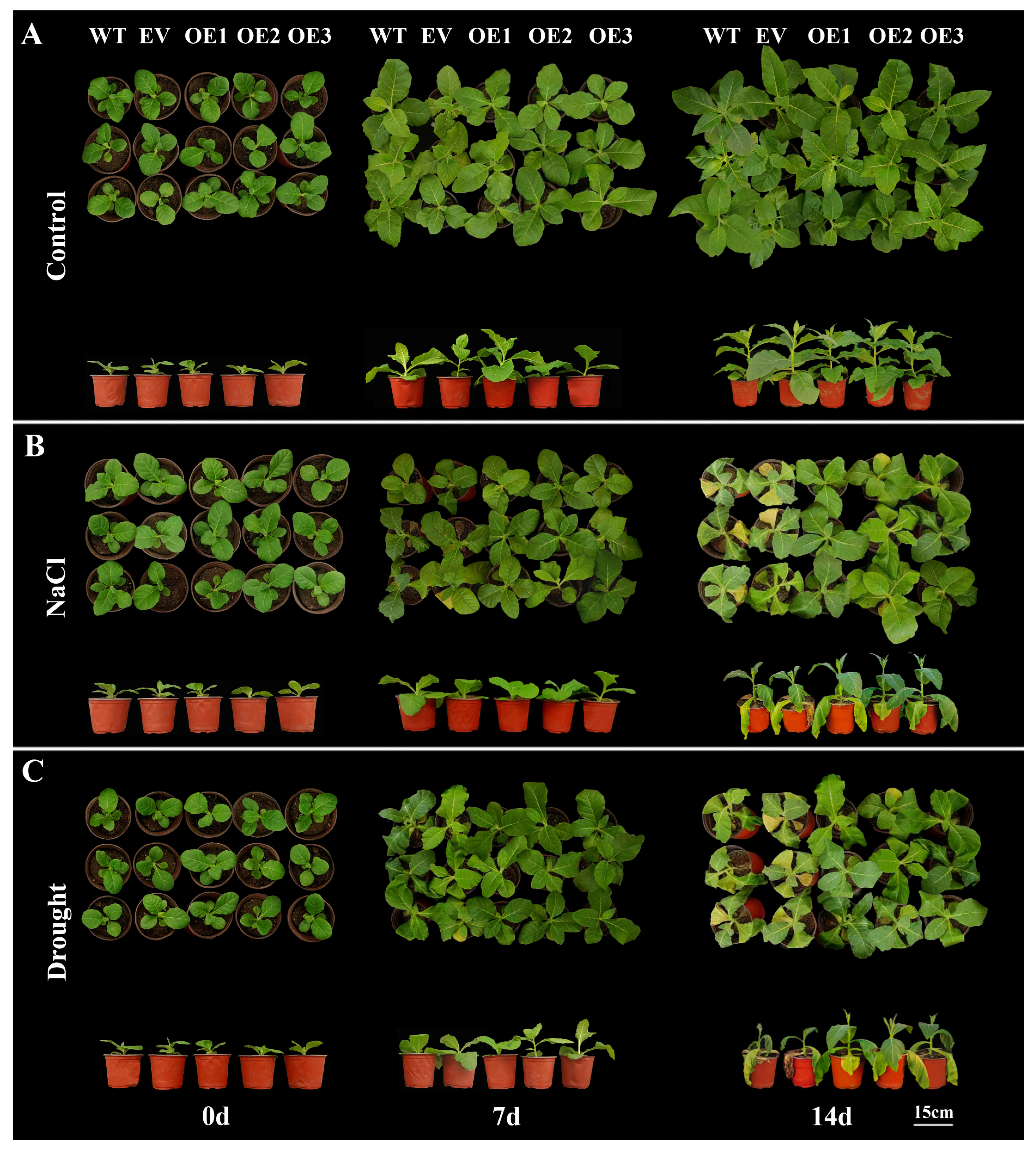
To evaluate the stress resistance conferred by IlMYB108 overexpression, transgenic tobacco seedlings (OE1, OE2, and OE3) were exposed to 300 mM NaCl-induced salt stress and 20% PEG-6000-induced drought stress. Under normal growth conditions, no significant differences in growth patterns were observed among WT, EV, and the three transgenic lines (Figure 6A).
Under salt stress, all lines exhibited comparable growth at 0 d. However, by 7 d, WT and EV plants displayed reduced leaf growth rates and early wilting symptoms, while the transgenic lines maintained robust growth. By 14 d, the transgenic lines showed significantly higher leaf growth rates and plant heights compared to WT and EV plants, which exhibited severe wilting, yellowing of lower leaves, and stunted growth (Figure 6B).
Similarly, under drought stress, no initial differences were observed at 0 d. By 7 d, WT and EV plants exhibited pronounced wilting, whereas the transgenic lines remained relatively unaffected. At 14 d, WT and EV plants showed extensive wilting across all foliage, while the transgenic lines displayed only mild wilting on lower leaves and maintained significantly greater plant height compared to controls (Figure 6C).
These results demonstrate that IlMYB108 overexpression significantly enhances the tolerance of tobacco seedlings to both salt and drought stress, as evidenced by improved growth performance, reduced wilting, and delayed stress-induced symptoms compared to WT and EV controls.

3.7. Impact of Overexpressing IlMYB108 on Photosynthesis Under Salt and Drought Stress

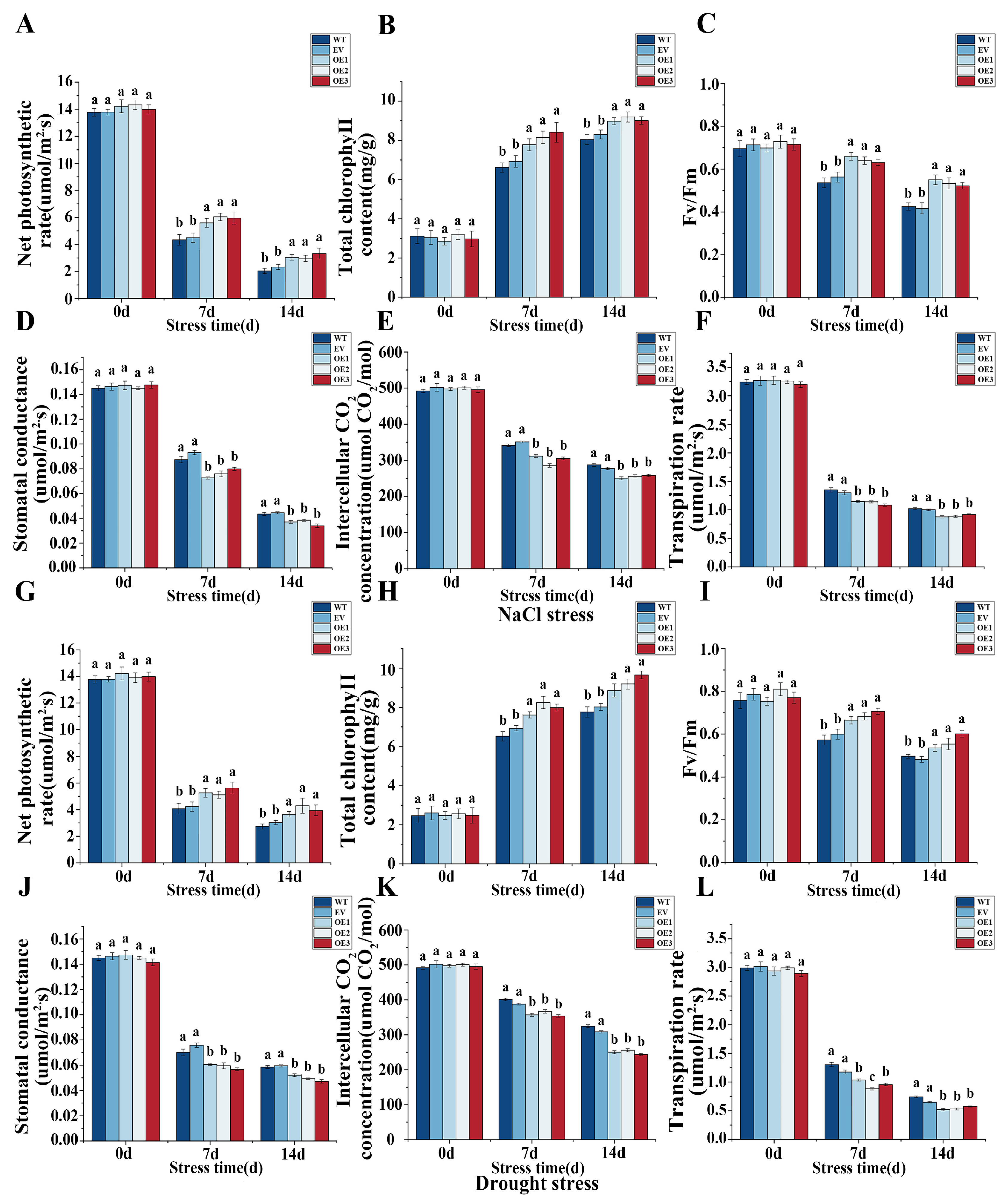
The observed promotive effect of IlMYB108 on stress tolerance led us to further investigate its impact on photosynthetic performance. We measured key photosynthetic parameters in both transgenic and control plants under stress conditions. At 7 and 14 dpt under salt stress, transgenic lines exhibited significantly higher Pn, total chlorophyll content, and Fv/Fm, whereas Gs, Ci, and Tr were reduced compared to controls (Figure 7A–F).
Similarly, under drought stress, while all plants showed progressive decline in photosynthetic parameters, transgenic lines consistently exhibited higher photosynthetic efficiency and water retention capacity. Specifically, they maintained elevated Pn, total chlorophyll content, and Fv/Fm, while displaying lower Gs, Ci and Tr than control plants throughout the stress period (Figure 7G–L).
The significantly higher Pn maintained in IlMYB108-overexpressing plants under salt and drought stress indicated a preserved photosynthetic capacity and reduced photoinhibition. The concurrent observation of lower Gs alongside a maintained or slightly decreased Ci in stressed transgenic plants allowed us to infer that the preserved Pn was not solely attributable to stomatal limitation. If stomatal closure (low Gs) were the sole limiting factor, Ci would typically rise due to reduced CO2 diffusion into the leaf. The fact that Ci did not increase suggests that in transgenic plants, the primary limitation shifts to non-stomatal factors [46], implying that their mesophyll cells maintained a higher capacity to fix the available CO2 [47]. The transgenic mesophyll cells likely maintained a higher activity of key photosynthetic enzymes, superior photoprotection enhanced metabolic flux, or improved energy partitioning [48]. This interpretation is directly supported by the concurrently higher Fv/Fm and chlorophyll content in transgenic lines, indicating reduced photoinhibition and better maintenance of the light-harvesting complexes.
Therefore, IlMYB108 likely enhances stress tolerance not merely by inducing stomatal closure for water conservation, but more importantly by fortifying the photosynthetic machinery against stress-induced damage. This allows the plant to sustain carbon assimilation efficiency even under conditions of restricted gas exchange, thereby promoting relative growth in adverse environments.

3.8. The Involvement of ROS Regulation in IlMYB108 Enhanced Salt and Drought Stress Resistance

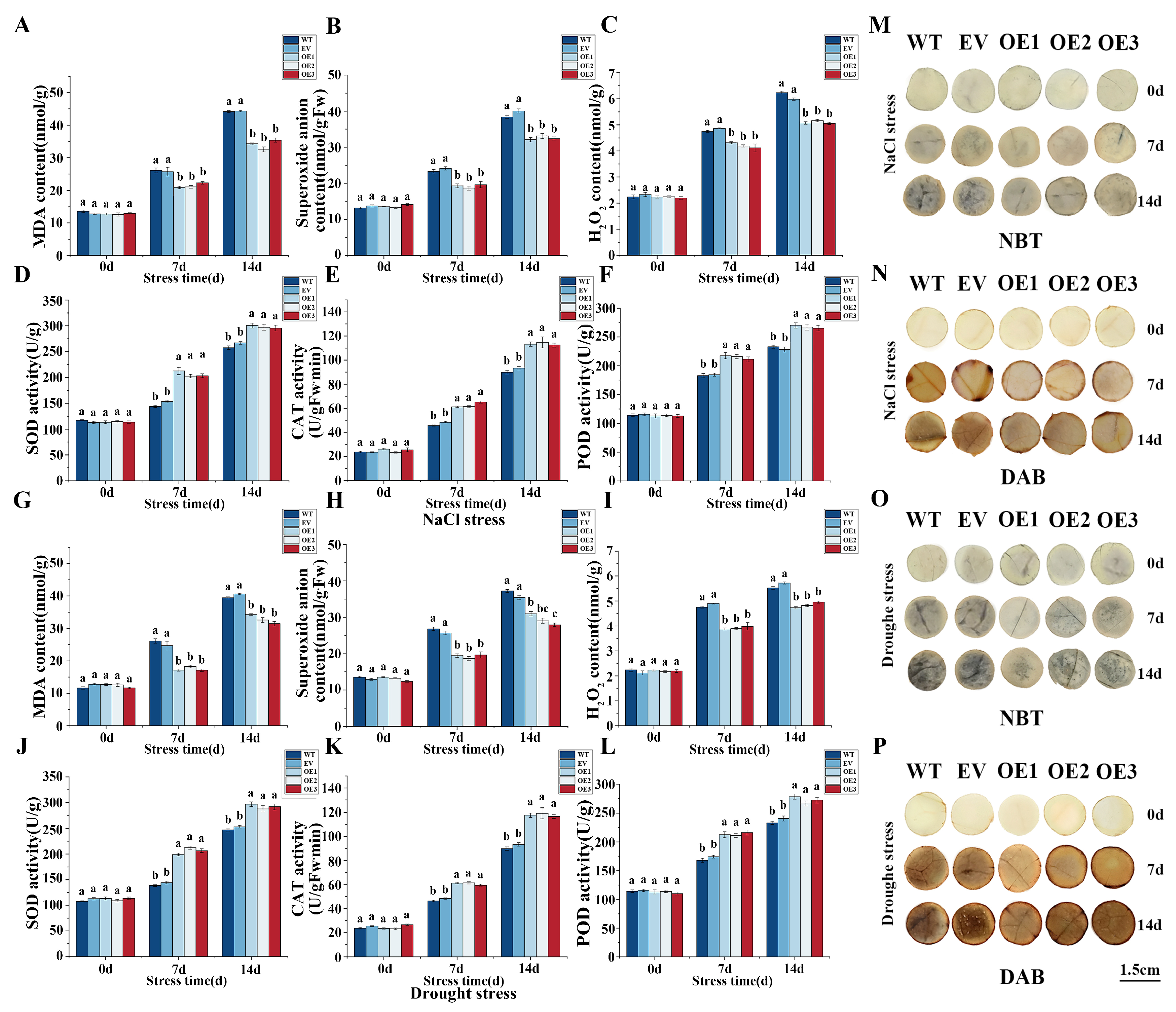
Salt and drought stress induce ROS accumulation in plants, leading to lipid peroxidation and MDA production. To investigate whether ROS homeostasis contributes to IlMYB108-conferred stress tolerance, we measured oxidative stress markers and antioxidant enzyme activities. Under both stress conditions, all plants showed time-dependent increases in MDA, O2, and H2O2 levels, confirming progressive oxidative damage. However, IlMYB108-overexpressing lines (OE1–OE3) accumulated significantly less MDA, O2, and H2O2 at 7 and 14 dpt than controls (Figure 8A–C,G–I).
Consistent with reduced oxidative stress, transgenic plants exhibited enhanced SOD, CAT, and POD activities compared to controls (Figure 8D–F,J–L). Histochemical staining with NBT and DAB further confirmed attenuated O2 and H2O2 accumulation in OE lines relative to WT and EV plants (Figure 8M–P).
The significantly reduced MDA content in overexpression lines reflects diminished membrane lipid peroxidation, directly indicating reduced oxidative damage to cellular membranes. This conclusion is supported by the concurrent upregulation of antioxidant enzyme activities (SOD, POD, CAT).
These findings demonstrate that IlMYB108 strengthens the antioxidant defense system, mitigating oxidative damage and thereby enhancing salt and drought stress resistance.

3.9. The IlMYB108 on Expression Levels of Stress-Related Genes NtLEA5, NtLTP1, NtPMA4, NtPOD, NtSOD and NtCAT Under Salt and Drought Stress

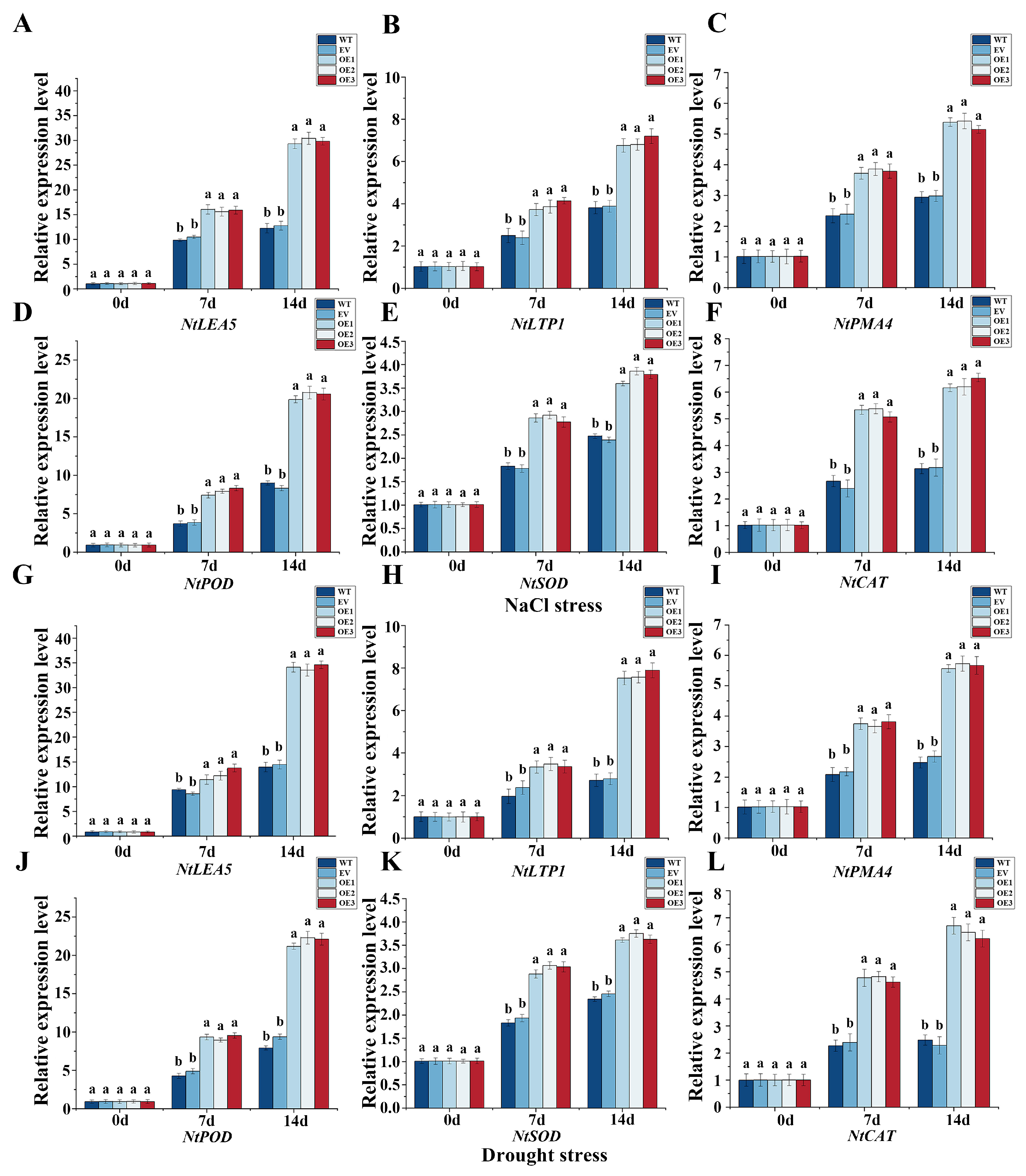
To elucidate the molecular mechanisms underlying IlMYB108-mediated stress tolerance, we analyzed the expression of key stress-responsive genes. All examined genes (NtLEA5, NtLTP1, NtPMA4, NtPOD, NtSOD, and NtCAT) were upregulated under both salt and drought stress across all genotypes, with IlMYB108-overexpressing lines (OE1–OE3) exhibiting the pronounced induction at 7 and 14 dpt compared to controls (Figure 9).These results demonstrate that overexpression of IlMYB108 enhances the expression of these stress defense genes, thereby improving the plant’s ability to cope with salt and drought stress by maintaining ion homeostasis and reducing oxidative damage.

4. Discussion

Numerous studies have established that R2R3-MYB transcription factors play a central role in plant responses to abiotic stress, exhibiting significant functional diversity and conservation [49,50,51,52,53]. This study presents the first identification and functional characterization of the IlMYB108 gene in the monocot ornamental plant I. laevigata. Phylogenetic analysis revealed that IlMYB108 shares the closest evolutionary relationship with the MYB108 protein from I. pallida among monocot species, suggesting potential functional similarities. Furthermore, subcellular localization assays confirmed its nuclear accumulation, supporting its identity as a transcription factor.
Through transgenic technology, we demonstrated that overexpression of IlMYB108 significantly enhances tolerance to salt and drought stress in tobacco. This enhanced stress tolerance primarily manifests in two key aspects: firstly, transgenic plants maintain superior photosynthetic performance and water use efficiency under stress conditions; secondly, their antioxidant defense system is markedly activated. Regarding photosynthesis and water metabolism, IlMYB108-overexpressing plants exhibited higher Pn, chlorophyll content, Fv/Fm, along with reduced Gs, Ci and Tr. The maintenance of higher Pn despite reduced Gs points to a crucial physiological adaptation. The concurrent stability or decrease in Ci indicates that the primary limitation to photosynthesis shifted from stomatal (CO2 supply) to non-stomatal (biochemical capacity) factors [46], suggesting that IlMYB108 enhances the intrinsic capacity of mesophyll cells to utilize available CO2 [47,48]. This fortification of the photosynthetic apparatus is corroborated by the higher Fv/Fm and chlorophyll content, reflecting reduced photoinhibition. This function aligns with, yet extends, the known role of MYB factors in stomatal regulation. For instance, AtMYB60 and AtMYB96 regulate drought resistance through modulating stomatal aperture [54,55]. While IlMYB108 likely employs a similar upstream strategy to promote stomatal closure for water conservation, our data reveal an additional, critical layer of adaptation: the concurrent protection and enhancement of the photosynthetic machinery itself. Therefore, IlMYB108 contributes to stress tolerance not only by reducing water loss but by decoupling carbon assimilation from stomatal limitation, thereby sustaining photosynthetic efficiency under adverse conditions.
In terms of oxidative stress homeostasis, IlMYB108-overexpressing plants exhibited a significantly enhanced tolerance phenotype under stress conditions. This enhancement was quantitatively supported by lower levels of MDA and significantly higher activities of key antioxidant enzymes (SOD, CAT, and POD), accompanied by the upregulation of their encoding genes. These results indicate that IlMYB108 likely strengthens cellular ROS-scavenging capacity by positively regulating the antioxidant system—a functional role that finds precedent in other MYB transcription factors, such as EgMYB111 and EgMYB157, which enhance oxidative stress resistance through similar regulatory mechanisms [56]. This interpretation was further corroborated by NBT and DAB. We observed visibly reduced ROS accumulation in transgenic leaves. While these assays are not quantitative, the observed reduction aligns with the quantitative data and may reflect a combination of enhanced ROS detoxification and a delayed onset of severe oxidative damage due to improved overall stress resilience. Collectively, these findings suggest that the regulation of antioxidant defenses is a conserved function among MYB transcription factors in mediating diverse stress responses. Our work extends this conserved regulatory paradigm to I. laevigata, reinforcing the universal role of MYB TFs in coordinating plant redox homeostasis.
Notably, IlMYB108 overexpression also promoted root development in transgenic tobacco under stress conditions. This phenotype may contribute indirectly but significantly to the overall stress tolerance, as more developed root systems facilitate water and nutrient uptake, thereby improving plant physiological status. Previous research has indicated that IbMYB73 in Ipomoea batatas influences salt tolerance by modulating root architecture [57]. Whether IlMYB108 directly regulates root development-related genes in a similar manner represents a valuable direction for future investigation.
Based on these findings, we hypothesize that IlMYB108 may function as a coordinator that modulates both photosynthetic integrity and antioxidant defense to enhance comprehensive stress tolerance. It is important to acknowledge the scope of this study. The use of severe stress levels, while based on established protocols for phenotypic discrimination, and the reliance on heterologous overexpression in tobacco—a necessary approach given the current lack of a stable genetic transformation system for I. laevigata—provide robust evidence of gene function but also define the boundaries of our current conclusions. Future research should therefore focus on two pivotal fronts: validating the function of IlMYB108 in its native context, and screening for its direct downstream target genes to elucidate the precise molecular network it governs. These investigations will complete our understanding of the IlMYB108 regulatory network and provide a solid theoretical foundation for utilizing this gene in the molecular breeding of I. laevigata and other ornamental plants.

5. Conclusions

In conclusion, our findings demonstrate that IlMYB108 acts as a positive regulator that enhances tolerance to salt and drought stress in transgenic tobacco. Through heterologous overexpression in tobacco, IlMYB108 confers comprehensive stress resilience by promoting root system development, maintaining photosynthetic efficiency, optimizing stomatal regulation, and strengthening antioxidant defense systems. These coordinated physiological and biochemical adaptations collectively improve water retention, reduce oxidative damage, and enhance overall plant vigor under abiotic stress conditions. The multifaceted beneficial effects observed in this heterologous system highlight the potential of IlMYB108 as a candidate gene for improving stress tolerance in ornamental plants facing challenging environments.

Supplementary Materials

The following supporting information can be downloaded at: https://www.mdpi.com/article/10.3390/horticulturae12010003/s1, Figure S1: Cloning of genes. (A) Cloning and amplification of the IlMYB108 gene ORF. M: DL2000 DNA Marker (CWBIO, Beijing, China); Lanes 1–3: PCR products amplified from cloned IlMYB108 ORF fragments; Lanes 4–6: Negative control PCR reactions without template. (B) Nucleotide and amino acid sequence of IlMYB108; Figure S2: Bioinformatics analysis. (A) Hydrophilicity analysis of IlMYB108 protein. (B) Secondary structure prediction of IlMYB108 protein. (C) Tertiary structure prediction of IlMYB108 protein. (D) Prediction of phosphorylation sites in IlMYB108 protein. (E) Prediction of conserved domain in IlMYB108 protein. (F) Signal peptide prediction in IlMYB108 protein; Table S1: Primer sequences and amplification parameters.

Author Contributions

Conceptualization, L.F., L.W., Z.N. and Z.W.; methodology, L.F., L.W., Z.W. and Z.N.; formal analysis, L.F. and Z.N.; investigation, L.F., Z.N. and G.S.; writing—original draft preparation, L.F., G.S. and Z.N.; figures and tables, L.F., Z.N. and G.S.; writing—review and editing, L.F., Z.N., Z.W., L.W. and G.S.; supervision and funding acquisition, L.F. All authors have read and agreed to the published version of the manuscript.

Funding

This research was funded by the Natural Fund Project of Heilongjiang Province (LH2021C017).

Data Availability Statement

The original contributions presented in this study are included in the article/Supplementary Material. Further inquiries can be directed to the corresponding authors.

Conflicts of Interest

The authors declare no conflicts of interest.

References

  1. Zhang, H.; Zhu, J.; Gong, Z.; Zhu, J.K. Abiotic stress responses in plants. Nat. Rev. Genet. 2022, 23, 104–119. [Google Scholar] [CrossRef]
  2. Zhang, H.; Lang, Z.; Zhu, J.; Wang, P. Tackling abiotic stress in plants: Recent insights and trends. Stress Biol. 2025, 5, 8. [Google Scholar] [CrossRef]
  3. Nawaz, M.; Sun, J.; Shabbir, S.; Khattak, W.A.; Ren, G.; Nie, X.; Bo, Y.; Javed, Q.; Du, D.; Sonne, C. A review of plants strategies to resist biotic and abiotic environmental stressors. Sci. Total Environ. 2023, 900, 165832. [Google Scholar] [CrossRef]
  4. Su, X.; Yao, L.; Wang, X.; Zhang, Y.; Zhang, G.; Li, X. Mechanisms for cell survival during abiotic stress: Focusing on plasma membrane. Stress Biol. 2025, 5, 1. [Google Scholar] [CrossRef]
  5. Zhang, Y.; Xu, J.; Li, R.; Ge, Y.; Li, Y.; Li, R. Plants’ response to abiotic stress: Mechanisms and strategies. Int. J. Mol. Sci. 2023, 24, 10915. [Google Scholar] [CrossRef]
  6. Du, B.; Haensch, R.; Alfarraj, S.; Rennenberg, H. Strategies of plants to overcome abiotic and biotic stresses. Biol. Rev. 2024, 99, 1524–1536. [Google Scholar] [CrossRef] [PubMed]
  7. Zhang, C.; Jiao, C.; Sun, X.; Li, X. A MYB transcription factor atlas provides insights into the evolution of environmental adaptations in plants. Int. J. Mol. Sci. 2023, 24, 2566. [Google Scholar] [CrossRef]
  8. Wu, X.; Xia, M.; Su, P.; Zhang, Y.; Tu, L.; Zhao, H.; Gao, W.; Huang, L.; Hu, Y. MYB transcription factors in plants: A comprehensive review of their discovery, structure, classification, functional diversity and regulatory mechanism. Int. J. Biol. Macromol. 2024, 282, 136652. [Google Scholar] [CrossRef] [PubMed]
  9. Zhang, D.; Zhou, H.; Zhang, Y.; Zhao, Y.; Zhang, Y.; Feng, X.; Lin, H. Diverse roles of MYB transcription factors in plants. J. Integr. Plant Biol. 2025, 67, 539–562. [Google Scholar] [CrossRef]
  10. Wu, Y.; Wen, J.; Xia, Y.; Zhang, L.; Du, H. Evolution and functional diversification of R2R3-MYB transcription factors in plants. Hortic. Res. 2022, 9, uhac058. [Google Scholar] [CrossRef]
  11. Liang, Y.K.; Dubos, C.; Dodd, I.C.; Holroyd, G.H.; Hetherington, A.M.; Campbell, M.M. AtMYB61, an R2R3-MYB transcription factor controlling stomatal aperture in Arabidopsis thaliana. Curr. Biol. 2005, 15, 1201–1206. [Google Scholar] [CrossRef]
  12. Cao, Z.H.; Zhang, S.Z.; Wang, R.K.; Zhang, R.F.; Hao, Y.J. Genome wide analysis of the apple myb transcription factor family allows the identification of MdoMYB121 gene confering abiotic stress tolerance in plants. PLoS ONE 2013, 8, e69955. [Google Scholar] [CrossRef]
  13. Lee, S.B.; Kim, H.U.; Suh, M.C. MYB94 and MYB96 additively activate cuticular wax biosynthesis in Arabidopsis. Plant Cell Physiol. 2016, 57, 2300–2311. [Google Scholar] [CrossRef] [PubMed]
  14. Zhang, X.; Chen, L.; Shi, Q.; Ren, Z. SlMYB102, an R2R3-type MYB gene, confers salt tolerance in transgenic tomato. Plant Sci. 2020, 291, 110356. [Google Scholar] [CrossRef] [PubMed]
  15. Manna, M.; Thakur, T.; Chirom, O.; Mandlik, R.; Deshmukh, R.; Salvi, P. Transcription factors as key molecular target to strengthen the drought stress tolerance in plants. Physiol. Plant. 2021, 172, 847–868. [Google Scholar] [CrossRef] [PubMed]
  16. Hu, G.; Ge, X.; Wang, Z.; Wang, Y.; Wang, P.; Shi, L.; Wang, B.; Zhang, A.; Li, F.; Wu, J. The cotton MYB33 gene is a hub gene regulating the trade-off between plant growth and defense in Verticillium dahliae infection. J. Adv. Res. 2024, 61, 1–17. [Google Scholar] [CrossRef]
  17. Wang, Z.; Peng, Z.; Khan, S.; Qayyum, A.; Rehman, A.; Du, X. Unveiling the power of MYB transcription factors: Master regulators of multi-stress responses and development in cotton. Int. J. Biol. Macromol. 2024, 276, 133885. [Google Scholar] [CrossRef]
  18. Li, S.; Liu, G.; Wu, Z.; Zhang, D.; Gan, C.; Li, B.; Liu, J.; Ni, Z.; Sun, Q.; Liang, R. The TaMYB44-TaMYB1 module regulates grain amylose biosynthesis and flour viscosity in wheat. Plant Commun. 2025, 6, 101461. [Google Scholar] [CrossRef]
  19. Chen, Y.; Hui, S.; Li, H.; Jiao, G.; Cao, R.; Zhou, L.; Wang, J.; Mawia, A.M.; Yang, L.; Wu, Y.; et al. A MYB61-SWB9-KOs module regulates grain chalkiness via gibberellin biosynthesis in rice endosperm. Plant Biotechnol. J. 2025, 23, 2793–2808. [Google Scholar] [CrossRef]
  20. Sun, W.; Ma, Z.; Chen, H.; Liu, M. MYB gene family in potato (Solanum tuberosum L.): Genome-wide identification of hormone-responsive reveals their potential functions in growth and development. Int. J. Mol. Sci. 2019, 20, 4847. [Google Scholar] [CrossRef]
  21. Shi, G.; Liu, G.; Liu, H.; Xu, N.; Yang, Q.; Song, Z.; Ye, W.; Wang, L. WRKY transcriptional factor IlWRKY70 from Iris laevigata enhances drought and salinity tolerances in Nicotiana tabacum. Int. J. Mol. Sci. 2023, 24, 16174. [Google Scholar] [CrossRef]
  22. Liu, G.; Li, F.; Shi, G.; Wang, L.; Wang, L.; Fan, L. Identification of mads-box transcription factors in Iris laevigata and functional assessment of IlSEP3 and IlSVP during flowering. Int. J. Mol. Sci. 2022, 23, 9950. [Google Scholar] [CrossRef]
  23. Wang, X.; Niu, Y.; Zheng, Y. Multiple functions of MYB transcription factors in abiotic stress responses. Int. J. Mol. Sci. 2021, 22, 6125. [Google Scholar] [CrossRef]
  24. Feng, X.; Bai, S.; Zhou, L.; Song, Y.; Jia, S.; Guo, Q.; Zhang, C. Integrated analysis of transcriptome and metabolome provides insights into flavonoid biosynthesis of blueberry leaves in response to drought stress. Int. J. Mol. Sci. 2024, 25, 11135. [Google Scholar] [CrossRef]
  25. Song, P.; Yang, R.; Jiao, K.; Guo, B.; Zhang, L.; Li, Y.; Zhang, K.; Zhou, S.; Wu, X.; Li, X. FvMYB108, a MYB gene from Fragaria vesca, positively regulates cold and salt tolerance of Arabidopsis. Int. J. Mol. Sci. 2024, 25, 3405. [Google Scholar] [CrossRef]
  26. Du, B.; Liu, H.; Dong, K.; Wang, Y.; Zhang, Y. Over-expression of an R2R3 MYB gene, MdMYB108L, enhances tolerance to salt stress in transgenic plants. Int. J. Mol. Sci. 2022, 23, 9428. [Google Scholar] [CrossRef]
  27. Zhao, K.; Cheng, Z.; Guo, Q.; Yao, W.; Liu, H.; Zhou, B.; Jiang, T. Characterization of the poplar R2R3-MYB gene family and over-expression of PsnMYB108 confers salt tolerance in transgenic tobacco. Front. Plant Sci. 2020, 11, 571881. [Google Scholar] [CrossRef]
  28. Xu, L.; Xiang, G.; Sun, Q.; Ni, Y.; Jin, Z.; Gao, S.; Yao, Y. Melatonin enhances salt tolerance by promoting MYB108A-mediated ethylene biosynthesis in grapevines. Hortic. Res. 2019, 6, 114. [Google Scholar] [CrossRef]
  29. Wang, B.; Li, S.; Zou, L.; Guo, X.; Liang, J.; Liao, W.; Peng, M. Natural variation MeMYB108 associated with tolerance to stress-induced leaf abscission linked to enhanced protection against reactive oxygen species in cassava. Plant Cell Rep. 2022, 41, 1573–1587. [Google Scholar] [CrossRef]
  30. Fan, L.; Niu, Z.; Shi, G.; Song, Z.; Yang, Q.; Zhou, S.; Wang, L. WRKY22 transcription factor from Iris laevigata regulates flowering time and resistance to salt and drought. Plants 2024, 13, 1191. [Google Scholar] [CrossRef]
  31. Collings, D.A. Subcellular localization of transiently expressed fluorescent fusion proteins. Methods Mol Biol. 2013, 1069, 227–258. [Google Scholar] [CrossRef]
  32. Wang, Y.; Cao, S.; Guan, C.; Kong, X.; Wang, Y.; Cui, Y.; Liu, B.; Zhou, Y.; Zhang, Y. Overexpressing the NAC transcription factor LpNAC13 from Lilium pumilum in tobacco negatively regulates the drought response and positively regulates the salt response. Plant Physiol. Biochem. 2020, 149, 96–110. [Google Scholar] [CrossRef]
  33. Xiang, X.Y.; Chen, J.; Xu, W.X.; Qiu, J.R.; Song, L.; Wang, J.T.; Tang, R.; Chen, D.; Jiang, C.Z.; Huang, Z. Dehydration-induced WRKY transcriptional factor MfWRKY70 of Myrothamnus flabellifolia enhanced drought and salinity tolerance in Arabidopsis. Biomolecules 2021, 11, 327. [Google Scholar] [CrossRef]
  34. Wang, Y.; Cui, Y.; Liu, B.; Wang, Y.; Sun, S.; Wang, J.; Tan, M.; Yan, H.; Zhang, Y. Lilium pumilum stress-responsive NAC transcription factor LpNAC17 enhances salt stress tolerance in tobacco. Front. Plant Sci. 2022, 13, 993841. [Google Scholar] [CrossRef]
  35. Hu, Z.; Li, Y.; Yang, J.; Song, S.; Li, X.; Xiong, C.; Yi, P.; Liu, C.; Hu, R.; Huang, X. The positive impact of the NtTAS14-like1 gene on osmotic stress response in Nicotiana tabacum. Plant Cell Rep. 2023, 43, 25. [Google Scholar] [CrossRef]
  36. Zhang, Z.; Tao, S.; Zhou, B.; Zhang, X.; Zhao, Z. Plant stomatal conductance determined transpiration and photosynthesis both contribute to the enhanced negative air ion (NAI). Ecol. Indic. 2021, 130, 108114. [Google Scholar] [CrossRef]
  37. Jian, Z.; Tang, X.; Wang, H.; Xu, G. Evaluate the photosynthesis and chlorophyll fluorescence of Epimedium brevicornu maxim. Sci. Rep. 2022, 12, 19470. [Google Scholar] [CrossRef]
  38. Arnon, D.I. Copper enzymes in isolated chloroplasts. Polyphenoloxidase in Beta vulgaris. Plant Physiol. 1949, 24, 1–15. [Google Scholar] [CrossRef]
  39. Anwar, T.; Shehzadi, A.; Qureshi, H.; Shah, M.N.; Danish, S.; Salmen, S.H.; Ansari, M.J. Alleviation of cadmium and drought stress in wheat by improving growth and chlorophyll contents amended with GA3 enriched deashed biochar. Sci. Rep. 2023, 13, 18503. [Google Scholar] [CrossRef]
  40. Hanson, A.D.; Zhao, Y. Plant physiology synthetic biology initiative. Plant Physiol. 2022, 190, 180–181. [Google Scholar] [CrossRef]
  41. Zhu, X.; Zhang, Y.; Du, Z.; Chen, X.; Zhou, X.; Kong, X.; Sun, W.; Chen, Z.; Chen, C.; Chen, M. Tender leaf and fully-expanded leaf exhibited distinct cuticle structure and wax lipid composition in Camellia sinensis cv Fuyun 6. Sci. Rep. 2018, 8, 14944. [Google Scholar] [CrossRef]
  42. Daudi, A.; O’Brien, J.A. Detection of hydrogen peroxide by DAB staining in Arabidopsis leaves. Bio-Protocol 2012, 2, e263. [Google Scholar] [CrossRef]
  43. Yadav, S.; Gill, S.S.; Passricha, N.; Gill, R.; Badhwar, P.; Anjum, N.A.; Francisco, J.J.; Tuteja, N. Genome-wide analysis and transcriptional expression pattern-assessment of superoxide dismutase (SOD) in rice and Arabidopsis under abiotic stresses. Plant Gene 2019, 17, 100165. [Google Scholar] [CrossRef]
  44. Zhong, M.; Song, R.; Wang, Y.; Shu, S.; Sun, J.; Guo, S. TGase regulates salt stress tolerance through enhancing bound polyamines-mediated antioxidant enzymes activity in tomato. Environ. Exp. Bot. 2020, 179, 104191. [Google Scholar] [CrossRef]
  45. Pereira-Gomez, M.; Fajardo, A.; Echeverria, N.; Lopez-Tort, F.; Perbolianachis, P.; Costabile, A.; Aldunate, F.; Moreno, P.; Moratorio, G. Evaluation of SYBR Green real time PCR for detecting SARS-CoV-2 from clinical samples. J. Virol. Methods 2021, 289, 114035. [Google Scholar] [CrossRef]
  46. Flexas, J.; Medrano, H. Drought-inhibition of photosynthesis in C3 plants: Stomatal and non-stomatal limitations revisited. Ann. Bot. 2002, 89, 183–189. [Google Scholar] [CrossRef]
  47. Chaves, M.M.; Flexas, J.; Pinheiro, C. Photosynthesis under drought and salt stress: Regulation mechanisms from whole plant to cell. Ann. Bot. 2009, 103, 551–560. [Google Scholar] [CrossRef]
  48. Lawlor, D.W.; Cornic, G. Photosynthetic carbon assimilation and associated metabolism in relation to water deficits in higher plants. Plant Cell Environ. 2002, 25, 275–294. [Google Scholar] [CrossRef]
  49. Yoo, J.H.; Park, C.Y.; Kim, J.C.; Heo, W.D.; Cheong, M.S.; Park, H.C.; Kim, M.C.; Moon, B.C.; Choi, M.S.; Kang, Y.H.; et al. Direct interaction of a divergent CaM isoform and the transcription factor, MYB2, enhances salt tolerance in Arabidopsis. J. Biol. Chem. 2005, 280, 3697–3706. [Google Scholar] [CrossRef]
  50. Liu, J.; Osbourn, A.; Ma, P. MYB transcription factors as regulators of phenylpropanoid metabolism in plants. Mol. Plant 2015, 8, 689–708. [Google Scholar] [CrossRef]
  51. Jiang, C.K.; Rao, G.Y. Insights into the diversification and evolution of R2R3-MYB transcription factors in plants. Plant Physiol. 2020, 183, 637–655. [Google Scholar] [CrossRef] [PubMed]
  52. Zhao, Y.; Cheng, X.; Liu, X.; Wu, H.; Bi, H.; Xu, H. The wheat MYB transcription factor TaMYB31 is involved in drought stress responses in Arabidopsis. Front. Plant Sci. 2018, 9, 1426. [Google Scholar] [CrossRef]
  53. Chen, T.; Li, W.; Hu, X.; Guo, J.; Liu, A.; Zhang, B. A cotton MYB transcription factor, GBMYB5, is positively involved in plant adaptive response to drought stress. Plant Cell Physiol. 2015, 56, 917–929. [Google Scholar] [CrossRef]
  54. Lee, H.G.; Seo, P.J. MYB96 recruits the HDA15 protein to suppress negative regulators of ABA signaling in Arabidopsis. Nat. Commun. 2019, 10, 1713. [Google Scholar] [CrossRef]
  55. Simeoni, F.; Skirycz, A.; Simoni, L.; Castorina, G.; de Souza, L.P.; Fernie, A.R.; Alseekh, S.; Giavalisco, P.; Conti, L.; Tonelli, C.; et al. The AtMYB60 transcription factor regulates stomatal opening by modulating oxylipin synthesis in guard cells. Sci. Rep. 2022, 12, 533. [Google Scholar] [CrossRef] [PubMed]
  56. Zhou, L.; Yarra, R.; Yang, Y.; Liu, Y.; Yang, M.; Cao, H. The oil palm R2R3-MYB subfamily genes EgMYB111 and EgMYB157 improve multiple abiotic stress tolerance in transgenic Arabidopsis plants. Plant Cell Rep. 2022, 41, 377–393. [Google Scholar] [CrossRef]
  57. Wang, Z.; Li, X.; Gao, X.R.; Dai, Z.R.; Peng, K.; Jia, L.C.; Wu, Y.K.; Liu, Q.C.; Zhai, H.; Gao, S.P.; et al. IbMYB73 targets abscisic acid-responsive IbGER5 to regulate root growth and stress tolerance in sweet potato. Plant Physiol. 2024, 194, 787–804. [Google Scholar] [CrossRef] [PubMed]
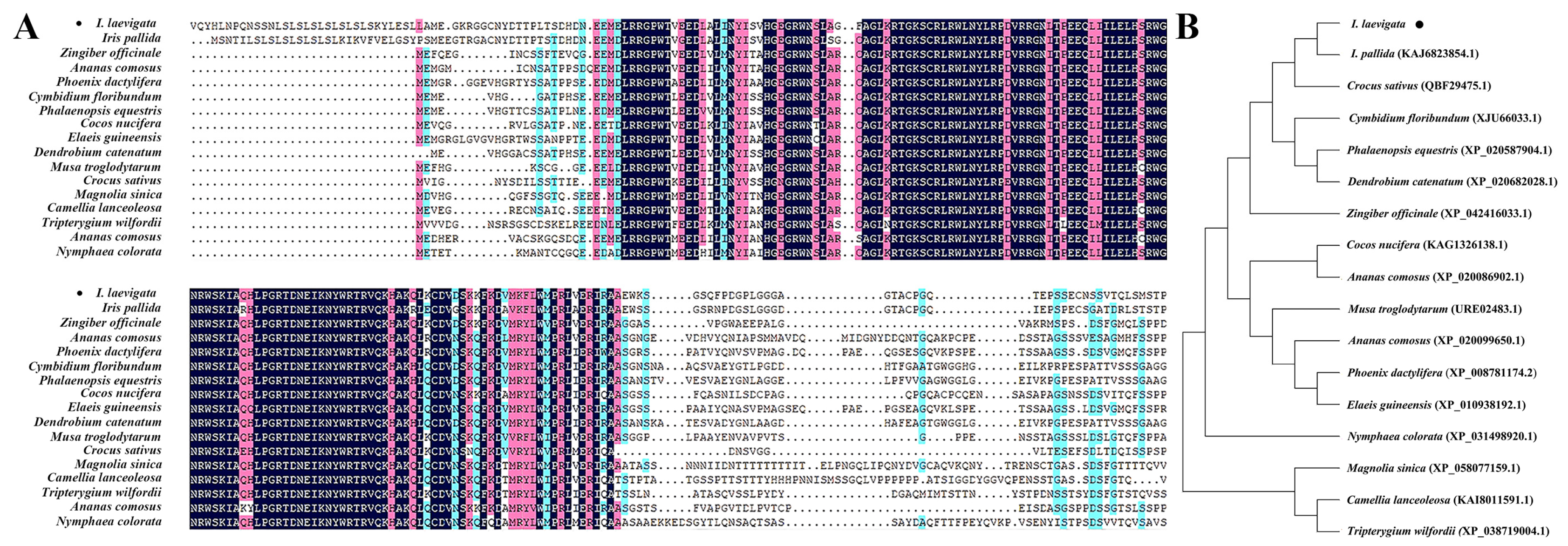
Figure 1. Sequence and phylogenetic analysis of IlMYB108. (A) Protein sequence alignment of IlMYB108 with orthologous sequences. Conservation is visualized with color gradients: blue (>50%), pink (>75%), and black (100%) identity. (B) Sequence similarity-based dendrogram of IlMYB108 and related R2R3-MYB proteins. The IlMYB108 is indicated by black dots.
Horticulturae 12 00003 g001
Figure 2. Expression of IlMYB108 in I. laevigata. (A) Tissue-specific expression profiles in roots, stems, and leaves. (B) Temporal expression dynamics under NaCl stress. (C) Temporal expression patterns under PEG-6000-induced drought stress. Different letters above bars indicate statistically significant differences (p < 0.05). Data represent mean ± SD (n = 3).
Horticulturae 12 00003 g002
Figure 3. Subcellular localization of IlMYB108 protein. From left to right, cells under bright field, blue light of DAPI nuclear localization dye, green fluorescence of GFP, and cells under superposition of GFP and brightfield. EV: pBI121-GFP empty vector. The white bar represents a scale bar of 20 μm.
Horticulturae 12 00003 g003
Figure 4. Establishment of IlMYB108 transgenic tobacco lines. (A) Schematic diagram of the pBI121:IlMYB108-GFP vector construct. (B) PCR verification of the vector. M: DL2000 DNA Marker (CWBIO, Beijing, China); Lanes 1–4 represent positive clones. (C) Molecular identification of T0 transgenic plants. M: DL2000 DNA Marker (CWBIO, Beijing, China); WT: wild-type tobacco; Lanes 1–5: independent T0 transgenic lines; H2O: no-template control; P: pBI121:IlMYB108-GFP plasmid. (D) Relative expression levels of IlMYB108 in three homozygous T3 transgenic lines. Bars labeled with different lowercase letters (a, b, c) are significantly different from each other (p < 0.05). Data represent mean ± SD (n = 3).
Horticulturae 12 00003 g004
Figure 5. Overexpression of the IlMYB108 gene enhanced the response of tobacco seeds to salt and drought stresses. Total root length of tobacco seeds in each line treated with different gradients of salt stress for 15 days (p < 0.05). Data represent mean ± SD (n = 3). The scale bar is 2 cm.
Horticulturae 12 00003 g005
Figure 6. Phenotypic responses of tobacco plants to salt and drought stresses. (A) Growth performance of five tobacco lines under control conditions. (B) Temporal progression of plant phenotypes under 300 mM NaCl treatment. (C) Temporal progression of plant phenotypes under 20% PEG-6000 treatment. The scale bar is 15 cm.
Horticulturae 12 00003 g006
Figure 7. Impact of overexpressing, IlMYB108 on photosynthetic and Tr indexes under salt and drought stress. (AF) Pn, Chl content, Fv/Fm, Gs, Ci, and Tr of tobacco five lines during 300 mM NaCl stress. (GL) Corresponding parameters during 20% PEG-6000. Different letters indicate statistically significant differences (p < 0.05). WT: wild-type; EV: empty vector control; OE1–OE3: IlMYB108-overexpressing lines. Data represent mean ± SD (n = 3).
Horticulturae 12 00003 g007
Figure 8. ROS homeostasis in IlMYB108-overexpressing tobacco under salt and drought stress. (AF) Levels of MDA, O2 and H2O2, and activities of SOD, CAT, and POD in leaves of five tobacco lines during 300 mM NaCl stress. (GL) Corresponding measurements under 20% PEG-6000 stress. Different letters indicate significant differences (p < 0.05). (M,N) NBT and DAB staining of leaf disks from five tobacco lines during NaCl treatment. (O,P) Corresponding staining under drought stress. Scale bar is 1.5 cm. Data represent mean ± SD (n = 3).
Horticulturae 12 00003 g008
Figure 9. Expression of stress-responsive genes in IlMYB108-overexpressing tobacco under salt and drought stress. (AF) Transcript levels of NtLEA5, NtLTP1, NtPMA4, NtPOD, NtSOD, and NtCAT gene in five lines during 300 mM NaCl stress. (GL) Corresponding patterns under 20% PEG-6000 stress. Different letters denote statistically significant differences (p < 0.05). Data represent mean ± SD (n = 3).
Horticulturae 12 00003 g009
Disclaimer/Publisher’s Note: The statements, opinions and data contained in all publications are solely those of the individual author(s) and contributor(s) and not of MDPI and/or the editor(s). MDPI and/or the editor(s) disclaim responsibility for any injury to people or property resulting from any ideas, methods, instructions or products referred to in the content.