Article

In Vitro Induction of Autotetraploids in the Subtropical Fruit Tree Cherimoya (Annona cherimola Mill.)

by
Carlos Lopez Encina
1,* and
José Javier Regalado
2
1
Plant Tissue Culture and Biotechnology Laboratory, IHSM “La Mayora”, CSIC-UMA, 29750 Algarrobo-Costa, Malaga, Spain
2
BIO359 Research Group–Plant Evolutionary Genomics, Department of Biology and Geology, Centro de Investigación de Colecciones Científicas de la Universidad de Almería (CECOUAL), Universidad de Almería, Ctra. de Sacramento s/n, 04120 La Cañada de San Urbano, Almería, Spain
*
Author to whom correspondence should be addressed.
Horticulturae 2026, 12(1), 25; https://doi.org/10.3390/horticulturae12010025 (registering DOI)
Submission received: 17 November 2025 / Revised: 10 December 2025 / Accepted: 20 December 2025 / Published: 26 December 2025
(This article belongs to the Section Genetics, Genomics, Breeding, and Biotechnology (G2B2))

Abstract

Polyploidization is a powerful tool in plant breeding that can induce desirable morphological and physiological modifications. This study aimed to establish an efficient in vitro protocol for inducing autotetraploid plants in cherimoya (Annona cherimola Mill. cv. Fino de Jete) using colchicine. Hypocotyl explants from seedlings germinated in vitro were treated with different colchicine concentrations (0.01–0.2%) for 24 and 48 h, and the effects on shoot regeneration and ploidy level were evaluated by flow cytometry and chromosome counting. Regeneration and survival rates decreased with increasing colchicine concentration and exposure time. The most effective treatment for autotetraploid induction was 0.1% colchicine for 24 h, yielding a 10.5% polyploidization rate with 5.8% autotetraploids. Tetraploid shoots were successfully rooted (80%) and acclimatized (100%) under greenhouse conditions. Autotetraploid plants exhibited significantly larger and more rounded leaves, higher chlorophyll contents and an increased Chl a/Chl b ratio compared with diploids, indicating enhanced photosynthetic efficiency. The induction of stable autotetraploid lines in A. cherimola provides a reliable approach for generating novel genotypes with improved physiological traits and potential tolerance to abiotic stress. These results offer valuable material for future breeding programs aimed at developing new cherimoya rootstocks and cultivars with enhanced vigor and adaptability.

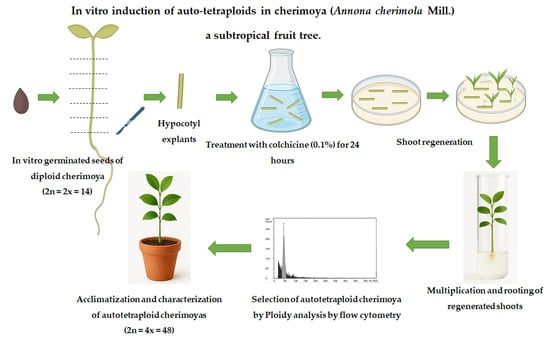
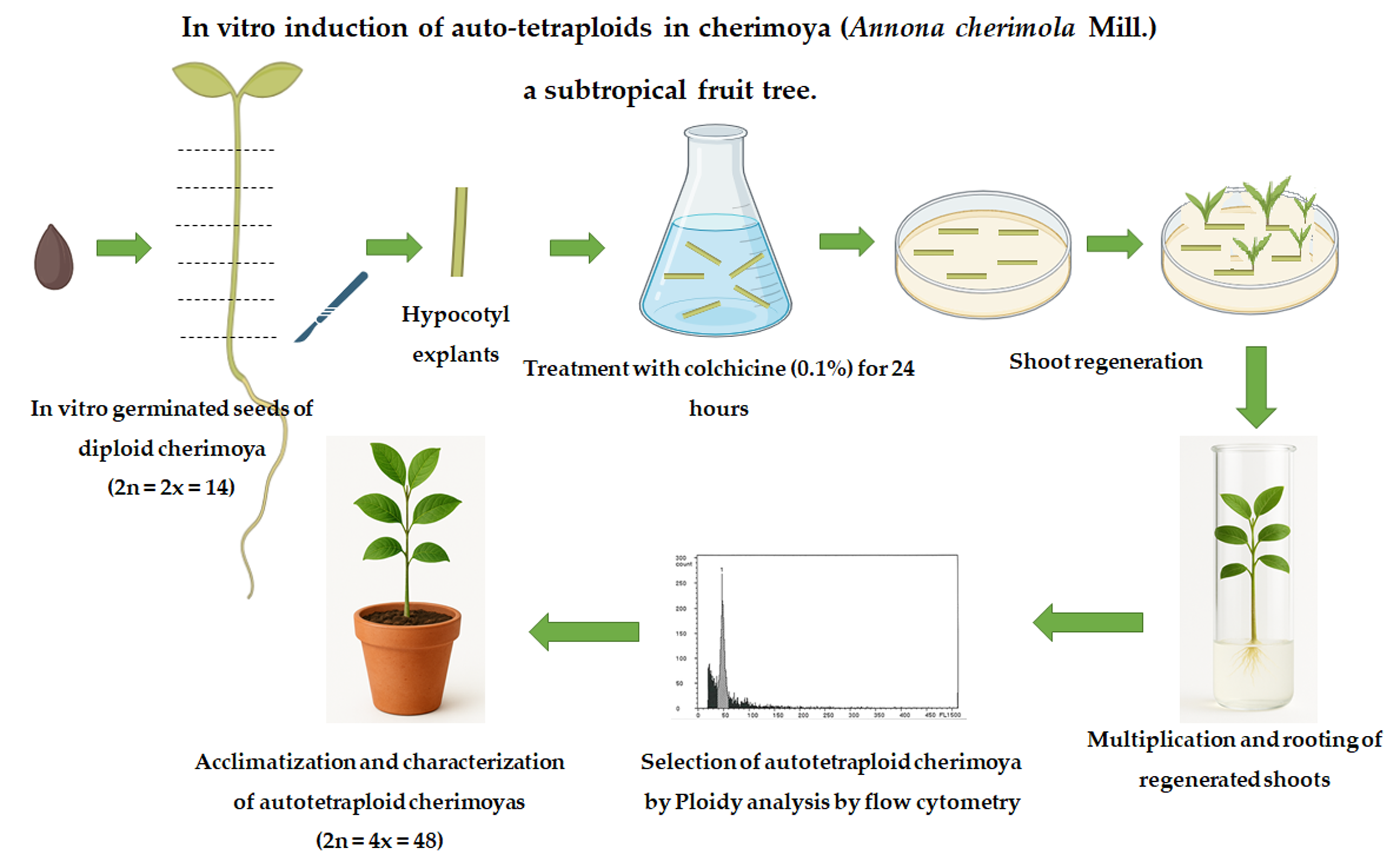
Graphical Abstract

1. Introduction

Cherimoya, Annona cherimola Mill., is the most important cultivated species in the Annonaceae family. This subtropical fruit tree species of Andean origin is well adapted to the subtropical conditions of Southern Spain, where it is an economically important crop, with Spain being the world’s major producer of cherimoya fruits and Fino de Jete the leading commercial cultivar. In vitro tissue culture techniques have been developed for the clonal propagation of Annona species, such as A. cherimola [1,2], multiple adventitious shoot regeneration has been achieved in cherimoya from hypocotyl sections [3] and this hypocotyl regeneration capability has also been reported in A. muricata [4], A. cherimola × A. squamosa (atemoya) cv. African Pride [5] and A. squamosa [6]. In our previous research on the micropropagation of A. cherimola, we developed a protocol for the regeneration of multiple adventitious buds from hypocotyl explants obtained from germinated in vitro seeds of this species [7,8]. Due the high frequency of adventitious shoot regeneration, hypocotyl is the chosen explant for the induction and recovery of polyploid plants on cherimoya.
The genus Annona include some tetraploid species, such as the pond apple (A. glabra), A. lutescens, A. mucosa, A. neolaurifolia and A. exsucca [9,10,11,12,13,14]. However, most of the species of this genera are diploid, with a somatic number of 2n = 2x = 14 chromosomes [15]. It is well known that endosperm tissues of A. cherimola are triploid, but until today the regeneration of triploid plants from cherimoya endosperm has not been reported. Recently, Martin et al. [13] reported the existence of tetraploid genotypes in other species of Annona genus, the atemoya (A. cherimola × A. squamosa), studying the progenies of the interspecific crosses and evaluating the pollen changes derived from the interspecific hybridization.
Polyploidy can result in a wide range of effects on plants, and these effects are species-dependent and strongly influenced by the ploidy and heterozygosity level of each species [16,17]. Among the most interesting effects of polyploidy appear to be the opportunity to overcome the interspecific hybridization barriers due to the different ploidy levels that exist among different species [18], to increase the flower [19] and fruit size [20], to obtain seedless fruits or fruits with a low number of seeds [21,22,23,24], to increase abiotic stress [25] and pest tolerance [26,27], and to induce higher vegetative vigor and productivity [28,29].
Chromosome duplication in plants has mainly been accomplished through the use of antimitotic substances such as colchicine, oryzalin, trifluralin, etc. [30,31]; these substances are able to induced failure of the achromatic spindle and, in this way, promote cells with anomalous chromosome numbers. In vitro treatment of shoot tips with colchicine is one of the most prevalent methods of polyploidy induction and has been successfully applied to a number of plant species, including Pyrus pyrifolia [32], Zingiber officinale [33], Punica granatum [34] and Zizyphus jujuba Mill. [35]. Polyploidy studies have been conducted in trees other than fruit trees; multiple research efforts have been carried out in forest trees, such as in Populus sp. [36,37]; Platanus sp. [38]; Robinia sp. [39]; Eucaliptus sp. [40,41], and many others, as well as in ornamental plants such as Escallonia sp., Hemerocallis sp., Petunia sp., and Primula sp. [42,43,44,45]; vegetables such as Asparagus sp. and Spinacia sp. [29,46]; and even in industrial plants such as Coffea sp. [47], Humulus sp. [48], and Hevea sp. [49]. In this article, we focus on the effects of colchicine when applied to fruit tree plant species with the goal of inducing polyploidy.
Antimitotics can be applied ex vitro over apical and axillary meristems and seeds, colchicine being the most used in these conditions, primarily embedded in carriers such as paraffin or gelling agents; however, these treatments mostly have low success rates and a high percentage of chimeras, which make this approach inefficient and unreliable to obtain polyploid plants. In vitro approaches offer the possibility of regenerating plants from single cells, reducing the number of chimeras and achieving higher success rates in different plant species, such as fruit woody species, e.g., pear (Pyrus pyrifolia N. cv. Hosui [32]), pomegranate (Punica granatum [34]), and mulberry (Morus alba L. [50]), forest trees (Populus hopeiensis [37] and Robinia pseudoacacia [51]), and vegetables, e.g., garlic (Allium sativum L. [52]) and asparagus (Asparagus officinalis [28]). This method has become the main method to induce polyploidy in plants.
However, the in vitro polyploid induction method using colchicine is associated with a higher frequency of chimeras (mixoploids) [35,53]. The results in this research area show that the percentage of mixoploids decreased with shortening the duration of treatment. An efficient method for the separation of chimera plants into pure types involves adventitious organ regeneration [54].
Antimitotics (colchicine) have been applied in vitro over a wide array of woody and herbaceous plants using different explants, e.g., shoot apices and somatic embryos [55], axillary buds [56], shoot tips [57], rhizome buds [28], leaves [44], seeds [58], cotyledon [59], calli obtained from different sources [60,61], etc.
The present work aims to establish a methodology for the in vitro induction of autotetraploid plants in A. cherimola using hypocotyl explants and analyzing the effects of colchicine over adventitious regeneration and modification of the ploidy in this species. This method is expected to reduce the rate of mixoploids obtained and maximize the amount of solid autotetraploid plants regenerated. Overall, this study aims to further the breeding and development of new rootstocks/genotypes and/or varieties for broadening the agronomical perspectives of this species.

2. Materials and Methods

2.1. Plant Material and Disinfection

Annona cherimola cv. Fino de Jete seeds were germinated in vitro following the protocol described by Padilla and Encina [7]. Briefly, intact seeds were disinfected in a 2% sodium hypochlorite solution for 40 min and soaked for 24 h in sterile distilled water plus 8.67 µM gibberellic acid (GA3). Seeds were disinfected again in a 1% sodium hypochlorite solution for 20 min under vacuum before rinsing three times in sterile distilled water before establishment in vitro. Disinfected seeds were incubated at 30 °C in the dark on paper bridges on basal MS [62] liquid medium containing (in mg L−1) thiamine-HCl (100), pyridoxine-HCl (50), nicotinic acid (50), glycine (200), i-inositol (100), and 3% sucrose, supplemented with 0.3 mg L−1 GA3. The pH was adjusted to 5.7 prior to autoclaving for 20 min at 121 °C and 1.05 Kg cm−2. The pH and autoclaving conditions were used for all culture media in this study. Hypocotyl sections (~1.5 cm) excised from 42-day-old seedlings served as the initial explants for colchicine treatments.

2.2. Induction of Autopolyploid Shoots

To induce polyploidization, hypocotyl sections (1.5 cm) were incubated in previously sterilized flasks (100 mL) containing 3 mL of filter-sterilized colchicine solutions (0, 0.01, 0.05, 0.1, 0.2%) for 24 or 48 h under gentle shaking (80 rpm). After treatment, explants were longitudinally bisected and cultured in Petri dishes with the cut surface in contact with culture medium. Five explants were cultured per dish on 25 mL of MS [62] culture medium supplemented with (mg L−1) thiamine-HCl (100), pyridoxine-HCl (50), nicotinic acid (50), glycine (200), i-inositol (100), 3% sucrose, 0.8% of Bacto-agar (Difco, Becton, Dickinson & Co., Franklin Lakes, NJ, USA), 0.15 mg L−1 BAP, and 200 mg L−1 of filter-sterilized Cefotaxime. A total of 50 explants, considered as an individual experiment, were cultured per colchicine treatment (concentration × duration). The Petri dishes we incubated at 25 ± 2 °C under a 16:8 h (L:D) photoperiod with cool-white fluorescent tubes (F40 tubes Gro-lux, (Sylvania, INESA (Group) Co., Ltd., Shanghai, China) providing 45 µmol m−2 s−1 photosynthetically active radiation (400–700 nm) for six weeks. Shoot regeneration (%) and the average number of regenerated shoots per explant with regeneration (average shoot) were recorded for each treatment.
For shoot elongation, regenerated shoots were transferred individually to 25 mL fresh MS medium supplemented with 0.15 mg L−1 BAP (without antibiotics) in 150 mm × 25 mm test tubes covered with polypropylene lids (Bellco Corp., Vineland, NJ, USA). Shoot survival percentage was recorded after six weeks in each colchicine treatment.

2.3. Ploidy Analysis by Flow Cytometry

The ploidy level of regenerated shoots from the 24 h treatments was determined during the elongation phase using flow cytometry (Ploidy Analyser PA-I; Partec GmbH, Münster, Germany). Young leaf samples (~0.5 cm2) were chopped for 30–60 s in 0.4 mL nuclei isolation buffer (commercial Partec CyStain UV precise P, high resolution DNA staining kit 05-5002, extraction buffer) to release nuclei [63]. The homogenate was filtered through a 50 µm nylon mesh (Partec 50 µm CellTrics disposable filter); subsequently, nuclei were stained with fluorescent dye (commercial Partec CyStain UV precise P, high resolution DNA staining kit 05-5002, staining buffer, about 1.6 mL). Finally, the samples were analyzed after 30 s of incubation. Diploid Annona cherimola cv. “Fino de Jete” (2n = 2x = 14) was used as an external standard. Ploidy levels were determined from G0/G1 peak channel values relative to the standard. Each analysis included over 10,000 nuclei and was repeated three times independently. Polyploid shoots were maintained in culture and reassessed after six weeks for nuclear DNA stability. The percentage of polyploidization was calculated for each colchicine concentration.

2.4. Multiplication and Rooting of Regenerated Shoots, and Acclimatization of Rooted Plantlets

The three surviving autotetraploid shoots (Shoots 2069, 2083, 2084) were multiplied to establish autotetraploid cherimoya lines. Shoots were cultured individually in 200 mL jars containing 75 mL of shoot regeneration medium that were covered with polypropylene lids and sealed with plastic film. The jars were stored at 25 ± 1 °C and with a 16 h photoperiod (45 µmol m−2 s−1). Subcultures were performed every four weeks.
Once a sufficient number of shoots was obtained from each of the autotetraploid lines, the method of Encina et al. [1] was used for rooting induction. Shoots were first incubated for 3 days in the light on MS medium supplemented with 0.1% activated charcoal and 2% sucrose, then cultured for 10 days (7 dark/3 light) on MS media containing 1.5% sucrose and 100 mg L−1 IBA. Finally, shoots were transferred to root elongation medium containing half-strength MS macroelements and 2% sucrose. After six weeks, the percentage of rooted shoots was recorded, and plantlets with well-developed roots were thoroughly washed in tap water and transplanted to polyethylene trays with 4 × 4 cm alveolus containing a mixture of autoclaved sand/soil (1:1). Potted plantlets were maintained for one month in a polyethylene tunnel with 80% relative humidity. The temperature inside the tunnel ranged between 19 °C and 30 °C, with a mean temperature of 25 °C. Acclimated plants were transferred to 9 cm diameter pots containing the same substrate and maintained at 60% relative humidity for another month, before a final transplantation into 12 cm diameter pots containing a peat/sand–soil (1:1) mixture and maintained for two months at 50% relative humidity. During the experiment, plants were watered periodically. Plants grew under 80% shade. Data on survival rates was recorded after four months.
As a control, this process was also carried out with diploid shoots, in which ploidy had not been modified by colchicine treatment.

2.5. Chromosome Observation

Once acclimatized, the nuclear DNA ploidy level of the autotetraploid plantlets was also confirmed by cytogenetic preparations. The verification of chromosome number was performed after the regenerated plants reached 3 cm in height. Meristematic root tips (8–10 mm long) were collected from tetraploid (4x) genotypes and as a control from diploid genotypes regenerated after treatments with colchicine. They were pretreated in a saturated solution of alpha-bromonaphthalene for 1 h. After thorough washing, the root tips were fixed in 3:1 ethanol–acetic acid at least for 24 h. The fixed root tips were then hydrolyzed in 1N HCl for 13 min at 60 °C and, after washing in water, stained in leuco-basic fuchsine in the dark for 30 min. Well-stained root tips were excised and squashed in 1% acetocarmine. At least 3 well-spread metaphases per shoot were counted and photographed under the microscope.

2.6. Characterization of the Leaves of Autotetraploid Cherimoyas

The leaves of autotetraploid cherimoyas were characterized two times; in vitro and ex vitro plants were used. The in vitro plants were rooted plantlets after 1 month of rooting, while the ex vitro plants were obtained after 4 months of acclimatization. Ten leaves belonging to the three tetraploid genotypes in vitro plantlets and ten leaves obtained from diploid genotypes were sampled. The lengths and widths of the expanded leaves were recorded with a Vernier caliper. For tetraploid and diploid ex vitro plants, twenty leaves were measured with a measuring tape. The results of these characterization measurements were analyzed and compared to investigate differences between the two ploidy levels.
Once the size was analyzed, the same leaves were used to assess the chlorophyll content. The analysis of the chlorophyll content in cherimoya leaves was carried out by applying the methods developed by Goodwin [64]; the results are expressed in mg g−1 of fresh weight (FW) for leaf samples. Again, the results of these characterization measurements were analyzed and compared to investigate differences between the two ploidy levels.

2.7. Statistical Analysis

All data obtained in this work were analyzed using the SPSS software package (version 22.0; SPSS Inc., Chicago, IL, USA). Binomial variables, such as % shoot regeneration, % shoot survival, and % polyploidization, were analyzed via Generalized Linear Models using Logit as the link function and Binomial as the probability distribution. Pairwise comparisons among groups were performed by Fisher’s least significant difference (LSD) test. Normal variables, such as the number shoots regenerated by the explants and leaf length, width, and chlorophyll concentration, were analyzed by one-way ANOVA, using a HSD-Tukey test in the post hoc analysis for comparisons among groups

3. Results

3.1. Induction of Autopolyploid Shoots

After treating with colchicine for 24 h or 48 h, the hypocotyl explants were incubated on the regeneration media, where white adventitious buds began to grow all over the epidermal area of the explant. Some of these buds finally became adventitious shoots (Figure 1). The percentage of explants with regenerated shoots (% shoot regeneration) and the average number of regenerated shoots per explant with regeneration (average shoot number) for each colchicine treatment are shown in Table 1. In both control treatments (24 h and 48 h), shoot regeneration reached 100%, with an average of 4.5 ± 1.0 and 4.3 ± 1.0 shoots per explant, respectively. For the 24 h colchicine treatments, shoot regeneration decreased progressively as colchicine concentration increased. Only 12% of explants treated with 0.2% colchicine produced shoots. The reduction in the number of regenerated shoots per explant was moderate at the lower and intermediate colchicine concentrations, remaining similar to the control values. However, in the 0.2% treatment, each regenerating explant produced only a single shoot.
The 48 h treatments were considerably more detrimental to plant growth, regardless of colchicine concentration. The highest regeneration rate observed under these conditions was 32 ± 7% at 0.01% colchicine, with only one shoot regenerated per explant in all cases. In preliminary trials, colchicine treatment was found to occasionally induce contamination during the regeneration phase. The inclusion of 200 mg L−1 Cefotaxime in the regeneration medium effectively prevented microbial growth without affecting the regeneration frequency, which remained at 100% in the control treatments. The antibiotic was not required in subsequent micropropagation stages.
The toxic effects of colchicine persisted during the elongation phase of the regenerated shoots, even after individualization and ploidy evaluation. In the 24 h treatments, the shoot survival rate decreased progressively as the colchicine concentration applied to the initial explants increased (Table 1). Only 22 ± 14% of the regenerated shoots derived from explants treated with 0.2% colchicine for 24 h survived after 6 weeks of elongation. Considering the low regeneration percentage of this treatment (18 ± 5%) and the fact that only a single shoot was regenerated per explant, the outcome was that, after 12 weeks, only two elongated shoots survived. Due to the poor performance of this treatment, it was excluded from further analysis and the ploidy level of the surviving shoots was not determined. A comparable trend was observed for all 48 h treatments, where the shoot survival rate exceeded 20% only in the treatment with 0.01% colchicine (21 ± 9%). Consequently, after 12 weeks of culture, almost no shoots remained in these treatment groups. Therefore, the 48 h colchicine treatments were ruled out as a viable option for obtaining polyploid cherimoya genotypes due to the excessive toxicity of colchicine under these conditions.

3.2. Ploidy Analysis by Flow Cytometry and Selection of Autotetraploid Shoots

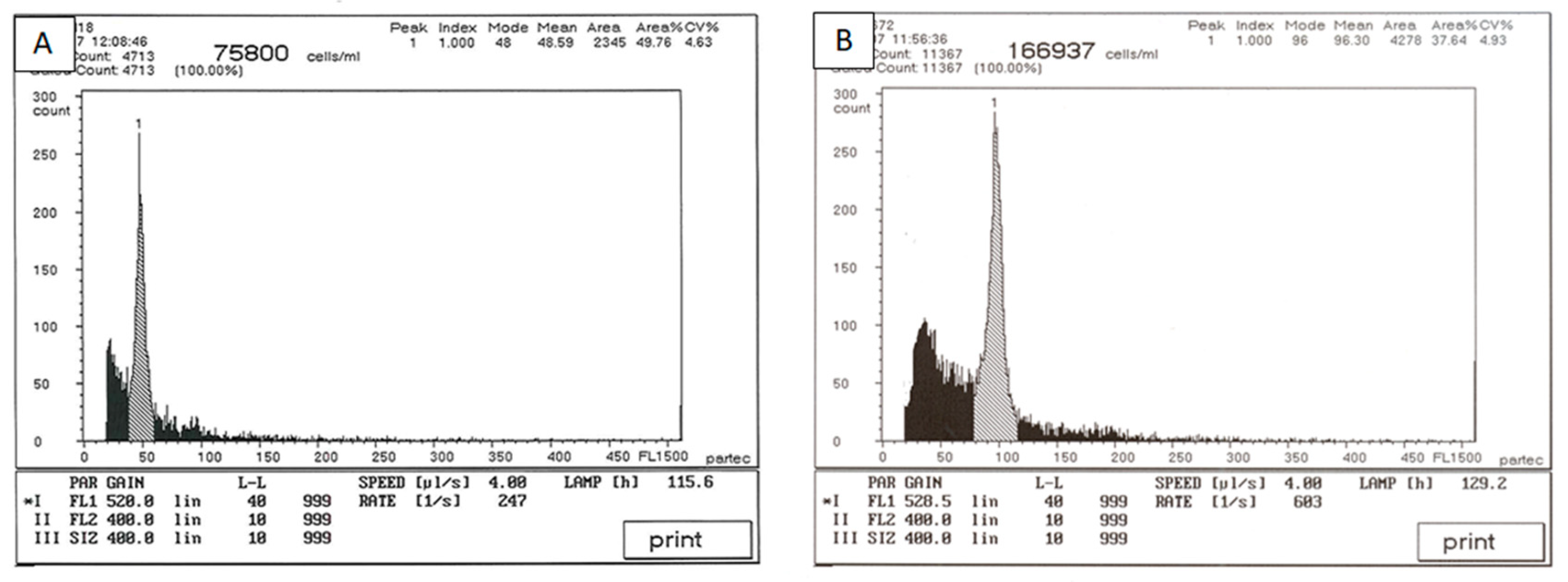
The ploidy level of 340 shoots regenerated from hypocotyl segments treated with different colchicine concentrations for 24 h were evaluated by flow cytometry: 155 shoots from 0.01%, 99 shoots from 0.05%, and 86 shoots from 0.1% colchicine treatments (Figure 2). Additionally, 20 shoots regenerated from untreated hypocotyl segments were analyzed as controls.
The number of shoots exhibiting ploidy modifications for each treatment is summarized in Table 2. The polyploidization rate increased with colchicine concentration, reaching 10.5 ± 3.3% in the 0.1% treatment, although this difference was not statistically significant compared to the 0.05% treatment (4.0 ± 2.0%). Colchicine induced the appearance of tetraploid, triploid, and mixoploid shoots. There were no significant differences in triploid induction rates across the different treatments. Tetraploid shoots were induced at 0.05% colchicine (2.0 ± 1.4%) and 0.1% colchicine (5.8 ± 2.5%), without significant differences between these concentrations. Mixoploid shoots were observed only at the highest colchicine concentration (0.1%).
In total, 15 polyploid shoots were obtained from the different colchicine treatments: seven tetraploids, five triploids, and three mixoploids (Table 3). However, due to the toxicity of colchicine, some of these shoots stopped growing, gradually turned brown and necrotic, and eventually died during the elongation and multiplication phases following polyploid confirmation by flow cytometry. Among the polyploid shoots, the surviving shoots included three tetraploids (43 ± 19%), two triploids (40 ± 22%), and two mixoploids (67 ± 27%). No significant differences in survival rate were observed among the different ploidy levels. The three surviving tetraploid shoots were selected to establish three autotetraploid cherimoya lines.

3.3. Establishment of Autotetraploid Lines and Verification of Ploidy Level by Cytological Analysis

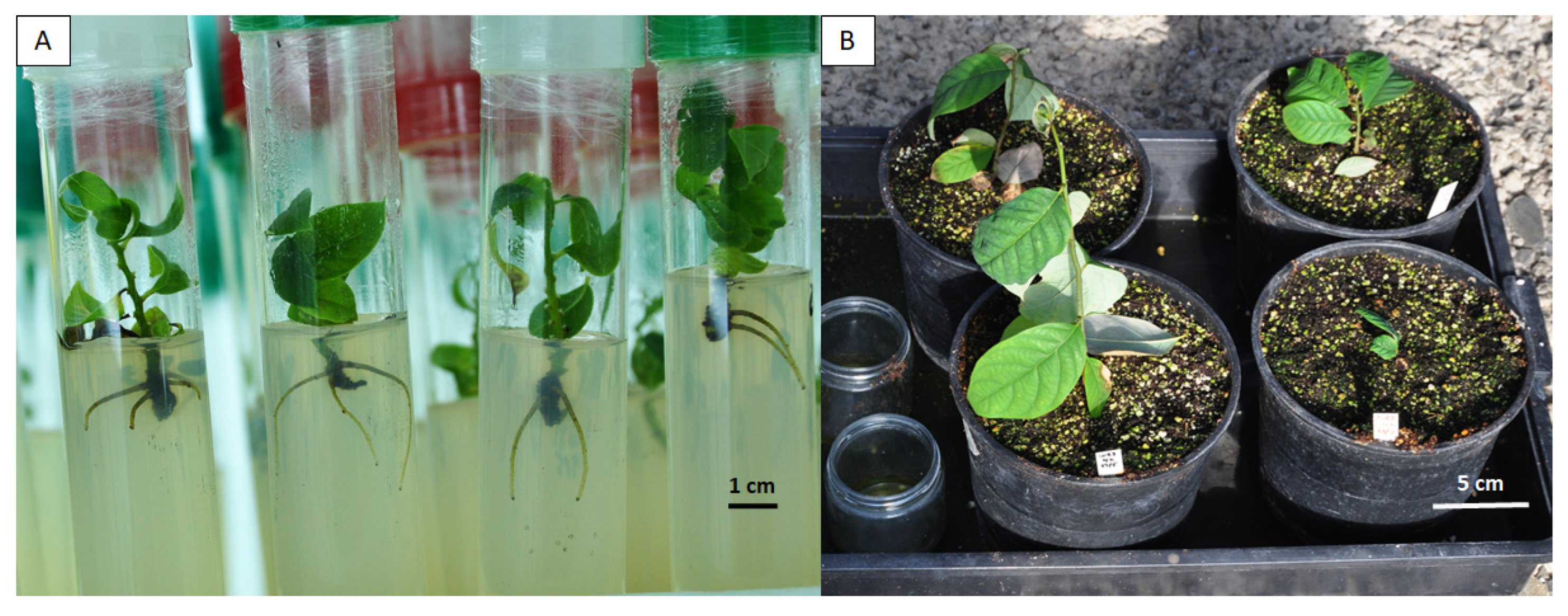
Once a sufficient number of shoots had been obtained from each autotetraploid line, rooting was induced following the protocol of Encina et al. [1]. Approximately 80% of the tetraploid shoots successfully developed roots in vitro (Figure 3A). All rooted plantlets were subsequently acclimatized in the greenhouse with a 100% survival rate (Figure 3B). In both the rooting and acclimatization stages, no significant differences were observed between autotetraploid and diploid control plants.
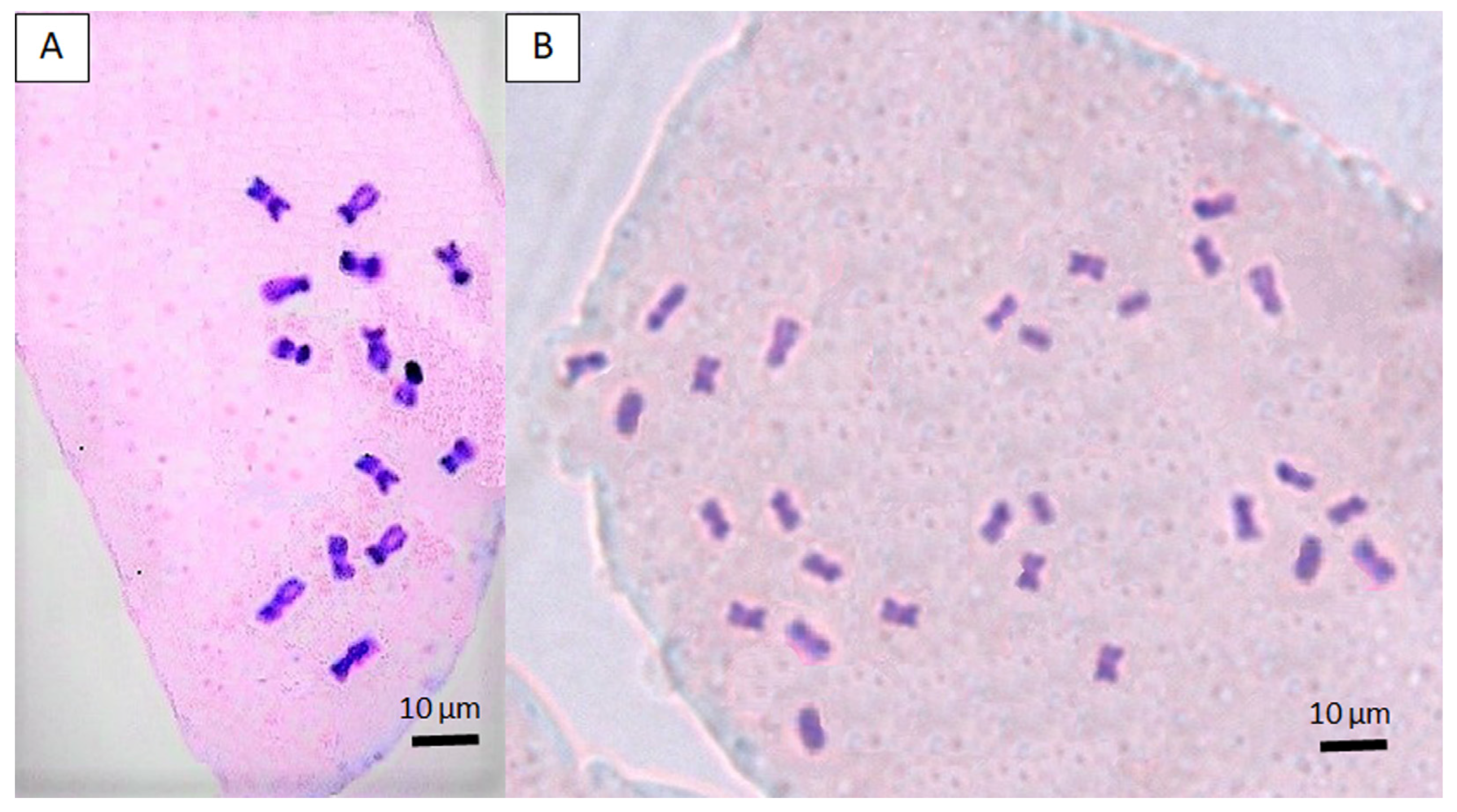
Once acclimatized, the chromosome number of the autotetraploid plants was verified via cytological analysis. The results confirmed that these plants possessed 28 chromosomes (2n = 4x = 28), consistent with the expected tetraploid level (Figure 4B). In contrast, cytological examination of diploid control plants of Annona cherimola confirmed the typical chromosome number of 14 (2n = 2x = 14) (Figure 4A).

3.4. Characterization of the Leaves of Autotetraploid Cherimoyas

Leaf size measurements of diploid and autotetraploid A. cherimola plantlets, both in vitro and ex vitro, are presented in Table 4. In all cases, autotetraploid leaves were significantly larger than the leaves of diploid plants, exhibiting greater leaf length and width. Regarding leaf shape, expressed as the leaf index (length/width) [65], in vitro autotetraploid plantlets exhibited significantly lower values, indicating more rounded leaves compared to diploid plantlets. This difference, which is associated with genome duplication, was reduced after acclimatization but remained statistically significant in ex vitro plants.
Under in vitro conditions, the contents of chlorophyll a, chlorophyll b, and total chlorophyll, as well as the chlorophyll a/b ratio, were all higher in leaves of autotetraploid A. cherimola plants compared with diploid plants (Table 5). This increase, which is associated with polyploidization, was maintained after acclimatization to ex vitro conditions. However, in both diploid and autotetraploid plants, the concentrations of chlorophyll a, chlorophyll b, and total chlorophyll decreased significantly after transferring them to the greenhouse, likely due to the different light conditions during growth. The reduction was more pronounced for chlorophyll b than for chlorophyll a, resulting in a higher chlorophyll a/b ratio in acclimatized plants. Despite this increase, autotetraploid plants consistently exhibited a higher chlorophyll a/b ratio than diploid plants, both in vitro and ex vitro.

4. Discussion

4.1. Method of Polyploidy Induction

We agree with several authors [50,57,59,60,66,67] who concluded that shoots or plants regenerated from a single cell are optimal for inducing stable polyploid genotypes, minimizing the possibility of obtaining mixoploid plants with a poor stability at the ploidy level. Using an adventitious method to regenerate shoots and plantlets from cherimoya explants, our goal was minimizing the rate of mixoploid plants regenerated, because the adventitious shoot regenerated started from a single meristematic cell.
Among the possible methods available for polyploidy induction, we selected hypocotyl explants of cherimoya (Annona cherimola), which are well known [3,8] to produce multiple adventitious buds and shoots. Rêgo et al. [66] also use hypocotyl fragments as explants (hypocotyl fragments) to induce autotetraploid plants in Passiflora edulis; Wu et al. [68] also use the adventitious regeneration of leaf petiole segments, which is also able to regenerate multiple buds and shoots, as happens with cherimoya hypocotyl, to induce autotetraploid plants of Actinidia chinensis with good results.

4.2. Rate of Autotetraploid Induction and Tetraploid Survival

In Annona cherimola, working with hypocotyl segments, the level of efficiency of the best treatment applied to induce in vitro autotetraploid genotypes (0.1% of colchicine during 24 h) was 5.8 ± 2.5%, which also produced 3.5 ± 2.0% of mixoploid plants and 1.2 ± 1.2% of triploid plants (Table 2). In other woody fruit species, Gu et al. [35], working with the shoot tips of Ziziphus jujuba, obtained tetraploids at a frequency of over 5%, similar to that for cherimoya; however, the survival rate of tetraploid material is higher for cherimoya (43 ± 19%%) than for jujube (28.3%). Cui et al. [67] obtained a higher tetraploid induction rate (6.7%) using leaf explants of Ziziphus in vitro. Again this rate is better than that in cherimoya. Previously, Shi et al. [60], working ex vitro to induce adventitious regeneration in branches, obtained the highest results for jujube, obtaining 9.6% tetraploid shoots, no mixoploid plants, and a survival of 40%. All autotetraploid plants were stable. Blasco et al. [58], working with ungerminated seeds of Eriobotrya japonica and 24 h colchicine (0.5%) pulses, obtained 4.2% polyploid plants and a survival rate of 85.4% for the best treatment. Wu et al. [68], working with Actinidia chinensis, leaf petiole explants, and adventitious bud regeneration, obtained a 40% autotetraploid induction with 50–60% survival. Later, Li et al. [69], dipping kiwi (Actinidia chinensis) leaf explants over 30 h in 60 mg L−1 colchicine, reached 26% polyploidization with a survival rate of 83.3%. In pear (Pyrus pyrifolia), Kadota and Niimi [32] failed to induce tetraploids (0%) but obtained 19.2% tetraploids after separating the chimeras generated. Sun et al. [70], working with Pyrus communis, obtained in vitro triploid, tetraploid, and mixoploid genotypes with leaf explants incubated in 0.4% (w/v) colchicine for 24, 48, or 72 h. The best results for survival (89.1%) and regeneration rate (50.2%) were for a 24 h pulse treatment with 0.4% colchicine; this achieved a polyploid induction rate of 5.1%. The best polyploid induction rate (6.1) was obtained with a 48 h pulse of colchicine, but the shoot regeneration rate was extremely low (17.1%). Liu et al. [71], using Pyrus betulaefolia shoot tips, obtained a 6.67–13% rate of polyploidization and 60–90% survival.
Citrus species have been widely studied in the search for advantages linked to ploidy modifications; the results have indicated that the effects and success of polyploidization treatments are species-dependent and linked to the type of explants used and the method of ploidy induction applied. Thus, in pummelo (Citrus grandis), Kainth and Grosser [72], applying 0.1% colchicine for 12 h using germinated seeds belonging to different cultivar selections as explants, produced 1% to 2% autotetraploid plants and a similar percentage of mixoploid plants, with a survival rate ranging from 40 to 53%. The use of different methods for adventitious regeneration from the basal callus obtained from in vitro developed seedlings of different cultivars of pummelo, and a treatment consisting in 4h pulse of colchicine (0.1% w/v), allowed to Grosser et al. [57] to increase the autotetraploid induction rate of stable tetraploid plants to 8%, there was also 2% mixoploid plants. This protocol of polyploidization through adventitious organogenesis is more efficient than the one developed in 2010 that consisted of direct organogenesis. No data on survival rate was provided. Wulandari et al. [73] also succeeded in inducing tetraploids of pummelo by again applying 0.1% colchicine for 1h with shoot tip explants immersed in the colchicine solution. Shoot tip explants appear to be the explant of choice to obtain a high rate of tetraploid plants (66.6%) (plus 26.7% mixoploid plants). Wu and Mooney [74], working with embryogenic callus from Citrus reticulata × Citrus sinensis, obtained 5% autotetraploid plants and 1.6% mixoploids, with a 7.4% survival rate and 100% stability. Aleza et al. [22] obtained tetraploid (4.5%, 3.3%, 3.3%) and mixoploid plants (2.3%, 11.7%, 1.7%) working with three different citrus varieties—“Clemenules” and “Fina” clementine and “Moncada” mandarin—and using apical tips as explants, 0.1% colchicine, and micrografting methods. The achieved survival rates of 15%, 51.7%, and 8.3%, respectively. These data are quite similar in percentage to those obtained in cherimoya. Later, Elyazid et al. [75], working with seeds of “Balady” mandarins and 0.1% colchicine for 48 h, improved the tetraploid induction efficiency (55.3%) and achieved a survival rate of 61.1%. Previously, Zhang et al. [76], working with callus from ‘Anliucheng’ sweet orange (Citrus sinensis), recorded similarly high values (54.4%) for autotetraploid genotype induction through the regeneration of somatic embryos via treatment with autoclaved colchicine (1000 (mg L−1) on solid media for 48 h; no data on survival rate were available. Jokary et al. [77], working with stem nodal segments of Mexican lime (Citrus aurantifolia), obtained the best rate of tetraploid induction by applying 250 mg L−1 colchicine for 72h (27.5% autotetraploids, plus 25.6% mixoploids, 36.3% survival). Later, Bora et al. [78], working with shoot-tip-derived explants of acid lime (Citrus aurantifolia), obtained a 13.3% tetraploids plus 20% triploids and 6.7% mixoploids after a treatment with 500 μM colchicine over 15 days. The survival rate was 46.7%. Both of these works show some differences in polyploid induction rate, probably due to the differences in explant type and colchicine treatment. Both sets of authors reported better results for autotetraploid induction than those obtained in cherimoya following our protocols; the triploid induction rate is higher but the survival rate is similar.
In other Citrus species, different authors have obtained better polyploidization rates. For example, Zeng et al. [79], working with cell lines from protoplasts of ‘Meiwa’ kumquat (Fortunella crassifolia), obtained 19.2% autotetraploid genotypes and 26.9% mixoploid genotypes, but survival was zero. Cimen [80], working with seed-derived explants of citrange C35 (Citrus sinensis × Poncirus trifoliata) and 0.1% colchicine for 48 h, obtained a 15% tetraploid induction, plus 20% mixoploid plants, with a survival rate of 40%. Jokary et al. [77], working with stem nodal segments of sour orange (Citrus aurantium), obtained 25.5% tetraploids plus 27.7% mixoploids after 96 h treatment with 250 mg L−1 colchicine; the survival rate was 31.3%. Narukulla et al. [81], working with different types of Citrus, including Rough lemon (Citrus jambhiri), Rangpur lime (Citrus limonia), and Alemow (Citrus macrophylla), and using seed-derived explants with colchicine 0.1% for 24 h, obtained rates of 18.3% autotetraploid plants and 3.7–7.4% mixoploid plants; the survival rate was from 22.3% to 48.4% depending on species. These species were also associated with better polyploidization rates than cherimoya or other Citrus species.
Notzuka et al. [82], working with axillary bud explants of Vitis vinifera treated with 0.05% colchicine for 24–48 h, obtained a 25% rate of autotetraploidy plus 5% mixoploid genotypes and 35–71% survival. Yang et al. [83], using embryogenic callus as an explant of Vitis and 20 mg L−1 colchicine for 24h, induced 4% of tetraploid plants with 68% survival. Sinski et al. [55], using somatic embryos (SEs) and shoot apices of Vitis sp. treated with 20–1250 µM of colchicine, obtained 5% tetraploid plants in both explants plus 3% mixoploid genotypes. The survival rate was between 31.3 and 28.3% for shoot apices and under 20% for SEs. Xie et al. [61], using shoot tips of Vitis × Muscadinia treated with 625 µM colchicine for 72 h, induced tetraploid plants (35.1%) with 50.0% survival.

4.3. Characterization of the Leaves of Autotetraploid Cherimoyas

The most widely recognized and general effect of polyploidization in plants is an increase in cell size [27,84]. Cells with higher chromosome numbers, and consequently greater DNA content, expand to maintain a balanced ratio between their nuclear and cytoplasmic volumes. In tetraploid cells, the volume is roughly twice that of their diploid counterparts, resulting in an approximately 1.5-fold increase in cell surface area [28,85]. Polyploid plants can increase both their overall size and the size of certain organs compared to diploid plants [28,29], although this increase does not always occur during polyploidization [86], as the enlargement of individual cells can be offset by a reduction in cell number, maintaining a similar organ size [87]. The leaves of autotetraploid plants are one of the organs where an increase in size is most commonly observed. Our results show a significant increase in leaf length (+30%) and width (+70%) for in vitro polyploid cherimoya plants (Table 4). Although this increase is smaller, it is maintained in acclimatized plants, which have a 20% increase in leaf length and a 34% increase in leaf width (Table 4). Similar increases have been reported recently in other fruit species, such as sour jujube (Ziziphus acidojujuba), where the length and width of leaves were 7.85% and 56.56% higher [88]; in lemon (Citrus limon L.), where leaf length doubled [89]; in Citrus wilsonii, where tetraploids had wider leaves (~1.42× the width of diploids) [90]; in Mexican lime (Citrus × aurantifolia), where leaf area increased by 52.6% [77]; and in sour orange (Citrus × aurantium), where the leaf area increased by 48.6% [77].
The increases in leaf length and width induced by polyploidization are usually not proportional, so polyploidization can also produce changes in leaf shape that are reflected in the leaf index. The leaves of autopolyploid plants are generally more rounded. This is also observed in our work, where the leaves of autopolyploid cherimoyas exhibit lower leaf indexes (more rounded leaves) than diploid ones both in vitro and ex vitro (1.8 ± 0.1 vs. 2.3 ± 0.1 and 1.6 ± 0.1 vs. 1.8 ± 0.2, respectively) (Table 4). This more rounded leaf shape has also been reported recently in autopolyploid individuals of sour jujube (Ziziphus acidojujuba) [88], Chinese white pear (Pyrus bretschneideri) [91], and apple (Malus × domestica) [92]. These morphological changes in leaf morphology appear to contribute, in some fruit species such as apple and other species, to an increased tolerance to stresses, particularly water and salinity stress, when compared to the original diploid materials [27,92].
Finally, autopolyploid plants often exhibit higher concentrations of chlorophylls compared to their diploid counterparts; this increase is typically associated with greater chloroplast number and size [93,94,95]. In our cherimoya plants, polyploidization has also resulted in an increase in chlorophyll content under both in vitro and ex vitro conditions; this is especially true in the case of chlorophyll a (Table 5). In recent years, similar increases in chlorophyll levels in autopolyploid individuals have been reported for several fruit tree species, such as Mexican lime (Citrus × aurantifolia) and sour orange (C. × aurantium) [77], apple tree (Malus × domestica) [92,96], sour jujube (Ziziphus acidojujuba) [88], Chinese white pear (Pyrus bretschneideri) [91], and Citrus wilsonii [90]. Tetraploid cherimoyas also had a higher Chl a/Chl b ratio than diploid ones (Table 5). A moderate and controlled increase in the Chl a/Chl b ratio is associated with greater stress tolerance, as it reflects a protective reorganization of the photosynthetic apparatus that limits excess energy and oxidative damage [97,98]. Higher photosynthetic activity and efficiency have also been reported in autopolyploid fruit trees [88,90,96]. Polyploidization induces epigenetic and gene expression changes, leading to structural, physiological, and biochemical alterations in polyploids relative to diploids [99,100]. These changes allow polyploid plants to maintain higher photosynthetic rates under stress conditions, making autopolyploid trees more tolerant to abiotic stresses such as drought and high salinity [27,92].

5. Conclusions

This study successfully established an efficient in vitro protocol for the induction of autotetraploid plants in Annona cherimola cv. Fino de Jete using colchicine treatments applied to hypocotyl explants. The optimal conditions were 0.1% colchicine for 24 h, which yielded a 10.5 ± 3.3% polyploidization rate where 5.8 ± 2.5% of shoots were autotetraploids. Three autotetraploid lines were successfully rooted and acclimatized, maintaining stable ploidy levels, as confirmed by flow cytometry and cytological analyses. Tetraploid cherimoya plants exhibited significant morphological and physiological modifications compared with diploids, including increased leaf size, a more rounded leaf shape, and higher chlorophyll content, particularly chlorophyll a. The higher Chl a/Chl b ratio observed in autotetraploids suggests enhanced photosynthetic efficiency, a characteristic interesting for future breeding studies.
These results demonstrate that colchicine-induced polyploidization in A. cherimola can generate stable autotetraploid genotypes with desirable physiological traits. The autotetraploid lines produced in this work constitute valuable plant material for future breeding programs, particularly for the development of new rootstocks and cultivars with enhanced vigor and tolerance to abiotic stress.

Author Contributions

Both authors, C.L.E. and J.J.R., contributed similarly to the conceptualization, methodology, investigation, writing—original draft preparation, and writing—review and editing of this article. All authors have read and agreed to the published version of the manuscript.

Funding

This research received no external funding.

Data Availability Statement

The original contributions presented in the study are included in the article, further inquiries can be directed to the corresponding author.

Acknowledgments

The authors are thankful to IHSM Cherimoya Germplasm Bank for providing the cherimoya plant material.

Conflicts of Interest

The authors declare no conflicts of interest.

Abbreviations

The following abbreviations are used in this manuscript:
BAP6-Benzylaminopurine
GA3Gibberellic acid
IBAIndole-3-butyric acid
MSMurashige and Skoog medium

References

  1. Encina, C.L.; Barceló-Muñoz, A.; Herrero-Castaño, A.; Pliego-Alfaro, F. In vitro morphogenesis of juvenile Annona cherimola Mill. bud explants. J. Hortic. Sci. 1994, 69, 1053–1059. [Google Scholar] [CrossRef]
  2. Padilla, I.M.G.; Encina, C.L. Micropropagation of adult cherimoya (Annona cherimola Mill.) cv. Fino de Jete. Vitr. Cell. Dev. Biol.-Plant 2004, 40, 210–214. [Google Scholar] [CrossRef]
  3. Jordan, M. Multiple shoot formation and rhizogenesis from cherimoya (Annona cherimola Mill.) hypocotyls and petiole explants. Gartenbauwissenschaft 1988, 53, 234–237. [Google Scholar]
  4. Lemos, E.E.P.; Blake, J. Micropropagation of juvenile and mature Annona muricata L. J. Hortic. Sci. 1996, 71, 395–403. [Google Scholar] [CrossRef]
  5. Rasai, S.; Kantharajah, A.; Dodd, W. The effect of growth regulators, source of explants and irradiance on in vitro regeneration of atemoya. Aust. J. Bot. 1994, 42, 333–340. [Google Scholar] [CrossRef]
  6. Lemos, E.E.P.; Blake, J. Micropropagation of juvenile and adult Annona squamosa. Plant Cell Tissue Organ Cult. 1996, 46, 77–79. [Google Scholar] [CrossRef]
  7. Padilla, I.M.G.; Encina, C.L. In vitro germination of cherimoya (Annona cherimola Mill.) seeds. Sci. Hortic. 2003, 97, 219–227. [Google Scholar] [CrossRef]
  8. Encina, C.L.; Carmona-Martín, E.; Arana-López, A.; Padilla, I.M.G. Biotechnology applied to Annona species: A review. Rev. Bras. Frutic. 2014, 36, 17–21. [Google Scholar] [CrossRef]
  9. Bowden, W.M. Chromosome numbers in the Annonaceae. Am. J. Bot. 1948, 35, 377–381. [Google Scholar] [CrossRef]
  10. Morawetz, W. Remarks on karyological differentiation patterns in tropical woody plants. Plant Syst. Evol. 1986, 152, 49–100. [Google Scholar] [CrossRef]
  11. Morawetz, W. Systematics and karyoevolution in Magnoliidae: Tetrameranthus as compared with other Annonaceae genera of the same chromosome number. Plant Syst. Evol. 1986, 154, 147–173. [Google Scholar] [CrossRef]
  12. Anuragi, H.; Dhaduk, H.L.; Kumar, S.; Dhruve, J.J.; Parekh, M.J.; Sakure, A.A. Molecular diversity of Annona species and proximate fruit composition of selected genotypes. 3 Biotech 2016, 6, 204. [Google Scholar] [CrossRef]
  13. Martin, C.; Viruel, M.A.; Lora, J.; Hormaza, J.I. Polyploidy in fruit tree crops of the genus Annona (Annonaceae). Front. Plant Sci. 2019, 10, 99. [Google Scholar] [CrossRef] [PubMed]
  14. Serbin, G.M.; Pinangé, D.S.B.; Machado, R.M.; Vasconcelos, S.; Amorim, B.S.; Clement, C.R. Relationship between fruit phenotypes and domestication in hexaploid populations of biribá (Annona mucosa) in Brazilian Amazonia. PeerJ 2023, 11, e14659. [Google Scholar] [CrossRef] [PubMed]
  15. Talavera, A.; Fernández-Pozo, N.; Matas, A.J.; Hormaza, J.I.; Bombarely, A. Genomics in neglected and underutilized fruit crops: A chromosome-scale genome sequence of cherimoya (Annona cherimola Mill., cv. “Fino de Jete”). Plants People Planet 2023, 5, 408–423. [Google Scholar] [CrossRef]
  16. Bretagnolle, F.; Thompson, J.D. Gametes with the somatic chromosome number: Mechanisms of their formation and role in the evolution of autopolyploid plants. New Phytol. 1995, 129, 1–22. [Google Scholar] [CrossRef]
  17. Eng, W.-H.; Ho, W.S. Polyploidization using colchicine in horticultural plants: A review. Sci. Hortic. 2019, 246, 604–617. [Google Scholar] [CrossRef]
  18. Sattler, M.C.; Carvalho, C.R.; Clarindo, W.R. The polyploidy and its key role in plant breeding. Planta 2015, 241, 281–296. [Google Scholar] [CrossRef] [PubMed]
  19. El-Nashar, Y.I.; Ammar, M.H. Mutagenic influences of colchicine on phenological and molecular diversity of Calendula officinalis L. Genet. Mol. Res. 2016, 15, 1–15. [Google Scholar] [CrossRef]
  20. Wu, J.H.; Ferguson, A.R.; Murray, B.G.; Jia, Y.; Datson, P.M.; Zhang, J. Induced polyploidy dramatically increases the size and alters the shape of fruit in Actinidia chinensis. Ann. Bot. 2012, 109, 169–179. [Google Scholar] [CrossRef]
  21. Park, S.M.; Wakana, A.; Kim, J.H.; Jeong, C.S. Male and female fertility in triploid grapes (Vitis complex) with special reference to the production of aneuploid plants. Vitis 2002, 41, 11–20. [Google Scholar]
  22. Aleza, P.; Juárez, J.; Ollitrault, P.; Navarro, L. Production of tetraploid plants of non-apomictic citrus genotypes. Plant Cell Rep. 2009, 28, 1837–1846. [Google Scholar] [CrossRef]
  23. Aleza, P.; Juárez, J.; Cuenca, J.; Ollitrault, P.; Navarro, L. Extensive citrus triploid hybrid production by 2x × 4x sexual hybridizations and parent-effect on the length of the juvenile phase. Plant Cell Rep. 2012, 31, 1723–1735. [Google Scholar] [CrossRef]
  24. Wang, X.; Cheng, Z.; Zhi, S.; Xu, F. Breeding triploid plants: A review. Czech J. Genet. Plant Breed. 2016, 52, 41–54. [Google Scholar] [CrossRef]
  25. Li, M.; Guo, Y.; Liu, S.; Zhao, Y.; Pang, X.; Li, Y. Autotetraploidization in Ziziphus jujuba Mill. var. spinosa enhances salt tolerance conferred by active, diverse stress responses. Environ. Exp. Bot. 2019, 165, 92–107. [Google Scholar] [CrossRef]
  26. Sanford, J.C. Ploidy manipulations. In Methods in Fruit Breeding; Moore, J.N., Janick, J., Eds.; Purdue University Press: West Lafayette, IN, USA, 1983; pp. 100–123. [Google Scholar]
  27. Tossi, V.E.; Martínez Tosar, L.J.; Laino, L.E.; Iannicelli, J.; Regalado, J.J.; Escandón, A.S.; Baroli, I.; Causin, H.F.; Pitta-Álvarez, S.I. Impact of polyploidy on plant tolerance to abiotic and biotic stresses. Front. Plant Sci. 2022, 13, 869423. [Google Scholar] [CrossRef]
  28. Carmona-Martín, E.; Regalado, J.J.; Raghavan, L.; Encina, C.L. In vitro induction of autooctoploid asparagus genotypes. Plant Cell Tissue Organ Cult. 2015, 121, 249–254. [Google Scholar] [CrossRef]
  29. Regalado, J.J.; Carmona-Martín, E.; Castro, P.; Moreno, R.; Gil, J.; Encina, C.L. Study of the somaclonal variation produced by different methods of polyploidization in Asparagus officinalis L. Plant Cell Tissue Organ Cult. 2015, 122, 31–44. [Google Scholar] [CrossRef]
  30. Hansen, N.J.P.; Andersen, S.B. Efficient production of doubled haploid wheat plants by in vitro treatment of microspores with trifluralin or APM. Plant Breed. 1998, 117, 401–405. [Google Scholar] [CrossRef]
  31. Eeckhaut, T.; Werbrouck, S.; Leus, L.W.H.; Van Bockstaele, E.; Debergh, P. Chemically induced polyploidization in Spathiphyllum wallisii Regel through somatic embryogenesis. Plant Cell Tissue Organ Cult. 2004, 78, 241–246. [Google Scholar] [CrossRef]
  32. Kadota, M.; Niimi, Y. In vitro induction of tetraploid plants from a diploid Japanese pear cultivar (Pyrus pyrifolia N. cv. Hosui). Plant Cell Rep. 2002, 21, 282–286. [Google Scholar] [CrossRef]
  33. Adaniya, S.; Shirai, D. In vitro induction of tetraploid ginger (Zingiber officinale Roscoe) and its pollen fertility and germinability. Sci. Hortic. 2001, 88, 277–287. [Google Scholar] [CrossRef]
  34. Shao, J.; Chen, C.; Deng, X. In vitro induction of tetraploid in pomegranate (Punica granatum). Plant Cell Tissue Organ Cult. 2003, 75, 241–246. [Google Scholar] [CrossRef]
  35. Gu, X.F.; Yang, A.F.; Meng, H.; Zhang, J.R. In vitro induction of tetraploid plants from diploid Zizyphus jujuba Mill. cv. Zhanhua. Plant Cell Rep. 2005, 24, 671–676. [Google Scholar] [CrossRef] [PubMed]
  36. Zhang, Y.; Wang, B.; Qi, S.; Dong, M.; Wang, Z.; Li, Y.; Chen, S.; Li, B.; Zhang, J. Ploidy and hybridity effects on leaf size, cell size and related gene expression in triploids, diploids and their parents in Populus. Planta 2019, 249, 635–646. [Google Scholar] [CrossRef]
  37. Wu, J.; Sang, Y.R.; Zhou, Q.; Zhang, P.D. Colchicine in vitro tetraploid induction of Populus hopeiensis from leaf blades. Plant Cell Tissue Organ Cult. 2020, 141, 339–349. [Google Scholar] [CrossRef]
  38. Liu, G.F.; Li, Z.N.; Bao, M.Z. Colchicine-induced chromosome doubling in Platanus acerifolia and its effect on plant morphology. Euphytica 2007, 157, 145–154. [Google Scholar] [CrossRef]
  39. Ewald, D.; Ulrich, K.; Naujoks, G.; Schröder, M.B. Induction of tetraploid poplar and black locust plants using colchicine: Chloroplast number as an early marker for selecting polyploids in vitro. Plant Cell Tissue Organ Cult. 2009, 99, 353–357. [Google Scholar] [CrossRef]
  40. Silva, A.J.; Carvalho, C.R.; Clarindo, W.R. Chromosome set doubling and ploidy stability in synthetic auto- and allotetraploid of Eucalyptus: From in vitro condition to the field. Plant Cell Tissue Organ Cult. 2019, 138, 387–394. [Google Scholar] [CrossRef]
  41. Liu, Z.; Wang, J.; Qiu, B.; Ma, Z.; Lu, T.; Kang, X.; Yang, J. Induction and characterization of tetraploid through zygotic chromosome doubling in Eucalyptus urophylla. Front. Plant Sci. 2022, 13, 870698. [Google Scholar] [CrossRef]
  42. Denaeghel, H.E.; Van Laere, K.; Leus, L.; Lootens, P.; Van Huylenbroeck, J.; Van Labeke, M.C. The variable effect of polyploidization on the phenotype in Escallonia. Front. Plant Sci. 2018, 9, 354. [Google Scholar] [CrossRef] [PubMed]
  43. Podwyszyńska, M.; Gabryszewska, E.; Dyki, B.; Stępowska, A.A.; Kowalski, A.; Jasiński, A. Phenotypic and genome size variation in synthetic tetraploids of daylily (Hemerocallis) in relation to their diploid counterparts. Euphytica 2015, 203, 1–16. [Google Scholar] [CrossRef]
  44. Regalado, J.J.; Carmona-Martín, E.; Querol, V.; Veléz, C.G.; Encina, C.L.; Pitta-Álvarez, S.I. Production of compact petunias through polyploidization. Plant Cell Tissue Organ Cult. 2017, 129, 61–71. [Google Scholar] [CrossRef]
  45. Rafiee, M.; Naderi, R.; Miri, S.M. In vitro polyploidy induction in primrose (Primula sp.) using colchicine. In Proceedings of the 4th International Conference on Applied Research in Chemistry, Science and Biology, Tehran, Iran, 2017; Available online: https://www.researchgate.net/publication/320616103 (accessed on 20 February 2021).
  46. Roughani, A.; Miri, S.M.; Kashi, A.K.; Naserian Khiabani, B. Increasing the ploidy level in spinach (Spinacia oleracea L.) using mitotic inhibitors. Plant Cell Biotechnol. Mol. Biol. 2017, 18, 124–130. [Google Scholar]
  47. Sanglard, N.A.; Amaral-Silva, P.M.; Sattler, M.C.; de Oliveira, S.C.; Cesário, L.M.; Ferreira, A.; Paiva, L.V.; Davide, L.C.; Paiva, R.M.A.; Carvalho, C.H.S. Indirect somatic embryogenesis in Coffea with different ploidy levels: A revisiting and updating study. Plant Cell Tissue Organ Cult. 2019, 136, 255–267. [Google Scholar] [CrossRef]
  48. Švécarová, M.; Navrátilová, B.; Hašler, P.; Ondřej, V. Artificial induction of tetraploidy in Humulus lupulus L. using oryzalin. Acta Agrobot. 2019, 72, 1764. [Google Scholar] [CrossRef]
  49. Divya, U.K.; Kumari, S.S. Development of in vitro tetraploid plants of Hevea brasiliensis. Int. J. Plant Soil Sci. 2019, 28, 1–12. [Google Scholar] [CrossRef]
  50. Chakraborti, S.P.; Vijayan, K.; Roy, B.N.; Qadri, S.M.H. In vitro induction of tetraploidy in mulberry (Morus alba L.). Plant Cell Rep. 1998, 17, 799–803. [Google Scholar] [CrossRef]
  51. Li, X.; Zhang, Z.; Ren, Y.; Feng, Y.; Guo, Q.; Dong, L.; Sun, Y.; Li, Y. Induction and early identification of tetraploid black locust by hypocotyl in vitro. Vitr. Cell. Dev. Biol.-Plant 2021, 57, 372–379. [Google Scholar] [CrossRef]
  52. Wen, Y.; Liu, H.; Meng, H.; Qiao, L.; Zhang, G.; Cheng, Z. In vitro induction and phenotypic variations of autotetraploid garlic (Allium sativum L.) with dwarfism. Front. Plant Sci. 2022, 13, 917910. [Google Scholar] [CrossRef]
  53. Thao, N.T.P.; Ureshino, K.; Miyajima, I.; Ozaki, Y.; Okubo, H. Induction of tetraploids in ornamental Alocasia through colchicine and oryzalin treatments. Plant Cell Tissue Organ Cult. 2003, 72, 19–25. [Google Scholar] [CrossRef]
  54. Abu-Qaoud, H.; Skirvin, R.M.; Chevreau, E. In vitro separation of chimeral pears into their component genotypes. Euphytica 1990, 48, 189–196. [Google Scholar] [CrossRef]
  55. Sinski, I.; Dal Bosco, D.; Pierozzi, N.I.; Garcia Maia, J.D.; Silva Ritschel, P.; Quecini, V. Improving in vitro induction of autopolyploidy in grapevine seedless cultivars. Euphytica 2014, 196, 299–311. [Google Scholar] [CrossRef]
  56. Liu, J.; Yang, D.; Li, X.; Jin, Z.; Li, J. In vitro inducted tetraploid Elsholtzia splendens Nakai ex F. Maek. alters polyphenol species and synthesis. Plants 2024, 13, 3374. [Google Scholar] [CrossRef] [PubMed]
  57. Grosser, J.W.; Kainth, D.; Dutt, M. Production of colchicine-induced autotetraploids in pummelo (Citrus grandis Osbeck) through indirect organogenesis. HortScience 2014, 49, 944–948. [Google Scholar] [CrossRef]
  58. Blasco, M.; Badenes, M.L.; Naval, M.M. Colchicine-induced polyploidy in loquat (Eriobotrya japonica (Thunb.) Lindl.). Plant Cell Tissue Organ Cult. 2015, 120, 453–461. [Google Scholar] [CrossRef]
  59. Stanys, V.; Weckman, A.; Staniene, G.; Duchovskis, P. In vitro induction of polyploidy in Japanese quince (Chaenomeles japonica). Plant Cell Tissue Organ Cult. 2006, 84, 263–268. [Google Scholar] [CrossRef]
  60. Shi, Q.H.; Liu, P.; Liu, M.J.; Wang, J.R.; Xu, J. A novel method for rapid in vivo induction of homogeneous polyploids via calluses in a woody fruit tree (Ziziphus jujuba Mill.). Plant Cell Tissue Organ Cult. 2015, 121, 423–433. [Google Scholar] [CrossRef]
  61. Xie, X.; Agüero, C.B.; Wang, Y.; Walker, M.A. In vitro induction of tetraploids in Vitis × Muscadinia hybrids. Plant Cell Tissue Organ Cult. 2015, 122, 675–683. [Google Scholar] [CrossRef]
  62. Murashige, T.; Skoog, F. A revised medium for rapid growth and bioassays with tobacco tissue culture. Physiol. Plant. 1962, 15, 473–497. [Google Scholar] [CrossRef]
  63. Galbraith, D.W.; Harkins, K.R.; Maddox, J.M.; Ayres, N.M.; Sharma, D.P.; Firoozabady, E. Rapid flow cytometric analysis of the cell cycle in intact plant tissues. Science 1983, 220, 1049–1051. [Google Scholar] [CrossRef] [PubMed]
  64. Goodwin, T.W. Chemistry and Biochemistry of Plant Pigments, 2nd ed.; Academic Press: London, UK, 1976; 870p. [Google Scholar]
  65. Zhou, Y.G.; Yao, N.; Feng, H.; Bai, J.P.; Zhang, T.B.; He, J.Q. Variations of leaf shape coefficients of winter wheat. Agric. Res. Arid Areas 2017, 35, 1–7. [Google Scholar] [CrossRef]
  66. Rêgo, M.M.; Rêgo, E.R.; Bruckner, C.H.; Finger, F.L.; Otoni, W.C. In vitro induction of autotetraploids from diploid yellow passion fruit (Passiflora edulis Sims.) mediated by colchicine and oryzalin. Plant Cell Tissue Organ Cult. 2011, 107, 451–459. [Google Scholar] [CrossRef]
  67. Cui, Y.; Hou, L.; Li, X.; Huang, F.; Pang, X.; Li, Y. In vitro induction of tetraploid Ziziphus jujuba Mill. var. spinosa plants from leaf explants. Plant Cell Tissue Organ Cult. 2017, 131, 175–182. [Google Scholar] [CrossRef]
  68. Wu, J.-H.; Ferguson, A.R.; Murray, B.G. Manipulation of ploidy for kiwifruit breeding: In vitro chromosome doubling in diploid Actinidia chinensis Planch. Plant Cell Tissue Organ Cult. 2011, 106, 503–511. [Google Scholar] [CrossRef]
  69. Li, S.; Liu, X.; Liu, H.; Zhang, X.; Ye, Q.; Zhang, H. Induction, identification and genetics analysis of tetraploid Actinidia chinensis. R. Soc. Open Sci. 2019, 6, 191052. [Google Scholar] [CrossRef]
  70. Sun, Q.R.; Sun, H.Y.; Li, L.G.; Bell, R.L. In vitro colchicine-induced polyploid plantlet production and regeneration from leaf explants of the diploid pear (Pyrus communis L.) cultivar ‘Fertility’. J. Hortic. Sci. Biotechnol. 2009, 84, 548–552. [Google Scholar] [CrossRef]
  71. Liu, R.; Gao, C.; Jin, J.; Wang, Y.; Jia, X.; Ma, H.; Zhang, Y.; Zhang, H.; Qi, B.; Xu, J. Induction and identification of tetraploids of pear plants (Pyrus bretschneideri and Pyrus betulaefolia). Sci. Hortic. 2022, 304, 111322. [Google Scholar] [CrossRef]
  72. Kainth, D.; Grosser, J.W. Induction of autotetraploids in pummelo (Citrus grandis L. Osbeck) through colchicine treatment of meristematically active seeds in vitro. Proc. Fla. State Hortic. Soc. 2010, 123, 44–48. [Google Scholar]
  73. Wulandari, D.R.; Ermayanti, T.M.; Purwito, A.; Susanto, S.; Husni, A. In vitro induction of tetraploid pummelo ‘Nambangan’ (Citrus maxima (Burm.) Merr.) by colchicine treatment using germinated seed, shoot tip and cotyledonary node as explants. Ann. Bogor. 2015, 19, 29–36. [Google Scholar]
  74. Wu, H.W.; Mooney, P. Autotetraploid tangor plant regeneration from in vitro citrus somatic embryogenic callus treated with colchicine. Plant Cell Tissue Organ Cult. 2002, 70, 99–104. [Google Scholar] [CrossRef]
  75. Elyazid, D.M.A.; El-Shereif, A.R. In vitro induction of polyploidy in Citrus reticulata Blanco. Am. J. Plant Sci. 2014, 5, 1679–1685. [Google Scholar] [CrossRef]
  76. Zhang, J.; Zhang, M.; Deng, X. Obtaining autotetraploids in vitro at a high frequency in Citrus sinensis. Plant Cell Tissue Organ Cult. 2007, 89, 211–216. [Google Scholar] [CrossRef]
  77. Jokari, S.; Shekafandeh, A.; Jowkar, A. In vitro tetraploidy induction in Mexican lime and sour orange and evaluation of their morphological and physiological characteristics. Plant Cell Tissue Organ Cult. 2022, 150, 651–668. [Google Scholar] [CrossRef]
  78. Bora, L.; Vijayakumar, R.M.; Ganga, M.; Ganesan, N.M.; Sarkar, M.; Kundu, M. Induction of polyploids in acid lime (Citrus aurantifolia) through colchicine treatment of in vitro derived shoot tip explants. Plant Breed. 2023, 142, 118–127. [Google Scholar] [CrossRef]
  79. Zeng, S.; Chen, C.; Hong, L.; Liu, J.; Deng, X. In vitro induction, regeneration and analysis of autotetraploids derived from protoplasts and callus treated with colchicine in Citrus. Plant Cell Tissue Organ Cult. 2006, 87, 85–93. [Google Scholar] [CrossRef]
  80. Cimen, B. Induction of polyploidy in C35 citrange through in vitro colchicine treatments of seed-derived explants. Int. J. Fruit Sci. 2020, 20, S1929–S1941. [Google Scholar] [CrossRef]
  81. Narukulla, V.; Lahane, Y.; Fiske, K.; Pandey, S.; Ziogas, V. Induction of polyploidy in Citrus rootstocks through in vitro colchicine treatment of seed-derived explants. Agronomy 2023, 13, 1442. [Google Scholar] [CrossRef]
  82. Notsuka, K.; Tsuru, T.; Shiraishi, M. Induced polyploid grapes via in vitro chromosome doubling. J. Jpn. Soc. Hortic. Sci. 2000, 69, 543–551. [Google Scholar] [CrossRef]
  83. Yang, X.M.; Cao, Z.Y.; An, L.Z.; Wang, Y.M.; Fang, X.W. In vitro tetraploid induction via colchicine treatment from diploid somatic embryos in grapevine (Vitis vinifera L.). Euphytica 2006, 152, 217–224. [Google Scholar] [CrossRef]
  84. Iannicelli, J.; Guariniello, J.; Tossi, V.E.; Regalado, J.J.; Di Ciaccio, L.; van Baren, C.M.; Pitta-Álvarez, S.I.; Escandón, A.S. The “polyploid effect” in the breeding of aromatic and medicinal species. Sci. Hortic. 2020, 260, 108854. [Google Scholar] [CrossRef]
  85. Lavania, U.C. Polyploidy, body size, and opportunities for genetic enhancement and fixation of heterozygosity in plants. Nucleus 2013, 56, 1–6. [Google Scholar] [CrossRef]
  86. Trojak-Goluch, A.; Kawka-Lipińska, M.; Wielgusz, K.; Praczyk, M. Polyploidy in industrial crops: Applications and perspectives in plant breeding. Agronomy 2021, 11, 2574. [Google Scholar] [CrossRef]
  87. Robinson, D.O.; Coate, J.E.; Singh, A.; Hong, L.; Bush, M.; Doyle, J.J.; Roeder, A.H.K. Ploidy and size at multiple scales in the Arabidopsis sepal. Plant Cell 2018, 30, 2308–2329. [Google Scholar] [CrossRef] [PubMed]
  88. Wang, L.; Wang, L.; Ye, T.; Zhao, J.; Wang, L.; Wei, H.; Liu, P.; Liu, M. Autotetraploidization alters morphology, photosynthesis, cytological characteristics and fruit quality in sour jujube (Ziziphus acidojujuba Cheng et Liu). Plants 2023, 12, 1106. [Google Scholar] [CrossRef]
  89. Bhuvaneswari, G.; Thirugnanasampandan, R.; Gogulramnath, M. Effect of colchicine induced tetraploidy on morphology, cytology, essential oil composition, gene expression and antioxidant activity of Citrus limon (L.) Osbeck. Physiol. Mol. Biol. Plants 2020, 26, 271–279. [Google Scholar] [CrossRef]
  90. Jiang, J.; Yang, N.; Li, L.; Qin, G.; Ren, K.; Wang, H.; Deng, J.; Ding, D. Tetraploidy in Citrus wilsonii enhances drought tolerance via synergistic regulation of photosynthesis, phosphorylation, and hormonal changes. Front. Plant Sci. 2023, 14, 1269493. [Google Scholar] [CrossRef]
  91. Yin, H.; Wang, X.; Shi, X.; Chen, Y.; Qi, K.; Xie, Z.; Qin, C.; Zhang, S.; Xiao, W. Induction and characterization of tetraploid pear from the seeds of ‘Dangshansuli’ (Pyrus bretschneideri Rehd.). Fruit Res. 2023, 3, 14. [Google Scholar] [CrossRef]
  92. Wójcik, D.; Marat, M.; Marasek-Ciołakowska, A.; Klamkowski, K.; Buler, Z.; Podwyszyńska, M.; Tomczyk, P.P.; Wójcik, K.; Treder, W.; Filipczak, J. Apple autotetraploids—Phenotypic characterisation and response to drought stress. Agronomy 2022, 12, 161. [Google Scholar] [CrossRef]
  93. Wang, L.J.; Cao, Q.Z.; Zhang, X.Q.; Jia, G.X. Effects of polyploidization on photosynthetic characteristics in three Lilium species. Sci. Hortic. 2021, 284, 110098. [Google Scholar] [CrossRef]
  94. Oberprieler, C.; Talianova, M.; Griesenbeck, J. Effects of polyploidy on the coordination of gene expression between organellar and nuclear genomes in Leucanthemum Mill. (Compositae, Anthemideae). Ecol. Evol. 2019, 9, 9100–9110. [Google Scholar] [CrossRef]
  95. Warner, D.A.; Edwards, G.E. Effects of polyploidy on photosynthesis. Photosynth. Res. 1993, 35, 135–147. [Google Scholar] [CrossRef]
  96. Xue, H.; Zhang, B.; Tian, J.-R.; Chen, M.-M.; Zhang, Y.-Y.; Zhang, Z.-H.; Ma, Y. Comparison of the morphology, growth and development of diploid and autotetraploid ‘Hanfu’ apple trees. Sci. Hortic. 2017, 225, 277–285. [Google Scholar] [CrossRef]
  97. Mao, H.T.; Pang, X.; Li, T.; Qin, Y.; Zhang, Z.W.; Yuan, S.; Yuan, M.; Brestic, M.; Chen, Y.E. Chlorophyll b is essential for the growth, photoprotection, and photosystem I assembly in wheat. Plant J. 2025, 123, e70442. [Google Scholar] [CrossRef]
  98. Biswal, A.K.; Pattanayak, G.K.; Ruhil, K.; Kandoi, D.; Mohanty, S.S.; Leelavati, S.; Reddy, V.S.; Govindjee, G.; Tripathy, B.C. Reduced expression of chlorophyllide a oxygenase (CAO) decreases the metabolic flux for chlorophyll synthesis and downregulates photosynthesis in tobacco plants. Physiol. Mol. Biol. Plants 2024, 30, 1–16. [Google Scholar] [CrossRef] [PubMed]
  99. Koziara-Ciupa, M.; Trojak-Goluch, A. The effect of polyploidization on the physiological parameters, biochemical profile, and tolerance to abiotic and biotic stresses of plants. Agronomy 2025, 15, 1918. [Google Scholar] [CrossRef]
  100. Chen, T.; Sheng, Y.; Hao, Z.; Long, X.; Fu, F.; Liu, Y.; Tang, Z.; Ali, A.; Peng, Y.; Liu, Y.; et al. Transcriptome and proteome analysis suggest enhanced photosynthesis in tetraploid Liriodendron sino-americanum. Tree Physiol. 2021, 41, 1953–1971. [Google Scholar] [CrossRef] [PubMed]
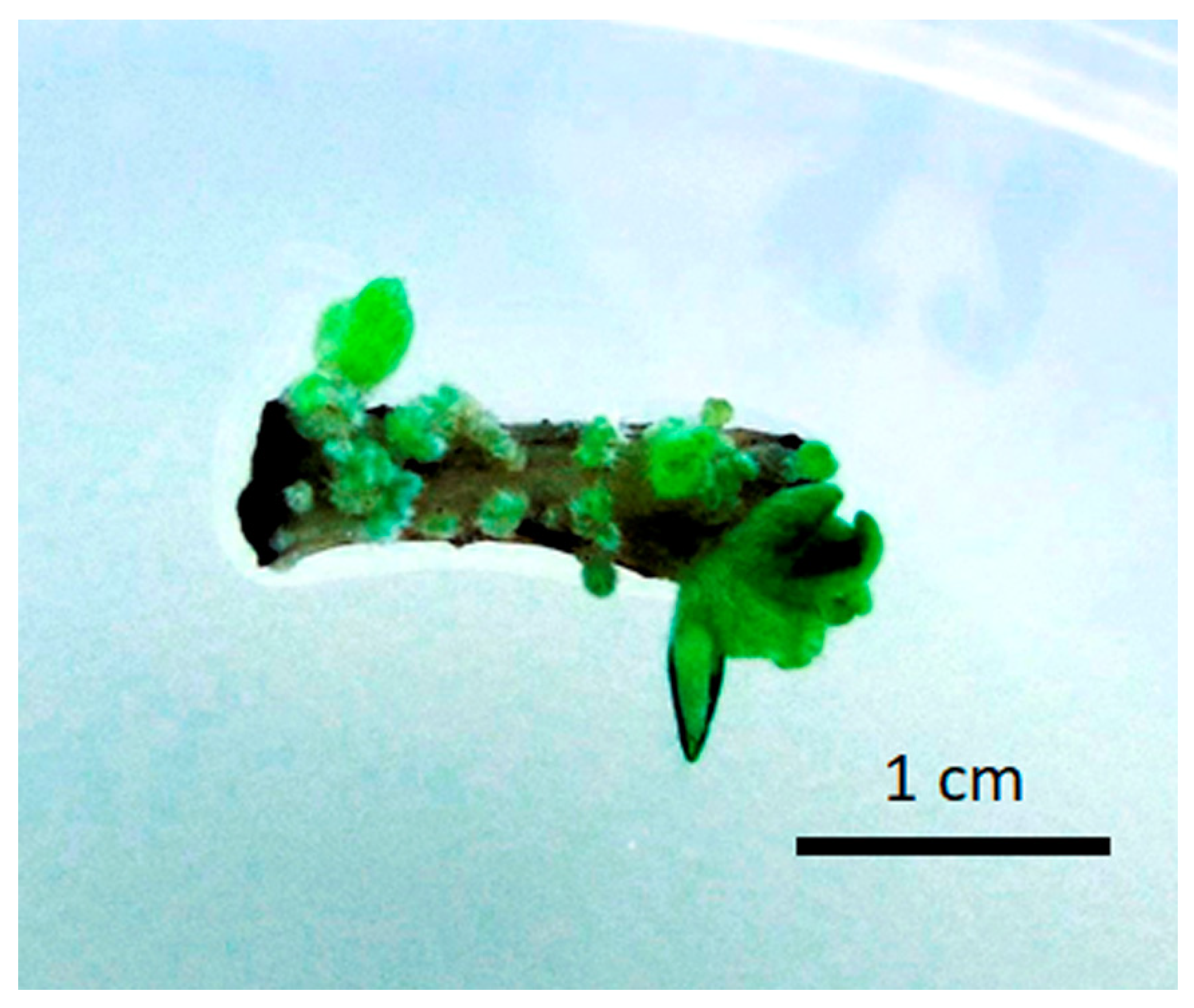
Figure 1. Shoot regeneration in a cherimoya (Annona cherimola) hypocotyl explant cultured for 6 weeks on MS medium supplemented with 0.15 BA mg L−1 and 200 mg L−1 Cefotaxime.
Horticulturae 12 00025 g001
Figure 2. Flow cytometry histograms showing nuclear DNA content of (A) a diploid shoot of A. cherimola (2n = 2x = 14) and (B) an autotetraploid shoot of A. cherimola (2n = 4x = 28) regenerated from a hypocotyl segment treated with colchicine. This “*” indicate a technical characteristic of the Flow Cytometer apparatus related with the lamp of fluorescence activated to do the measures of DNA in the cells.
Horticulturae 12 00025 g002
Figure 3. (A) In vitro rooting of autotetraploid cherimoya (A. cherimola cv. Fino de Jete) plantlets. (B) Acclimatized autotetraploid plantlets of A. cherimola cv. Fino de Jete growing in the greenhouse.
Horticulturae 12 00025 g003
Figure 4. Karyotypes of Annona cherimola cv. Fino de Jete: (A) diploid plant (2n = 2x = 14) and (B) autotetraploid plant (2n = 4x = 28).
Horticulturae 12 00025 g004
Table 1. Response of cherimoya (Annona cherimola) hypocotyl sections subjected to different colchicine treatments after 6 weeks of incubation on MS medium supplemented with 0.15 mg L−1 BA and 200 mg L−1 Cefotaxime. Data show the percentage of explants with regenerated shoots (% shoot regeneration), the average number of regenerated shoots per explant with regeneration (average shoot number), and the percentage of shoot survival after 6 weeks of shoot elongation.
% ColchicineNo. of Explants Initiated% Regeneration 1Average Shoot No. 2% Shoot Survival 1
24 h colchicine treatment
050100 ± 0 a4.5 ± 1.0 a100 ± 0 a
0.015074 ± 6 b4.3 ± 1.0 a70 ± 4 b
0.055048 ± 7 c4.2 ± 1.0 a45 ± 5 c
0.15042 ± 7 c4.1 ± 0.9 a40 ± 5 c
0.25018 ± 5 de1.0 ± 0.0 b22 ± 14 cd
48 h colchicine treatment
050100 ± 0 a4.3 ±1.0 a100 ± 0 a
0.015032 ± 7 cde1.2 ± 0.4 b21 ± 9 d
0.055016 ± 5 de1.0 ± 0.0 b13 ± 12 d
0.15012 ± 5 e1.0 ± 0.0 b17 ± 15 cd
0.25014 ± 5 e1.0 ± 0.0 b0 ± 0 d
1 Different letters indicate groups that were significantly different according to the LSD test at α = 0.05. Comparisons carried out between all treatments. 2 Different letters indicate significant differences among groups according to one-way ANOVA, followed by Tukey’s HSD post hoc test (α = 0.05). Comparisons carried out between all treatments.
Table 2. Rate of polyploidization and ploidy levels of regenerated cherimoya shoots after 24 h treatment with different colchicine concentrations, as analyzed by flow cytometry.
% ColchicineNo. of Explants AnalyzedPolyploidization (%)Triploid (3x)
No. (%)
Tetraploid (4x)
No. (%)
Mixoploid (2x–4x) No. (%)
0200 ± 0 c0 (0 ± 0 a)0 (0 ± 0 b)0 (0 ± 0 a)
0.011551.3 ± 0.9 bc2 (1.3 ± 0.9 a)0 (0 ± 0 b)0 (0 ± 0 a)
0.05994.0 ± 2.0 ab2 (2.0 ± 1.4 a)2 (2.0 ±1.4 ab)0 (0 ± 0 a)
0.18610.5 ± 3.3 a1 (1.2 ± 1.2 a)5 (5.8 ± 2.5 a)3 (3.5 ± 2.0 a)
Values represent mean ± SD. Different letters indicate significant differences according to the LSD test at α = 0.05.
Table 3. Polyploid cherimoya shoots induced by colchicine in vitro and survival rate according to ploidy level.
Ploidy LevelCode of Polyploid ShootsSurvival Rate:
(No. of Survivors/Total)
Code of Surviving Shoots
Tetraploid (4x)2022, 2025, 2943, 2050,
2069, 2083, 2084
43 ± 19%
(3/7)
2069, 2083, 2084
Triploid (3x)522, 615, 1010,
1015, 2019
40 ± 22%
(2/5)
522, 1015
Mixoploid (2x–4x)2073, 2084, 208867 ± 27%
(2/3)
2073, 2084
Values represent mean ± SD. Differences were not significant according to the LSD test at α = 0.05.
Table 4. Leaf size of diploid and autotetraploid Annona cherimola cv. Fino de Jete lines under in vitro and ex vitro conditions.
Cherimoya foliar size
(in vitro)
2n = 2x = 142n = 4x = 28
Average Length (cm)1.6 ± 0.3 b2.1 ± 0.2 a
Average Width (cm)0.7 ±0.1 b1.2 ±0.1 a
Leaf Index (L/W)2.3 ± 0.1 a1.8 ± 0.1 b
Cherimoya foliar size
(ex vitro)
2n = 2x = 142n = 4x = 28
Average Length (cm)18.4 ± 1.5 b22.2 ± 1.6 a
Average Width (cm)10.2 ± 1.2 b13.7 ± 1.1 a
Leaf Index (L/W)1.8 ± 0.2 a1.6 ± 0.1 b
Different letters indicate significant differences among groups according to one-way ANOVA (α = 0.05).
Table 5. Chlorophyll content on leaves of diploid and autotetraploid Annona cherimola cv. Fino de Jete lines under in vitro and ex vitro conditions.
Chlorophyll content in
cherimoya leaves in vitro
2n = 2x = 142n = 4x = 28
Chlorophyll A (mg g−1 of FW)42.5 ± 0.4 b47.4 ± 0.4 a
Chlorophyll B (mg g−1 of FW)38.2 ± 0.3 b39.1 ± 0.2 a
Chlorophyll total (mg g−1 of FW)68.5 ± 0.5 b 69.2 ± 0.2 a
Ratio Chl a/Chl b1.11 ± 0.01 b1.21 ± 0.01 a
Chlorophyll content in
cherimoya leaves ex vitro
2n = 2x = 142n = 4x = 28
Chlorophyll A (mg g−1 of FW)23.4 ± 0.2 b27.9 ± 0.2 a
Chlorophyll B (mg g−1 of FW)13.5 ± 0.3 b14.7 ± 0.3 a
Chlorophyll total (mg g−1 of FW)32.2 ± 0.8 b36.5 ± 0.3 a
Ratio Chl a/Chl b1.73 ± 0.02 b1.90 ± 0.04 a
Different letters indicate significant differences among groups according to one-way ANOVA (α = 0.05).
Disclaimer/Publisher’s Note: The statements, opinions and data contained in all publications are solely those of the individual author(s) and contributor(s) and not of MDPI and/or the editor(s). MDPI and/or the editor(s) disclaim responsibility for any injury to people or property resulting from any ideas, methods, instructions or products referred to in the content.