Article

Small-Scale Green Roofs with Native Plant Species Installed on Bus Stop Shelters

1
Biotechnical Faculty, University Botanic Gardens Ljubljana, 1000 Ljubljana, Slovenia
2
Department of Environmental Protection, Municipality of Ljubljana, 1000 Ljubljana, Slovenia
*
Author to whom correspondence should be addressed.
Horticulturae 2026, 12(1), 120; https://doi.org/10.3390/horticulturae12010120
Submission received: 4 December 2025 / Revised: 8 January 2026 / Accepted: 18 January 2026 / Published: 21 January 2026

Highlights

What are the main findings?
  • The main findings show that even after five years without additional maintenance, all plants continue to thrive and remain horticulturally attractive.
  • A variety of species flower from early spring to early summer. During drought periods, flowering intensity slightly decreases but does not cease; in autumn, the shelters green up again with autumn-flowering species.
What is the implication of the main finding?
  • Planting examples can be comparable anywhere in the temperate and Mediterranean zones, with the only difference being the native plant species used in a particular area.

Abstract
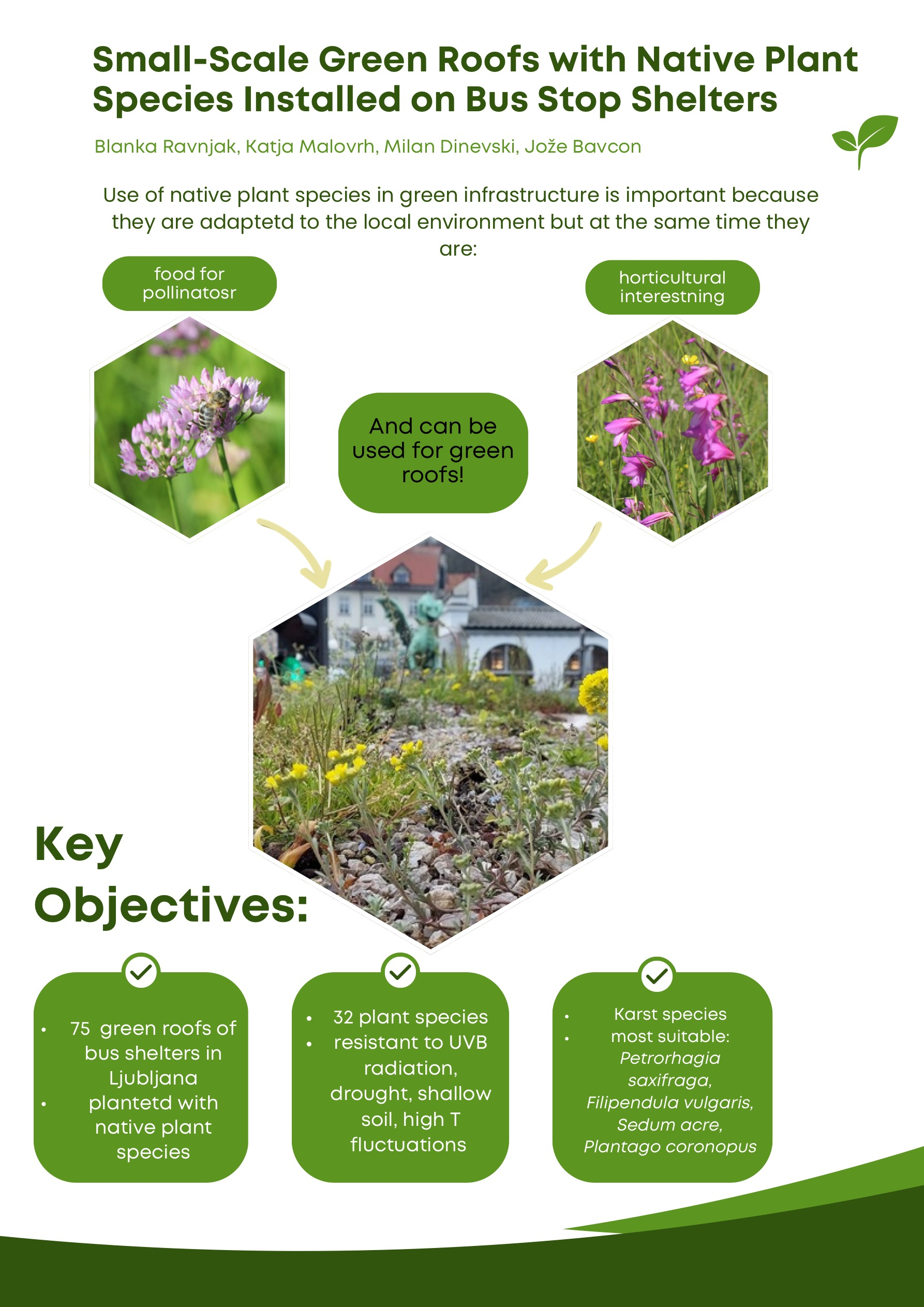
The University Botanic gardens Ljubljana has been planting vegetation on bus stop shelters in the capital city (Ljubljana) of Slovenia since 2020. The aim of the project is to create a green network across the city, contributing to the conservation of plant biodiversity and providing food resources for pollinators throughout the entire growing season. The plantings were designed exclusively with native plant species, naturally occurring in the territory of Slovenia, flowering from early spring to late autumn. The selected species are also horticulturally attractive, forming small extensive green roof gardens that mimic karst rock ledges, where plants are adapted to drought, shallow soils, and strong sunlight exposure. In 2024 and 2025, monitoring was carried out on eight selected shelters, focusing on plant presence, changes in vegetation cover, and the occurrence of spontaneously sown species and invasive species. The results show that, even after five years without additional maintenance, all plantings are thriving and remain horticulturally attractive. A variety of species flower from early spring to early summer. During drought periods, flowering intensity decreases somewhat but does not cease; in autumn, the shelters green up again with autumn-flowering species. The project has been very well received by the public and is now firmly established in the city. Every year, between 10 and 20 new shelters are planted. By the end of 2025, a total of 75 bus shelters had been greened in all main directions from the city center towards the outskirts.

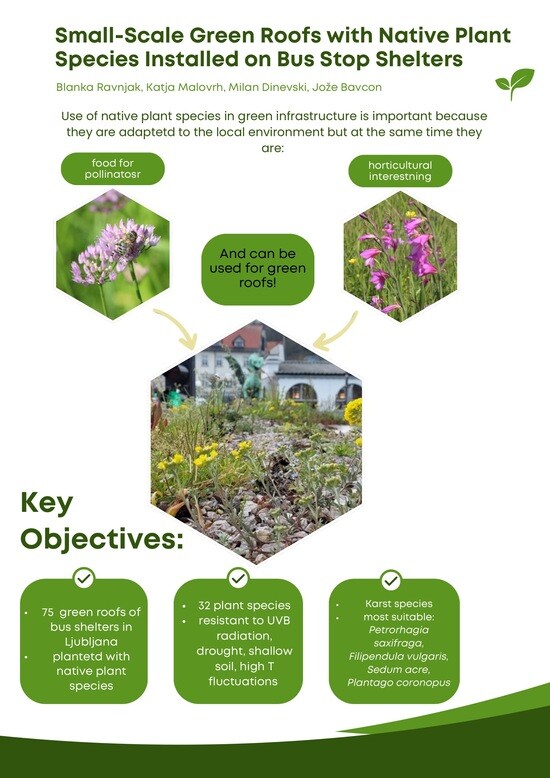
Graphical Abstract

1. Introduction

Although green roofs may appear to be a relatively recent innovation, this is not the case. Green roofs on buildings date back at least to the Neolithic period (8000–4000 BC). At that time, they provided protection for buildings in harsh climatic conditions, especially in areas where there was a lack of large tree canopies. For example, in the Arctic and in semi-arid continental regions of Central Asia, the lack of trees led to vernacular architecture, in which roofs were insulated with turf cut from natural grasslands. These were known as “meadow roofs” [1]. In more recent times, Linnaeus (1707–1778) also wrote about green roofs in his works, when addressing ethnobotany and the use of plants for various purposes [2]. Later, green roofs were also given special attention by the Swiss–French architect Le Corbusier, who, as early as 1927, discussed green roofs and included them among his “Five Points of Modern Architecture”: pilotis (columns), roof garden, open floor plan, horizontal windows, and free façades [1].
Various researchers have found that plants on green roofs can lower local air temperatures and reduce the thermal load of buildings in summer, thereby improving the thermal comfort of occupants. These findings emphasize that green roofs function effectively in mitigating heat stress. They improve the energy efficiency of buildings and prevent temperature fluctuations in cities, thereby strengthening their role as a key climate change adaptation strategy in densely populated areas [3]. Green roofs have numerous advantages over conventional roofs: they have a more attractive appearance; improve local biodiversity; and retain rainwater [4,5]. Above all, they can add attractive and usable space to very densely populated urban areas [1,6]. A green roof has a direct impact on thermal comfort and energy conservation in, and around, buildings. Roof greening is a strategy that can be a beneficial solution in different climates to reduce building energy consumption, enhance the aesthetic potential and architectural expression of buildings, and improve the built environment while increasing investment opportunities. It helps to address the lack of green spaces in many areas and provides the city with open spaces that help to reduce the heat island effect and offer the population a connection with the outdoor environment [7].
Smaller green roofs, such as those on bus and railway shelters, are also very important in the urban environment [8], and primarily consist of extensive plantings. Even though these are relatively small surfaces, they can still act as sinks for rainwater, provide insulation, and either serve as habitats for small animals or as a source of their food [9,10,11]. Thus, several smaller green areas form a green network in the urban environment. Regardless of whether green roofs are extensive or intensive, the correct selection of plant species is of crucial importance. For more natural management and reduced costs of energy, water and materials, green roofs should be adapted and simplified as much as possible to make them truly sustainable [12].
In the past, the prevailing opinion was that only succulents, that is, drought-adapted plants, were suitable for roof gardens [13,14]. However, nowadays, there is an increasing number of studies and implemented horticultural projects focused on planting green roofs using various other plant species as well [15,16,17]. However, many companies that install extensive green roofs mainly use a mixture of different sedum species, some of which are not necessarily native to the specific area [18]. This, of course, can pose an environmental problem with nonnative, potentially invasive plant species. However, there are many other plant species adapted to drought that spread well, withstand heat waves, and re-green again under favorable conditions. These include many Mediterranean plants, plants from karst regions, plants from rocky ledges. and even some high-mountain plants that survive such conditions extremely well. At the University Botanic Gardens Ljubljana, for several years, work on the adaptation of plant species to the described conditions has been conducted. A comparison between succulents and other broad-leaved plants was monitored over two summers (2012/2013) in Reading, in the United Kingdom. The growth habits of two succulent genotypes and four broad-leaved plant genotypes with different plant traits were compared on bare substrate. The results showed that succulents are not the most suitable for providing significant summer cooling of the environment and insulation of the substrate, and that other plant species (e.g., sage and betony) may be more suitable [19]. Extreme climatic events, such as prolonged droughts and heavy rainfall with severe storms, have increased interest in green roofs, including extensive ones, also in the Mediterranean environment. Karachaliou et al. [20] found, in their research, that on a green roof planted with 14 different native Mediterranean plant species, the surface temperature of the green roof was up to 15 °C lower than that of a conventional roof. Plants with low solar radiation absorption capacity, combined with dense foliage, showed much lower surface temperatures and a higher mitigation potential. It was found that the surface temperature of plants is strongly dependent on ambient air temperature. Using simulation techniques, it was calculated that this type of green roof can reduce the average indoor temperature of a non-air-conditioned building by up to 0.7 °C, while significantly reducing its annual cooling and heating demands [20].
Since 2020, the University Botanic Gardens Ljubljana, in the city of Ljubljana (the capital of Slovenia), has been extensively planting urban bus stop shelters with native plant species [21]. Similar projects have already been conducted in Edinburgh and Utrecht [22,23,24]. The initiative in Ljubljana is led by the City’s Department of Environmental Protection, in partnership with the University Botanical Garden Ljubljana, Europlakat (bus stop operator, via public–private partnership), the Public Passenger Transport Company (JP LPP), the municipal Department of Commercial Activities and Traffic, and the City’s Digitalization Service. A total of 75 shelters has been planted; new ones are planted every year. These represent a green network of small gardens with native plant species in the urban environment. A planting protocol for urban bus shelters, which all participants involved in the project are required to follow, has been developed specifically for the planting of bus shelters in Ljubljana, together with the Municipality of Ljubljana. With the increasing number of planted bus shelters, the question naturally arose as to whether the growth of the planted species is equally successful across all shelters or whether there are differences among them. In our study, based on changes in the vegetation cover of the planted species, we examined which plant species proved to be the most suitable for planting on bus shelters, both in terms of successful adaptation to extreme conditions and from an aesthetic point of view. In the research, we wanted to determine whether planted native plant species, which were left in natural conditions on bus shelters, manage to survive in subsequent years, and whether their cover on the shelters also increased, regardless of the fact that we did not care for them and the plants were exposed to all stress factors, and whether we managed to create sustainable alternative habitats for native plant species. We also wanted to determine how native plant species perform as horticultural plantings on bus shelters. Based on the obtained results, a list of the most suitable native plant species will be compiled, which could be used in the future for the effective planting of such shelters, while at the same time enhancing urban biodiversity and being more or less self-sustaining. Within the framework of the study, we also sought to determine which native species in the surroundings of the planted bus shelters may represent an effective new habitat.

2. Materials and Methods

2.1. Selection of Shelters for Planting

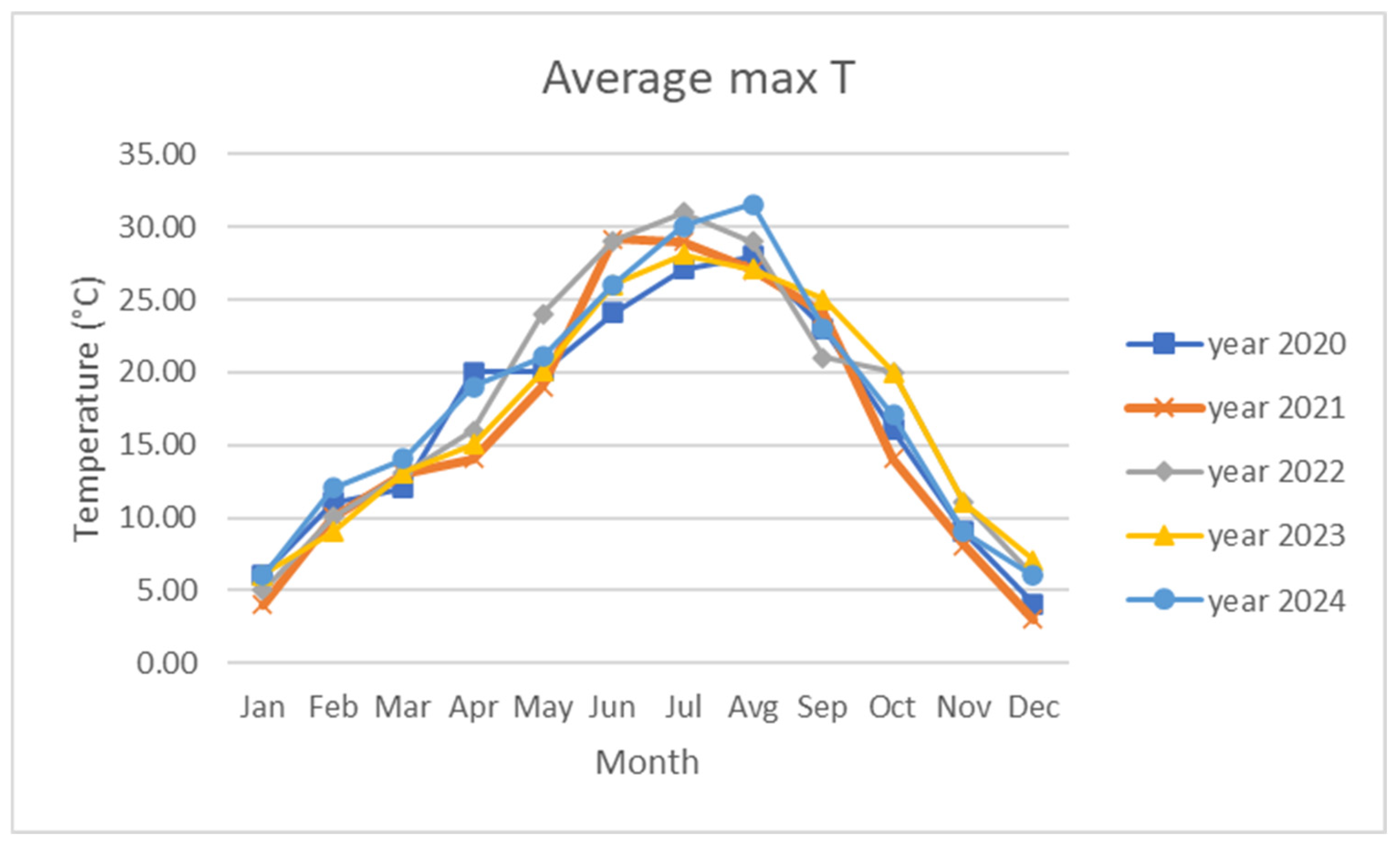
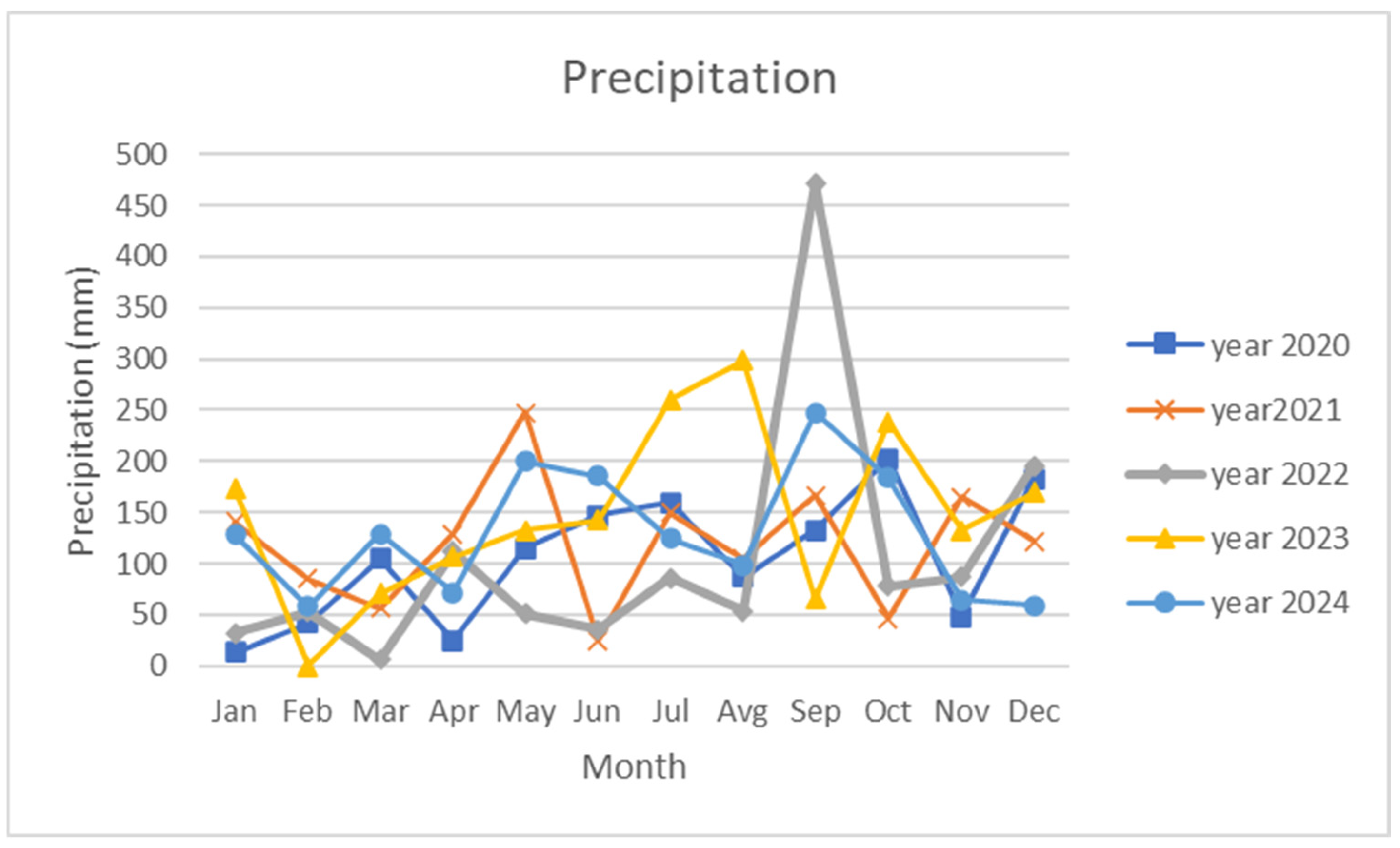
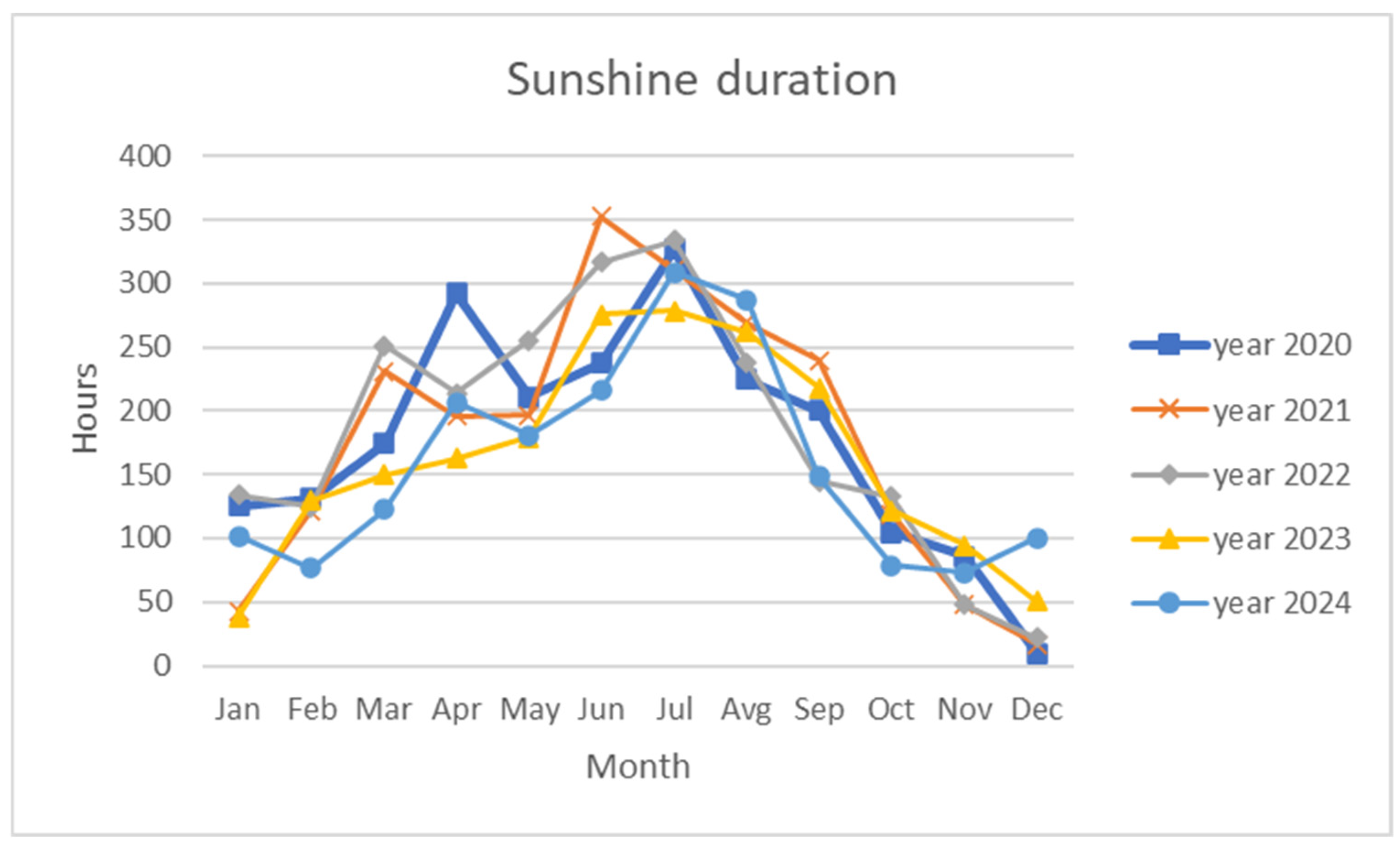
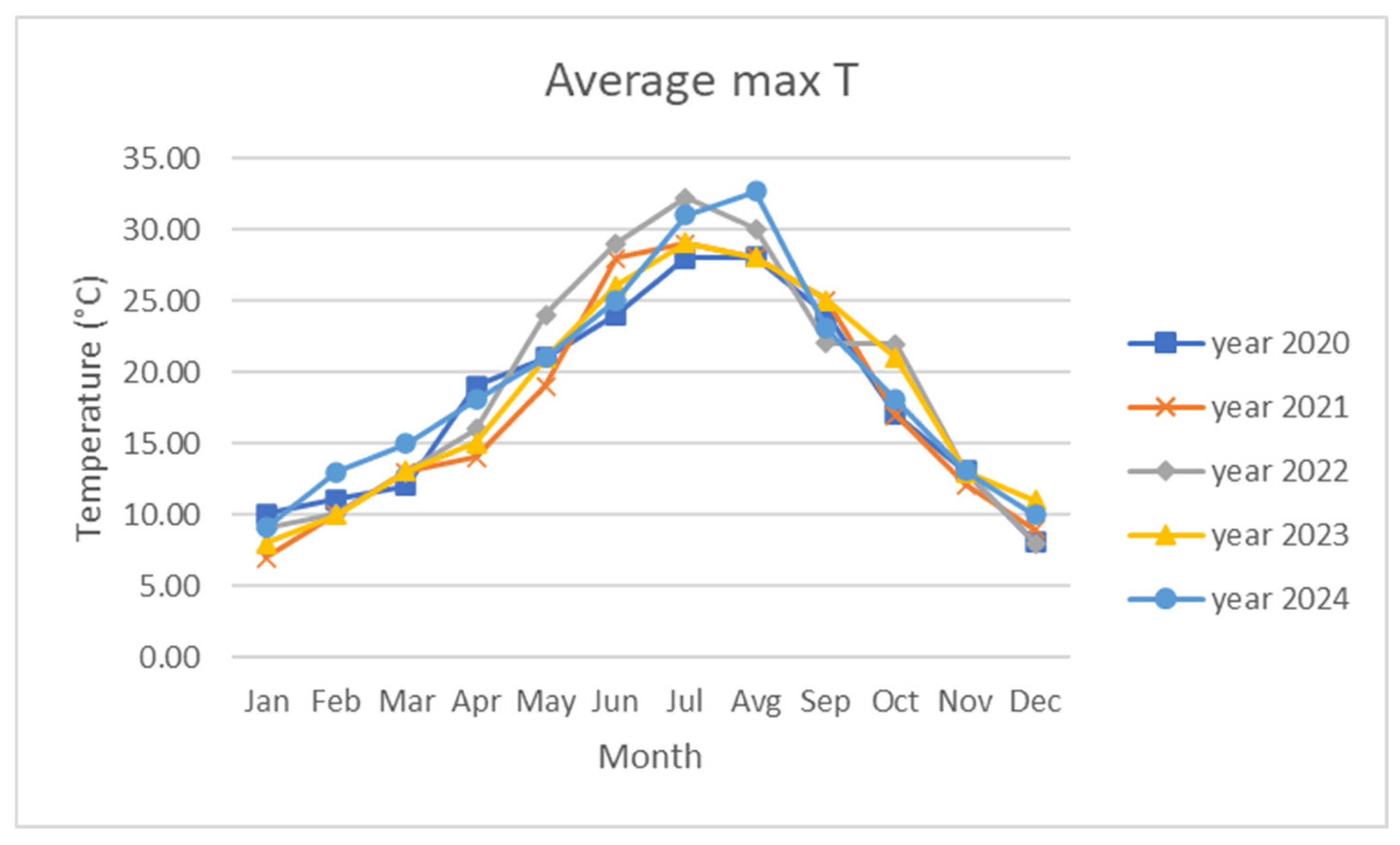
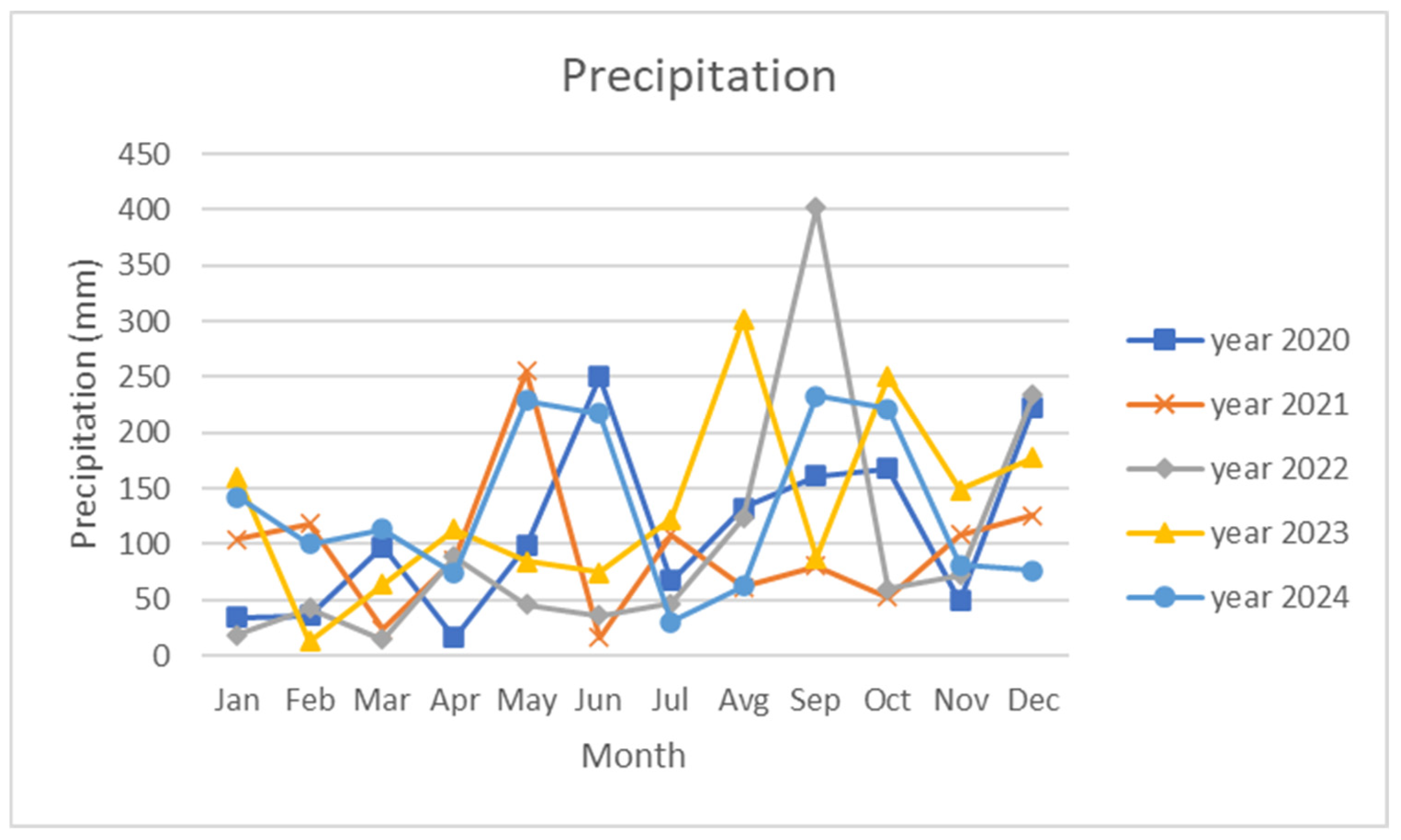
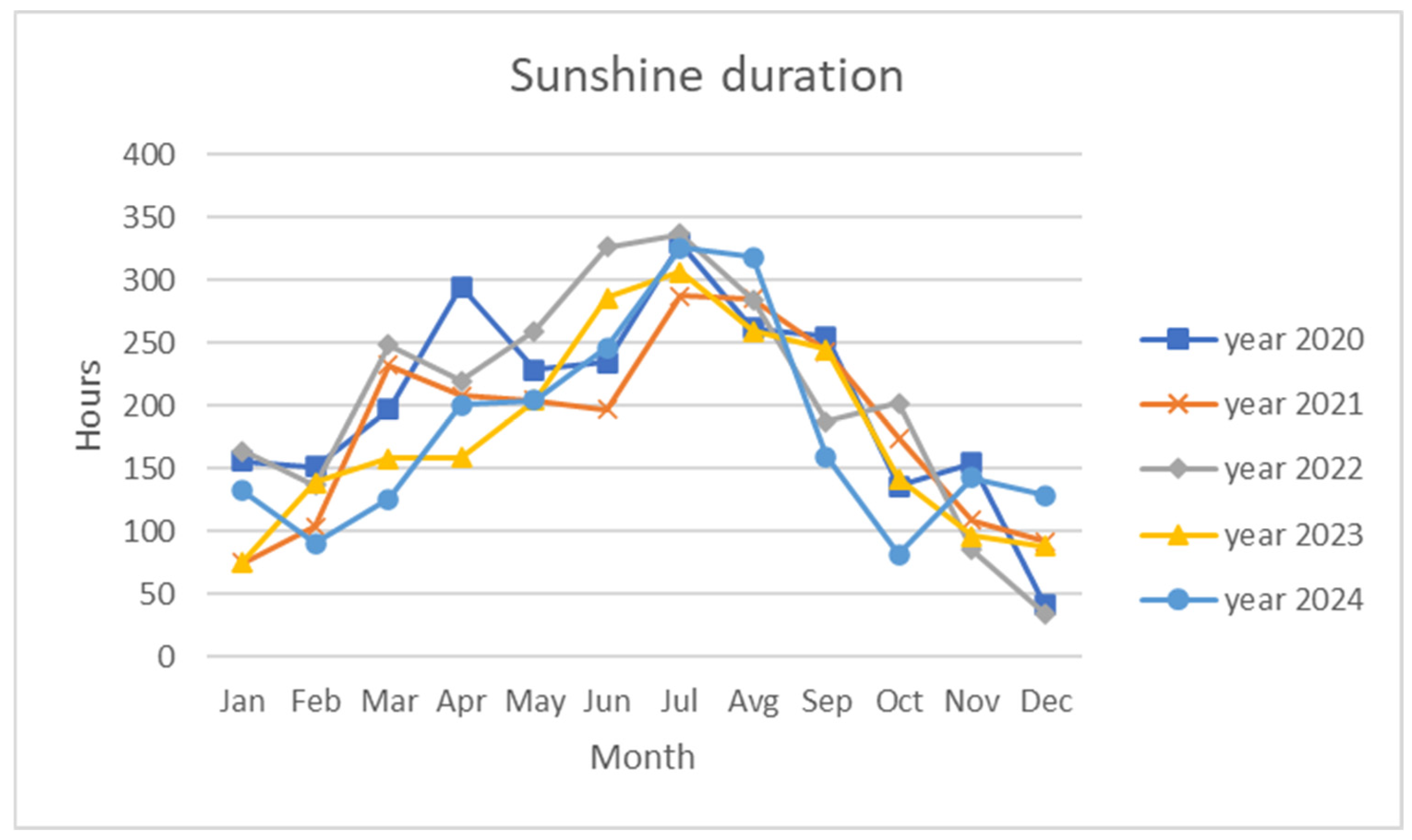
The project of planting green roofs on bus stop shelters was carried out in the capital of Slovenia, Ljubljana. The area of the city covers 274.99 km2 [25]. In Ljubljana, there are as many as 542 m2 of public green areas per inhabitant. More than 46% of the city area is covered by forest, 75% of all surfaces are green, and more than 20% of green areas are protected [26]. The city is located in the central part of Slovenia and has a temperate continental climate with an average annual temperature of 11 °C, a maximum average temperature of 28 °C, and a minimum average temperature of −4 °C. The average annual precipitation amounts to 1264.33 mm [27] (Figure 1, Figure 2 and Figure 3). Ljubljana is located in the pre-Alpine phytogeographical region [28].
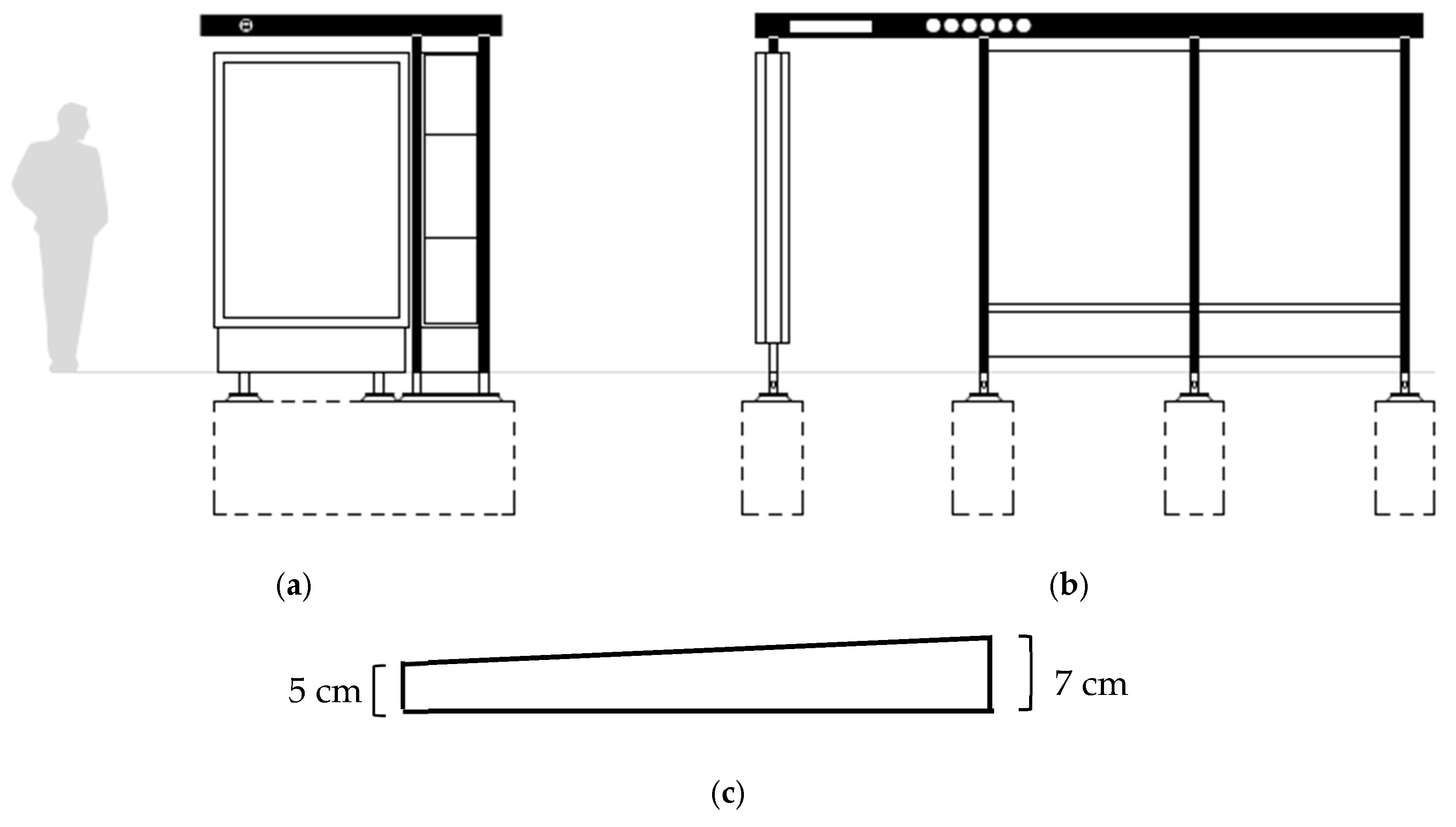
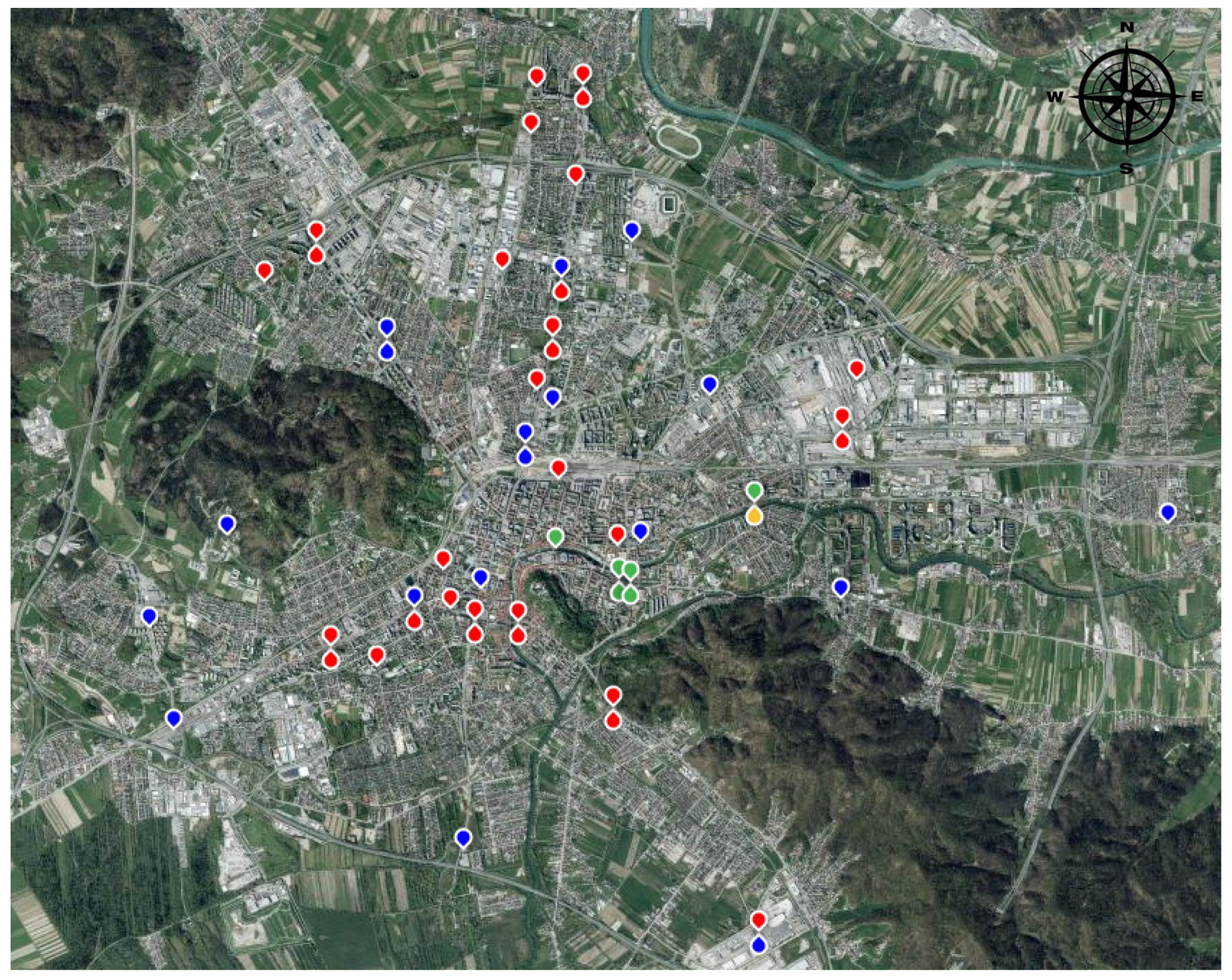
The first urban bus stop shelters were planted in 2020. Initially introduced during the annual European Mobility Week as a modest initiative to promote sustainable mobility and raise public awareness of environmental issues, the project has since evolved into a permanent city policy. The selection of bus stop roofs for planting was based on three criteria. The first criterion was to select shelters located in areas with the fewest green spaces. The second criterion was the wishes and initiatives of local residents to have a bus shelter near them planted. The third criterion was a more or less even distribution of planted shelters across different parts of the city. Before approving the plantings, it was necessary to verify the structural suitability of each shelter and whether it could withstand the load of the green roof and potential snow cover in winter. The roofs of the bus shelters are of two dimensions, namely 4.25 × 1.8 m (Figure 4) and 3 × 1.3 m. The structure of the bus stop shelters consists of load-bearing columns measuring 6 cm × 6 cm, made of hot-dip galvanized steel and powder-coated in anthracite grey. All load-bearing elements of the shelters are bolted to concrete foundations. The roofs are also made of hot-dip galvanized steel and powder-coated in anthracite grey and have a depth of 4 to 7 cm. At the deeper part of the shelter, there are water drains in each corner. By 2025, a total of 75 green roofs had been installed across 41 locations in Ljubljana (Table 1, Figure 4), contributing more than 300 m2 of new green space. In some locations, two bus shelters are placed side by side; in Figure 5, we refer to these as double bus shelters. Notably, these installations are entirely self-sufficient: they require no irrigation, fertilization, replanting, or ongoing maintenance.

2.2. Selection of Plant Species

Based on the expected environmental conditions (shallow soil, strong UV-B radiation, drought) on the roofs of the bus shelters, species tolerant to these environmental factors have been selected. From the perspective of morphological adaptability to the specific environment of the shelters, species with shallow root systems that do not grow very tall have been selected. Some of them have a cushion-like growth form and can also spread vegetatively. These characteristics are mainly found in plant species growing in the Slovenian Karst, where drought occurs very early in the year, UV-B radiation is high throughout the year, and the soil is very shallow (Figure 6, Figure 7 and Figure 8). Karst plant species are characterized by a thick leaf cuticle that prevents excessive water evaporation, the presence of grey pigments and anthocyanins, which together with the thick cuticle prevent UV-B damage [30,31,32,33], and a cushion-like growth form that enables moisture retention within the cushion [34,35,36]. Also characteristic are linear, needle-like or small leaves, whose reduced leaf surface prevents excessive water loss [32,33,37]. A shallow and branched root system enables the plant to anchor effectively among rocks and to extract water from crevices [32,34]. Many karst plant species also contain essential oils, which provide additional protection against UV-B radiation damage [31,32,34].
Another main factor in species selection was their native status. Only native Slovenian plant species, which are horticulturally interesting and at the same time melliferous, were selected for planting (Table 2). Melliferous plant species were selected in order to provide food for wild pollinators and honeybees, as urban beekeeping is also well developed in the city of Ljubljana. Among the planted species are also Slovenian endemics such as Alyssum pluscanescens (Raim. ex Jos.Baumgartner) Španiel, Lihova & Marhold [38] and Iris sibirica ssp. errirhyza (L.) Pospichal, as well as the protected species Gladiolus illyricus W.D.J. Koch. Up to 20 different plant species are planted on each shelter, with at least one species flowering in every season of the year. In this way, the shelters were made horticulturally attractive in all seasons. The species composition on individual shelters is not the same but is adapted to the environment in which the shelter is located. Shelters located in shaded areas are planted with species adapted to growth in shady conditions. All plant seedlings intended for planting on the shelters were grown in the University Botanic Gardens Ljubljana from the seeds of native plant species collected in the wild.

2.3. Planting of Shelters

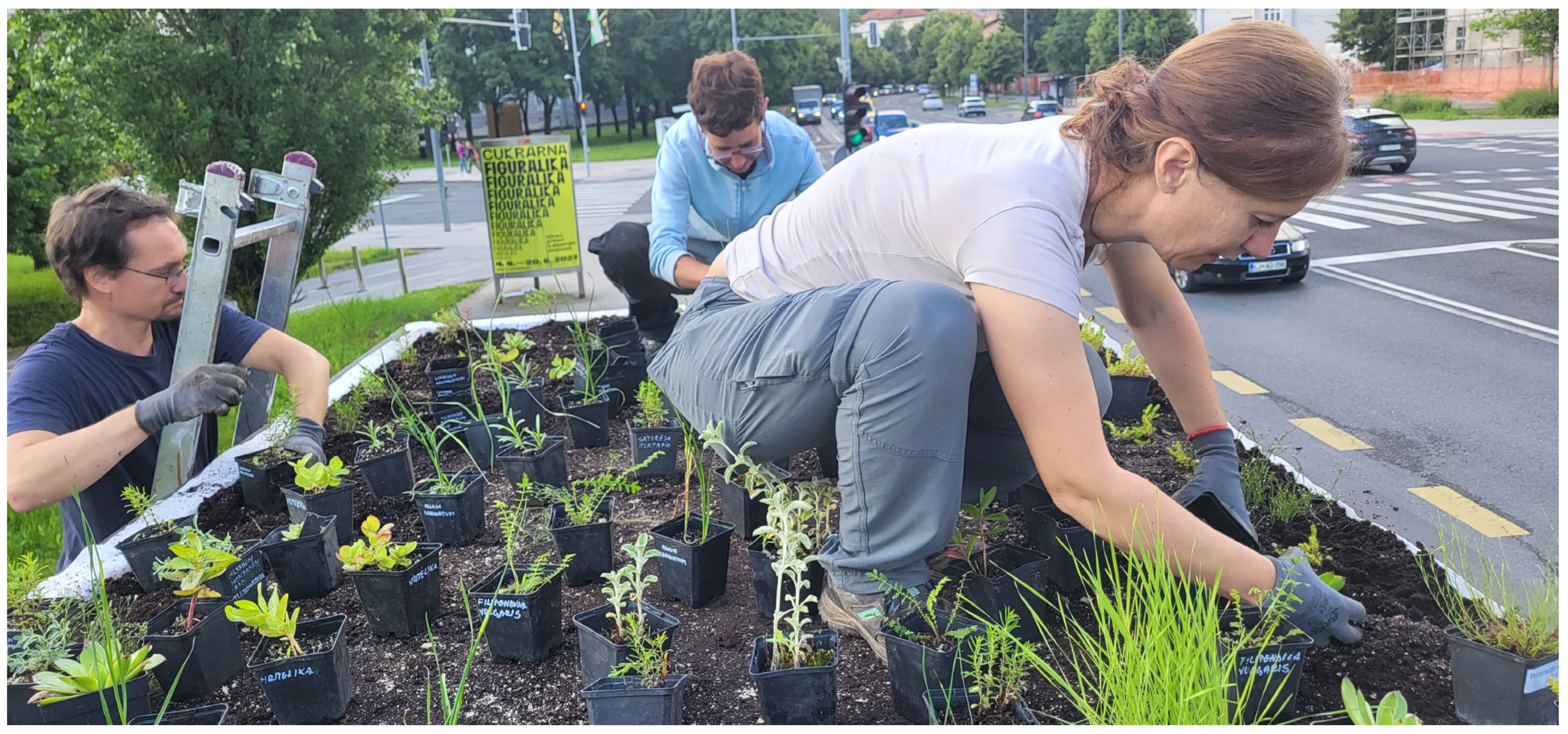
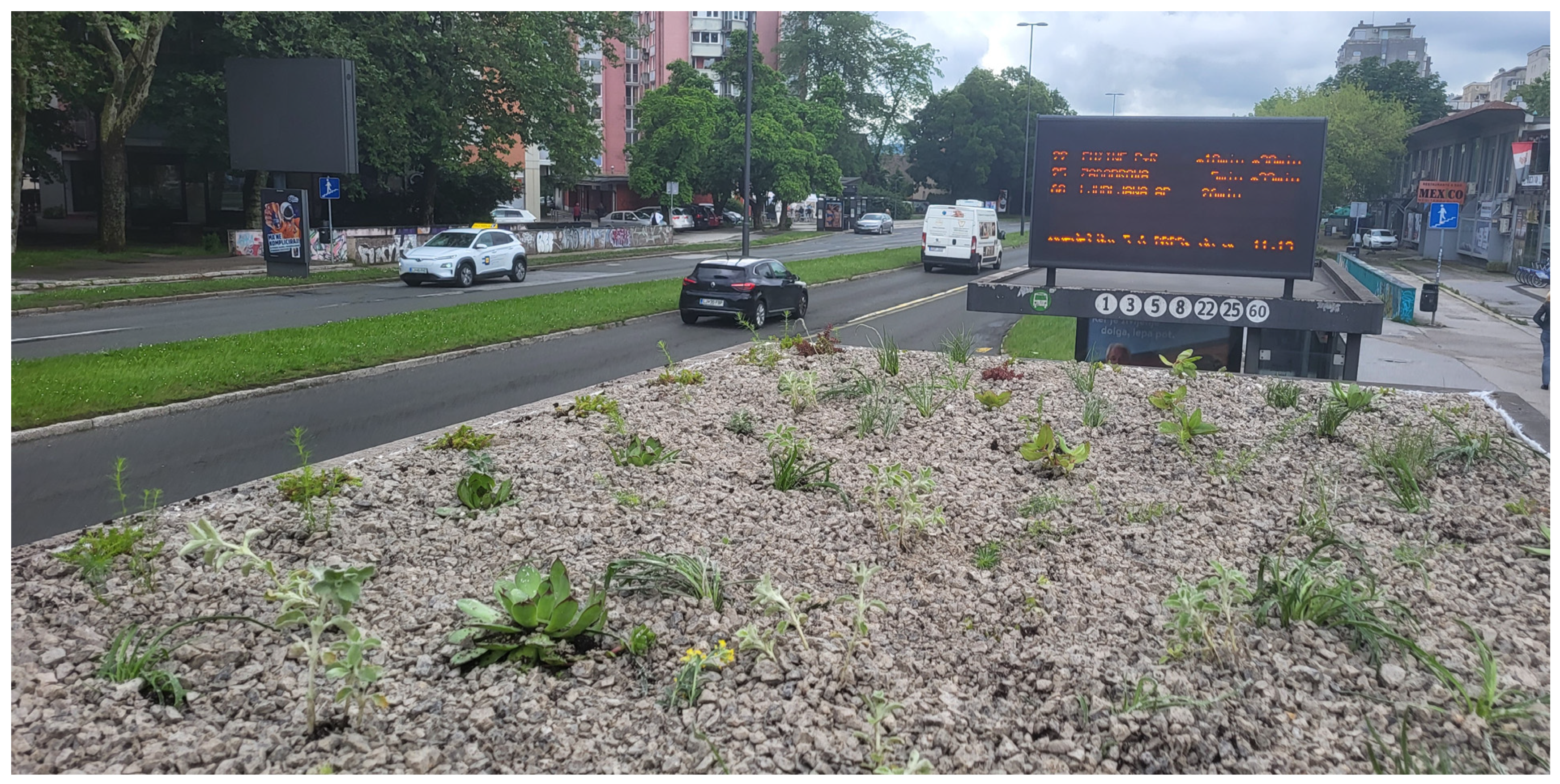
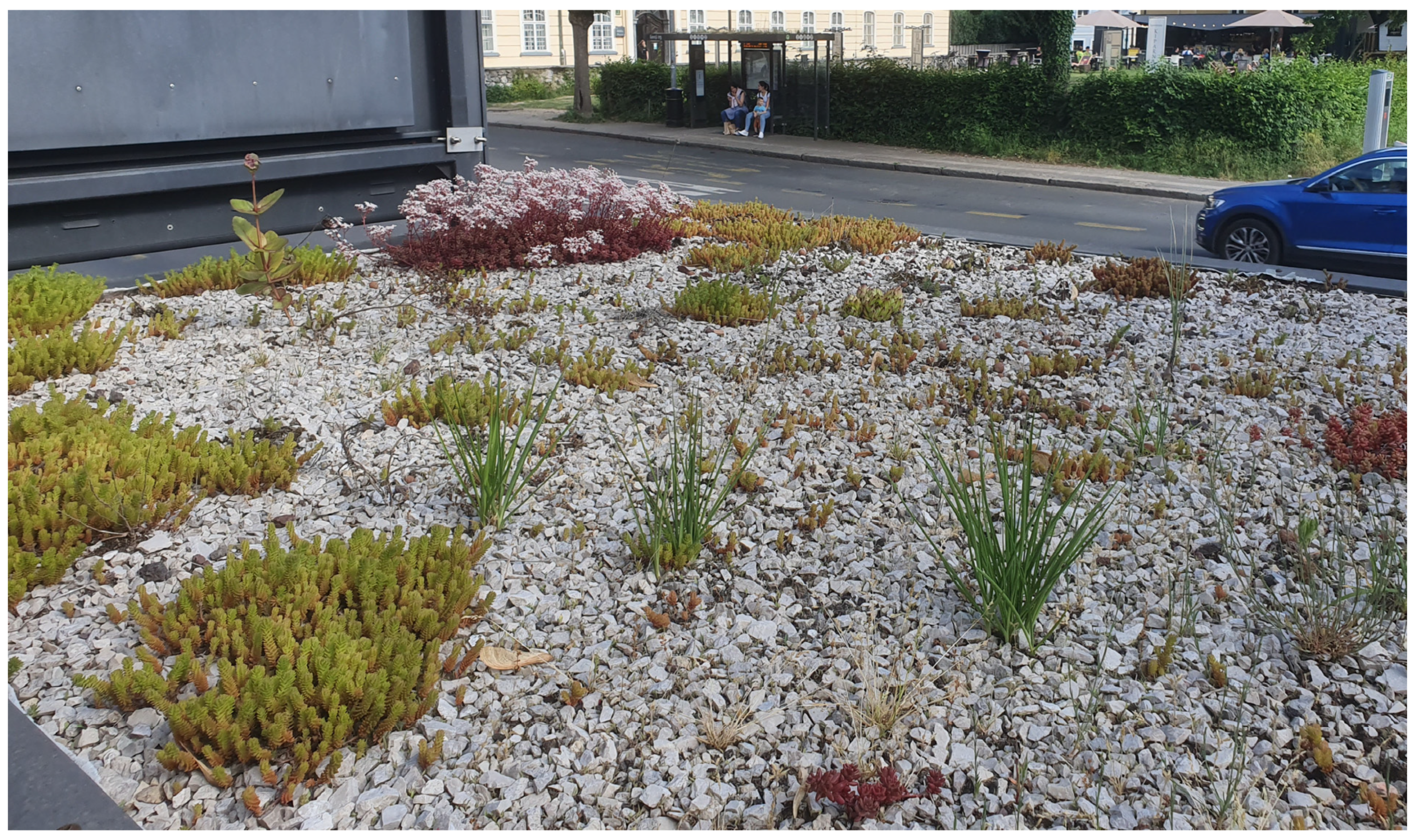
Bus shelters were planted in the second half of September or at the beginning of October. This planting period was chosen because mornings and evenings are cooler at that time, and there is more night-time moisture that condenses on the plants, meaning that watering after planting is not necessary. In addition, daytime temperatures are no longer as high, and precipitation is more frequent. All these factors contribute to better rooting and to the survival of the planted plants. The drainage holes on the roofs of the bus shelters were first cleaned. Then, a felt layer was placed on the roofs, which slightly retains moisture and at the same time prevents soil from being washed through the drainage holes during rainfall. This was followed by the preparation of the planting substrate. For the planting substrate, a sterile, commercial soil mixture with a minimal addition of peat, clay, and sand was mixed (in a ratio 12% of sand, 3% of clay, and 85% of commercial soil substrate). The commercial soil mixture consists of 85% material and 15% of peat and has a pH = 5.5, contains 350 mg/L of N, 300 mg/L of P, 500 mg/L of K, 150 mg/L of Mg, and 120 mg/L of S. For each bus shelter, we used 5 bags of 70 L commercial soil mixture. Plants were planted into the substrate, with up to 140 seedlings per individual shelter. Cushion-forming plant species (e.g., Sedum acre L., Sedum album L., Thymus vulgare L., Sempervivum tectorum L.) were planted on the shallower parts of the shelter and along the edges. Slightly taller plant species (e.g., Filipendula vulgaris Moench, Veronica barrelieri H.Schott ex Roem.& Schult., Satureja montana L.) were planted in the center of the shelter. The remaining plant species were planted randomly in groups across the entire shelter in such a way that, during flowering, they are also visible from below (Figure 9, Figure 10 and Figure 11). Some of the species, like Gladiolus illyricus W.D.J. Koch, F. vulgaris, Globularia punctata Lapeyr., and Thalictrum minus L., were also sown on the bus shelters. The species Galanthus nivalis L. and Eranthis hyemalis (L.) Salisb and Iris sibirica subsp. erirrhiza (L.) Pospichal were additionally just sown on the shelters. A layer of limestone pebbles with a size of 8 to 14 mm was then spread on top of the planted shelters, the role of which is to warm the plants during winter, cool them during summer, and break the impact of raindrops during rainfall.

2.4. Monitoring

The growth of planted plant species on bus shelters was determined by monitoring of the eight planted bus shelters, with dimensions 4.25 × 1.8 m, in July 2024 and 2025. All eight shelters were planted in the same year in 2023, and all represented a representative sample (“sampling area”) of all planted shelters in the city. For monitoring, we selected these eight shelters based on the following criteria: sun exposure, street traffic intensity, and city area. The selected bus shelters are evenly exposed to sunlight throughout the entire day, are oriented east–west, are located along major traffic roads with heavy traffic throughout the day, and are situated in the eastern part of Ljubljana city, on the northern part of Golovec Hill, which means that they lie in the same direction as the prevailing airflow. All were planted with the same plant species mixture and their starting cover was evaluated (Table 3). Through monitoring, we studied the spread of individual planted species and species that had been introduced from the surrounding environment. Species that self-seeded on the shelters and did not conform to the planting concept, or were even non-native invasive plant species, were defined as so-called “weed species”. For the planted species and the spontaneously introduced species that matched the planting concept, the Braun–Blanquet [39] cover method was used for recording. The Braun–Blanquet method is based on estimating the abundance of individual plant species within a sampling area. Abundance is expressed as the percentage of cover on the sampled area. The method is used in phytocenological surveys. For the correct statistical processing of data, the phytocenological survey area is divided into smaller sampling squares of the same size, in which a survey of plant species is carried out in each individual square according to Braun–Blanquet. The results are then extrapolated to the entire sampling area. In our case, each sampling square was represented as a single bus shelter.
“Weeds” and invasive plant species were removed during monitoring; the amount of weeds was weighed separately for each shelter. On each of the eight shelters, in 2025, the contents of N, P and K in the soil, soil pH, soil temperature, and soil moisture using the measuring device JXBS-3001-SCY-PT (JXCT, Weihai, China) were measured. Using a Solarmeter device, serial number 07564, the UV-B radiation on the shelters was measured. During monitoring, all undesirable plant species, “weed species” (e.g., grass species), were removed from the shelters and the total amount of removed plant material was weighed.

2.5. Statistics

Plant species cover data, based on the Braun–Blanquet method (evaluating species cover on the each of eight bus shelters), were processed using JUICE 7.0 software [40]. For each plant species, the frequency of occurrence on the shelters in 2024 and 2025 was calculated. Frequency was expressed as the frequency of occurrence of an individual plant species in a sampling quadrat. In addition, the mean and maximum values of species cover on the shelters for both years were calculated. The mean and maximum values of species cover were calculated from all eight bus shelters together. As already mentioned, the “sampling area” was represented by all eight bus shelters together; each individual bus shelter of the eight bus shelters represented an individual sampling square. Changes in species cover in years 2024 and 2025 in the whole “sampling area” are presented in a bar chart created in Microsoft Excel.

3. Results

In total, 46 plant species were recorded across all eight shelters. The highest number of species was recorded at the Poljanska shelter (28) and the lowest at the Cukrarna Cukrarna shelter (15) (Table 4). Of the recorded plant species, 30 were planted species and 17 were species that established themselves spontaneously and were allowed to grow because they met the criteria of native status, horticultural value, and melliferous potential. The highest number of spontaneously established species was recorded at the Poljanska shelter (8), and the lowest at the Moste shelter (1).
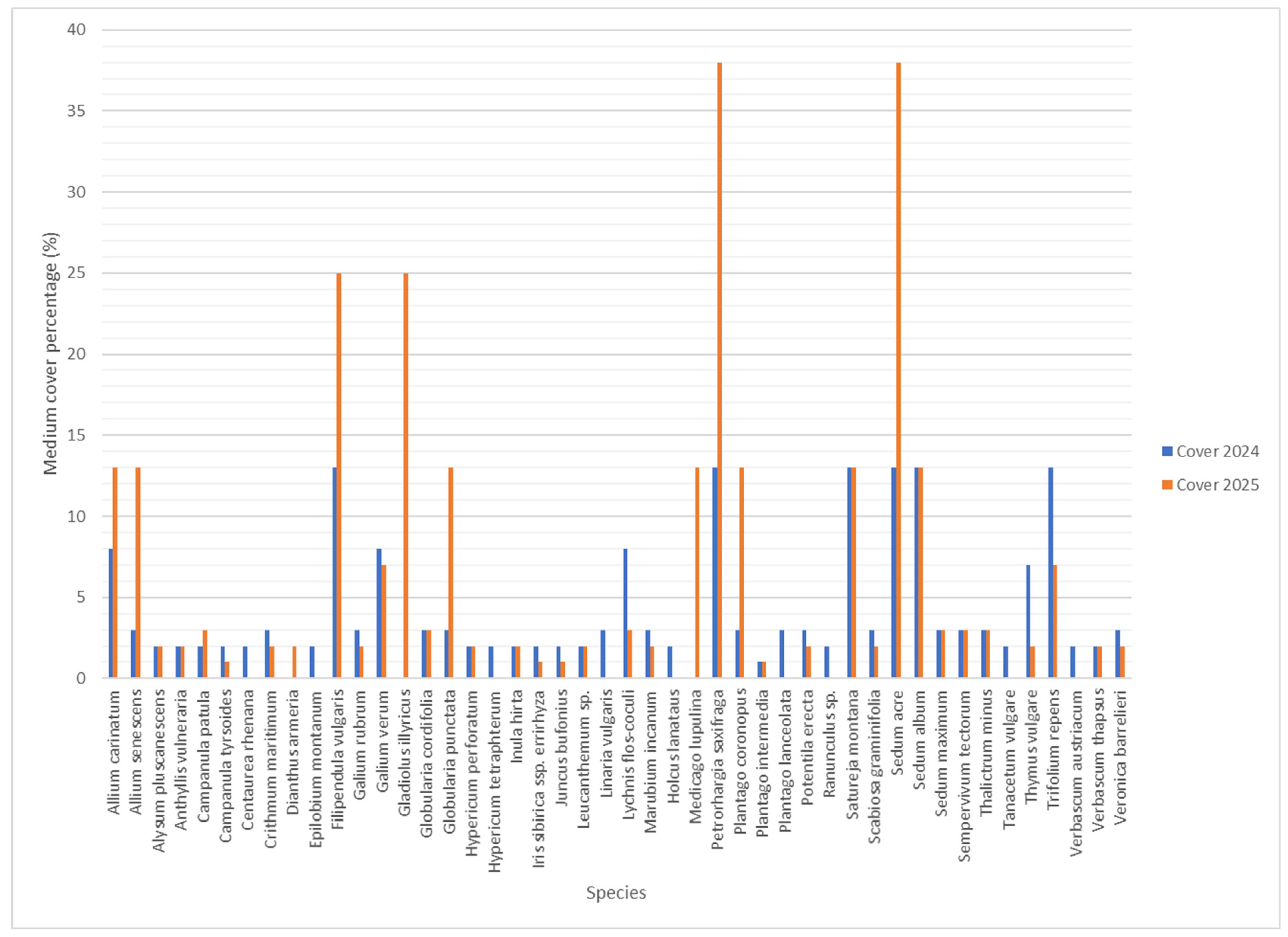
In the 2024 monitoring, the species with the highest mean cover values (13%) on the shelters included, as follows: species F. vulgaris, Petrorhargia saxifraga Scop., S. acre, S. album, and S. montana. With 8% cover, A. carinatum and G. verum were also prominent. Most of the remaining plant species had a mean cover value of 2% on the shelters. S. album and S. acre L. also had the highest maximum cover values in 2024, reaching 38%. In the second year of monitoring (2025), the species with the highest mean cover values were P. saxifraga and S. acre (38%). In addition, F. vulgaris and G. illyricus also showed high mean cover values (25%). Most of the remaining species had a cover of 2%, while the lowest value (1%) was recorded for Campanula tyrsoides L. and I. sibirica ssp. errirhiza.
Among the spontaneously established species, those typical of ruderal habitats and commonly present in urban areas were predominant. The species Centaurea rhenana Boreau., Epilobium montanum L., Hypericum tetrapterum Fries., Linaria vulgaris Miller., Holcus lanatus L., Plantago lanceolata L., Ranunculus sp., Tanacetum vulgare L., and Verbascum austriacum Schott ex Roem. & Schult, occurred only in 2024; Dianthus armeria L. occurred only in 2025; and the species Campanula patula L., Hypericum perforatum L., H. tetraphterum, Juncus bufonius L., Lychnis flos-coculi (L.) Greuter & Burdet, Plantago intermedia L. (Godr.) Lange., and Trifolium repens L. were present in 2024 and 2025. Among these, L. flos-cuculi and T. repens and Verbascum thapsus L. had the highest frequency of occurrence on the shelters. Most of these species showed a mean cover value of 2% on the shelters in 2024. The highest cover values among these were recorded for T. repens (13%) and L. flos-coculi (8%), and the lowest for P. intermedia (1%). In 2025, the highest mean cover values were still recorded for T. repens (7%) and L. flos-coculi (3%), while the lowest values were again recorded for P. intermedia (1%). In 2025, the largest amount of weed species was removed from the Cukrarna Roška shelter (8 kg) and the smallest amount from Moste 1 (1.5 kg). In 2025, the amount of removed weeds decreased significantly. Thus, in 2024, the largest amount of weeds was removed from the Moste 3 shelter (353 g) and the smallest amount from Poljanska (40 g).
Among all species present on the shelters, the mean cover value increased in 2025 compared to 2024 for 11 species (Figure 12). The greatest increase was recorded for P. saxifraga, S. acre and F. vulgaris. For 13 species, the mean cover value remained the same in both years, while for 22 species the mean cover value decreased in 2025 compared to 2024; among these, 9 species (C. rhenana, E. montanum, H. tetrapterum, L. vulgaris, H. lanatus, P. lanceolata, Ranunculus sp., T. vulgare, V. austriacum) were no longer found on the shelters in 2025. These were the species that had not been planted but had established themselves spontaneously. For the planted species, the decrease in mean cover value on the shelters in 2025 was minimal. The greatest decrease in mean cover was recorded for T. vulgare.

4. Discussion

Green shelters in the urban environment are not only habitats for plants and animals and thus green connectors in the city but can also serve as attractive horticultural features. Given that extensive green roofs are nowadays mostly planted with commercial mixtures of the genus Sedum, this horticultural aspect of green roofs is often less pronounced. Commercial mixtures of the genus Sedum usually contain only about five different species or cultivars [41,42], which are morphologically very similar and therefore do not represent high horticultural value. As already stated, they can also represent a source of invasiveness if they are not native species in a given environment. Selected native and at the same time horticulturally attractive species, on the other hand, can create small garden-like spaces on green roofs in the urban environment, where knowledge of the ecology of the selected species is crucial [19]. This aspect of planting bus shelters was also taken into account in our project and research. Given that the environmental conditions (especially average monthly maximum temperatures and precipitation) in the Karst and in Ljubljana were quite similar between 2020 and 2025, it proved that plant species from karst areas are indeed the most suitable for planting on bus shelters. Despite very hot summers and predominantly August droughts in these five years, all shelters are still green and flowering. Of course, there are slight differences between years, but during this period none of the shelters lost their green cover. Species such as A. pluscanescens, S. montana, F. vulgaris and Plantago coronopus L. also successfully reproduce on the shelters by seed, as young seedlings were observed during monitoring.
Among the planted species, S. acre, P. saxifraga, F. vulgaris and Allium senescens L. proved to be the most successful in rapid and effective surface coverage, as their cover increased significantly in 2025. S. acre and P. saxifraga are ground-cover species that form dense cushions, allowing them to quickly cover the surface; both are also highly drought-tolerant and can grow on bare sand [37]. While P. saxifraga also reproduces effectively by seed, S. acre spreads successfully through vegetative propagation. In addition to S. acre, S. album also forms dense cushions, whose leaves turn red in winter to protect against frost and in summer to protect against strong UV-B radiation. The reddish coloration of the cushions further enhances the visual appearance of the shelters. Large leaf rosettes on the shelters were formed by F. vulgaris, which normally occurs in dry grasslands [43]. Unlike the previously mentioned ground-cover species, this species can grow up to 1 m in height, which makes its lush white inflorescences clearly visible even from below the shelters. It is also a rich source of pollen for pollinators [44]. Increased cover in 2025 was also recorded for the species A. senescens and Allium carinatum L. Both alium species successfully self-seeded on the shelters. These two species were also clearly visible from below and, because they flower at different times (A. carinatum in summer and A. senescens in autumn); they provided seasonal dynamics to the shelter plantings. A similar increase in cover in 2025 was also observed for the species G. punctata and P. coronopus. Both species are also characteristic of dry and sandy habitats. P. coronopus even grows on saline grasslands [45]. Both species also produce a large number of seeds, which again allows for successful colonization of the shelters. Among the species present on the shelters, the high cover of G. illyricus stands out, although this species was not recorded in 2024. The reason is that the species was sown on the shelters, and only in 2025 were the seedlings large enough to be observed and their cover determined. In particular, G. illyricus is a very horticulturally attractive species [46]; because it can also grow up to 1 m tall, it will be visible from below.
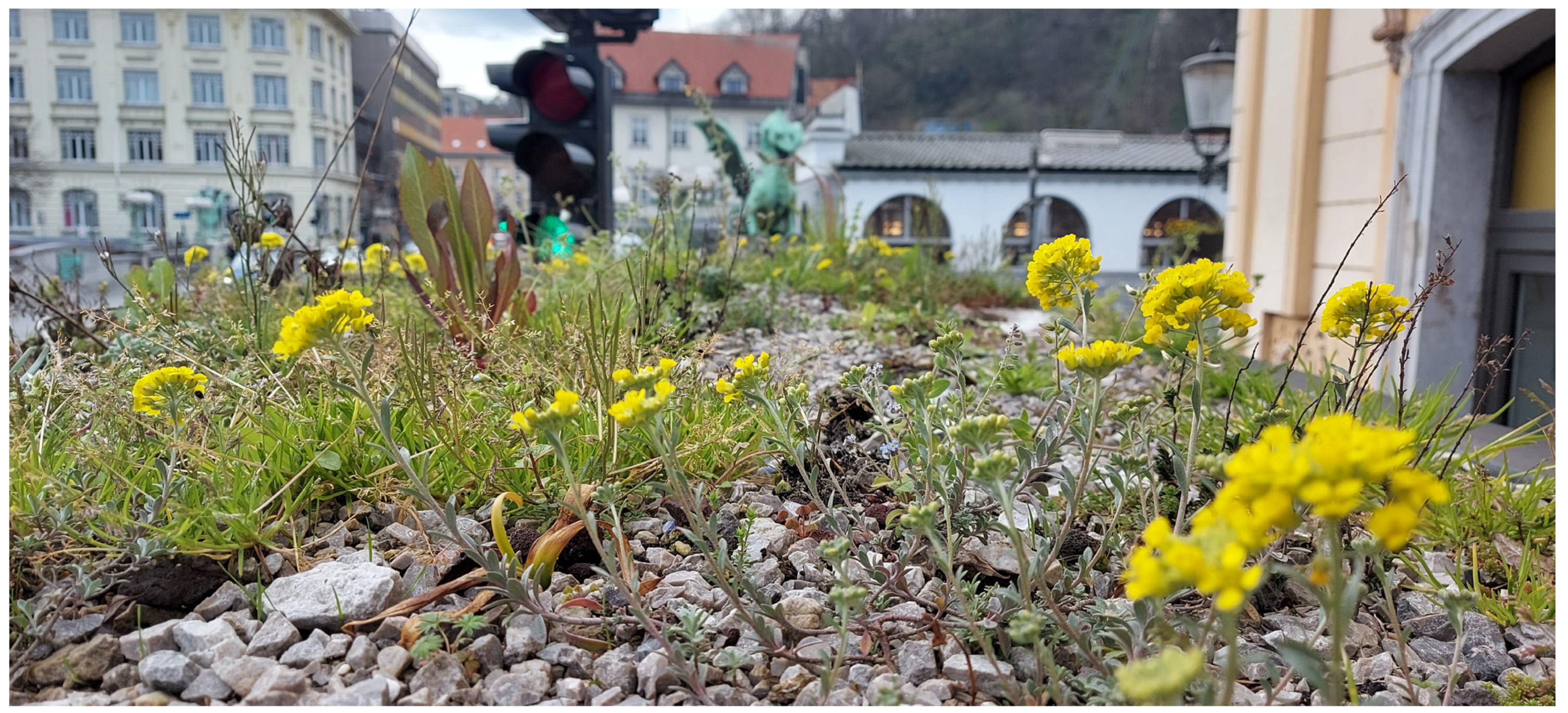
Another species that also increased in cover was M. lupulina. It complements A. pluscanescens very well on the shelters, which was especially evident at the Zmajski Most shelter (Figure 13). Both species had their highest cover there, with A. pluscanescens flowering in April and M. lupulina in June. Because of both species, the mentioned shelter is colored with yellow flowers from the end of March till end of June. At the same time, the current population of the endemic species A. pluscanescens on the planted shelters is significantly larger than at its natural habitat. This has made the bus shelters ex situ sites for the plant conservation. Similarly, they can become ex situ sites for other endangered plant species that can grow under similar environmental factors. For the remaining plant species, the cover did not change significantly between 2024 and 2025. In some cases, the reason may be that monitoring was carried out in July, when some species had already completed their vegetation season. This certainly applied to the spring plant species that we sowed. The species G. nivalis and E. hyemalis can germinate already in the first year after sowing; however, these are late-winter species whose above-ground parts are no longer visible in June. Monitoring of late-winter and early-spring species should therefore also be carried out in March. Other plant species, however, typically need several years for more vigorous growth. In the species S. montana, we found that the shrub growth did not increase significantly; however, the plants successfully produced seeds, as a greater number of seedlings was observed in 2025. This species is very attractive on the shelters because the shrubs are elevated above the shelter surface, and, due to its autumn flowering, it is also an important late food source for pollinators [9,44,47]. The combination of different native species on the shelters therefore enables both seasonal horticultural attractiveness of the bus shelters and forage for pollinators, as well as food in the form of seeds for birds [48].
As expected, species from the surrounding environment also colonized the planted shelters, since Ljubljana, despite its urban areas, is a city with numerous green spaces where a satisfactory number of native plant species can still be found. The highest number of spontaneously established species on the shelters was recorded at the Poljane shelter, which can be attributed to the proximity of a park, representing the most likely source of the “accidental” plant species. Among these, T. repens and L. flos-cuculi showed the highest frequency of occurrence on the shelters; these species are generally widespread and have a broad ecological niche [43]. While the cover of all “accidental” species decreased in 2025, as many as nine disappeared completely. Based on this, it can be concluded that the shelters represent a suitable habitat for “accidental” species, mainly in the first year, when the seedlings are still small and their root systems are not yet very deep. In the second year of growth, however, for species with deep root systems that require more water for successful growth, the shallow shelters no longer represented a suitable habitat. For this reason, they declined. This is especially true for representatives of the genus Verbascum, which have very deep and thick rootstocks [37,43].
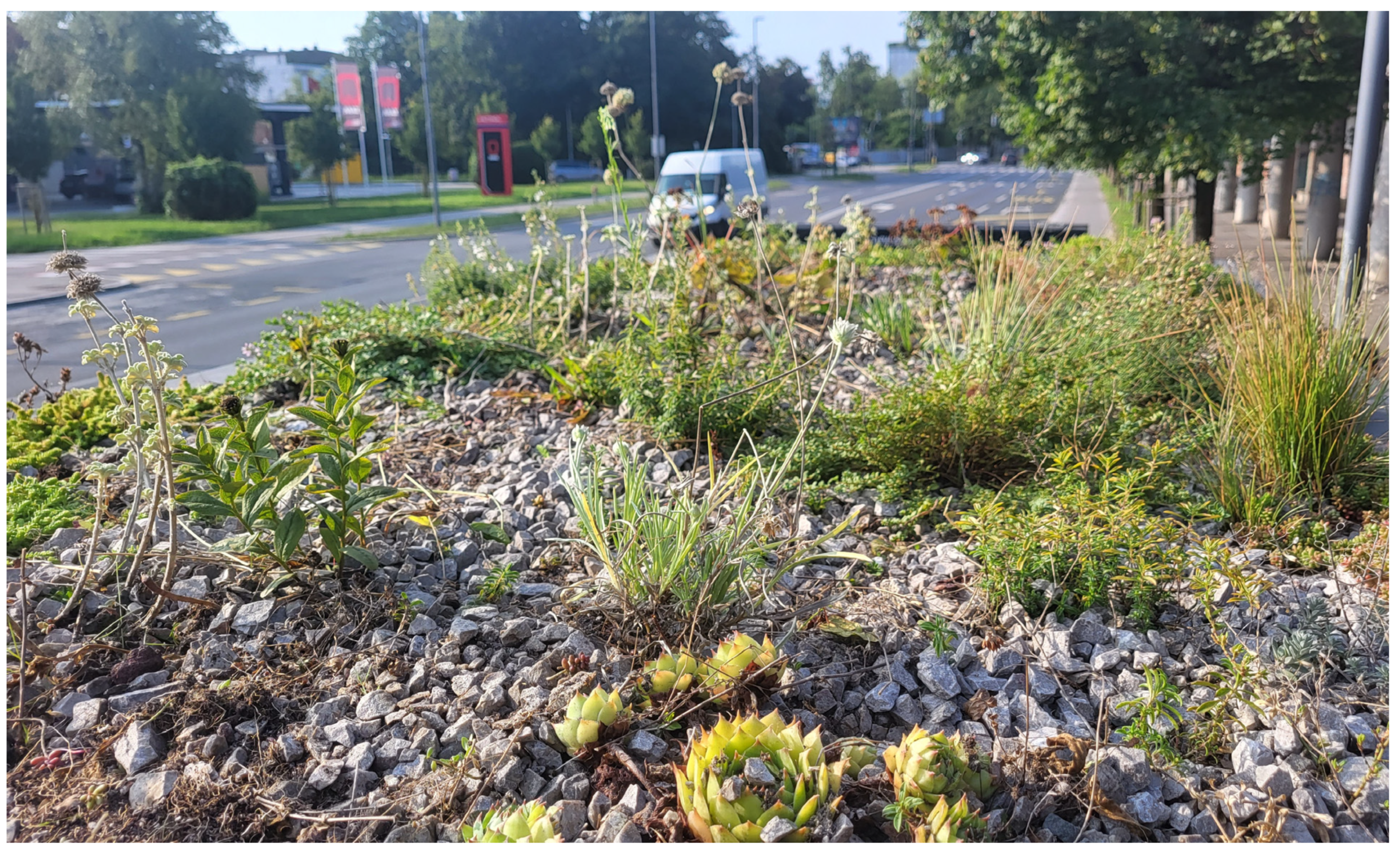
The same applies to invasive plant species. Despite the fact that various invasive plant species are very common in urban areas and represent a major environmental problem, they were relatively rare. Among the invasive species, only the invasive species Erigeron annuus (L.) Pers. and Conyza canadensis L. were recorded on bus shelters. Shallow soil (depth of barely 5 to 7 cm) on the roofs in a very warm summer do not allow for the successful growth of invasives, which are usually taller plants and require more soil. The specimens of the aforementioned invasive species only grew to a few centimeters and then dried up at the first onset of heat. Therefore, there is no fear that the planted bus shelters could represent a potential place for the spread of invasive plant species. The quantity of weed species on the studied shelters also significantly decreased in 2025. While in 2024, between 1.5 kg and 8 kg of weeds from the shelters had been removed, in 2025, only between 40 g and 350 g of weeds were removed. The significantly reduced amount of removed weeds in 2025 could be a consequence of their removal one year earlier (2024), which prevented their spread and increased the cover of planted species in 2025. This supports our assumption that if newly planted shelters are weeded in the first and second year after planting, weed species can be almost completely eliminated in subsequent years. Of course, this applies if the presence of a larger number of grasses or invasive plant species is observed. The planted plant species cover the shelters and prevent the growth of weeds. This may also be due to the amount of precipitation, which was significantly higher in May 2024 than in May 2025, which could have stimulated better growth of weed species. The reason for the large amount of weeds removed at the Cukrarna Roška and Cukrarna Arhiv shelters in 2024 could also be the proximity of a larger green area, from which the spread of various grass species was possible. With the amount of weeds decreasing from one year to the next, the assumption of the self-sustainability and extensiveness of the planted shelters has been confirmed. Later, maintenance is almost no longer necessary. Given that financial resources are required for the maintenance of public horticultural plantings, it is very important that self-sustaining horticultural plantings in the city do not require additional financial resources (Figure 14).
Given that the bus shelter planting project is being implemented in the capital city, this project also has a major citizen science aspect [49]. Namely, citizen participation is embedded in the project’s design. Each year, at least one new location is chosen through the city’s Citizen Initiatives digital platform, giving residents a direct role in shaping their neighborhoods. This involvement fosters a sense of ownership and environmental responsibility. In addition to ongoing data collection and stakeholder collaboration, the city plans to further enhance public engagement by installing information points at each green bus shelter. These stations will provide visitors with useful insights into the project’s goals and environmental significance. Equipped with QR codes, they will provide access to interactive maps and curated immersive trails that connect the green roof bus shelters across Ljubljana. The Green Roof Bus Shelters project offers a unique, locally tailored solution that applies regional expertise to maximize environmental benefits while meeting specific climatic and spatial conditions. Beyond its ecological contributions, the project serves as a platform for cross-departmental collaboration, bringing together municipal employees, public companies, private partners, and academic institutions. This collaborative framework ensures that expertise from diverse fields is integrated to create solutions with multiple co-benefits. Namely, the results of our research on the suitability of native plant species for planting bus shelters may also be useful for other designers of horticultural plantings in urban spaces. Further monitoring of planted bus shelters will also enable monitoring of the response of native plant species to climate change. In connection with hydrological research, water flow meters could be installed in the drainpipe of planted bus shelters in the future, which would actually measure the water retention function of planted bus shelters compared to unplanted ones.
Digitalization also plays a crucial role in the project’s success. The municipality uses digital tools for systematic data collection, analysis, and sharing, both internally and with external stakeholders. All records, spatial data, and monitoring results are archived and published via the City’s Open Data platform, improving transparency and enabling evidence-based decision-making. The Ljubljana Innovation Hub hosts an interactive Digital Display that visualizes project’s data—such as installation locations, selection criteria, and monitoring results—in a format accessible to both experts and the public.
The Green Roof Bus Stops project have generated a valuable body of locally adapted knowledge on increasing urban greenery. Ultimately, the Green Roof Bus Shelter project is more than a spatial intervention. It is a catalyst for systemic change in municipal operations, promoting cross-departmental cooperation, data-driven decision-making, and long-term environmental policy development. By integrating ecological, technological, and social dimensions, Ljubljana is developing a scalable, transferable model that can inspire other cities, contributing to the global shift towards sustainable, inclusive, and resilient urban futures. This is a simple and cost-effective project that does not require much ongoing maintenance, which makes it suitable for many cities. It is only important that native plant species appropriate to the specific area are used for planting. The project idea has already been transferred from Ljubljana to the second-largest Slovenian city, Maribor, where several shelters have been experimentally planted following the Ljubljana model [50]. Likewise, in the coming year, they plan to implement this model of planting bus shelters in the Croatian capital, Zagreb.

5. Conclusions

In Ljubljana, the capital of Slovenia, greening of the bus shelters roofs of public transport was started in 2020. Given that there are many bus shelters in the city, each greened bus shelter can become part of the city’s green network. By the end of November 2025, 75 bus shelters were already greened with native plant species produced in University Botanic Gardens Ljubljana. All bus shelters are planted only with autochthonous plant species that are resistant to environmental conditions such as strong UV-B radiation, large temperature fluctuations, lack of water, and shallow soil. The planted plants species are also melliferous and at the same time horticulturally interesting. In our study, we examined which of the planted plant species responded best to the growing conditions on the roofs of bus shelters. As a sample for monitoring the success of the project, we selected eight bus shelters located in very similar urban environments. Native plant species from dry karst habitats were planted on the shelters in the second half of September, when morning and evening moisture is higher. With this study, we aimed to determine the persistence of individual plant species after several years and how their coverage on the shelters changed over time. Five years after the initial plantings, despite very stressful external factors—drought, high UV-B radiation, lack of nutrients, and absence of irrigation—the coverage of half of the plant species increased, while in the others it remained more or less unchanged. It is a fact that during the first part of the year, when there was sufficient moisture and rainfall, namely from March to June, the shelters were green and flowering. In our research, it was found that, given the environmental conditions, the most suitable for planting are native karst species, such as S. acre, P. saxifraga, F. vulgaris, G. punctata, P. coronopus and A. senescens, whose cover increased on the studied canopies in two years. The Slovenian endemic species A. pluscanescens also proved to be successful in growing on the bus shelters, whose population is currently larger on the bus shelters than in its natural habitat. Thus, the bus shelters can also become places of ex situ protection of plant species. The other quite successful method of greening the bus shelters can also be sowing the seeds of certain species, which we demonstrated by recording seedlings of the species G. illyricus. In the third year after sowing, the seedlings were already sufficiently developed such that the species, through its coverage, occupied a substantial part of the shelter.

Author Contributions

Conceptualization, B.R. and J.B.; methodology, B.R., J.B. and K.M.; formal analysis, B.R.; investigation, B.R., J.B. and K.M.; writing—original draft preparation, B.R., J.B. and M.D.; writing—review and editing, B.R., J.B. and M.D.; visualization, B.R. and K.M.; supervision, J.B. All authors have read and agreed to the published version of the manuscript.

Funding

This research was partially supported by the Slovenian Research and Innovation Agency (ARIS) through the Research Programme P1-0212 (Plant Biology).

Data Availability Statement

The data used in our research are available in the database of the University Botanic Gardens Ljubljana.

Acknowledgments

We would like to thank our colleague Jure Kališnik, an employee of the University Botanic Gardens Ljubljana, who helped create the map of planted bus shelters.

Conflicts of Interest

The authors declare no conflicts of interest.

References

  1. Muilwijk, M. For a more climate-proof and biodiverse built environment. In Green Rooftops Walls and Shadowing; Urbact: Saint-Denis, France, 2024; 32p. [Google Scholar]
  2. Harnesk, H. Linnaeus: Genius of Uppsala; Hallgren & Fallgren: Uppsala, Sweden, 2007; 123p. [Google Scholar]
  3. De Cristo, E.; Luca Evangelisti, L.; Leone Barbaro, L.; Roberto De Lieto Vollaro, R. A Systematic Review of Green Roofs’ Thermal and Energy Performance in the Mediterranean. Energies 2025, 18, 2517. [Google Scholar] [CrossRef] [Scilit]
  4. Thuring, C.; Grant, G. The biodiversity of temperate extensive green roofs: A review of research and practice. Isr. J. Ecol. Evol. 2015, 62, 44–57. [Google Scholar] [CrossRef] [Scilit]
  5. Bellini, A.; Bartoli, F.; Amato, L.; Casalini, R.; Canev, G. Enhancing biodiversity and functionality of extensive green roof: A comparative study of five native Mediterranean perennial species in Rome. Build. Environ. 2025, 282, 113285. [Google Scholar] [CrossRef] [Scilit]
  6. Larcher, F.; Devecchi, M.; Battisti, L.; Vercelli, M. Urban horticulture and ecosystem services: Challenges and opportunities for greening design and management. Italus Hortus 2017, 24, 33–39. [Google Scholar] [CrossRef] [Scilit]
  7. Salman, I.N.A.; Blaustein, L. Vegetation Cover Drives Arthropod Communities in Mediterranean/Subtropical Green Roof Habitats. Sustainability 2018, 10, 4209. [Google Scholar] [CrossRef] [Scilit]
  8. Available online: https://snepnetwork.org/wp-content/uploads/2021/12/Green-Roof-092221-hyperlinks.pdf (accessed on 4 September 2025).
  9. Brenneisen, S. The Natural Roof. In Research Project Report on the Use of Extensive Green Roofs by Wild Bees; University of Wädenswil: Wädenswil, Switzerland, 2005; 21p. [Google Scholar]
  10. Perrelet, K.; Moretti, M.; Inglard, O.; Altermatt, F.; Cook, L.M. Green roofs harbor different and non- substituting invertebrate communities than surrounding ground-level habitats. J. Insect Conserv. 2023, 27, 941–946. [Google Scholar] [CrossRef] [Scilit] [PubMed]
  11. Drukker, E.F.; Schranz, M.E.; Vet, L.E.M.; Voeten, J.; Fatouros, N.E.; Casper, W.; Quist, C.W. The development of insect diversity and ecosystem complexity on green roofs: A review. J. Environ. Manag. 2026, 19, 11–25. [Google Scholar] [CrossRef] [Scilit]
  12. Versini, P.; Gires, A.; Tchiguirinskaia, I.; Schertzer, D. Fractal analysis of green roof spatial implementation in European cities. Urban For. Urban Green. 2020, 49, 126629. [Google Scholar] [CrossRef] [Scilit]
  13. Available online: https://www.innovatopgreen.com/en/green-roofs/green-bus-stops/ (accessed on 23 December 2025).
  14. Available online: https://news.climate.columbia.edu/2011/01/31/solving-urbanization-challenges-by-design-%E2%80%93-the-science-of-green-roofs/ (accessed on 5 January 2026).
  15. Available online: https://www.greenroofs.org/about-green-roofs (accessed on 5 January 2026).
  16. Eder, E. An attempt to promote autochthonous plant in the city of the Vienna, or How to combine science with local politics. In Conference Paper—4th European Conference on Biological Invasions; Bundesamt fur Naturschutz: Bonn, Germany, 2006. [Google Scholar]
  17. Afonso do Paco, T.; Anico, A.; Soares, A.L.; do Rosario Cameira, M.; Cruz de Carvalho, R.; Abreu, F.; Espirito Santo, D. Green roofing with native species: Alternative urban landscape areas to enhance water use and sustainability in mediterranean conditions. In Autochthonous Plants in the Urban Environment; Ravnjak, B., Bavcon, J., Sharrock, S., Eds.; Botanični vrt, Oddelek za biologijo, Biotehniška fakulteta: Ljubljana, Slovenia, 2017. [Google Scholar]
  18. Available online: https://www.bauder.co.uk/technical-centre (accessed on 30 December 2025).
  19. Vaz Monteiro, M.; Blanuša, T.; Verhoef, A.; Richradson, M.; Hadley, P.; Cameron, R.W.F. Functional green roofs: Importance of plant choice in maximising summertime environmental cooling and substrate insulation potential. Energy Build. 2017, 141, 56–68. [Google Scholar] [CrossRef] [Scilit]
  20. Karachaliou, P.; Santamourisa, M.; Helli Pangalou, H. Experimental and numerical analysis of the energy performance of a large scale intensive green roof system installed on an office building in Athens. Energy Build. 2015, 114, 256–264. [Google Scholar] [CrossRef] [Scilit]
  21. Available online: https://www.youtube.com/watch?v=AJyaiCRq65Y (accessed on 27 September 2025).
  22. Koscikova, Z.; Krivtsov, V. Environmental and Social Benefits of Extensive Green Roofs Applied on Bus Shelters in Edinburgh. Land 2023, 12, 1831. [Google Scholar] [CrossRef] [Scilit]
  23. Available online: https://www.utrecht.nl/city-of-utrecht/green-roofed-bus-shelters-in-utrecht (accessed on 30 December 2025).
  24. Available online: https://www.weforum.org/stories/2019/07/bees-can-take-refuge-on-these-bus-stop-green-roofs/ (accessed on 30 December 2025).
  25. Available online: https://www.ljubljana.si/sl/mestna-obcina/o-ljubljani/ljubljana-v-stevilkah (accessed on 8 August 2025).
  26. Available online: https://www.ljubljana.si/sl/moja-ljubljana/ljubljana-zate/pregled-vseh-projektov/javne-zelene-povrsine-vecje (accessed on 8 August 2025).
  27. Available online: https://meteo.arso.gov.si/met/sl/climate/diagrams/ljubljana/ (accessed on 26 August 2025).
  28. Martinčič, A.; Wraber, T.; Jogan, N.; Podobnik, A.; Turk, B.; Vreš, B.; Ravnik, V.; Frajman, B.; Stergulc Krajšek, S.; Trčak, B.; et al. Mala flora Slovenije. In Ključ za Določanje Praprotnic in Semen; Tehniška založba Slovenije: Ljubljana, Slovenija, 2007; 967p. [Google Scholar]
  29. Koželj, J.; Böhm Vidmar, N.; Kovačič, A.M. Katalog Cestne Opreme in Uličnega Pohištva za Urejanje Javnega Prostora MOL; Metsna občina Ljubljana: Ljubljana, Slovenia, 2013; 112p. [Google Scholar]
  30. González Moreno, A.; de Cózar, A.; Prieto, P.; Domínguez, E.; Heredia, A. Radiationless mechanism of UV deactivation by cuticle phenolics in plants. Nat. Commun. 2022, 13, 1786. [Google Scholar] [CrossRef] [Scilit] [PubMed]
  31. Oliveira, M.; Fernandes-Silva, A. Abiotic Stress in Plants—Adaptations to Climate Change; IntechOpen: London, UK, 2023; 284p. [Google Scholar]
  32. Nikolić, T. Morfologija Biljaka: Razvoj, Građa I Uloga Biljnih Tkiva, Organa I Organskih Sustava; Zagreb, Alfa: Zagreb, Croatia, 2017; 569p. [Google Scholar]
  33. Šilić, Ć. Endemične Biljke; Svjetlost OOUR Zavod za Udžbenike i Nastavna Sredstva Sarajevo: Beograd, Yugoslavia, 1984; 225p. [Google Scholar]
  34. Šilić, Č. Šumske Zeljaste Biljke; Svjetlost OOUR Zavod za Udžbenike i Nastavna Sredstva Sarajevo: Beograd, Yugoslavia, 1983; 271p. [Google Scholar]
  35. Wraber, T. Sto Znamenitih Rastlin na Slovenskem; Prešernova družba: Ljubljana, Slovenia, 1990; 239p. [Google Scholar]
  36. Wraber, T. 2x Sto Alpskih Rastlin na Slovenskem; Prešernova družba: Ljubljana, Slovenia, 2006; 230p. [Google Scholar]
  37. Bakan, B.; Vitasović Kosić, I.; Fištravec, G.; Kaligarič, M. Uporabne Rastline od Krasa do Kvarnerja: Priročnik za Prepoznavanje Divjih Rastlin s Poudarkom na Njihovi Uporabnosti, 1st ed.; Univerza v Mariboru, Univerzitetna založba: Maribor, Slovenia, 2021; 333p. [Google Scholar]
  38. Mayer, E. Endemične Cvetnice Območja Jugovzhodnih Apneniških Alp, Njihovega Predgorja in Ilirskega Prehodnega Ozemlja. In Zbornik ob 150-letnici botaničnega vrta v Ljubljani; Lazar, J., Ed.; Univerza v Ljubljani: Ljubljana, Slovenia, 1960; pp. 25–48. [Google Scholar]
  39. Braun-Blanquet, J. Pflanzensoziologie, Grundzüge der Vegetationskunde, 3rd ed.; Springer: Berlin, Germany, 1964; p. 631. [Google Scholar]
  40. Tichý, L. JUICE, software for vegetation classification. J. Veg. Sci. 2002, 13, 451–453. [Google Scholar] [CrossRef]
  41. Available online: https://urbanscape.knaufinsulation.com/en-LU/urbanscape-solutions/green-roof (accessed on 5 October 2025).
  42. Available online: https://www.scotiaseeds.co.uk/wp-content/uploads/2014/03/Green-Roof-Mix-3.pdf (accessed on 5 October 2025).
  43. Seliškar, A.; Wraber, T. Travniške rastline na Slovenskem: Sto pogostnih vrst; Prešernova družba: Ljubljana, Slovenia, 1986; 229p. [Google Scholar]
  44. Ravnjak, B.; Bavcon, J.; Božič, J. Autochthonous melliferous Plants; Botanic Gardens Ljubljana, Department of Biology, Biotechnical Faculty: Ljubljana, Slovenia, 2020; 285p. [Google Scholar]
  45. Rottensteiner, W.K. Exkursionsflora für Istrien; Verlag des Naturwissenschaftlichen Vereins für Kërnten: Klagenfurt, Austria, 2014; 1014p. [Google Scholar]
  46. Gonzáles, A.; López, J.; Bañón, S.; Ochoa, J.; Fernández, J.A.; Martínez, J.J.; Rodríguez, R. Ornamental use of Wild Species of Genus Gladiolus. Acta Hortic. 2003, 598, 5963. [Google Scholar] [CrossRef] [Scilit]
  47. Hernandez, J.L.; Frankie, G.W.; Thorp, R.W. Ecology of Urban Bees: A Review of Current Knowledge and Directions for Future Study. Cities Environ. 2009, 2, 3. [Google Scholar] [CrossRef] [Scilit]
  48. Leotta, L.; Toscano, S.; Romano, D. Which Plant Species for Green Roofs in the Mediterranean Environment? Plants 2023, 12, 3985. [Google Scholar] [CrossRef] [Scilit] [PubMed]
  49. Available online: https://www.btc.si/en/news/2021/09/by-greenifying-the-roofs-of-three-bus-stops-btc-is-joining-the-project-of-the-city-municipality-of-ljubljana/ (accessed on 30 December 2025).
  50. Available online: https://vecer.com/maribor/aktualno/foto-v-mariboru-ozelenili-pet-avtobusnih-nadstresnic-v-srediscu-mesta-10390737#google_vignette (accessed on 30 December 2025).
Figure 1. Presentation of average monthly maximum temperatures in Ljubljana from 2020 to 2024 (measuring station Ljubljana Bežigrad: lon = 14.5124; lat = 46.0655; alt. = 299 m). (Source: [11]).
Horticulturae 12 00120 g001
Figure 2. Presentation of monthly precipitation in Ljubljana from 2020 to 2024 (measuring station Ljubljana Bežigrad: lon = 14.5124; lat = 46.0655; alt. = 299 m). (Source: [27]).
Horticulturae 12 00120 g002
Figure 3. Presentation of the monthly number of sunshine hours in Ljubljana from 2020 to 2024 (measuring station Ljubljana Bežigrad: lon = 14.5124; lat = 46.0655; alt. = 299 m). (Source: [27]).
Horticulturae 12 00120 g003
Figure 4. (a) Side view of the bus shelters in Ljubljana [29]; (b) front view of the bus shelters in Ljubljana [29]; and (c) side view showing the depth of the bus shelter roof.
Horticulturae 12 00120 g004
Figure 5. Location map of the planted shelters in Ljubljana till end of year 2025 (single bus shelters are marked with a red dot, double bus shelters (two shelters placed side by side) with a blue dot, monitoring of single bus shelters with a green dot; and monitoring of double bus shelters with a yellow dot).
Horticulturae 12 00120 g005
Figure 6. Presentation of average monthly maximum temperatures in the Karst region from 2020 to 2024 (measuring station Godnje: lon = 13.8439; lat = 45.7550; alt. = 320 m). (Source: [27]).
Horticulturae 12 00120 g006
Figure 7. Presentation of monthly precipitation in the karst region from 2020 to 2024 (measuring station Godnje: lon = 13.8439; lat = 45.7550; alt. = 320 m). (Source: [27]).
Horticulturae 12 00120 g007
Figure 8. Presentation of the monthly number of sunshine hours in the karst region from 2020 to 2024 (measuring station Godnje: lon = 13.8439; lat = 45.7550; alt. = 320 m). (Source: [27]).
Horticulturae 12 00120 g008
Figure 9. Planting the roof top of a bus shelter in Ljubljana (Slovenia) with native plant species, which were produced in the University Botanic Gardens Ljubljana nursery. (Photo: J. Bavcon).
Horticulturae 12 00120 g009
Figure 10. View of the completed planting of the bus shelter roof, where the top layer of limestone gravel can be seen. (Photo: J. Bavcon).
Horticulturae 12 00120 g010
Figure 11. Plant growth on the bus shelter roof in the second year after planting. In the middle, S. acre seedlings and vegetatively propagated S. acre specimens are already visible. (Photo: J. Bavcon).
Horticulturae 12 00120 g011
Figure 12. Bar chart with species and their mean value of species cover percentage on monitored bus shelters.
Horticulturae 12 00120 g012
Figure 13. Slovenian endemic plant species Allysum pluscanescens growing on a bus shelter roof in Ljubljana (Slovenia). (Photo: B. Ravnjak).
Horticulturae 12 00120 g013
Figure 14. Autumn view of a planted bus shelter, where the native species S. tectorum, M. incanum, S. graminifolia, S. montana and I. hirta are visible in the foreground. (Photo: J. Bavcon).
Horticulturae 12 00120 g014
Table 1. Number of bus shelters planted to date in the Municipality of Ljubljana.
Year202020212022202320242025SUM
No. of bus shelters39917162175
Table 2. List of plant species planted on bus shelters with their basic characteristics (Exp.—growth exposition;  —sunny; ◐—semi shade; p—perennial; a—annual; b—biennial).
Species NameFlowering Season Size (cm)Exp.Leaf ColorEvergreen/DeciduousLife FormLife Span
Allium carinatum L.VI–VIII50 greendeciduousherbaceousp
Allium senescens L.VIII–IX40 greenevergreenherbaceousp
Alysum pluscanescens (Raim. ex Jos.Baumgartner) Španiel, Lihova & MarholdIII–IV10 ash grayevergreenherbaceous to half shrubp
Anthyllis vulneraria L.V–VIII30 greendeciduousherbaceousa-p
Campanula tyrsoides L.VII–VIII50–70 greendeciduousherbaceousb
Crithmum maritimum L.VIII–X30–50 blue greenevergreenhalf shrubp
Filipendula vulgaris MoenchV–VI50–70 greendeciduousherbaceousp
Galium purpureum L.V–VII30 dark reddeciduousherbaceousp
Galium verum L.V–IX50 greendeciduousherbaceousp
Geranium macrorrhizum L.VI–IX50 greendeciduousherbaceousp
Gladiolus illyricus W.D.J. KochVI–VII40–70 greendeciduousherbaceousp
Globularia cordifolia L.III–IV8 greenwintergreenherbaceousp
Globularia punctata Lapeyr.III–V15 greenwintergreenherbaceousp
Helianthemum nummularium (L.) Mill.VII–IX30 dark greenwintergreenhalf shrubp
Heliosperma alpestre (Jacq.) Griseb.VI–VIII20 bright greendeciduousherbaceousa
Inula hirta L.V–VI30–40 dark greendeciduousherbaceousp
Iris sibirica subsp. erirrhiza (L.) PospichalV50–70 greendeciduousherbaceousp
Leucanthemum ircutianum DCV–X40–60 dark greenwintergreenherbaceousp
Marrubium incanum Desr.VIII–IX30–50 ash grayevergreenherbaceousp
Medicago lupulina L.IV–VI20–40 greendeciduousherbaceousp
Petrorhargia saxifrage Scop.V–X20 dark greenevergreenherbaceousp
Plantago coronopus L.V–IV40 greenwintergreenherbaceousp
Potentilla erecta (L.) RaeuschV–VIII20 greendeciduousherbaceousp
Satureja montana L.VIII–X30 greendeciduousshrubp
Scabiosa graminifolia L.V–X30 ash graydeciduousherbaceousp
Sedum acre L.V–X8 greenevergreenherbaceousp
Sedum album L.V–X15 red-greenevergreenherbaceousp
Sedum maximum (L.) Hoffm.V–XI20–40 pale to red greendeciduousherbaceousp
Sempervivum tectorum L.VI–VII5–50 pale green,evergreenherbaceousp
Thalictrum minus L.V–VI40–70 dark greendeciduousherbaceousp
Thymus vulgare L.V–X5 greenwintergreenherbaceousp
Veronica barrelieri H.Schott ex Roem.& Schult.VII–X30–50 greendeciduousherbaceousp
Table 3. Native plant species planted in 2023 on eight studied shelters and their initial coverage expressed as percentages (according to Braun–Blanquet method).
Species NameStarting Cover Percentage
Allium carinatum L.5%
Allium senescens L.2%
Alysum pluscanescens (Raim. ex Jos.Baumgartner) Španiel, Lihova & Marhold2%
Campanula tyrsoides L.2%
Filipendula vulgaris Moench10%
Galium purpureum L.2%
Globularia cordifolia L.3%
Globularia punctata Lapeyr3%
Inula hirta L.2%
Marrubium incanum Desr.2%
Medicago lupulina L.2%
Petrorhargia saxifrage Scop.5%
Plantago coronopus L.2%
Satureja montana L.10%
Scabiosa graminifolia L.3%
Sedum acre L.10%
Sedum album L.5%
Sedum maximum (L.) Hoffm.3%
Sempervivum tectorum L.3%
Thymus vulgare L.5%
Veronica barrelieri H.Schott ex Roem.& Schult.2%
Table 4. Number of recorded plant species per shelter and amount of weed species (CuA—Cukrarna arhiv, CuR—Cukrarna Roška, CuC—Cukrarana Cukrarana, Po—Poljanska, ZmM—Zmajski most, M1—Moste 1, M2—Moste 2, M3—Moste 3).
ShelterCuACuRCuCPoZmMM1M2M3
No. of planted species2017122017161815
No. of spontaneously occurring species35386531
SUM of species2322152823212116
Amount of weed species in 20247.5 kg8 kg2.5 kg2 kg2 kg1.5 kg2 kg2 kg
Amount of weed species in 2025195 g210 g70 g40 g190 g128 g133 g353 g
Disclaimer/Publisher’s Note: The statements, opinions and data contained in all publications are solely those of the individual author(s) and contributor(s) and not of MDPI and/or the editor(s). MDPI and/or the editor(s) disclaim responsibility for any injury to people or property resulting from any ideas, methods, instructions or products referred to in the content.