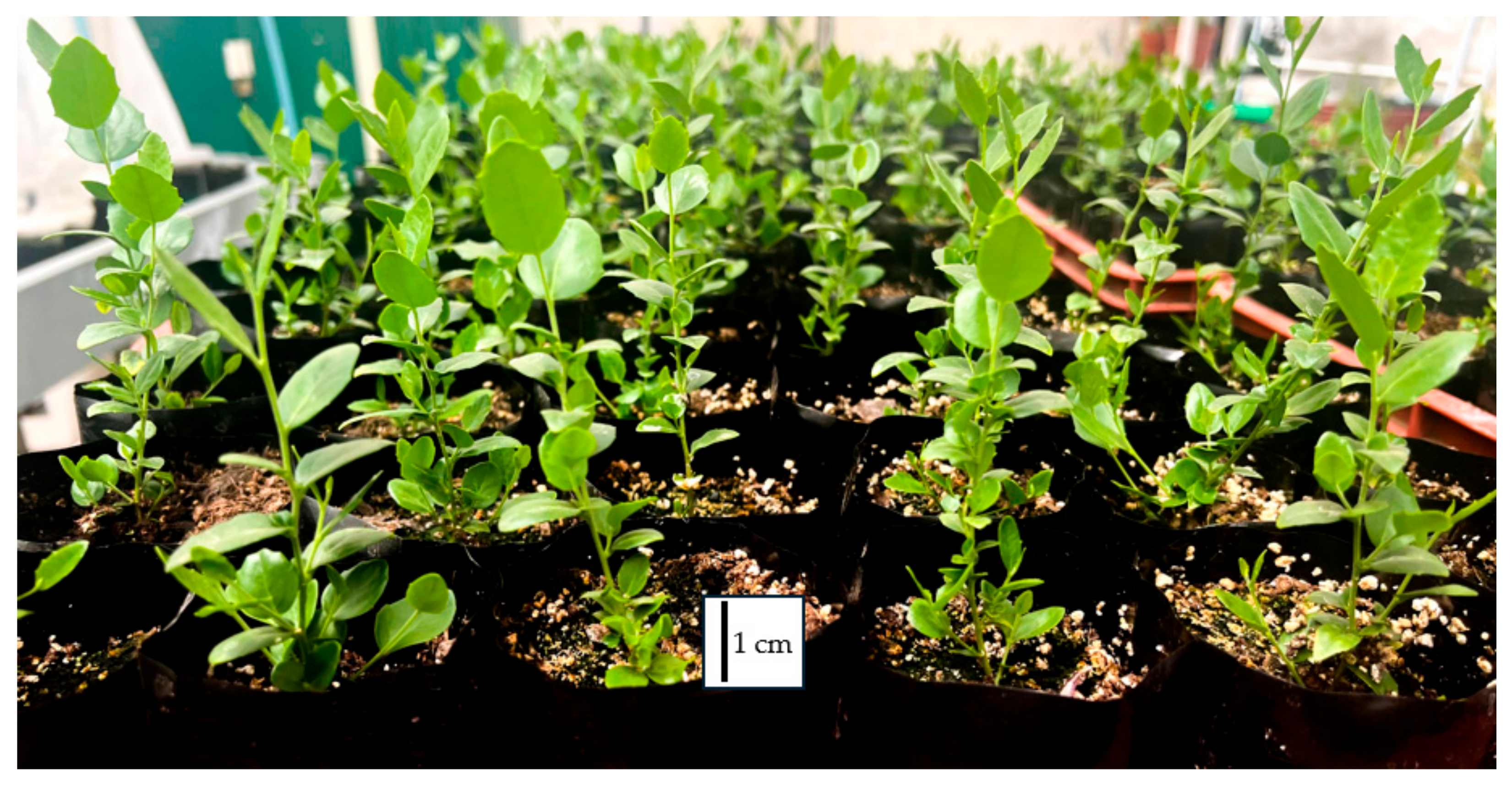


Article

Micropropagation of Quillaja saponaria: A Biotechnological Solution for Conservation and Sustainable Commercial Use of This Endemic Chilean Woody Species

by
Francesca Guerra
1,
Miriam Montecinos
1,
Ingrid Salgado
2,
Javier González
2,
Ricardo Cautín
3 and
Mónica Castro
1,*
1
Laboratorio de Propagación, Escuela de Agronomía, Facultad de Ciencias Agronómicas y de los Alimentos, Pontificia Universidad Católica de Valparaíso, La Palma S/N, Quillota 2260000, Chile
2
Desert King Chile S.A., Av. Industrial 1970, Quilpué 2430000, Chile
3
Laboratorio de Especies Leñosas, Escuela de Agronomía, Facultad de Ciencias Agronómicas y de los Alimentos, Pontificia Universidad Católica de Valparaíso, La Palma S/N, Quillota 2260000, Chile
*
Author to whom correspondence should be addressed.
Horticulturae 2025, 11(12), 1498; https://doi.org/10.3390/horticulturae11121498 (registering DOI)
Submission received: 30 October 2025 / Revised: 5 December 2025 / Accepted: 6 December 2025 / Published: 10 December 2025
(This article belongs to the Section Propagation and Seeds)

Abstract

Quillaja saponaria Molina, a tree species endemic to central Chile, is critical to the pharmaceutical and biotechnology industries due to its triterpenic saponins, which exhibit potent immunostimulant, antiviral, and surfactant activities. However, the natural regeneration of the species is limited by low seed germination rates, and increasing pressure on natural populations in the sclerophyllous Mediterranean forest where the species lives, caused by various factors. The objective of this study was to develop an efficient micropropagation protocol for five Q. saponaria ecotypes using nodal explants. This protocol is designed to support species conservation, facilitate large-scale reforestation, and ensure the sustainable production of its bioactive metabolites. Explants were cultured on Murashige and Skoog (MS) medium, and the establishment, multiplication, and rooting stages were systematically optimized using various growth regulator combinations. The resulting protocol demonstrated high efficiency across all stages. Surface sterilization with 1% sodium hypochlorite achieved an explant survival rate of 84.73%. The most effective shoot multiplication was obtained on MS medium supplemented with 4.44 μM 6-benzylaminopurine (BAP), yielding a proliferation rate of 4.04 and an average shoot length of 8.01 cm. For rooting, a high success rate (92.85%) was achieved by treating microshoots with 984.06 μM indole-3-butyric acid (IBA) prior to an ex vitro transfer to a peat:perlite:vermiculite mixture (1:1:1 v/v/v). Acclimatized plantlets showed a consistent survival rate between 84.28% and 87.16%. Crucially, the five ecotypes demonstrated no statistically significant differences in their responses throughout the protocol. This validates the method’s broad applicability for large-scale production and reforestation initiatives.

1. Introduction

Quillaja saponaria Molina, commonly known as quillay or soapbark tree, is an evergreen species endemic to central Chile’s Mediterranean-climate zone and one of only two recognized species in the family Quillajaceae (order Fabales) [1,2]. The species ranges from the Coquimbo Region (30° S) to the Araucanía Region (38° S), occupying coastal, central valley, and Andean zones at elevations from 15 to 2000 m above sea level [3]. As a key structural component of sclerophyllous forests, Q. saponaria demonstrates remarkable adaptability to diverse environmental conditions, notably persisting in nutrient-poor soils and drought-affected areas [4,5]. This resilience has prompted recent interest in its phytoremediation potential, with studies confirming successful establishment on copper mine tailings and heavy metal-contaminated sites, leading to recommendations for its use in phytostabilization programs [6,7].
Quillay has gained considerable economic importance due to its high content of triterpenoid saponins, a class of secondary metabolites known for their well-documented antiviral, anti-inflammatory, antifungal, and immunostimulant activities [8,9,10]. Purified saponin extracts from Q. saponaria have been widely incorporated as adjuvants in both veterinary and human vaccines, including subunit formulations such as the Novavax SARS-CoV-2 vaccine [11,12]. The growing commercial demand for saponins has intensified pressure on the already threatened wild populations of Q. saponaria, which face risks from deforestation, wildfires, and land-use change. Consequently, the species is currently subject to special resource management regulations in Chile [13].
Sexual propagation of Q. saponaria is challenging due to low seed germination rates, extended juvenile periods, and high sensitivity to environmental factors [14]. Consequently, in vitro propagation emerges as a viable alternative for the mass production of genetically uniform, high-quality plants, offering a clear benefit to both conservation efforts and commercial use [15]. In vitro propagation of Quillaja saponaria has proven to be an efficient method for obtaining homogeneous, fast-growing plants. Studies show that nodal segments cultured in MS medium with BAP achieved a multiplication of 2 to 5 shoots per explant in each subculture, while the use of IBA (0.1–1 mg/L) allowed for 50–60% rooting, with subsequent vigorous growth during acclimatization [16]. In addition, combinations of BAP and AIB have been reported to induce direct organogenesis with shoot elongation of up to 4 cm in 4 weeks [17]. On the other hand, somatic embryo induction was achieved using 2,4-D and BAP, with embryogenic structure formation rates of 20–30% of the explants [18]. Taken together, these results confirm that micropropagation is an effective tool for the mass production and conservation of quillay.
Micropropagation is a key tool for the mass production of uniform and pathogen-free woody plants, overcoming limitations of traditional vegetative methods such as long cycles, poor rooting, genetic variability, and sanitary issues [19]. The growth regulator 6 benzylaminopurine (BAP) is widely used during in vitro multiplication due to its cytokinin effect, which stimulates organogenesis and shoot formation; its combination with 2,4 D and IBA optimizes callus induction and adventitious shoot formation, whereas high concentrations can cause hyperhydricity, which can be mitigated by kinetin [20,21].
Rooting is a critical and costly phase, accounting for up to 70% of the total cost in some woody species due to anatomical and physiological restrictions [22,23]. Strategies such as ex vitro rooting and brief auxin applications, e.g., IBA “pulses”, allow rooting and survival rates above 85–90%, while promoting the early formation of functional structures such as cuticle, stomata, and vascular tissue, enhancing the transition to non-sterile conditions [22,23,24].
The acclimatization stage remains a critical bottleneck, with high mortality and abiotic stress in woody plantlets [22]. Overall, in vitro propagation of woody species represents a biotechnological advancement and a fundamental strategy for sustainable plant production, conservation, and large-scale commercial application.
While previous in vitro culture studies of Q. saponaria have employed nodal segments or apical buds as explants [25,26], the resulting protocols exhibit significant shortcomings in key areas, including multiplication rates, rooting efficiency, and ex vitro survival.
Therefore, developing a reliable and reproducible micropropagation protocol for Q. saponaria is essential for advancing both conservation and commercial cultivation initiatives. By improving the availability of plant material for reforestation programs and simultaneously reducing the dependence on wild populations for saponin extraction, tissue culture techniques offer a direct route toward sustainable resource management. Furthermore, in vitro systems provide essential platforms for future biotechnological advancements. Accordingly, the objective of this study was to develop an effective micropropagation protocol for five ecotypes of Quillaja saponaria to contribute to its conservation and to enable its application in reforestation programs and the sustainable production of bioactive metabolites.

2. Materials and Methods

2.1. Plant Material

Plant material was obtained from 5-year-old Quillaja saponaria plants propagated from seed, maintained in the Propagation Laboratory at Pontificia Universidad Católica de Valparaíso, located in Quillota, Chile. Stock plants were maintained in an unheated greenhouse located in Quillota (32°54′ S, 71°16′ W), a region characterized by a warm temperate, semiarid climate [27]. Ambient greenhouse temperatures fluctuated seasonally between 5 °C and 30 °C.
Five ecotypes of Q. saponaria (Q1, Q2, Q3, Q4, and Q5) were utilized in this study, selected for their commercial potential by DESERT KING CHILE S.A. The ecotypes were selected based on their vigor, saponin content/composition and micropropagation performance. The selection was performed among a large number of plants grown in an ultra-high density (UHD) plantation system (approximately > 20,000 plants/hectare) started in Casablanca, Valparaiso, Chile, in 2009. The specific identity and detailed characteristics of these ecotypes are subject to a confidentiality agreement with the sponsoring entity and are therefore excluded from this publication. However, the ecotypes were previously characterized through genetic analysis to ensure intraspecific variability. Specific data related to sequencing and molecular markers are withheld due to commercial confidentiality restrictions.

2.2. Surface Sterilization of Plant Material

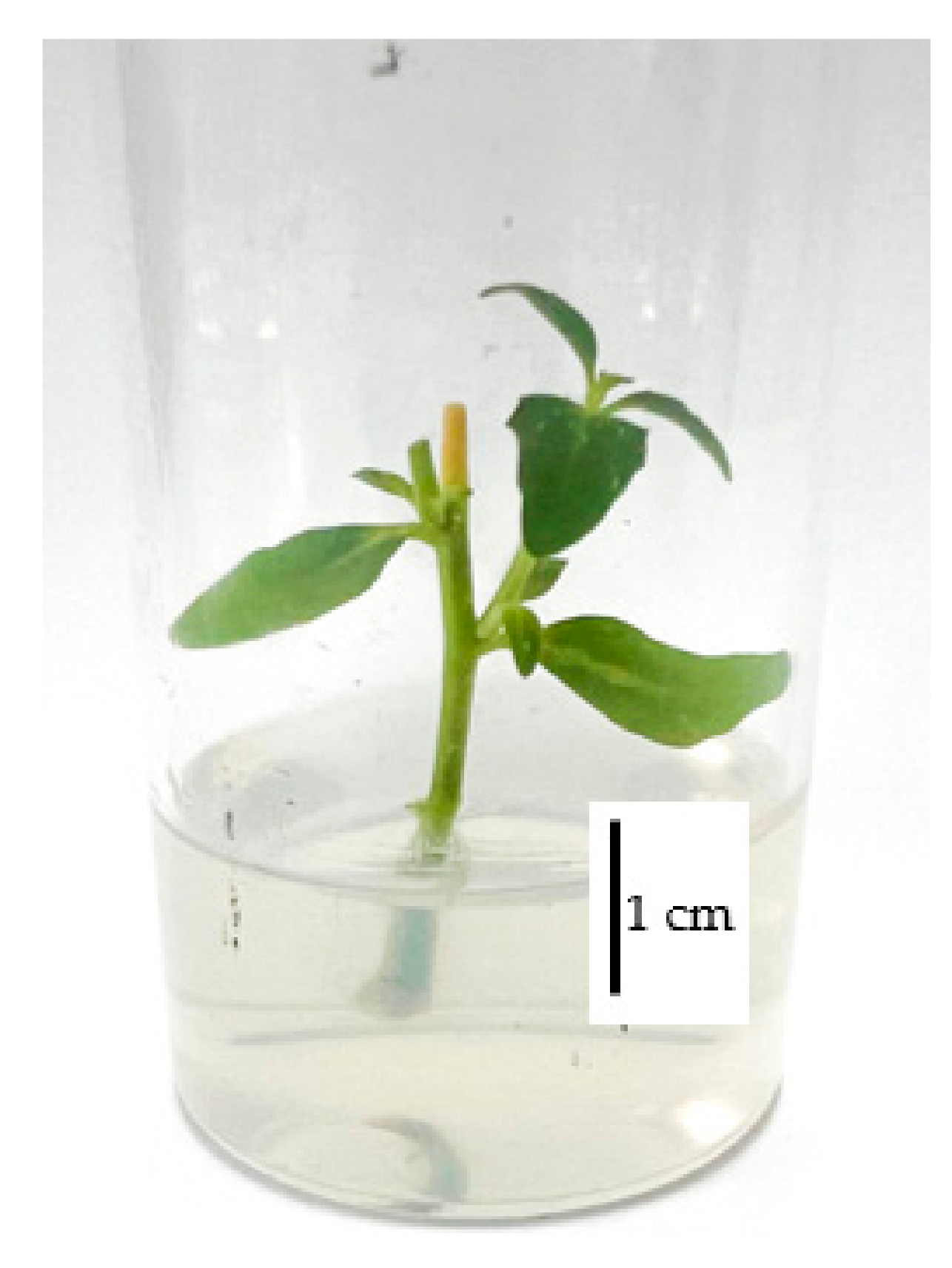
The explants (nodal segments) were excised from current-season shoots, collect at a height of 0.8 to 1.0 m above the plant collar of Q. saponaria (1–2 cm in length, each containing one axillary bud) were obtained from the 5 selected ecotypes (Q1, Q2, Q3, Q4, and Q5) (Figure 1). Explants were initially washed with running water supplemented with 1 mL of Tween 20. Explants were then surface sterilized with 70% ethanol for 30 s, followed by treatment for 15 min with gentle agitation in an aqueous solution. This solution contained one of four concentrations of sodium hypochlorite (NaClO: 0%, 0.5%, 1.0%, and 1.5%) (Comercial Vimaroni S.A., Quilpué, Chile) supplemented with 2838.97 μM ascorbic acid (Merck KGaA, Darmstadt, Germany), 2602.49 μM citric acid (Comercial Vimaroni S.A., Quilpué, Chile), and 1 mL of Tween 20 (Loba Chemie Pvt. Ltd., Mumbai, India). Explants were then rinsed three times with sterile distilled water under a laminar flow hood (Biobase Biodustry, Jinan, China).
Explants were cultured on Murashige and Skoog (MS) medium [28] (Sigma-Aldrich, St. Louis, MO, USA), supplemented with 30 g L−1 sucrose (Sigma-Aldrich, St. Louis, MO, USA) and 6.5 g L−1 agar (Algas Marinas S.A., Santiago, Chile), adjusted to pH 5.7 and autoclaved (121 °C, 15 min). Cultures were maintained at 25 ± 1 °C with a 16:8 h (light/dark) photoperiod under cool white fluorescent light (400–700 nm) at a photosynthetically active photon flux density (PPFD) of 58 μmol m−2 s−1 (Philips TL-D 36W/54, Shanghai, China). After 20 days, contamination and oxidation rates (brown to black discoloration) were assessed.
The experiment was conducted using a completely randomized design with a 5 × 4 factorial arrangement (5 ecotypes × 4 NaClO concentrations). The experimental setup included 3 replicates of 12 explants per treatment, totaling 720 samples. Percentage data were subjected to natural log transformation. Two-way ANOVA and Tukey’s test (p ≤ 0.05) were performed using Minitab 19 (Minitab Inc., State College, PA, USA).

2.3. In Vitro Multiplication

To optimize in vitro proliferation, we evaluated the influence of different concentrations of three cytokinins: 6-benzylaminopurine (BAP) (Sigma-Aldrich, St. Louis, MO, USA), trans-zeatin (ZEA) (Sigma-Aldrich, St. Louis, MO, USA), and 6-(γ,γ-dimethylallylamino)purine (2-iP). These were incorporated into the basal MS culture medium (standard macro and microelements, and vitamins), which was supplemented with 30 g L−1 sucrose and 6.5 g L−1 agar. The ten growth regulator concentrations evaluated were included in Table 1.
Shoots measuring 1.8 cm from the five Q. saponaria ecotypes (Q1–Q5) were placed in a growth chamber for a total of 45 days under the same conditions previously described. Explant height (cm) and the number of lateral shoots developed were evaluated after 40 days of in vitro culture.
The experiment followed a completely randomized design with a 5 × 10 factorial arrangement (5 ecotypes × 10 growth regulator concentrations). Four shoots per treatment with three replicates each were used, resulting in a total of 600 samples. Two-way analysis of variance (ANOVA) and variance component analysis were performed. Tukey’s test (p ≤ 0.05) was used to establish differences between treatments using Minitab 19 statistical software (Minitab Inc., State College, PA, USA).

2.4. Ex Vitro Rooting and Acclimatization

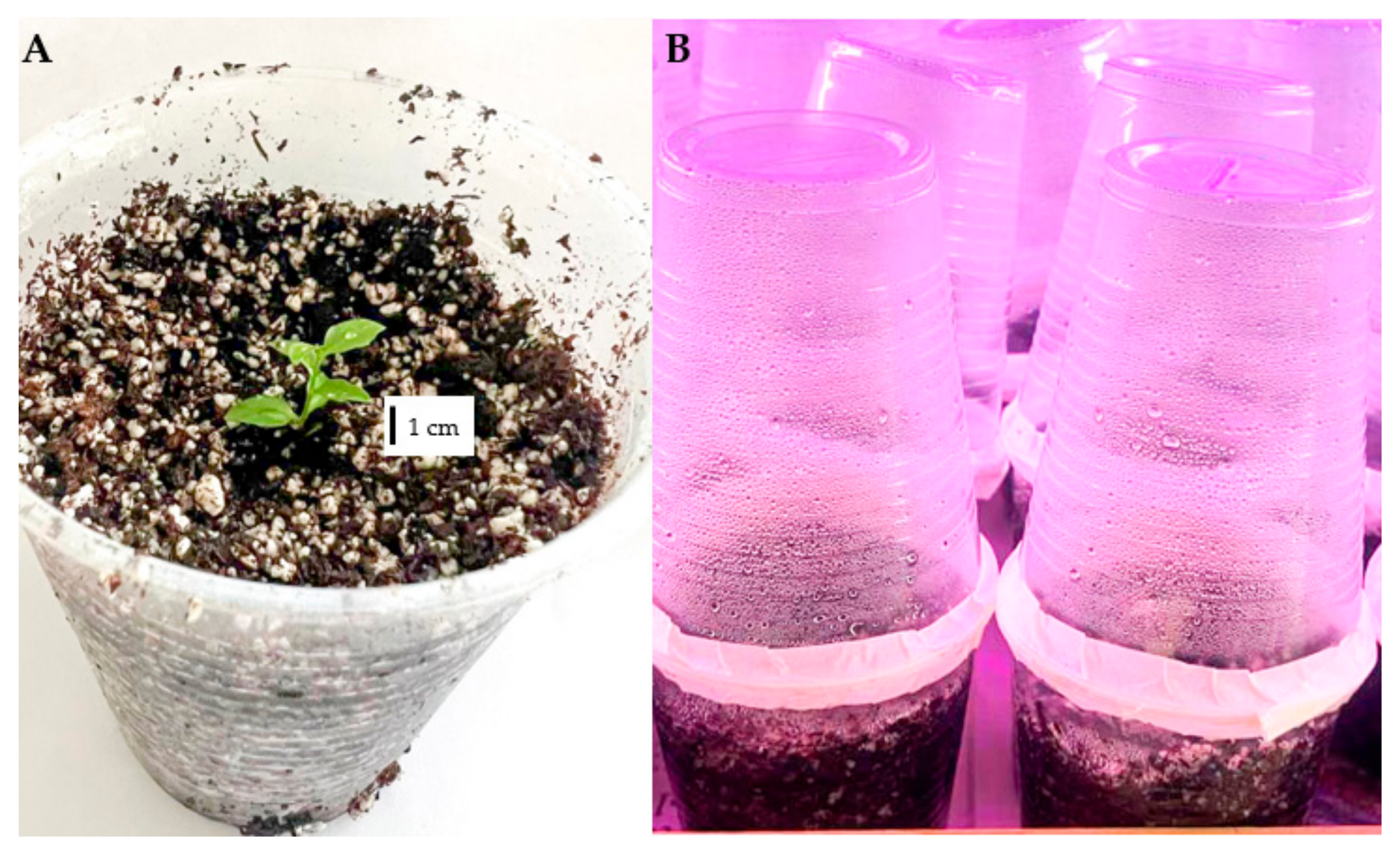
Shoots (3 cm in length) obtained from the multiplication stage were used for ex vitro rooting. We evaluated the effect of different concentrations of the auxins indole-3-butyric acid (IBA) and 1-naphthaleneacetic acid (NAA) on rooting percentage of Q. saponaria shoots from the five ecotypes (Q1–Q5). The seven auxin treatments applied were as follows: Control (0 μM untreated); IBA at 492.03 μM, 984.06 μM, and 1476 μM; and NAA at 537.04 μM, 1074.08 μM, and 1611.11 μM. Prior to treatment, the base of the shoots was cut and disinfected with 1.8 g L−1 benomyl (Nufarm Chile, Ltd.a., Vitacura, Santiago). The base of each shoot was then immersed in the respective auxin solution. Following auxin treatment, shoots were transplanted into 200 cc containers filled with a substrate mixture of peat/perlite/vermiculite (1:1:1 v/v/v). Each plant was covered with a transparent 200 cc container to maintain humidity (Figure 2) and then transferred to a growth chamber and kept under the same conditions previously described. Rooting percentage was evaluated at 35 days, defined as the presence of at least one root ≥ 1 cm in length.
The experiment was designed as a completely randomized 5 × 7 factorial arrangement (5 ecotypes × 7 auxin concentrations). Each treatment consisted of seven explants with three replicates, resulting in a total of 735 samples. Percentage data were subjected to natural log transformation. Data were analyzed using two-way ANOVA and variance component analysis. Tukey’s test (p ≤ 0.05) was used to determine significant differences between treatment means using Minitab 19 statistical software (Minitab Inc., State College, PA, USA).
During the acclimatization phase, rooted shoots were transferred to an unheated greenhouse for hardening and adaptation. To facilitate this transition, the transparent containers used to maintain high humidity were gradually removed over a 4-week period in four discrete steps, allowing a progressive decrease in relative humidity. Plant survival rate (%) was evaluated at 30 days of growth and calculated as the number of living plants divided by the total number of acclimatized plants.

3. Results

3.1. Surface Sterilization of Plant Material

Statistical analysis revealed significant differences among treatments for all parameters evaluated during the sterilization phase (p = 0.000) (Table 2). The 1.0% NaClO concentration proved most effective, achieving the lowest fungal (4.99%) and bacterial (4.16%) contamination rates, along with the highest explant survival (84.17%). In contrast, the 0% NaClO treatment exhibited the highest contamination rates (50.84% fungal and 22.50% bacterial) and the lowest explant survival (17.50%). Oxidation, characterized by dark brown discoloration that progressed to black and ultimately resulted in tissue death, increased significantly at 1.5% NaClO (37.50%). Neither the ecotype nor the treatment × ecotype interaction showed significant effects on any of the evaluated parameters (p > 0.400 in all cases) (Figure 3).

3.2. In Vitro Multiplication

Statistical analysis revealed highly significant differences among hormonal treatments for both shoot length (p = 0.000) and proliferation rate (p = 0.000) (Table 3). Notably, neither the ecotype nor the ecotype × treatment interaction showed significant effects on either variable (p > 0.05).
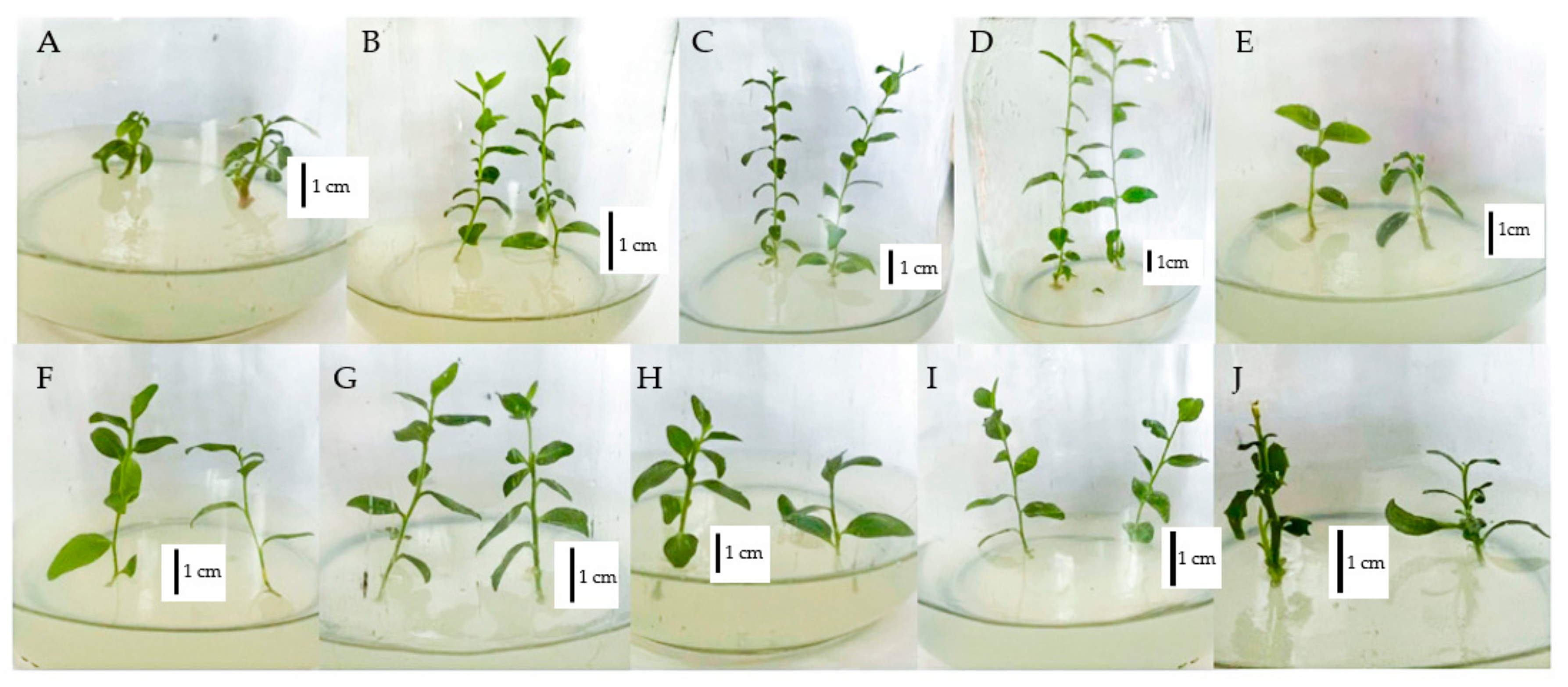
After 45 days in culture, Q. saponaria shoots exhibited longitudinal growth across all treatments on MS medium (Table 2). The 4.44 μM BAP treatment proved the most effective, promoting the greatest mean shoot length (8.01 cm) and the highest mean proliferation rate (4.04). The 2.22 μM BAP treatment also yielded favorable results (5.21 cm and 2.61, respectively). In contrast, treatments utilizing the cytokinins ZEA and 2-iP, as well as the control, produced significantly lower values for both variables, with length not exceeding 3.90 cm and a proliferation rate of 1.95 (Figure 4).

3.3. Ex Vitro Rooting and Acclimatization

Analysis of the effect of different auxin concentrations (IBA and NAA) on rooting percentage and survival during acclimatization revealed significant differences among treatments (p = 0.000 for both variables; Table 4). Importantly, neither the ecotype nor the treatment × ecotype interaction showed significant effects on any of the evaluated variables.
For rooting of Q. saponaria shoots, treatment with 984.06 μM IBA yielded the highest percentage (92.85%), followed by 1476 μM IBA (77.14%). Treatments with NAA generally produced lower rooting levels: 1074.08 μM NAA (54.28%) and 1611.11 μM NAA (54.30%). These results obtained with the use of ANA were no different from those obtained with treatment with 492.03 μM IBA (51.42%). Treatment with 537.04 μM NAA resulted in significantly lower rooting (21.43%), while the control (without auxins) exhibited no rooting capacity (0%).
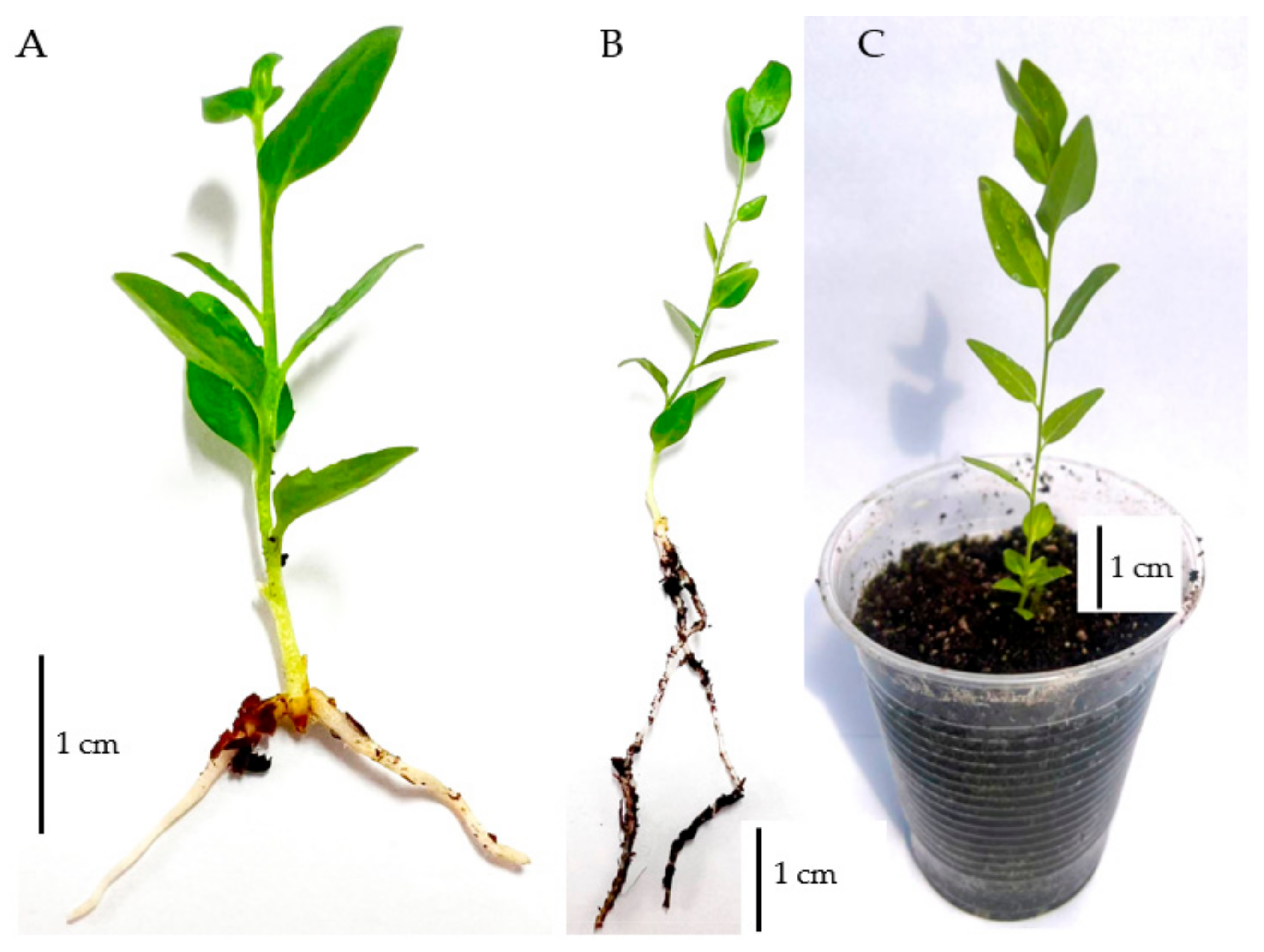
In addition, no significant differences in acclimatization survival percentage were observed among any of the treatments that utilized auxins (IBA or NAA), while, conversely, plants in the control treatment did not survive (Figure 5 and Figure 6).

4. Discussion

Our research successfully developed and established an in vitro propagation protocol for Quillaja saponaria, using nodal segments from stock plants of five ecotypes cultured on basal MS medium. We demonstrated that sodium hypochlorite (NaClO) concentration significantly influenced surface sterilization outcomes, affecting both contamination incidence and explant viability. The 1.0% NaClO concentration proved the most efficient, resulting in a fungal contamination reduction of 95.01% and a bacterial contamination reduction of 95.84%, alongside the highest survival rate (84.17%).
In vitro propagation of woody species presents considerable challenges, primarily due to the susceptibility to fungal and bacterial contamination associated with inadequate sterilization protocols. The success of in vitro establishment is highly dependent on factors such as the physiological state of the stock plant, explant type, and the nature, concentration, and exposure time to disinfecting agents. However, these agents can also exert phytotoxic effects through oxidation that compromise tissue viability [29]. Our observation that oxidation increased significantly at 1.5% NaClO supports this known phytotoxic effect of high sodium hypochlorite concentrations.
The successful culture initiation on MS medium is consistent with micropropagation efforts in other woody species, including Cotoneaster sp., Betula lenta, Citronella mucronata, and Peumus boldus [30,31,32,33]. The standard MS formulation, which provides an optimal nutritional balance of macro- and micronutrients, vitamins, and organic compounds, is therefore affirmed as an appropriate basal medium for the in vitro culture of diverse plant species, including Q. saponaria [34].
For the in vitro multiplication phase, supplementation with 4.44 μM BAP proved the most effective, promoting longer shoots (8.01 cm) and achieving higher proliferation rates (4.04). These results align with recent studies confirming the efficacy of benzylaminopurine (BAP) in inducing shoot proliferation and elongation across various woody species, both native and exotic.
In Chilean endemic species, our findings are comparable to results obtained in Peumus boldus, where 4.44 μM BAP yielded a 5.9 cm average shoot length and a proliferation rate of 4.5 shoots per explant [33]. Similarly, this concentration enhanced vegetative development in Citronella mucronata, producing lateral shoots averaging 3.2 cm with a total mean length of 4.0 cm [32]. Favorable morphogenic responses have also been reported using 4.44 μM BAP in exotic species, including in Daphne mezereum L. [35] and Euonymus verrucosus, which achieved 3.7 cm of elongation in four weeks [36]. Furthermore, an optimal concentration of 5 μM BAP was identified for efficient shoot multiplication in Betula lenta [31]. Nevertheless, cytokinin sensitivity remains species-specific. For example, Calophyllum brasiliense required BAP concentrations between 4.4 and 8.8 μM to generate a comparable rate of 4.4 to 4.6 shoots per nodal segment, but over a longer culture period of 90 days [37].
Micropropagation efficiency critically depends on optimal concentrations of plant growth regulators (PGRs), as both excessive and suboptimal levels affect proliferation. The auxin–cytokinin ratio determines the organogenic fate of plant tissue, with elevated concentrations often inhibiting shoot initiation [38]. In Paulownia, high BA levels increase shoot number but reduce shoot quality [39].
Excessive cytokinins induce hyperhydricity and limit shoot regeneration [40]. In Humulus lupulus, BAP ≥ 1 mg L−1 favors callus formation while disrupting normal shoot proliferation [41]. Residual cytokinins, such as TDZ, can further suppress root formation even after medium replacement [42,43]. In Manihot esculenta, insufficient concentrations of TDZ or kinetin result in limited regeneration, indicating the existence of a minimum hormonal threshold required to activate the developmental program [44]. These observations highlight that both concentration and tissue persistence of PGRs are decisive for micropropagation success.
Moreover, extreme PGR levels can trigger epigenetic modifications that hinder root differentiation [45]. Collectively, these findings underscore the necessity of fine-tuning PGR dosage according to species and specific micropropagation stages.
Regarding ex vitro rooting, indole-3-butyric acid (IBA) at 984.06 μM induced the highest rooting percentage (92.85%) and subsequent acclimatization survival. This substantially surpasses previous results obtained for Q. saponaria under similar conditions [16].
Direct application of auxins to in vitro shoots followed by rooting in substrate (peat/perlite/vermiculite 1:1:1) proved efficient and simplified the protocol while reducing costs and improving adaptability. Ex vitro rooting combined with acclimatization represents a widely adopted strategy in woody species propagation, as it promotes development of more robust root systems and eliminates the need for an intermediate adaptation phase [46,47,48]. This approach has shown positive results across diverse genres, including Rhododendron, Acacia, Ulmus, and Rubus [49,50,51,52]. Moreover, species such as Balanites aegyptiaca, Citrus limon, and Syzygium cumini have demonstrated superior field adaptation when rooting occurs during acclimatization rather than in vitro [53].
Furthermore, substrate composition during this stage is a critical determinant of acclimatization success. Our choice of a 1:1:1 peat/perlite/vermiculite mixture aligns with findings in other species. For instance, Populus × euramericana ‘Neva’ achieved survival exceeding 80% using vermiculite and peat in a 1:1 ratio [54], while a perlite/peat/soil mixture permitted 87% survival in Rhus coriaria [55]. In Porlieria chilensis, 89.8% survival was achieved in a substrate composed of peat and perlite (2:1 v/v) [56].
Ex vitro rooting has emerged as an efficient and cost-effective strategy for the micropropagation of woody species, reducing reliance on sterile media and multiple subcultures, thereby saving time and operational costs [23]. This approach promotes the development of robust, lignified roots comparable to those formed in soil, increasing survival rates to 85% and enhancing tolerance to water and light stress during acclimatization, as documented in Bauhinia racemosa [24].
Early exposure to non-sterile conditions supports the functional recovery of micropropagated plants, accelerating cuticle formation, stomatal regulation, and correction of anatomical anomalies [22]. Brief auxin applications, such as short IBA dips in Myrtus communis, enhance rooting up to 90% and produce vigorous plants with high performance under greenhouse conditions [23]. Complementary low-cost strategies further improve process efficiency [57].
Despite challenges associated with genotypic variability and environmental control, optimized protocols demonstrate that ex vitro rooting surpasses in vitro methods in terms of vigor, functionality, and survival, establishing it as a physiologically superior alternative for the production and conservation of woody plants.
Using in vitro culture for shoot multiplication followed by substrate rooting effectively combines the efficiency of an aseptic system with the adaptability of a more natural environment, resulting in improved survival rates during acclimatization. Future research could evaluate the physiological responses of roots induced under these conditions to further optimize the proposed protocol.

5. Conclusions

This study establishes an efficient and reproducible in vitro propagation protocol for Quillaja saponaria using nodal explants. We identified the optimal plant growth regulator concentrations necessary for both shoot induction and ex vitro rooting, achieving high multiplication and survival rates under controlled conditions. The successful acclimatization of regenerated plants validates the potential of this protocol for large-scale propagation.
These results provide a valuable tool for the ex situ conservation of Q. saponaria, a native Chilean species. The developed protocol establishes a foundation for future research in clonal selection, genetic improvement, and the biotechnological production of saponins through in vitro systems. Ultimately, the application of these micropropagation techniques will contribute directly to sustainable resource management and support the commercial cultivation of this ecologically and economically valuable Chilean species.

Supplementary Materials

The following supporting information can be downloaded at: https://www.mdpi.com/article/10.3390/horticulturae11121498/s1, Table S1. Effect of five ecotypes of Quillaja saponaria on fungal and bacterial contamination, oxidation, and explants survival; Table S2. Effect of five ecotypes of Quillaja saponaria on shoot length and proliferation rate in vitro; Table S3. Effect of five ecotypes of Quillaja saponaria on rooting (%) and acclimatization survival (%).

Author Contributions

Conceptualization, F.G. and M.C.; Methodology, F.G., M.M. and M.C.; Formal analysis, F.G.; Research, F.G. and M.C.; Resources, M.C.; Drafting: original draft preparation, F.G., M.C. and R.C.; Drafting: revising and editing, F.G., M.C., R.C., I.S. and J.G.; Acquisition of funds, M.C. All authors have read and agreed to the published version of the manuscript.

Funding

This research was conducted as part of project ‘Formation and maintenance of mother stock of quillay plant ecotypes’, commissioned by Desert King Chile S.A. and carried out by the Propagation Laboratory of the Pontificia Universidad Católica de Valparaíso.

Data Availability Statement

The original contributions presented in this study are included in the article/Supplementary Materials. Further inquiries can be directed to the corresponding author.

Acknowledgments

The authors would like to express their gratitude to the Propagation Laboratory for the unconditional support given to this research. In addition, the authors thank Desert King Chile S.A. for the funding of the research and allowing the submission of the manuscript for publication.

Conflicts of Interest

Author Ingrid Salgado and Javier González were employed by the company Desert King Chile S.A. The remaining authors declare that the research was conducted in the absence of any commercial or financial relationships that could be construed as a potential conflict of interest.

References

  1. Guerra, F.; Sepúlveda, S. Saponin Production from Quillaja Genus Species. An Insight into Its Applications and Biology. Sci. Agric. 2021, 78, e20190305. [Google Scholar] [CrossRef]
  2. Donoso, S.; Peña, K.; Pacheco, C.; Luna, G.; Aguirre, A. Respuesta Fisiológica y de Crecimiento en Plantas de Quillaja saponaria y Cryptocarya alba Sometidas a Restricción Hídrica. Bosque 2011, 32, 187–195. [Google Scholar] [CrossRef]
  3. Benedetti-Ruiz, S.; Delard, R.; González-Ortega, M.; Roach-Barrios, F.A. Monografía de Quillay Quillaja Saponaria; INFOR: Santiago, Chile, 2000. [Google Scholar]
  4. Rodríguez, R.; Matthei, O.; Quesada, M. Flora Arbórea de Chile; Editorial Universidad de Concepción: Concepción, Chile, 1983; p. 408. [Google Scholar]
  5. Lagos, J. Antecedentes Bibliográficos de Quillay (Quillaja saponaria Mol.) y Estudio de un Bosque Natural Ubicado en la Provincia del Bío Bío; Memoria para optar al título de Ingeniero Forestal, Facultad de Ciencias Forestales, Universidad de Concepción: Concepción, Chile, 1998; p. 100. Available online: https://bibliotecadigital.ciren.cl/bitstreams/9539cf57-1d6f-437e-b70c-25a754593b1c/download (accessed on 22 September 2025).
  6. Espinoza, S.E.; Quiroz, I.A.; Magni, C.R.; Yáñez, M.A.; Martínez, E.E. Long-Term Effects of Copper Mine Tailings on Surrounding Soils and Sclerophyllous Vegetation in Central Chile. Water Air Soil Pollut. 2022, 233, 288. [Google Scholar] [CrossRef]
  7. Milla-Moreno, E.; Guy, R.D. Growth Response, Uptake and Mobilization of Metals in Native Plant Species on Tailings at a Chilean Copper Mine. Int. J. Phytoremediat. 2021, 23, 539–547. [Google Scholar] [CrossRef] [PubMed]
  8. San Martin, R.; Briones, R. Industrial Uses and Sustainable Supply of Quillaja saponaria Saponins. J. Ethnopharmacol. 1999, 70, 289–293. [Google Scholar]
  9. Podolak, I.; Galanty, A.; Sobolewska, D. Saponins as Cytotoxic Agents: A Review. Phytochem. Rev. 2010, 9, 425–474. [Google Scholar] [CrossRef]
  10. Fleck, J.D.; Betti, A.H.; Da Silva, F.P.; Troian, E.A.; Olivaro, C.; Ferreira, F.; Verza, S.G. Saponins from Quillaja saponaria and Quillaja brasiliensis: Particular Chemical Characteristics and Biological Activities. Molecules 2019, 24, 171. [Google Scholar] [CrossRef]
  11. Keech, C.; Albert, G.; Reed, P.; Neal, S.; Plested, J.S.; Zhu, M.; Cloney-Clark, S.; Zhou, H.; Patel, N.; Frieman, M.B. First-in-Human Trial of a SARS-CoV-2 Recombinant Spike Protein Nanoparticle Vaccine. Lancet 2020, 396, 467–478. [Google Scholar]
  12. Stertman, L.; Palm, A.E.; Zarnegar, B.; Carow, B.; Lunderius Andersson, C.; Magnusson, S.E.; Carnrot, C.; Shinde, V.; Smith, G.; Glenn, G.; et al. The Matrix-M™ Adjuvant: A Critical Component of Vaccines for the 21st Century. Hum. Vaccin. Immunother. 2023, 19, 2189885. [Google Scholar] [CrossRef]
  13. Corporación Nacional Forestal (CONAF). Catastro y Evaluación de los Recursos Vegetacionales Nativos de Chile; CONAF: Santiago, Chile, 2020. [Google Scholar]
  14. Padilla, F. Factores limitantes y estrategias de establecimiento de plantas leñosas en ambientes semiáridos. Implicaciones para la restauración. Ecosistemas 2008, 17, 155–159. [Google Scholar]
  15. George, E.F.; Hall, M.A.; De Klerk, G.J. Plant Propagation by Tissue Culture. Volume 1: The Background; Springer: Dordrecht, The Netherlands, 2008. [Google Scholar]
  16. Prehn, D.; Serrano, C.; Berríos, C.G.; Arce-Johnson, P. Micropropagation of Quillaja saponaria Mol. starting from seed. Bosque 2003, 24, 45–52. [Google Scholar] [CrossRef]
  17. Cob Uicab, J.V.; Ríos Leal, D.; Sabja, A.M.; Cartes Riquelme, P.; Sánchez Olate, M. Organogenesis for in vitro propagation of Quillaja saponaria Molina in southern South America. Rev. Mex. Cienc. For. 2017, 7, 57–67. [Google Scholar]
  18. Prehn, D.; Vega, A. In vitro initiation and early maturation of embryogenic tissue of Quillaja saponaria. Int. J. Agric. Nat. Resour. (IJANR) 2005, 32, 156–166. [Google Scholar]
  19. Aronen, T.; Sota, V.; Cvjetković, B.; Christie, B.; Rupps, A.; Fischerová, L.; Rathore, D.S.; Werbrouck, S.P.O. From lab to forest: Overcoming barriers to in vitro propagation of forest trees. J. For. Res. 2025, 36, 120. [Google Scholar] [CrossRef]
  20. Martins, J.P.R.; Wawrzyniak, M.K.; Ley López, J.M.; Kalemba, E.M.; Mendes, M.M.; Chmielarz, P. 6-Benzylaminopurine and kinetin modulations during in vitro propagation of Quercus robur (L.): An assessment of anatomical, biochemical, and physiological profiling of shoots. Plant Cell Tissue Organ Cult. 2022, 151, 149–164. [Google Scholar] [CrossRef]
  21. Mohammadi, M.A.; Xu, M.; Wang, Y.; Zhang, Z.; Wai, M.H.; Rizwan, H.M.; An, C.; Aslam, M.; Zhang, C.; Wang, G.; et al. A highly efficient organogenesis system based on 6-benzylaminopurine and indole-6-butyric acid in Suaeda glauca—A medicinal halophyte under varying photoperiods. Ind. Crops Prod. 2024, 216, 118672. [Google Scholar] [CrossRef]
  22. Grzelak, M.; Pacholczak, A.; Nowakowska, K. Challenges and insights in the acclimatization step of micropropagated woody plants. Plant Cell Tissue Organ Cult. 2024, 159, 72. [Google Scholar] [CrossRef]
  23. Pardi, R.; Basile, G.N.; De Mastro, G.; Gargano, M.L.; Tagarelli, A.; Ruta, C. Efficient micropropagation by ex vitro rooting of Myrtus communis L. Horticulturae 2025, 11, 207. [Google Scholar] [CrossRef]
  24. Sharma, U.; Kataria, V.; Shekhawat, N.S. In vitro propagation, ex vitro rooting and leaf micromorphology of Bauhinia racemosa Lam.: A leguminous tree with medicinal values. Physiol. Mol. Biol. Plants 2017, 23, 969–977. [Google Scholar] [CrossRef]
  25. Peña, R.C. In Vitro Propagation of Quillaja saponaria Using Nodal Segments. Chilean J. Agric. Res. 2010, 70, 213–220. [Google Scholar]
  26. Jordan, M.; Roveraro, C. In vitro culture of Quillaja saponaria Mol. (Soap-Bark Tree), Rosaceae. Eur. J. Hortic. Sci. 2004, 69, 73–78. [Google Scholar] [CrossRef]
  27. Santibáñez, F. Atlas Agroclimático de Chile. Estado Actual y Tendencias del Clima. Tomo III: Regiones de Valparaíso, Metropolitana, O’Higgins y Maule; Fundación para la Innovación Agraria: Santiago, Chile, 2017; p. 37. [Google Scholar]
  28. Murashige, T.; Skoog, F. A Revised Medium for Rapid Growth and Bio Assays with Tobacco Tissue Cultures. Physiol. Plant. 1962, 15, 473–497. [Google Scholar] [CrossRef]
  29. Silva, J.; Winarto, B.; Dobránszki, J.; Zeng, S. Disinfection Procedures for In Vitro Propagation of Anthurium. Folia Hortic. 2015, 27, 3–14. [Google Scholar] [CrossRef]
  30. Monier, C.; Ochatt, S.J. Establishing Micropropagation Conditions for Five Cotoneaster Genotypes. Plant Cell Tissue Organ Cult. 1995, 42, 275–281. [Google Scholar] [CrossRef]
  31. Rathwell, R.; Shukla, M.R.; Jones, A.M.P.; Saxena, P.K. In Vitro Propagation of Cherry Birch (Betula lenta L.). Can. J. Plant Sci. 2016, 96, 571–578. [Google Scholar] [CrossRef]
  32. Guerra, F.; Badilla, L.; Cautin, R.; Castro, M. Micropropagation of Citronella mucronata D. Don, a Vulnerable Chilean Endemic Tree Species. Plants 2022, 11, 2425. [Google Scholar] [CrossRef]
  33. Guerra, F.; Badilla, L.; Cautín, R.; Castro, M. In Vitro Propagation of Peumus boldus Mol., a Woody Medicinal Plant Endemic to the Sclerophyllous Forest of Central Chile. Horticulturae 2023, 9, 1032. [Google Scholar] [CrossRef]
  34. Khatri, P.; Rana, J.S.; Sindhu, A.; Jamdagni, P. Effect of Additives on Enhanced In Vitro Shoot Multiplication and Their Functional Group Identification of Chlorophytum borivilianum Sant. Et Fernand. SN Appl. Sci. 2019, 1, 1105. [Google Scholar] [CrossRef]
  35. Nowakowska, K.; Pacholczak, A.; Tepper, W. The Effect of Selected Growth Regulators and Culture Media on Regeneration of Daphne mezereum L. ‘Alba’. Rend. Lincei. Sci. Fis. Nat. 2019, 30, 197–205. [Google Scholar] [CrossRef]
  36. Kirillov, V.; Pathak, A.; Stikhareva, T.; Ercisli, S.; Daulenova, M.; Kazangapova, N.; Rakhimzhanov, A. In Vitro Propagation and Ex Vitro Rooting of Euonymus verrucosus Scop. (Celastraceae)—A Rare Species of Kazakhstan Flora on the Southern Border of Its Areal. J. For. Res. 2022, 27, 289–296. [Google Scholar] [CrossRef]
  37. Silveira, S.S.; Cordeiro-Silva, R.; Degenhardt-Goldbach, J.; Quoirin, M. Micropropagation of Calophyllum brasiliense (Cambess.) from Nodal Segments. Braz. J. Biol. 2016, 76, 656–663. [Google Scholar] [CrossRef] [PubMed]
  38. Kotov, A.A.; Kotova, L.M. Auxin/cytokinin antagonism in shoot development: From moss to seed plants. J. Exp. Bot. 2023, 74, 6391–6395. [Google Scholar] [CrossRef] [PubMed]
  39. Mohamad, M.E.; Awad, A.A.; Majrashi, A.; Abd Esadek, O.A.; El-Saadony, M.T.; Saad, A.M.; Gendy, A.S. In vitro study on the effect of cytokines and auxins addition to growth medium on the micropropagation and rooting of Paulownia species (Paulownia hybrid and P. tomentosa). Saudi J. Biol. Sci. 2022, 29, 1598–1603. [Google Scholar] [CrossRef] [PubMed]
  40. Vlachou, G.; Papafotiou, M. Efficient Micropropagation Using Different Types of Explant and Addressing the Hyperhydricity of Ballota acetabulosa, a Mediterranean Plant with High Xeriscaping Potential. Horticulturae 2025, 11, 390. [Google Scholar] [CrossRef]
  41. Carloni, E.J.; Rodriguez, M.N.; Tommasino, E.; Ruolo, S.; Grunberg, K. Effect of different cytokinin concentrations on establishing an in vitro micropropagation system for hop (Humulus lupulus L.). N. Z. J. Crop Hortic. Sci. 2025, 53, 2233. [Google Scholar] [CrossRef]
  42. Seliem, M.K.; Abdalla, N.; El-Mahrouk, M.E. Cytokinin Potentials on In Vitro Shoot Proliferation and Subsequent Rooting of Agave sisalana Perr. Syn. Horticulturae 2025, 11, 929. [Google Scholar] [CrossRef]
  43. Vaičiukynė, M.; Žiauka, J.; Černiauskas, V.; Varnagirytė-Kabašinskienė, I. Role of Plant Growth Regulators in Adventitious Populus Tremula Root Development In Vitro. Plants 2025, 14, 2427. [Google Scholar] [CrossRef]
  44. Seka, J.S.S.; Kouassi, M.K.; Yéo, E.F.; Saki, F.M.; Otron, D.H.; Tiendrébéogo, F.; Eni, A.; Kouassi, N.K.; Pita, J.S. Removing recalcitrance to the micropropagation of five farmer-preferred cassava varieties in Côte d’Ivoire by supplementing culture medium with kinetin or thidiazuron. Front. Plant Sci. 2025, 16, 1538799. [Google Scholar] [CrossRef]
  45. Ma, J.; Li, Q.; Zhang, L.; Cai, S.; Liu, Y.; Lin, J.; Huang, R.; Yu, Y.; Wen, M.; Xu, T. High auxin stimulates callus through SDG8-mediated histone H3K36 methylation in Arabidopsis. J. Integr. Plant Biol. 2022, 64, 2425–2437. [Google Scholar] [CrossRef]
  46. Pruski, K.W.; Lewis, T.; Astatkie, T.; Nowak, J. Micropropagation of Chokecherry and Pincherry Cultivars. Plant Cell Tissue Organ Cult. 2000, 63, 93–100. [Google Scholar] [CrossRef]
  47. Borkowska, B. Morphological and Physiological Characteristics of Micropropagated Strawberry Plants Rooted In Vitro or Ex Vitro. Sci. Hortic. 2001, 89, 195–206. [Google Scholar] [CrossRef]
  48. Shekhawat, M.S.; Manokari, M.; Revathi, J. In Vitro Propagation and Ex Vitro Rooting of Aerva lanata (L.) Juss. Ex Schult.: A Rare Medicinal Plant. Indian J. Plant Physiol. 2017, 22, 40–47. [Google Scholar] [CrossRef]
  49. Erst, A.; Gorbunov, A.; Karakulov, A. Rooting and Acclimatization of In Vitro Propagated Microshoots of the Ericaceae. J. Appl. Hortic. 2018, 20, 177–181. [Google Scholar] [CrossRef]
  50. Suharyanto, S.; Forestry, S.; Rahayu, W.; Lopez, G.A. Ex Vitro Rooting in Acacia crassicarpa Micropropagation. Development and Application of Vegetative Propagation Technologies in Plantation Forestry to Cope with Changing Climate and Environment. In Proceedings of the IUFRO Conference, Beijing, China, 24–27 October 2016; Volume 100. [Google Scholar]
  51. Conde, P.; Sousa, A.; Costa, A.; Santos, C.A. Protocol for Ulmus minor Mill. Micropropagation and Acclimatization. Plant Cell Tissue Organ Cult. 2007, 92, 113–119. [Google Scholar] [CrossRef]
  52. Robres-Torres, E.; López-Medina, J.; Rocha-Granados, M.C. Adventitious Shoot Elongation of Raspberry (Rubus idaeus L.) Is Influenced by Brassinosteroids. Rev. Mex. Cienc. Agríc 2015, 6, 991–999. [Google Scholar]
  53. Rathore, J.S.; Rathore, V.; Shekhawat, N.S.; Singh, R.P.; Liler, G.; Phulwaria, M.; Dagla, H.R. Micropropagation of Woody Plants. In Plant Biotechnology and Molecular Markers; Springer: Dordrecht, The Netherlands, 2004; pp. 195–205. [Google Scholar]
  54. Zheng, W.; Xu, X.D.; Dai, H.; Chen, L.Q. Direct Regeneration of Plants Derived from In Vitro Cultured Shoot Tips and Leaves of Three Lysimachia Species. Sci. Hortic. 2009, 122, 138–141. [Google Scholar] [CrossRef]
  55. Amiri, S.; Mohammadi, R. Establishment of an Efficient In Vitro Propagation Protocol for Sumac (Rhus coriaria L.) and Confirmation of the Genetic Homogeneity. Sci. Rep. 2021, 11, 173. [Google Scholar] [CrossRef]
  56. Guerra, F.; Badilla, L.; Cautín, R.; Castro, M. In Vitro Propagation Protocol for Porlieria chilensis: Efficient Ex Vitro Rooting and Acclimatization. Horticulturae 2025, 11, 1410. [Google Scholar] [CrossRef]
  57. Castro-Camba, R.; Proietti, S.; Sánchez, C. Reducing costs, improving profits: A low-cost culture media for woody plants micropropagation. J. For. Sci. 2023, 69, 351–360. [Google Scholar] [CrossRef]
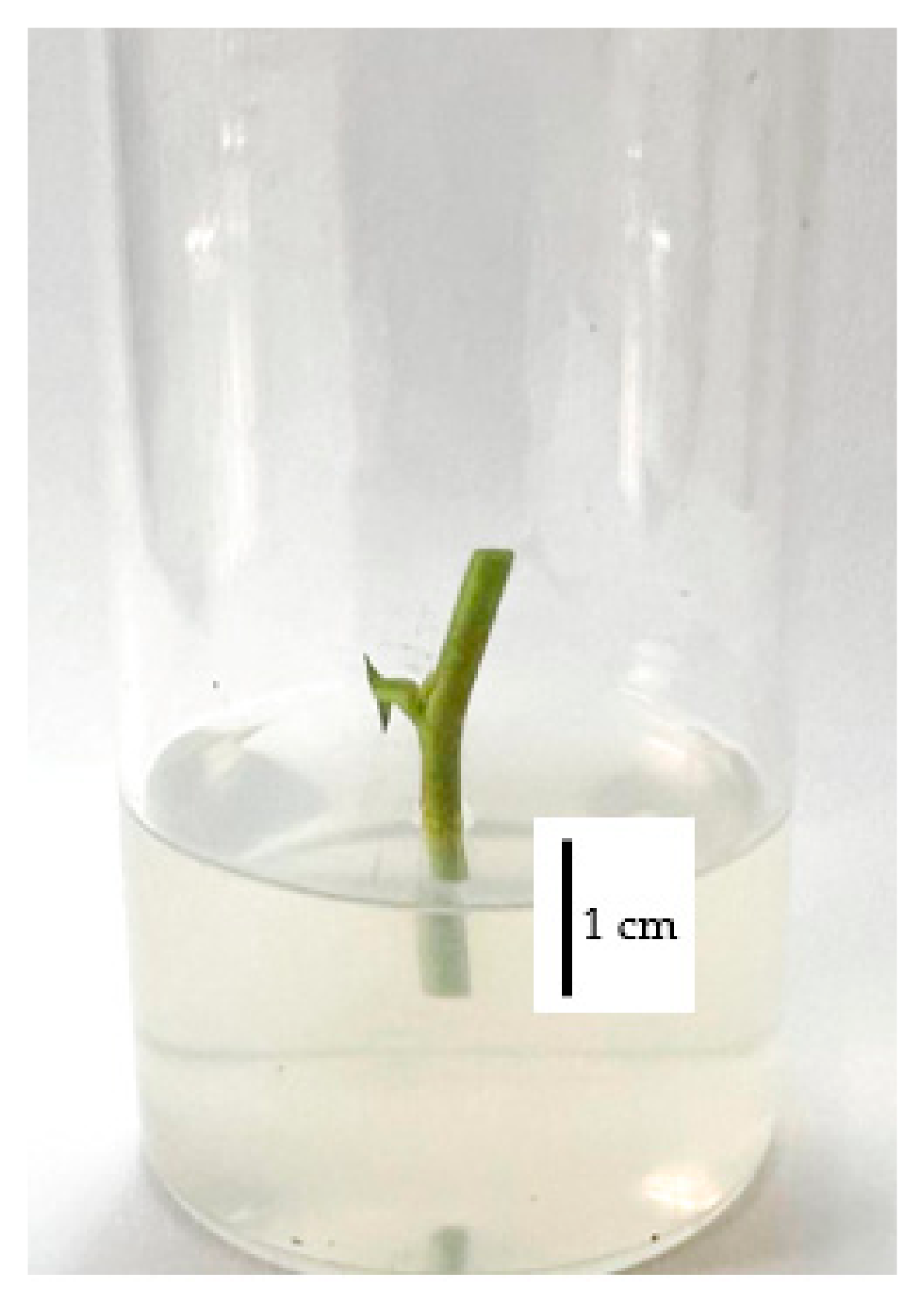
Figure 1. Nodal section with an axillary bud used as an explant for the in vitro establishment of quillay. 1 cm scale bar.
Horticulturae 11 01498 g001
Figure 2. Quillay shoot in rooting stage. (A) 3 cm shoot with application of auxin. (B) Shoot with a covered vessel for its rooting and acclimatization stage. 1 cm scale bar.
Horticulturae 11 01498 g002
Figure 3. Quillay nodal section sprouted during the in vitro establishment stage. 1 cm scale bar.
Horticulturae 11 01498 g003
Figure 4. Effect of growth regulators BAP, ZEA and 2-iP at different concentrations on the length of quillay shoots. (A) Control: 0; (B) BAP1: 1.11 μM L−1; (C) BAP2: 2.22 μM L−1; (D) BAP3: 4.44 μM L−1; (E) ZEA1: 0.46 μM L−1; (F) ZEA2: 1.37 μM L−1; (G) ZEA3: 2.74 μM L−1; (H) 2-iP1: 0.49 μM L−1; (I) 2-iP2: 1.23 μM L−1; (J) 2-iP3: 2.46 μM L−1. Scale bar = 1 cm.
Horticulturae 11 01498 g004
Figure 5. Rooted and acclimatized quillay plant. (A) Rooted vitroplant at 30 days. (B) Rooted vitroplant at 45 days. (C) Acclimatized plant. Scale bar 1 cm.
Horticulturae 11 01498 g005
Figure 6. Quillay plants propagated in vitro transplanted into 1 L capacity containers. Scale bar 1 cm.
Horticulturae 11 01498 g006
Table 1. Concentration of cytokinins used in the in vitro multiplication stage of quillay.
TreatmentCytokinins Concentration
Control0 μM untreated
BAP11.11 μM
BAP22.22 μM
BAP34.44 μM
ZEA10.46 μM
ZEA21.37 μM
ZEA32.74 μM
2-iP10.49 μM
2-iP21.23 μM
2-iP32.46 μM
Table 2. Effect of different sodium hypochlorite (NaClO) concentrations on fungal and bacterial contamination, oxidation, and survival of explants from five ecotypes of Quillaja saponaria.
TreatmentFungal Contamination (%)Bacterial Contamination (%)Oxidation (%)Survival (%)
NaClO: 0%50.84 ± 3.12 a,*22.50 ± 2.16 a,*9.16 ± 1.09 b17.50 ± 1.17 d
NaClO: 0.5%19.16 ± 2.05 b12.50 ± 1.33 ab13.34 ± 2.01 b55.55 ± 2.15 b
NaClO: 1.0%4.99 ± 1.17 c4.16 ± 1.01 b6.65 ± 1.95 b84.17 ± 3.03 a,*
NaClO: 1.5%12.50 ± 1.81 bc13.34 ± 1.77 ab37.50 ± 2.55 a,*36.66 ± 2.22 c
F treatmentp = 0.000p = 0.000p = 0.000p = 0.000
F ecotypep = 0.984p = 0.938p = 0.433p = 0.913
F treatment × ecotypep = 0.964p = 0.987p = 0.563p = 0.880
* Different letters in each column indicate significant differences according to Tukey’s test (p ≤ 0.05).
Table 3. Effect of different growth regulators and their concentrations on shoot length and proliferation rate of different Q. saponaria ecotypes.
TreatmentShoot Length (cm)Proliferation Rate
Control1.98 ± 0.12 e1.00 ± 0.10 e
1.11 μM BAP3.90 ± 0.55 c1.95 ± 0.18 c
2.22 μM BAP5.21 ± 0.77 b2.61 ± 0.20 b
4.44 μM BAP8.01 ± 1.03 a,*4.04 ± 0.33 a,*
0.46 μM ZEA2.24 ± 0.33 e1.15 ± 0.13 e
1.37 μM ZEA2.78 ± 0.23 d1.39 ± 0.11 d
2.74 μM ZEA3.85 ± 0.44 c1.93 ± 0.22 c
0.49 μM 2-iP2.79 ± 0.20 d1.40 ± 0.10 d
1.23 μM 2-iP2.82 ± 0.17 d1.41 ± 0.17 d
2.46 μM 2-iP1.94 ± 0.18 e1.00 ± 0.11 e
F treatmentp = 0.000p = 0.000
F ecotypep = 0.072p = 0.031
F treatment × ecotypep = 0.522p = 0.544
* Different letters in each column indicate significant differences according to Tukey’s test (p ≤ 0.05).
Table 4. Effect of different concentrations of auxin growth regulators (IBA, NAA) on rooting (%) and acclimatization survival (%) of different Q. saponaria ecotypes.
TreatmentRooting (%)Acclimatization Survival (%)
Control 0 e0 b
492.03 μM IBA51.42 ± 3.17 c87.14 ± 5.78 a,*
984.06 μM IBA92.85 ± 4.88 a,*85.71 ± 4.23 a
1476 μM IBA77.14 ± 4.07 b84.30 ± 3.39 a
537.04 μM NAA21.43 ± 2.23 d87.16 ± 4.76 a
1074.08 μM NAA54.28 ± 3.08 c85.23 ± 3.97 a
1611.11 μM NAA54.30 ± 3.29 c84.28 ± 3.84 a
F treatmentp = 0.000p = 0.000
F ecotypep = 0.772p = 1.000
F treatment × ecotypep = 1.000p = 0.973
* Different letters in each column indicate significant differences according to Tukey’s test (p ≤ 0.05).
Disclaimer/Publisher’s Note: The statements, opinions and data contained in all publications are solely those of the individual author(s) and contributor(s) and not of MDPI and/or the editor(s). MDPI and/or the editor(s) disclaim responsibility for any injury to people or property resulting from any ideas, methods, instructions or products referred to in the content.