
Article

Effects of Aluminum Concentration and Application Period on Sepal Bluing and Growth of Hydrangea macrophylla

State Key Laboratory of Vegetable Biobreeding, Key Laboratory of Biology and Genetic Improvement of Flower Crops (North China), Ministry of Agriculture and Rural Affairs, Institute of Vegetables and Flowers, Chinese Academy of Agricultural Sciences, Beijing 100081, China
*
Author to whom correspondence should be addressed.
These authors contributed equally to this work.
Horticulturae 2025, 11(12), 1490; https://doi.org/10.3390/horticulturae11121490
Submission received: 31 October 2025 / Revised: 5 December 2025 / Accepted: 5 December 2025 / Published: 9 December 2025

Abstract

The floricultural value of Hydrangea macrophylla is significantly influenced by its distinctive blue flower coloration, which results from aluminum uptake and vacuolar complexation. However, commercial cultivation faces challenges in achieving consistent bluing while avoiding Al toxicity. This study investigated the effects of Al concentration (0–971.62 mg/L) and application period on six blue-modifiable cultivars. Optimal results were achieved with an Al2(SO4)3·18H2O concentration of 6 g/L applied from two weeks after pinching until bloom. This regimen successfully induced vibrant sepal bluing without impairing chlorophyll content or plant growth. Furthermore, it enhanced tissue concentration of essential nutrients, including N, K, Mg, Fe, Zn, Mn, Cu, B, and Co. This study proposes a robust technical and theoretical framework for optimizing Al application to ensure consistent sepal color, which provides technical support for commercial production.

1. Introduction

Hydrangea macrophylla (H. macrophylla) is a perennial flowering shrub of the family Hydrangeaceae, which is widely cultivated worldwide for its large, colorful inflorescences and extended flowering period [1,2,3]. As a typical aluminum-accumulating plant, the blue sepals of H. macrophylla exhibited approximately 40 times higher aluminum content than the red sepals, reaching 40 μg/g fresh sepals [4]. Owing to both its color traits and adaptability to diverse soil conditions, H. macrophylla has become one of the most important ornamental plants [5,6].
The coloration of H. macrophylla sepals is strongly influenced by soil acidity and aluminum ions (Al3+) availability. Under acidic soil conditions, aluminum forms stable complexes with delphinidin-3-glucoside and either 5-O-caffeoylquinic acid or 5-O-p-coumaroylquinic acid in a 1:1:1 ratio [7,8]. The Al–anthocyanin complexes are deposited within the vacuoles of sepal cells, stabilized anthocyanins and modulated vacuolar pH, resulting in the characteristic blue coloration and preventing aluminum toxicity [9,10].
In most plant species, aluminum is highly rhizotoxic on acidic soils, severely impairing root growth, nutrient absorption, and water uptake [11,12]. For example, aluminum stress significantly inhibited root elongation and reduced the stability and extensibility of cell walls in rapeseed and Arabidopsis [13,14]. Aluminum stress displaces essential cations such as calcium (Ca2+) and magnesium (Mg2+), further disrupting metabolic processes [15,16]. Similarly, in wheat, aluminum stress decreased leaf Ca2+ and Mg2+ contents, and enhanced lipid peroxidation [17]. By contrast, in a few aluminous plants, aluminum can exhibit beneficial effects by stimulating plant growth, mitigating the phytotoxicity of hydrogen ions (H+), iron (Fe), and manganese (Mn), and promoting the accumulation of nutrients such as nitrogen (N), phosphorus (P), iron (Fe), and manganese (Mn) [18,19,20,21]. In H. macrophylla, aluminum was sequestered in stable complexes, preventing toxic effects and allowing the plants to thrive in acidic soils [22,23]. Similarly, aluminum application has been reported to influence auxin homeostasis and promote lateral root formation, thereby maintaining root growth in tea plants [19,24].
The concentration and duration of aluminum exposure play a critical role in determining whether its effects are beneficial or toxic. In tea plants, a low aluminum level (0.4 mM) maintained nutrient balance, while a higher concentration (2.5 mM) disrupted root nutrient accumulation, decreasing Ca, Mn, and Mg contents [11]. Moderate Al treatments (0.5–1 mM) promoted lateral root development, increased root biomass, enhanced chlorophyll content and photosynthetic capacity, and improved nutrient accumulation [20]. In H. macrophylla, aluminum acts as an essential cofactor for anthocyanin complexation, contributing to both blue pigmentation and vegetative growth [25,26]. However, the specific effects of Al concentration and application period on sepal coloration and H. macrophylla growth remain unclear.
Therefore, this study systematically evaluates the flower color parameters, phenotypic traits, leaf chlorophyll contents, and nutrient uptake of H. macrophylla under different aluminum concentrations and application periods. The objective is to identify the optimal aluminum concentration and application period, thereby providing a theoretical foundation and technical guidance for the high-quality cultivation of H. macrophylla.

2. Materials and Methods

2.1. Plant Materials

The plant materials consisted of 45–60-day-old hydrangea cuttings provided by the Yunnan base of the Institute of Vegetables and Flowers, Chinese Academy of Agricultural Sciences. The hydrangea cultivars included ‘Early Blue’, ‘Jip’, ‘Bela’, ‘Feather Hot Pink’, ‘Sea Blue’, and ‘Bailmer’ [26,27]. Each cutting was planted in a flower pot with a diameter of 16 c in the greenhouse. The soil substrate consisted of a 7:3 (v/v) mixture of perlite and peat. Throughout the experiment, the pH was controlled at 4.0–5.5 under Al treatment and 5.5–6.0 under CK conditions, with an electrical conductivity of approximately 1.2 mS/cm. The temperature regime for plant growth varied with developmental stage. Before the flower bud differentiation period, it was 20–28 °C. During the flower bud differentiation and after breaking dormancy period, it was 16–28 °C. Breaking dormancy required a vernalization period of 42 days at 4–6 °C.

2.2. Aluminum Application Period and Concentration

The experiment was conducted in the greenhouse of the Yunnan base of the Vegetable and Flower Research Institute of the Chinese Academy of Agricultural Sciences. A tidal-type soilless cultivation irrigation system was employed. The prepared nutrient solution (Coolaber NS10205: 500 × Hoagland modified nutrient salts Solution, Beijing, China), containing a complete set of essential elements, was circulated through the pipeline by a water pump, providing both water and nutrients to the plants.
Aluminum was supplied as Al2(SO4)3·18H2O and applied during the flower bud differentiation stage, with 300 mL per application for a total of 10 applications. The frequency of application was determined by substrate moisture, generally every 7–10 days, and treatments were continued until flowering. Five Al2(SO4)3·18H2O concentrations: 0 g/L (control), 3 g/L, 6 g/L, 9 g/L, and 12 g/L (Al concentration: 0 mg/L, 242.91 mg/L, 485.81 mg/L, 728.72 mg/L, 971.62 mg/L) were tested, that is, in total of 0 g, 9 g, 18 g, 27 g, 36 g Al2(SO4)3·18H2O was applied in substrate of each pot.
In addition, four aluminum application periods were established: from two weeks after pinching until blooming (TrA), from the flower bud differentiation stage until blooming (TrB), from two weeks after dormancy break until blooming (TrC), and from the budding stage until blooming (TrD) (Supplemental Figure S2). Four periods (TrA to TrD) was based on their distinct physiological relevance. Before TrA period, plug seedlings were too underdeveloped for Al treatment. And these periods (TrB to TrD) were selected because they cover critical vegetative-to-reproductive transition, new shoot emergence, and flower bud morphogenesis, respectively.
At the flowering stage, all parameters were measured simultaneously. The SPAD value is typically measured at 10 a.m. Each treatment was replicated three times, with 10 plants per replicate.

2.3. Determination of Color Parameters

Color parameters were quantified following the International Commission on Illumination (CII) color standards using a spectrophotometer (NS810, Shenzhen Sanenchi Technology, Shenzhen, China). For each measurement, the first or second fully expanded sepal at the apex of the inflorescence was selected for analysis. A total of 30 sepals were randomly chosen to ensure representative sampling [28]. To evaluate physiological status and sepal color intensity, the following three parameters were recorded [29]: luminosity (L*), which indicates the brightness of the color, with positive values indicating lighter (whiter) and negative values darker (blackish) tones; a*, representing the red–green axis, with positive values indicating redder and negative values greener hues; and b*, corresponding to the yellow–blue axis, with positive values indicating yellowish and negative values bluish coloration.

2.4. Determination of Total Anthocyanin Content

Total anthocyanin content was measured using the AKPL021 M Anthocyanin Detection Kit (BOXBIO, Beijing, China).

2.5. Measurement of Plant Trait Indicators

Plant traits, including height, crown width, branch number, stem diameter, and the dry weight of aboveground organs and roots, were measured following standard procedures. Plant height was recorded from the pot edge to the apex, crown width as the average flower canopy diameter, and stem diameter using a vernier caliper (DL91150, Zhejiang Deli, Wenzhou, China). Plants were then separated into individual organs, which were initially dehydrated at 105 °C for 30 min and subsequently dried at 70 °C until constant weight, with the final measurements recorded as the dry weight of each organ.

2.6. Measurement of SPAD Value

Leaf chlorophyll content was estimated using a multifunctional plant measuring instrument, MultispeqQ V2.0 sensor (PhotosynQ INC, East Lansing, MI, USA). Measurements were taken from the central, broad region of the second fully expanded leaf from the top of each plant. A total of 30 leaves were assessed, and the mean value was calculated for subsequent analysis.

2.7. Determination of Nutrient Content

Nutrient content was determined following sample digestion. Dried whole-plant samples weighing 0.4 g were placed into a PTFE beaker and immersed in 5 mL of nitric acid overnight. The samples were then placed into a constant temperature drying oven and sequentially heated at 80 °C for 2 h, 120 °C for 2 h, and finally 160 °C for 4 h.
After cooling to room temperature, residual nitric acid was gently evaporated, and the digest was transferred to a 25 mL volumetric flask. The beaker and cap were rinsed three times with small volumes of 1% nitric acid, and the rinses were combined in the volumetric flask, diluted to the mark with 1% nitric acid, and thoroughly mixed. Nutrient concentrations were subsequently analyzed by inductively coupled plasma mass spectrometry (ICP-MS) according to the national standard method for multi-element determination in food (National Food Safety Standards, GB 5009.268–2016, China) [30].

2.8. Determination of Total Nitrogen

Total nitrogen content was measured using the Kjeldahl method. Plant samples were digested with sulfuric acid in the presence of a catalyst, converting organic nitrogen into ammonium salts, which were then alkalized to release ammonia. The ammonia was distilled and absorbed in a boric acid solution, and total nitrogen was quantified by standard acid titration using methyl red–bromocresol green as the indicator. The total nitrogen content (N, g/kg) was calculated as: The total nitrogen content (N, g/kg) was calculated using the formula:
Total   nitrogen   ( N ) = C × V V 0 × 14.01   × V 1 / V 2 ) m
where C is the concentration of the standard sulfuric acid solution (mol/L), V is the volume of acid used to titrate the sample (mL), V0 is the volume of acid used for the blank (mL), 14.01 is the molar mass of nitrogen (g/mol), V2 is the final volume after dilution (mL), V1 is the aliquot volume taken for titration (mL), and m is the sample weight (g).

2.9. Statistical Analysis

All experiments were conducted using a randomized complete block design and independently repeated three times with an individual replicate made up of 10–15 plants for each treatment.
Data processing and graphing were performed using Microsoft Excel 2021 and Graphpad Prism 10.1.2 software, respectively. Statistical data were presented as means  ±  SD (standard deviation). Significant differences were analyzed by one-way ANOVA. All letter groupings shown in the figures/tables derive from the one-way ANOVA followed by Duncan’s test The means were compared according to Duncan’s multiple-range test at p < 0.05.

3. Results

3.1. Effect of Aluminum Concentration on Sepal Color in H. macrophylla

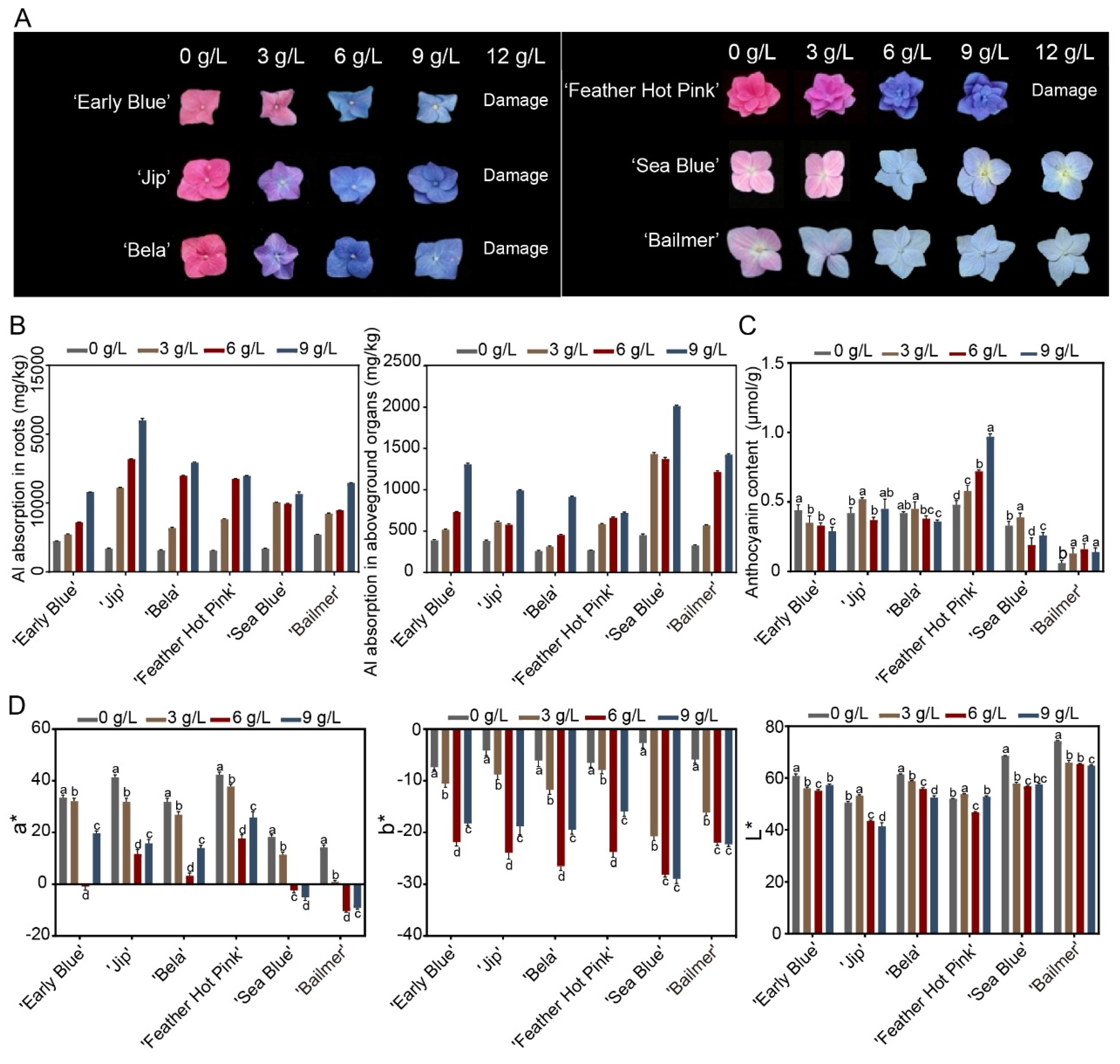
To determine the optimal aluminum concentration and establish standardized application guidelines, six cultivars were tested under varying aluminum concentrations. The results indicated that at Al2(SO4)3·18H2O concentration of 3 g/L, three cultivars exhibited purple-blue sepals. At 6 g/L, all six cultivars developed blue sepals (Figure 1A). However, when the concentration reached 12 g/L, four cultivars displayed symptoms consistent with aluminum toxicity, including stunted growth, weakened stems, and chlorotic leaves with yellowish-brown discoloration (Figure 1A, Supplemental Figure S1). A positive correlation was observed between the applied aluminum concentration and the aluminum content in both the above-ground and root tissues of the plants (Figure 1B).
In order to further investigate the effect of aluminum concentration on sepals bluing in H. macrophylla, the color of the sepals was characterized by measuring anthocyanin content, L* (Luminosity), a* and b* values. It was found that aluminum treatments altered anthocyanin content in hydrangea sepals, but this impact depends on both cultivars and aluminum concentrations (Figure 1C). Compared with the control (0 g/L), the values of a* and b* of all cultivars decreased significantly under the aluminum treatments. The lowest values were observed at Al2(SO4)3·18H2O concentration of 6 g/L, and this decrease was accompanied by a reduction in the L* value in most cultivars (Figure 1D). These results indicate that 6 g/L is the optimal aluminum concentration for sepal bluing.

3.2. Effects of Different Aluminum Concentration on Phenotypic Traits and Relative Chlorophyll Content in H. macrophylla

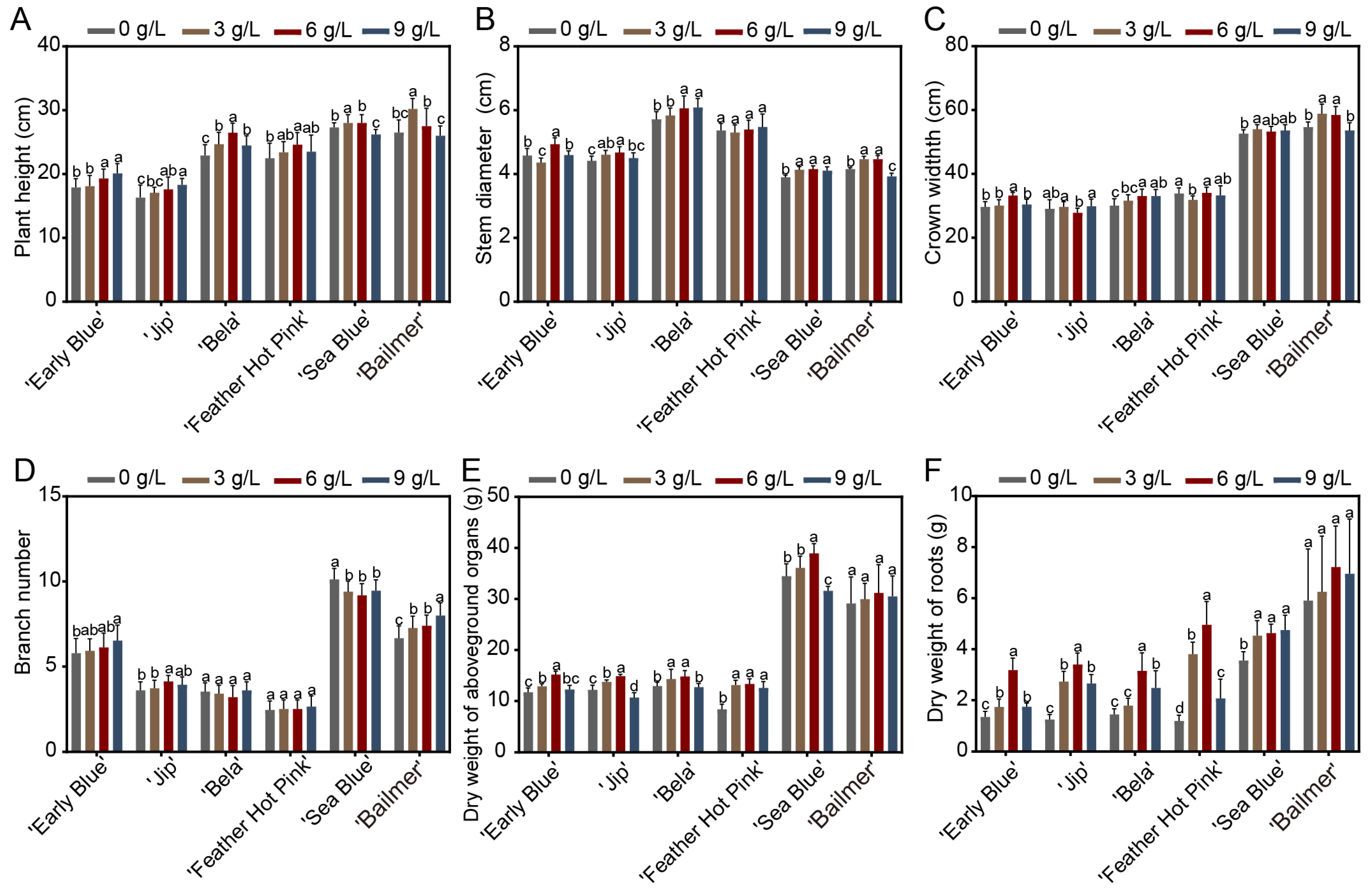
In this study, key phenotypic parameters were determined to examine the effects of aluminum exposure on plant growth and development in H. macrophylla. Compared to the control, plants exposed to aluminum exhibited significant changes in growth parameters, including plant height, stem diameter, crown breath, branch number, and dry weight of both aboveground organs and roots (Figure 2A–F). At Al2(SO4)3·18H2O treatment concentration of 6 g/L, most of the six cultivars exhibited maximum values for plant height, stem diameter, and crown width, compared to other treatment levels (Figure 2A–C); moreover, with the exception of ‘Bailmer’, the other five cultivars demonstrated significantly greater biomass accumulation in both aboveground and root organs (Figure 2E,F). However, the effect of aluminum concentration on branch number varied among cultivars (Figure 2D).
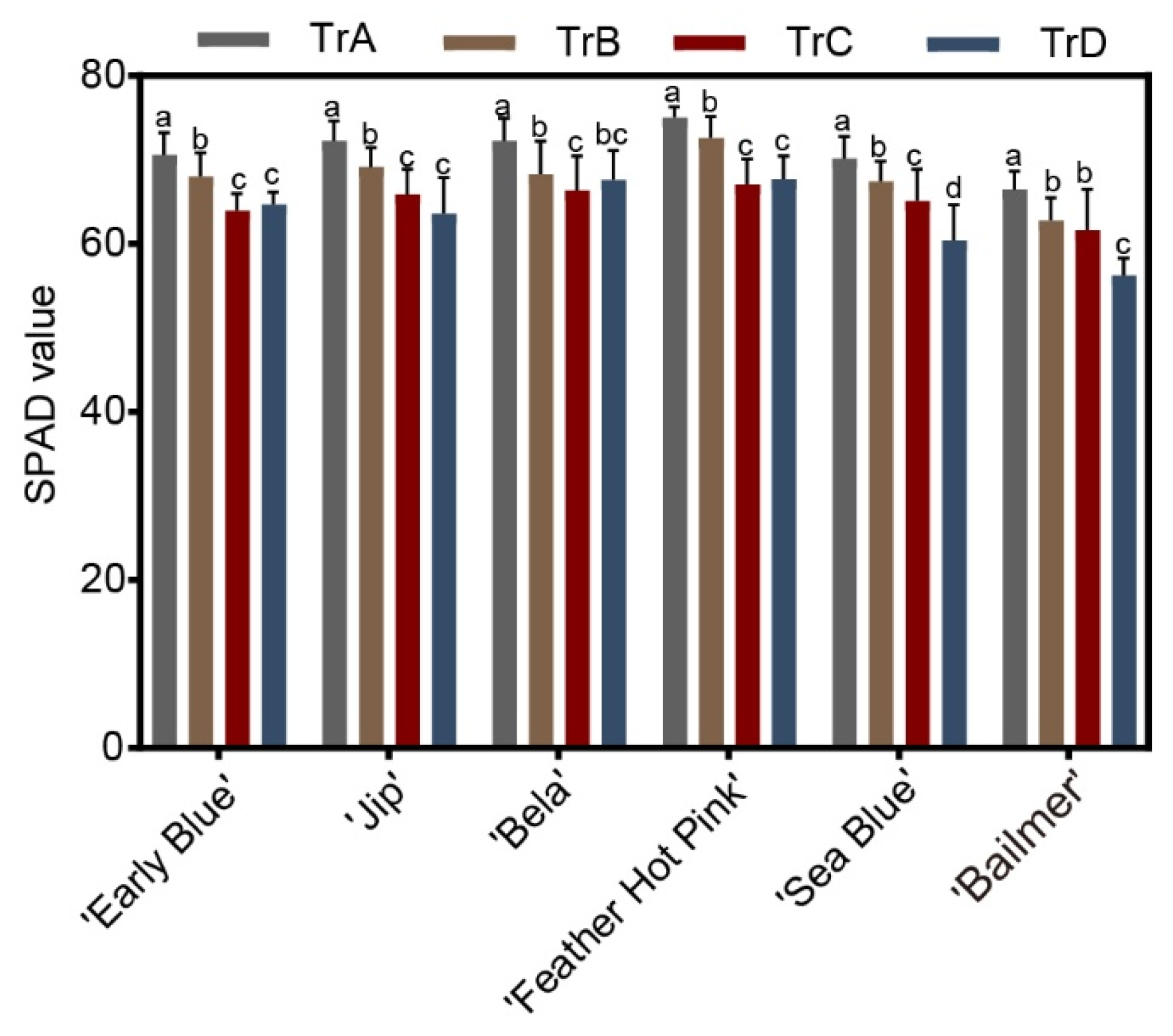
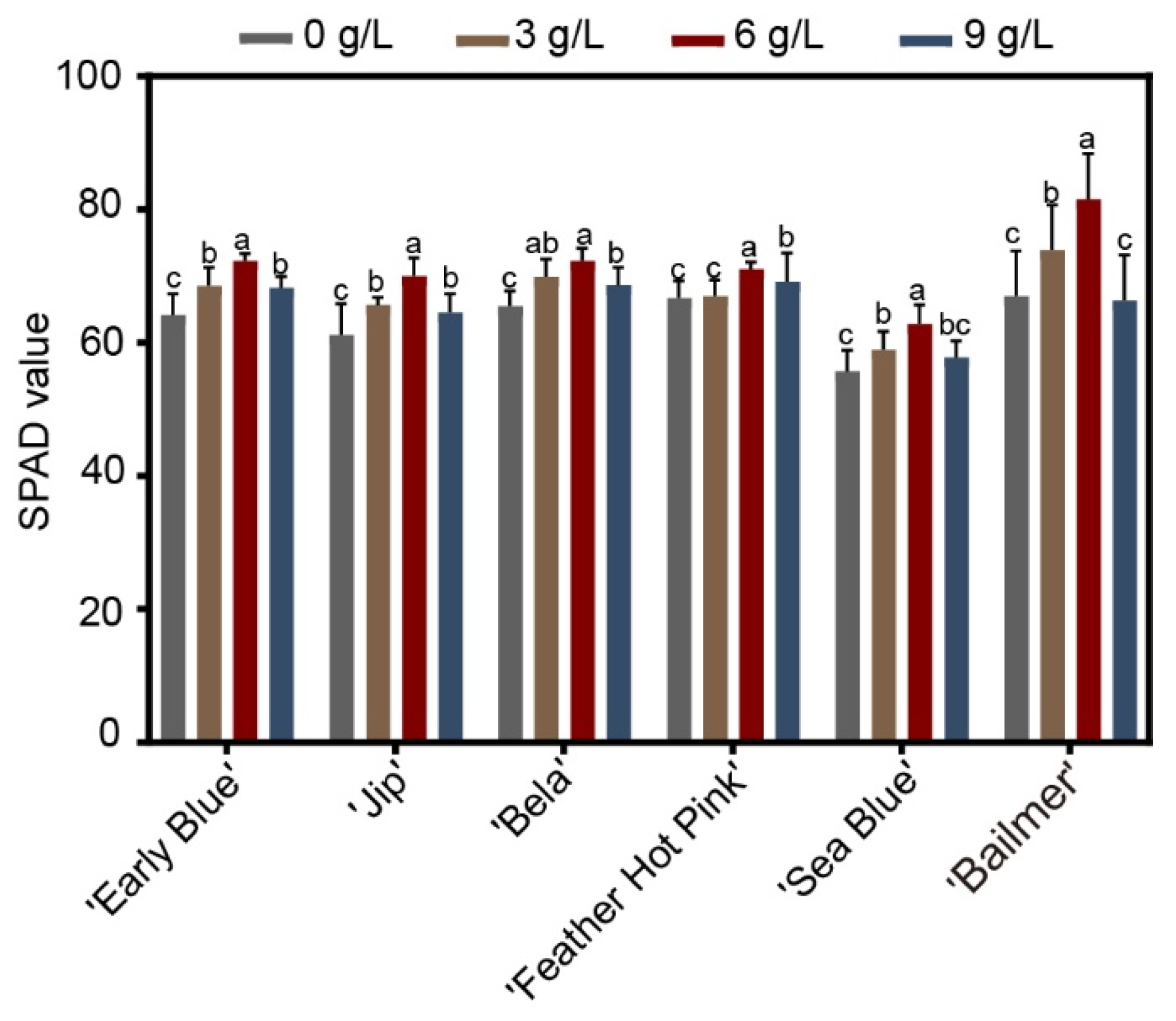
The SPAD values of the six cultivars peaked at Al2(SO4)3·18H2O concentration of 6 g/L, significantly higher than those of the control (Figure 3). However, when the concentration increased to 9 g/L, the SPAD values declined compared to the 6 g/L treatment, suggesting that excessive aluminum negatively impacts plant chlorophyll content (Figure 3).

3.3. The Influence of Aluminum on the Uptake of Nutrients by H. macrophylla

The influence of aluminum application on nutrient uptake in H. macrophylla was evaluated by quantifying a comprehensive suite of nutritional elements. A concentration-dependent aluminum treatment elicited a consistent, non-linear response in plant tissues, characterized by an initial increase followed by a decrease in the content of all measured nutrients—including macronutrients (N, P, K), secondary nutrients (Ca, Mg), and micronutrients (Fe, Mn, Cu, Zn, Mo). This pattern of nutrient accumulation closely paralleled the trend observed for total dry matter (Supplemental Figures S3–S5), with an application of 3–6 g/L enhancing nutrient content relative to the control, while a higher concentration of 9 g/L proved inhibitory.
Although cultivar-specific variations were present, distinct trends emerged from the nutrient concentration data. In most cultivars, aluminum application generally increased N concentration in both the aboveground and roots, as well as Mg and Cu in the aboveground sample compared to the control. Conversely, tissue concentrations of P and Ca declined progressively with increasing aluminum levels from 0 to 6 g/L (Al2(SO4)3·18H2O concentration), suggesting the presence of antagonistic interactions that limit their uptake and translocation. In most cultivars, aluminum promoted concentrations of K, Fe, Mn, Cu, Co and B in the aboveground sample. Notably, the maximum concentrations for most nutrients, including K, Ca, Mg, N, Zn, Co and B in the aboveground sample, as well as Fe, Mn, and Cu in both the aboveground and roots, were achieved at aluminum concentrations ranging from 3 to 6 g/L (Table 1, Table 2 and Table 3).

3.4. Impact of Aluminum Treatment at Different Developmental Periods on Sepal Color in H. macrophylla

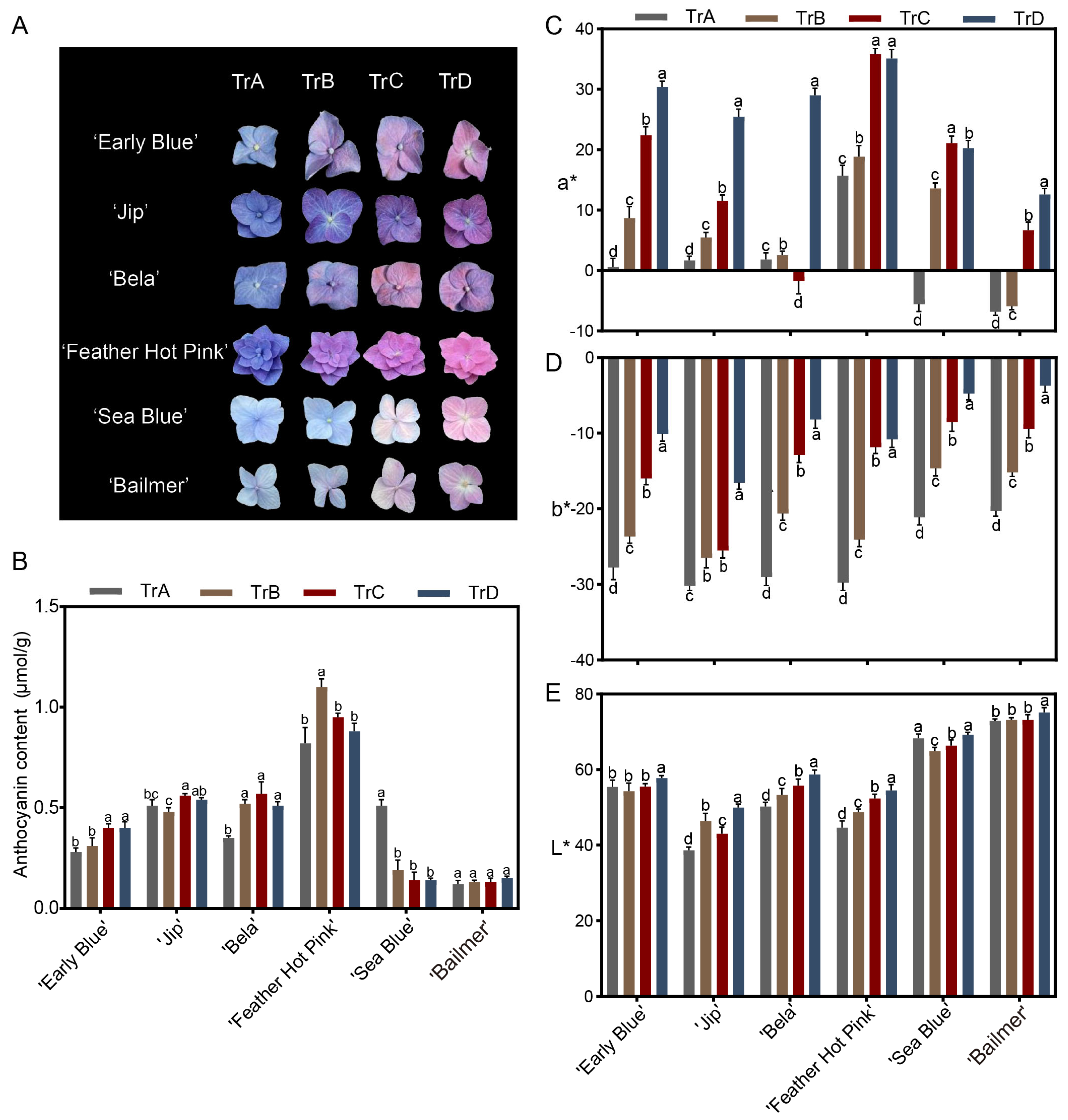
According to the results mentioned above, Al2(SO4)3·18H2O concentration of 6 g/L was identified as the optimal aluminum concentration for hydrangea growth and sepal bluing. To optimize cost-efficiency, environmental sustainability, and stable blue pigmentation in commercial production of H. macrophylla, it was necessary to determine the most effective timing of aluminum application. In this experiment, a concentration of 6 g/L Al2(SO4)3·18H2O was applied at four different developmental periods (TrA, TrB, TrC, TrD) to quantify stages-mediated regulation of sepal color formation, biomass allocation, anthocyanin biosynthesis, and photosynthesis effect in H. macrophylla. As the aluminum treatment duration increased (from TrD to TrA), the color gradually changed from pink to blue, with the sepals bluing in all cultivars under the TrA (Figure 4A); meanwhile, the a* and b* values gradually decrease in all cultivars (Figure 4C, D). However, there was no regular change in the L values (Figure 4E). In addition, there was no correlation between aluminum application period and anthocyanin content in sepals (Figure 4B). These results indicated that TrA aluminum application produced the most intense blue pigmentation, representing the most effective aluminum treatment for sepals bluing.

3.5. Effects of Different Aluminum Application Periods on Phenotypic Traits and Relative Chlorophyll Content of H. macrophylla

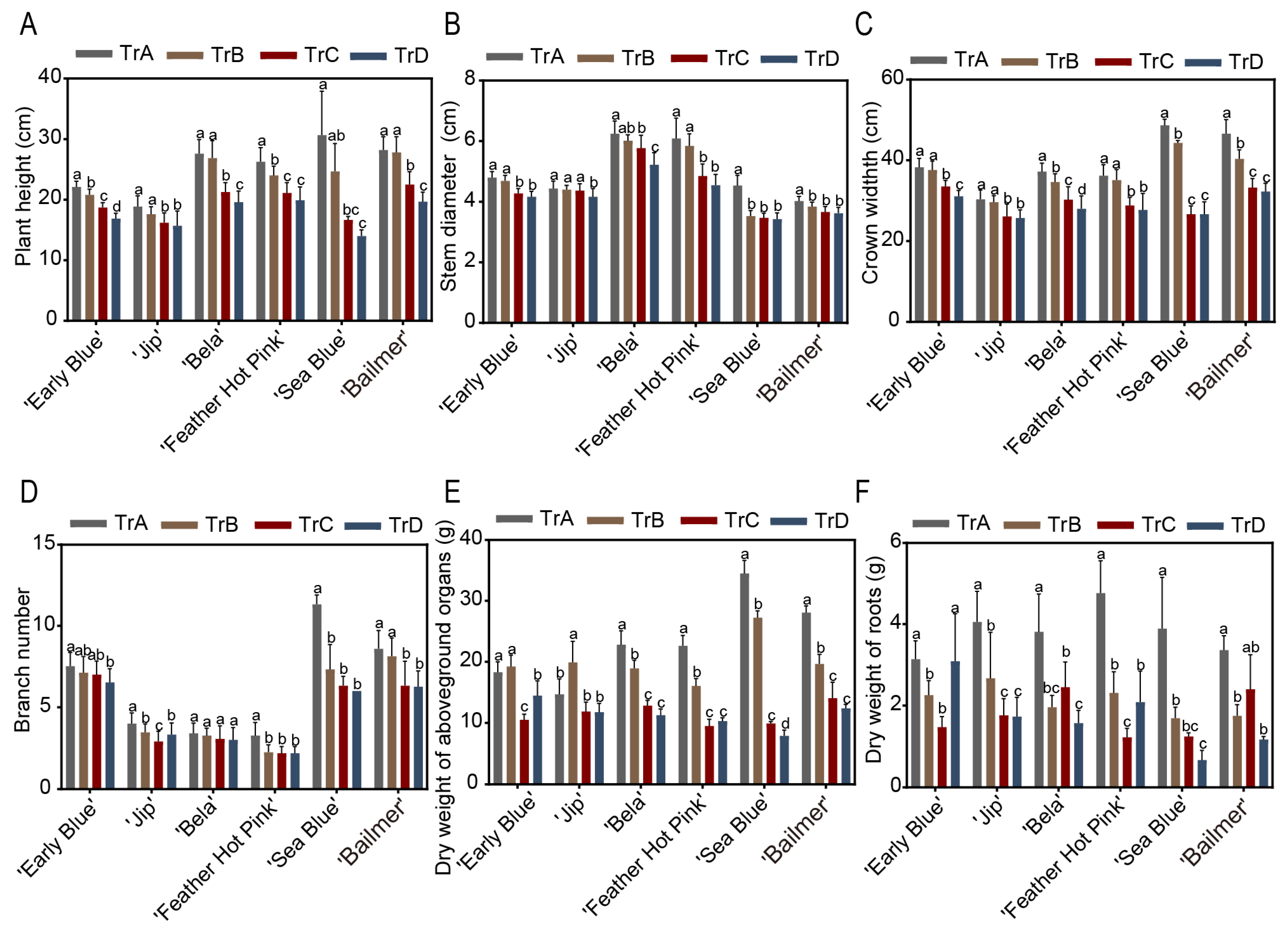
Under the TrA treatment (the longest aluminum application duration), plant height, stem diameter, crown width, branch number, dry weight of aboveground organs, and SPAD value reached their peaks in all cultivars (Figure 5A–E and Figure 6), whereas dry weight of root varied among cultivars (Figure 5F), reflecting genotype-specific responses. The results demonstrated that TrA represented the optimal periods for aluminum application, producing both the most vigorous plant growth and the most intense blue pigmentation in H. macrophylla sepals.

4. Discussion

The development of the characteristic blue sepals in hydrangea is primarily governed by the formation of stable complexes between aluminum- and delphinidin-based anthocyanins [7,31,32]. While this mechanism is well-established, the practical application of aluminum in horticultural production requires precise calibration of both concentration and timing to achieve consistent results. Our findings demonstrate that concentrations below 6 g/L are insufficient for effective bluing, whereas higher levels induce root injury, nutrient imbalance, and significant growth inhibition—a toxicity threshold consistent with reports in other plant species [33,34]. Strikingly, when Al2(SO4)3·18H2O application at concentration of 6 g/L significantly promoted anthocyanin content, color parameters, osmotic balance (L, a*, b*), growth metrics (plant height, stem diameter, etc.), key nutrient uptake (N, K, Mg, Fe, Zn, Mn, Cu, B, and Co), and SPAD values. While 6 g/L was optimal across cultivars, the intensity of response still varies genotypically. These findings align with previous observations in other aluminum-tolerant species, such as Camellia sinensis, Camellia japonica, and H. macrophylla, in which low aluminum concentrations have similarly been shown to promote growth and development [18,19,20,21,22,23,24].
In commercial production in China, TrB period is the common time for aluminum application; however, it was found that producing a stable blue coloration of hydrangea sepals was difficult under different seasons or varying environmental conditions. We hypothesize that organic acids or other organic compounds may compete with anthocyanins to bind with Al3+ to form complexes within plants, and the Al3+ applied during the TrB, TrC or TrD period likely preferentially binds with organic acids or other organic compounds and is stored in roots, stems, leaves, and flowers accordingly, which reduces the concentration of free aluminum available for forming stable Al–anthocyanin complexes in the sepals due to the non-transferability of aluminum in plant. In this study, we identified a pronounced temporal dependency: stable blue coloration was reliably achieved only when aluminum was supplied continuously during TrA period (from two weeks after pinching until blooming). A key mechanism for the stable blue coloration may be the extended Al3+ availability during TrA, which supports sufficient anthocyanin complexation at the critical flowering period [32]. These results highlight the necessity of precisely coordinating both the dosage and timing of aluminum application to achieve consistent sepal bluing.
Beyond its role in pigmentation, aluminum significantly influences the plant’s nutritional status [35]. In tea plants, Liu et al. [20] demonstrated that treatment of 2-year-old plants with 0.5–1 mM Al enhanced accumulation of N, P, Fe, Mn, Zn, and Cu in the fine roots. Similarly, in Melastoma malabathricum seedlings, supplementation of the culture medium with 0.5 mM Al aluminum significantly enhanced the uptake of P, K, Ca and Mg [36,37]. Consistent with these findings, this study showed that a low Al2(SO4)3·18H2O concentration (6 g/L) promoted the aboveground accumulation of N, Mg, K, Fe, Mn, Zn, Cu, Co, and B in H. macrophylla, as well as the belowground uptake of N and while inhibiting the absorption of Ca and P in the aboveground tissue and roots. These nutrient shifts can be explained by several interacting mechanisms. A key factor is the strong antagonism between Al3+ and phosphorus, as they readily form insoluble aluminum phosphate (AlPO4), which reducing P availability [38,39,40]. Furthermore, Al3+ can mitigate the toxicity of metals like Mn and Fe by altering root cell surface charges [41,42,43], and it directly competes with Ca2+ at membrane transport sites [44]. The enhanced N accumulation may be linked to aluminum tolerance mechanisms under ammonium (NH4+) nutrition; the accompanying protons (H+) likely compete with Al3+ for root adsorption sites, thereby alleviating toxicity [45,46,47,48,49].
Field experiments are inherently prone to considerable variability among replicate samples. To address this inherent challenge and enhance the reliability of our findings, we detected statistically significant differences by conducting multiple experimental trials with a large number of replicates. The ANOVA results revealed that the main effects of both Al concentration and application period were significant. Duncan’s multiple range test indicated that an Al2(SO4)3·18H2O concentration of 6 g/L applied at TrA period represents the optimal condition for enhancing sepal bluing in hydrangea.
This technology has already been deployed at a commercial production in Yunnan, where the precise delivery of industrial-grade aluminum salts through a tide-irrigation system, together with the recycling and reuse of aluminum-enriched substrates, has substantially lowered the overall cost of achieving stable blue coloration. In the future, we will focus on enhancing real-time monitoring of soil substrate pH, EC value, and residual aluminum ion levels, and further developing commercial slow-release aluminum fertilizers suitable for hydrangeas. The aim is to ensure the effectiveness of flower color regulation while continuously improving aluminum utilization efficiency, thereby promoting the standardization of blue hydrangea production.

5. Conclusions

Collectively, our results establish both a physiological framework and a practical guideline for hydrangea bluing. Based on our findings, a practical protocol involves applying a 6 g/L Al2(SO4)3·18H2O solution every 7 to10 days from two weeks after pinching until blooming, combined with reduced phosphorus input and balanced nutrient supplementation. This approach achieves stable, high-quality bluing while minimizing aluminum input, thereby reducing production costs, environmental risks, and toxicity-related growth penalties. Currently, to enable more precise control of hydrangea bluing, our lab is conducting studies on the molecular basis of aluminum transport and anthocyanin biosynthesis, as well as developing efficient slow-release aluminum chelates.

Supplementary Materials

The following supporting information can be downloaded at: https://www.mdpi.com/article/10.3390/horticulturae11121490/s1, Supplemental Figure S1. Plants damaged by Al2(SO4)3·18H2O under 12 g/L treatment. Supplemental Figure S2. Four aluminum application periods of H. macrophylla. Supplemental Figure S3. Macronutrients absorption responses of six cultivars of hydrangea to different aluminum ion concentrations. Supplemental Figure S4. Ca, Mg, Fe, and Mn absorption responses of six cultivars of hydrangea to different aluminum ion concentrations. Supplemental Figure S5. Cu, Zn, Co, and B absorption responses of six cultivars of hydrangea to different aluminum ion concentrations.

Author Contributions

Y.W. performed the experiments, analyzed the data and wrote the manuscript; Z.L. designed the experiment and analyzed data; Y.F. performed gene expressions and analyzed data; C.L. planted the plant materials and provided the data on sepal characteristics; S.Y. designed the experiment and revised the manuscript. All authors have read and agreed to the published version of the manuscript.

Funding

This research was funded by Technology Innovation Program of the National Key Research and Development Program of China (2023 YFD1200105), the Agricultural Science and Technology Innovation Program of the Chinese Academy of Agricultural Sciences (CAAS-ASTIP-2021- IVF; IVF-JCKJ202517).

Data Availability Statement

The original contributions presented in this study are included in the article/Supplementary Materials.

Acknowledgments

This research was supported by Key Laboratory of Biology and Genetic Improvement of Flower Crops (North China), Ministry of Agriculture and Rural Affairs the Agricultural Science. During the preparation of this manuscript, the author used generative AI tools (Deepseek-V3.2) of the to assist with language editing, improve grammatical accuracy, and enhance the clarity and readability of the text. The AI was not used for data analysis, interpretation, or drawing scientific conclusions. The authors have reviewed and edited the output and take full responsibility for the content of this publication.

Conflicts of Interest

The authors declare no competing interests.

References

  1. Wu, X.; Simpson, S.A.; Youngblood, R.C.; Liu, X.F.; Scheffler, B.E.; Rinehart, T.A.; Alexander, L.W.; Hulse-Kemp, A.M. Two haplotype-resolved genomes reveal important flower traits in bigleaf hydrangea (Hydrangea macrophylla) and insights into Asterid evolution. Hortic. Res. 2023, 10, uhad217. [Google Scholar] [CrossRef] [PubMed]
  2. Yang, Q.; Fan, Y.; Luo, S.; Liu, C.; Yuan, S. Virus-Induced Gene Silencing (VIGS) in Hydrangea macrophylla and Functional Analysis of HmF3′5′H. Plants 2024, 13, 3396. [Google Scholar] [CrossRef] [PubMed]
  3. Fan, Y.; Yue, D.; Liang, Z.; Liu, C.; Yuan, S. Genome-Wide Identification of Expansin Gene Family and Its Association with Sepal Expansion During Flower Opening in Hydrangea macrophylla. J. Plant Growth Regul. 2025, 44, 5129–5146. [Google Scholar] [CrossRef]
  4. Schreiber, H.D.; Jones, A.H.; Lariviere, C.M.; Mayhew, K.M.; Cain, J.B. Role of aluminum in red-to-blue color changes in Hydrangea macrophylla sepals. Biometals 2011, 24, 1005–1015. [Google Scholar] [CrossRef]
  5. Takeda, K.; Kariuda, M.; Itoi, H. Blueing of sepal colour of Hydrangea macrophylla. Phytochemistry 1985, 24, 2251–2254. [Google Scholar] [CrossRef]
  6. Ito, D.; Shinkai, Y.; Kato, Y.; Kondo, T.; Yoshida, K. Chemical studies on different color development in blue- and red-colored sepal cells of Hydrangea macrophylla. Biosci. Biotechnol. Biochem. 2009, 73, 1054–1059. [Google Scholar] [CrossRef]
  7. Ito, T.; Oyama, K.I.; Yoshida, K. Direct Observation of Hydrangea Blue-Complex Composed of 3-O-Glucosyldelphinidin, Al3+ and 5-O-Acylquinic Acid by ESI-Mass Spectrometry. Molecules 2018, 23, 1424. [Google Scholar] [CrossRef]
  8. Yoshida, K.; Oyama, K.I.; Kondo, T. Insight into chemical mechanisms of sepal color development and variation in hydrangea. Proc. Jpn. Acad. Ser. B Phys. Biol. Sci. 2021, 97, 51–68. [Google Scholar] [CrossRef]
  9. Zhang, G.; Yuan, S.; Qi, H.; Chu, Z.; Liu, C. The Na+/H+ Exchanger NHX1 Controls H+ Accumulation in the Vacuole to Influence Sepal Color in Hydrangea macrophylla. Int. J. Plant Biol. 2023, 14, 266–275. [Google Scholar] [CrossRef]
  10. Chen, S.; Chen, W.; Liu, Y.; Ahmad, M.Z.; Feng, J.; Chen, H.; Qi, X.; Deng, Y. Overexpression of ATP binding cassette transporters (ABCs) from Hydrangea macrophylla enhance aluminum tolerance. J. Hazard. Mater. 2025, 495, 138988. [Google Scholar] [CrossRef]
  11. Hao, J.; Peng, A.; Li, Y.; Zuo, H.; Li, P.; Wang, J.; Yu, K.; Liu, C.; Zhao, S.; Wan, X.; et al. Tea plant roots respond to aluminum-induced mineral nutrient imbalances by transcriptional regulation of multiple cation and anion transporters. BMC Plant Biol. 2022, 22, 203. [Google Scholar] [CrossRef] [PubMed]
  12. Ofoe, R.; Thomas, R.H.; Asiedu, S.K.; Wang-Pruski, G.; Fofana, B.; Abbey, L. Aluminum in plant: Benefits, toxicity and tolerance mechanisms. Front. Plant Sci. 2022, 13, 1085998. [Google Scholar] [CrossRef] [PubMed]
  13. Zhu, X.F.; Shi, Y.Z.; Lei, G.J.; Fry, S.C.; Zhang, B.C.; Zhou, Y.H.; Braam, J.; Jiang, T.; Xu, X.Y.; Mao, C.Z.; et al. XTH31, encoding an in vitro XEH/XET-active enzyme, regulates aluminum sensitivity by modulating in vivo XET action, cell wall xyloglucan content, and aluminum binding capacity in Arabidopsis. Plant Cell 2012, 24, 4731–4747. [Google Scholar] [CrossRef] [PubMed]
  14. Yu, P.; Han, D.; Chen, M.; Yang, L.; Li, Y.; Huang, T.; Xiong, W.; Cheng, Y.; Liu, X.; Wan, C.; et al. Overexpression of BnaXTH22 Improving Resistance to Aluminum Toxicity in Rapeseed (Brassica napus L.). Int. J. Mol. Sci. 2025, 26, 5780. [Google Scholar] [CrossRef]
  15. Mejia-Alvarado, F.S.; Botero-Rozo, D.; Araque, L.; Bayona, C.; Herrera-Corzo, M.; Montoya, C.; Ayala-Díaz, I.; Romero, H.M. Molecular network of the oil palm root response to aluminum stress. BMC Plant Biol. 2023, 23, 346. [Google Scholar] [CrossRef]
  16. Rodríguez-Sánchez, V.; Tapia-Maruri, D.; Márquez-Guzmán, J.; Vázquez-Santana, S.; Cruz-Ortega, R. Role of cotyledons in aluminium accumulation as a tolerance strategy in Fagopyrum esculentum Moench (Polygonaceae) seedlings. Physiol. Plant. 2024, 176, e14554. [Google Scholar] [CrossRef]
  17. Moustaka, J.; Ouzounidou, G.; Bayçu, G.; Moustakas, M. Aluminum resistance in wheat involves maintenance of leaf Ca2+ and Mg2+ content, decreased lipid peroxidation and Al accumulation, and low photosystem II excitation pressure. Biometals 2016, 29, 611–623. [Google Scholar] [CrossRef]
  18. Schmitt, M.; Watanabe, T.; Jansen, S. The effects of aluminium on plant growth in a temperate and deciduous aluminium accumulating species. AoB Plants 2016, 8, plw065. [Google Scholar] [CrossRef]
  19. Sun, L.; Zhang, M.; Liu, X.; Mao, Q.; Shi, C.; Kochian, L.V.; Liao, H. Aluminium is essential for root growth and development of tea plants (Camellia sinensis). J. Integr. Plant Biol. 2020, 62, 984–997. [Google Scholar] [CrossRef]
  20. Liu, Y.; Tao, J.; Cao, J.; Zeng, Y.; Li, X.; Ma, J.; Huang, Z.; Jiang, M.; Sun, L. The Beneficial Effects of Aluminum on the Plant Growth in Camellia japonica. J. Soil Sci. Plant Nutr. 2020, 20, 1799–1809. [Google Scholar] [CrossRef]
  21. Muhammad, N.; Zvobgo, G.; Zhang, G.-p. A review: The beneficial effects and possible mechanisms of aluminum on plant growth in acidic soil. J. Integr. Agric. 2019, 18, 1518–1528. [Google Scholar] [CrossRef]
  22. Naumann, A.; Kunz, U.; Lehmann, H.; Stelzer, R.; Horst, W.J. Effect of aluminium on root morphology of Hydrangea macrophylla. In Plant Nutrition: Food Security and Sustainability of Agro-Ecosystems Through Basic and Applied Research; Horst, W.J., Schenk, M.K., Bürkert, A., Claassen, N., Flessa, H., Frommer, W.B., Goldbach, H., Olfs, H.W., Römheld, V., Sattelmacher, B., et al., Eds.; Springer: Dordrecht, The Netherlands, 2001; pp. 516–517. [Google Scholar] [CrossRef]
  23. Takeda, K.; Yamashita, T.; Takahashi, A.; Timberlake, C.F. Stable blue complexes of anthocyanin-aluminium-3-p-coumaroyl- or 3-caffeoyl-quinic acid involved in the blueing of Hydrangea flower. Phytochemistry 1990, 29, 1089–1091. [Google Scholar] [CrossRef]
  24. Lai, S.; Wang, W.; Shen, T.; Li, X.; Kong, D.; Hou, X.; Chen, G.; Gao, L.; Xia, T.; Jiang, X. Crucial Role of Aluminium-Regulated Flavonol Glycosides (F2-Type) Biosynthesis in Lateral Root Formation of Camellia sinensis. Plant Cell Environ. 2025, 48, 3573–3589. [Google Scholar] [CrossRef] [PubMed]
  25. Famoso, A.N.; Clark, R.T.; Shaff, J.E.; Craft, E.; McCouch, S.R.; Kochian, L.V. Development of a novel aluminum tolerance phenotyping platform used for comparisons of cereal aluminum tolerance and investigations into rice aluminum tolerance mechanisms. Plant Physiol. 2010, 153, 1678–1691. [Google Scholar] [CrossRef]
  26. Landis, H.; Hicks, K.; McCall, I.; Henry, J.B.; Whipker, B.E. Customizing the leaf tissue nutrient ranges for blue and pink hydrangeas. J. Plant Nutr. 2022, 45, 59–68. [Google Scholar] [CrossRef]
  27. Zhang, G.; Yuan, S.; Qi, H.; Chu, Z.; Liu, C. Identification of Reliable Reference Genes for the Expression of Hydrangea macrophylla ‘Bailmer’ and ‘Duro’ Sepal Color. Horticulturae 2022, 8, 835. [Google Scholar] [CrossRef]
  28. Sun, Y.; Yu, R.; Liu, Y.; Liu, J.; Zhang, X.; Gong, Z.; Qu, T. Metabolomics Combined with Transcriptomics Analysis Reveals the Regulation of Flavonoids in the Leaf Color Change of Acer truncatum Bunge. Int. J. Mol. Sci. 2024, 25, 13325. [Google Scholar] [CrossRef]
  29. Makraki, T.; Tsaniklidis, G.; Papadimitriou, D.M.; Taheri-Garavand, A.; Fanourakis, D. Non-Destructive Monitoring of Postharvest Hydration in Cucumber Fruit Using Visible-Light Color Analysis and Machine-Learning Models. Horticulturae 2025, 11, 1283. [Google Scholar] [CrossRef]
  30. Huang, Z.; Wang, Y.; Liu, C.; Fan, Y.; Yuan, S. Responses of Hydrangea macrophylla In Vitro Plantlets to Different Light Intensities. Agronomy 2025, 15, 2782. [Google Scholar] [CrossRef]
  31. Chen, S.; Qi, X.; Feng, J.; Chen, H.; Qin, Z.; Wang, H.; Deng, Y. Biochemistry and transcriptome analyses reveal key genes and pathways involved in high-aluminum stress response and tolerance in hydrangea sepals. Plant Physiol. Biochem. 2022, 185, 268–278. [Google Scholar] [CrossRef]
  32. Ito, T.; Aoki, D.; Fukushima, K.; Yoshida, K. Direct mapping of hydrangea blue-complex in sepal tissues of Hydrangea macrophylla. Sci. Rep. 2019, 9, 5450. [Google Scholar] [CrossRef] [PubMed]
  33. Chauhan, D.K.; Yadav, V.; Vaculík, M.; Gassmann, W.; Pike, S.; Arif, N.; Singh, V.P.; Deshmukh, R.; Sahi, S.; Tripathi, D.K. Aluminum toxicity and aluminum stress-induced physiological tolerance responses in higher plants. Crit. Rev. Biotechnol. 2021, 41, 715–730. [Google Scholar] [CrossRef] [PubMed]
  34. Chowra, U.K.; Regon, P.; Kobayashi, Y.; Koyama, H.; Panda, S.K. Characterization of Al3+-toxicity responses and molecular mechanisms underlying organic acid efflux in Vigna mungo (L.) Hepper. Planta 2024, 260, 116. [Google Scholar] [CrossRef] [PubMed]
  35. Kochian, L.V.; Piñeros, M.A.; Liu, J.; Magalhaes, J.V. Plant Adaptation to Acid Soils: The Molecular Basis for Crop Aluminum Resistance. Annu. Rev. Plant Biol. 2015, 66, 571–598. [Google Scholar] [CrossRef]
  36. Watanabe, T.; Jansen, S.; Osaki, M. The beneficial effect of aluminium and the role of citrate in Al accumulation in Melastoma malabathricum. New Phytol. 2005, 165, 773–780. [Google Scholar] [CrossRef]
  37. Watanabe, T.; Misawa, S.; Hiradate, S.; Osaki, M. Characterization of root mucilage from Melastoma malabathricum, with emphasis on its roles in aluminum accumulation. New Phytol. 2008, 178, 581–589. [Google Scholar] [CrossRef]
  38. Omenda, J.A.; Ngetich, K.F.; Kiboi, M.N.; Mucheru-Muna, M.W.; Mugendi, D.N. Phosphorus availability and exchangeable aluminum response to phosphate rock and organic inputs in the Central Highlands of Kenya. Heliyon 2021, 7, e06371. [Google Scholar] [CrossRef]
  39. Magalhaes, J.V.; Piñeros, M.A.; Maciel, L.S.; Kochian, L.V. Emerging Pleiotropic Mechanisms Underlying Aluminum Resistance and Phosphorus Acquisition on Acidic Soils. Front. Plant Sci. 2018, 9, 1420. [Google Scholar] [CrossRef]
  40. Chandra, J.; Keshavkant, S. Mechanisms underlying the phytotoxicity and genotoxicity of aluminum and their alleviation strategies: A review. Chemosphere 2021, 278, 130384. [Google Scholar] [CrossRef]
  41. Wang, W.; Zhao, X.Q.; Hu, Z.M.; Shao, J.F.; Che, J.; Chen, R.F.; Dong, X.Y.; Shen, R.F. Aluminium alleviates manganese toxicity to rice by decreasing root symplastic Mn uptake and reducing availability to shoots of Mn stored in roots. Ann. Bot. 2015, 116, 237–246. [Google Scholar] [CrossRef]
  42. Jamaludin Alia, F.; Shamshuddin, J.; Fauziah, C.I.; Ahmad Husni, M.H.; Panhwar, Q.A. Effects of Aluminum, Iron and/or Low pH on Rice Seedlings Grown in Solution Culture. Int. J. Agric. Biol. 2015, 17, 702–710. [Google Scholar] [CrossRef]
  43. Zahra, N.; Hafeez, M.B.; Shaukat, K.; Wahid, A.; Hasanuzzaman, M. Fe toxicity in plants: Impacts and remediation. Physiol. Plant. 2021, 173, 201–222. [Google Scholar] [CrossRef]
  44. Zhang, H.; Song, Y.; Fan, Z.; Ruan, J.; Hu, J.; Zhang, Q. Aluminum Supplementation Mediates the Changes in Tea Plant Growth and Metabolism in Response to Calcium Stress. Int. J. Mol. Sci. 2023, 25, 530. [Google Scholar] [CrossRef]
  45. Kinraide, T.B.; Ryan, P.R.; Kochian, L.V. Interactive effects of Al, h, and other cations on root elongation considered in terms of cell-surface electrical potential. Plant Physiol. 1992, 99, 1461–1468. [Google Scholar] [CrossRef]
  46. Zhao, X.Q.; Shen, R.F.; Sun, Q.B. Ammonium under solution culture alleviates aluminum toxicity in rice and reduces aluminum accumulation in roots compared with nitrate. Plant Soil 2009, 315, 107–121. [Google Scholar] [CrossRef]
  47. Zhao, X.Q.; Chen, R.F.; Shen, R.F. Coadaptation of Plants to Multiple Stresses in Acidic Soils. Soil Sci. 2014, 179, 503–513. [Google Scholar] [CrossRef]
  48. Wang, W.; Zhao, X.Q.; Chen, R.F.; Dong, X.Y.; Lan, P.; Ma, J.F.; Shen, R.F. Altered cell wall properties are responsible for ammonium-reduced aluminium accumulation in rice roots. Plant Cell Environ. 2015, 38, 1382–1390. [Google Scholar] [CrossRef] [PubMed]
  49. Zhao, X.Q.; Shen, R.F. Aluminum-Nitrogen Interactions in the Soil-Plant System. Front. Plant Sci. 2018, 9, 807. [Google Scholar] [CrossRef] [PubMed]
Figure 1. Effects of aluminum concentration gradients on H. macrophylla flower pigmentation. (A) Phenotypic diagrams of sepal color of hydrangea under different aluminum application concentrations. (B) Aluminum accumulation in aboveground organs and roots following Aluminum treatment. (C) Anthocyanin accumulation in six H. macrophylla Cultivars. (D) Color parameters of H. macrophylla at different aluminum application concentrations. Leaf color was quantified in accordance with the International Commission on Illumination (CII) color standard. a*: red-green axis. b*: yellow-blue axis. L*: Luminosity. Significant differences were analyzed by one-way ANOVA. Different lowercase letters indicate significant differences among four treatments for each cultivar at p < 0.05 according to Duncan’s multiple range test.
Horticulturae 11 01490 g001
Figure 2. Aluminum concentration-dependent modulation of growth and physiological responses in H. macrophylla cultivars. (A) Plant height. (B) Stem diameter. (C) crown width. (D) Branch number. (E,F), Dry weight of aboveground organs and roots. Significant differences were analyzed by one-way ANOVA. Different lowercase letters indicate significant differences among four treatments for each cultivar at p < 0.05 according to Duncan’s multiple range test.
Horticulturae 11 01490 g002
Figure 3. Differential effects of aluminum concentration gradients on photosynthesis in six H. macrophylla Cultivars.SPAD value. Significant differences were analyzed by one-way ANOVA. Different lowercase letters indicate significant differences among four treatments for each cultivar at p < 0.05 according to Duncan’s multiple range test.
Horticulturae 11 01490 g003
Figure 4. Effects of aluminum application timing on sepal coloration in H. macrophylla sepals. TrA: from two weeks after pinching until blooming, TrB: from the flower bud differentiation stage until blooming, TrC: from two weeks after dormancy break until blooming, and TrD: from the budding stage until blooming. (A) Sepal color phenotypes of H. macrophylla following stage−specific aluminum application. (B) Anthocyanin accumulation. (CE), a*, b* and L* parameters of H. macrophylla at different aluminum application timing. Significant differences were analyzed by one-way ANOVA. Different lowercase letters indicate significant differences among four treatments for each cultivar at p < 0.05 according to Duncan’s multiple range test.
Horticulturae 11 01490 g004
Figure 5. Effects of different aluminum application periods on phenotypic traits in H. macrophylla Cultivars. (A) Plant height. (B) Stem diameter. (C) crown width. (D) Branch number. (E,F), Dry weight of aboveground organs and roots. Significant differences were analyzed by one-way ANOVA. Different lowercase letters indicate significant differences among four treatments for each cultivar at p < 0.05 according to Duncan’s multiple range test.
Horticulturae 11 01490 g005
Figure 6. Effects of different aluminum application periods on SPAD value in H. macrophylla. Significant differences were analyzed by one-way ANOVA. Different lowercase letters indicate significant differences among four treatments for each cultivar at p < 0.05 according to Duncan’s multiple range test.
Horticulturae 11 01490 g006
Table 1. Effects of different aluminum application treatments on N, P, and K element absorption in H. macrophylla.
CultivarTreatmentN (g/kg)P (g/kg)K (g/kg)
Aboveground OrgansRootsAboveground OrgansRootsAboveground OrgansRoots
‘Early Blue’0 g/L40.41 ± 0.24 c27.37 ± 0.17 d4.51 ± 0.18 a4.45 ± 0.05 a65.01 ± 1.75 b6.28 ± 0.25 c
3 g/L43.69 ± 0.24 b27.96 ± 0.1 b4.03 ± 0.12 b3.4 ± 0.09 b65.24 ± 1.26 b12.57 ± 0.41 b
6 g/L44.73 ± 0.17 a30.67 ± 0.2 a3.66 ± 0.14 c3.12 ± 0.1 c64.9 ± 0.62 b19.32 ± 0.31 a
9 g/L44.44 ± 0.21 a28.21 ± 0.14 b3.51 ± 0.07 c2.63 ± 0.09 d69.25 ± 1.22 a5.37 ± 0.14 d
‘Jip’0 g/L38.92 ± 0.21 d30.27 ± 0.18 c5.43 ± 0.05 a7.62 ± 0.16 a67.76 ± 0.75 a22.95 ± 0.44 a
3 g/L43.43 ± 0.14 a34.3 ± 0.18 a4.16 ± 0.09 b6.3 ± 0.19 b67.52 ± 0.91 a6.86 ± 0.18 bc
6 g/L42.64 ± 0.17 b29.73 ± 0.14 d3.81 ± 0.08 c5.47 ± 0.16 c57.57 ± 0.69 c7.31 ± 0.1 b
9 g/L40.22 ± 0.13 c32.08 ± 0.21 b4.08 ± 0.15 b5.51 ± 0.22 c66.09 ± 0.33 b6.59 ± 0.28 c
‘Bela’0 g/L37.44 ± 0.21 d28.07 ± 0.07 c5.49 ± 0.11 a5.81 ± 0.14 a59.44 ± 0.71 c6.17 ± 0.19 c
3 g/L40.67 ± 0.1 c28.48 ± 0.21 b4.5 ± 0.07 b4.62 ± 0.12 c63.2 ± 0.7 b21.53 ± 0.35 b
6 g/L42.13 ± 0.17 a25.15 ± 0.2 d4.36 ± 0.11 b3.84 ± 0.14 d60.17 ± 0.55 c6.13 ± 0.09 c
9 g/L41.69 ± 0.27 b30.26 ± 0.21 a5.38 ± 0.07 a5.03 ± 0.11 b67.29 ± 1.07 a26.53 ± 0.42 a
‘Feather Hot Pink’0 g/L39.55 ± 0.17 c29.47 ± 0.14 b5.9 ± 0.08 a6.8 ± 0.14 a61.17 ± 0.66 b7.4 ± 0.27 a
3 g/L44.07 ± 0.14 a27.97 ± 0.17 c4.33 ± 0.14 b5.35 ± 0.2 b62.98 ± 0.83 a6.31 ± 0.21 b
6 g/L44.34 ± 0.24 a24.02 ± 0.24 d4.29 ± 0.07 b3.65 ± 0.12 d54.47 ± 1.12 c4.9 ± 0.11 c
9 g/L41.28 ± 0.14 b32.96 ± 0.17 a3.82 ± 0.1 c4.77 ± 0.11 c53.32 ± 1.06 c7.07 ± 0.25 a
‘Sea Blue’0 g/L29.3 ± 0.14 b23.14 ± 0.14 b4.38 ± 0.1 a2.76 ± 0.05 b69.21 ± 0.63 b25.84 ± 0.57 a
3 g/L28.37 ± 0.21 c23.97 ± 0.14 a3.86 ± 0.12 b2.48 ± 0.04 c72.3 ± 0.55 a13.8 ± 0.21 b
6 g/L30.64 ± 0.21 a23.28 ± 0.3 b3.57 ± 0.08 c2.43 ± 0.04 c64.98 ± 0.3 c13.08 ± 0.08 c
9 g/L24.27 ± 0.2 d21.77 ± 0.18 c2.94 ± 0.04 d3.12 ± 0.04 a57.12 ± 0.55 d12.78 ± 0.53 c
‘Bailmer’0 g/L26.5 ± 0.17 b27.71 ± 0.14 b3.6 ± 0.09 a3.51 ± 0.09 a60.93 ± 0.95 c22.89 ± 0.36 a
3 g/L28.48 ± 0.21 a25.91 ± 0.13 c3.32 ± 0.12 b2.95 ± 0.04 c63.4 ± 2.02 b15.5 ± 0.51 b
6 g/L28.3 ± 0.2 a25.79 ± 0.17 c3.01 ± 0.04 c2.26 ± 0.05 d66.36 ± 0.64 a11.87 ± 0.38 d
9 g/L17.56 ± 0.24 c28.14 ± 0.17 a3.03 ± 0.09 c3.31 ± 0.11 b65.7 ± 0.45 a13.9 ± 0.25 c
Note: N: nitrogen, P: phosphorus, K: potassium. Significant differences were analyzed by one-way ANOVA. Within the column, different lowercase letters indicate significant differences among four treatments for each cultivar at p < 0.05 according to Duncan’s multiple range test.
Table 2. Effects of different aluminum application treatments on Ca, Mg, Fe, and Mn element absorption in H. macrophylla.
CultivarTreatmentCa (g/kg)Mg (g/kg)Fe (mg/g)Mn (mg/kg)
Aboveground OrgansRootsAboveground OrgansRootsAboveground OrgansRootsAboveground OrgansRoots
‘Early Blue’0 g/L1.7 ± 0.02 a1.81 ± 0.06 a4.42 ± 0.11 b2.21 ± 0.03 a302.79 ± 6.84 b680.17 ± 2.4 a92.5 ± 2.74 d112.77 ± 2.29 a
3 g/L1.62 ± 0.03 b1.65 ± 0.07 b4.69 ± 0.12 b1.93 ± 0.04 b304.52 ± 5.08 b448.85 ± 3.17 c98.03 ± 2.8 c114.16 ± 2.63 a
6 g/L1.42 ± 0.03 c1.28 ± 0.01 c4.52 ± 0.11 b1.63 ± 0.03 c304.98 ± 4.32 b379.28 ± 12.09 d108.18 ± 2.9 b90.02 ± 1.65 b
9 g/L1.46 ± 0.06 c1.35 ± 0.04 c5.29 ± 0.21 a1.63 ± 0.03 c349.99 ± 7.42 a530.16 ± 9.89 b117.95 ± 3.1 a77.77 ± 2.66 c
‘Jip’0 g/L1.9 ± 0.07 a1.76 ± 0.04 c3.94 ± 0.06 c1.87 ± 0.05 b312.95 ± 7.64 a834.65 ± 18.11 c109.46 ± 2.14 b118.47 ± 2.95 a
3 g/L1.74 ± 0.05 b2.24 ± 0.06 b4.4 ± 0.06 b2.06 ± 0.09 a261.24 ± 7.44 c922.04 ± 22.49 b112.66 ± 2.25 b120.07 ± 0.92 a
6 g/L1.58 ± 0.02 c2.34 ± 0.1 b3.8 ± 0.1 c1.98 ± 0.04 a278.67 ± 4.72 b939.32 ± 17.7 b99.24 ± 2.5 c118.89 ± 2.14 a
9 g/L1.5 ± 0.02 c2.58 ± 0.07 a5.21 ± 0.19 a2 ± 0.03 a259.14 ± 1.54 c1043.75 ± 7.78 a128.89 ± 3.53 a116.38 ± 2.33 a
‘Bela’0 g/L1.47 ± 0.03 a1.84 ± 0.04 a3.3 ± 0.05 c2.01 ± 0.06 a247.21 ± 3.83 c465.41 ± 13.13 c94.43 ± 1.15 c103.74 ± 2.35 a
3 g/L1.53 ± 0.05 a1.7 ± 0.04 b3.7 ± 0.08 b1.67 ± 0.02 c302.39 ± 8.79 b417.78 ± 12.6 d105.19 ± 2.54 b105.4 ± 1.4 a
6 g/L1.3 ± 0.02 b1.52 ± 0.04 c3.66 ± 0.06 b1.54 ± 0.04 d232.17 ± 7.29 d683.1 ± 4.95 a106.01 ± 1.28 b82.31 ± 1.09 c
9 g/L1.48 ± 0.03 a1.73 ± 0.05 b4.83 ± 0.07 a1.84 ± 0.04 b336.12 ± 10.39 a511.54 ± 7.33 b128.49 ± 5.48 a86.39 ± 1.86 b
‘Feather Hot Pink’0 g/L2.26 ± 0.03 a2.05 ± 0.03 a4.87 ± 0.14 b1.95 ± 0.03 a311.82 ± 5.26 b703.83 ± 15.81 c129.29 ± 1.84 a159.04 ± 3.62 a
3 g/L1.99 ± 0.07 b2.05 ± 0.06 a5.57 ± 0.13 a1.98 ± 0.05 a540.39 ± 13.18 a804.43 ± 6.37 a129.19 ± 5.45 a139.01 ± 2.35 b
6 g/L1.63 ± 0.07 c1.54 ± 0.04 c4.95 ± 0.14 b1.56 ± 0.05 c298.23 ± 7.38 b775.25 ± 4.72 b109.01 ± 0.38 b97.78 ± 2.44 d
9 g/L1.5 ± 0.03 d1.83 ± 0.05 b4.46 ± 0.08 c1.74 ± 0.05 b313.51 ± 3 b659.79 ± 10.61 d102.26 ± 1.37 c113.46 ± 3.77 c
‘Sea Blue’0 g/L1.61 ± 0.04 a2.43 ± 0.07 a4.14 ± 0.04 d2.1 ± 0.02 a215.85 ± 4.84 b775.64 ± 14.72 a88.38 ± 1.99 c70.56 ± 1.33 a
3 g/L1.64 ± 0.03 a1.44 ± 0.04 b5.8 ± 0.09 a1.39 ± 0.03 c310.14 ± 6.93 a681.62 ± 4.06 c99.42 ± 2.16 a41.18 ± 0.88 d
6 g/L1.45 ± 0.02 c1.4 ± 0.06 b5.09 ± 0.08 b1.71 ± 0.05 b315.25 ± 7.11 a684.34 ± 5.07 c92.84 ± 1.38 b52.65 ± 2.16 b
9 g/L1.21 ± 0.05 c1.15 ± 0.02 c4.45 ± 0.06 c1.34 ± 0.03 c163.47 ± 3.14 c708.76 ± 8.86 b81.46 ± 2.28 d47.14 ± 1.68 c
‘Bailmer’0 g/L1.42 ± 0.02 a1.42 ± 0.03 b2.98 ± 0.05 d2.47 ± 0.03 a175.95 ± 2.69 c426.6 ± 7.88 c59.19 ± 0.29 c70.53 ± 0.68 a
3 g/L1.41 ± 0.04 a1.53 ± 0.04 a3.13 ± 0.03 c2.39 ± 0.05 a208.7 ± 3.73 b566.16 ± 9.05 a78.95 ± 1.78 b70.41 ± 0.86 a
6 g/L1.44 ± 0.04 a1.28 ± 0.04 c3.28 ± 0.05 b1.91 ± 0.07 c237.75 ± 2.96 a563.77 ± 9.55 a87.83 ± 1.53 a54.64 ± 0.28 c
9 g/L1.28 ± 0.02 b1.34 ± 0.03 c3.4 ± 0.05 a2.21 ± 0.05 b242.73 ± 3.74 a506.26 ± 2.59 b85.42 ± 2.17 a65.95 ± 1.83 b
Note: Ca: calcium, Mg: magnesium, Fe: iron, and Mn: manganese. Significant differences were analyzed by one-way ANOVA. Within the column, different lowercase letters indicate significant differences among four treatments for each cultivar at p < 0.05 according to Duncan’s multiple range test.
Table 3. Effects of different aluminum application treatments on Cu, Zn, Co, and B element absorption in H. macrophylla.
CultivarTreatmentCu (mg/kg)Zn (mg/kg)Co (mg/kg)B (mg/kg)
Aboveground OrgansRootsAboveground OrgansRootsAboveground OrgansRootsAboveground OrgansRoots
‘Early Blue’0 g/L9.97 ± 0.23 b29.48 ± 1.26 a44.47 ± 2.09 d73.35 ± 1.63 d51.14 ± 2.21 c41.11 ± 0.92 c49.01 ± 1.25 b11.6 ± 0.26 b
3 g/L9.32 ± 0.41 b25.95 ± 0.99 b70.14 ± 1.24 a98.06 ± 2.67 a66.97 ± 1.36 a56.18 ± 1.35 a52.06 ± 1.29 a13.65 ± 0.1 a
6 g/L18.4 ± 0.59 a18.86 ± 0.43 c58.49 ± 1.19 b93.89 ± 1.81 b52.55 ± 1.39 c53.49 ± 0.73 b47.79 ± 0.86 b13.39 ± 0.11 a
9 g/L9.73 ± 0.41 b20.43 ± 0.46 c54.25 ± 1.63 c82.24 ± 1.55 c59.16 ± 1.87 b30.42 ± 0.78 d52.85 ± 1.21 a10.74 ± 0.18 c
‘Jip’0 g/L9.91 ± 0.26 c24.03 ± 0.54 b59.33 ± 0.76 b97.1 ± 1.2 c58.35 ± 0.75 c66.74 ± 1.74 d48.44 ± 0.55 c18.66 ± 0.35 a
3 g/L10.61 ± 0.18 b26.01 ± 0.83 a62.69 ± 2.33 b94.11 ± 2.25 c67.11 ± 1.98 b76.14 ± 0.77 c59.4 ± 0.53 a14.72 ± 0.39 b
6 g/L12.44 ± 0.33 a26.03 ± 0.51 a53.57 ± 0.98 c106.27 ± 2.03 b87.52 ± 1.51 a87.95 ± 2.56 b33.14 ± 0.57 d14.44 ± 0.58 b
9 g/L9.14 ± 0.19 d22.26 ± 0.82 c67.05 ± 2.66 a123.59 ± 4.33 a49.14 ± 0.46 d118.11 ± 3.58 a53.66 ± 1.14 b14.86 ± 0.12 b
‘Bela’0 g/L9.24 ± 0.29 c33.76 ± 0.59 b52.66 ± 0.66 d63.91 ± 1.72 c48.55 ± 1.1 c129.03 ± 3.26 a43.99 ± 1.21 c14.09 ± 0.27 b
3 g/L9.75 ± 0.18 b23.91 ± 0.55 d60.58 ± 1.56 c70.16 ± 3.2 b77.75 ± 2.31 a116.83 ± 1.48 c52.18 ± 0.17 b15.07 ± 0.47 a
6 g/L8.97 ± 0.05 c37.92 ± 0.97 a65.26 ± 0.63 b67.73 ± 2.24 b48.66 ± 1.54 c70.75 ± 2.45 d45.14 ± 0.99 c12.13 ± 0.26 c
9 g/L12.27 ± 0.33 a25.47 ± 0.52 c72.66 ± 1.42 a75.38 ± 2.52 a72.79 ± 1.27 b122.2 ± 3.55 b59.12 ± 0.27 a13.79 ± 0.31 b
‘Feather Hot Pink’0 g/L11.34 ± 0.22 a35.48 ± 0.63 a85.35 ± 2.14 b93.33 ± 3.05 a68.76 ± 1.01 a125.51 ± 4.82 a63.57 ± 1.93 a16.25 ± 0.31 a
3 g/L8.97 ± 0.21 b34.75 ± 1.04 a64.8 ± 2.08 d81.58 ± 1.97 b63.08 ± 1.45 b108.02 ± 2.27 b66.38 ± 1.03 a12.28 ± 0.36 c
6 g/L8.23 ± 0.2 c27.29 ± 0.74 b73.85 ± 1.25 c71.75 ± 1.95 c48.52 ± 1.07 c58.53 ± 1.1 d54.71 ± 1.56 b9.83 ± 0.28 d
9 g/L11.48 ± 0.31 a24.75 ± 0.22 c133.08 ± 3.01 a85.01 ± 1.65 b40.39 ± 0.85 d71.98 ± 1.57 c52.15 ± 1.33 b13.01 ± 0.09 b
‘Sea Blue’0 g/L9.09 ± 0.18 c24.24 ± 0.44 a50.77 ± 1.33 c40.36 ± 1.63 c59.77 ± 0.8 c92.37 ± 2.36 a36.73 ± 1.26 a12.03 ± 0.4 a
3 g/L9.67 ± 0.26 b17.58 ± 0.25 c54.43 ± 0.64 b40.45 ± 0.66 c97.91 ± 0.24 a30.46 ± 0.63 d37.91 ± 0.78 a8.62 ± 0.2 d
6 g/L13.45 ± 0.44 a23.05 ± 0.53 b65.17 ± 0.92 a64.4 ± 2.04 a72.95 ± 2.08 b67.8 ± 1.67 b32.4 ± 0.42 b9.75 ± 0.27 c
9 g/L6.15 ± 0.31 d24.13 ± 0.35 a29.66 ± 0.39 d57.06 ± 1.06 b44.28 ± 1.07 d57.55 ± 1.59 c30.09 ± 0.7 c10.98 ± 0.19 b
‘Bailmer’0 g/L10.97 ± 0.18 a21.77 ± 0.46 c42 ± 0.51 c84.54 ± 1.72 c63.58 ± 1.09 b62.61 ± 0.82 c38.56 ± 1.15 ab10.92 ± 0.41 a
3 g/L7.76 ± 0.27 c31.25 ± 0.29 a33.03 ± 0.89 d70.53 ± 1.62 d55.06 ± 1.27 c70.89 ± 2.12 c39.1 ± 1.14 a10.84 ± 0.31 a
6 g/L9.92 ± 0.23 b25.21 ± 0.39 b47.84 ± 1.09 a119.59 ± 2.4 a71.93 ± 3.02 a70.44 ± 1.48 b35.67 ± 1.33 c10.55 ± 0.22 ab
9 g/L10.17 ± 0.3 b24.71 ± 0.54 b44.04 ± 1.09 b92.13 ± 1.89 b64.34 ± 1.74 b109.97 ± 2.91 a37.43 ± 1.48 abc10.04 ± 0.39 b
Note: Cu: copper, Zn: zinc; Co: cobalt, B: boron. Significant differences were analyzed by one-way ANOVA. Within the column, different lowercase letters indicate significant differences among four treatments for each cultivar at p < 0.05 according to Duncan’s multiple range test.
Disclaimer/Publisher’s Note: The statements, opinions and data contained in all publications are solely those of the individual author(s) and contributor(s) and not of MDPI and/or the editor(s). MDPI and/or the editor(s) disclaim responsibility for any injury to people or property resulting from any ideas, methods, instructions or products referred to in the content.