Article

Multicharacteristic Selection of Purple-Flesh Sweetpotato Genotypes with High Productivity and Anthocyanin Content


by
Jorge Andrés Betancur González
1,*,
Andre Junior Ribeiro
1,
Dalvan Beise
1,
Edson Perez Guerra
2,
Juliano Galina
1,
Tiago Olivoto
1 and
André Ricardo Zeist
3,*
1
Department of Crop Science, Federal University of de Santa Catarina (UFSC), Florianopolis 88034-000, SC, Brazil
2
Department Agronomy, University of the Midwetern (UNICENTRO), Guarapuava 85040-167, PR, Brazil
3
Department of Crop Science, College of Agriculture “Luiz de Queiroz” (ESALQ-USP), University of São Paulo, Piracicaba 13418-900, SP, Brazil
*
Authors to whom correspondence should be addressed.
Horticulturae 2025, 11(12), 1486; https://doi.org/10.3390/horticulturae11121486
Submission received: 24 September 2025 / Revised: 3 December 2025 / Accepted: 4 December 2025 / Published: 9 December 2025
(This article belongs to the Special Issue Genetics, Genomics and Breeding of Vegetable Crops)

Abstract

The development of improved, better-adapted purple-fleshed sweetpotato genotypes can enhance public health, diversify market opportunities, and increase incomes for Brazilian farmers while making biofortified foods more accessible and strengthening food security. Breeding programs should simultaneously target yield and quality traits to secure acceptance from both producers and consumers. This study aimed to identify promising purple-fleshed sweetpotato genotypes by evaluating multiple traits: root yield, postharvest quality, and anthocyanin content. We carried out two field trials, with predicted genetic gains of 127% for the number of marketable roots and 90.6% for total root yield in the first stage, and 13.1% for total yield, 14.5% for marketable yield, and 9.4% for dry matter of marketable roots in the second stage. Beginning with 1048 experimental genotypes, we preselected 21 promising lines. In the first trial (augmented block design), we chose 28 high-yielding genotypes. In the second trial, 12 genotypes from the breeding program were tested using an alpha-lattice design, with the cultivar SCS370 Luiza serving as a control in both experiments. We assessed traits including propagation potential, total root number, total and marketable yield, number of marketable roots, average mass and dry matter of marketable roots, resistance to insect damage, external appearance, pulp color, root spatial distribution in the soil, average root diameter, number of perforations, soluble solids, and anthocyanin content. Genotype selection was guided by the multi-trait genotype–ideotype distance index. In the final selection, 21 genotypes stood out as highly promising: U1-46, U1-145, U2-08, FA-08, U2-100, F06-32, B-77, U2-D, U2-47, FA-143, U1-123, U1-113, U2-49, F06-25, F06-199, FA-120, U1-55, LP-75, U2-74, F06-57, and U1-47, combining a mean total root yield of 27.392 t ha−1 and anthocyanin levels between 0.174 and 0.804 mg 100 g−1. These genotypes constitute promising candidates for incorporation into breeding pipelines targeting markets for purple-fleshed sweetpotato, with favorable implications for both producer income and nutritional outcomes.

1. Introduction

Biofortification of cultivars through genetic improvement is an effective strategy to combat malnutrition, enabling enhancement of essential nutrient levels in widely consumed foods [1,2]. This approach focuses on enriching plants by conventional breeding methods, leveraging genetic diversity to develop genotypes with elevated concentrations of bioactive compounds such as iron, zinc, carotenoids, and anthocyanins [3,4]. Among species with high biofortification potential, sweetpotato [Ipomoea batatas (L.) Lam.] stands out due to the wide variation in flesh coloration, including purple-fleshed materials with high anthocyanin content [5].
Recognized as the world’s sixth most cultivated vegetable, sweetpotato (family Convolvulaceae) combines hardiness, wide environmental adaptability, nutritional richness, and versatile uses [6,7,8]. It is a hexaploid species (2n = 6x = 90), predominantly allogamous and exhibiting strong self-incompatibility, which generates high genetic variability—an asset for breeding programs employing directed crosses [9,10]. This genetic diversity has been exploited to produce superior genotypes, targeting high yield, root quality, and resistance to both biotic and abiotic stresses.
In Brazil, sweetpotato holds economic and social importance and is widely cultivated by smallholder farmers [11,12]. However, national average yields remain well below the species’ genetic potential, largely due to use of obsolete cultivars and insufficient adaptation of materials to Brazil’s diverse growing regions [12,13]. Under these conditions, there is a demand for new genotypes that combine high yield, agronomic stability, good root quality, and increased levels of functional compounds such as anthocyanin [14,15].
Anthocyanins are pigments in the flavonoid class, extensively studied for their potent antioxidant activity, as well as for their anticancer, cardioprotective, and neuroprotective effects [5,16,17,18]. In purple-fleshed sweetpotato, these compounds accumulate in various plant tissues—leaves, stems, and storage roots—with significant variation among genotypes and environmental conditions [5,19]. Growing interest in foods with nutraceutical properties has driven demand for biofortified cultivars, also for industrial applications in the food, cosmetics, and textile sectors [20].
Developing new genotypes that simultaneously combine desired agronomic traits, appealing visual quality, and functional composition remains a challenge for breeding programs [14]. Navigating this complexity requires integrated strategies, including directed crosses between contrasting parents, to recombine complementary traits. Obtaining botanical seeds via these crosses permits exploration of segregating variation on a large scale, increasing the chances of discovering superior individuals [5]. The genotypes yielded from such seeds should undergo further steps: clonal propagation, agronomic evaluation, and recurrent selection across multiple cycles [11].
In this context, the present study was based on the generation and evaluation of experimental purple-fleshed sweetpotato genotypes created by sexual recombination, conducting two experimental cycles. In the first cycle, over a thousand individuals derived from crosses between parents with intensely pigmented flesh and contrasting agronomic profiles were evaluated. In the second cycle, the superior individuals were reassessed under more robust experimental conditions, using a controlled design. To guide selection, multivariate analyses and a selection index are indispensable for discriminating genotypes with balanced performance across multiple quantitative traits [14], complemented by principal components analysis and Spearman’s correlation. Beyond anthocyanin content, traits related to propagation, productivity, commercial quality, root appearance, damage resistance, and physicochemical characteristics relevant for consumption and processing were considered. This integrated strategy aims to meet concurrently the demands of the production sector, consumers, and biofortification programs.
Accordingly, this work aimed to select experimental purple-fleshed sweetpotato genotypes that combine agronomic performance, commercial root quality, and high anthocyanin content.

2. Materials and Methods

2.1. Location of the Experiments and Plant Material

The study was conducted at the Didactic-Experimental Vegetable Unit, located on the Ressacada Experimental Farm in Florianopolis, Santa Catarina, Brazil, at geographic coordinates 27°41′05″ S, 48°32′39″ W, and an altitude of 0.4 m. According to the Climatological Atlas of Santa Catarina (2001) and Köppen’s climate classification [21], the region has a Cfa climate—humid subtropical (mesothermal with hot summers), with annual precipitation between 1500 and 1700 mm and mean annual evapotranspiration of about 900 to 1000 mm. The soil of the area is classified as Neossolo Quartzarênico [22].

2.2. Meteorological Conditions During the Experimental Trials

The climatic data were collected using an automatic weather station located approximately 700 m from the experimental plot (Figure 1).

2.3. Stage I: Genotype Pre-Selection

Seeds used in this study were obtained via polycrosses among five superior experimental genotypes, selected in earlier stages of the breeding program carried out by the authors [5,11]. Seeds from purple-fleshed parents were collected from polycross blocks maintained in the experimental area. Seeds were scarified by immersion in 98% sulfuric acid for 53 min [23] and thereafter sown in expanded polystyrene trays with 128 cells.
After the seedlings developed 5 to 6 fully expanded leaves, they were cloned by stem cuttings from the base of the vine leaving 2 or 3 nodes on the cutting [5,14]. A single explant per genotype was then fixed and transplanted into expanded polystyrene trays with 72 cells, filled with a substrate composed of bio-stabilized pine bark, in a greenhouse under controlled conditions. This cloning step is necessary to produce sufficient commercial-size storage roots for evaluation.
The first stage of the experiment, corresponding to the planting of the cuttings, was conducted on 20 June 2023 using an augmented block design previously validated for sweetpotato [5]. Soil preparation consisted of two heavy ploughings followed by three light harrowings, and then beds (ridges) were constructed at a height of 0.30 to 0.40 m. Sixty days after cloning, rooted cuttings were transplanted into the beds, with 0.40 m between plants within the row and 1.10 m between rows. The cultivar SCS370 Luiza was used as a commercial check (control) and was interspersed among the experimental genotypes. Each experimental plot consisted of one plant of each test genotype, whereas the control plot comprised three plants, enabling increased robustness in estimating the experimental error and facilitating statistical comparisons based on methods established for this type of design.
A total of 1048 experimental genotypes, including the commercial check, were evaluated. Cultural practices—including liming, base fertilization, and top-dressing—followed standard recommendations for sweetpotato based on soil chemical analysis, using specific technical guidelines [24,25]. Weed control was performed manually as needed, fortnightly, to avoid competition for light, water, and nutrients. Additionally, ridge hilling (two “hilling”) was carried out 21 and 60 days after transplanting to bring soil closer to the base of the plants, promoting tuberous root development and minimizing root exposure.

2.4. Agronomic Traits Stage I

In both experimental stages, morpho-agronomic and physical root quality traits were evaluated to guide the selection of the most promising genotypes. Propagation aptitude was assessed at 120 days after planting using a rating scale (1 to 5) based on number, diameter, length, and the number of nodal buds with expanded leaves on the vines (“branches”). Score 5 was assigned to plants having at least 15 thick vines (>40 mm in diameter), with minimum length of 30 cm, and at least 12 nodal buds with expanded leaves. Score 4 corresponded to plants with 10–14 thick vines (also ≥30 cm length) and at least 12 buds. Score 3 was for plants with 10–14 vines of moderate diameter (>30 mm), acceptable length, and at least 10 buds. Score 2 was assigned to plants with 7–9 vines, or alternatively moderate-diameter vines (>30 mm) with acceptable length, and at least 8 buds. Finally, score 1 was given to plants with up to 6 vines or thin vines with a maximum of 7 buds in ~30 cm of length.
Tuberous roots were harvested and classified as commercial when they exceeded 80 g of weight, had uniform shape, and were free of mechanical damage, cracking, or pest lesions [12]. Roots were evaluated for total number of roots (NTR) and total yield (RTY), number of commercial roots (NCR), commercial yield (CRY), average mass of commercial roots (AMCR), and mean diameter (D) [11]. Before harvest, root distribution in the soil relative to the base of the plant (DRS) was scored on a scale of 1 to 5: (1) roots very dispersed, making the identification of the plant of origin impossible; (2) roots located more than 50 cm from the base; (3) roots approximately 40 cm from the base; (4) roots about 30 cm from the base; and (5) roots concentrated near the plant [11].
Additionally, in a sample of five roots per replicate of the commercial yield (RTY), the number of perforations (NP) was quantified by visual inspection, and resistance to insect damage (RI) was assessed using a five-point scale: (5) roots without damage; (4) sparse damage; (3) damage on a few commercial roots; (2) frequent damage on commercial roots; and (1) roots unfit for human or animal consumption [12]. Root appearance (A) was rated on a five-point scale considering shape regularity, presence of ribs, and fissures: (1) highly irregular, with pronounced ribs and deep fissures; (2) very irregular, marked ribs and fissures; (3) non-uniform, with ribs and fissures; (4) slightly non-uniform, with discrete ribs; and (5) fusiform, regular, without ribs or fissures [11].
The following traits were evaluated: dry matter (DM), total root number (NTR), total root yield (RTY), number of commercial roots (NCR), commercial yield (CRY), root appearance (A), ratio between commercial and total roots (NCR/NTR), insect damage resistance (RI), flesh color (PC), and propagation aptitude (SP). In Stage II, in addition to the above traits, root distribution in the soil (DRS) and number of perforations (NP) were also assessed.

2.5. Stage II: Evaluation and Selection of Superior Genotypes

In the second stage of the experiment, initiated on 9 April 2024, the 28 previously selected genotypes were vegetatively propagated and re-evaluated along with the commercial check and an additional 12 experimental genotypes from the sweetpotato breeding program, amounting to a total of 40 genotypes. The experimental design adopted was an alpha-lattice, arranged in five blocks (lines) with eight genotypes each. For each genotype, seven plants were transplanted, spaced 0.40 m between plants within the row and 1.20 m between rows. The external plants in each plot served as border rows to minimize edge effects and ensure greater environmental uniformity.
Soil preparation and experimental management in this stage followed the same procedures adopted in Stage I, including liming, fertilization, weed control, and hilling, following the previously established protocol. The difference in this phase was that the genotypes selected earlier were multiplied using vine-fractions (“ramas”) collected from 90-day-old, pest- and disease-free mother plants. The vines used for transplanting contained 12 nodal buds, of which eight nodes were buried in the soil and four remained above the soil surface [12]. Harvest for this experiment was carried out 150 days after planting.

2.6. Agronomic Traits Stage II

The characteristics evaluated in stage II were carried out in the same way as described in Section 2.4. The characteristics evaluated were dry matter (DM), total root number (NTR), total root yield (RTY), number of commercial roots (NCR), commercial yield (CRY), root appearance (A), ratio between commercial and total roots (NCR/NTR), insect damage resistance (RI), flesh color (PC), propagation aptitude (SP), root distribution in the soil (DRS), and number of perforations (NP) were also assessed.

2.7. Postharvest Quality Characteristics

For chemical parameter analysis, three representative roots per genotype were selected, peeled, and cross-sectioned. Equatorial portions of approximately 50 ± 2.5 g were used to measure soluble solids, and others for dry matter. Samples for °Brix determination were homogenized in a knife mill and analyzed in triplicate. Soluble solids (SS) were determined by direct reading using a digital refractometer at 25 °C (Instrutherm®, model RTD-95), with results expressed in °Brix.
Dry matter (DM) was evaluated using equatorial, transversely cut portions. Total anthocyanins were quantified using a method adapted from Giusti and Wrolstad [26]. Samples of dehydrated and ground tuberous roots were aliquoted in 500 mg portions. To each aliquot, 10 mL of an extraction solution containing ethanol: water acidified with 1% HCl, pH 3.00 ± 0.05 (50:50 v/v) was added. Ater centrifugation (10 min/4000 rpm), the mixture was stored protected from light for 1 h. Absorbance was read at 535 nm in a UV-Vis spectrophotometer (SpectraMax 190 Microplate Reader, Molecular Devices, California (CA), USA). Quantification of total anthocyanins was performed using an external standard curve of cyanidin-3-O chloride (0.0078 to 0.500 mg. mL−1; r2 = 0.9926; y = 0.0327x). Analyses were performed in triplicate (n = 3), and results were expressed in cyanidin equivalent (mg.g−1 dry mass) [27].

2.8. Statistical Analysis

The best genotypes were selected using the multi-trait genotype–ideotype distance index (MGIDI) [28]. This index ranks genotypes by their distance from an ideal genotype (ideotype), based on a scoring scale. It was computed via the metan (v. 1.19.0) R package [28] as MGIDI = [∑∫fj=1ij − γj)2]0.5, where MGIDI is the multi-trait genotype–ideotype distance index for the i-th genotype; γij is the score of genotype i in the j-th factor (for i = 1, 2, …, g; j = 1, 2, …, f), with g = number of genotypes and f = number of retained factors; and e γj is the score of the ideotype in the j-th factor. Factor scores were calculated from a genotype × trait table containing rescaled means (0–100), such that, for each trait, the largest observed value corresponds to 100 and the smallest to 0. Different trait weights were applied according to the approach proposed by Olivoto [28]. For all other analyses, we used R software, version 4.0.2 [29], with the packages tidyverse (v. 2.0.0), ggplot2 (v. 3.5.1), and ggthemes (v. 5.1.0).
In both Stage I and Stage II, data were analyzed using analysis of variance (ANOVA), and means were grouped by the Scott–Knott test at a 5% significance level. The mathematical model employed was the alpha-lattice, which can be expressed as Yij = µ + ti + rj + eij, where Yij is the observed value of treatment i (i = 1, 2, …; v = 100), in replication j (j = 1, 2, …, r = 3); µ is the overall mean; ti is the effect of treatment i; rj is the effect of replication j; and eij is the random error associated with the observation.
The strengths and weaknesses were calculated as ωij: √D2ij/∑fj=1 D2ij, where D2ij is the squared distance between the i-th genotype (treatment) and the ideal treatment on the j-th factor. Low contribution of a factor suggests that the traits grouped within that factor are close to the ideotype (ideal experimental treatment) for that factor D2ij [28]. The predicted genetic gain for each characteristic was computed assuming a selection intensity of α% as SG (%) = ((Xs − Xo) × h2/Xo) × 100, where Xs is the mean of the selected genotypes, Xo is the mean of the original population, and h2 is the broad-sense heritability.

2.8.1. Values Used in MGIDI for Characteristics in Stage I

Selection pressure weights of 2, 5, 2, 5, 4, 5, 5, 5, 4, and 4 were assigned to the following traits, respectively: total number of roots; number of commercial roots; total root yield; yield of commercial roots; average mass of commercial roots; root appearance; insect resistance; flesh color; ratio of number of commercial roots to total number of roots; and propagation ability.

2.8.2. Values Used in MGIDI for Characteristics in Stage II

The weights used were 4, 5, 5, 2, 5, 2, 3, 3, 4, 5, 5, 4, 5, and 5 for the traits propagation ability; total yield of tuberous roots; yield of commercial roots; total number of roots; number of commercial roots; root appearance; insect resistance; diameter; number of perforations; flesh color; soluble solids; % dry matter of commercial roots; root distribution in soil; and anthocyanin content, respectively. Twenty-one genotypes were selected because that number yielded the highest genetic gains.

3. Results

Climate conditions differed between the two evaluation stages. In Stage I (pre-selection of genotypes), the recorded maximum and minimum temperatures were 33.9 °C and 8 °C, respectively, with a mean of 20.0 °C. Total precipitation during this experimental period amounted to 1164.5 mm—far above the region’s historical average of 537.2 mm. In this first stage, there were 11 days with minimum temperatures below 12 °C (Figure 1a), which is the base temperature for sweetpotato [30]. In Stage II (evaluation and selection of superior genotypes; 9 April 2024), the maximum temperature recorded was 30.6 °C, the minimum was 6 °C, and the average was 19.0 °C. Total rainfall in this second period was 711 mm, and there were 16 days with minimum temperatures below 12 °C. (Figure 1b).
The MGIDI made it possible to detect the stability of the selected genotypes, since significant climatic differences were observed in both evaluation stages. Thanks to its multicriteria nature, the index incorporated multiple traits into the genotypes’ ranking, favoring those with the greatest stability across diverse climatic conditions.

3.1. Stage I: Genotype Pre-Selection

Based on the results, three main factors were retained. Factor 1 (FA1) is tied to production and yield traits: dry matter content; total number of roots; total root yield; number of commercial roots; and commercial root yield. Factor 2 (FA2) relates to root appearance and the ratio between commercial yield and total yield. Factor 3 (FA3) captures qualitative traits such as resistance to insect damage and flesh color (Table 1). The largest predicted genetic gains were observed for the number of commercial tuberous roots (127%) and total tuberous root yield (131%), showing strong potential for advancing commercial productivity in the selected group.
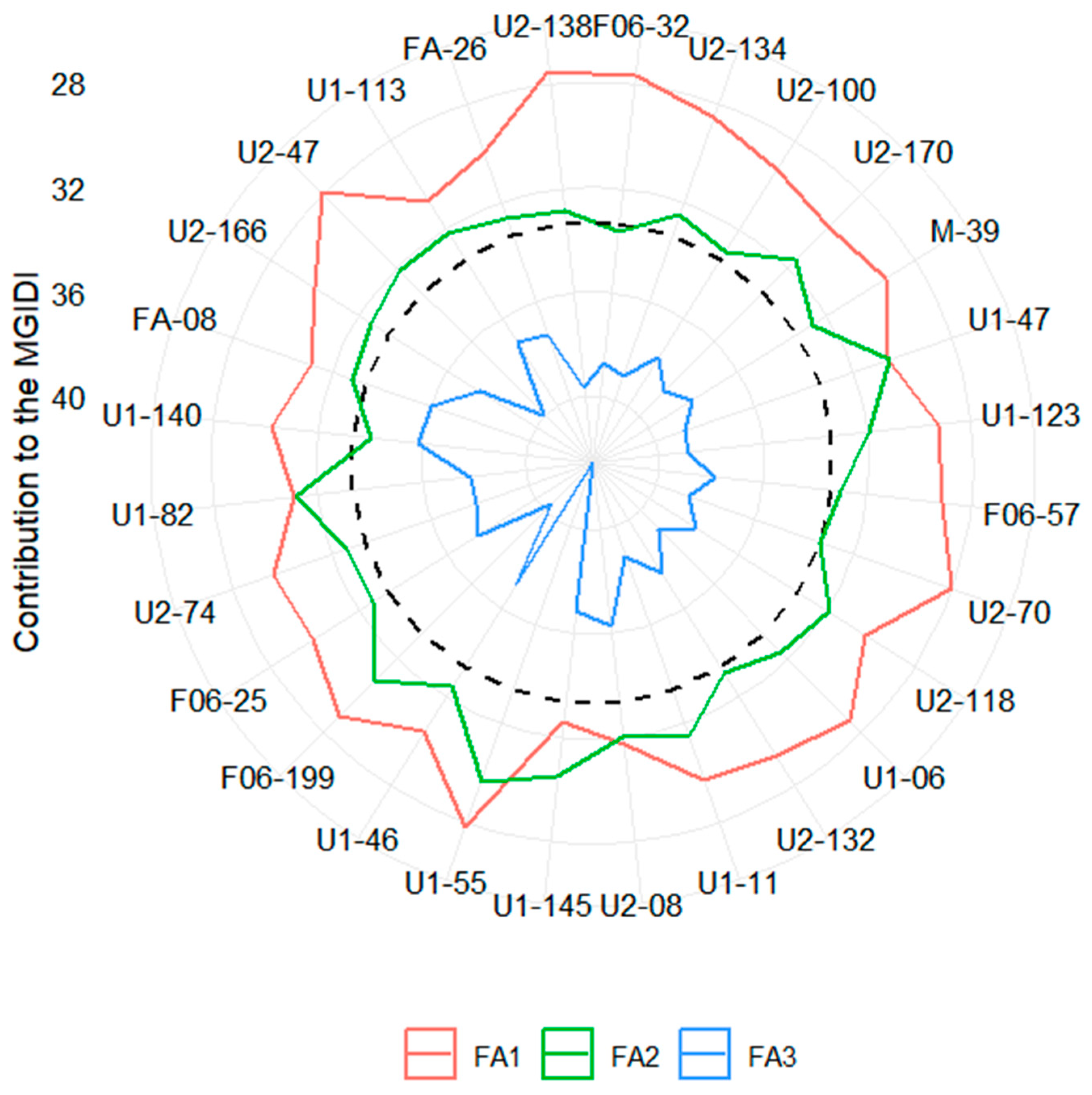
The sweetpotato genotypes F06-32, U2-134, U2-100, U2-170, M-39, U1-47, U1-123, F06-57, U2-70, U2-118, U1-06, U2-132, U1-11, U2-08, U1-145, U1-55, U1-46, F06-199, F06-25, U2-74, U1-82, U1-140, FA-08, U2-166, U2-47, U1-113, FA-26, and U2-138 were selected based on their performance across multiple agronomic traits using the MGIDI (Figure 2). These 28 genotypes were ranked considering both their strengths and weaknesses, and chosen to advance to Stage II of evaluation, prioritizing high anthocyanin content, root yield, and root quality.
Among the genotypes that stood out for FA1 are “U1-145”, “U1-113”, “U1-82”, “U1-47”, and “U2-118”, indicating superiority in the number and productivity of commercial roots. Regarding FA2, which involves the proportion of commercial roots and their appearance, the genotypes “U1-46”, “U1-140”, “F06-32”, “U2-70”, and “U2-132” showed favorable values. The genotype “U1-46” performed well in both FA1 and FA2 (Figure 2), combining good yield with high commercial root quality. Genotypes standing out in FA3, such as “U1-55”, had lower yield performance but excelled in qualitative traits—low incidence of insect damage and intense flesh color—which may be of interest for markets focused on visual and nutritional quality.

3.2. Stage II: Final Selection of Genotypes Based on Productivity and Anthocyanin Content

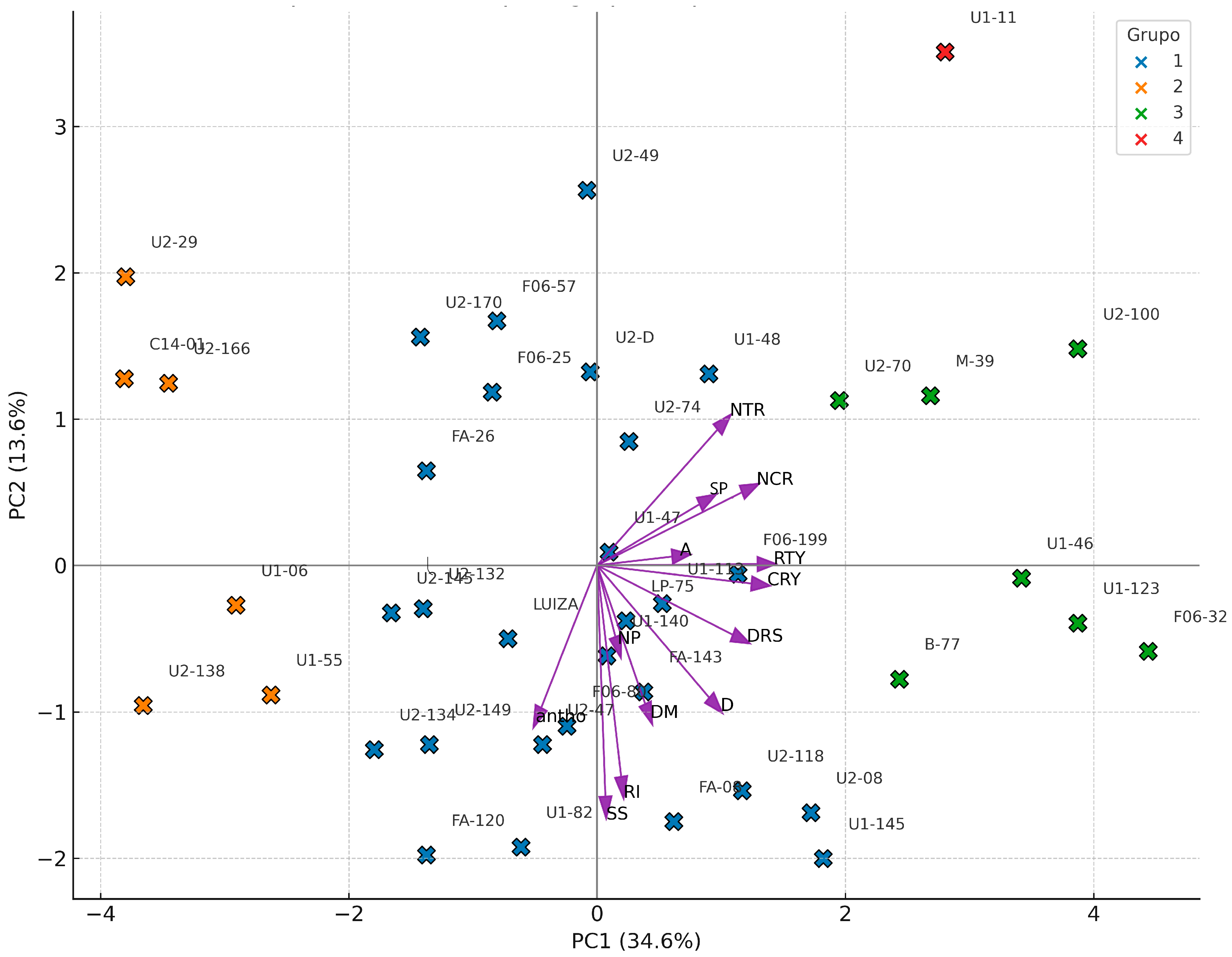
The first two principal components jointly explained 48.2% of the total variance observed—34.6% attributed to the first axis (PC1) and 13.6% to the second (PC2) (Figure 3). The clustering of vectors in the lower-right quadrant indicates a strong positive correlation among traits such as anthocyanin content, soluble solids, dry matter, insect resistance, and number of perforations. This suggests that genotypes located closer to this region share high values for those variables.
Additionally, the vectors for total production, commercial production, total number of roots, and number of commercial roots cluster in the upper-right quadrant and contribute predominantly to the separation along PC1, highlighting their importance for productivity. Traits located close to the genotypes in this region suggest an association with root quality—such as root appearance, root yield, and root distribution in the soil—indicating that visual quality is linked with root emission and distribution in soil. Genotypes such as U2-29, C14-01, and U2-166 stand out by being more distant from the origin in directions aligned, but in opposite quadrants of, the more productive variables, whereas genotypes such as F06-32, U1-123, and U1-46 lie closer to the aforementioned variables, contributing less to the total variance of those variables (Figure 3). This dispersion reflects the phenotypic diversity among genotypes and provides a basis for selecting materials with specific combinations of agronomic and biochemical attributes.
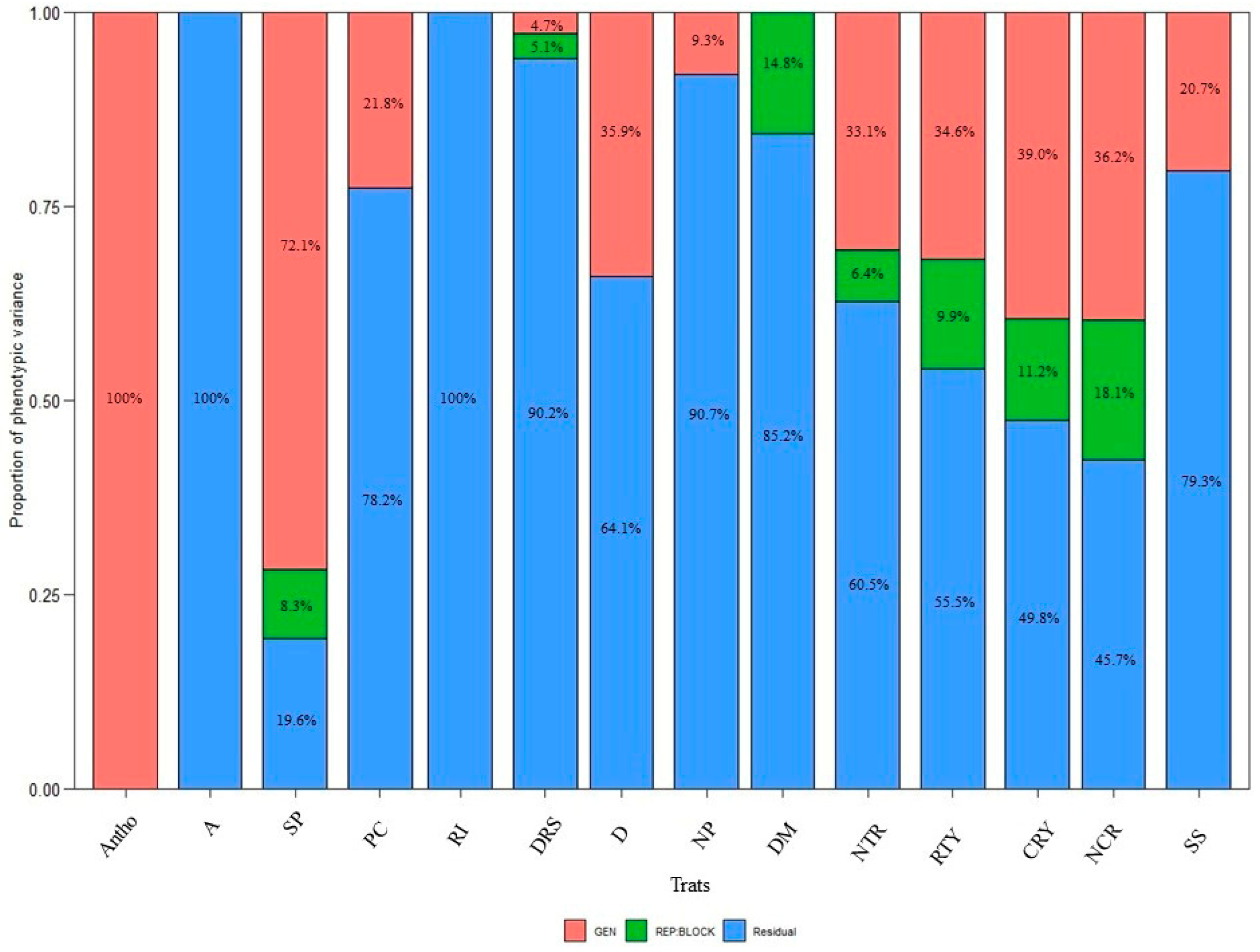
The decomposition of phenotypic variance revealed marked contrasts among the evaluated traits in terms of the proportion attributed to the genotype, environment (block), and residual error (Figure 4). The anthocyanin trait (Antho) showed 100% of its variance assigned to the genotypic factor, reflecting strong genetic control. Trait propagation ability (SP) exhibited 72.1% genotypic variance, whereas insect resistance (RI) displayed a high residual variance.
Among production-related attributes, genotypic variance accounted for 34.6% for total root yield (RTY) and 39.0% for commercial root yield (CRY). In both cases, the residual error fraction exceeded 49%, indicating influence of uncontrolled factors. The trait number of commercial roots (NCR) presented 36.2% of variance explained by genotype and 18.1% by block, suggesting sensitivity to the experimental environment. Soluble solids (SS) had 20.7% of their variance explained by genotype, with 79.3% associated with error. For number of perforations (NP), the genotypic contribution was only 9.3%, with predominance of residual error (90.7%). These results allow the identification of traits with greater potential for direct selection and others, which require tighter experimental control or greater replication to yield reliable data.
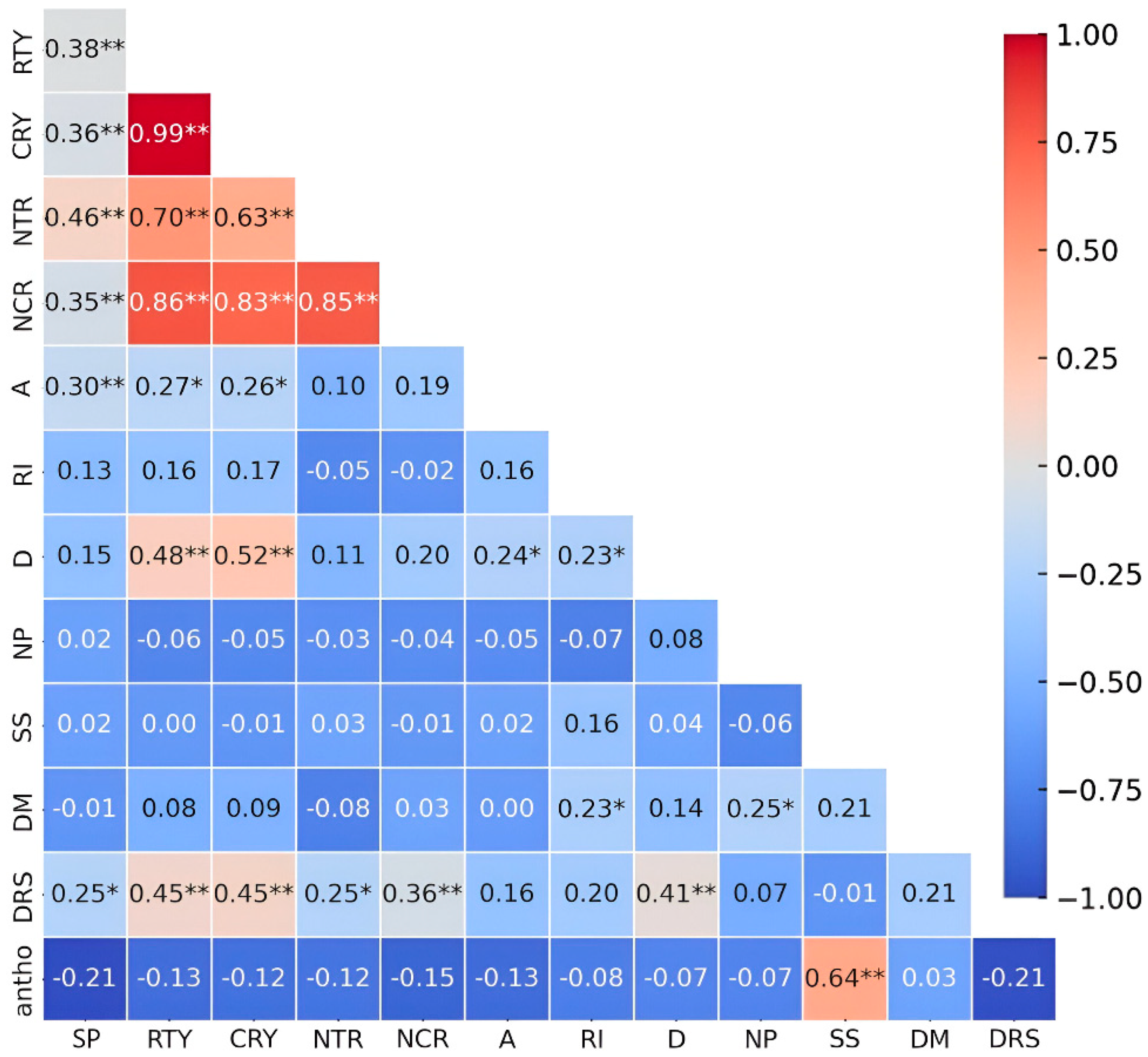
The Spearman correlation analysis among the morpho-agronomic and biochemical traits of purple-fleshed sweetpotato genotypes revealed consistent, statistically significant relationships among traits of breeding interest. Total tuberous root yield had positive correlation with total number of roots (ρ = 0.70 **) and with commercial yield (ρ = 0.99 **), suggesting that selecting genotypes with more root emission also favors overall yield. Positive relationships were also observed between anthocyanin content and soluble solids (ρ = 0.64 **), indicating that genotypes with deeper coloration tend to have higher sugar concentration (Figure 5). On the other hand, total number of roots showed negative correlation with root distribution in soil (ρ = −0.25 *), suggesting that root distribution may influence the total number of roots.
Based on the MGIDI analysis, five factors were retained in Stage II (Table 2). Factor 1 (FA1) grouped traits: total yield of tuberous roots, yield of commercial roots, vine evaluation, root diameter, and root distribution pattern in the soil. Factor 2 (FA2) included root appearance, number of commercial roots, total number of roots, and insect resistance. Factor 3 (FA3) encompassed flesh color and soluble solids content. Factor 4 (FA4) was associated with number of perforations in the roots, and Factor 5 (FA5) comprised dry matter content of commercial roots and anthocyanin content. Among the traits showing the highest percentage gains, the most prominent were total root yield (13.1%), commercial root yield (14.5%), propagation ability (12.8%), and dry matter (9.4%). Traits such as root distribution in the soil, appearance, number of commercial roots, and total number of roots showed gains below 5%. Negative gains were observed for insect resistance (−1.78%) and number of perforations (−1.78%), reflecting the phenotypic pattern of the genotypes selected (Table 2). The traits “number of perforations” and “insect resistance” showed a slight decline (negative gain) and were inversely correlated with production traits (Figure 6). This reflects a common trade-off in plant breeding programs, in which improvements in some traits are offset by declines in others.
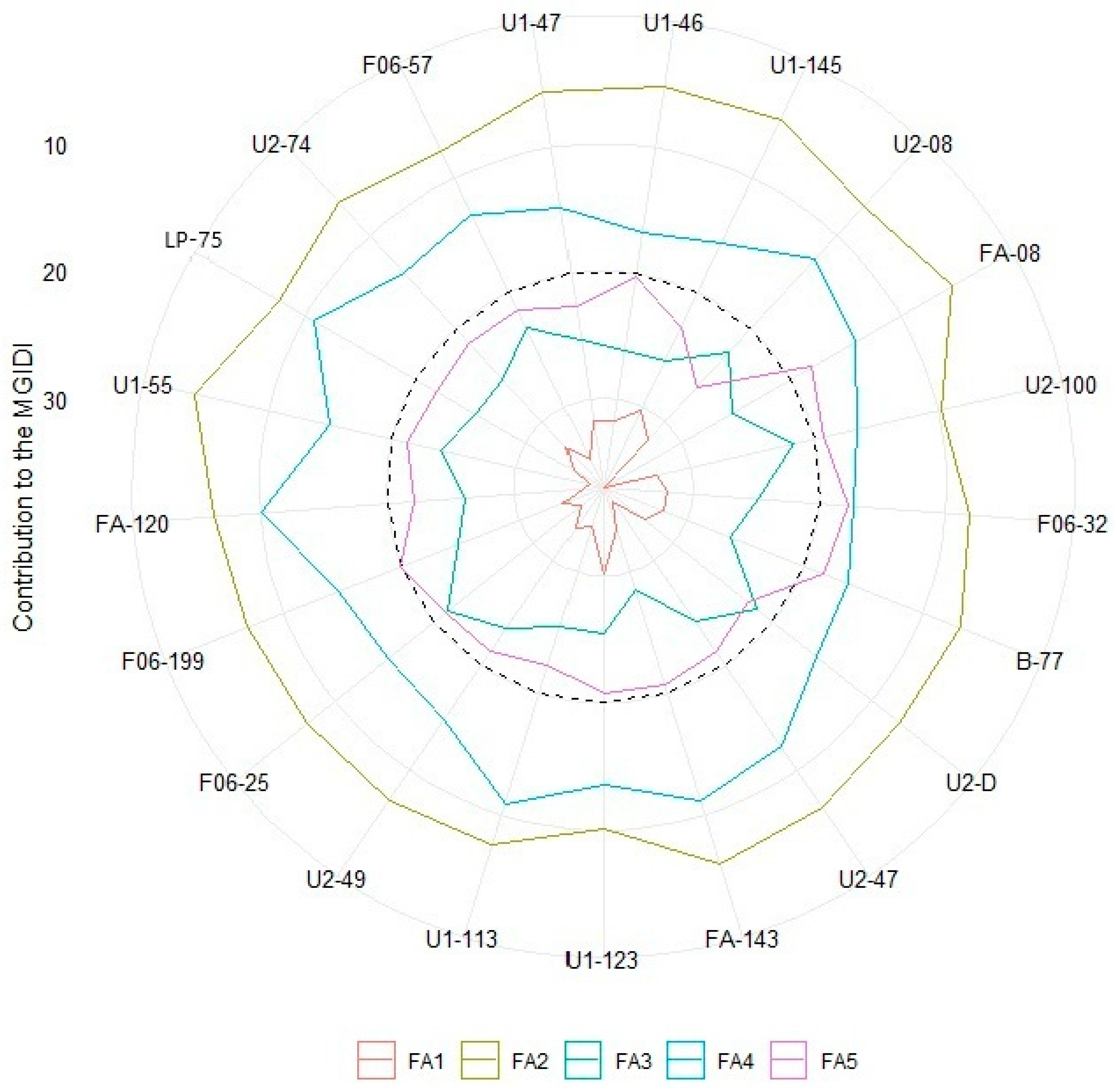
Strengths and weaknesses of the genotypes selected in Stage II were identified along with the commercial check ‘SCS370 Luiza’. The contribution of each factor to the MGIDI was represented proportionally: lower values indicate that the genotype’s trait values are closer to the considered ideotype. The genotypes FA-08, U2-47, U1-55, and F06-57 showed the greatest closeness to the ideotype for the traits grouped under Factor 1, which relate to total and commercial root yield, vine evaluation, and root diameter. The genotype U2-08 stood out for its strong contribution in Factor 5, which includes dry matter content of commercial roots and anthocyanin content.
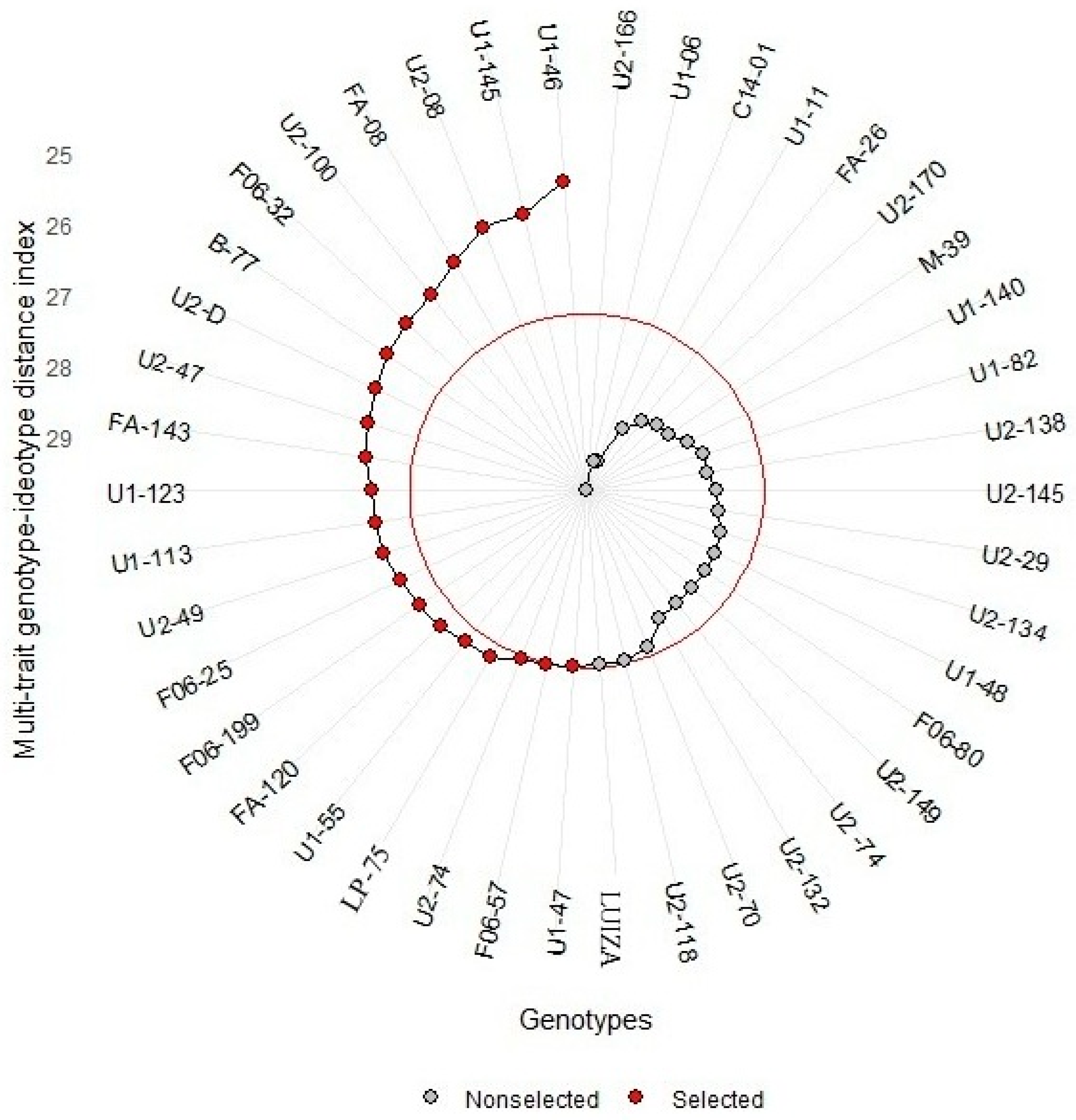
In Stage II, 21 genotypes were selected, representing approximately 50% of the total evaluated. These genotypes had the lowest MGIDI values, indicating shorter distance to the theoretical ideotype when all analyzed traits are considered together. A radial distribution is observed, with a clear concentration of selected genotypes in the central region, close to the cutoff line established by the selection pressure (Figure 7).
In this context, using the MGIDI selection index, 21 purple-fleshed genotypes were selected. The experimental precision, reflected by the coefficient of variation (CV), confirms the accuracy of the experiments, increasing the reliability of the variance component and genetic parameter estimates (Table 3). Greater experimental precision enhances the probability of identifying real differences between treatments, which showed superior production and postharvest characteristics, such as uniform shape, intense red color, high anthocyanin content, good suitability for propagation, high °Brix levels, and insect resistance, among others. Dry matter is an important indicator of the amount of solids present in sweetpotato roots after water removal, with values from 162.9 to 288.6 (DM). Soluble solids, expressed in °Brix, are indicators of the concentration of soluble sugars in sweetpotato roots. This study found genotypes with high °Brix values, indicating a high impact on consumer acceptance, with values for this characteristic reaching 11 and the values for the anthocyanin content characteristic ranging from 0.174 to 0.855 (mg.g−1).
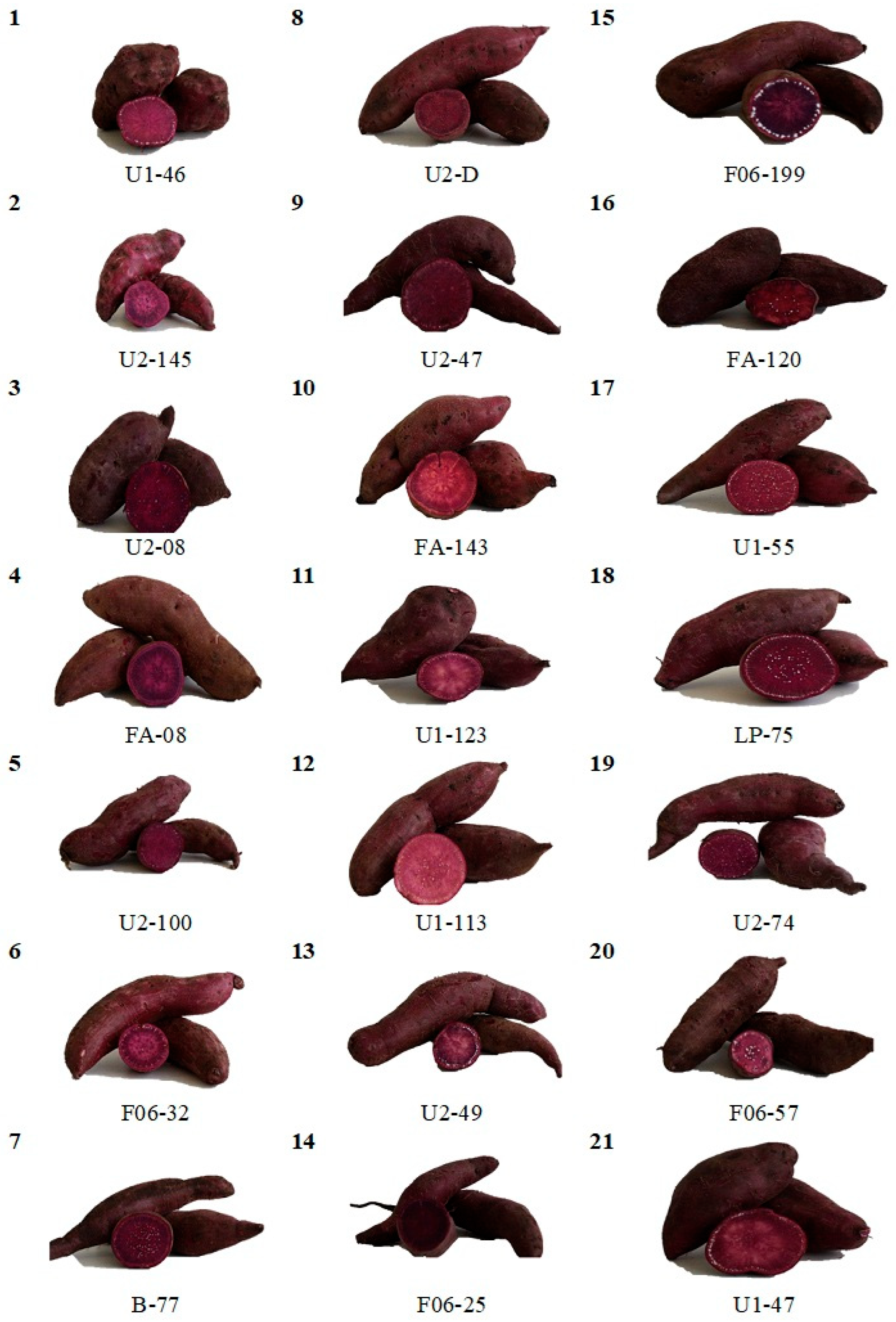
The images of the tuberous roots of the selected genotypes are presented in (Figure 8). According to the ranking by the MGIDI, the U1-46 genotype—with values of 55,000 root total yield (t/ha−1), 53,333 commercial tuberous root yield (t/ha−1), DM of 227.8, and anthocyanin of 0.397 mg.g−1—is in the number one position of the ranking, and the LP-75 genotype—with 19,416 (t/ha−1) and 17,833 (t/ha−1) as root total yield and commercial tuberous root yield values, respectively, as well as an anthocyanin content of 0.570 mg.g−1—is ranked 18th. The set of characteristics presented by the evaluated genotypes are classified according to the theoretical values of the ideotype (Figure 6) to perform the selection ranking.

4. Discussion

The objective of this study was to select and evaluate purple-fleshed sweetpotato genotypes with high anthocyanin content using fourteen morpho-agronomic and physic-chemical quality traits over two experimental cycles, with the aim of expanding the genetic base available for breeding programs. In the first cycle, 1048 experimental genotypes were assessed for agronomic performance, and 28 superior individuals were selected for the second stage. In Stage II, those 28 genotypes were re-evaluated together with 12 additional genotypes from the breeding program (a total of 40). At the end of this process, 21 genotypes were selected, combining desirable agronomic, commercial, and functional traits, forming a promising cohort for advanced evaluations and for the development of biofortified cultivars.
Marked climatic differences were evident between the two experimental stages. In Stage I, high precipitation occurred toward the end of the cycle—well above the region’s historical average—and in Stage II, heavy rains were concentrated at the beginning of the cycle, along with several days at the end with minimum temperatures below the sweetpotato base temperature [11]. These results suggest that the experimental genotypes may exhibit tolerance to adverse climatic conditions (Figure 1), maintaining good productivity and desirable traits even under these stresses. Considering that the experiments were conducted in a coastal area of Santa Catarina, where high relative humidity and climatic variability are recurring factors, selecting genotypes adapted to these conditions is especially important [11]. The consistent performance of the selected individuals indicates that they could be used not only as potential cultivars for direct cultivation, but also as genetic sources for future crosses, aimed at increasing the crop’s resilience under edaphoclimatic variation.
The use of the strengths-and-weaknesses graph allowed an integrated visualization of each genotype’s performance in relation to the theoretical ideotype, helping to identify priority traits and guide selection strategies (Figure 2 and Figure 6). This graphical representation is particularly effective in breeding programs with multiple traits, as it facilitates choosing genotypes with agronomic balance, avoiding individuals that perform extremely well in one trait but poorly in others of equal importance [5,14]. Seeking balanced genotypes is fundamental in multivariate selection contexts, where simultaneous progress in productivity, root quality, and functional attributes is required. In this regard, the use of the MGIDI offers clear advantages by integrating information of different natures into a single value taking into account the desired ideotype profile.
This approach helps mitigate the risks of asymmetric progress or undesirable imbalances, such as selecting materials with high productivity but poor visual or sensory quality. Recent studies show that indices like MGIDI are more effective for identifying promising genotypes compared to selection based on individual traits, because they minimize conflicts among negatively correlated variables and optimize overall genetic progress [14]. In addition, this approach allows the identification of genotypes with superior and stable performance across different environments, enhancing their recommendation potential for diverse production systems.
In the present study, genotypes selected via the MGIDI demonstrated superior performance across multiple traits, particularly those that combine productive attributes with quality and functionality, such as FA-08, U2-08, and U1-46. These results underscore the importance of employing multivariate tools in purple-fleshed sweetpotato breeding programs, especially when objectives encompass multiple agronomic and market demands. Genotypes such as U1-55 and U2-08 stood out for flesh coloration and anthocyanin content, respectively, suggesting their potential for markets oriented toward visual appeal and functional properties. However, their reduced performance in productivity-related traits limits their use in broad commercial systems. This highlights the necessity of balancing nutritional quality attributes with agronomic performance to satisfy both consumer demand and producer interests.
Estimated genetic gains were strongly positive in the first cycle and remained meaningful in the second, albeit with reduced magnitude. For example, flesh color increased by 40.6% in the first cycle and 3.06% in the second (Table 1 and Table 2), showing favorable response to early selection. Because flesh pigmentation is associated with anthocyanin presence, bioactive compounds recognized for their antioxidant properties and benefits to human health [8], incorporating this trait into the breeding program adds functional value to the final product [5]. Studies assessing the same traits reported values of 13.52 for the first cycle and 3.67 for the second cycle [5].
The difference between cycles can be attributed to the experimental strategy adopted. In the first cycle, the base population was broad and highly segregated, with greater genetic variability for flesh color, which enabled substantial gains through initial selection. In the second cycle, evaluation was limited to 40 previously selected genotypes, reducing the phenotypic range for that trait within the elite group. Consequently, estimated gains were more modest, reflecting the lower residual variation for flesh color within that group of elite genotypes. This behavior is expected in advanced selection stages, when the focus turns toward consolidation of superior genotypes and toward balanced combination of multiple traits [5].
Among the agronomic traits, the percentage gains exceeding 100% in both the number and productivity of commercial roots during Stage I (Table 1) indicate high genetic variability and the effectiveness of multivariate selection. This finding is especially relevant for the economic sustainability of the crop, since genotypes with high commercial root exploitation reduce harvest losses and improve cultivation efficiency [5].
Multivariate analyses also revealed positive contributions from traits such as root appearance, insect resistance, number of perforations, and soluble solids content toward distinguishing superior genotypes. Root appearance is directly linked to commercial attractiveness, reflecting attributes like uniform shape and lack of defects; insect resistance and the number of perforations serve as indicators of tuber health and post-harvest preservation potential. When these traits are combined with high yields, they increase market value of the selected genotypes [14].
Root resistance to soil-insect attack is a critical component in evaluating sweetpotato genotypes, especially in production systems where chemical control is limited or undesirable [5,31]. This trait is directly linked to tuber health, post-harvest preservation, and root appearance—attributes valued by both consumers and the production sector. Genotypes exhibiting lower incidence of root damage tend to better maintain appearance and structural integrity and suffer less deterioration during storage and transport. Moreover, insect resistance contributes to reducing economic losses and promotes more sustainable production systems, with less dependence on agrochemicals [32]. The results of this study reinforce the importance of considering root insect resistance as a complementary criterion in multivariate selection, increasing the likelihood of successfully recommending genotypes adapted to real growing conditions and market demands [5,14].
Soluble solid content, in turn, is a trait valued both for home consumption and for processed products, contributing to perceived sweetness and the sensory quality of tuberous roots [33]. This attribute is closely associated with market acceptance because it directly influences flavor and perceived nutritional value, making it important across different segments including school feeding programs, the food industry, and specialty markets. Dry matter, which like soluble solids was included in the Stage II evaluation, is another key component because it is related to starch content and root texture, influencing industrial yield and culinary acceptance [5,14]. Moreover, this parameter serves as an indirect indicator of energetic density of the tuberous roots and their suitability for products such as flour, chips, and purees. Because it is influenced by both genetic and environmental factors, dry matter should be assessed across multiple seasons to select genotypes with greater phenotypic stability [34]. The combined set of these attributes underscores the need for integrated selection, based on multiple agronomic, sensory, and functional variables. The use of multivariate tools such as MGIDI contributes to this process by enabling the identification of genotypes with balanced performance, optimizing simultaneous combination of productivity, quality, and biochemical composition [14].
Table 1 further reveals substantial gains for total number of roots (46.4%), total root yield (90.6%), dry matter content (33.5%), and root appearance (41.4%). These results indicate that the genotypes selected already exhibited a favorable combination of productive and qualitative attributes from the first stage. In Stage II (Table 2), the gains for total yield (13.1%), commercial productivity (14.5%), and root diameter (6.21%) confirm that the productive potential of the selected genotypes was maintained. Moreover, selection yielded increases in anthocyanin content (3.06%) and soluble solids (3.72%), suggesting that simultaneous improvement in yield and biochemical quality is attainable using multivariate strategies.
The selected genotypes (Table 3) show total and commercial root yields above 40 tons (e.g., U1-46, U2-100, F06-32, and U1-123), values far exceeding the average productivity levels reported for the species in Brazil [12]. In addition, they exhibit high propagation aptitude, enabling abundant availability of vine cuttings from these genotypes for field establishment in commercial plantings. The intense purple coloration observed in genotypes U1-145, U2-08, FA-08, F06-199, and FA-120 suggests high anthocyanin content in the evaluated sweetpotatoes. Furthermore, soluble solid values in genotypes like U1-145, F06-32, U2-100, and U1-123, as an important quality trait, support their suitability for both processing industries and fresh markets.
The consistency of the experimental results, as reflected by the coefficient of variation (CVe), strengthens data quality and the credibility of the variance component and genetic parameter estimates (Table 3). A well-executed trial with high precision increases the likelihood of detecting genuine treatment effects [35]. The analysis of variance indicates that the substantial phenotypic variation is primarily of genetic origin [36].
The application of the MGIDI in both stages of this study enabled simultaneous gains across multiple traits, yielding higher efficiency than observed in univariate methods [14]. By accounting for correlations among traits and the distance to the multivariate ideotype, this tool allows more balanced selection, integrating quality and productivity into a unified analysis [28]. The marked response obtained for NCR (number of commercial roots) and CRY (commercial root yield) aligns with other studies that applied MGIDI in segregating populations with high genetic variability [14,37]. Furthermore, including biochemical traits in the selection matrix increased the discriminative power among genotypes, fostering consistent advances in the functional attributes of interest.
Spearman correlation and principal component analyses revealed significant relationships between morpho-agronomic and biochemical traits, enhancing understanding of the superiority of genotypes selected in Stage II. A positive correlation was noted between anthocyanin content and soluble solids (ρ = 0.64 **), suggesting that more intensely pigmented roots also tend to exhibit greater sweetness (Figure 5). This pattern is consistent with the literature that links anthocyanin biosynthesis to the presence of soluble sugars in plant tissues [38]. Genotypes such as U2-08 and U1-55 illustrate this convergence, combining high anthocyanin levels and high soluble solids. Despite an average performance in yield, the functional profile of these genotypes underscores their potential as parents in crosses aimed at enhancing sensory and nutritional values. The correlation between insect resistance (RI) and root distribution in the soil (DRS), though moderate (ρ = 0.41 **), suggests a possible interaction between root architecture and tuber health, with implications for post-harvest preservation.
The PCA (Figure 3) confirmed clusters in which U1-82 was located close to the vectors for anthocyanin content, dry matter, and soluble solids, whereas FA-08, F06-47, and U1-46 aligned with productivity traits such as RTY, CRY, NCR, and NTR. This demonstrates a functional–productive gradient, with genotypes occupying distinct positions along the PC1 axis. That diversity also indicates that the selection favored genotypes with complementary profiles. FA-08 and U1-46 stood out in yield, making them suitable for commercial cultivation. Meanwhile, U2-08 and U1-55, being less productive, concentrate desirable biochemical characteristics, which are useful in targeted crosses. The complementarity of these profiles strengthens the breeding program by expanding usage options.
Root appearance showed a positive correlation with RTY and CRY, reinforcing that, in order to achieve good commercial productivity, roots must also have good visual appearance. Conversely, the number of perforations, which shows a negative correlation with appearance (ρ = −0.05), underlines the impact of damage on commercial acceptance (Figure 7). These findings validate multivariate selection as an efficient tool to identify favorable combinations among yield, health, visual quality, and functionality [39].
The pattern of observed phenotypic correlations suggests that even in the presence of antagonisms between traits, genetic advance can be maintained via indices integrating multiple selection dimensions. This approach is particularly useful when simultaneous gains in productivity and quality are sought, as in purple-fleshed sweetpotato. The consistency of results across both cycles reinforces the applicability of multivariate methods and their suitability for use in different phases of a breeding program, from early selection to agronomic validation.
Overall, the results of this study show that integrating multivariate methods, such as MGIDI, together with evaluation of agronomic, functional, and quality attributes constitutes a robust strategy for selecting purple-fleshed sweetpotato genotypes [40]. The multivariate approach offered by MGIDI surpasses traditional selection methods, allowing for more consistent genetic improvements and the identification of genotypes with higher agronomic performance [14].
The identification of 21 superior individuals, combining productivity, stability, and high anthocyanin content, represents a concrete advance in broadening the genetic base available for biofortification breeding programs. These genotypes, by combining consistent agronomic performance with functional quality, have potential to meet both the demands of the productive sector and the expectations of consumers and the food industry. Furthermore, they serve as genetic sources for future crosses, contributing to the sustainability and diversification of the crops across different environments. In this respect, the present work reinforces the importance of integrated selection strategies to accelerate the development of biofortified sweetpotato cultivars adapted to tropical and subtropical conditions.

5. Conclusions

The selection program for purple-fleshed sweetpotato conducted over two experimental cycles enabled the identification of 21 superior genotypes—U1-46, U1-145, U2-08, FA-08, U2-100, F06-32, B-77, U2-D, U2-47, FA-143, U1-123, U1-113, U2-49, F06-25, F06-199, FA-120, U1-55, LP-75, U2-74, F06-57, and U1-47—combining high productivity, commercial root quality, and elevated levels of anthocyanins. The application of the MGIDI proved effective in integrating multiple traits and promoting simultaneous gains in agronomic and quality variables, even under adverse climatic conditions, indicating the potential of these materials both for direct use as cultivars and as genetic sources in future crosses. These results underscore the utility of multivariate selection in breeding programs, enabling balanced advances in yield, appearance, and root health, together with functional attributes tied to intense pulp pigmentation and higher anthocyanin concentration, allied to good propagation ability. Collectively, the 21 selected genotypes broaden the genetic base available for biofortification of the species and represent promising alternatives for multi-environment validation, aiming at the development and recommendation of cultivars adapted to tropical and subtropical conditions.

Author Contributions

J.A.B.G.: Writing—Review and Editing, Writing—Original Draft, Methodology, Investigation. A.J.R.: Writing—Review and Editing, Writing—Original Draft, Methodology, Investigation. D.B.: Writing—Review and Editing, Writing—Original Draft, Methodology, Investigation. E.P.G.: Writing—Review and Editing, Writing—Original Draft, Methodology, Investigation. J.G.: Writing—Review and Editing, Writing—Original Draft, Methodology, Investigation. T.O.: Writing—Review and Editing, Writing—Original Draft, Methodology, Investigation. A.R.Z.: Writing—Review and Editing, Visualization, Validation, Resources, Project Administration, Investigation, Funding Acquisition, Data Curation, Conceptualization. All authors have read and agreed to the published version of the manuscript.

Funding

This research received no external funding.

Data Availability Statement

The original contributions presented in this study are included in the article. Further inquiries can be directed to the corresponding author(s).

Acknowledgments

The authors thank the “Coordenação de Aperfeiçoamento de Pessoal de Nível Superior” (CAPES) for its support through a scholarship granted to the first author (Process No. 88887.712126/2022-00), and for the scholarship from the “Programa Institucional de Doutorado Sanduíche no Exterior” (PDSE) grant 26/2024 (Process No. 23038.003930/2024-79). The authors also acknowledge the Plant Morphogenesis and Biochemistry Laboratory, Federal University of Santa Catarina, Florianopolis, Brazil.

Conflicts of Interest

The authors declare no conflict of interest.

References

  1. Galvao, A.C.; Nicoletto, C.; Zanin, G.; Vargas, P.F.; Sambo, P. Nutraceutical Content and Daily Value Contribution of Sweet Potato Accessions for the European Market. Horticulturae 2021, 7, 23. [Google Scholar] [CrossRef]
  2. Jha, A.B.; Warkentin, T.D. Biofortification of Pulse Crops: Status and Future Perspectives. Plants 2020, 9, 73. [Google Scholar] [CrossRef]
  3. Dhaliwal, S.S.; Sharma, V.; Shukla, A.K.; Verma, V.; Kaur, M.; Shivay, Y.S.; Nisar, S.; Gaber, A.; Brestic, M.; Barek, V.; et al. Biofortification—A Frontier Novel Approach to Enrich Micronutrients in Field Crops to Encounter the Nutritional Security. Molecules 2022, 27, 1340. [Google Scholar] [CrossRef]
  4. Loureiro, M.P.; da Cunha, L.R.; Nastaro, B.T.; dos Santos Pereira, K.Y.; de Lima Nepomoceno, M. Biofortificação de alimentos: Problema ou solução? Segurança Aliment. Nutr. 2018, 25, 66–84. [Google Scholar] [CrossRef]
  5. Leal, M.H.S.; Silva Júnior, A.D.; De Pieri, J.R.S.; Toroco, B.D.R.; Oliveira, G.J.A.; Leal, J.L.P.; Olivoto, T.; Silva, E.H.C.; Zeist, A.R. Multi-Trait Selection for Mean Performance and Stability in Purple-Fleshed Sweet Potato. S. Afr. J. Bot. 2024, 174, 571–579. [Google Scholar] [CrossRef]
  6. de Andrade, E.K.V.; de Andrade Júnior, V.C.; de Laia, M.L.; Fernandes, J.S.C.; Oliveira, A.J.M.; Azevedo, A.M. Genetic Dissimilarity among Sweet Potato Genotypes Using Morphological and Molecular Descriptors. Acta Scientiarum. Agron. 2017, 39, 447–455. [Google Scholar] [CrossRef]
  7. FAO. Frutas y Verduras—Esenciales en tu Dieta; FAO: Rome, Italy, 2020; ISBN 978-92-5-133713-4. [Google Scholar]
  8. Pazos, J.; Zema, P.; Corbino, G.B.; Gabilondo, J.; Borioni, R.; Malec, L.S. Growing Location and Root Maturity Impact on the Phenolic Compounds, Antioxidant Activity and Nutritional Profile of Different Sweet Potato Genotypes. Food Chem. Mol. Sci. 2022, 5, 100125. [Google Scholar] [CrossRef] [PubMed]
  9. Katayama, K.; Kobayashi, A.; Sakai, T.; Kuranouchi, T.; Kai, Y. Recent Progress in Sweetpotato Breeding and Cultivars for Diverse Applications in Japan. Breed. Sci. 2017, 67, 3–14. [Google Scholar] [CrossRef] [PubMed]
  10. Roullier, C.; Rossel, G.; Tay, D.; McKey, D.; Lebot, V. Combining Chloroplast and Nuclear Microsatellites to Investigate Origin and Dispersal of New World Sweet Potato Landraces. Mol. Ecol. 2011, 20, 3963–3977. [Google Scholar] [CrossRef]
  11. Gonzalez, J.A.B.; Gelsleichter, A.; Galina, J.; Silva, A.; Ribeiro, A.J.; Silva Júnior, A.D.; Guesser, S.; Zeist, A.R. Selection of Superior Sweet Potato Genotypes in the Autumn-Winter of Great Florianopolis. Hortic. Bras. 2025, 43, e286344. [Google Scholar] [CrossRef]
  12. Perrud, A.C.; Zeist, A.R.; Silva Júnior, A.D.; Leal, M.H.S.; de Pieri, J.R.S.; Rodrigues Júnior, N.; Oliveira, G.J.A.; Garcia Neto, J.; Rech, C.; Marian, F. Adaptability and Stability of Sweet Potato Genotypes in Western São Paulo. Hortic. Bras. 2024, 42, e284621. [Google Scholar] [CrossRef]
  13. Ngailo, S.; Shimelis, H.; Sibiya, J.; Mtunda, K.; Mashilo, J. Genotype-by-Environment Interaction of Newly-Developed Sweet Potato Genotypes for Storage Root Yield, Yield-Related Traits and Resistance to Sweet Potato Virus Disease. Heliyon 2019, 5, e01448. [Google Scholar] [CrossRef]
  14. Silva Junior, A.D.; Gomes, C.N.; Albuquerque, D.P.; Da Silva Oliveira, F.A.; Gomes, J.L.; De Melo, L.D.R.S.; Vargas, P.F.; Olivoto, T.; Zeist, A.R. Estimation of Genetic Parameters and Use of Selection Indices in the Identification of Superior Sweet Potato Genotypes. Euphytica 2025, 221, 60. [Google Scholar] [CrossRef]
  15. Carbajal-Friedrich, A.A.J.; Burgess, A.J. The Role of the Ideotype in Future Agricultural Production. Front. Plant Physiol. 2024, 2, 1341617. [Google Scholar] [CrossRef]
  16. Su, X.; Griffin, J.; Xu, J.; Ouyang, P.; Zhao, Z.; Wang, W. Identification and Quantification of Anthocyanins in Purple-Fleshed Sweet Potato Leaves. Heliyon 2019, 5, e01964. [Google Scholar] [CrossRef]
  17. Wang, L.-S.; Stoner, G.D. Anthocyanins and Their Role in Cancer Prevention. Cancer Lett. 2008, 269, 281–290. [Google Scholar] [CrossRef] [PubMed]
  18. Xu, J.; Su, X.; Lim, S.; Griffin, J.; Carey, E.; Katz, B.; Tomich, J.; Smith, J.S.; Wang, W. Characterisation and Stability of Anthocyanins in Purple-Fleshed Sweet Potato P40. Food Chem. 2015, 186, 90–96. [Google Scholar] [CrossRef]
  19. Qin, Y.; Naumovski, N.; Ranadheera, C.S.; D’Cunha, N.M. Nutrition-Related Health Outcomes of Sweet Potato (Ipomoea batatas) Consumption: A Systematic Review. Food Biosci. 2022, 50, 102208. [Google Scholar] [CrossRef]
  20. Bach, D.; Bedin, A.C.; Lacerda, L.G.; Nogueira, A.; Demiate, I.M. Sweet Potato (Ipomoea batatas L.): A Versatile Raw Material for the Food Industry. Braz. Arch. Biol. Technol. 2021, 64, e21200568. [Google Scholar] [CrossRef]
  21. Alvares, C.A.; Stape, J.L.; Sentelhas, P.C.; de Moraes Gonçalves, J.L.; Sparovek, G. Köppen’s Climate Classification Map for Brazil. Meteorol. Z. 2013, 22, 711–728. [Google Scholar] [CrossRef]
  22. EMBRAPA. Sistema Brasileiro de Classificação de Solos; Embrapa: Brasília, Brazil, 2018; ISBN 978-85-7035-800-4. [Google Scholar]
  23. Zeist, A.R.; Carbonera, M.Z.; Rech, C.; Oliveira, G.J.A.; Toroco, B.R.; Silva Júnior, A.D.; Garcia Neto, J.; Leal, M.H.S. Soaking Time in Sulfuric Acid to Overcome Sweet Potato Seeds Dormancy. Hortic. Bras. 2024, 42, e2560. [Google Scholar] [CrossRef]
  24. Cordeiro, C.F.D.S.; Echer, F.R.; Batista, G.D.; Fernandes, A.M. Sweet Potato Yield and Quality as a Function of Phosphorus Fertilization in Different Soils. Rev. Bras. Eng. Agríc. Ambient. 2023, 27, 487–495. [Google Scholar] [CrossRef]
  25. Fernandes, A.M.; Ribeiro, N.P. Mineral nutrition and fertilization of sweet potato. Científica 2020, 48, 325–338. [Google Scholar] [CrossRef]
  26. Giusti, M.M.; Wrolstad, R.E. Characterization and Measurement of Anthocyanins by UV-Visible Spectroscopy. Curr. Protoc. Food Anal. Chem. 2001, 1, 1–13. [Google Scholar] [CrossRef]
  27. Nunes, A.; Azevedo, G.Z.; Santos, B.R.D.; Liz, M.S.M.D.; Schneider, F.S.D.S.; Rodrigues, E.R.D.O.; Moura, S.; Maraschin, M. A Guide for Quality Control of Honey: Application of UV–Vis Scanning Spectrophotometry and NIR Spectroscopy for Determination of Chemical Profiles of Floral Honey Produced in Southern Brazil. Food Humanit. 2023, 1, 1423–1435. [Google Scholar] [CrossRef]
  28. Olivoto, T.; Diel, M.I.; Schmidt, D.; Lúcio, A.D. MGIDI: A Powerful Tool to Analyze Plant Multivariate Data. Plant Methods 2022, 18, 121. [Google Scholar] [CrossRef]
  29. R Core Team R: O Projeto R Para Computação Estatística. Available online: https://www.r-project.org/ (accessed on 12 May 2025).
  30. Paredes, P.; López-Urrea, R.; Martínez-Romero, Á.; Petry, M.; Cameira, M.D.R.; Montoya, F.; Salman, M.; Pereira, L.S. Estimating the Lengths of Crop Growth Stages to Define the Crop Coefficient Curves Using Growing Degree Days (GDD): Application of the Revised FAO56 Guidelines. Agric. Water Manag. 2025, 319, 109758. [Google Scholar] [CrossRef]
  31. da Silva Nóbrega, D.; Peixoto, J.R.; Vilela, M.S.; da Silva Nóbrega, A.K.; Santos, E.C.; Costa, A.P.; Carmona, R. Yield and Soil Insect Resistance in Sweet Potato Clones. Biosci. J. 2019, 35, 1773–1779. [Google Scholar] [CrossRef]
  32. Liu, X.; Wang, Y.; Zhu, H.; Mei, G.; Liao, Y.; Rao, S.; Li, S.; Chen, A.; Liu, H.; Zeng, L.; et al. Natural Allelic Variation Confers High Resistance to Sweet Potato Weevils in Sweet Potato. Nat. Plants 2022, 8, 1233–1244. [Google Scholar] [CrossRef]
  33. Rosero, A.; Pastrana, I.; Martínez, R.; Perez, J.-L.; Espitia, L.; Araujo, H.; Belalcazar, J.; Granda, L.; Jaramillo, A.; Gallego-Castillo, S. Nutritional Value and Consumer Perception of Biofortified Sweet Potato Varieties. Ann. Agric. Sci. 2022, 67, 79–89. [Google Scholar] [CrossRef]
  34. Rahajeng, W.; Restuono, J.; Indriani, F.C.; Purwono, P. Evaluation of Promising Sweet Potato Clones for Higher Root Yield and Dry Matter Content. Planta Trop. 2021, 9, 42–47. [Google Scholar] [CrossRef]
  35. Makhubu, F.N.; Laurie, S.M.; Rauwane, M.E.; Figlan, S. Trends and Gaps in Sweet Potato (Ipomoea batatas L.) Improvement in Sub-Saharan Africa: Drought Tolerance Breeding Strategies. Food Energy Secur. 2024, 13, e545. [Google Scholar] [CrossRef]
  36. Ebem, E.C.; Afuape, S.O.; Chukwu, S.C.; Ubi, B.E. Genotype × Environment Interaction and Stability Analysis for Root Yield in Sweet Potato [Ipomoea batatas (L.) Lam]. Front. Agron. 2021, 3, 665564. [Google Scholar] [CrossRef]
  37. Silva, É.M.D.; Guedes, M.L.; Crispim Filho, A.J.; Ciappina, A.L.; Reis, E.F.D.; Resende, M.P.M. Genetic Parameters and Selection for Multiple Traits in Recurrent Selection Populations of Maize. Rev. Ceres 2023, 70, 81–90. [Google Scholar] [CrossRef]
  38. Jin, Z.; Wang, Y.; Si, C.; Kumar, S.; Nie, L.; Khan, M.N. Effects of Shading Intensities on the Yield and Contents of Anthocyanin and Soluble Sugar in Tubers of Purple Sweet Potato. Crop Sci. 2023, 63, 3013–3024. [Google Scholar] [CrossRef]
  39. Ouattara, F.; Agre, P.A.; Adejumobi, I.I.; Akoroda, M.O.; Sorho, F.; Ayolié, K.; Bhattacharjee, R. Multi-Trait Selection Index for Simultaneous Selection of Water Yam (Dioscorea alata L.) Genotypes. Agronomy 2024, 14, 128. [Google Scholar] [CrossRef]
  40. Debnath, P.; Chakma, K.; Bhuiyan, M.S.U.; Thapa, R.; Pan, R.; Akhter, D. A Novel Multi Trait Genotype Ideotype Distance Index (MGIDI) for Genotype Selection in Plant Breeding: Application, Prospects, and Limitations. Crop Des. 2024, 3, 100074. [Google Scholar] [CrossRef]
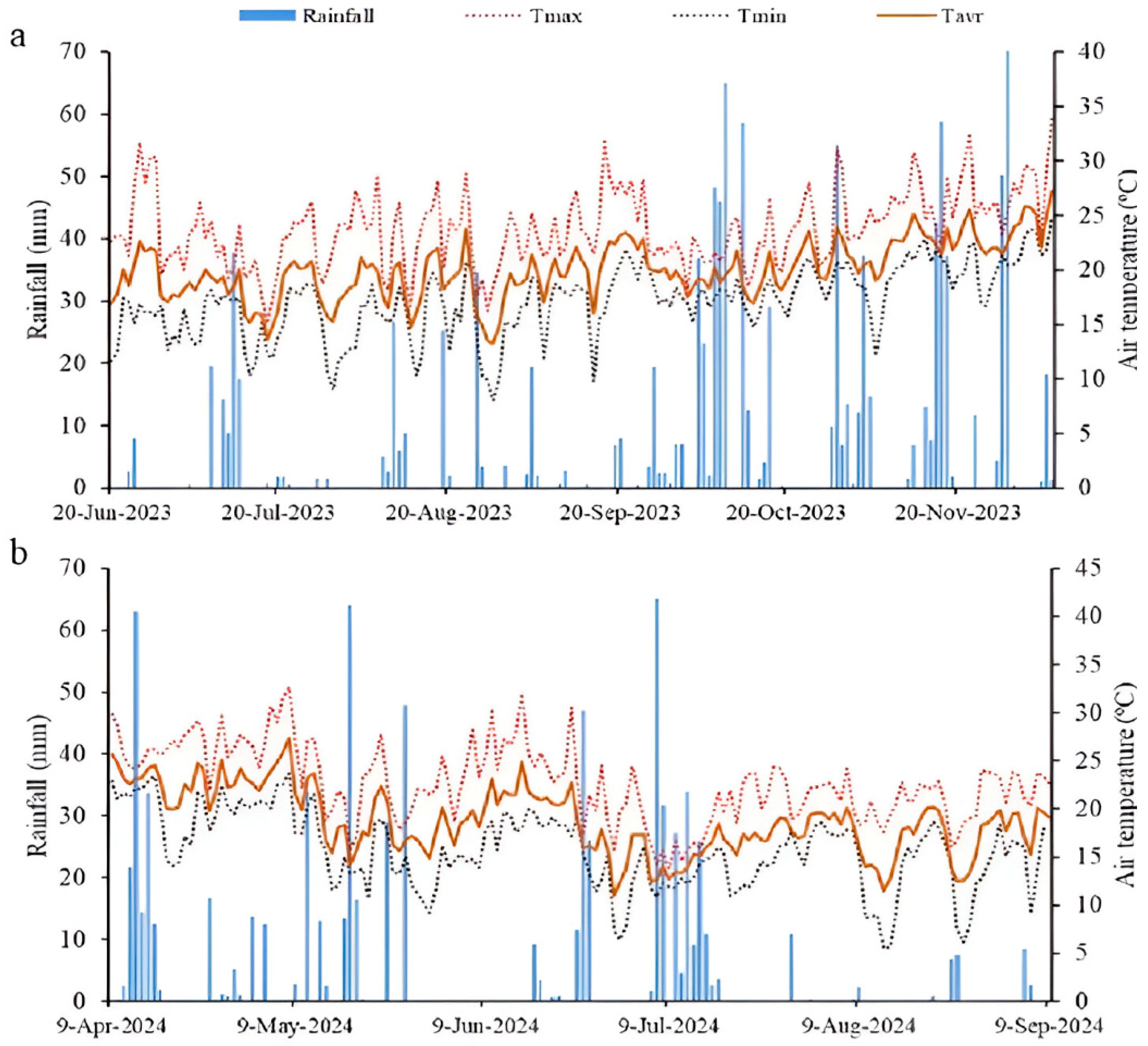
Figure 1. Monthly precipitation and maximum (Tmax), minimum (Tmin), and average (Tavr) temperatures. Experimental period for the cultivation of purple-fleshed sweetpotato genotypes during Step I: pre-selection of genotypes 2023 (a) and Step II: evaluation and selection of superior genotypes 2024 (b) in the Grande Florianopolis region. UFSC, 2024.
Horticulturae 11 01486 g001
Figure 2. Strengths and weaknesses of 28 genotypes selected in Stage I based on the decomposition of the MGIDI in three factors. The smaller the relative contribution of a factor (the closer to the external edge), the closer the ideotype is to the characteristics associated with that factor. The traced line represents the expected contribution if all factors have equal weight and no index. The black dashed line represents the theoretical values of the ideal ideotype, which were recorded in MGIDI.
Horticulturae 11 01486 g002
Figure 3. Biplot displays a principal component analysis (PCA) based on 13 morpho-agronomic and biochemical traits, evaluated across 40 experimental purple-fleshed sweetpotato genotypes in Stage II of selection. RTY = total production of tuberous roots, CRY = production of commercial roots, SP = suitability for propagation, D = diameter, DRS = distribution of root in the soil, A = root appearance, NCR = number of commercial roots, NTR = total number of roots, RI = resistance to insects, SS = solid solids, NP = number of perforations, DM = % dry matter of commercial root, and Antho = anthocyanin.
Horticulturae 11 01486 g003
Figure 4. Proportion of phenotypic variance accounted for by genotype (GEN), block (REP + BLOCK), and residual error (Residual) for 14 traits associated with productivity, root quality, and anthocyanin content in 40 purple-fleshed sweet-potato genotypes evaluated during the second selection cycle. Antho = anthocyanin, A = root appearance, SP = suitability for propagation, PC = flesh color, RI = resistance to insects, DRS = distribution of root in the soil, D = diameter, NP = number of perforations, DM = % dry matter of commercial root, NTR = total number of roots, RTY = total production of tuberous roots, CRY = production of commercial roots, NCR = number of commercial roots, and SS = solid solids.
Horticulturae 11 01486 g004
Figure 5. Spearman’s correlation among 13 morpho-agronomic and biochemical traits validated in experimental, purple-fleshed sweetpotato genotypes at Stage II of selection. Abbreviations: SP = suitability for propagation. RTY = total production of tuberous roots, CRY = production of commercial roots, NTR = total number of roots, NCR = number of commercial roots, Antho = anthocyanin, RI = resistance to insects, D = diameter, NP = number of perforations, SS = solid solids, DM = % of dry matter of commercial root, and DRS = distribution of root in the soil. The intensity corresponds to the magnitude and direction of the correlation. Asterisks indicate statistically significant correlations (* p ≤ 0.05; ** p ≤ 0.01).
Horticulturae 11 01486 g005
Figure 6. Strengths and weaknesses of 21 genotypes selected in Stage II and the commercial test SCS370 Luiza based on the decomposition of the MGIDI in five factors. The smaller the contribution of a factor (the closer to the external edge), the closer the ideotype is to the associated characteristics. The traced line indicates the expected contribution if all factors influence equally in the index. The black dashed line represents the theoretical values of the ideal ideotype, which were recorded in MGIDI.
Horticulturae 11 01486 g006
Figure 7. Classification of the 21 purple-fleshed sweetpotato genotypes selected in Stage II based on their Euclidean distance from the theoretical ideotype using the MGIDI. Selected genotypes (50% of the evaluated set) are highlighted in red. The central red circle marks the threshold corresponding to the applied selection intensity.
Horticulturae 11 01486 g007
Figure 8. Storage roots of the purple-fleshed sweetpotato genotypes selected via the MGIDI, evaluated across 14 validated traits during the second selection cycle.
Horticulturae 11 01486 g008
Table 1. Genetic gains predicted based on the MGIDI in Stage I. Initial mean of experimental genotypes (Xo), mean of selected genotypes (Xs), selection differential (SD), and selection differential percentage (SD%) for 1048 sweetpotato genotypes.
TraitsFactorObjectiveXoXsSDSD%
DMFA1Increase2.743.650.91833.5
NTRFA1Increase9.0013.24.1746.4
RTYFA1Increase963183587290.6
NCRFA1Increase2.776.293.52127.0
CRYFA1Increase6331461829131.0
AFA2Increase2.914.111.2041.4
CRY/RTYFA2Increase52.680.227.752.6
RIFA3Increase3.323.760.44513.4
PCFA3Increase3.354.711.3640.6
SPFA3Increase1.903.101.9611.8
DM = dry matter, NTR = number of total tuberous, RTY = root total yield, NCR = number of commercial tuberous root, CRY = commercial tuberous root yield, SP = suitability for propagation, A = appearance, CRY/RTY = commercial tuberous root yield/root total yield, RI = resistance to damage caused by insects, PC = flesh color. FA1 = Factor 1, FA2 = Factor 2, and FA3 = Factor 3.
Table 2. Genetic gains predicted based on the MGIDI in Stage II. Initial mean of experimental genotypes (Xo), mean of selected genotypes (Xs), selection differential (SD), and selection differential Percentage (SD%) for 40 sweetpotato genotypes.
TraitFactorObjectiveXoXsSDSD%
RTYFA1Increase2.252.552.9513.1
CRYFA1Increase2.262.593.2714.5
SPFA1Increase2.302.602.9612.8
DFA1Increase4.965.263.086.21
DRSFA1Increase3.683.691.450.39
AFA2Increase3.833.862.890.75
NCRFA2Increase2.482.523.491.40
NTRFA2Increase8.358.743.854.61
RIFA2Decrease5.635.53−1.00−1.78
PCFA3Increase1.992.067.513.78
SSFA3Increase6.436.672.393.72
NPFA4Decrease1.531.67−1.00−1.78
DMFA5Increase1.019.041.449.41
AnthoFA5Increase1.992.056.103.06
RTY = root total yield, CRY = commercial tuberous root yield, SP = suitability for propagation, D = diameter, DRS = distribution of root in the soil, A = root appearance, NCR = number of commercial tuberous root, NTR = number total tuberous, RI = Resistance to damage caused by insects, PC = flesh color, SS = soluble solids, NP = number of perforations, DM = % dry matter, and Antho = anthocyanin. FA1 = Factor 1, FA2 = Factor 2, FA3 = Factor 3, FA4 = factor 4, and FA5 = Factor 5.
Table 3. List of the 21 experimental sweetpotato purple-pulp genotypes selected by the MGIDI.
GenotypeRANKRTY (t/ha−1)CRY (t/ha−1)SPD (mm)DRSANCRNTRRIPCSS (°Brix)NPDMAntho (mg.g−1)
U1-46155,00053,3333.077.14.04.013.015.04.095.20.1227.80.397
U1-145238,16636,8334.066.05.04.06.58.05.099.40.0216.00.657
U2-08332,91631,5835.069.24.05.08.512.55.0910.00.5162.90.425
FA-08418,41617,2504.051.84.04.011.515.04.0910.00.1288.60.746
U2-100541,25035,9165.051.64.04.022.534.54.598.70.0203.40.174
F06-32649,33344,9585.049.44.54.022.031.55.099.50.0252.80.855
B-77739,16637,9164.054.44.53.016.520.05.097.70.1233.30.636
U2-D824,08321,5004.047.24.04.07.513.04.093.00.0185.90.548
U2-47924,95823,9584.555.43.54.09.011.54.094.20.1190.70.667
FA-1431021,08319,9164.063.94.04.07.09.54.096.00.6230.10.560
U1-1231150,58342,0835.071.34.04.016.028.05.098.40.3200.00.541
U1-1131218,25015,7505.050.44.54.07.513.55.096.30.5199.80.455
U2-491312,08311,5832.024.52.03.05.06.51.094.50.1204.30.347
F06-251413,91611,8333.038.84.04.09.515.54.095.70.0182.30.361
F06-1991526,58323,6663.050.84.04.018.023.54.098.00.3198.60.730
FA-1201614,25012,3333.050.93.04.07.012.04.0911.00.8206.00.804
U1-551717,33316,7504.041.43.03.04.55.55.096.90.1198.00.558
LP-751819,41617,8334.056.14.04.59.512.54.598.00.0196.50.570
U2-741924,95823,9584.555.43.54.09.011.54.094.20.1190.70.533
F06-572011,75082504.050.14.04.06.516.02.594.10.1194.70.490
U1-472121,75019,9163.069.04.04.08.512.05.095.00.0176.60.403
CV%-24.626.15.7114.813.51.425.824.04.670.02.58.65.30.1
RANK = based on the MGIDI, RTY = root total yield, CRY = commercial tuberous root yield, SP = suitability for propagation, D = diameter, DRS = root distribution in the soil, A = root appearance, NCR = number of commercial tuberous root, NTR = number of total tuberous, RI = resistance to damage caused by insects, PC = purple-flesh color, SS = soluble solids, NP = number of perforations, DM = % dry matter, and Antho = anthocyanins.
Disclaimer/Publisher’s Note: The statements, opinions and data contained in all publications are solely those of the individual author(s) and contributor(s) and not of MDPI and/or the editor(s). MDPI and/or the editor(s) disclaim responsibility for any injury to people or property resulting from any ideas, methods, instructions or products referred to in the content.