Article

Physiological Stress, Yield, and N and P Use Efficiency in an Intensive Tomato–Tilapia Aquaponic System


by
Jesús Josafat De león-Ramírez
1,*,
Juan Fernando García-Trejo
1,
Carlos Francisco Sosa-Ferreyra
2,
Leticia Félix-Cuencas
1 and
Samuel López-Tejeida
1
1
Facultad de Ingeniería Campus Amazcala, Universidad Autónoma de Querétaro, El Marqués 76265, Mexico
2
México Facultad de Medicina, Universidad Autónoma de Querétaro, Querétaro 76176, Mexico
*
Author to whom correspondence should be addressed.
Horticulturae 2025, 11(12), 1474; https://doi.org/10.3390/horticulturae11121474 (registering DOI)
Submission received: 4 November 2025 / Revised: 21 November 2025 / Accepted: 25 November 2025 / Published: 6 December 2025
(This article belongs to the Special Issue Enhancing Plant Quality and Sustainability in Aquaponics Systems)

Abstract

Accelerated population growth has driven the search for efficient food production systems such as aquaponics, which integrates aquaculture and hydroponics in a closed-loop configuration. In conventional aquaculture and hydroponic systems, intensification often causes physiological stress, nutrient imbalances, and resource inefficiencies. This study tested the hypothesis that, in an intensive aquaponic configuration, the synergy between aquaculture and hydroponic modules helps mitigate stress, improve nutrient and water use efficiency, and sustain overall performance compared to stand-alone hydroponic and aquaculture systems. The experiment was conducted under greenhouse conditions over three consecutive 180-day cycles, comparing an intensive aquaponic system with aquaculture and hydroponic modules. Tilapia in aquaponics showed 30% lower cortisol and 22% lower glucose (p < 0.05) than in aquaculture, indicating reduced stress. Tomatoes showed 25% higher catalase activity and 18% higher phenolic content (p < 0.05), reflecting moderate oxidative stress. Tilapia productivity reached 38.4 kg m−3 (+11.7%), tomato yield was 22.7% lower than in hydroponic conditions, and N–P use efficiencies were 23.3% and 20.7% (p < 0.05). Water use efficiency improved by 17.4%. Despite reduced plant growth, aquaponics decreased fish stress and enhanced nutrient recovery, supporting its potential as a sustainable, resource-efficient alternative for integrated food production under intensive conditions.

1. Introduction

The accelerated growth of the human population poses a constant challenge to meeting food demand, driving the search for production systems that maximize the biomass obtained per unit of area and time [1,2]. Conventional intensification often results in high water and nutrient demand, waste generation, and ecosystem degradation. In this context, aquaponic systems have generated significant interest as a sustainable alternative for food production. These systems combine aquaculture and hydroponics in a closed, recirculating system. Fish waste provides nutrients for plants, while plant filtration helps maintain water quality. This integration exemplifies circular resource use and can contribute to agroecological sustainability by minimizing external inputs and nutrient losses [3,4].
Nile tilapia is one of the most widely farmed fish species globally, noted for its ability to adapt to different aquaculture systems, its rapid growth, and its high nutritional value, especially in terms of protein content [5]. Tomatoes, on the other hand, represent a fundamental crop with high economic value, recognized for being an abundant source of essential nutrients and antioxidants such as lycopene, which explains their high global demand [6]. Recent studies have indicated that tomatoes grown in aquaponic systems together with tilapia can achieve yields and quality levels comparable to those obtained in hydroponic or conventional soil-based systems [7,8,9]. However, there are still gaps in knowledge regarding the physiological effects of integrated culture on both organisms, especially under intensive production conditions.
However, system intensification can induce physiological stress in both fish and plants, affecting performance and welfare. In fish, high-density and water-quality fluctuations trigger endocrine and metabolic stress responses, notably elevated cortisol and glucose effects on immunological and biological performance [10,11,12,13]. In plants, nutrient or oxygen limitations can stimulate oxidative stress, increasing catalase activity and phenolic compounds [14]. These effects can manifest as decreased productivity and poor fruit quality [15]. Therefore, evaluating biochemical indicators of stress, both in fish and plants, is key to understanding the overall functioning of the system.
On the other hand, nutrient use efficiency, particularly nitrogen (N) and phosphorus (P), is a crucial aspect for the sustainability of aquaponic systems. The effective use of these elements, commonly derived from fish feed, can directly impact plant productivity, reduce environmental losses, and optimize the input–return relationship [16,17]. Therefore, this study aims to test the hypothesis that, in an intensive aquaponic configuration, the synergy between aquaculture and hydroponic modules contributes to mitigating physiological stress in fish, enhancing nutrient and water use efficiency, and sustaining acceptable plant performance compared to conventional stand-alone systems (hydroponics and aquaculture).

2. Materials and Methods

This study was conducted in a 100 m2 area inside a greenhouse covered with 720-gauge plastic, located in the Aquaculture Unit of the Amazcala Campus of the Autonomous University of Querétaro, Mexico (20°38′43.3″ N, 100°25′10.3″ W; altitude: 1980 m.a.s.l.). The experiment took place over three successive production cycles, each lasting 180 days, between the months of May and October of 2022, 2023, and 2024. The organisms were handled in accordance with the animal welfare standards established in the SENASICA Good Aquaculture Practices. The use of the organisms was approved by the Ethics Committee of the Faculty of Engineering of the Autonomous University of Querétaro under file No. 10846.

2.1. System Description

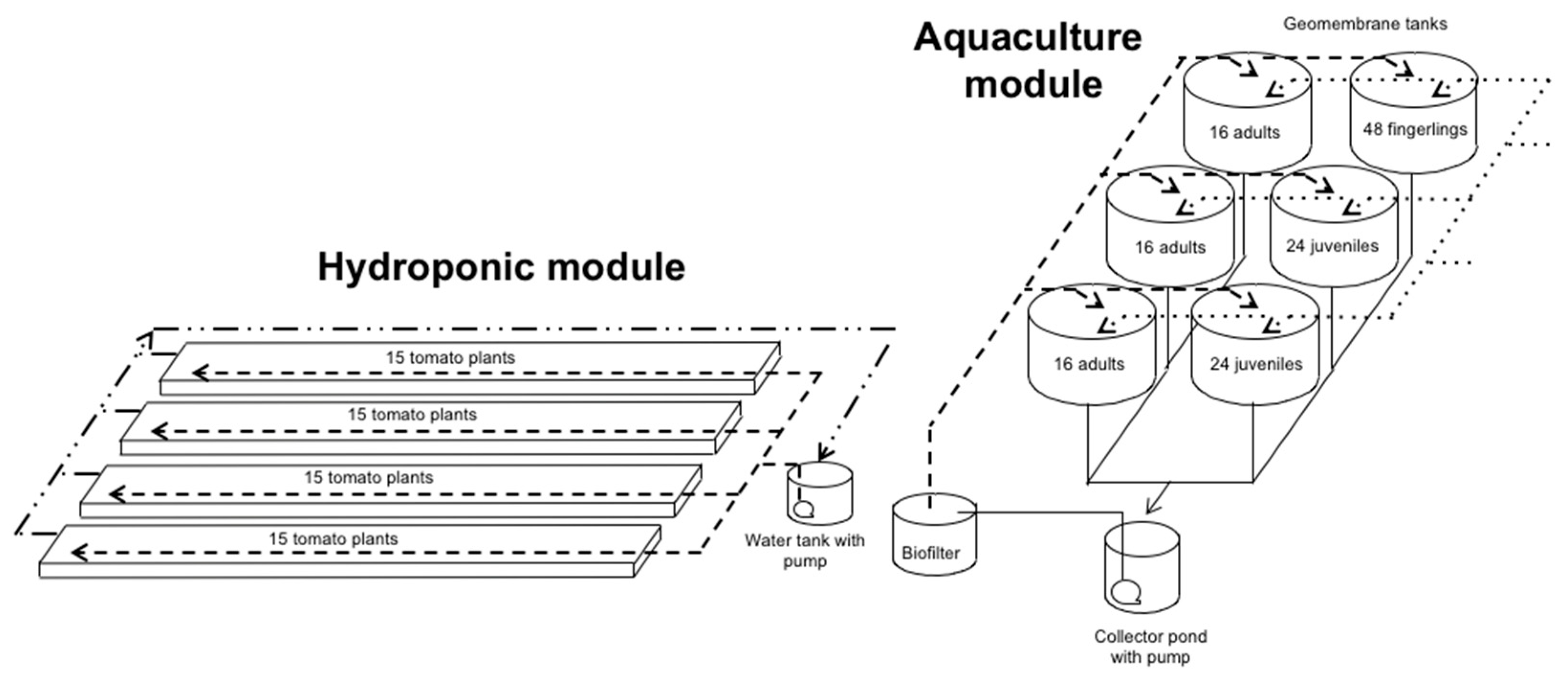
The intensive aquaponic system consisted of six 100 L geomembrane ponds (60 cm in diameter and 50 cm in height), interconnected by PVC piping, which delivered water to a collection tank. This tank was equipped with a 750 W submersible pump (with a supply for each tank of 2000 L h−1), which pumped water to a BOYU® EFU-13500 ultraviolet (UV) biofilter (BOYU Aquatic Co., Ltd., Guangzhou, China). From the biofilter, the water was recirculated back to the fish ponds and, controlled by a timer and solenoid valve, was also directed to a 100 L tank for plant irrigation. This second tank had a 45 W submersible pump that distributed water to four rows of plants, each measuring 5.0 × 0.25 m and spaced 30 cm apart. Each row contained 10 grow bags, each with 9 L of substrate (70% coconut fiber and 30% coconut dust) with a capacity of 2 plants per bag (8 plants m−2). Surplus irrigation water was collected back into the original tank, thus completing the hydroponic cycle of the system (Figure 1). Water was replenished daily to replace the volume lost through evaporation and plant uptake, ensuring constant operating volume in all systems.

2.2. Experimental Design

To evaluate the effect of intensive management of an aquaponic system on physiological stress indicators, productive performance and nitrogen (N) and phosphorus (P) use efficiency in tilapia and tomato, the following were used: an aquaponic system (AS), with a density of 40 kg m−3 for fish and 8 plants m−2; a hydroponic module (HM), operated with Peters® Professional Hydroponic Special 5-11-26 nutrient solution (150 mg L−1 N, 48 mg L−1 P, 216 mg L−1 K, 31 mg L−1 Mg, 125 mg L−1 SO4, 3 mg L−1 Fe, 0.5 mg L−1 Mn, 1.5 mg L−1 Zn, 0.15 mg L−1 Cu, 0.5 mg L−1 B and 0.1 mg L−1 Mo), which acted as hydroponic control; and an aquaculture module (AM) with water recirculation, without plant integration, which served as an aquaculture control (Figure 2). The experiment was carried out during three consecutive annual cycles (2022, 2023, and 2024), each lasting 180 days. Each cycle represented an independent replicate of the treatments, as organisms, water, inputs, and substrates were completely renewed at the beginning of each year, and all systems were operated under identical environmental and operational conditions to ensure reproducibility. System positions within the greenhouse were re-randomized at the start of each cycle to minimize positional bias related to light, temperature, or airflow. Therefore, the experimental unit corresponded to one complete system per treatment per year (n = 3 independent replicates per treatment), and all subsamples collected within each system (fish, leaves, water) were treated as internal measurements of the same experimental unit.

2.3. Biological Material

For this research, Nile tilapia (Oreochromis niloticus) were used in three different production stages (fingerling, juveniles, and adults) to be cultured at a density of 40 kg m−3 at the time of harvest (adjusted to 100 L) (Table 1). The tilapia specimens were fed three times a day with a commercial diet and the feeding plan of the MaltaCleyton® brand (MaltaCleyton S.A. de C.V., Guadalajara, México) (Table 2). Tomato seedlings (Solanum lycopersicum var. Rio Grande) with 40 days of germination with an initial average height of 25.85 ± 3.24 cm were also used. The tomato plants were transplanted at a density of 8 plants m−2 and were watered with the fish wastewater, varying the total volume according to the physiological stage for a period of 180 days (Table 3). The fish-to-plant ratio (40 kg m−3; 8 plants m−2) was derived from earlier aquaponic trials, with adjustments made to the conditions of this experiment [18].

2.4. Management of Organisms

The fish were biometrically monitored every two weeks to adjust the feed ration. On days 60 and 120 of the experiment, the following adjustments were made: adult fish were harvested, juvenile fish were divided into 3 tanks (each with 16 individuals), fingerlings were divided into 2 tanks (each with 24 individuals), and finally, 48 new fingerlings were introduced into 1 tank (average weight 5 g). Plant management changed according to each phenological stage. In the vegetative stage, the tutoring of each plant was placed. In the flowering stage, pollination was performed manually and pruning of axillary shoots and leaves began. At the fruiting stage, fruit thinning was carried out (6 fruits in each cluster in both AS and HM) and pruning of axillary shoots and leaves continued. At the maturation stage, the fruit was cut at grade 4 of maturity (30–60% of the fruit surface in pink or red color) [20].

2.5. Water Quality

The water in the tanks was monitored daily for the variables of dissolved oxygen, pH, and temperature using Hach® HQ40d equipment (Hach Company, Loveland, CO, USA), while nitrogen compounds were determined weekly with the Hach® DR6000 Spectrophotometer (Hach Company, Loveland, CO, USA) (method 8039 for nitrates, 8507 for nitrites, and 8038 for non-ionized ammonia). Similarly, the water for irrigation of the plants was monitored daily for pH and dissolved oxygen variables with Hach® HQ40d equipment and electrical conductivity with HANNA® HI 98130 equipment (Hanna Instruments Inc., Woonsocket, RI, USA); the pH was adjusted to a value of 6 when required. For daily records, three samples were collected per system (08:00, 13:00, and 18:00 h). The three measurements were averaged to obtain a single daily value per variable, and only these daily means were used for statistical analysis.

2.6. Stress Indicators

Stress in fish induces the release of hormones and other molecules [21,22], which can be quantified to determine the intensity of the organism’s response. In this context, cortisol and blood glucose are commonly used indicators to assess such intensity [13,23]. Before sampling, the fish were fasted for 24 h [24]. Sampling was carried out on days 60 (8 fish of approximately 50 g), 120 (4 fish of approximately 150 g), and 180 (2 fish of approximately 250 g). The fish were anesthetized with a eugenol solution (100 mg L−1) with 3 min of exposure [25]. The samples were taken from the caudal vein and placed in tubes with coagulant to centrifuge at 3500 rpm for 15 min, and blood plasma was taken for analysis. The cortisol concentration was determined using a Neogen® brand ELISA kit (Neogen Corporation, Lansing, MI, USA), while glucose was determined using the Biodiagnostic® brand analytical test kit (Biodiagnostic Co., Giza, Egypt) [26,27].
In stress situations, plants generate antioxidant compounds, both enzymatic and non-enzymatic, which allow them to mitigate adverse effects. Catalase is among the enzymatic antioxidants, while phenolic compounds stand out among non-enzymatic antioxidants [28]. Therefore, the concentration of these compounds serves as an indicator of the presence of stress in plants [15]. Sampling was carried out on days 60, 90, and 120 of the experimental period; the leaves removed by pruning on the aforementioned days were used as samples. Pruning was conducted uniformly across treatments, always removing mature mid-canopy leaves. These leaves reliably represent the plant’s physiological state and ensure comparable tissue among treatments. The leaves were dried (45 °C for 5 days) and ground, and 0.3 g was used to homogenize with 1 mL of phosphate buffer (0.1 M, pH 7.2) and centrifuged at 13,000 rpm for 20 min at 4 °C. The supernatants were used to determine enzymatic activities [29]. Catalase was measured by the change in absorbance at 240 nm for 1 min, taking 3 mL of plant extract and 1 mL of 0.022 M H2O2; the blank consisted of 3 mL of potassium phosphate (0.05 M and pH 8) and 1 mL of H2O2 [30]. Protein content for calculating catalase specific activity was quantified using the Bradford method with bovine serum albumin (BSA) as the calibration standard, and the specific catalase activity is expressed as μmol of H2O2 oxidized per mg of protein per minute (μmol/mg protein/min). The catalase assay was validated using a hydrogen peroxide standard curve (0–20 mM), which showed a linear response (R2 = 0.992). The total phenol content was determined by taking 2 mL of the plant extract with 0.4 mL of methanol–chloroform–water solution (2:1:1) to centrifuge at 2200 rpm for 15 min. Subsequently, the supernatant was taken and 10 mL of Na2CO3 (10% m/v) was added, followed by heating for 15 min at 38 °C, at the end of which 1 mL of the solution was taken together with 1 mL of Folin–Ciocalteu reagent and left to stand in the dark for 15 min; finally, the reading was taken in a spectrophotometer at 760 nm, expressing the result in μg of GAE g−1 of sample, taking as reference a standard curve of gallic acid [31] using a gallic acid standard curve (0–200 mg L−1; R2 = 0.994).

2.7. Productive Performance

Regarding productive performance, variables inherent to the growth, productivity, and quality of both organisms were monitored. To evaluate growth in tilapia, the total weight gain (Equation (1)), daily weight gain (Equation (2)), feed conversion factor (Equation (3)), protein efficiency (Equation (4)) [32], specific growth rate (Equation (5)), condition factor (Equation (6)), and survival rate (Equation (7)) were considered [33]. To evaluate the growth of tomato plants, plant height (Equation (8)), dry weight (at flowering, fruiting, and harvest stages) (Equation (9)), relative growth rate (Equation (10)) and survival rate (Equation (11)) [34], leaf area (Equation (12)), leaf area index (Equation (13)), specific leaf area (Equation (14)), net assimilation rate (Equation (15)), and crop growth rate (Equation (16)) were considered [35].
Total Weight Gain     TWG (g) = Wf − Wi
where Wf is the final weight and Wi is the initial weight.
Daily Weight Gain     DWG (g) = Wf − Wi/t
where Wf is the final weight, Wi is the initial weight, and t is time in days.
Feed Conversion Factor FCF = grams of feed consumed/grams of biomass increase
Protein Efficiency   PE = grams of biomass increase/grams of protein ingested
Specific Growth Rate    SGR = (InWf − InWi)/t
where InWf is the natural logarithm of the final weight, InWi is the natural logarithm of the initial weight, and t is the time in days.
Condition Factor    CF = (weight (g)/length cm3) × 100
Survival Rate    SR = (final number of animals/initial number of animals) × 100
Plant Height    PH (cm) = Hf − Hi
where Hf is the final height and Hi is the initial height.
Dry Weight   DW = Plant weight after dehydration for 72 h at 70 °C
Relative Growth Rate    RGR (g g−1day−1) = (InDWf − InDWi)/t
where InDWf is the natural logarithm of the final dry weight, InDWi is the natural logarithm of the initial dry weight, and t is the time in days.
Plant Survival Rate    PSR = (final number of plants/initial number of plants) × 100
Leaf Area    LA (cm2) =100 It was determined with the Easy Leaf Area application developed by Easlon & Bloom in 2014.
Leaf Area Index    LAI = LA/SS
where LA is the leaf area expressed m2 and SS is the soil surface expressed in m2.
Specific Leaf Area    SLA (cm2 g−1) = LA/DW
where LA is the leaf area expressed cm2 and DW is the dry weight expressed in grams.
Net Assimilation Rate NAR (g m−2day−1) = (DW2 − DW1)(InLA2 − InLA2)/(t2 − t1)(LA2 − A1)
where DW2 and DW1 are the final and initial dry weight of the plant; InLA2 and InLA1 are the natural logarithms of the final and initial leaf area; t2 and t1 are time in days; and LA2 and LA1 are final and initial leaf area.
Crop Growth Rate         CGR (g m−2day−1) = (1) (DW2 − DW1)/(SS) (t2 − t1)
where DW2 and DW1 are the final and initial dry weight of the plant; SS is the soil surface expressed in cm2; and t2 and t1 are time in days.
The productivity of both organisms was considered as the amount of biomass generated in the space determined for their cultivation. For tilapia, the kilograms of whole fish harvested per m3 were considered, and for tomatoes, the kilograms of fruit harvested per m2. Likewise, for both organisms, water used efficiency was determined (Equation (17)) [36].
Water Use Efficiency WUE (kg/m−3) = kilograms of fruit and fish/m3 of water used
Fish quality was assessed by analyzing fillet samples for moisture, protein, lipid, and ash content according to AOAC official methods 930.15, 981.10, 920.39, and 942.05 [37]. Likewise, the content of nitrogen-free extract (NFE) was determined by the difference by subtracting the contents of humidity, protein, lipids, and ash (Equation (18)) [38]. For the evaluation of tomato fruit quality, random samples were taken from the harvested fruits (maturity grade 4) to measure the pH, total soluble solids (TSS), titratable acidity (TA), and the TSS/TA ratio, as well as the amount of lycopene [7,39]. To determine the pH, 20 g of tomato was taken and liquefied with 50 mL of distilled water, then filtered with Wathman paper No. 42; then, this sample was filled to 100 mL for measurement with a digital potentiometer [40]. TSS was measured using a digital refractometer for Brix degree analysis (Generic Home019, General Tools & Instruments LLC, New York, NY, USA) in foods [40]. TA was measured using 0.1 N NaOH and phenolphthalein as an indicator, expressing the results as % citric acid [41]. Finally, the lycopene content was measured by mixing 0.5 g of pulp with 50 mL of hexane–acetone–ethanol (2:1:1) solution and stirring for 10 min, 7.5 mL of distilled water was added and stirred for 5 min, and a sample of the supernatant was taken for reading in a spectrophotometer at 503 nm, expressing the result in mg g−1 (Equation (19)) [42].
Nitrogen Free Extract   NFE (%) = 100 − (% moisture + % protein + % lipids + % ash)
Lycopene Concentration    LC (%) = ((A503 nm × 3.1)/g of pulp) × 100

2.8. Efficiency in the Use of Nitrogen and Phosphorus

Nitrogen use efficiency (NUE, Equation (20)) and phosphorus use efficiency (PUE, Equation (21)) in the aquaponic system (AS) were estimated using a standardized methodology [43], considering the proportion of these elements incorporated into the fish and plant biomass relative to the total amount supplied through feed during the culture period.
Nitrogen use efficiency   NUE = [Nplant + Nfish/(FN) (MF) (T)] × 100
Phosphorus use efficiency      PUE = [Pplant + Pfish/(FP) (MF) (T)] × 100
where FN and FP are the nitrogen and phosphorus content in the fish feed (gN g−1 and gP g−1) respectively, MF is the feeding rate (g day−1), T is the duration of production (days), Nplant and Pplant are the average nitrogen and phosphorus assimilated by the plants at harvest (g), and Nfish and Pfish are the average nitrogen and phosphorus incorporated in the fish (g).
Nitrogen and phosphorus retained in fish and plant biomass were quantified as follows. For tilapia, Nfish was determined from whole-body samples: entire fish were dried, ground, and analyzed for total nitrogen using the Kjeldahl method. The resulting nitrogen percentage was multiplied by whole-fish dry biomass to obtain Nfish (g). Pfish was quantified from dried, ground whole-body tissue after acid digestion followed by colorimetric determination. For plants, Nplant and Pplant were quantified from dried shoot and fruit tissues, where total N was measured using the Kjeldahl method and total P via acid digestion followed by colorimetric analysis. The resulting N and P percentages were multiplied by plant dry biomass to calculate Nplant and Pplant (g), which were used in the NUE and PUE calculations.
For the aquaculture module (AM), a modified version of the equations was used, considering only the incorporation of nutrients into the animal biomass, as follows:
Nitrogen use efficiency    NUEAM = [Nfish/(FN) (MF) (T)] × 100
Phosphorus use efficiency       PUEAM = [Pfish/(FP) (MF) (T)] × 100
As in the case of the hydroponic module (HM), where nutrients do not derive from the food but from an exogenous nutrient solution, its efficiency was estimated as follows:
Nitrogen use efficiency        NUEHM = (N assimilated in plant (g)/N supplied in solution (g)) × 100
Phosphorus use efficiency      PUEHM = (P assimilated in plant (g)/P supplied in solution (g)) × 100

2.9. Data Analysis

Data analysis was performed using JMP® software (9.0.1). The results are expressed as mean ± standard deviation (n = 3), where n represents three independent annual production cycles (2022, 2023, and 2024) used as experimental replicates. Data normality and variance homogeneity were verified using Levene’s tests (p < 0.05), respectively. One-way analysis of variance (ANOVA) was performed to evaluate differences among treatments, and significant differences were determined using Tukey’s post hoc test at a significance level of p < 0.05.

3. Results

3.1. Water Quality

Water quality values for the fish and irrigation tanks are shown in Table 4 and Table 5. Values remained within optimal ranges for aquaponic and hydroponic systems, with lower concentrations of nitrogen compounds observed in the aquaponic system and slightly higher oxygen and conductivity levels compared to the control modules.

3.2. Stress Indicators

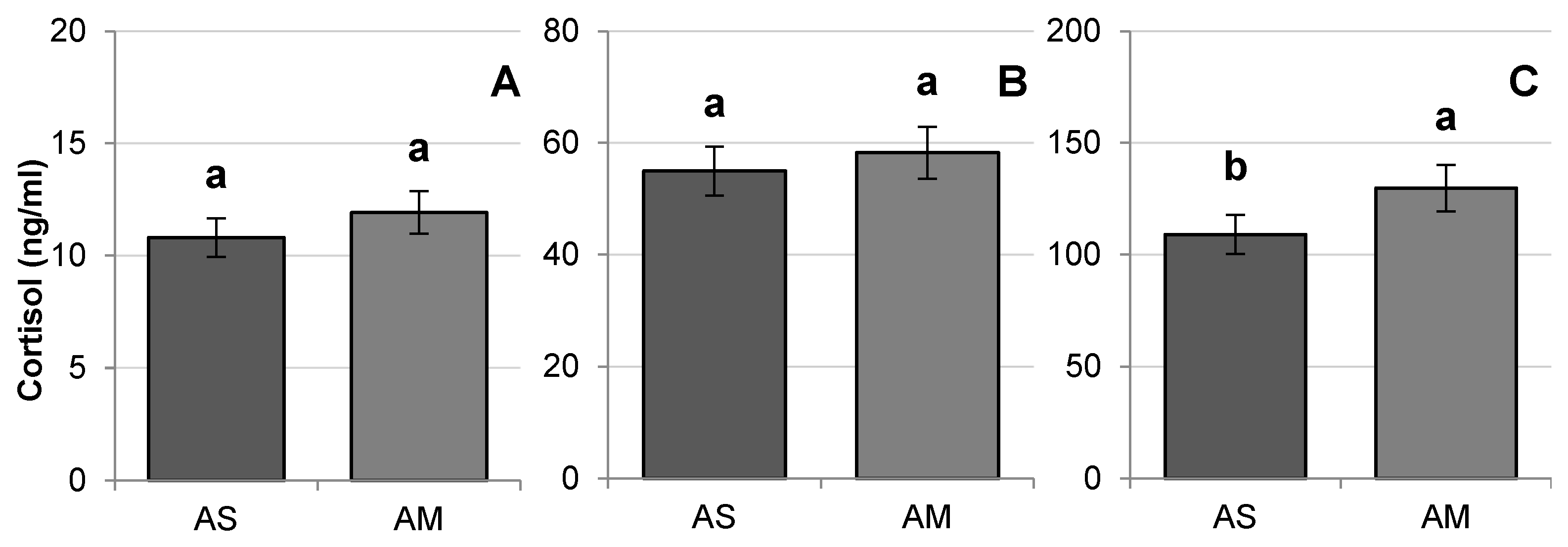
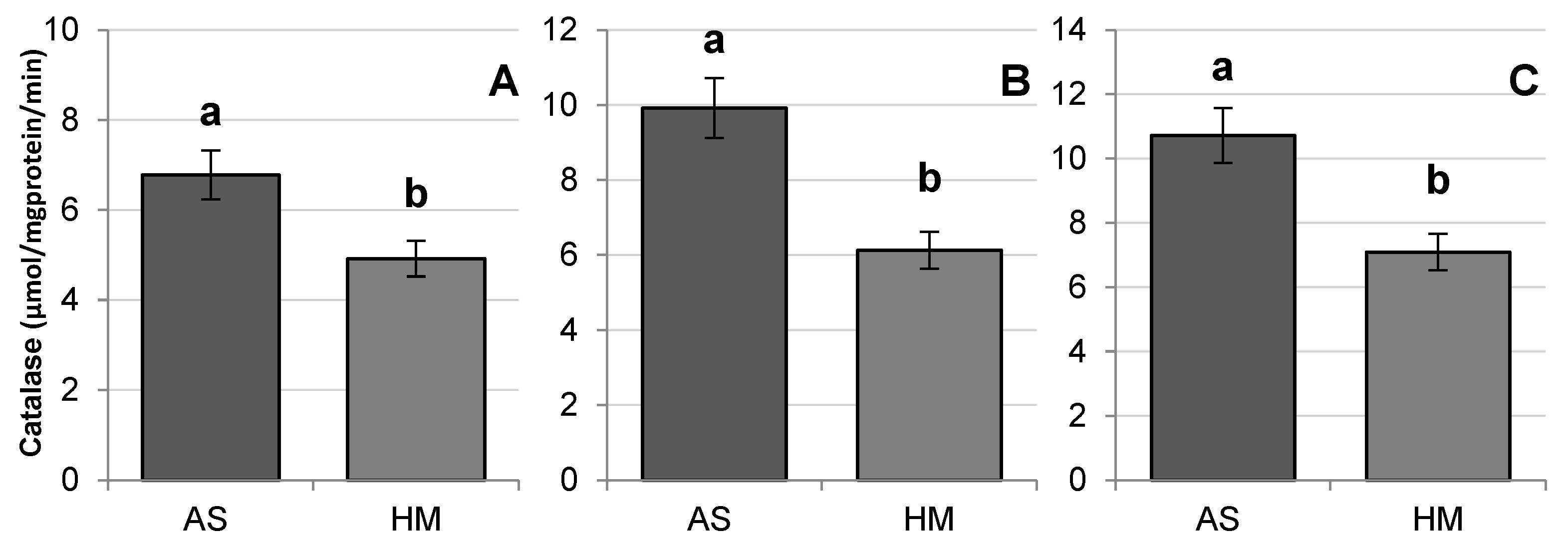
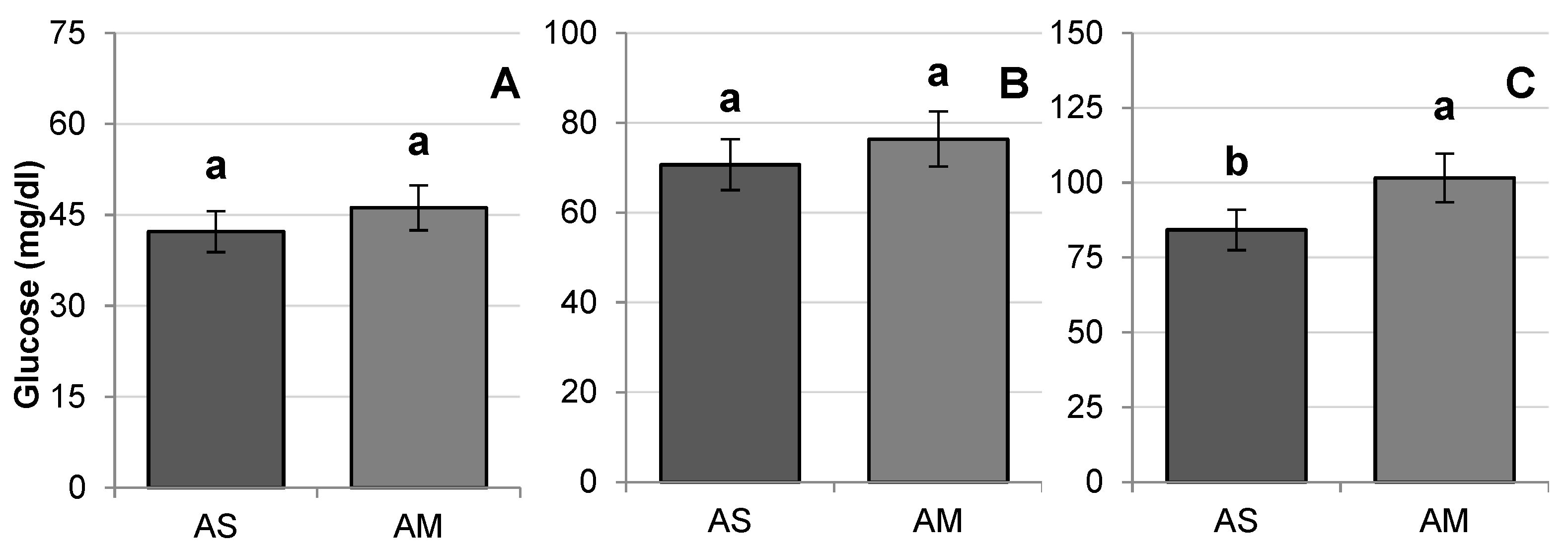
Stress indicators for fish and plants are shown in Figure 3, Figure 4, Figure 5 and Figure 6. In fish, cortisol and glucose levels exhibited variations across the experimental period, while in plants, catalase and total phenolic contents reflected the physiological response to the cultivation conditions. Overall, the aquaponic system maintained stable stress biomarker values comparable or lower than those observed in the control modules.

3.3. Productive Performance

The productive performance of O. niloticus and S. lycopersicum under aquaponic and conventional cultivation systems is summarized in Table 6, Table 7, Table 8, Table 9 and Table 10. These results describe the main growth, productivity, and quality indicators recorded throughout the experimental period. Table 6 and Table 7 show the growth behavior of fish and plants across different developmental stages, while Table 8 integrates the overall productivity and water use efficiency of both components. Finally, Table 9 and Table 10 present the product quality indicators (fillet and fruit). Together, these data provide a comprehensive overview of the biological response and productive efficiency achieved in the aquaponic system compared to the control modules.

4. Discussion

4.1. Water Quality

During the experimental period, water quality parameters remained within the tolerance ranges for O. niloticus culture [44]. The average temperature was slightly lower than the optimum of 28 °C described in the literature [45], with no significant differences between treatments, so it is not considered a limiting factor. Dissolved oxygen (DO) concentration showed a progressive decrease throughout the developmental stages (fingerling, juvenile, and adult), attributed to the increase in total biomass in the tanks, which implies a greater metabolic demand [46]. However, DO levels remained above the critical threshold, ruling out negative effects on fish growth. Regarding nitrogen compounds, nitrate, nitrite, and non-ionized ammonium concentrations remained below toxic levels for tilapia, with significant differences between treatments. The aquaponic system (AS) had the lowest concentrations, attributable to the combined action of the biological biofilter and daily water withdrawal for irrigation [47]. In contrast, the aquaculture module (AM), lacking plants and partial replacement, had the highest concentrations.
For S. lycopersicum irrigation, water quality also remained within recommended values, with significant differences between treatments (Table 5). DO was higher in the AS, possibly due to the constant supply from the ponds. This dynamic could also have influenced the pH, which was higher in the AS, requiring more frequent adjustments. Electrical conductivity (EC) was higher in the aquaponic system, suggesting greater salt accumulation, potentially related to greater nutrient availability, which could have contributed to the observed differences in plant yield [8] (Table 8).

4.2. Stress Indicators

Cortisol levels increased progressively throughout the developmental stages (fingerling, juvenile, and adult), with significant differences between the aquaponic system (AS) and the aquaculture module (AM) only in the adult stage (Figure 3). Similarly, glucose concentrations showed significant differences in adults (Figure 4), which can be attributed to the action of cortisol, which stimulates gluconeogenesis and, therefore, glucose synthesis [48].
During the fingerling and juvenile stages, cortisol values remained within the normal range for O. niloticus (5–60 ng mL−1) [49], as did glucose levels, which remained below the reported upper limit of 70 mg dL−1 [50]. These results suggest that, in the initial stages, intensive culture conditions (targeted density of 40 kg m−3) did not generate physiological stress levels that significantly altered these indicators. In the adult stage, however, cortisol exceeded the upper limit of the physiological range by 81.9% in AS and 116.5% in AM. Glucose concentrations were also higher than the reference limit, with increases of 20.4% in AS and 50.5% in AM. This upward trend in cortisol and glucose may be associated with the increase in total biomass, reaching densities close to 4 kg 100 L−1, which increases competition for space and food, increasing the secretion of stress-related hormones [51].
It is worth noting that, although both treatments showed increases, the values recorded in the aquaponic system were consistently lower than those in the aquaculture module, suggesting that plant integration in the AS contributes to mitigating stress factors, possibly due to greater physical–chemical stability of the system and lower accumulations of nitrogen compounds.
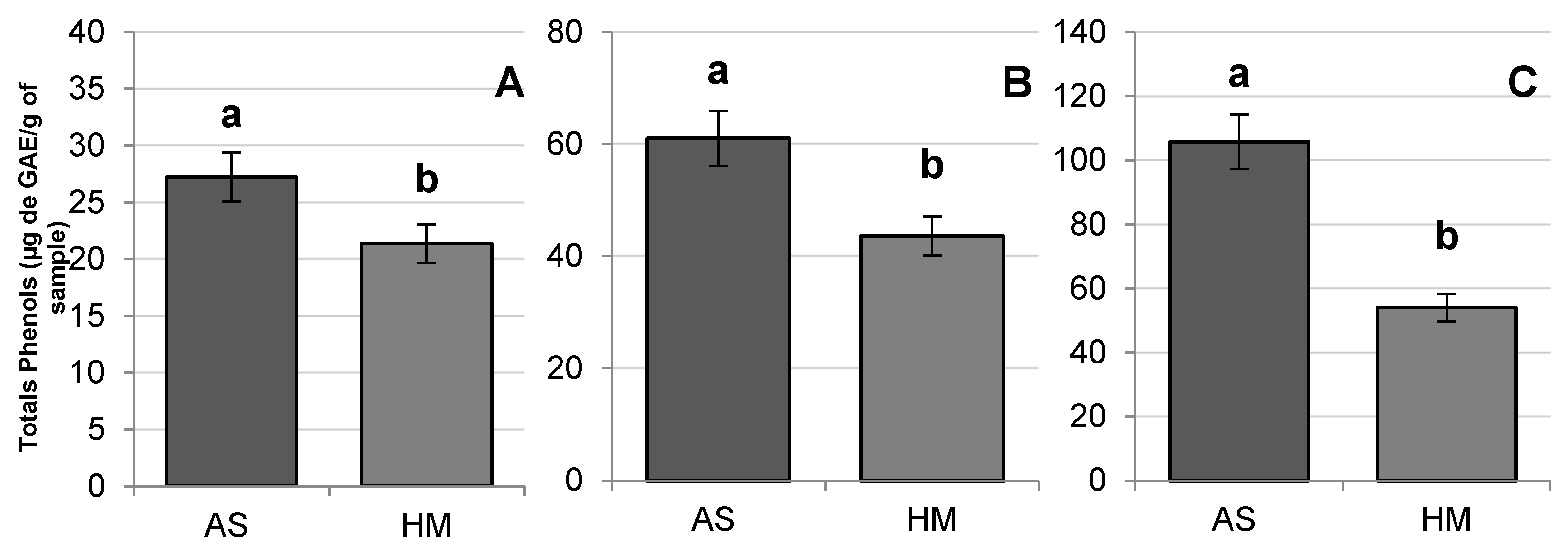
In plants, specific catalase activity and total phenol content increased as the phenological stages progressed (day 60 = vegetative growth, 90 = flowering, 120 = fruiting), with significant differences between the aquaponic system (AS) and the hydroponic module (HM) (Figure 5). These results are consistent with previous findings [52], which showed an increase in catalase activity throughout plant development.
In the first sampling, catalase activity was 37.8% higher in AS compared to HM, suggesting a higher level of initial oxidative stress. In all samplings, the values exceeded those previously documented for hydroponic systems (2.8, 3.0, and 2.1 μmol mg−1 protein min−1 in the vegetative, flowering, and fruiting stages, respectively) [53]. This difference may be related to the planting density used in this study (8 plants m−2), which was 59% higher than that reported in the referenced work (5 plants m−2). This suggests that intensive cultivation could have increased abiotic stress, thereby affecting antioxidant enzyme activity.
Regarding total phenols, significantly higher values were recorded in the AS compared to the HM at all three sampling times (Figure 6). However, the concentrations were lower than those reported for commercial varieties (240 µg GAE g−1 sample) [30] and for plants evaluated under salicylic acid application (147.6 µg GAE g−1 sample) [54]. The lower accumulation of phenolic compounds in this study could be attributed to the absence of exogenous treatments and the moderate stress conditions inherent to aquaponic cultivation.
This physiological response likely resulted from transient nutrient imbalances, particularly in nitrogen availability and altered N:P ratios that can impair photosynthetic performance and redox balance in tomato leaves. Such stress conditions trigger reactive oxygen species (ROS) accumulation and antioxidant responses, increasing catalase activity and phenolic synthesis. These biochemical adjustments help mitigate oxidative damage but also divert metabolic energy away from growth processes, resulting in reduced vegetative development and yield compared to hydroponic cultivation.
The contrasting stress responses observed between fish and plants arise from their distinct physiological buffering mechanisms and roles within the integrated system. In aquaponics, fish benefit from improved water quality due to nutrient removal by plants and microbial nitrification, which reduces ammonia and nitrite accumulation and stabilizes dissolved oxygen levels. These processes help maintain osmotic balance and reduce the activation of the hypothalamic–pituitary–interrenal (HPI) axis, resulting in lower cortisol and glucose concentrations. Conversely, plants depend on the continuous availability of nutrients in the shared loop, and temporary fluctuations in nutrient concentration or oxygen supply can induce moderate oxidative stress. Therefore, while system coupling enhances overall efficiency, the metabolic responses of each organism reflect their differing tolerance thresholds and physiological demands.

4.3. Productive Performance

During the fingerling stage, no significant differences were observed between the aquaponic system (AS) and the aquaculture module (AM) in the variables of total weight gain (TWG), daily weight gain (DWG), and condition factor (CF) (Table 6), suggesting that the type of system did not represent an initial limitation. However, the aquaponic system showed higher values of feed conversion ratio (FCR) and protein efficiency (PE), indicating greater efficiency in feed utilization. Similarly, the specific growth rate (SGR) was higher in the AS compared to the AM, exceeding previously documented values [55,56], even under similar or lower stocking densities. At this stage, the condition factor (CF) was below one in both systems, suggesting mild stress possibly associated with a high stocking density [57]. During the juvenile stage, TWG, DWG, FCR, and PE showed no significant differences between treatments, although SGR was lower than values observed in other tomato–tilapia aquaponic systems [58], which may be related to the higher concentration of nitrogenous compounds [59]. In the adult phase, performance was similar to that of the initial stage: TWG and DWG did not show significant differences, but FCR and PE favored the aquaponic system. At this stage, all treatments showed CF values greater than one, ruling out the effects of chronic stress.
Regarding the plant component (Table 7), plant height and dry weight were significantly higher in the hydroponic module (HM), especially during the flowering and ripening stages. This difference can be attributed to the complete and continuous availability of nutrients in the hydroponic solution [60]. Likewise, the relative growth rate (RGR) was 20–37% higher in the HM compared to the SAI across all phenological stages, although the values obtained during flowering and harvest were similar or higher than those previously documented for comparable systems [61,62].
The leaf area (LA), leaf area index (LAI), specific leaf area (SLA), and crop growth rate (CGR) variables also favored HM, reflecting greater photosynthetic capacity and biomass generation. Total tomato productivity was 22.7% higher in the HM (Table 8), although both treatments yielded less than the 9.5 kg m−2 obtained in systems where the nutrient solution was adjusted during the fruiting stage to enhance N, P, and K uptake [63].
In contrast, total tilapia productivity was 11.7% higher in the AS compared to the AM, with both values exceeding those previously documented for aquaponic systems integrating cherry tomato (21.8 kg m−3) [7]. Water use efficiency (WUE) was significantly higher in the AS, comparable to values obtained in aquaponic systems with nutrient supplementation (5.47) [8], emphasizing the role of water recirculation in improving yield per unit of water used.
In terms of O. niloticus fillet quality (Table 9), fish from the aquaponic system showed higher protein content, comparable to values obtained with enriched diets (25.28%) [5]. Both systems exceeded the 19.65% protein level previously documented for tilapia [64], likely due to the higher protein content (45%) in the fry diet used in this study. Lipid content did not differ significantly between treatments, showing intermediate values relative to those described for enriched (5.43%) [5] and standard (2.3%) [64] diets.
In the case of tomato (Table 10), fruits from the AS showed higher values of total soluble solids (TSS) and titratable acidity (TA) compared to those from the HM. Both systems exceeded the minimum quality standards (5 °Brix and 0.4%) established for commercial tomatoes [6] and were within or above the ranges documented for similar production systems [9]. Regarding lycopene, the concentrations in both systems were lower than those typically obtained in supplemented aquaponic setups (0.99 mg g−1) [8], but higher than the range reported for non-supplemented systems (0.16–0.45 mg g−1) [7,53]. These results indicate acceptable fruit quality even without exogenous supplementation, reinforcing the functional value of the aquaponic system.

4.4. Nitrogen Use Efficiency (NUE) and Phosphorus Use Efficiency (PUE)

Nitrogen use efficiency (NUE) and phosphorus use efficiency (PUE) showed marked differences between the treatments evaluated (Table 11). In the aquaponic system (AS), NUE was 23.35 ± 2.40% and PUE was 20.70 ± 1.90%, values that reflect the combined utilization of both nutrients by animal (O. niloticus) and plant (S. lycopersicum) biomass. These results are consistent with previous studies [65,66], which highlight that the synergistic interaction between fish and plants in recirculating systems enables more efficient reuse of nutrients derived from feed, minimizing losses through accumulation or discharge. In contrast, the aquaculture module (AM) showed significantly lower values, with an NUE of 11.44 ± 1.30% and a PUE of 11.45 ± 1.10%. These values are explained by the absence of the plant component, which limits nutrient recycling and concentrates efficiency solely on the retention of nitrogen and phosphorus in the fish biomass. In conventional intensive aquaculture, only 20–30% of the nitrogen supplied through feed is incorporated into fish biomass, while the remainder is released as ammonium or sedimented as organic waste [59]. The same applies to phosphorus, whose utilization in fish rarely exceeds 25% due to its low bioavailability and physiological limitations in its assimilation [16].
The hydroponic module (HM) presented the highest NUE and PUE values, with 357.64 ± 25.70% and 186.27 ± 12.80% respectively, when estimated apparently based on the plant biomass produced and the total amount of nutrients supplied by the nutrient solution, considering a biweekly renewal. Although these figures reflect an efficient use of nitrogen and phosphorus by plants, it is important to highlight that they do not consider losses due to leaching, evaporation, or accumulation in the system. In conventional hydroponic systems, particularly those lacking strict recirculation, substantial nutrient losses can occur, compromising system sustainability [8,67]. Therefore, although the apparent values in HM are high, they do not reflect a systemic efficiency comparable to that of the AS.
The findings from this study are limited to a small-scale greenhouse under controlled conditions, which may not fully capture the variability associated with outdoor environments. The three consecutive annual cycles provide temporal replication but still reflect similar climatic and management conditions. Additionally, the use of specific species (tilapia and tomato) constrains the generalization of the results to other configurations or trophic combinations. Future studies integrating multi-site experiments, different crop–fish pairings, and variable coupling ratios could help assess the robustness and scalability of these findings.
From an agroecological perspective, these results demonstrate that intensive aquaponic systems can reconcile production efficiency with environmental sustainability by promoting circular nutrient use and minimizing water demand. The integration of physiological stress indicators with nutrient and water use efficiencies provides a practical framework for system optimization. This approach can support adaptive management strategies aimed at maintaining fish welfare, stabilizing plant productivity, and improving overall nutrient recovery key elements for sustainable intensification and climate-resilient food production.

5. Conclusions

The intensive aquaponic system demonstrated both advantages and challenges in balancing physiological stress and productive performance in co-cultured tilapia and tomato. Tilapia raised in aquaponics exhibited significantly lower stress indicators and superior feed efficiency, resulting in a higher protein content and greater biomass compared to conventional aquaculture. This suggests that integrated systems may create more stable and less stressful aquatic environments, even under intensive stocking densities.
In contrast, tomato plants in the aquaponic system showed elevated physiological stress evidenced by higher catalase activity and total phenolic content, which likely stemmed from incomplete or imbalanced nutrient availability. This resulted in reduced growth and productivity compared to hydroponic cultivation, although fruit quality parameters such as soluble solids and acidity remained within acceptable ranges.
Despite lower plant productivity, the aquaponic system outperformed the combined conventional systems in water use efficiency, confirming its potential as a sustainable food production approach. Furthermore, the aquaponic configuration demonstrated greater nitrogen and phosphorus use efficiency compared to aquaculture alone, due to nutrient reutilization by both fish and plants. Although hydroponics showed higher apparent nutrient use, such values may not account for nutrient losses through solution replacement. These findings highlight the importance of system-level optimization, particularly nutrient supplementation strategies, to enhance dual-species productivity in aquaponics without compromising sustainability or product quality.
From an agroecological perspective, the results underline the potential of intensive aquaponics as a sustainable intensification strategy capable of improving resource cycling, minimizing nutrient losses, and contributing to more circular food production systems. Future research should focus on (i) optimizing N:P ratios and monitoring nutrient availability in real time, (ii) evaluating the effects of plant density and cultivar selection on productivity and stress physiology, and (iii) assessing scalability under commercial or semi-commercial conditions. Collectively, these actions will support the development of next-generation aquaponic systems that maximize biological performance while maintaining environmental efficiency.

Author Contributions

Conceptualization, J.J.D.l.-R. and J.F.G.-T.; methodology, J.J.D.l.-R.; validation, J.J.D.l.-R., L.F.-C. and S.L.-T.; formal analysis, J.J.D.l.-R. and S.L.-T.; investigation, J.J.D.l.-R. and L.F.-C.; data curation, J.J.D.l.-R. and C.F.S.-F.; writing—original draft preparation, J.J.D.l.-R.; writing—review and editing, J.J.D.l.-R. and C.F.S.-F.; visualization, J.J.D.l.-R. and J.F.G.-T. All authors have read and agreed to the published version of the manuscript.

Funding

This research received no external funding. The APC was funded by SECIHTI through the resources allocated to project MADTEC-2025-M-759.

Data Availability Statement

The original contributions presented in this study are included in the article. Further inquiries can be directed to the corresponding author(s).

Acknowledgments

We are grateful for the support provided by SECIHTI in the form of scholarship for the first author’s postgraduate studies.

Conflicts of Interest

The authors declare no conflicts of interest.

References

  1. Hawkesworth, S.; Dangour, A.D.; Johnston, D.; Lock, K.; Poole, N.; Rushton, J.; Uauy, R.; Waage, J. Feeding the world healthily: The challenge of measuring the effects of agriculture on health. Phil. Trans. R. Soc. B 2010, 365, 3083–3097. [Google Scholar] [CrossRef] [PubMed]
  2. Cohen, A.; Malone, S.; Morris, Z.; Weissburg, M.; Bras, B. Combined Fish and Lettuce Cultivation: An Aquaponics Life Cycle Assessment. Procedia CIRP 2018, 69, 551–556. [Google Scholar] [CrossRef]
  3. Love, D.C.; Fry, J.P.; Li, X.; Hill, E.S.; Genello, L.; Semmens, K.; Thompson, R.E. Commercial aquaponics production and profitability: Findings from an international survey. Aquaculture 2015, 435, 67–74. [Google Scholar] [CrossRef]
  4. Forchino, A.A.; Lourguioui, H.; Brigolina, D.; Pastresa, R. Aquaponics and sustainability: The comparison of two different aquaponic techniques using the Life Cycle Assessment (LCA). Aquac. Eng. 2017, 77, 80–88. [Google Scholar] [CrossRef]
  5. Biswas, M.; Islam, M.S.; Das, P.; Das, P.R.; Akter, M. Comparative study on proximate composition and amino acids of probiotics treated and nontreated cage reared monosex tilapia Oreochromis niloticus in Dekar haor, Sunamganj district, Bangladesh. Int. J. Fish. Aquat. Sci. 2018, 62, 431–435. [Google Scholar]
  6. Beckles, D.M. Factors affecting the postharvest soluble solids and sugar content of tomato (Solanum lycopersicum L.) fruit. Postharvest Biol. Technol. 2012, 63, 129–140. [Google Scholar] [CrossRef]
  7. Schmautz, Z.; Loeu, F.; Liebisch, F.; Graber, A.; Mathis, A.; Griessler Bulc, T.; Junge, R. Tomato productivity and quality in aquaponics: Comparison of three hydroponic methods. Water 2016, 8, 533. [Google Scholar] [CrossRef]
  8. Suhl, J.; Dannehl, D.; Kloas, W.; Baganz, D.; Jobs, S.; Scheibe, G.; Schmidt, U. Advanced aquaponics: Evaluation of intensive tomato production in aquaponics vs. conventional hydroponics. Agric. Water Manag. 2016, 178, 335–344. [Google Scholar] [CrossRef]
  9. Kralik, B.; Nieschwitz, N.; Neves, K.; Zeedyk, N.; Wildschutte, H.; Kershaw, J. The effect of aquaponics on tomato (Solanum lycopersicum) sensory, quality, and safety outcomes. J. Food Sci. 2023, 88, 2261–2272. [Google Scholar] [CrossRef] [PubMed]
  10. Ashley, P.J. Fish welfare: Current issues in aquaculture. Appl. Anim. Behav. Sci. 2007, 104, 199–235. [Google Scholar] [CrossRef]
  11. Dara, M.; Carbonara, P.; La Corte, C.; Parrinello, D.; Cammarata, M.; Parisi, M.G. Fish welfare in aquaculture: Physiological and immunological activities for diets, social and spatial stress on Mediterranean aqua cultured species. Fishes 2023, 8, 414. [Google Scholar] [CrossRef]
  12. Fotedar, S.; Evans, L. Health management during handling and live transport of crustaceans: A review. J. Invertebr. Pathol. 2011, 106, 143–152. [Google Scholar] [CrossRef]
  13. Martínez-Porchas, M.; Martínez-Córdova, L.R.; Ramos-Enriquez, R. Cortisol and glucose: Reliable indicators of fish stress? Pan-Am. J. Aquat. Sci. 2009, 4, 158–178. [Google Scholar]
  14. Zárate-Martínez, W.; González-Morales, S.; Ramírez-Godina, F.; Robledo-Olivo, A.; Juárez-Maldonado, A. Effect of phenolic acids on the antioxidant system of tomato plants (Solanum lycopersicum Mill.). Agron. Mesoam. 2021, 32, 854–868. [Google Scholar] [CrossRef]
  15. Gómez-Merino, F.C.; Trejo-Téllez, L.I. Biostimulant activity of phosphite in horticulture. Sci. Hortic. 2015, 196, 82–90. [Google Scholar] [CrossRef]
  16. Goddek, S.; Delaide, B.; Mankasingh, U.; Ragnarsdottir, K.V.; Jijakli, H.; Thorarinsdottir, R. Challenges of sustainable and commercial aquaponics. Sustainability 2015, 7, 4199–4224. [Google Scholar] [CrossRef]
  17. Wongkiew, S.; Hu, Z.; Chandran, K.; Lee, J.W.; Khanal, S.K. Nitrogen transformations in aquaponic systems: A review. Aquac. Eng. 2017, 76, 9–19. [Google Scholar] [CrossRef]
  18. Félix-Cuencas, L.; García-Trejo, J.F.; López-Tejeida, S.; León-Ramírez, J.J.D.; Soto-Zarazúa, G.M. Effect of three productive stages of tilapia (Oreochromis niloticus) under hyper-intensive recirculation aquaculture system on the growth of tomato (Solanum lycopersicum). Lat. Am. J. Aquat. Res. 2021, 49, 689–701. [Google Scholar] [CrossRef]
  19. Mercado-Luna, A. Manual de Producción de Jitomate (Lycopersicon esculentum) en Variedades de Crecimiento Indeterminado Bajo Invernadero; Universidad Autónoma de Querétaro: Santiago de Querétaro, Mexico, 2007. [Google Scholar]
  20. Camello, A. Manual Para la Preparacion y Venta de Frutas y Hortalizas, 1st ed.; Servicios Agrícolas de la FAO: Rome, Italy, 2003. [Google Scholar]
  21. Aparicio-Simón, B.; Piñón, M.; Racotta, R.; Racotta, I.S. Neuroendocrine and metabolic responses of Pacific whiteleg shrimp Litopenaeus vannamei exposed to acute handling stress. Aquaculture 2010, 298, 308–314. [Google Scholar] [CrossRef]
  22. Wu, H.; Aoki, A.; Arimoto, T.; Nakano, T.; Ohnuki, H.; Murata, M.; Ren, H.; Endo, H. Fish stress become visible: A new attempt to use biosensor for real-time monitoring fish stress. Biosens. Bioelectron. 2015, 67, 503–510. [Google Scholar] [CrossRef]
  23. Pankhurst, N.W. The endocrinology of stress in fish: An environmental perspective. Gen. Comp. Endocrinol. 2011, 170, 265–275. [Google Scholar] [CrossRef]
  24. Abdel-Tawwab, M.; Mousa, M.A.; Sharaf, S.M.; Ahmad, M.H. Effect of crowding stress on some physiological functions of Nile tilapia, Oreochromis niloticus (L.) fed different dietary protein levels. Int. J. Zool. Res. 2005, 1, 41–47. [Google Scholar] [CrossRef]
  25. Santiago-Rucinque, D.; Polo, G.; Borbón, J.; González Mantilla, J.F. Anesthetic use of eugenol and benzocaine in juveniles of red tilapia. Rev. Colomb. Cienc. Pecu. 2017, 30, 60–66. [Google Scholar] [CrossRef]
  26. Inoue, L.A.K.A.; MorAes, G.; IwAMA, G.K.; Afonso, L.O.B. Physiological stress responses in the warm-water fish matrinxã (Brycon amazonicus) subjected to a sudden cold shock. Acta Amaz. 2008, 38, 603–609. [Google Scholar] [CrossRef]
  27. Haraz, Y.G.; El-Hawarry, W.N.; Shourbela, R.M. Culture Performance of Nile tilapia (Oreochromis niloticus) raised in a bioflocbased intensive system. Alex. J. Vet. Sci. 2018, 58, 166–172. [Google Scholar]
  28. Bai, T.; Li, C.; Ma, F.; Feng, F.; Shu, H. Responses of growth and antioxidant system to root-zone hypoxia stress in two Malus species. Plant Soil 2010, 327, 95–105. [Google Scholar] [CrossRef]
  29. Parola-Contreras, I.; Tovar-Perez, E.G.; Rojas-Molina, A.; Luna-Vazquez, F.J.; Torres-Pacheco, I.; Ocampo-Velazquez, R.V.; Guevara-González, R.G. Changes in affinin contents in Heliopsis longipes (chilcuague) after a controlled elicitation strategy under greenhouse conditions. Ind. Crops Prod. 2020, 148, 112314. [Google Scholar] [CrossRef]
  30. Mejía-Teniente, L.; Durán-Flores, F.d.D.; Chapa-Oliver, A.M.; Torres-Pacheco, I.; Cruz-Hernández, A.; González-Chavira, M.M.; Ocampo-Velázquez, R.V.; Guevara-González, R.G. Oxidative and molecular responses in Capsicum annuum L. after hydrogen peroxide, salicylic acid and chitosan foliar applications. Int. J. Mol. Sci. 2013, 14, 10178–10196. [Google Scholar] [CrossRef] [PubMed]
  31. Arab, M.; Bahramian, B.; Schindeler, A.; Valtchev, P.; Dehghani, F.; McConchie, R. Extraction of phytochemicals from tomato leaf waste using subcritical carbon dioxide. Innov. Food Sci. Emerg. Technol. 2019, 57, 102204. [Google Scholar] [CrossRef]
  32. Haidar, M.N.; Bleeker, S.; Heinsbroek, L.T.N.; Schrama, J.W. Effect of constant digestible protein intake and varying digestible energy levels on energy and protein utilization in Nile tilapia. Aquaculture 2018, 489, 28–35. [Google Scholar] [CrossRef]
  33. García-Trejo, J.F.; Peña-Herrejon, G.A.; Soto-Zarazúa, G.M.; Mercado-Luna, A.; Alatorre-Jácome, O.; Rico-García, E. Effect of stocking density on growth performance and oxygen consumption of Nile tilapia (Oreochromis niloticus) under greenhouse conditions. Lat. Am. J. Aquat. Res. 2016, 44, 177–183. [Google Scholar] [CrossRef]
  34. De la Rosa-Rodríguez, R.; Lara-Herrera, A.; Lozano-Gutiérrez, J.; Padilla-Bernal, L.E.; Avelar-Mejía, J.J.; Castañeda-Miranda, R. Rendimiento y calidad de tomate en sistemas hidropónicos abierto y cerrado. Rev. Mex. Cienc. Agrícolas 2016, 17, 3439–3452. [Google Scholar]
  35. Li, C.; Zhang, B.; Luo, P.; Shi, H.; Li, L.; Gao, Y.; Lee, C.T.; Zhang, Z.; Wu, W.M. Performance of a pilot-scale aquaponics system using hydroponics and immobilized biofilm treatment for water quality control. J. Clean. Prod. 2018, 208, 274–284. [Google Scholar] [CrossRef]
  36. De la Rosa-Rodríguez, R.D.L.; Lara-Herrera, A.; Trejo-Téllez, L.I.; Padilla-Bernal, L.E.; Solis-Sánchez, L.O.; Ortiz-Rodríguez, J.M. Water and fertilizers use efficiency in two hydroponic systems for tomato production. Hortic. Bras. 2020, 38, 47–52. [Google Scholar] [CrossRef]
  37. AOAC—Association of Official Analytical Chemistry. Official Methods of Analysis of AOAC International, 17th ed.; AOAC International: Gaithersburg, MD, USA, 2000; 2200p. [Google Scholar]
  38. Wortman, S.E. Crop physiological response to nutrient solution electrical conductivity and pH in an ebb- and-flow hydroponic system. Sci. Hortic. 2015, 194, 34–42. [Google Scholar] [CrossRef]
  39. Delgadillo-Díaz, M.; Gullian-Klanian, M.; Sosa-Moguel, O.; Sauri-Duch, E.; Cuevas-Glory, L.F. Evaluation of physico-chemical characteristics, antioxidant compounds and antioxidant capacity in creole tomatoes (Solanum lycopersicum L. and S. pimpinellifolium L.) in an aquaponic system or organic soil. Int. J. Veg. Sci. 2019, 25, 124–137. [Google Scholar] [CrossRef]
  40. Reyes-Flores, M.; Sandoval-Villa, M.; Rodríguez-Mendoza, M.D.L.N.; Trejo-Téllez, L.I. Tomato quality (Solanum lycopersicum L.) produced in aquaponics complemented with foliar fertilization of micronutrients. Agroproductividad 2020, 13, 79–86. [Google Scholar]
  41. Tyl, C.; Sadler, G.D. pH and Titratable Acidity. In Food Analysis; Nielsen, S.S., Ed.; Food Science Text Series; Springer: Cham, Switzerland, 2017; pp. 389–406. [Google Scholar] [CrossRef]
  42. Fish, W.W.; Perkins-Veazie, P.; Collins, J.K. Aquantitative assay for lycopene that utilizes reduced volumes of organic solvents. J. Food Compos. Anal. 2002, 15, 309–317. [Google Scholar] [CrossRef]
  43. Yang, T.; Kim, H.J. Comparisons of nitrogen and phosphorus mass balance for tomato-, basil-, and lettuce-based aquaponic and hydroponic systems. J. Clean. Prod. 2020, 274, 122619. [Google Scholar] [CrossRef]
  44. Abd El-Hack, M.E.; El-Saadony, M.T.; Nader, M.M.; Salem, H.M.; El-Tahan, A.M.; Soliman, S.M.; Khafaga, A.F. Effect of environmental factors on growth performance of Nile tilapia (Oreochromis niloticus). Int. J. Biometeorol. 2022, 66, 2183–2194. [Google Scholar] [CrossRef]
  45. Azaza, M.S.; Dhraïef, M.N.; Kraïem, M.M. Effects of water temperature on growth and sex ratio of juvenile Nile tilapia Oreochromis niloticus (Linnaeus) reared in geothermal waters in southern Tunisia. J. Therm. Biol. 2008, 33, 98–105. [Google Scholar] [CrossRef]
  46. Tomalá, D.; Chavarría, J.; Escobar, B.E. Evaluación de la tasa de consumo de oxígeno de Colossoma macropomum en relación al peso corporal y temperatura del agua. Lat. Am. J. Aquat. Res. 2014, 42, 971–979. [Google Scholar] [CrossRef]
  47. Calone, R.; Pennisi, G.; Morgenstern, R.; Sanyé-Mengual, E.; Lorleberg, W.; Dapprich, P.; Winkler, P.; Orsini, F.; Gianquinto, G. Improving water management in European catfish recirculating aquaculture systems through catfish-lettuce aquaponics. Sci. Total Environ. 2019, 687, 759–767. [Google Scholar] [CrossRef]
  48. Abreu, J.S.; Takahashi, L.S.; Hoshiba, M.A.; Urbinati, E.C. Biological indicators of stress in pacu (Piaractus mesopotamicus) after capture. Braz. J. Biol. 2009, 69, 415–421. [Google Scholar] [CrossRef]
  49. Barreto, R.E.; Volpato, G.L. Stress responses of the fish Nile tilapia subjected to electroshock and social stressors. Braz. J. Med. Biol. Res. 2006, 39, 1605–1612. [Google Scholar] [CrossRef]
  50. Kajimura, S.; Hirano, T.; Visitacion, N.; Moriyama, S.; Aida, K.; Grau, E.G. Dual mode of cortisol action on GH/IGF-I/IGF binding proteins in the tilapia, Oreochromis mossambicus. J. Endocrinol. 2003, 178, 91–100. [Google Scholar] [CrossRef] [PubMed]
  51. Zeitoun, M.M.; El-Azrak, K.M.; Zaki, M.A.; Allah, B.N.; Mehana, E.E. Consequences of environ- mental stressors on hematological parameters, blood glucose, cortisol and phagocytic activity of Nile tilapia fish. J. Agric. Ecol. Res. Int. 2017, 10, 1–11. [Google Scholar] [CrossRef]
  52. Guimarães, S.F.; Lima, I.M.; Modolo, L.V. Phenolic content and antioxidant activity of parts of Passiflora edulis as a function of plant developmental stage. Acta Bot. Bras. 2019, 34, 74–82. [Google Scholar] [CrossRef]
  53. Wang, M.; Dong, C.; Gao, W. Evaluation of the growth, photosynthetic characteristics, antioxidant capacity, biomass yield and quality of tomato using aeroponics, hydroponics and porous tube-vermiculite systems in bio-regenerative life support systems. Life Sci. Space Res. 2019, 22, 68–75. [Google Scholar] [CrossRef] [PubMed]
  54. Javanmardi, J.; Akbari, N. Salicylic acid at different plant growth stages affects secondary metabolites and phisicochemical parameters of greenhouse tomato. Adv. Hortic. Sci. 2016, 30, 151–158. [Google Scholar]
  55. Rayhan, M.Z.; Rahman, M.A.; Hossain, M.A.; Akter, T.; Akter, T. Effect of stocking density on growth performance of monosex tilapia (Oreochromis niloticus) with Indian spinach (Basella alba) in a recirculating aquaponic system. Int. J. Environ. Agric. Biotechnol. 2018, 3, 239073. [Google Scholar] [CrossRef]
  56. Thomas, R.M.; Verma, A.K.; Krishna, H.; Prakash, S.; Kumar, A.; Peter, R.M. Effect of salinity on growth of Nile tilapia (Oreochromis niloticus) and spinach (Spinacia oleracea) in aquaponic system using inland saline groundwater. Aquac. Res. 2021, 52, 6288–6298. [Google Scholar] [CrossRef]
  57. Migiro, K.E.; Ogello, E.O.; Munguti, J.M. The length-weight relationship and condition factor of Nile tilapia (Oreochromis niloticus L.) broodstock at Kegati Aquaculture Research Station, Kisii, Kenya. Int. J. Adv. Res. 2014, 2, 777–782. [Google Scholar]
  58. Yıldız, H.Y.; Bekcan, S. Role of stocking density of tilapia (Oreochromis aureus) on fish growth, water quality and tomato (Solanum lycopersicum) plant biomass in the aquaponic system. Int. J. Environ. Agric. Biotechnol. 2017, 2, 238971. [Google Scholar] [CrossRef]
  59. Monsees, H.; Klatt, L.; Kloas, W.; Wuertz, S. Chronic exposure to nitrate significantly reduces growth and affects the health status of juvenile Nile tilapia (Oreochromis niloticus L.) in recirculating aquaculture systems. Aquac. Res. 2017, 48, 3482–3492. [Google Scholar] [CrossRef]
  60. Reyes-Flores, M.; Sandoval-Villa, M.; Rodríguez-Mendoza, N.; Trejo-Téllez, L.I.; Sánchez-Escudero, J.; Reta-Mendiola, J. Concentración de nutrientes en efluente acuapónico para producción de Solanum lycopersicum L. Rev. Mex. Cienc. Agrícolas 2016, 17, 3529–3542. [Google Scholar]
  61. Williams Ayarna, A.; Tsukagoshi, S.; Oduro Nkansah, G.; Lu, N.; Maeda, K. Evaluation of tropical tomato for growth, yield, nutrient, and water use efficiency in recirculating hydroponic system. Agriculture 2020, 10, 252. [Google Scholar] [CrossRef]
  62. Perin, L.; Peil, R.M.; Trentin, R.; Streck, E.A.; Signorini, C.; Grolli, P.R. Production ecophysiology of the grafted and non-grafted tomato plants grown in substrate. Hortic. Bras. 2023, 41, e2569. [Google Scholar] [CrossRef]
  63. Cardoso, F.B.; Martinez, H.E.P.; Silva, D.J.H.D.; Milagres, C.D.C.; Barbosa, J.G. Yield and quality of tomato grown in a hydroponic system, with different planting densities and number of bunches per plant. Pesqui. Agropecuária Trop. 2018, 48, 340–349. [Google Scholar] [CrossRef]
  64. Herath, S.S.; Haga, Y.; Satoh, S. Effects of long-term feeding of corn co-product-based diets on growth, fillet color, and fatty acid and amino acid composition of Nile tilapia, Oreochromis niloticus. Aquaculture 2016, 464, 205–212. [Google Scholar] [CrossRef]
  65. Yep, B.; Zheng, Y. Aquaponic trends and challenges–A review. J. Clean. Prod. 2019, 228, 1586–1599. [Google Scholar] [CrossRef]
  66. Nair, C.S.; Manoharan, R.; Nishanth, D.; Subramanian, R.; Neumann, E.; Jaleel, A. Recent advancements in aquaponics with special emphasis on its sustainability. J. World Aquac. Soc. 2025, 56, e13116. [Google Scholar] [CrossRef]
  67. Asaduzzaman, M.; Niu, G.; Asao, T. Nutrients recycling in hydroponics: Opportunities and challenges toward sustainable crop production under controlled environment agriculture. Front. Plant Sci. 2022, 13, 845472. [Google Scholar] [CrossRef] [PubMed]
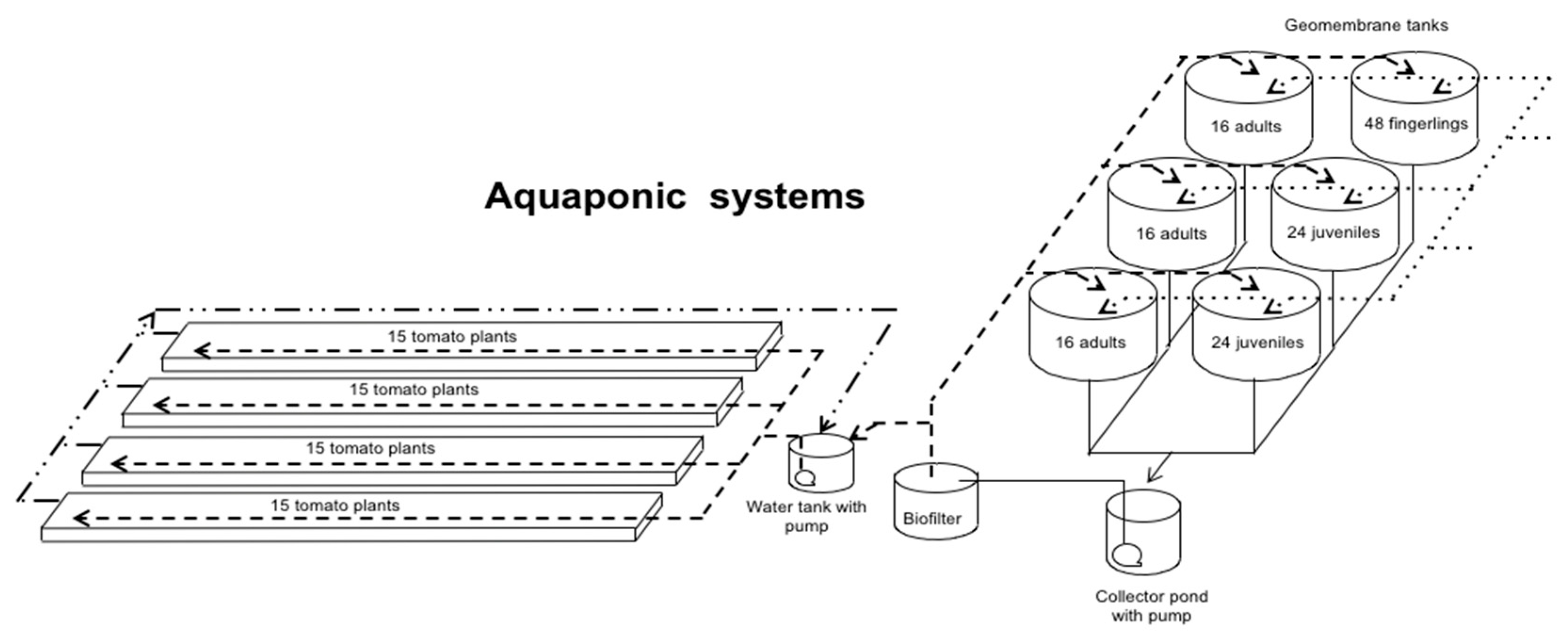
Figure 1. General diagram of the aquaponic system.
Horticulturae 11 01474 g001
Figure 2. General diagram of the control modules (aquaculture and hydroponic).
Horticulturae 11 01474 g002
Figure 3. Cortisol concentrations in the aquaponic system (AS) and the aquaponic module (AM) on days 60 (A), 120 (B), and 180 (C). Values are presented as means ± SD, significant differences (p < 0.05) are indicated with a different superscript.
Horticulturae 11 01474 g003
Figure 4. Glucose concentrations in the aquaponic system (AS) and the aquaponic module (AM) at days 60 (A), 120 (B), and 180 (C). Values are presented as means ± SD, significant differences (p < 0.05) are indicated with a different superscript.
Horticulturae 11 01474 g004
Figure 5. Catalase concentrations in the aquaponic system (AS) and the hydroponic module (HM) at days 60 (A), 120 (B), and 180 (C). Values are presented as means ± SD, significant differences (p < 0.05) are indicated with a different superscript.
Horticulturae 11 01474 g005
Figure 6. Total phenol concentrations in the aquaponic system (AS) and the hydroponic module (HM) at days 60 (A), 120 (B), and 180 (C). Values are presented as means ± SD, significant differences (p < 0.05) are indicated with a different superscript.
Horticulturae 11 01474 g006
Table 1. Description of the specimens by biological stage (fingerling, juveniles, and adults).
Productive StageInitial Weight (Individual)Number of FishNumber of TanksExpected Final Weight (Individual)Expected Final Biomass
Fingerling5.65 ± 0.12 g48150 g2.4 kg
Juvenile51.13 ± 2.73 g242150 g3.6 kg
Adult150.98 ± 8.21 g163250 g4.0 kg
Table 2. Description of the feeding plan used (Malta Cleyton® brand).
StageWeight Range
per Fish
ProteinLipidDaily Percentage of FeedFeeding Times
Fingerling5–20 g45%16%8%8:00 am (30%)
13:00 pm (40%)
18:00 pm (30%)
Fingerling20–50 g45%16%5%
Juvenile50–150 g35%3%4%
Adult150–300 g30%3%2%
Table 3. Description of the irrigation program during the experimental period [19].
StageIrrigation Volume Per Plant Schedules and Irrigation Ration
Vegetative1.5 L10:00 am (30%)
14:00 pm (40%)
16:00 pm (30%)
Flowering2.4 L
Fructification 3.6 L
Maturation2.4 L
Table 4. Water quality of fish tanks in the aquaponic system (AS) and the aquaculture module (AM).
VariableReference Values [44]Aquaponic System (AS)Aquaculture Module (AM)
Temperature (°C)20–3224.1 ± 1.1 a23.7 ± 1.4 a
Dissolved Oxygen
(mg L−1)
4–106.81 ± 0.36 a6.73 ± 0.38 a
pH 5–9 7.8 ± 0.5 a8.1 ± 0.6 a
Nitrates (mg L−1)<10021.05 ± 3.84 b32.02 ± 3.03 a
Nitrites (mg L−1)<51.13 ± 0.76 b2.92 ± 0.85 a
Non-ionized ammonia (mg L−1)<20.81 ± 0.13 b1.19 ± 0.14 a
Values are presented as mean ± standard deviation of samples collected during the experimental period. Values with different superscripts present significant differences (p < 0.05).
Table 5. Water quality of the irrigation tanks of the aquaponic system (AS) and the hydroponic module (HM).
VariableReference Values [19]Aquaponic System (AS)Hydroponic Module (HM)
pH5.5–6.56.3 ± 0.3 a5.7 ± 0.2 b
Dissolved Oxygen
(mg L−1)
5–84.82 ± 0.26 a3.61 ± 0.29 b
Electrical Conductivity (mS)1.5–2.52.2 ± 0.3 a1.6 ± 0.2 b
Values are presented as mean ± standard deviation of samples collected during the experimental period. Values with different superscripts present significant differences (p < 0.05).
Table 6. Growth indicators of O. niloticus during the three production stages in the aquaponic system (AS) and the aquaculture module (AM).
FingerlingJuvenileAdult
VariableASAMASAMASAM
TWG (g)54.66 ± 2.03 a51.33 ± 3.74 a99.79 ± 4.23 a95.53 ± 3.98 ab115.45 ±4.92 a114.43 ±4.78 a
DWG (g)0.91 ± 0.05 a0.85 ± 0.08 a1.66 ± 0.07 a1.59 ± 0.06 a1.92 ± 0.08 a1.90 ± 0.07 a
FCF1.74 ± 0.07 b1.98 ± 0.06 a1.72 ± 0.09 a1.87 ± 0.08 a1.69 ± 0.08 b1.83 ± 0.09 ab
PE1.43 ± 0.06 a1.26 ± 0.06 b1.64 ± 0.06 a1.53 ± 0.08 a1.85 ± 0.05 a1.73 ± 0.09 ab
SGR3.81 ± 0.12 a3.59 ± 0.09 b1.69 ± 0.05 a1.68 ± 0.02 a0.92 ± 0.03 a0.73 ± 0.04 b
CF0.82 ± 0.02 a0.80 ± 0.03 a1.16 ± 0.05 a1.07 ± 0.04 b1.19 ± 0.05 a1.27 ± 0.08 a
SR (%)89.6 ± 2.1 a82 ± 2.0 b94.6 ± 1.5 a93.2 ± 0.9 a97.5 ± 0.9 b100 ± 0.0 a
Values are presented as mean ± standard deviation of samples collected during the experimental period. Values with different superscripts show significant differences (p < 0.05). Total Weight Gain (TWG), Daily Weight Gain (DWG), Feed Conversion Factor (FCF), Protein Efficiency (PE), Specific Growth Rate (SGR), Condition Factor (CF), and Survival Rate (SR).
Table 7. Growth indicators of S. lycopersicum in the flowering, fruiting and maturation stage in the aquaponic system (AS) and the hydroponic module (HM).
FingerlingJuvenileAdult
VariableASHMASHMASHM
PH (cm)52.6 ± 4.1 a53.4 ± 3.9 a72.5 ± 3.2 b84.1 ± 7.2 a117.4 ± 6.8 b134.7 ± 4.2 a
DW (g)135.34 ± 5.42 b145.92 ± 4.73 a 208.79 ±9.37 ab218.02 ± 8.13 a 304.67 ±13.63 b345.86 ±16.52 a
RGR
(g g−1 day−1)
0.085 ± 0.003 b0.102 ± 0.003 a0.024 ± 0.001 b0.033 ± 0.004 a0.020 ± 0.001 b0.025 ± 0.002 a
PSR (%)94.2 ± 2.1 a95.2 ± 1.6 a89.8 ± 1.9 ab94.7 ± 3.2 a85.4 ± 2.1 b97.9 ± 4.1 a
LA (cm2)1285 ± 50 b1840 ± 65 a1780 ± 35 b2445 ± 45 a2345 ± 40 b2895 ± 35 a
LAI1.71 ± 0.06 b2.45 ± 0.10 a 2.37 ± 0.05 b3.26 ± 0.07 a3.12 ± 0.06 b3.86 ± 0.05 a
SLA
(cm2 g−1)
9.49 ± 0.33 b12.61 ± 0.47 a 8.51 ± 0.21 b11.21 ± 0.42 a 7.69 ± 0.22 b8.37 ± 0.23 a
NAR
(gcm−2day−1)
0.0054 ± 0.0002 a0.0053 ± 0.0001 a0.0027 ± 0.0001 a0.0029 ± 0.0001 a0.0025 ± 0.0001 a0.0026 ± 0.0001 a
CGR
(gcm−2day−1)
0.027 ± 0.001 b0.034 ± 0.002 a0.058 ± 0.002 b0.086 ± 0.002 a0.072 ± 0.002 b1.001 ± 0.003 a
Values are presented as mean ± standard deviation of samples collected during the experimental period. Values with different superscripts show significant differences (p < 0.05). Plant Height (PH), Dry Weight (DW), Relative Growth Rate (RGR), Plant Survival Rate (PSR), Leaf Area (LA), Leaf Area Index (LAI), Specific Leaf Area (SLA), Net Assimilation Rate (NAR), and Crop Growth Rate (CGR).
Table 8. Productivity indicators of S. lycopersicum (fruit) and O. niloticus (fish).
TreatmentTotal kg of TomatoTomato Productivity kg m−2Total kg of TilapiaTilapia Productivity kg m−3Water Use Efficiency (kg Fruit and Fish m−3)
AS 32.2 3.2232.636.25.4
AM41.84.1829.232.44.6
The kg of tomato considers a single harvest period during the experimental periodm while for tilapia it considers three harvests. The productivity of the tomato considers 10 m2 of surface used. The productivity of the tilapia considers the projection to m3, which in this work was obtained per 100 L.
Table 9. Quality indicators of O. niloticus (fillet).
Variable Aquaponic System ASAquaculture Module AM
Moisture (%)61.98 ± 0.11 b64.23 ± 0.12 a
Protein (%)28.15 ± 0.81 a24.98 ± 0.73 b
Lipid (%) 3.42 ± 0.16 a3.51 ± 0.14 a
Ash (%)1.71 ± 0.04 a1.42 ± 0.04 b
Nitrogen-Free Extract (%)2.74 ± 0.05 b2.86 ± 0.08 a
Values are presented as mean ± standard deviation of samples collected during the experimental period. Values with different superscripts show significant differences (p < 0.05).
Table 10. Quality indicators of S. licopersicum (fruit).
Variable Aquaponic System ASHydroponic Module AM
pH4.49 ± 0.09 a4.12 ± 0.11 b
SST (°Brix)6.42 ± 0.21 a5.66 ± 0.12 b
TA (%) 0.57 ± 0.04 a0.51 ± 0.03 b
TSS/TA (%)11.26 ± 0.13 a11.09 ± 0.23 a
Lycopene (mg g−1)45.18 ± 0.09 b63.27 ± 0.12 a
Values are presented as mean ± standard deviation of samples collected during the experimental period. Values with different superscripts show significant differences (p < 0.05).
Table 11. Nitrogen use efficiency (NUE) and phosphorus (PUE) in aquaponic system (AS), aquaculture module (AM), and hydroponic module (HM).
VariableAquaponic System ASAquaculture Module AMHydroponic Module HM
NUE23.35 ± 2.41 b11.44 ± 1.33 c49.61 ± 2.28 a
PUE20.71 ± 1.92 b11.45 ± 1.09 c24.82 ± 1.13 a
Values are presented as mean ± standard deviation of samples collected during the experimental period. Values with different superscripts present significant differences (p< 0.05).
Disclaimer/Publisher’s Note: The statements, opinions and data contained in all publications are solely those of the individual author(s) and contributor(s) and not of MDPI and/or the editor(s). MDPI and/or the editor(s) disclaim responsibility for any injury to people or property resulting from any ideas, methods, instructions or products referred to in the content.