Septoria Leaf Spot of Tomatoes: Historical Insights, Present Challenges, and Future Prospects

 ,
,  and
and
Abstract
1. Introduction
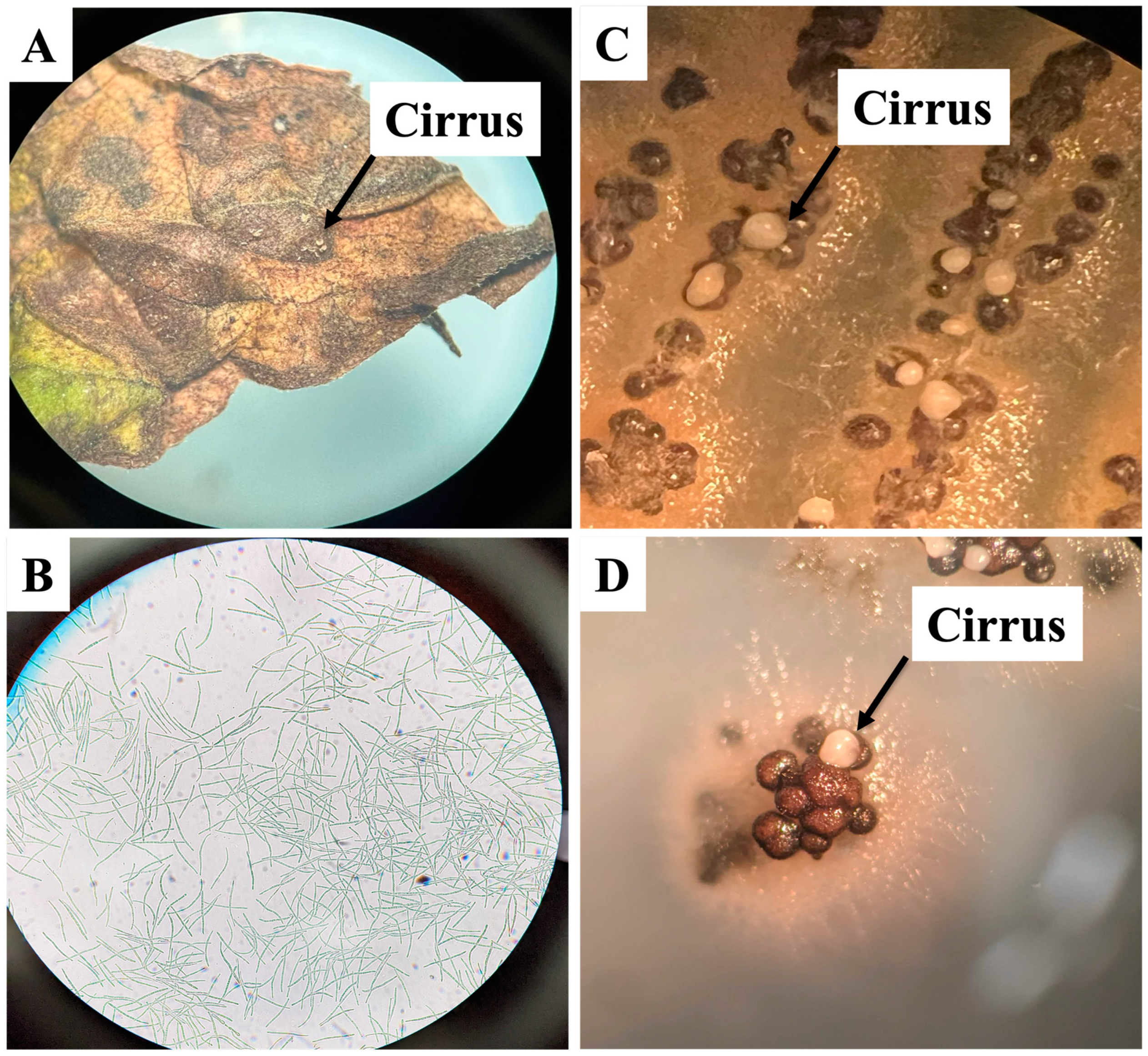
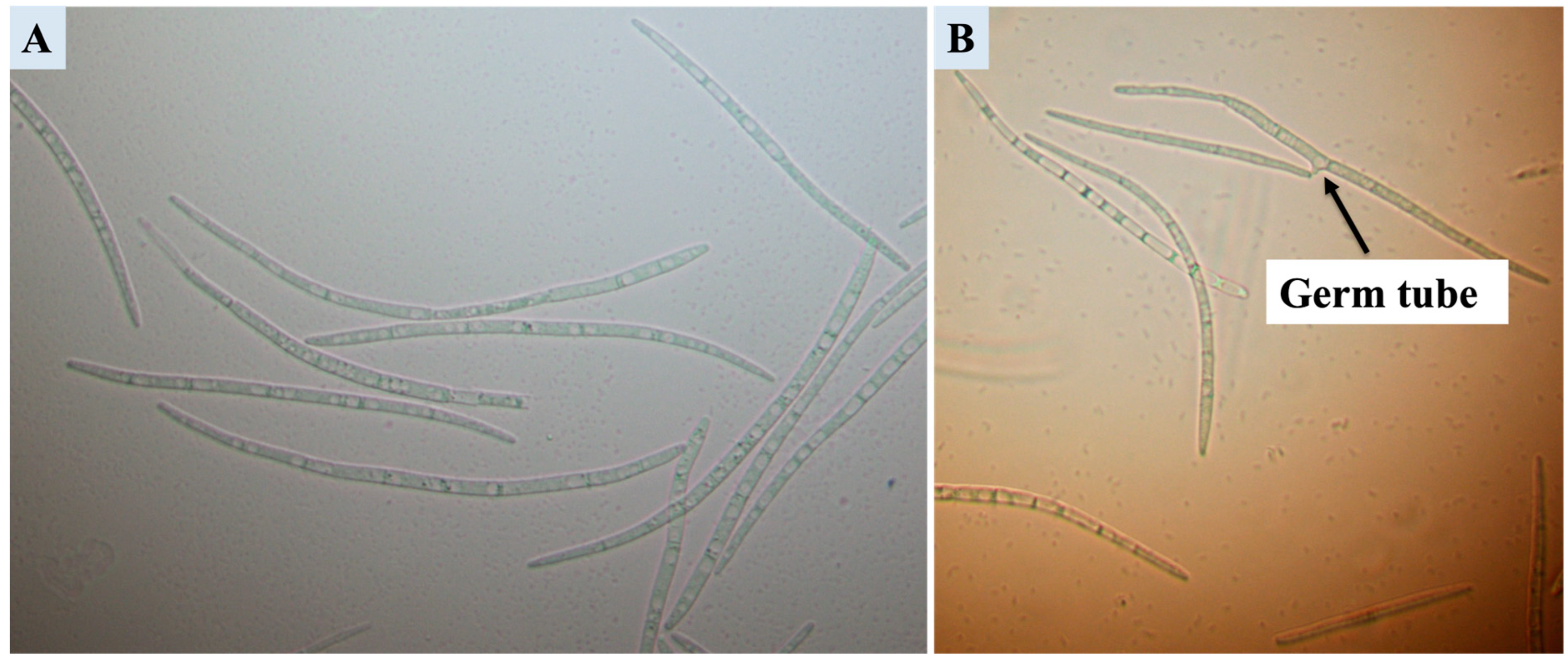
2. The Genus Septoria and Morphology of S. lycopersici
3. Host Range and Disease Distribution
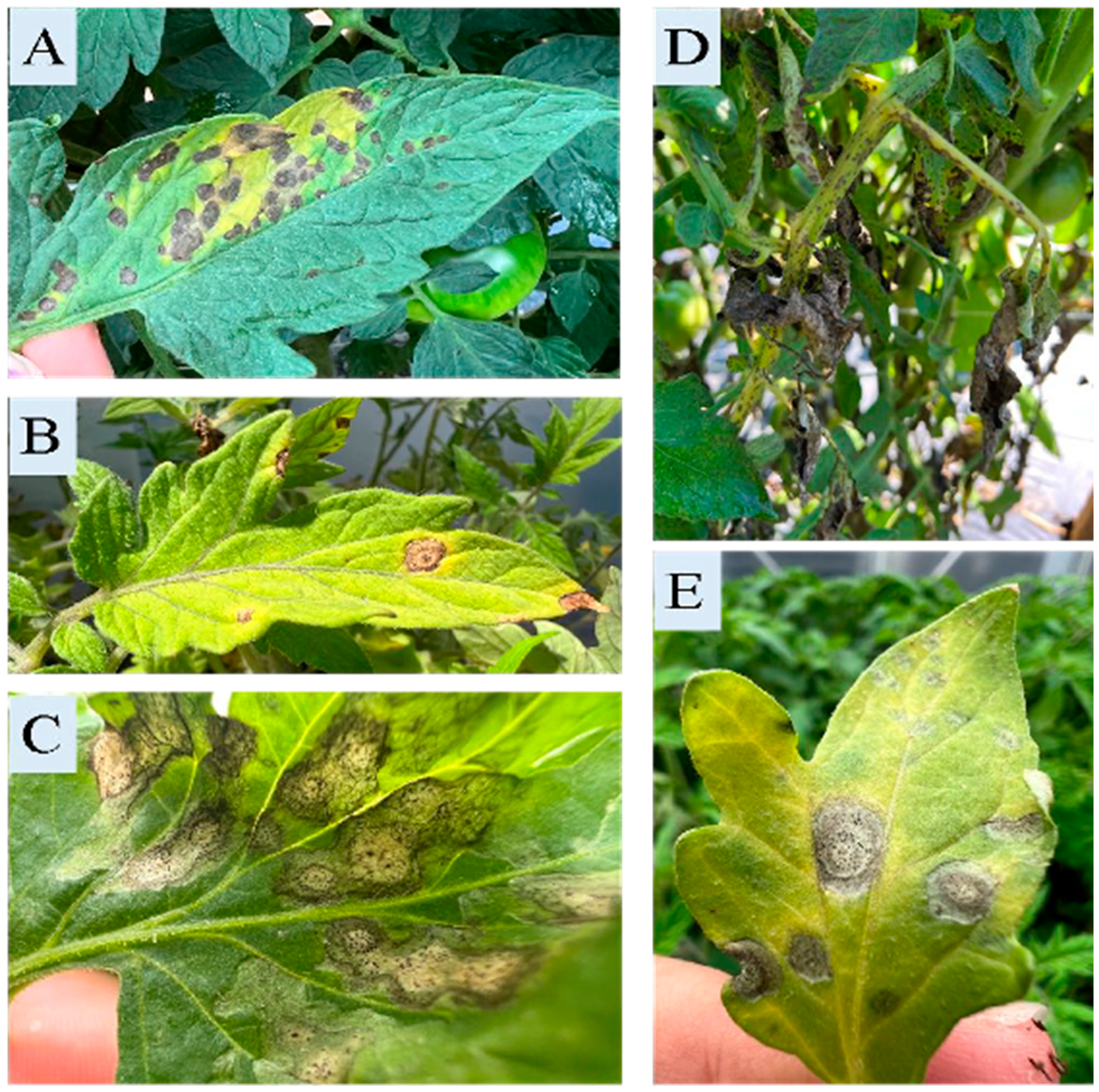
4. Disease Symptoms
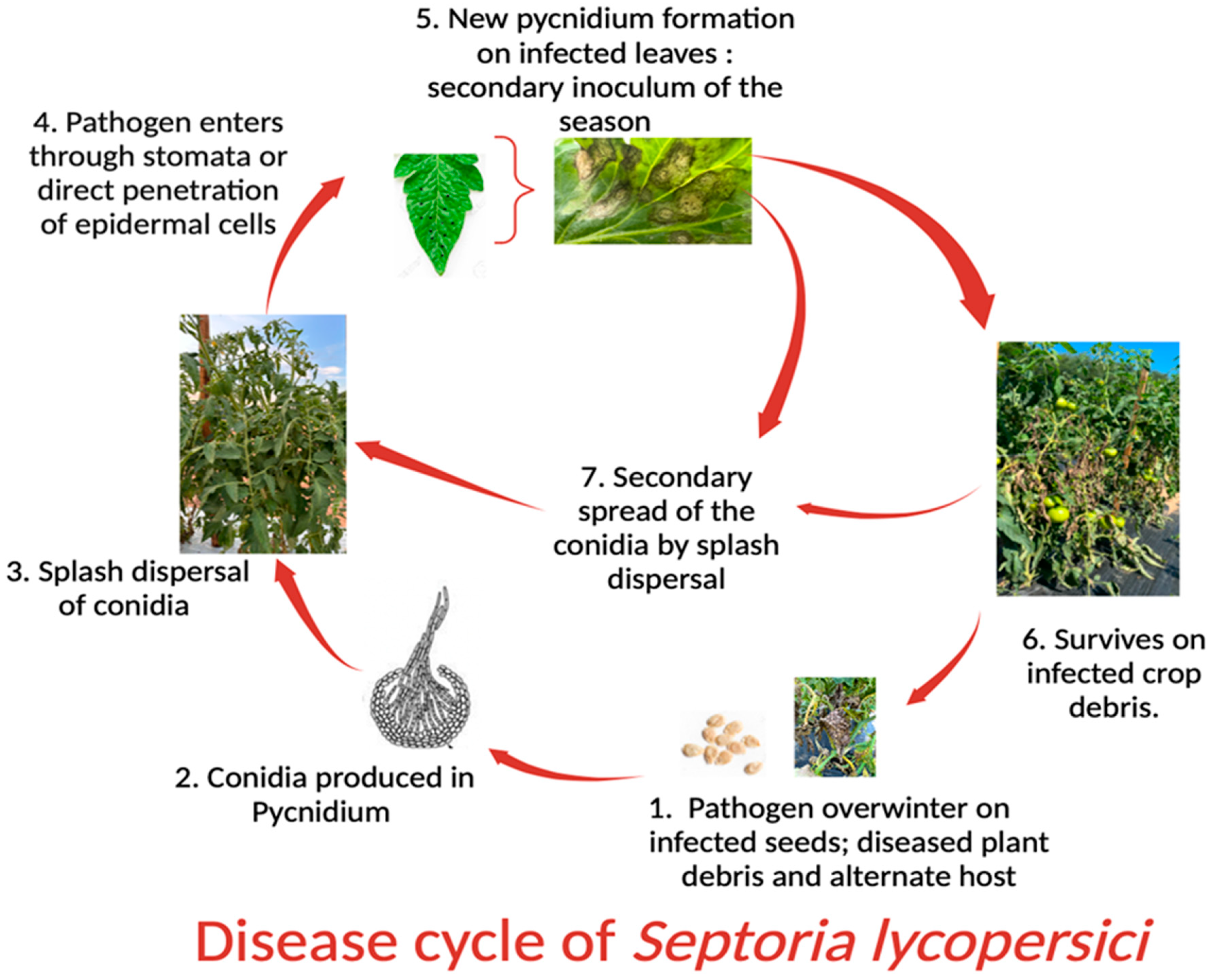
5. Disease Epidemiology
6. Detecting and Identifying Septoria Using Current and Emerging Techniques
7. Pathogenesis
8. Current Disease Management Strategies for SLS
8.1. Cultural Methods
8.2. Chemical Fungicides
8.3. Botanical Pesticides and Inducers of Host Resistances
8.4. Biological Control
8.5. Novel Sources of Disease Resistance

| Solanum/Lycopersicon Species | Host Response | Accession | Reference |
|---|---|---|---|
| S. peruvianum (Syn: Lycopersicon peruvianum) | Highly resistant | LA-1910, CNPH-1036, LA-1984, PI 306811, LA1677, LA2744, LA 1113-1 | [34] |
| LA1675, LA1360, PI251307, PE-33, PI 270435, PI 390655 | [84] | ||
| PI 126944 | [83] | ||
| PI127829 | [33] | ||
| Resistant | LA-0107, LA-1113-2, LA-1270, CGO-6711, LS-121, CGO-6708, CGO-6716, LA-2067, CGO-6709, CNPH-1033, ID-8624, CGO-8200, PI-128660, PI-365951, LA-1626 | [34] | |
| PI 126431, PI 128656, PI 127832 | [19] | ||
| Moderately resistant | LA-1292, LA1304, PI 365951, PI 128654, PI 390671, PE-32, LA1723, LA1983, PE-48, PE-31, PE-22, PI 415127 | [84] | |
| Segregating | PI 126926, PI 126928, PI 126930, PI 126944, PI 126945, PI 126946, | [19] | |
| S. peruvuanum (Syn: L. peruvianum var. dentatum) | Segregating | PI 128645, PI 128652, PI 128653, PI 128655 | [19] |
| S. hirsutum (Syn: L. hirsutum) | Highly resistant | LA-2100, LA-2650, LA-2204, PE-36 | [84] |
| PI 126445 | [34] | ||
| Resistant | LA-1366, LA-2124, LA-255 | [84] | |
| PI 126446, PI 126447, PI 127826, PI 126936 | [19] | ||
| Moderately resistant | PI 365934, PE-34, PI 390513, PI 251305 | [84] | |
| S. habrochaites | Highly resistant | CNPH-1112 | [34] |
| Resistant | WIR-3611, PI 126445, PI 134417, PI 127826, PI 134418, PI 127827, WYR-7924, L-03683 | [34] | |
| S. pimpinellifolium (Syn: L. pimpinellifolium) | Highly resistant | PI 422397 | [70] |
| LA 0722 | [33] | ||
| Resistant | PI 126925, LA 1342, CNPH-0769 | [34] | |
| Moderately resistant | PI 422397, LYCA/66, PE-8, PE-12, PE-3, PE-14 | [84] | |
| S. lycopersicum (Syn: L. esculentum) | Highly resistant | LA1800 | [83] |
| Resistant | Hawaii 7996, Santa Cruz | [34] | |
| Moderately resistant | PI 111406, PI 372364, PI 427149, PI 438875, PI 97321, PI 262892, PI 270418, PI 312188, PI 452027 | [84] | |
| S. lycopersicum var cerasiforme (Syn: L. esculentum var. cerasiforme) | Moderately resistant | PE 64, PE 69, PE 78 | [84] |
| S. chilense (Syn: L. chilense) | Highly resistant | LA 460 | [33] |
| Resistant | LA 1967 | [34] | |
| Moderately resistant | LA 1960, LA 2404 | [84] | |
| S. lycopersicum × S. peruvianum | Highly resistant | TX-407, CNPH-0979 | [34] |
| Resistant | TX-410, TX-412, CNPH 0980 | [34] | |
| S. cerasiforme | Resistant | CNPH-0633 | [34] |
| S. corneliomulleri J. F. Macbr. | Resistant | PI 126448 | [85] |
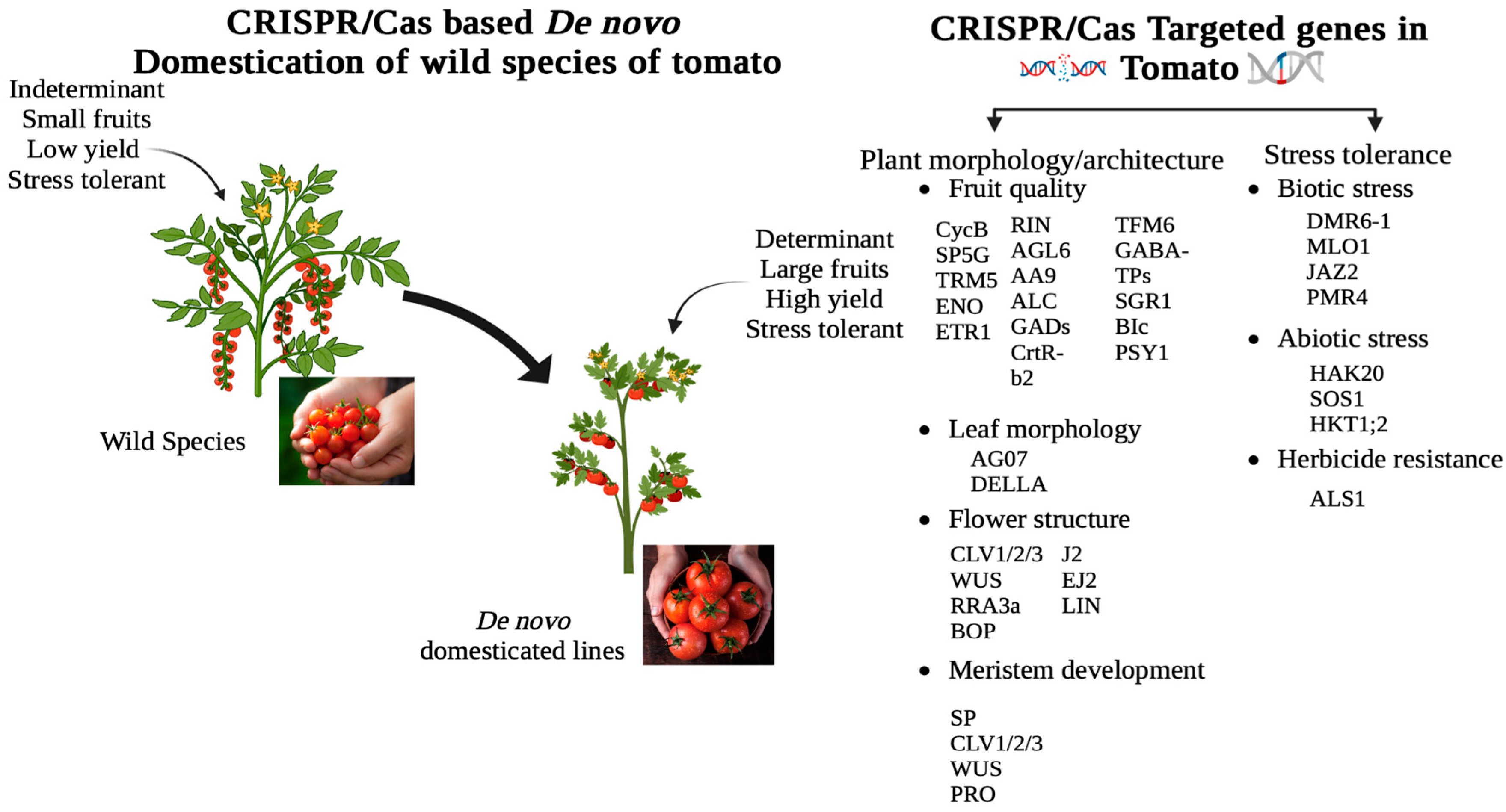
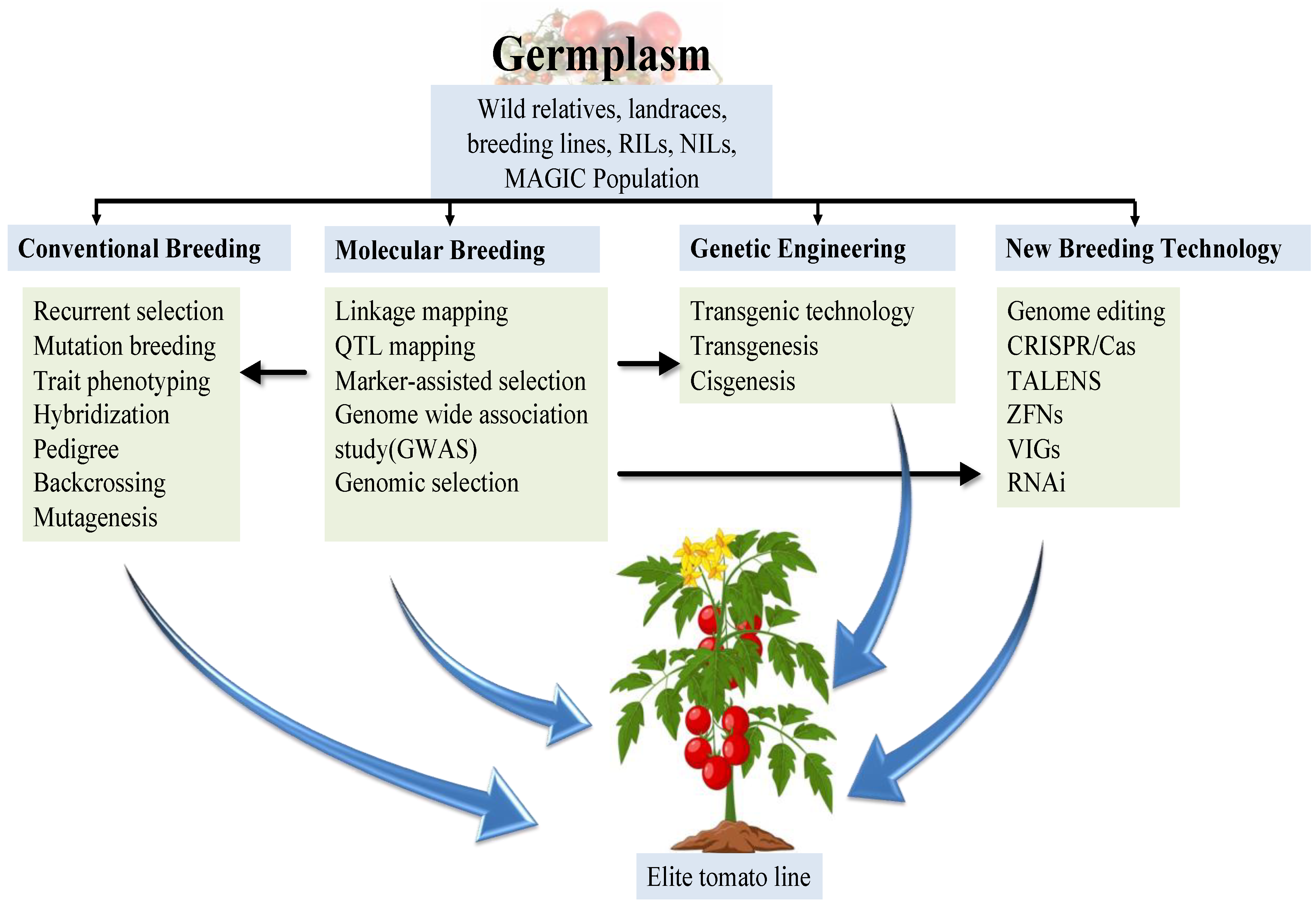
9. Potential Genomic Tools and Modern Breeding Approaches: Implications for S. lycopersici
| Target Gene | Gene Function | CRISPR Process | Effects | Tomato Pathogens | Reference |
|---|---|---|---|---|---|
| SlJAZ2 | Co-receptor of Coronatine (COR) in stomatal cells | Knock out | Prevents stomatal re-opening by COR and provides resistance to Pseudomonas syringae | Pseudomonas syringae | [127] |
| SlDMR6-1 | Susceptibility gene that transforms salicylic acid (SA) into inactive form or plays a function in SA homeostasis. | Inactivation/knock out | Inactivation of the gene enhance disease resistance with increase SA levels and transcriptional activation of immune response | P. syringae; Xanthomonas spp.; Phytopthora capsici | [128,129] |
| Solyc08g075770 | Encodes a short transmembrane protein with potential phosphorylation and glycosylation sites. | Knock out | Knockout of the genes increased susceptibility indicating its R-gene function. | Fusarium oxysporum f.sp. lycopersici | [130] |
| SlMAPK3; SlMYC2 | Negative regulator of jasmonic acid (JA) signaling | Knock out | Activates defense enzymes and enhances the accumulation of reactive oxygen species (ROS) | Botrytis cinerea | [131] |
| SlPLC2 | Susceptibility gene, triggered during xylanase infiltration (fungal elicitor) and increasing ROS generation resulting in ROS-induced cell death for fungal proliferation. | Knock out | Knockout of the gene reduces ROS and increases and reduces JA and SA response marker genes, respectively. | Botrytis cinerea | [132] |
| PMR4 | A susceptibility gene involved in the accumulation of callose at infection sites | Knock out | Confer resistance to PM by complete lack of callose-infected leaves | Oidium neolycopersici | [133] |
| SlPelo | Susceptibility gene for TYLCV | Knock out | Mutation in the gene suppresses the accumulation of TYLCV and restricts the spread to non-inoculated plant parts. | Tomato yellow leaf curl virus (TYLCV) | [134] |
| Coat protein (CP) and Rep (Replicase) | TYLCV genes are involved in the encapsidation of genome and virus movement and vector recognition. | Knock out | Transgenic tomato plants show efficient virus interference with low accumulation of TYLCV DNA genome | Tomato yellow leaf curl virus (TYLCV) | [135] |
| rgsCaM | Inducible promoter and an endogenous silencer of RNAi and overexpressed after a virus attack. | Gene insertion | Efficient reduction in virus load in Cas9_sgRNA inoculated plants and the catalytically active rgsCaM promoter in the CRISPR construct | Tomato yellow leaf curl virus (TYLCV) | [136] |
| DCL2b | Small RNA involved in post-transcriptional gene silencing (PTGs) and antiviral defense against tomato mosaic virus | Knock out | Mutants with dcl2b genes show severe symptoms of viral infection under the natural and manual inoculated condition | Tomato mosaic virus (ToMV) | [137] |
| eIF4E2 | Translation initiation factor 4E, susceptibility factor to genus of Potyviridae | Knock out | Shows variation in resistance against different isolates of Pepper veinal mottle virus (PYMV) | Pepper veinal mottle virus (PYMV) | [138] |
| MiR482 | Conserved and large gene families play essential functions in regulating plant defense systems by targeting transcripts with nucleotide binding sites -leucine-rich repeat (NBS-LRR) motifs. | Knock out | Simultaneous knockout of MIR482b and MIR482c genes confer resistance to Phytophthora infestans | P. infestans | [139] |
| SlMYBS2 | Regulates the ROS level and the expression level of PR genes and confers resistance to P. infestans | Knock out | Knockout of the gene makes the plant susceptible to the pathogen | P. infestans | [140] |
| SlPMR4 | Susceptibility gene responsible for callose production in response to biotic and abiotic stresses | Knock out | Confers tolerance to P. infestans and O. neolycopersici | P. infestans; O. neolycopersici | [133,141] |
| XSP10 and SISAMT | Xylem sap protein (XSP) and Salicylic acid methyltransferase (SISAMT) both act as susceptibility factors for Fusarium. XSP promotes compatibility with Fusarium oxysporum f. sp. lycopersici (Fol), facilitating its colonization in tomato plant roots and contributing to disease symptom development. Meanwhile, SISAMT catalyzes the conversion of salicylic acid to methylsalicylate, thereby reducing the host’s defense against multiple pathogen attacks. | Knock out | Dual-gene editing confers strong phenotypic resistance against Fol | Fusarium oxysporum f.sp. lycopersici | [142] |
| DDTFR10/A | The differentially displayed tomato fruit ripening (DDTFR) gene is induced by ethylene and classified as an ethylene response element binding protein. | Knock out | Knockout of the gene increased Fol resistance in tomato | Fusarium oxysporum f.sp. lycopersici | [143] |
| SlTOM1a and SlTOM3 | Tobamovirus multiplication (TOM) susceptibility proteins interact directly with the tobamovirus replication protein, facilitating the assembly of the viral replication complex. | Knock out | Simultaneous knockout of both genes increases resistance against the tomato brown rugose fruit virus. | ToBRFV (tomato brown rugose fruit virus) | [144] |
10. Conclusions and Future Prospects
Author Contributions
Funding
Data Availability Statement
Conflicts of Interest
References
- USDA, NASS (United States Department of Agriculture). National Agricultural Statistics Service; USDA: Washington, DC, USA, 2020. [Google Scholar]
- FAO. FAOSTAT; FAO: Rome, Italy, 2024. [Google Scholar]
- Mordor Intelligence Tomato Market—Report, Production & Industry Size. 2024. Available online: https://www.mordorintelligence.com/industry-reports/tomato-market# (accessed on 5 July 2024).
- FAOSTAT Crop and Livestock Products. Available online: https://www.fao.org/faostat/en/#data/QCL (accessed on 2 June 2024).
- Bond, J.K.; Minor, T. USDA ERS—Chart Detail. Available online: https://www.ers.usda.gov/data-products/chart-gallery/gallery/chart-detail/?chartId=92865 (accessed on 22 February 2023).
- Adhikari, P.; Oh, Y.; Panthee, D.R. Current Status of Early Blight Resistance in Tomato: An Update. Int. J. Mol. Sci. 2017, 18, 2019. [Google Scholar] [CrossRef] [PubMed]
- Keskse, D.; Hailu, N.; Belete, E. Integrated Management of Tomato Late Blight (Phytophtra infestans (Mont.) of Tomato (Lycopersicon esculentum MILL.) at Ataye and Shewarobit Districts. J. Plant Sci. 2019, 7, 63–71. [Google Scholar]
- Ferrandino, F.J.; Elmer, W.H. Reduction in Tomato Yield Due to Septoria Leaf Spot. Plant Dis. 1992, 76, 208–211. [Google Scholar] [CrossRef]
- Kator, L.; Kalu, O.J.; Umgbeb, A.M. Evaluation of the Disease Causing Potential of Sclerotium rolfsii on Tomato Cultivars in Bioassay (Pathogenicity Test). Ann. Biol. Res. 2015, 6, 7–15. [Google Scholar]
- Juroszek, P.; Racca, P.; Link, S.; Farhumand, J.; Kleinhenz, B. Overview on the Review Articles Published during the Past 30 Years Relating to the Potential Climate Change Effects on Plant Pathogens and Crop Disease Risks. Plant Pathol. 2020, 69, 179–193. [Google Scholar] [CrossRef]
- Panthee, D.R.; Pandey, A.; Paudel, R. Multiple Foliar Fungal Disease Management in Tomatoes: A Comprehensive Approach. Int. J. Plant Biol. 2024, 15, 69–93. [Google Scholar] [CrossRef]
- Crous, P.W.; Kang, J.-C.; Braun, U. A Phylogenetic Redefinition of Anamorph Genera in Mycosphaerella Based on ITS RDNA Sequence and Morphology. Mycologia 2001, 93, 1081–1101. [Google Scholar] [CrossRef]
- Verkley, G.J.M.; Crous, P.W.; Groenewald, J.Z.; Braun, U.; Aptroot, A. Mycosphaerella punctiformis Revisited: Morphology, Phylogeny, and Epitypification of the Type Species of the Genus Mycosphaerella (Dothideales, Ascomycota). Mycol. Res. 2004, 108, 1271–1282. [Google Scholar] [CrossRef]
- Verkley, G.J.M.; Quaedvlieg, W.; Shin, H.D.; Crous, P.W. A New Approach to Species Delimitation in Septoria. Stud. Mycol. 2013, 75, 213–305. [Google Scholar] [CrossRef]
- Kirk, P.M.; Cannon, P.F.; Stalpers, J.; Minter, D.W. Dictionary of the Fungi, 10th ed.; CABI Publishing: Wallingford, UK, 2008; p. 708. [Google Scholar]
- Beach, W.S. Biological Specialization in the Genus Septoria; University of Illinois at Urbana-Champaign: Ann Arbor, MI, USA, 1918. [Google Scholar]
- Meadows, I.; Clabby, T. Septoria Leaf Spot of Tomato|NC State Extension Publications. Available online: https://content.ces.ncsu.edu/septoria-leaf-spot-of-tomato (accessed on 30 September 2022).
- Douglas, S.M. Septoria Leaf Spot of Tomato. J. Conn. Agric. Exp. Stn. 2008, 1–3. [Google Scholar]
- Lincoln, R.E.; Cummins, G.B. Septoria Blight Resistance in the Tomato. Phytopathology 1949, 39, 647–655. [Google Scholar]
- Ferrandino, F.J.; Elmer, W.H. Septoria Leaf Spot Lesion Density on Trap Plants Exposed at Varying Distances from Infected Tomatoes. Plant Dis. 1996, 80, 1059–1062. [Google Scholar] [CrossRef]
- da Costa, C.A.; Lourenço, V.; Santiago, M.F.; Veloso, J.S.; Reis, A. Molecular Phylogenetic, Morphological, and Pathogenic Analyses Reveal a Single Clonal Population of Septoria lycopersici with a Narrower Host Range in Brazil. Plant Pathol. 2022, 71, 621–633. [Google Scholar] [CrossRef]
- Harris, A. Morphologic Studies of Septoria lycopersici. Phytopathology 1935, 25, 790–799. [Google Scholar]
- Shin, H.-D.; Sameva, E.F.; Kim, J.-D. Morphometric Studies on the Genus Septoria in Korea (I). Mycobiology 2001, 29, 145–153. [Google Scholar] [CrossRef]
- MacNeill, B.H. Studies in Septoria lycopersici Speg. Can. J. Res. 1950, 28c, 645–672. [Google Scholar] [CrossRef]
- Barksdale, T.H. Control of an Epidemic of Septoria Leaf Spot of Tomato by Resistance. Plant Dis. 1982, 66, 239–240. [Google Scholar] [CrossRef]
- Seymour, C.P.; Ridings, W.H. Septoria Leaf Spot of Tomato; Florida Department of Agriculture & Consumer Services: Division of Plant Industry: Gainesville, FL, USA, 1980. [Google Scholar]
- UK, CAB International. Septoria lycopersici. Distrib. Maps Plant Dis. 1982. [Google Scholar] [CrossRef]
- Farr, D.F.; Rossman, A.Y. Fungal Databases, U.S. National Fungus Collections. Available online: https://nt.ars-grin.gov/fungaldatabases/ (accessed on 30 September 2022).
- Thaler, J.S.; Owen, B.; Higgins, V.J. The Role of the Jasmonate Response in Plant Susceptibility to Diverse Pathogens with a Range of Lifestyles. Plant Physiol. 2004, 135, 530–538. [Google Scholar] [CrossRef]
- Smart, A.; Watt, B.; Novak, A. Septoria Leaf Spot of Tomato. Cooperative Extension: Insect Pests, Ticks and Plant Diseases; University of Maine Cooperative Extension: Orono, ME, USA, 2019. [Google Scholar]
- Kapooria, R.G.; Ndunguru, J. Rare Symptoms and Conidial Variation in Septoria lycopersici in Zambia. Mycopathologia 1998, 142, 101–105. [Google Scholar] [CrossRef]
- Sotirova, V.; Rodeva, R. Sources of Resistance in Tomato to Septoria lycopersici Speg. Arch. Phytopathol. Plant Prot. 1990, 26, 469–471. [Google Scholar] [CrossRef]
- Rodeva, R.; Ivanova, B.; Stoyanova, Z.; Stefanov, D.; Manåva, S. Resistance Components to Septoria lycopersici in Tomato. Acta Hortic. 2009, 808, 45–49. [Google Scholar] [CrossRef]
- Satelis, J.F.; Boiteux, L.S.; Reis, A. Resistance to Septoria lycopersici in Solanum (Section Lycopersicon) Species and in Progenies of S. lycopersicum × S. peruvianum. Sci. Agric. 2010, 67, 334–341. [Google Scholar] [CrossRef]
- Panno, S.; Davino, S.; Caruso, A.G.; Bertacca, S.; Crnogorac, A.; Mandić, A.; Noris, E.; Matić, S. A Review of the Most Common and Economically Important Diseases That Undermine the Cultivation of Tomato Crop in the Mediterranean Basin. Agronomy 2021, 11, 2188. [Google Scholar] [CrossRef]
- Elmer, W.H.; Ferrandino, F.J. Influence of Spore Density, Leaf Age, Temperature, and Dew Periods on Septoria Leaf Spot of Tomato. Plant Dis. 1995, 79, 287–290. [Google Scholar] [CrossRef]
- Endrinal, D.M.; Geling, M.S. Septoria Leaf Spot of Tomato. Philipp. Agric. 1940, 29, 593–610. [Google Scholar]
- Blum, L.E.B. Reduction of Incidence and Severity of Septoria lycopersici Leaf Spot of Tomato with Bacteria and Yeasts. Cienc. Rural 2000, 30, 761–765. [Google Scholar] [CrossRef]
- Delahaut, K.; Stevenson, W. Tomato Disorders: Early Blight and Septoria Leaf Spots; Cooperative Extension Publishing: Madison, WI, USA, 2004. [Google Scholar]
- Agrios, G. Plant Pathology, 5th ed.; Academic Press: Cambridge, MA, USA, 2005; pp. 1–922. ISBN 9780080473789. [Google Scholar] [CrossRef]
- Sherf, A.F.; MacNab, A.A. Vegetable Diseases and Their Control; John Wiley & Sons: Hoboken, NJ, USA, 1986; pp. 1–736. ISBN 978-0-471-05860-1. [Google Scholar]
- Sohi, H.S.; Sokhi, S.S. Morphological, Physiological and Pathological Studies in Septoria lycopersici. Indian Phytopathol. 1974, 26, 666–673. [Google Scholar]
- Martin-Hernandez, A.M.; Dufresne, M.; Hugouvieux, V.; Melton, R.; Osbourn, A. Effects of Targeted Replacement of the Tomatinase Gene on the Interaction of Septoria lycopersici with Tomato Plants. Mol. Plant-Microbe Interact. 2000, 13, 1301–1311. [Google Scholar] [CrossRef]
- Nature Garden. Septoria—A Leaf Spot Fungus You’ve Met Before. Organic Treatment & More. Available online: https://www.nature-and-garden.com/gardening/septoria.html (accessed on 26 September 2023).
- Ponomarenko, A.; Goodwin, S.B.; Kema, G.H.J. Septoria Tritici Blotch (STB) of Wheat. Plant Health Instr. 2011, 10. [Google Scholar] [CrossRef]
- Kashyap, A.S. Studies on Leaf Spot of Tomato Caused by Septoria Lycopersici Speg. Master’s Thesis, Department of Plant Pathology, College of Agriculture, Dharwad University of Agriculture Sciences, Dharwad, India, 2013. [Google Scholar]
- Adhikari, T.; Balaji, B.; Breeden, J.; Anderson, J.; Goodwin, S.-S. Quantification of Mycosphaerella graminicola in Wheat with Real-Time PCR. Phytopathology 2004, 94, S2. [Google Scholar]
- Henderson, J.; Pattemore, J.A.; Porchun, S.C.; Hayden, H.L.; Van Brunschot, S.; Grice, K.R.E.; Peterson, R.A.; Thomas-Hall, S.R.; Aitken, E.A.B. Black Sigatoka Disease: New Technologies to Strengthen Eradication Strategies in Australia. Australas. Plant Pathol. 2006, 35, 181–193. [Google Scholar] [CrossRef]
- Ristaino, J.B.; Saville, A.C.; Paul, R.; Cooper, D.C.; Wei, Q. Detection of Phytophthora infestans by Loop-Mediated Isothermal Amplification, Real-Time LAMP, and Droplet Digital PCR. Plant Dis. 2020, 104, 708–716. [Google Scholar] [CrossRef] [PubMed]
- Mahas, A.; Hassan, N.; Aman, R.; Marsic, T.; Wang, Q.; Ali, Z.; Mahfouz, M.M.; Savenkov, E.; Nemes, K. LAMP-Coupled CRISPR-Cas12a Module for Rapid and Sensitive Detection of Plant DNA Viruses. Viruses 2021, 13, 466. [Google Scholar] [CrossRef] [PubMed]
- Fan, Z.; Mei, Y.; Xing, J.; Chen, T.; Hu, D.; Liu, H.; Li, Y.; Liu, D.; Liu, Z.; Liang, Y. Loop-Mediated Isothermal Amplification (LAMP)/Cas12a Assay for Detection of Ralstonia solanacearum in Tomato. Front. Bioeng. Biotechnol. 2023, 11, 1188176. [Google Scholar] [CrossRef]
- Mancini, V.; Murolo, S.; Romanazzi, G. Diagnostic Methods for Detecting Fungal Pathogens on Vegetable Seeds. Plant Pathol. 2016, 65, 691–703. [Google Scholar] [CrossRef]
- Nagasubramanian, K.; Jones, S.; Singh, A.K.; Sarkar, S.; Singh, A.; Ganapathysubramanian, B. Plant Disease Identification Using Explainable 3D Deep Learning on Hyperspectral Images. Plant Methods 2019, 15, 98. [Google Scholar] [CrossRef]
- Fuentes, A.; Yoon, S.; Kim, S.C.; Park, D.S. A Robust Deep-Learning-Based Detector for Real-Time Tomato Plant Diseases and Pests Recognition. Sensors 2017, 17, 2022. [Google Scholar] [CrossRef]
- Osbourn, A.; Bowyer, P.; Lunness, P.; Clarke, B.; Daniels, M. Fungal Pathogens of Oat Roots and Tomato Leaves Employ Closely Related Enzymes to Detoxify Different Host Plant Saponins. MPMI-Mol. Plant Microbe Interact. 1995, 8, 971–978. [Google Scholar] [CrossRef]
- Arneson, P.A.; Durbin, D.R. Hydrolysis of Tomatine by Septoria lycopersici: A Detoxification Mechanism. Phytopathology 1967, 57, 1358–1360. [Google Scholar]
- Kavroulakis, N.; Ntougias, S.; Zervakis, G.I.; Ehaliotis, C.; Haralampidis, K.; Papadopoulou, K.K. Role of Ethylene in the Protection of Tomato Plants against Soil-Borne Fungal Pathogens Conferred by an Endophytic Fusarium solani Strain. J. Exp. Bot. 2007, 58, 3853–3864. [Google Scholar] [CrossRef]
- Mandal, S.; Kar, I.; Mukherjee, A.K.; Acharya, P. Elicitor-Induced Defense Responses in Solanum Lycopersicum against Ralstonia solanacearum. Sci. World J. 2013, 2013, 561056. [Google Scholar] [CrossRef] [PubMed]
- Chakraborty, N.; Ghosh, S.; Chandra, S.; Sengupta, S.; Acharya, K. Abiotic Elicitors Mediated Elicitation of Innate Immunity in Tomato: An Ex Vivo Comparison. Physiol. Mol. Biol. Plants 2016, 22, 307–320. [Google Scholar] [CrossRef] [PubMed]
- Yang, N.; McDonald, M.C.; Solomon, P.S.; Milgate, A.W. Genetic Mapping of Stb19, a New Resistance Gene to Zymoseptoria tritici in Wheat. Theor. Appl. Genet. 2018, 131, 2765–2773. [Google Scholar] [CrossRef] [PubMed]
- Flor, H.H. Current Status of the Gene-for-Gene Concept. Annu. Rev. Phytopathol. 1971, 9, 275–296. [Google Scholar] [CrossRef]
- Jones, J.D.G.; Dangl, J.L. The Plant Immune System. Nature 2006, 444, 323–329. [Google Scholar] [CrossRef]
- Thomma, B.P.H.J.; Nürnberger, T.; Joosten, M.H.A.J. Of PAMPs and Effectors: The Blurred PTI-ETI Dichotomy. Plant Cell 2011, 23, 4–15. [Google Scholar] [CrossRef]
- Pritchard, L.; Birch, P.R.J. The Zigzag Model of Plant-Microbe Interactions: Is It Time to Move On? Mol. Plant Pathol. 2014, 15, 865–870. [Google Scholar] [CrossRef]
- Naveed, Z.A.; Wei, X.; Chen, J.; Mubeen, H.; Ali, G.S. The PTI to ETI Continuum in Phytophthora-Plant Interactions. Front. Plant Sci. 2020, 11, 593905. [Google Scholar] [CrossRef]
- Mapuranga, J.; Zhang, L.; Zhang, N.; Yang, W. The Haustorium: The Root of Biotrophic Fungal Pathogens. Front. Plant Sci. 2022, 13, 963705. [Google Scholar] [CrossRef]
- Mapuranga, J.; Zhang, N.; Zhang, L.; Chang, J.; Yang, W. Infection Strategies and Pathogenicity of Biotrophic Plant Fungal Pathogens. Front. Microbiol. 2022, 13, 799396. [Google Scholar] [CrossRef] [PubMed]
- Hudson, B. Septoria Leaf Spot; Wisconsin Horticulture: Madison, WI, USA, 2012. [Google Scholar]
- Watt, B.A. Pest Management, Fact Sheet. Septoria Leaf Spot of Tomato; University of Maine Cooperative Extension: Orono, ME, USA, 2004. [Google Scholar]
- Barksdale, T.H.; Stoner, A.K. Resistance in Tomato to Septoria lycopersici. Plant Dis. Rep. 1978, 67, 844–847. [Google Scholar]
- Rahman, M.; Dudding, W. Evaluation of Fungicides for Controlling Septoria Leaf Spot on Tomato in West Virginia. Plant Dis. Manag. Rep. APS 2023, 17, V165. [Google Scholar]
- Dutta, B.; Foster, M.J. Evaluation of Fungicides for Control of Septoria Leaf Spot on Tomato, Georgia 2017. Plant Dis. Manag. Rep. APS 2018, 12, V066. [Google Scholar]
- Baldicera, A.K.; Bogo, A.; Nerbass, F.R.; Becker, W.F.; Casa, R.T.; da Silva, F.N. Sensitivity of Septoria lycopersici Isolates and Effectiveness of Fungicides for the Control of Septoria Leaf Spot in Tomato. Rev. Ciências Agroveterinárias 2020, 19, 159–170. [Google Scholar] [CrossRef]
- Wyenandt, C.A.; Rhodes, L.H.; Riedel, R.M.; Bennett, M.A. Cover Crop Mulch and Fungicide Program Affect Development of Septoria Leaf Spot and Marketable Yield in Processing Tomato Production. HortScience 2008, 43, 807–810. [Google Scholar] [CrossRef]
- Corkley, I.; Fraaije, B.; Hawkins, N. Fungicide Resistance Management: Maximizing the Effective Life of Plant Protection Products. Plant Pathol. 2022, 71, 150–169. [Google Scholar] [CrossRef]
- Mani, S.D.; Pandey, S.; Govindan, M.; Muthamilarasan, M.; Nagarathnam, R. Transcriptome Dynamics Underlying Elicitor-Induced Defense Responses against Septoria Leaf Spot Disease of Tomato (Solanum lycopersicum L.). Physiol. Mol. Biol. Plants 2021, 27, 873–888. [Google Scholar] [CrossRef]
- Sindushree, D.R.; Hegde, G.M.; Hegde, Y.R. Invitro Evaluation of Botanicals and ITKs against Septoria lycopersici Causing Septoria Leaf Spot of Tomato. Int. J. Curr. Microbiol. App. Sci. 2020, 9, 407–415. [Google Scholar] [CrossRef]
- Hegde, G.M.; Malligawad, L.H.; Sreenivasa, M.N.; Chetri, B.K. Role of Plant Growth Promoting Microbes in the Control of Fungal Foliar Diseases of Tomato under Protected Cultivation. Egypt. J. Biol. Pest Control 2022, 32, 105. [Google Scholar] [CrossRef]
- da Cruz, M.P.; Felipini, R.B.; Cardozo, M.M.; Mazaro, S.M.; Di Piero, R.M. Ganoderma lucidum Mycelial Growth Filtrate and the Mycelial Extract Increase Defense Responses against Septoria Leaf Spot in Tomato. Biol. Control 2022, 173, 105002. [Google Scholar] [CrossRef]
- Sain, S.K.; Pandey, A.K. Biological Spectrum of Trichoderma harzianum Rifai Isolates to Control Fungal Diseases of Tomato (Solanum lycopersicon L.). Arch. Phytopathol. Plant Prot. 2016, 49, 507–521. [Google Scholar] [CrossRef]
- Grabowski, M. Tomato Leaf Spot Diseases|UMN Extension. Available online: https://extension.umn.edu/plant-diseases/tomato-leaf-spot-diseases (accessed on 2 December 2024).
- George, H. How to Identify and Control Septoria Leaf Spot on Tomatoes. Gardner’s Path 2021. Available online: https://gardenerspath.com/how-to/disease-and-pests/septoria-leaf-spot-tomatoes/#How-the-Disease-Spreads (accessed on 2 December 2024).
- Andrus, C.F.; Reynard, G.B. Resistance to Septoria Leaf Spot and Its Inheritance in Tomatoes. Phytopathology 1945, 35, 16–24. [Google Scholar]
- Poysa, V.; Tul, J.C. Response of Cultivars and Breeding Lines of Lycopersicon spp. to Septoria lycopersici. Can. Plant Dis. Surv. 1993, 73, 9–13. [Google Scholar]
- Kurozawa, C.; Balmer, E. Variability of Septoria lycopersici Speg., Causal Agent of Tomato Leaf Spot. Arq. Do Inst. Biol. 1975, 42, 17–22. [Google Scholar]
- Foolad, M.R. Genome Mapping and Molecular Breeding of Tomato. Int. J. Plant Genom. 2007, 2007, 064358. [Google Scholar] [CrossRef]
- Hernandez, I.; Flores, E.T.; Gallegly, M.; Rahman, M.; Benedito, V. Introgression and Identification of 3 Major Loci for Robust Resistance against Septoria Leaf Spot (SLS) in Tomato (Abstr.). In Proceedings of the APS Plant Health 2024, Renascent Convention Center, Memphis, TN, USA, 27–31 July 2024. [Google Scholar]
- Flores, E.T. Traditional and Modern Breeding Strategies towards Developing Resilient Crops: Two Case Studies in Tomato. In Graduate Theses, Dissertations, and Problem Reports; West Virginia University: Morgantown, WV, USA, 2021. [Google Scholar] [CrossRef]
- Boopathi, N.M. Genetic Mapping and Marker Assisted Selection: Basics, Practice and Benefits; Springer: Singapore, 2020; ISBN 9789811529498. [Google Scholar]
- McDonald, S.C.; Buck, J.; Li, Z. Automated, Image-Based Disease Measurement for Phenotyping Resistance to Soybean Frogeye Leaf Spot. Plant Methods 2022, 18, 103. [Google Scholar] [CrossRef]
- Mattos, A.d.P.; Tolentino Júnior, J.B.; Itako, A.T. Determination of the Severity of Septoria Leaf Spot in Tomato by Using Digital Images. Australas. Plant Pathol. 2020, 49, 329–356. [Google Scholar] [CrossRef]
- Foolad, M.R.; Panthee, D.R. Marker-Assisted Selection in Tomato Breeding. CRC Crit. Rev. Plant Sci. 2012, 31, 93–123. [Google Scholar] [CrossRef]
- Fentik, D.A. Review on Genetics and Breeding of Tomato (Lycopersicon esculentum Mill). Adv. Crop Sci. Technol. 2017, 5, 306. [Google Scholar] [CrossRef]
- Cobb, J.N.; Biswas, P.S.; Platten, J.D. Back to the Future: Revisiting MAS as a Tool for Modern Plant Breeding. Theor. Appl. Genet. 2019, 132, 647–667. [Google Scholar] [CrossRef] [PubMed]
- Joshi, B.K.; Louws, F.J.; Yencho, G.C.; Sosinski, B.R.; Arellano, C.; Panthee, D.R. Molecular Markers for Septoria Leaf Spot (Septoria lycopersicii Speg.) Resistance in Tomato (Solanum lycopersicum L.). Nepal J. Biotechnol. 2015, 3, 40–47. [Google Scholar] [CrossRef]
- Gao, L.; Gonda, I.; Sun, H.; Ma, Q.; Bao, K.; Tieman, D.M.; Burzynski-Chang, E.A.; Fish, T.L.; Stromberg, K.A.; Sacks, G.L.; et al. The Tomato Pan-Genome Uncovers New Genes and a Rare Allele Regulating Fruit Flavor. Nat. Genet. 2019, 51, 1044–1051. [Google Scholar] [CrossRef]
- Cambiaso, V.; Pratta, G.R.; da Costa, J.H.P.; Zorzoli, R.; Francis, D.M.; Rodríguez, G.R. Whole Genome Re-Sequencing Analysis of Two Tomato Genotypes for Polymorphism Insight in Cloned Genes and a Genetic Map Construction. Sci. Hortic. 2019, 247, 58–66. [Google Scholar] [CrossRef]
- Pascual, L.; Desplat, N.; Huang, B.E.; Desgroux, A.; Bruguier, L.; Bouchet, J.P.; Le, Q.H.; Chauchard, B.; Verschave, P.; Causse, M. Potential of a Tomato MAGIC Population to Decipher the Genetic Control of Quantitative Traits and Detect Causal Variants in the Resequencing Era. Plant Biotechnol. J. 2015, 13, 565–577. [Google Scholar] [CrossRef]
- Takagi, H.; Abe, A.; Yoshida, K.; Kosugi, S.; Natsume, S.; Mitsuoka, C.; Uemura, A.; Utsushi, H.; Tamiru, M.; Takuno, S.; et al. QTL-Seq: Rapid Mapping of Quantitative Trait Loci in Rice by Whole Genome Resequencing of DNA from Two Bulked Populations. Plant J. 2013, 74, 174–183. [Google Scholar] [CrossRef]
- Liu, S.; Yeh, C.T.; Tang, H.M.; Nettleton, D.; Schnable, P.S. Gene Mapping via Bulked Segregant RNA-Seq (BSR-Seq). PLoS ONE 2012, 7, e36406. [Google Scholar] [CrossRef]
- Dong, O.X.; Ronald, P.C. Genetic Engineering for Disease Resistance in Plants: Recent Progress and Future Perspectives. Plant Physiol. 2019, 180, 26–38. [Google Scholar] [CrossRef]
- Nelson, R.; Wiesner-Hanks, T.; Wisser, R.; Balint-Kurti, P. Navigating Complexity to Breed Disease-Resistant Crops. Nat. Rev. Genet. 2018, 19, 21–33. [Google Scholar] [CrossRef]
- Schaart, J.G.; van de Wiel, C.C.M.; Lotz, L.A.P.; Smulders, M.J.M. Opportunities for Products of New Plant Breeding Techniques. Trends Plant Sci. 2016, 21, 438–449. [Google Scholar] [CrossRef] [PubMed]
- Ahmad, S.; Wei, X.; Sheng, Z.; Hu, P.; Tang, S. CRISPR/Cas9 for Development of Disease Resistance in Plants: Recent Progress, Limitations and Future Prospects. Brief. Funct. Genom. 2018, 19, 26–39. [Google Scholar] [CrossRef] [PubMed]
- Kakar, K.U.; Nawaz, Z.; Cui, Z.; Ahemd, N.; Ren, X. Molecular Breeding Approaches for Production of Disease-Resilient Commercially Important Tobacco. Brief. Funct. Genom. 2018, 19, 10–25. [Google Scholar] [CrossRef] [PubMed]
- Shan-E-Ali Zaidi, S.; Mansoor, S. Viral Vectors for Plant Genome Engineering. Front. Plant Sci. 2017, 8, 539. [Google Scholar] [CrossRef]
- Zaidi, S.S.-A.; Vanderschuren, H.; Qaim, M.; Mahfouz, M.M.; Kohli, A.; Mansoor, S.; Tester, M. New Plant Breeding Technologies for Food Security. Science 2019, 363, 1390–1391. [Google Scholar] [CrossRef] [PubMed]
- Li, P.; Quan, X.; Jia, G.; Xiao, J.; Cloutier, S.; You, F.M. RGAugury: A Pipeline for Genome-Wide Prediction of Resistance Gene Analogs (RGAs) in Plants. BMC Genom. 2016, 17, 852. [Google Scholar] [CrossRef]
- Yu, X.; Qu, M.; Shi, Y.; Hao, C.; Guo, S.; Fei, Z.; Gao, L. Chromosome-Scale Genome Assemblies of Wild Tomato Relatives Solanum habrochaites and Solanum galapagense Reveal Structural Variants Associated with Stress Tolerance and Terpene Biosynthesis. Hortic. Res. 2022, 9, uhac139. [Google Scholar] [CrossRef]
- Michelmore, R.W.; Paran, I.; Kesseli, R.V. Identification of Markers Linked to Disease-Resistance Genes by Bulked Segregant Analysis: A Rapid Method to Detect Markers in Specific Genomic Regions by Using Segregating Populations. Proc. Natl. Acad. Sci. USA 1991, 88, 9828–9832. [Google Scholar] [CrossRef]
- Wang, X.; Wang, G. Application of NGS-BSA and Proposal of Modified QTL-Seq. J. Plant Biochem. Biotechnol. 2023, 32, 31–39. [Google Scholar] [CrossRef]
- Das, S.; Upadhyaya, H.D.; Bajaj, D.; Kujur, A.; Badoni, S.; Laxmi; Kumar, V.; Tripathi, S.; Gowda, C.L.L.; Sharma, S.; et al. Deploying QTL-Seq for Rapid Delineation of a Potential Candidate Gene Underlying Major Trait-Associated QTL in Chickpea. DNA Res. 2014, 22, 193–203. [Google Scholar] [CrossRef]
- Wen, J.; Jiang, F.; Weng, Y.; Sun, M.; Shi, X.; Zhou, Y.; Yu, L.; Wu, Z. Identification of Heat-Tolerance QTLs and High-Temperature Stress-Responsive Genes through Conventional QTL Mapping, QTL-Seq and RNA-Seq in Tomato. BMC Plant Biol. 2019, 19, 398. [Google Scholar] [CrossRef] [PubMed]
- Zhang, J.; Panthee, D.R. Next-Generation Sequencing-Based Bulked Segregant Analysis without Sequencing the Parental Genomes. G3 2022, 12, jkab400. [Google Scholar] [CrossRef] [PubMed]
- Elshire, R.J.; Glaubitz, J.C.; Sun, Q.; Poland, J.A.; Kawamoto, K.; Buckler, E.S.; Mitchell, S.E. A Robust, Simple Genotyping-by-Sequencing (GBS) Approach for High Diversity Species. PLoS ONE 2011, 6, 19379. [Google Scholar] [CrossRef] [PubMed]
- Beissinger, T.M.; Hirsch, C.N.; Sekhon, R.S.; Foerster, J.M.; Johnson, J.M.; Muttoni, G.; Vaillancourt, B.; Robin Buell, C.; Kaeppler, S.M.; de Leon, N. Marker Density and Read Depth for Genotyping Populations Using Genotyping-by-Sequencing. Genetics 2013, 193, 1073–1081. [Google Scholar] [CrossRef] [PubMed]
- Gurung, S.; Mamidi, S.; Bonman, J.M.; Xiong, M.; Brown-Guedira, G.; Adhikari, T.B. Genome-Wide Association Study Reveals Novel Quantitative Trait Loci Associated with Resistance to Multiple Leaf Spot Diseases of Spring Wheat. PLoS ONE 2014, 9, e108179. [Google Scholar] [CrossRef]
- Pandey, A.; Paudel, R.; Adhikari, T.; Louws, F.J.; Panthee, D. Genome-Wide Association Study (GWAS) to Discover the Novel Markers Linked to SLS Resistance in Tomato (Abstr.). Phytopathology 2023, 113, S3.1–S3.197. [Google Scholar] [CrossRef]
- Mammadov, J.; Aggarwal, R.; Buyyarapu, R.; Kumpatla, S. SNP Markers and Their Impact on Plant Breeding. Int. J. Plant Genom. 2012, 2012, 728398. [Google Scholar] [CrossRef]
- Li, C.; Jia, Y.; Zhou, R.; Liu, L.; Cao, M.; Zhou, Y.; Wang, Z.; Di, H. GWAS and RNA-Seq Analysis Uncover Candidate Genes Associated with Alkaline Stress Tolerance in Maize (Zea mays L.) Seedlings. Front. Plant Sci. 2022, 13, 963874. [Google Scholar] [CrossRef]
- Spindel, J.E.; Begum, H.; Akdemir, D.; Collard, B.; Redoña, E.; Jannink, J.L.; McCouch, S. Genome-Wide Prediction Models That Incorporate de Novo GWAS Are a Powerful New Tool for Tropical Rice Improvement. Heredity 2016, 116, 395–408. [Google Scholar] [CrossRef]
- Bhat, J.A.; Ali, S.; Salgotra, R.K.; Mir, Z.A.; Dutta, S.; Jadon, V.; Tyagi, A.; Mushtaq, M.; Jain, N.; Singh, P.K.; et al. Genomic Selection in the Era of next Generation Sequencing for Complex Traits in Plant Breeding. Front. Genet. 2016, 7, 221. [Google Scholar] [CrossRef]
- Lin, W.C.; Lu, C.F.; Wu, J.W.; Cheng, M.L.; Lin, Y.M.; Yang, N.S.; Black, L.; Green, S.K.; Wang, J.F.; Cheng, C.P. Transgenic Tomato Plants Expressing the Arabidopsis NPR1 Gene Display Enhanced Resistance to a Spectrum of Fungal and Bacterial Diseases. Transgenic Res. 2004, 13, 567–581. [Google Scholar] [CrossRef] [PubMed]
- Scheben, A.; Wolter, F.; Batley, J.; Puchta, H.; Edwards, D. Towards CRISPR/Cas Crops—Bringing Together Genomics and Genome Editing. New Phytol. 2017, 216, 682–698. [Google Scholar] [CrossRef] [PubMed]
- Xie, Y.; Zhang, T.; Huang, X.; Xu, C. A Two-in-one Breeding Strategy Boosts Rapid Utilization of Wild Species and Elite Cultivars|Enhanced Reader. Plant Biotechnol. J. 2022, 20, 800–802. [Google Scholar] [CrossRef] [PubMed]
- Vu, T.V.; Das, S.; Tran, M.T.; Hong, J.C.; Kim, J.-Y. Precision Genome Engineering for the Breeding of Tomatoes: Recent Progress and Future Perspectives. Front. Genome Ed. 2020, 2, 612137. [Google Scholar] [CrossRef] [PubMed]
- Ortigosa, A.; Gimenez-Ibanez, S.; Leonhardt, N.; Solano, R. Design of a Bacterial Speck Resistant Tomato by CRISPR/Cas9-Mediated Editing of SlJAZ2. Plant Biotechnol. J. 2019, 17, 665–673. [Google Scholar] [CrossRef]
- de Toledo Thomazella, D.P.; Brail, Q.; Dahlbeck, D.; Staskawicz, B.J. CRISPR-Cas9 Mediated Mutagenesis of a DMR6 Ortholog in Tomato Confers Broad-Spectrum Disease Resistance. bioRxiv 2016, 064824. [Google Scholar] [CrossRef]
- de Toledo Thomazella, D.P.; Seong, K.; Mackelprang, R.; Dahlbeck, D.; Geng, Y.; Gill, U.S.; Qi, T.; Pham, J.; Giuseppe, P.; Lee, C.Y.; et al. Loss of Function of a DMR6 Ortholog in Tomato Confers Broad-Spectrum Disease Resistance. Proc. Natl. Acad. Sci. USA 2021, 118, e2026152118. [Google Scholar] [CrossRef]
- Prihatna, C.; Barbetti, M.J.; Barker, S.J. A Novel Tomato Fusarium Wilt Tolerance Gene. Front. Microbiol. 2018, 9, 1226. [Google Scholar] [CrossRef]
- Zhang, S.; Wang, L.; Zhao, R.; Yu, W.; Li, R.; Li, Y.; Sheng, J.; Shen, L. Knockout of SlMAPK3 Reduced Disease Resistance to Botrytis cinerea in Tomato Plants. J. Agric. Food Chem. 2018, 66, 8949–8956. [Google Scholar] [CrossRef]
- Perk, E.A.; Arruebarrena Di Palma, A.; Colman, S.; Mariani, O.; Cerrudo, I.; D’Ambrosio, J.M.; Robuschi, L.; Pombo, M.A.; Rosli, H.G.; Villareal, F.; et al. CRISPR/Cas9-Mediated Phospholipase C 2 Knock-out Tomato Plants Are More Resistant to Botrytis cinerea. Planta 2023, 257, 117. [Google Scholar] [CrossRef]
- Santillán Martínez, M.I.; Bracuto, V.; Koseoglou, E.; Appiano, M.; Jacobsen, E.; Visser, R.G.F.; Wolters, A.M.A.; Bai, Y. CRISPR/Cas9-Targeted Mutagenesis of the Tomato Susceptibility Gene PMR4 for Resistance against Powdery Mildew. BMC Plant Biol. 2020, 20, 284. [Google Scholar] [CrossRef] [PubMed]
- Pramanik, D.; Shelake, R.M.; Park, J.; Kim, M.J.; Hwang, I.; Park, Y.; Kim, J.-Y. CRISPR/Cas9-Mediated Generation of Pathogen-Resistant Tomato against Tomato Yellow Leaf Curl Virus and Powdery Mildew. Int. J. Mol. Sci. 2021, 22, 1878. [Google Scholar] [CrossRef] [PubMed]
- Tashkandi, M.; Ali, Z.; Aljedaani, F.; Shami, A.; Mahfouz, M.M. Engineering Resistance against Tomato Yellow Leaf Curl Virus via the CRISPR/Cas9 System in Tomato. Plant Signal. Behav. 2018, 13, e1525996. [Google Scholar] [CrossRef]
- Ghorbani Faal, P.; Farsi, M.; Seifi, A.; Mirshamsi Kakhki, A. Virus-Induced CRISPR-Cas9 System Improved Resistance against Tomato Yellow Leaf Curl Virus. Mol. Biol. Rep. 2020, 47, 3369–3376. [Google Scholar] [CrossRef]
- Wang, T.; Deng, Z.; Zhang, X.; Wang, H.; Wang, Y.; Liu, X.; Liu, S.; Xu, F.; Li, T.; Fu, D.; et al. Tomato DCL2b Is Required for the Biosynthesis of 22-Nt Small RNAs, the Resulting Secondary SiRNAs, and the Host Defense against ToMV. Hortic. Res. 2018, 5, 62. [Google Scholar] [CrossRef] [PubMed]
- Kuroiwa, K.; Thenault, C.; Nogué, F.; Perrot, L.; Mazier, M.; Gallois, J.L. CRISPR-Based Knock-out of EIF4E2 in a Cherry Tomato Background Successfully Recapitulates Resistance to Pepper Veinal Mottle Virus. Plant Sci. 2022, 316, 111160. [Google Scholar] [CrossRef] [PubMed]
- Hong, Y.; Meng, J.; He, X.; Zhang, Y.; Liu, Y.; Zhang, C.; Qi, H.; Luan, Y. Editing Mir482b and Mir482c Simultaneously by Crispr/Cas9 Enhanced Tomato Resistance to Phytophthora infestans. Phytopathology 2021, 111, 1008–1016. [Google Scholar] [CrossRef] [PubMed]
- Liu, C.; Zhang, Y.; Tan, Y.; Zhao, T.; Xu, X.; Yang, H.; Li, J. CRISPR/Cas9-Mediated Slmybs2 Mutagenesis Reduces Tomato Resistance to Phytophthora infestans. Int. J. Mol. Sci. 2021, 22, 11423. [Google Scholar] [CrossRef]
- Li, R.; Maioli, A.; Yan, Z.; Bai, Y.; Valentino, D.; Milani, A.M.; Pompili, V.; Comino, C.; Lanteri, S.; Moglia, A.; et al. CRISPR/Cas9-Based Knock-out of the PMR4 Gene Reduces Susceptibility to Late Blight in Two Tomato Cultivars. Int. J. Mol. Sci. 2022, 23, 14542. [Google Scholar] [CrossRef]
- Debbarma, J.; Saikia, B.; Singha, D.L.; Das, D.; Keot, A.K.; Maharana, J.; Velmurugan, N.; Arunkumar, K.P.; Reddy, P.S.; Chikkaputtaiah, C. CRISPR/Cas9-Mediated Mutation in XSP10 and SlSAMT Genes Impart Genetic Tolerance to Fusarium Wilt Disease of Tomato (Solanum lycopersicum L.). Genes 2023, 14, 488. [Google Scholar] [CrossRef]
- Ijaz, S.; Imran Haq, U.; Razzaq, H.A. Mutation Introduced in DDTFR10/A Gene of Ethylene Response Element-Binding Protein (EREBP) Family through CRISPR/Cas9 Genome Editing Confers Increased Fusarium Wilt Tolerance in Tomato. Physiol. Mol. Biol. Plants. 2023, 29, 1–10. [Google Scholar] [CrossRef] [PubMed]
- Kravchik, M.; Shnaider, Y.; Abebie, B.; Shtarkman, M.; Kumari, R.; Kumar, S.; Leibman, D.; Spiegelman, Z.; Gal-On, A. Knockout of SlTOM1 and SlTOM3 Results in Differential Resistance to Tobamovirus in Tomato. Mol. Plant Pathol. 2022, 23, 1278–1289. [Google Scholar] [CrossRef] [PubMed]


Disclaimer/Publisher’s Note: The statements, opinions and data contained in all publications are solely those of the individual author(s) and contributor(s) and not of MDPI and/or the editor(s). MDPI and/or the editor(s) disclaim responsibility for any injury to people or property resulting from any ideas, methods, instructions or products referred to in the content. |
© 2024 by the authors. Licensee MDPI, Basel, Switzerland. This article is an open access article distributed under the terms and conditions of the Creative Commons Attribution (CC BY) license (https://creativecommons.org/licenses/by/4.0/).
Share and Cite
Pandey, A.; Paudel, R.; Adhikari, T.B.; Panthee, D.R.; Louws, F.J. Septoria Leaf Spot of Tomatoes: Historical Insights, Present Challenges, and Future Prospects. Horticulturae 2024, 10, 1299. https://doi.org/10.3390/horticulturae10121299
Pandey A, Paudel R, Adhikari TB, Panthee DR, Louws FJ. Septoria Leaf Spot of Tomatoes: Historical Insights, Present Challenges, and Future Prospects. Horticulturae. 2024; 10(12):1299. https://doi.org/10.3390/horticulturae10121299
Chicago/Turabian StylePandey, Anju, Rajan Paudel, Tika B. Adhikari, Dilip R. Panthee, and Frank J. Louws. 2024. "Septoria Leaf Spot of Tomatoes: Historical Insights, Present Challenges, and Future Prospects" Horticulturae 10, no. 12: 1299. https://doi.org/10.3390/horticulturae10121299
APA StylePandey, A., Paudel, R., Adhikari, T. B., Panthee, D. R., & Louws, F. J. (2024). Septoria Leaf Spot of Tomatoes: Historical Insights, Present Challenges, and Future Prospects. Horticulturae, 10(12), 1299. https://doi.org/10.3390/horticulturae10121299