
From Probiotic Screening to Postbiotic Potential: An Integrated In Vitro Assessment of Endogenous Non-Saccharomyces Yeast Isolates



Abstract
1. Introduction
2. Materials and Methods
2.1. Yeast Isolates
2.2. Molecular Confirmation
2.3. Preliminary In Vitro Probiotic Characterization
2.3.1. Acid and Bile Tolerance
2.3.2. In Vitro Digestion Tolerance
2.3.3. Autoaggregation Capacity and Hydrophobicity
2.3.4. Multi-Criteria Decision Analysis and Visualization
2.4. Postbiotic Characterization
2.4.1. Postbiotic Preparation
2.4.2. Total Phenolic Content and Antioxidant Activity of Postbiotics
2.4.3. Phenolic Compound Analysis by LC-MS/MS and GC-MS
2.4.4. Biofilm Inhibition Capacity
2.4.5. Free Amino Acid Profile
2.4.6. Fatty Acid Composition
2.4.7. Statistical Analysis
3. Results
3.1. Species Confirmation
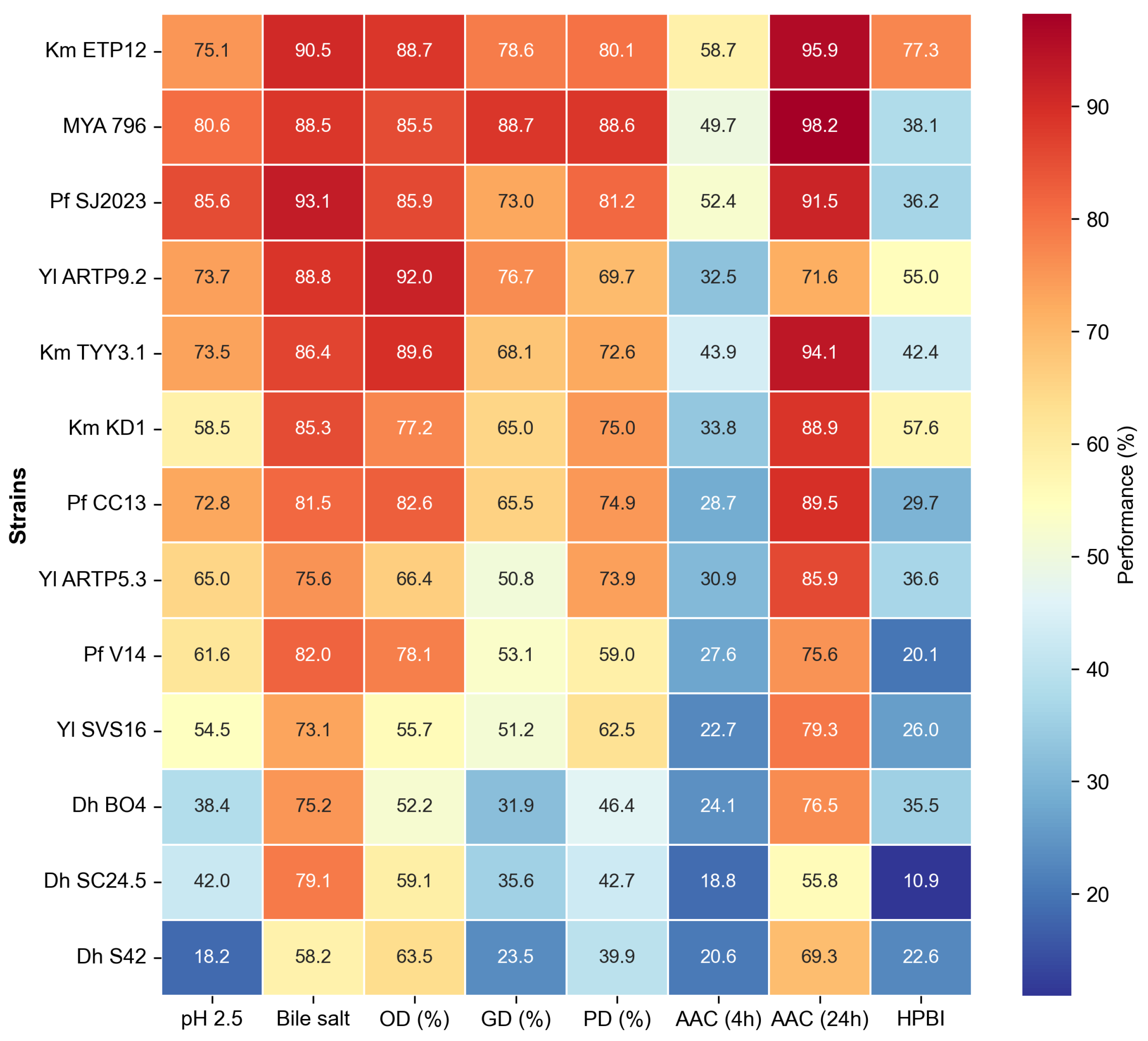
3.2. In Vitro Probiotic Characterization
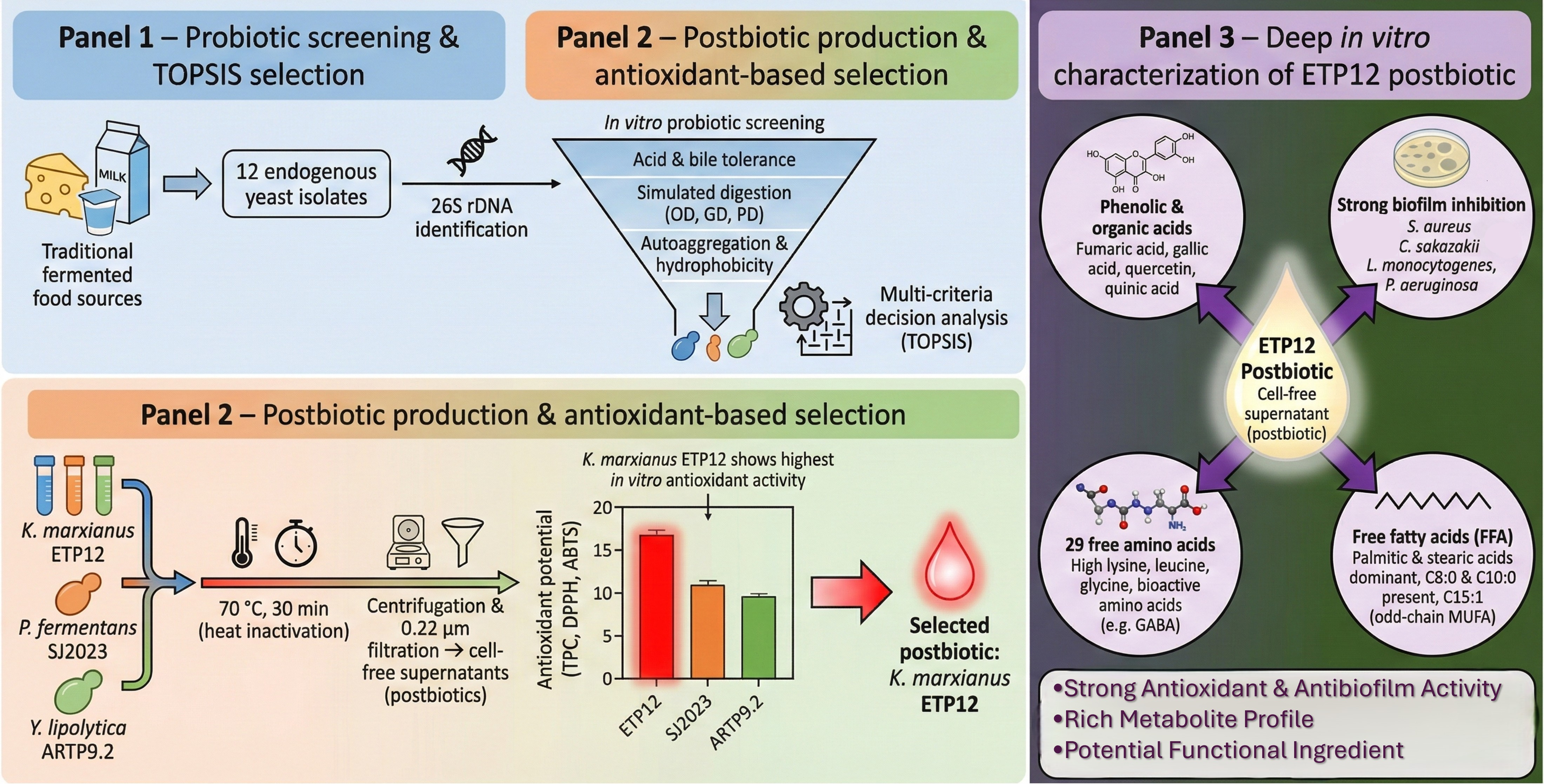
3.3. Total Phenolic Content and Antioxidant Activity of Postbiotics
3.4. Phenolic Profile of ETP12 Postbiotic
3.5. Biofilm Inhibition Capacity of ETP12 Postbiotic
3.6. Free Amino Acid Profile of ETP12 Postbiotic
3.7. Free Fatty Acid Profile of ETP12 Postbiotic
4. Conclusions
Supplementary Materials
Author Contributions
Funding
Institutional Review Board Statement
Informed Consent Statement
Data Availability Statement
Acknowledgments
Conflicts of Interest
References
- Hill, C.; Guarner, F.; Reid, G.; Gibson, G.R.; Merenstein, D.J.; Pot, B.; Morelli, L.; Canani, R.B.; Flint, H.J.; Salminen, S.; et al. Expert consensus document. The International Scientific Association for Probiotics and Prebiotics consensus statement on the scope and appropriate use of the term probiotic. Nat. Rev. Gastroenterol. Hepatol. 2014, 11, 506–514. [Google Scholar] [CrossRef] [PubMed]
- Bustos Fernández, L.M.; Man, F.; Lasa, J.P. Impact of Saccharomyces boulardii CNCM I-745 on Bacterial Overgrowth and Composition of Intestinal Microbiota in IBS-D Patients: Results of a Randomized Pilot Study. Dig. Dis. 2023, 41, 798–809. [Google Scholar] [CrossRef] [PubMed]
- Maccaferri, S.; Klinder, A.; Brigidi, P.; Cavina, P.; Costabile, A. Potential probiotic Kluyveromyces marxianus B0399 modulates the immune response in Caco-2 cells and peripheral blood mononuclear cells and impacts the human gut microbiota in an in vitro colonic model system. Appl. Environ. Microbiol. 2012, 78, 956–964. [Google Scholar] [CrossRef] [PubMed]
- Aydın, F.; Aktepe, Y.; Kahve, H.I.; Çakır, I. In Vitro Probiotic Characterization of Yeasts with their Postbiotics’ Antioxidant Activity and Biofilm Inhibition Capacity. Curr. Microbiol. 2024, 81, 364. [Google Scholar] [CrossRef]
- Reyes-Becerril, M.; Alamillo, E.; Angulo, C. Probiotic and Immunomodulatory Activity of Marine Yeast Yarrowia lipolytica Strains. Probiotics Antimicrob. Proteins 2021, 13, 1292–1305. [Google Scholar]
- Jeong, D.M.; Yoo, S.J.; Han, S.I.; Chung, M.J.; Kim, S.Y.; Seo, K.H.; Kim, H.; Chung, M.S. Genomic features, aroma profiles, and probiotic potential of the Debaryomyces hansenii species complex strains isolated from Korean soybean fermented food. Food Microbiol. 2022, 105, 104011. [Google Scholar] [CrossRef]
- Nataraj, B.H.; Ali, S.A.; Behare, P.V.; Yadav, H.; Behare, P.V.; Kaur, G.; Singh, R.; Kapila, S.; Kapila, R. Postbiotics-parabiotics: The new horizons in microbial biotherapy and functional foods. Microb. Cell Factories 2020, 19, 168. [Google Scholar] [CrossRef]
- Zavišić, G.; Popović, M.; Poznanović, G.; Golić, N.; Stevanović, M.; Poznanović, G. Antibiotic Resistance and Probiotics: Knowledge Gaps, Market Overview and Preliminary Screening. Antibiotics 2023, 12, 1281. [Google Scholar] [CrossRef]
- Zhang, W.; Zhang, Y.; Zhao, Y.; Huang, S.; Li, X.; Chen, J.; Wang, Y. A Comprehensive Review on Dietary Polysaccharides as Prebiotics, Synbiotics, and Postbiotics in Infant Formula. Nutrients 2024, 16, 4122. [Google Scholar] [CrossRef]
- Rafique, N.; Jan, S.Y.; Dar, A.H.; Dash, K.K.; Pandey, V.K.; Shams, R.; Manzoor, S.; Ahmad, S. Promising bioactivities of postbiotics: A comprehensive review. J. Agric. Food Res. 2023, 14, 100708. [Google Scholar] [CrossRef]
- Magryś, A.; Pawlik, M. Postbiotic Fractions of Probiotics Lactobacillus plantarum 299v and Lactobacillus rhamnosus GG Show Immune-Modulating Effects. Cells 2023, 12, 2538. [Google Scholar] [CrossRef] [PubMed]
- Dobreva, L.; Angelov, A.; Karadzhov, G.; Popova, A. Candidate-Probiotic Lactobacilli and Their Postbiotics as Health-Benefit Promoters. Microorganisms 2024, 12, 1910. [Google Scholar] [CrossRef] [PubMed]
- Incili, G.K.; Akgöl, M.; Karatepe, P.; Çakır, I.; Tutuk, Z. Quantification of Bioactive Metabolites Derived from Cell-Free Supernatant of Pediococcus acidilactici. Probiotics Antimicrob. Proteins 2025, 17, 253–270. [Google Scholar] [CrossRef] [PubMed]
- Datta, S.; Timson, D.J.; Annapure, U.S. Antioxidant properties and global metabolite screening of the probiotic yeast Saccharomyces cerevisiae var. boulardii. J. Sci. Food Agric. 2017, 97, 3039–3049. [Google Scholar] [CrossRef]
- Poloni, V.L.; Pérez, M.E.; Cavaglieri, L.R.; Rossetti, L. Postbiotics from Saccharomyces cerevisiae RC016 Cell Wall. Probiotics Antimicrob. Proteins 2025, 17, 3656–3666. [Google Scholar]
- Franco, W.; Perez-Diaz, I.M.; Rodriguez-Alonso, R.; Breidt, F. Postbiotics and parabiotics derived from bacteria and yeast: Current trends and future perspectives. CyTA-J. Food 2024, 22, 2425838. [Google Scholar] [CrossRef]
- Aydın, F. Technological and functional potentials of indigenous yeasts from traditional Tulum cheese. World J. Microbiol. Biotechnol. 2025, 41, 429. [Google Scholar] [CrossRef]
- Aydın, F.; Özer, G.; Alkan, M.; Çakır, I. Start Codon Targeted (SCoT) markers for the assessment of genetic diversity in yeast isolated from Turkish sourdough. Food Microbiol. 2022, 107, 104081. [Google Scholar] [CrossRef]
- Kurtzman, C.P.; Robnett, C.J. Identification and phylogeny of ascomycetous yeasts from analysis of nuclear large subunit (26S) ribosomal DNA partial sequences. Antonie van Leeuwenhoek 1998, 73, 331–371. [Google Scholar] [CrossRef]
- Aydın, F.; Özer, G.; Alkan, M.; Çakır, I. The utility of iPBS retrotransposons markers to analyze genetic variation in yeast. Int. J. Food Microbiol. 2020, 325, 108647. [Google Scholar] [CrossRef]
- Kumar, S.; Stecher, G.; Li, M.; Knyaz, C.; Tamura, K. MEGA X: Molecular evolutionary genetics analysis across computing platforms. Mol. Biol. Evol. 2018, 35, 1547–1549. [Google Scholar] [CrossRef]
- Aktepe, Y.; Aydın, F.; Bozoğlu, T.; Özer, G.; Çakır, I. Molecular characterization and multifunctional evaluation of lactic acid bacteria isolated from traditional sourdough. Int. J. Food Microbiol. 2024, 423, 110845. [Google Scholar] [CrossRef] [PubMed]
- Alkalbani, N.S.; Osaili, T.M.; Al-Nabulsi, A.A.; Olaimat, A.N.; Liu, S.Q.; Ayyash, M.M.; Holley, R. In Vitro Characterization and Identification of Potential Probiotic Yeasts Isolated from Fermented Dairy and Non-Dairy Food Products. J. Fungi 2022, 8, 544. [Google Scholar] [CrossRef] [PubMed]
- Perricone, M.; Bevilacqua, A.; Corbo, M.R.; Sinigaglia, M. Technological characterization and probiotic traits of yeasts isolated from Altamura sourdough to select promising microorganisms as functional starter cultures for cereal-based products. Food Microbiol. 2014, 38, 26–35. [Google Scholar] [CrossRef] [PubMed]
- de Lima, M.D.S.F.; de Souza, K.M.S.; Albuquerque, W.W.C.; Teixeira, J.A.C.; Cavalcanti, M.T.H.; Porto, A.L.F. Saccharomyces cerevisiae from Brazilian kefir-fermented milk: An in vitro evaluation of probiotic properties. Microb. Pathog. 2017, 110, 670–677. [Google Scholar] [CrossRef]
- Gul, O.; Dervisoglu, M. Application of multicriteria decision technique to determine optimum sodium alginate concentration for microencapsulation of Lactobacillus casei Shirota by extrusion and emulsification. J. Food Process Eng. 2017, 40, e12481. [Google Scholar] [CrossRef]
- Youn, H.Y.; Kim, D.H.; Kim, H.J.; Bae, D.; Song, K.Y.; Kim, H.; Seo, K.H. Survivability of Kluyveromyces marxianus isolated from Korean kefir in a simulated gastrointestinal environment. Front. Microbiol. 2022, 13, 842097. [Google Scholar] [CrossRef]
- Garcia, A.; Bonilla, F.; Villasmil, E.; Reyes, V.; Sathivel, S. Antilisterial activity of freeze-dried bacteriocin-containing powders produced by lactic acid bacteria against Listeria innocua NRRL B-33016 on cantaloupe surface. LWT 2022, 154, 112440. [Google Scholar] [CrossRef]
- Singleton, V.L.; Orthofer, R.; Lamuela-Raventós, R.M. Analysis of total phenols and other oxidation substrates and antioxidants by means of folin-ciocalteu reagent. In Methods in Enzymology; Academic Press: New York, NY, USA, 1999; Volume 299, pp. 152–178. [Google Scholar]
- Kahve, H.I. In Vitro Evaluation of the Technological and Probiotic Potential of Pichia kudriavzevii Strains Isolated from Traditional Fermented Foods. Curr. Microbiol. 2023, 80, 379. [Google Scholar] [CrossRef]
- Gülçin, I.; Dikici, E.; Karatepe, P.; Çakır, I. Determination of secondary metabolites of Cydonia oblonga (Quince) by LC-MS/MS method. J. Chem. Metrol. 2024, 18, 146–164. [Google Scholar] [CrossRef]
- Proestos, C.; Komaitis, M. Analysis of naturally occurring phenolic compounds in aromatic plants by RP-HPLC coupled to diode array detector (DAD) and GC-MS after silylation. Foods 2013, 2, 90–99. [Google Scholar] [CrossRef] [PubMed]
- Tabak, T.; Yılmaz, I.; Tekiner, I.H. Investigation of the changes in volatile composition and amino acid profile of a gala-dinner dish by GC-MS and LC-MS/MS analyses. Int. J. Gastron. Food Sci. 2021, 25, 100398. [Google Scholar] [CrossRef]
- Food and Agriculture Organization of the United Nations (FAO); World Health Organization (WHO). Energy and Protein Requirements; Technical Report; FAO/WHO United Nations University: Geneva, Switzerland, 1990. [Google Scholar]
- Lee, Y.B.; Elliott, J.G.; Rickansrud, D.A.; Hagberg, E.C. Predicting protein efficiency ratio by the chemical determination of connective tissue content in meat. J. Food Sci. 1978, 43, 1359–1362. [Google Scholar] [CrossRef]
- Incili, G.K.; Akgöl, M.; Karatepe, P.; Çakır, I. Whole-Cell Postbiotics: An Innovative Approach for Extending the Shelf Life and Controlling Major Foodborne Pathogens. Food Bioprocess Technol. 2023, 16, 1502–1524. [Google Scholar] [CrossRef]
- Ranadheera, C.S.; Evans, C.; Adams, M.; Baines, S. In vitro analysis of gastrointestinal tolerance and intestinal cell adhesion of probiotics in goat’s milk ice cream and yogurt. Food Res. Int. 2012, 49, 619–625. [Google Scholar] [CrossRef]
- Greppi, A.; Saubade, F.; Botta, A.; Humblot, C.; Guyot, J.P.; Tofalo, R. Potential probiotic Pichia kudriavzevii strains and their ability to enhance folate content. Food Microbiol. 2017, 62, 169–177. [Google Scholar] [CrossRef]
- Merchán, A.V.; Benito, M.J.; Galván, A.I.; Ruiz-Moyano, S. Identification and selection of yeast with functional properties for future application in soft paste cheese. LWT 2020, 124, 109173. [Google Scholar] [CrossRef]
- Fadda, M.E.; Mossa, V.; Deplano, M.; Pisano, M.B.; Cosentino, S. In vitro screening of Kluyveromyces strains isolated from Fiore Sardo cheese for potential use as probiotics. LWT 2017, 75, 100–106. [Google Scholar] [CrossRef]
- de Miranda, N.M.Z.; Duarte, V.S.; de Souza, C.B.; Ramos, C.L. Novel yeasts with potential probiotic characteristics isolated from the endogenous ferment of artisanal Minas cheese. Braz. J. Microbiol. 2023, 54, 1021–1033. [Google Scholar] [CrossRef]
- Vecchione, A.; Celandroni, F.; Mazzantini, D.; Senesi, S.; Lupetti, A.; Ghelardi, E. Compositional quality and potential gastrointestinal behavior of probiotic products commercialized in Italy. Front. Med. 2018, 5, 59. [Google Scholar] [CrossRef]
- Bonatsou, S.; Karamouza, M.; Zoumpopoulou, G.; Mavrogonatou, E.; Kletsas, D.; Papadimitriou, K.; Panagou, E.Z. Evaluating the probiotic potential and technological characteristics of yeasts implicated in cv. Kalamata natural black olive fermentation. Int. J. Food Microbiol. 2018, 271, 48–59. [Google Scholar] [CrossRef] [PubMed]
- Kanak, E.K.; Yılmaz, S.Ö. Determination of the Probiotic and Functional Properties of Yeasts Isolated from Different Dairy Products. Fermentation 2025, 11, 104. [Google Scholar] [CrossRef]
- Shruthi, B.; Deepa, N.; Somashekaraiah, R.; Sreenivasa, M.Y. Exploring biotechnological and functional characteristics of probiotic yeasts: A review. Biotechnol. Rep. 2022, 34, e00716. [Google Scholar] [CrossRef] [PubMed]
- Bautista-Gallego, J.; Arroyo-López, F.N.; Rantsiou, K.; Jimenez-Diaz, R.; Cocolin, L. Screening of lactic acid bacteria isolated from fermented table olives with probiotic potential. Food Res. Int. 2013, 50, 135–142. [Google Scholar] [CrossRef]
- Goktas, H.; Dikmen, H.; Demirbas, F.; Sagdic, O.; Dertli, E. Characterisation of probiotic properties of yeast strains isolated from kefir samples. Int. J. Dairy Technol. 2021, 74, 715–722. [Google Scholar] [CrossRef]
- Zavadskas, E.K.; Mardani, A.; Turskis, Z.; Cavallaro, F. Development of TOPSIS Method to Solve Complicated Decision-Making Problems. Int. J. Inf. Technol. Decis. Mak. 2016, 15, 645–682. [Google Scholar] [CrossRef]
- Tutuk, Z.; Karatepe, P.; Akgöl, M.; Karatepe, S.; Çakır, I. Inhibition of Aspergillus parasiticus and detoxification of aflatoxin derivatives in tomato paste by adding freeze-dried postbiotic from Lactiplantibacillus plantarum. Food Control 2026, 180, 111664. [Google Scholar] [CrossRef]
- Hosseini, H.; Abbasi, A.; Mousavi, S.A.; Razavi, S.H. Assessing the Potential Biological Activities of Postbiotics Derived from Saccharomyces cerevisiae. Probiotics Antimicrob. Proteins 2024, 16, 1348–1364. [Google Scholar] [CrossRef]
- Hosseinzadeh, N.; Asqardokht-Aliabadi, A.; Sani, I.K. Antioxidant Properties of Postbiotics: An Overview on the Analysis and Evaluation Methods. Probiotics Antimicrob. Proteins 2025, 17, 606–624. [Google Scholar] [CrossRef]
- Gil-Rodríguez, A.M.; Carrascosa, A.V.; Requena, T. Yeasts in foods and beverages: In vitro characterisation of probiotic traits. LWT-Food Sci. Technol. 2015, 64, 1156–1162. [Google Scholar] [CrossRef]
- Perpetuini, G.; Rossetti, A.P.; Tofalo, R. Wine Barrel Biofilm as a Source of Yeasts with Non-Conventional Properties. Microorganisms 2024, 12, 880. [Google Scholar] [CrossRef]
- Chan, M.Z.A.; Liu, S.Q. Fortifying foods with synbiotic and postbiotic preparations of the probiotic yeast, Saccharomyces boulardii. Curr. Opin. Food Sci. 2022, 43, 216–224. [Google Scholar] [CrossRef]
- Coban, H.B. Organic acids as antimicrobial food agents: Applications and microbial productions. Bioprocess Biosyst. Eng. 2020, 43, 569–591. [Google Scholar] [CrossRef] [PubMed]
- Móritz, A.V.; Fónagy, V.; Jakab, C. Anti-Inflammatory and Antioxidant Effects of Quercetin, Luteolin, and Proanthocyanidins in Canine PBMCs. Animals 2025, 15, 3622. [Google Scholar] [CrossRef] [PubMed]
- Incili, G.K.; Karatepe, P.; Akgöl, M.; Çakır, I. Characterization of lactic acid bacteria postbiotics, evaluation in-vitro antibacterial effect. Food Microbiol. 2022, 104, 104001. [Google Scholar] [CrossRef] [PubMed]
- Çobur, H.; Löker, N.; Dışhan, A.; Karatepe, P.; Akgöl, M.; Çakır, I. Lactiplantibacillus Plantarum Postbiotics Suppress Salmonella Typhimurium Invasion and Modulate Innate Responses in Human Intestinal Epithelial Cells. Probiotics Antimicrob. Proteins 2025, 1–14. [Google Scholar] [CrossRef]
- Borges, A.; Saavedra, M.J.; Simões, M. The activity of ferulic and gallic acids in biofilm prevention and control of pathogenic bacteria. Biofouling 2012, 28, 755–767. [Google Scholar] [CrossRef]
- Gülçin, I.; Huyut, Z.; Elmastaş, M.; Aboul-Enein, H.Y. Radical scavenging and antioxidant activity of tannic acid. Arab. J. Chem. 2010, 3, 43–53. [Google Scholar] [CrossRef]
- Francolini, I.; Piozzi, A. Role of Antioxidant Molecules and Polymers in Prevention of Bacterial Growth and Biofilm Formation. Curr. Med. Chem. 2020, 27, 4882–4904. [Google Scholar] [CrossRef]
- Fu, J.; Liu, J.; Wen, X.; Wang, Y. Unique Probiotic Properties and Bioactive Metabolites of Saccharomyces boulardii. Probiotics Antimicrob. Proteins 2023, 15, 967–982. [Google Scholar] [CrossRef]
- Demirgul, F.; Simsek, O.; Sagdic, O. Amino acid, mineral, vitamin B contents and bioactivities of extracts of yeasts isolated from sourdough. Food Biosci. 2022, 50, 102040. [Google Scholar] [CrossRef]
- Santos, C.A.; Lima, E.M.F.; Santos, S.H.S. Exploring Phenolic Compounds as Quorum Sensing Inhibitors in Foodborne Bacteria. Front. Microbiol. 2021, 12, 735931. [Google Scholar] [CrossRef]
- Zamuz, S.; Munekata, P.E.; Gullon, B.; Lorenzo, J.M. The role of phenolic compounds against Listeria monocytogenes in food. A review. Trends Food Sci. Technol. 2021, 110, 385–392. [Google Scholar] [CrossRef]
- Tsukatani, T.; Sakata, F. Combined effects of fumaric, lactic, and ferulic acid against food-borne pathogenic biofilms. Food Control 2022, 138, 109024. [Google Scholar] [CrossRef]
- Sang, H.; Jin, H.; Song, P.; Xu, W.; Wang, F. Gallic acid exerts antibiofilm activity by inhibiting methicillin-resistant Staphylococcus aureus adhesion. Sci. Rep. 2024, 14, 17220. [Google Scholar] [CrossRef]
- Mu, Y.; Zeng, H.; Chen, W. Quercetin Inhibits Biofilm Formation by Decreasing the Production of EPS and Altering the Composition of EPS in Staphylococcus aureus. Front. Microbiol. 2021, 12, 631058. [Google Scholar] [CrossRef]
- Pernin, A.; Guillier, L.; Dubois-Brissonnet, F. Inhibitory activity of phenolic acids against Listeria monocytogenes: Deciphering the mechanisms of action using three different models. Food Microbiol. 2019, 80, 18–24. [Google Scholar] [CrossRef]
- Nazzaro, F.; Coppola, F.; Fratianni, F.; Abdalrazeq, M.; Ombra, M.N.; De Giulio, B.; D’Acierno, A. Polyphenols bioactive metabolites, and their anti-biofilm and neuroprotective potential. Foods 2025, 14, 3976. [Google Scholar] [CrossRef] [PubMed]
- Lu, L.; Zhao, Y.; Yi, G.; Li, M.; Liao, L.; Yang, C.; Li, R.; Lu, X.; Kan, H.; Li, W. Quinic acid: A potential antibiofilm agent against clinical resistant Pseudomonas aeruginosa. Chin. Med. 2021, 16, 72. [Google Scholar] [CrossRef] [PubMed]
- Srivastava, A.; Verma, N.; Kumar, V.; Tripathi, A. Biofilm inhibition/eradication: Exploring strategies and confronting challenges in combatting biofilm. Arch. Microbiol. 2024, 206, 212. [Google Scholar] [CrossRef] [PubMed]
- Ghorbani, Z.; Owlia, P.; Marashi, S.M.A. Effect of Supernatant Extract and Cell Lysate of Probiotic Yeast of Saccharomyces Cerevisiae on Biofilm and Alginate Production. Iran. J. Med. Microbiol. 2018, 12, 189–198. [Google Scholar] [CrossRef]
- Saidi, N.; Owlia, P.; Marashi, S.M.A.; Saderi, H. Inhibitory effect of probiotic yeast Saccharomyces cerevisiae on biofilm formation and expression of α-hemolysin and enterotoxin A genes of Staphylococcus aureus. Iran. J. Microbiol. 2019, 11, 246. [Google Scholar] [CrossRef]
- Kim, Y.J.; Yu, H.H.; Kim, S.Y. Anti-biofilm effect of the cell-free supernatant of probiotic Saccharomyces cerevisiae against Listeria monocytogenes. Food Control 2021, 121, 107667. [Google Scholar] [CrossRef]
- Che, J.; Shi, J.; Wang, J. Elimination of Pathogen Biofilms via Postbiotics from Lactic Acid Bacteria. Microorganisms 2024, 12, 704. [Google Scholar] [CrossRef] [PubMed]
- Jacob, F.F.; Hutzler, M.; Methner, F.J. Comparison of various industrially applicable disruption methods to produce yeast extract using spent yeast from top-fermenting beer production: Influence on amino acid and protein content. Eur. Food Res. Technol. 2019, 245, 95–109. [Google Scholar] [CrossRef]
- Nie, C.; He, T.; Zhang, W.; Xia, Z. Branched Chain Amino Acids: Beyond Nutrition Metabolism. Int. J. Mol. Sci. 2018, 19, 954. [Google Scholar] [CrossRef]
- Wu, G. Amino acids: Metabolism, functions, and nutrition. Amino Acids 2009, 37, 1–17. [Google Scholar] [CrossRef]
- Roth, E. Immune and cell modulation by amino acids. Clin. Nutr. 2007, 26, 535–544. [Google Scholar] [CrossRef]
- Rozhkova, I.V.; Yurova, E.A.; Leonova, V.A. Evaluation of the Amino Acid Composition and Content of Organic Acids of Complex Postbiotic Substances. Fermentation 2023, 9, 460. [Google Scholar] [CrossRef]
- Nasri, F.; Alizadeh, A.; Incili, G.K.; Karatepe, P. Investigating Chemical Composition and Functionality of Lactobacillus acidophilus LA-5 Postbiotics. Probiotics Antimicrob. Proteins 2024, 17, 4826–4840. [Google Scholar] [CrossRef]
- Icer, M.A.; Sarikaya, B.; Aydin, F. Contributions of Gamma-Aminobutyric Acid (GABA) Produced by Lactic Acid Bacteria on Food Quality and Human Health. Foods 2024, 13, 2437. [Google Scholar] [CrossRef] [PubMed]
- Mattana, P.; da Rosa, P.R.; Poli, J.S.; Valente, P. Lipid profile and antimicrobial activity of microbial oils from 16 oleaginous yeasts isolated from artisanal cheese. Rev. Bras. Biosci. 2014, 12, 121–126. [Google Scholar]
- Guluarte, C.; Reyes-Becerril, M.; Gonzalez-Silvera, D.; Cuesta, A.; Angulo, C.; Esteban, M.Á. Probiotic properties and fatty acid composition of the yeast Kluyveromyces lactis M3. In vivo immunomodulatory activities in gilthead seabream (Sparus aurata). Fish Shellfish Immunol. 2019, 94, 389–397. [Google Scholar] [CrossRef] [PubMed]
- Gientka, I.; Kieliszek, M.; Jermacz, K.; Błażejak, S. Identification and Characterization of Oleaginous Yeast Isolated from Kefir. BioMed Res. Int. 2017, 2017, 6061042. [Google Scholar] [CrossRef]
- Ling, H.; Liu, R.; Sam, Q.H.; Tan, M.; Ang, E.L. Engineering of a probiotic yeast for the production and secretion of medium-chain fatty acids antagonistic to an opportunistic pathogen Candida albicans. Front. Bioeng. Biotechnol. 2023, 11, 1090501. [Google Scholar] [CrossRef]
- Zhang, Y.; Kamal, R.; Li, Q.; Li, X. Comparative Fatty Acid Compositional Profiles of Rhodotorula toruloides Haploid and Diploid Strains. Fermentation 2022, 8, 467. [Google Scholar] [CrossRef]
- Venn-Watson, S. The Cellular Stability Hypothesis: Evidence of Ferroptosis and Accelerated Aging-Associated Diseases. Metabolites 2024, 14, 355. [Google Scholar] [CrossRef]
- Yun, J.M.; Surh, J. Fatty acid composition as a predictor for the oxidation stability of Korean vegetable oils with or without induced oxidative stress. Prev. Nutr. Food Sci. 2012, 17, 158. [Google Scholar] [CrossRef]
- EFSA Panel on Biological Hazards; Koutsoumanis, K.; Allende, A.; Alvarez-Ordoñez, A. Update of the list of qualified presumption of safety (QPS) recommended microbiological agents intentionally added to food or feed as notified to EFSA 22: Suitability of taxonomic units notified to EFSA until March 2025. EFSA J. 2025, 23, e9510. [Google Scholar] [CrossRef]


| Strain | pH 2.5 | Bile Salt | OD (%) | GD (%) | PD (%) | AAC (4 h) | AAC (24 h) | HPBI |
|---|---|---|---|---|---|---|---|---|
| Dh BO4 | 38.35 ± 1.46 g | 75.21 ± 1.41 f | 52.20 ± 0.93 i | 31.85 ± 0.08 j | 46.42 ± 1.13 g | 24.15 ± 1.53 def | 76.54 ± 3.96 ef | 35.47 ± 2.62 d |
| Dh SC24.5 | 41.98 ± 1.02 g | 79.12 ± 0.32 def | 59.12 ± 1.12 gh | 35.64 ± 0.12 i | 42.71 ± 0.05 h | 18.79 ± 0.91 f | 55.78 ± 0.59 g | 10.95 ± 0.53 h |
| Dh S42 | 18.23 ± 0.12 h | 58.21 ± 1.53 g | 63.51 ± 0.12 fg | 23.50 ± 0.64 k | 39.85 ± 0.64 i | 20.61 ± 1.87 ef | 69.33 ± 1.12 f | 22.60 ± 1.09 fg |
| Km ETP12 | 75.14 ± 2.57 c | 90.54 ± 3.58 ab | 88.65 ± 1.63 a | 78.64 ± 0.34 b | 80.07 ± 0.78 b | 58.67 ± 1.63 a | 95.89 ± 4.54 ab | 77.32 ± 3.51 a |
| Km KD1 | 58.52 ± 1.08 e | 85.29 ± 2.44 bc | 77.23 ± 2.52 e | 65.03 ± 0.56 f | 75.01 ± 1.50 c | 33.75 ± 0.87 c | 88.93 ± 3.96 bc | 57.64 ± 3.25 b |
| Km TYY3.1 | 73.50 ± 1.47 c | 86.39 ± 2.02 bc | 89.64 ± 2.09 ab | 68.12 ± 0.58 e | 72.64 ± 0.56 c | 43.86 ± 2.51 b | 94.12 ± 3.25 ab | 42.36 ± 0.64 c |
| Pf SJ2023 | 85.59 ± 0.52 a | 93.06 ± 2.96 a | 85.93 ± 2.50 bc | 72.97 ± 1.03 d | 81.21 ± 1.51 b | 52.35 ± 1.62 ab | 91.55 ± 2.84 abc | 36.22 ± 0.27 d |
| Pf V14 | 61.60 ± 0.57 de | 81.96 ± 1.52 cd | 78.12 ± 2.76 de | 53.12 ± 0.21 g | 58.95 ± 0.85 f | 27.62 ± 0.71 cde | 75.63 ± 1.63 ef | 20.10 ± 0.50 g |
| Pf CC13 | 72.85 ± 1.93 c | 81.50 ± 2.48 cde | 82.59 ± 1.54 cd | 65.51 ± 0.76 f | 74.87 ± 0.74 c | 28.67 ± 1.48 cde | 89.51 ± 2.12 bc | 29.72 ± 1.57 e |
| Yl ARTP5.3 | 65.05 ± 0.87 d | 75.60 ± 0.98 ef | 66.42 ± 1.75 f | 50.75 ± 0.95 h | 73.91 ± 0.33 c | 30.89 ± 2.01 cd | 85.87 ± 1.41 cd | 36.64 ± 1.64 d |
| Yl ARTP9.2 | 73.69 ± 0.45 c | 88.84 ± 1.63 ab | 91.98 ± 1.88 a | 76.74 ± 0.72 c | 69.74 ± 0.42 d | 32.53 ± 0.46 cd | 71.64 ± 1.52 ef | 55.05 ± 0.96 b |
| Yl SVS16 | 54.50 ± 1.98 f | 73.14 ± 1.22 f | 55.74 ± 0.46 hi | 51.25 ± 0.24 h | 62.53 ± 0.75 e | 22.72 ± 1.75 ef | 79.26 ± 2.39 de | 26.01 ± 0.16 ef |
| MYA 796 | 80.61 ± 0.84 b | 88.54 ± 1.97 ab | 85.45 ± 0.62 bc | 88.65 ± 0.53 a | 88.64 ± 0.41 a | 49.74 ± 2.05 b | 98.23 ± 1.59 a | 38.06 ± 0.95 cd |
| Strain | Antioxidant Assay | ||
|---|---|---|---|
| TPC (mgGAE/L) | DPPHScv (%) | ABTSScv (%) | |
| Km ETP12 | 859.61 ± 10.96 a | 73.24 ± 1.32 a | 86.02 ± 1.25 a |
| Yl ARTP9.2 | 623.42 ± 6.53 b | 48.09 ± 0.62 b | 73.66 ± 2.11 b |
| Pf SJ2023 | 613.64 ± 3.12 b | 22.64 ± 0.26 c | 74.77 ± 1.85 b |
| Number | Compounds | K. marxianus ETP12 Postbiotic (Mean ± SD) |
|---|---|---|
| 1 | Fumaric acid | 19.13 ± 0.18 |
| 2 | Quercetin | 5.20 ± 0.21 |
| 3 | Gallic acid | 4.55 ± 0.16 |
| 4 | Quinic acid | 3.95 ± 0.05 |
| 5 | 4-dihydroxy benzoic acid | 2.33 ± 0.05 |
| 6 | Syringic acid | 0.91 ± 0.05 |
| 7 | Chlorogenic acid | 0.58 ± 0.05 |
| 8 | 3-dihydroxy benzoic acid | 0.44 ± 0.06 |
| 9 | t-Cinnamic acid | 0.28 ± 0.01 |
| 10 | p-Coumaric Acid | 0.11 ± 0.01 |
| 11 | Luteolin | 0.05 ± 0.01 |
| Number | FAA | Concentration (ppm) | g/100 g FAA (%) |
|---|---|---|---|
| 1 | Lysine | 3195.61 ± 198.46 | 14.11 ± 0.89 |
| 2 | Leucine | 2810.56 ± 110.62 | 12.41 ± 0.51 |
| 3 | Glycine | 2252.01 ± 70.75 | 9.94 ± 0.33 |
| 4 | Alanine | 1706.43 ± 42.24 | 7.53 ± 0.21 |
| 5 | Isoleucine | 1623.85 ± 48.13 | 7.17 ± 0.23 |
| 6 | Valine | 1612.57 ± 35.13 | 7.12 ± 0.18 |
| 7 | Phenylalanine | 1267.98 ± 38.52 | 5.60 ± 0.18 |
| 8 | Arginine | 1087.63 ± 31.21 | 4.80 ± 0.15 |
| 9 | Glutamic acid | 958.55 ± 29.62 | 4.23 ± 0.14 |
| 10 | Serine | 854.71 ± 28.47 | 3.77 ± 0.13 |
| 11 | Tryptophan | 778.44 ± 14.22 | 3.44 ± 0.07 |
| 12 | Threonine | 614.87 ± 17.79 | 2.71 ± 0.08 |
| 13 | Proline | 542.96 ± 22.26 | 2.40 ± 0.10 |
| 14 | Methionine | 486.03 ± 20.92 | 2.15 ± 0.10 |
| 15 | Sarcosine | 458.25 ± 9.89 | 2.02 ± 0.05 |
| 16 | Asparagine | 424.63 ± 10.82 | 1.87 ± 0.05 |
| 17 | Aspartic acid | 412.60 ± 8.35 | 1.82 ± 0.04 |
| 18 | Histidine | 381.79 ± 9.62 | 1.69 ± 0.05 |
| 19 | Tyrosine | 342.92 ± 11.17 | 1.51 ± 0.05 |
| 20 | Carnosine | 202.13 ± 4.76 | 0.89 ± 0.02 |
| 21 | Glutamine | 185.14 ± 5.29 | 0.82 ± 0.03 |
| 22 | Ornithine | 124.25 ± 6.89 | 0.55 ± 0.03 |
| 23 | Taurine | 77.41 ± 1.74 | 0.34 ± 0.01 |
| 24 | GABA | 62.02 ± 1.44 | 0.27 ± 0.01 |
| 25 | Ethanolamine | 58.42 ± 2.49 | 0.26 ± 0.01 |
| 26 | Anserine | 47.63 ± 0.87 | 0.21 ± 0.01 |
| 27 | AIB | 35.29 ± 1.17 | 0.16± 0.01 |
| 28 | Citrulline | 28.01 ± 2.66 | 0.12 ± 0.01 |
| 29 | Cystine | 20.03 ± 1.49 | 0.09 ± 0.01 |
Disclaimer/Publisher’s Note: The statements, opinions and data contained in all publications are solely those of the individual author(s) and contributor(s) and not of MDPI and/or the editor(s). MDPI and/or the editor(s) disclaim responsibility for any injury to people or property resulting from any ideas, methods, instructions or products referred to in the content. |
© 2026 by the authors. Licensee MDPI, Basel, Switzerland. This article is an open access article distributed under the terms and conditions of the Creative Commons Attribution (CC BY) license.
Share and Cite
Aydın, F.; Kahve, H.İ.; Şahmurat, F. From Probiotic Screening to Postbiotic Potential: An Integrated In Vitro Assessment of Endogenous Non-Saccharomyces Yeast Isolates. Fermentation 2026, 12, 90. https://doi.org/10.3390/fermentation12020090
Aydın F, Kahve Hİ, Şahmurat F. From Probiotic Screening to Postbiotic Potential: An Integrated In Vitro Assessment of Endogenous Non-Saccharomyces Yeast Isolates. Fermentation. 2026; 12(2):90. https://doi.org/10.3390/fermentation12020090
Chicago/Turabian StyleAydın, Furkan, Halil İbrahim Kahve, and Fatma Şahmurat. 2026. "From Probiotic Screening to Postbiotic Potential: An Integrated In Vitro Assessment of Endogenous Non-Saccharomyces Yeast Isolates" Fermentation 12, no. 2: 90. https://doi.org/10.3390/fermentation12020090
APA StyleAydın, F., Kahve, H. İ., & Şahmurat, F. (2026). From Probiotic Screening to Postbiotic Potential: An Integrated In Vitro Assessment of Endogenous Non-Saccharomyces Yeast Isolates. Fermentation, 12(2), 90. https://doi.org/10.3390/fermentation12020090