


Abstract
Palladium, a non-toxic platinum-group metal, is widely used in catalysis, electronics, hydrogen storage, and chemical industries because of its excellent physical and chemical properties. However, given that the number of palladium-producing countries is limited, recycling is considered essential for ensuring a stable and sustainable global supply. Here, I describe a simple and efficient method for palladium recovery from electronic waste (e-waste) using Enterobacter oligotrophicus CCA6T. To clarify biomineralization capacity, the role of electron donors in modulating biomineralization capacity was examined. Findings showed that formic acid was the most effective donor, enhancing the relative recovery rate to 44% compared to 23% without electron donors. Transmission electron microscopy analysis revealed palladium particles (1–10 nm) distributed across the cell wall, periplasmic space and cytoplasm, confirming active biomineralization rather than passive biosorption. Moreover, based on a comparison with the biomineralization mechanism of Escherichia coli, the biomineralization mechanism of E. oligotrophicus CCA6T was estimated . Reaction parameters were then optimized by testing the effects of formic acid concentration, reaction temperature, and reaction pH. Under optimized conditions, the relative recovery rate exceeded 99% within 6 h using 40 mg/L palladium. When this method was applied to a metal dissolution solution prepared from e-waste , a recovery rate of 94% was achieved from trace concentrations (36 µg/L), and palladium loss from bacteria after the palladium recovery test was negligible (<0.01%). Taken together, these results demonstrate that biomineralization using E. oligotrophicus CCA6T could potentially be applied to the recovery of palladium from e-waste, particularly for trace-level concentrations where conventional methods are ineffective.
1. Introduction
Palladium, a member of the platinum group of metals, is widely used as a catalyst because of its unique catalytic, electronic, and hydrogen absorption properties. For example, palladium catalysts are used extensively in the automotive industry to convert harmful substances in vehicle exhaust gases, such as nitrogen oxides, hydrocarbons, and carbon monoxide, into less harmful products like water, carbon dioxide, and nitrogen [1]. Palladium has a unique ability to absorb and permeate hydrogen at a rate more than 900 times its own volume, which enables its use in high-purity hydrogen production [2]. In synthetic chemistry, palladium-catalyzed cross-coupling reactions represent a versatile method for forming C-C bonds and C-heteroatom bonds, which are widely used in the pharmaceutical, agricultural, materials science, and other chemical industries for the synthesis of complex molecules under mild conditions [3]. In addition to catalytic applications, demand for palladium as an electrode material has also increased due to its excellent electrical conductivity and corrosion resistance. In the electronics industry, palladium is an important coating material in the production of printed circuit boards, semiconductor lead frames, and connectors [4]. It is also used in alloys, catalysts, and conductive paste products for the manufacture of various electronic components, such as actuators, capacitors, resistors, and thermistors [4]. In 2024, the electronics industry consumed 524 thousand ounces of palladium, which is the third largest consumer after the automotive industry (8145 thousand ounces) and the chemical industry (535 thousand ounces) [4]. Moreover, given the recent surge in demand for electric vehicles, palladium consumption in the electronics industry is expected to increase further in the future. However, palladium extraction is geographically restricted to South Africa, Russia, North America, and Zimbabwe [4], and global supply of palladium to other countries depends heavily on the annual mining output volume in these regions. Thus, the development of efficient recovery methods is essential to ensure a stable and sustainable supply of palladium.
Production of novel electronic devices continues to increase annually with the expansion of the electronics industry and the widespread adoption of digital technology. At the end of their service life, these devices generate large amounts of electronic waste (e-waste). In 2019, more than 50 million tons of e-waste were generated, and this volume is expected to reach 74 million tons by 2030 [5]. However, only 17.4% of e-waste (approximately 9.3 million tons) has been formally collected and recycled to date [6]. Thus, despite containing rare metals including palladium, e-waste is being discarded without recovery. The composition of e-waste is extremely complex, containing not only metals, but also polymers, fiberglass, and flame retardants, which can pose risks to human health and the environment if not managed properly [7]. In addition to precious metals, e-waste contains essential metals, rare earth elements, and other industrially important metals, and is therefore regarded as a secondary resource following mineral ores. Various methods have been applied to recover these target metals from e-waste, including mechanical separation, and hydrometallurgical and pyrometallurgical processing [8,9,10]. However, these recovery methods have several drawbacks, including poor selectively, environmental impact, high costs, metal losses, generation of secondary by-products, and high energy and chemical reagent consumption. Consequently, the development of alternative recovery methods that overcome these drawbacks is urgently required.
Utilization of microbial interactions for rare metal recovery has attracted attention because these methods require no hazardous chemical substances and can be performed under ambient conditions. Moreover, the microbial method is broadly classified into bioleaching, biomineralization, biosorption, or biotransformation based on the underlying interactions [11]. Among those microbial methods, biosorption and biomineralization are well-suited to palladium recovery from e-waste. Biosorption is a non-metabolic process in which palladium ions are captured by binding sites on the cell wall. It is also important to distinguish between absorption and adsorption, because adsorption occurs on the cell surface, whereas absorption occurs within the cell. Various microorganisms have been evaluated as biosorbents, and they are considered to be particularly effective because of their high surface area-to-volume ratio and the abundance of functional groups such as amine, carboxyl, hydroxyl, and phosphonate moieties on the cell wall [12]. Several microorganisms, including algae (Asparagopsis armata, Codium vermilara, and Lessonia nigrescens), bacteria (Bacillus subtilis and Pseudomonas aeruginosa) and fungi (Aspergillus niger, Botrytis cinerea, and Rhizopus arrhizus), have been reported as useful biosorbents [11]. Another advantage of microbial biosorption is that both viable and non-viable cells can be used because both exhibit a passive biosorption mechanism onto cell surfaces, which function effectively as biosorbents through chemical and physical interactions with functional groups on the cell wall. Moreover, dead cells can exhibit higher biosorption capacities than live cells due to damage to their cell walls, which exposes more binding sites. For example, dead cells of Bacillus altitudinis CdRPSD103 exhibited cadmium(II) adsorption capacity equivalent to that of live cells [13]. Similarly, immobilized dead cells of Paenibacillus dendritiformis 17OS showed high recovery rates (>98%) for Pb2+ from wastewater [14]. In contrast, biomineralization is also an effective method for recovering metals from e-waste. Biomineralization involves the enzymatic reduction in extracellular metal ions through reactions with electron donors, leading to the intracellular or cell-surface precipitation of metals. This method can recover metals in a relatively short time. For example, the mesophilic bacterium Shewanella algae produces gold particles in its periplasmic space through biomineralization when hydrogen is used as the electron donor [15]. The yeast Saccharomyces cerevisiae also mediates gold biomineralization using formic acid as the electron donor [16]. Moreover, S. cerevisiae can recover gold even under highly acidic conditions (pH 1.0), demonstrating the potential for the selective recovery of gold from aqua regia extracts of e-waste. Thus, these methods have the potential for industrial application because they show excellent recovery efficiency in a short time. However, those microorganisms require a high-nutrient medium for cultivation, so there are still challenges in scaling up the methods.
In this study, I developed a simple and efficient method for palladium recovery using Enterobacter oligotrophicus CCA6T. Biomineralization, driven by electron donor utilization, was more efficient than biosorption in E. oligotrophicus CCA6T. The biomineralization mechanism was further investigated based on the conservation of key genes. After optimizing reaction conditions, palladium was successfully recovered from metal dissolution solutions prepared from e-waste.
2. Materials and Methods
2.1. Chemicals
Palladium was purchased from PerkinElmer (Waltham, MA, USA). Additives such as arabinose, fructose, galactose, glucose, mannose, xylose, acetic acid, citric acid and formic acid were obtained from Fujifilm Wako Pure Chemical (Osaka, Japan).
2.2. Palladium Recovery Test
E. oligotrophicus CCA6T was previously deposited in the HUT Culture Collection and Korean Collection for Type Cultures under strain numbers HUT-8142 and KCTC62525, respectively.
The bacterial strain was cultured aerobically at 37 °C for 16 h in Luria–Bertani medium (Nacalai Tesque, Kyoto, Japan). The cells were then harvested by centrifugation (27,500 g for 15 min at 4 °C) and washed twice with sterile water. The absorbance (A600) was measured using a UV-1800 spectrophotometer (Shimadzu Corporation, Kyoto, Japan) after correcting for cell-free turbidity. Subsequently, the washed cultures were diluted to A600 = 1.0 with 2 mL of test solution containing 100 mM buffer, 40 mM electron donor, and 40 mg/L palladium. The palladium recovery test was performed in a 10 mL screw-capped vial containing a magnetic stirrer. The standard reaction conditions were as follows: concentration of formic acid, 100 mM; reaction temperature, 30 °C; and reaction pH, 6.5.
To optimize palladium recovery, the influence of the electron donor type was examined. In addition, the effects of formic acid concentration (20–100 mM) and reaction temperature (30–50 °C) were studied. Different buffer systems were used to optimize the reaction pH: acetate buffer (pH 4.5–5.5), citrate buffer (pH 5.0–6.5), and phosphate buffer (pH 6.0–8.0).
2.3. Palladium Extraction from e-Wastes
e-Waste (printed circuit board) was collected from discarded computers. Palladium-coated parts were isolated, milled with a cutter mill (ABSOLUTE3; Osaka Chemical, Osaka, Japan), and ground to a powder (particle size: 100–200 µm). The resultant powder was soaked in aqua regia overnight. The supernatant was collected by centrifugation, and the pH was adjusted to 6.5 for use in the palladium recovery test.
2.4. Quantification of Palladium
After clarifying the reaction mixture by centrifugation (27,500 g for 5 min at 25 °C), the palladium in the supernatant was analyzed using a PinAAcle 900Z atomic absorption spectrometer (PerkinElmer) using argon flame. A palladium lumina hollow cathode lamp (PerkinElmer) with a 247.6 nm wavelength, a 30 mA current, and a 0.7 nm slit width was used as the radiation source.
The relative recovery rate of palladium was determined using the following calculation: relative recovery rate (%) = 100 × (concentration in the supernatant)/(initial concentration).
2.5. Transmission Electron Microscopy (TEM) Analysis
The samples of tissues for TEM analysis were fixed in 100 mM phosphate buffer supplemented with 2% glutaraldehyde, and then post-fixed in 2% osmium tetra-oxide for 2 h in an ice bath. Subsequently, the specimens were dehydrated in a graded ethanol and embedded in epoxy resin. Ultrathin sections were obtained by the ultramicrotome technique. Ultrathin sections were submitted to TEM observation at 100 kV (HITACHI H-7600; HITACHI, Tokyo, Japan).
3. Results and Discussion
3.1. Confirmation of Palladium Biomineralization
Previously, a comprehensive screening of environmental soils led to the isolation of an oligotroph from leaf soil. Based on phenotypic, chemotaxonomic, and phylogenetic characteristics, this isolate was identified as E. oligotrophicus CCA6T [17]. E. oligotrophicus CCA6T is a Gram-negative, non-sporulating, motile, rod-shaped bacterium, which is a biosafety level 1 bacterium that is non-pathogenic and belongs to the lowest risk group of microorganisms. This bacterium can utilize over 30 carbon sources, including sugars, sugar alcohols and organic acids, and grows at temperatures between 10 and 45 °C (optimum 20 °C) and pH 4.5–10.0 (optimum pH 5.0). The most significant characteristic of this strain is its growth capacity. Oligotrophic bacterium, which grows under poor-nutrient conditions, exhibits extremely slow growth rates or growth inhibition under high-nutrient conditions. By contrast, E. oligotrophicus CCA6T can grow under poor-nutrient conditions, and its growth was unaffected under high-nutrient conditions. Moreover, under high-nutrient conditions, this strain shows a higher growth rate than that of Escherichia coli MG1655. On the other hand, this strain is capable of adsorbing palladium onto its cell surface [18]. Based on these characteristics, E. oligotrophicus CCA6T may be suitable for industrial applications in palladium recovery. Thus, in this study, the palladium recovery capacity of E. oligotrophicus CCA6T was evaluated to explore its potential as an industrial catalyst.
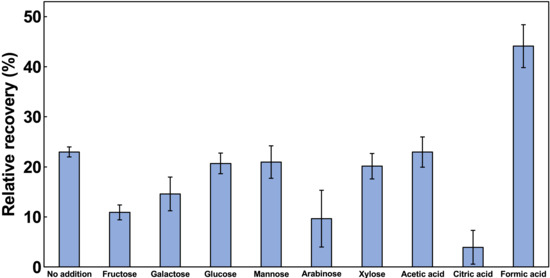
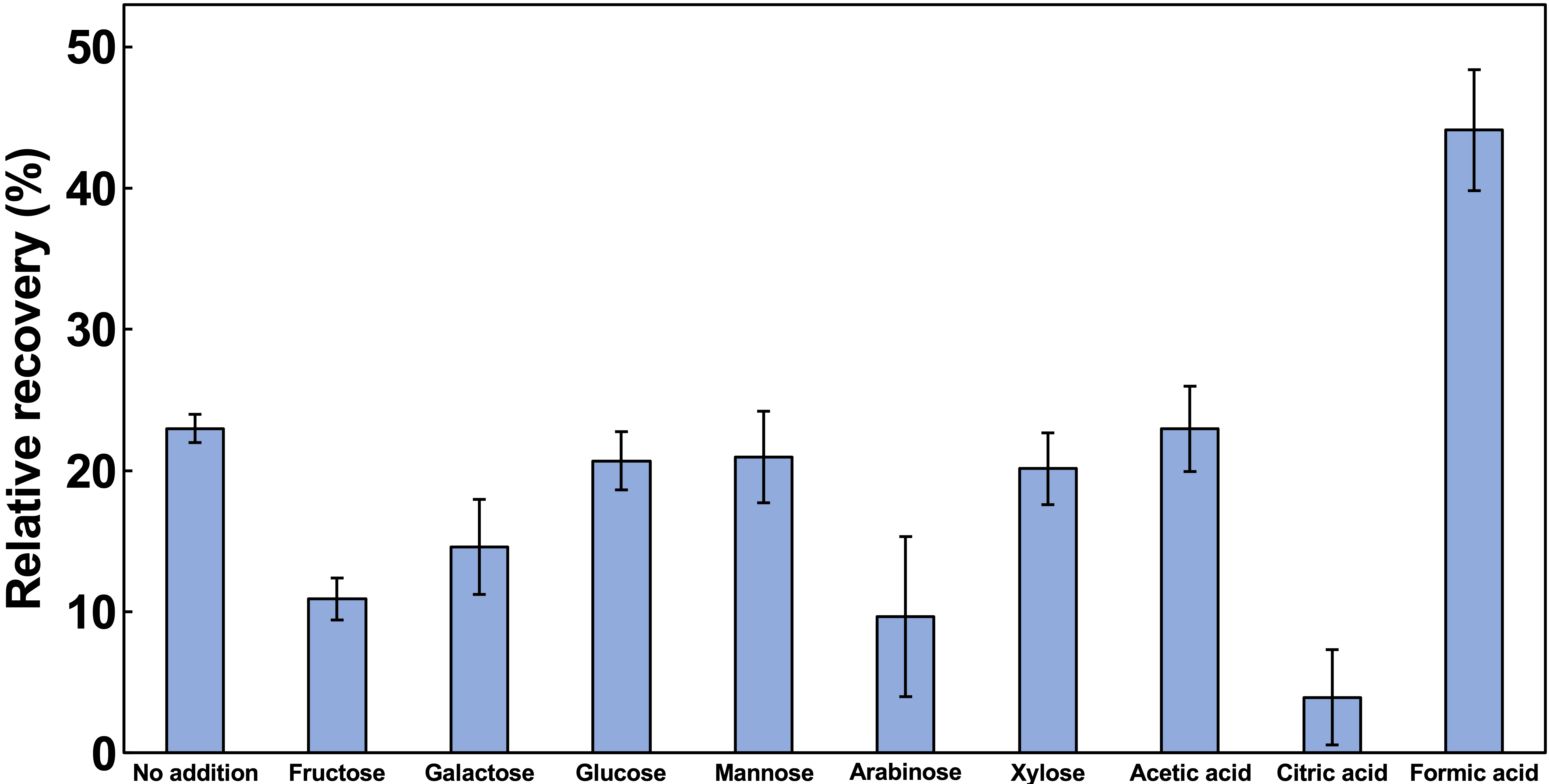
Compared to biosorption, biomineralization exhibits higher recovery efficiency. However, the recovery capacity of E. oligotrophicus CCA6T has not been optimized, and its biomineralization capacity is unknown. Thus, to clarify the biomineralization potential capacity of E. oligotrophicus CCA6T, palladium recovery was assessed using several electron donors (Figure 1). In the absence of an electron donor, the relative recovery rate of palladium reached 23%. However, when sugars such as glucose and mannose were used as electron donors, the relative recovery rate was less than 21%. The reason for this slight decrease is unclear, but it may reflect utilization of the sugars as carbon sources for growth rather than as electron donors. When formic acid was used as a carbon source, the highest value of 44% observed for formic acid. Thus, formic acid was used as the electron donor in subsequent palladium recovery experiments.
Figure 1.
Effect of electron donor on palladium recovery. Palladium recovery tests were performed for 2 h at 30 °C. Error bars indicate standard error (n = 3).
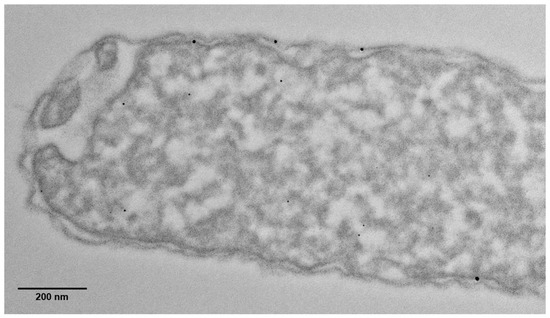
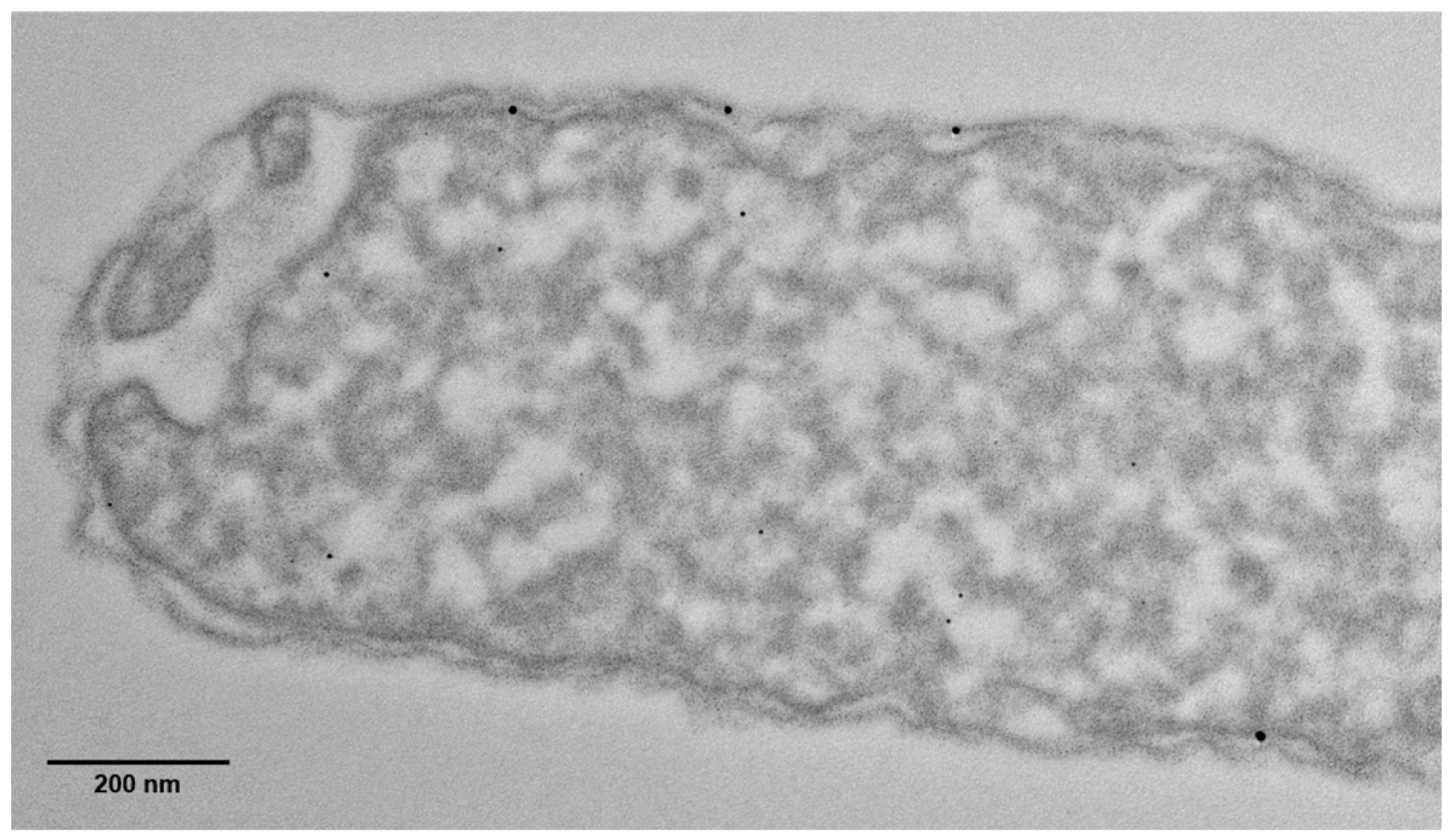
To clarify the biomineralization capacity of E. oligotrophicus CCA6T, TEM analysis was performed using cells after the palladium recovery test. The TEM images of thin sections of cells showed that palladium particles were found to be dispersed on the cell wall, within the periplasmic space and cytoplasm, with a size of approximately 1–10 nm (Figure 2), which revealed that E. oligotrophicus CCA6T has not only biosorption capacity but also biomineralization capacity. Moreover, based on the TEM analysis and the formic acid-dependent recovery enhancement, it is strongly suggested that E. oligotrophicus CCA6T employs an enzyme-mediated active biomineralization mechanism rather than passive biosorption.
Figure 2.
TEM images of thin sections of E. oligotrophicus CCA6T after the palladium recovery test.
The size range of palladium particles observed in E. oligotrophicus CCA6T is consistent with particles of approximately 5 nm in diameter produced by other bacterial systems, such as Desulfovibrio desulfuricans [19] and E. coli [20]. This narrow size distribution is characteristic of biologically mediated reduction and contrasts sharply with chemically reduced palladium, which typically produces larger, more heterogeneous particles. Palladium particles produced in the 1–10 nm range exhibit a very high surface area-to-volume ratio, making them potentially effective catalysts. Indeed, palladium(0) produced by E. coli MC4100 demonstrated catalytic activity comparable to that of a commercially available 5% palladium/carbon catalyst in chromium(VI) reduction tests [20]. In contrast, chemically reduced palladium exhibited a chromium(VI) reduction rate of only 9.1% after 3 h, whereas the palladium(0) generated by E. coli strains achieved a chromium(VI) reduction rate of 85.3% [20]. Thus, E. oligotrophicus CCA6T may be a useful biocatalyst for palladium recovery with high catalytic efficiency.
3.2. Optimization of Palladium Recovery
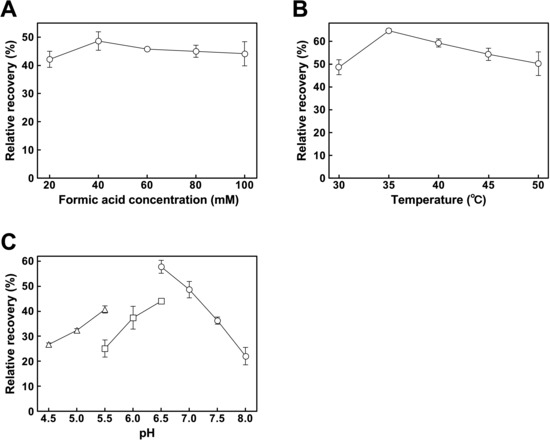
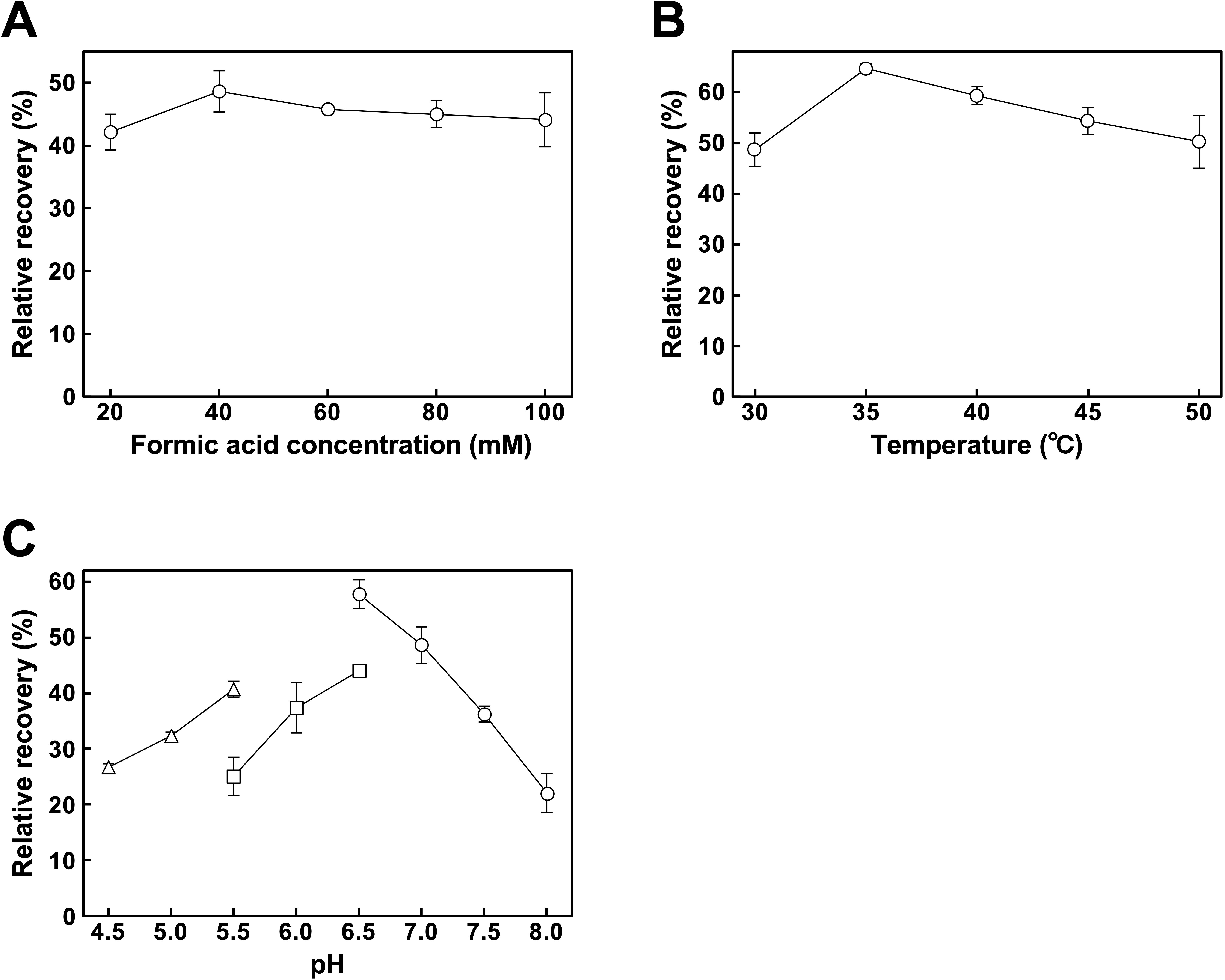
The optimization of the reaction parameters demonstrated the critical influence of environmental factors on the active biomineralization capacity of E. oligotrophicus CCA6T. To optimize conditions for palladium recovery, I first evaluated the effect of formic acid concentration. The highest palladium recovery rate (49%) was obtained at 40 mM, whereas recovery decreased at higher concentrations (Figure 3A). When the reaction temperature was varied at 40 mM and pH 7.0, the highest recovery rate (65%) was observed at 35 °C (Figure 3B). At 40 mM formic acid and 30 °C, recovery was maximal (58%) at pH 6.5 (Figure 3C). Taken together, the optimal conditions for palladium recovery were 40 mM formic acid, 35 °C, and pH 6.5.
Figure 3.
Effect of reaction conditions on palladium recovery. E. oligotrophicus CCA6T was added to the reaction solution containing formic acid, and palladium recovery tests were performed for 2 h under standard reaction conditions. (A) Effect of formic acid concentration. The recovery tests were performed at 30 °C. (B) Effect of reaction temperature. Tests were performed using 40 mM formic acid. (C) Effect of reaction pH. The buffers used were acetate (triangles), citrate (squares), and phosphate (circles). Error bars indicate standard error (n = 3).
During optimization, reaction temperature emerged as the most critical factor affecting palladium recovery by E. oligotrophicus CCA6T. Recovery increased with temperature until 35 °C, but at 50 °C was 15% lower than at 35 °C (Figure 3B). Many enzymes from mesophilic bacteria show maximal activity at moderate temperatures (20–45 °C). At higher temperatures, enzymes undergo heat-induced denaturation, leading to irreversible structural changes and loss of activity [21]. This denaturation likely reduced enzymatic activity, and consequently, palladium recovery. In addition, reaction pH was also important for palladium recovery. E. coli, which belongs to the same family (Enterobacteriaceae) as E. oligotrophicus CCA6T, conserves two types of formate dehydrogenases, FDH-H and FDH-N, as well as other molybdoenzymes. These molybdoenzymes in E. coli show varying pH stability depending on enzyme type. In addition, E. coli produces FDH-H and FDH-N, which contribute to energy conservation through oxidative phosphorylation [22]. The expression of these enzymes depends on growth conditions, with FDH-H induced under aerobic conditions. E. coli FDH-H exhibits high stability at acidic pH, with maximal stability observed between pH 5.3 and 6.4 [23]. By contrast, FDH-H is extremely unstable at ≥pH 7.5, and is inactive at alkaline conditions. In E. oligotrophicus CCA6T, homologous genes for FDH-H and FDH-N are conserved. Thus, as in E. coli, FDH-H production may also occur in E. oligotrophicus CCA6T. If the FDHs in E. oligotrophicus CCA6T exhibit pH stability similar to those in E. coli, a reaction pH of 6.5 would represent near optimal conditions for enzymatic function while maintaining stability.
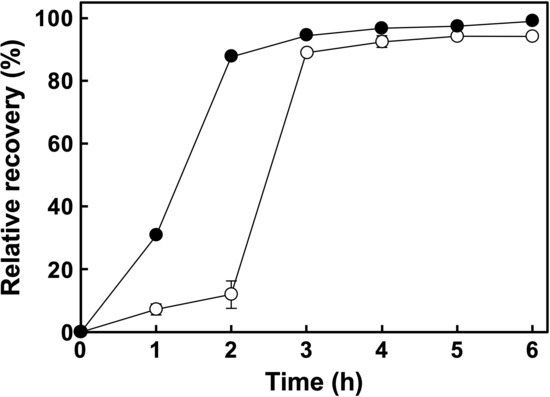
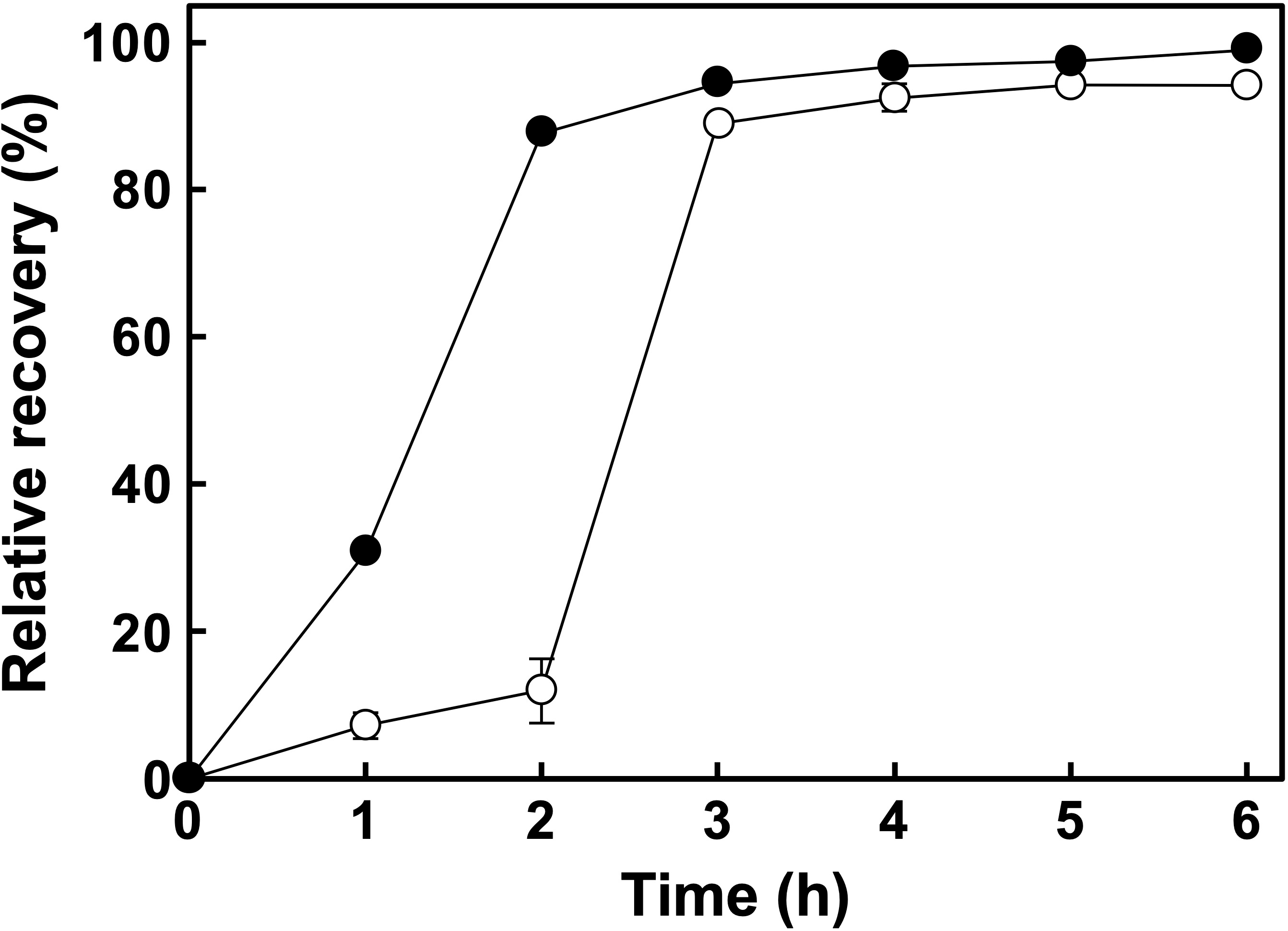
To demonstrate the effectiveness of the optimized reaction conditions for biomineralization using E. oligotrophicus CCA6T, palladium recovery tests were performed (Figure 4). When using the biosorption method to recover palladium, the relative recovery rate exceeded 90% after 4 h and reached 94% after 6 h. In contrast, under comparable conditions, biomineralization achieved consistently higher recovery. At 2 h, a significant difference was observed between the biosorption method (12%) and the biomineralization method (88%), confirming that the supply of an external electron donor greatly accelerates the biomineralization process. At 6 h, the relative recovery rate of the biomineralization method (99%) was higher than that of the metal adsorption method (94%). These results demonstrate that, for palladium recovery with E. oligotrophicus CCA6T, optimized reaction conditions for biomineralization are more effective than biosorption and can achieve high recovery rates even at trace palladium concentrations.
Figure 4.
Palladium recovery under standard (open symbols) and optimized (closed symbols) reaction conditions. Error bars represent standard error (n = 3).
The biomineralization method using E. oligotrophicus CCA6T has several noteworthy features. First, E. oligotrophicus CCA6T can grow efficiently under poor-nutrient conditions and exhibits a faster growth rate than E. coli MG1655 under nutrient-rich conditions [17]. Moreover, this strain can use more than 30 types of carbon sources, allowing low cost cultivation of the biocatalysts required for palladium recovery. Second, E. oligotrophicus CCA6T can selectively adsorb palladium among platinum-group metals [18]. The recovered palladium can be extracted by incineration or chemical treatment, simplifying purification and potentially replacing conventional multi-step physical and chemical processes. Third, this method has a lower environmental impact. Conventional methods for palladium recovery employ an electrolytic refining process, requiring multiple processing steps, complex operations, and selectivity is low [24]. Moreover, this process has a high associated power consumption and significant capital investment. In contrast, recovery using E. oligotrophicus CCA6T can be performed at ambient temperature and pressure without specialized reagents, significantly reducing energy requirements. However, several challenges remain before this method can be applied in an industrial setting, including clarifying the quantitative relationship between bacterial biomass and palladium adsorption capacity.
3.3. Estimation of Mechanism for Palladium Biomineralization
When E. oligotrophicus CCA6T was used in the palladium recovery test, palladium particles were observed in the cell wall, periplasmic space and cytoplasm (Figure 2), which suggested that the biomineralization mechanism involves multiple reactions and both external binding and internal/membrane-associated reduction. This observation is similar to that observed in E. coli MC4100 [20]. E. coli MC4100 cultured under anaerobic conditions can produce palladium particles by reducing palladium(II) to metallic palladium(0) with formic acid as an electron donor [20]. This biomineralization process involves three major hydrogenases: the periplasmic-facing hydrogenases (Hyd-1 and Hyd-2) and the cytoplasmic-facing Hyd-3 component of the formate hydrogenlyase complex. These enzymes catalyze formic acid oxidation either directly (Hyd-3 via formate dehydrogenase) or indirectly (Hyd-1/Hyd-2 via respiratory formate dehydrogenases and quinone-mediated electron transport), thereby initiating palladium(II) reduction at their active sites. Genetic deletion studies using E. coli demonstrated that Hyd-1, Hyd-2 and Hyd-3 contribute to palladium(II) reduction; the presence of at least one periplasmic-facing hydrogenase is required to achieve reduction rates comparable to the parent strain [20]. Moreover, mutants lacking Hyd-1 and Hyd-2 showed substantially reduced palladium(II) reduction rates compared to the parent strain, which suggests the importance of membrane transport in determining overall biomineralization efficiency [20]. Considering that the recovery rate increases when formic acid is used as the electron donor in E. oligotrophicus CCA6T, it is probable that a formate-dependent membrane-associated oxidoreductase system acts to produce palladium particles. However, in the genome of E. oligotrophicus CCA6T, the homologous proteins of Hyd-3 are conserved, but Hyd-1 and Hyd-2 are not, which indicates that E. oligotrophicus CCA6T may have a different palladium recovery mechanism than E. coli.
Genetic analysis comparing E. oligotrophicus CCA6T with E. coli BW25113 revealed crucial insights. Using a single-gene knockout library of E. coli BW25113, Matsumoto et al. [25] identified 73 non-essential genes that enhance palladium biomineralization from a total of approximately 4000 genes. When formic acid was used as an electron donor for palladium biomineralization with E. coli BW25113, membrane proteins (e.g., membrane-bound enzymes, integral membrane proteins, membrane transport proteins, and adhesion proteins) were implicated, because these proteins interact directly with palladium ions. Moreover, genes related to formate metabolism (fdhD, fdhE, fdoI) as well as genes related to molybdenum transport and molybdopterin synthesis (modABC, moaCDE, moeAB, mobA) were also found to enhance palladium biomineralization. In the genome of E. oligotrophicus CCA6T, approximately half of these 73 genes are conserved (Table 1). In particular, most genes associated with formate metabolism and molybdenum transport/molybdopterin synthesis in E. coli BW25113 were also conserved in E. oligotrophicus CCA6T. This genetic evidence supports the mechanism whereby E. oligotrophicus CCA6T utilizes electrons produced via formate dehydrogenase to reduce palladium(II). However, a detailed comparison is limited by differences in membrane protein composition between the two organisms. Some membrane protein genes present in E. coli BW25113 were also conserved in E. oligotrophicus CCA6T. This suggests that while the membrane proteins of E. oligotrophicus CCA6T and E. coli BW25113 share common features, some of their mechanisms are different.
Table 1.
Genes identified in E. oligotrophicus CCA6T that correspond to genes enhancing palladium biomineralization in E. coli BW25113.
High concentrations of palladium may inhibit the biomineralization capacity of E. oligotrophicus CCA6T. For E. coli, palladium is not an essential trace metal for growth; therefore, exposure to 10 mM palladium completely inhibits cell metabolism and causes cell death [26]. When palladium stress is applied to E. coli, common heavy metal and oxidative stress effects such as energy conservation through protein synthesis arrest and the down-regulation of motility and biofilm structures; cellular detoxication through the up-regulation of multi-drug efflux systems and inorganic ion transport complexes; the stabilization, re-folding, and degradation of misfolded proteins through up-regulation of heat-shock and stress sigma factors and proteins; the induction of OxyRS and SoxRS oxidative stress response systems; and the up-regulation of energy production and conversion pathways [26]. By contrast, effects of the down-regulation of DNA repair genes, massive down-regulation of nucleotide transport and metabolism genes, down-regulation of coenzyme transport and metabolism genes for the B vitamins, down-regulation of cell wall biogenesis genes, and a massive up-regulation of carbohydrate transport genes are observed as specific effects related to palladium stress [26]. This information is crucial for the effective utilization of E. coli as a biocatalyst for palladium recovery. A similar phenomenon may also occur in E. oligotrophicus CCA6T closely related to E. coli. Thus, I am planning to perform a transcriptome analysis to reveal the biomineralization mechanism of E. oligotrophicus CCA6T, and the results will be described elsewhere in the future.
3.4. Palladium Recovery from e-Waste
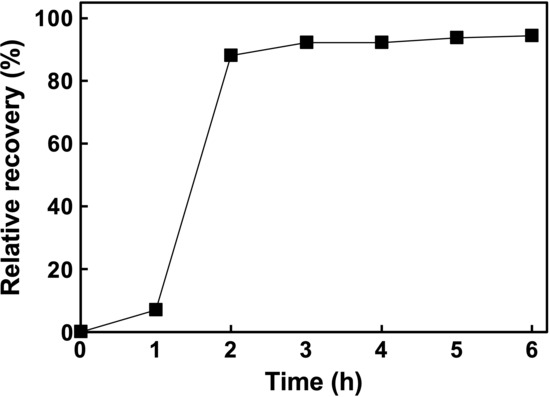
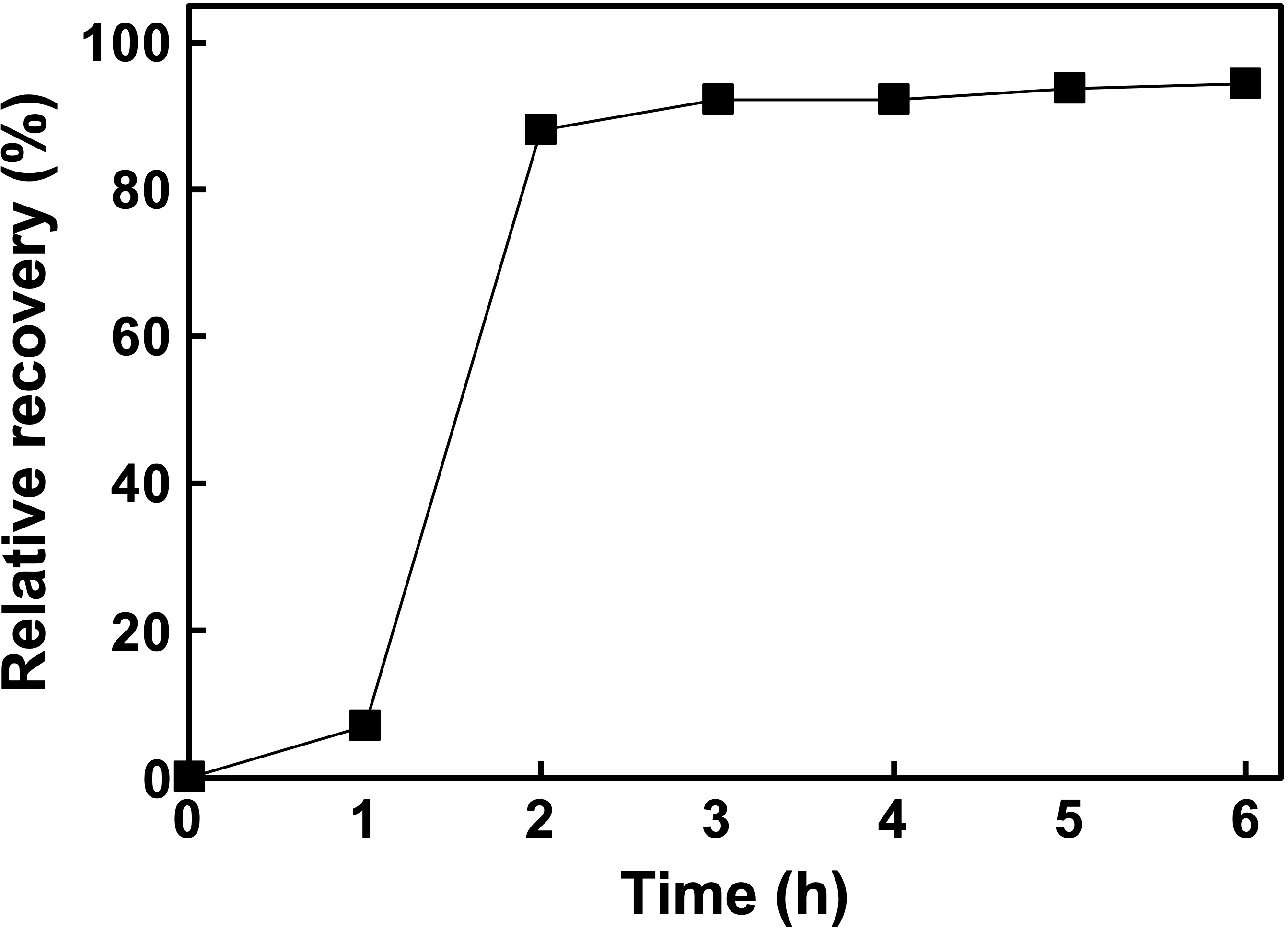
Existing copper refining plants are also suitable for palladium recovery from e-waste, and some companies are recovering palladium along with gold and copper from e-waste [10]. However, this method requires complex exhaust gas treatment. Meanwhile, hydrometallurgical processes are also used for recovering palladium from e-waste [10]. In this method, unwanted metals such as copper, iron, and nickel are removed by immersing the e-waste in an acidic bath, leaving a solid residue enriched with gold and palladium. Subsequently, palladium is recovered sequentially through dissolution and separation processes. However, a low-concentration palladium solution is yielded in the dissolution process, which complicates the refining of palladium and makes the isolation of pure palladium difficult unless a selective and highly efficient recovery method is utilized. Consequently, it can be said that technologies for efficiently recovering palladium from e-waste are currently limited. To demonstrate the effectiveness of the optimized biomineralization conditions using E. oligotrophicus CCA6T, a palladium recovery test was performed using e-waste. When a metal dissolution solution was prepared from printed circuit boards of discarded computers, the palladium concentration was 36 µg/L. Under optimized reaction conditions, recovery was initiated using E. oligotrophicus CCA6T (Figure 5). After 2 h, the relative recovery rate reached 88%. After 6 h, the recovery rate reached 94%, corresponding to 68.4 µg of palladium, of which 68.1 µg was detected from the cells after the recovery test. These results demonstrated that the palladium recovery method developed in this study is effective when applied to e-waste. Accordingly, biomineralization using E. oligotrophicus CCA6T overcomes some of the drawbacks of existing recovery methods due to its high efficiency at trace levels and negligible loss of palladium from the bacteria, thus this method has the potential for practical application.
Figure 5.
Palladium recovery from metal dissolution solutions prepared from e-waste. Error bars indicate standard error (n = 3).
Several microbiological methods for palladium recovery from e-waste have been developed to date. For example, the sulfate-reducing bacterium D. desulfuricans ATCC 29577 can recover metals by forming metal nanoparticles on its cell surface, achieving a recovery rate above 94% for palladium [19]. However, D. desulfuricans ATCC 29577 also recovers gold, and selective palladium recovery requires complex procedures, including the use of copper solutions to control adsorption capacity. The red microalga Galdieria sp. NS3 has also been used as a biocatalyst for palladium recovery [27]. Galdieria sp. NS3 efficiently adsorbs palladium ions onto its cell surface and exhibits strong acid resistance. These characteristics allow palladium to be dissolved in aqua regia and subsequently recovered by Galdieria sp. NS3 in the same container, thereby simplifying the process. However, this method also lacks specificity, as gold is adsorbed together with palladium, necessitating further purification of the recovered palladium. Both methods report the recovery of palladium from e-waste dissolution solutions in the mg/L range. On the other hand, the method using E. oligotrophicus CCA6T enables recovery at trace concentrations, successfully capturing palladium present in the µg/L range. Based on its characteristics such as high recovery efficiency, ambient temperature and pressure operation, the capacity to recover trace concentrations, and the use of Biosafety Level 1 bacterium that grows efficiently in poor-nutrient media, this method is considered a scalable and economical alternative to conventional palladium recovery technologies. Future research should focus on pilot-scale validation and elucidation of novel biomineralization mechanisms to clarify the differences between E. oligotrophicus CCA6T and known model microorganisms.
4. Conclusions
In this study, palladium recovery was developed using the novel oligotrophic bacterium E. oligotrophicus CCA6T. To confirm its biomineralization capacity, palladium recovery tests were performed with several electron donors, among which formic acid was the most effective. TEM analysis provided visual evidence of the biomineralization capacity of E. oligotrophicus CCA6T, which revealed that the palladium particles existed in multiple cellular compartments, including the cell wall, periplasmic space, and cytoplasm. Thus, when palladium is recovered using formic acid as an electron donor, E. oligotrophicus CCA6T employs an enzyme-mediated active biomineralization mechanism rather than passive biosorption. While some mechanisms related to palladium recovery, such as formate metabolism, may share common features between E. oligotrophicus CCA6T and E. coli, many mechanisms are suggested to be different. Using formic acid, the effects of concentration, reaction temperature, and reaction pH were evaluated to determine optimized biomineralization conditions. Under these reaction conditions, the relative recovery rate exceeded 99%, enabling efficient palladium recovery within a shorter time than biosorption. When applied to metal dissolution solutions prepared from e-waste, the biomineralization method achieved a palladium recovery rate of 94%. Palladium loss from bacterial cells after recovery was below 0.01%. These results provide a foundation for the practical application of palladium recovery from e-waste using E. oligotrophicus CCA6T.
Funding
This study was supported by a Grant for Environmental Research Projects (Grant Number 2330205) from The Sumitomo Foundation.
Institutional Review Board Statement
Not applicable.
Informed Consent Statement
Not applicable.
Data Availability Statement
E. oligotrophicus CCA6T was deposited in two international strain collection institutes under accession numbers HUT-8142T and KCTC 62525T. The complete genome sequence of E. oligotrophicus CCA6T has been deposited in DDBJ/EMBL/GenBank under accession number AP019007.
Acknowledgments
The author thanks all members of the Department of Liberal Arts and Basic Science, College of Industrial Technology, Nihon University, for technical assistance and valuable discussions. The author also thanks Hiroaki Minamisawa and Ryota Terada for their technical support and helpful discussions.
Conflicts of Interest
The author declares no conflicts of interest.
References
- Cao, Y.; Ran, R.; Wu, X.; Si, Z.; Kang, F.; Weng, D. Progress on metal-support interactions in Pd-based catalysts for automobile emission control. J. Environ. Sci. 2023, 125, 401–426. [Google Scholar] [CrossRef] [Scilit] [PubMed]
- Alentiev, D.A.; Bermeshev, M.V.; Volkov, A.V.; Petrova, I.V.; Yaroslavtsev, A.B. Palladium membrane applications in hydrogen energy and hydrogen-related processes. Polymers 2025, 17, 743. [Google Scholar] [CrossRef] [Scilit]
- Biffis, A.; Centomo, P.; Del Zotto, A.; Zecca, M. Pd metal catalysts for cross-couplings and related reactions in the 21st century: A critical review. Chem. Rev. 2018, 118, 2249–2295. [Google Scholar] [CrossRef] [Scilit] [PubMed]
- Cherepovitsyn, A.; Mekerova, I.; Nevolin, A. Analysis of the Palladium Market: A strategic aspect of sustainable development. Mining 2025, 5, 39. [Google Scholar] [CrossRef] [Scilit]
- Singh, N.; Ogunseitan, O.A. Disentangling the worldwide web of e-waste and climate change co-benefits. Circ. Econ. 2022, 1, 100011. [Google Scholar] [CrossRef] [Scilit]
- Adetunji, A.I.; Oberholster, P.J.; Erasmus, M. Bioleaching of metals from e-waste using microorganisms: A review. Minerals 2023, 13, 828. [Google Scholar] [CrossRef] [Scilit]
- Dutta, D.; Goel, S.; Kumar, S. Health risk assessment for exposure to heavy metals in soils in and around E-waste dumping site. J. Environ. Chem. Eng. 2022, 10, 107269. [Google Scholar] [CrossRef] [Scilit]
- Das, S.K.; Ellamparuthy, G.; Kundu, T.; Angadi, S.I.; Rath, S.S. A comprehensive review of the mechanical separation of waste printed circuit boards. Proc. Safety Environ. Prot. 2024, 187, 221–239. [Google Scholar]
- Binnemans, K.; Jones, P.T.; Manjón Fernández, Á.M.; Torres, V.M. Hydrometallurgical processes for the recovery of metals from steel industry by-products: A critical review. J. Sustain. Metall. 2020, 6, 505–540. [Google Scholar] [CrossRef] [Scilit]
- Bourgeois, D.; Lacanau, V.; Mastretta, R.; Contino-Pépin, C.; Meyer, D. A simple process for the recovery of palladium from wastes of printed circuit boards. Hydrometallurgy 2020, 191, 105241. [Google Scholar] [CrossRef] [Scilit]
- Pande, V.; Pandey, S.C.; Sati, D.; Bhatt, P.; Samant, M. Microbial interventions in bioremediation of heavy metal contaminants in agroecosystem. Front. Microbiol. 2022, 13, 824084. [Google Scholar] [CrossRef] [Scilit] [PubMed]
- Adewuyi, A. Chemically modified biosorbents and their role in the removal of emerging pharmaceutical waste in the water system. Water 2020, 12, 1551. [Google Scholar] [CrossRef] [Scilit]
- Mohapatra, R.K.; Nayak, M.; Parhi, P.K.; Pandey, S.; Thatoi, H.; Panda, C.R.; Choi, Y. Biosorption performance and mechanism insights of live and dead biomass of halophilic Bacillus altitudinis strain CdRPSD103 for removal of Cd(II) from aqueous solution. Int. Biodeterior. Biodegrad. 2024, 191, 105811. [Google Scholar] [CrossRef] [Scilit]
- Dawwam, G.E.; Abdelfattah, N.M.; Abdel-Monem, M.O.; Jahin, H.S.; Omer, A.M.; Abou-Taleb, K.A.; Mansor, E.S. An immobilized biosorbent from Paenibacillus dendritiformis dead cells and polyethersulfone for the sustainable bioremediation of lead from wastewater. Sci. Rep. 2023, 13, 891. [Google Scholar] [CrossRef] [Scilit]
- Konishi, Y.; Tsukiyama, T.; Saitoh, N.; Nomura, T.; Nagamine, S.; Takahashi, Y.; Uruga, T. Direct determination of oxidation state of gold deposits in metal-reducing bacterium Shewanella algae using X-ray absorption near-edge structure spectroscopy (XANES). J. Biosci. Bioeng. 2007, 103, 568–571. [Google Scholar] [CrossRef] [Scilit]
- Saitoh, N.; Fujimori, R.; Nakatani, M.; Yoshihara, D.; Nomura, T.; Konishi, Y. Microbial recovery of gold from neutral and acidic solutions by the baker’s yeast Saccharomyces cerevisiae. Hydrometallurgy 2018, 181, 29–34. [Google Scholar] [CrossRef] [Scilit]
- Akita, H.; Matsushika, A.; Kimura, Z.I. Enterobacter oligotrophica sp. nov., a novel oligotroph isolated from leaf soil. Microbiologyopen 2019, 8, e00843. [Google Scholar] [CrossRef] [Scilit] [PubMed]
- Akita, H.; Kumagai, A. Biosorption of palladium using Enterobacter oligotrophicus CCA6T. Salt Seawat. Sci. Technol. 2021, 2, 19–21. [Google Scholar]
- Creamer, N.J.; Baxter-Plant, V.S.; Henderson, J.; Potter, M.; Macaskie, L.E. Palladium and gold removal and recovery from precious metal solutions and electronic scrap leachates by Desulfovibrio desulfuricans. Biotechnol. Lett. 2006, 28, 1475–1484. [Google Scholar] [CrossRef] [Scilit] [PubMed]
- Deplanche, K.; Caldelari, I.; Mikheenko, I.P.; Sargent, F.; Macaskie, L.E. Involvement of hydrogenases in the formation of highly catalytic Pd(0) nanoparticles by bioreduction of Pd(II) using Escherichia coli mutant strains. Microbiology 2010, 156, 2630–2640. [Google Scholar] [CrossRef] [Scilit]
- Elias, M.; Wieczorek, G.; Rosenne, S.; Tawfik, D.S. The universality of enzymatic rate–temperature dependency. Trends Biochem. Sci. 2014, 39, 1–7. [Google Scholar] [CrossRef] [Scilit] [PubMed]
- Benoit, S.; Abaibou, H.; Mandrand-Berthelot, M.A. Topological analysis of the aerobic membrane-bound formate dehydrogenase of Escherichia coli. J. Bacteriol. 1998, 180, 6625–6634. [Google Scholar] [CrossRef] [Scilit] [PubMed]
- Axley, M.J.; Grahame, D.A.; Stadtman, T.C. Escherichia coli formate-hydrogen lyase. Purification and properties of the selenium-dependent formate dehydrogenase component. J. Biol. Chem. 1990, 265, 18213–18218. [Google Scholar] [CrossRef] [Scilit]
- Vidyadhar, A. A Review of Technology of Metal Recovery from Electronic Waste; IntechOpen: London, UK, 2016; pp. 1–190. [Google Scholar]
- Matsumoto, T.; Kamino, M.; Yamada, R.; Konishi, Y.; Ogino, H. Identification of genes responsible for reducing palladium ion in Escherichia coli. J. Biotechnol. 2020, 324, 7–10. [Google Scholar] [CrossRef] [Scilit]
- Joudeh, N.; Saragliadis, A.; Schulz, C.; Voigt, A.; Almaas, E.; Linke, D. Transcriptomic response analysis of Escherichia coli to palladium stress. Front. Microbiol. 2021, 12, 741836. [Google Scholar] [CrossRef] [Scilit]
- Adams, E.; Maeda, K.; Kamemoto, Y.; Hirai, K.; Apdila, E.T. Contribution to a sustainable society: Biosorption of precious metals using the microalga Galdieria. Int. J. Mol. Sci. 2024, 25, 704. [Google Scholar] [CrossRef] [Scilit] [PubMed]

Disclaimer/Publisher’s Note: The statements, opinions and data contained in all publications are solely those of the individual author(s) and contributor(s) and not of MDPI and/or the editor(s). MDPI and/or the editor(s) disclaim responsibility for any injury to people or property resulting from any ideas, methods, instructions or products referred to in the content. |
© 2025 by the author. Licensee MDPI, Basel, Switzerland. This article is an open access article distributed under the terms and conditions of the Creative Commons Attribution (CC BY) license.