Systematic Review

Advances in Third-Generation Bioethanol Production, Industrial Infrastructure and Efficient Technologies in Sustainable Processes with Algae Biomass: Systematic Review


by
Jesus R. Melendez
1,
Daniel A. Lowy
2,
Sufia Hena
3,* and
Leonardo Gutierrez
4
1
Engineering, Technology and Sustainable Renewable Energy Research Group, Faculty of Technical Education for Development, Catholic University of Santiago of Guayaquil, Guayaquil 090615, Ecuador
2
Kandó Kálmán Faculty of Electrical Engineering, Óbuda University, 17 Tavaszmező St., 1084 Budapest, Hungary
3
Department of Chemical Engineering, Curtin University, Bentley, Perth, WA 6102, Australia
4
Facultad del Mar y Medio Ambiente, Universidad del Pacifico, Guayaquil 090904, Ecuador
*
Author to whom correspondence should be addressed.
Fermentation 2026, 12(1), 2; https://doi.org/10.3390/fermentation12010002
Submission received: 19 November 2025 / Revised: 10 December 2025 / Accepted: 16 December 2025 / Published: 19 December 2025
(This article belongs to the Special Issue Recent Advancements in Fermentation Technology: Biofuels Production)

Abstract

The growing global concern about the environmental impact of fossil fuels’ greenhouse gas emissions has spurred the introduction of innovative, sustainable alternatives. Microalgae biomass holds substantial potential as a viable source material for producing environmentally friendly biofuels. Third-generation (3G) biofuels, specifically algae-derived bioethanol, have emerged as viable alternatives to traditional biofuels. The research provides an exhaustive analysis of the contemporary understanding of manufacturing 3G biofuels from microalgae and macroalgae. Additionally, the study provides an in-depth discussion of the identified gaps within these areas. By conducting a systematic literature review, the authors describe current knowledge of 3G biofuel production. The study addresses two key categories: (i) infrastructure and industrial technology, and (ii) the processes for obtaining third-generation biofuels. One highlights the need for efficient management in all stages of bioethanol production, including cultivation, harvesting, extraction, and conversion. Furthermore, leveraging technological advancements, such as selecting superior genetic strains and developing novel conversion technologies, is essential for improving the efficiency and profitability of the manufacturing process. The successful production of 3G bioethanol from microalgae requires a comprehensive approach that addresses various challenges and incorporates sustainable practices to achieve environmental and economic goals.

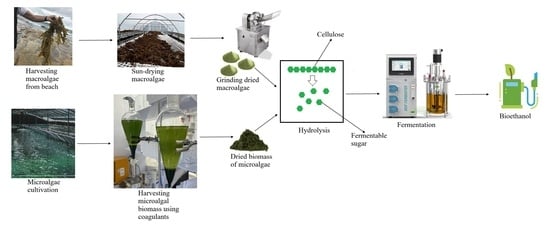
Graphical Abstract

1. Introduction

The global market demands suitable energy resources, and there is a need to establish environmental protection strategies via promoting biofuel production. The latter provides viable options for these global challenges [1]. The European Union (EU) is transitioning from fossil fuels to biofuels, as they offer better performance than gasoline and diesel, particularly in the automotive sector. According to statistical data, excluding indirect emissions from fuel and automobile manufacturers, the transportation sector is responsible for 33% of all carbon dioxide emissions and 25% of all greenhouse gas emissions in the EU. Passenger cars are accountable for more than half of the EU’s greenhouse gas emissions recorded from the transport sector [2].
As an alternative, biofuels and their blends can reduce detrimental emissions, including carbon monoxide (CO), carbon dioxide (CO2), and nitrogen oxides (NOx). They also improve the performance of gas turbines [3]. Bioethanol reduces GHG emissions by the same amount. Research and development (R&D) efforts aimed at producing biofuels from microalgae are encouraging, owing to their high biomass content and lipid yield per hectare compared to other biomass sources [4].
Algae, as living organisms capable of photosynthesis, are a promising source of biofuel. Their carbohydrates are suitable for bioethanol production [5]. New directions in biofuel production are linked to sustainable needs [6]. In producing bioethanol from non-algal biomass, hemicellulose extraction with mild organic acids rather than sulfuric acid is a more environmentally friendly alternative [7]. Target future industrial applications and converge in attractive action schemes and mechanisms focused on algae, given their growth performance [8], and their potential for renewable energy in transportation [9]. According to Sarri and co-workers, seawater supplemented with commercial nitrate, phosphate, and micronutrient fertilizers is commonly used to cultivate marine microalgae [10]. Sindhu et al. defined third-generation biofuels (3G) as including bioethanol derived from microalgae and seaweed [11].
Converting solar energy into chemical energy is an efficient and sustainable process, as microalgae can grow on non-agricultural land and require relatively unsophisticated technological infrastructure [12]. Therefore, microalgae support food security, promote energy security, and cause only limited environmental issues [13]. 3G biofuels are produced by consortia of organisms, such as microalgae, macroalgae, and cyanobacteria (also known as blue-green algae) [14]. Cheng et al. considered that algae, in general, and green unicellular microalgae, in particular, offer an excellent opportunity for biofuel production, with high productivity of 3G biofuels [15]. Li et al. established that the high lipid content and fast growth of mutant microalgae added value to their utilization [16]. Mixotrophic culture of microalgae represents a promising approach to enhance biomass productivity and metabolite synthesis. Mixotrophic cultivation can be coupled with phycoremediation, a green technology for wastewater treatment that uses microalgae to remove or transform pollutants [17]. Therefore, microalgae-based wastewater treatment is a promising technology, owing to its efficient nutrient removal, biomass valorization, and carbon sequestration. Operational costs and the inefficiency of biomass harvesting restrict the large-scale implementation of this alternative. Recent advances in techno-economic assessments and bioprocess optimization have improved system efficiency, cost-effectiveness, and bioproduct recovery [18].
When cultivation conditions for microalgae become adverse, their cells undergo rapid metabolic rearrangements that enhance the accumulation of neutral lipids. Nonetheless, this rearrangement affects growth, thereby reducing the overall yield. To overcome this issue, one can utilize genetic engineering, modify algal nutrition, or engage in a two-phase cultivation approach [19].
Recently, a study evaluated the entire value chain of microalgal biorefineries to identify the key technological, economic, and environmental factors that enable or hinder scale-up from pilot-scale demonstrations to commercially viable circular economy applications [20].
Herbicides may affect photosynthetic organisms such as microalgae, and pesticides targeting other pests can also impact these communities. Such unwanted side effects are directly related to biodiversity loss and to human health, as well. Taking a systematic approach, one can exceed current yields from oilseed crops while requiring less water and without using herbicides or pesticides [21]. They reduce the emission of greenhouse gases, as 1.00 kg of dry algae biomass can sequester approximately 1.8–2.0 kg of carbon dioxide [22].
This systematic review offers a novel contribution compared with previous studies on third-generation bioethanol by articulating, within a coherent analytical framework, the entire value chain from micro- and macroalgal biomass to industrial infrastructure and the specific conversion technologies for 3G bioethanol. By focusing on the period 2019–2025 and applying a systematic literature review (SLR) methodology based on PRISMA, complemented by a modified PICO scheme, the review integrates previously scattered results in terms of productivity, energy efficiency, greenhouse gas (GHG) emissions mitigation, and scaling potential, thereby delineating concrete gaps between the experimental domain and industrial implementation.
The primary objective of this review paper is to analyze and describe the manufacturing processes for 3G biofuels, specifically bioethanol produced through biotechnologies, utilizing sustainable management practices. Two categories are emphasized: (i) the infrastructure and industrial technology, and (ii) the processes of obtaining 3G biofuels. The research reported here examines the state of knowledge reached in producing third-generation biofuels from microalgae and macroalgae. One discusses in detail the gaps found in the chosen categories.
The current study is divided into seven sections, each addressing a particular topic, as listed below. The introduction (Section 1) presents the global use of biofuels derived from biomass, emphasizing the need for sustainable environmental protection and highlighting the importance of selecting efficient alternative production methods that use microalgae as raw material. Section 2 presents a systematic review of the literature aligned with the selected categories. Section 3 outlines the methodological approach employed to gain insight into this topic. Section 4 focuses on infrastructure and industrial technology, emphasizing advancements in producing algae feedstock for biofuel production. Section 5 discusses the processes for manufacturing third-generation biofuels and the selection of the most efficient technologies. Section 6 discusses the global trends in producing biofuels from algae. Section 7 addresses the price comparison of third-generation bioethanol, and ends with the conclusions reported in Section 8.

2. Scope of the Literature Review

In this section, we discuss the potential integration of biorefineries that convert algae into other industries. Additionally, we scrutinize the processes involved in 3G biofuel production and their sustainability.

2.1. Industrial Systems and Sustainability

Biofuels, derived from renewable, biodegradable feedstocks such as agricultural residues and algae, offer a sustainable alternative to fossil fuels. To benefit from biofuels, countries must address deficiencies in industrial infrastructure encountered during their production. Algae are attractive feedstocks for biofuel production, as they possess high photosynthetic efficiency, rapid growth rates, and the ability to thrive on non-arable land and in wastewater. Biorefineries enable the conversion of biomass into biofuels and value-added products while reducing environmental impacts. Several challenges remain, such as land use, water consumption, and resource-intensive production [23].
Most countries have adopted strategies that focus on the costs of achieving sustainability in using microalgae as a feedstock for biofuels and other products. Current cost barriers to large-scale cultivation are harvesting and biomass concentration [24]. Therefore, they require relevant legislative regulations. Using three modified microeconomic models, Janda et al. investigated the impact of ethanol blending mandates on retail fuel prices in the United States. Their findings eliminate the hypothesis that increasing ethanol blend rates would yield higher fuel prices [25]. The portfolios of biofuel and biorefinery companies reveal that several prominent petroleum corporations invested in biofuel research. They manufactured both conventional and innovative biofuels. The latter includes bioethanol and alcohol-to-jet fuels. In many instances, petroleum refineries have been converted to biorefineries [26].
According to Guedes et al. [27] and Hull et al. [28] a challenge in implementing the technology is that biorefineries that convert algae can be effective only through integration with other industries, such as hydrothermal treatment. The latter should also be evaluated for its potential to transform algae and algae waste into liquid fuels.
Algae cultivation facilities require complex industrial settings to provide the climate algae require [29]. Microalgae can be cultivated with good productivity in highly controlled laboratory environments. The large-scale cultivation remains challenging, however. The latter can be conducted in photobioreactors, providing a closed, highly regulated environment for algae, which enhances nutritional and metabolic efficiency, resulting in higher biomass output per unit of substrate. Design criteria for photobioreactors must consider the reactor’s shape and structure, as well as concentration profiles and operating mode [30]. The proper choice of cultivation conditions enables greater growth rates [31]. For this, resources are required, including suitable land and water for crops. A recent study identified suitable sites in Karachi for microalgae cultivation using geographic information systems. Four categories were established: highly suitable, moderately suitable, less suitable, and unfavorable. The uncovered viable locations for algae cultivation may attract domestic and international interest, allowing for future developments in the field [32]. Crucial for the proper location of the cultivation site are the available infrastructure, transportation, and services [33]. All the above cause economic and sustainability drawbacks; however, producing bioethanol from macroalgae remains a technologically feasible alternative, owing to the low cost of macroalgae cultivation. Algae contain significant amounts of carbohydrates that can be efficiently converted into fuels, whereas their lignin levels remain low [34,35].
Bioprospecting can identify algae species with high lipid content that also show significant growth rates and considerable growth densities, yielding valuable co-products [36]. Therefore, they represent a low-cost means of commercial products. In real-world environments, there is a growing demand for genetic engineering and reproductive technologies, driven by the economic viability of these approaches. The industrial biotechnology sector has been slow to adopt genetically modified microalgae due to regulatory and scalability challenges. Over the past few years, significant progress has been made in micro-algal genetic engineering and strain improvement, particularly in biomass production, biomolecule production, and process optimization. Nonetheless, upon using genetically engineered microalgae in industrial and commercial applications, attention should be paid to regulatory and biosafety issues, as well as risk, hazard, and exposure assessments [37]. Bochenski et al. suggested implementing microalgae biorefineries in arid areas, where certain strains can grow at temperatures exceeding 28 °C and salinity levels above 30 ppt [38].
Any novel technology presents challenges, one of which is long-term sustainability [39]. Building appropriate industrial infrastructure and selecting suitable technologies are typical tasks in the production of algae-based biofuels. Scientists focus on biotechnological properties because the lipid yield of microalgae varies depending on the species and culture conditions.
Biorefineries should meet financial requirements by developing high-value products in addition to biofuels. This requires investigating innovative concepts and approaches [40]. A novel trend is the development of smart biorefineries that utilize artificial intelligence in algae production. It is expected that AI will enhance process efficiency and economic performance within a circular, sustainable framework [41].

2.2. Processes Involved in Obtaining Third-Generation Biofuels

According to the Royal Academy of Engineering, expanding commercially available processes could enable the long-term global production of third-generation biofuels by 2030 [42]. Although biomass represents a sustainable alternative to conventional biomass for biofuel production, Nashath and coworkers warn that microalgal biofuels are more costly than traditional biofuels due to their energy-intensive processing and demanding cultivation conditions. Nevertheless, strain selection is needed to identify appropriate species with suitable biochemical compositions [43]. Biomass can provide energy by biochemical conversion, chemical reactions, direct combustion, or thermochemical processes. Hybrid bioenergy systems can reduce overall costs by 15–37% and lower greenhouse gas emissions by 12–30%. Thermochemical technologies are highly efficient, biochemical methods are eco-friendly, while physicochemical methods are attractive owing to their simplicity. Each technique must address high capital costs, feedstock variability, and scalability issues [44]. Biochemical conversion processes, involving anaerobic digestion and fermentation, reached conversion efficiencies of 82–88%. Process optimization using artificial intelligence and machine learning could predict micro-algal growth characteristics, required nutrients, and the effects of environmental inputs. As a result, production costs decreased by 18%. Additionally, a 23% reduction in the carbon footprint was achieved. Overall, the environmental advantages were notable, resulting in a 78% reduction in net greenhouse gas emissions compared to fossil fuels [45]. Chlorella, Spirulina, Botryococcus, and Nannochloropsis demonstrated outstanding biomass production efficiency. They were also effective in bioenergy generation, carbon sequestration, nutrient recycling, and in algal-based wastewater remediation and bioethanol production [46].

3. Methodology—The Methodological Framework

The global importance of producing biofuels sustainably underscores the need to study third-generation biofuels. Therefore, the authors of this paper conducted a systematic literature review (SLR) following the guidelines for data systematization and presentation recommended by Snyder [47]. The results obtained by this methodological approach were evaluated by addressing a research question [48]. The aim was to determine the current state of knowledge regarding third-generation bioethanol derived from microalgae. Two categories were created in the review’s focus: (i) Infrastructure and industrial technology, and (ii) Processes for obtaining third-generation biofuels. The methodological design aligns with the phases of the 3G biofuel manufacturing process, specifically for bioethanol production. The database investigation included papers published in journals indexed in Scopus and Web of Science from 2019 to 2025. In this review, only a few authoritative policy documents dated before 2019 are cited.

3.1. Methodological Design and PRISMA Protocol

This study adopts a Systematic Literature Review (SLR) design, supported by a narrative synthesis to compare reported yields, productivities, and energy efficiencies. This paper conducted a systematic literature review (SLR) following the guidelines for data systematization and presentation recommended by Snyder [47]. The systematic review is organized into sequential phases, following the PRISMA 2020 (Preferred Reporting Items for Systematic Reviews and Meta-Analyses) guidelines [49] for analytical and integrative documentary studies, along with the PRISMA checklist in Supplementary Materials. The main objective of this article is to analyze and describe the manufacturing processes for third-generation (3G), specifically bioethanol produced through biotechnological processes, within a sustainable management framework. The review aligns with two principal thematic axes: (i) industrial infrastructure and technology, and (ii) production processes. It also quantitatively extends the evidence from 2019 to 2025, while addressing identified gaps in scalability, efficiency, and sustainability.
Eligibility Criteria: The search strategies were structured according to the modified PICO framework (Population–Intervention–Comparator–Outcome–Study Type–Time), as shown in Table 1.
Information Sources: An exhaustive search was conducted across international academic and scientific databases, including Scopus, Web of Science, Springer, and Google Scholar, covering the period from 2019 to the present.
Search Strategy: A complete search strategy was reported for each database, including filters and limitations (2019–2025, title/abstract/keywords). Table 2 summarizes the Boolean operators used.
Exclusion Criteria: Studies focused on non-ethanol biofuels (e.g., biodiesel) were excluded unless they included comparative or integrative data on bioethanol/ethanol. First- or second-generation (1G/2G) studies without 3G comparison, patents lacking verifiable data, and proceedings without full text were also excluded.

3.2. Reporting Guidelines

This systematic review was conducted and reported in accordance with the Preferred Reporting Items for Systematic Reviews and Meta-Analyses (PRISMA) 2020 guidelines [49], and the detailed PRISMA checklist (S1) was included in the Supplementary Materials. In addition, the PRISMA 2020 flow diagram for new systematic reviews, which included searches of databases and registers only, was used to document the study selection process, and a summary of each phase (identification, screening, eligibility, and inclusion) is presented below.
Phase 1: Identification
In this phase, full texts of potentially relevant articles were evaluated. Exclusion criteria were based on papers outside the main topic, such as non-ethanol biofuels (e.g., biodiesel) unless ethanol was included; theoretical works lacking techno-economic data; 1G/2G studies without comparison toward 3G; unverifiable patents; and incomplete conference papers.
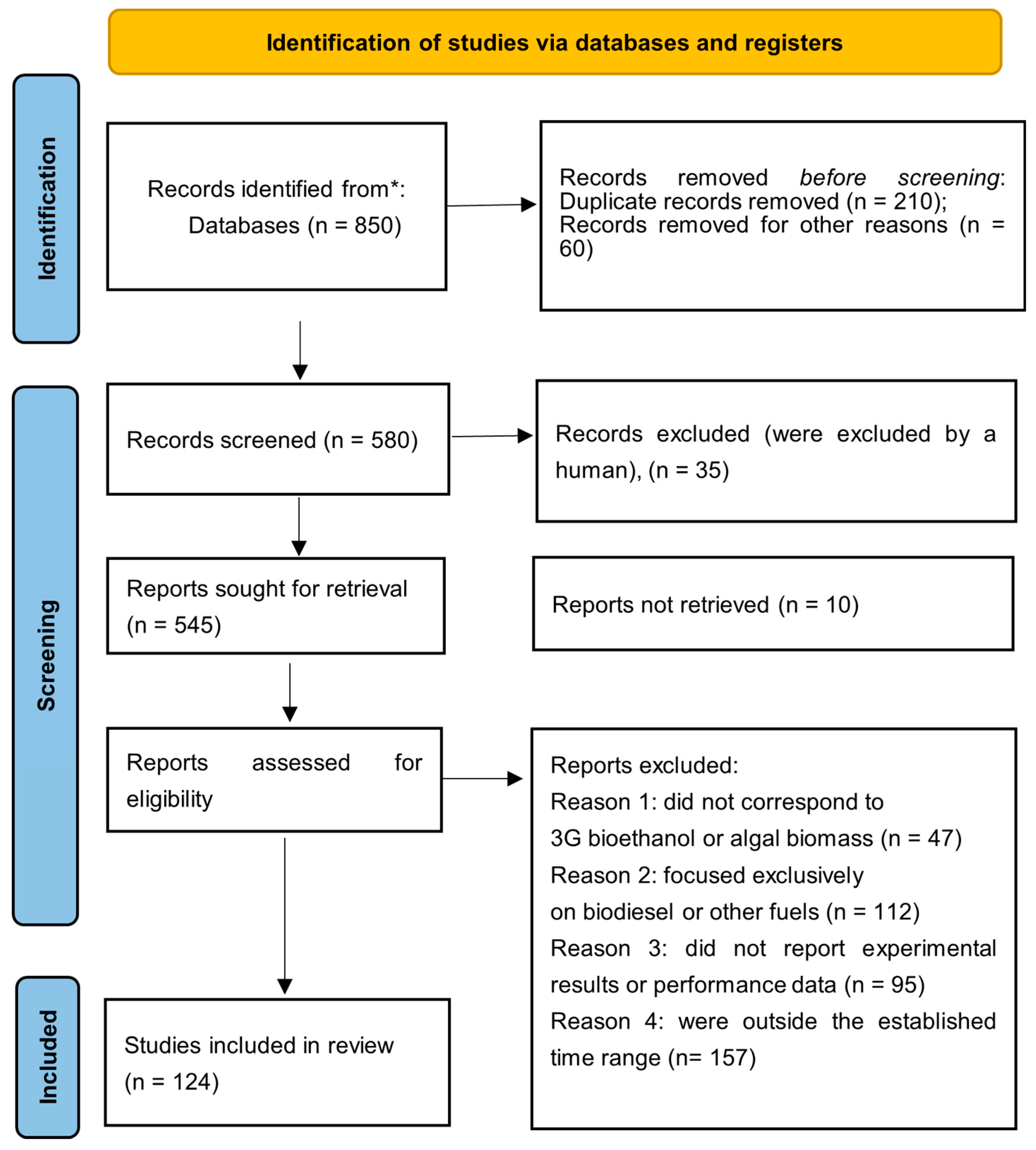
Of the 850 initial records, 270 were removed (210 duplicates, 40 due to document type, and 20 for incomplete metadata), leaving 580 records for title and abstract screening.
Phase 2: Screening
Duplicate and independent screening was carried out at the title and abstract levels. Exclusion reasons were recorded for all full-text evaluations. Duplicates, documents outside eligible languages, or non-eligible document types (patents, abstracts without full text, editorials, errata) were eliminated. Three independent reviewers evaluated titles and abstracts, resolving discrepancies by consensus.
A total of 465 studies were excluded for not meeting inclusion criteria: 35 were duplicates of previously published data; 10 articles could not be retrieved due to lack of access; 47 did not correspond to 3G bioethanol or algal biomass; 112 focused exclusively on biodiesel or other fuels; 95 did not report experimental results or performance data; and 157 were outside the established time range.
Phase 3: Inclusion
The process concluded with 124 studies included for evidence analysis and synthesis (see Figure 1).
Data Extraction and Synthesis Phase: A standardized data extraction matrix was applied, recording main variables such as the type of biomass (microalgae/macroalgae), pretreatment method, type of hydrolysis (acidic, enzymatic, or combined), fermenting microorganism strains, yield (g∙L−1 or % conversion), and country and year of study.
Data Synthesis: Given the heterogeneous nature of the experimental methods, a narrative synthesis was performed. Discrepancies among reviewers were resolved by consensus.

4. Infrastructure and Industrial Technology

The notable results for each category are discussed in detail in the following sections, which are impacted by physical parameters (light and temperature) and chemical factors (CO2 concentration and possible nitrogen and phosphorus deficiencies).

4.1. Advancement in Algae Feedstock for Biofuel Production

The most significant domains of the chosen categories are infrastructure and industrial technology. Both reveal the considerable importance of costs, which require integrating biofuel production with other industries to provide complex infrastructure and economic viability for long-term use.
Biomass production is a complex technology that encompasses specific crops. Equally important is the adoption of sustainable production practices and doable land management strategies, precision agriculture, genetic engineering, and advanced processing technologies [50]. The need to integrate industrial infrastructure impacts the future of biorefineries and is also associated with more inclusive business models to attract investors.
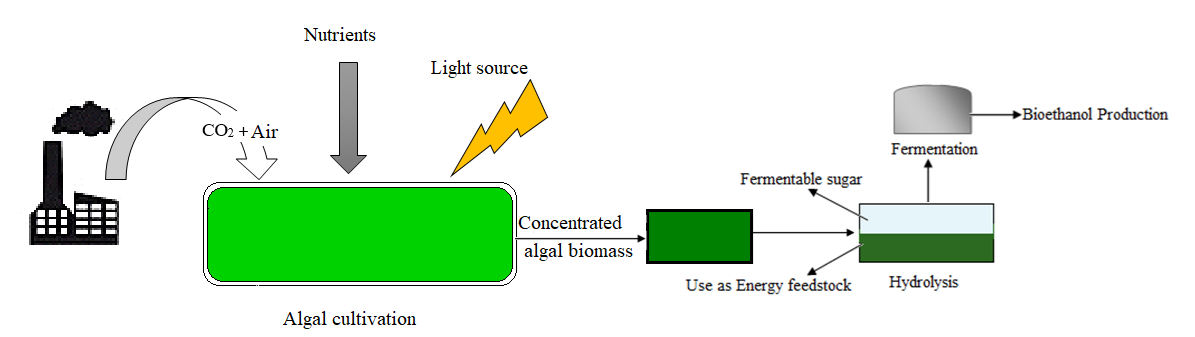
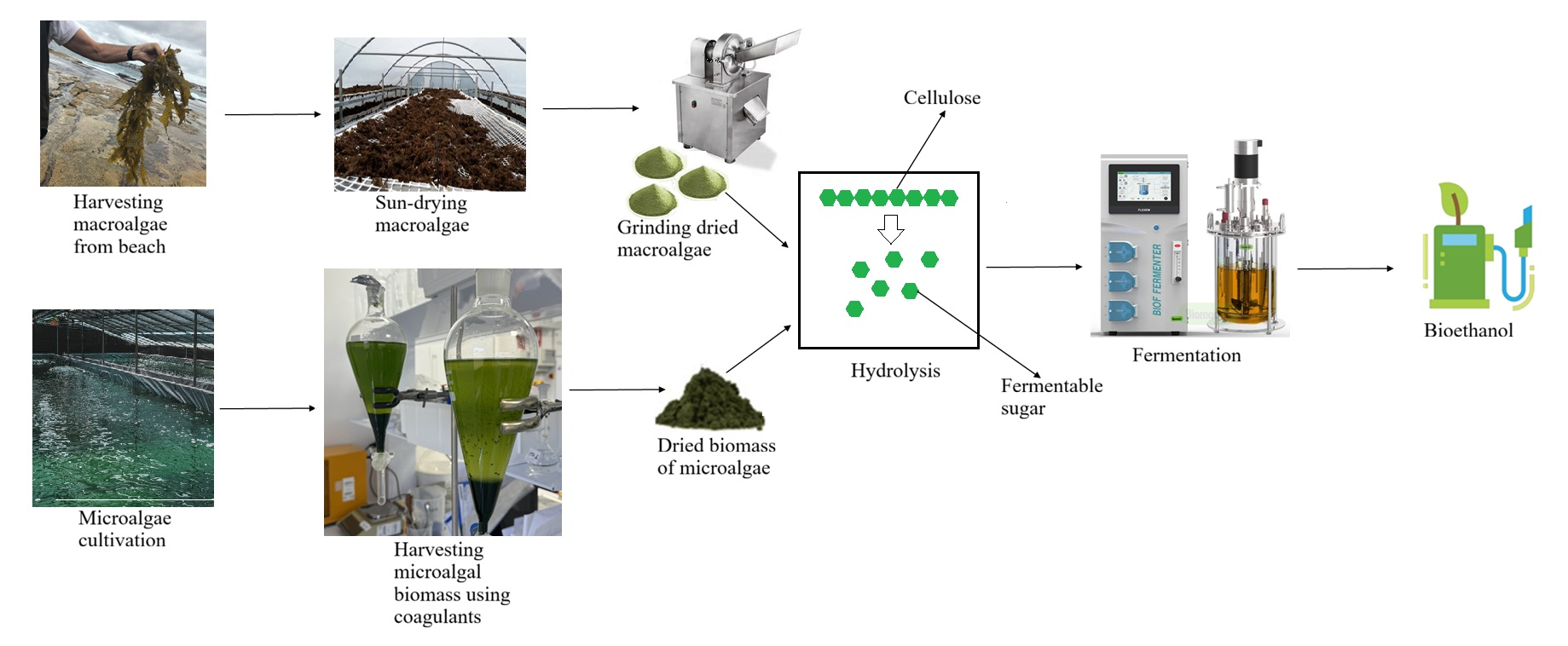
This section discusses the technologies and advancements in 3G biofuels and bioethanol derived from microalgae and macroalgae. Algae (micro and macro) can be easily cultured on a large scale to harvest feedstocks suitable for biofuel and biogas production (Figure 2). Bioethanol is obtained by the alcoholic fermentation of algal biomass containing carbohydrates, starch, or cellulose [51].
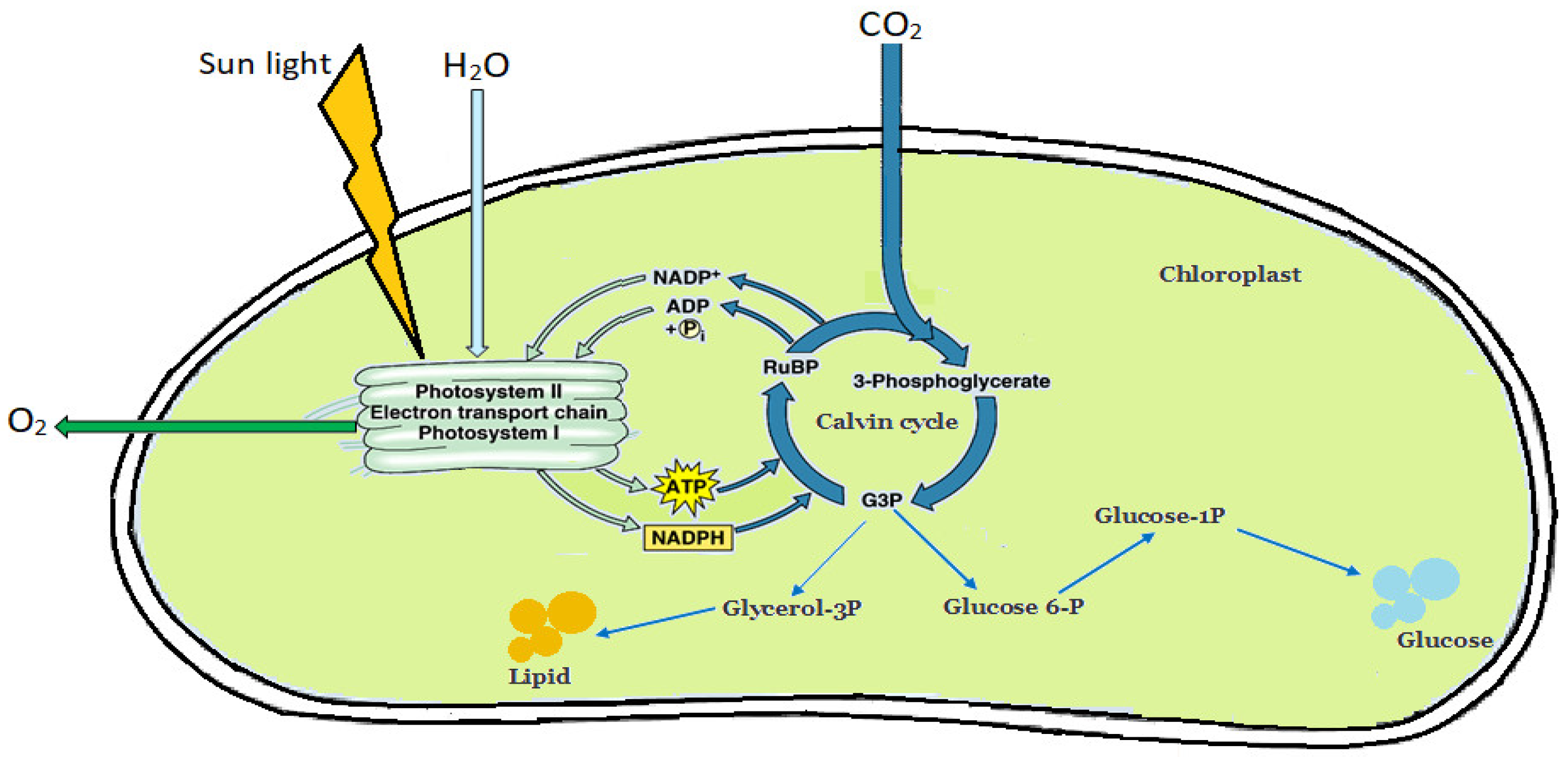
Different parameters significantly affect the enrichment of lipids and carbohydrates in microalgae. Cultivation conditions include (i) physical parameters: temperature, light intensity, and pH, (ii) nutrient stress: macronutrient or micronutrient changes, and (iii) genetic modifications [52]. The photosynthetic pathway is a biochemical process that uses light energy to produce organic molecules (glucose, starch, lipids, and proteins). These compounds can serve as raw materials to furnish chemical energy that enables cell survival and to generate building blocks for cell division [53]. Cells synthesize these molecules with glycerate-3P [54], produced by the Calvin cycle that proceeds in chloroplasts, as depicted in Figure 3.

4.2. Harnessing Microalgae for Bioethanol Production

Microalgae are microscopic, photosynthetic organisms that are naturally found in freshwater and marine habitats. They can grow in various water bodies containing sufficient nitrogen and phosphorus, including freshwater, industrial wastewater, seawater, agricultural runoff, and municipal wastewater. This is a consequence of the adaptation capabilities of most microalgae, which can change the cultivation mode from photoautotrophic to heterotrophic, photoheterotrophic, or mixotrophic [55]. The use of wastewater for microalgae cultivation reduces biofuel production costs and, simultaneously, lowers nutrient concentrations to prevent eutrophication. Nevertheless, no wastewater can be as favorable as a synthetic commercial culture medium. Therefore, wastewater is analyzed for its physicochemical properties before use as a culture medium to maximize biomass yield. Meanwhile, wastewater contains a load of bacteria and other microorganisms that can potentially reduce the growth rates of microalgae. This unwanted phenomenon can be mitigated by utilizing screening technologies to identify suitable microalgal strains. Screening and selecting robust strains capable of thriving in unsterilized wastewater is a broad field of research aimed at reducing the cost of biofuel production.
High biomass yield is not the sole factor in enhancing biofuel production. Storing carbohydrates (starch and cellulose) is favorable for bioethanol production, see Figure 3. Several studies have aimed to increase the carbohydrate content in microalgal biomass. This review compiles the various approaches used to increase carbohydrate levels, regardless of their original purpose. In the future, this systematic review will help researchers select suitable strains and optimization strategies for producing carbohydrate-rich biomass as feedstock for bioethanol production. Carbohydrate (particularly starch) accumulation in microalgae is strongly influenced by environmental and cultivation parameters that trigger metabolic shifts away from protein synthesis and toward carbon storage [56].
Light is essential for microalgae growth since it enables photosynthesis. A high intensity of light favours the production of excess carbohydrates, and stored as an energy storage metabolite within cells [56]. Different microalgae strains can tolerate and utilise various light intensities to accumulate maximum carbohydrate content. This light intensity is known as the saturation flux of a particular strain. When light intensity exceeds the saturation flux, photoinhibition occurs in microalgal cells, inhibiting photosystem function and eventually reducing biomass production. Esteves and coworkers investigated the effect of significant light intensities on the growth of Chlorella vulgaris [57]. The high light intensity resulted in a better growth rate of 0.54 ± 0.02 day−1 and the maximum productivity of 166 ± 13 mg∙L−1∙day−1, which triggered the accumulation of carbohydrates (30 ± 3% w/w) [57]. It was concluded that high irradiance during nutrient stress enhances carbohydrate accumulation. High light provides excess photosynthetic electrons, pushing carbon flux into starch pathways when nutrients for protein synthesis are limited. At the intensity of 600 µmol/m2/s combined with nitrogen starvation, the carbohydrate content of Scenedesmus obliquus increased to 51.8%, with nearly 80% of these carbohydrates being glucose [58]. This high glucose proportion makes S. obliquus a promising candidate for bioethanol production, with a reported bioethanol yield of 0.202 g/g biomass. Nutrient deprivation is one of the most effective triggers for carbohydrate accumulation. Under nitrate or phosphate starvation, carbon flux is redirected from protein synthesis toward starch formation. Calvin–Benson cycle intermediates (fructose-6-phosphate, glucose-6-phosphate) accumulate and are channelled into starch. Stress upregulates ADP-glucose pyrophosphorylase, the key enzyme converting glucose-1-phosphate into ADP-glucose for starch biosynthesis [59]. Parachlorella kessleri showed 50% higher carbohydrate under nitrogen stress [60], while Chlorella zofingiensis accumulates 66.9% carbohydrate with 66.7% just starch in nitrogen-limited conditions [61]. Şirin and Serdar reported experiments conducted under nitrogen-stress conditions, in which the carbohydrate content increased to 59% in Dunaliella tertiolecta [62]. The nitrogen starvation significantly increased the oligo- and polysaccharide content; in Dunaliella tertiolecta, it was determined to be 4.1 times higher for oligosaccharides and 3.6-fold higher for polysaccharides [62]. Markou et al. obtained 59.6% carbohydrate from Arthrospira platensis by reducing phosphorus levels by 98% in Zarrouk culture media [63]. Additionally, a study reported that phosphorus-depleted conditions combined with 2.0 g/L sodium acetate (CH3COONa) as an organic carbon source resulted in 55% polysaccharide accumulation in Chlorella vulgaris [64]. Organic carbon supplies are also viable, including sodium acetate, glucose, and fructose. Adequate carbon availability reinforces carbon storage during stress. CO2 enrichment increases Calvin cycle activity, generating more sugar phosphates for starch synthesis. Organic carbon (e.g., sodium acetate) further stimulates polysaccharide formation [64]. The carbon source for microalgal systems can be inorganic, such as CO2 or NaHCO3, with bicarbonate-based carbon sources proving more effective for microalgal cultivation [65]. The Net Energy Ratio (NER) of the bicarbonate-based cultivation system is 7.29, which is considerably higher than that of the CO2-based bubbling approach, which has an NER of 0.85. [65]. Parachlorella kessleri showed maximal carbohydrate production under 5% CO2 and a long photoperiod of 20 h ([66] Beigbeder and Lavoie, 2022), while Chlorella sp. AE10 exhibited a 42% increase in carbohydrate productivity under 10% CO2 [67]. In the presence of D-xylose, L-arabinose, and KNO3, Chlorella minutissima grown in tubular photobioreactors reached a carbohydrate accumulation of up to 66.4% [68]. Table 3 summarises various microalgal strains commonly optimized for carbohydrate and starch accumulation under the most widely applied stress conditions: nutrient limitation and light stress.
Salinity induces osmotic imbalance, leading to the synthesis of osmoprotective sugars. Microalgae produce soluble carbohydrates (glucose, sucrose, trehalose) to balance osmotic pressure. Salt stress also generates ROS (reactive oxygen species), which activates stress-response pathways promoting carbohydrate accumulation [69]. Wen et al. reported that Dunaliella spp. accumulated 50–60% carbohydrates under salinity stress [70]. Likewise, Scenedesmus obliquus increased carbohydrates by 30% under 50 mM NaCl [71], and Acutodesmus dimorphus reached 60.54% carbohydrates at 200 mM NaCl [72].
Rather than optimising operating parameters, some studies changed the mode of cultivation to enhance the accumulation of carbohydrates. Cultivation strategy significantly affects carbohydrate accumulation. Semi-continuous mode maintains cultures in an optimal growth zone with periodic nutrient limitation. Repeated cycles lead to the formation of polyploid cells with enlarged chloroplasts and enhanced starch storage [73]. In semi-continuous systems, cells maintain their photosynthetic capacity and avoid nutrient deficiency [73]. A mixed culture dominated by filamentous cyanobacteria, Geitlerinema sp. accumulated 57% carbohydrate when cultured in a semi-continuous stirred tank reactor using industrial wastewater [74]. However, the semi-continuous airlift bioreactor further increases the content of carbohydrate by 16% [74].
Based on the above research, it is evident that excess carbon and limited nitrogen in the medium promote carbohydrate accumulation in microalgae as a storage metabolite [75]. From an economic perspective, cultivating microalgae in industrial wastewater is more advantageous because it reduces media and water costs while simultaneously removing nutrients and treating wastewater, offering a more environmentally friendly alternative to chemical nutrient-removal processes.
In the field of applied microbiology, two-stage cultivation is a highly efficient method for targeted carbohydrate accumulation in microalgae. In general, stage 1 is used for biomass build-up under nutrient-replete conditions, while stage 2 is for carbohydrate induction via nutrient stress (typically N limitation). Chlorella sp. AE10 accumulated 77.6% [76], while Chlorella zofingiensis accumulated 66.90% of carbohydrate in the two-stage cultivation process [61]. Although these studies were not conducted using wastewater as the culture medium, it is expected that these Chlorella strains could also be used for wastewater treatment while accumulating carbohydrates for bioethanol production, as species within the Chlorella genus are generally robust and well-suited for growth in wastewater [77].
de Carvalho Silvello (2022) reported that, beyond cultivation strategies, genetic modification offers a promising avenue for increasing carbohydrate in microalgal biomass as a green innovative source of bioethanol, particularly through the AGPase-mediated starch synthesis route [78].
Among all stress factors, temperature is one of the most sensitive and critical parameters. It regulates the enzymatic activity of metabolic pathways, thereby directly influencing carbohydrate formation. Microalgae generally grow well between 18 °C and 35 °C, depending on the species [79]. Parachlorella kessleri produced a maximum carbohydrate content of 43% at 30 °C [80], while Tribonema sp. achieved the same maximum level (43%) at 25 °C [81]. Therefore, to reduce overall cultivation costs, it is practical to adopt seasonal cultivation strategies that align with optimal temperature conditions for carbohydrate accumulation.
Table 3. Studies on the effect of stress factors on carbohydrate accumulation in microalgae.
Microalgae StrainStress FactorEffect on Carbohydrate/Starch AccumulationReference
Chlorella protothecoides Kruger (CCAP 211/8D)Nutrient-limited conditions (both nitrogen and iron are limited)Carbohydrate content 41% by dry mass[81]
Chlorella vulgaris Beijerinck (CCAP 211/11B)Nutrient-limited conditions (both nitrogen and iron are limited)Carbohydrate content 55 wt.% by dry mass[81]
Chlorella vulgaris (P12 41)Nutrient-limited conditions (both nitrogen and iron are limited)Starch content 41 wt.% by dry mass[14]
Spirodela polyrhiza (ZH0196)Nutrient-limited conditionsStarch content increased by 39.8 wt.% in 2 days[82]
Spirodela polyrhizaNutrient starvation and abscisic acid (synergistic effect)Starch content increased to 38.3 ± 1.9 wt.% (dry weight)[83]
SpirulinaPresence of nitrates and phosphates in wastewaterCarbohydrate content up to 48.4 ± 2.9 wt.%[84]
Scenedesmus obliquusNitrogen-limited conditionsCarbohydrate content 62.5 wt.% by dry mass[85]
Chlorococcum humicolaNutrient-limited conditions (both phosphorus and sulphur are limited)Starch content 60 wt.% by dry mass[86]
Chlorella vulgarisLight stress, 140 μmol photons·m−2·s−1
with 7.5 g·L−1 NaCl/7.5 g·L−1 CaCl2
Carbohydrate content 52.71 wt.% by dry mass[87]
Chlamydomonas sp.Light stress, 750 μmol photons∙m−2∙s−1Carbohydrate content 63 wt.% by dry mass[81]

4.3. Harnessing Macroalgae for Bioethanol Production

Like microalgae, macroalgae can grow in water of various purities, including wastewater [88]. Macroalgae are rich in carbohydrates (from 25 to 50 wt.%), but their lipid content is low (1–5 wt.%); hence, they represent a suitable feedstock for biofuel production, particularly for bioethanol manufacturing [52]. Macroalgae farming is more common in the food industry and agriculture, where they together produce almost 85–90% of the total macroalgae cultivated worldwide [89]. The use and cultivation of macroalgae for biofuel is a relatively new trend compared to the utilization of microalgae [90]; therefore, several aspects of macroalgae cultivation require further research [91].
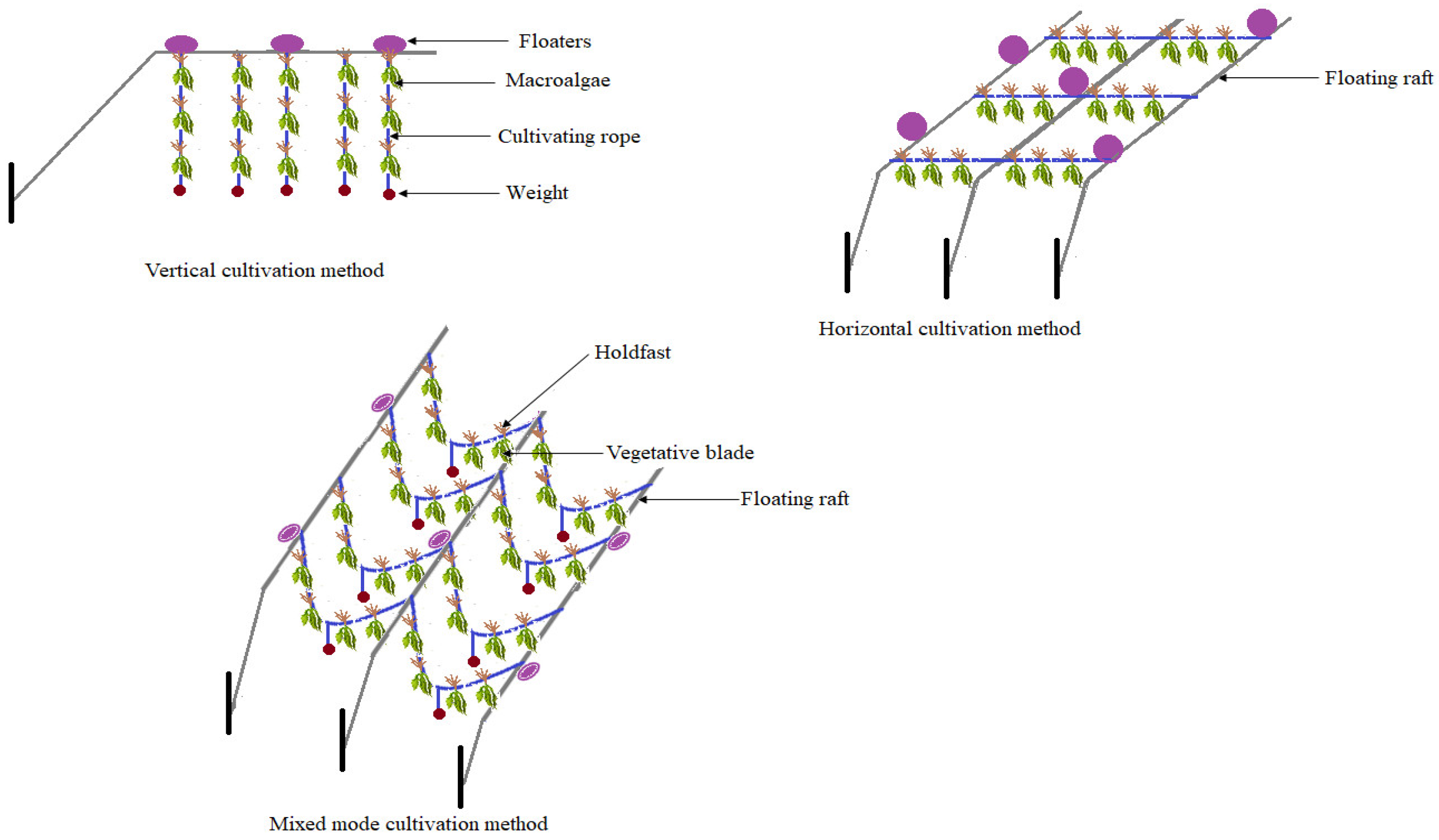
Macroalgae are cultivated onshore and offshore using various methods. Offshore cultivation is cost-effective owing to lower maintenance and installation costs. Water and nutrients are obtained from seawater, and water flow is sufficient to provide dissolved CO2. There are various solutions for installing macroalgae, including vertical, horizontal, and mixed-mode cultivation methods [92], which are schematically depicted in Figure 4. In vertical culturing, ropes are suspended vertically from supporting or floating raft ropes, which are connected using plastic or bamboo floaters to keep the entire cultivation frame near the surface. This setting provides optimum sunlight for maximum photosynthesis and biomass production [93]. Vertical culturing ropes are adjustable, allowing the spacing between vertical lines to be adjusted depending on cultivation intensity and the grow-out stage. The end of the vertical rope is attached to a weight, which keeps the rope straight downward and causes it to move in a pendulum-like motion. This type of cultivation is more common in deep-sea areas, where the water is low in turbidity. For Gracilaria vermiculophylla, the test panels were oriented upright, allowing rising air bubbles to trigger fluid motion across the panel surface. During cultivation at saturation light intensity in nutrient-replete medium, a growth rate of 8–9% per day was accomplished [94]. The only drawback of this approach is that the upper plant blocks the sunlight from the lower plant, which eventually decreases its growth rate.
In the horizontal cultivation method, supporting rafts are placed in parallel, and culturing ropes are positioned horizontally at the water surface, with two supporting rafts attached perpendicularly. This method is commonly used in shallow water on the seashore or in areas with intense sunlight. It is also used when water turbidity is high. In horizontal cultivation, the holdfast (root-like structure) receives more sunlight than the vegetative blade during weak water currents. This problem, however, is solved during the current intense period. A possible disadvantage is that long vegetative blades may become entangled, breaking and leading to biomass loss [94].
Mixed-mode cultivation combines vertical and horizontal cultivation. It appears that the horizontal cultivation method, with a weight placed between the cultivation ropes, creates a necklace-shaped structure that prevents entanglement of vegetative blades and does not block sunlight from the lower plant [95].
Macroalgal growth depends on the availability of nutrients present in seawater. Nutrients are more readily available near the seashore than offshore. This means that coastal waters show higher nutrient levels and algal blooms than offshore waters. Significant reductions in nutrient concentrations are required for achieving an appropriate environmental status [90]. According to Froehlich et al., a vast area, up to 48 million km2 from the seashore, is suitable for macroalgae cultivation [96]. Though the nitrogen-to-phosphorus ratio represents a limiting factor for macroalgal growth, and this ratio varies nearshore [95], indicating that the nutrient availability in the area is sufficient to support significant levels of macroalgae cultivation [96].
The optimal strength of water currents enables the transfer of nutrients and CO2, both of which favor macroalgal growth. Therefore, one should determine the water currents before installing any floating cultivation structures [97]. Grazers and epiphytes, more common in nearshore waters than offshore, affect macroalgae biomass production. Marsiglia and coworkers documented both positive and negative effects of several biotic interactions among these habitat formers and their associated symbionts [98]. Sea Urchin is the most common grazer of macroalgae, but it is not present offshore. Light intensity and temperature are factors that also affect the growth. Every macroalgae species has an optimal temperature range for maximum growth; hence, in each zone, only a specific species can be cultivated using offshore techniques. Offshore cultivation of microalgae is also considered for CO2 removal. Alevizos and Barille calculated the ocean surface, appropriate for macroalgae offshore cultivation and sinking, which sums to 10.8·106 km2, while sinking-only areas are 3-fold larger (32.8·106 km2) [99].
Light intensity is directly related to photosynthesis. Light availability depends on water turbidity, which is always lower in offshore waters and higher in nearshore waters. Intensity measurement is an essential factor that needs to be optimized to promote better macroalgae growth. Microalgae particles scatter light, increasing water turbidity and affecting biomass growth. Turbidity and reduced light penetration directly suppress increases in microalgal biomass [100]. Briefly, rather than trying to control cultivation parameters using offshore and nearshore techniques, it is more effective to leverage them. Optimizing cultivation parameters in onshore cultivation can achieve the maximum macroalgal biomass despite using seawater extensively.
Onshore macroalgae cultivation is like microalgal cultivation in photobioreactors and raceway ponds. Macroalgal growth in the onshore technique also depends on nutrients, light intensity, temperature, and CO2 availability, as they are all required for microalgae cultivation in photobioreactors and raceway ponds, like offshore or nearshore macroalgal cultivation [91]. Macroalgae biomass is farmed using various techniques for biofuel production. Since lipid accumulation in macroalgae is lower than in microalgae, macroalgae are not appropriate for biodiesel production; nonetheless, three macroalgae in Indonesia—Gracillaria sp., Ulva sp., and Sargassum sp.—contained significant amounts of lipids, ranging from 7.25 to 8.40 wt.% [101].
The data demonstrates that macroalgae hold significant potential for biofuel production, with certain strains offering high carbohydrate content, ideal for 3G bioethanol. These findings are crucial for advancing sustainable bioethanol production using marine biomass.
Table 4 summarizes various hydrolysis treatments applied to different micro- and macroalgal feedstocks, along with their reported carbohydrate content and bioethanol yields.
From the perspective of ethanol-yield efficiency, careful selection of algal strains is critical for bioethanol production. As shown in Table 4, high total carbohydrate content alone is not sufficient for choosing an optimal strain. Ismail et al. [102] demonstrated this by comparing micro- and macroalgal biomass; although A. platensis contained less total carbohydrate than C. marina, it produced a higher ethanol yield due to its greater proportion of fermentable sugars. Although macroalgae (seaweeds) generally contain complex sugars [106], they occur abundantly on beaches, making their carbohydrate-rich biomass a promising feedstock for bioethanol production.

5. Processes Involved in the Manufacturing of Third-Generation Biofuels

5.1. Technologies in Biofuel Production

The biochemical, physicochemical, thermal, and chemical processing was reported repeatedly in the search for cost-effective solutions. Microalgae represent a promising basis for biofuels. Current efforts are focused on improving cultivation methods, genetic engineering, and selecting suitable strains to enhance the productivity of lipids and carbohydrates, enabling efficient production of 3G bioethanol and thus reducing dependence on fossil fuels [110]. In addition, microalgae can retain CO2 from combustion gases.
Lee et al. acknowledged that the high production costs of biofuels such as 3G bioethanol are not yet competitive with petroleum-derived fuels and other renewable energies in terms of thermochemical processes (gasification, liquefaction or pyrolysis) or biochemical conversions (anaerobic digestion, alcoholic fermentation or photobiological hydrogen production) [111].
Stages performed in microalgae biorefineries include the selection of suitable species, their cultivation and harvesting to extract lipids. An optimal biorefinery process pathway should integrate economic and environmental parameters with harvest scheduling under fluctuating climate conditions. An optimal biorefinery process pathway should balance the net operation margin and CO2 emissions. Asterionella formosa achieved a high biomass yield, producing 2300 tons per year, with a short harvest interval of 17.5 days [112].
To produce 3G bioethanol, microalgae undergo metabolic changes from a photoautotrophic phase to a heterotrophic state. Essential is the accumulation of carbohydrates in starch, cellulose, hexoses, and pentoses, which eventually are converted into fermentable sugars to produce 3G bioethanol [113]
Table 4 shows the differences in sugar content among different microalgae and macroalgae. Other algae species are suitable for accumulating carbohydrates, including starch, cellulose, hexoses, and pentoses, which can be converted into fermentable sugars to produce 3G bioethanol.

5.2. Selection of Efficient Technologies for Third-Generation Bioethanol Production

Technological aspects in third-generation bioethanol production are crucial for ensuring efficiency and sustainability. Nonetheless, further development of algae-based biofuel technologies is needed, particularly in cultivation and harvesting.
Maliha and Abu Hijleh reported two algae cultivation methods: photoautotrophic and heterotrophic [114]. Photoautotrophic culture can be divided into open and closed systems. Open systems, such as ponds, lakes, and lagoons, are relatively easy to use and inexpensive because they rely on natural cultivation methods. One can cultivate algae in open ponds by harnessing atmospheric CO2. The pond’s location is critical, as it determines how much sunlight the algae receive. Sunlight availability, water temperature, and evaporation are among the key factors affecting cultivation in open systems. Challenges associated with open-pond cultivation include unregulated temperatures, inadequate sunlight penetration, evaporation losses, and contamination.
Open pond cultivation can be conducted in any suitable open environment, making it a more economical option than photobioreactors. However, this system produces limited amounts of algae biomass. In contrast, closed systems, also known as photobioreactors, are strictly controlled, high-performance systems that maximize light availability and ensure proper mixing to meet specific biofuel requirements. The efficiency of closed systems stems from greater control over the production environment. These systems primarily use transparent materials, such as plastic or glass, to allow solar radiation to penetrate; they can take various forms, including flat panels, tubes, vertical columns, or bubble columns [115].
Several aspects should be considered when selecting the algae source. Additionally, one identified physical, chemical, and biological processes that facilitate enzymatic hydrolysis and fermentation, which are critical for biomass pretreatment. They can improve prospects in biorefinery applications. Khandelwal et al. highlighted the significance of bio-electrochemical systems, particularly microbial fuel cells, for algae cultivation and bioelectricity production [116,117]. Integrating algae cultivation with microbial fuel cell technology eliminates the need for external oxygen supply and aeration, making the process more sustainable.
Algae-supported microbial fuel cells represent a promising approach to renewable energy production. This technological process can provide a sustainable solution for the growing energy demand. Nevertheless, to optimize system performance, it is essential to understand the key factors affecting algae growth, including effluent composition, light intensity, and reactor configuration. They can improve algae biomass productivity and eliminate chemical oxygen demand in algae-supported microbial fuel cells.
The experience and advancement gained in 3G bioethanol production underscore the importance of economic, technical, and technological effects in this field. As a relevant example, Aparicio et al. demonstrated how Sargassum spp. biomass can be converted at high pressure; one can fractionate the biomass under different temperatures and residence time conditions, resulting in pre-treated solids enriched with glucan [118]. Subsequently, the authors applied high solid load enzymatic hydrolysis (13%, w/v) with an enzyme loading of 10 FPU∙(g glucan)−1, resulting in a glucose yield of 43.01 g∙L−1 and a conversion efficiency of 92.12%. Finally, the authors employed a simultaneous pre-saccharification and fermentation (PSSF) strategy to produce bioethanol. This operational procedure yielded 45.7 g glucose per liter during the pre-saccharification stage and 18.1 g∙(L of bioethanol)−1, with a glucose-to-bioethanol conversion efficiency of 76.2%. These findings demonstrate how high-pressure technology can be effectively utilized to obtain glucan-enriched pre-treated solids, providing a viable strategy for bioethanol production.
During fermentation, microorganisms, such as yeast and bacteria, convert fermentable sugars into ethanol. Similarly, the separation and purification of bioethanol involve distillation, adsorption, and extraction processes along with other separation techniques. These processes also yield other alginate and lactic acid products. Sharma et al. emphasized that scaling up biofuel production to an industrial level is time-consuming due to numerous limitations imposed by currently available technologies and the associated cost increases [117].
Nanotechnology has gained importance in biofuel production, as highlighted by [91]. Owing to their large surface area, nanoparticles play a role in macroalgae biorefinery, enabling the modification of components within the algae biomass. An emerging approach is the immobilization of cellulase utilizing nanoparticles, which could minimize the consumption of hydrolytic enzymes. Additionally, hydrothermal liquefaction is noteworthy, as approximately 80–85% of the moisture content in macroalgae species is rapidly depleted during hydrothermal conversion for fuel generation.

6. Global Trends in the Production of Bioethanol from Algae

Algae bioethanol represents an exciting future industrial alternative that should be addressed within the framework of infrastructure, economic, environmental, and ecological viability to address the overall energy crisis and the search for sustainable fuels. One should prioritize technologies, research, design, and the acquisition of in-depth knowledge of the processes in algae bioethanol refineries. These are associated with microbiology, production routes, biochemistry, and cross-cutting social science research topics.
Manufacturing bioethanol from algae can render it a sustainable and economically viable alternative to fossil fuels. Nonetheless, several challenges remain, such as optimizing the manufacturing process, reducing production costs, and ensuring technology scalability. Bioethanol refineries need to consider factors related to economic investment, technological advancements, and environmental impact [118]. The industrial interest in promoting these technologies is strengthened by their ability to reduce greenhouse gas emissions substantially [119,120].
The future of 3G bioethanol production is promising, as technological advancements expand feedstock options and government policies support progress in this field. To produce microalgae-based 3G bioethanol, industrial managers should focus on developing efficient and sustainable production processes, as well as collaborating with stakeholders to achieve this goal. These challenges must be addressed for microalgae-based biofuels to become commercially viable, namely by reducing production costs, increasing process efficiency, and improving the scalability of production systems.
By overcoming the constraints above, the industrial potential of 3G bioethanol from microalgae becomes promising, and this technology is likely to play a crucial role in future sustainable bioethanol production. Effective management is essential to achieving this goal, as key factors must be optimized across cultivation, harvesting, extraction, conversion, and quality control. Both economic and financial features can aid the success and sustainability of a bioethanol production project.
Industrial management should also consider the high performance of microalgae, as they produce significantly more biomass per unit area than traditional raw materials used to produce feedstock. Additionally, algae have high growth rates, allowing them to double their biomass in just a few hours, thereby reducing land use and competition with food and biofuel crops.
Low capital investments and convenient operating costs represent additional benefits of 3G bioethanol production. Effective management of economic and financial factors will guarantee financially sustainable and environmentally friendly biofuel production; however, effective quality control will also be a fundamental component at each stage of bioethanol production, ensuring that the final product meets customer standards.
Although significant challenges remain, including increasing productivity and further cost reduction, the potential benefits of third-generation bioethanol production will make this an interesting area of research and investment in the future.

7. Price Comparison of Third-Generation Bioethanol from Microalgae vs. Macroalgae (Seaweeds)

Third-generation bioethanol production costs vary significantly between microalgae and macroalgae (seaweeds) due to differences in cultivation requirements, biomass composition, and processing pathways.
Microalgae-based 3G bioethanol is currently more expensive to produce because cultivation and harvesting remain the largest cost drivers [43]. Microalgae require controlled systems (e.g., photobioreactors or managed ponds), continuous nutrient supply, CO2 delivery, mixing, and regulated environmental conditions. These factors increase capital and operational costs [121]. According to a recent assessment, it is reported that high production costs make microalgal bioethanol not yet competitive with fossil fuels or even other renewable fuels [122]. While microalgae offer high productivity and rapid biomass doubling, their processing, harvesting, dewatering, and conversion add high cost [43].
In contrast, macroalgae or seaweed-based bioethanol generally shows lower production costs, primarily because cultivation costs can be minimal or zero for naturally occurring beach-cast biomass. Macroalgae contain high moisture and complex carbohydrates, but the absence of costly cultivation infrastructure greatly reduces overall expenses [123]. As indicated in your examples (e.g., Sargassum hydrothermal conversion), pretreatment and hydrolysis technologies for macroalgae are increasingly efficient, making seaweed a cost-advantageous feedstock when large amounts of stranded biomass are available.
A recent cost assessment of bioethanol production from Chlorella vulgaris reported that bioethanol derived from defatted biomass costs approximately $0.73 L−1, whereas biodiesel production costs about $2.30 L−1 [124]. Given the lower production costs and simpler processing requirements of macroalgae, it is anticipated that bioethanol derived from seaweed biomass could be even cheaper than bioethanol produced from defatted C. vulgaris biomass.

8. Conclusions

Third-generation bioethanol production from algae faces major constraints, with multiple knowledge gaps limiting its technical and economic viability. Although process optimization has improved yields and reduced some operational costs, significant uncertainties remain in cultivation, harvesting, extraction, and biomass-to-ethanol conversion. Critical gaps include limited strain-specific metabolic models, inadequate real-time monitoring of biomass composition, and the absence of scalable, low-energy pretreatment systems for high-moisture algal biomass. The interaction between stress-induced carbohydrate accumulation and its fermentability also remains poorly understood.
The research reports covered in this study converge on cutting-edge approaches to optimize process parameters, thereby enhancing yields and reducing production costs while also considering energy and manufacturing efficiency. The challenges stem from alternative energy sources, primarily microalgae biomass, which capitalizes on their photosynthetic efficiency. The data extracted from these selected reports encompass the evaluation of algae strains suitable for biomass production and their application in biorefineries.
Effective management prospects are imperative for successfully producing microalgae-based third-generation bioethanol. Sustainable projects entail meticulous management of cultivation, harvesting, and extraction processes. Additionally, an efficient conversion process and rigorous quality control are necessary.
Although several challenges remain, including reducing production costs and improving process efficiency, the future of 3G biofuel production appears promising. Numerous research institutions and companies worldwide are dedicated to developing and scaling up third-generation biofuel production technologies, with increasing support from government policies and incentives. These undertakings are driven by the growing demand for sustainable energy sources and by concerns about climate change and energy security.
Regarding technological advancements, the production of 3G biofuels begins with selecting advanced genetic strains of algae to obtain variants with elevated lipid or carbohydrate content, accelerated growth rates, and enhanced resilience to environmental stress. Novel technologies are under development to convert algal biomass into biofuels, including hydrothermal liquefaction, pyrolysis, and gasification.
It is anticipated that advanced genetic engineering techniques will be deployed to modify bacteria and algae, facilitating the production of larger quantities of lipids or carbohydrates for subsequent conversion into biofuels. Additionally, the utilization of molecular biotechnology and advanced fermentation techniques is envisaged. These advancements aim to increase the efficiency, profitability, and sustainability of 3G biofuels.
Third-generation biofuels derived from microalgae have achieved a comprehensive understanding that encompasses diverse biological, chemical, technological, environmental, and ecological processes. Despite technological advancements and government support, significant gaps persist in terms of efficiency, profitability, and sustainability. Future research can yield further enhancements and breakthroughs in third-generation biofuel production.

Supplementary Materials

The following supporting information can be downloaded at: https://www.mdpi.com/article/10.3390/fermentation12010002/s1, S1: A detailed PRISMA 2020 main checklist.

Author Contributions

J.R.M.: Conceptualization; Methodology; Investigation; Writing—original draft; Supervision. D.A.L.: Investigation; Validation; Writing—Review and Editing. S.H.: Conceptualization; Investigation; Validation; Writing. L.G.: Methodological Design, PRISMA Protocol, and Writing. All authors have read and agreed to the published version of the manuscript.

Funding

This research received no external funding.

Institutional Review Board Statement

Not applicable.

Informed Consent Statement

Not applicable.

Data Availability Statement

No new data were created or analyzed in this study. Data sharing is not applicable to this article.

Conflicts of Interest

The authors declare no conflicts of interest.

Abbreviations

The following abbreviations are used in this manuscript:
AbbreviationMeaning
C. shehataeCandida shehatae
MJ∙kg−1Megajoules per kilogram
CO2Carbon dioxide
mL∙hL−1Milliliters per hectoliter
3GThird generation
mL/0.5 LMilliliters per half liter
GHGGreenhouse gases
GHEGreenhouse gas emissions
mL∙(μg Chl a)−1Milliliters per microgram of Chlorophyll a
SLRSystematic literature review
LCH4∙gVS−1Liters of methane per gram of volatile solids
%Percentage by mass
VAPsValue-added products

References

  1. Osman, A.I.; Qasim, U.; Jamil, F.; Ala’a, H.; Jrai, A.A.; Al-Riyami, M.; Al-Maawali, S.; Al-Haj, L.; Al-Hinai, A.; Al-Abri, M. Bioethanol and biodiesel: Bibliometric mapping, policies and future needs. Renew. Sustain. Energy Rev. 2021, 152, 111677. [Google Scholar] [CrossRef]
  2. Csutora, M.; Mózner, Z.V. Carbon management strategies of the automotive sector responding to the European fleet-wide CO2 emission targets. Discov. Sustain. 2025, 6, 346. [Google Scholar] [CrossRef]
  3. Altarazi, Y.S.M.; Abu Talib, A.R.; Yu, J.; Gires, E.; Abdul Ghafir, M.F.; Lucas, J.; Yusaf, T. Effects of biofuel on engines performance and emission characteristics: A review. Energy 2022, 238, 121910. [Google Scholar] [CrossRef]
  4. Ramachandra, T.; Saranya, G. Sustainable Bioeconomy prospects of diatom biorefineries in the Indian west coast. Renew. Sustain. Energy Rev. 2022, 161, 112399. [Google Scholar] [CrossRef]
  5. Jabłońska-Trypuć, A.; Wołejko, E.; Ernazarovna, M.D.; Głowacka, A.; Sokołowska, G.; Wydro, U. Using algae for biofuel production: A review. Energies 2023, 16, 1758. [Google Scholar] [CrossRef]
  6. Mizik, T. European Union guidelines for the production of different generations of biofuels. In Biofuels and Sustainability; Elsevier: Amsterdam, The Netherlands, 2025; pp. 205–219. [Google Scholar]
  7. Iqbal, Y.; Dai, Y.; Xue, S.; Yi, Z.; Chen, Z.; Li, M.; von Cossel, M. Organic Acid-Based Hemicellulose Fractionation and Cellulosic Ethanol Potential of Five Miscanthus Genotypes. Agronomy 2024, 14, 1389. [Google Scholar] [CrossRef]
  8. Sharma, S.; Malhotra, P.; Goel, A.; Sharma, P.; Sanghera, G.S.; Kaur, G. From First-to Fourth-Generation Biofuels: Prospects and Challenges. In Climate-Smart Sugarcane Cultivation; CRC Press: Boca Raton, FL, USA, 2025; p. 157. [Google Scholar]
  9. de Paula Leite, A.C.; Pimentel, L.M.; de Almeida Monteiro, L. Biofuel adoption in the transport sector: The impact of renewable energy policies. Sustain. Energy Technol. Assess. 2025, 81, 104419. [Google Scholar] [CrossRef]
  10. Sarri, J.H.; Imlan, K.H.; Ahajan, N.A.; Hairol, M.D.; Kissae, A.-N.H.; Yangson, N.A.T.; Robles, R.J.F.; Talaid, E.M. Application of Marine Plant Extract Powder (AMPEP) as a Nutrient Supplement for Optimizing Nannochloropsis sp. Cultivation. Isr. J. Aquac.-Bamidgeh 2025, 77, 23–35. [Google Scholar] [CrossRef]
  11. Sindhu, R.; Binod, P.; Pandey, A.; Ankaram, S.; Duan, Y.; Awasthi, M.K. Biofuel production from biomass: Toward sustainable development. In Current Developments in Biotechnology and Bioengineering; Elsevier: Amsterdam, The Netherlands, 2019; pp. 79–92. [Google Scholar]
  12. Akolkar, H.N.; Haghi, A.; Darekar, N.R.; Pawar, G.B. Bioenergy from Microalgal Biomass: Sustainable Conversion Technologies; Synthesis Lectures on Renewable Energy Technologies; Springer: Berlin/Heidelberg, Germany, 2025. [Google Scholar]
  13. Ma, Z.; Cheah, W.Y.; Ng, I.-S.; Chang, J.-S.; Zhao, M.; Show, P.L. Microalgae-based biotechnological sequestration of carbon dioxide for net zero emissions. Trends Biotechnol. 2022, 40, 1439–1453. [Google Scholar] [CrossRef]
  14. Rai, S.K.; Kim, G.; Song, H. Algae to Biofuels: Catalytic Strategies and Sustainable Technologies for Green Energy Conversion. Catalysts 2025, 15, 806. [Google Scholar] [CrossRef]
  15. Cheng, H.; Liu, Y.; Deng, Z.; Xie, X.; Yang, C.; Baloch, H.; Qin, Z.; Xu, W.; Zhang, H.; Gao, J. The potential microalgae-based strategy for attaining carbon neutrality and mitigating climate change: A critical review. Front. Mar. Sci. 2025, 12, 1644390. [Google Scholar] [CrossRef]
  16. Li, P.; Lei, X.; Zou, T.; Zhang, Z.; Wen, S.; He, X. Feasibility of using lipid-rich mutant microalgae in wastewater cultivation: Biochemical changes, nutrient removal, and lipid analysis. J. Environ. Chem. Eng. 2025, 13, 115213. [Google Scholar] [CrossRef]
  17. Pérez-Romero, C.I.; Olguín, E.J.; Elizondo-González, R.; Rodríguez, A.P.; Arredondo-Vega, B.O. Mixotrophic culture of microalgae: A review [Cultivo mixotrófico de microalgas: Una revisión]. Rev. Latinoam. Biotecnol. Ambient. Algal 2025, 16, 1–22. [Google Scholar]
  18. Pant, S.; Goel, M.; Sahoo, N.K.; Yuan, Q.; Rout, P.R. Microalgae-based treatment for wastewater management and valorisation. Curr. Opin. Environ. Sci. Health 2025, 48, 100662. [Google Scholar] [CrossRef]
  19. Sreelakshmi, M.; Arunkumar, K. Microalgal Neutral Lipid Accumulation: Cellular Mechanism and Ways to Improve Biodiesel Production. BioEnergy Res. 2025, 18, 50. [Google Scholar] [CrossRef]
  20. Geng, Y.; Shaukat, A.; Azhar, W.; Raza, Q.-U.-A.; Tahir, A.; Abideen, M.Z.u.; Zia, M.A.B.; Bashir, M.A.; Rehim, A. Microalgal biorefineries: A systematic review of technological trade-offs and innovation pathways. Biotechnol. Biofuels Bioprod. 2025, 18, 93. [Google Scholar] [CrossRef]
  21. Nadudvari, A.; Schagerl, M.; Ancheta, S.M. Possible Effects of Pesticide Washout on Microalgae Growth. Water 2025, 17, 2716. [Google Scholar] [CrossRef]
  22. Chhandama, M.V.L.; Ruatpuia, J.V.; Ao, S.; Chetia, A.C.; Satyan, K.B.; Rokhum, S.L. Microalgae as a sustainable feedstock for biodiesel and other production industries: Prospects and challenges. Energy Nexus 2023, 12, 100255. [Google Scholar] [CrossRef]
  23. Kumari, S.; Dalania, K.; Magotra, S.; Singh, A.K.; Negi, N.P. Sustainable energy solutions: The role of biotechnology and algal biofuels in environmental preservation. Discov. Biotechnol. 2025, 2, 16. [Google Scholar] [CrossRef]
  24. Coons, J.; Yap, B.; Gasway, C.; Bischoff, B.; Sweeney, N.; Dong, T.; Pienkos, P.; Sanders, C.; Dale, T. The energy costs of dewatering feedstock microalgae species using standard implementations of ultrasonic and crossflow filtration technologies. SSRN 2025. [Google Scholar] [CrossRef]
  25. Janda, K.; Kristoufek, L.; Zilberman, D. Biofuels: Policies and impacts. Agric. Econ. 2012, 58, 372. [Google Scholar] [CrossRef]
  26. Ofili, M. Biofuel & biorefinery portfolios of petroleum companies–Policy & nomenclature implications. Eur. J. Sustain. Dev. Res. 2025, 9, em0302. [Google Scholar] [CrossRef] [PubMed]
  27. Guedes, A.C.; Amaro, H.M.; Sousa-Pinto, I.; Malcata, F.X. Algal spent biomass—A pool of applications. In Biofuels from Algae; Elsevier: Amsterdam, The Netherlands, 2019; pp. 397–433. [Google Scholar]
  28. Hull, T.C.; Knoshaug, E.P.; Nelson, R.S.; Van Wychen, S.; Nagle, N.; Kruger, J.S.; Dong, T. Integrated thermal and biological conversion of microalgal proteins to lipids. Bioresour. Technol. 2025, 435, 132927. [Google Scholar] [CrossRef] [PubMed]
  29. Allen, J.; Unlu, S.; Demirel, Y.; Black, P.; Riekhof, W. Integration of biology, ecology and engineering for sustainable algal-based biofuel and bioproduct biorefinery. Bioresour. Bioprocess. 2018, 5, 47. [Google Scholar] [CrossRef]
  30. Paladino, O.; Neviani, M. Scale-up of algal bioreactors for renewable resource production. In Algal Bioreactors; Elsevier: Amsterdam, The Netherlands, 2025; pp. 281–301. [Google Scholar]
  31. Chew, K.W.; Yap, J.Y.; Show, P.L.; Suan, N.H.; Juan, J.C.; Ling, T.C.; Lee, D.-J.; Chang, J.-S. Microalgae biorefinery: High value products perspectives. Bioresour. Technol. 2017, 229, 53–62. [Google Scholar] [CrossRef]
  32. Arsalan, S.; Zubair, S. Suitable site analysis for microalgae biofuel production as a source of renewable energy. Biofuels 2025, 16, 281–291. [Google Scholar] [CrossRef]
  33. Giraldo-Calderón, N.D.; Romo-Buchelly, R.J.; Arbeláez-Pérez, A.A.; Echeverri-Hincapié, D.; Atehortúa-Garcés, L. Microalgae biorefineries: Applications and emerging technologies. Dyna 2018, 85, 219–233. [Google Scholar] [CrossRef]
  34. Chong, T.Y.; Cheah, S.A.; Ong, C.T.; Wong, L.Y.; Goh, C.R.; Tan, I.S.; Foo, H.C.Y.; Lam, M.K.; Lim, S. Techno-economic evaluation of third-generation bioethanol production utilizing the macroalgae waste: A case study in Malaysia. Energy 2020, 210, 118491. [Google Scholar] [CrossRef]
  35. De Bhowmick, G.; Sarmah, A.K.; Sen, R. Zero-waste algal biorefinery for bioenergy and biochar: A green leap towards achieving energy and environmental sustainability. Sci. Total Environ. 2019, 650, 2467–2482. [Google Scholar] [CrossRef]
  36. Saad, M.G.; Dosoky, N.S.; Zoromba, M.S.; Shafik, H.M. Algal biofuels: Current status and key challenges. Energies 2019, 12, 1920. [Google Scholar] [CrossRef]
  37. Onn, S.M.; Koh, G.J.; Yap, W.H.; Teoh, M.-L.; Low, C.-F.; Goh, B.-H. Recent advances in genetic engineering of microalgae: Bioengineering strategies, regulatory challenges and future perspectives. J. Appl. Phycol. 2025, 37, 247–264. [Google Scholar] [CrossRef]
  38. Bochenski, T.; Chaturvedi, T.; Thomsen, M.H.; Schmidt, J.E. Evaluation of marine synechococcus for an algal biorefinery in arid regions. Energies 2019, 12, 2233. [Google Scholar] [CrossRef]
  39. Zollmann, M.; Robin, A.; Prabhu, M.; Polikovsky, M.; Gillis, A.; Greiserman, S.; Golberg, A. Green technology in green macroalgal biorefineries. Phycologia 2019, 58, 516–534. [Google Scholar] [CrossRef]
  40. Ali, S.S.; Kornaros, M.; Al-Tohamy, R.; Sun, J.; El-Sheekh, M.M.; Lim, J.W. Bottleneck and opportunities toward practical aspects of microalgae-based biorefineries. In Algal Biorefinery; Elsevier: Amsterdam, The Netherlands, 2025; pp. 325–333. [Google Scholar]
  41. Abdullah, M.; Malik, H.A.; Ali, A.; Boopathy, R.; Vo, P.H.; Danaee, S.; Ralph, P.; Malik, S. AI-driven algae biorefineries: A new era for sustainable bioeconomy. Curr. Pollut. Rep. 2025, 11, 21. [Google Scholar] [CrossRef]
  42. Jeswani, H.K.; Chilvers, A.; Azapagic, A. Environmental sustainability of biofuels: A review. Proc. R. Soc. A 2020, 476, 20200351. [Google Scholar] [CrossRef] [PubMed]
  43. Nashath, F.Z.; Ng, Y.J.; Khoo, K.S.; Show, P.L. Current contributions of microalgae in global biofuel production; cultivation techniques, biofuel varieties and promising industrial ventures. Biomass Bioenergy 2025, 201, 108092. [Google Scholar] [CrossRef]
  44. Soni, R.; Dewangan, A.K.; Yadav, A.K.; Yadav, B. Recent advancements in biomass conversion technologies for renewable energy generation and achieving net-zero carbon emissions. J. Therm. Anal. Calorim. 2025, 150, 17989–18005. [Google Scholar] [CrossRef]
  45. Jathar, L.; Kolhe, M.; Patil, J.; Awasarmol, U. Harnessing microalgae for sustainable biofuel: Integration of biochemical conversion, AI/ML applications and life cycle analysis. Int. J. Ambient. Energy 2025, 46, 2543914. [Google Scholar] [CrossRef]
  46. Das, B.D.; Bhattarai, A. The versatility of algae in addressing the global sustainability challenges. Front. Bioeng. Biotechnol. 2025, 13, 1621817. [Google Scholar] [CrossRef]
  47. Snyder, H. Literature review as a research methodology: An overview and guidelines. J. Bus. Res. 2019, 104, 333–339. [Google Scholar] [CrossRef]
  48. Hagen-Zanker, J.; Mallett, R. How to Do a Rigorous, Evidence-Focused Literature Review in International Development; ODI: London, UK, 2013; Available online: https://media.odi.org/documents/8572.pdf (accessed on 15 March 2025).
  49. Page, M.J.; McKenzie, J.E.; Bossuyt, P.M.; Boutron, I.; Hoffmann, T.C.; Mulrow, C.D.; Shamseer, L.; Tetzlaff, J.M.; Akl, E.A.; Brennan, S.E.; et al. The PRISMA 2020 statement: An updated guideline for reporting systematic reviews. BMJ 2021, 372, n71. [Google Scholar] [CrossRef] [PubMed]
  50. Makepa, D.C.; Chihobo, C.H. Sustainable pathways for biomass production and utilization in carbon capture and storage—A review. Biomass Convers. Biorefin. 2025, 15, 11397–11419. [Google Scholar] [CrossRef]
  51. Olabi, A.; Alami, A.H.; Alasad, S.; Aljaghoub, H.; Sayed, E.T.; Shehata, N.; Rezk, H.; Abdelkareem, M.A. Emerging technologies for enhancing microalgae biofuel production: Recent progress, barriers, and limitations. Fermentation 2022, 8, 649. [Google Scholar] [CrossRef]
  52. Narayanan, I.; Pandey, S.; Vinayagam, R.; Selvaraj, R.; Varadavenkatesan, T. A recent update on enhancing lipid and carbohydrate accumulation for sustainable biofuel production in microalgal biomass. Discov. Appl. Sci. 2025, 7, 195. [Google Scholar] [CrossRef]
  53. Levasseur, W.; Perré, P.; Pozzobon, V. A review of high value-added molecules production by microalgae in light of the classification. Biotechnol. Adv. 2020, 41, 107545. [Google Scholar] [CrossRef]
  54. Deviram, G.; Mathimani, T.; Anto, S.; Ahamed, T.S.; Ananth, D.A.; Pugazhendhi, A. Applications of microalgal and cyanobacterial biomass on a way to safe, cleaner and a sustainable environment. J. Clean. Prod. 2020, 253, 119770. [Google Scholar] [CrossRef]
  55. Hena, S.; Znad, H.; Heong, K.; Judd, S. Dairy farm wastewater treatment and lipid accumulation by Arthrospira platensis. Water Res. 2018, 128, 267–277. [Google Scholar] [CrossRef]
  56. Gao, P.; Guo, L.; Gao, M.; Zhao, Y.; Jin, C.; She, Z. Regulation of carbon source metabolism in mixotrophic microalgae cultivation in response to light intensity variation. J. Environ. Manag. 2022, 302, 114095. [Google Scholar] [CrossRef]
  57. Esteves, A.F.; Salgado, E.M.; Vilar, V.J.; Gonçalves, A.L.; Pires, J.C. A growth phase analysis on the influence of light intensity on microalgal stress and potential biofuel production. Energy Convers. Manag. 2024, 311, 118511. [Google Scholar] [CrossRef]
  58. Ho, S.H.; Kondo, A.; Hasunuma, T.; Chang, J.S. Engineering strategies for improving the CO2 fixation and carbohydrate productivity of Scenedesmus obliquus CNW-N used for bioethanol fermentation. Bioresour. Technol. 2013, 143, 163–171. [Google Scholar] [CrossRef]
  59. Xie, T.; Xia, Y.; Zeng, Y.; Li, X.; Zhang, Y. Nitrate concentration-shift cultivation to enhance protein content of heterotrophic microalga Chlorella vulgaris: Over-compensation strategy. Bioresour. Technol. 2017, 233, 247–255. [Google Scholar] [CrossRef] [PubMed]
  60. Gao, Y.; Feng, J.; Lv, J.; Liu, Q.; Nan, F.; Liu, X.; Xie, S. Physiological changes of Parachlorella kessleri ty02 in lipid accumulation under nitrogen stress. Int. J. Environ. Res. Public Health 2019, 16, 1188. [Google Scholar] [CrossRef] [PubMed]
  61. Zhu, S.; Wang, Y.; Huang, W.; Xu, J.; Wang, Z.; Xu, J.; Yuan, Z. Enhanced accumulation of carbohydrate and starch in Chlorella zofingiensis induced by nitrogen starvation. Appl. Biochem. Biotechnol. 2014, 174, 2435–2445. [Google Scholar] [CrossRef] [PubMed]
  62. Şirin, P.A.; Serdar, S. Effects of nitrogen starvation on growth and biochemical composition of some microalgae species. Folia Microbiol. 2024, 69, 889–902. [Google Scholar] [CrossRef]
  63. Markou, G. Alteration of the biomass composition of Arthrospira (Spirulina) platensis under various amounts of limited phosphorus. Bioresour. Technol. 2012, 116, 533–535. [Google Scholar] [CrossRef]
  64. Chen, C.Y.; Chang, H.Y.; Chang, J.S. Producing carbohydrate-rich microalgal biomass grown under mixotrophic conditions as feedstock for biohydrogen production. Int. J. Hydrogen Energy 2016, 41, 4413–4420. [Google Scholar] [CrossRef]
  65. Jati, B.N.; Nuraeni, C.; Yunilawati, R.; Oktarina, E. Phytochemical screening and total lipid content of marine macroalgae from Binuangeun beach. J. Phys. Conf. Ser. 2019, 1317, 012103. [Google Scholar] [CrossRef]
  66. Beigbeder, J.B.; Lavoie, J.M. Effect of photoperiods and CO2 concentrations on the cultivation of carbohydrate-rich P. kessleri microalgae for the sustainable production of bioethanol. J. CO2 Util. 2022, 58, 101934. [Google Scholar] [CrossRef]
  67. Tang, D.; Han, W.; Li, P.; Miao, X.; Zhong, J. CO2 biofixation and fatty acid composition of Scenedesmus obliquus and Chlorella pyrenoidosa in response to different CO2 levels. Bioresour. Technol. 2011, 102, 3071–3076. [Google Scholar] [CrossRef]
  68. Freitas, B.C.B.; Morais, M.G.; Costa, J.A.V. Chlorella minutissima grown with xylose and arabinose in tubularphotobioreactors: Evaluation of kinetics, carbohydrate production, and protein profile. Can. J. Chem. Eng. 2022, 100, S49–S57. [Google Scholar] [CrossRef]
  69. Arena, R.; Lima, S.; Villanova, V.; Moukri, N.; Curcuraci, E.; Messina, C.; Santulli, A.; Scargiali, F. Cultivation and biochemical characterization of isolated Sicilian microalgal species in salt and temperature stress conditions. Algal Res. 2021, 59, 102430. [Google Scholar] [CrossRef]
  70. Wen, X.; Chen, J.; Liu, C.; Zhuo, X.; Luo, Y.; Li, Y.; Huang, D.; Zhu, H.; Hu, Z.; Lou, S.; et al. Potential of a novel marine microalgae Dunaliella sp. MASCC-0014 as feed supplements for sustainable aquaculture. Aquaculture 2025, 596, 741732. [Google Scholar] [CrossRef]
  71. Hernández-García, A.; Velásquez-Orta, S.B.; Novelo, E.; Yáñez-Noguez, I.; Monje-Ramírez, I.; Ledesma, M.T.O. Wastewater-leachate treatment by microalgae: Biomass, carbohydrate and lipid production. Ecotoxicol. Environ. Saf. 2019, 174, 435–444. [Google Scholar] [CrossRef] [PubMed]
  72. Chokshi, K.; Pancha, I.; Ghosh, A.; Mishra, S. Salinity induced oxidative stress alters the physiological responses and improves the biofuel potential of green microalgae Acutodesmus dimorphus. Bioresour. Technol. 2017, 244, 1376–1383. [Google Scholar] [CrossRef]
  73. Gupta, S.; Chelak, P.; Das, M.; Jha, M.K.; Das, A. Stress-induced enhancement of microalgal biochemical composition for sustainable biorefineries. Discov. Appl. Sci. 2025, 7, 1180. [Google Scholar] [CrossRef]
  74. Sánchez-Contreras, M.I.; Morales-Arrieta, S.; Okoye, P.U.; Guillén-Garcés, R.A.; Sebastian, P.; Arias, D.M. Recycling industrial wastewater for improved carbohydrate-rich biomass production in a semi-continuous photobioreactor: Effect of hydraulic retention time. J. Environ. Manag. 2021, 284, 112065. [Google Scholar] [CrossRef]
  75. de Freitas, B.C.B.; Brächer, E.H.; de Morais, E.G.; Atala, D.I.P.; de Morais, M.G.; Costa, J.A.V. Cultivation of different microalgae with pentose as carbon source and the effects on the carbohydrate content. Environ. Technol. 2019, 40, 1062–1070. [Google Scholar] [CrossRef]
  76. Cheng, D.; Li, D.; Yuan, Y.; Zhou, L.; Li, X.; Wu, T.; Wang, L.; Zhao, Q.; Wei, W.; Sun, Y. Improving carbohydrate and starch accumulation in Chlorella sp. AE10 by a novel two-stage process with cell Dilution. Biotechnol. Biofuels 2017, 10, 75. [Google Scholar] [CrossRef]
  77. Hena, S.; Gutierrez, L.; Croué, J.P. Removal of pharmaceutical and personal care products (PPCPs) from wastewater using microalgae: A review. J. Hazard. Mater. 2021, 403, 124041. [Google Scholar] [CrossRef]
  78. de Carvalho Silvello, M.A.; Goncalves, I.S.; Azambuja, S.P.H.; Costa, S.S.; Silva, P.G.P.; Santos, L.O.; Goldbeck, R. Microalgae-based carbohydrates: A green innovative source of bioenergy. Bioresour. Technol. 2022, 344, 126304. [Google Scholar] [CrossRef]
  79. Qu, W.; Zhang, C.; Zhang, Y.; Ho, S.-H. Optimizing real swine wastewater treatment with maximum carbohydrate production by a newly isolated indigenous microalga Parachlorella kessleri QWY28. Bioresour. Technol. 2019, 289, 121702. [Google Scholar] [CrossRef] [PubMed]
  80. Qu, W.; Show, P.L.; Hasunuma, T.; Ho, S.-H. Optimizing real swine wastewater treatment efficiency and carbohydrate productivity of newly microalga Chlamydomonas sp. QWY37 used for cell-displayed bioethanol production. Bioresour. Technol. 2020, 305, 123072. [Google Scholar] [CrossRef] [PubMed]
  81. Illman, A.; Scragg, A.; Shales, S. Increase in Chlorella strains calorific values when grown in low nitrogen medium. Enzym. Microb. Technol. 2000, 27, 631–635. [Google Scholar] [CrossRef] [PubMed]
  82. Fang, X.; Hong, Y.; Fang, Y.; Cheng, L.; Li, Z.; Li, C.; Ban, X. Transcriptomic and Metabolic Analysis Reveal Potential Mechanism of Starch Accumulation in Spirodela polyrhiza Under Nutrient Stress. Plants 2025, 14, 1617. [Google Scholar] [CrossRef] [PubMed]
  83. Cao, Q.; Zhang, Y.-Q.; Tan, A.-J.; Li, Z.; Yang, G.-L. Synergistic effect of nutrient starvation and abscisic acid on growth and starch accumulation in duckweed. Planta 2025, 261, 108. [Google Scholar] [CrossRef]
  84. Kunwong, S.; Vinitnantharat, S.; Hongsthong, A. Dilution rate caused nutrient limitation effects on the biomass composition and proteomic level of continuously cultivated Spirulina in recirculating aquaculture system wastewater. J. Water Process Eng. 2025, 69, 106734. [Google Scholar] [CrossRef]
  85. Amorim, M.L.; Soares, J.; Vieira, B.B.; Batista-Silva, W.; Martins, M.A. Extraction of proteins from the microalga Scenedesmus obliquus BR003 followed by lipid extraction of the wet deproteinized biomass using hexane and ethyl acetate. Bioresour. Technol. 2020, 307, 123190. [Google Scholar] [CrossRef]
  86. Narchonai, G.; Arutselvan, C.; LewisOscar, F.; Thajuddin, N. Enhancing starch accumulation/production in Chlorococcum humicola through sulphur limitation and 2,4-D treatment for butanol production. Biotechnol. Rep. 2020, 28, e00528. [Google Scholar] [CrossRef]
  87. El-fayoumy, E.A.; Ali, H.E.A.; Elsaid, K.; Elkhatat, A.; Al-Meer, S.; Rozaini, M.Z.H.; Abdullah, M.A. Co-production of high density biomass and high-value compounds via two-stage cultivation of Chlorella vulgaris using light intensity and a combination of salt stressors. Biomass Convers. Biorefin. 2024, 14, 22673–22686. [Google Scholar] [CrossRef]
  88. Chai, W.S.; Bao, Y.; Jin, P.; Tang, G.; Zhou, L. A review on ammonia, ammonia-hydrogen and ammonia-methane fuels. Renew. Sustain. Energy Rev. 2021, 147, 111254. [Google Scholar] [CrossRef]
  89. Tang, D.Y.Y.; Khoo, K.S.; Chew, K.W.; Tao, Y.; Ho, S.-H.; Show, P.L. Potential utilization of bioproducts from microalgae for the quality enhancement of natural products. Bioresour. Technol. 2020, 304, 122997. [Google Scholar] [CrossRef] [PubMed]
  90. Lazar, L.; Vlas, O.; Pantea, E.; Boicenco, L.; Marin, O.; Abaza, V.; Filimon, A.; Bisinicu, E. Black sea eutrophication comparative analysis of intensity between coastal and offshore waters. Sustainability 2024, 16, 5146. [Google Scholar] [CrossRef]
  91. Kumar, D.; Pugazhendi, A.; Bajhaiya, A.K.; Gugulothu, P. Biofuel production from Macroalgae: Present scenario and future scope. Bioengineered 2021, 12, 9216. [Google Scholar] [CrossRef]
  92. de Oliveira, B.F.R.; Freitas-Silva, J.; Sánchez-Robinet, C.; Laport, M.S. Transmission of the sponge microbiome: Moving towards a unified model. Environ. Microbiol. Rep. 2020, 12, 619–638. [Google Scholar] [CrossRef] [PubMed]
  93. Tamilarasan, K.; Banu, J.R.; Kumar, M.D.; Sakthinathan, G.; Park, J.-H. Influence of mild-ozone assisted disperser pretreatment on the enhanced biogas generation and biodegradability of green marine macroalgae. Front. Energy Res. 2019, 7, 89. [Google Scholar] [CrossRef]
  94. Kraai, J.A.; Rorrer, G.L. Immobilization and growth of clonal tissue fragments from the macrophytic red alga Gracilaria vermiculophylla on porous mesh panels. J. Appl. Phycol. 2021, 33, 2407–2414. [Google Scholar] [CrossRef]
  95. Ross, F.; Tarbuck, P.; Macreadie, P.I. Seaweed afforestation at large-scales exclusively for carbon sequestration: Critical assessment of risks, viability and the state of knowledge. Front. Mar. Sci. 2022, 9, 1015612. [Google Scholar] [CrossRef]
  96. Froehlich, H.E.; Afflerbach, J.C.; Frazier, M.; Halpern, B.S. Blue growth potential to mitigate climate change through seaweed offsetting. Curr. Biol. 2019, 29, 3087–3093.e3. [Google Scholar] [CrossRef]
  97. Boyd, P.W.; Bach, L.T.; Hurd, C.L.; Paine, E.; Raven, J.A.; Tamsitt, V. Potential negative effects of ocean afforestation on offshore ecosystems. Nat. Ecol. Evol. 2022, 6, 675–683. [Google Scholar] [CrossRef]
  98. Marsiglia, N.; Bosch-Belmar, M.; Mancuso, F.P.; Sarà, G. Epibionts and Epiphytes in Seagrass Habitats: A Global Analysis of Their Ecological Roles. Sci 2025, 7, 62. [Google Scholar] [CrossRef]
  99. Alevizos, E.; Barille, L. Global ocean spatial suitability for macroalgae offshore cultivation and sinking. Front. Mar. Sci. 2023, 10, 1320642. [Google Scholar] [CrossRef]
  100. Dębowski, M.; Kazimierowicz, J.; Zieliński, M. Multi-Sensing Monitoring of the Microalgae Biomass Cultivation Systems for Biofuels and Added Value Products Synthesis—Challenges and Opportunities. Appl. Sci. 2025, 15, 7324. [Google Scholar] [CrossRef]
  101. Nur, K.U.; Saade, E.; Rusdi, I.; Mokka, W.; Haramain, M. Partial inclusion of macroalgae into formulated feed to induce gonad maturation in tropical abalone, Haliotis squamata, broodstock. Aquac. Aquar. Conserv. Legis. 2025, 18, 200–209. [Google Scholar]
  102. Ismail, M.M.; Ismail, G.A.; El-Sheekh, M.M. Potential assessment of some micro- and macroalgal species for bioethanol and biodiesel production. Energy Sources Part A Recovery Util. Environ. Eff. 2024, 46, 7683–7699. [Google Scholar] [CrossRef]
  103. Sayed, W.; Cabrol, A.; Salma, A.; Amrane, A.; Benoit, M.; Pierre, R.; Djelal, H. Green Macroalgae Hydrolysate for Biofuel Production: Potential of Ulva rigida. Appl. Microbiol. 2024, 4, 563–581. [Google Scholar] [CrossRef]
  104. Allouache, A.; Majda, A.; Toudert, A.Z.; Amrane, A.; Ballesteros, M. Cellulosic bioethanol production from Ulva lactuca macroalgae. Cellul. Chem. Technol. 2021, 55, 629–635. [Google Scholar] [CrossRef]
  105. Ruangrit, K.; Chaipoot, S.; Phongphisutthinant, R.; Kamopas, W.; Jeerapan, I.; Pekkoh, J.; Srinuanpan, S. Environmental-friendly pretreatment and process optimization of macroalgal biomass for effective ethanol production as an alternative fuel using Saccharomyces cerevisiae. Biocatal. Agric. Biotechnol. 2021, 31, 101919. [Google Scholar] [CrossRef]
  106. Schultz-Jensen, N.; Thygesen, A.; Leipold, F.; Thomsen, S.T.; Roslander, C.; Lilholt, H.; Bjerre, A.B. Pretreatment of the macroalgae Chaetomorpha linum for the production of bioethanol—Comparison of five pretreatment technologies. Bioresour. Technol. 2013, 140, 36–42. [Google Scholar] [CrossRef]
  107. Constantino, A.; Rodrigues, B.; Leon, R.; Barros, R.; Raposo, S. Alternative chemo-enzymatic hydrolysis strategy applied to different microalgae species for bioethanol production. Algal Res. 2021, 56, 102329. [Google Scholar] [CrossRef]
  108. Shokrkar, H.; Zamani, M.; Ebrahimi, S. Exploring strategies for the use of mixed microalgae in cellulase production and its application for bioethanol production. Biofuels Bioprod. Biorefin. 2022, 16, 816–825. [Google Scholar] [CrossRef]
  109. Seon, G.; Kim, H.S.; Cho JMKim, M.; Park, W.K.; Chang, Y.K. Effect of post-treatment process of microalgal hydrolysate on bioethanol production. Sci. Rep. 2020, 10, 16698. [Google Scholar] [CrossRef] [PubMed]
  110. Ahorsu, R.; Medina, F.; Constantí, M. Significance and Challenges of Biomass as a Suitable Feedstock for Bioenergy and Biochemical Production: A Review. Energies 2018, 11, 3366. [Google Scholar] [CrossRef]
  111. Lee, S.Y.; Sankaran, R.; Chew, K.W.; Tan, C.H.; Krishnamoorthy, R.; Chu, D.-T.; Show, P.-L. Waste to bioenergy: A review on the recent conversion technologies. BMC Energy 2019, 1, 4. [Google Scholar] [CrossRef]
  112. Bekirogullari, M.; Figueroa-Torres, G.M.; Pittman, J.K.; Theodoropoulos, C. Models of microalgal cultivation for added-value products—A review. Biotechnol. Adv. 2020, 44, 107609. [Google Scholar] [CrossRef]
  113. Melendez, J.R.; Mátyás, B.; Hena, S.; Lowy, D.A.; El Salous, A. Perspectives in the production of bioethanol: A review of sustainable methods, technologies, and bioprocesses. Renew. Sustain. Energy Rev. 2022, 160, 112260. [Google Scholar] [CrossRef]
  114. Maliha, A.; Abu-Hijleh, B. A review on the current status and post-pandemic prospects of third-generation biofuels. Energy Syst. 2023, 14, 1185–1216. [Google Scholar] [CrossRef]
  115. Laizu, S.; Hassan, L.; Ahmad, I. Open and closed photobioreactors for microalgal cultivation and wastewater treatment. In Nature-Based Technologies for Wastewater Treatment and Bioenergy Production; IWA Publish: London, UK, 2025; p. 121. [Google Scholar]
  116. Makaveckas, T.; Šimonėlienė, A.; Šipailaitė-Ramoškienė, V. Lignin Valorization from Lignocellulosic Biomass: Extraction, Depolymerization, and Applications in the Circular Bioeconomy. Sustainability 2025, 17, 9913. [Google Scholar] [CrossRef]
  117. Khandelwal, A.; Chhabra, M.; Lens, P.N. Integration of third generation biofuels with bio-electrochemical systems: Current status and future perspective. Front. Plant Sci. 2023, 14, 1081108. [Google Scholar] [CrossRef]
  118. Aparicio, E.; Rodríguez-Jasso, R.M.; Pinales-Márquez, C.D.; Loredo-Treviño, A.; Robledo-Olivo, A.; Aguilar, C.N.; Kostas, E.T.; Ruiz, H.A. High-pressure technology for Sargassum spp biomass pretreatment and fractionation in the third generation of bioethanol production. Bioresour. Technol. 2021, 329, 124935. [Google Scholar] [CrossRef]
  119. Sharma, Y.; Manro, B.; Thakur, P.; Khera, A.; Dey, P.; Gupta, D.; Khajuria, A.; Jaiswal, P.K.; Barnwal, R.P.; Singh, G. Nanotechnology as a vital science in accelerating biofuel production, a boon or bane. Biofuels Bioprod. Biorefin. 2023, 17, 616–663. [Google Scholar] [CrossRef]
  120. Melendez, J.; Velasquez-Rivera, J.; El Salous, A.; Peñalver, A. Management for the production of 2G biofuels: Review of the technological and economic scenario. Rev. Venez. Gerenc. 2021, 26, 78–91. [Google Scholar] [CrossRef]
  121. Müller, C.; Scapini, T.; Rempel, A.; Abaide, E.R.; Camargo, A.F.; Nazari, M.T.; Tadioto, V.; Bonatto, C.; Tres, M.V.; Zabot, G.L.; et al. Challenges and opportunities for third-generation ethanol production: A critical review. Eng. Microbiol. 2022, 3, 100056. [Google Scholar] [CrossRef]
  122. Singh, R.; Gaur, A.; Soni, P.; Jain, R.; Pant, G.; Kumar, D.; Kumar, G.; Shamshuddin, S.; Mubarak, N.M.; Dehghani, M.H.; et al. A review of biofuels and bioenergy production as a sustainable alternative: Opportunities, challenges and future perspectives. J. Environ. Health Sci. Eng. 2025, 23, 23. [Google Scholar] [CrossRef]
  123. Mohamed, H.S.; Swilam, M.M.; Hamza, Z.S.; Abdulqawi, A.R.; Kumar, Q.; Hamed, S.M. Harnessing seaweed biomass for sustainable bioethanol production and carbon sequestration: Technological advances and future prospects. Environ. Sci. Pollut. Res. 2025, 32, 24528–24553. [Google Scholar] [CrossRef]
  124. Thevarajah, B.; Nimarshana, P.H.V.; Chang, J.S.; Ariyadasa, T.U. Cost-effective large-scale production of Chlorella vulgaris-based biodiesel and bioethanol: A comparative assessment. J. Taiwan Inst. Chem. Eng. 2026, 179, 106395. [Google Scholar] [CrossRef]
Figure 1. PRISMA 2020 Flow Diagram for identifying relevant studies for the review paper (Developed by the authors). An * represents that the records were identified from the database.
Fermentation 12 00002 g001
Figure 2. Process flow diagram of bioethanol production from algal biomass. The lighter shade of green represents the biomass in cultivation, while the dark shade of green represents the concentrated biomass of microalgae.
Fermentation 12 00002 g002
Figure 3. The photosynthesis process and the possible biochemical pathways for lipid and glucose formation. Although sugar (carbohydrate) and lipids are produced from a common molecule, known as glycerate-3P, synthesized during the Calvin cycle, the percent accumulation of these biomolecules depends on several factors discussed later.
Fermentation 12 00002 g003
Figure 4. The vertical, horizontal, and mixed-mode cultivation of macroalgae farming. The small black bars at the end of the strings in the figure are depicted as hooks. It helps to hold the string in its place even in a fast current.
Fermentation 12 00002 g004
Table 1. Search strategies in agreement with the modified PICO framework.
ElementDescription
P (Population/Object of Study)Industrial or experimental processes to produce third-generation bioethanol from micro-algal or macroalgal biomass.
I (Intervention)Application of hydrolysis, fermentation, or biochemical conversion technologies for bioethanol production.
C (Comparator)Alternative methods or variations within the same process (enzymatic vs. chemical, microalgae vs. macroalgae).
O (Outcome)Bioethanol yield (g∙L−1, MJ∙kg−1), energy efficiency, GHG reduction, economic feasibility, and industrial scalability.
Included Study DesignsExperimental trials, laboratory studies, and simulation studies.
LanguagesEnglish and Spanish
Period2019–2025
Table 2. The Boolean operators are used for searching the databases.
Search String
(“third-generation” OR “3G”) AND (bioethanol OR “bio-ethanol”) AND (alga* OR microalga* OR macroalga* OR seaweed*) AND (pretreat* OR pre-treat* OR hydrol* OR saccharif* OR ferment* OR “enzymatic hydrolysis” OR “acid hydrolysis” OR “simultaneous saccharification and fermentation” OR “hydrothermal” OR “hydrotropic”) AND (“yield OR productivity” OR “life cycle” OR scale*).
An * represents that the records were identified from the database.
Table 4. Bioethanol yields of different micro- and macroalgal feedstocks.
Feed StockCarbohydrate/Sugar ContentHydrolysis ProcessEthanol YieldReference
Macroalgae
Ulva linza111.91 mg/g dry biomass3% acid treatment0.12 g ethanol/g sugar[102]
Ulva rigida349.0 mg/g dry biomassEnzymatic process: Amyloglucosidase and amylase enzymes0.44 g ethanol/g sugar[103]
Ulva lactuca164.7 mg/g dry biomassThermal acid treatment followed by cellulase enzyme hydrolysis0.41 g ethanol/g sugar[104]
Ulva intestinalis96.9 mg/g dry biomassSteam explosion with cellulase enzyme hydrolysis0.117 g ethanol/g sugar[105]
Chaetomorpha linum740 mg/g dry biomassWet oxidation method followed by cellulase hydrolysis0.44 g ethanol/g glucan[106]
Microalgae
Chlorella marina198.38 mg/g dry biomass3% acid treatment0.232 g ethanol/g sugar[102]
Arthrospira platensis165.11 mg/g dry biomass3% acid treatment0.455 g ethanol/g sugar[102]
Chlorella sorokiniana622 mg/g dry biomassH2SO4, amyloglucosidase, α-amylase0.46 g ethanol/g sugar[107]
Tetraselmis sp.866 mg/g dry biomassH2SO4, amyloglucosidase, α-amylase0.42 g ethanol/g sugar[107]
Skeletonema sp.930 mg/g dry biomassH2SO4, amyloglucosidase, α-amylase0.43 g ethanol/g sugar[107]
Mixed culture *119.2 mg/g dry biomassTrichoderma reesei and Aspergillus niger are used for enzymatic hydrolysis0.46 g ethanol/g sugar[108]
Chlorella sp. ABC−001400 mg/g dry biomassH2SO4 hydrolysis0.43 g ethanol/g sugar[109]
* The culture mainly contained Chlorella vulgaris, Scenedesmus obliquus, and Neochloris oleabundans.
Disclaimer/Publisher’s Note: The statements, opinions and data contained in all publications are solely those of the individual author(s) and contributor(s) and not of MDPI and/or the editor(s). MDPI and/or the editor(s) disclaim responsibility for any injury to people or property resulting from any ideas, methods, instructions or products referred to in the content.