Article

Enhanced Cultivation of Actinomycetota Strains from Millipedes (Diplopoda) Using a Helper Strain-Assisted Method


1
Li Dak Sum Yip Yio Chin Kenneth Li Marine Biopharmaceutical Research Center, Health Science Center, Ningbo University, Ningbo 315832, China
2
Ningbo Institute of Marine Medicine, Peking University, Ningbo 315832, China
3
Department of Environmental Science, Hankuk University of Foreign Studies, Yongin 17035, Republic of Korea
*
Authors to whom correspondence should be addressed.
Fermentation 2026, 12(1), 16; https://doi.org/10.3390/fermentation12010016 (registering DOI)
Submission received: 7 November 2025 / Revised: 24 December 2025 / Accepted: 26 December 2025 / Published: 27 December 2025

Abstract

The limited cultivability of Actinomycetota strains restricts the exploration of their novel antibiotics, highlighting the need for improved isolation techniques. This study employed a helper strain-assisted cultivation method which utilizes culture supernatants from helper strains to isolate diverse members of the Actinomycetota from millipedes and compared its efficacy with a standard method. Using a preliminary dual-layer solid media assay and subsequent confirmation experiments, eight helper strains (M3, M9, M13, N3, N4, N6, N8, and N9) were identified, whose supernatants promoted the growth of Actinomycetota and other microbes. Application of this method to millipede samples established a novel cultivation strategy based on co-cultivation with helper strains. The new method enabled the isolation of 233 bacterial species in total, of which 143 were species of the phylum Actinomycetota, including 49 novel species. In contrast, the standard method yielded only 42 total bacterial species and 29 species of Actinomycetota, with merely 8 novel species. Comparative diversity analysis revealed that the helper strain-assisted method yielded Actinomycetota strains from 85 genera, which was 3.5 times higher than the standard method. This demonstrates that the helper strain-assisted approach is a highly effective strategy for accessing diverse and novel microbial majority. Among the isolated Actinomycetota strains, 75 strains predicted to have high biosynthetic gene clusters (BGCs) numbers or expected to be novel species were screened for antibacterial activity. Fourteen strains (17%) exhibited inhibitory effects against at least one indicator bacterium. One novel strain, Streptomyces sp. N8-31, was selected for whole-genome sequencing. AntiSMASH analysis predicted 40 biosynthetic gene clusters in N8-31, with 60% showing less than 70% similarity to known clusters; among these, 20 clusters showed less than 50% similarity. These findings indicate that strain N8-31 is a rich reservoir of novel genetic resources, and its broad-spectrum antibacterial activity is likely linked to these unique secondary metabolite gene clusters. Critically, this study confirms that helper strain-assisted cultivation is a powerful tool for unlocking the hidden biosynthetic potential of previously inaccessible Actinomycetota.

1. Introduction

Millipedes, as common soil arthropods, occupy unique habitats and possess unique physiological characteristics that not only endow them with diverse intrinsic ecological functions but also make them important carriers of microbial resources [1]. For example, chemicals secreted as a defensive mechanism by soil-dwelling millipedes have been shown to not only deter potential predators but also provide millipedes with chemical protection against pathogens and parasites, thereby enhancing their survival fitness in complex soil environments [2]. Over long-term evolutionary time, these highly variable and complex environments, in turn, have exerted significant evolutionary pressure on millipedes themselves and their associated symbiotic microbes [3]. Therefore, millipedes likely represent a significant reservoir of novel microbial resources, with a particularly high diversity of Actinomycetota (formerly known as Actinobacteria) [4,5,6].
Bacteria belonging to the phylum Actinomycetota are renowned as a premier source of clinically important antibiotics, producing a vast array of bioactive compounds including antimicrobial, antitumor, and immunosuppressive agents [7]. However, the over-exploitation of traditional sources has made the isolation of novel Actinomycetota strains from conventional environments like soil increasingly challenging. Therefore, exploring the Actinomycetota communities associated with millipedes holds considerable scientific and practical value.
The cultivation and isolation of microbial species are essential for understanding their characteristics and unlocking their biotechnological potential. However, most microbes from natural habitats cannot be cultivated on standard media. In recent years, the rapid development of biotechnology and high-throughput sequencing has enabled researchers to explore potentially microbial communities more extensively, enlarging the capacity to understand their diversity [8]. However, the inherent limitations of traditional cultivation techniques have restricted access to a mere fraction of the total microbial diversity, leaving the vast majority of microbial resources untapped. Therefore, developing new microbial cultivation techniques and expanding the range of cultivable microbial samples have become key objectives in contemporary microbiological research.
The “uncultivability” of a significant proportion of environmental microbes is largely attributable to the absence of essential nutrients or growth factors in standard laboratory media that are present in their natural habitats. To circumvent this limitation, novel in situ cultivation techniques, such as the diffusion chamber and the iChip, have been developed [9,10]. These methods facilitate the growth of previously uncultured microbes by more accurately simulating their natural conditions. Furthermore, subsequent research has indicated that microbial interactions are a critical component of these environments, demonstrating that growth stimulation by neighboring microbes can be necessary for isolating novel species [11,12,13].
Based on these findings, this study was designed to establish new cultivation strategies that utilize helper strains. These helper strains, selected based on prior microbial interactions tests, were employed to facilitate the isolation of previously uncultured and phylogenetically diverse Actinomycetota from millipede specimens. Culture supernatants from these growth-promoting helper strains were applied to enhance the recovery of novel Actinomycetota. The isolated Actinomycetota strains were screened for antimicrobial activity. One strain exhibiting potent activity and those suspected to be novel species were selected for whole-genome sequencing. Genomic analysis of biosynthetic gene clusters (BGCs) and functional protein annotations were conducted to assess their genetic potential for secondary metabolite production. The series of experimental procedures used in this study, including a new cultivation method using helper strains, provides an efficient way for the discovery of microbial based antibiotics in unique environments such as millipedes.

2. Materials and Methods

2.1. Candidates for Helper Strains

The experimental design for screening helper strains is outlined in Figure 1. Candidate helper strains consisted of 19 strains isolated from millipede samples (Prospirobolus joannsi) and 10 strains from a strain bank (Figure 1a). We collected two millipedes from Xiala Mountain (Ningbo, Zhejiang, China) in October 2023 and transported them alive to the laboratory for bacterial cultivation. Millipedes were surface-sterilized by brief rinsing with 70% ethanol, followed by three washes with sterile phosphate-buffered saline (PBS) to remove external contaminants. Under sterile conditions, each sample was individually homogenized in 1 mL of PBS using a vortex mixer for 15 min. The resulting homogenate was serially diluted from 10−3 to 10−5. An aliquot of each dilution was spread onto 1:10-diluted R2A agar plates and incubated at 28 °C for 7 days. After incubation, distinct colonies were purified for identification. From the 74 bacterial strains ultimately isolated and identified from the millipedes, 19 Actinomycetota strains were randomly selected as candidate helper strains. In addition, 10 bacterial strains known to have growth-promoting activity in the Ningbo Institute of Marine Medicine (NIMM) strain bank were included as helper strain candidates (Table S1).

2.2. Selection of Type Strains

To validate the effectiveness of the selected 19 candidate helper strains, interaction tests were performed together with eight type strains: four from the phylum Actinomycetota and four from other phyla. Three of these strains, obtained from the Ningo Institute of Marine Medicine (NIMM) strain bank, were Kitasatospora cheerisanensis (NIMM 60144), Kitasatospora phosalacinea (NIMM 60145), Kitasatospora gansuensis (NIMM 60205). Five strains, obtained from the Marine Culture Collection of China (MCCC), were Ornithinimicrobium laminariae (MCCC 1K06093T), Erythrobacter luteus (MCCC 1F01227T), Maribacter cobaltidurans (MCCC 1K03318T), Luteolibacter marinus (MCCC 1K04772T), and Oceanobacillus pacificus (MCCC 1K01074T).

2.3. Preliminary Screening for Helper Strains Using a Double-Layer Plate Method

A double-layered plate method was employed for the preliminary screening of helper strains, as previously described with modifications (Figure 1b) [14,15]. This method assessed the growth-promoting effects of 29 candidate helper strains on eight type strains (dependent strains). Each of 29 candidate helper strains was pre-cultured in 5 mL of diluted R2A broth at 28 °C with shaking at 160 rpm for 3–5 days until the early stationary phase. Subsequently, 2–3 µL of each culture was spotted onto surface of diluted R2A agar (first layer) in large square plates (130 mm × 130 mm). The plate was divided into 12 sections, allowing for a maximum of 11 candidate spots and one uninoculated control section per plate. The plates were then incubated for 7–14 days to allow for colony formation of the helper strain candidates (Figure 1b). Each of the eight dependent type strains was cultured in diluted R2A broth for 2–3 days. The cultures were then empirically diluted to an appropriate density. For each assay, 0.5 mL of a diluted dependent strain culture was mixed with 40 mL of warm, liquefied and diluted R2A agar (held at 45 °C) and immediately poured as a uniform second layer over the first layer containing the pre-grown helper candidate colonies. The double-layered plates were incubated at 28 °C for 3 days. A positive interaction was recorded when a clear growth circle (halo) of the dependent strain formed around a candidate helper colony. Strains exhibiting such positive effects were selected for further confirmation experiments.

2.4. Confirmation of Growth-Promoting Effects Using Helper Strain Supernatants

Based on preliminary screening, 15 helper strains that exhibited positive interactions were selected for a confirmatory growth promotion assay (Table S1). To quantitatively assess their effect, the colony formation efficiency of dependent strains was compared between culture media supplemented with helper strain supernatants and untreated control media (Figure 1c). Helper strains and dependent strains were prepared as described for the preliminary screening assay. Cell-free supernatants were prepared from helper strain cultures via centrifugation (3000 rpm, 10 min, room temperature), repeated in triplicate. The resulting supernatant was then filter-sterilized using a 0.2-μm pore-size membrane filter (Merck-Millipore, Burlington, MA, USA) and added to diluted R2A agar medium at a final concentration of 1% (v/v). Each dependent strain was serially diluted from 10−1 to 10−5 in sterile PBS. The dilutions were inoculated in triplicate onto two sets of plates: (1) diluted R2A agar supplemented with 1% helper strain supernatant, and (2) standard diluted R2A agar as a control. All plates were incubated at 28 °C for 3–5 days. After incubation, colony-forming units (CFU) were enumerated only from plates containing 30 to 300 colonies. The colony formation ratio was calculated by dividing the average CFU/plate on the supernatant-supplemented media by the average CFU/plate on the control media for each dependent strain.

2.5. Application of Helper Strain Supernatants for the Cultivation of Millipede-Associated Bacteria

Based on the quantitative results from the confirmatory assays, eight helper strains with significant growth-promoting effects were selected to facilitate the cultivation of bacteria from millipede samples (Table S1). The millipede specimens were processed as previously described, including surface sterilization, homogenization, and serial dilution. Aliquots of the diluted homogenates were spread onto diluted R2A agar plates supplemented with 1% (v/v) supernatant from each selected helper strain. Control plates containing standard diluted R2A agar without supernatant were prepared in parallel. All plates were incubated at 28 °C for 2 to 3 weeks. After the incubation, 60 colonies were randomly picked from each type of supernatant-supplemented medium and control for subsequent purification and identification. To construct an unbiased isolate library, bacterial colonies were picked using a sterile disposal needle at evenly spaced intervals across the entire agar plate, without selection based on colony morphology.

2.6. 16S rRNA Gene Sequencing and Phylogenetic Identification

Single colonies were directly used as templates for PCR amplification. The 16S rRNA gene was amplified using the universal bacterial primers 27F and 1492R, as previously described by Lane with a BBL Taq polymerase (Sangon Biotech, Shanghai, China) [16]. The PCR products were purified and commercially sequenced by Sangon Biotech (Shanghai, China) using the fluorescent dye-terminator method. The resulting sequences were compared to the EzBioCloud database (https://www.ezbiocloud.net accessed on 20 November 2024) to identify the nearest taxonomic relatives.

2.7. Comparison of Microbial Diversity via Illumina HiSeq Sequencing

To compare the diversity of cultivated bacteria with the total bacterial community in millipede samples, 16S rRNA gene amplicon sequencing was performed using the Illumina HiSeq platform. The pretreated millipede homogenates, prepared as described above, were stored at −80 °C prior to DNA extraction. Genomic DNA was extracted, amplified, and sequenced by Shanghai Lingen Biotechnology Co., Ltd. (Shanghai, China) following their standard protocols. Microbial diversity was assessed at the genus level by comparing the composition of three groups: (1) the original millipede microbiota (via HiSeq sequencing), (2) bacterial isolates obtained from media supplemented with helper strain supernatants, and (3) isolates from control media without supernatant.

2.8. Prediction of BGCs Profiles by PSMPA

The 16S rRNA gene sequences of bacterial isolates obtained through the helper strain-assisted cultivation method were compiled into a FASTA file. This file was subsequently analyzed using the PSMPA (https://www.psmpa.net/ accessed on 20 June 2025) (Predicting the Secondary Metabolism Potential using Amplicon) web platform to predict the potential for secondary metabolite production. PSMPA [17], a tool developed by Zhejiang University, that predicts the profiles of biosynthetic gene clusters (BGCs) based on 16S rRNA gene amplicon data.

2.9. Screening for Antibacterial Activity

The antibacterial activity of 75 Actinomycetota strains (Table S2), of which 8 strains came from the control group and 67 strains were isolated via helper strain-assisted cultivation, was tested. They were evaluated against four model strains: Staphylococcus aureus CMCC 26003, Bacillus subtilis JMC 1465, Escherichia coli CMCC 44102, and Pseudomonas aeruginosa NIMM 10828. Primary antibacterial screening was conducted using a 24-well plate assay. Each well contained 1 mL of agar (1.5% agar in 30% R2A broth) seeded with a model strain. A 5 µL aliquot of each Actinomycetota strain culture was spotted onto the agar surface. The plates were incubated for 24 to 48 h, and the formation of inhibition zones was assessed visually on a daily basis [18]. Susceptibility testing was performed on selected strains using the Kirby-Bauer disk diffusion method [19]. Crude extracts were prepared according to the protocol described by Saar et al. (2025) [20]. Sterile filter paper disks (6 mm diameter) were impregnated with the crude extract and placed onto 30% R2A agar plates that had been pre-inoculated with a model strain. After incubation at 28 °C for 24–48 h, the diameters of the inhibition zones were measured. All experiments were performed in triplicate.

2.10. Genomic Analysis of Strain N8-31

The putative novel strain N8-31 (deposited as NIMM 61070) was selected for whole-genome sequencing based on its high predicted potential for biosynthetic gene cluster (BGC) production, as indicated by prior in silico analysis. For DNA extraction, the strain was cultivated in 50% R2A broth at 28 °C for 48 h. Genome sequencing, de novo assembly, and functional annotation were performed by Shanghai Biozeron Biotechnology Co., Ltd. (Shanghai, China) following their standardized protocols.

3. Results

3.1. Preliminary Screening of Helper Strain Candidates

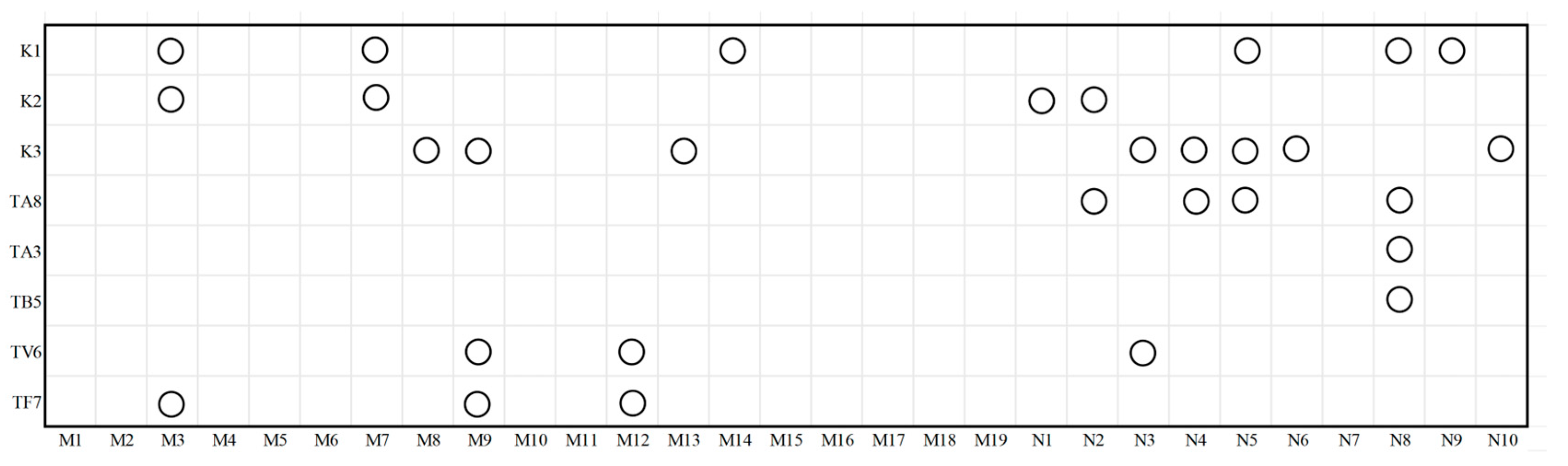
To identify helper strains capable of promoting bacterial growth, we investigated the interactions between 29 candidate helper strains and 8 type strains (dependent strains) using a double-layer plate assay. A total of 30 positive growth-promoting interactions were observed, originating from 16 distinct candidate strains against the 8 type strains (Figure 2). The specific growth conditions are shown in Figure S1a,b. The selected representative helper strains significantly promoted the growth of type strains. In the agar medium, the closer the type strain is to the helper bacteria, the denser the number of strains. The type strain forms a distinct halo around the candidate helper colony. Notably, 15 of these 16 candidate strains enhanced the growth of Actinomycetota type strains (K1, K2, K3, and TA8). These 15 strains were therefore selected for further confirmation of their growth-promoting activity. Only one candidate strain, M12, exhibited a positive effect exclusively on non- Actinomycetota type strains and was set aside for other studies.

3.2. Confirmation of Growth Promoting of Selected Helper Strains

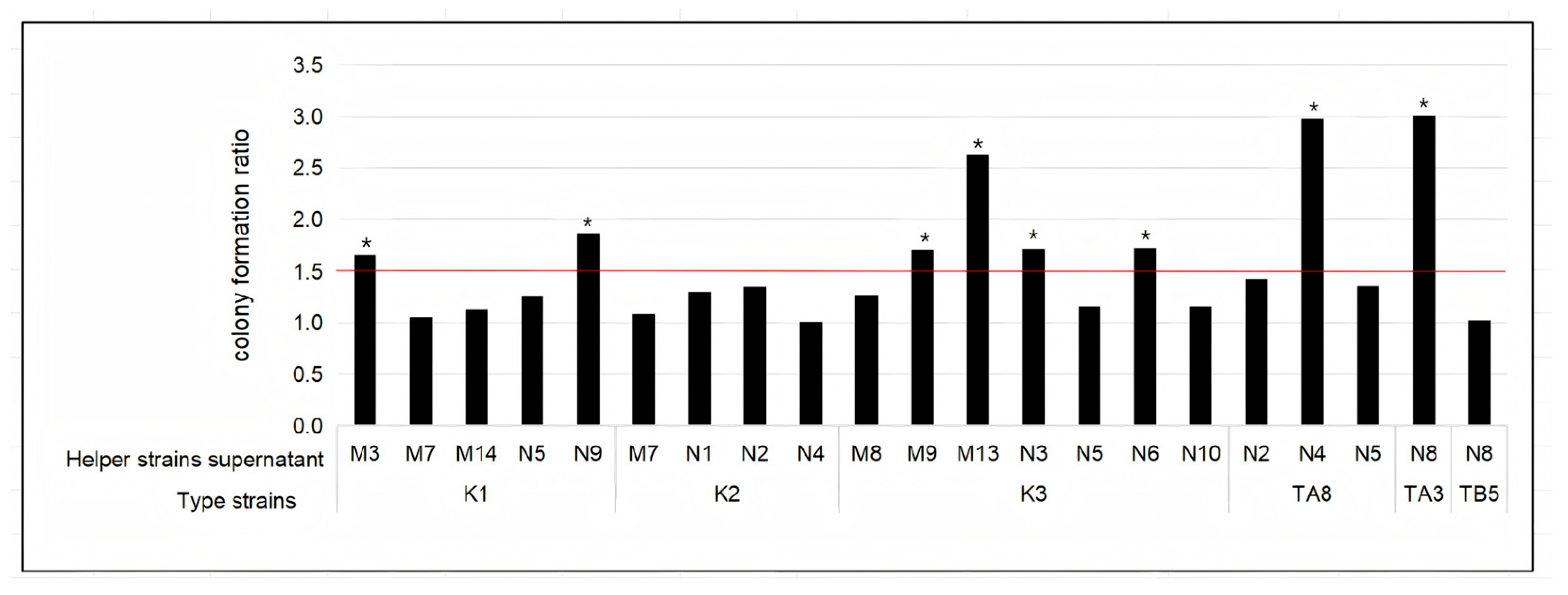
The growth-promoting effects of the 15 selected helper strains were quantitatively confirmed by comparing the colony-forming efficiency of dependent type strains on media with and without helper strain supernatants. Eight of the 15 helper strains enhanced the growth of their corresponding type strains, resulting in a ≥1.5-fold increase in colony-forming units (CFU) compared to the control (Figure 3). The specific growth conditions are shown in Figure S1c,d. The selected representative helper strains significantly promoted the growth of type strains. In the agar medium, the number of type strains in the experimental group was noticeably higher than in the control group. According to the result, we selected 8 helper strains, M3, M9, M13, N3, N4, N6, N8, and N9 (Table S1), for further cultivation experiments.

3.3. Enhanced Cultivation of Diverse Actinomycetota Strains Using Helper Strain Supernatants

To evaluate the efficacy of the eight selected helper strains in facilitating the isolation of diverse Actinomycetota strains, their supernatants were incorporated into agar media used to cultivate bacteria from millipede samples; a control medium without supplementation was prepared in parallel. In media supplemented with the supernatants from helper strains, we consistently observed a greater diversity and abundance of colonies compared to control (Figure S2a–d). A total of 540 bacterial isolates were identified, representing 244 operational taxonomic units (OTUs), 78 of which were novel species (<98.5% 16S rRNA similarity to the closest known relative among the isolates in EzBioCloud) [21]. The new method resulted in the isolation of 233 different bacterial species (OTUs), including 72 novel species. In contrast, the standard method only led to the isolation of 42 OTUs, including 11 new species (Table S3).
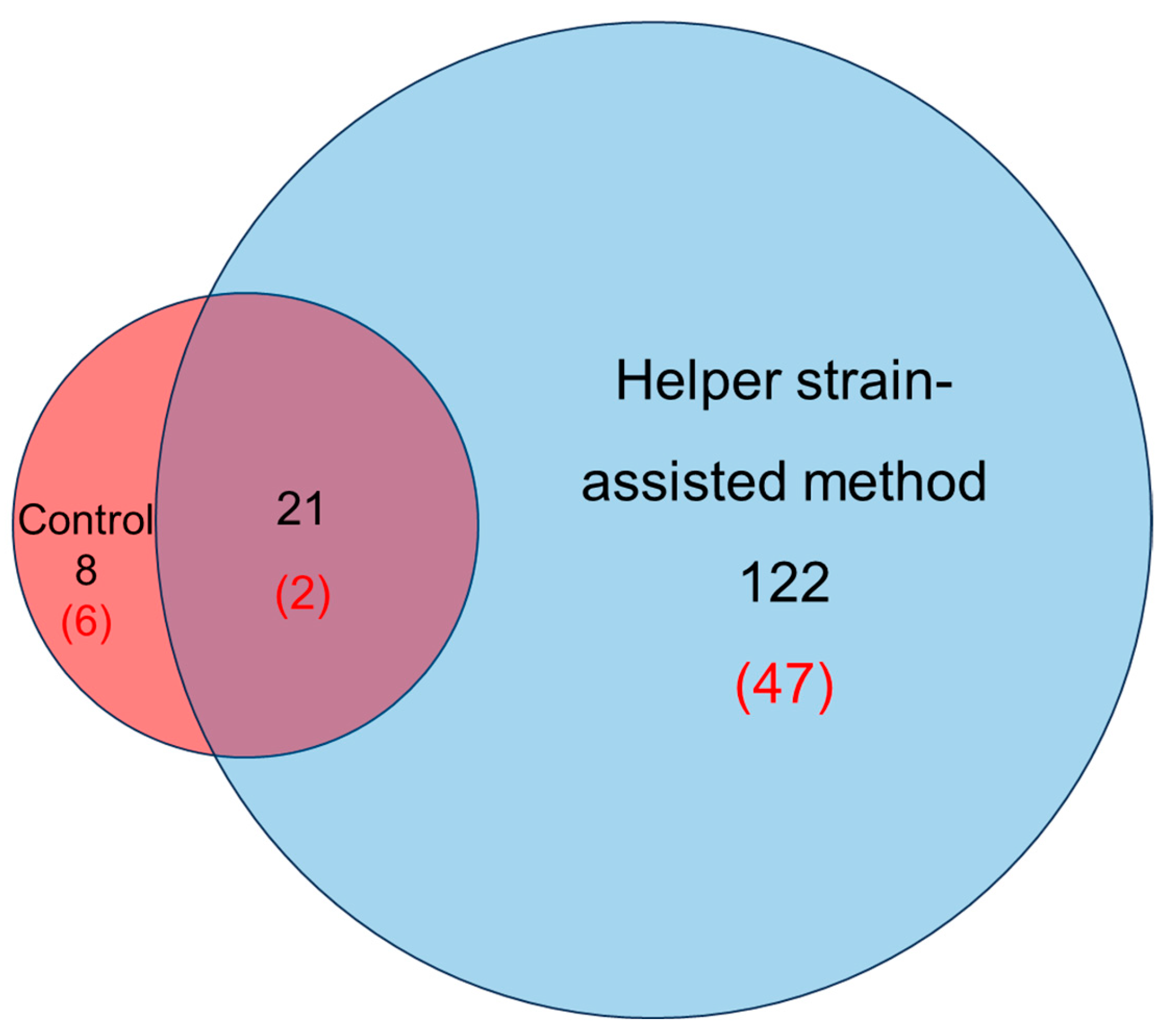
We further compared the diversity of Actinomycetota strains in particular (Figure 4). The untreated control media produced only 29 Actinomycetota OTUs including 8 novel species, while the helper strain-assisted cultivation yielded 143 Actinomycetota OTUs including 49 novel species, markedly exceeding those numbers of the control.
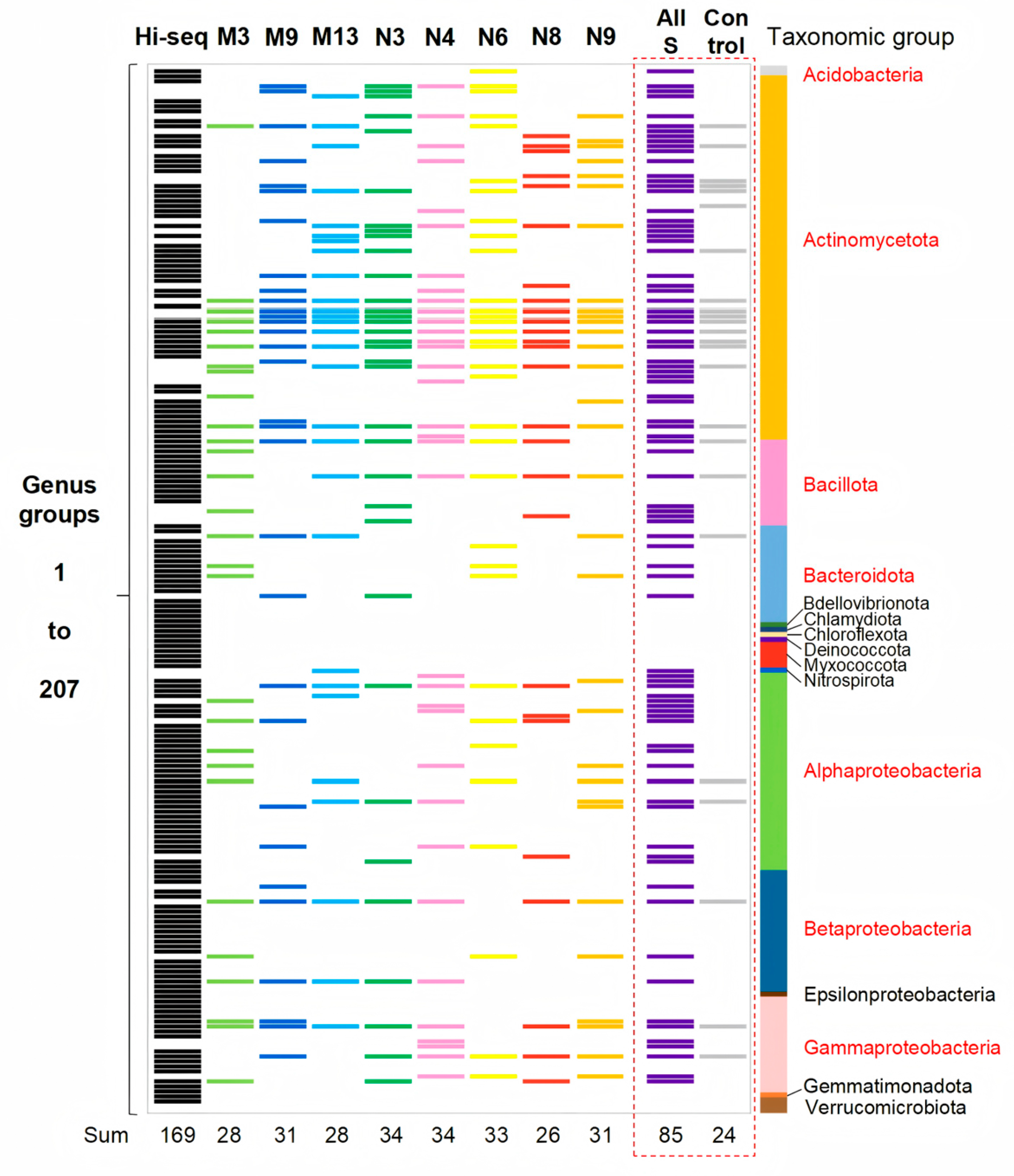
Comparison of 16S rRNA gene diversity revealed that the supernatant-based method enabled the isolation of significantly more bacterial genera than the control. The control method recovered isolates from 24 genera, representing only 14% of the total genera detected in the environmental samples via Hi-seq sequencing. In contrast, helper strain-assisted cultivation recovered isolates from 85 genera, accounting for 50% of the environmental diversity (Figure 5).

3.4. Antimicrobial Activity Screening in Selected Actinomycetota Strains

The biosynthetic potential of all isolates was initially assessed by predicting the number of biosynthetic gene clusters (BGCs) using the PSMPA platform (Table S4). We emphasize that the 16S rRNA-based phylogenetic analysis was used not to predict antibacterial activity, but as a preliminary diversity-based screening strategy. Its purpose was to select a phylogenetically representative subset of strains from our large isolate collection for subsequent empirical antibacterial testing, thereby improving overall screening efficiency.
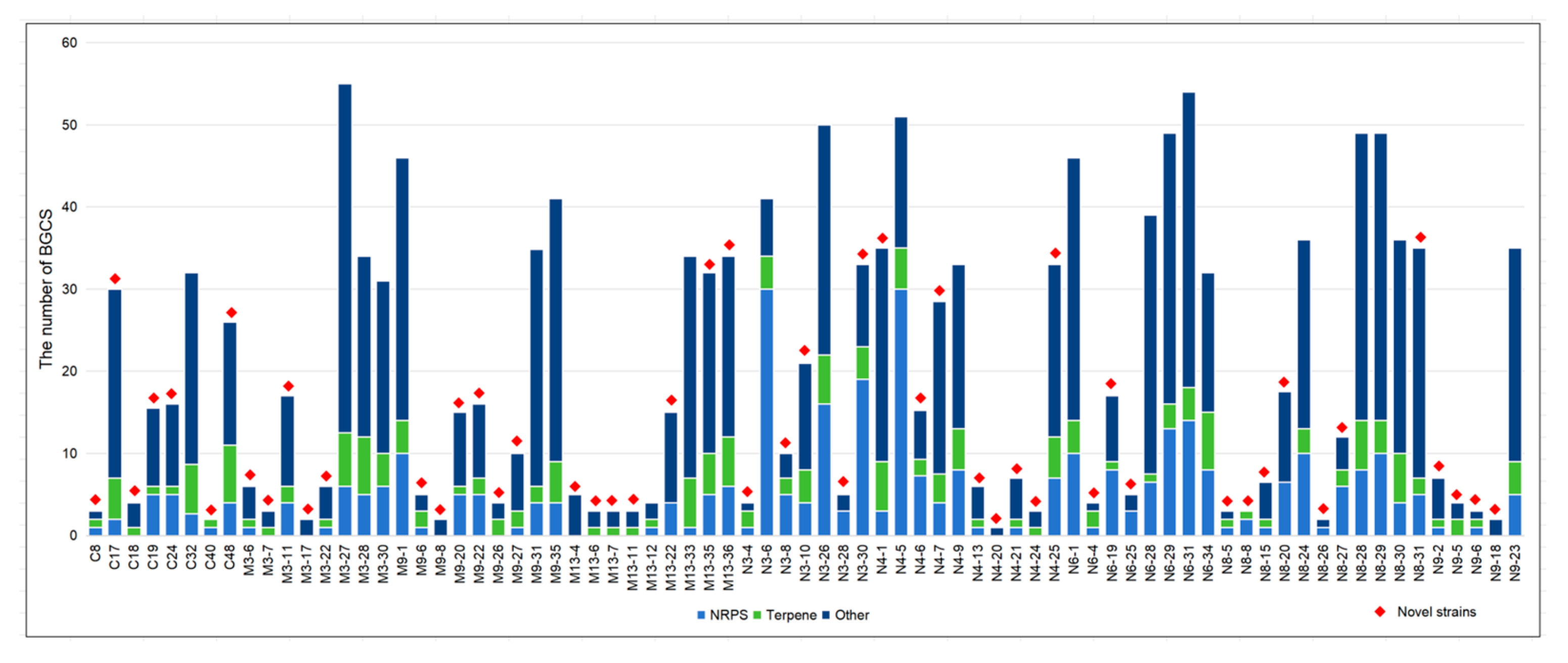
Based on this analysis, 75 Actinomycetota strains were selected for antimicrobial activity assessment, of which 8 strains came from the control group and the remaining 67 strains came from a helper strain-assisted cultivation method. This subset included strains predicted to possess over 30 BGCs and those identified as putative novel Actinomycetota strains (Figure 6). Among these, 14 isolates (18.7%) exhibited antimicrobial activity against at least one of the test organisms, including Staphylococcus aureus, Bacillus subtilis, and Escherichia coli (Table 1).

3.5. Genomic Analysis of a Putative Novel Species (N8-31) Reveals High Biosynthetic Potential

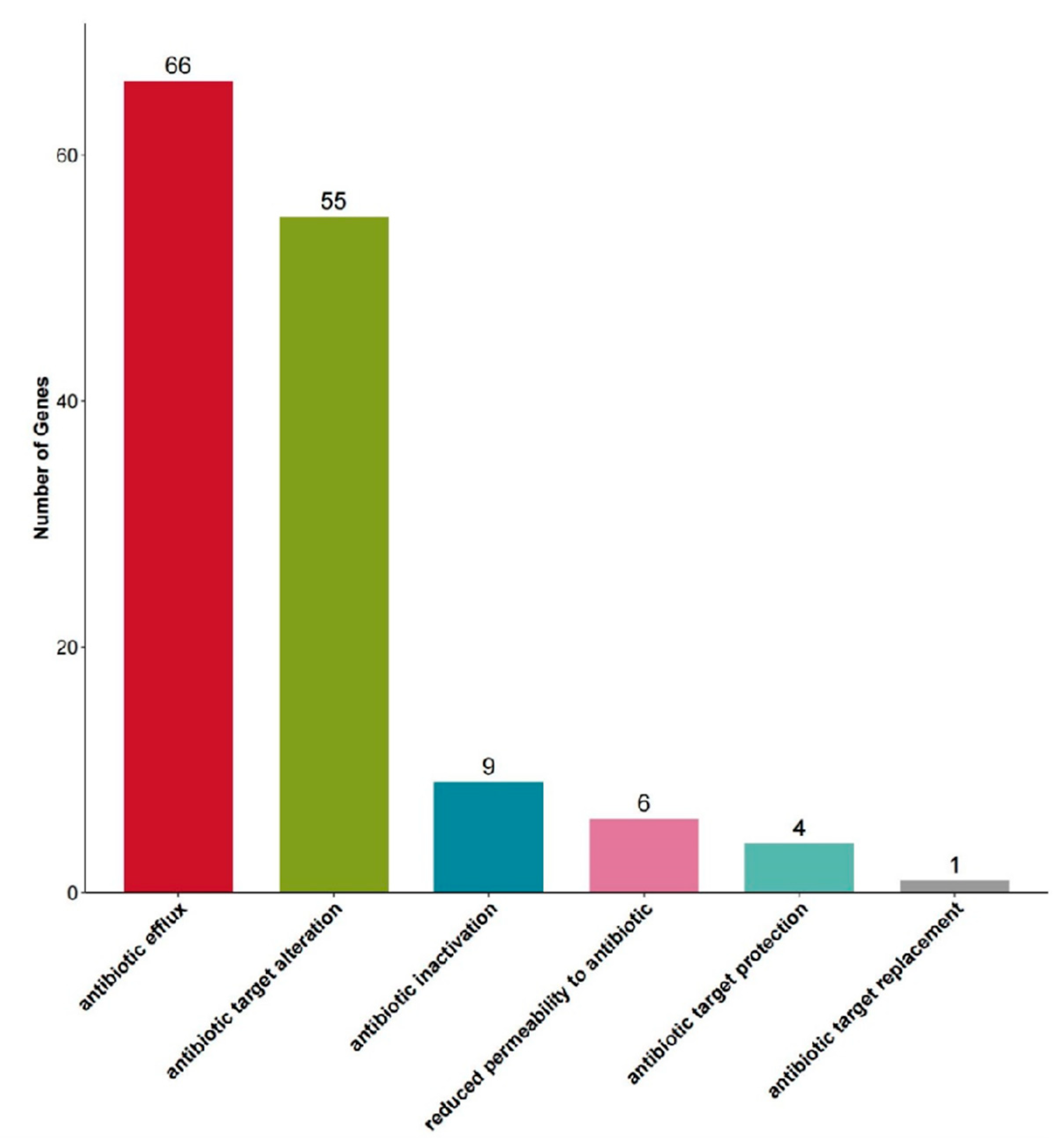
The putative novel strain N8-31 (NIMM 61070), which demonstrated antibacterial activity, was used for genomic analysis to elucidate its antibiotic production potential. Initially, we used the CARD for functional annotation and identified 134 antibiotic resistance genes [22], which were categorized into six major mechanisms: antibiotic efflux, target modification, target protection, inactivation, and target replacement (Figure 7). Genes associated with antibiotic efflux (66 genes) and target alteration (55 genes) were predominant, suggesting robust self-protection mechanisms that could facilitate the production of potent antibacterial compounds. This genomic evidence implies that the bacteriostatic substances produced by strain N8-31 may target essential pathways such as ribosome function or cell wall synthesis.
Analysis with antiSMASH predicted 40 biosynthetic gene clusters (BGCs) in the strain N8-31 genome [23]. Notably, 60% of these BGCs exhibited less than 70% similarity to known clusters, indicating a high degree of novelty (Table 2). The BGCs displayed considerable chemical diversity, encompassing non-ribosomal peptides (NRPS), type I polyketides (T1PKS), terpenes, ribosomal peptides (RiPPs), phosphonates, and nucleosides. Several clusters showed minimal similarity to known antibiotic BGCs (<15%), including a unique nucleoside cluster (Region 20; 0% similarity) and a type I polyketide cluster (Region 21; 4% similarity). Furthermore, T1PKS—a hallmark of potent antibiotics like erythromycin—was identified in eight distinct genomic regions (16, 17, 21, 27, 28, 37, 38, and 39), suggesting a high potential for novel antibacterial mechanisms. The genome also encoded complex potential ‘Trojan horse’ siderophores (Region 19), indicating the potential for entirely new modes of action. Collectively, these results position strain N8-31 as a highly promising source for discovering novel antibiotics to combat resistant bacterial infections.

4. Discussion

The disparity between standard laboratory growth conditions and natural environments is a major impediment to microbial cultivation [24,25,26]. We hypothesized that this uncultivability often stems from interdependent relationships among microbes, which necessitate specific signaling or cofactors for growth. This premise led us to adopt a helper strain-assisted cultivation approach, leveraging such microbial interactions to isolate strains of the phylum Actinomycetota from millipede samples. The success of this strategy not only validates the importance of microbial interdependence but also provides a robust platform for accessing unexplored microbial diversity and facilitating the discovery of novel antibiotics.
Previous studies have established that microbes in shared environments engage in complex interactions, and that manipulating these interactions can facilitate the cultivation of uncultured species [27,28]. Based on these findings, we screened 19 strains isolated from millipedes, along with ten previously established helper strains, for their ability to promote the growth of uncultivated bacteria. To target microbes with high biosynthetic potential, we selected four Actinomycetota strains—Kitasatospora spp. (K1, K2, K3) and Ornithinimicrobium sp. (TA8) and also four type strains from other phyla (TA3, TB5, TV6, TF7) as indicator (dependent) strains [29]. The screening of 232 co-culture pairs revealed 30 instances (12.9%) of enhanced colony formation compared to the control (Figure 2). This result provides compelling evidence for the growth-promoting role of specific inter-strain interactions.
Based on the interaction tests, eight strains (M3, M9, M13, N3, N4, N6, N8, and N9) that enhanced the colony formation (cell recovery) of other strains were selected for subsequent cultivation with millipede samples (Figure 3). The isolation efficiency was evaluated by comparing media supplemented with supernatants from these helper strains against a control. Culture collections from media containing supernatants of selected eight helper strains yielded a greater diversity of Actinomycetota strains (Figure 4) and bacterial genera (Figure 5) than the control. This finding is significant, as it not only expands the number of culturable Actinomycetota strains but also provides a scalable strategy to enhance microbial recovery. Unlike traditional methods focused solely on nutrient optimization, our supernatant-based approach leverages microbial metabolites—potentially including growth factors or signaling molecules—to activate the growth of previously uncultivable bacteria including diverse Actinomycetota strains.
Although the growth-promoting activity of cell-free supernatants from helper strains has been demonstrated in pure culture, its efficacy during the initial isolation stage from a sample remains unclear due to the presence of complex competitive microbiota. A successful isolation strategy should therefore incorporate not only positive growth factors (Figure S2a–d) but also antagonistic factors that can suppress fast-growing dominants [10]. In laboratory co-culture, faster-growing species often outcompete others for resources, even if these slower growers are dominant in their natural habitat [9,30]. Consequently, applying negative pressure (e.g., via antagonism) on these fast growers can shift the cultivated community’s composition, potentially enriching it with species that would otherwise be missed. The underlying mechanisms of these key growth factors (both positive and negative) require further experimentation, which should be a priority for follow-up studies.
A comparative analysis of culture-independent 16S rRNA gene sequencing and our cultivation results confirmed that the supernatant-supplemented media successfully isolated numerous bacterial taxa that were not accessible by standard cultivation media (Figure 5). Specifically, this approach recovered 85 genera, a substantial increase over the 24 genera obtained from the control. This outcome validates that simulating microbial interactions by modifying culture conditions is a powerful strategy for accessing previously uncultured microbial diversity.
However, a notable discrepancy was observed: several taxa that were highly abundant in the native millipede microbiome, such as the phylum Bdellovibrionota and the class Epsilonproteobacteria, were absent from our cultures. This suggests that these groups may require highly specific growth conditions—such as unique nutrient sources, precise oxygen availability, or the presence of specific host or microbial partners—that were not replicated in our experimental setup [31,32]. Consequently, while our method significantly expanded the recovery of Actinomycetota strains, these findings underscore the persistent challenge of cultivating certain fastidious microbes and highlight the need for further refinement of cultivation strategies to target these elusive lineages.
The functional potential of the isolated Actinomycetota strains further underscores the efficacy of our cultivation strategy. Among the 75 strains screened for bioactivity, 14 (18.7%) exhibited antibacterial activity, six of which are novel species. This high hit rate not only confirms that the helper strain-assisted method accesses greater phylogenetic diversity but also suggests it specifically enriches for Actinomycetota strains with significant biosynthetic potential.
To elucidate the genetic basis of its bioactivity, we selected Streptomyces sp. N8-31—a putatively novel strain exhibiting potent antibacterial activity—for whole-genome sequencing. Analysis against the Comprehensive Antibiotic Resistance Database (CARD) revealed no major pathogenic factors or concerning resistance genes. Conversely, genomic mining identified numerous biosynthetic gene clusters (BGCs) dedicated to secondary metabolite synthesis. This genetic profile not only indicates a favorable safety profile but also robustly supports the strain’s potential as a prolific source of novel antibiotics—a finding of critical importance in the context of the escalating antimicrobial resistance crisis [33,34,35].
In conclusion, this study establishes soil-dwelling millipedes as a rich reservoir of diverse and functionally significant Actinomycetota strains. The helper strain-assisted cultivation method not only expands the cultivability of Actinomycetota strains but also provides a new paradigm for microbial cultivation by leveraging ecological interactions for the identification of novel, bioactive, and biosynthetic gene cluster-rich strains such as Streptomyces sp. While our findings demonstrate that the eight helper strains promote the growth of the type strain through secreted metabolites, the chemical identities and biosynthetic origins of these compounds remain to be elucidated. Future work will therefore focus on isolating the active components via HPLC-MS and validating their biosynthetic pathways through genetic approaches such as targeted gene knockout. N8-31 lays a solid foundation for future antibiotic discovery. With further optimization of cultivation and characterization techniques, millipede-associated microbes are poised to become key resources in addressing global challenges in microbial ecology and drug development.

Supplementary Materials

The following supporting information can be downloaded at https://www.mdpi.com/article/10.3390/fermentation12010016/s1, Table S1: Helper strain candidates; Table S2: 75 Actinomycetota strains involved in antibacterial experiments; Table S3: Application of selected helper strain supernatants in microbial cultivation; Table S4: Prediction of the number of BGCS. Figure S1: Growth promotion of type strains by helper strains; Figure S2: Bacterial isolates from millipede samples using a helper strain-assisted method; Table S5: Original data of Figure 3; Table S6: Original data of Figure 4; Table S7: Original data of Figure 5; Table S8: Original data of Figure 7.

Author Contributions

Methodology, Y.S., D.J. and S.H.; Formal analysis, Y.S., E.-Y.S., J.S.O., Z.H., L.S., C.Y., W.L. and D.J.; Investigation, Y.S., Z.H., L.S. and C.Y.; Data curation, Y.S., E.-Y.S., J.S.O., W.L., D.J. and S.H.; Writing—original draft, Y.S., E.-Y.S. and D.J. Writing—review & editing, J.S.O., Z.H., L.S., C.Y., W.L., D.J. and S.H.; Supervision, D.J. and S.H.; Project administration, S.H. All authors have read and agreed to the published version of the manuscript.

Funding

This research was funded by the National Natural Science Foundation of China (42176101), the Ningbo Key Science and Technology Development Program (2021Z046), the National 111 Project of China (D16013) and Li Dak Sum Yip Yio Chin Kenneth Li Marine Biopharmaceutical Development Fund.

Institutional Review Board Statement

Not applicable.

Informed Consent Statement

Not applicable.

Data Availability Statement

The original contributions presented in this study are included in the article and Supplementary Materials. Further inquiries can be directed to the corresponding authors. Newly determined sequence data have been deposited in GenBank (www.ncbi.nlm.nih.gov accessed on 4 November 2025) under accession numbers PX490564, PX490883 to PX490908, PX490917 to PX490943, PX490946 to PX490969. PX490885, PX490889, PX490901, PX490918, PX490920, PX490936, PX490941, PX490954, PX490959 and PX490967 for control cultivation, PX490564, PX490883, PX490884, PX490886 to PX490888, PX490890 to PX490900, PX490902 to PX490917, PX490902 to PX490917, PX490919, PX490921 to PX490935, PX490937 to PX490940, PX490942 to PX490953, PX490955 to PX490958, PX490960 to PX490966, PX490968 and PX490969 for supernatant cultivation with millipede samples.

Conflicts of Interest

The authors declare no conflict of interest.

References

  1. Nweze, J.E.; Schweichhart, J.S.; Angel, R. Viral communities in millipede guts: Insights into the diversity and potential role in modulating the microbiome. Environ. Microbiol. 2024, 26, e16586. [Google Scholar] [CrossRef]
  2. Pimvichai, P.; Jumpajan, W.; Buaboon, P.; Sutthisa, W.; Nantarat, N.; Backeljau, T. GC-MS analysis and antimicrobial properties of defensive secretions from the millipede Coxobolellus saratani (Diplopoda: Spirobolida: Pseudospirobolellidae). J. Chem. Ecol. 2025, 51, 72. [Google Scholar] [CrossRef] [PubMed]
  3. Srisonchai, R.; Enghoff, H.; Likhitrakarn, N.; Panha, S.; Sutcharit, C. Molecular and morphological data uncover a striking new genus of dragon millipedes in Thailand, with alternately long and short legs (Diplopoda, Polydesmida, Paradoxosomatidae). Invertebr. Syst. 2025, 39, IS25007. [Google Scholar] [CrossRef] [PubMed]
  4. Hu, J.Q.; Zhang, A.; Wang, H.; Niu, L.; Wang, Q.X.; Zhu, L.L.; Li, Y.Z.; Wu, C. Discovery and biosynthesis of glycosylated cycloheximide from a millipede-associated actinomycete. J. Nat. Prod. 2023, 86, 340–345. [Google Scholar] [CrossRef] [PubMed]
  5. Glukhova, A.A.; Karabanova, A.A.; Yakushev, A.V.; Semenyuk, I.I.; Boykova, Y.V.; Malkina, N.D.; Efimenko, T.A.; Ivankova, T.D.; Terekhova, L.P.; Efremenkova, O.V. Antibiotic activity of actinobacteria from the digestive tract of millipede Nedyopus dawydoffiae (Diplopoda). Antibiotics 2018, 7, 94. [Google Scholar] [CrossRef]
  6. Oren, A.; Garrity, G.M. Valid publication of the names of forty-two phyla of prokaryotes. Int. J. Syst. Evol. Microbiol. 2021, 71, 005056. [Google Scholar] [CrossRef]
  7. Subramani, R.; Aalbersberg, W. Marine actinomycetes: An ongoing source of novel bioactive metabolites. Microbiol. Res. 2012, 167, 571–580. [Google Scholar] [CrossRef]
  8. Lee, J.Y. The principles and applications of high-throughput sequencing technologies. Dev. Reprod. 2023, 27, 9–24. [Google Scholar] [CrossRef]
  9. Jung, D.; Seo, E.Y.; Epstein, S.S.; Joung, Y.; Han, J.; Parfenova, V.V.; Belykh, O.I.; Gladkikh, A.S.; Ahn, T.S. Application of a new cultivation technology, I-tip, for studying microbial diversity in freshwater sponges of Lake Baikal, Russia. FEMS Microbiol. Ecol. 2014, 90, 417–423. [Google Scholar] [CrossRef]
  10. Nichols, D.; Cahoon, N.; Trakhtenberg, E.M.; Pham, L.; Mehta, A.; Belanger, A.; Kanigan, T.; Lewis, K.; Epstein, S.S. Use of ichip for high-throughput in situ cultivation of “uncultivable” microbial species. Appl. Environ. Microbiol. 2010, 76, 2445–2450. [Google Scholar] [CrossRef]
  11. Yan, C.; Owen, J.S.; Seo, E.Y.; Jung, D.; He, S. Microbial interaction is among the key factors for isolation of previous uncultured microbes. J. Microbiol. 2023, 61, 655–662. [Google Scholar] [CrossRef] [PubMed]
  12. Liu, A.; Archer, A.M.; Biggs, M.B.; Papin, J.A. Growth-altering microbial interactions are responsive to chemical context. PLoS ONE 2017, 12, e0164919. [Google Scholar] [CrossRef]
  13. Nawaz, M.Z.; Subin Sasidharan, R.; Alghamdi, H.A.; Dang, H. Understanding interaction patterns within deep-sea microbial communities and their potential applications. Mar. Drugs. 2022, 20, 108. [Google Scholar] [CrossRef]
  14. Wan, S.; Li, N.; Habib, S.; Zheng, P.; Li, Y.; Liang, Y.; Qu, Y. Biological characteristics and whole-genome analysis of a porcine E. coli phage. Vet. Sci. 2025, 12, 57. [Google Scholar] [CrossRef]
  15. Kropinski, A.M.; Mazzocco, A.; Waddell, T.E.; Lingohr, E.; Johnson, R.P. Enumeration of bacteriophages by double agar overlay plaque assay. Methods Mol. Biol. 2009, 501, 69–76. [Google Scholar]
  16. Lane, D.J. 16S/23S rRNA sequencing. In Nucleic Acid Techniques in Bacterial Systematics; Stackebrandt, E., Goodfellow, M., Eds.; Academic Press: Cambridge, MA, USA; John Wiley and Sons: Chichester, UK, 1991; pp. 115–175. [Google Scholar]
  17. Wei, B.; Zhou, Z.-Y.; Lai, C.; Du, A.-Q.; Hu, G.-A.; Yu, W.; Yu, Y.-L.; Chen, J.-W.; Zhang, H.; Wu, Q.; et al. Predicting the secondary metabolic potential of microbiomes from marker genes using PSMPA. Preprint 2022. [Google Scholar] [CrossRef]
  18. Inglin, R.C.; Stevens, M.J.; Meile, L.; Lacroix, C.; Meile, L. High-throughput screening assays for antibacterial and antifungal activities of Lactobacillus species. J. Microbiol. Methods 2015, 114, 26–29. [Google Scholar] [CrossRef] [PubMed]
  19. Bauer, A.W.; Kirby, W.M.; Sherris, J.C.; Turck, M. Antibiotic susceptibility testing by a standardized single disk method. Am. J. Clin. Pathol. 1966, 45, 493–496. [Google Scholar] [CrossRef] [PubMed]
  20. Saar, M.; Wawrzyk, A.; Pastuszak-Lewandoska, D.; Bielec, F. Cefiderocol antimicrobial susceptibility testing by disk diffusion: Influence of agar media and inhibition zone morphology in K. pneumoniae metallo-β-lactamase. Antibiotics 2025, 14, 527. [Google Scholar] [CrossRef]
  21. Kim, M.; Oh, H.S.; Park, S.C.; Chun, J. Towards a taxonomic coherence between average nucleotide identity and 16S rRNA gene sequence similarity for species demarcation of prokaryotes. Int. J. Syst. Evol. Microbiol. 2014, 64, 346–351. [Google Scholar] [CrossRef]
  22. McArthur, A.G.; Waglechner, N.; Nizam, F.; Yan, A.; Azad, M.A.; Baylay, A.J.; Bhullar, K.; Canova, M.J.; De Pascale, G.; Ejim, L.; et al. The comprehensive antibiotic resistance database. Antimicrob. Agents Chemother. 2013, 57, 3348–3357. [Google Scholar] [CrossRef] [PubMed]
  23. Blin, K.; Szenei, J.; Vader, L. Using antiSMASH. Methods Enzymol. 2025, 717, 1–28. [Google Scholar] [PubMed]
  24. Stewart, E.J. Growing unculturable bacteria. J. Bacteriol. 2012, 194, 4151–4160. [Google Scholar] [CrossRef]
  25. Watve, M.; Shejval, V.; Sonawane, C.; Rahalkar, M.; Matapurkar, A.; Shouche, Y.; Patole, M.; Phadnis, N.; Champhenkar, A.; Damle, K.; et al. The ‘K’ selected oligophilic bacteria: A key to uncultured diversity? Curr. Sci. 2000, 78, 1535–1542. [Google Scholar]
  26. Kapinusova, G.; Lopez Marin, M.A.; Uhlik, O. Reaching unreachables: Obstacles and successes of microbial cultivation and their reasons. Front. Microbiol. 2023, 14, 1089630. [Google Scholar] [CrossRef]
  27. Dimitriu, T.; Lotton, C.; Bénard-Capelle, J.; Misevic, D.; Brown, S.P.; Lindner, A.B.; Taddei, F. Genetic information transfer promotes cooperation in bacteria. Proc. Natl. Acad. Sci. USA 2014, 111, 11103–11108. [Google Scholar] [CrossRef]
  28. Jung, D.; Machida, K.; Nakao, Y.; Kindaichi, T.; Ohashi, A.; Aoi, Y. Triggering growth via growth initiation factors in nature: A putative mechanism for in situ cultivation of previously uncultivated microorganisms. Front. Microbiol. 2021, 12, 537194. [Google Scholar] [CrossRef]
  29. Wei, Y.; Wang, G.; Li, Y.; Gan, M. The secondary metabolites from genus Kitasatospora: A promising source for drug discovery. Chem. Biodivers. 2024, 21, e202401473. [Google Scholar] [CrossRef]
  30. Jung, D.; Seo, E.Y.; Owen, J.S.; Aoi, Y.; Yong, S.; Lavrentyeva, E.V.; Ahn, T.S. Application of the filter plate microbial trap (FPMT), for cultivating thermophilic bacteria from thermal springs in Barguzin area, eastern Baikal, Russia. Biosci. Biotechnol. Biochem. 2018, 82, 1624–1632. [Google Scholar] [CrossRef]
  31. Knapp, B.A.; Seeber, J.; Rief, A.; Meyer, E.; Insam, H. Bacterial community composition of the gut microbiota of Cylindroiulus fulviceps (Diplopoda) as revealed by molecular fingerprinting and cloning. Folia Microbiol. 2010, 55, 489–496. [Google Scholar] [CrossRef] [PubMed]
  32. Ilić, B.; Unković, N.; Ćirić, A.; Glamočlija, J.; Ljaljević Grbić, M.; Raspotnig, G.; Bodner, M.; Vukojević, J.; Makarov, S. Phenol-based millipede defence: Antimicrobial activity of secretions from the Balkan endemic millipede Apfelbeckia insculpta (L. Koch, 1867) (Diplopoda: Callipodida). Naturwissenschaften 2019, 106, 37. [Google Scholar] [CrossRef]
  33. Segura-Ramírez, P.J.; de Godoy, P.M.; Avino, I.N.; Silva Junior, P.I. Encrypted antimicrobial peptides from proteins present in the plasma of the millipede Rhinocricus sp. J. Proteom. 2021, 242, 104239. [Google Scholar] [CrossRef] [PubMed]
  34. Anavadiya, B.; Chouhan, S.; Saraf, M.; Goswami, D. Exploring Endophytic Actinomycetes: A rich reservoir of diverse antimicrobial compounds for combatting global antimicrobial resistance. Microbe 2024, 4, 100110. [Google Scholar] [CrossRef]
  35. Mast, Y.; Stegmann, E. Actinomycetes: The antibiotics producers. Antibiotics 2019, 8, 105. [Google Scholar] [CrossRef] [PubMed]
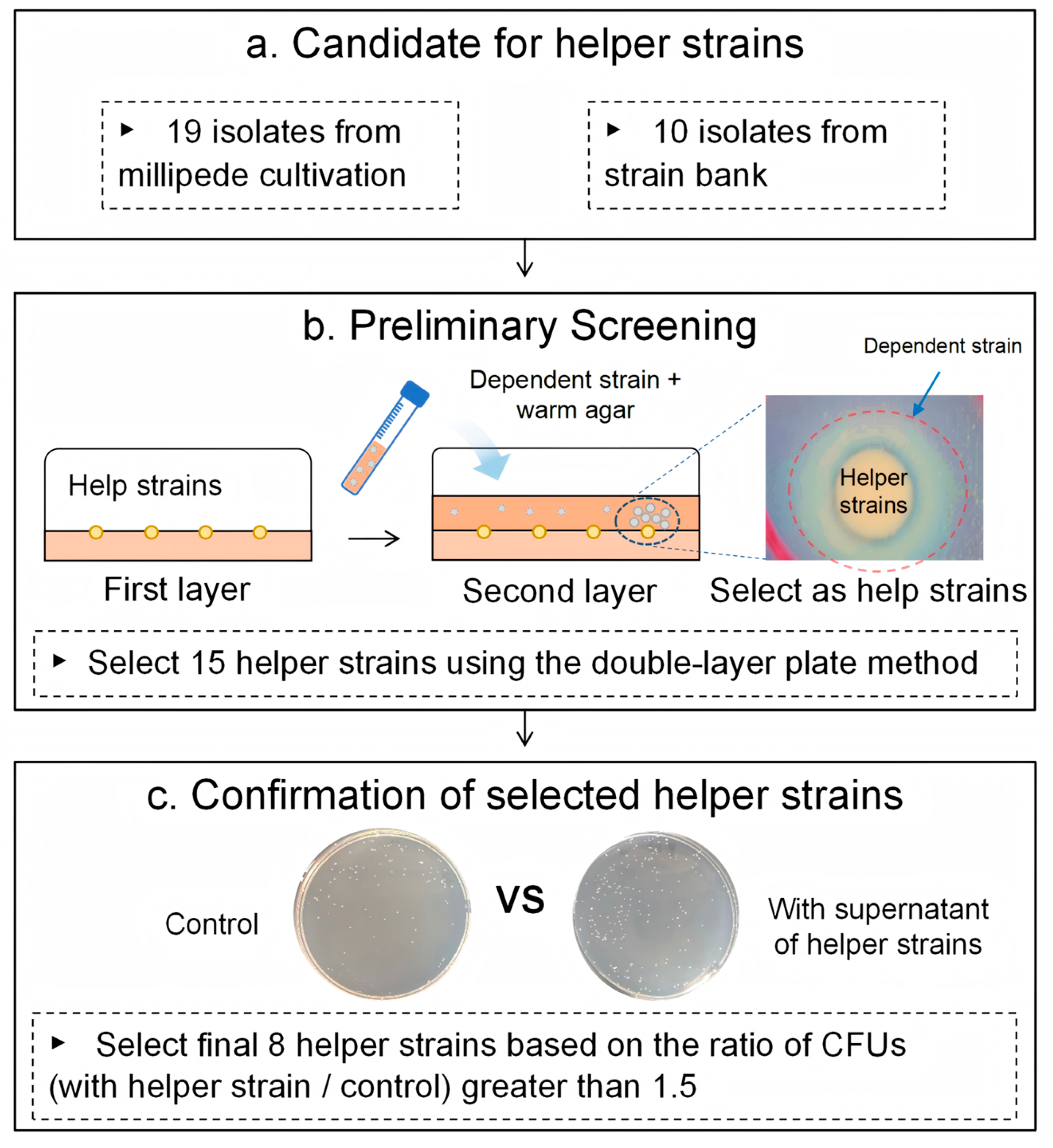
Figure 1. Workflow for screening bacterial species that affect the growth of other microbes. (a) Helper strains obtained from millipedes and strain bank. (b) Preliminary microbial interactions assay using the double-layer plate method to select bacterial species that affect the growth of other microbes. (c) Confirmation of helper strains by comparing bacterial recovery on plates with and without helper strain supernatants.
Fermentation 12 00016 g001
Figure 2. Diagram summarizing the effect of helper strains (supernatant) on type strains growth. The horizontal axis shows 29 helper strains, and the vertical axis shows 8 type strains (dependent strains). Positive effect is indicated by the symbol “○”.
Fermentation 12 00016 g002
Figure 3. Effect of helper strain supernatants on colony formation efficiency of test type strain. The ratio represents the average for colony counts (n = 3) on agar plates with and without supernatant. Strains marked with * indicate a strain selected for bacterial isolation from millipede samples.
Fermentation 12 00016 g003
Figure 4. Venn diagram showing the number of OTUs of Actinomycetota strains from standard media (control) and media with supernatants from selected helper strains. In parentheses are the number of novel species (in red).
Fermentation 12 00016 g004
Figure 5. Band chart showing the presence of groups at the genus level for the environmental samples by HiSeq sequencing analysis and for the isolates obtained by media with supernatants and control (without supernatant). Numbers at the bottom indicate number of genera detected with each method. Bar graph on the right indicates the taxonomic group to which those genera belong. Taxonomic groups names in red represent a group that was also isolated by the culture-dependent methods. Dashed lines represent the results for all isolates obtained using media supplemented with supernatants, contrasted with the control (without supernatant).
Fermentation 12 00016 g005
Figure 6. Number of biosynthetic gene clusters (BGCs) in 75 Actinomycetota strains. Red diamonds indicate novel Actinomycetota strains.
Fermentation 12 00016 g006
Figure 7. Results for the mechanism of action from CARD (Comprehensive Antibiotic Resistance Database). The x-axis represents the CARD-defined mechanism of action, and the y-axis indicates the number of annotations for each mechanism.
Fermentation 12 00016 g007
Table 1. Susceptibility of 4 model strains to the antibacterial activity of 14 Actinomycetota strains.
Isolate NumberClosest SpeciesSimilarity1234
M3-11Mycobacterium grossiae98.29+++
M3-27Streptomyces corynorhini98.00++
M3-28Streptomyces glauciniger99.10++++
M13-7Homoserinibacter gongjuensis97.89+
M13-36Streptomyces sodiiphilus97.24++
N3-6Aldersonia kunmingensis100.00+
N4-5Dactylosporangium tropicum99.43++++++
N4-7Kitasatospora cheerisanensis99.01+
N4-25Streptomyces corynorhini100.00+++
N8-28Streptomyces alboniger98.79++
N8-31Streptomyces cinnabarigriseus98.07+++++
N9-6Cellulomonas pakistanensis97.55+++++
N9-23Streptomyces cinnabarigriseus98.71++++
M9-35Streptomyces setonii99.84++
1: Staphylococcus aureus; 2: Bacillus subtilis; 3: Pseudomonas aeruginosa; 4: Escherichia coli; Positive control used 10 mg/mL Penicillin and 10 mg/mL chloramphenicol. Size (mm) of test strains suppression as an indicator of antibiotic activity intensity: «−»: no activity; «+»: ≤10, «++»: 11–15, «+++»: 16–20.
Table 2. Predicted secondary metabolite gene cluster in strain N8-31 by anti-SMASH.
RegionMost Similar Known SpeciesSimilarity (%)
Region 1Other100
Region 2NRP7
Region 3  
Region 4NRP100
Region 5Terpene100
Region 6NRP: Cyclic depsipeptide57
Region 7Other100
Region 8NRP100
Region 9Other88
Region 10NRP100
Region 11Polyketide100
Region 12NRP: Cyclic depsipeptide13
Region 13NRP + Polyketide4
Region 14Polyketide23
Region 15Other57
Region 16Polyketide: Iterative type I polyketide10
Region 17NRP + Polyketide12
Region 18Terpene61
Region 19Polyketide16
Region 20  
Region 21NRP + Polyketide4
Region 22NRP + Polyketide33
Region 23Other35
Region 24Terpene100
Region 25Terpene100
Region 26  
Region 27NRP7
Region 28Other13
Region 29RiPP21
Region 30NRP10
Region 31Polyketide83
Region 32Polyketide + Saccharide: Hybrid/tailoring saccharide10
Region 33NRP + Polyketide: Modular type I polyketide + Saccharide: Hybrid/tailoring saccharide13
Region 34RiPP: Lanthipeptide85
Region 35Other13
Region 36  
Region 37Polyketide13
Region 38Polyketide54
Region 39Polyketide21
Region 40Polyketide5
Disclaimer/Publisher’s Note: The statements, opinions and data contained in all publications are solely those of the individual author(s) and contributor(s) and not of MDPI and/or the editor(s). MDPI and/or the editor(s) disclaim responsibility for any injury to people or property resulting from any ideas, methods, instructions or products referred to in the content.