Article

Testing and Modeling of a CFRP Composite Subjected to Simple and Compound Loads

by
Ionuț Mititelu
1,2,
Viorel Goanță
1,
Paul Doru Bârsănescu
1,* and
Ciprian Ionuț Morăraș
1,*
1
Mechanical Engineering, Mechatronics and Robotics Department, Mechanical Engineering Faculty, “Gheorghe Asachi” Technical University of Iasi, 700050 Iasi, Romania
2
Nondestructive Testing Department, National Institute of R&D for Technical Physics, 47 D. Mangeron Blvd., 700050 Iasi, Romania
*
Authors to whom correspondence should be addressed.
Submission received: 29 January 2026 / Revised: 8 March 2026 / Accepted: 13 March 2026 / Published: 20 March 2026
(This article belongs to the Section Carbon Materials and Carbon Allotropes)

Abstract

Most components fail under complex states of stress and for this reason the study of materials failure under these conditions is an important topic. The article presents the experimental study of the failure of a CFRP material, with a 0/90° cross-ply configuration, subjected to both simple loading conditions (tension, compression, and shear) and combined loading (tension–shear), using a modified Arcan testing method. The Arcan device and specimen geometry were redesigned to reduce experimental errors and the dispersion of results. It was found that there are significant differences between the strength values obtained for simple loads performed by the standardized methods and by the Arcan method, respectively. For this reason, it is recommended to use the Arcan method only for mixed loading modes. Specimens with steel tabs were used to reduce both hole ovality during testing and the number of clamping screws to only four. It was found that the experimental results under complex stress states are well described by the Tsai–Hill failure criterion and the failure envelope for the material studied was plotted. Recommendations are provided regarding the appropriate use of the Arcan method in order to obtain precise results for CFRP composites under multiaxial loading.

1. Introduction

Composite materials such as fiber-reinforced polymers (FRP) are widely used to create lightweight and resistant structures. Carbon fiber-reinforced composites (CFRP) represent a class of advanced materials with high mechanical properties, widely used in fields such as aeronautics, automotive industry, energy industry, construction, sports, etc., due to their remarkable properties: excellent strength-to-weight ratio, high stiffness, fatigue and corrosion resistance [1,2,3]. However, the use of these materials is still limited by their high cost, the limitations of existing manufacturing technologies and the development of models for their in-service behavior. Commonly used composites are reinforced with carbon fiber (CFRP), glass fiber (GFRP), aramid fiber, etc. Carbon fiber has higher strength and stiffness, but glass fiber is cheaper.
Most components of mechanical assemblies or structures are in a complex state of stress during operation. A wind turbine blade, for example, is simultaneously subjected to tension/compression, bending, and torsion. Strength calculations for these components are more difficult, as they are based on failure criteria. Unfortunately, there is no universally accepted failure criterion. In its absence, numerous criteria, with limited areas of application, are used. Each criterion has a scope that depends on the material, the state of stress, the environmental conditions, etc. Using appropriate failure criteria for the design or verification of structures is extremely important. However, formulating new, more precise criteria is also very important.
Testing materials at different states of stress also raises many difficulties. This category of tests must meet the following main conditions [4,5]:
-
A high and stress state that is as uniform as possible must be created in the fracture section of the specimen.
-
The stress ratio on the loading directions must be constant during the test.
-
The stress ratio on the loading directions must be easy to modify from one test to another, etc.
These tests can be performed in one of the following ways [4,5]:
-
Through the use of testing machines that load special specimens (cruciform, for example) in multiple directions, with actuators controlled by a computer;
-
Through the use of devices without actuators, mounted on universal testing machines, which transform the load in one direction received from the machine into a load in multiple directions;
-
Through the use of devices with actuators, mounted on universal testing machines;
-
Through the use of special specimens with stress concentrators, which create a complex state of stress in the breaking section, without additional devices. These specimens are loaded in uniaxial tension or compression, etc.
Each of the above methods has advantages and disadvantages:
-
Multi-directional testing machines are accurate but very expensive;
-
Devices without actuators mounted on unidirectional loading testing machines are inexpensive, but do not accurately maintain a constant ratio of stress throughout the test and can only create a limited number of stress states;
-
Devices with actuators combine the advantages and disadvantages of the above methods;
-
Devices with actuators mounted on unidirectional loading testing machines are inexpensive;
-
Stress concentrator specimens are relatively cheap, but they sometimes have a complicated shape, the volume of material in which the desired stress state is created is very small, and the sectioning of reinforcing fibers may have undesirable effects in the case of FRC. For each other stress state, specimens with a different design must be imagined and simulated with Finite Elements Analysis (FEA).
If we refer only to the testing of composites in the FRP category, the trends presented below are observed in the literature.
Some researchers have used commercial testing machines, such as those for torsional-tensile testing [6,7]. Torsion testing has the disadvantage that shear stresses are not uniformly distributed in the section, especially in flat specimens.
Other researchers built their own biaxial tensile testing machines, on which they tested cruciform specimens [8,9,10,11]. The use of four independent computer-controlled actuators allows the center of the cruciform specimen to remain stationary during testing. This facilitates the use of Digital Image Correlation (DIC) to monitor the state of deformation and stress in the center of the specimen throughout the test, which is a major advantage. To create a more uniform stress state in the center of the specimen, cruciform specimens with various designs and dimensions were used.
To create different stress states in the specimens, many types of devices attached to the universal testing machine were used. Some of these devices have been analyzed by G. Ferron and A. Makinde [12]. For testing composite materials, the following devices were used: mechanisms with sliding elements for biaxial tensile tests [13,14]. Several variations in the device and specimens are known, but the basic principle remains the same. Both the Iosipescu device (used for pure shear testing) and the Arcan device provide a smaller dispersion of the experimental results in the version provided with guiding columns of the two parts of which they are formed [15]. Since both Iosipescu and Arcan methods use specimens of similar shape (“butterfly” type, with double notch), it would be expected that they would obtain relatively close results in the pure shear test, even if the dimensions of the specimens are different. However, since the dimensions and the way of clamping these specimens differ significantly, it remains to be verified how close the results obtained in the pure shear test with the Arcan and Iosipescu methods, respectively, are. On the other hand, the Arcan device can also be used for tensile testing. However, the standardized method used for this purpose for composite materials [16] uses specimens without notches. It is assumed that the presence of the two notches on the Arcan specimen (which represent stress concentrators) may cause significant differences between the results obtained with both methods, but this issue remains to be investigated.
Thin specimens can be fixed to the Arcan device by gluing [17], but removing the specimen and cleaning the device from adhering portions can be difficult and time-consuming operations. For shear-tensile testing, specimens fixed with pins and/or screws can be used. Since polymer matrix composites have low hardness, ovalization of the specimen mounting holes can occur due to the high contact pressures that occur during testing. Ovalization of the holes causes errors due to changing the angle between the direction of loads and the specimen axis. In order to reduce the contact pressures, various researchers have increased the number of mounting holes. This leads to a significant increase in specimen mounting/dismounting times and in the specimen’s dimensions. Specimens with a total of up to 10–12 clamping holes are used to reduce contact stress between the bolts and the specimen [18,19,20]. High contact pressures occur, especially in CFRP specimens, where the fracture stress is high. A special Arcan device, where the specimen is mechanically fixed in the notch area (without holes) is presented in Figures 6.1 and 6.2, included in [21]. However, it is expected that the application of loads on the notches may generate significantly different results when obtained by the Arcan method compared to the Iosipescu method in the pure shear test, although this remains to be verified.
The results obtained on the specimens subjected to combined compression–shear loads can be affected by micro-buckling [22].
Specimens with stress concentrators that create a complex stress state in the fracture section without additional devices can have complicated shapes. Their fabrication does not pose any particular problems in the case of metallic materials [23]. However, the fabrication of such specimens from FRP is difficult and cutting long reinforcing fibers can have undesirable effects. For this reason, stress concentrator specimens are limited to simpler shapes and have limited application in the case of FRP [24].
The development of failure criteria for FRP began in the 1960s. Gradually, the Tsai–Hill, Tsai–Wu, Hashin, Puck, and Christensen criteria were formulated [25,26]. These failure criteria are currently among the most used for the calculation of FRP components subjected to complex loads [26,27,28,29,30,31,32]. Later, to better respond to the ever-changing design and technological needs, other failure criteria for composite materials were subsequently formulated: Hoffman, unified strength theory (UST), Chen–Chen, etc. These failure criteria are also used and mentioned in the literature [10,11,26,33,34]. Each failure criterion has a specific scope, which depends on the nature and structure of the material, the loading method, the environmental conditions, etc. Although the use of failure criteria is indispensable in design, appropriate criteria differ from one case to another and can sometimes be a difficult problem for designers.
This article studies a CFRT-type material, from which various types of specimens were made and tested under simple loads (tension, compression and shear), as well as under the combined tensile–shear loads performed using an Arcan-type device. Improvements were also made to the specimens for the Arcan test.
This article presents the following main novelties:
-
A modified Arcan device was made and tested, with good results, which has four half-disks and two guide columns. Each end of the specimen is screwed between two half-disks, and thus the loads are always contained in the plane of symmetry of the specimen, regardless of its thickness.
-
A new method of fixing the specimens in the Arcan device is presented, with steel tabs and screws, which eliminates the ovalization of the holes during testing (having the effect of changing the angle between the direction of the loads and the axis of the specimen, which introduces errors), reducing the number of fixing screws to only four for a specimen (this reduces the time for mounting/dismounting the specimen). The specimen dimensions were also reduced in the clamping area, thus saving material without affecting the accuracy of the experimental results.
-
A calculation procedure for the contact pressures between the specimen and the fixing bolts was proposed, which can be used in the design of Arcan-type devices and specimens.
-
The studied CFRP material was subjected to standardized simple loads (tension, compression and shear with the Iosipescu method). The results obtained for tension and shear performed by standardized methods were compared with those obtained with the Arcan method and recommendations were formulated.
-
Using the Arcan method, tests were performed with complex stress states (tension with shear) and it was found that the Tsai–Hill failure criterion models the experimental results well. Recommendations were formulated regarding the use of the Arcan method in order to obtain precise results for CFRP composites under multiaxial loading and for the choice of an appropriate failure criterion.

2. Materials and Methods

2.1. Composite CFRP

The material used in this study is a carbon fiber composite plate with a nominal thickness of 2 mm, commercially designated Double-Sided High-Strength Carbon Fibre Sheet, product code CFS-PP-2-0040 (Easy Composites Ltd., Stoke-on-Trent, UK), with a cross-ply 0/90° structure, in which the fibers are alternately arranged at 0° and 90°.
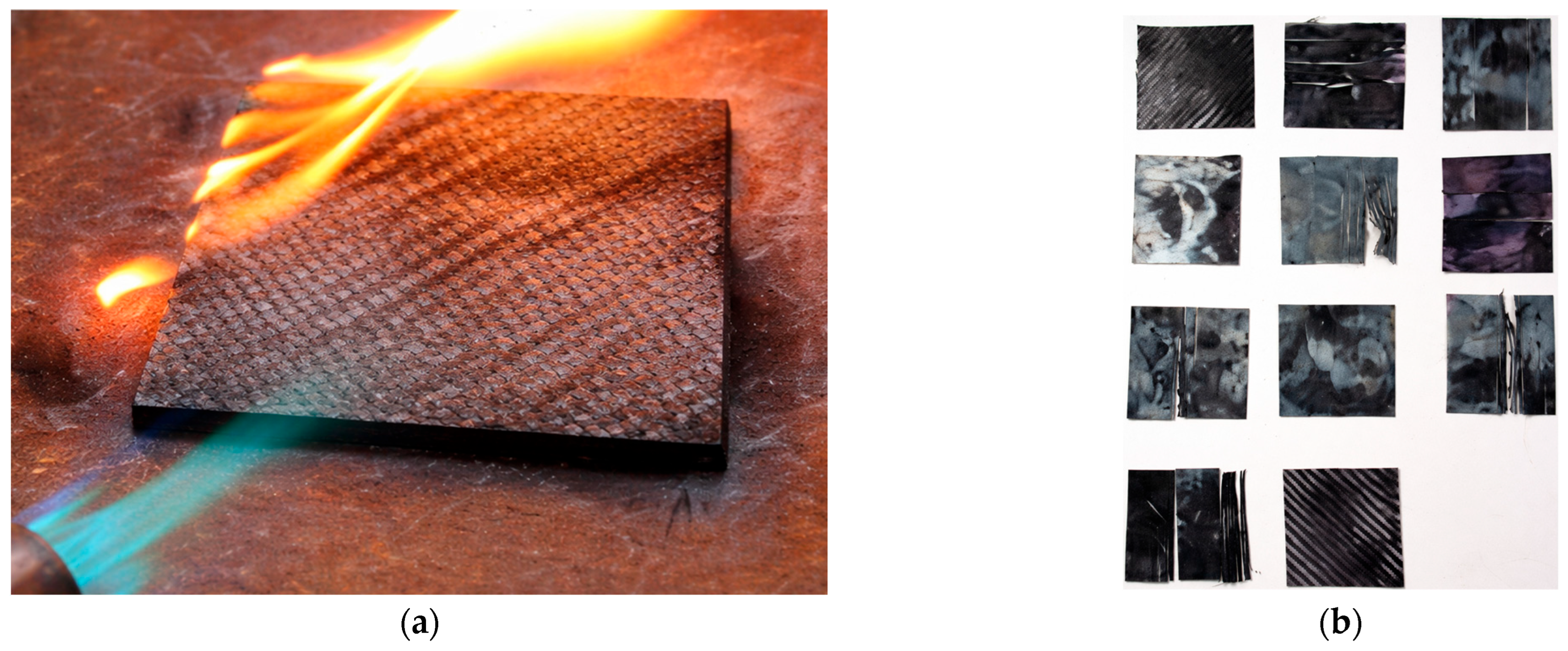
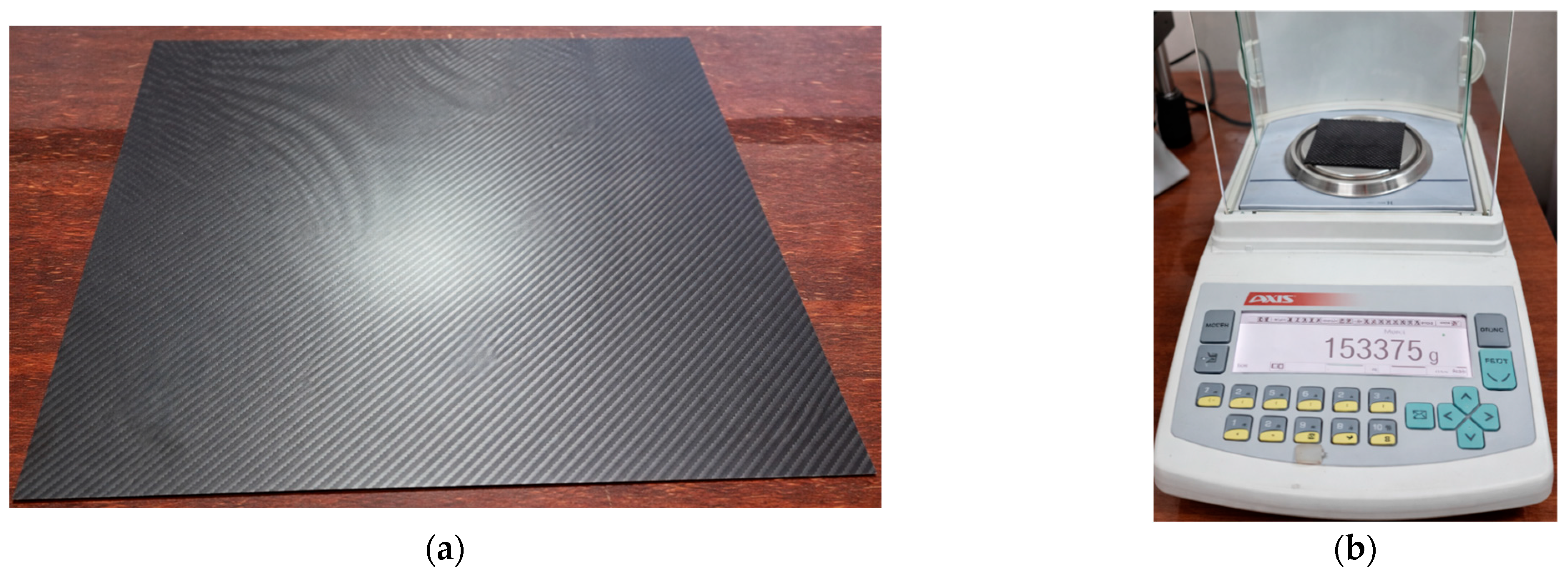
This balanced 0/90° configuration ensures a good load-carrying capacity in both the longitudinal and transverse directions, as it is frequently used in cases involving multiaxial loads. In the specialized literature, CFRP sheets reinforced with fabrics or prepreg 0/90° are used as a reference material for the evaluation of tensile and flexural properties, as well as for the correlation between experimental tests and finite element analyses [35,36,37,38]. Although the manufacturer provides some nominal values for the mechanical and elastic properties of the laminate, more precise values are required for rigorous application in numerical analysis and in failure criteria. Thus, according to the ASTM D3171 standard [39], a sample was extracted and burned from the CFRP plate to determine the mass ratio of carbon fibers. This is a common procedure in studies of the characterization of laminated plates, with applications in micromechanical models. To find out the mass content of the carbon fibers, a sample with dimensions of 7.5 × 7.5 cm was cut from the composite material plate. The sample was weighed on an analytical balance, with a total mass of mt = 15.3375 g, Figure 1. The sample was then burned with a manual burner to eliminate the epoxy resin. Burning resulted in 11 carbon fiber layers, which were alternately placed at 0/90° with a fiber mass mf = 10.0773 g, as shown in Figure 2.
Carbon fiber has a density of 1.8 g/cm3 and the density of the resin is 1.2 g/cm3. Following the calculations, the carbon fiber content in the plate can be expressed as a mass fraction as follows:
w f = m f m t × 100 % ; w f = 10.0773 15.3375 = 65.7 %
In carbon fiber-reinforced composites used in industries such as aeronautics, automotive, or energy (wind turbines), the fiber volume fraction is usually 50–70%, with typical values around 60%, a range associated with high strength and stiffness of the components [40,41].

2.2. Device

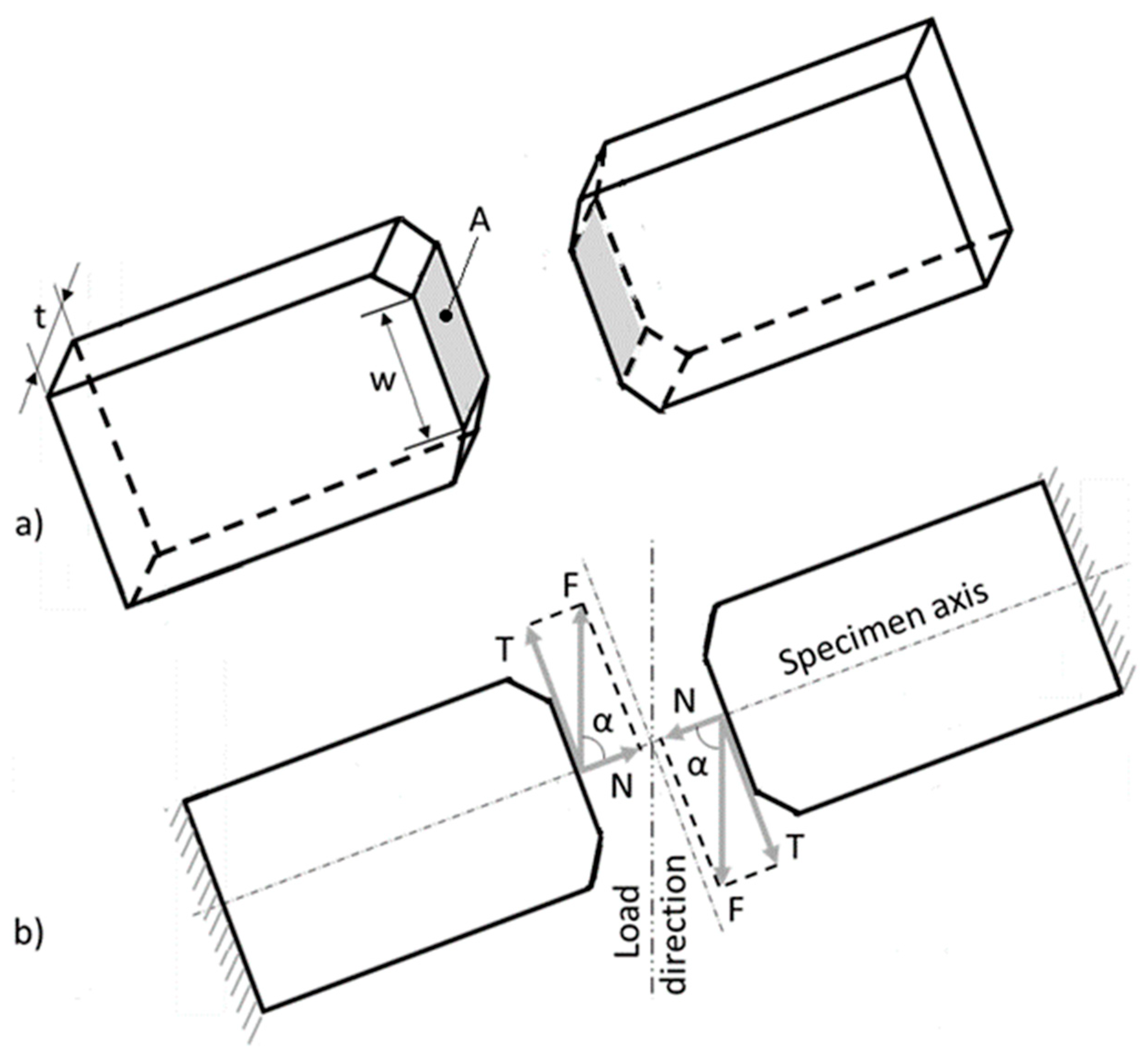
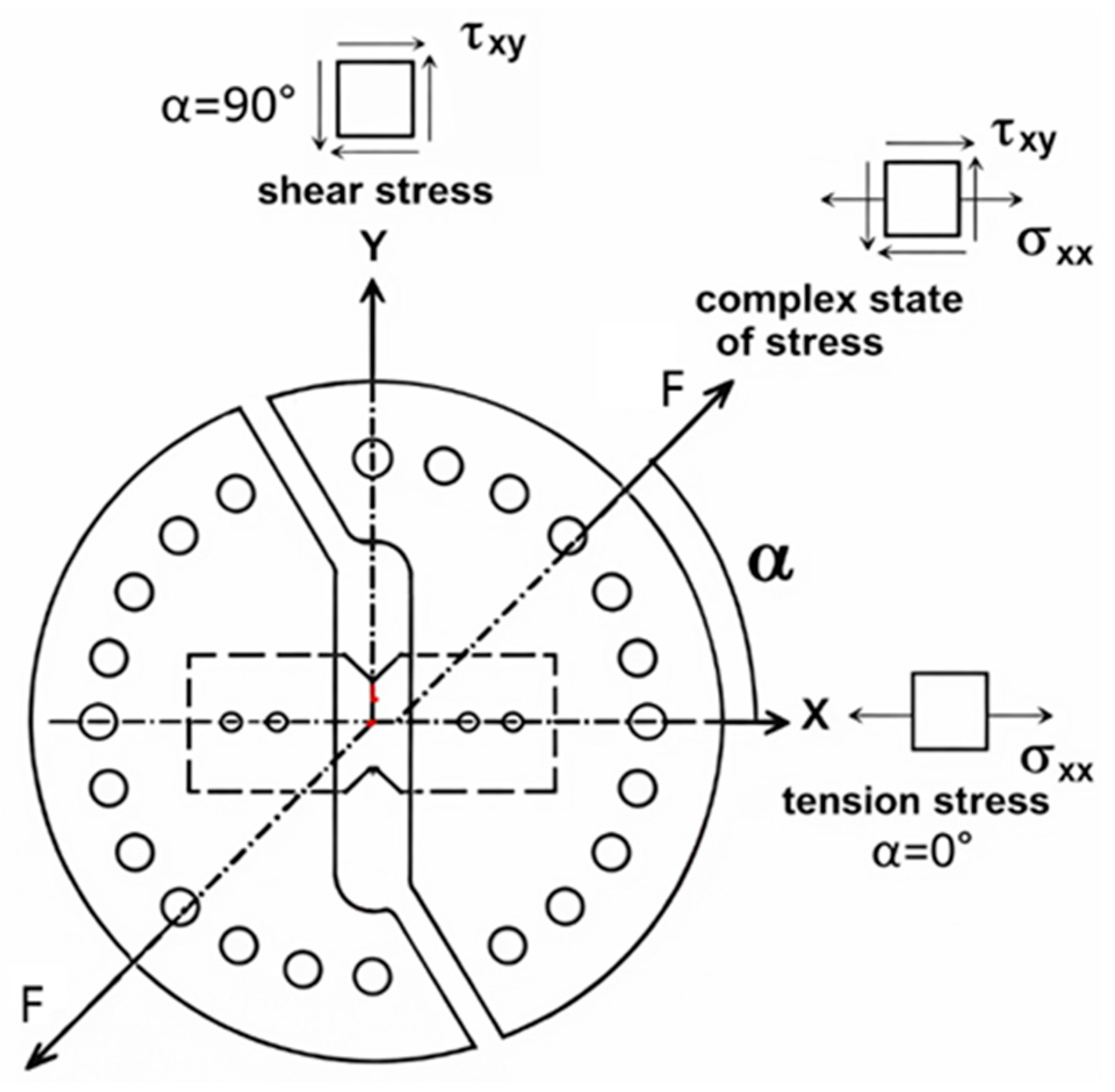
The mechanical characterization of the CFRP composite studied was undertaken using standardized tests to create simple stress states (tension, compression and shear, using the Iosipescu method), complemented by the Arcan test, which creates multiaxial stress states (tension with shear). This approach allows for the evaluation of the response of the CFRP composite to various stress states that are relevant for modern structural applications [42,43]. The Arcan method is widely used because it allows for complex stress states to be obtained in the specimen (tension with shear or compression with shear) through the use of a simple device attached to a uniaxial testing machine, avoiding complex and expensive multiaxial installations. This testing method was used for both static and dynamic loads, as well as for fatigue and fracture mechanics [43,44,45,46,47,48,49]. Another major advantage is the possibility of obtaining a wide range of stress states using the same specimen geometry [43,44]. Flat butterfly-type specimens with two symmetrical V-notches of various sizes are used [50]. The Arcan device has proven to be very useful in determining the tensile/shear or compression/shear response of unidirectionally, bidirectionally and fabric-reinforced composites, as well as in fracture mechanics and in characterizing the mixed mode I/II fracture toughness of CFRP composites [51]. The Arcan method can satisfactorily meet the conditions presented in the Introduction for performing tests with compound loads. The operation of the Arcan device is explained in Figure 3. By changing the angle α between the direction of the loads and the axis of the specimen, various stress states can be generated, from uniaxial tension (α = 0°) to pure shear (α = 90°), passing through various combinations of biaxial stress states (tension with shear) for other values of angle α.
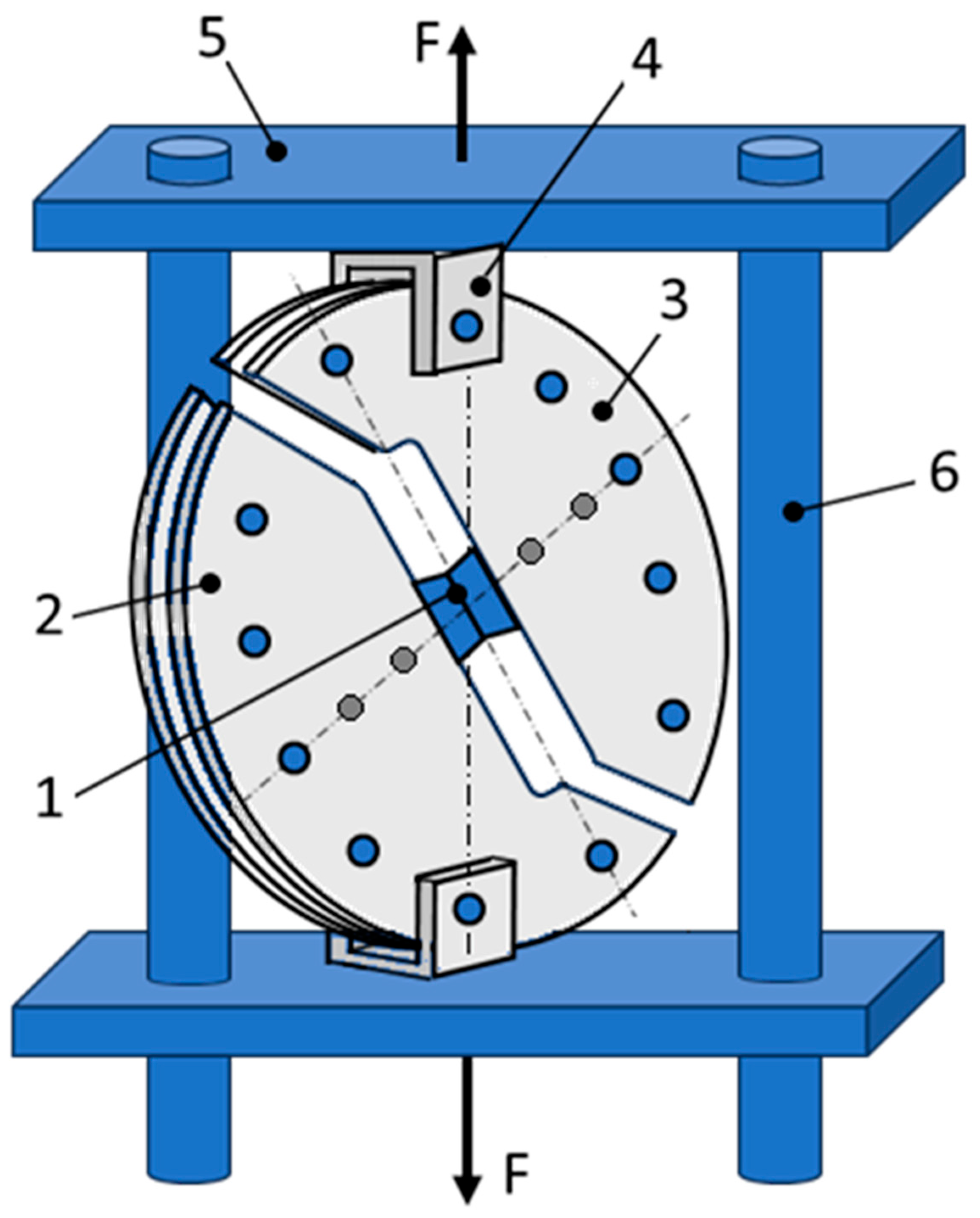
In the present study, a modified Arcan device was used, consisting of four half-disks. Each of the two ends of the specimen is fixed between two half-disks. In this way, the loads always act in the median plane of the specimen, regardless of the sample thickness. In Arcan-type devices that use only two half-disks, adjustments are necessary to make the loads coplanar with the plane of symmetry of the specimens [45].
Arcan devices with or without guide columns are mentioned in the literature [4,45,52]. The implementation of a column guide system between the pairs of half-disks at the ends of the specimen helps to maintain their correct alignment throughout the tests, which has the consequences of reducing the risk of bending that may occur in thin specimens and decreasing the dispersion of experimental results. The introduction of anti-buckling elements is adopted by several researchers for testing thin specimens [17]. A frequently encountered solution is the one with two guiding columns, located on one side of the device, in the immediate vicinity of the half-disks. This creates an asymmetry among the distribution of masses and forces [4]. Another variant of the device, with two columns arranged in the plane of symmetry of the specimen, has the disadvantage that the thickness of the device body increases substantially, as does its weight [20]. The device used for the present study has columns located symmetrically on either side of the half-disks with the specimen and a small weight (Figure 4).
The influence of friction in the guides on the experimental data can be considered insignificant as a result of the use of pairs of materials with good tribological properties [4,52,53]. Unlike known solutions, the device used for the present study has columns much further away from the half-disks. Thus, the normal forces that occur in the bearings and the friction are lower.

2.3. Sample

2.3.1. Description of the Specimen

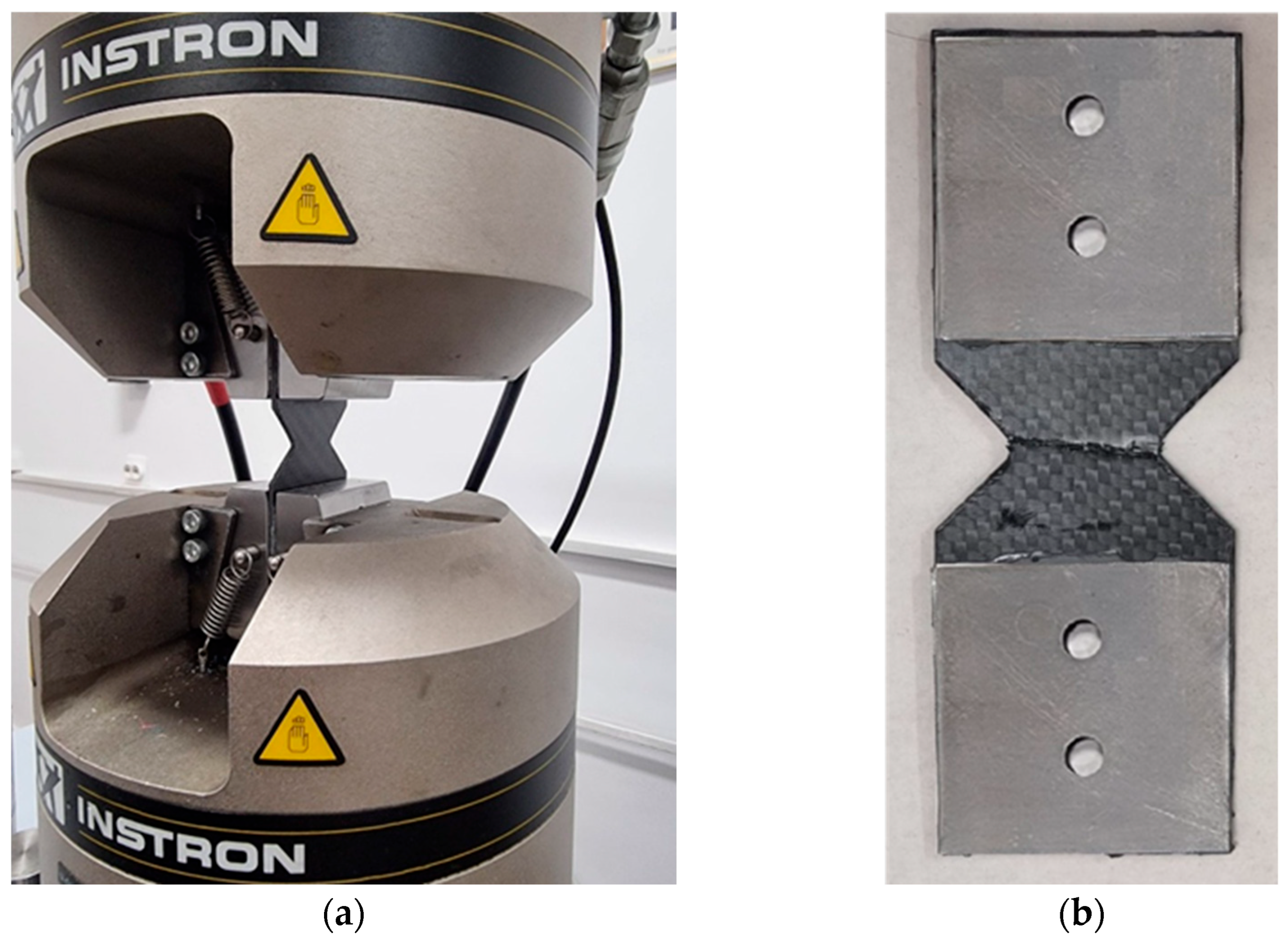
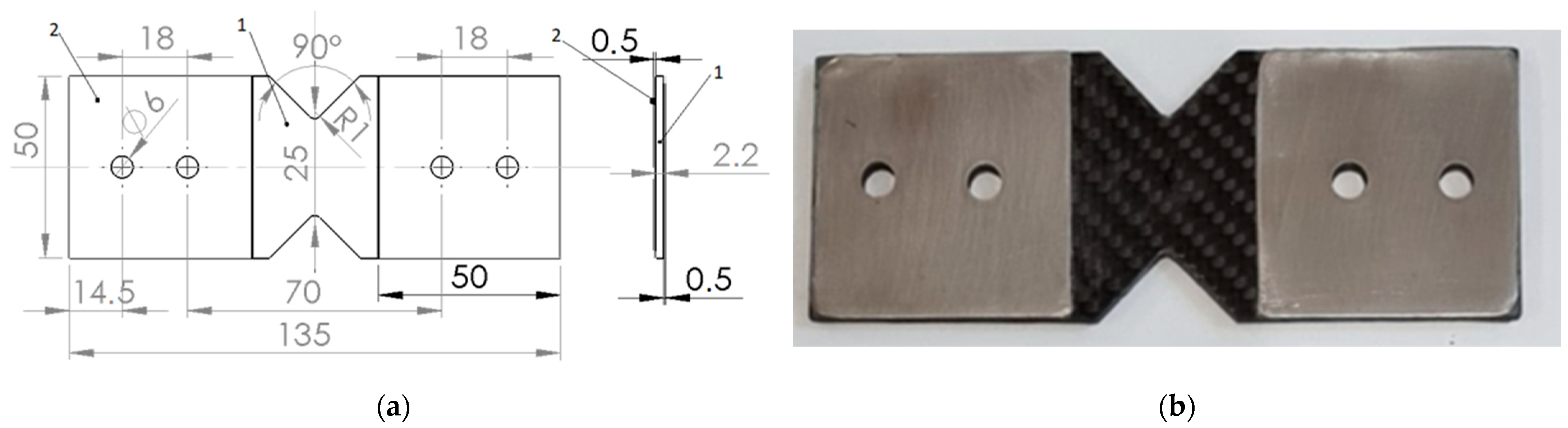
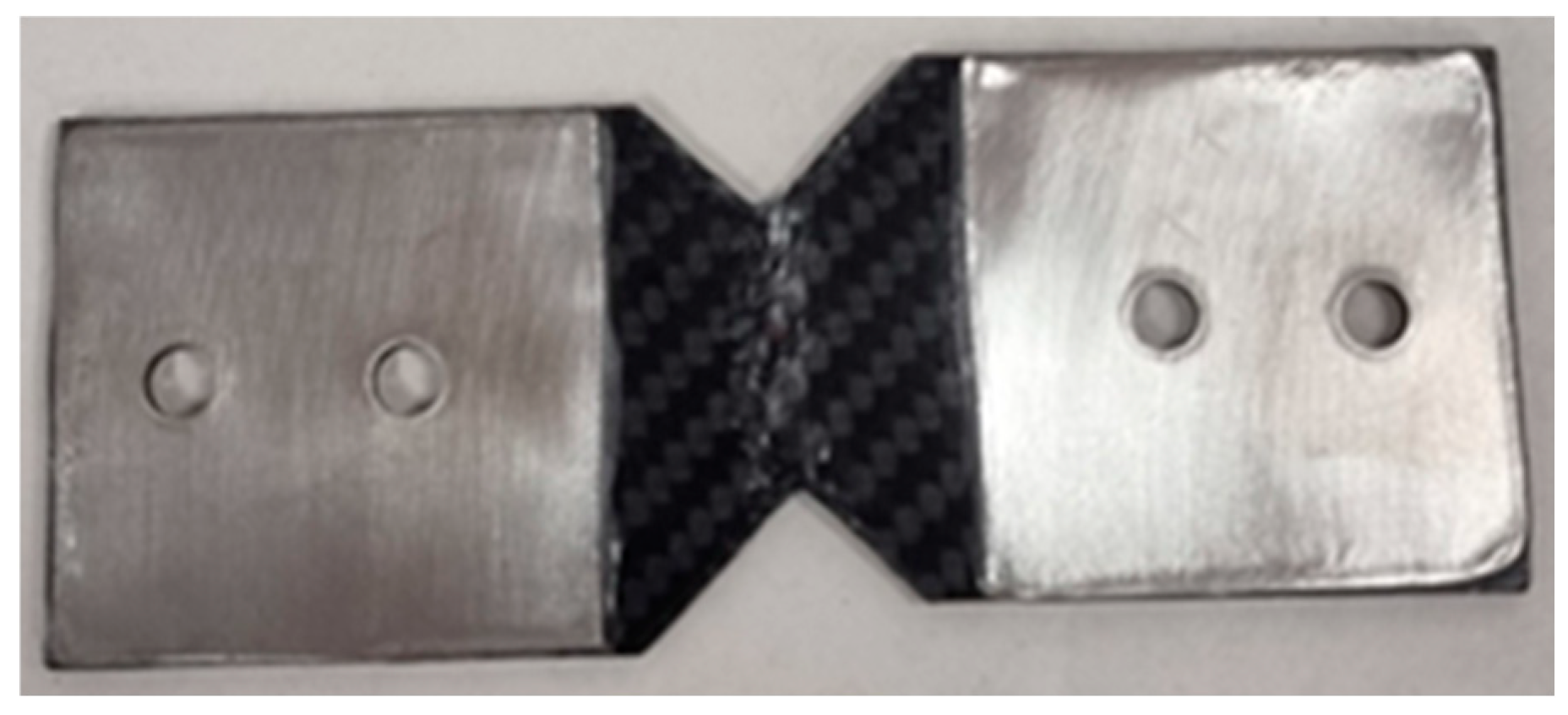
The geometry of the specimen is optimized so that, in the central area, between the notches, the shear stress field is as uniform as possible, a requirement verified by finite element analyses and by some experimental studies carried out using DIC [52]. It was found that, in some cases, during the tests, ovalization of the holes in the specimen occurs due to the high contact pressures between the fixing screws and the specimen, as well as the low hardness of the FRP materials. Ovalization of the specimen’s holes leads to a change in angle α between the loads and the specimen axis and introduces errors. To avoid this, various researchers have increased the number of holes and screws used to fix the specimen, but this leads to an increase in the duration of the tests. In addition, the dimensions of the specimen clamping parts increase and also the material necessary for their manufacture increases. Instead of a CFRP specimen with 12 holes, the authors adopted modified CFRP specimens with steel sheet tabs at the ends for this study. The tabs are glued to the specimen without holes, on both sides, over their entire surface. After the adhesive hardened, the specimen and the tabs were drilled together. Due to the high hardness of the steel, it was possible to reduce the number of holes from 12 (in the specimen without tabs) to 4, without observing their ovalization, although the thickness of the tabs was only 0.5 mm compared to the 2.2 mm thickness of the CFRP specimen, as shown in Figure 5.

2.3.2. Analysis of Forces in the Specimen

In the minimum section of the specimen (the one between the notches) forces appear in the direction of the loads, which have components normal to the section, denoted by N (tension), and in the plane of the section, denoted by T (shear). Figure 6 shows a sectioned specimen, with forces N and T. Each half of the specimen was considered embedded at one end for equilibrium. The following can be observed:
N = F c o s α ; T = F s i n α
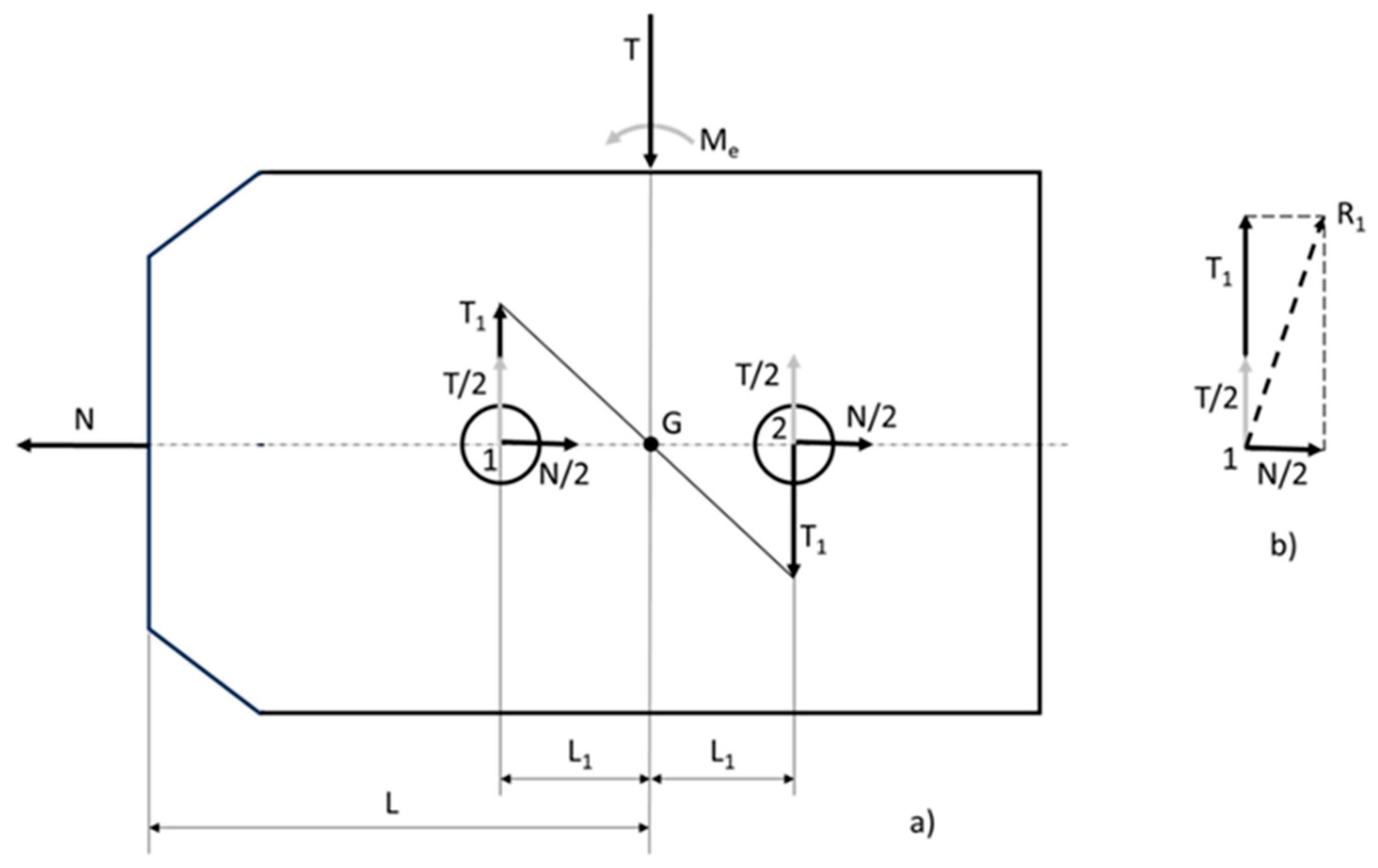
The forces appearing in the specimen fixing holes are shown in Figure 7, where T is translated so that its direction contains the mass center of bolted joint G. The forces introduced into the specimen by fixing bolts were plotted in the centers of the holes as follows: in Figure 7a, forces T1 and T/2 are superimposed, and in Figure 7b they are an extension (added). The forces introduced into the specimen by the screws
With respect to point G, force T creates an external moment on the bolted joint:
M e = T · L
To balance forces T and N, reactions N/2 and T/2, respectively, occur in each bolt, and the external moment is balanced by the internal moment:
M i = T 1 · L 1
From Equations (3) and (4), the following holds:
T 1 = T L L 1
It is observed that the largest resultant is that at point 1 (center of hole 1):
R 1 = N 2 2 + T 2 + T 1 2
Substituting (2) and (5) into (6) can be used to calculate R1, and then contact pressure pc occurs between bolt 1 and the steel tabs. For the specimen used in this study, the pressure is
p c = R 1 A c
where Ac is the conventional contact area between the screw and the tabs:
A c = d · 2 g
where d is the diameter of the hole (bolt), g is the thickness of the steel sheet, and 2 is the number of tabs.

2.4. Methods

In this study, tests were performed using the following standardized methods:
  • Shear tests (Iosipescu method), performed according to [54,55];
  • Tensile tests, performed according to [16], with an Instron extensometer;
  • Compression tests, performed according to standard (Boeing method) [56].
The results of these tests were correlated with those performed with the modified Arcan device. All tests were performed on an Instron 8801 testing machine, with a maximum force of 100 kN.

3. Tests

Simple tensile and shear tests were performed using both the standardized methods and the Arcan method and then the results obtained by the two different methods were compared. All specimens were oriented along the 1-direction of the composite material and were cut from a 2.2 mm thick CFRP plate.

3.1. Sample

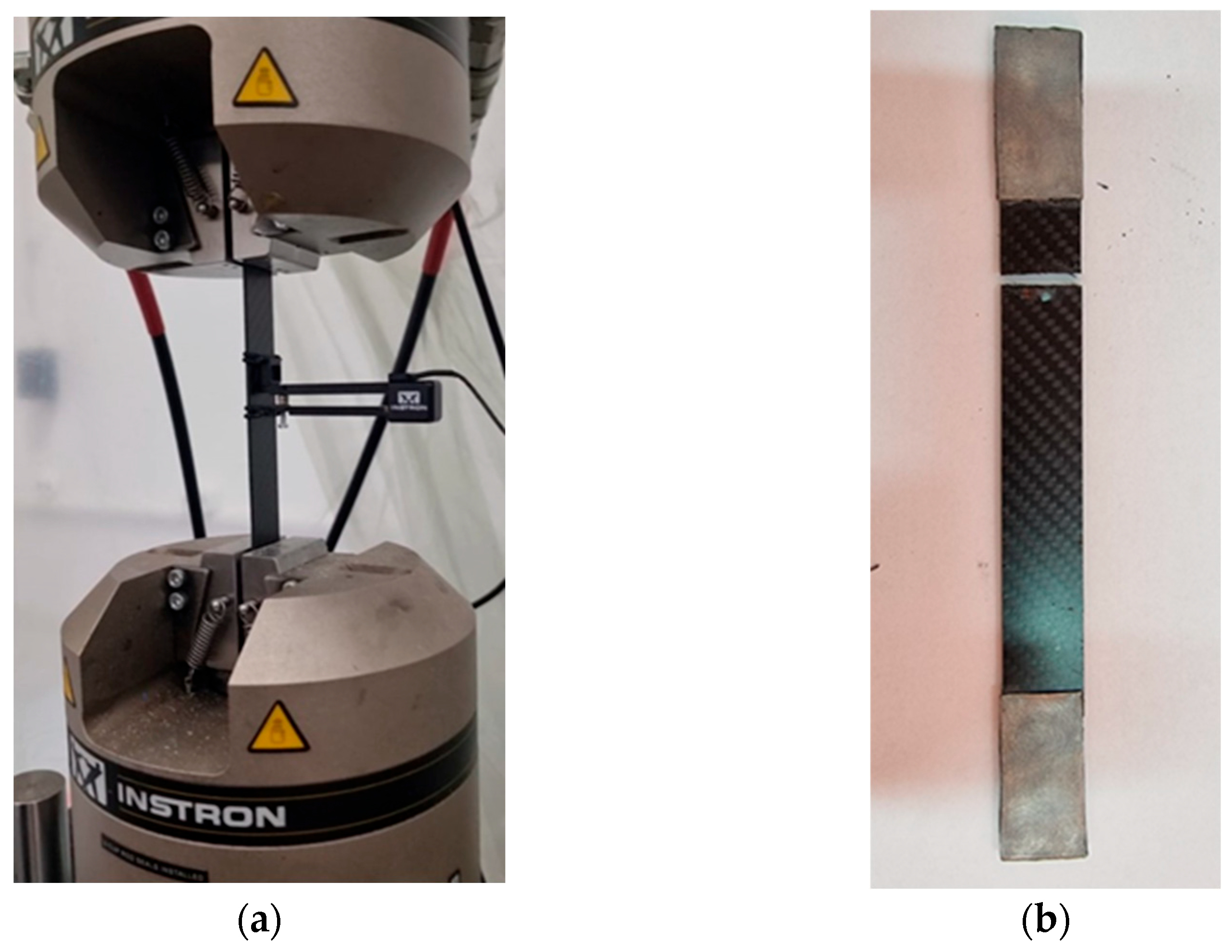
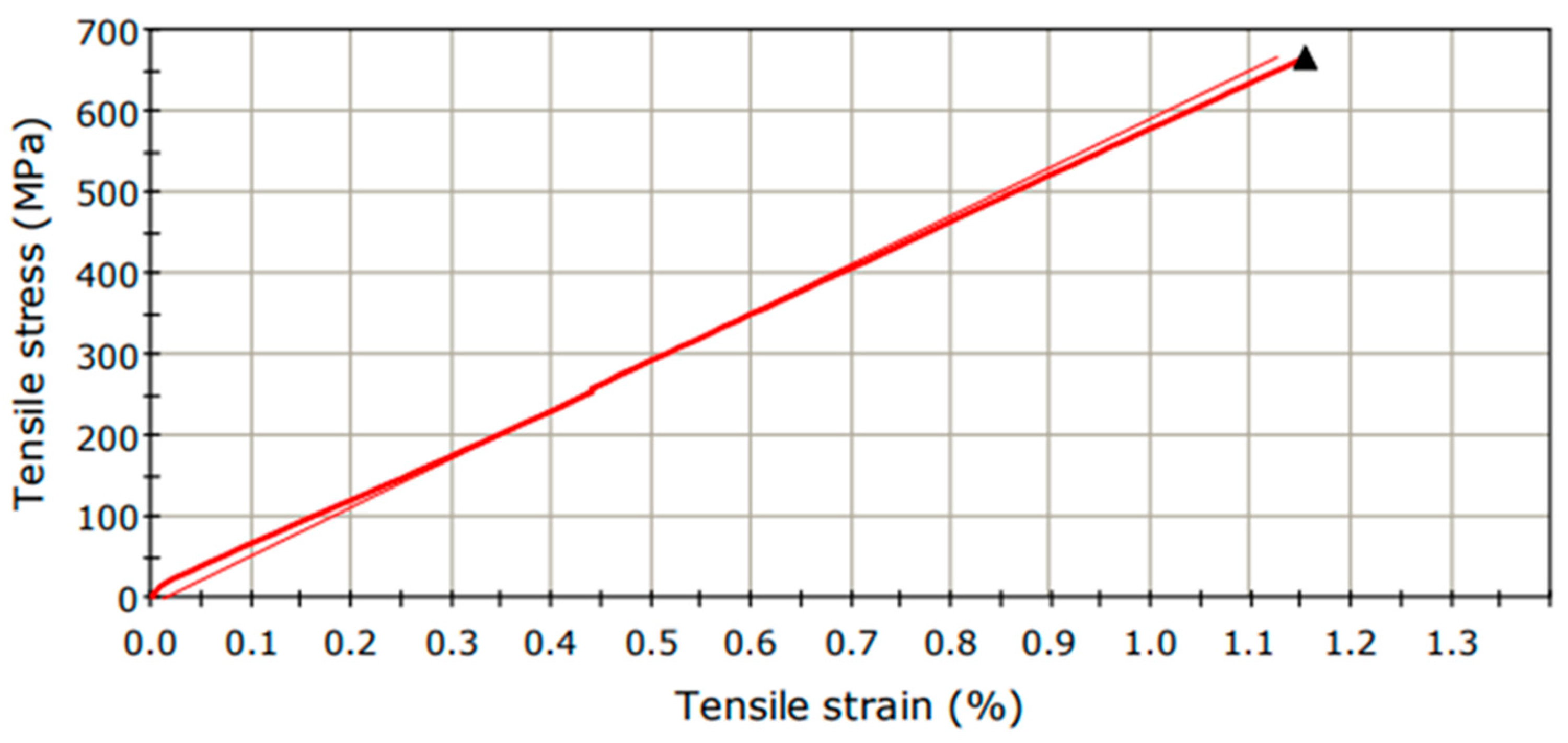
Figure 8 shows the tensile test performed by the method described in [16], and Figure 9 shows the stress–strain diagram, which is almost linear until failure. The tests yielded: Young’s modulus E1 = 59759.9 MPa and tensile stress at tensile strength (ultimate stress) σuTS = 655.14 MPa. The red line in Figure 9 is drawn by the testing machine and represents the linear approximation of the elastic zone of the diagram tensile stress-tensile strain.
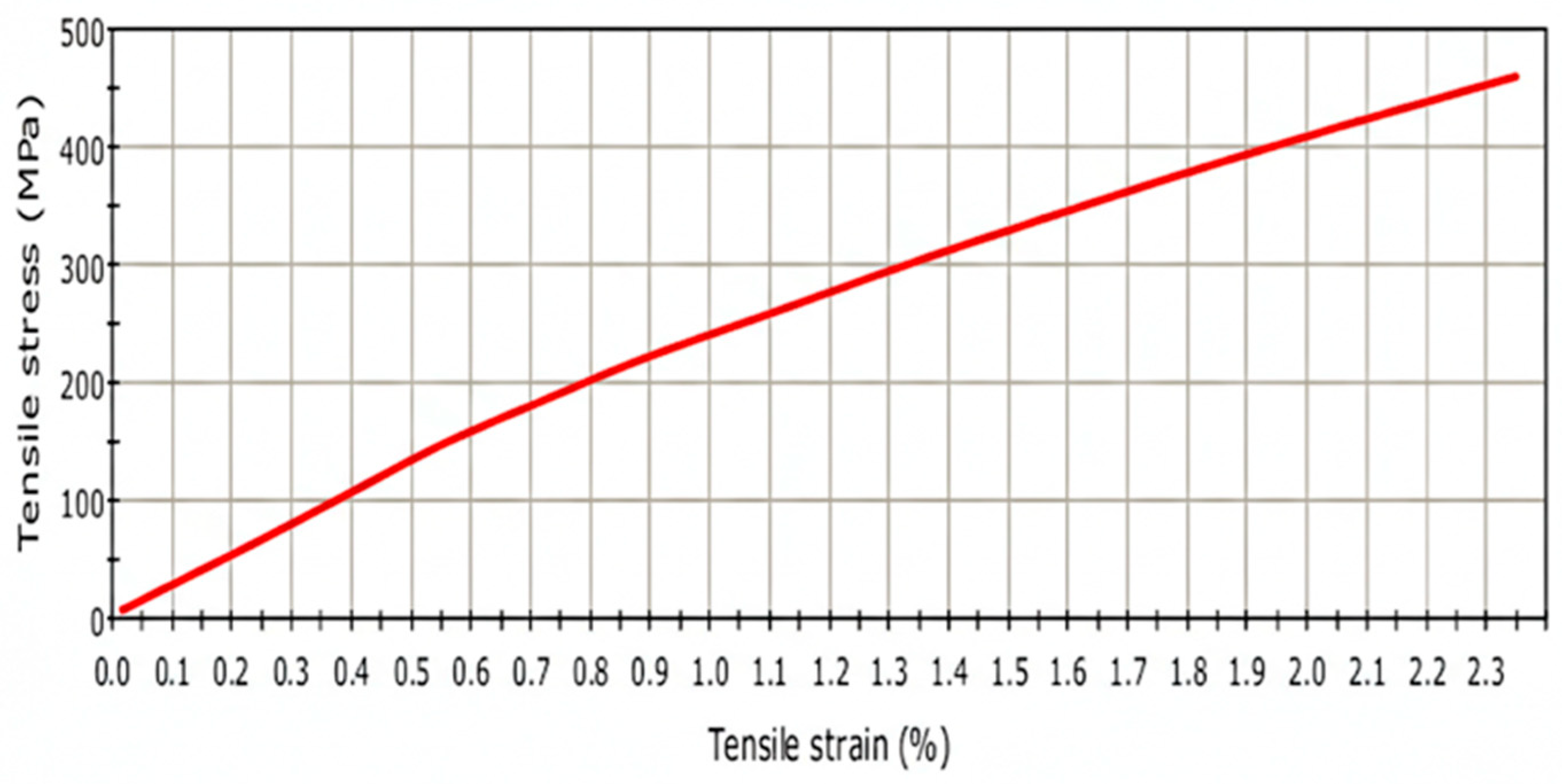
The tensile test of the notched specimen was performed directly on the Instron machine, without the Arcan device, as shown in Figure 10. For this test, it can be assumed that the influence of the device is negligible. Figure 11 shows the stress–strain diagram provided by the machine, considering the minimum cross section of the specimen. Although this diagram is affected by the shape of the Arcan specimen, it still allows for comparison with the one obtained for the standard specimen. The load-extension diagram can then be drawn using the Excel file provided by the machine. The specimen broke at the maximum force Fmax = 25,161.2 N and a tensile strength σuTA = 457.48 MPa was obtained. This value is much lower than that obtained from the tensile test which used the standard specimen. It follows that the tensile stress was obtained by the Arcan method, with the following relative error:
e = 655.14 457.48 655.14 · 100 % = 30.2 %
For the tensile test, the Arcan method yields 30.2% lower values than the Iosipescu standardized method [55], although the specimens used in both of the above tests, shown in Figure 8 and Figure 9, had the same net cross-section. This large error can be attributed to the following factors: the notch geometry of the Arcan specimen introduces local stress concentrations that may promote earlier crack initiation, the non-uniform stress distribution within the specimen, the mixed stress state generated by the Arcan fixture, and differences in constraint conditions compared to the standard tensile test. Therefore, the stress concentrator should be considered one of several factors influencing the measured tensile strength rather than the single determining cause [50].

3.2. Shear Test

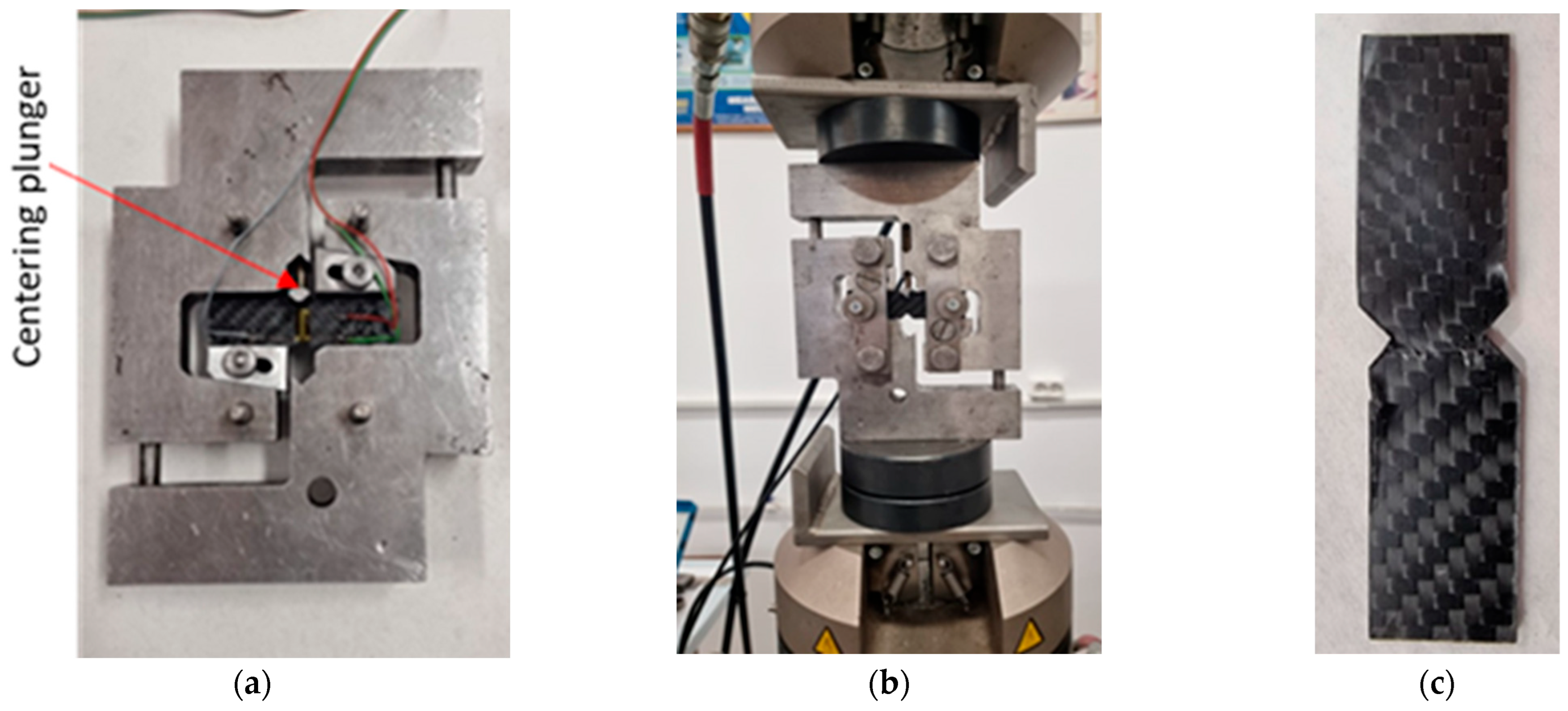
The shear test was performed using both the Iosipescu [55] and Arcan methods. For the Iosipescu method, the device shown in Figure 12 was used, which has two guide columns and a centering plunger that enters the notch of the specimen for the correct positioning of the specimen. After centering the specimen, it was fixed in the device, and the latter is mounted on the testing machine as follows: at the lower part, it is placed on a spherical joint, and at the upper part, it is loaded in compression by means of a massive disk. The spherical joint takes over any deviations from the parallelism of the loading and support planes. The load-extension diagram is shown in Figure 13. The Iosipescu specimen, with a minimum cross-section of A = 26.4 mm2, broke at the maximum force Fmax = 2082 N, and a shear strength τuI = 78.86 MPa was obtained.
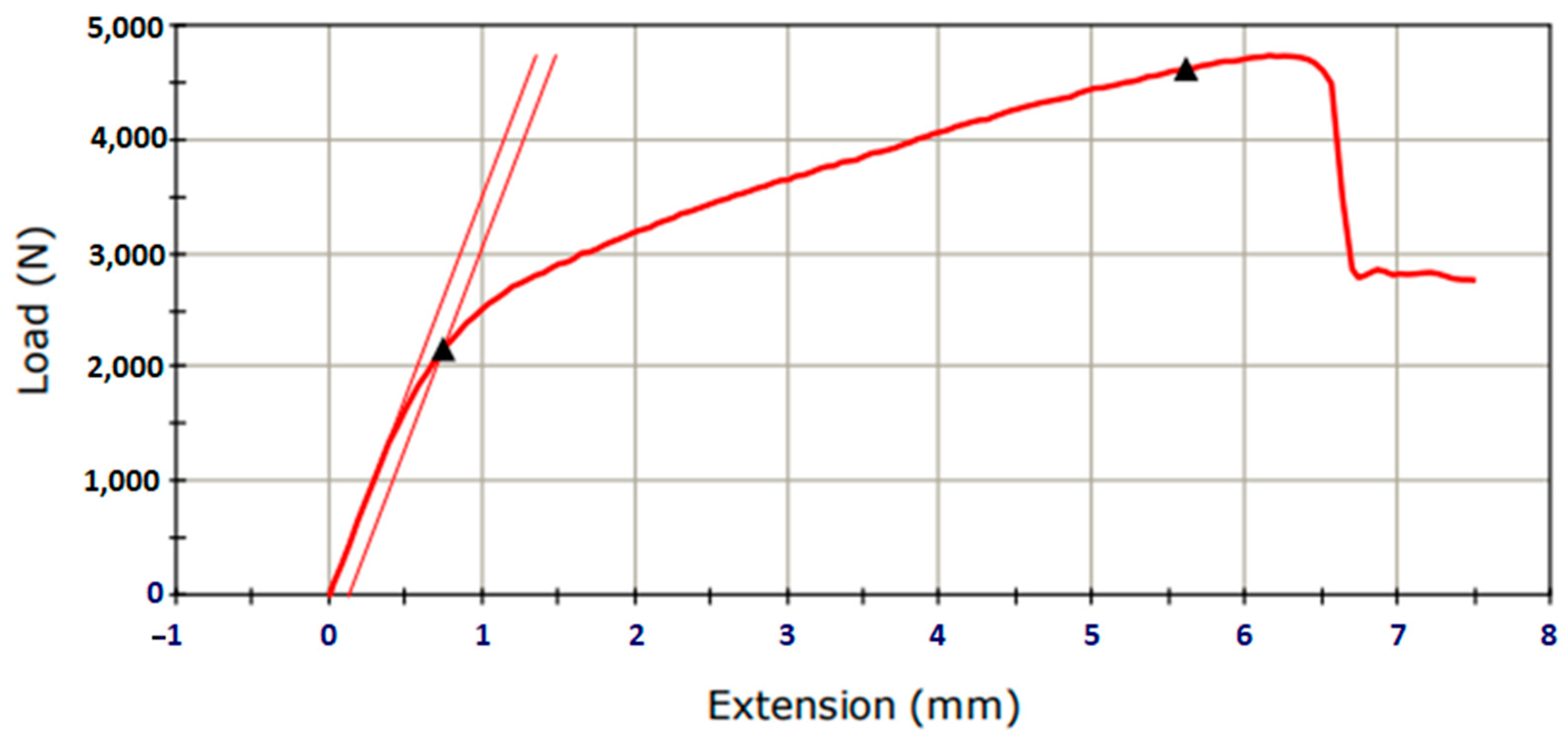
The shear test was also performed using the Arcan method, using the device presented above, for which the testing machine was set to tensile. Figure 14 shows an Arcan specimen broken in shear (α = 90°), and Figure 15 shows the load-extension diagram. The first red line in Figure 15 is drawn by the testing machine and represents the approximation of the elastic zone of the load-extension diagram. The second line is also drawn by the testing machine and represents the parallel to the elastic line drawn through the 0.2% ordinate point. The intersection of this line with the graph provides the yield strength. The same explanations are valid for the other load-extension diagrams at which the two lines are drawn. The specimen with the minimum cross-section A = 55 mm2 broke at the maximum force Fmax = 4618 N, resulting in shear strength τuA = 83.97 MPa. The relative error with which the Arcan method provided a shear strength compared to the value obtained with the standardized Iosipescu method is as follows:
e = 83.97 78.86 78.86 · 100 % = 6.5 %
This error is quite small, considering that the differences between the dimensions of the two specimens (Iosipescu and Arcan) are significant, the Arcan specimen has steel tabs, and the two devices used for gripping and loading the specimens are completely different.

3.3. Compression Test

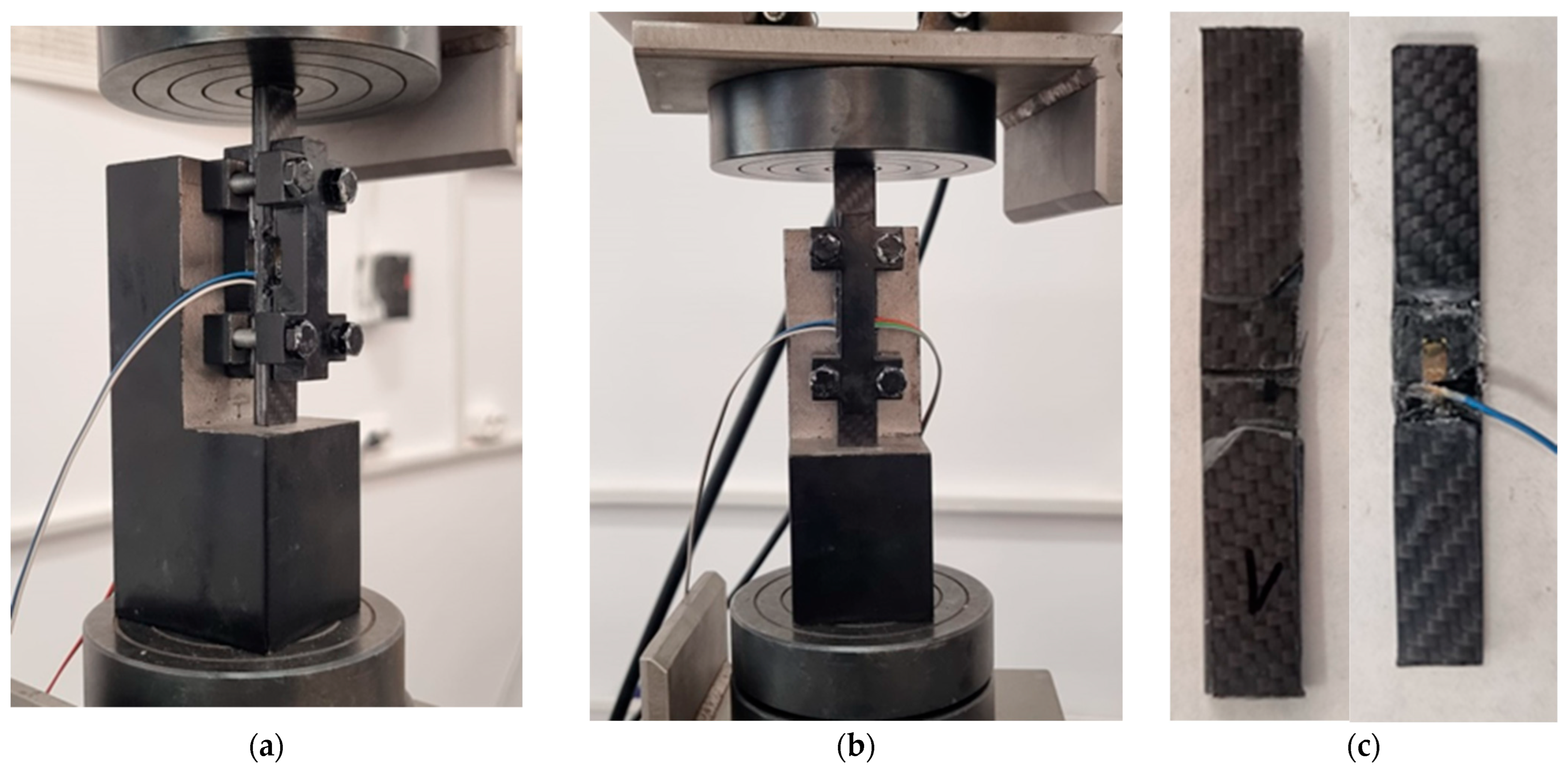
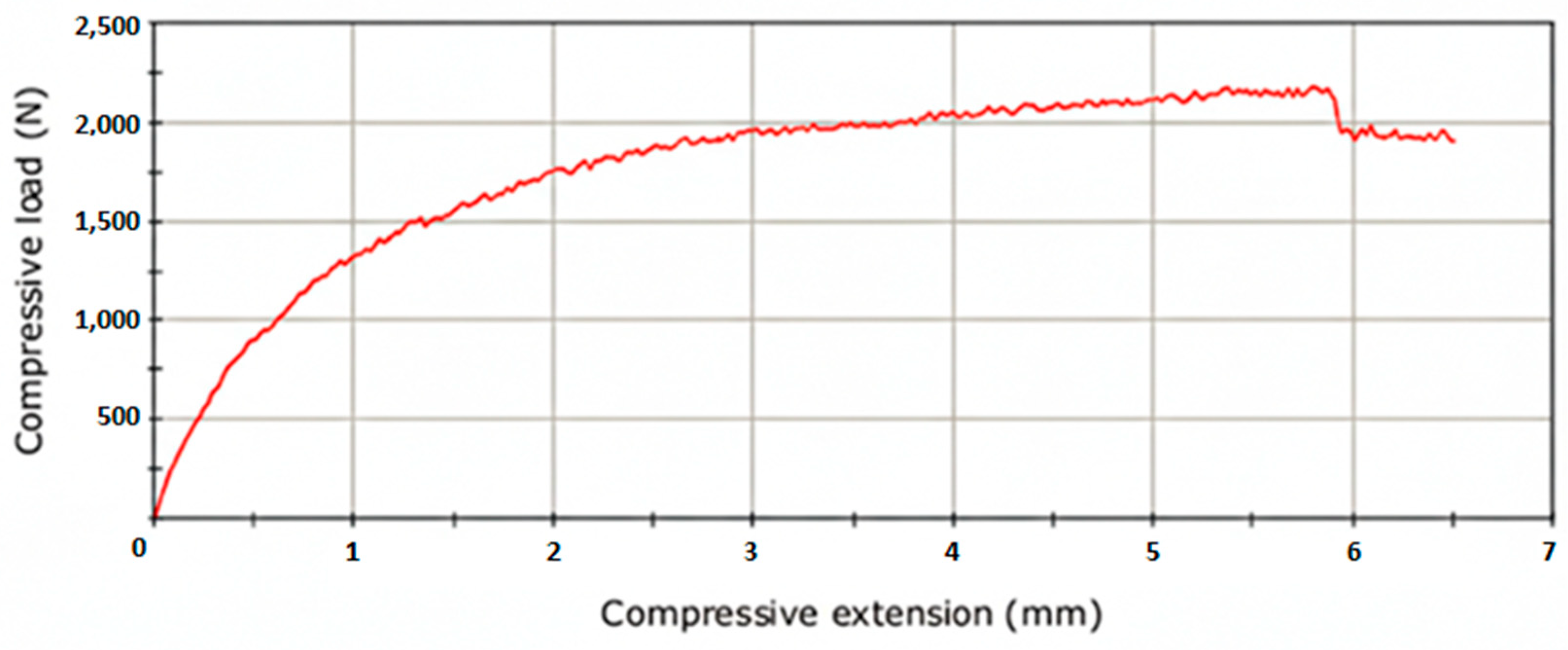
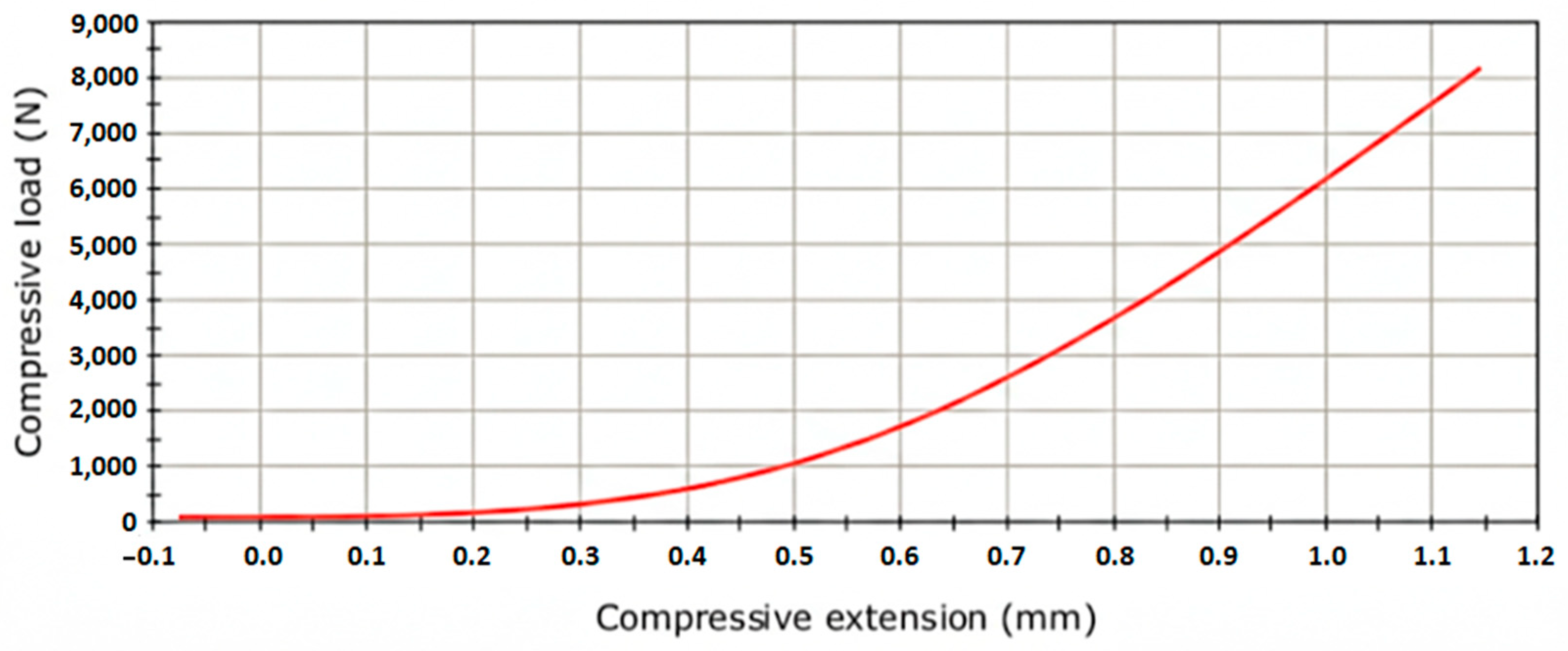
The compression test was performed using the [56] method, Boeing version, on a batch of three samples with tabs made of the same material as the specimen. Strain gauges were glued to both sides of one of the specimens to check for buckling, as shown in Figure 16. Strain gauges were connected in a quarter-bridge to the Vishay P3 strain bridge. The compression test device was placed on a spherical joint, which takes over any deviations in the parallelism of the loading and support planes. This parallelism was also ensured by milling the loading and support surfaces of the specimens in a single clamping on the milling machine. The load-extension diagram is shown in Figure 17. The average compressive strength or ultimate compressive stress is σuC = 319.6 MPa. It is observed that, unlike the diagram obtained in tension, the compression diagram is nonlinear.

3.4. Tensile with Shear Tests

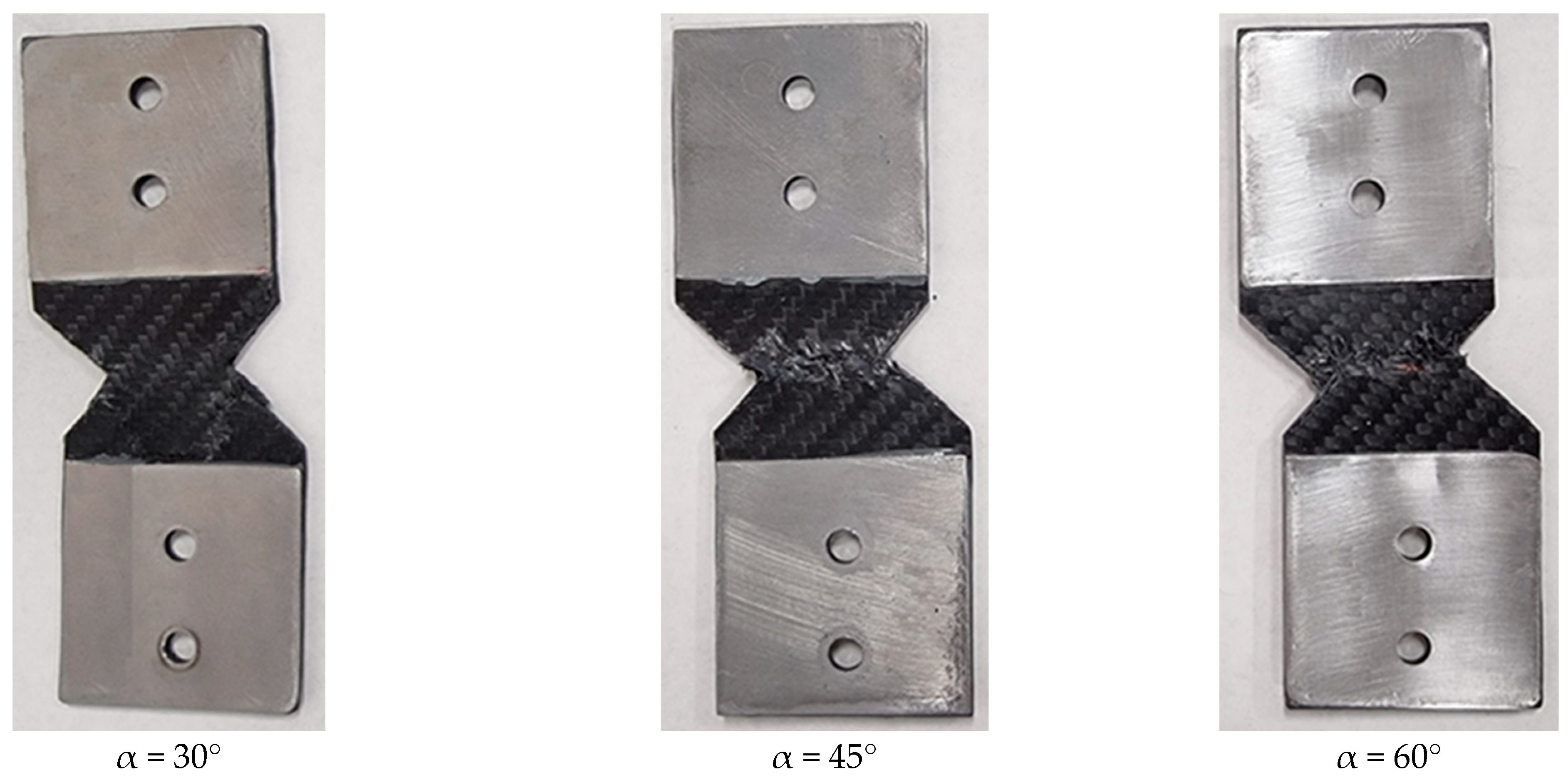
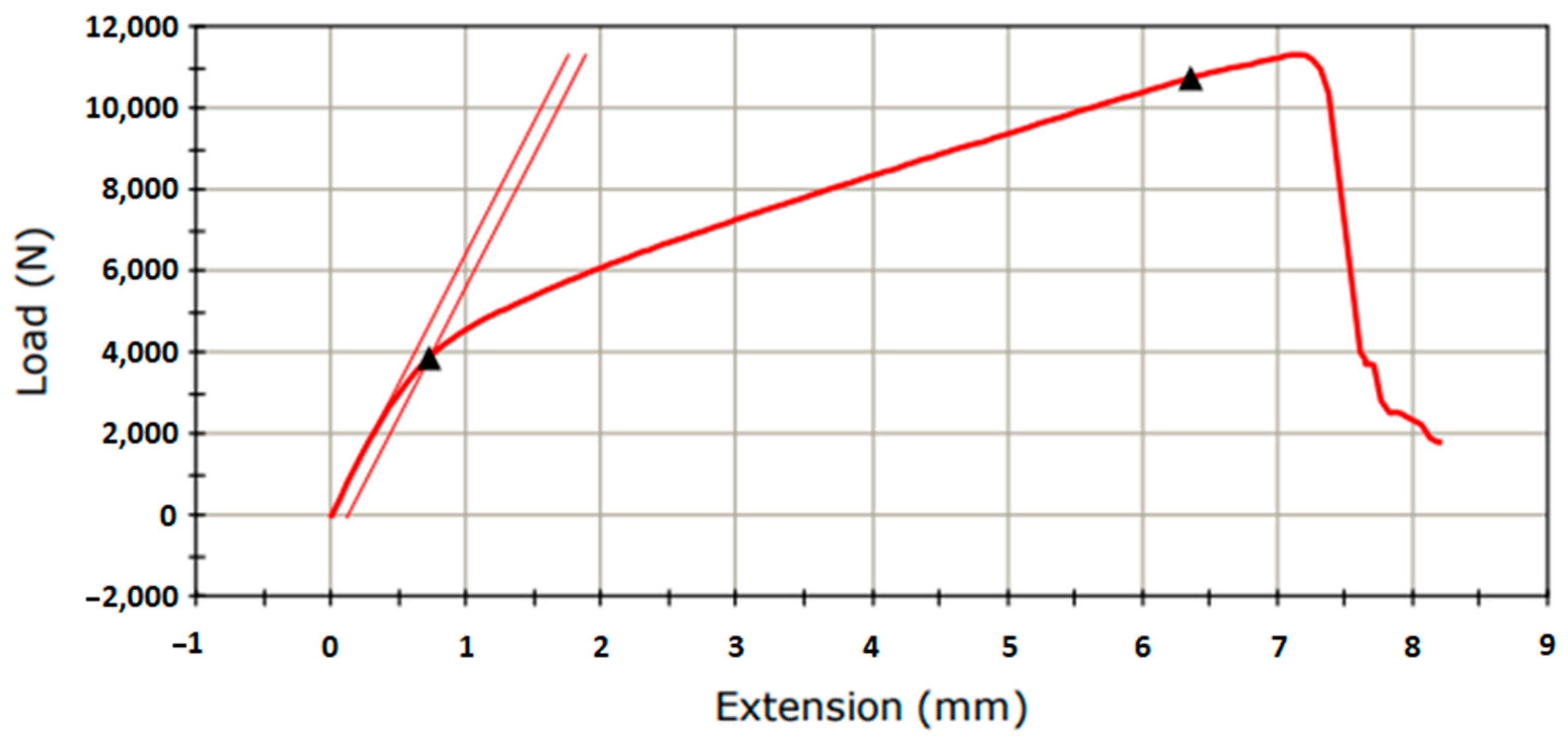
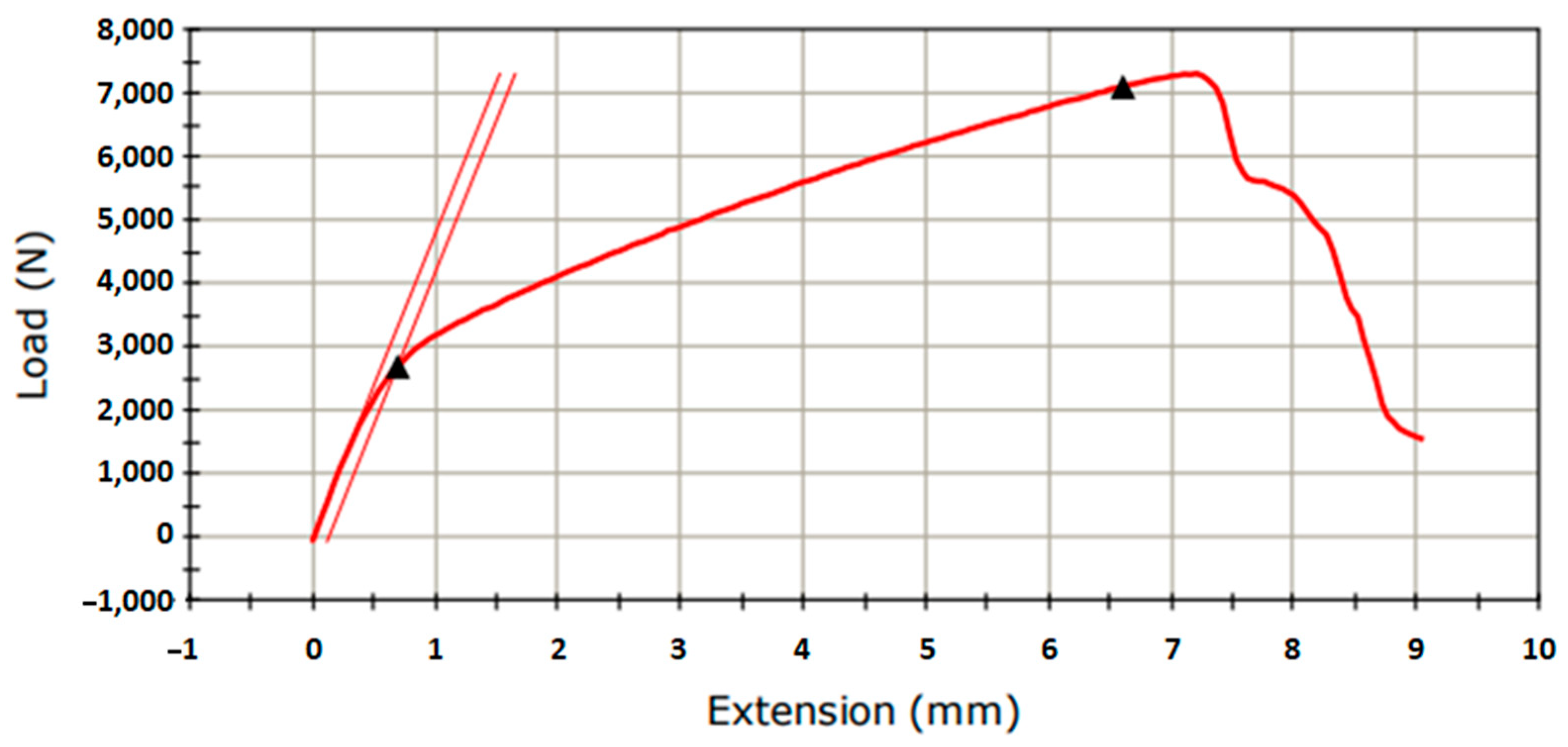
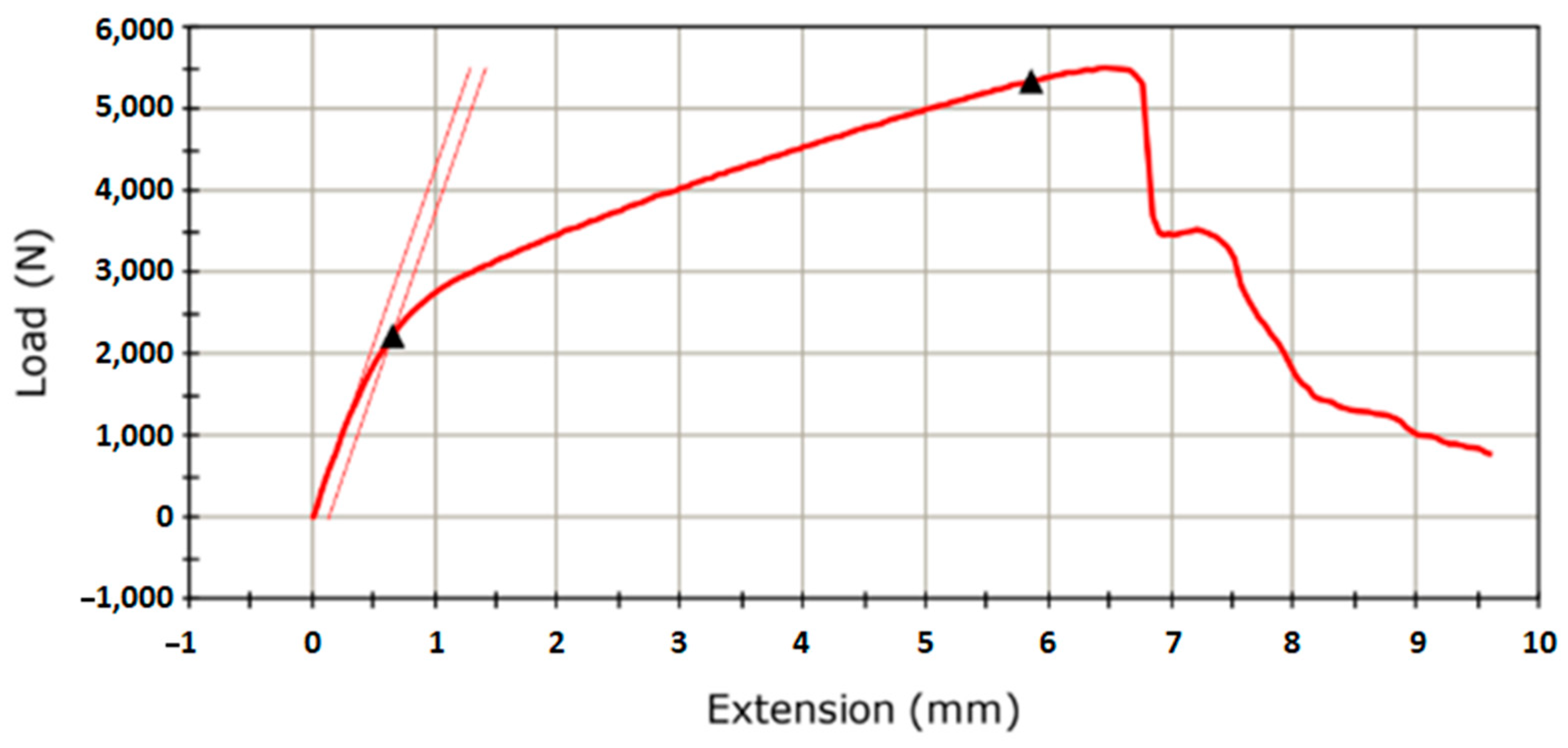
Using the Arcan device, tests were performed under compound loads (tensile with shear), for the angles α = 15°; α = 30°; α = 45°; and α = 60°, thus modifying the ratio between normal stress and shear stress. The testing machine was set for tensile. Figure 18 shows the broken specimens for the three load application angles mentioned above. The load-extension diagrams for each angle α are presented in Figure 19, Figure 20 and Figure 21. Tests with specimens loaded under tensile with shear (with the Arcan device) are discussed in the “Results and Discussion” section.

4. Results and Discussion

The results obtained from the above tests are summarized in Table 1. For complex stress states (tension + shear), the maximum load Fmax at which the rupture occurred was decomposed into the components Nmax (normal to the cross-section) and Tmax (in the plane of the cross-section). With these components, the ultimate stresses were calculated:
σ u = N m a x A ; τ u = T m a x A
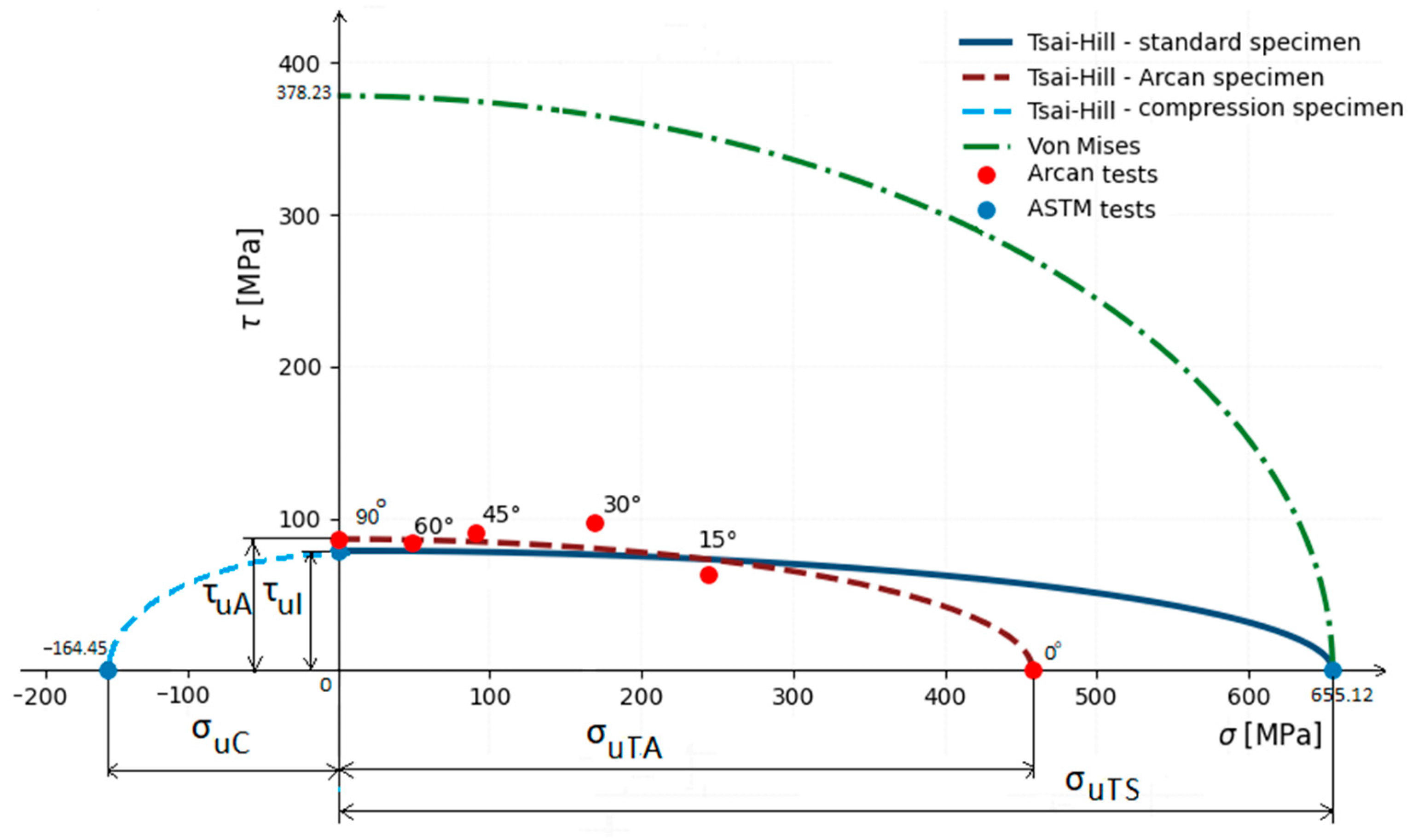
These stresses will then be used with different failure criteria, for the design of components that are loaded in tension with shear. In Figure 22, the experimental results from the tests are presented, in σ-τ coordinates, together with the Tsai–Hill and von Mises failure criteria, respectively, which are given by the following ellipses:
σ σ u T 2 + τ τ u 2 = 1
and, respectively,
σ σ u T 2 + 3 τ σ u T 2 = 1
Tsai–Hill is a simple criterion used for orthotropic materials such as fiber-reinforced polymers. It is derived from the Hill criterion, which is an extension of the von Mises criterion to orthotropic materials [57]. To plot the von Mises ellipse, it is necessary to know a single experimentally determined parameter, and for the Tsai–Hill ellipse, two parameters are required. The material fails on the failure envelope perimeter. It is observed that the von Mises failure criterion does not correctly model the failure of the orthotropic CFRP material studied. This was expected, since this criterion was developed for the ductile failure of homogeneous and isotropic metallic materials, where it is applied with good results. In the studied case, the von Mises criterion delimits a much larger area than the Tsai–Hill criterion. Thus, the von Mises criterion erroneously considers the area between the two ellipses to be safe for the studied material. It follows that the von Mises criterion cannot be accepted for the studied CFRP material. On the other hand, the Tsai–Hill failure criterion, which was developed for orthotropic materials, models the experimental results obtained for complex states of stresses well. Two quarters of the Tsai–Hill ellipses were drawn in quadrant I: one with the major semi-axis equal to the ultimate tensile stress obtained with the standardized method for tensile testing [16], denoted σuTS, and one equal to the ultimate tensile stress obtained with the Arcan specimen loaded in tension σuTA. Since the difference between the two values of stress is large (30.2% lower for Arcan), it is recommended to use the ellipse with the semi-major axis σuTS, which is correct for the tensile test performed with specimens without a stress concentrator. The two values of the semi-minor axes of the ellipses (τuI and τuA) are quite close, but the correct value is the one obtained by the Iosipescu method, τuI.
In quadrant II, another quarter of the Tsai–Hill ellipse was proposed, which has semiaxes compressive strengths σuC and τuI, respectively. Combined compression–shear tests were not performed with the Arcan device, as it is designed to work on traction. However, it can be assumed that a criterion that modeled the experimental results well in quadrant I could also be used in quadrant II. This hypothesis remains to be verified by tests under compound loads (compression with shear) in future work.
For quadrants III and IV, the boundary formed by the two quarters of the Tsai–Hill ellipse containing the coordinate points (σuC, 0), (0, τuI) and (σuTS, 0) is drawn using symmetry, thus obtaining the closed domain on the contour of which the studied CFRP material fails. This closed area delimits the domain in which the material does not fail (inside) from that in which the material fails (outside).
Since, for the studied material, the Tsai–Hill criterion models the experimental results sufficiently well, it is not considered necessary to try other criteria that require more experimental parameters (such as Tsai–Wu, for example [58]). This approach is in accordance with the principle called “Occam’s razor”.

5. Conclusions

A CFRP composite material, supplied by Easy Composites EU B.V., with a cross-ply 0/90° structure in which the fibers are alternately arranged at 0° and 90° and a carbon fiber mass content of 65.7%, was subjected to both standardized mechanical tests (tension, shear and compression) and compound loads (tension + shear) using the Arcan method. The modified Arcan device used for the tests has four half-disks mounted on either side of the specimen ends and two guide columns. Thus, the median plane of the specimen and that of the device always coincide, regardless of the thickness of the specimen, without additional adjustments. The device used for the present study has a column guidance system, with two columns arranged symmetrically on either side of the half-disks. By arranging the guide columns on either side of the half-disks, symmetry between the arrangement of masses and forces was achieved and the weight of the device was reduced. The dispersion of the experimental results is smaller due to this system. Adopting a large distance between columns results in lower normal forces (which occur in the bearings) and friction compared to other known solutions. Due to the high contact pressures between the specimen and the fixing bolts, ovalization of the holes in the FRP specimens, which have low hardness, frequently occurs. These ovalizations change the angle between the loads and the axis of the specimen and introduce errors. For this reason, in the present study, CFRP specimens with steel sheet tabs at the ends and only four fixing holes (two at each end of the specimen) were used. No deformation of the holes was observed in the specimens with steel tabs. By reducing the number of fixing holes, the dimensions of the clamping parts of the specimens and the consumption of material necessary for their manufacture also decrease. This paper also presents a method for determining the contact forces and pressures between the fixing bolts and the specimen. This method can be used in the design of specimens and Arcan-type devices.
It was found that Tsai–Hill criterion predicts a realistic failure envelope for all stress combinations, although some references show that this is a very conservative criterion [51]. The shear tests performed with the standardized Iosipescu method and the Arcan method achieved similar results (6.5% error with the Arcan method compared to the Iosipescu method). However, large differences appear between the tensile strength determined by standardized tensile testing methods (on specimens without stress concentrators) and that determined through the tensile testing of the Arcan specimen (30.2% lower values in the Arcan test compared to the standardized tensile testing method). This large error may be due to factors such as the presence of a stress concentrator on the Arcan specimen, which may promote earlier crack initiation; the non-uniform stress distribution within the specimen; the mixed stress state generated by the Arcan fixture; and differences in constraint conditions compared to the standard tensile test. For this reason, the authors of the article recommend the use of Arcan method only for the mixed-mode load. However, it is noted that by adopting the major semi-axis of the Tsai–Hill ellipse equal to σuTA instead of σuTS, the safety factor increases, but this may lead to oversizing in cases where the normal stress is significantly higher than the tangential stress (α < 15°). For the interval 0 < α < 15 ° , specimens with a larger radius at the notch tip could possibly be used, in order to reduce the influence of the stress concentrator and better meet the conditions required for carrying out tests with compound loads, which were presented in the Introduction. However, in-depth numerical and experimental studies are needed to confirm or refute this assumption.
With the Arcan device, specimens were broken at different angles between the loading direction and the axis of the specimen for different combinations of normal stress and shear stress. The test results were represented in normal stress–shear stress coordinates and it was found that they are well modeled by the Tsai–Hill criterion in quadrant I. It is expected that the errors will be larger for angles smaller than 15°, but we do not have sufficient experimental data in this range. For quadrant II (compression with shear), the Tsai–Hill criterion was also proposed and a quarter of the ellipse was drawn with the experimentally determined semiaxes σuC and τuI, but in this region no experimental data were obtained with the Arcan method. Through symmetry with respect to the ordinate axis, the entire contour along which the CFRP material fails was drawn (safety coefficient = 1). Inside this, the closed contour is the safety zone (safety coefficient >1).
The Arcan device should be designed to provide data for complex compressive–shear stress states as well. This would allow the entire safety area of the material for the normal stress–shear stress states to be plotted. The article offers verified solutions for improving the accuracy of the experimental results obtained with the Arcan testing method.

Author Contributions

Conceptualization, I.M., P.D.B. and C.I.M.; methodology, P.D.B. and I.M.; software, I.M. and P.D.B.; validation, I.M., P.D.B. and V.G.; formal analysis, P.D.B.; investigation, P.D.B. and C.I.M.; resources, P.D.B., C.I.M. and V.G.; data curation, I.M. and P.D.B.; writing—original draft preparation, I.M. and P.D.B.; writing—review and editing, I.M., P.D.B. and V.G.; visualization, C.I.M. and P.D.B.; supervision, P.D.B. and V.G.; project administration, I.M. and P.D.B.; funding acquisition, P.D.B. All authors have read and agreed to the published version of the manuscript.

Funding

This research received no external funding.

Data Availability Statement

The data presented in this study are available on request from the corresponding author.

Acknowledgments

The Arcan device was made with funding from the National Institute for Research and Development in Technical Physics, NDT Department, Iași, Romania.

Conflicts of Interest

The authors declare no conflicts of interest.

Abbreviations and Notation

The following abbreviations are used in this manuscript:
CFRPCarbon Fiber-Reinforced Polymer
FRPFiber-Reinforced Polymer
GFRPGlass Fiber-Reinforced Polymer
FEAFinite Element Analysis
FEMFinite Element Method
DICDigital Image Correlation
NDTNondestructive Testing
σuTAUltimate tensile stress determined with Arcan specimen
σuTSUltimate tensile stress determined with standard method
σuCUltimate compression stress determined with standard method
τuAUltimate shear stress determined with Arcan method
τuIUltimate shear stress determined with Iosipescu standard method

References

  1. Sayam, A.; Rahman, A.N.M.M.; Rahman, M.S.; Smriti, S.A.; Ahmed, F.; Rabbi, F.; Hossain, M.; Faruque, O. A review on carbon fiber-reinforced hierarchical composites: Mechanical performance, manufacturing process, structural applications and allied challenges. Carbon Lett. 2022, 32, 1173–1205. [Google Scholar] [CrossRef]
  2. Han, L.; Song, Y.; Qi, H.; Yang, J.-S.; Li, S.; Liu, P.-A. A Comparative Study on the Mechanical Properties of Open-Hole Carbon Fiber-Reinforced Thermoplastic and Thermosetting Composite Materials. Polymers 2023, 15, 4468. [Google Scholar] [CrossRef]
  3. Bondyra, A.; Łusiak, T. Analysis of Strength Properties of Carbon Fibre-Reinforced Composites. Trans. Aerosp. Res. 2023, 270, 45–66. [Google Scholar] [CrossRef]
  4. Wan, L.; Zhang, K.; Chen, J.; Li, A.; Wu, J.; Yang, D. Experimental testing and micromechanical modelling of unidirectional CFRP composite laminae under multiaxial loading conditions. Compos. Struct. 2025, 357, 118889. [Google Scholar] [CrossRef]
  5. Olsson, R. A survey of test methods for multiaxial and out-of-plane strength of composite laminates. Compos. Sci. Technol. 2011, 71, 773–783. [Google Scholar] [CrossRef]
  6. Tableau, N.; Aboura, Z.; Khellil, K.; Laurin, F.; Schneider, J. Multiaxial loading on a 3D woven carbon fiber reinforced plastic composite using tensile-torsion tests: Identification of the first damage envelope and associated damage mechanisms. Compos. Struct. 2019, 227, 111305. [Google Scholar] [CrossRef]
  7. Zheng, T.; Chen, Z.; Zhang, L.; Wang, Z.; Liu, Y.; Sun, X.; Yu, S.; Guo, L. Biaxial tension–torsion loading of plain weave composites: Determination of initial and final failure envelopes and associated damage mechanisms. Compos. Struct. 2025, 359, 119032. [Google Scholar] [CrossRef]
  8. Welsh, J.S.; Mayes, J.S.; Biskner, A. 2-D biaxial testing and failure prediction of IM77/977-2 carbon/epoxy quasi-isotropic laminates. Compos. Struct. 2006, 75, 60–66. [Google Scholar] [CrossRef]
  9. Serna Moreno, M.C.; López Cela, J.J. Failure envelope under biaxial tensile loading for chopped glass-reinforced polyester composites. Compos. Sci. Technol. 2011, 72, 91–96. [Google Scholar] [CrossRef]
  10. Zhang, Y.; Liu, X.; Wang, J.; Zhang, X.; Wang, N. Stress characteristics and failure criterion of composite solid propellant under biaxial tensile loading. J. Mater. Res. Technol. 2025, 40, 15968. [Google Scholar] [CrossRef]
  11. Chen, L.; Chen, W. A rationalized macroscopic failure criterion of composite woven fabrics for airship structures. Thin-Walled Struct. 2025, 206, 112647. [Google Scholar] [CrossRef]
  12. Ferron, G.; Makinde, A. Design and development of a biaxial strength Testing Device. J. Test. Eval. 1988, 16, 253–256. [Google Scholar] [CrossRef]
  13. Bhatnagar, N.; Bhardwaja, R.; Selvakumar, P.; Brieu, M. Development of a biaxial tensile test fixture for reinforced thermoplastic composites. Polym. Test. 2007, 26, 154–161. [Google Scholar] [CrossRef]
  14. Barroso, A.; Correa, E.; Freire, J.; Pérez, M.D.; París, F. Biaxial testing of composites in uniaxial machines: Manufacturing of a device, analysis of the specimen geometry and preliminary experimental results. In Proceedings of the Fifteenth European Conference of Composite Materials, Venice, Italy, 24–28 June 2012. [Google Scholar]
  15. Ud Din, I.; Hao, P.; Panier, S.; Khan, K.A.; Aamir, M.; Franz, G.; Akhtar, K. Design of a New Arcan Fixture for In-plane Pure Shear and Combined Normal/Shear Stress Characterization of Fiber Reinforced Polymer Composites. Exp. Technol. 2020, 44, 231–240. [Google Scholar] [CrossRef]
  16. ASTM D3039/D3039M-08; Standard Test Method for Tensile Properties of Polymer Matrix Composite Materials. ASTM International: West Conshohocken, PA, USA, 2018. Available online: https://www.astm.org/d3039_d3039m-08.html (accessed on 20 January 2026).
  17. Cognard, J.Y.; Sohier, L.; Davies, P. A modified Arcan test to analyze the behavior of composites and their assemblies under out-of-plane loadings. Compos. Part A 2011, 42, 111–121. [Google Scholar] [CrossRef]
  18. El-Hajjar, R.; Haj-Ali, R. In-plane shear testing of thick-section pultruded FRP composites using a modified Arcan fixture. Compos. Part B 2004, 35, 421–428. [Google Scholar] [CrossRef]
  19. Hao, P.; Ud Din, I.; Panier, S. Development of Modified Arcan Fixture for biaxial loading response of fiber-reinforced composites. Polym. Test. 2019, 80, 106148. [Google Scholar] [CrossRef]
  20. Bergant, Z.; Kek, T.; Maček, A.; Halilovič, M.; Šturm, R. Multiaxial characterization of cross-ply and quasi-isotropic flax bio-composites using a modified Arcan fixture and digital image correlation. Polym. Test. 2026, 154, 109059. [Google Scholar] [CrossRef]
  21. Öchsner, A.; Altenbach, H. Engineering Design, Application VI. Structures, Materials and Processes; Springer: Cham, Switzerland, 2024; ISBN 978-3-031-60920-6. [Google Scholar]
  22. Safdar, N.; Daum, B.; Scheffler, S.; Rolfes, R. Experimental determination of a probabilistic failure envelope for carbon fiber reinforced polymers under combined compression–shear loads. Int. J. Solids Struct. 2022, 244–245, 111585. [Google Scholar] [CrossRef]
  23. Bao, Y.; Wierzbicki, T. On fracture locus in the equivalent strain and stress triaxiality space. Int. J. Mech. Sci. 2004, 46, 81–98. [Google Scholar] [CrossRef]
  24. Holmes, J.; Vlandis, G.; Stachurski, Z.; Das, R.; Compston, P. Failure behaviour in woven thermoplastic composites subjected to various deformation modes. Compos. Part A 2021, 146, 106410. [Google Scholar] [CrossRef]
  25. Christensen, R. Failure criteria for fiber composite materials, the astonishing sixty-year search, definitive usable results. Compos. Sci. Technol. 2019, 182, 107718. [Google Scholar] [CrossRef]
  26. Suryanto, S.; Prabowo, A.R.; Adiputra, R.; Ehlers, S.; Braun, M.; Yaningsih, I.; Istanto, I.; Wijaya, R. A review of composite materials for marine purposes: Historical perspective and current state. Procedia Struct. Integr. 2025, 72, 427–435. [Google Scholar] [CrossRef]
  27. Daniel, I.M.; Werner, B.T.; Fenner, J.S. Strain-rate-dependent failure criteria for composites. Compos. Sci. Technol. 2011, 71, 357–364. [Google Scholar] [CrossRef]
  28. Kobeissi, A.; Rahme, P.; Leotoing, L.; Guines, D. Failure Analysis of Glass/Epoxy Composite Subjected to Different In-Plane Biaxial Loading Conditions. Appl. Compos. Mater. 2025, 32, 525–542. [Google Scholar] [CrossRef]
  29. Li, J.; Yan, S.; Kong, W.; Li, S. Validation of the fully rationalized Tsai-Wu failure criterion for unidirectional laminates under multiaxial stress states through a ring-on-ring test. Compos. Sci. Technol. 2024, 257, 110813. [Google Scholar] [CrossRef]
  30. Liu, H.; Pan, H.; Zhang, Q.; Zhang, G.; Fu, J.; Wu, Q.; Jia, X.; Zhou, L. A universal kinking-based strength model for unidirectional composite laminates under multiaxial loading. Compos. Struct. 2025, 373, 119655. [Google Scholar] [CrossRef]
  31. Shen, J.; Guo, J.; Wen, H.; Guo, C.; Zhang, Y.; Wen, W.; Guo, W. A modification method of Hashin failure criteria considering multiaxial coupling effect for unidirectional composites. Compos. Struct. 2025, 371, 119453. [Google Scholar] [CrossRef]
  32. Li, N.; Ju, C.; Yang, P.; Zhuang, F. Stress invariant-based failure criteria for predicting matrix failure of transversely isotropic composites: Theoretical assessment and rationalized improvement. Thin-Walled Struct. 2022, 181, 110110. [Google Scholar] [CrossRef]
  33. Qian, Y.; Bao, Q.; Li, Z.; Xia, T.; Yang, Z.; Lu, Z. Numerical investigation on the mechanical behaviors of 2D woven composites under complex in-plane stress states. Compos. Struct. 2023, 315, 117008. [Google Scholar] [CrossRef]
  34. Cuntze, R.; Kappel, E. Why not designing multidirectional laminates with in-plane strength design sheets applying the UD criteria of Tsai–Wu and Cuntze? Part1: Analytical foundation. Mech. Compos. Mater. 2024, 60, 5. [Google Scholar] [CrossRef]
  35. Annadorai, M.E.; Ramakrishna, M.; Jyothi, Y. Effect on mechanical properties of CFRP composites in different fiber orientations. Interactions 2024, 245, 198. [Google Scholar] [CrossRef]
  36. Şimşir, E.; Bayrakçeken, H. Examination of Mechanical Tests of CFRP Composite Material with Different Orientation Angles Used in the Automotive Industry. Int. J. Automot. Sci. Technol. 2024, 8, 132–141. [Google Scholar] [CrossRef]
  37. Hadar, A.; Baciu, B.; Voicu, A.D.; Vlasceanu, D.; Tudose, D.I.; Adetu, C.A. Mechanical Characteristics Evaluation of a Single Ply and Multi-Ply Carbon Fiber-Reinforced Plastic Subjected to Tensile and Bending Loads. Polymers 2022, 14, 3213. [Google Scholar] [CrossRef] [PubMed]
  38. Patil, D.; Bhoomkar, M. Investigation on Mechanical Behaviour of Fiber-Reinforced Advanced Polymer Composite Materials. Evergreen 2023, 10, 55–62. [Google Scholar] [CrossRef]
  39. ASTM D3171-22; Standard Test Methods for Constituent Content of Composite Materials. ASTM International: West Conshohocken, PA, USA, 2022. [CrossRef]
  40. Huang, B.M.; Liu, X.; Shi, Z.; Wang, A.; Xu, G.; Yue, Q. Investigation on the fundamental mechanical properties and probabilistic characteristics of unidirectional carbon fiber reinforced polymer composite plates. Polym. Test. 2024, 131, 108355. [Google Scholar] [CrossRef]
  41. Duernberger, E.; Macleod, C.; Lines, D. Fibre volume fraction screening of pultruded carbon fibre reinforced polymer panels based on analysis of anisotropic ultrasonic sound velocity. Compos. Part B Eng. 2023, 254, 110577. [Google Scholar] [CrossRef]
  42. Gong, J.; Saeed, N.; Huang, X.; Tian, W.; Li, L.; Song, J. Influences of Fiber Volume Content on the Mechanical Properties of 2D Plain Carbon-Fiber Woven Composite Materials. Polymers 2023, 16, 108. [Google Scholar] [CrossRef]
  43. Alfonso, L.; Bădulescu, C.; Carrère, N. Use of the modified Arcan fixture to study the strength of bonded assemblies for automotive applications. Int. J. Adhes. Adhes. 2018, 80, 104–114. [Google Scholar] [CrossRef]
  44. Hung, S.; Liechti, K. An evaluation of the Arcan specimen for determining the shear moduli of fiber-reinforced composites. Exp. Mech. 1997, 37, 460–468. [Google Scholar] [CrossRef]
  45. Tan, J.L.Y.; Deshpande, V.S.; Fleck, N.A. Failure mechanisms of a notched CFRP laminate under multi-axial loading. Compos. Part A 2015, 77, 56–66. [Google Scholar] [CrossRef]
  46. Qiao, Y.; Deleo, A.A.; Marco Salviato, M. A study on the multi-axial fatigue failure behavior of notched composite laminates. Compos. Part A 2019, 127, 105640. [Google Scholar] [CrossRef]
  47. Valès, B.; Marguet, S.; Créac’hcadec, R.; Sohier, L.; Ferrero, J.-F.; Navarro, P. Experimental & numerical study of the Tensile/Compression-Shear Arcan test under dynamic loading. Int. J. Adhes. Adhes. 2017, 78, 135–147. [Google Scholar]
  48. Maurel-Pantel, A.; Voisin, M.; Mazerolle, F.; Lebon, F. Comparison of three different adhesive joints using static and dynamic impact tests: Development of a new drop weight impact test rig incorporating a modified Arcan fixture. Int. J. Adhes. Adhes. 2022, 114, 103104. [Google Scholar] [CrossRef]
  49. Qiao, Y.; Salviato, M. Micro-computed tomography analysis of damage in notched composite laminates under multi-axial fatigue. Compos. Part B 2020, 187, 107789. [Google Scholar] [CrossRef]
  50. Pucillo, G.P.; Grasso, M.; Penta, F.; Pinto, P. On the mechanical characterization of materials by Arcan-type specimens. Eng. Fract. Mech. 2011, 78, 1729–1741. [Google Scholar] [CrossRef]
  51. Muthu, J. Mixed mode properties of CNT reinforced composites using Arcan test rig. Front. Struct. Civ. Eng. 2015, 9, 397–404. [Google Scholar] [CrossRef]
  52. Wui, G.K.; Laux, T.; Taher, S.T.; Barton, J.M.D.; Thomsen, O.T. A novel fixture for determining the tension/compression-shear failure envelope of multidirectional composite laminates. Compos. Struct. 2018, 184, 662–673. [Google Scholar]
  53. Babaei, I.; Garg, R.; Vigna, L.; Paolino, D.; Belingardi, G.; Cascone, L.; Calzolari, A.; Galizia, G. Newly Developed Anti-Buckling Fixture to Assess the In-Plane Crashworthiness of Flat Composite Specimens. Appl. Sci. 2020, 10, 7797. [Google Scholar] [CrossRef]
  54. Müller, U.; Ringhofer, A.; Brandner, R.; Schickhofer, G. Homogeneous shear stress field of wood in an Arcan shear test configuration measured by means of electronic speckle pattern interferometry: Description of the test setup. Wood Sci. Technol. 2015, 49, 1123–1136. [Google Scholar] [CrossRef]
  55. ASTM D 5379/D 5379M-98; Standard Test Method for Shear Properties of Composite Materials by the V-Notched Beam Method; V-Notched Beam Test Coupon Schematic. ASTM International: West Conshohocken, PA, USA, 2013.
  56. ASTM D695-15; Standard Test Method for Compressive Properties of Rigid Plastics. ASTM International: West Conshohocken, PA, USA, 2023. Available online: https://www.astm.org/d0695-15.html (accessed on 21 January 2026).
  57. Kober, M.; Kühhorn, A. Comparison of different failure criteria for fiber-reinforced plastics in terms of fracture curves for arbitrary stress combinations. Compos. Sci. Technol. 2012, 72, 1941–1951. [Google Scholar] [CrossRef]
  58. Li, S.; Sitnikova, E.; Liang, Y.; Kaddour, A.S. The Tsai-Wu failure criterion rationalized in the context of UD composites. Compos. Part A Appl. Sci. Manuf. 2017, 102, 207–217. [Google Scholar] [CrossRef]
Figure 1. Composite material plate (a) and weighing of the 7.5 × 7.5 cm sample (b).
Carbon 12 00026 g001
Figure 2. Combustion of the CFRP sample (a) and the fiber layers remaining after combustion (b).
Carbon 12 00026 g002
Figure 3. Arcan device (operating principle).
Carbon 12 00026 g003
Figure 4. Diagram of the Arcan device with guide columns: 1—specimen; 2—half-disks; 3—half-disks; 4—fork; 5—crossbar; 6—guide column.
Carbon 12 00026 g004
Figure 5. Specimen: (a) sketch with 1-CFRP specimen; 2-steel tabs and (b) photograph (dimensions in mm).
Carbon 12 00026 g005
Figure 6. Specimen sectioned in half (a) and force decomposition in the section (b).
Carbon 12 00026 g006
Figure 7. Half of the specimen with force T translated through point G (a); drawing the resultant at the center of hole 1 (b).
Carbon 12 00026 g007
Figure 8. Tensile test [16]: a specimen clamped in the testing machine with the extensometer mounted on it (a) and the broken specimen (b).
Carbon 12 00026 g008
Figure 9. Stress–strain diagram provided by the testing machine.
Carbon 12 00026 g009
Figure 10. Tensile test of the Arcan specimen: a specimen clamped in the grips (a) and the broken specimen (b).
Carbon 12 00026 g010
Figure 11. Stress–strain diagram for tensile Arcan specimen.
Carbon 12 00026 g011
Figure 12. Shear test (Iosipescu method): mounting the specimen in the device (a); device mounted on the testing machine (b); broken specimen (c).
Carbon 12 00026 g012
Figure 13. Shear load-extension diagram (Iosipescu method).
Carbon 12 00026 g013
Figure 14. Arcan specimen broken in shear.
Carbon 12 00026 g014
Figure 15. Shear load-extension diagram (Arcan method).
Carbon 12 00026 g015
Figure 16. Compression test: device with specimen mounted on testing machine (a,b); broken specimens (c).
Carbon 12 00026 g016
Figure 17. Load-extension diagram in compression.
Carbon 12 00026 g017
Figure 18. Arcan specimens broken under compound loading (tensile with shear).
Carbon 12 00026 g018
Figure 19. Load-extension diagram (Arcan method, α = 30°).
Carbon 12 00026 g019
Figure 20. Load-extension diagram (Arcan method, α = 45°).
Carbon 12 00026 g020
Figure 21. Load-extension diagram (Arcan method, α = 60°).
Carbon 12 00026 g021
Figure 22. Modeling experimental results with Tsai–Hill and von Mises criteria.
Carbon 12 00026 g022
Table 1. Centralization of test results.
α
[°]
A
[mm2]
Fmax
[N]
Nmax
[N]
Tmax
[N]
σu
[MPa]
τu
[MPa]
Observations
-5536,032.936,032.90655.140Tension [16]
05525,161.225,161.20457.480Tension Arcan
155514,06613,585364224766.22Tension + Shear
305510,731.892945365.9168.9897.56Tension + Shear
45557094.95016.95016.991.2291.22Tension + Shear
60555337.72668.94655.648.5384.65Tension + Shear
90554618.604618.6083.97Shear Arcan
-26.4208202082078.8Shear Iosipescu [55]
-33 0319.60Compression [56]
Disclaimer/Publisher’s Note: The statements, opinions and data contained in all publications are solely those of the individual author(s) and contributor(s) and not of MDPI and/or the editor(s). MDPI and/or the editor(s) disclaim responsibility for any injury to people or property resulting from any ideas, methods, instructions or products referred to in the content.